Measure F Could Wreak Legal and Financial Havoc on Eureka, California Housing Defense Fund Warns

LoCO Staff / Tuesday, Sept. 3, 2024 @ 10:37 a.m. / Local Government

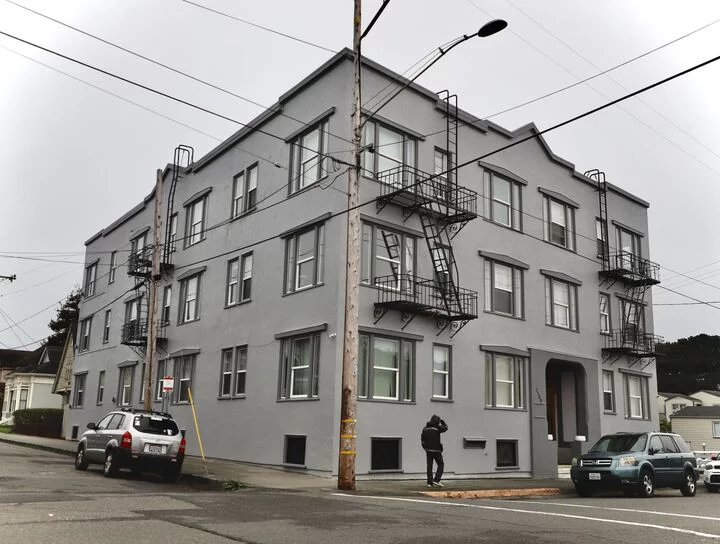
The vacant former Jacobs Middle School property. | File photo.

###

Late last week, the California Housing Defense Fund sent the following letter to each member of the Eureka City Council and senior members of city staff:

Dear City of Eureka,

The California Housing Defense Fund (“CalHDF”) submits this letter to inform the City of Eureka (“the City”) of the potential legal and financial consequences of ballot Measure F. CalHDF takes no position on the ballot measure itself and writes only for informational purposes.

Measure F Will Render the Housing Element Non-Compliant

The City’s Housing Element of its General Plan must provide an inventory of sites where housing is likely to be built in the upcoming cycle for each income level in its Regional Housing Needs Allocation (“RHNA”). (Gov. Code § 65583, subd. (a)(3).)

The City’s RHNA includes the construction of 231 very low-income units (including 116 extremely low-income units) and 147 low-income units. The City’s Housing Element Site Inventory allocates 80 low-income units to vacant sites, 40 low-income units to non-vacant sites, 82 low-income units to City-owned sites, and 245 very low-income units to City-owned sites.

Measure F would amend the City’s Housing Element. Specifically, it would eliminate six City-owned parking lots from Table 65. At present those parking lots are slated for a total of 80 very low-income units and 47 low-income units. Several of these sites have already been awarded state housing subsidies and have development plans in the works. Were Measure F to pass, the City’s Housing Element Site Inventory would only accommodate 165 very low-income units, falling short of its RHNA by 66 very low-income units. Because Measure F would cause a shortfall of 66 very low-income units in the City’s Site Inventory, the City’s Housing Element would no longer be in substantial compliance with state law.

CalHDF notes that Measure F includes a program that would rezone the former Jacobs Middle School site (“the Jacobs site”) with an overlay that would allow high-density residential use. The Measure would not amend the Site Inventory to assign very low-income units to the Jacobs site. However, even if adequate low-income units were assigned to the Jacobs site, the City’s Housing Element would still not be in substantial compliance with state law for two reasons:

First, Measure F states that the rezoning of the Jacobs site will be accomplished with a zoning overlay, an overlay that permits low-density residential as well as non-residential uses. This is a problem: the California Court of Appeal, 5th District, recently held that a zoning overlay does not satisfy the 20 unit per acre minimum density requirement for low-income sites in Government Code section 65583.2(h). (See Martinez v. City of Clovis (2023) 90 Cal.App.5th 193, 244.) If the base zoning or the overlay permits a density below what the Housing Element Law requires – as it would do here – an overlay zone will not bring the City into compliance. (Ibid.)

Second, the Jacobs site may not actually be available for residential development. Gov Code § 65583, subd. (a)(3) requires that the Housing Element include (emphasis added) “An inventory of land suitable and available for residential development, including vacant sites and sites having realistic and demonstrated potential for redevelopment during the planning period to meet the locality’s housing need for a designated income level, and an analysis of the relationship of zoning and public facilities and services to these sites, and an analysis of the relationship of the sites identified in the land inventory to the jurisdiction’s duty to affirmatively further fair housing.”

Given that the school district is not committed to developing residential on the site, and indeed the highest current bid seems to be from the California Highway Patrol, it is doubtful that the City could, in good faith, deem the site available for residential development. (See Ibid.) The proposed ballot measure would be replacing sites with concrete development plans and funding awards with a site that is not established to be available for development. Eureka’s Sixth housing element cycle ends on August 31st, 2027. It is extremely unlikely that a new development plan can be designed, permitted, and constructed in the next three years when no plans exist today. The site is therefore not available for development in this planning cycle.

Therefore, Measure F would expose the City to a potential determination of substantial non-compliance by the California Department of Housing and Community Development (“HCD”). Pursuant to Gov. Code § 65585, subdivision (i), HCD “shall review any action or failure to act by [the City] that it determines is inconsistent with an adopted housing element…, including any failure to implement any program actions included in the housing element….” Moreover, if HCD “finds that the action or failure to act by [the City] does not substantially comply with this article,” HCD may revoke its findings that the City’s housing element is in compliance with Housing Element Law until it determines that the City has come into compliance with state law.

Additionally, an interested party may bring an action under Code of Civil Procedure Section 1085 to determine whether a housing element conforms to the statutory requirements and to compel a city to adopt a compliant housing element. (Gov. Code §§ 65587, 65751.) CalHDF regularly brings such lawsuits as part of its mission to expand the state’s housing supply to mitigate the crushing impact of the housing crisis.

The City Will Be Subject to the Builder’s Remedy

The Housing Accountability Act (Gov. Code, § 65589.5; the “HAA”) requires approval of certain affordable housing projects that are submitted during periods of local housing element noncompliance. (Gov. Code, § 65589.5, subd. (d)(5).) Under the HAA, a city may not disapprove a qualifying affordable housing project (i.e., a housing development project that provides at least 20 percent of the total units to lower income households, as defined by Health and Safety Code Section 50079.5) on the grounds it does not comply with the city’s zoning and general plan if the developer submitted either a statutorily defined “preliminary application” or a “complete development application” while the city’s housing element was not in substantial compliance with state law. (See Gov. Code, § 65589.5, subds. (d)(5), (h)(5), (o)(1).) This statutory provision temporarily suspends the power of non-compliant municipalities to enforce their zoning rules against qualifying affordable housing projects. See California Housing Defense Fund v. City of La Cañada Flintridge, Case Number: 23STCP02614 (attached), for a recent court decision affirming the plain language of the statute in this regard.

In other words, developers will be able to propose any residential project, no matter how tall or large, as long as it is 20% affordable. And the City will be bound to approve all such projects even if the City laters comes back into compliance with housing element law, as long as the applicants submitted an SB 330 application during the period of non-compliance. For instance, in Santa Monica, a single developer proposed 4,260 housing units, including several 18-story buildings, when Santa Monica’s housing element fell out of compliance. If the City wrongfully denies such builder’s remedy applications, not only may the applicant seek judicial remedies, but the HAA specifically empowers housing organizations, such as CalHDF to enforce the act via litigation. (Gov. Code, § 65589.5, subd. (k)(1)(A)(i).)

And if the City contests such Builder’s Remedy applications, it may be liable for costs. For example, the HAA authorizes courts to award attorney’s fees and costs both to applicants and to housing organizations if they prevail in litigation to enforce the HAA. (Id. at subd. (k).) As an example, recently the City of Berkeley was fined $2.6 million and forced to pay $1.4 million in attorneys’ fees after incorrectly denying a housing development project in violation of the HAA.

⬢⬢⬢

As stated above, CalHDF takes no position on Measure F, and we write only so that the City is fully informed as to potential consequences were it to be approved by the voters. CalHDF is a 501(c)3 non-profit corporation whose mission includes advocating for increased access to housing for Californians at all income levels, including low-income households. You may learn more about CalHDF at www.calhdf.org.

Sincerely,

[signed]

Dylan Casey
CalHDF Executive Director

James M. Lloyd
CalHDF Director of Planning and Investigations

###

PREVIOUSLY


MORE →


California Democrats Strike Back Against Local Conservative Rebellions on LGBTQ Rights, Abortion

Alexei Koseff / Tuesday, Sept. 3, 2024 @ 7:04 a.m. / Sacramento

The state Assembly during a floor session at the state Capitol in Sacramento on Aug. 29, 2024. Photo by Florence Middleton, CalMatters

Like many new political candidates at the time, Rebecca Bauer-Kahan first ran for the state Assembly in 2018 because she was troubled by the election of then-President Donald Trump and wanted California to fight back against his administration.

Six years later, that dynamic has flipped on its head. In the just-concluded regular legislative session, the San Ramon Democrat and her colleagues instead battled a surging rebellion from conservative California communities against the state’s liberal governance.

On issues including abortion access, election rules and LGBTQ rights, Democrats in Sacramento passed legislation this year to stifle emerging local policies that they argued undermine the state’s commitment to diversity, civil rights and other progressive values.

“In certain ways, we have the right to hold the line for our constituencies,” said Bauer-Kahan, who compared the relationship between the Legislature and local governments to a system of checks and balances. “And I think that’s what we’re doing right now — we’re checking them.”

Tensions over local control are nothing new in California politics, as anyone who has followed decades of debate about land use and housing development can attest. But the last few years have opened a new front of conflict around cultural grievances more typical of red states.

With Republican power waning in California — the party hasn’t elected a candidate to statewide office since 2006 and labors under a superminority in the Legislature — conservatives are increasingly using the relative autonomy of city councils, county boards of supervisors and school boards to protest liberal state policymaking and assert a competing vision for their communities.

“There’s just a lot of built-up frustration and that’s one valve that’s being used,” said Assemblymember Bill Essayli, a Corona Republican who is often an outspoken opponent of bills to shut down conservative defiance. “We’re in an era in politics where you need an adversary.”

The result has been local laws to require voter identification at the polls, block abortion clinics from opening, review children’s library books for sexual content and mandate parental notification when students change their gender identity at school — prompting legislative Democrats to respond with measures that would ban those policies.

“They don’t want free people to make up their own minds,” said Fresno County Supervisor Steve Brandau, who developed a library material review committee for his county because he was disturbed by the children’s books included in a Pride Month display at a local library. “We’re fighting for our lives, we’re fighting for our livelihoods, we’re fighting for our beliefs.”

The clash began intensifying last year, with a showdown over an elementary school social studies textbook. When a Riverside County school board refused to adopt the state-approved curriculum because it referenced assassinated LGBTQ rights activist Harvey Milk, Gov. Gavin Newsom threatened to send the textbook directly to students and bill the district, which then reversed course. Legislators subsequently passed a law to penalize school boards that ban books because they include the history or culture of LGBTQ people and other diverse groups.

The Legislature also approved, and Newsom signed, a measure to limit when local governments can count ballots by hand, after Shasta County canceled its contract with a voting machine company because of unfounded election fraud claims pushed by Trump and his allies.

A spate of legislation has followed this year, most controversially Assembly Bill 1955 by Assemblymember Chris Ward, a San Diego Democrat, which prevents school districts from alerting parents when a student starts identifying as another gender. Such parental notification policies began sprouting up across California after the 2022 election, when Republicans focused on winning control of school boards, but critics argue they amount to forced outing. Essayli and Democratic Assemblymember Corey Jackson nearly came to blows on the Assembly floor over AB 1955, which Newsom signed in July.

Several other measures are headed to the governor’s desk after receiving final approval from the Legislature last week, including Bauer-Kahan’s AB 2085 to streamline the permitting process for reproductive health clinics. Though California has positioned itself as an “abortion sanctuary” since the U.S Supreme Court overturned the constitutional right to abortion — even putting reproductive rights into the state constitution — local opposition has prevented clinics from opening in cities such as Beverly Hills and Fontana.

“We saw the voters say they overwhelmingly support abortion rights, so it’s important that we as a state step in to ensure this access that they said they want,” Bauer-Kahan said.

Senate Bill 1174 by state Sen. Dave Min, an Irvine Democrat, would prohibit local governments from requiring voter identification in municipal elections, which Huntington Beach adopted this past spring as a security measure despite criticisms that it would create unnecessary hurdles for poor and minority voters.

And AB 1825 by Assemblymember Al Muratsuchi, would outlaw the sort of citizen review panels that Huntington Beach and Fresno County recently created to restrict access to library books with “sexual references” and “gender-identity content.” Supporters argue the committees can keep inappropriate material out of children’s hands, while opponents contend that they target books with LGBTQ themes for censorship.

The legislators behind these bills say they support local control on some issues, but it can go too far when communities use their power to challenge people’s rights or the values that Californians have broadly affirmed. That’s when they believe the state should step in.

“I see it as our responsibility for the Legislature to establish protections for all kids regardless of where they live,” said Muratsuchi, a Torrance Democrat.

The state Senate during a floor session at the state Capitol in Sacramento on Aug. 29, 2024. Photo by Florence Middleton, CalMatters

Democratic lawmakers suggested the growing confrontation could be a symptom of the divisive politics of the Trump era. They said many conservatives took a signal from Trump’s refusal to accept his loss in the 2020 presidential election and, like liberal states during the Trump administration, are picking up the mantle to lead a political resistance — which they believe, in many cases, has gone too far.

“You’ve seen a lot of these people really thumb their nose at the rule of law,” Min said. “They’re trying to get around that through sneaky little tactics.”

Conservative politicians counter that they are simply reacting to a state government that has pushed much further left than their constituents by listening to the LGBTQ rights movement and other activists rather than the people who elected them. Essayli said the Democratic supermajority in the Legislature is over-representative of a progressive ideology compared to California voters, only 46% of whom are registered Democrats.

“There’s one side changing what the norm is,” he said. “Then we’re considered the instigators, the agitators, the provocateurs for saying, wait, that’s not the way it’s always been.”

A spokesperson for Newsom declined to comment on the legislation pending before him or when the governor thinks state intervention is necessary to override local policies. But even if he signs the bills on his desk, is it almost certainly not the end of this fight, as communities such as Huntington Beach — which has positioned itself over the past two years as a bulwark in the conservative war against “wokeism” — consider lawsuits and other forms of protest.

Gracey Van Der Mark, one of the conservative majority on the Huntington Beach City Council, in her City Hall office on Nov. 11, 2023. Photo by Lauren Justice for CalMatters

Huntington Beach Mayor Gracey Van Der Mark has already introduced a “parents’ right to know” ordinance as a direct challenge to AB 1955, the law prohibiting schools from reporting when students change their gender identity.

She said her city is more at odds now with Sacramento because state politicians are trying to stamp out ideological diversity in California and force all parents to raise their children in a certain way.

“That’s none of the state’s business,” she said. “We’re sick and tired of it. We need to push back.”

“It would be great if Sacramento could focus on homelessness, crime,” she added, “and leave the parenting to the parents.”

###

CalMatters.org is a nonprofit, nonpartisan media venture explaining California policies and politics.


What Californians Have at Stake in the Trump-Harris Election When It Comes to Health Care

Ana B. Ibarra / Tuesday, Sept. 3, 2024 @ 7:03 a.m. / Sacramento

Kamala Harris and Donald Trump have starkly different platforms on abortion. They also have different ideas about how to bring down health care costs that could directly affect Califorians. Illustration by Adriana Heldiz, CalMatters; iStock

Donald Trump and Kamala Harris stand far apart on most issues, and health care is no exception. The November election carries major implications for Californians’ access to health care and the cost they pay for it.

While neither candidate has put forth a comprehensive health care agenda, both have track records from their respective time in the White House or previous posts that offer a glimpse on where they might stand on key health issues.

The cost of health care is a top concern for Californians and voters across the nation, millions of whom are saddled with medical debt or take less medication than prescribed because of the cost. While both candidates have acknowledged that health costs are a major burden to Americans, the difference will be in how they go about providing relief.

How the next president goes about strengthening — or chipping away — at the Affordable Care Act and abortion rights will also directly affect voters’ lives. Below are examples of both candidates’ records on key health issues and what they’ve promised to voters so far.

The future of the Affordable Care Act

TRUMP. Trump as president tried and failed to repeal the Affordable Care Act, the signature legislative achievement of his predecessor, Barack Obama. As recently as last year, Trump vowed to try again if he’s reelected.

The idea of overhauling the health law would be a much harder sell today than in Trump’s presidency, some experts say, because the law is generally more popular. Some Republicans who opposed the law in the past have come to accept that it is here to stay or have moved on to other issues.

Nowadays Trump says he wants to “improve” the the Affordable Care Act and make it “less expensive.” He hasn’t offered any details as to what that would entail, but experts say any changes would likely come in the form of chipping away at certain provisions of the law.

Trump as president made one major change to the Affordable Care Act: He signed a tax cut law that also eliminated a penalty levied on people without health insurance. The idea behind this provision of the Affordable Care Act was that a penalty, charged when people filed their income taxes, would encourage people to sign up for health insurance. And getting more people insured, especially the young and healthy, drives down the cost of coverage for everyone. Today, uninsured Californians still pay a penalty of up to $850 per adult because Gov. Gavin Newsom enacted a state version of this mandate.

HARRIS. During her 2019 presidential campaign, Harris promoted a version of Medicare for All, a government-run single-payer system. Today, health policy experts expect Harris to continue the current administration’s efforts to promote and build on the Affordable Care Act rather than move the country toward a new system.

Some California lawmakers are still interested in exploring a single-payer-like health care system. Last year, Newsom signed a law that directs the state to map out next steps in creating a “unified financing” system that would cover all Californians. Getting anywhere near this goal will require federal permission and resources, which are more likely to happen under a Harris administration, experts involved in these discussions say.

“A Harris presidency, I think, is going to view a waiver application from the state of California favorably,” said Gerald Kominski, a senior fellow at the UCLA Center for Health Policy Research, who has served as a consultant to a state commission exploring this issue. “It’s not to say that it will sail through…getting a waiver to pool federal and state funding is still going to be a challenge, but I think her administration is going to find a way to work with California to make it happen.”

More people than ever, 21 million, signed up for health insurance under Affordable Care Act exchanges in 2024. Marketplace officials across the country say that’s in part because of the increased premium subsidies made available under the COVID-19 relief laws known as the American Rescue Plan and later the Inflation Reduction Act. That enhanced financial aid is currently set to expire at the end of 2025. About 90% of enrollees in Covered California receive financial assistance. The odds of continuing that enhanced aid are better under a Harris administration, experts say.

The cost of health care

HARRIS. As attorney general of California, Harris went after large health companies by moving to restrict mergers and investigate anti-competitive behaviors that research shows can drive up the cost of care.

She launched an investigation into several California health systems, examining their market power and their influence on prices. That investigation led her successor, Attorney General Xavier Becerra, to file a lawsuit against Sutter Health, a nonprofit hospital and clinic system in Northern California. In the lawsuit, Becerra accused Sutter of using its market power to drive up prices in Northern California. In 2019 Sutter settled the case for $575 million, although it did not admit wrongdoing.

Harris has also taken a leading role in the current administration’s efforts to address the medical debt that burdens millions of families. In June, she proposed rules to remove medical debt from credit reports. California lawmakers have a similar proposal currently sitting on Newsom’s desk. About 4 in 10 Californians report having some type of medical debt, according to the California Health Care Foundation.

Among Harris’ campaign promises: “Work with states to cancel medical debt for millions of Americans.” While she hasn’t said how exactly she plans to do this, her work with North Carolina Gov. Roy Cooper may offer a preview: Starting next year, North Carolina will roll out a program that incentivizes hospitals to forgive patients’ medical debt in exchange for additional Medicaid dollars.

TRUMP. Perhaps some of Trump’s most significant contributions to reigning in health care costs came in the form of price transparency rules. He signed an executive order that led to requirements for hospitals to disclose prices for common services on their websites. And in 2020 Trump signed the No Surprises Act, a law designed to protect consumers against surprise medical bills when receiving care from out-of-network providers. This often happens when people receive emergency care and are not in a position to choose their providers. Surprise medical bills tend to rank among the public’s top concerns.

The Trump administration greenlit some major health care mergers, but it did so with certain conditions signaling some caution in approving such deals. One example — CVS Health’s $69 billion acquisition of insurance giant Aetna, one of the biggest health mergers of all time. Aetna and CVS Health were competitors in the sale of Medicare drug plans. As a condition to approve the merger, Trump’s Department of Justice required that Aetna sell part of its Medicare drug business to another company as a way to preserve competition.

“That one was really contentious, and it took a long time, but we definitely didn’t see a rubber stamp,” said Rachel Nuzum, senior vice president of policy at The Commonwealth Fund. . “There was an acknowledgement that the size and scope of these mergers could be problematic for consumers.”

Abortion in the 2024 election

Pro-abortion rights supporters marched in protest of a Supreme Court ruling that overturned Roe vs. Wade, in Sacramento on June 25, 2022. Photo by Miguel Gutierrez Jr., CalMatters

TRUMP. No other health issue has received as much attention this election cycle than abortion and reproductive health. In California, Democrats have tried to cement abortion rights into state law, and this is often the first issue they use to go after Trump. That’s because the Supreme Court justices he appointed made the difference in overturning the 1973 ruling that had protected abortion rights, Roe v. Wade.

Trump has given inconsistent messages about abortion rights. Earlier this year, Trump made headlines for suggesting that if he were re-elected he’d support a national ban on abortion at 15 weeks of pregnancy. A few weeks later he changed his tune, saying abortion should be left up to the states. He has indicated that he would not ban mail delivery of medication abortion pills, and has said he wants insurance to cover the cost of in vitro fertilization treatment, or IVF, “because we want more babies.”

HARRIS. Harris has leaned heavily into abortion and reproductive rights, an issue she has remained consistent on throughout her career. She is often the voice and face for reproductive health in Biden’s administration, and has expressed support for restoring abortion access through federal law.

As vice president she launched a nationwide tour to promote reproductive rights with events across the country. It included a visit to a Planned Parenthood clinic, reportedly the first ever such visit by a sitting VP or president.

As attorney general in California, Harris sponsored state law that aimed to regulate crisis pregnancy centers. These are often religiously affiliated and known for trying to prevent women from getting abortions. The law required these centers to display a notice, letting people know that comprehensive family planning services including contraception and abortion were available through state programs. The U.S Supreme Court eventually overturned that law.

How they’d curb prescription drug prices

Shelves full of prescription medication at La Clinic pharmacy in Oakland on Sept. 26, 2019. Photo by Anne Wernikoff for CalMatters

TRUMP. Trump often takes credit for lowering the price of insulin for millions of Americans — but that’s not totally accurate. What his administration did was establish a temporary program known as the Part D Senior Savings Model. This program reduced copayments for insulin to $35 a month for about 800,000 seniors on certain Medicare plans. It lasted two years, expiring at the end of 2023. The Biden administration went further in the Inflation Reduction Act, which included a provision that capped insulin copay prices at $35 a month for about 3.3 million Medicare beneficiaries.

Trump also took the first steps to allow states to import prescription drugs from Canada, as a way to increase competition and lower drug prices. This move was heavily opposed by the pharmaceutical industry and the Canadian government. This idea came to fruition earlier this year when the FDA approved Florida’s plan to import prescription drugs to treat HIV/AIDS, mental illness and prostate cancer. Florida Gov. Ron DeSantis said that importing medications from Canada will save the state about $180 million in year one.

HARRIS. For the first time, the Biden administration empowered the In addition to expanding insulin copay caps to more seniors, Biden-Harris’ Inflation Reduction Act also directed its Health and Human Services agency to negotiate drug prices with manufacturers for certain high-cost drugs covered under Medicare. The 10 drugs in the first round of negotiations included medications to treat diabetes, heart failure, blood clots and rheumatoid arthritis. The negotiations resulted in discounts between 38% to 79%. The new negotiated prices are set to go into effect in 2026.

The Inflation Reduction Act — for which Harris likes to remind voters she casted the tie-breaking vote — also caps the total annual out-of-pocket drug spending for people on Medicare. This means that starting in 2025, seniors will pay no more than $2,000 a year for all their medications. About 3.2 million Medicare beneficiaries are expected to reach this limit in 2025, including 271,000 in California, according to recent estimates from the AARP.

Harris has said she wants to expand these cost-saving efforts to everyone, not just seniors. She has also pledged to go after drug companies and pharmaceutical middlemen that thwart competition and drive up costs.

###

Supported by the California Health Care Foundation (CHCF), which works to ensure that people have access to the care they need, when they need it, at a price they can afford. Visit www.chcf.org to learn more.

CalMatters.org is a nonprofit, nonpartisan media venture explaining California policies and politics.


Caltrans Completes Phase 1 of Indianola Undercrossing Project; New Traffic Restrictions to Take Effect Next Week

Isabella Vanderheiden / Saturday, Aug. 31, 2024 @ 3:56 p.m. / Safety , Traffic


    ###

    Caltrans District 1 announced this week that crews have completed the first phase of the Eureka-Arcata U.S. 101 Corridor Improvement Project and are gearing up for Phase 2. That means new traffic restrictions.

    Starting next week, Caltrans will close the median at the Indianola Cutoff on Highway 101, restricting southbound access to and from Indianola Road. If, for example, you’re traveling south from Arcata to pick up a few things at the Chef’s Store or check on your unit at Rainbow Self-Storage you’ll want to take Old Arcata Road instead. 

    “Travelers will still be able to access the Indianola Cutoff from northbound 101,” according to this post from Caltrans District 1. “The change is scheduled for September 4 and will be in effect for the duration of the Indianola Undercrossing Project which intends to enhance safety.”

    Once the new project is completed — expected by the end of 2025 — the Indianola Cutoff will be extended to run underneath a newly constructed bridge, with Highway 101 traffic passing overhead.

    Additional safety improvements include a half-signal at Airport Road, acceleration and deceleration lane improvements, bridge and rail replacements at Jacoby Creek and Gannon Slough, tide gate replacements, and closure of the median openings at Mid-City Motor World, Bracut Industrial Park and the Bayside Cutoff.

    Check out the video below for a full rundown of what’s to come.

    ###

    ###

    PREVIOUSLY: 


    Humboldt Progressive Democrats Endorse Candidates in Arcata, Eureka City Council Races, Urge ‘No’ Vote on Measure F

    LoCO Staff / Saturday, Aug. 31, 2024 @ 2:58 p.m. / Elections

    Press release from Humboldt Progressive Democrats:

    Humboldt Progressive Democrats recently endorsed candidates for both Arcata and Eureka City Council. During Wednesday’s special meeting, each candidate spoke about their vision and platform and answered questions from members. Topics ranged from repairing the relationship with Cal Poly Humboldt to sea level rise to law enforcement oversight.

    Members voted to endorse the following candidates in the November General Election:

    • Eureka City Council (2nd Ward) – Kati Moulton
    • Arcata City Council – Genevieve Serna, Sarah Schaefer, Stacy Atkins-Salazar

    Kati Moulton is the incumbent Councilmember, running for re-election in the diverse 2 nd Ward, and is a proven effective leader. Her accomplishments include initiating the Eureka Police Department Citizen Oversight Board, working with the community and stakeholders on the Jacobs Campus visioning, and revitalizing the Kamisu Sister City Exchange. In the context of such key issues as Housing, Public Safety / Quality of Life, and Climate Change / Sea Level Rise, Kati defines her progressive values as “I believe that it’s the job of the government to use public resources to ensure that everyone has the opportunity to thrive. Economies are grown from the ground up. Communities succeed when people have a decent place to live, food in their bellies, and the ability to work for a fair wage in a safe environment.”

    Genevieve Serna seeks to bring a fresh voice to the Arcata City Council – one of youth and diversity. Her three key issues are Housing, Active/Public Transportation Mode Shift, and Reconnecting the Cal Poly Humboldt/Arcata resident communities. Genevieve moved here in 2014 to attend Cal Poly Humboldt. She currently serves on Arcata’s Transportation Safety Committee in addition to her day job with the County of Humboldt. As with many in the Progressive movement, her activism was influenced by Senator Bernie Sanders: “I am someone who believes that things such as healthcare, housing and medical care are human rights and as such that our elected officials have an obligation to advocate for these causes. I’ve grown up in a home of democratic voters and had aligned with the values of the party, however in 2016 when Bernie Sanders ran his first campaign for president, I saw that, while aligned with the party on social issues, we could be doing more for working people. I have aimed to examine my party and its candidates through this newer lens. That aligning with social issues, however important, was not enough to bring true prosperity to American people if policies around basic care did not improve.

    Sarah Schaefer is running for re-election to the Arcata City Council. Her top issues are housing, climate, and economic development. As a renter, she also focuses on tenant’s rights, ensuring rentals are safe and sanitary (Residential Rental Inspection Program), and supports infill, including the Gateway Plan. As Mayor, Sarah led study sessions on inclusionary zoning, addressing sea level rise, and sustainable transportation infrastructure. She also points to COVID ARPA funding, which allowed the City to create and fund many successful cutting-edge programs. Sarah describes herself as solidly progressive: “I have always been an ardent supporter of people’s civil liberties and rights to express themselves in our society. I believe that the billionaires and corporations should pay their fair share to support healthcare and social programs in this county. I am pro-union and believe that the rights of workers and fair payment impacts our entire society.”

    Stacy Atkins-Salazar is also running for re-election to the Arcata City Council. Over the past term, she has helped implement housing and transportation initiatives, worked with community members on a cease-fire resolution, and engaged with different neighborhoods to understand and help resolve their challenges. Her constituents have helped shape her priorities – housing for all; parks, trails and open spaces; and environmental responsibility. Stacy also points to her commitment to Infrastructure and Fiscal Responsibility – Arcata boasts a healthy and balanced budget. She aligns her progressive values with the goals of “housing for all including infill housing, protecting and prioritizing open/green spaces, universal healthcare, a strong social security system, creating walkable communities, living wages, protecting our climate, reproductive rights, Unions, racial justice and equity, fair and humane immigration laws and prioritizing diplomacy.”

    Humboldt Progressive Democrats has also weighed in on two housing ballot measures, recommending:

    • Vote Yes on California Proposition 33 - Expands Local Governments’ Authority to Enact Rent Control on Residential Property. Initiative Statute.
    • Vote No on Eureka Measure F - Initiative to Amend the City of Eureka’s General Plan as the Plan Affects City-owned Parking Lots and Eureka City Schools-owned Jacobs Site.

    This election will be key to maintaining progressive majorities in these two city councils, and to providing tools and funding to build affordable housing locally. Chair Hélène Rouvier noted that “Housing is a human right! Let’s not let outside monied interests impose their own agenda and decide what is in the best interests of our rural communities. Don’t fall for the scams and outright lies being bankrolled by bad actors. We are sick and tired of yet another conman trying to derail our democracy.”

    Humboldt Progressive Democrats is an official Democratic Party Club, chartered by the Humboldt County Central Committee. We are grassroots, progressive activists mobilizing political participation for social, environmental, & economic justice. Our vision is a free, open, transparent election process where electeds, candidates, and legislation can focus on achieving public needs, free from corporate money and influence. Please join us in making progressive change locally and beyond. Learn more at www.hpdems.org.


    Boise Fire 65 Percent Contained at 12,911 Acres; Evacuations Remain in Effect

    LoCO Staff / Saturday, Aug. 31, 2024 @ 9:47 a.m. / Fire

    Fire crews have increased containment on the northern edge of the fire, as depicted in black. Control lines along the fire’s eastern edge “are being moped up and validated.” Click to enlarge.


    ###

    Press release from Six Rivers National Forest:

    Headlines:

    • Traffic control remains in place along the Salmon River Road between Butler Flat and Nordheimer Flat for the safety of firefighters and residents. Expect up to 30-minute delays. Incident personnel driving vehicles with more than two axels will not be allowed on the road.
    • Evacuations are in place for residents near the fire area in Humboldt County. For the most current evacuation information please visit the Boise Fire linktree  or visit—
    Leader’s Intent:

    The Boise Fire is being managed with a full suppression strategy.

    Operational Update: 

    Containment has increased on the north side of the fire. In areas of the fire where containment has been achieved, crews continue to secure and improve existing containment lines. All regions around the fire perimeter are constantly monitored for potential issues. Crews continue to snag interior road systems, making it safe for ingress and egress, and continue chipping operations. On the fire’s east side, firefighters work daily towards more containment in very steep terrain. Helicopters are being utilized for water dropping and cargo missions. Under the supervision of resource and cultural advisors, suppression repair is underway, which includes creating water bars and dozer and hand line repair. The China Creek area control lines are being moped up and validated.

    Weather and Fire Behavior: Expect sunny skies with hot and dry weather today. Winds will remain light. Relative humidity today will be around 20%. No significant fire spread is expected under the current conditions. As the vegetation continues to dry out from recent rains, smoke may be visible from unburnt fuels in the fire’s interior. Wind is expected tomorrow at the higher elevations.

    ###


    HUMBOLDT HISTORY: The Holmes-Eureka Massacre, When Eureka Police and Vigilantes Shot Striking Lumber Workers Dead

    Paul Ferrell / Saturday, Aug. 31, 2024 @ 7:30 a.m. / History

    The Holmes-Eureka Lumber Mill was located on the property now occupied by the Bayshore Mall. Photos via the Humboldt Historian.

    On the morning of June 21, 1935, at the Holmes-Eureka lumber mill in Eureka, a six-week-old strike by Humboldt County lumber workers came to a violent end. A riot broke out when a crowd of more than 200 pickets clashed with police and vigilantes attempting to clear the front gate. Tear gas, then firearms were used against stone-throwing strikers, killing three and wounding at least seven. More than 100 people were arrested for rioting, resisting an officer, and battery.

    The Holmes-Eureka Massacre, as it later became known, is a forgotten chapter in the Great Northwest Lumber Strike of 1935. The strike was a failure for unions throughout the Northwest and a social disaster for the little town of Eureka. The strike and the riot that ended it were marked with violence and conspiracy that were brought to light by the trials of those arrested.

    The sensational trials uncovered multiple conspiracies, cover-ups, secret groups and hired guns. And throughout it all the threats of Communism and Fascism were lurking in the background. In the end all defendants were acquitted, no conspiracy or cover-ups were ever proven and Eureka went back to business as usual. But a close look at events through surviving court records, newspaper archives, and eyewitness reports can yield an interesting story of labor’s struggle for acceptance in Humboldt County.

    Since the 1880s unions came and went in Humboldt County, making only limited improvements in either wages or working conditions. The workforce was pacified by the “carrot and stick” approach taken by the industry leaders in the 1920s. Welfare capitalism in the form of improved living conditions provided the carrot, repression and victimization of labor leaders through violence and blacklisting served as the stick. Of Humboldt County workers in the 1920s, one unionist said, “It would take a Sherlock Holmes to find any militancy in these tame apes.”

    In June 1933, Congress enacted the National Industrial Recovery Act (NIRA) to help the economy pull out of the depression. Section 7a of the NIRA stated in part:

    That employees shall have the right to organize and bargain collectively through representation of their own choosing, and shall be free from interference, restraint, or coercion of employers of labor…

    The basic concept of Section 7a was nothing new; the War Labor Board in 1917 had held to the same principles. Yet the psychological effect of the Roosevelt administration’s action, combined with a slight upturn in the economy, created a tremendous growth in labor unions.

    In May of 1935, with newfound strength, the Lumber and Sawmill Workers local union in Humboldt County joined with other unions in a strike of the entire Northwest lumber industry. They upped their demands to conform with the demands created by union leaders earlier that year at a labor convention in Washington state. Demands included a wage increase, a shorter work week and union recognition.

    The local union was affiliated with the American Federation of Labor (AFL). The International Longshoremen’s Association (ILA), headed by Harry Bridges, promised to support the strikers of Humboldt County because a year earlier the AFL had helped the ILA in their successful strike of the West Coast. A relationship of mutual assistance was thus established.

    Mutual assistance among the mill owners had been established long before the 1935 strike. The five major mills were organized into the Redwood Association. Its members were Pacific Lumber, Hammond Lumber, Holmes-Eureka Lumber, Dolbeer and Carson Lumber, and the California Barrel Company. The domination of the local economy by the Redwood Association tended to promote cooperation from the police and an anti-union slant by the local newspapers. Several strikes had been put down by the Association in earlier years. However, the strike of 1935 was a part of the larger strike in the Northwest, supported by the longshoremen, and given tacit approval by the Roosevelt administration. Perhaps the possibility of a strike on a larger scale than had previously been seen prompted Hammond Lumber Company owner. Jay Hammond, to purchase $1,200 worth of tear gas equipment.

    Mill workers from Eureka commuted to the Hammond mill across the bay in Samoa on the ferry boat Antelope.

    When the strike began on May 15, the Eureka Longshoremen stood by the lumber workers and refused to handle any lumber from the struck mills. The Cooks and Waiters Union, along with the Ladies Auxiliary of the Lumber and Sawmill Workers, set up a soup kitchen. The kitchen served several hundred people a day with donations from farmers, fishermen and small businesses. A few pickets appeared at all the struck mills, but usually one mill was singled out for mass picketing for a day or two. Several times strikers picketed the Antelope boat dock in Eureka, where workers commuted by ferry from Eureka to the Hammond mill across the bay in Samoa.

    Soon after the strike began, Eureka’s Mayor, Frank Sweasey, announced the formation of the “Committee of One Thousand.” The mayor said its mission would be to “guarantee the safety of the citizens and property owners of Eureka and Humboldt County during the strike.” He warned that “if outsiders come in to take over the strike we must be prepared.”

    Another less publicized group called the “Humboldt Nationals” formed about a month before the strike. Its purpose was to directly assist the police when called out, which it did on at least two occasions. Members received training in riot control at a high school gymnasium from a former Army officer. Instructions included the use of wooden clubs made at the Hammond mill. Humboldt County Sheriff Arthur Ross attended the meetings, as did Hammond supervisory employees and the company lawyer. Sheriff Ross deputized most of the members of the “Nationals.” The total came to about three or four hundred.

    Also allied with the police was a mysterious group of eleven men who arrived in Eureka one week before the riot and left the day after. They became known as the “G-men” because when asked about their business they claimed to be federal agents doing some type of secret work. Several of the G-men assisted the police in arresting strikers after the riot. Some union men said that the other G-men helped provoke a confrontation with the police the morning of the riot by throwing rocks and by building a barricade across the front gate of the mill. Eureka Police Chief George Littlefield claimed at the riot trial that their identity was unknown and said that, “All I know is a bunch of fellows offered their services and we needed plenty of help.” At the time of the trials the Western Worker wrote:

    Strangely enough the police testified that though the strangers were around the police station for about a week and were with them on June 21st, they never inquired their names [sic] or what their business was. They denied that these men represented themselves as Federal agents. Strangest of all is the fact that unknown people can come into the city of Eureka, cooperate with the police department in arresting citizens of the town, carry firearms and use force and violence against the public and then disappear without the police department being able to tell who they were, where they came from, or what their names were.

    The union was not ignorant of clandestine groups using violence to intimidate the strikers. As the strike grew longer, violent incidents occurred with more frequency. Fights between pickets and strike-breakers were reported almost daily. Union official Albert “Micky” Lima explained what was happening:

    They (the lumber companies) brought these gun thugs in. The gun thugs were of a different breed. They were being used by companies in various parts of the country and probably were drawn from a pool somewhere. They had a bunch of guys that had fight training and they did a murderous job on some of our members.

    Union members fought fire with fire. A “social squad” and an “educational squad” were formed. Lima described their duties:

    So, the social squad would pal up with one of the guys and buy them drinks and be friendly with them, and the bartender would give them extra drinks to get them liquored up. Then they would leave and the social squad would say “well, good night, we’ll see you again. ” Then the educational squad would pick them up and really give them a working over. We put about four of them in the hospital, where they were really badly injured, not killed, but badly injured. After it happened to about four or five of them they all of a sudden left town.

    On June 15, the Humboldt Times ran a headline that read, “All Quiet Along Strike Front.” The strike in Humboldt County and in the Northwest was going badly. Back on May 27, the Supreme Court had invalidated the NIRA. The ruling confused and demoralized the strikers. Without calling a vote, union leader Abe Muir settled the strike in Longview, Washington by what most workers saw as a sell-out. The union won only a 40-hour work week with time-and-a-half for overtime, without a wage increase or a closed shop agreement. As the strike went into its fifth week morale dropped for the strikers, and defeat seemed imminent.

    The June 21 issue of the Humboldt Times (the Times was a morning paper so the article was probably written on the 20th) had an article, under the headline “Indications Grow that Longshore Work to Resume,” that reported a back-to-work movement by longshoremen was being restrained only by the personal intervention of union president Harry Bridges. The article reported that the Redwood Strike News ran a notice under the heading “Now or Never” that said leaders from the carpenters’ and longshoremen’s unions would arrive in Eureka the next day “for the purpose of seeing how many pickets we have out.” It went on to say, “These two men have got to be shown a strong picket line.” At an emergency meeting of the local union that night the strikers decided to concentrate pickets at one mill in order to shut it down completely. The choice of which mill to picket would not be announced until the next morning to prevent the information from reaching the authorities.

    In the morning, after going to the union hall, a small group of pickets went to the Antelope boat landing in an effort to lure the police to that location while the real demonstration would be going on across town at the Holmes-Eureka mill. Pickets began arriving at the mill shortly after 6 a.m. Some workers, arriving about the same time, drove past the pickets or turned around and went home. The mill was located on what is now the Bayshore Mall in south Eureka on Highway 101. The front gate was located directly across the highway from the bluffs on which Fort Humboldt Historical Park is located. From that location spectators watched the group of pickets grow to 200 by 6:30.

    Strikers jeered the watchmen and guards at the gate and someone placed boards, torn up from the boardwalk, across the gate to form a barricade. Someone threw stones at the cars of one or two strikebreakers. At 6:45 a man arrived by car to relieve one of the watchmen at the gate. He tried to drive his car through the pickets but the crowd of union men picked up the car and turned it around. He drove to the police station to get help. A short time later several police cars arrived. Several witnesses from the bluffs across the highway said that when pickets blocked Police Chief Littlefield’s car, he got out and started shouting, “Who’s going to stop me?” while firing his pistol into the ground.

    From another police car an officer fired a tear gas rifle into the crowd. The police were equipped with both long and short-range tear gas shells. But it seems probable that the officer mixed up the shells and unfortunately fired a long-range shell when he really only intended to fire a short-range one. The fateful shell struck a woman picket in the back and knocked her to the ground bleeding. Micky Lima described what happened:

    When the police arrived we decided to pull the picket line because the situation looked very dangerous. We ordered everybody to move away from the picket line and the pickets were in the process of leaving … if they [the police] had just waited we would have been gone in five minutes …

    Then a couple of these guys began to fire. They were firing tear gas bombs out of a rifle, like a sawed-off shotgun type of rig. One woman who was picketing, who was behind me, let out a scream and went down in a heap. I ran back to her thinking she had been shot with a shotgun. I reached beneath her and thought I could feel blood running out. Well, she was bleeding but because I was convinced that it was a shotgun, I imagined that it was much worse than it was. I yelled back to a number of guys and they started back towards me. I yelled that they shot her in the back with a shotgun and yelled for somebody to get a car. Then quite a number of pickets came running back and finally they said, “Let’s get the bastards.”

    We charged the police and that’s when they took a dumping, including Littlefield, the Chief of the Police.

    The “dumping” Littlefield and other officers received consisted of being disarmed and beaten with their own nightsticks and pistols. One picket who fought with the police later drove two injured policemen to the hospital in their own police car. Police on the street and vigilantes inside the gate fired pistols and shotguns into the crowd. The strikers fought back by throwing rocks and chunks of concrete. A tear gas shell or grenade went off inside a police car and the car had to be abandoned at the scene. One officer in a patrol car, besieged by the crowd, fired his revolver through the windshield till the gun was emptied. He then drove off to find someone to operate the machine gun he had in the back of his car. He returned with Ernest Watkins, a Holmes-Eureka employee who knew how to fire the weapon. Watkins only managed to fire a few rounds before the machine gun jammed.

    Nine or ten strikers were shot. One died at the scene, another two days later, and the third died after nineteen days. One wounded man had to have his leg amputated. The County Hospital filled with victims of gunshots and tear gas. Many who feared arrest were treated at home. Five police officers received medical treatment at the hospital and were released later that morning.

    The police, with the assistance of vigilantes, made arrests that day; by evening 114 were in jail. Authorities banned the sale of liquor and that afternoon Chief Littlefield ordered the fire department to burn down the encampments of unemployed, homeless men known as the “hobo jungles.” The Humboldt Times described one of the areas as a “rendezvous of tramps and a hot bed of radicals.” The Governor ordered the local company of the National Guard to be on alert.

    Several persons were jailed when the police raided the union soup kitchen. The Finnish Federation Hall was also raided by the police and vigilantes who arrested the janitor and his son. The Humboldt Times reported a “secret door” behind which police discovered old clothes “for needy radicals who come to the city,” and “pistols of many makes, daggers, knives, billy clubs and communistic literature.”

    The Humboldt Standard ran a photograph of the weapons mounted on a board and displayed by a policeman. The caption above the picture read, “Police seize ‘baby arsenal’ here.” In reality the “arsenal” and the old clothes found behind the “secret door” were stage props used for amateur theatrical productions at the hall. The “communistic literature” was a certificate signed by the chairman of the All Russian Famine Relief Committee thanking the Finns for their contributions. The press never made a correction of the false information. Later, during the trials of the arrested strikers that summer, the Finns took advantage of all the attention and displayed their “arsenal” of fake guns and rubber knives in front of the courthouse.

    To defend the strikers in court the cash-strapped union accepted the free services of three out-of-town lawyers, one from the American Civil Liberties Union (ACLU) and two from the International Labor Defense (ILD).

    Frequent clashes between the prosecution and the defense kept the courtroom packed with spectators. At one point a fist fight nearly erupted between the attorneys. Leo Gallagher, the attorney for the defense, always maintained that the “G-men” had been imported to break the strike and the riot was staged by the lumber companies. Once he said, “Funny thing that there is always plenty of money to buy tear gas but none to buy milk for babies.” Prosecutor Bradford suggested that Gallagher “secure a soap box on Second Street” in order to make speeches. At one point the presiding judge exclaimed in frustration, “You lawyers give a man a headache.”

    The evidence of illegal activities by the “G-men” and the Humboldt Nationals, both of whom worked closely with the police, gave credence to Gallagher’s concluding remarks at the second trial. He accused the police of creating a “trumped-up story to protect their own stupidity,” and he said that police officers were “the paid agents of the lumber barons, killers of fleeing workers, perjurers, and witnesses who lied to protect each other.”

    Despite Bradford’s efforts, he achieved no convictions of twelve defendants in three separate trials. On September 26, Eureka’s mayor and police chief met with the district attorney and deputy district attorney and decided to drop all charges against the remaining defendants. The Humboldt Standard reported that day:

    During the three trials the entire superior court jury box was exhausted and 145 special veniremen were called by Coroner Lloyd Wallace. The apparent willingness of jurors to serve in the trial and the inability to reach a verdict led the county and city officials to abandon further prosecution of the cases, it was indicated.

    The key testimony that prevented Bradford from attaining any convictions came from impartial witnesses who lived in the Fort Humboldt area. Several of them said everything had been peaceful until a shot from a police tear gas gun struck a woman picket and sparked the riot. The juries believed the police had started the trouble and the strikers were only defending themselves, mostly by throwing rocks, against police and vigilantes who were armed with guns and tear gas.

    Gallagher’s charges of conspiracy, premeditated violence, and cover-ups on the part of the authorities probably did little to exonerate the strikers. However, his strategy of accusing the authorities of misconduct put Bradford on the defensive. A by-product of the courtroom battle was the illumination of events that would otherwise have remained in the shadows. Those events add up to the single most deadly episode of the Great Northwest Lumber Strike of 1935 — the Holmes-Eureka Massacre.

    Bibliography - Primary Sources

    • Humboldt Superior Court Criminal Index no. 1854, 1853, 1856, 1858. Humboldt County Courthouse Eureka, CA.
    • Humboldt Standard, Eureka, CA. 9 May 1934, MaySeptember 1935.
    • The Humboldt Times, Eureka, CA. May-September 1935. International Labor Defense Membership Booklet. New York: 1938.
    • Lima, Albert. Transcript of interview October 10, 1977 Humboldt Room, Humboldt State University.
    • St. Peter, Clara. Notes taken at National Labor Relations Board hearings Eureka, CA 1938. Humboldt Room, Humboldt State University.
    • United States Congress. Violations of Free Speech and the Rights of Labor. Senate Report no. 6. 76th Cong. 1st sess. Washington, D.C.: Government Printing Office, 1937.
    • Western Worker, San Francisco, CA. July-September 1935.

    ###

    The story above is from the Winter 1995 issue of the Humboldt Historian, a journal of the Humboldt County Historical Society. It is reprinted here with permission. The Humboldt County Historical Society is a nonprofit organization devoted to archiving, preserving and sharing Humboldt County’s rich history. You can become a member and receive a year’s worth of new issues of The Humboldt Historian at this link.