

OBITUARY: Harmony Noel Sellers, 1971-2024
LoCO Staff / Wednesday, Feb. 12, 2025 @ 6:56 a.m. / Obits

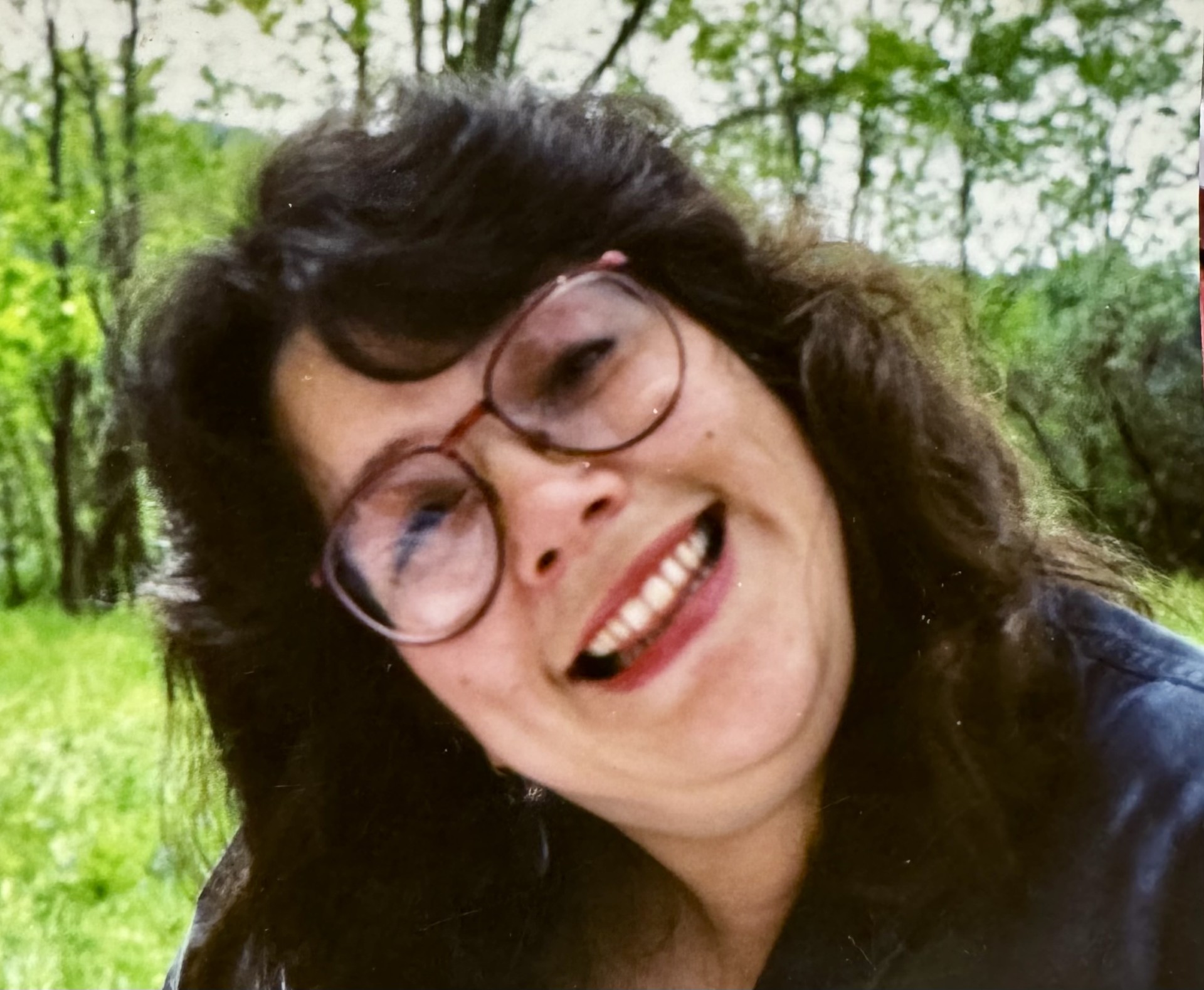
Harmony Noel Sellers was born on May 9, 1971, and passed away on December 6, 2024.
She was born at the Garberville hospital and grew up as a multi-talented and vibrant individual.
In her childhood, Harmony excelled in ballet, horseback riding, music (playing the flute) and art. She was highly social, always surrounded by many friends. Throughout her life, she excelled in many jobs and pursued a variety of passions.
Beginning in high school, she acted in several plays and later directed and performed in her mother’s Western film, which was filmed on an Arabian horse ranch on the Central Coast of California. She attended college in Santa Maria as an art major for a couple of years and later managed the deli at the San Luis Obispo airport, where she met her partner and Nicholas’s father, Richard Cartier.
Richard’s mother owned a bagel shop on the coast, where he learned to bake bagels. He delivered to Harmony’s deli, and that’s where they met and began planning their future business together. Their bagel shop started as a wholesale business, funded by Harmony’s inheritance from her grandfather’s estate.
After surviving an explosion that should have been fatal, Harmony and Richard went on to welcome their son, Nicholas Noel Sellers Cartier. Nicholas was born prematurely, after a difficult pregnancy that required Harmony to be hospitalized in San Francisco for a month. Despite weighing only four pounds at birth, he was pure love and joy, bringing immense happiness to Harmony, Richard, his grandmother Sonnie Sellers, and his uncle Korey Sellers. Nicholas sadly passed away in 2023.
A year later, their retail and wholesale bagel business — Bagels Naturally — reopened in downtown Garberville and flourished. They offered everything organic—from a dozen cream cheese flavors to fresh juice, smoothies, coffee, sandwiches, pastries, soups, salads, and even herbs. However, after several years, the business began to decline due to high overhead costs and limited local interest in organic food.
As the business struggled, Harmony faced profound challenges. She had already separated from Richard before its closure, leaving her to run it alone. When it ultimately shut down, she fell into a deep depression, mourning the loss of her investment, passion, and hard work, realizing she had chosen the wrong location where her efforts were underappreciated.
Afterward, Harmony took on various jobs, including drywall, painting, and car repair — skills she had been naturally talented at since a young age. She worked hard to support herself and her son. Later, she found purpose in caregiving, starting with helping her mother after a hip replacement. She spent several years as a caregiver, touching the lives of many with her kindness and compassion. Everyone she cared for would remark on her sweetness and warmth.
Harmony passed away after surgery and a prolonged hospital stay. She was sent home still in recovery but passed just eight days later in the home of a dear friend and client in Hydesville.
Services are still under consideration.
“Harmony will be missed by many, as she was a constant light in an uncertain world.”
###
The obituary above was submitted on behalf of Harmony Sellers’ loved ones. The Lost Coast Outpost runs obituaries of Humboldt County residents at no charge. See guidelines here. Email news@lostcoastoutpost.com.
BOOKED
Today: 11 felonies, 18 misdemeanors, 0 infractions
JUDGED
Humboldt County Superior Court Calendar: Friday, Sept. 11
CHP REPORTS
54692-55798 Sr299 (RD office): Trfc Collision-No Inj
ELSEWHERE
BBC: Six dead, 130 missing after Indonesian ferry capsizes in Java Sea
NY Times : Americans Love Supplements, but Experts Doubt Their Benefits
NY Times : Invasion of European Green Crabs May Devastate the Puget Sound
NY Times : Why Did Trump Order Up 660 Million Pounds of Mystery Meat?
TODAY in SUPES: Board OKs Agreement on Potter Valley Project Decommissioning and New Eel-Russian Diversion Facility
Ryan Burns / Tuesday, Feb. 11, 2025 @ 4:34 p.m. / Environment , Local Government , Tribes

From left: Cape Horn Dam, Scott Dam. Photos via PG&E.
###
The Humboldt County Board of Supervisors today seemed content to embrace the philosophy of “Don’t let the perfect be the enemy of the good” as its five members unanimously approved a plan that aims to achieve one of our region’s longest-held goals: the demolition and removal of two dams on the upper Eel River.
Specifically, the board approved a memorandum of understanding among a collection of federal, state, tribal and local agencies, who together have crafted a plan for a new Eel-Russian diversion facility associated with the decommissioning of PG&E’s Potter Valley Project, a defunct hydroelectric project comprising those two dams — Cape Horn Dam and Scott Dam — plus a diversion tunnel and power plant.
The Potter Valley powerhouse hasn’t generated electricity since 2021, and the utility has been looking to rid itself of the unprofitable infrastructure since 2018. A week and a half ago, PG&E released a 2,000-plus-page draft plan for public comment. Its final license surrender application and decommissioning plan is due July 29.
At today’s meeting, Humboldt County Public Works Deputy Director Hank Seemann delivered a presentation outlining the broad strokes of the new “two-basin solution” agreement, which will allow continued diversions of water to the Russian River, though with increased protections and benefits for the Eel River and its fisheries, Seemann said.
The seven parties who crafted the new Water Diversion Agreement over the past year and a half include Sonoma Water, Mendocino Inland Water and Power Commission, Round Valley Indian Tribes, California Trout, Trout Unlimited and the California Department of Fish & Wildlife.
You’ll notice that Humboldt County is not on that list. However, county representatives have been involved in negotiations, advocating for Eel River water to stay in the Eel River watershed. But the county has expressed willingness to consider any agreement that includes necessary protections and restoration opportunities for the Eel and its fisheries.
The Eel River’s abundant and diverse fish and wildlife habitat once produced abundant populations of Chinook salmon, coho salmon, steelhead, Lamprey, sturgeon and other species, though Seemann said the Potter Valley Project contributed to the precipitous decline of this teeming life, particularly salmon, whose population in the Eel, once numbering more than a million, has dwindled by roughly 95 percent.
The dams blocked fish passage and altered the natural flow patterns of the river while creating conditions for the proliferation of Sacramento pike minnow, an invasive species that preys on juvenile salmon.
However, diversions from the Eel have been an integral source of water for irrigation in Potter Valley and downriver water consumers supplied by the East Branch Russian River, which flows into Lake Mendocino near Ukiah. From there, water is used in Mendocino, Sonoma and Marin counties for irrigation and municipal/domestic water supply, while also helping the Russian River meet flow requirements.
Seemann explained that under the new agreement, PG&E’s water rights would be transferred to the Round Valley Indian Tribes, who would then lease them back to the Eel-Russian Project Authority. This, he said, “would restore ownership of Eel River water rights to an entity based in the Eel River watershed” — in this case, a tribal nation.
The vast majority of water diversions from the Eel would occur during the wet season of winter and early spring, with reduced annual volumes compared to historical amounts.

Preliminary design of a new water diversion system on the Eel River. | Image via County of Humboldt.
###
On the financial side of the agreement, the Eel-Russian Project Authority would pay Round Valley Indian Tribes $1 million per year to lease the water rights that the tribes would receive under the deal, and on top of that the authority would bay the tribes a restoration payment of $750,000 to $1 million per year.
“This payment is in recognition that the tribes have federally reserved water and fishing rights,” Seemann said. In exchange, the tribes would agree not to assert their federally reserved water and fishing rights during the term of the lease agreement, which has a conditional term of 30 years and a potential conditional renewal of 20 more years.
The agreement is premised on eventually phasing out diversions from the Eel to the Russian as the latter basin makes progress toward water independence, Seemann explained.
“Staff’s opinion is that the MOU contains protections and benefits that represent a strategic opportunity to accelerate restoration on the Eel River and recovery of Eel River fisheries,” Seemann concluded.
Representatives from the negotiating parties were on hand to discuss their perspectives on the benefits of the proposed deal.
First District Supervisor Rex Bohn voiced some skepticism about the MOU, particularly the finances, given the number of agencies involved.
He said the $750,000 annual payment may sound great, “but then you just named off five agencies, with probably a few more in there — that pie is going to be like one pie at Thanksgiving for a dinner for 20; it’s not going to be very thick slices.”
Calling for more government efficiency, Bohn asked, “Can’t one agency run this whole thing without everybody getting a chunk of the pie?”
Seemann said those restoration payments would be unrestricted, which would allow strategic use of those funds to leverage additional money via grants and other investments.
Wiyot Tribal Administrator Michelle Vassel called in to the meeting to read aloud a letter of “strong support” for the MOU, which was approved by the tribal council last night.
“The Wiyot Tribe believes this MOU, as a precursor to an enforceable water diversion agreement, will establish the framework and funding for badly needed Eel River restoration throughout the watershed, including our ancestral territory within Humboldt County,” Vassel recited. The tribe’s letter urged the board to approve the MOU.
Darren Mierau, North Coast regional director for the nonprofit California Trout, also voiced support for the deal. He said spring flows above the proposed diversion facility will be relatively unimpaired.
“There is a lot of habitat for salmon and steelhead recovery in that upper basin, and the genetics in the resident rainbow trout also retain the genetic information for a summer steelhead run, which we think can be restored as well,” Mierau said.
He concluded with a reference to the 2017 Eel River documentary called “A River’s Last Chance,” saying, “We think this is the Eel River’s best chance.”
Alicia Hamann, executive director of environmental nonprofit Friends of the Eel River, said that organization was formed 30 years ago for exactly this purpose: removal of the Eel River dams.”So this is a really, really exciting time for us,” she said.
Noting that the MOU place tribes in a position of power, Hamann said approving it is “the right thing to do, and it makes me really proud to be a citizen here in Humboldt County.”
During the public comment period, a couple of people urged the board not to approve the MOU, saying the county should either fight for the eradication of all diversions or hold out for more money as compensation for those water rights. But most people who spoke were in favor of the deal.
“There’s still a long way to go here, but we’ve advanced to a point that I don’t think most people could have imagined, even just a few years ago,” said John Driscoll, district representative for Rep. Jared Huffman, who was key in the development of the two-basin solution.
Second District Supervisor Michelle Bushnell, who has been serving with fellow Supervisor Mike Wilson on the ad hoc committee representing Humboldt County in discussions on this issue, said the county’s main goal is not to slow the dam-removal process.
Fourth District Supervisor Natalie Arroyo agreed, saying that she’s doubtful that such a deal could have been made without some kind of framework for continued water diversion.
Wilson noted that Humboldt County has always been opposed to diversion but has been sidelined for most of the decision making. Regardless, he said, “A lot of people have put a lot of time into this, and a lot of effort, a lot of science to get us where we are.” He credited county staff, in particular, for helping to make this deal happen.
Wilson also said, “This is probably the only robust public discussion [on this MOU] within the two basin area that anyone will see.”
Before voting, Bohn said, somewhat cryptically, “I want to vote against this so bad, but I’m not going to because I made a promise to somebody [that] I wouldn’t — [somebody] that I trust probably more than anybody on anybody’s staff.”
Bushnell was hesitant, too, saying she doesn’t disagree with the folks who say the deal isn’t good enough, but she said it represents a starting point for Eel River restoration.
The motion to have county staff sign the MOU and approve written public statements about it passed unanimously, 5-0. Once completed, the final water diversion agreement will be brought back to the board for consideration.
Sarah West Reappointed to Planning Commission
Earlier in the meeting, the board reappointed Sarah West to an at-large position of the Humboldt County Planning Commission.
West, the City of Eureka’s economic development coordinator, was first appointed to the commission two years ago. She was one of two applicants for the open seat, joined by independent land use compliance consultant Brittany Massaro.
Speaking via Zoom, Massaro made her pitch, saying, “My professional background has equipped me to approach both urban and rural development with a strong understanding of sustainability, zoning and resource management.”
She promised to bring fresh perspective and a motivation to embrace change in local government.
“My approach will focus on addressing key issues such as housing shortages, traffic and environmental sustainability with thoughtful, balanced solutions that benefit everyone,” Massaro said.
West, who appeared in person, said that while her career is not more economically focused, her background in planning “shapes my understanding of how policy impacts our communities, how little decisions today can impact the years to come.”
Serving on the commission is not about what she personally wants, she said. “It’s about honoring the public’s voice but also applying policy consistently, fairly and then within our purview as a commission. … You rarely make anyone happy with decisions, but hopefully that means we balance the needs of all the different groups in Humboldt.”
The supervisors praised both applicants, though each commended the job that West has been doing. Arroyo suggested keeping Massaro’s application on file for the next time there’s an opening. But the vote to re-appoint West was unanimous.
Gutted Courses, Fewer Majors, Faculty Layoffs: Who Will Feel Cal State’s 8% Budget Cut?
Mikhail Zinshteyn / Tuesday, Feb. 11, 2025 @ 7:38 a.m. / Sacramento

The quad at San Francisco State University in San Francisco on July 7, 2023. Photo by Semantha Norris, CalMatters
For all the math taught at college, the California State University system is stumped over an arithmetics problem it has less than five months to solve: How to keep operating when the governor has proposed cutting $375 million from its budget.
Without the money, the nation’s largest public four-year university system — enrolling more than 460,000 students — is likely due for a lot of subtraction: fewer professors teaching students due to layoffs and employment contracts that aren’t renewed, gutted academic programs and cancellation of majors that students are already enrolled in.
It’s already happening at some campuses, including San Francisco State and more recently Sonoma State, whose interim president intends to take the rare step of laying off tenured faculty, ending majors and totally shuttering the university’s NCAA Division II intercollegiate athletics.“One of the things that people notice when they come to campus is that the lawns don’t seem to be mowed like they used to be, that there is a lot of trash and garbage around,” said Emily F. Cutrer, Sonoma State’s interim president, at a Cal State trustees hearing late last month.
And that’s all before the planned spending cuts Gov. Gavin Newsom outlined in his proposed 2025-26 budget in January. The final budget is due by late June. It also comes at a time in which the system overall grapples with the reality that it hasn’t been able to afford itself since 2021, due to a mix of rising labor and insurance costs and greater student needs, plus a drop in enrollment after the COVID-19 pandemic.If the reductions were to hold, what’s happening at Sonoma State “is the first of what we will see at every Cal State University campus,” said Sen. John Laird, a Democrat from Santa Cruz, who chairs the subcommittee on education finance. He made those comments during a Senate budget committee hearing in late January that began reviewing the governor’s budget proposal, which includes the $375 million cut.
In an interview last week, Laird said the cut is “untenable.” On paper, it amounts to a nearly 8% cut to Cal State’s support from the state budget, but with the system’s growing labor expenses and inflation, he views that as closer to a 10% to 12% cut. He said his top priority this year is ensuring those cuts never strike Cal State or the University of California, which faces identical planned reductions.Less money would also undermine the Legislature’s and governor’s ongoing efforts to enroll more new California residents. It would “prohibit new enrollment… and that’s just not acceptable,” Laird told Calmatters.
Newsom’s proposed cuts reflect a larger budget problem for the state. Last year lawmakers and the governor closed a $47 billion projected deficit in part by cutting most state agency budgets by 7.95%. Lawmakers were able to persuade Newsom to delay those cuts to UC and Cal State by a year to give the systems more time to prepare. Newsom’s proposed budget for next year basically maintains the university cuts he and lawmakers agreed to last June. The system has been in a state of panic over these planned reductions since last summer.As for finding money in budget negotiations this year to stave off the cuts partially or fully, the odds seem stacked against Cal State. Last month Newsom’s Department of Finance issued a letter saying that the recent Southern California fires and projected deficits of several billion dollars after 2025-26 “underscores the need for continued vigilance to strengthen budget resiliency and fiscal stability to protect and preserve essential programs.”Julia Lopez, a Cal State trustee, attempted to translate that jargon in lay terms: “Don’t expect things to be much better in May. In fact, you may even plan for further cuts in May, and certainly don’t start anything new,” she said at January’s trustees meeting.
The governor seeks only about $570 million in new spending, underscoring just how fragile that balanced budget calculus is. The costs of natural disasters, including the Los Angeles area fires, and a dropoff in federal support for the state could wreck California’s budget plans.Laird’s counterpart in the Assembly, Chula Vista Democrat David Alvarez, said in an interview that some cuts may be necessary but the hit both systems would be taking under this plan is unfair. “I’m just being realistic about our budget situation.”
He noted that the cuts to Cal State and the UC would represent 40% of all the reductions to the state budget in Newsom’s January budget. That’s because the two campuses receive a combined $10 billion in direct state funding, so an 8% cut bites off a much larger amount than it does for agencies with smaller operating budgets. Alvarez called the planned reductions to UC and Cal State “disproportionate.”The issue is now a major concern for the leaders of the Legislature’s powerful budget committees. On Monday the chairperson of the Joint Legislative Budget Committee sent a letter to the director of the finance department echoing Alvarez’s points. “A cut this significant will undoubtedly result in cuts to direct services for students and possible layoffs or furloughs,” wrote Sen. Scott Wiener, a Democrat from San Francisco.
The 2025-26 budget can only be finalized through negotiations between legislative leaders and Newsom. Laird said he “will work over the next five months to try to make sure that the Senate leadership agrees with me.”Right now, 42 out of the 119 state lawmakers in office represent a district with at least one Cal State campus. Laird’s district includes two.
The 23 campuses together generate $7 of economic activity for every dollar the state spends on Cal State, a system report calculated in 2021. The ripple effect includes campus and student spending on goods, wages, housing and construction.
Cal State’s budget crisis
Seventeen campuses have cut a combined 1,200 workers between fall 2023 and fall 2024 while six campuses added almost 400 employees. San Francisco State posted the highest losses, with 180 employees. That amounts to 7% of workers, said campus president Lynn Mahoney, at the trustees meeting last month.Three other campuses — Dominguez Hills, East Bay and Los Angeles — each reduced their workforces by more than 100 employees, according to data the system’s chancellor’s office shared with CalMatters.
Some of those losses were due to layoffs. In other cases faculty or staff left on their own and the campuses chose to leave those vacancies unfilled.And that doesn’t include the job losses announced this year. Cal State Dominguez Hills sent layoff notices to 30 non-faculty staff last month, the school’s spokesperson said.Despite $164 million in extra revenue this year from recently approved higher tuition, the system’s finance team projects a deficit of $375 million due to ever-growing costs for student financial aid as well as campus insurance, utilities, employee health care and the loss in state support. It’s an amount equal to the annual operating budget of Fresno State, which enrolls about 24,000 students. The system has also been relying partly on one-time reserves to plug budget shortfalls the past two years.
“There will be zero new funding for compensation increases” if the state cuts go through next year, said Ryan Storm, an assistant vice chancellor at Cal State overseeing the system’s budget planning, at the trustees meeting last month. “There will be no new funding for mental health services for our students or our facility improvements,” he added later in his remarks. About three-quarters of the system’s operating budget is spent on salary and benefits.And that budget shortfall is on top of another fiscal blow to the system: the delay of about $250 million in promised funding from Newsom as part of his annual “compact” with Cal State to grow state support in exchange for higher student enrollment and improved graduation rates.All told, Cal State is looking at around $620 million in less funding than it would get for 2025-26 were the state to live up to its end of the compact deal and avoid the budget cut. The system’s operating budget is about $8.6 billion — a mix of state support and tuition revenue.
Cal State leaders are adamant about lobbying lawmakers to prevent the cuts, from alumni groups to presidents appealing to their state representatives, said Greg Saks, who heads external relations and communications for the system, at the January trustees meeting.
Sonoma State spotlight
Sonoma State had more than 9,000 students in 2018. Now it’s down to 5,800. Since 2020, the school has shed $26 million in expenses to fill the budget hole left by losing nearly 40% of its students in the last six years.Those cuts meant far fewer lecturers. It also means the loss of 70 staff plus eight tenured or tenure-track professors — largely through attrition or unfilled vacancies. Gone also are 26 management positions. Now the school faces an additional $24 million deficit in 2025-26. And like several other campuses with declining enrollments, Sonoma State will be rerouting a few million dollars to the campuses that are growing.“That demonstrates the right type of leadership,” said Alvarez when asked about Sonoma State’s plans to shrink its payroll. “When you don’t have resources, you have to make those tough decisions.”That dire budget picture prompted Cutrer, Sonoma State’s interim president, to propose cancelling 23 degree programs by the end of this school year, including philosophy, economics, modern languages, physics, theater, dance, geology, women and gender studies. Those majors enroll 302 students. And while 114 will graduate this spring, 56 will need to find a new major and 132 will need a “teach-out” plan to finish their majors, which may include online classes and counting other courses as satisfying their programs.While Alvarez acknowledges the necessity of “tough decisions,” he is less thrilled about telling some students already enrolled in cancelled majors that they have to find new ones. “I don’t think that’s the right approach.”
Cutrer’s team also plans to lay off 46 full-time faculty, ending the NCAA sports programs that affect 11 teams and 36 coaches, and not renewing contracts for 60 lecturers. The expected moves have been met with outcry from the campus community and deep concern from local politicians.“These actions will have far-reaching consequences not only for the university and its students, but also for the broader Sonoma County community, our local economy and the ability of businesses and public institutions — including county government — to recruit and retain a skilled workforce,” said a letter from the Sonoma County Board of Supervisors to Cal State’s leadership last month.
Spotlight on San Francisco State
San Francisco State declared a financial emergency in December after its enrollment sank from almost 29,000 students to less than 23,000 since 2019.
“So when my freshman class declined by 20% I needed 20% fewer sections of college writing, so a number of lecturer faculty didn’t get any courses,” said Mahoney, in an interview last month.
Lecturers, who are faculty and typically sign contracts per semester or year based on course availability, have fewer job guarantees than tenured professors.
By leaving vacancies open and cutting academic programs, the campus saved $26 million this year. But that doesn’t close the budget gap because the university has $8 million more in wage increases for its employees this year. And the proposed 8% statewide cut would mean an additional $20 million shortfall next year for San Francisco State.
“The greatest cost is to our lecturer faculty, many of whom are proud products of the CSU who have worked for San Francisco State for many decades,” Mahoney said in late January to the trustees.
She then read a note from an unnamed student who wrote “cutting jobs may provide a temporary financial fix, but it risks undermining the very foundation of the university’s mission to provide high quality.”
Systemwide, campuses have cancelled nearly 4,000 course sections between 2021 and 2024, even as enrollments have been climbing again after a brief dropoff. “This results in increased class sizes, which can impact student success, especially in student populations that need additional support,” Storm said.
Mahoney told CalMatters that “this is as dire as anything I heard during the Great Recession.”
###
CalMatters.org is a nonprofit, nonpartisan media venture explaining California policies and politics.
Prop. 36 Promised ‘Mass Treatment’ for Drug Offenses. Some Counties Aren’t Ready
Cayla Mihalovich / Tuesday, Feb. 11, 2025 @ 7:28 a.m. / Sacramento

California voters in 2024 passed Proposition 36, a ballot measure that increased sentences for certain and drug and theft offenses but also offered a clean record for people who complete treatment in lieu of incarceration. Illustration by Gabriel Hongsdusit, Calmatters.
It’s been three months since California voters overwhelmingly approved Proposition 36, a new law that pledged to provide “mass treatment” for those facing certain drug charges. But since the law took effect on Dec. 18, some counties are scrambling to fulfill that promise.
Now, prosecutors have the ability to charge people convicted of various third-time drug offenses with a so-called treatment-mandated felony, which would direct them to substance use disorder or mental health treatment in lieu of up to three years in jail or prison.
But as some counties struggle to implement the mandate without new funding or, according to people involved in enforcing the law, sufficient resources, more and more people are being charged without a clear path to the treatment that the law was supposed to offer.
CalMatters spoke with judges, district attorneys, public defenders and behavioral health experts in counties of various sizes that have started enforcing the new law. As of Feb. 4, nearly 30 people have been charged with the treatment-mandated felony in Yolo County. In Stanislaus County, roughly 140 people have been charged with the new felony as of Feb. 10. And in Orange County, that number has passed 500 as of Feb. 7.
At an early glance, CalMatters learned of a handful of people who have been placed in treatment since the law took effect. That number could increase in the weeks ahead as people move through their court process and the law is further implemented. A person can accept treatment at any point between their arraignment and jury trial.
While enthusiasm for the new law runs high from prosecutors and law enforcement, the machinery of government hasn’t quite caught up. The text of the measure did not spell out the details of how courts would implement Prop. 36, forcing court administrators, judges, district attorneys, behavioral health experts, probation officers and public defenders to quickly stand up new processes as many people are charged and incarcerated.
Treatment is “the greatest obstacle,” said Santa Clara County Superior Court Judge, Stephen Manley, who founded the county’s mental health treatment court and co-founded its drug court.
“We simply do not have the treatment in this state,” he said. “When you can’t place people in treatment, what is the alternative?”
The measure came with no funding. That’s one of the reasons why Gov. Gavin Newsom opposed the initiative.
“It’s about mass incarceration, not mass treatment,” Newsom said at a press conference in September. “What an actual insult it is to say it’s about mass treatment when there’s not a dollar attached to it.”
The Legislative Analyst’s Office estimated the measure would cost tens to hundreds of millions of dollars a year in increased criminal justice costs. Republican state lawmakers who backed Prop. 36 wrote a letter to Newsom in December urging him to commit more funding.
“The success of Proposition 36’s treatment-focused approach depends heavily on the availability of well-funded mental health and substance abuse services, which are critical for breaking cycles of addiction and reducing recidivism,” the GOP legislators wrote.
And Sen. Tom Umberg, a Democrat from Santa Ana, introduced legislation to help facilitate the implementation of Prop. 36.
“Every Californian should be treated equally under the law,” said Umberg. “It is my intent to make sure we fulfill the mandate of Prop. 36.”
What is a treatment-mandated felony?
An arrest is made. A judge reviews the charges at an initial hearing. But then what?
Under a treatment-mandated felony, someone who expresses interest in treatment will be assigned a “drug addiction expert” who will assess them and decide what kind of treatment they need. That treatment can involve mental health treatment, job training, and “any other conditions related to treatment or a successful outcome for the defendant that the court finds appropriate,” the measure said.
If they accept, they would enter a guilty or no contest plea and begin treatment. If they don’t agree to it, they would go to jail or prison if convicted. Those who finish treatment will have their charges dismissed.
Yolo County District Attorney Jeff Reisig, a prominent supporter of Prop. 36, said it’s OK that counties are taking different approaches to carrying out the law.
“Everybody’s going to do it a little bit differently,” he said. “But it’s moving along. There are no surprises right now.”

A courtroom where CARE Court hearings take place at the San Diego County Superior Court in San Diego on Oct. 9, 2023. Photo by Adriana Heldiz, CalMatters
Evaluations under Prop. 36
While the statute calls for a drug addiction expert to perform evaluations, it remains an “open question” in many counties as to who will take on that role, said Sacramento Superior Court Judge Lawrence Brown, who is the chairperson of the Collaborative Justice Courts Advisory Committee within the state court system’s policymaking body, the Judicial Council.
“In our county, (the behavioral health department) receives a high volume of requests for drug treatment and mental treatment pre-Prop. 36 so it’s adding onto their already considerable workload without any specific funding,” he said.
None of the three people who have requested treatment evaluations in Yolo County, a community of about 220,000 people near Sacramento, has received one as of Feb. 5. According to the county’s director of Health & Human Services Agency, Nolan Sullivan, that’s because no agency has the resources. The county is working on a temporary plan.
“They created an expectation for this really robust position to do work that, frankly, would be great, but it doesn’t exist today,” Sullivan said. “That is the biggest implementation gap we have in Yolo today.”
How will treatment-mandated felonies be processed?
Most of California’s 58 counties have adult drug courts, which vary from court to court but generally provide treatment to offenders struggling with substance use disorders, often alongside reduced charges. But 10 counties lack such courts, according to a recent tally by state officials, and people in the California justice system say that, even when the courts exist, treatment options are lacking.
“The best drug court in the world can’t do a thing without treatment in place,” said Manley.
Some counties are planning to fold treatment-mandated felony cases into existing collaborative justice programs, such as drug courts. Others plan to create a standalone court.
Orange County, for example, has already set up its own Prop. 36 court. For now, its behavioral health care agency has used existing resources and leveraged opioid settlement money to help pay for staff. Orange County Health Care Agency Director Veronica Kelley said they know how to stretch a dollar but the long-term plan remains a work in progress.
“There are unintended consequences with lots of our legislation and our propositions. I don’t want the unintended consequence to be that I have to cut another needed program to support this,” said Kelley.
As of Jan. 30, the Orange County Health Care Agency has received 111 referrals for the new felony, according to Kelley. Seven people accepted treatment, three of whom have since absconded. Warrants have been issued for their arrests.
“You have to be ready and treatment is hard,” she said. “Addiction is a complicated disease.”
Compared to others, her community has an abundance of treatment options for people who want it. That’s not always the case in smaller counties.
“If we had a rush of dozens of folks being referred to us through this process, frankly, I don’t know how we would handle that load today,” Sullivan of Yolo County said. “If folks are asking for treatment and there’s none available for a variety of reasons, what ownership do they have? I think it could be a pretty big barrier.”
In Stanislaus County, a community of about half a million people in the northern San Joaquin Valley, District Attorney Jeff Laugero wants to funnel people through its drug court.
“We want the treatment to be successful so that’s why we’re working with all of our justice partners to try and figure out what the best practices are and how it’s going to work,” he said. “I absolutely believe there is sufficient treatment, at least currently.”
But Stanislaus County Chief Deputy Public Defender Jennifer Jennison said the county had a major shortage of treatment even before voters approved Prop. 36. In her view, the district attorney is wrong to charge people with treatment-mandated felonies because often that treatment simply isn’t available.
“It’s reckless,” she said. “And people in need of treatment are sitting in jail without any end in sight, making their situation much worse.”
###
Cayla Mihalovich is a California Local News fellow.
CalMatters.org is a nonprofit, nonpartisan media venture explaining California policies and politics.
OBITUARY: Pamela K. Barkdull, 1950-2025
LoCO Staff / Tuesday, Feb. 11, 2025 @ 6:56 a.m. / Obits

It
is with heavy hearts that we announce the passing of our beloved
mother, grandmother, aunt, sister and teacher Pamela K. Barkdull,
affectionately known as Pam, who left us peacefully during a nap on
January 23, 2025, at the age of 74. Born on August 21, 1950, at St.
Joseph Hospital in Eureka, Pam has been a cherished resident of
Fortuna, where she touched the lives of many generations of students
and friends alike. She is the fifth generation of pioneer Newell and
Cooper families to live here in Humboldt County.
Pam was the daughter of Ken and Lois Newell, who instilled in her a love for education and community service. Pam graduated from Fortuna Union High School in 1968, where she was actively involved in student council, the National Honor Society (NHS), and the California Scholarship Federation (CSF). She was a member of the Girls League Cabinet and the Tri-ettes, receiving the Senior Class Good Citizen Award, reflecting her commitment to leadership and service.
Her senior year she was accepted at UC Santa Barbara, but later that year she started dating a handsome young man by the name of Curt from the Bar-W ranch in Bridgeville. She drove away to college in her VW bug, but it wasn’t long before her heart brought her back to Humboldt County. She transferred to Humboldt State University, majoring in Mathematics at a time when few women were studying that subject, while spending her weekends with Curt and even helping Raymond make hay and gather the cattle. She earned her bachelor’s degree in 1972 and on December 23, 1972, Pam and Curt Barkdull were married at the United Methodist Church in Fortuna. They honeymooned at the 6 Rivers Sporting Club in Mad River, marking the beginning of a beautiful journey together. The couple moved to Milton, Florida for Curt’s flight training at Naval Air Station Whiting Field. Their next assignment took them overseas to the Philippines, where Pam started her career teaching young sailors and marines preparing for their GED at the Naval Station Subic Bay in 1974. After returning to the States in 1976, they settled in San Diego, where Curt worked at the Naval Air Station in Miramar. They welcomed two sons, Greg and Brian, who were both born on Father’s Day, just two years apart, in 1977 and 1979.
The Navy later relocated the family to Corpus Christi, Texas, where tragedy struck with Curt’s untimely death in a mid-air collision in 1982. Pam regrouped and returned to Fortuna to raise Greg and Brian, dedicating herself to their upbringing and education. While taking them to all of their soccer and golf events, and helping them with their homework, she also served on the Fortuna Elementary PTA board, as a Camp Fire Boys and Girls leader, and began playing piano as the choir accompanist at the Fortuna United Methodist Church on Sundays. She obtained her Math teaching credential in California in 1988 and began teaching in the Fortuna Union High School District that same year, where she would go on to make a lasting impact in the Math department. She also looked after her mother, Lois and her in-laws Raymond and Meredith. After her children went on to UC San Diego and UC Santa Barbara, Pam invested her extra time in the local education system. She was instrumental in creating the Century Hall program in 1999, which started as a “school within a school” on the Fortuna High Campus. The core team of teachers included Steve Irwin, Bruce McCarthy and Raelene Keating. This program evolved into the Academy of the Redwoods (AR), which was designed in the summer of 2003 and they were awarded a grant from the Bill & Melinda Gates Foundation and launched with its first class of students in 2005 on the College of the Redwoods campus. As one of the most amazing and dedicated math teachers in the region, her classroom was always filled with encouraging words and positive attitudes. She taught mathematics at AR until her retirement in 2012, and her dedication to creating a supportive educational environment helped minimize barriers between high school and college, easing the transition to post-secondary education and also increasing high school graduation rates. AR has become a vital educational option for students throughout Humboldt County, thanks to the ongoing support of the Fortuna Union High School District and the Humboldt County Office of Education.
Pam’s life was filled with memorable family adventures, including trips to San Diego, Disneyland, Knotts Berry Farm, and Universal Studios with her boys. She enjoyed camp-outs at Grizzly Creek and a special trip with Cindy Hart and her sons back to Washington, D.C., where they toured the White House including the Oval Office and Mount Vernon. She took Brian back to Colorado to visit her sister-in-law Nona, and Meredith. Pam later traveled to Minnesota to visit her dear Navy friends, Maurie and Gretchen Weiler, and took a road trip with cousins Carl and Mary-Sue Anderson to visit family in Missouri. She took a cruise trip to Alaska and joined the Willey family in Hawaii. She also looked forward to her annual quilting trips to Sisters, Oregon, with her good friend Alayne Hunt. The annual family Christmas parties, held in rotation with her sister Jo Ann and brother Bob, were always a highlight of her year. Additionally, Pam loved attending the local concert series with two of her best friends, Patricia Blair and Sherry Hanson.
In 2012, Pam retired from teaching to pursue her passion for quilting and to spend more time playing with her grandchildren. Looking back it was fortunate that she enjoyed that quality time with her family because in 2015, Pam was hit with the diagnosis of early onset Alzheimer’s disease. She bravely carried on with grace and resilience. She managed to keep living in her own home for 9 more years with the help of her son Greg and a lot of post-it notes, and continued playing piano every Sunday for her church for nearly 8 of those years even though it would take several days of practice each week to get her songs straight for Sunday. Brian also fondly recalls his phone calls with her during those years on his way to work. Her family would like to acknowledge the compassionate care from Dr. Don Iverson at Providence Neurology and Dr. Andrew Johnston from Open Door during this period.
Pam is preceded in death by her parents and her beloved husband, Curt. She is survived by her siblings, Bob Newell of Hilo, Hawaii, and Jo Ann (Alan) French of Hydesville, California; her sons, Greg (Heather) Barkdull of Fortuna and Brian Barkdull of Eureka; and numerous cousins, nieces, nephews, and grandchildren, including special relationships with Emily, Laura, John and Faith.
Pam’s virtues of kindness, fairness, and generosity touched the lives of many. She loved to stay busy with her projects and was a source of joy and inspiration to all who knew her. If anyone wishes to make a donation in her memory, please consider the Curt and Pam Barkdull Scholarship Fund at the College of the Redwoods.
A memorial service for Pam will be held on March 22, 2025, at 11 a.m. at the Fortuna United Methodist Church, followed by interment at 3 p. m. at Sunset Memorial in Eureka. As we remember Pam, we take comfort in knowing she is reunited with Curt, and we will forever cherish the memories of her love and laughter. Pam, you will be deeply missed, but your spirit will live on in the hearts of all who loved you.
###
The obituary above was submitted on behalf of Pam Barkdull’s loved ones. The Lost Coast Outpost runs obituaries of Humboldt County residents at no charge. See guidelines here. Email news@lostcoastoutpost.com.
OBITUARY: Edith Vivienna Norton, 1956-2025
LoCO Staff / Tuesday, Feb. 11, 2025 @ 6:56 a.m. / Obits
It
is with heavy hearts that we announce the passing of Edith Vivienna
Norton, born on November 1, 1956, in Hoopa, to Byron Sr and Eileen
Grant. Edith passed away on February 4, 2025, leaving a legacy of
love, strength, and dedication that will live on in the hearts of all
who knew her.
Edith was a remarkable woman who truly embodied the best qualities of both of her parents, blending kindness, humor and an unwavering work ethic. She was a loving mother to her children, Leilani, Samuel and Louisa, whom she shared with Arthur “Artie” Jones. Though never married, Edith and Artie remained friends throughout their lives. In 1989, Edith met the love of her life, Kenneth “Kenny” Norton. Together, since 1989 they married and created a loving family. Edith welcomed Kenny’s sons, Dana and Damien Norton, as her own. Their family was completed with the birth of their cherished son, Cheyenne.
In March of 2023, Edith suffered an indescribable loss with the passing of her beloved daughter, Leilani. The heartbreak was overwhelming, but Edith, with her unshakable strength, held her family together during the darkest of times. Though she was broken, her love and devotion to her family never wavered, and she became the rock they leaned on as they navigated through their grief. Edith’s ability to remain strong and loving in the face of such a devastating loss was a testament to her character and her deep, unwavering love for her children.
Edith’s love extended beyond her immediate family. She was deeply devoted to her siblings—Vicki Cole, Maggie Pearson, Leslie Grant and her late brother Byron Jr., whose passing was a heartbreak she carried with her throughout her life. Edith was also blessed with a close bond with her sister-in-law, Lisa Grant.
A true community pillar, Edie was the heart of her family, fiercely and deeply loving all those around her. Her humor, which was passed down to her children, brought joy to all who encountered her. She was an extraordinary worker, dedicating much of her life to her job as the office manager for the Hoopa Valley Plant Management, where her presence and work were greatly depended upon. Edith’s commitment to her family and community was unmatched, and she helped in any way she could, always offering support and encouragement to those in need.
Edith was also passionately involved in the hydroplane races, a tradition that ran deep in her family. Her father, Byron, and her late brother, Byron Jr., both participated in the races, and later, her nephew Buck continued the legacy. Edith was instrumental in planning the races and supporting the racers, offering her time and dedication to ensure the success of the events. Her love for the sport and the community it brought together was unwavering, and her contributions to the Hydroplane Races will always be remembered as a testament to her commitment to her family and Hoopa Valley.
In her youth, Edith was a bright and active student, making a name for herself in high school as an honor roll student, involved in student council, student court as head Bailiff, cheerleading, pep club, and homecoming court. Her peers voted her “Most Talented,” a recognition that reflected her vibrant personality and remarkable abilities.
In her later years, Edith became the primary caregiver to her father, Byron, providing him with grace, patience and an abundance of humor as she took on the responsibilities that came with his medical complications. Her dedication was a testament to her strength and love for those she cared for.
Edith will be deeply missed by all who knew her. She leaves behind her loving children, grandchildren, and great-grandchildren whose lives were touched by her incredible spirit.
She is survived by her husband Kenneth “Kenny” Norton; mother-in-law Marcellene Norton; children Samuel and Louisa Jones (Elliott), and Cheyenne Sr (Kinsa), Dana (Adrianna) and Damien Norton; siblings Vicki Cole, Maggie Pearson (Ted), Leslie Grant, Lisa Grant and Julianne Farum (Terry); grandchildren Sloan (Grant), Minnie, Isabelle (Ryan), Cleo, Julia, Jed, Jake, Kee-shan, Sammy (Willow Clare), Louisa, Brandon (Stephenie), Cheyenne Jr.; great-grandchildren Aizen, Aurora, Sammy III, SaigeLynn, Andrew and Serena numerous nieces, nephews, cousins and friends, too many to list but each held a special place in her heart.
She is preceded by her daughter Leilani; father Byron “Bones” Grant Sr.; mother Eileen Grant; brother Byron “Newt” Grant Jr.
Pallbearers:
Samuel Jones, Dana, Damien, Cheyenne, and Sherman Norton, Sammy Jones, Ranold Pearson, Marion Jr. “Buck” and Romero McCovey, Tek-Wes McCovey.
Honorary Pallbearers:
Ted Pearson, Mike Ferris, Al Gray Jr., Bud Gray, Walter Gray, Lincoln Jackson, Hank Masten, Loren, Jack, and Jack IV Norton, Arthur Sr. and Jesus Jones, Thomas Masten Sr., Thomas Masten Jr., Ed Masten, Elrod Masten, Quincey Masten, Boyd Ferris, Marion McCovey Sr., Bob Campbell, Harold Jr. and Sam Campbell, Tyler Mitchell, Adam Robertson, Ryan Moon, LeRoy Pearson, Shannon Jones, Cheyenne Jr., Barbara Grant, Joseph and Jack Joe Marshall, Jake and Sagep Blake, Ryan Jackson, Lucas Garcia, Jeff Hodge Sr., Robert Kane Sr.
Edith’s legacy of love, generosity, and laughter will live on in the lives of her family and friends. Her unwavering spirit will forever remain in our hearts. Edith will be making her final journey home to Hoopa on Monday, February 10. A wake will be held in her honor at The Neighborhood Facilities starting at 6 p.m. Funeral services will take place the following day, Tuesday, February 11, at 11 a.m., with burial at Hoopa Cemetery next to her beloved father, Bones. A reception will follow at the Hoopa Firehall.
###
The obituary above was submitted on behalf of Edith Norton’s loved ones. The Lost Coast Outpost runs obituaries of Humboldt County residents at no charge. See guidelines here. Email news@lostcoastoutpost.com.
OBITUARY: Jay Anthony Brown, 1947-2025
LoCO Staff / Tuesday, Feb. 11, 2025 @ 6:56 a.m. / Obits

Jay Anthony Brown
Feb. 9, 1947 - Jan. 23, 2025
Our friend and brother Jay passed away peacefully on Jan. 23, 2025 at his home in Manila. Jay was born in Oakland and raised in Hayward. Jay’s father passed away when Jay was seven. He and his younger brother Jim were raised by their mother, Charlotte, and loving grandparents. Jay’s mother emphasized music, nature, film and most of all art. Jay and his brother Jim would spend many days at the Hayward Library drawing everything and anything. Their father was a calligrapher, carpenter and jack-of-all-trades and their mother was also a skilled artist and musician.
Jay excelled in school, he ran cross-country and track and was an accomplished saxophone player. After high school Jay enlisted in the Navy and graduated at the top of his class in boot camp as a sonar man. He was awarded a presidential citation for finding a downed helicopter in the bay of Tonkin. He served on the Destroyer USS Orleck DD886 and mine sweeper USS Leader MOS490. With the GI bill in hand, Jay attended Chabot College with an interest in calligraphy and printing. He then searched for the best art department in the state, and found Humboldt State University and Bill Anderson, a graphic arts professor at HSU. Jay excelled in college and graduated magna cum laude with a major in art and a minor in biology.
Jay met his wife Marcia at Humboldt State University in 1972. Jay was in the graphics department and Marcia was becoming a registered nurse. Their relationship was enhanced by Jay’s love and knowledge of organic vegetable gardening, hiking, backpacking, keen sense of wildlife habitat, bird watching, Shakespeare, the Ashland music festival and family trips to Tahoe. Jay and Marcia had two children together, Amelia and Mario.
Jay, along with friends Bill Ferry and Jim Test, formed the printing business Bug Press in Arcata. Great printing and great times ensued, and Bug Press is still in business today. Jay’s brother Jim was a regular visitor to Humboldt County and they enjoyed playing softball together on the Brain Police, Arcata Muffler and many other teams. Jay was also very proud of helping build and pilot several kinetic sculpture machines with his good friend Stock Schlueter, and very proud to be a Humboldt county artist. Thanks to Jay, his brother also became a permanent resident of Humboldt County, raised a family and still calls this special spot home.
Jay was hired by Humboldt State University to become the school’s graphic artist. All of the preview posters, books, teaching aids and printed material had Jay’s touch during his work at the college. After 25 years and a well deserved retirement, Jay began a new chapter. Thanks to his good friend Bill Chino he was allowed studio space in return for handyman work at the Jacoby Storehouse. Jay drew and painted every day, joined the Redwood Art Association and had many shows up of his work, sometimes three at a time. At 77 he was still climbing up to the roof of the Jacoby Storehouse to put up Christmas decorations, and loved helping to put up the enormous Christmas tree each year.
Jay and his brother Jim took yearly road trips together, usually with a mechanical theme. Their favorite trip was to the vintage car week in Monterey, and the crown jewel was the Monterey Historic races at Laguna Seca raceway where they could not only see the best classic machinery in the world, but hear their incredible sounds and watch them used as they were designed. Jay’s favorite spot in the whole world was at turn 8, the famous corkscrew, top of the hill. A portion of Jay’s ashes will live there forever come this fall.
Jay had an encyclopedic knowledge of naval, aviation and automobile history. He could quote facts on any navy, air force or army, of any nation in the world, at any time in history. On his last road trip, he held court at the Evergreen Aviation Museum in McMinnville. Oregon, teaching the docents about the aircraft they displayed.
Jay is preceded in death by grandparents Emma and Anthony Vierra, parents Charlotte and James Brown Jr. He is survived by his daughter Amelia Hughes of Hidden Valley Lake, Calif.., son Mario Brown of McKinleyville, their mother Marcia Brenta, of Bayside; brother Jim and Maryann Brown of Fieldbrook; nephews Creighton and Elizabeth Brown of San Rafael and Brandon and Ashley Brown, of McKinleyville; and grandchildren Olivia Brown, Luke Brown and brand new Margot Brown.
There will be a celebration of Jay’s life this May.
Farewell my friend and brother, we will miss you.
###
The obituary above was submitted on behalf of Jay Brown’s loved ones. The Lost Coast Outpost runs obituaries of Humboldt County residents at no charge. See guidelines here. Email news@lostcoastoutpost.com.


