

Our Water and Sewer Bills Need to Increase Regularly If We Want Safe and Reliable Service, Grand Jury Report Concludes
LoCO Staff / Friday, June 26 @ 10:07 a.m. / Local Government

Photo by Steve A. Johnson. | Pexels.
PREVIOUSLY in 2025-26 Grand Jury Reports:
- The Humboldt County Grand Jury Has Released its First Report of the 2025-2026 Session, and It’s a Love Letter to the Eel River Conservation Camp
- Humboldt County’s Tsunami Warning System Could Be Improved, Latest Humboldt County Civil Grand Jury Report Finds
- Humboldt’s Planning and Building Department Has Staffing Challenges and Communication Issues, Grand Jury Says
###
Press release from the Humboldt County Civil Grand Jury:
In January of this year, the residents of Clearlake in nearby Lake County awoke to raw sewage flowing down roadways, across fields, and into drainage ditches and waterways.
In March of this year, Alderpoint County Water District residents learned that they were in danger of losing all water and sewer services because of an unpaid bill of over $14,000 to PG&E.
What do these two fiascos have in common? Both are chronic failures to raise water and sewer rates to meet the rising costs of providing the services.
Should your water and sewer bill keep going up?
For 13 years, the Fortuna City Council chose not to raise water and sewer rates. Instead, they took “belt-tightening” measures. By not contributing to reserves and delaying water and sewer rehabilitation projects they managed to squeeze by for years … until they couldn’t.
In April 2024, the Fortuna City Council adopted a rate increase that hit residents with a 20% rate increase in each of the following three years. By June 30, 2029, the water and sewer rates will roughly double compared to the old rates.Other communities have recognized the need for continual improvement of their services and so have continuously raised rates to meet rising costs.
The McKinleyville Community Services District (MCSD) has adopted a more proactive stance toward its water and wastewater management.
By implementing regular rate increases, MCSD created a water/wastewater budget that is 46% higher than Fortuna’s.With its larger budget, MCSD can focus more on water/wastewater infrastructure upgrades and replacements. Meanwhile, Fortuna is struggling to escape the “break and fix” cycle they created.
No one likes paying higher water and sewer bills, but if a community wants to have safe and reliable water and sewer services, the answer is clear. As water and sewer operating costs continue to rise, yes, your water and sewer bill should keep going up.
The Civil Grand Jury Report “Flowing Forward: Funding the Future of Water and Sewer Systems” was published 6/23/2026 on the Humboldt County website Civil Grand Jury | Humboldt County, CA - Official Website, and details the research that went in the Jury’s conclusion; What is clear is that ensuring adequate drinking water and a functioning sewer system require consistent rate increases.
###
DOCUMENT: Flowing Forward: Funding the Future of Water and Sewer Systems
BOOKED
Today: 4 felonies, 12 misdemeanors, 0 infractions
JUDGED
Humboldt County Superior Court Calendar: Today
CHP REPORTS
Elk Creek Rd / Curly Jack Rd (YK office): Trfc Collision-1141 Enrt
ELSEWHERE
Governor’s Office: Governor Newsom signs legislation 8.31.2026
County of Humboldt Meetings: Fish & Game Advisory Commission Agenda - Regular Meeting
Governor’s Office: Governor Newsom announces appointments 8.31.2026
Governor’s Office: Governor Newsom signs legislation cracking down on cannabis ads and labels that appeal to kids
Billionaire Tax, Affordable Housing: See the Measures on California’s November Ballot
Yue Stella Yu and Kristen Hwang / Friday, June 26 @ 8:36 a.m. / Sacramento

Protect Huntington Beach volunteers hand out campaign materials in Huntington Beach on Nov. 11, 2023. Photo by Lauren Justice for CalMatters.
###
This story was originally published by CalMatters. Sign up for their newsletters.
###
On Nov. 3, Californians will vote on 14 statewide ballot measures on environment, taxation, election, housing and healthcare.
For months, interest groups sponsoring ballot initiatives spent heavily on ad blitzes and signature gathering to get on the ballot, but some agreed to withdraw high-profile proposals after striking deals with state leaders or other interest groups this week, ahead of Thursday’s deadline to finalize the November ballot.
Rideshare giant Uber and the state’s trial lawyers pulled rival measures in a deal with state lawmakers and healthcare labor unions and the California Hospital Association agreed to pull two measures that would have capped hospital executive pay and restricted spending by healthcare unions.
Here’s what’s on your November ballot:
Billionaire tax
What it does: This high-profile measure would apply a one-time 5% wealth tax on the assets of roughly 200 California billionaires, to be paid over five years. Ninety percent of the revenue would go to pay for healthcare for low-income Californians and 10% toward education and food assistance programs.
Supporters: Service Employees International Union–United Healthcare Workers West, independent U.S. Sen. Bernie Sanders, Teamsters California and AFSCME California
Opponents: Gov. Gavin Newsom, prominent billionaires including Google co-founder Sergey Brin and Ripple Labs co-founder Chris Larsen, the California Teachers Association, California Primary Care Association and California Medical Association
Audit new tax spending
What it does: This measure in response to the billionaire tax proposal would require state audits of programs funded by new taxes. It would also apply revenue from new taxes to the state’s spending cap, which requires that spiking revenue go back to taxpayers or toward education. That would effectively cancel out the wealth tax proposal. If voters approve both measures, the one with more votes will prevail.
Supporters: Building a Better California, primarily funded by Brin and venture capitalists John Doerr and Michael Moritz, and Reform California, led by GOP Assemblymember Carl DeMaio of San Diego
Opponents: Proponents of the billionaire tax initiative
Prohibit new personal property tax and retroactive taxes
What it does: This measure is also aimed at undercutting the wealth tax proposal. It would prevent new taxes on personal property, which would offset the wealth tax. If both pass, the one with more votes prevails.
Supporters: Building a Better California and Reform California
Opponents: Proponents of the billionaire tax initiative
Make high-earner income tax permanent
What it does: The measure seeks to make permanent a temporary income tax — up to 12% — on high earners that voters approved in 2012. The tax applies to household income over $721,000 for couples and over $360,000 for individuals. The tax generates between $5-15 billion each year for K-12 schools and community colleges. It is set to expire in 2031.
Supporters: The California Teachers Association, California Federation of Teachers and California School Employees Association
Opponents: California Taxpayers Association
Higher threshold for local special taxes
What it does: This would raise the threshold for citizen-driven special tax ballot initiatives to pass from a simple majority to two-thirds, making it harder to impose or increase taxes. The measure, placed on the ballot at the last minute by state lawmakers, reflects a deal state leaders struck with Howard Jarvis Taxpayers Association.
Supporters: Howard Jarvis Taxpayers Association, California legislators, Newsom
Affordable housing bond
What it does: This would allow the state to borrow a record $11.25 billion for affordable housing, with $10 billion to buy, build, rehabilitate and preserve affordable homes and $1.25 billion to help veterans buy homes.
Supporters: Newsom, Democratic state lawmakers, the California Apartment Association and AFL-CIO California
Opponents: Republican state lawmakers
$25 billion homebuying loan
What it does: This would create a $25 billion mortgage loan program for home buyers who make less than 200% of the area median income. The measure would offer fixed-rate mortgages for up to 17% of the purchase price on homes priced under $1.5 million. Home buyers must pay at least 3% of their down payment.
Supporters: Former Senate Majority Leader Bob Hertzberg, Building a Better California, the California Association of Realtors, United Brotherhood of Carpenters and Joiners of America and Western States Regional Council of Carpenters
Rainy day fund
What it does: This constitutional amendment from top Democratic leaders would allow the state to deposit up to 20% of its general fund tax revenue into its rainy day fund each year, instead of the current 10%. The state could also spend some tax revenue to pay down its $20 billion federal unemployment insurance debt.
Supporters: Newsom and legislative Democrats
Opponents: Legislative Republicans
Expedited environmental review
What it does: This would amend the state’s landmark California Environmental Quality Act to create deadlines for environmental reviews of most housing, transportation, water, health and clean energy projects to speed up permitting and limit the court’s ability to stop or delay developments.
Supporters: California Chamber of Commerce, Building a Better California, the California Building Industry Association, PG&E and Edison
Opponents: Clean and Healthy California, a coalition of environmental advocates and the California State Building and Construction Trades Council
Voter ID
What it does: This constitutional amendment would require voters to present government-issued ID when voting in person or the last four digits of their ID number when voting by mail. Voters would be required to state under the penalty of perjury that they are U.S. citizens.
Supporters: Reform California, GOP U.S. Rep. Ken Calvert, and state Sen. Tony Strickland of Huntington Beach
Opponents: League of Women Voters of California, ACLU California Action and California Donor Table
Public campaign financing
What it does: This measure would allow state and local political candidates to tap into public funds for their campaigns. Public campaign financing has been banned in California since 1988. State lawmakers approved the measure last year to send it to voters this November.
Supporters: California Common Cause, California Clean Money Campaign and ACLU California Action
Opponents: California Taxpayers Association
Recall election reform
What it does: After a recall, this constitutional amendment would eliminate the election to pick a successor immediately, such as when Gov. Arnold Schwarzenegger replaced the recalled Gov. Gray Davis, instead leaving the post vacant until it’s filled in a separate election. It would also allow the recalled official to run for the office again.
Supporters: League of Women Voters, California Common Cause and Secretary of State Shirley Weber
Opponents: Election Integrity Project California
Clinic funding
What it does: This measure would require federally qualified health centers to spend 90% of revenue on direct patient care and services that aid in providing care to low-income and underserved people. Clinics that don’t comply would be fined; the money would go into a state-operated account for worker training and staffing.
Supporters: Service Employees International Union-United Healthcare Workers West
Opponents: The California Primary Care Association, which represents clinics, the California Medical Association, Planned Parenthood Affiliates of California and the California Teachers Association
Immunology research bond
What it does: This would allow the state to borrow $8.4 billion in debt to research immune system-based technologies for treating conditions including cancer, heart disease and Alzheimer’s. The money would be divided between a University of California-affiliated nonprofit and a grant for public or nonprofit institutions. Any resulting technology and drugs from the research would be sold at 20% below the national average.
Supporters: Gary Michelson, philanthropist and funder of the California Institute for Immunology and Immunotherapy, Meyer Luskin, philanthropist and institute board member,The ALS Association, The Alzheimer’s Association and Blood Cancer United
Opponents: Robert Kaplan, former associate director of the National Institutes of Health
CalMatters’ Ben Christopher contributed reporting.
Restraining Order Against Former Arcata City Councilmember Brett Watson Extended, Despite His Multiple Attempts to Overturn It
Sage Alexander / Friday, June 26 @ 8:23 a.m. / Courts

The order was extended on June 10. | File photo.
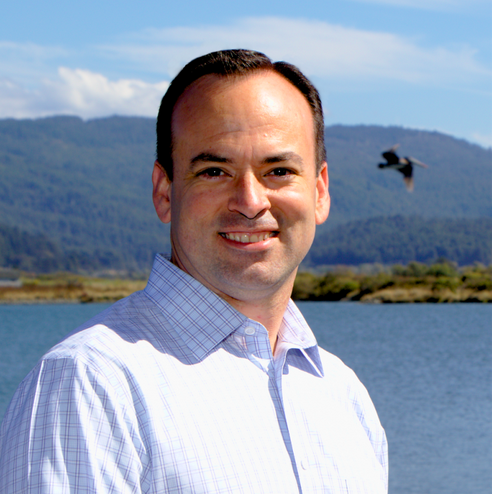
Watson in 2022
In the three and a half years since Brett Watson left office, the former Arcata councilmember and mayor has continued to challenge a workplace violence restraining order granted in 2023 for harassment of a city employee.
The restraining order was extended this month by Judge Timothy Canning, though through early September, according to court documents.
Watson has continued to deny wrongdoing in legal documents, contradicting findings from a lengthy 2022 city investigation that found he sexually harassed a female subordinate at work. The investigation found that he was driven by an obsession with her.
Since then, multiple courts have upheld the restraining order. Watson has made multiple unsuccessful attempts to get the order overturned. He also filed a lawsuit against the city and the employee over the issue; the latest ongoing effort started in spring 2025.
The court order barred Watson from contacting or harassing four city officials as well as entering their workplaces and having guns.
An attorney for the city filed a request to renew this restraining order on March 2, about two weeks before it was set to expire. The order was extended by a judge earlier this month, with it ending September 8, according to court minutes.
The city sought for the order to be renewed for an additional three years. In the request, the city argued that Watson’s continued legal efforts indicate that he will try to communicate with the people protected if the restraining order is no longer in place.
The city pointed to the many months he spent attempting to overturn the order and his ongoing attempt to challenge the dismissal of the related lawsuit.
“In both actions, Respondent has continued to put forth a false narrative of events, including allegations that directly contradict the findings of this Court,” the city’s renewal request stated.
The city alleges that Watson is using the court system to continue to harass, disturb and frighten the people protected by the order.
The restraining order was granted in March 2023, a few months after Watson lost his bid for re-election. At the time, Judge Canning found that Watson’s stalking behavior warranted a permanent restraining order, as the evidence showed that great harm would result if a temporary order expired.
Notably, the court found Watson did not comply with that temporary order until he was arrested for violating it.
The ruling pointed to Watson trying to visit and manipulate the employee, despite being told to stop. This included making two unauthorized entries to the employee’s office after he was denied access. After hearing from witnesses, the court found the evidence overwhelmingly suggested Watson “was obsessed with the employee and had an uncontrollable compulsion to continue communicating with her.”
His efforts to overturn the order include an appeal to the California court of appeals, which upheld the order in June 2024 in a ruling that awarded legal expenses to the city. He sought a rehearing in the same court, which again kept the order intact later that month.
Then, he petitioned the Supreme Court of California, which denied his request to review the case in August 2024.
On top of these appeals, he filed a 2023 lawsuit against the City of Arcata and the employee he stalked in federal court, seeking damages for allegedly violating his rights.
The lawsuit claims the city violated the Americans with Disabilities Act by placing guidelines on interacting with city employees amid the investigation into his conduct. According to the lawsuit, his conditions include ADHD, depression, anxiety and recovery from substance abuse.
It claims that, due to his disabilities, he was distressed by the employee’s suggestions to spend less time together.
The lawsuit also accuses his alleged harassment victim of violating his civil rights. It states that actions taken against Watson, including the investigation into his conduct, were in retaliation for “advocacy for his constituents,” which is protected by the First Amendment.
This lawsuit was dismissed by the court in 2024. He attempted to reopen the case, which was denied.
In April 2025, he filed another appeal with the Ninth Circuit court. According to the city’s account of his legal efforts, the parties are awaiting a decision or a date for oral argument on the case.
Documents from Watson broadly argue that the relationship between the pair was consensual and cultivated by the employee for strategic reasons, accusing her in one section of the lawsuit of displaying “underlying Machiavellian designs.”
But testimony from witnesses and the employee said Watson threatened performance reviews if the employee did not return his barrage of messages, and that he showed a pattern of stalking behavior.
In recent declarations, the protected people state they remain in fear of Watson. City filings say those people remain frightened of Watson, “especially because orders from multiple State and Federal Courts do not seem to have caused [Watson] to view his conduct for what it is — disturbing, frightening, and stalking,” the city states in the request.
The city alleges Watson will reengage in his “disturbing and frightening ‘stalking’ behavior” toward certain city officials if the order is not renewed.
Watson did not return a phone call or emails before publishing time. His attorney’s office also did not return a message seeking comment.
###
PREVIOUSLY:
- Arcata Mayor Brett Watson Arrested for DUI, Drug Possession Late Last Night
- Arcata Mayor Brett Watson Issues Statement on His Arrest for DUI, Drug Possession
- Is Arcata Mayor Brett Watson Being De-Mayored? Amid Mysterious Circumstances, Arcata City Council Calls Special Meeting to Elect New Mayor and Vice-Mayor
- Arcata City Council Casts Vote of ‘No Confidence’ in Brett Watson, Removes Him as Mayor
- Arcata City Councilmember Says He’s Entering 30-Day Rehab Program to Deal With Personal Issues; Will Make Decision About His Future as Public Servant at a Later Date
- Residential Rehab Program Completed, Former Mayor Brett Watson Rejoins the Arcata City Council
- (UPDATE, BRETT RESPONDS) City of Arcata Announces It is Investigating Allegations Against Councilmember Brett Watson
- Arcata City Councilmember Announces Resignation, Citing Family Medical Issues, Poor Local Healthcare Options
- Arcata Councilmember Brett Watson Reveals That He Suffers from a Learning Disability as Mysterious Investigation Continues to Limit His Access to City Staff
- (UPDATE) Investigation Sustains Sexual Harassment Allegations Against Arcata City Councilmember Brett Watson; Former Mayor Was ‘Obsessed’ With Staff Member, Report Finds
- Arcata City Council to Consider Disciplinary Action, Including Possible Restraining Order, Against Councilmember Brett Watson in Response to Sexual Harassment Investigation
- Arcata City Councilmember Brett Watson, on the Verge of the City Seeking a Restraining Order Against Him, Says That He is the Actual Victim of Harassment and Discrimination
- Brett Watson, You Must Resign: An Open Letter From 50+ Local Women Leaders
- The City of Arcata Will to Have to Live With Brett Watson for a Few More Months, as the Councilmember Refuses to Allow Himself to Feel Shame or Remorse
- Arcata City Councilmember Brett Watson Accuses City Staff of ‘Lies and Deception’ During Very Long and Uncomfortable Council Meeting
- Arcata Councilmember Brett Watson Arrested for Violating His Restraining Order
- Restraining Order Against Former Arcata City Councilmember Brett Watson Upheld by Appellate Court
Former Eureka City Councilmember Jeff Leonard Announces Bid for 5th Ward Seat
Isabella Vanderheiden / Thursday, June 25 @ 2:08 p.m. / Elections

Photo submitted by Jeff Leonard.
###
Your Lost Coast Outpost has heard rumblings of several potential candidates in the upcoming Eureka City Council race, but this one took us by surprise: former city councilmember Jeff Leonard is running for reelection.
As detailed in the campaign announcement below, Leonard represented Eureka’s 3rd Ward on the city council from 2002 to 2010. Now he’s vying for the 5th Ward seat, which is currently held by Renee Contreras-DeLoach.
The Outpost will interview each of the Eureka City Council candidates — plus other folks running for local office — when we get a little closer to the filing deadline for the General Election in November. In the meantime, you can learn more about Leonard in the campaign announcement below.
###
Jeff Leonard announced today that he is running for the 5th Ward seat on the Eureka City Council. Leonard previously represented Eureka’s 3rd Ward from 2002 to 2010, serving two successful terms on the council.
“I love living in Eureka,” Leonard said. “We are fortunate to be part of such a diverse and welcoming community. With innovative local businesses, beautiful neighborhood parks, a zoo, and easy access to ocean beaches, we enjoy a great quality of life.”
Jeff grew up in Eureka and attended local schools. After graduating college, he worked as a photographer and taught high school in San Jose. In 2000, he returned to Eureka to raise his family. He currently works for State Fund, handling workers’ compensation claims for the State of California.
During his time on the City Council, Leonard was an active supporter of Eureka’s local business community and advocated for responsible economic growth. He supported projects that helped grow the local economy, including Eureka Natural Foods, the Eureka Co-op, Target, Humboldt Bay Aquatic Center, Bayfront One, and Eureka Fisherman’s Terminal.
Leonard has also been a longtime supporter of renewable energy and energy conservation. He was a founding member of the Redwood Coast Energy Authority (RCEA) and served as Board of Directors chairperson for several years. RCEA’s mission is to create a clean, green, and sustainable energy independent future for Humboldt County.
As a council member, Leonard also championed outdoor recreation opportunities for local residents. He led the Eureka Trails Committee and helped develop the Eureka Waterfront Trail plan. “Community support has played an integral role in developing public trails in our community,” Leonard said. “I really enjoy biking on the Eureka Waterfront and Humboldt Bay Trails, and it is great to see so many local families enjoying these wonderful outdoor recreation opportunities.”
Leonard also served on the Zoo Foundation Board and worked to improve neighborhood parks. He helped secure funding for new playground equipment at Hammond Park on 14th Street and led the fundraising effort to build the Eureka Skate Park.
“Eureka is already a great place to live, but I believe we can do more,” Leonard said. “Keeping our streets safe and clean, providing recreation opportunities for our kids, and supporting development opportunities for our local economy are all part of maintaining the quality of life that makes Eureka special. That is job number one for the Eureka City Council”.
Remember Yesterday’s Earthquake Notification? There May be a Better Way Someday, Cal Poly Geologist Says
Dezmond Remington / Thursday, June 25 @ 12:30 p.m. / Earthquake , Science

A Rio Dell house struggles to stay upright: the aftermath of the 7.0 December 2022 earthquake. Photo by Ryan Burns.
###
You get that earthquake notification yesterday morning? Plenty of people did, and plenty of them freaked out. A 6.0? Near here? Uh-oh! They were right to be worried; it was a nothingburger up here in Humboldt, but a chunk of Mendocino got rocked by the quake, which the US Geological Survey (USGS) later downgraded to a 5.6.
The ShakeAlert system isn’t 100% perfect, Cal Poly Humboldt geology professor Eric Riggs explained to the Outpost yesterday, but it’s definitely better than having nothing. The USGS monitors signals detected by seismograph networks, which, when it thinks an earthquake is happening, takes a few seconds to crunch some data: How powerful are the tremors? How far are they spreading? and spits out a message to people it thinks may be in the danger zone. If Humboldt had been closer to the epicenter, residents’ phones may have made a whole lot more noise, screaming and buzzing instead of passively pushing through a notification telling people they might feel some shaking.
“Because it is an automatic system, it does make errors,” Riggs said. “It’s doing as best it can, as fast as it can. The whole point is to give people a few extra seconds to get safe, and to shut down critical systems, or to lock things up so they don’t swing around.”
Enduring a couple small false positives is far safer than confronting a real earthquake with no heads-up. There’s a sweet spot, Riggs said; people in Ukiah and Willits got their warnings while they were already being tossed around.
Riggs is part of a team working on improved alert technology that, for the last few years, has been utilizing the fiber-optic cables internet company Vero has installed. Scientists monitor the data the cables are carrying. When the cables vibrate, the pulses of light that computers turn into data change, and the scientists working on the project have figured out how to interpret those altered pulses, recognizing if the cables have picked up on an earthquake.
The improvements over using traditional seismographs are immense. The signals move much faster — at the speed of light, far faster than an earthquake can move, although only after a computer takes about five or six seconds to decide if the data it’s receiving means there’s an earthquake and the signal is broadcast. It allows victims of an imminent earthquake to have a few extra seconds to prepare.
For now, they’re only monitoring the lines Vero’s put down around Arcata, out to Willow Creek and down to Eureka. Someday, it’ll reach up to Trinidad, and once they figure out how to implement it on a wider scale, maybe elsewhere on the West Coast. A few other universities (CalTech, the University of Washington, Stanford, to name a few) are tinkering with their own systems.
It’s not entirely perfect. Because it’s always “on,” and the cables are so long, it generates reams of data, terabytes of the stuff scientists have to sift through. But they’re slowly working through the kinks. But even once it’s out of the experimental phase, some overreactions are probably inevitable.
“For those few seconds, when it works, it makes a difference,” Riggs said. “Between you, me, and the doorpost, I think I would rather have a couple of false positives than miss one.”
‘Good Fire’: Local Tribes Demonstrate Traditional Practices Amid Renaissance of Prescribed Burning
Sage Alexander / Thursday, June 25 @ 7 a.m. / Fire

A cultural burn demonstration last week at Leavey Ranch. | Contributed photo by Seamus Kistner/Blue Lake Rancheria
###
Surrounded by people outfitted in flame resistant gear, Sebastian Castillo began to light a fire.
He rubbed his hands around a stick, drilling into a cedar board. The specialist in fire and ethnobotany was using friction to make an ember.
As he sped up, his arms gradually wearing out, others stepped in, taking turns to build up the heat. A small piece of soaproot eventually caught, was gingerly blown on and used to light a pile of sticks.
As the pile crackled, he led a prayer.
Young people, some learning how to work with fire in this way for the first time, then took sticks to the flame, dipped them and carried their torch to the burn area.
This demonstration, part of last week’s Blue Lake Rancheria/Yurok Tribe/CalFire Cultural Fire Symposium, comes during a renaissance in the practice. [DISCLOSURE: The Blue Lake Rancheria is a minority owner of the Outpost’s parent company, Lost Coast Communications, Inc.]
It was on a patch of forest where fire hadn’t burned for 150 years, until it was transferred to the Blue Lake Rancheria last year. This prescribed-burning effort is part of a larger push to bring “good fire” back in force.
Practitioners there said it’s more important than ever to support beneficial fire, as wildfires in California have become larger, hotter and more destructive.
Blaine McKinnon, training officer of the Yurok Fire Department, said a century of fire suppression has created a “tinder box” across the state.
A treatment for the tinder box is controlled, lower-intensity burns that take out dry vegetation, reducing the chance of a larger, scarier fires.
Fire like this has been used by Indigenous people across California and the world for thousands of years.
“A cultural burn or cultural fire practice may feel much more connected to the land, a more passionate, stronger feeling of dedication, spirituality with the place,” he said.
People typically use more traditional tools and methods. The fire often aims to cultivate important materials, like foods and medicines that grow back strong after the undergrowth is burned.
The most glaring benefit of wider adoption of controlled fire is the potential to mitigate the chance of high-severity wildfires, protecting homes and important resources from devastating blazes.
But proponents say it’s also useful to widen meadows, provide habitat to wildlife, encourage fire-adapted seeds to sprout and stimulate the growth of useful plants.
“Redwood ecosystems are pyro-dependent, meaning the ecosystem depends on fire as part of its natural process of regeneration and health,” said Karley Abi’hu’laro Rojas, Blue Lake Rancheria’s ethnobotany and cultural stewardship manager.
They said since the 240-acre Leavey Ranch hasn’t burned in such a long time, and has been impacted by more than a century of cattle grazing, the tribe’s environmental department will be monitoring to see what plants come back after the fire.
But the goal is to cultivate a gathering space for the tribal community.
“That would include berry plants, such as elderberry, native blackberry, huckleberry [and] salmonberry, but also some of the medicinals and material plants, such as hazel or ginger,” said Rojas.
Participants took measures to avoid a hazel grove, which Rojas suspects are part of pre-colonization foliage.
The tribe started a program to take on burns like this in 2025, they said, estimating participants deliberately burned about three acres last year and expect to burn that much again this year. Blue Lake Rancheria is set to dramatically increase the footprint of burns, with a CalFire grant and newly acquired lands.
The landscape across California has adapted with flame, typically started by people or lightning strikes. But it’s been suppressed for a long time. In 1850, the state of California outlawed cultural burning. The federal government banned it in the early 1900s as part of strict fire suppression policies.
Despite the real threat of landing in jail, North Coast Indigenous groups such as the Yurok, Hoopa and Karuk continued the practice, teaching the skill over generations, said Rod Mendes, fire chief of the Yurok Tribe and Blue Lake Rancheria.
Burning is simply a way of life, he said.
“Fifteen years ago, what we’re doing in Yurok [territory] today, you went to jail for it. It’s not like that anymore; things change,” said Mendes.
McKinnon started burning on the Yurok reservation as a youth with his whole family. He called for more people to get involved, more programs to train practitioners and for loosening up laws to allow for that.
“My belief is that cultural people have it in their blood, and they just need to bring that out of it. Some of them know it, some don’t know it, but I think it’s in their blood, and it’s something that they’re drawn to,” he said.
An array of legislative changes in California over the past decade have allowed more Indigenous burning activities and more recently created pathways for tribes and cultural practitioners to legally conduct burns themselves.
CalFire, the agency responsible for state-designated wildlands, co-sponsors the symposium. Government agencies will often send representatives to learn from practitioners.
Len Nielson, CalFire staff chief of prescribed fire and environmental protection, said he learns something new at every cultural burn he attends.
He said the burning is in line with the mission of CalFire, which is reducing catastrophic wildfires.
“We know that it amplifies the work that we are doing at CalFire to increase the pace and scale of beneficial fire,” said Nielson.
It’s happening all over the state; tribes are doing it, and doing it well, he said.
At the ranch, the fire burned low to the ground.
People pulled duff from the base of redwood trees with McLeod tools, lit up piles of sticks using firing tools and scurried up hills with hoses when fire wandered up the trunks of trees.
The operation was like an organism, directed by experts in the practice, who gave safety tips and called out for adjustments as conditions changed on the forested hill.

Contributed photo by Seamus Kistner/Blue Lake Rancheria
The effort was aimed at teaching techniques, particularly to other tribal people; many, during a debrief after the burn, spoke about how they wanted to take what they learned home.
Alyssa Ledesma Araiza, a Cal Poly Humboldt graduate student and citizen of the Gabrielino/Tongva Nation, said her tribe doesn’t have any land to burn, and this was her first time at a cultural burn. She hopes to bring the practice back to her tribe.
Another participant, Jaime Lara, who works for the Rou Dalagurr Food Sovereignty Lab at the university, liked learning how to use traditional tools and western tools alike.
“This practice is going to continue. It’s happened for millennia. It will continue healing, for humans and plants and wildlife,” he said.
Fire practitioners interviewed agreed there’s not enough “good fire” happening across the state.
“We’ve had over 100 years to mess this up, and you can’t fix it in a decade. It’s going to take probably equally as much time to clean it up,” said Mendes.
But he said the trend is on the rise, with more people burning. What he sees as necessary, from here, is teaching non-Indigenous people to use fire on their lands.
“What we’re doing is teaching people to utilize fire, utilizing Indigenous methods to manage their land,” he said.
Part of the goal is to change the way people think about fire.
People have been taught to call 911 if they see smoke, noted Nielson from CalFire. Such training doesn’t go away easily.
The U.S. Forest Service’s Smokey Bear campaign has hammered complete fire prevention into the minds of the American public for the past 80 years. People are understandingly afraid of massive wildfires, which have leveled out entire towns in recent years.
“The biggest fear, of course, whenever we’re conducting a controlled burn or beneficial fire, is the fear that it becomes a wildfire,” said Nielson.
But he added that if you look at the statistics, less than one percent of prescribed fires get out of containment lines, and fewer still cause any damage. The federal government has reported over 99% of federal prescribed burns are successful, meaning they didn’t escape, a trend that’s likewise reflected in analyses of non-federal fires.
And with devastating wildfires becoming all too common, some view the traditional practices of native peoples as key to addressing the problem.
“If we want to see good fire on the land, that really means having money and resources and tools and land go back to native communities so that these practices can be rebuilt,” said Rojas.
OBITUARY: Patricia ‘Pat’ Bailey, 1940-2026
LoCO Staff / Thursday, June 25 @ 6:58 a.m. / Obits

To state the obvious, I wrote this in advance. If there are lies to be told in my obituary, I want to write them myself. First, I won’t say how old I was when I died. Age isn’t the best measurement of a life well lived. Also, I didn’t have a crystal ball. (See first sentence if you need clarification.)
Here is an old picture of me when I was young. Not a new picture of when I am old. I had goals and aspirations. Life happened and I never got around to them. I did check a lot of typical boxes, married, children, grandkids, dogs, cats, jobs, and a house.
When I was 10 I wanted to just climb the perfect tree.
When I was 18 I could roller skate like a pro.
And by 30 I was married with 4 children and a home in Fieldbrook.
If you gain weight from the number of books you consume, I would be horizontally challenged. I consumed books in the bath, in bed, on the iPad, or through audiobooks. I should be a pastor for the number of books I baptized. Falling asleep with a paperback against my face was also a very popular pastime.
Before I couldn’t anymore, I bowled. And I was good. Empirically, very good. I could hurl a 15-pound polyurethane sphere 60 feet and rack up 187 points on any given day. Bowling was not only fun, but a brilliant excuse to travel. Have you ever flown across the country with a bowling ball? Let’s just say it makes it difficult to bring back any fragile souvenirs to say the least.
I traveled without my bowling ball as well. My favorite trip was Devils Tower. And no, there were no mashed potato premonitions beforehand. And somehow, I always stopped for lunch before I left Humboldt County. I loved to eat. Trips to Denmark, Paris, and the Caribbean were among my other favorite destinations.
To say I liked Neil Diamond is an understatement. It bordered on obsession. There were weekends I would max out the record player and it would play continuously for hours. My children accidentally learned all his songs by heart. I’ve seen 27+ concerts across multiple states. (Once I got tickets for two consecutive days in two different states.) Never once did I throw undergarments on stage. To be clear, that is not a parsing of words to imply I did it more than once either. My passion for Neil Diamond’s music could not be overstated.
My life was not perfect, but it was so good, so good.
— Pat Bailey
###
At this time no public service is planned. Pat asked that friends wishing to remember her gather over a bottle of wine and listen to her all-time favorite artist: Neil Diamond.
###
The obituary above was submitted on behalf of Pat Bailey’s family. The Lost Coast Outpost runs obituaries of Humboldt County residents at no charge. See guidelines here. Email news@lostcoastoutpost.com.


