
OBITUARY: Janis Nees, 1944-2024
LoCO Staff / Monday, July 1, 2024 @ 6:56 a.m. / Obits

Born
to Sylvester and Marjory Mart, passed away into the arms of her
Savior on June 3 in her daughter’s home. AKA: Janis Martz, Janis
Shaffer and Janis Teague. Janis is survived by her husband, Bud Nees, and two children — David Shaffer and Kim Lueras — and a brother, Terry Martz. She also leaves behind
11 grandchildren and 5 great-grandchildren.
Janis had a 31-year battle with congestive heart failure. Janis worked much of her life as a waitress and knew many, many people. She was very outgoing and would strike up a conversation with anyone who crossed her path! She would light up any room she entered. She was funny, and witty and full of light! She instilled in her children the importance of hard work, promptness, honesty and being mindful of those around you!
Janis was very generous and loved helping people. She was dependable and a woman of her word! She was often found in one of the restaurants where she worked or frequented, giving it right back to anyone heckling her.
She will be deeply missed! Until we meet again!
A memorial will be held on Saturday, July 6th. Contact her daughter for details at kimklueras@gmail.com.
###
The obituary above was submitted on behalf of Janis Nees’s loved ones. The Lost Coast Outpost runs obituaries of Humboldt County residents at no charge. See guidelines here.
BOOKED
Yesterday: 10 felonies, 12 misdemeanors, 0 infractions
JUDGED
Humboldt County Superior Court Calendar: Today
CHP REPORTS
852 MM199 S DN 8.50 (HM office): Trfc Collision-1141 Enrt
Poppy Dr / Sherwood Rd (HM office): Closure of a Road
ELSEWHERE
Mad River Union: Arcata’s petite data center only the first
Mad River Union: Whistleblower calls for Miranda’s Rescue end
Mad River Union: EV infrastucture needs in rural areas reviewed
Mad River Union: $600K grant for Jolly Giant, Butcher’s Slough resilience
OBITUARY: Brian Strehl McSilvers, 1978-2024
LoCO Staff / Monday, July 1, 2024 @ 6:56 a.m. / Obits

It
is with profound sadness, we announce that Brian Strehl McSilvers,
age 45, passed away in Humboldt County on June 24, 2024.
Brian was born September 25, 1978 at Mad River Hospital in Arcata and lived most of his life in Humboldt County. He also lived in Oregon, Hawaii and the San Francisco Bay Area. He was the eldest son of Kathleen Strehl Swineford and Jan Dwight McSilvers.
Brian was an avid fan of all sports, but was truly committed to the Pittsburgh Steelers since boyhood. Brian delighted in playing baseball with his friends and often organized informal leagues for their teams to compete with one another.
Brian was preceded in death by his grandparents, Jack and Jackie Strehl of Fortuna and Claire McSilvers of Springfield.
Brian is survived by his mother and stepfather Kathleen and Mark Swineford of Dickson, Tenn.; his father and stepmother Jan and Linda McSilvers of Springfield, Ore.; his brother Michael McSilvers of Las Vegas; his sister Miranda Swineford of Shoreline, Wash.; and numerous aunts, uncles, cousins and friends.
Brian will be interred at Harpeth Hills Memorial Gardens in Nashville, Tenn.
For those desiring memorial contributions are suggested to give to Humboldt Soups On at humboldtsoupson.com.
###
The obituary above was submitted on behalf of Brian McSilvers’ loved ones. The Lost Coast Outpost runs obituaries of Humboldt County residents at no charge. See guidelines here.
Lawmakers Reach Agreement on $10 Billion School Bond
Carolyn Jones / Sunday, June 30, 2024 @ 9:52 a.m. / Sacramento
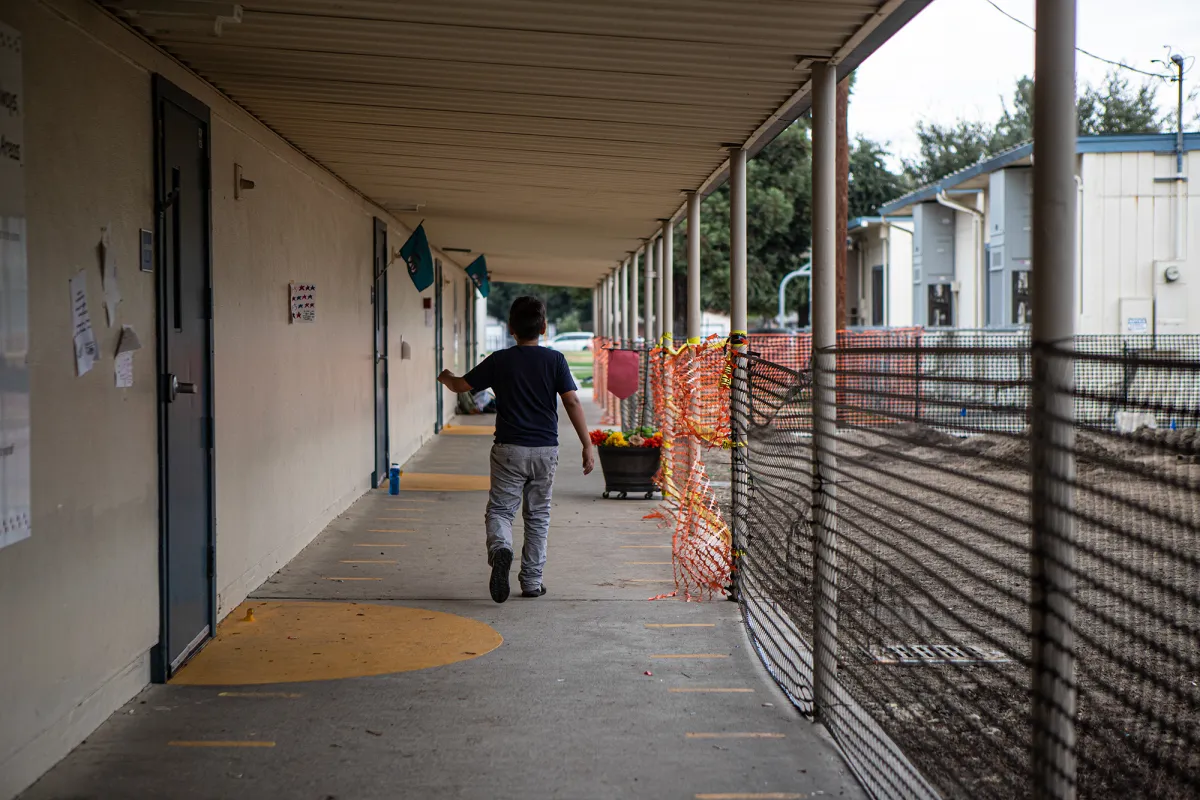
Construction sites in the hallways of Keyes Elementary School in Keyes on Nov. 15, 2023. Photo by Larry Valenzuela, CalMatters/CatchLight Local.
The Legislature agreed late Saturday on a $10 billion bond to pay for repairs and upgrades at thousands of K-12 school and community college buildings across California, some of which have languished for years with dry rot, mold, leaks and other hazards due to lack of funds. K-12 schools would get $8.5 billion and $1.5 billion would go to community colleges.
“This money is badly needed,” said Rebeca Andrade, superintendent of Salinas City Elementary District in Monterey County. “We don’t have the money to make the basic, structural repairs that are needed at every one of our schools. Students need safe spaces to learn if they’re going to reach their full potential.”
The agreement comes after months of wrangling by lawmakers and Gov. Gavin Newsom, who had to choose between two competing school facilities bills – one that included four-year colleges and one that didn’t. Assembly Bill 247, sponsored by Al Muratsuchi, a Democrat from Torrance, had the edge because it asked for less money and because four-colleges have their own means of raising funds. The bond needs a ⅔ approval majority in both houses and Newsom’s signature.
Originally, the bill asked for $14 billion, which would have made it one of the largest school bonds in state history.
There were several potential bonds competing for room on the fall ballot, but Newsom hinted he was leaning toward the school bond in his revised budget proposal. That called for draining the remaining $375 million in an existing school facilities fund and eliminating a $550 million grant program that would have paid for new kindergarten and preschool classrooms. He noted in his proposal that a school facilities bond could fill both those funds. The proposal ended up as part of the final budget.
No dedicated funding stream
Money to fix California’s schools is sorely needed. In 2020, voters rejected a $15 billion school facilities bond, leaving the state’s school repair fund – last replenished in 2016 – nearly empty.
“We need help. It’s become an issue of equity — our students deserve safe conditions for learning like everyone else.”
— Rebeca Andrade, superintendent of Salinas City Elementary District
Unlike most states, California doesn’t have a dedicated stream of funding to repair school buildings. Money comes from state or local bonds — a system that benefits more affluent districts, according to a recent report from the Public Policy Institute of California. State money usually requires matching funds from the district, which is easier to raise in wealthier areas where voters are more apt to approve bonds and where bonds raise more money because property values are higher. Rural districts and those with higher numbers of English learners, Latino and low-income students typically have the hardest time securing money to fix school buildings.
Plenty of research points to the link between student achievement and the condition of school buildings. Students whose schools are modernized, clean and safe tend to have higher test scores, lower suspension rates and higher rates of attendance.
The unequal way California distributes school repair funds prompted Public Advocates, a nonprofit law firm, to threaten to sue the state, claiming the system is unconstitutional. Public Advocates has been urging the state to adopt a sliding scale that would allow smaller and low-income districts to collect more state funds to make needed repairs. The bond does call for a sliding scale, but it was unclear today if Public Advocates would proceed with its lawsuit.
The bond needs a simple majority to pass in November, but it’s not clear how receptive voters will be. In light of economic worries, 64% of voters said this is a “bad time” for state bonds, according to a survey released in June by the Public Policy Institute of California. At the same time, respondents said that K-12 education was their second-highest priority for state spending, just behind health and human services.
‘We need help’
Salinas City Elementary, where half the students are English learners and more than 75% are low-income, has struggled for decades with building repairs and upgrades at its 15 campuses. Walls are cracked, roofs leak, window frames are rotten, some schools lack air conditioning and wheelchair ramps are pocked with holes. The district lacks a large stage for performances, or a decent STEM lab. A recent survey of all needed repairs put the cost at $500 million.
In 2022, local voters overwhelmingly passed a pair of school facilities bonds, despite the fact that the bonds will raise property taxes in the predominantly low-income community. But the bonds will only bring in $149 million, not nearly enough to meet the need. That’s why the state bond money is crucial, Andrade said.
“This community is amazing. They value education and they trust us,” Andrade said. “But we need help. It’s become an issue of equity — our students deserve safe conditions for learning like everyone else.”
###
CalMatters.org is a nonprofit, nonpartisan media venture explaining California policies and politics.
GROWING OLD UNGRACEFULLY: Five Myths
Barry Evans / Sunday, June 30, 2024 @ 7 a.m. / Growing Old Ungracefully
My in-box seems to be a magnet for myth debunking: Facts that I thought to be true regularly crumble into dust in the hard light of skepticism. Here are a few from the last few months.
The pharaoh let my people go
We have no historical records of Israelites being enslaved in Egypt, despite then Prime Minister of Israel Menahem Begin boasting, “We built the pyramids” during a visit to the National Museum in Cairo in 1977. The popular notion of two-to-three million people held in servitude by a barely larger Egyptian population and subsequently trekking across the parted Red Sea (yay Moses!) and trekking through the Sinai Desert just doesn’t compute. Eric Cline (history professor, author of the intriguing 1177 B.C.: The Year Civilization Collapsed) figured that the escapees would have needed 1,500 tons of food and 11 million gallons of water…every day for 40 years. Nope, didn’t happen.
Sappho was gay
The greatest Greek lyric poet, Sappho was a beauty by all (i.e. both) contemporary accounts: “Violet-hair, pure and honey-smiling,” according to one. Also, she was married, with a daughter. She wrote Hymn to Aphrodite, the only complete work we have of hers, in which (especially if you’re male with our usual fantasies) you can find kinda-sorta hints of homosexuality. But really, the myth only arose late in the 19th century — until then, “Sapphic” and “Lesbian” had no such connotation.

Sappho and her lyre (Charles Mengin Sappho, 1877. Public domain)
Bankers plunged to their deaths in the 1929 Crash
Newspapers had a field day following the Wall Street Crash of October 24, 1929 (Black Thursday). Daily reports had financiers and bankers jumping from their high offices overlooking Wall Street, where pedestrians wended their way through the tangle of flattened bodies, presumably thinking, “Serves ‘em right, the bastards!” Nope. According to the New York Medical Examiner’s office, just four (of 100) actual or attempted suicides in the city could be attributed to the Crash, and not a single banker or financier.

This pic comes with the caption, “A solemn crowd gathers outside the Stock Exchange after the crash.” (SSA poster/US government)
John Scopes was an unwilling defendant
Dayton,
Ohio Tennesse was in poor financial shape (sound familiar?) in the mid-1920s,
so a couple of movers-and-shakers cooked up a scheme to put the city
on the map: Let’s prosecute a teacher in a show-trial for illegally
teaching evolution, a felony according to the new Tenessessean Butler
Act*. First, find a teacher who
would be willing to play the role of martyred educator. Football
coach John Scopes (he never did teach biology) enthusiastically
agreed, and the trial proceeded, pitting William Bryan
(politician-fundamentalist) against Clarence Darrow (atheist, say no
more). Scopes was duly found guilty, although he never took the
stand, which was probably for the best, since he’d been home sick
on the date he was supposed to have corrupted the kids’ vulnerable
minds, and fined $100…before
the verdict was overturned on a technicality. No matter, the 11-day
trial put Dayton on the map and it’s been known ever since as the
Monkey Trial City. And, of course, the whole drama spawned the hit
play and movie Inherit the Wind.
* The 1925 Butler Act prohibited Tennessee public school teachers from denying the Bible’s version of mankind’s origin in Genesis. It was repealed in 1967.
Kindly old Martin Luther brought tolerance to Europe
Misogynist, anti-Semite, xenophobe, hater of the poor: yes. Kind: no. Martin Luther (1483-1546) probably didn’t even nail his “95 Theses” which condemned Roman Catholic indulgences (sin now, pay later) to a church door, per the myth, but sent them to the appropriate church authorities. He hated, among others: The poor (“Let all who are able, cut them down, slaughter and stab them,” he advised when the peasants demanded better working conditions); Jews (“First set fire to their synagogues…Second raze and destroy their homes…”); Women (“a mind weaker than man…she did not equal the glory of the male creature”); not to mention Muslims and, of course, Catholics. All in all, a perfect role model for Nazi Germany.

1528 portrait of Luther by Lucas Cranach the Elder. (Public domain via Wikimedia)
No Insurance? Get Free Medical, Dental, Vision Services at Next Month’s Pop-Up Healthcare Clinic in Eureka
Isabella Vanderheiden / Saturday, June 29, 2024 @ 12:45 p.m. / Health Care

Previous pop-up clinic. Image: California CareForce
###
Medical care can be hard to come by in Humboldt County, especially if you’re uninsured. In an effort to bridge the gap in local services, volunteer medical professionals with California CareForce will host a free two-day healthcare clinic at the Adorni Center in Eureka next month.
California CareForce, a non-profit healthcare organization based in Roseville, will provide various medical services to hundreds of residents at the pop-up clinic, including general health exams, physicals, dental extractions, fillings, cleanings and x-rays. An on-site vision lab will provide eye examinations and prescription glasses.
All services provided are free and offered on a first-come, first-served basis. Folks attending the clinic do not need proof of insurance, employment, income, residency, immigration status, or an ID to receive free services.
“We know that dental, vision, and medical care is hard to come by in Humboldt County due to cost and access,” Cyndi Ankiewicz, executive director of California CareForce, told the Outpost. “With the help of our generous local volunteers who donate hundreds of hours to provide services and help organize the clinic, we are here to offer our services to anyone and everyone in need.”
This is the first time California CareForce has held a pop-up healthcare clinic in Humboldt County and they’re still looking for volunteers. Medical professionals (doctors, ophthalmologists, optometrists, dentists, dental hygienists, oral surgeons, etc.) can register to volunteer at this link.
Doors will open at the Adorni Center at 7 a.m. on Friday, July 12, and Saturday, July 13. More information can be found in the press release below.
###
For the first time in Humboldt County, California CareForce will offer free dental, vision and medical care to underserved and underinsured individuals and families in Humboldt and surrounding counties. The free clinic will take place on July 12-13 at the Adorni Center in Eureka, CA. More than 350 volunteer healthcare professionals from throughout California are projected to provide needed care for an anticipated 700 people. All services are FREE; clinic participants do NOT need proof of insurance, employment, income, residency, immigration status or an ID to receive them.
A vision lab will produce free prescription eyeglasses on-site. Dentistry will include x-rays, cleanings, fillings, and extractions. Medical doctors will provide consultations, and general health exams.
“I am excited to lead this effort to provide free dental and vision services for our community,” said Dr. Tom Lewis, Chairperson of the Humboldt Clinic. “The need for services is so great”, continued Dr. Lewis, “There’s nothing like providing for those who are in need.”
All clinic services will be offered on a first come, first serve basis, as capacity allows. Patients will line up outside and will then be directed inside the clinic based on the service they wish to receive. For more information on how to receive services and types of services offered please call our office at 916-749-4170.
Our clinics are made possible by the generous donations from our sponsors. We’d like to give a special thank you to the following: United Concordia Dental, North Coast Grantmaking Partnership, National Vision, Area 1 Agency on Aging, and HUUF Endowment Fund for their support.
Professional volunteers are still needed in numerous capacities including oral surgeons, general dentists, dental hygienists, pharmacists, medical doctors, ophthalmologists, and optometrists. We’re also in need of general volunteers to assist in all areas of the clinic- no healthcare experience necessary!
For more information on volunteering, receiving services, or charitable giving please visit www.californiacareforce.org.
###
THE ECONEWS REPORT: Project 2025 and the Environment
The EcoNews Report / Saturday, June 29, 2024 @ 10 a.m. / Environment

Special guest Rep. Jared Huffman is heading a task force in the Democratic caucus to address Project 2025, the Heritage Foundation’s policy outline for a second Trump administration. The document is pervaded by anti-science and anti-regulatory animus, with a particular focus on climate science and renewable energy.
Friends of the Eel River Conservation Director Scott Greacen goes deep into these and even darker corners of Project 2025 with Rep. Huffman. We also discuss potential implications of the six-month delay PG&E announced in filing its final license surrender application for the Eel River dams.
HUMBOLDT HISTORY: The Bottlin’ Monroe Family! They May Have Been Indifferent Businessmen, Many of Them, But They Made Heavenly Sodas, Ciders and Vinegars
Catherine Monroe Mace / Saturday, June 29, 2024 @ 7:30 a.m. / History

Alonzo Monroe with one of his original “A. Monroe” soda bottles, left, and his son Joseph’s bottle for “Humboldt Artesian Mineral Water” right. Photos via the Humboldt Historian.
My grandfather liked to tell stories. As a child, I visited Humboldt County with my parents, and a full litany of family stories would parade through the allotted time. These stories generated an interest in history, genealogy and “old things” that has lasted my whole life.
With mostly the same few stories told, the people in them became both mythically larger than life and insubstantial as ghosts. But an old glass bottle, thick and aqua-colored, with embossed letters spelling “Monroe,” was tangible and real. I became curious about the story behind these bottles.
It begins with my great-great-grandfather, Alonzo W. Monroe, or A. Monroe as he was known in print. An entrepreneur, he made money to make more money. His enterprises were many and varied. And most came to a hard-luck end.
One enterprise that seemed successful was the Monroe House, a three-story building on the southeast corner of 2nd and E streets in Eureka, where Monroe operated a hotel, dining facility, and liquor shop, and also rented out spaces to other shopkeepers. Successful, that is, until January 3, 1876, when it burned to the ground in a spectacular and uninsured manner. His loss was estimated to be $50,000.
Undefeated, Monroe set sail to San Francisco to raise money for a new building. He came back with enough money to begin rebuilding, this time in brick. The conversations he had and the men with whom he talked in San Francisco are not recorded, but one of them must have prompted him to venture into the bottling of soda waters. As a liquor dealer at the beginning of the temperance movement, Monroe may well have considered that a venture which would move him into the temperance market would be a wise investment.
Just seven weeks after the Monroe House fire, the Daily Humboldt Times carried this prominent advertisement:
HUMBOLDT SODA WORKS!
A. Monroe & Co., Proprietors Having secured at a great cost, the necessary machinery, and secured the sole right for this county of the new patent soda bottle, we are now prepared to manufacture first-class
- Soda
- Sarsparilla [sic]
- Champagne Cider
- Bottle Ale & Porter, old stock
- Syrups
- Sarsparilla [sic]
- Lemon and Gum
Which will be sold by the Gallon and warranted to be up to the Standard Weight, All orders for any of the above articles can be left at the wholesale liquor store of A. Monroe.
Patrons in the country supplied immediately on notice.
A. Monroe & Co.
###
The new brick Monroe Building opened in May 1876. During the previous four months, Monroe had been doing business at a temporary location two blocks away. In the new building, Monroe located his liquor store in one of the storefronts opening on E street, between Humboldt County Bank and Opera Alley. Along with the new sodas, he supplied wines, liquors, and whiskies from Kentucky and Virginia, and other beverages from E. Martin & Co. of San Francisco.
Monroe had installed his new soda bottling machinery at the Humboldt Brewery, Messrs. Marhoffer and Wenger, proprietors. In an 1876 article about the Humboldt Brewery, the Daily Humboldt Standard found the process of bottling the soda waters to be worthy of a sideline:
The process of bottling the soda water and sarsparilla [sic] is a very interesting one, it being done with Matthews’ Patent Bottler, and the style of stopper used is a decided improvement on the old system of cork and wire or string. The machine used for washing the bottles is an invention of recent date and is a great saver of labor.
A specialty of the company was the Monroe Champagne Cider. The recipe was secret — obtained like a franchise from someone back East. It was said that the franchise was rare and expensive, and once granted must be kept secret. How Monroe became the only purveyor of Champagne Cider on the West Coast under those requirements remains a mystery. The bubbly cider became the fashionable drink for weddings, christenings and other gala events among those in the emerging temperance movement.
Just two years after launching the bottling works, A. Monroe, age 58, began to have small strokes that progressively robbed him of his mental and physical abilities. Two of his sons were enlisted to help with the business. The oldest son, Joseph Porter Monroe, and the third-born son, young John Welton Monroe, worked in the store as well as in the bottling works. The business became A. Monroe and Son under the management of Joseph P. in June 1878. At about this time, the bottle works were moved from the Humboldt Brewery to Washington and A Streets. The old Sanborn maps show a nice residence at this location, so it may have been Joseph’s home, and the bottling works were added to his property, or vice versa.
A. Monroe died on March 20, 1882 at age 62. At this time, there was a temporary cessation of the soda bottling business.
Alonzo Monroe had not formally filed a will, but a holographic will was discovered and admitted to probate April 22, 1882. The inventory taken included an undivided one-half interest in the Soda Works, value estimated to be $400.00. His widow Anna was named executrix and directed by the deceased to “collect the income of my said property; and to sell such of my property as may be unproductive and place the proceeds at interest or otherwise invest them in productive property; and to invest and reinvest my said property and the proceeds thereof or any portion thereof as circumstances may require.” She was to use the income produced to educate the six remaining minor children, John W., included. Joseph P. was said to have previously received his share of the estate — probably the other one-half interest in the soda works.

This Monroe Soda Water box is typical of early-day soda carriers, in which the bottles were stored upside down.
###
On November 1, 1884, Joseph P. Monroe bought the undivided one-half interest in Eureka Soda Works from the estate for $1,000.00, a nice increase in value. John W., who had been working for his father in the actual manufacturing and bottling part of the business, continued to work for his brother at the bottling plant located at A and Washington Streets in Eureka.
That location, just up the hill from Flannigan and Brossman’s Bayside Lumber Company mill, allowed the addition of another product to the inventory. The steam-powered mill, needing water for its operation, had drilled a well to a depth of 175 feet in order to avoid salt water from the bay. The artesian well they got was more than adequate for their needs, although the mineral content would periodically clog the boilers.
At this time, people ingested mineral water as a cure for whatever ailed them, a practice encouraged by doctors. Joseph P. acquired the franchise to sell water from the mill’s well and sold it under the name Humboldt Artesian Mineral Water. When a the mill was running, its machinery would pump the water uphill to the bottling plant, but when the mill was not running, any Monroe sons or nephews who could be found were conscripted to operate a pump at the bottling plant.
For unknown reasons the brothers went their separate ways. In 1887, at the age of 24, John W. moved to Springville and established a new business, the Eel River Valley Soda Works on 12th Street. When Springville became Fortuna, he took the opportunity to change the name to Monroe Bottling Works, Fortuna, CA. John W. was known to have had a good memory, and must have worked at manufacturing the Champagne Cider for his father, for John W. eventually became the exclusive bottler of the popular Champagne Cider. Neither Joseph nor any of the other Monroes had the secret recipe, leading one to wonder if John chose not to share it, and if this had caused a rift between the brothers.

###
Several things came together for John W. when he moved to Fortuna. In February 1889, he married Augusta Schumacher of Garberville, and with the marriage came a connection to south-of-the-bay Humboldters and access to the thriving apple orchards there. This led his business into more apple-based products such as vinegar, apple butter and jellies along with the Champagne Cider, fruit-flavored sodas, nd sarsaparillas. The business boomed. A plant that had originally cost $3000 to construct and equip had to be enlarged and expanded.
The Eel River Advance of May 30, 1896 reported that Bert Elliott had been hired as a road representative and was increasing sales through Sonoma County and San Francisco. John Butler of San Francisco had made a specialty of advertising the products and was handling about fifty dozen cases a month. The Paciftc Vinegar and Pickle works of San Francisco used the sweet and boiled cider in their products. Ihe sweet cider was shipped in bulk as soon as it was made, so as to be received before fermentation began.
These products proved so popular in Humboldt and elsewhere along the west coast from Southern California up into Oregon that John W. brought his brother Charles Albee Monroe into the business. Charles A. had married Anna Doe of Ferndale in August 1889 and moved there. To keep up with demand, an auxiliary to John’s plant was built in Arlynda, and Charles was put in charge of it. Business continued to boom. The 1897 asked farmers not to sell their apple crop until talking to J.W. Monroe. He wanted one hundred tons of apples for the cider business.
“This success brought in another brother, Horace Perry Monroe, as an assistant to Charles. Horace’s son Perry grew up among the bottling plants. Although he was too young during the time spent there to remember much about the Arlynda plant, he was old enough to remember how his uncle John conducted the Fortuna bottling works.
###
John W. may have inherited his father’s talent for seeing an opportunity, but he also inherited the impatience for the usual business details — like bookkeeping. Perry recalled how John carried the business around in his head, transacting business on the basis of friendships and recording scant details in a little black notebook stuck in his hip pocket, with a stubby pencil from his vest. Mornings he would amble down the street in Fortuna and when he would see one of the storekeepers who carried his products, he would have a conversation, such as:
“Sam, how are you doing? Let’s see now—you must be about out of that batch of soda I brought you last week. I’d say you could use about 14 more.”
Sam would say, “OK.”
And John W. would pull out his notebook and write, “Sam 14.” That would be the extent of his business records. No one else looking over the “records” would know what Sam should get or if he should get 14 bottles or 14 cases.
When collection time came, John W. would see Sam and say, “Sam, you owe me ______.” Sam would take his word for it and pay up.
Perry recalled that the cider had a very smooth taste, but with a kick. The cider vinegar was full of pulp, unlike our grocery store vinegars, and no housewife wanted to cook without it.
John W. kept manufacturing records like he did his orders — the formulas for his sodas and the Champagne Cider were in his head. He died suddenly on November 6, 1902 at the age of forty, leaving a wife and six children to mourn him. Along with loss of a brother, the Monroe boys mourned the loss of the lucrative formula for Champagne Cider.
By May 1903, Peter Delaney, proprietor of City Soda Works in Eureka and a primary competitor to Joseph, bought a part interest in the Fortuna business. Delaney stayed in Eureka to operate City Soda Works, and left the day-to-day workings of the Fortuna plant to Horace P. One has to wonder why Joseph did not buy this share of his brother’s business. The company John built was no longer identified with the Monroe brand. Delaney changed the name to the Eel River Valley Bottling Works. The Arlynda plant was dismantled and moved to add to the Fortuna operation. But by 1907, Horace P. had given up the botthng business in favor of real estate and the law.

The Ferndale Mechanical Shop was purchased in 1904 by Monroe Cider Vinegar Co. It was originally built in 1894 by Oluf Andreasen, pictured above at far right, with his two children.
Charles A. missed the work, or maybe the dependable income of the Arlynda cider works. In 1904, he began again under the name of Monroe Cider and Vinegar Company, Ferndale. He did not have the formula for the Champagne Cider, but he could still supply the sweet and hard ciders, vinegar and apple butter. The company purchased the Mechanical Building on North Main Street and installed bottling equipment.
Another brother, Alonzo Judson Monroe, a lawyer in Eureka, drew up the incorporation papers for the new plant. They needed capital stock of $25,000. This was sold in shares of $10 each. The first offering of stock had raised $8,500 through the sales of fifty shares each to seventeen individuals: James Giacomini, H.C. Blum, G.M. Brice, R.D. Boynton, A.H. Kausen, lames Mullady, loseph Russ, D.A. Francis, Maurice Nielson, CA. Monroe, L.P. Branstetter, lohn Mullady, Henry McDonough, Ira King, Frank Peters, Theodore Rasmussen, and Ben Marolf. The stated purpose of the corporation was written to cover aimost any viable business idea that might occur to the Monroe brothers. Charles A. was both stockholder and manager.
###
All this time, in Eureka, Joseph P. continued his successful run with sodas and mineral water. His plant moved to the 200 block of D Street. With a shrewd bit of marketing, his Humboldt Artesian Mineral Water became famous.
It happened that he sent several cases of said Mineral Water to Chicago, just to “keep the Humboldters healthy” while they promoted their fair county at the Columbian Exposition in 1893. The indefatigable Mrs. R. F. Herrick took as many items as she could to showcase Humboldt County at a booth there. And she probably entered any of the things she could in the competitions at the fair. Humboldt Mineral Water took first prize, causing “an exuberance of joy seldom awakened in the human breast by a beverage of such mild qualities.” Not to be left behind, the California Midwinter International Exposition of 1893-94 awarded the water a gold medal. It, too, acquired a San Francisco distributor, Stephen Jackson, at No. 40 Tliird Street.
An analysis of the water by Prof W. D. Johnston of Cooper Medical College gave these results in grains per imperial gallon:
- Sodium Chloride: 32.01
- Calcium Carbonate: 16.37
- Magnesium: 10.37
- Sodium: 2.45
- Silica: 1.32
- Alumina: .20
- Iron Oxide: .06
and three not always included in the literature—Sulphates, Organic Matter, and Carbonic Acid. The lemon, orange and strawberry sodas, the sarsaparilla, and the lemonade manufactured by Joseph P. all contained the famous water.
By 1914, it seems like the energy of the remaining Monroes had waned. Charles sold his Ferndale building to Central Creamery Company and moved his whole cider and vinegar company to Eureka, to the E Street dock, a short distance from Joseph P’.s bottling works. Now that the two brothers were within blocks of one another, one can’t help wondering why the two brothers didn’t join in a partnership. By 1911, the City Directory no longer had them listed. Joseph P. moved his bottling operation to F Street near Humboldt Street and ran the business out of his home address for the final eleven years.
###
The year 1922 ended the era of the bottling Monroes. Joseph P. Monroe died on February 6, 1922, leaving his son to sell the remaining stock. The lawyer for the family did not even finish the business of the estate for the family. Alonzo J. Monroe died June 14, 1922. Charles A. Monroe died November 5, 1922.
A. Monroe’s final business venture had proved to be something of a success, though he wasn’t there to enjoy it: it lasted for 46 years through his sons.
###
The story above was originally printed in the Fall 2009 issue of the Humboldt Historian, a journal of the Humboldt County Historical Society. It is reprinted here with permission. The Humboldt County Historical Society is a nonprofit organization devoted to archiving, preserving and sharing Humboldt County’s rich history. You can become a member and receive a year’s worth of new issues of The Humboldt Historian at this link.


