Sue, a longtime resident of McKinleyville, went to be with Jesus on Sept. 24, 2023, after struggling with chronic lung issues. Sue was born on New Year’s Eve, 1961 in Eureka to Arthur and Patricia Lundquist. Sue’s lifelong love of horses begin as a toddler, with riding the ponies at McKinleyville Shopping Center, pleading for her grandpa to pay for one more turn on the pony as it went round it’s chained path. This love of horses transferred over to all animals, with a special place in her heart for cats. Over the years, she took in many strays and wounded cats, nursing them back to health. She leaves behind her kitties — Skittles, Knuckles and Negan — who all have found good homes.
Sue was always spunky. Growing up, Sue was found tagging along with her older siblings, going horseback riding, playing down at the creek or making mud pies at the grandparents’ house in Redwood Creek Valley. Attending schools in Eureka, Sue graduated from Eureka Senior High School in 1980.
Sue’s kind and generous spirit was evident by her years of work as a home care worker. She went above and beyond for those she served. Her hobbies included her loving her fur babies, gardening, carpentry, bead work, crafting and agate hunting.
After several years together, in 2014, she became the devoted wife of Todd Johnston. Sue became Mom to Eric (Jenny), Christopher (Shalico) and Matthew (Heather) and daughter to Pat and Joe Leo. She is survived by brothers Tim DeFazio (Jeanette), Chris DeFazio (Judy); sister Laura Del Ragno; beloved nieces and nephews Scott DeFazio (Heather), Christen DeFazio–Jones (Ed), Evan DeFazio, Justin Dukes (Stephany) and Brooke; brother-in-law Patrick Johnston (Lauren); sister-in-law, Shellie Taylor (Darin); more loved nieces and nephews: Joshua, Savannah, Alexander, Kasidy, Makenzie, and Jeremiah; grandchildren-Caleb, Kadence, Mariah, Lashyla, Jayden, and Braden. Sue is also survived by Aunt Lillian (Pod) Patterson and uncles George and Eric Lundquist (Kimmarie), and numerous cousins and their families.
Sue was preceded in death by her husband, Todd Johnston; brother-in-law, Joel Johnston; mother, Pat Evans; father, Arthur Lundquist; grandmother, Frieda Eklund; grandfather, Ralph Lundquist; grandparents Joseph and Lillian Evans; aunts and uncles Pete and Doris Evans; Robert and Margaret (Peggy) Dudley; cousin Larry Dudley; and loving partner of many years, Art Philbrook.
Sue will be missed by all who knew and loved her. All Sue’s family and friends are invited to her celebration of life on November 4, 2023, at 11am at Ocean View Cemetery, Eureka, CA. In lieu of flowers, donations may be made in Sue’s name to the Sequoia Humane Society. Online at sequoiahumane.org or at 6073 Loma Ave., Eureka, CA 95503.
###
The obituary above was submitted on behalf of Suzanne Johnston’s loved ones. The Lost Coast Outpost runs obituaries of Humboldt County residents at no charge. See guidelines here.
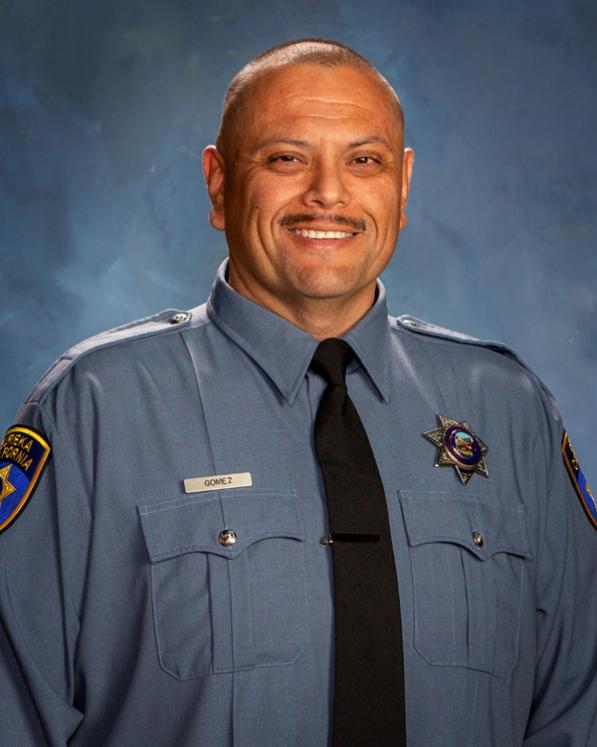
Gerardo (Jerry) Gomez was
born in Valparaizo, Zacatecas, Mexico on February 14, 1977 and passed
on October 20, 2023 at the City of Hope Medical Center in Duarte,
California.
Jerry
fought a courageous and valiant battle against cancer. He did not
fight this disease alone — Jerry was lovingly supported by his family
and friends.
Jerry
is survived by his dedicated and loving brother Juan “Manny”
Ramirez, sister-in-law Nancy Nunez, and nephew Adrian Ramirez.
Jerry
was preceded in death by his dear mother, Roselia Rodriguez, and is
now reunited with her.
Jerry
worked his dream job with the Los Angeles Dodgers for 10 years as a
lead security guard at the Dodger Stadium’s Left Field Pavilion.
Jerry
also worked a driving detail for a private company for 10 years where
he drove famous athletes and celebrities and CEO’S around the Los
Angeles area.
In
2022, Jerry left his career in the Los Angeles area and moved to
Fortuna to be closer to his brother, sister-in-law and
beloved nephew.
Before
Jerry’s illness, he served as a Community Service Officer for the
Eureka Police Department. He cherished his time with the department and made many friends there.
Jerry
will be sorely missed by his brother Manny who remarked, “He
has been there for me when I needed him. His jokes, outgoing
personality, and big smile I will forever hold in my heart. I deeply
appreciated the love my brother showed to my son, Adrian.”
The
family would like to thank the City of Eureka’s Police Department
Command Staff, officers and employees who helped Jerry fight cancer
with their support and love. Their unwavering kindness and
assistance were appreciated by Jerry and his family more than they
will ever know. They were his biggest fans.
Also,
thank you to cousin Kimberly for taking Jerry to all his many
appointments and for her devotion to him spending time to be there
for her cousin during these incredibly hard times.
Jerry’s
family would also like to thank the doctors and medical staff at the
Saint Helena and City of Hope for their excellent care and compassion
during his stay. The Saint Helena and City of Hope gave Manny the
gift of extra quality time to spend with his brother before his
passing.
“I
will remember the special times we spent together in our younger
years,” said Manny. “Jerry used to take me to paint ball
shooting, golfing, hiking, sports events, and dirt bike riding. I
will always treasure these memories and the time that I spent with my
brother.”
###
The obituary above was submitted on behalf of Jerry Gomez’s. loved ones. The Lost Coast Outpost runs obituaries of Humboldt County residents at no charge. See guidelines here.
Press release from the Humboldt County Sheriff’s Office:
On 10/28/2023, at about 0652, Humboldt County Sheriff’s deputies were dispatched to the 1900 block of Golf Course Road near Arcata for the report of shots fired.
Deputies arrived on scene and learned multiple shots were fired at an occupied residence. Deputies inspected the residence and found a window shot out and several bullet holes inside the interior walls and ceiling. No one was injured from the shooting. During the investigation, deputies were contacted by an additional reporting party who advised Jahria Zion was armed with a firearm and suffering from a possible mental health episode. Based upon information and evidence at the scene, it was determined that Jahria Zion was the person responsible for shooting at the occupied residence.
At around 1600 hours, deputies learned Zion was in the Rio Dell area armed with a pistol. Rio Dell Police Department located Zion in the 200 block of Sequoia Avenue, and he was taken into custody without incident.
A search warrant was served on Zion’s vehicle and deputies located three loaded semi-automatic rifles with high-capacity magazines and a 12 gauge shotgun. Several additional high-capacity magazines, approximately 45 grams of suspected cocaine, and numerous prepackaged Alprazolam pills were also found in Zion’s possession.
Zion was booked for assault with a semiautomatic firearm (PC 245(B)), shooting at an inhabited dwelling (PC 246), possession of a controlled substance (H&S 11375(B)(1)), possession of a high-capacity magazine (PC 32310), altering firearm serial number (PC 23900), and illegally possessing an assault weapon (PC 30605(A)).
This case is still under investigation.
Anyone with information about this case or related criminal activity is encouraged to call the Humboldt County Sheriff’s Office at (707) 445-7251 or the Sheriff’s Office Crime Tip line at (707) 268-2539.
Graphic for “Operation Boo,” the California Department of Corrections’ Halloween enforcement arm.
Press release from the Humboldt County Sheriff’s Office:
Under California law, certain sex offender registrants must abide by special terms between 5 p.m. and 5
a.m. on Halloween night, including:
• Stay in their own home;
• Not answer the door for anyone except Law Enforcement;
• Keep all exterior lights off;
• Cannot pass out treats;
• Cannot decorate their house for Halloween.
In coordination with State Parole and County Probation, Sheriff’s Investigators will be closely monitoring
PC 290 registrants Halloween night, ensuring registrants are abiding by these terms.
Community members are also encouraged to review the Department of Justice’s Megan’s Law database for
any area where you intend to take children trick-or-treating and practice the following Halloween safety
tips:
For Pedestrians:
• Adults should always supervise children while trick or treating.
• If you will be walking at night, be visible. Carry a flashlight and wear light, reflective clothing so
that drivers can see you.
• Make sure Halloween costumes are flame-retardant and visible with retro-reflective material.
• Walk in well-lit areas on the sidewalk, not on the street.
• Never allow children to run out into the street.
• Only cross the street at crosswalks or corners where it is safe.
• Only trick-or-treat at residences with exterior lights on or that indicate they are accepting trick-or-
treaters.
For Drivers:
• Drive cautiously and slow down.
• Watch for pedestrians who may be in dark clothing or may cross roads unexpectedly.
• Carefully exit and enter driveways and alleys.
• Be extra alert for vehicles backing out of driveways or leaving parking spaces as drive-up trick or
treating may be more common this year.
• Do not drink alcohol and drive. Designate a non-drinking driver if your plans for the holiday
include consuming impairing substances.
The Humboldt County Sheriff’s Office is a participant in the Region II Sexual Assault Felony Enforcement
(SAFE) Team, and these enforcement efforts are funded through the SAFE grant.
At approximately 6:55 pm on Sunday October 29th Humboldt Bay Fire (HBF) was
dispatched to a reported structure fire/porch on fire at a residence on the 3300 block of
Williams St. in Eureka. A neighbor reported that the porch of the residence across the
street from them was on fire and they did not know if anyone was home. HBF responded
with three fire engines, one ladder truck, and two Chief Officers.
The first arriving engine reported a working fire with heavy fire involvement to the front
porch of a single-story wood frame residence with possible fire extension into the attic.
The crew established a water supply and went to work immediately suppressing the fire.
Subsequent arriving units assisted with ventilation of smoke from the structure and
searching the residence for occupants. Two residents were found home at the time of the
fire at the rear of the residence. Fire personnel assisted with evacuating the residents and
treatment of one resident for minor smoke inhalation. The resident was turned over to
City Ambulance personnel upon their arrival but did not require transport to the hospital,
and were treated and released on scene.
Fire personnel contained and controlled the fire within 15 minutes of arrival, limiting
fire, smoke, and water damage to the front porch, living room, and attic. Crews
remained on scene for approximately two hours to ensure the fire was extinguished and
to secure the residence.
The cause of the fire is under investigation but preliminary investigation indicates the
cause of the fire is accidental. Initial damage estimates are approximately $20,000.HBF reminds residents to fully extinguish cigarettes before discarding. At this time of
year with temperatures dropping significantly overnight and more residents using heating
appliances we would like to remind everyone to ensure their appliances are clean and in
god operational condition. Combustibles should be kept away from heat sources such as
heater vents, fireplaces, and wood stoves.
Please contact us at 707-441-4000 for a safety inspection of your home or business.
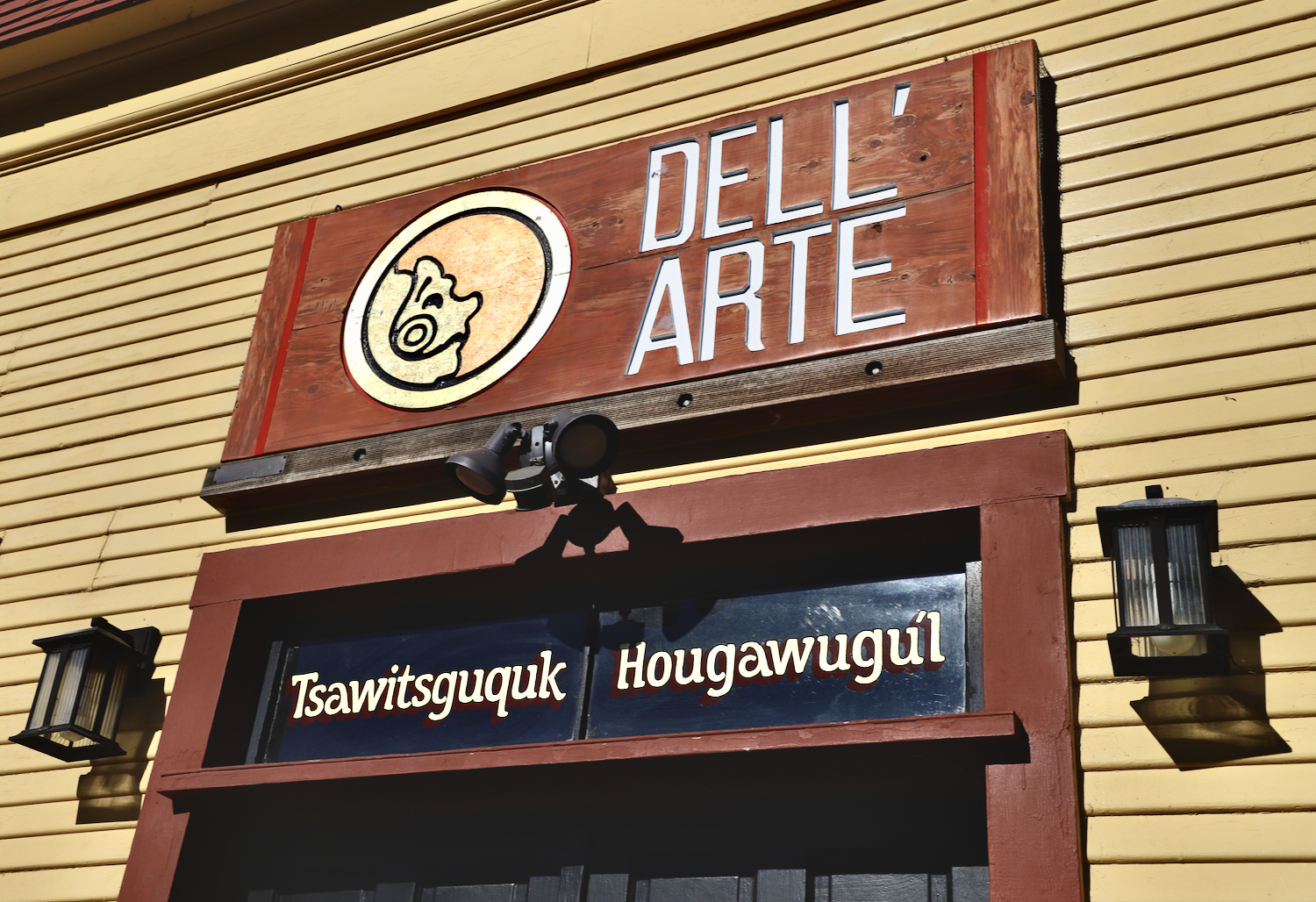
Dell’Arte International, a world-renowned theater company and school nestled in the heart of Blue Lake, faces closure. Photos by Andrew Goff.
###
The dedicated performers at Dell’Arte International have shared the improvisational stylings of traditional Italian theater, known as commedia dell’arte, with local and global audiences for nearly 50 years. However, fiscal turmoil has placed the legacy of the world-renowned theater company and its school in jeopardy.
The organization laid off all but three of its staff members at the beginning of this month, citing “critical cash flow issues” and “significantly reduced audiences” as the impetus for the sudden realignment of the organization.
The Board of Directors subsequently launched a campaign to save the famed theater, with hopes of raising $125,000 by the end of the year. If they don’t reach their goal, Dell’Arte could face permanent closure.
How did this happen?
Dell’Arte’s financial struggles “are nothing new,” said Jane Hill, who co-founded the theater with Carlo Mazzone-Clementi in the early 1970s.
“It comes with the territory,” Hill told the Outpost during a recent phone interview. “When you talk about financial struggles and financial issues … there’s always been a bit of limping along and learning as you go as circumstances change. Over the years, there have been many times when there has been some crisis that had to do with finances.”
Michael Fields, one of the core members of Dell’Arte’s original crew, wrote many of the grants that funded Dell’Arte over the years. But as time went on, those funds dried up.
“Michael was a brilliant grant writer,” Hill said. “He formed a long-standing relationship with the James Irvine Foundation but eventually [the foundation] began shifting their perspective of philanthropy and what they were going to fund. The relationship that Michael had nurtured for years dried up, and other large foundations shifted in the same direction as time went on.”
The COVID-19 pandemic exacerbated many trends that had long challenged small and regional theaters. Dell’Arte was no exception, said Alyssa Hughlett, Board President and Producing Artistic Facilitator at the theater.
“You can broadly cite pre-pandemic factors such as changes in state, federal, and private foundation funding sector, institutional budget cuts, de-prioritizing arts and culture, enrollment declines in higher education, and state legislation like AB 5 – which went into effect in January 2020 causing a 20 percent hike in theater costs throughout California – as playing a significant role in the situation at large,” Hughlett wrote in a recent email to the Outpost.
When the statewide stay-at-home order was issued in March 2020, Dell’Arte transitioned its students to virtual learning and postponed all upcoming performances, cutting off a major funding source for the organization.
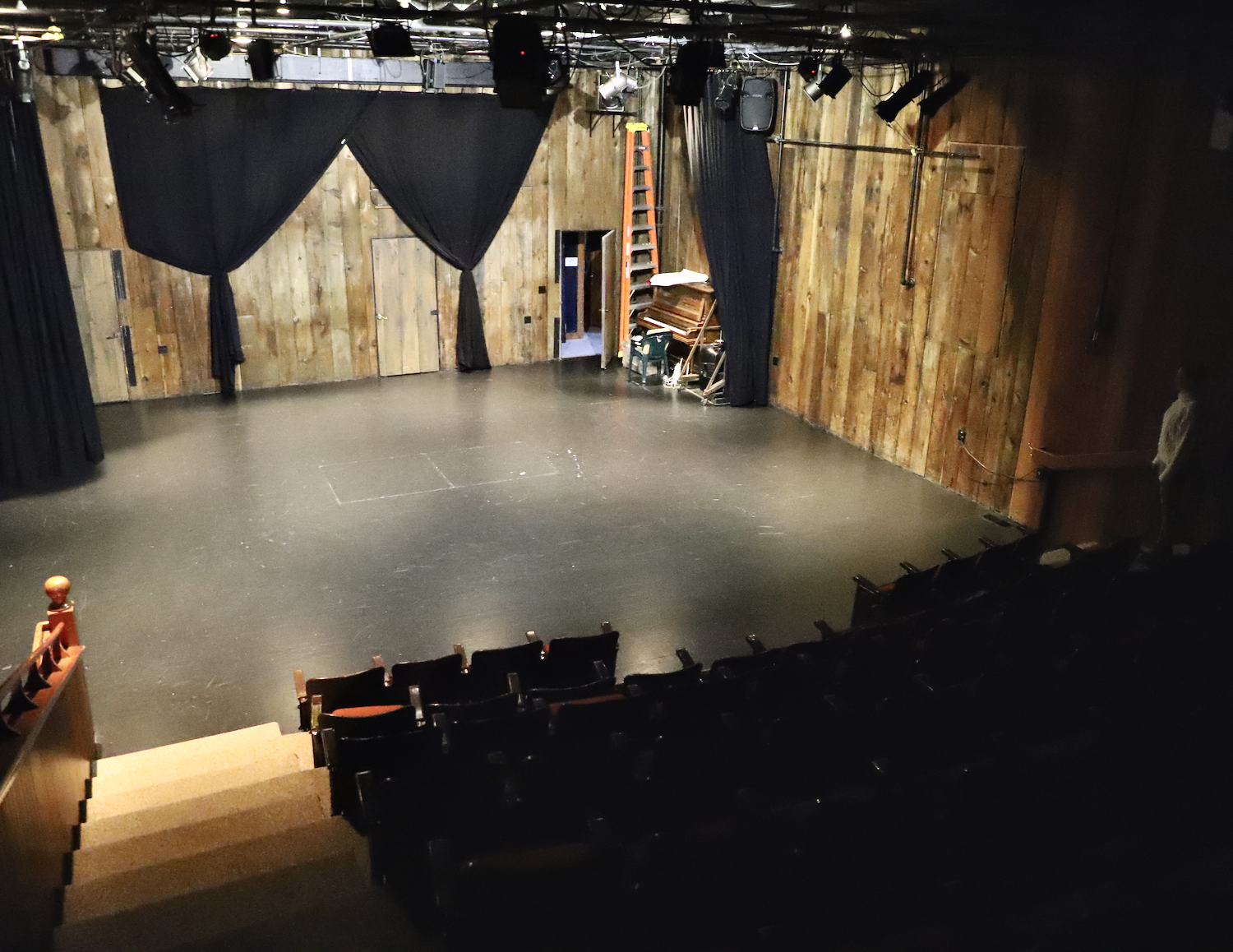
Dell’Arte’s Carlo Theater sits empty.
In the months that followed, Dell’Arte faced yet another challenge: racial equity and diversity within the organization.
As Black Lives Matter and racial justice demonstrations spread across the nation in the summer of 2020, Dell’Arte took to social media to publicize their support for the movement, writing in a June 2, 2020 Facebook post, “We stand in solidarity with Black Lives Matter. … As a predominantly white organization, we are committed to listening, learning and unlearning.”
In another statement posted a few days later, Dell’Arte said its staff and board members would “continue reflection and education, collectively and individually, on what it means as a primarily white organization to dismantle white supremacy.”
That didn’t bode well with some of the organization’s staff. In a letter posted to Facebook, nine current and former staff members criticized the theater’s leadership for failing to “competently lead the organization in matters related to equity,” as reported by the North Coast Journal. They claimed Dell’Arte’s failure to prioritize equity within the organization had created “an unsafe environment” for BIPOC (Black, Indigenous, People of Color), fueling concerns of “fear, retaliation, constructive terminations, and mental and physical stress every time we have voiced concerns.”
The board of directors responded with a letter acknowledging “that people have been hurt in many ways by white supremacy culture and by Dell’Arte’s unintentional complicity,” but maintained that Dell’Arte was “striving to be an anti-racist organization.”
To address the community’s concerns, Dell’Arte contracted with an external auditor to evaluate the organization’s racial environment. A few months later, the organization decided to revise term limits and recruit new board members “to bring greater equity and representation to the board,” per the auditor’s recommendation.
The new bylaws, which set a term limit of seven years, forced several long-standing board members to step down, though most transitioned into advisory or ambassador roles to support the remaining and incoming board members, according to a press release issued in November 2020. The new bylaws also required 50 percent of the board to be BIPOC and LGBTQIA+.
A lot of folks felt the move was a step in the right direction. Others, including Fields, felt the move fractured the organization, ostracizing some of the theater’s most loyal patrons.
“Dell’Arte had an audience, a very faithful audience,” Fields said. “Was it very white? Yes. Was it old? Yes. But it was faithful. They were donors, they came to our productions, and they financially sustained the organization. But they were left behind. What could have helped was an invitation: ‘Come with us. … We don’t know exactly where we’ll land, but please stay with us.’ That invitation wasn’t extended in the way that people felt welcome to come, and I think that hurt [Dell’Arte] because that’s your donor base. Your audience is your donor base.”
Dell’Arte International’s main building, formerly Oddfellows Hall.
Dell’Arte’s troubles continued as the pandemic persisted. In May of 2021, Dell’Arte made the difficult decision to end its Master of Fine Arts Program (MFA) – one of the first accredited physical ensemble-based theater programs in the world.
Hughlett, a graduate of the MFA program, said the school could no longer “sustain the higher bottom line costs” of running a three-year MFA program during the pandemic. “We did not want to be in the even harder position of having to close and teachout the program midway through the three-year program,” she explained. “Additionally, accreditation standards and parameters … do not allow for postponement for over one year.”
The loss of the MFA program took another dig at Dell’Arte’s already precarious financial situation. As the months wore on, COVID-19-era grants kept the theater and school afloat, but eventually, the grant funding dried up.
“The pandemic-era grants that were getting us through that time have pretty much stopped at this point,” Tony Fuemmeler, Dell’Arte’s interim head of training programs and core mask faculty, told the Outpost in a recent phone interview. “That change in funding sources as well as the slow return of the audience to our theater has hit hard. … Since [COVID], there has been a large change in our audience, not only in whether they go or don’t go to [productions] but in their relationship with cultural organizations.”
The persistent financial strain forced Dell’Arte to lay off all but three of its faculty members at the beginning of this month, leaving only a small group working at reduced hours to offer classes and workshops.
The Prison Arts Program at Pelican Bay Prison receives support from the California Arts in Corrections Program and is fully funded for the time being, according to Program Director Janessa Johnsrude.
“We will continue offering the program for as long as we can,” Johnsrude said. “We’ve got projects coming up with our participants and a solid year of programming ahead. We remain dedicated to offering classes to our participants.”
Emma Dobbins was let go during the recent layoffs. During her time with the organization, she served as Stage Manager and took on some of the responsibilities of Production Stage Manager, she said.
Dobbins knew Dell’Arte was “in a bad spot” but said she was actually laid off “about a week and a half before [the] layoffs would take place,” adding that outgoing staff “weren’t afforded forty hours per week for the final paycheck.”
“I’m not sure what was done to try to stave off layoffs – if anything – but I believe that the non-existent and gatekeeping Board [of Directors] was the culprit entirely for the financial downfall,” Dobbins wrote in an emailed response to the Outpost. “For instance, when we – the staff and production team – tried to make money for [Dell’Arte] over the summer, the correct channels apparently were never crossed with the board … even though somehow we were cleared financially for the entire event to take place, and we were then told off by the board for trying to help make money for the organization after the fact. … [The board] should be very ashamed for taking such a back-foot approach to finance raising … and, in my informed opinion, essentially letting Dell’Arte sink.”
Dobbins emphasized that her comments did not apply to the current faculty who have recently joined the board, including Hughlett, Fuemmeler and Julie Douglas, the theater’s head of arts engagement.
Board Chair Pat Bitton declined to comment on specific personnel issues within the organization, but credited the Leadership Council (which includes the remaining staff and board members) for managing the layoff processes “transparently and responsibly.”
“I have never personally been aware of board members ‘telling off’ staff,” Bitton wrote in an email to the Outpost. “[T]he Leadership Council is responsible for staff management, not the board. I can’t personally speak to how board meetings or board-staff interaction functioned before I joined the board [in 2022], and quite frankly, our time now is more effectively focused on the forward evolution of the organization.”
Speaking on behalf of the board, Bitton offered her gratitude to the community for the recent outpouring of support, “both emotional and financial,” and emphasized Dell’Arte’s commitment to developing a “sustainable model of training and production for the future.”
‘This fundraiser is the bridge to our future.’
Libby Maynard, former chair of Dell’Arte’s Board of Directors, initiated the “Save Dell’Arte” campaign with a $5,000 donation. The organization hopes to raise $125,000 by the end of this year. As of this writing, Dell’Arte has raised $45,380.
What happens if they can’t raise the funds in time?
“Humboldt will lose the only professional theater between San Francisco and Ashland, Oregon and Dell’Arte’s unique footprint as a ‘theatre of place’ created in ensemble, expressed through the body,” Hughlett said. “The community will lose a partner and advocate for cultural enrichment.”
What would closure actually look like? Would certain programs be prioritized above others? Would Dell’Arte sell or lease its building, formerly Oddfellows Hall, in Blue Lake?
Unfortunately, staff couldn’t speak to specifics.
“The fundraiser is the bridge to our future,” Douglas said. “It will help us maintain essential daily activities, seek sustainable revenue paths for the future and build our programming back slowly. It also allows us to keep the doors open and the lights on. Without it, our ability to successfully restructure is greatly diminished. We are focused on reaching our goal, but it is just the start of a new beginning. … Dell’Arte has evolved since its beginning. This time is no different.”
Similarly, Fields felt the difficult situation presented an opportunity for staff to transform the theater and school.
“I feel really tender towards the staff members that are trying to work through this right now because they’re in uncharted territory and they can’t recreate what was and yet they don’t know what it is going to be,” he said. “You know, don’t get caught up in trying to make an organization that looks like the perfect thing because it doesn’t exist and it never will. You’ve got to go with your heart and ask, ‘What do we want to be? Where do we want to go?’”
Evolution has been at the heart of Dell’Arte since the very beginning, Hill said. Change is inevitable and it is important, she said, but “we need an honest theater company to keep us looking at ourselves.”
“Dell’Arte is a rich part of our community, and we shouldn’t lose it,” she continued. “I just hope we can rally everyone and help them to understand why this unusual treasure of Humboldt County must not be allowed to die. Give [the staff] a chance to reorganize and see what comes next. If it’s no good, it won’t work. But they deserve the opportunity.”
Dell’Arte’s leadership will share more information on the fundraiser during a town hall meeting at Mad River Brewery and Tap Room, 195 Taylor Way in Blue Lake, on Thursday, Nov. 2 from 5 to 7 p.m. More information can be found here.
Bruno Louis Pialorsi Jr. passed away on October 23, 2023, in Montana while on a hunting
expedition with his family. From McKinleyville and a native to Humboldt, Bruno was a proud
second-generation Italian-American whose roots were in Orick.
Bruno deeply
resonated with his Italian heritage and it was a major part of his character and persona.
Born in 1949 on November 23rd, Bruno’s early years were filled with the pleasure of growing up
on his family’s dairy farm alongside his two sisters, Lois and Dolores, surrounded by the beauty
of his family’s ranch.
Bruno’s life journey was closely intertwined with the dairy, beginning working at a young age,
under the guidance of his father, Bruno Sr.. By the age of seventeen, he had committed himself
to a full-time role as a diligent dairy farmer.
For over four decades, Bruno’s daily routine began at 3 a.m., tending to his cows and tirelessly
laboring on the farm. His dedication never wavered, even on holidays. Farming was not just a
job but a source of immense joy and purpose for Bruno. His reputation in the community was
one of utmost integrity and respect, earning him a title locally as one of the best dairymen. He
won multiple local, state, and national titles for the quality of his farm, cattle, and dairy products.
Bruno’s profound knowledge and experience led him to serve on multiple boards and
committees related to dairy procedure, where he was considered a bed of wisdom.
In his free-time you could find Bruno on a hunting expedition, tending to his cows, or making his
friends and family laugh with his fabulous sense of humor. He had frequent and fond memories
of hunting all over the western United States and will always be known as a tremendous, loyal,
and caring friend. Additionally, Bruno was a partial owner of Poppa Joe’s restaurant in Ferndale
and enjoyed the community and friendships built there.
Bruno was a proud member of the following associations: The Order Sons and Daughters of
Italy in America, the National Rifle Association, Future Farmers of America, the Colorado Mule
Deer Foundation, 4H, and many others.
Bruno was philanthropic at heart - frequently donating to organizations such as St. Jude’s
Children’s Hospital, Future Farmers of America, and 4-H.
For Bruno, family was of utmost importance. He deeply loved and cared for his son, Gino, and
daughter, Angela. Additionally, his two granddaughters; Dayna and Shelby owe him a debt of
gratitude and thanks for every way that he has supported each of their individual paths as young
women.
Bruno’s one-of-a-kind laugh, sense of humor, and charisma will never be forgotten. His legacy
as a devoted dairy farmer and a man of remarkable character will be fondly remembered and
deeply missed by all who had the privilege of knowing him.He is survived by his daughter; Angela Pialorsi, his granddaughters; Dayna and Shelby Naish,
his sister; Dolores Pialorsi, his nephew; Richard Byrns, his niece; Linda Byrns and his nephew;
Garth Conner. He is preceded in death by his father; Bruno Louis Pialorsi Sr., his mother;
Mercedes Pialorsi Ford, his sister; Lois Byrns, and his son; Gino Louis Pialorsi.
Additionally, he will be very missed by his cousins and loyal friends John Mason, Tim Gomes,
Doren Morgan, Dennis Morgan, Tyrin Stevenson, Trent Stevenson, and many more.
A closed service will be held at St. Mary’s Church in Arcata. There will be a celebration of life to
follow at a later date; date and time to be announced.
###
The obituary above was submitted on behalf of Bruno Pialorsi Jr. loved ones. The Lost Coast Outpost runs obituaries of Humboldt County residents at no charge. See guidelines here.