

OBITUARY: Ernest Michael Cobine, 1947-2023
LoCO Staff / Friday, Dec. 22, 2023 @ 6:56 a.m. / Obits
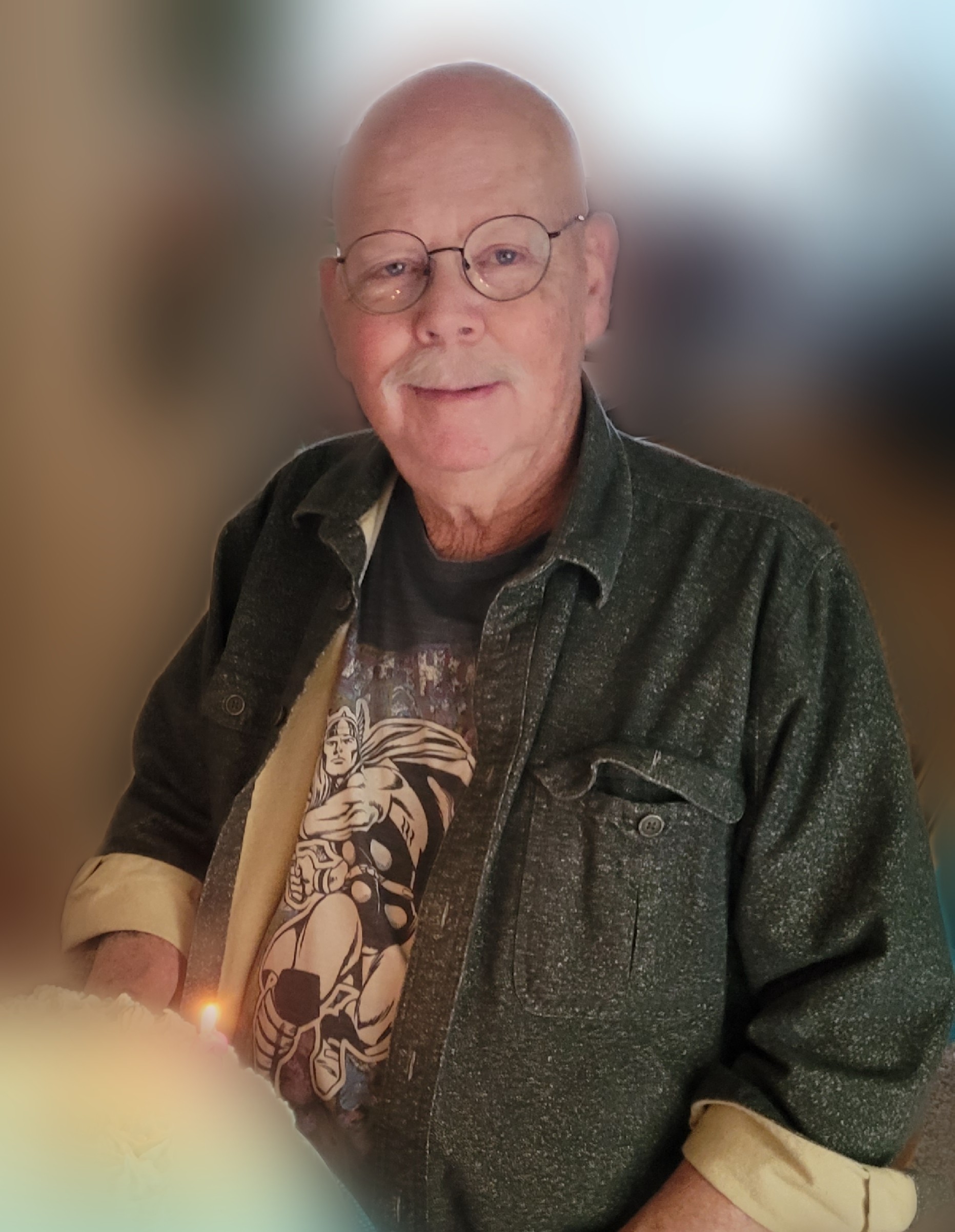
Mike was born September 12, 1947 to
Ernest and Louada Cobine. He passed away at home surrounded by the
love of his family on December 17, 2023.
He is survived by his wife, Nancy; his children, Stacy, Sarah, Brian and Amanda Cobine; granddaughters Sonja and Allexandra Clark and Riley and Taylor Cobine; three great-grandchildren, Orion Wollman and Charlley and Shelby Clark.
He leaves behind his brothers, Bob (Carole) Koehne and Steve (Kim) Cobine and their families; and one cousin, Karen (Clark) Griffin and family.
Additionally he is survived by his large, loving in-law family: mother-in-law Charlotte Yarbrough; and Alan and Becky Yarbrough, Cathy and David DeNoma, Peggy and Joe Gossi and Birl and Bobbi Yarbrough. Curtis Clifford, Karen and Steven Slotten, Kelly and Nancy Clifford, Kathy and Jen Clifford and Carol and Ron Wargo and families; as well as many, many special nieces and nephews and lifelong friends Terry Griswold, Paul Nicholson and David Rybarczyk and families.
Mike had fond memories of growing up in Los Angeles before it became too crowded. His family camped all over the west until finding Eureka to call their forever home in 1965, after Mike graduated from high school. After a stint in the Navy, Mike returned to Eureka and began working for the City of Eureka. He worked in many positions for the city for nearly 20 years. He went on to work for Cox Communications for 17 years until retiring in 2006.
Mike had many interests in his life — photography, cars, motorcycles, movies and baseball just to name a few. The highlight of his life was riding his motorcycle across the country with his brothers-in-law for the annual Run for the Wall/POW celebration in 2008. We enjoyed RV camping and the slower pace of life at the beaches in Oregon. Most of all, he enjoyed time with his family watching his children and grandchildren grow.
There are so many things I will miss about you. Your gentle, compassionate soul and calming guidance. Your bad dad jokes and silly limericks. Rest easy in heaven my love. Until we meet again…
Please join us for a celebration of Mike’s life at the Eureka Woman’s Club 1531 J St, Saturday January 6, 2024 from 2 p.m. to 4 p.m. RSVP to ncobine@yahoo.com.
Special thanks to the kind and compassionate people of Hospice of Humboldt. Contributions in Mike’s memory can be made to Hospice if you wish.
###
The obituary above was submitted on behalf of Mike Cobine’s loved ones. The Lost Coast Outpost runs obituaries of Humboldt County residents at no charge. See guidelines here.
BOOKED
Today: 11 felonies, 14 misdemeanors, 0 infractions
JUDGED
Humboldt County Superior Court Calendar: Yesterday
CHP REPORTS
No current incidents
ELSEWHERE
Governor’s Office: Governor Newsom statement on compromise to address wildfire risk, support fire survivors, and create stronger accountability
RHBB: CDFW Announces Angling Closure at Mouth of the Klamath River
RHBB: Humboldt Bay Area Plan Planning Commission Workshop on Thursday, Sept. 3
OBITUARY: George Nathaniel Ponnay, 1934-2023
LoCO Staff / Friday, Dec. 22, 2023 @ 6:56 a.m. / Obits

George Nathaniel Ponnay passed away peacefully at the age of 89 in his home in
Eureka with his wife, Patricia Ponnay, by his side on December 8, 2023. Born on
August 15, 1934, in Los Angeles, California, he was the son of George and Lillian
Ponnay. He and Patricia (Berg) Ponnay were united on July 15, 1969, and shared 54
years of devotion before his passing. The couple raised their family in Eureka.
George started his career in real estate, which he continued for many years. Then, he worked at the Academy of Magical Arts (Magic Castle) in Hollywood, where he first met Patricia.
Outside of work, George expressed himself through many creative outlets; Bonsai, woodworking, and cooking were his main interests. Under the guidance of Mr. Shigeru Nagatoshi, George honed his skills as a Bonsai master, creating miniature works of living art. His passion for Bonsai extended beyond personal pursuits; he was an active member of the Bonsai club, generously sharing his knowledge by teaching Bonsai classes. George was a talented woodworker, finding joy in crafting intricate half-hull ship models. He loved to cook for his family, delighting in creating delicious meals that brought everyone together. Spaghetti was his favorite.
George also took great joy in attending the Jed Smith Mountain Men Tall Trees Rendezvous with his family. They dressed in clothing his wife made inspired by the American Northwest fur-trading era and participated in friendly competitions during the event. The family created cherished memories at this annual event.
George is survived by his loving wife Patricia Ponnay, and his children: George Ponnay III, Brion (Jaynette) Ponnay, Toby Ponnay, Kimberly (Kevin) Albonico, Elizabeth (Jason) Schallon, and Anthony (Triniti) Ponnay. He is also survived by hisgrandchildren: Mitchell Ponnay, Becky (Al) Lacey, Helena Ponnay, Lilly Albonico, Jamie Albonico, Callie Albonico, Emily Schallon, Daniel Schallon, Ierly Ponnay, Brailey Ponnay, and Grayson Ponnay.
George was preceded in death by his parents, George and Lillian Ponnay, and sister Charlotte (George) Dickerson.
A private family celebration of life will be held at a later date.
###
The obituary above was submitted on behalf of George Ponnay’s loved ones. The Lost Coast Outpost runs obituaries of Humboldt County residents at no charge. See guidelines here.
Two People Shot Following Youth Altercation at Cooper Gulch Last Night, Eureka Police Say; Suspects Still Unidentified
LoCO Staff / Thursday, Dec. 21, 2023 @ 6:33 p.m. / Crime
Press release from the Eureka Police Department:
On December 20, 2023, at approximately 8:56 P.M., officers from the Eureka Police Department responded to the report of a shooting that had occurred near Myrtle and 8th Street in Eureka. The reporting party was located in the 2000 block of 5th Street suffering from multiple gunshot injuries. Medical aid was summoned to this location and the victim was transported to a local hospital for treatment of non-life-threatening injuries.
Based on the initial investigation, it appears a group of juveniles and young adults were at Coopers Gulch park area. While at the park, one person in this group got into a physical altercation with a female. After the altercation, the female left the scene. This same female returned a short time later with several other individuals, all inside of a vehicle. When they encountered the group of juveniles and young adults from the altercation, who were now walking near Myrtle and 8th Streets, the right front passenger produced a firearm and shot several rounds at the group. The vehicle then fled the area in an unknown direction.
During the investigation we have also learned a second person in the group suffered a non-life-threatening injury as a result of a gunshot wound. This individual was also treated at a local hospital.
The shooter’s identity is unknown at this time.
This appears to be an isolated incident and there no known direct threats to the community. If you have any information about this incident, please contact Detective Joseph Couch at (707) 798-0191.
Hundreds of Cal Poly Humboldt Faculty Set to Strike in January Over Ongoing Salary Dispute with Cal State Administrators
Isabella Vanderheiden / Thursday, Dec. 21, 2023 @ 2:48 p.m. / Cal Poly Humboldt

The California Faculty Association represents nearly 600 faculty members at Cal Poly Humboldt. Photo: Stephanie McGeary
###
Following more than six months of unsuccessful labor negotiations with California State University’s (CSU) leadership, the California Faculty Association (CFA) Board of Directors unanimously voted this week to call for a system-wide five-day strike, in partnership with Teamsters Local 2010 members, at the start of the Spring 2024 semester.
The CFA represents nearly 600 professors, lecturers, librarians, counselors and coaches at Cal Poly Humboldt, and more than 29,000 faculty across CSU’s 23 campuses. If the union can’t reach an agreement with CSU in the coming weeks, the vast majority of its members will cancel classes from Jan. 22 to Jan. 26.
“We really hope that CSU’s leadership comes to their senses and agrees to our reasonable demands because nobody wants this disruption. Nobody wants to go on strike,” local CFA field representative Maureen Loughran told the Outpost in a recent phone interview. “We don’t understand why they’re causing this harm to the students. The ball is in their court. They can stop this anytime, and we hope that they do.”
At the beginning of this month, CFA members shut down the CSU campuses in Los Angeles, Pomona, Sacramento and San Francisco to call for an immediate 12 percent salary increase to catch up with inflation.
The current negotiation process is a “reopener,” Loughran said, meaning CFA’s bargaining team is still fighting for pay increases for the current academic year.
“We’re negotiating over a contract that is already in place because we weren’t able to agree when we settled that contract on the last year’s pay increases and a few other items,” Loughran said. “We’re reopening [negotiations] on salary, workload, benefits, health and safety. Since May, the CSU hasn’t moved much from their initial offer.”
The CSU has offered all faculty a 15 percent general salary increase, which would increase in five percent increments over three years. CSU spokesperson Amy Bentley-Smith noted that the proposed increases in 2024 and 2025 would “depend only on the state honoring the financial commitments that it made in its current multi-year compact with the CSU.”
Some faculty would receive 20.3 percent increases over a three-year period under the proposed agreement. CSU’s leadership has also offered a post-promotion increase of 2.65 percent in fiscal year 2024-25 and a 2.65 percent service salary increase in fiscal year 2025-26.
“The CSU has also proposed supporting recommendations put forth by the independent factfinder that was brought in as part of the bargaining process,” Bentley-Smith wrote in an email to the Outpost. “That included an increase to paid parental leave from the current six weeks to eight weeks and increasing paid workload reduction from 40 percent to 60 percent for one semester (in lieu of the eight weeks).”
The CFA is also asking for a $10,0000 wage increase for the lowest-paid faculty. “Our [lecturers] who don’t have a PhD are paid $54,000 a year for full-time work. We’re asking for that minimum to be raised to $64,000 annually,” she said. “The minimum pay for lecturers with a PhD is $64,000. We’re asking to raise their annual salary to $69,000. We don’t think that’s too much to ask.”
There’s still time for a resolution. The CFA bargaining team will meet with CSU management during the second week of January. “We’re planning for the worst but hoping for the best,” Loughran said.
“It’s my greatest hope that the CSU does what’s right and averts the strike by meeting our demands,” she said. “But we will shut it down system-wide as a CSU if they don’t settle with us. It’s going to be a ghost town. It’s not going to feel like a university. We hope that [the threat of a strike] puts pressure on the CSU to do the right thing.”
Bentley-Smith said the CSU is also eager to reach an agreement as soon as possible.
“[W]e are prepared to negotiate with CFA at any time to reach an agreement to increase faculty salaries,” she said. “On other issues, CSU is prepared to agree to nearly all of the recommendations of the independent fact finder to reach a resolution. If strikes do occur in January, we hope to minimize any disruptions to our students.”
Reached for additional comment on the matter, Cal Poly Humboldt spokesperson Grant Scott-Goforth offered the following statement: “As a university community, we share a commitment to providing a positive educational experience for our students, and Cal Poly Humboldt values the important work our employees do every day to make this possible.”
OPINION: It’s Time for the Offshore Wind Industry to Commit to Community Investments
LoCO Staff / Thursday, Dec. 21, 2023 @ 1:28 p.m. / Opinion
The following opinion column was submitted by Lonyx Landry, a Humboldt County planning commissioner and a leader of CORE Hub. —Ed.
###
Offshore wind development in Humboldt County has the potential to revolutionize our economy and materially improve the well-being of our communities. But it’s not that simple. As a member of the Nor Rel Muk Wintu Nation, a Cal Poly Humboldt educator, and a leader in the Redwood Region Climate and Community Resilience Hub (CORE Hub)’s Offshore Wind Community Benefits Network, I believe that Northern California renewable energy development must go hand in hand with investments in Tribal communities and industries such as aquaculture and mariculture; and that it requires strong community benefits like workforce development, education, healthcare and housing.
In 2024, developers like Crowley and local and state governments will be working together to solidify multi-million dollar offshore wind deals and projects, and will need to ensure that communities are not left out of the conversation.
Nurturing a just future in Humboldt County means that those who seek to profit from offshore wind development need to codify their promises to our community in legally binding agreements. In Humboldt, we have a history of extractive industries taking advantage of our rich supply of natural resources. In the 1800s and 1900s, our county served as an epicenter for the Gold Rush and logging, the negative effects of which can still be seen today. Former mill sites continue to threaten the drinking water of our 88,000 Humboldt County residents. We consistently rank as one of the five poorest counties in California, and our region has one of the highest rates of Missing and Murdered Indigenous Peoples (MMIP) in the nation.
Tribal communities in Humboldt, especially, have endured the brunt of environmental degradation, resource exploitation, and social inequity. Our lands have been taken and our natural resources destroyed, our culture outlawed, and our voices marginalized.
Offshore wind development in Humboldt needs to flip the script by ensuring that our local communities reap the benefits of clean energy and economic development, without causing more harm. A Community Benefits Agreement is one accountable way to ensure a truly equitable clean energy transition.
An established community agreement can ensure workplace training and educational opportunities tailored to our communities’ unique needs, creating good jobs that are accessible to Indigenous people as well as students and young people, and families living on low incomes and in rural, disconnected parts of Humboldt. Training and employment programs that prioritize historically oppressed communities, fair wages and safe working conditions, can help bridge economic disparities. Beyond construction and engineering jobs at the wind farms and the port in Humboldt Bay, there are also a wealth of possibilities for good-paying, career-path jobs in environmental science, air and water quality, and other fields. Offshore wind companies should design internships, research collaborations, and entry-level jobs to provide training and skills to local students and workers who have been historically excluded from these opportunities.
Legally-binding community agreements can also ensure that offshore wind projects respect the sacred sites and cultural heritage of Indigenous communities, including preserving and avoiding impacts to Tuluwat Island, which has been restored to the Wiyot Tribe after an egregiously painful history. Consulting with Native American people and respecting our input is a crucial step towards investing in our economic future in a way that protects our natural resources and respects our stewardship of the land. We need offshore wind companies to provide startup funding and to make space for dialogue and shared decision-making with Tribal and local communities, centering local science, lived experience and traditional ecological knowledge.
For the past two years, more than two dozen community advocates and stakeholders involved in the CORE Hub have developed community benefits terms including these workforce training and Indigenous stewardship proposals. We have also specified our needs for commitments and funding for our local fisheries, mariculture, and aquaculture industries, as well as services like public transportation, outdoor recreation, childcare, and electrification and zero-emissions infrastructure. We’ve also detailed our need for safeguards to prevent MMIP, human trafficking, and sexual violence. The CORE Hub has discussed these community protective measures in depth with Crowley, Humboldt Harbor Commissioners and district staff, the Humboldt County Board of Supervisors, and state government agencies.
If offshore wind projects are to move forward in 2024, vague promises and verbal commitments to “help the community” are no longer enough. We need transparency and accountability from our government and corporate America. Community benefits can realistically protect Humboldt communities’ rich and diverse cultural, natural, and human resources, as we host the first-ever offshore wind farms on the Pacific coast. In this new year, we will continue to fight for economic development that puts people, flora, and fauna before profits.
###
Lonyx B. Landry is a STEM advisor at Cal Poly Humboldt in the Indian Natural Resources, Science, and Engineering Program (INRSEP), a member of the Nor Rel Muk Wintu Nation, and leader and supporter of the Redwood Region Climate and Community Resilience Hub (CORE Hub). He is also Council Member to the Northern California Indian Development Council (NCIDC). Lonyx was born and raised in Eureka and has extensive experience working at the intersections of biology, higher education, and natural resource protection in Northern California.
Cal Poly Researcher Hopes to Find New Home For Endangered Lassics Lupine
LoCO Staff / Thursday, Dec. 21, 2023 @ 10:35 a.m. / Nature

(c) Christian Schwarz, some rights reserved (CC BY-NC)
PREVIOUSLY:
HUMBOLDT LIFE:
###
Press release from Cal Poly Humboldt:
One Cal Poly Humboldt graduate student is working with the U.S. Fish & Wildlife Service (USFWS), California Native Plant Society (CNPS), and U.S. Forest Service (USFS) to help save an endangered plant species from possible extinction.
The Lassics lupine is a wildflower that occurs in just one place in the world — in the Lassics Wilderness of the Six Rivers National Forest. It is small but charismatic, growing to just 15 centimeters tall with pink and white flowers, and fuzzy leaves.
It faces several threats to its survival including herbivory, encroachment and competition from other vegetation, and especially climate change, says Caitlyn Allchin, the Biological Sciences graduate student who is helping to recover the species. As a result, the species recently received protection under the Endangered Species Act in September 2023.
Without human intervention, the plant would be driven to extinction, according to previous Cal Poly Humboldt research that was also supported by USFWS, USFS, and CNPS. Current conservation efforts include placing cages around the plants to protect them and their seeds against predators such as mice. But factors including drought, wildfire, and reduced soil moisture continue to threaten the lupine.
Since 2021, Allchin has focused on finding an alternative location for the wildflower where there is less herbivory and encroachment, and optimal soil moisture. If successful, it would improve the species’ viability.
To identify a potential new site for the species, she is assessing landscapes throughout Humboldt and Trinity Counties, and has produced habitat suitability models using data about the climate, the soil, bedrock materials, and more. She has placed climatic sensors at multiple locations, assessed aerial imagery, and conducted plant surveys to compare each site with the Lassics lupine’s current habitat.
Allchin has so far identified four potential relocation sites. She has placed sensors at each site and collected data over the course of one year to capture changes in soil moisture, soil temperature, and insolation (the quantity of solar radiation energy) at these locations.
Her research is not only critical for the plant’s survival but also for regional biomes. By understanding how to conserve the Lassics lupine, scientists can find the right tools to improve ecosystem resilience and conserve biodiversity in California and beyond, she explains.
“The lupine, like other sensitive species, is part of a fragile ecosystem that is already stressed due to the impacts of climate change,” she says. “Climate change is negatively impacting endemic plant species all over the world.”
“Finding ways to ameliorate this issue through methods such as assisted migration can provide the framework for other species of conservation concern or plant communities as climate change impacts worsen over time.”
Mental Health Programs That Served Hundreds of Kids — Including in Humboldt — to Close After California Payment Changes
Jocelyn Wiener / Thursday, Dec. 21, 2023 @ 7:45 a.m. / Sacramento

Momentum for Health facilities in San Jose on Dec. 19, 2023. Momentum for Health provides behavioral health care for youth and adults in Santa Clara County. Photo by Loren Elliott for CalMatters
Kerry Venegas struggles to sleep these days, worrying about the 55 children who will lose services once her Humboldt County nonprofit closes an outpatient counseling program in January.
David Mineta gets emotional when he talks about his organization’s decision to close six mental health programs serving about 650 children and adults in Santa Clara County by the end of December.
“Talking about it really makes me want to cry,” he says.
Depending on who you ask, these mental health program closures are either an unfortunate aberration or a harbinger of more to come as the state transforms its Medi-Cal reimbursement system.
Venegas, executive director of Changing Tides Family Services in Eureka, and Mineta, president and CEO of Momentum For Health in San Jose, say their organizations are being forced to cut crucial mental health programs in order to keep the rest of their agencies afloat. They attribute that to CalAIM, a multi-year, multi-billion-dollar overhaul of Medi-Cal that dramatically changes how California’s public mental health care programs are funded.[CORRECTION: Changing Tides contacted the Outpost to let us know that their agency and their other programs have not been impacted by the change to CalAIM.]
“I would love to invite Gov. Newsom and his team to come talk about what CalAIM is in an area like ours,” Venegas said. “Instead of making it better, I really think this has made it worse.”
CalAIM’s behavioral health initiative, which Gavin Newsom’s administration began rolling out in 2022, is designed to provide a more integrated approach to care. It offers a “no wrong door approach” so that people seeking help will have an easier time getting it.
This past July, a new payment system kicked in for most counties. The goal? Increase efficiency, reduce paperwork and offer counties more flexibility.
The problem, some nonprofits say, is that their organizations are no longer reimbursed specifically for time spent traveling to see patients or filling out documentation. In addition, the state is giving counties latitude to decide how much Medi-Cal money they pass along to their nonprofit behavioral health contractors.
Los Angeles County is passing along about 85% of the funds it receives from the state, according to Adrienne Shilton, a senior policy advocate with the California Alliance of Child and Family Services, while others are providing less.
She shared survey data showing nonprofits in a dozen counties told the alliance they worried they might have to close programs.
“There’s still a dire picture,” Shilton said. “We’re concerned about what this is going to look like in another three months.”
Amie Miller, executive director of the California Mental Health Services Authority, a state agency that works with counties to transform mental health services, said she hasn’t heard of programs closing directly as a result of payment reform.
Some providers are struggling with longstanding financial problems, Miller said, and others are “used to not having to be as attentive to the bottom line.”
“This is the next piece of our evolution,” she said.
Some providers have said they stand to do well under the new model, she added.
Still, some nonprofit organizations have been sounding the alarm since summer that the rates are too low and eventually will lead to program closures.
Dozens of mental health providers in October penned a letter to the state Department of Health Care Services, warning of “potentially catastrophic consequences.”
But until recently, programs have not actually closed. That’s beginning to change.
“It’s the end of the year. Folks are looking at the books saying ‘we’re not going to make it,’” said Le Ondra Clark Harvey, CEO of the California Council of Community Behavioral Health Agencies, an organization that represents some nonprofit providers.
Venegas, of Changing Tides, called the decision to close the program “a knife in the heart.”
“If we had any other choice, we wouldn’t be ending these services,” she said.
Modernizing Medi-Cal payments
Most everyone agrees that the system serving California’s more than 15 million low-income Medi-Cal enrollees was overdue for a change.
“Updating and modernizing how we pay for services in behavioral health is crucial,” said Michelle Doty Cabrera, executive director of the California Behavioral Health Directors Association, which represents county behavioral health departments. “We need to propel ourselves into the 21st century.”
Increased efficiency is one of the desired outcomes of payment reform. County behavioral health departments are working hard to support their nonprofit mental health providers during this transition, Cabrera said, but nonprofit providers also need to reach more Medi-Cal patients. There are just too many people in need, she said, and the workforce to meet those needs is too scarce.
A survey published this month by the California Health Care Foundation showed that satisfaction with CalAIM is lower among behavioral health providers than other provider types “by a pretty significant margin,” said Melora Simon, associate director of the foundation’s people-centered care team.
“There’s signal there; it’s not just noise,” she said.
Even without the threat of mental health programs closing, the state has struggled to keep up with a growing mental health crisis amid huge provider shortages. A state audit published in November found that children in Medi-Cal already face long wait times to receive behavioral health treatment.
The pandemic threw gasoline on the blaze. Just as mental health needs have spiked in recent years, so has provider burnout.
Mental health services in rural California
Prior to payment reform this summer, Venegas, of Humboldt, said her organization already struggled to hire enough clinicians to provide outpatient therapy; the therapy program she is closing would have had room for 125 to 130 children if the organization was fully staffed.
Many of the 55 children in the program waited months to be assigned to a provider. Because the county has its own staffing challenges, she said, these children will now likely be put back on waitlists for care.
In the vast rural and forested county, many of the children live an hour or two drive away from services. They are often directly impacted by domestic violence and drug and alcohol use. Some are in foster care. Many are at risk for suicide.
“Fifty-five clients may not seem like a big number, but every one of those is a kid. Every one is a kid in crisis and every one has a story.”
— Kerry Venegas of Changing Tides Family Services
Once payment reform began, the organization struggled to keep the program afloat — transportation and documentation time was no longer directly reimbursable, leading to a significant financial hit. Still, the organization considered the counseling program that serves these children to be so critical that the board allowed it to continue while accruing a deficit, Venegas said: “We stayed with it until we no longer had a choice.”
“Fifty-five clients may not seem like a big number,” she said. “But every one of those is a kid. Every one is a kid in crisis and every one has a story.”
Humboldt County Behavioral Health Director Emi Botzler-Rodgers wrote in an email to CalMatters that the county is gathering data to evaluate the impact of the new rates. She acknowledged concerns across the state about whether the rates adequately cover the cost of services.
The state Department of Health Care Services refused to make anyone available to directly answer questions about the changes; instead it provided a series of answers to emailed questions. The department is “actively engaging” providers and counties, developing technical assistance and monitoring and enforcing the new rules to make sure counties maintain an adequate network of Medi-Cal services and providers, the email said.
The department is continuing to monitor payment reform rates “and will adjust them as appropriate,” the email said.
Staffing stresses San Jose provider
Like Changing Tides in Humboldt — and other behavioral health nonprofits across the state — Momentum for Health, in Santa Clara County, has struggled with a shortage of qualified staff. This inadequate staffing, says Mineta, makes certain programs difficult to sustain financially, because overhead costs are often fixed no matter how many patients they see.
The six programs the organization is closing include intensive treatment for children and adults, including programs for people with addiction and those who have experienced their first episode of psychosis. Mineta says the programs employ about 85 staff members and currently serve around 650 people, though they reach about 1,500 people during the course of a year.
Sherri Terao, director of Santa Clara County’s behavioral health department, said in an email that Momentum is closing the programs “to address ongoing fiscal and staffing challenges” and that her department is working closely with the organization to ensure smooth transitions for patients.
 Momentum for Health facilities in San Jose on Dec. 19, 2023. Momentum for Health provides behavioral health care for youth and adults in Santa Clara County. Photo by Loren Elliott for CalMatters
While Mineta acknowledged his organization had financial challenges before this summer, he said payment reform ultimately caused the program closures. Staff in intensive outreach programs need to spend a lot of time out in the community, he said, and CalAIM’s new rates don’t adequately reimburse the hours it takes to provide that kind of care.
Given how quickly everything is changing, Mineta says, he sometimes feels as though he has the bends — the medical condition that can occur if a scuba diver surfaces too quickly. A little more than a year ago, Newsom held a press conference in front of Momentum’s San Jose campus, signing legislation to introduce one of his signature mental health initiatives, CARE Court.
But even as the administration continues to provide historic levels of attention to — and make unprecedented investments in — the state’s behavioral health system, Mineta has found himself cutting programs in the face of escalating need.
He describes this as the toughest time in his 30 years in the field.
“It’s just confounding to me,” he said.
Neither he, nor Changing Tides, blame their counties. Mineta said Santa Clara County has been deeply supportive over the years. In fact, on Dec. 12, the county board of supervisors heard a report about the challenges many behavioral health nonprofits have been facing and voted to provide extra funding to help them weather the payment reform transition.
Unfortunately, Mineta said, that won’t help with the programs Momentum has already slated for closure: “It came too late,” he said.
###
CalMatters.org is a nonprofit, nonpartisan media venture explaining California policies and politics.


