Press release from the Humboldt County Drug Task Force:
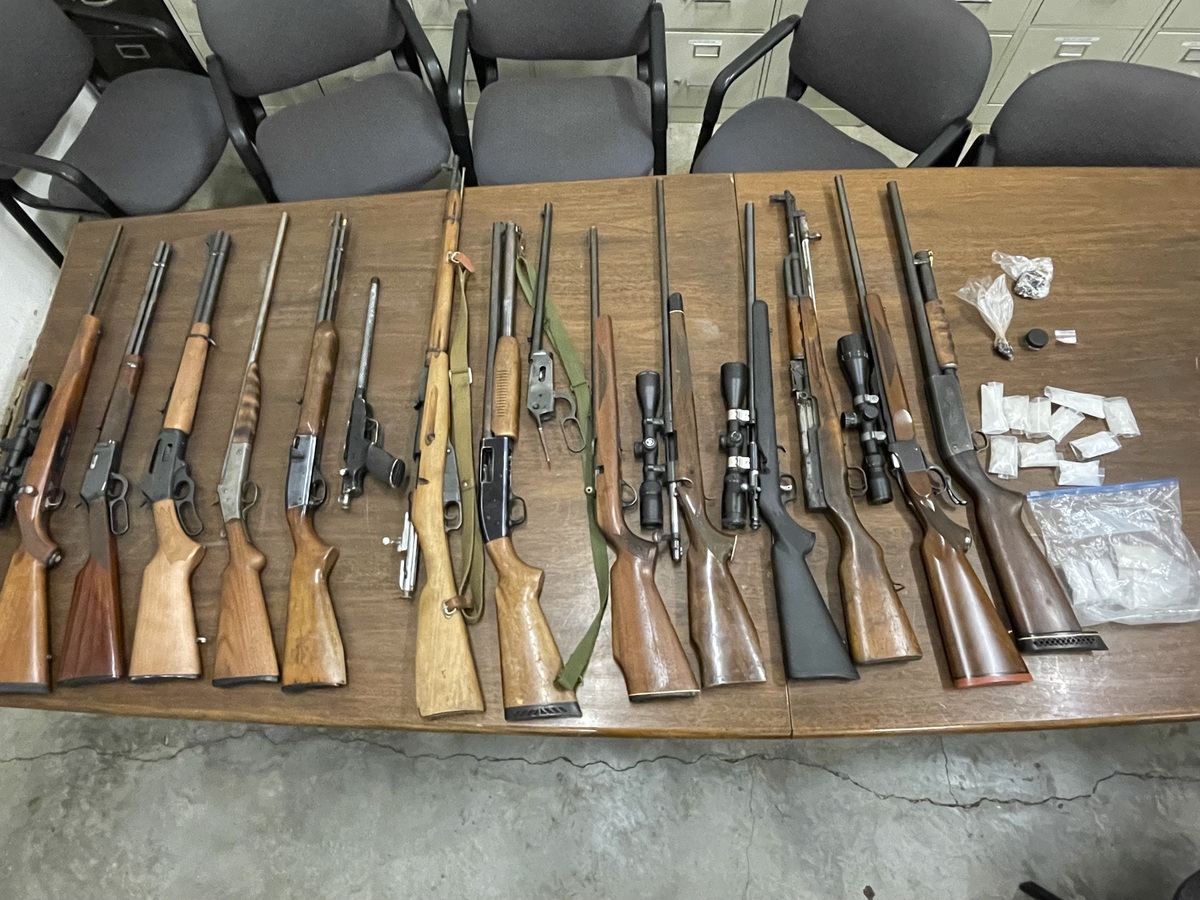
On April 20th, 2023, Humboldt County Drug Task Force Agents with assistance from the Fortuna Police
Department, the Humboldt County Sheriff’s Office, and the Hoopa Valley Tribal Police Department, served
six search warrants throughout Willow Creek and the Hoopa Valley.
###
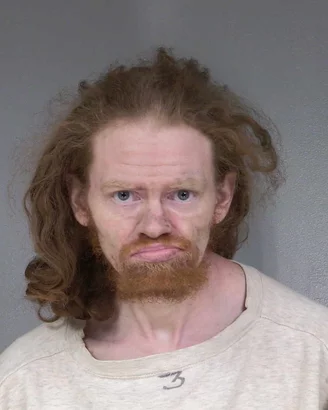
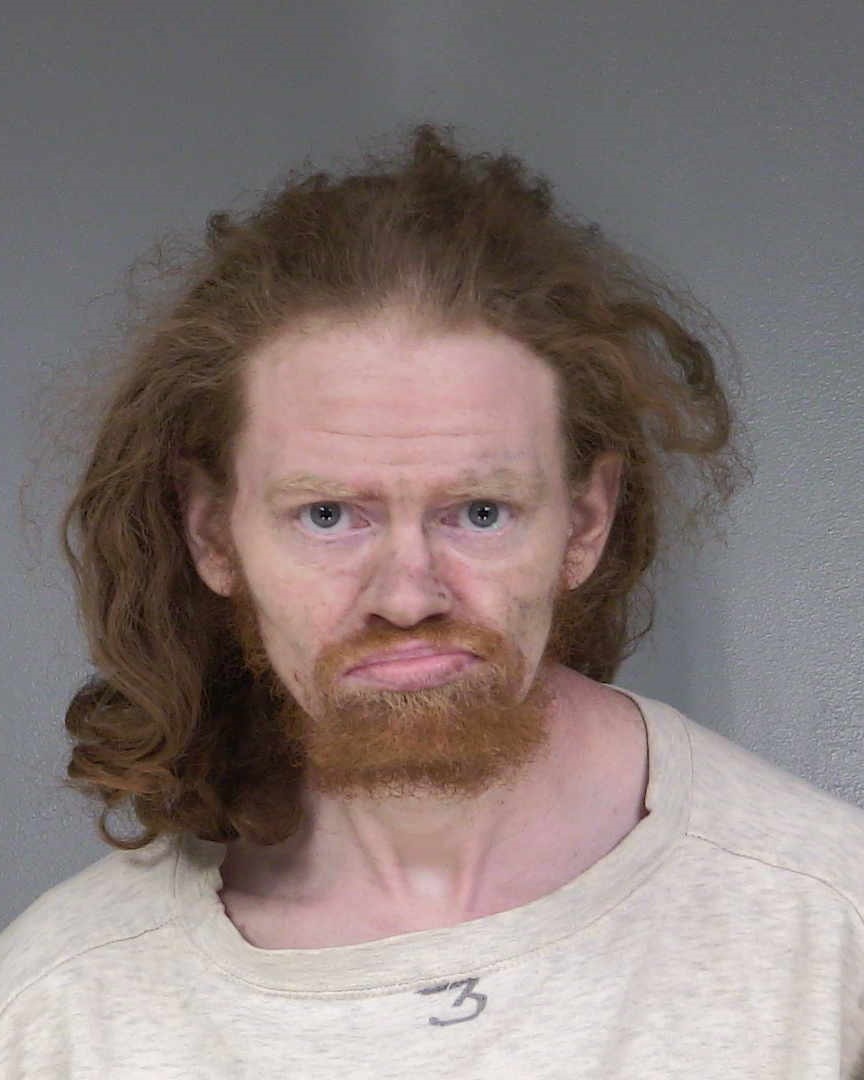
Goodrich.
The first search warrant was served in the 700 block of Sunset Lane in Willow Creek. As
a result of the search warrant, Casey Caldwell GOODRICH was located along with
approximately one gram of fentanyl and four firearms. GOODRICH was booked at the
Humboldt County Correctional Facility on the following charges:
HS11370.1(A), Possession of a Controlled Substance while Armed
HS11366, Maintaining a Drug House
###
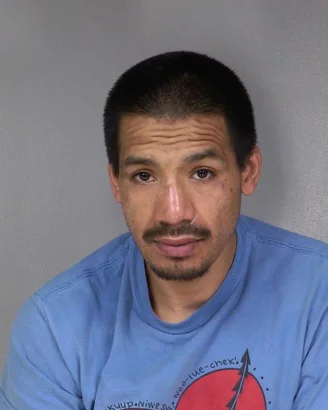
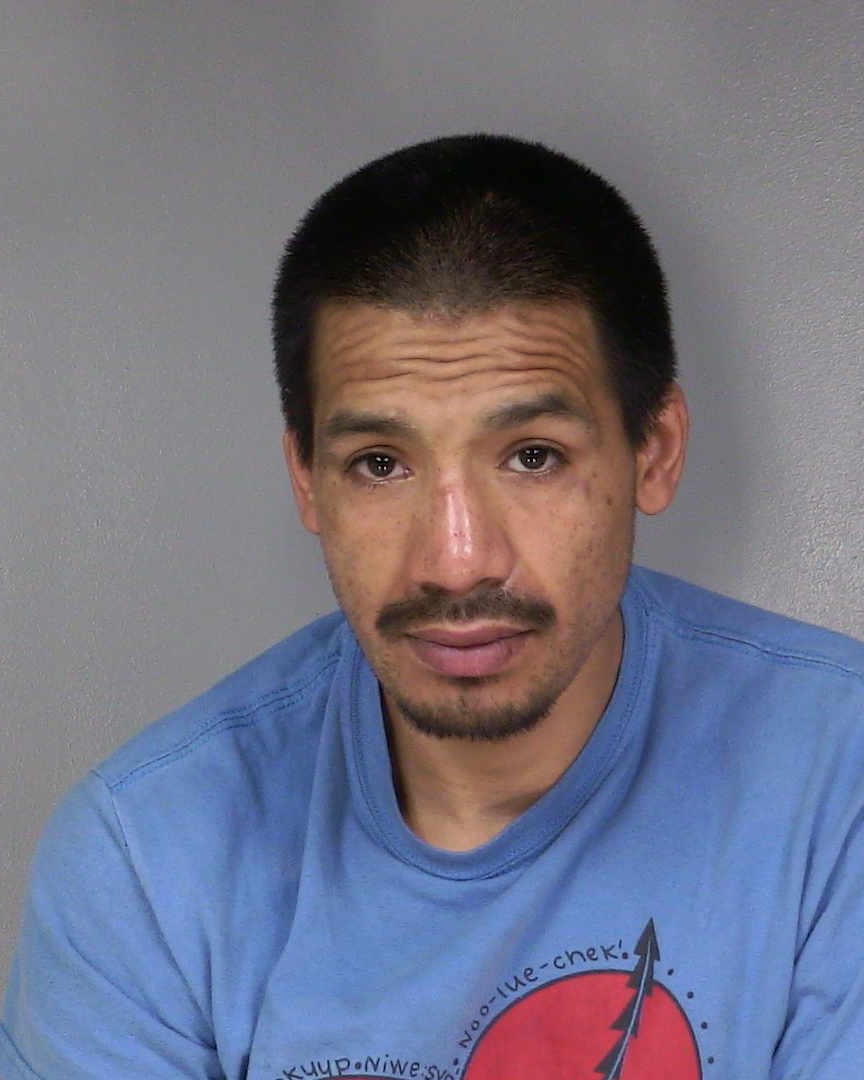
McKinnon.
The second search warrant was served at a residence on Masten Flat in Hoopa. Agents
located Erik Merlin MCKINNON as well as a firearm, ammunition, and approximately one
ounce of heroin. MCKINNON was booked at the Humboldt County Correctional Facility
on the following charges:
HS11370.1(A), Possession of a Controlled Substance while Armed
PC29800(A), Felon in Possession of a Firearm
PC30305(A), Felon in Possession of Ammunition
###
The third search warrant was served at a residence in Hostler Field Housing in Hoopa.
Agents located Velda MCKINNON along with two children inside the residence. Also
located was a firearm and approximately a gram of Fentanyl. The following charges will
be forwarded to the DA’s Office for Velda MCKINNON:
HS11370.1(A), Possession of a Controlled Substance while Armed
HS11366, Maintaining a Drug House
PC273A(A), Child Endangerment
###
A fourth search warrant was served at a residence on Moon Lane where Agents located
one ounce of heroin. No suspects were at the residence at the time of the warrant but charges will be
forwarded to the DA’s office.
###
A fifth search warrant was served at a residence on Community Service Road in Hoopa
where Agents located approximately a pound of methamphetamine, digital scales,
packaging, and eight firearms. Virgil Joseph POLE Sr was located at the residence and
booked at the Humboldt County Correctional Facility on the following charges:
HS11370.1(A), Possession of a Controlled Substance while Armed
HS11378, Possession of a Controlled Substance
HS11366, Maintaining a Drug House
###
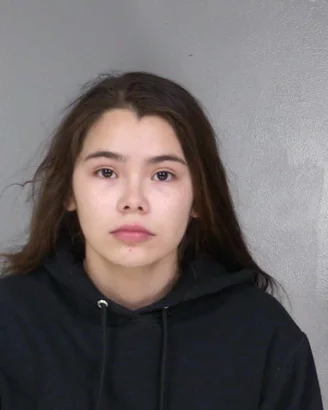
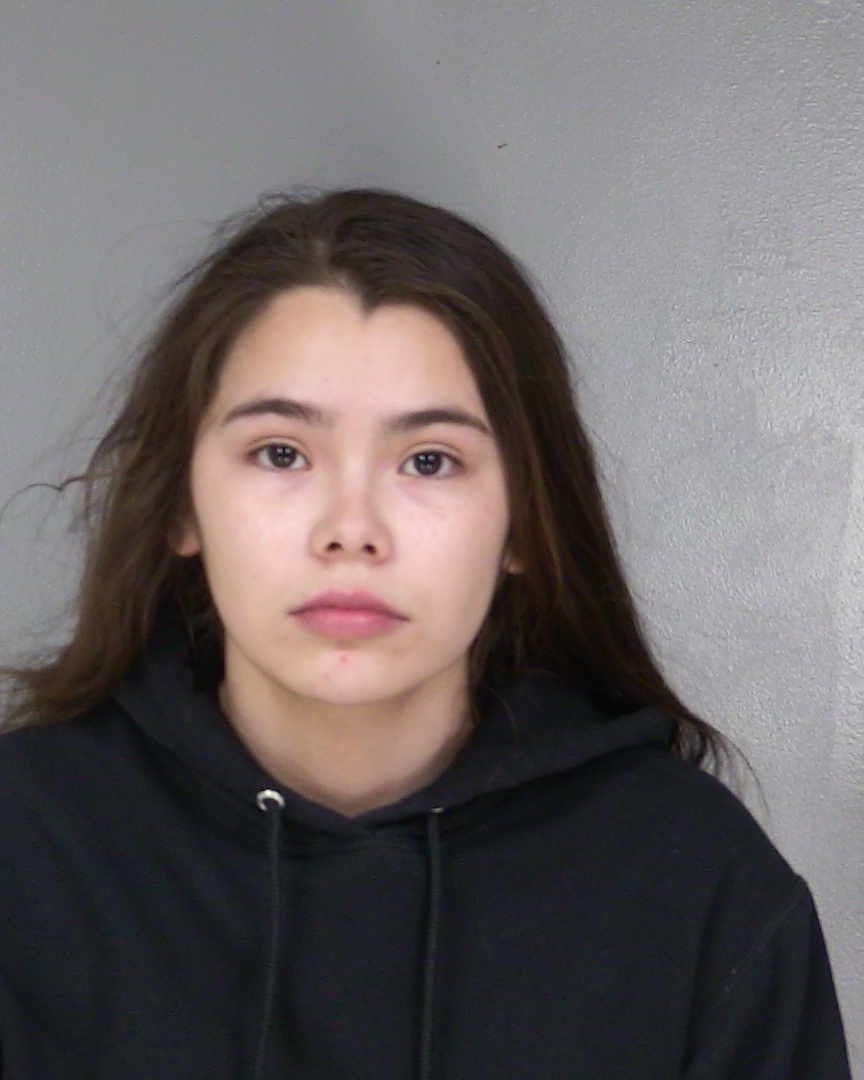
Blake.
A final search warrant was served on Airport Road in Hoopa where Agents located
Alecia BLAKE. BLAKE obstructed Agents from properly serving the search warrant.
BLAKE was booked at the Humboldt County Correctional Facility on the following
charge:
PC148(A), Obstructing a Peace Officer
Anyone with information related to this investigation or other narcotics related crimes is encouraged to
call the Humboldt County Drug Task Force at 707-267-9976.
On the afternoon of Thursday, April 20, 2023, the CHP Humboldt Area office responded to a fatal traffic crash on SR-299, west of Lord Ellis Summit, that resulted in the tragic death of two occupants.
A preliminary investigation revealed that at 12:39 PM, Derek Clayton McIntosh of Kneeland was driving a white Ford F-550 Ford service truck westbound on SR-299, west of Lord Ellis Summit. A 21-year-old female from McKinleyville was driving a gray Hyundai Tucson eastbound on SR-299 towards Lord Ellis Summit.
The Ford and the Hyundai collided head-on, causing the Hyundai to then collide into an eastbound 2020 Kenworth semi-truck trailer driven by Ryan James Noland of Shasta Lake. The Ford and the Hyundai came to rest blocking SR-299.
The female driver of the Hyundai and her passenger, a 30-year-old female from McKinleyville, sustained fatal injuries and were pronounced deceased at the scene. The driver of the Ford sustained minor injuries and the driver of the Kenworth was uninjured.
The CHP Humboldt Area office is investigating this traffic crash. DUI is not believed to be a factor, and all occupants were wearing their seatbelts at the time of the crash. SR-299 at the crash scene was closed for two hours while the scene was investigated.
Thank you to the many agencies who assisted with this incident including Caltrans, Blue Lake Fire Department, Arcata-Mad River Ambulance, the Humboldt County Coroner’s Office, and the Yurok Tribal Police Department.
The names of the deceased are being withheld at this time and may be released at a later date in an updated press release.
We extend our heartfelt condolences to the family and friends of these two young lives lost as a result of this tragic incident.
Press release from the Humboldt County Grand Jury:
The
2022-23Humboldt County Civil
Grand Jury) Grand Jury has
just released its first report of the year entitled Humboldt
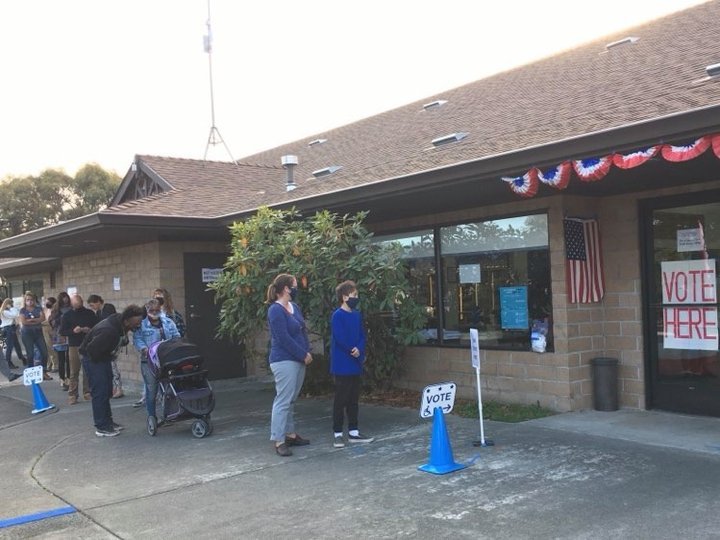
County Elections Integrity — It’s Okay to Vote!.
The
Humboldt County Civil Grand Jury directed one of its investigations
into the voting procedures and the counting of those votes for the
November 08, 2022 General Election. The current national political
climate has prompted people to question the integrity and accuracy of
even our local elections. The recent election provided the Grand Jury
with an instructive opportunity to closely observe the process of
voting and vote counting in Humboldt County with particular attention
to election integrity and vote security.
The
Humboldt County Civil Grand Jury believes that having the ability to
vote for government officials and laws, through an election process,
is one of the greatest rights we have as American citizens. It allows
us as people in our communities to determine who represents and
governs us. Maintaining the integrity of the elections process, voter
registration, ballot accessibility, polling locations and vote
counting is essential to making us all a part of the democratic
process.
The
Humboldt County Civil Grand Jury did an extensive study of the voting
processes. We observed the pre-election testing of election
equipment, training of poll workers and the initial processing of
vote by mail ballots interviewing many of the personnel in charge. On
Election Day, we watched the opening and closing of the polls and the
first tabulation of votes at the Elections Office. In the end, we
witnessed the final certification of the voting results.
The
Humboldt County Civil Grand Jury found that The Humboldt County
Elections Office provides its citizens with a fair and impartial
election accessible to all eligible voters. Our investigation began
weeks before the November 2022 election. We wanted to observe voting
by mail and how computer software maintained a fair and impartial
voting system. We can confirm that county employees, volunteer
citizen poll workers and independent monitors did a professional job.
We did find some minor areas that could use improvement and the
attention of the Elections Office and make recommendations that, if
followed, will lead to an even better work environment.
It’s that time of year again! Northcoast Children’s Services programs all around the county are painting up rocks all pretty and hiding them out in the world for you to find … because why?
Because it’s fun! Because it’s spring! And maybe also, a little bit, because they’d like you to be aware of their program, and of little kiddos in general.
The Outpost’s Stephanie McGeary wrote about last year’s rock hunt at this link, and took some pictures of the rocks too. This year, NCS’ Christy Synder joins our John Kennedy O’Connor to tell us about all things rock hunt in her own voice. Video above, transcript below.
###
JOHN KENNEDY O’CONNOR:
Well, welcome to another Humboldt Conversation. I’m really pleased to say today we’re here with Christy Snyder, who’s the group manager with Northcoast Children’s Services. Christy, welcome to Humboldt Conversations.
CHRISTY SNYDER:
Thank you. I’m so happy to be here.
O’CONNOR:
Lovely to meet you. Now, you’ve got a really exciting event coming up, tell us a bit about this.
SNYDER:
You know, we are always looking for exciting ways to recruit for our programs, which are preschool programs and home base, zero to five. And we last year started rock painting. I have a rock. So we paint these rocks and we place them in all the communities in Humboldt and Del Norte County. And then we want families to find the rocks, anyone to find the rocks. Call us — and on the back will be our phone number, so that you’ll be able to call us — and we’ll put you in a drawing for a gas card, a $50 gas card, which isn’t much this day and age. And that won’t go far, but it’s a little bit.
O’CONNOR:
It goes quite a long way actually, 50 bucks is a full tank. Almost. So we’re here in Arcata, this is obviously where the main office is, but these are going to be everywhere in Humboldt.
SNYDER:
Yes, we have sites in Garberville, Rio Dell, Willow Creek, Orleans, Eureka, McKinleyville, Arcata. So they’ll be all out there. So look for them in your daily walks or when you’re out and about. Give us a call. It was so fun to talk to the people who found these last year. And I don’t know if anybody, if you’ve looked for rocks, it’s really fun when you find them. And so we wanted to build into that.
O’CONNOR:
Very beautiful. Now, who actually makes the rocks themselves and who does the painting?
SNYDER:
Every site has instructions to do some rocks with their staff. Some sites are doing it with the kids. Sonoma, our Head Start Sonoma site, always does it with the kids and then goes out and puts the rocks out in Eureka and Sonoma Streets, California, Wabash, around their center. And those are kid-drawn rocks, but both staff and children in the schools do them.
O’CONNOR:
Yeah, I mean that’s a particularly beautiful one. How many are going to be out there that people are going to be looking for?
SNYDER:
Gosh, math. I would say we have about 19 or 20 centers participating and I would say each center, it’s about three to eight rocks. So each town could potentially have 10 rocks. A lot.
O’CONNOR:
It’s going to be exciting. Yes. And as you say, just one gift card at the end.
SNYDER:
One gift card, who knows, maybe I’ll have enough in my budget and do two. But it is the exciting part, is doing that raffle and giving out that gift card.
O’CONNOR:
Well, we’ll look forward to it and it’s a very exciting thing and when people find the way to contact us…
SNYDER:
Yeah, I haven’t put the stickers, but we did purchase some waterproof stickers, so it should be okay to put on the back of the road.
O’CONNOR:
Okay, well it’s going to be exciting to find one. I shall be out there looking myself. You should. We’ll look forward to starting the search. Thank you. Christy, great to meet you and thank you for joining us for another Humboldt Conversation. We’ll see you soon.
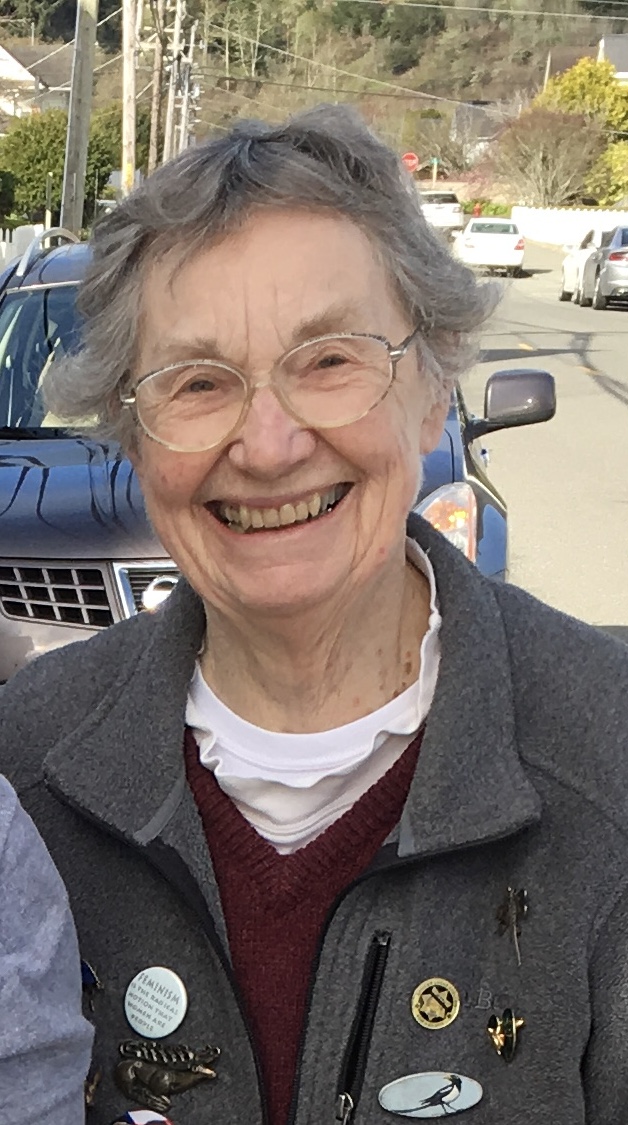
Audrey Ann Miller passed away on April 10, 2023, at the age of 91. Audrey lived her life in a trilogy of California communities: Berkeley & Campbell where she was born and grew up, Marin County where she and her husband Duane raised their kids and she worked as a bookkeeper, and Ferndale where she spent most of her retirement. Although retirement for Audrey meant working just as hard as a volunteer! She gave back to every community she resided in, serving as a school board member and an Audubon Canyon Ranch guide in Marin, and volunteering at the Humboldt Bay National Wildlife Refuge once she moved to Ferndale. She loved to lead interpretive nature walks where she would share her love and knowledge of birds, plants and insects. At any gathering it was common to see Audrey helping kids examine pond water through a microscope or to identify animal skulls. Growing up, the Miller kids would just smile and proudly agree when someone would say, “your mamma wears combat boots.” She really did, and she wore those well-polished boots along many trails, from Point Reyes to Russ Park.
Audrey was also a trailblazer for peace and equality. She stood as a Woman in Black, a group devoted to peace, for nearly a decade, first in front of the Ferndale City hall then the county courthouse in Eureka with three other octogenarians through all sorts of weather. Her jackets were adorned with pins and buttons, her favorite read, “Feminism is the radical notion that women are people.” She was a woman who acted more than she spoke, and those actions were community minded and intended to make every place she lived a better place. If someone or the community needed a hand, Audrey was there to lend it. You might have seen her in one of three Humboldt libraries where she volunteered or at the Humboldt Wildlife Refuge. You might have even seen her mucking at the fairgrounds when the epic horse rescue happened over a decade ago. Most people remember her as the small woman in dark glasses and a big hat, armed with a bag and grabber tool, who picked up trash and recycling along the streets of Ferndale during her daily three miles of walking.
Audrey had not been able to perform her daily walk/trash clean ups for the last several years and Ferndale streets are showing it. As a tribute to Audrey, on your walks around town or just to your front door, lean down and pick up a piece of trash or an old cigarette butt to show you care about your community, both human and nature. As Audrey was a woman of science, after her passing she was taken directly to UCSF Medical School to help further research, the ultimate voluntary donation. Audrey is survived by her amazing grandchildren who she relentlessly doted on, her four kids and their significant others, extended family, and a wide variety of dear friends. A celebration of life will be held from 11:00am-1:00pm Saturday, May 13 at Ferndale City Hall. Wear a hat and clean up the street in your neighborhood or Ferndale before or after the event in honor of Audrey. She would have loved that.
###
The obituary above was submitted on behalf of Audrey Miller’s loved ones. The Lost Coast Outpost runs obituaries of Humboldt County residents at no charge. See guidelines here. Email news@lostcoastoutpost.com.
Born Dec. 20. 1956, he passed away peacefully in the home his mother and father built on March 12, after a long fight with COPD and CHF. He passed comfortably with his daughter at his side.
My father was an amazing person and loyal friend. He was a wonderful father to his daughter, Melissa Newton, and Duncan Espinosa (whom he loved like his own son). One final wish my dad had was to see Duncan again and my brother made sure that happened.
My father was a jack of all trades, there wasn’t anything he couldn’t fix. All his friends would call him whenever they needed a car fixed or a house wired. I remember spending many of my days playing with long time friends, Joe and Tyler Carswell at their house in McKinleyville while my dad helped Ron, their dad, work on cars. (Verla, Ron’s wife, practically raised me. Verla was my second mother.) As well as playing on the sand dunes in Manila at one of my father’s many friends house while he worked on the three wheelers to get them up and running so we could go ride. One of my brothers and mine memories of riding on three-wheelers with my father was a time we were going up an big sand hill and my brother hit the kill switch and shut the three wheeler off and we all rolled down the hill. Needless to say, he learned his lesson that day about the kill switch.
Any of my fathers friends knew that all they had to do was to call him and he would be there in a heart beat to help them any time of day or night. My father would tell me about the many adventures he had when he was younger. His favorite story to tell was the time he took his motor cycle from Nevada to Eureka doing over 100 m.p.h. There was a spot in the road that he hit and jumped his bike and almost lost control.
My father was very blessed to have many special friends in his life, many of them life long friends. Dave Thomas, Rick Plozin and Verla Carswell, and Lance and Val Marcelli just to name a few. I know that there were many, many more and I’m sorry that I don’t remember all the names.
My father is preceded in death by his mother and father, Lindy and Charlotte Pedro, his brother Jack, and his Uncle Dwayne Christianson.
He is survived by his daughter, Melissa Newton (Jason), son, Duncan Espinosa (Melanie), grandson Jonathan Stone (Alexis), granddaughter Madison Howe (Micah), granddaughter Kaylee Rapp (Connor). He is also survived by his other grandchildren, Devin and Lena Espinosa, and his one great-granddaughter Keziah Pearl Howe.
I would like to give a special thanks to Hospice of Humboldt for their help in taking car of my father. Also, a very special thanks to a young lady that stepped up to help, my own loving daughter, Kaylee Rapp, without whom I wouldn’t have been able to make my dads last days possible to stay at home. Also I want to thank Rick Polzin for taking dad out and dealing with his craziness. I know it wasn’t easy at times.
There will be a celebration of life at Freshwater Park on June 24 starting around 12 p.m.
###
The obituary above was submitted on behalf of Michael Pedro’s loved ones. The Lost Coast Outpost runs obituaries of Humboldt County residents at no charge. See guidelines here. Email news@lostcoastoutpost.com.
HUMBOLDT TODAY: A Humboldt County Sheriff’s Office lieutenant has been arrested; cannabis reform proponents are calling out the Humboldt County Board of Supervisors; plus, a wind energy company has officially opened shop in Eureka. Those stories and more in today’s online newscast with John Kennedy O’Connor.