

FATAL CRASH: Driver Declared Dead at Scene of Single-Car Collision Near Richardson’s Grove
LoCO Staff / Wednesday, Nov. 1, 2023 @ 12:29 p.m. / Traffic
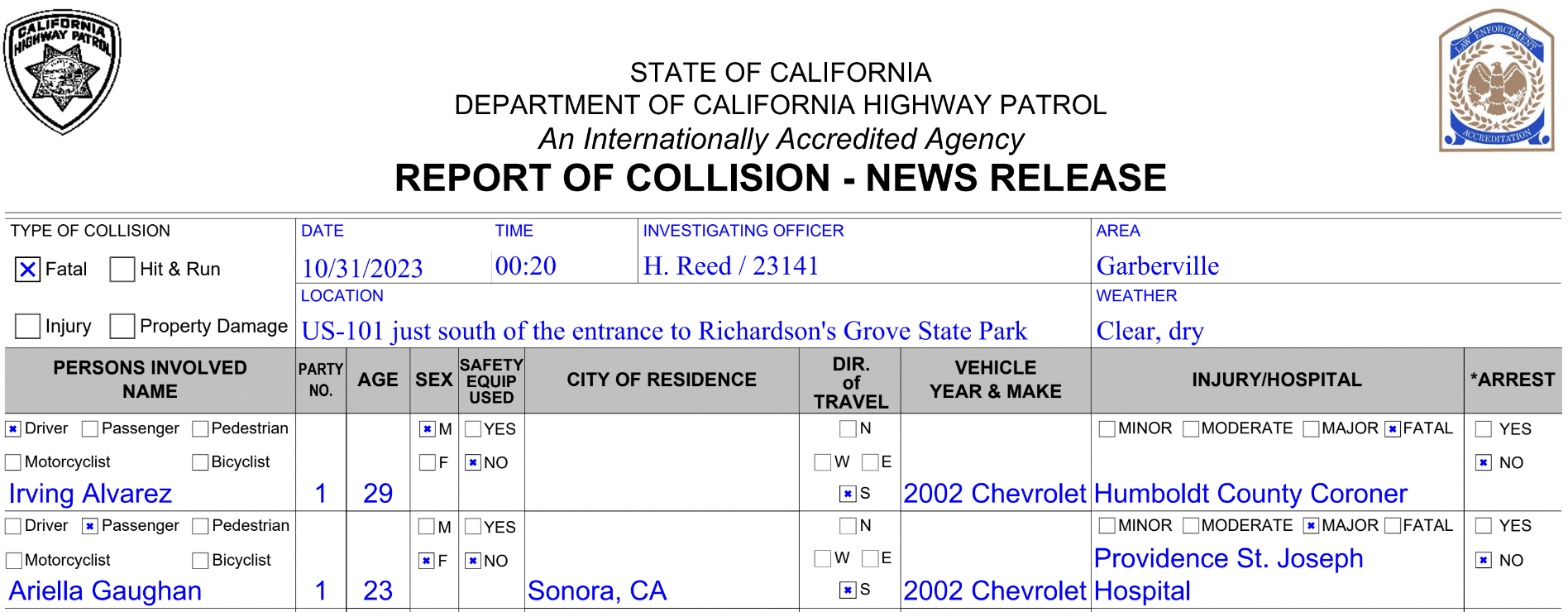
California Highway Patrol press release:
On October 31, 2023, at approximately 0020 hours, a 2002 Chevrolet Silverado driven by Irving Alvarez was traveling southbound on US-101 just south of the entrance to Richardson’s Grove State Park. For reasons still under investigation, the driver of the Chevrolet traveled off the east road edge of US-101 and collided with a tree. The Chevrolet then overturned and came to rest on it’s roof within the northbound lane of US-101, with both occupants trapped inside the vehicle.
The driver of the Chevrolet was pronounced deceased at the scene by medical personnel. Upon being extricated, the passenger who sustained major injuries as a result of the crash was transported to Providence St. Joseph hospital for further medical care.
This crash remains under investigation by the California Highway Patrol, Garberville Area.
The following agencies responded to the scene and assisted with this incident: Garberville Volunteer Fire Department, Redway Volunteer Fire Department, Garberville CAL-FIRE, Southern Humboldt Technical Rescue, and City Ambulance of Eureka.
BOOKED
Yesterday: 10 felonies, 12 misdemeanors, 0 infractions
JUDGED
Humboldt County Superior Court Calendar: Today
CHP REPORTS
852 MM199 S DN 8.50 (HM office): Trfc Collision-No Inj
Poppy Dr / Sherwood Rd (HM office): Closure of a Road
ELSEWHERE
Mad River Union: Arcata’s petite data center only the first
Mad River Union: Whistleblower calls for Miranda’s Rescue end
Mad River Union: EV infrastucture needs in rural areas reviewed
Mad River Union: $600K grant for Jolly Giant, Butcher’s Slough resilience
RATES TOO DAMN HIGH? PG&E Officials to Discuss Proposed Rate Hikes, Energy Saving Tips and More During Tonight’s Virtual Town Hall
Isabella Vanderheiden / Wednesday, Nov. 1, 2023 @ 11:16 a.m. / Energy

Humboldt Bay Generating Station at King Salmon. File photo: Andrew Goff
###
Pacific Gas and Electric Co. will host a virtual town hall for North Coast residents this Wednesday evening to discuss proposed rate hikes.
On Nov. 2, the California Public Utilities Commission (CPUC) is expected to vote on two rate proposals submitted by PG&E, a part of the state’s once-every-four-years review of the utility provider. One proposal seeks to increase PG&E’s revenue by 13 percent, which would increase monthly power bills by an estimated $28 per month on average by 2026, according to the Associated Press. The second would increase the company’s revenue by 9 percent, resulting in a $24 monthly increase.
Members of the public will have a chance to ask PG&E officials questions about the proposed rate hikes and other regional news during tonight’s meeting. More information can be found below.
###
Press release from PG&E:
Pacific Gas and Electric Company (PG&E) invites North Coast Region customers to a virtual town hall to learn more about work in their region and discuss tips for safety and energy savings.
On Wednesday, November 1 from 5:30 to 7 p.m., PG&E experts, including Regional Vice President for PG&E’s North Coast, Dave Canny, will provide a brief presentation during which participants will have the opportunity to ask questions.
The event can be accessed through the below link, by phone or through PG&E’s website, pge.com/webinars.

In our meeting this quarter, we will also provide an update regarding a pair of proposed decisions in the General Rate Case by the California Public Utilities Commission (CPUC). The proposed decisions would drastically reduce PG&E’s undergrounding plans of more than 2,000 miles between now and 2026.
American Sign Language interpretation will be available, along with dial-in numbers for those who aren’t able to join online. For the full webinar events schedule, additional information on how to join and recordings and presentation materials from past events, visit pge.com/webinars.
About PG&E
Pacific Gas and Electric Company, a subsidiary of PG&E Corporation (NYSE:PCG), is a combined natural gas and electric utility serving more than 16 million people across 70,000 square miles in Northern and Central California. For more information, visit pge.com and pge.com/news.
OBITUARY: Brook Westman, 1991-2023
LoCO Staff / Wednesday, Nov. 1, 2023 @ 6:56 a.m. / Obits

It is with such heavy hearts and sadness we share that Brook Westman passed away surrounded by her family and friends in Blocksburg, at the tender age of 32 on Monday, Oct. 23. Brook passed after a courageous battle with cervical cancer. She faced it with incredible grace, and independence even when she was in heightened pain.
Brook was a loving daughter, granddaughter, niece, cousin and friend to many. She is survived by her mother, Patricia Guglielmina; stepfather, Terry Akin; uncle, Glen Guglielmina (Tami); uncle John Carr and family; aunt Julie Noel (Kirk); aunt Rae Akin; cousins Vincent and Anthony Guglielmina, Amber, Ashley and Kyle Noel, Shasta and Azalea McNaughton, Jasmine and Lily Carr; extended family, Misty Wyatt, Echo Wyatt, Breanna, Brennan and Kaitlyn Miller, Tanner, Brayden and Scarlett. Her grandparents, Herb and Irene Guglielmina, were local dairy farmers in Grizzly Bluff. She was preceded in death by her father, Bryan Westman, and her grandparents, Richard and Carol Westman and Herb and Irene Guglielmina.
Brook was born and raised in Fortuna and attended Fortuna elementary schools. She then moved with her mother, Patti, and stepfather, Terry Akin, to Paradise, Calif., where she completed her high school education. She was a survivor of the Nov. 8, 2018 Paradise fire when her home was burned to the ground.
Brook worked as a beautician in Reno, managing a local salon. She began her career cutting and styling women’s hair but learned that she preferred cutting and styling men’s hair more! She said with a smile, “Us women are a bit more particular about our hair”
She was described by her great-aunty as a “little brilliant light.” When she was a baby, crying wasn’t her mission. She woke up with a smile. It was as though she had a mission to spread joy. Brook loved the water and loved to swim. She was like a little fish. One of her last wishes was to swim in the Eel River, a place that brought wonderful memories for her. Brook had a love for adventure. She loved to go four-wheeling with her cousins and enjoyed the outdoors with her aunties and cousins.
The love that surrounded Brook in the last weeks of her life was a sure testimonial of who she was. To all who shared their lives with Brook, she was a beacon of light and we are all blessed to have had the privilege of knowing her. Brook had a wide circle of friends. She touched the hearts of many with her kind spirit, and her infectious smile.
Brook was a strong young woman. She knew what she wanted and remained stoic in staying consistent with her wishes. Even during her own suffering, Brook remained the epitome of politeness and grace. The nurses in the hospital said she always said “Please” and “Thank you” even when her pain was at a ten.
While we grieve the loss of Brook, we must also celebrate the life she lived. Her memory will forever serve as a reminder of the importance of kindness and courage. As we carry her legacy forward, may we learn from her example, embracing every day with the same strength, grace, and independence that she embodied throughout her life.
Brook leaves behind a loving family and a big circle of friends whose lives were profoundly touched by her presence. Her memory will live on in the stories we share, the kindness we extend to others, and the love we continue to feel.
Brook will be interred at Ferndale Cemetery. Arrangements by Goble’s Fortuna Mortuary. The family will be having a celebration of life at a date will be determined later.
Rest in peace, sweet Brook. You were taken from us far too soon, but your legacy will remain eternal.
###
The obituary above was submitted on behalf of Brook Westman’s loved ones. The Lost Coast Outpost runs obituaries of Humboldt County residents at no charge. See guidelines here.
OBITUARY: Mary Lou Bravo (Curtis), 1946-2023
LoCO Staff / Wednesday, Nov. 1, 2023 @ 6:56 a.m. / Obits
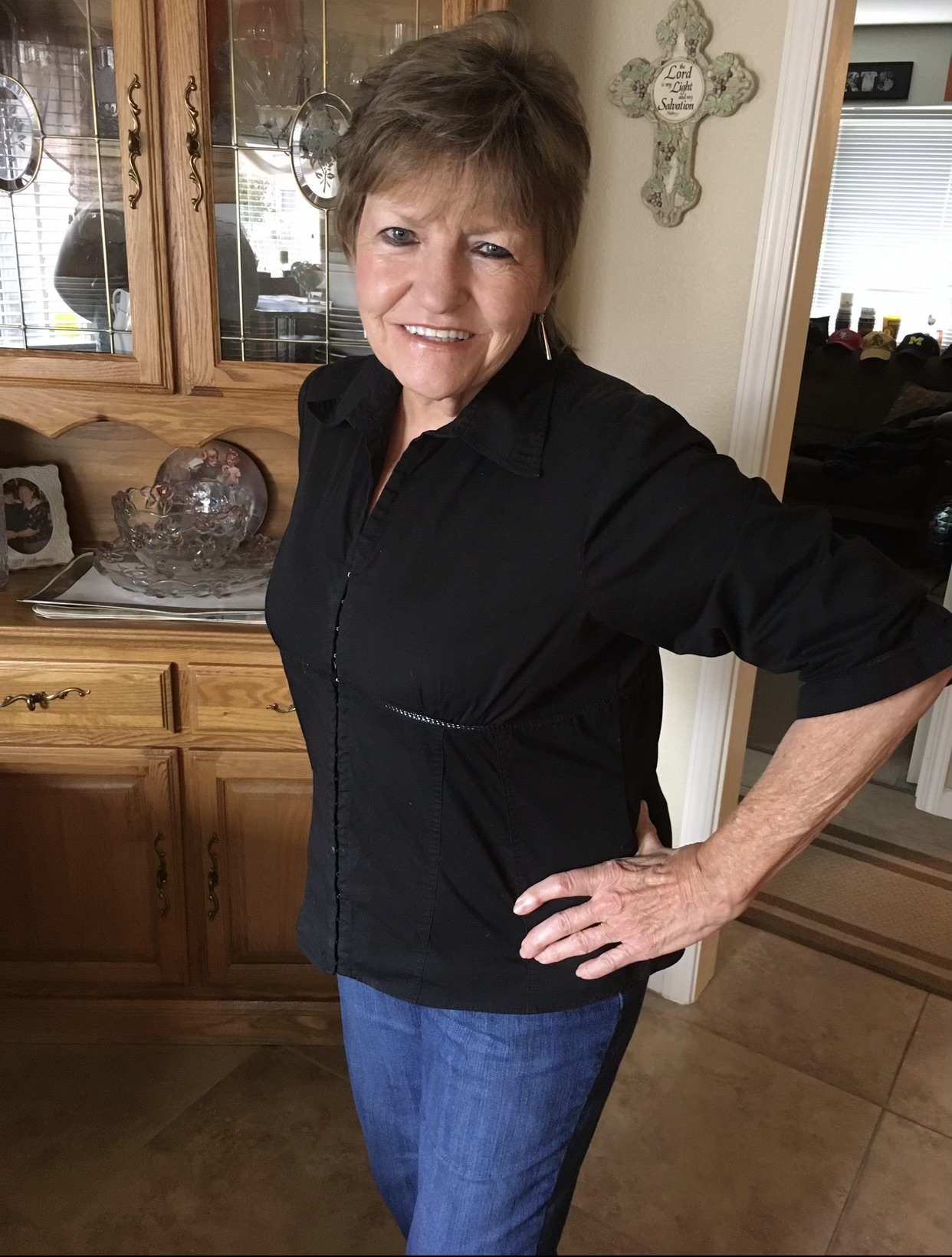
Mary
Lou Bravo (Curtis)
July
17, 1946 – October 23, 2023
Mary Lou Bravo (Curtis) changed her address to Heaven on Oct. 23 in Fortuna with her dear family by her side.
Mary Lou was born on July 17, 1946 to Ted and Phyllis Curtis. She was the second of eight children. She was God’s gift to her family in humor, fun and caregiving. She lit up every room with her carefree, sparkling personality and humor. Everyone knew the seriousness was gone and the fun had begun! Mary was loved by everyone and she will be deeply missed.
She attended two different one-room country schools near Karnak, N.D. In junior high, she attended Hannaford School and then the family made a move to Valley City, N.D., where she graduated from high school in 1964. She had so many friends and often made it back there for their reunions. After graduation, she attended Valley City State College, majoring in Elementary Education.
She moved to California with her sister Erleen, with an invitation from their cousin, Jan Willson. Her parents came out six months later and bought the elderly resident care facility, Haven of Rest, in Fortuna. They had always wanted to move to California, where they remained the rest of their lives. Mary Lou and her sister, Bonnie, moved to the San Francisco Bay Area, where she worked as a nurse’s aide at Eden Hospital in Castro Valley. She later moved back to Eureka, where she went to work for her parents as the greatest nurse to the elderly they had ever had.
Mary Lou married Lanny Bravo in April of 1979. They went on to have two wonderful sons, Lance and Chad. She was an amazing mother and caregiver, but she always managed to find time in her busy schedule to meet up with her friends for a round of golf, a competitive game of pool, or a fun night at the bowling alley. Mary was also one of the Golden State Warriors’ biggest fans. She would always try to catch every game on TV and even got to make it to one game in person to see her all-time favorites, Steph Curry, Draymond Green and Klay Thompson.
Mary is survived by her two sons, Lance (Laurie) and Chad (Alyssa), beautiful grandchildren, Tyler, Mariah, Elijah, Noah and a baby on the way. Mary Lou is also survived by seven brothers and sisters, Erleen Staley (Warren); Bonnie Mabon (Lon); Joel Curtis, (Rachel), Ginny Thompson (Tom); Rachel Graybill (Dan); Esther Curtis; John Curtis (Lorraine) and numerous nieces and nephews. Mary is predeceased by her parents, Ted & Phyllis Curtis, grandparents and numerous cousins, aunts and uncles.
A gathering to share memories and stories will be held on Sunday, November 12, 2023, at 1 p.m., at the Fortuna River Lodge, 1800 Riverwalk Dr, Fortuna, CA 95540.
###
The obituary above was submitted on behalf of Mary Lou Bravo’s loved ones. The Lost Coast Outpost runs obituaries of Humboldt County residents at no charge. See guidelines here.
Trinity County Issues Arrest Warrant for Missing Man Last Seen Near Willow Creek a Month Ago, Sheriff’s Office Says
LoCO Staff / Tuesday, Oct. 31, 2023 @ 1:28 p.m. / Crime
PREVIOUSLY:
###
Press release from the Humboldt County Sheriff’s Office:

As of 10/24/23, an arrest warrant was issued for Tyler Burrow out of Trinity County Sheriff’s Office for PC 245(a)(1): Assault with a Deadly Weapon. This warrant is not connected to the disappearance of Bailey Blunt. If Tyler is located, please approach with caution, and contact law enforcement.
Anyone with information for the Sheriff’s Office regarding Blunt or Burrow’s possible whereabouts is asked to call the Humboldt County Sheriff’s Office - Major Crimes Division at (707) 445-7251, reference case numbers 20230449 and 202304457. For information regarding the Trinity County criminal investigation, please contact Trinity County Sheriff’s Office: 101 Memorial Dr., Weaverville, CA. Phone: (530) 623-2611.
Key Senators Announce Intention to Subpoena Rob Arkley in Supreme Court Ethics Probe
Hank Sims / Tuesday, Oct. 31, 2023 @ 10:25 a.m. / D.C.
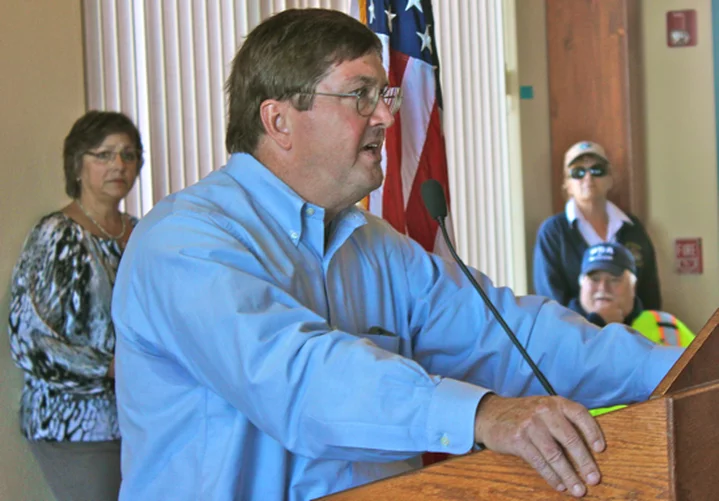
File photo: Andrew Goff.
PREVIOUSLY:
- Rob Arkley’s Role in Dark Money Political Group Explored in Daily Beast Report
- Justice Samuel Alito Took Luxury Fishing Vacation With GOP Billionaire Who Later Had Cases Before the Court — With Help From Eureka’s Rob Arkley
- U.S. Senators Ask Rob Arkley and Other Donors for Itemized Lists of Gifts to Supreme Court Justices
- Rob Arkley is Refusing to Comply With the Senate Judiciary Committee’s Supreme Court Ethics Inquiry
Last we checked in with the Senate Judiciary Committee, Eureka kazillionaire Rob Arkley was declining to provide information to that body’s investigation into Supreme Court ethics and standards.
That investigation was sparked by the huge ProPublica series on the long history of some Supreme Court justices accepting lucrative gifts from the super-wealthy, and sometimes from people with direct business before the court. One of those stories covered how Justice Samuel Alito, and the late Justice Antonin Scalia before him, were apparently comped a free vacation to Arkley’s Alaska fishing lodge.
The Democrat-controlled Judiciary Committee appears not in a mood to let lie Arkley’s disinclination to participate in their probe. In a statement issued yesterday, committee chair Dick Durbin said he would seek a subpoena to compel Arkley’s testimony, along with that of a couple of other people — Harlan Crow, Justice Clarence Thomas’s benefactor, and Leonard Leo, leader of the conservative Federalist Society.
Press release from the Senate Judiciary Committee:
U.S. Senate Majority Whip Dick Durbin (D-IL), Chair of the Senate Judiciary Committee, and U.S. Senator Sheldon Whitehouse (D-RI), Chair of the Senate Judiciary Subcommittee on Federal Courts, Oversight, Agency Action, and Federal Rights, today announced that the Senate Judiciary Committee will vote to authorize issuing subpoenas to Harlan Crow, Leonard Leo, and Robin Arkley II as it relates to the Committee’s Supreme Court ethics investigation.
“The Supreme Court is in an ethical crisis of its own making. Thanks to investigative reporting, we now know that for decades, some justices have been joining billionaires with business before the Court on their private planes and yachts or receiving gifts such as private school tuition for a family member. And it is through this reporting that we learned the justices have not been disclosing these gifts as required by federal laws that expressly apply to them. By accepting these lavish, undisclosed gifts, the justices have enabled their wealthy benefactors and other individuals with business before the Court to gain private access to the justices while preventing public scrutiny of this conduct.
“But this is just what we know from investigative reporting. In order to adequately address this crisis, it is imperative that we understand the full extent of how people with interests before the Court are able to use undisclosed gifts to gain private access to the justices. The inquiries the Committee has sent to Harlan Crow, Leonard Leo, and Robin Arkley are critical to this work. However, they have either refused to comply or offered to produce certain limited information that fell well short of what the Committee needs and to which it is entitled.
“Due to Crow, Leo, and Arkley’s intransigence, the Committee is now forced to seek compulsory process to obtain the information they hold. Therefore, Chair Durbin will be asking the Committee to grant him authorization to issue subpoenas to these individuals.
“The Chief Justice could fix this problem today and adopt a binding code of conduct. As long as he refuses to act, the Judiciary Committee will.”
In July, the Senate Judiciary Committee advanced the Supreme Court Ethics, Recusal, and Transparency (SCERT) Act to the full Senate. The bill would require Supreme Court Justices to adopt a code of conduct, create a mechanism to investigate alleged violations of the code of conduct and other laws, improve disclosure and transparency when a Justice has a connection to a party or amicus before the Court, and require Justices to explain their recusal decisions to the public.
Durbin and Whitehouse have been calling on the Supreme Court to adopt an enforceable code of conduct for more than a decade. They first sent a letter to the Chief Justice on this issue more than 11 years ago.
Leo and Arkley Intransigence
The need to subpoena Leonard Leo and Robin Arkley is clear. There are no other steps for the Committee to consider other than compulsory process when presented with outright defiance of legitimate oversight requests.
Leo’s and Arkley’s responses to the Committee’s initial July 11, 2023, requests were blanket refusals to comply. Neither individual engaged in any private discussions with the Committee. The Committee reiterated its requests to both Leonard Leo and Robin Arkley on October 5, noting that they had identified no proper basis to withhold information from Congress. Both repeated their refusals to cooperate.
Neither has identified a proper basis to withhold information from Congress. Both claim that the Committee’s inquiry lacks a valid legislative purpose, despite decades of legislation passed by Congress regulating the ethical conduct of the judiciary, including Supreme Court justices.
Crow’s Insufficient Proposal
The need to subpoena Harlan Crow is also clear, although the route to this decision differs slightly. The Committee sent separate inquiries to Crow and the three holding companies that own his private jet, yacht, and Topridge Camp, respectively. Crow’s counsel purports to speak for Crow and all three holding companies. While Crow’s public responses to the Committee’s requests included arguments similar to those of Leo and Arkley, Crow had initially claimed a willingness to engage with the Committee privately, through his counsel.
However, his proposal to provide the Committee with responses to only a small subset of its requests, and only for the past five years, is wholly inadequate. Additionally, tying this insufficient response to an agreement that the Committee would pursue no further inquiries regarding Crow’s relationship with Justice Thomas would inappropriately and prospectively undermine the Committee’s constitutional oversight authority.
Throughout the negotiations, a steady drip of new reporting on Crow’s relationship with Justice Thomas highlighted the untenable limitations of Crow’s offer to the Committee.
It would be irresponsible for the Committee to accept a response that merely covers the past five years, given that (1) Crow’s extravagant gifts to Justice Thomas go back more than two decades; (2) these previously undisclosed gifts have played a role in connecting Justice Thomas to special interest networks such as those led by Leonard Leo and the Koch brothers; and (3) Crow has engaged in other efforts to influence the Court through Justice Thomas’s wife.
- In September, ProPublica revealed that not only has Crow been hosting Justice Thomas at the private, all-male club Bohemian Grove over the last 25 years, but the Koch brothers—architects of one of the largest, most influential political apparatuses in recent history—also stayed in this camp with Justice Thomas.
- Justice Thomas has since participated in fundraising events for the Koch political network, and that network is bankrolling lawyers representing the petitioners in Loper Bright Enterprises v. Raimondo, a case that is currently before the Court.
- Politico has revealed that in 2009, Crow provided an initial $500,000 in funding to Ginni Thomas’s non-profit group, which Leonard Leo directed, that advocated on issues before the Court.
In light of all this, all Committee Democrats rejected Harlan Crow’s proposal on October 5 and invited him to engage in further negotiations. He has instead refused to engage further or comply, and as a result the next step for the Committee is to pursue compulsory process.
The Need for Student Services at Community Colleges Has Changed Dramatically Since the 1960s. Has State Law Kept Up?
Adam Echelman / Tuesday, Oct. 31, 2023 @ 7:41 a.m. / Sacramento

The Golden Eagle Student Union building at the West Hills College in Lemoore on Oct. 9, 2023. Photo by Larry Valenzuela, CalMatters/CatchLight Local
On the shelf of an office in Coalinga sits a time capsule of sorts, transporting readers to the old days of community college. The book commemorates the 75th anniversary of the founding of West Hills College in Coalinga, featuring black and white photos from the 1940s, ‘50s and ‘60s. Young men and women, most of them white, hold books as they walk across campus. They pose together at the college dance or smile during football practice.
“It’s like ‘Friday Night Lights’,” said West Hills Community College District Chancellor Kristin Clark, comparing the images to the popular TV show and movie about small-town America as she leafs through the book.
The town of Coalinga, located at the western border of the Central Valley, is still small and rural, but today, the college is more than three-quarters Hispanic and roughly 40% of classes are online. Many classes are offered through prisons, at a satellite campus in Firebaugh, or at nearby high schools.
That evolution is now at the center of a growing debate over a state law enacted in 1961. Known as the 50% law, it requires community colleges to spend at least half of their general fund each year on classroom instructors. That general fund represents most of Clark’s annual budget for the college. While faculty say the law ensures that colleges focus on teaching, college administrators say it’s outdated and that they need more flexibility in budgeting to meet the needs of students.
“Our mission has changed drastically,” Clark said. “Just sending them into a classroom isn’t enough these days.”
Nearly one-quarter of the state’s community college students experienced homelessness in the past year, and many more struggled to afford food, according to a recent survey. The Central Valley had the highest rate of food and housing insecurity among students, the survey found. Yet many of the services that colleges offer, such as technology and library materials, food pantries on campus and support programs for Hispanic and disabled students, do not count as instructional costs.
Walking into the library at West Hills College in Coalinga, Erick Morales and Raul Sevilla, both 18, are searching for Wi-Fi, not books. Even at the Starbucks in town, where Sevilla works part time, the internet is slow, he said. When the library closes, both students rely on Wi-Fi hotspots on loan from the library to complete their coursework. Those hotspots are not considered instructional costs either.
‘Where is the money going?’
The intent of the 50% spending law was to keep class sizes small and to limit the growth of administrative positions, according to a paper by the Community College League of California. On average, community colleges across the state spent 51% of their general fund on instructors in the 2021-22 academic year, according to the most recent data from the Community Colleges Chancellor’s Office. Many schools were just tenths of a percentage point above the 50% threshold.
While Clark and other college presidents see those numbers as evidence of the evolving role of community college, faculty leaders see evidence of administrative bloat. “Our primary function is instruction,” said Wendy Brill-Wynkoop, president of the Faculty Association of California Community Colleges. “Where is the money going? Are we using this money to support students or to support an administration that’s larger than is necessary?”
She said many of the expanded services that colleges provide today are funded from sources excluded from the 1961 law. That’s because the law only applies to money spent from a college’s general fund and not to money received through restricted state grants or through philanthropy.
“Where is the money going? Are we using this money to support students or to support an administration that’s larger than is necessary?”
— Wendy Brill-Wynkoop, president of the Faculty Association of California Community Colleges
In recent years, state legislators have earmarked a growing number of restricted grants to address historically underserved populations, such as former foster youth, undocumented, Black, Native and LGBTQ+ students, as well as for student needs, such as homelessness and hunger. However, college presidents say the state and federal money doesn’t cover all of the costs for these programs.
In June, Assemblymember Freddie Rodriguez, a Chino Democrat, asked the state to audit community college finances to evaluate compliance with the 50% law. Representatives from all of the state’s 116 community college faculty unions expressed support for the audit.
In his letter, Rodriguez referenced an audit from 2000 that found that multiple community college districts didn’t comply with the law. He pointed out that the salaries of community college presidents and superintendents now average $284,504 per year, with the highest annual salary at $386,003. He wrote that the number of administrators has grown by 45% in the past 10 years, even while enrollment at community colleges has declined in the same time period.
He also cited an audit from February that found the Community Colleges Chancellor’s Office lacked oversight of money the Legislature earmarked to hire full-time faculty. In some cases, college districts didn’t fully spend or misspent the money, the audit found. Rodriguez did not respond to requests for comment.
“Districts want flexibility, they want to get rid of reports, and they don’t want to be accountable,” said David Hawkins, legislative advocate for the independent faculty unions at 13 of the state’s community college districts.
Legislators approved the audit request and it is currently ongoing. They haven’t set a publication date.
The 0.1% that makes all the difference
Clark’s district represents two independent colleges, both called West Hills. One campus is in Coalinga; the other is 40 miles east in Lemoore. Both towns rely in part on agriculture, even as drought and flooding have created billion-dollar losses in recent years. Last fall, Coalinga almost ran out of water, only to suffer flooding months later.
Many students qualify for the colleges’ support services — and the numbers are growing.
“We’re serving the most students we’ve ever had since I came here five years ago,” said Maria Gonzalez, an associate dean who oversees five programs at the Lemoore campus. Her office, which doubles as a storage unit, holds a stack of more than 20 instant pots, still in their packaging, that her team will distribute as part of a program to help low-income students with children.
One of her programs that focuses on disabled students is serving more than 550 people this fall, roughly 12% of the student body, she said. To assist these students, the college has dedicated counselors and specialists, as well as an office space where students who need extra time can take their exams.

Student Theresa Steele stands in the walkway on campus at the West Hills College in Lemoore on Oct. 9, 2023. Steele uses the free services provided by West Hills to help her get by in her classes. Photo by Larry Valenzuela, CalMatters/CatchLight Local
“Without DSPS (disabled student program and services), I don’t think I’d be able to finish what I finished,” said Theresa Steele, 58, who has limited mobility and learning disabilities. When she first enrolled in 2015 at the Lemoore campus, she said she didn’t know about the college’s support services and felt she “didn’t fit in.” She dropped out after two semesters.
Now, she’s back at school and uses accommodations set up by the college, such as a special chair for classroom seating and software that helps her take better notes in class. She’s become a fixture on campus, serving as the commissioner of finance for the student government. Some students call her “grandma,” she said.
Last year, West Hills College in Lemoore spent about $1.4 million on the disabled services program, half of which is covered by a restricted state grant. The rest came from the general fund and does not count as instructional costs under state law.
“We’re serving the most students we’ve ever had since I came here five years ago.”
— Maria Gonzalez, associate dean who oversees five programs at West Hills College in lemoore
In total, the district spent 50.1% of its general fund on classroom instructors last year. Had the district spent 0.1% less, the equivalent of $23,000, it could have faced punitive measures that include the loss of state funding, Clark said. “We’re making decisions every day based on this law.”
The college has instituted a freeze on hiring new positions that aren’t defined as “instructional,” and Clark said she has rejected requests for more academic counselors, librarians, and custodians in the past two years. Only the Coalinga campus has a security guard at night. She said the Lemoore campus can’t afford one.
Other state grants have created similar dilemmas for college leaders. In 2021, for instance, community colleges received $10 million dollars to spend over five years in order to establish LGBTQ+ centers or expand LGBTQ+ services. The money amounted to about $17,000 a year, on average, for each of the state’s 115 brick-and-mortar campuses (Calbright College, the state’s online community college, was exempt). College leaders told CalMatters it was not enough to hire staff.
Trying — and failing — to reach an agreement
Administrators and faculty say they are open to reforming the 50% law so that it more accurately reflects the cost of running a college today, but they can’t agree on how.
In 2014, a task force composed of college administrators and faculty proposed a broader definition of instruction that included counselors, librarians, curriculum development and tutoring, but it also called on the state to raise the required percent above 50%. The proposal made its way through the state’s bureaucracy, but by 2019, it had lost support among administrators before making it to the Legislature, said Willy Duncan, president of Sierra College and a member of the task force.
During a hearing on Rodriguez’s audit, legislators and a representative from the California Community Colleges Chancellor’s Office proposed expanding the audit. Instead of just looking at compliance with the 50% law, they asked if the state could also gather information on how much money colleges spend on “safety net” programs, such as food pantries or services for disabled students.
“We have expanded the expectations of what schools at all levels do,” said state Sen. Catherine Blakespear, a Democrat from Encinitas.” We just need the dispassionate analysis of what is happening so that we can evaluate it.”

Students walking out of their classes through the hallways at West Hills College Coalinga on Oct. 9, 2023. Photo by Larry Valenzuela, CalMatters/CatchLight Local
Brill-Wynkoop said one of the solutions she wants to see is to keep the 50% law but for lawmakers to provide more money in their grants for specific student services. “We’re the least-funded per student of any public education system in California,” she said. “We don’t have enough money.”
Last year, Contra Costa Community College District failed to meet the 50% spending requirement. The district received a one-year waiver instead of a financial penalty, district spokesperson Timothy Leong wrote to CalMatters in an email.
Though they’ve made “tremendous progress,” he said the district will continue to struggle with the law as long as counseling, mental health and library services fall outside the definition of instruction. “We need to help our legislators and governor to understand and address this conflict,” he wrote.
###
Adam Echelman covers California’s community colleges in partnership with Open Campus, a nonprofit newsroom focused on higher education.
CalMatters.org is a nonprofit, nonpartisan media venture explaining California policies and politics.


