

Why Tiny Homes Will Remain Part of California’s Homelessness Equation for Years
Jeanne Kuang / Thursday, Oct. 19, 2023 @ 7:29 a.m. / Sacramento

Mia Salvaggio organizes her room at the DignityMoves tiny home village in downtown San Francisco on Oct. 3, 2023. The program provides interim supportive housing to individuals experiencing homelessness. Photo by Loren Elliott for CalMatters
Despite moving in to her new digs just a month ago, Darlene Pizarro and her white dog, Angel, are already regulars at the local dog run.
Pizarro’s new place is not quite a city neighborhood and where she lives isn’t quite a home, but a tiny home, one of 94 city-funded units for the homeless at that lot. But Pizarro, who last lived as a squatter in an abandoned house, was relieved to be there.
“Tiny home” describes a specific type of housing more permanent than a tent or disaster shelter, but less than a single family home, townhouse, apartment, or something else thought of as permanent housing. The structures — smaller than 400 square feet, often lacking either a kitchen or private bathroom — have become increasingly common in California’s response to homelessness over the past five years, though opinions are split on how much to rely on them in years to come.
The site of Pizarro’s tiny home, on Guadalupe Parkway in the city’s downtown, opened in May as the newest of San Jose’s six sites that aim to fill the steps between traditional, congregate homeless shelters — think “room full of bunk beds and cubicles” — and an apartment of one’s own.
It boasts all the fixings of what homeless advocates say are best practices for temporary housing:
- Individualized case management allowing residents to stay as long as they need to get permanent housing
- Laundry and kitchen facilities
- The privacy of individual rooms that lock, with personal bathrooms
- Other elements that emphasize residents’ dignity, like the dog run and weekly community events.
Tiny homes are sometimes called modular homes or, in the case of San Jose, “emergency interim housing.” The city is all in, operating more than 600 such beds across six sites and building more. Mayor Matt Mahan attributes to them a recent 10% decline in the city’s unsheltered population, and notes that of the 1,500 people the city has sheltered in its tiny home sites, 48% moved to permanent housing. That’s compared to an average rate of 34% across Santa Clara County’s shelters over the past three years.
Tiny homes are increasingly California cities’ shelter option of choice for new sites to house the homeless. Gov. Gavin Newsom’s administration earlier this year said it is sending out 1,200 units statewide. San Jose and Sacramento, each set to receive hundreds, recently said they had selected their sites; as of October the state is still selecting vendors to build the homes.
“They are our single best solution to the crisis on our streets,” Mahan said.
The rise of the tiny home
Mahan’s zeal to open more tiny home sites got him in hot water this year in an age-old debate over which end of the housing shortage to focus on: temporary or permanent.
Advocates of tiny homes say they’re fast, cheap ways to get people sheltered immediately. Other longtime homeless advocates applaud tiny homes as improved shelter options, but are wary about over-relying on them in the long-term solution to homelessness.
“Non-congregate tiny homes are better than congregate shelter, but people are still homeless when they live there,” said Jennifer Loving, CEO of the nonprofit Destination: HOME, one of the primary agencies coordinating Santa Clara County’s response to homelessness. “You may be getting some more homeless folks into temporary shelter, but what about the hordes of people dying for an affordable place to live?”
In June, San Jose officials diverted $8 million of the city’s $137 million in homelessness and housing funding from developing affordable housing to running and building more tiny homes.
Mahan initially proposed putting 36% of the housing funds, which come from a 2020 property sales tax, toward temporary housing and 53% toward permanent housing for low- and middle-income households (the remainder would go toward rental assistance and administrative costs). He called it a one-time diversion to address the homelessness crisis on the streets, while waiting on affordable housing that can cost more than $1 million a unit in the Bay Area and take years to build.
“People are tired of seeing homelessness and they’re saying, ‘Do something, now.’ These non-congregate shelters are being positioned as the, ‘We’re doing something now.’”
— Jennifer Loving, CEO of the nonprofit Destination: HOME
Advocates and several city council members pushed back on what would have been a dramatic shift from past spending plans, which put three-quarters of the funds toward developing affordable housing and 15% on shelter. The city passed a compromise budget that put 68% of the funds toward permanent housing and 21% toward temporary.
Loving said the only way to keep temporary sites successful is to keep developing permanent housing for residents to move into.
“People are tired of seeing homelessness and they’re saying, ‘Do something, now,’” Loving said. “I think these non-congregate shelters are being positioned as the, ‘We’re doing something now.’”
While California cities have been installing tiny homes for at least the past five years, it was the pandemic that thrust the potential solution into the spotlight.
California has for the past decade been shifting its focus from temporary shelter towards building permanent supportive housing: affordable, long-term living options that come with social services. Permanent supportive housing units have been on the rise since 2008 in California as the number of temporary spots fell, according to an analysis of federal data by the Terner Center for Housing Innovation.


But with a global pandemic and a record number of Californians falling into homelessness faster than the state could house them, officials turned toward non-congregate but temporary options like hotel rooms and tiny homes to keep people sheltered. In 2021, interim housing spots in California again exceeded permanent supportive housing units for the first time since 2015.
A sense of privacy
Also making the sites attractive are a host of modular housing companies springing up to offer tiny homes that are more livable.
Compared to flimsier and less fireproof prior models that evoked disaster zones, many tiny homes now include double-pane windows that can open, individual thermostats and doorbells. In San Jose, one site where the city broke ground this year will include some tiny homes that have private kitchenettes.
Though not all cities use them, many companies build modular units with en suite bathrooms, which residents say provide significantly more privacy and dignity.

A new tiny home community in San Jose on Oct., 10th, 2023. Photo by Talia Herman for CalMatters
It was the bathrooms that convinced Pizarro to accept an offer of shelter at the San Jose site last month.
The 67-year-old has been homeless five years and did not trust traditional shelters, where she said “you have to sleep with one eye open” to evade theft. With a stable place to sleep, Pizarro says she plans to look for retail work and apply for a housing voucher to get her own permanent place.
“I’m very hyper and active, and I like to work because I know if I sit around, I’m going to fade away and I’m not ready for that yet,” she said.

Monica Rojo is a resident of the new tiny home community built in San Jose on Oct. 10th, 2023. Photo by Talia Herman for CalMatters
Others aren’t ready to plan their next steps yet. Monica Rojo, 50, moved into her room in May after having lived at a creekside encampment with about 70 others.
As a woman camping alone, she feared violence constantly. She now feels safer, and since getting her own shower, she no longer feels the disdain of others when she walks into stores. She’s personalized her room with photos of her three adult children in Mexico — two engineers and a nurse, she beams.
Rojo, a former janitor, said she’s recovering from leukemia and depression and working on getting her IDs after most of her documents were stolen.
“This program opens the doors, for work, for everything,” she said.
Advocates split on tiny homes
The more each tiny home feels like a real one, the more it costs — and the closer it inches to the “real housing” that advocates say is what actually solves homelessness. In San Jose, plumbing and utilities for the Guadalupe Parkway site drove the cost of each unit from $30,000 for the structure itself to more than $175,000. (Some of the cost was covered by philanthropy, city officials said.)
Mahan’s aware of the tradeoffs. But he said he’s striking the right balance by pushing for temporary shelter that is dignified, while folks wait for permanent housing.
“We all know the two extremes,” he said of the spectrum of housing options, from camps to permanent supportive housing. “One is kind of the perfect solution, or as close to it as you can get. The other is abject human misery and totally unacceptable. I am of the opinion that we have to spend more, we have to put more of our emphasis on the lower rungs of the ladder, the side of the spectrum that is improving on sanctioned encampments.”
Some in the tiny homes movement would take it even further.

Resident Johnny Nielson walks through the DignityMoves tiny home village in downtown San Francisco, on Oct. 3, 2023. The program provides interim supportive housing to individuals experiencing homelessness. Photo by Loren Elliott for CalMatters
Elizabeth Funk is CEO of DignityMoves, a nonprofit advocating for tiny home shelter sites. More than two years ago the nonprofit got San Francisco’s only tiny homes village so far set up in mere months, with donated structures on a sliver of a city parking lot. Residents can stay as long as they need, with regular access to social and health care workers at the 90 structures. Funk said the site takes advantage of a lot that’s in the yearslong wait of being developed into housing; the structures can be easily relocated when the project breaks ground.
DignityMoves pushed a bill in the state Senate this year to allow non-congregate, relocatable tiny home projects to bypass certain permitting procedures, and direct cities and counties to make available empty land for those uses. The bill initially defined such projects under the state building code as a type of housing, rather than as temporary shelter. Funk even suggested using housing vouchers to pay for them.
She said she didn’t expect the controversy she sparked. A group of advocates pushed back on the bill, arguing that, as Alex Visotzky of the National Alliance to End Homelessness put it, “it blurred the line between housing and shelter.” Sharon Rapport of the Corporation for Supportive Housing pointed out that certain shelters already can bypass permitting restrictions.
“It should be that that kind of expedited process is reserved for housing projects or any other kind of projects that are really promoting good policy,” Rapport said.
Despite some amendments requiring the projects to include plans for residents to get permanent housing when the land is needed for other uses, the bill died in the Senate appropriations committee in May. Its author, San Mateo Democratic Sen. Josh Becker, said he intends to bring it back next year.
“I’m very hyper and active, and I like to work because I know if I sit around, I’m going to fade away and I’m not ready for that yet.”
— Darlene Pizarro, tiny home resident
Even Pallet Shelter, an early tiny homes builder that has supplied units for 36 sites across 32 California cities, was opposed to Becker’s bill. Amy King, CEO of the Washington-based company, said she asked for the bill to be amended to prohibit such sites from charging rents to tenants. No such change was made.
“I am not a supporter of this type of housing becoming a substitute for permanent housing,” King said.
Funk said she wasn’t trying to divert resources from one end of the housing spectrum to the other, but said the lines between the two may be too rigid when permanent housing is so scarce.
If someone needs or wants to stay in a tiny home for multiple years until they’re “ready” to move into a permanent apartment, she says, why shouldn’t it count as their housing?
The site DignityMoves opened in San Francisco illustrates both her point and her skeptics’.

Jezzeille Murdock speaks with a clinical case manager at the DignityMoves tiny home village in downtown San Francisco, on Oct. 3, 2023. Photo by Loren Elliott for CalMatters
Mia Salvaggio moved in two and a half years ago. She became homeless in 2020, after couchsurfing and battling a drug addiction. After bouncing around different campsites in the Bay Area, Salvaggio chose the offer of shelter space at DignityMoves because it afforded her some privacy, she said.
Being there has allowed her to meet a caseworker who helped her get her Social Security card. In an interview, she rattled off a long list of goals to focus on next: drug treatment, getting evaluated by a mental health provider, landing a part-time job. She was waiting for news about a permanent housing placement in early October.
She said she was grateful for the stay at the site, but some aspects still make it a far cry from a home: There’s no kitchen, the communal restrooms are porta-potties and the showers are on a trailer, which staff only keep open until 2:30 p.m. each day.
Salvaggio was also tired of living in close quarters with other residents, whom she accused of stealing her things and dirtying common areas. The rooms at that site are only 64 square feet, smaller than San Jose’s structures, and guests aren’t allowed.
“As long as I can prepare my own food and have my own bathroom,” she’ll be satisfied, Salvaggio said. “I haven’t literally sat on a toilet seat for probably two and a half years.”
###
CalMatters.org is a nonprofit, nonpartisan media venture explaining California policies and politics.
BOOKED
Today: 6 felonies, 12 misdemeanors, 0 infractions
JUDGED
Humboldt County Superior Court Calendar: Today
CHP REPORTS
35350 - 35412 Us101 (HM office): Animal Hazard
7985 Mm101 S Hum 79.90 (HM office): Assist with Construction
13500 MM101 N HUM R135.00 (HM office): Trfc Collision-Unkn Inj
Us199 / Us101 N Us199 N Con (HM office): Assist CT with Maintenance
Poppy Dr / Sherwood Rd (HM office): Closure of a Road
ELSEWHERE
Mad River Union: Arcata’s petite data center only the first
Mad River Union: Whistleblower calls for Miranda’s Rescue end
Mad River Union: EV infrastucture needs in rural areas reviewed
Mad River Union: $600K grant for Jolly Giant, Butcher’s Slough resilience
OBITUARY: James Rueben Aitken, 1937-2023
LoCO Staff / Thursday, Oct. 19, 2023 @ 6:56 a.m. / Obits

James Rueben Aitken, 86, of McKinleyville, was called home to be with his Lord and Savior on September 4, 2023.
Jim was born in Arcadia, Wisconsin, on June 3, 1937, to Rueben John and Harriet Lucille Aitken. Jim’s sister, Joyce, was born in 1942. In 1951 his family moved to the Rose Valley community near Kelso, Washington.
Growing up, Jim was a kind and considerate brother, cousin, son, and friend. He built a cart so their goat could pull his sister, Joyce, around. He spent lots of time with his cousin, Bill Walters, and high school friends Darrell and Frenchie. He was a good carpenter and handyman and even built a hot rod with his dad.
He graduated from Kelso High School in 1956 and went to work at Longview Fibre.
In 1958, Jim married Jean Foley. Jim and Jean’s children, Pam and Brian, were born in Kelso, Washington, Bruce was born in Arcata.
In 1965, Jim and Jean moved to McKinleyville, where Jim worked at G.P. Pulp in Samoa. In 1972 the family moved to Woodland, Idaho where Jim worked with Jean’s Dad on the family ranch. In 1975, Jim moved to Eureka to work at L.P. Pulp in Samoa as an instrument technician. Jim and Jean divorced in 1976.
Jim married Joyce Lucinda Hutton in 1977. Jim and Joyce made their home in Blue Lake. He used his many skills to remodel the house, build an impressive barn/chicken coop, raised bed gardens, a greenhouse and a play structure for the grandkids. He could fix and build anything and he was a pretty good cook as well. Jim and Joyce enjoyed travel, gardening, and visiting their children and grandchildren. Jim was a long time member of Arcata Church of Christ. Grandkids, their cousins, and friends have great memories of going with Jim and Joyce to Sunday School with Happy Meals and salads afterwards.
Jim retired from L.P. Pulp in Samoa on July 1, 1999. Many of his coworkers became close friends, and remember him as “the nicest guy.”
In 2014 Jim and Joyce moved to Timber Ridge assisted living in McKinleyville. Joyce passed away in 2016, after a long battle with Parkinson’s Disease. From the onset of Joyce’s diagnosis, Jim was her devoted and selfless caregiver.
Jim was preceded in death by his wife, Joyce; parents, Rueben and Harriet; and step-sons, Chris Hutton and Doug Hutton.
Jim is survived by his sister Joyce (Chuck) Coate, children Pam (Frank) McIntire, Brian Aitken, Bruce (Crystal) Aitken; step-children, Jeff (Carol) Hutton, Don (Vicki) Hutton, Cindy (Matt) Hally; daughters-in-law Linda (Doug) Hutton, Joy (Chris) Hutton; 11 grandchildren and 10 great grandchildren.
Jim was a loving, stable, giving father, step-father, grandfather and husband. We were all blessed to have him in our lives.
Thanks to Timber Ridge Assisted Living in McKinleyville for your care and compassion. He loved listening to the Timber Ridge Boys and going on the weekly excursions!
Anyone who knew Jim would agree with Timber Ridge resident Betty Hanson, “Jim was a kind and loving soul, maybe an angel among us.”
A family graveside service will be held at a later date at Blue Lake Cemetery in Blue Lake.
###
The obituary above was submitted on behalf of Jim Aitken’s loved ones. The Lost Coast Outpost runs obituaries of Humboldt County residents at no charge. See guidelines here.
OBITUARY: Buddy Bennett, 1950-2023
LoCO Staff / Thursday, Oct. 19, 2023 @ 6:56 a.m. / Obits

Buddy Bennett, 73, of McKinleyville, passed away on September 29 from cancer.
Buddy was born on June 22, 1950, in Longview, Washington. He graduated from McKinleyville High School in 1969 and joined the U.S. Army. He served in the 11th Armored Cavalry Regiment in Vietnam. He was wounded in action and was honorably discharged at the rank of corporal in 1971.
After coming home from the war he worked for a time at LP Lumber Mill, eventually getting a job at Simpson Timber Mill in Korbel, where he worked as a forklift driver for about 34 years.
Buddy loved sunshine and the outdoors — especially fishing, swimming, riding his Harley and spending time with his daughter.
Buddy was preceded in death by his parents, Willis and Winifred Bennett, and his brothers Gordon and David Bennett. He was survived by his daughter Adrienne Livingston and son-in-law John Livingston Jr of Loleta; his sister Lola Bennett; his sisters-in-law Anita Bennett and Beverly Bennett; and numerous nieces and nephews all who are from Washington. Also survived his best friends Vern and Linda Broyles and their children, of Rio Dell; Loretto Gandolfo of McKinlyville; along with many others.
He will be greatly missed.
There will be a celebration of life at a later date.
###
The obituary above was submitted on behalf of Buddy Bennett’s loved ones. The Lost Coast Outpost runs obituaries of Humboldt County residents at no charge. See guidelines here.
Is Trying to Shop With WIC Bumming You Out? The Parent’s Nutrition Center in Eureka is Here to Help
Stephanie McGeary / Wednesday, Oct. 18, 2023 @ 4 p.m. / Community , Food
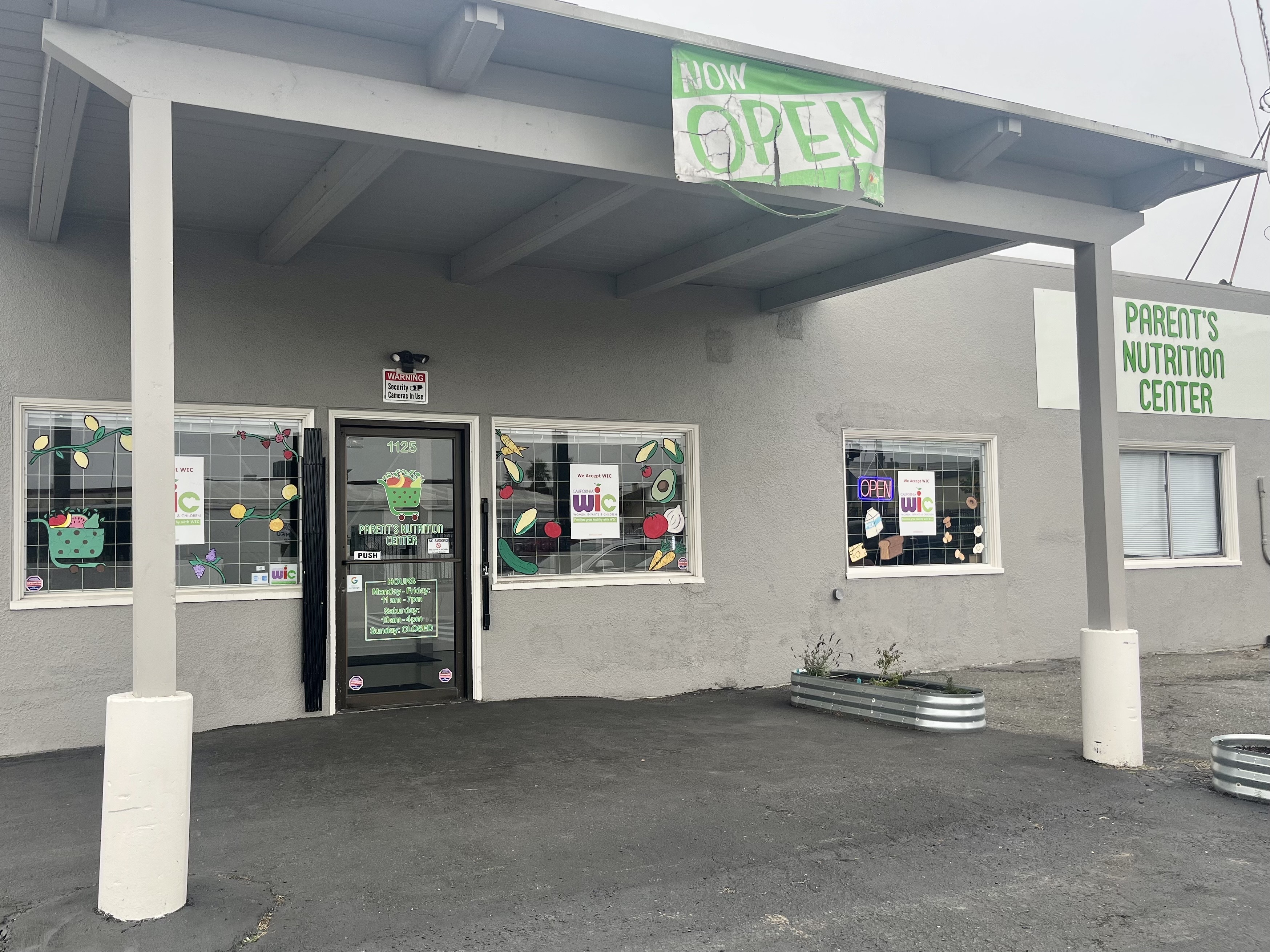
Parent’s Nutrition Center at 1125 Summer St., Eureka | Photos: Stephanie McGeary
###
Anyone who’s used the Women, Infants and Children (WIC) Supplemental Nutrition Program – a state program designed to help pay for groceries for low-income families – has experienced the distress that comes with getting your food at the grocery store and standing in line at the check-out, only to realize that some of the items you picked aren’t covered by your benefits. So you ask to exchange the items, feeling a wave of embarrassment as you hold up the line of people impatiently waiting behind you.
That’s where Jessica Conde Rebholtz, owner of Parent’s Nutrition Center, comes in. Her business, located 1125 Summer Street in Eureka, takes the guesswork out of shopping on WIC by stocking only items that are covered by the program.
Rebholtz, a mother of three, came up with the idea to start a WIC store in Eureka about six years ago, after having her own humiliating experience. She was in line at Winco using her WIC checks to purchase her food and the woman behind her said something like, “Ugh. I hate being in line behind these people.” Though it certainly wasn’t the first time Rebholtz had experienced judgment in the check-out line, this time she didn’t want to let it go. She responded to the woman, “What do you mean ‘these people’?” And the situation dissolved into an embarrassing confrontation that stuck with Rebholtz.
“It just left a sour taste in my mouth,” Rebholtz told the Outpost during an interview at her shop on Tuesday. “I started being more self-conscious and wouldn’t shop at times I knew there would be a long line…I would literally get butterflies standing in line. I was embarrassed and didn’t want to be humiliated again.”
Following her confrontation, Rebholtz called her mother in tears to tell her about the experience. Her mom, who lives in Los Angeles, responded, “Why don’t you just shop at the WIC store?” WIC-only stores are fairly common in LA, but none existed here. The next time Rebholtz was visiting LA, she asked her mom to take her to one of the WIC stores. She absolutely loved it and knew she needed to open her own store here in Humboldt.
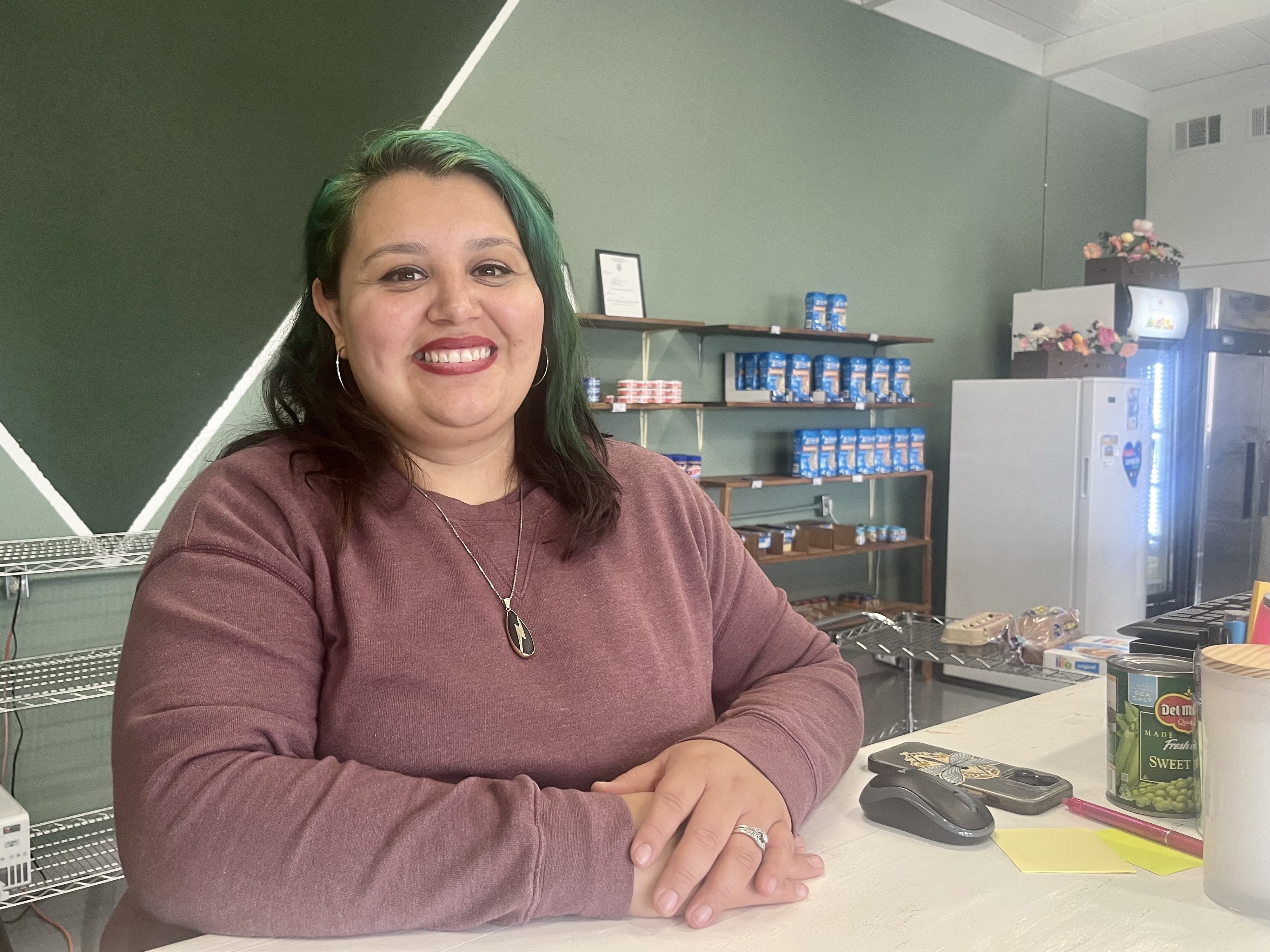
Rebholtz behind the counter at her store
Rebholtz contemplated her dream over the next several years, while continuing to work at her longtime teaching job with the University of California Cooperative Extension (UCCE). When COVID hit, Rebholtz was pregnant with her third child and she was having a hard time finding childcare for her two kids, while she continued to teach over Zoom. She felt like it might be the right time to focus on opening the store and, with her husband’s support, Rebholtz left her teaching position.
First she needed to find a space, and after some searching, the couple landed on a small space at the Bayshore Mall. Then they had to get the licensing to be able to accept WIC and EBT (food stamps), a process that usually takes up to six months. Of course, in COVID times this process took even longer, and after signing a lease on the Bayshore Mall space in July 2021, Rebholtz officially opened her doors in April, 2022.
After just a few months in the food court section of the mall, the lease was already up and Rebholtz felt that it would be better to move into a larger space where she could stock more inventory. She did get pretty good business at the mall, but said that the biggest feedback she got from her customers was that they wished the shop wasn’t so “out in the open” and Rebholtz felt that a more private location would also be beneficial. After again searching for a space for a while, Rebholtz reopened Parent’s Nutrition Center on Summer Street in February of this year.
In case you are not one of the nearly 2,600 residents of Humboldt County who receive WIC benefits, let this reporter/mama explain how it works. WIC provides benefits for income-eligible pregnant women, new parents, babies and children up to age five, which comes in the form of a monthly credit for staple food items that you can purchase from certain grocers using your WIC-issued card. The amount and types of items covered varies depending on a family’s size/needs, but generally you can purchase things like eggs, cheese, bread, cereal, juice, milk and baby formula. Aside from the fruits and vegetables credit, which is issued as a dollar amount, the credit covers a set size or weight of food items. For example, for my four-year-old daughter, we receive $26 worth of produce, 16 ounces of cheese, two and a half gallons of milk and one dozen eggs, among other items, each month.
Now here is where things get tricky! Not every type, size or brand of these items are WIC-eligible. For example, if you get 32 ounces of “whole grains” per month — which can be used for things like whole wheat bread, brown rice or corn tortillas — you can only buy these things in 16-ounce packages. At least locally, there is only one kind of whole wheat bread that’s available in 16 ounces and it is often sold out at local grocery stores. Eggs are also complicated. They can only be cage-free, white, large eggs (not extra large or jumbo, they MUST be large.) Most grocers only carry one type of large, white, cage-free eggs and they are also often sold out.
And although many stores label their WIC items, things are often mislabeled or out-of-date. So you might grab something that has a WIC label on the shelf underneath it, only to get to the register and learn that it is not actually covered. WIC used to issue paper checks and you had to pay separately for your WIC items and non-WIC items, making the check-out process longer and more frustrating. With the newer WIC card, the process is simpler, but you often don’t realize that some items weren’t covered until after you pay and get your receipt. There is also a handy WIC app for your phone that tells you what items you still have available and what types/ brands are covered, but it isn’t always accurate. There is even an option to scan items using the app, to see if they are WIC-approved, but it does not always work.

A screenshot from this reporter’s WIC app, showing an unusable balance of 5 oz. of breakfast cereal
At Parent’s Nutrition Center, Rebholtz helps ease the frustration by guiding customers through the entire process. After being greeted by Rebholtz, she’ll first swipe your WIC card and print out a receipt showing exactly what items you have available. She then goes through each shelf, asking which items you would like and bagging them up for you. After you’ve gotten everything you need, Rebholtz swipes your card again to pay and you are on your merry way, without any growing line of impatient customers behind you.
Providing this level of attention and service has been especially helpful for certain customers, Rebholtz said, including folks who are new to WIC, people with disabilities or people who don’t speak English as their first language. Rebholtz and her one other employee are both Spanish-speaking, and if someone doesn’t speak English or Spanish, she can communicate with them using hand motions.
“I have a non-hearing, non verbal customer who comes in and her daughter said, ‘We can’t do this at a bigger store because she can’t communicate,’” Rebholtz said.
Rebholtz also prides herself in helping customers “get the most out of their benefits,” by guiding them to the items and combinations of items that will use up their entire allotted amount and not end up with some funky WIC balance that won’t cover anything. She also makes sure to carry as many options as she can. Most stores only have two or three juice flavors that are covered, but Rebholtz carries 10! She also makes sure to stock less common items like canned hominy, something that many people don’t realize is covered by WIC, and is also very popular with her Latino customers “I can’t keep it on the shelves,” she said.
Another way Rebholtz helps her customers is by writing down recipes for cooking some of the items that people might not know how to cook, while also helping them find different, delicious ways to use their free groceries. She is currently working to establish the store’s Youtube channel, where she plans to share cooking tips and recipes and important WIC information.
As her business grows, Rebholtz hopes to open more locations throughout Humboldt to help people shop with WIC in our rural area. But for now, she just really wants people to know that her store is here and open. (Monday through Friday from 11 a.m. to 7 p.m. and Saturdays from 10 a.m. to 4 p.m.)
To be clear, you don’t have to use WIC to shop at Parent’s Nutrition Center and the store also accepts EBT, cash and credit. But the point of the store is to ease the shopping process for those using WIC benefits.
“We’re here to provide extra help,” Rebholtz said. “I just want to provide a safe space where [people] don’t have to feel like a nuisance.”

Just look at all those flavors of WIC-eligible juice!
MS. MILLER GOES TO SACRAMENTO! NoHum’s Award-Winning Ag Educator is Now Officially One of California’s Top Teachers
LoCO Staff / Wednesday, Oct. 18, 2023 @ 3:43 p.m. / Education

Your 2023 Humboldt County Teacher of the Year is also one of the state’s teachers of the year.
PREVIOUSLY:
###
Press release from the Northern Humboldt Union High School District:
We would like to congratulate our very own teacher, Kelly Miller, for being selected by State Superintendent Tony Thurmond as one of the 2024 California Teacher of the Year finalists! In 2015, Kelly Miller came to Northern Humboldt to work as an agriculture teacher and FFA advisor at both Arcata High School and McKinleyville High School. She brought with her years of experience at the elementary school level. Currently, Kelly is a full-time agriculture teacher and FFA advisor at Arcata High School. Her work with the District’s Agriculture/FFA program has been unequivocally worthy of admiration. Mrs. Miller’s students appreciate and applaud her efforts. In her nomination for the HCOE Excellence in Teaching Award, her FFA students wrote:
“In the classroom, she provides fun and engaging activities for all of her students that make learning about agriculture even more exciting than it already is. She gives us hands-on learning opportunities that we might not have had without her. Outside of the classroom, you will always find Mrs. Miller out in the community striving to make it a better place. She gets her students out to volunteer at events through FFA so we can be active community members.”
Mrs. Miller repeatedly prioritizes students as individual learners who deserve the best she can offer them. Her classroom is a thriving, engaging environment where students are productively and eagerly learning, sharing, and growing academically and emotionally. She is supportive of students in all ways that are critical to their success. She clearly recognizes the importance of a synergistic approach in an educational setting and is always willing to revise curriculum to ensure access and inclusion for every student. Equally important is her understanding of student interests and potential for exploring new avenues for career opportunities.
Mrs. Miller has dedicated herself to our students and the District and has improved the educational landscape for all. Her generosity, knowledge, and kindness are a hallmark of her approach. She has demonstrated the aptitude and expertise to generate lasting benefits for all students. She is, in a word, exceptional.
Kelly Miller truly represents Northern Humboldt as a model for Excellence in Teaching and is very deserving of being recognized as a finalist for California State Teacher of the Year.
Eureka City Council Unanimously Decriminalizes Psychedelic Mushrooms and Other Entheogenic Plants
Ryan Burns / Wednesday, Oct. 18, 2023 @ 3:04 p.m. / Local Government
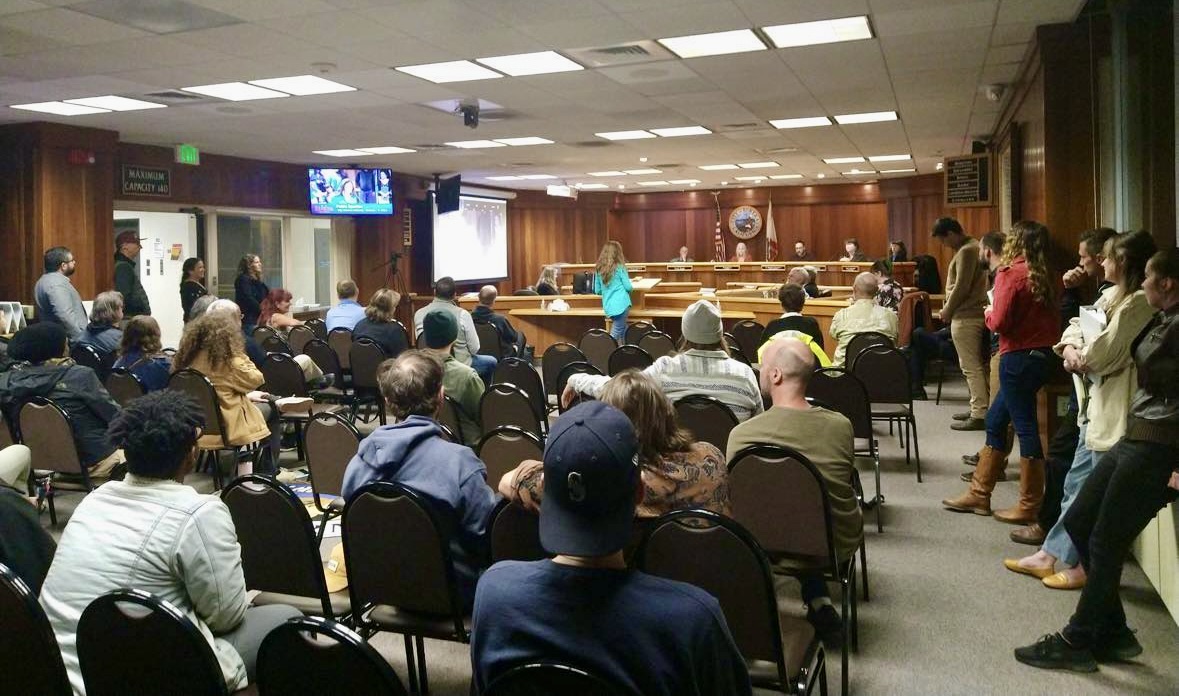
Members of the public packed the chamber for last night’s Eureka City Council meeting. | Photo by Danielle Daniel, submitted.
###
The Eureka City Council last night voted unanimously to decriminalize the personal use, possession and cultivation of entheogenic plants and fungi, such as psychedelic mushrooms, for people over the age of 21.
The vote comes two years after the City of Arcata made the same move, following the lead of a handful of other cities across the county, including Denver, where, in 2019, voters narrowly approved a ballot initiative that prevented the city from spending resources to prosecute people for use or possession of “magic” shrooms.
Not all government bodies are jumping aboard this trippy bandwagon, though. Eleven days ago, Governor Gavin Newsom vetoed a bill that would have decriminalized adult use and possession of small amounts of mescaline, DMT and psilocybin statewide, starting in 2025. In doing so, Newsom called for more research to develop treatment guidelines prior to decriminalization.

Psilocybin capsules.
More than two dozen public commenters spoke at last night’s meeting, with every last one of them advocating approval of the resolution. They included educators, health care professionals, students and other residents, many of whom shared deeply personal stories about the transformative power of entheogenic plants in treating depression, anxiety, post-traumatic stress and other conditions.
The discussion began with some words of caution, though. Jacob Rosen, a mental health clinician and director of the city’s Crisis Alternative Response Eureka (CARE) program, argued that the resolution, which was prepared by the activist group Decriminalize Nature Humboldt, goes too far in endorsing psychoactive plants as consistently safe and healing.
That’s an example of “hyper-claiming” or making blanket assertions based on correlation rather than causation, Rosen said. He argued that while scientific research shows promise in entheogenic plants’ ability to prove useful in mental health treatment, the science is far from settled. More research is needed to determine which compounds act on the brain to cause healing effects and to identify contra-indications. And he said therapy is typically a necessary component of the plants’ efficacy.
“For many people with existing mental health conditions, including schizophrenia, bipolar disorder and depression, these substances can actually trigger psychotic episodes that last longer than the intoxication of the substance,” Rosen said. “So there’s a lot of concern having the city rubber-stamp that … .”
Rosen also referred to research on MDMA, commonly called ecstasy or molly, though that synthetic drug was not among the entheogens considered in the resolution, as several public speakers subsequently pointed out.
Eureka Police Commander Lenny La France, who leads the department’s Community Safety Engagement Team, said he and the chief agreed with Gov. Newsom’s decision to veto Senate Bill 58 due to concerns about “unintended consequences.”
However, City Manager Miles Slattery said he had consulted with members of the Arcata Police Department, who reported no significant issues since the city decriminalized entheogenic plants, and he said the City of Eureka only saw five cases last year involving criminal charges related to entheogens — shrooms, primarily — and all five involved more serious charges, such as domestic violence.
The enthusiasm among public commenters was resounding. Roy King, an emeritus associate professor of psychiatry and behavioral science at Stanford, pushed back on Rosen’s words of caution, saying that randomized, controlled studies have shown entheogenic plants’ effectiveness in treating depression and anxiety disorder.
“They work specifically on serotonin receptors,” King said. “They increase neurogenesis … and allow people to get out of their loopy thoughts and negative thinking.”
Rachael Riggs, a local educator, noted the county’s elevated rate of Adverse Childhood Experiences, or ACEs, which are linked to chronic health problems and substance abuse later in life, and she said these plants can help.
“Entheogens are anti-addictive [and are] among the safest substances being studied in the treatment of addiction and mental health problems,” Riggs said. “There are very few side effects, especially when under the guidance of a therapist or with proper education.” She argued that the positive “trickle down effect” on the community’s children could be huge.
Dr. Carrie Griffin, who specializes in family and addiction medicine, said there have been three scientific studies looking for evidence that entheogenic plant use leads to greater rates of persistent depressive disorder or substance abuse, and the answer was an unequivocal “no.”
Griffen cofounded Eureka’s Center for New Growth, which offers ketamine-assisted therapy, with Randee Litten, a registered nurse who worked for years in the emergency room at St. Joseph Hospital. Litten said that she kind of lost her mind during the COVID pandemic and has seen a dramatic rise in psychosis locally.
But working at the Center for New Growth has been life-altering, she said.
“What we genuinely need as human beings in this chaotic world is a helping hand, and psychedelics — from a nurse perspective, from a humanistic perspective, from my own perspective — psychedelics lend a hand that can hold you and guide you into a good direction, as long as you have the foundation built,” Litten said. “I know that’s the concern, but I can tell you that we’ve been doing it for a year and a half, and I can’t even tell you how many community members we have helped. And it’s the reason that I’m still here, because I love this community and I have never in my entire career felt like I am doing so much good for this community until we discovered how well psychedelics can help human beings. … I finally feel alive again, like we’re doing something good for our community.”
When the matter came back to the council for deliberation, Councilmember Renee Contreras-DeLoach said she’d spent a lot of time researching the issue and reading the hundreds of letters that were submitted in support of the resolution, and while she had some concerns with specific wording — especially endorsements of the plants’ ability to spur personal and spiritual growth — she concluded that it’s not the proper role of government to arrest and prosecute people over a plant.
Fellow Councilmember G. Mario Fernandez noted that the council had already approved a letter supporting the intent of Senate Bill 58, and he said the resolution would help to de-stigmatize the use of entheogenic plants for healing purposes.
“This isn’t a call to ‘turn on, tune in and drop out,’” Fernandez said, quoting 1960s countercultural icon Timothy Leary. “Instead it would be to allow for folks who do take these substances for healing to reach out to medical and mental health professionals — or law enforcement, if things go towards a more negative experience — without any fear of reprisal.”
Councilmember Kati Moulton said she shared some of Contreras-DeLoach’s concerns about certain phrases in the resolution that endorse the efficacy of entheogenic plants but supported it nonetheless.
With further input from Councilmember Leslie Castellano, the council agreed to remove a phrase endorsing such plants’ ‘capacity to “catalyze profound experiences of personal and spiritual growth.”
Councilmember Scott Bauer said he believes the potential for negative experiences is real, noting that he’s had friends who are “gone” from bad LSD trips. He also expressed concerns for use by kids, whose brains aren’t fully developed. But ultimately, he said, “I support something that’s been used for thousands of years to bring about personal growth.”
Though she didn’t have a vote, Mayor Kim Bergel said that many local residents are suffering, and these plants represent “another tool for people to use to get the support that they need.”
The vote to approve the resolution — minus that one phrase — was unanimous, and according to Slattery its instructions went into effect immediately upon passage. You can read the full resolution via the link below.
###
DOCUMENT: City of Eureka Resolution re: Entheogenic Plants and Fungi
YESTERDAY in SUPES: Board Approves Request to Tweak Climate Action Plan, Hears Update on Earthquake Recovery Efforts in Rio Dell, Talks Gas Prices, and More!
Isabella Vanderheiden / Wednesday, Oct. 18, 2023 @ 1:50 p.m. / Local Government
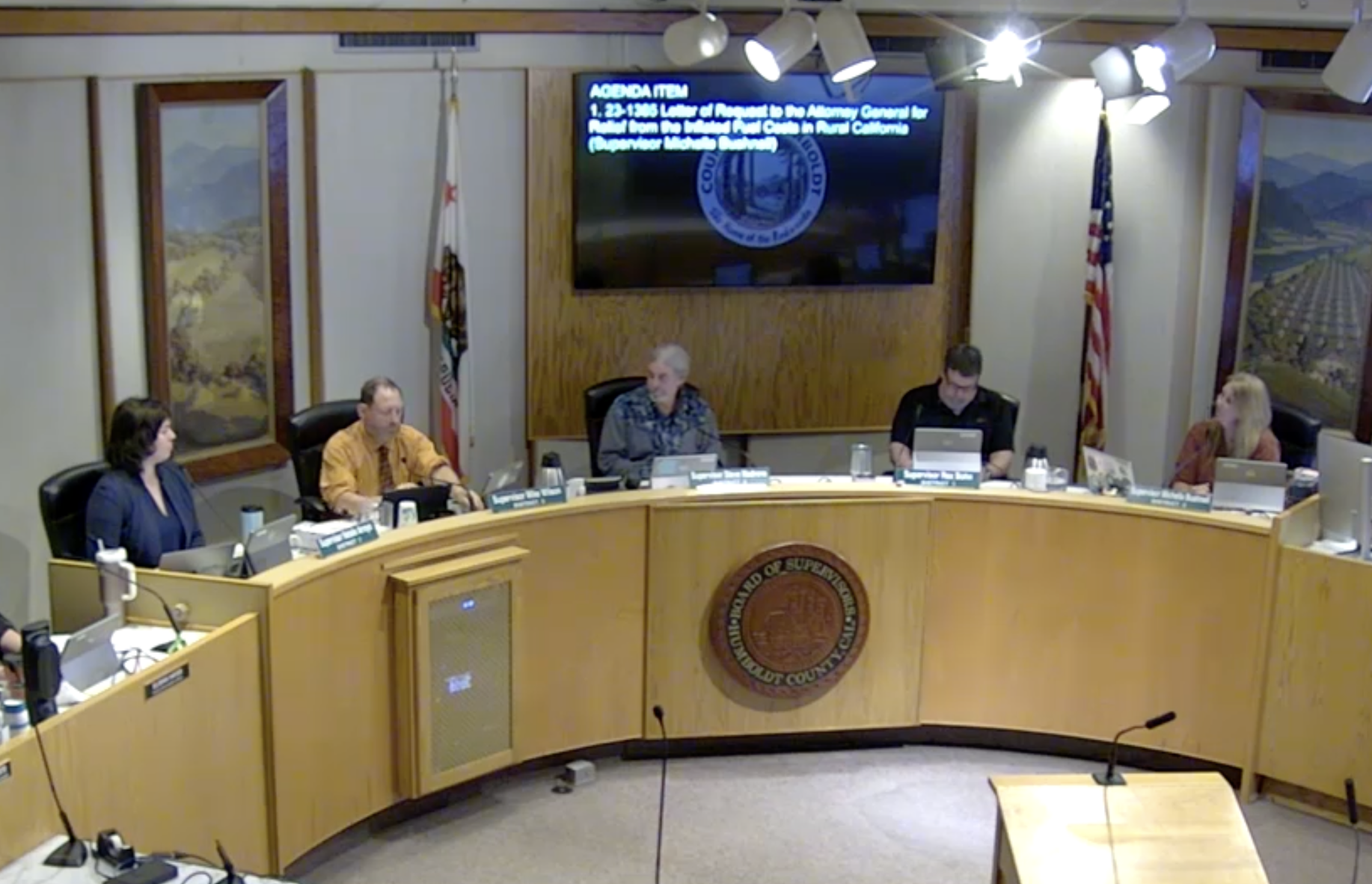
Screenshot of Tuesday’s Humboldt County Board of Supervisors meeting.
###
During Tuesday’s meeting, the Humboldt County Board of Supervisors approved a somewhat controversial request from staff to redraft the Humboldt Region Climate Action Plan (CAP) to ensure the environmental document complies with state requirements.
Rincon Associates, the consulting firm hired to complete the environmental review of the document, has encountered numerous issues with the draft CAP in recent months and has found the plan to be “overly ambitious” with goals that “cannot be achieved” in the next seven years.
The CAP must set realistic goals to reduce greenhouse gas (GHG) emissions by 2030, in accordance with California’s ambitious climate action policy, and outline how the county and its partner jurisdictions will achieve those goals, otherwise, the document will not “qualify” with the state.
Rincon drew up a proposal with several proposed modifications that would qualify the document. The proposed changes would, in part, update the county’s GHG inventory and target analysis. “Rincon will work with the jurisdictions to identify targets that are practical, defensible, and consistent with current state legislation, including SB 32 and the newly signed AB 1279,” the proposal states. “Rincon will produce both per capita and mass emission-based targets for the review.”
The proposal also seeks to revise the county’s GHG reduction measure and actions for “successful implementation.”
Some environmental advocacy groups feel the proposed changes would weaken the document have called on the county to do more to ensure accountability.
At the end of last month, a coalition of environmental advocacy groups issued a press release accusing city and county planners of employing a harmful and dishonest “accounting trick” in the process of developing the regional CAP. The coalition argued that proposed changes to the draft document would sidestep meaningful action to reduce GHG emissions by taking credit for reduction targets it has already met.
Speaking during Tuesday’s meeting, Planning and Building Director John Ford acknowledged that there has been “some opposition” to staff’s approach, but said, “It is vitally important to adopt an adequate [CAP] that is qualified and can be defended.”
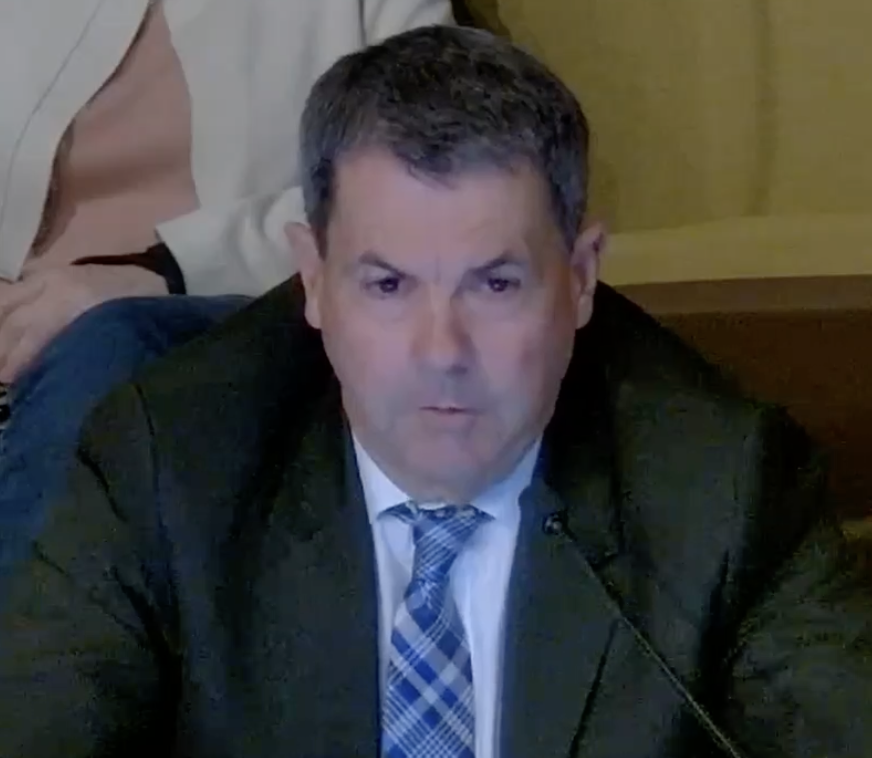
Ford | Screenshot
“We’re not undertaking this approach to achieve something that is unnecessary but rather to put all the jurisdictions in the county in a place to have a plan that allows us to effectively adapt to climate change,” Ford said. “Looking ahead, the CAP alone is not sufficient. … I just would point out that the county is currently looking at developing a Climate Resiliency Officer [position] as a step to accomplish this important implementation.”
The proposed changes will take four to six months to complete, according to Rincon’s proposal. The problem is, the grant funding the county has obtained to pay for the draft CAP is only available til March of 2024, Ford said.
To accommodate the tight timeframe, Ford requested that the board allow staff to utilize grant funding through the Humboldt County Association of Governments (HCOAG) for the revision of the CAP, rather than preparation of the Environmental Impact Report (EIR) as previously intended.
“Revisions to the draft [and] all the work contained within the Rincon proposal would need to be accomplished by that date,” he said. “Coming right on the heels of that, we would begin preparation of the [EIR]. The preparation of the document should be complete by September of 2024. Public review would occur in October of 2024. The final EIR would be complete by the end of the year, with public hearings on the CAP beginning in January 2025.”
Ford added that staff would try to expedite the process when appropriate.
Speaking during public comment, Luis Neuner, an advocate with the Environmental Protection Information Center (EPIC), emphasized the importance of having an environmental document “with some degree of teeth in it” to ensure we meet our GHG reduction goals.
“It would be irresponsible for us not to just pass something soon,” he said. “Implementation will be hard. It will be harder than getting this thing approved, and that means that we can’t wait much longer. A hard date by which we can get things rolling needs to be a serious part of the conversation if we are real about meeting our 2030 goals.”
Caroline Griffith, executive director of the North Coast Environmental Center agreed, emphasizing the importance of having “actionable items … that will actually reduce our emissions.”
“We know that there’s a deadline for this reworking but we also have to go to the EIR process,” Griffith said. “It would be great to have an adoption deadline. Also … as technology changes, as methodology changes, as funding sources change, it will be really important to have staff who are actually working solely on this to make sure that we can implement it and that there is coordination happening between municipalities and that there are funding sources for all of this.”
Arcata resident John Schafer said the problem with the county’s draft CAP is not that it’s too ambitious, but rather that it does not include “specifics for carrying out any of the necessary policies.”
“We shouldn’t be shy about demanding more ambitious climate policies,” he said. “It’s not just sea level rise or our grandchildren that we should do this for, but because it’ll lead to a healthier economy. We need a sensible business plan if we’re going to prosper in Humboldt County. … The existing plan is indeed inadequate because it doesn’t have suitable policies. It needs to be stronger.”
Going back to the board for discussion, Third District Supervisor Mike Wilson expressed his support for staff’s recommendation to modify the CAP, adding that the proposed plan “is only one piece” of the local effort to combat climate change.
“I also want to remind ourselves that … Humboldt County was the vanguard of the development of solar power,” Wilson said. “In the 1980s, the second largest consumer of solar panels in the United States – next to the U.S. military – was Southern Humboldt and Northern Mendocino counties. … I think, in general, we actually have a populace that may help us in moving forward [on our climate goals]. That doesn’t mean that we don’t put things in writing … but I think we’re gonna see some opportunities around that.”
Wilson made a motion to approve staff’s recommendation, which was seconded by Fourth District Supervisor Natalie Arroyo.
Before voting on the matter, Arroyo suggested the board create a climate action ad hoc committee. County Counsel Scott Miles said the action should be brought forth at a future date rather than being wrapped into the motion.
The board passed the motion in a 5-0 vote.
Earthquake Recovery Efforts in Rio Dell
It’s been ten months since a magnitude 6.4 earthquake hit Humboldt County. In that time, communities throughout the Eel River Valley, namely Rio Dell, have struggled to obtain disaster relief funding needed to get low-income residents back into their homes, largely due to the tedious application process.
Second District Supervisor Michelle Bushnell requested a status update on earthquake recovery efforts from Habitat for Humanity, the entity leading disaster recovery assistance, to get a better idea of when funding would be dispersed.
“There hasn’t been any money that’s gone out to constituents for repairs and we’re coming up on a year … [since] the earthquake happened,” Bushnell said. “[I]t’s very frustrating for people that aren’t in their homes and are struggling through the process. … I know the application process is difficult, but the message I’m getting from constituents is ‘I’m done. I can’t do this anymore. I’m gonna do this myself.’ They feel left behind.”
Back in January, the Board of Supervisors authorized staff to create a locally funded Earthquake Recovery & Assistance Program with $1 million from the county’s allocation from the federal Local Assistance and Tribal Consistency Fund (LATCF). The board awarded $250,000 of those funds to Habitat for Humanity to provide support and disaster recovery assistance to the county and its partners.
Camille Benner, administrative officer for Habitat for Humanity Yuba/Sutter, acknowledged that the application process is “very, very difficult” but said her team is doing its best to guide people through the process.
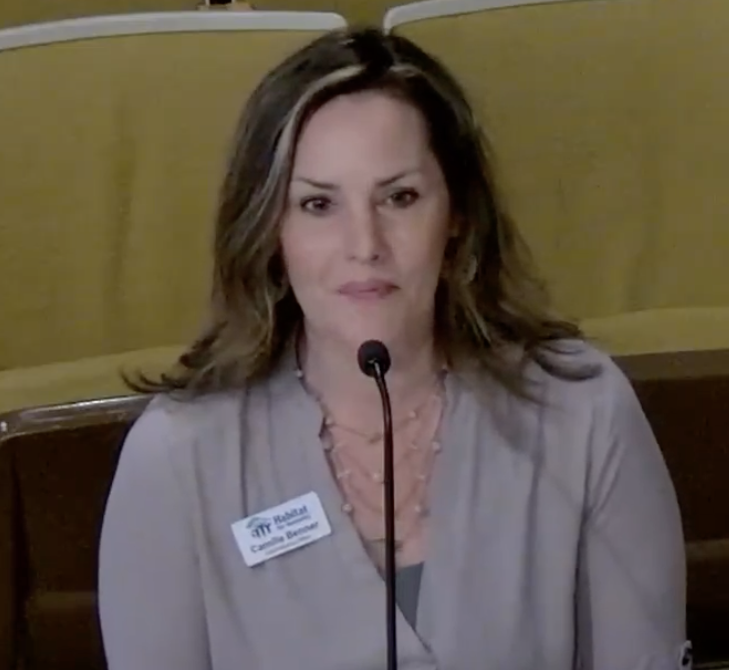
Benner | Screenshot
“We don’t make those rules and regulations,” she said, noting that the applications are subject to rules outlined by the U.S. Department of Agriculture (USDA). “We’re following the same process even with your funding because it protects us, it protects you and it protects the homeowners. … [The] initial disaster response is handling those initial needs, getting food, getting people placed into hotels if they’ve lost shelter, supplies, etc. Long-term recovery is, on average, two to five years, sometimes significantly longer.”
Because the earthquake was not declared a federal disaster, there are “significant limitations” on what disaster case managers can provide, Rio Dell City Manager Kyle Knopp added.
“Most of the other funding streams are really designed for other purposes, [such as] anti-poverty program funding,” Knopp said. “We have a lot of different programs that we need to make sure that all the T’s are crossed, all the I’s are dotted before individual applicants move forward in the process. I understand the frustration. It’s extremely frustrating to go through these long processes to access resources … .”
Bushnell said she was trying to be understanding of the process but reiterated that “no money has gone out the door and no repairs have been made.’
“I have constituents calling me upset and they’re crying,” she said. “That’s hard for me. And I’m not trying to be critical of you folks … [but] I haven’t gotten any updates.”
John Nicoletti, deputy director of Habitat for Humanity Yuba/Sutter, noted that Habitat for Humanity changed its approach in an attempt to expedite the application process. Originally, their team was working with low-income renters affected by the disaster. They pivoted to work directly with property owners.
“We’re asking that they honor the agreement for affordable housing … to ensure that if public funds are being expended, they are meant to benefit the tenant in the end,” Nicoletti said. “Where it begins to concern someone like me is when we’re moving from a $16,000 repair or a $40,000 repair and all of a sudden … the estimates that we have from contractors exceed the value of the house. … Should we spend $200,000 on a house, basically replacing it, or can we take that $200,000 and move it into five different properties?”
Fifth District Supervisor and Board Chair Steve Madrone and Wilson both spoke in favor of using the funds to house as many people as possible “rather than to large projects that might eat up a whole lot of money,” Madrone said.
Following public comment and a bit of additional discussion from the board, Arroyo made a motion to accept and file the report. Bohn seconded the action. The motion passed in a 3-0 vote, with Bushnell and Wilson absent due to a previously scheduled meeting with state Sen. Mike McGuire.
Relief for Fuel Costs
The board also considered a request, brought forth by Bushnell, to send a letter to California Attorney General Rob Bonta seeking financial relief from inflated fuel costs which, according to county staff, average about $6.49 per gallon locally.
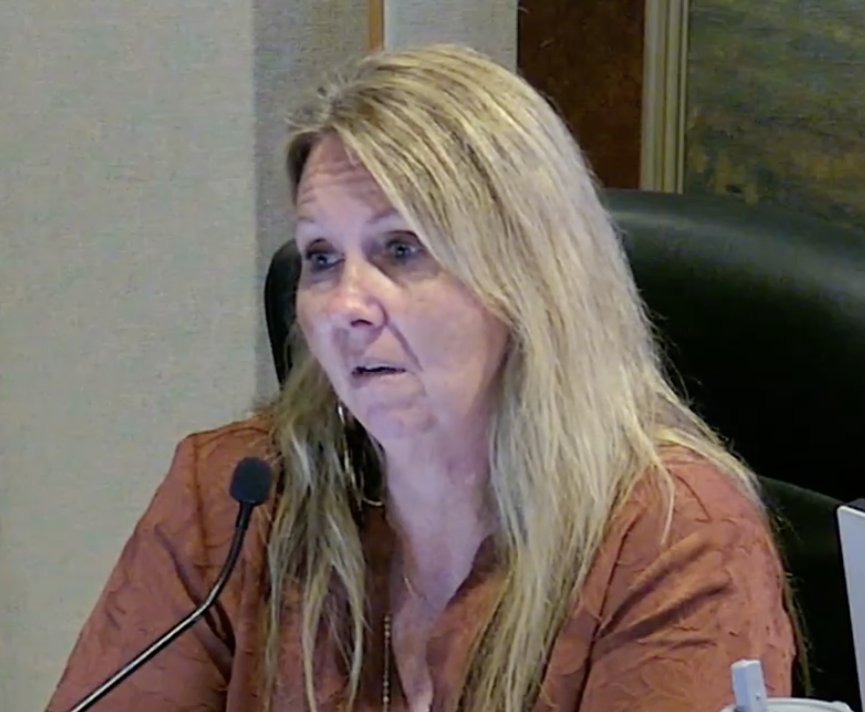
Bushnell | Screenshot
“I get a lot of calls from constituents about the price of gas in Humboldt County compared to other counties in California,” Bushnell explained. “Additionally, I have gotten some calls from some distributors that pick up in Oakland and bring [fuel] into Humboldt County and I was struggling to figure out how to address [the issue] or how or who to address that with. … So, I’m just wanting to have the discussion and see where possibly we could go with this.”
Earlier this year, Gov. Gavin Newsom signed legislation to combat gas price gouging in California by increasing oversight. The first-in-the-nation law, enacted in June, established the Division of Petroleum Market Oversight, a division within the California Energy Commission to monitor the industry. The new law requires oil companies to submit daily reports on the market and imports, as well as monthly reports on refiners’ profit margins.
Wilson acknowledged that the law’s intent was focused on price gouging that occurred during the COVID-19 pandemic rather than stabilization of current fuel prices but suggested that it could address Bushnell’s constituents’ concerns.
“I think for me, the focus really is about the exploitation of our population, of our working folks and everybody else who’s not, as I would say, on the upper echelons of society,” Wilson said. “We need more equalization and stabilization of pricing and across the board. This is just this one finite element.”
After a bit of discussion among board members, Bushnell said she’d be fine with holding off on the letter for the time being. “I’m happy to not send the letter,” she said. “However, I do want to address my constituents, and it is a big concern.”
Bushnell made a motion to table the discussion, which was seconded by Wilson. The motion passed 5-0.
###
Other notable bits from the meeting:
- The board also reviewed revised implementation guidelines for Measure V, an action approved by Humboldt County voters in 2016 to regulate rent increases in mobile home parks in unincorporated areas of the county. The proposed implementation guidelines sought to clarify
the original guidelineshow the ordinance would be enforced and answer questions that have arisen in the last six years. During Tuesday’s discussion, supporters of Measure V said county staff had not given them proper notice of the discussion and urged the board to oppose staff’s recommendation. Staff maintained that the county had properly noticed the public and stood behind the proposed guidelines. After quite a bit of discussion and a confusing motion, the board decided not tochangeadopt the guidelines and directed staff to come back with a progress report in one year. - The board also received a presentation on the audit for Fiscal Year 2020-21. Rich Gonzalez, a representative of CliftoLarsonAllen LLP, detailed the findings of the audit. All told, “the county is moving in the right direction,” Gonzalez said. The board unanimously agreed to receive and file the report.


