A collapsed brick fireplace and chimney from the Dec. 20 earthquake in Rio Dell. | File photo.
# # #
Press release from the Humboldt Area Foundation and Wild Rivers Community Foundation:
The Humboldt Area Foundation and Wild Rivers Community Foundation (HAF+WRCF) has set aside at least $1.2 million for nonprofit organization, tribes and government entities helping residents of Rio Dell and surroundings areas displaced by December’s 6.4-magnitude quake.
“These funds will continue to help with immediate assistance provision and build a more resilient community going forward,” said Michelle Carrillo, HAF+WRCF’s Director of Strategy, Programs and Community Solutions.
The $1.2 million is in addition to the nearly $500,000 that HAF+WRCF directed to recovery efforts led by incredible volunteers and organizations active on the ground. The money came from generous contributions from the foundation’s donors and philanthropic partners, Carrillo said.
In light of this disaster not reaching the FEMA threshold for public aid, HAF+WRCF and the broader philanthropic network recognized early on how critical philanthropic dollars would be to response and recovery for Rio Dell and the surrounding Eel River Valley,” Carrillo said.
“We are committed to working with local community groups, tribes and governmental entities to support a healthy recovery process, particularly for those who might be especially vulnerable to the long-term impacts of displacement, trauma and housing insecurity,” she said.
While HAF+WRCF does not grant funds to individuals, it does distribute grants via its Disaster Response & Resilience Fund to qualifying community entities. The foundation has partnered with the city of Rio Dell and the County of Humboldt to determine how best to serve displaced residents struggling to find adequate shelter, food and supplies.
“The City of Rio Dell’s collaborative partnerships with the county, state, and community organizations like HAF+WRCF are crucial to moving our recovery efforts forward,” said Rio Dell City Manager Kyle Knopp. “Our top priority is to end earthquake-related displacement for our residents, and these funds will bring much-needed relief to help displaced residents rebuild or find acceptable alternate accommodations.”
Humboldt County 2nd District Supervisor Michelle Bushnell said. “With no federal disaster relief funds coming to move our recovery efforts forward, funds provided by HAF+WRCF are critical to help Rio Dell and the county meet our collective goal to end earthquake-related displacement. I want to extend my heartfelt thanks to HAF+WRCF and their philanthropic partners for their partnership and generosity.”
To administer the funds, the foundation has assigned Senior Program Officer Ali O. Lee to work with community partners and the foundation’s Community Response Team to allocate those resources.
Where the funds come from In the days and weeks since the quake struck, HAF+WRCF’s new and existing donors responded by contributing to the foundation’s Disaster Response & Resilience Fund. Most contributions came from large, non-local foundations and donors, which HAF+WRCF is leveraging to meet local needs across its four-county service region.
The partners include Sierra Health Foundation, The James Irvine Foundation, California Wellness Foundation, National Philanthropic Trust, Silicon Valley Community Foundation, Marin Community Foundation, Sacramento Region Community Foundation, Humboldt Health Foundation, Amalgamated Foundation and The California Endowment.
Organizations that helped elevate the need for support include Northern California Grantmakers, The Mendocino Community Foundation, and the League of California Community Foundations. They were joined by the Governor’s Office of Emergency Services and Social Innovation team with support from Senator McGuire.
Well, it’s not happening as quickly as we expected, nor is it quite as dramatic as we’d hoped. But demolition has begun on the dilapidated and earthquake-damaged Lloyd Building in downtown Eureka.
Today workers could be seen removing the uppermost bricks from the Lloyd’s south-facing facade, which was built nearly 108 years ago. Those interested in the history of the building (named after the late actor Lloyd Bridges, father to Jeff and Beau!) can revisit our 2015 story on that exact topic.
Anyone hoping for an epic explosion or a big, swinging wrecking ball is out of luck, unfortunately. Brian Gerving, the City of Eureka’s public works director, said he expects this systematic deconstruction process to take several weeks to complete.
Press release from the Humboldt County Office of Emergency Services:
Additional help is on the horizon for Humboldt County residents displaced due to the recent earthquakes. The County of Humboldt has now formalized an agreement with Habitat for Humanity Yuba/Sutter to assist residents whose homes need extensive repair.
“We are providing much-needed assistance to displaced residents while continuing to explore every resource available to help our communities rebuild,” Humboldt County 2nd District Supervisor Michelle Bushnell said. “The most important thing we can do is to get people back in their homes, so we have been working to establish partnerships with organizations who have significant experience with rebuilding homes following a disaster.”
The Sheriff’s Office of Emergency Services has been working in partnership with the City of Rio Dell and the Governor’s Office of Emergency Services (Cal OES) to identify and coordinate partnerships with nonprofit agencies that have experience in disaster recovery, including repairing and rebuilding homes. Habitat for Humanity is a global nonprofit housing organization working in local communities across all 50 states in the United States and in approximately 70 countries. Through their Disaster Risk Reduction and Response program, Habitat for Humanity will provide management and oversight services related to home rebuilding and rehabilitation for low to very low-income homeowners and residents who have been displaced, or whose homes have sustained significant damage, as a result of the recent earthquakes.
“Through our experience with disaster relief, the one thing we have learned is that every disaster is unique,” said Joseph Hale, Habitat for Humanity Yuba/Sutter CEO. “However, what is similar are the struggles families face with being displaced. Our goal at Habitat is to not forget the compassion that goes along with this work as we coordinate with the Office of Emergency Services (OES), the County of Humboldt, and the City of Rio Dell in serving those in need by creating a fast-moving streamlined process.”
Since the December 20 and January 1 earthquakes, building inspectors have designated approximately 91 structures as “red-tagged,” or unsafe to occupy, and over 300 structures “yellow-tagged,” or requiring various safety repairs. Humboldt County’s Earthquake Recovery and Assistance Program has provided approximately 104 disaster-related displaced households with temporary sheltering as residents have worked to make necessary safety repairs to their homes or find alternate accommodations.
The Sheriff’s Office of Emergency Services’ Recovery Operations Center and local nonprofits continue to work to facilitate the organization of disaster case management services for Rio Dell residents who have been affected by the earthquake. These case management services will connect incident-related displaced residents with Habitat for Humanity, other nonprofits, as well as appropriate state and federal funding sources which may be available to qualifying residents.
“Rebuilding will take time, and this partnership with Habitat for Humanity will bring the City of Rio Dell closer to our goal of ending earthquake-related displacement in our city,” said Rio Dell City Manager Kyle Knopp. “I want to thank the county for their work to bring these resources to Rio Dell. I also want to thank the team from Habitat for Humanity for their willingness to assist our community in our time of need.”
More information on earthquake case management services and the agreement with Habitat for Humanity Yuba/Sutter will be provided at the Earthquake Recovery Town Hall happing this evening, Thursday, March 2 at 6:30 p.m.
This virtual Town Hall will be opened by Senate Majority Leader Mike McGuire. State and local leaders will then discuss on-going actions being taken to move long-term recovery efforts forward and provide a comprehensive briefing on services that may be available for low-income households experiencing earthquake related displacement.
The Yurok Tribe is the first sovereign tribal government to become a member of the Redwood Coast Energy Authority.
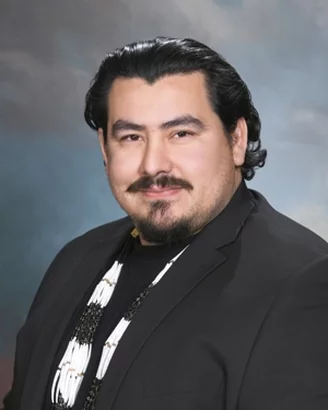
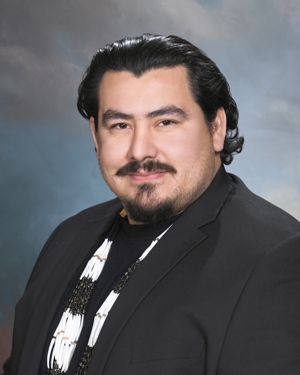
“We joined RCEA because its mission to implement initiatives that increase access to affordable, clean energy aligns with our core values,” said Yurok Vice Chairman Frankie Myers. “As an RCEA member, the Tribe will be able to participate at the government-to-government level in the planning and development of long-term renewable energy projects. We strongly believe the transition to sustainable energy sources is essential to the long-term health and prosperity of our community.”
“It is exciting to have the Yurok Tribe joining RCEA,” said RCEA Executive Director Matthew Marshall. “Over RCEA’s 20 years of serving Humboldt County we’ve worked with the Tribe on many projects, and we are very much looking forward to building on that relationship and having Tribal representation on our governing board.”
RCEA’s Board of Directors and the Yurok Tribal Council passed separate resolutions approving a joint powers agreement, which made the Tribe an agency member. “The Yurok Tribe wishes to provide input on the development of secure, sustainable, clean, and affordable energy resources, and participate as a stakeholder,” according to the Yurok resolution.
The Redwood Coast Energy Authority is a local government Joint Powers Agency. The agency was established to develop and implement sustainable energy initiatives that reduce energy demand, increase energy efficiency, and advance the use of clean, efficient and renewable resources available in the region. RCEA members include: the County of Humboldt; the Cities of Arcata, Blue Lake, Eureka, Ferndale, Fortuna, Rio Dell, and Trinidad; and the Humboldt Bay Municipal Water District and the Yurok Tribe.
Yurok Vice Chairman Frankie Myers will represent the Tribe on the RCEA’s Board of Directors. Vice Chairman Myers has decades of experience in natural resources management, community development and cultural preservation. In addition to serving on the Yurok Tribal Council, he is the president of the Prey-go-neesh Construction Corporation, which performs infrastructure-building projects all over the United States. He is also leading the Tribe’s effort to equitably engage in the prospective floating offshore wind energy projects along California’s North Coast.
Last December, the Bureau of Ocean Energy Management (BOEM) auctioned the development rights to 130,000 acres off the Humboldt coast for offshore wind energy production. Earlier this month, the Yurok Tribe, Cal Poly Humboldt and College of the Redwoods announced plans to prepare a local workforce to take advantage of future jobs in the new industry. This unique collaboration provides potential floating offshore wind developers an opportunity to support local workforce training.
Screenshot of Tuesday’s Eureka City Council meeting.
###
Dozens of desperate community members gathered in Eureka City Council chambers on Tuesday evening to call upon city officials to do more to address the city’s shelter crisis.
The idea behind the informational workshop was to encourage community members to bring forward creative solutions to the shelter crisis and provide residents with the requirements necessary to create authorized encampments with tent structures of tiny homes on private property within city limits. Over the course of the three-and-a-half-hour meeting, those in attendance urged local organizations and city officials to act with urgency to prevent more deaths in the unhoused community. Some advocated for the repeal of the city’s anti-camping ordinance, while others called for the shelter crisis to be treated as a bona fide emergency, comparable to a wildfire or other natural disaster.
Eureka City Manager Miles Slattery began the discussion by outlining several housing strategies the city has already explored and/or implemented in the last decade, including rotating encampments and expanded sheltering options through Betty Chinn’s Blue Angel village, St. Vincent de Paul and the Eureka Rescue Mission. The city is currently working with Betty Chinn and contractors to develop the Crowley Site as well, Slattery added, referring to a city-owned lot on Hilfiker Lane, at the south end of town.
The City of Eureka passed an emergency shelter resolution back in 2016 and a subsequent emergency shelter ordinance in 2021 in an effort to expedite immediate shelter options for those in need. However, emergency shelters are only allowed in some areas of the city, said assistant planner Millisa Smith.
“The city’s zoning code divides the city land into zones and includes specific rules and regulations for each zone,” Smith explained. “It is important to note that because part of the city is in the coastal zone, we have separate coastal and inland zoning code regulations.”
Screenshot
Emergency shelters are allowed in the red and purple portions of the map to the right under the Emergency Shelter Crisis Act. For instance, the Hinge Industrial Zone — near the intersection of Broadway and Fourth — allows emergency shelters in buildings and open spaces without a use permit, but the shelters cannot be located within 1,000 feet of a school or within 50 feet of another shelter. Other portions of the coastal zone would require a coastal development permit and would be subject to environmental review, Smith said.
“Any city-owned or controlled site can be used as an emergency shelter,” she continued. “If a property owner wanted to use their property as an emergency shelter they would have to enter into a lease agreement with the city allowing for any parcel in the inland portion of the city to be an emergency shelter, as seen in green on the map. … Local zoning and planning standards do not need to be adhered to but basic health, safety and welfare standards must be met [and] environmental review is still required.”
‘Our Compassion Has to Come Out’
More than two dozen community members spoke during the public comment portion of the meeting. Several commenters shared their ideas for potential encampment sites and setups, but the vast majority of speakers emphasized the need to act quickly.
“The emergency is happening tonight,” Eureka resident Scott Graham said. “The emergency was last week. The emergency was last year. When can we expect this to happen? Is it going to, you know, just languish somewhere [while] people just mull it over and [it] doesn’t happen? … Something, somewhere, somehow, things have to happen. Our compassion has to come out. … Those people out on the streets are suffering more than any of us in this room. We should really be trying our best to help them and give them a lift up.”
Unfortunately, Slattery said the city “can’t really tell” how long the process will take. “I can tell you this: If we had a program in place that was approved by council, this could happen as soon as another council meeting, as long as the provisions are in place to meet the guidelines that we just described,” he said.
Eureka resident Caroline Griffith asked if the city would consider suspending its anti-camping ordinance so people can be “in a settled, safe space” while a more permanent encampment is established. The ordinance currently prohibits camping anytime in Old Town/Downtown, Henderson Center, the Waterfront and the Northern Gateway districts, in city parks, the golf course and within 75 feet of public trails. It also bans camping anywhere in the city during daylight hours, except for when it is raining, snowing or below 40 degrees.
“Technically could happen,” Slattery said. “I think, from staff’s perspective, we’d have the same concerns about the rotating camp and not having any oversight. I think that would be a council decision, but it would be extremely difficult to manage.”
Griffith also asked if the city would consider a vacancy tax or an occupancy incentive to motivate property owners to fix up and fill empty buildings. “I moved here six years ago, and throughout the course of wandering around the City of Eureka in that time [I have seen] buildings that the entire time have sat vacant,” she said. “Whatever we can do to make sure that those are actually occupied would be amazing.”
City Attorney Autumn Luna said the city “has discussed some kind of tax on absentee owners” and expressed interest in looking into the matter further. “But I will say that it doesn’t guarantee that those buildings will then be occupied,” she cautioned. “Samples of that [strategy] from other cities show that many owners will choose to just pay the tax, so we are aggressively pursuing other options with those buildings that could potentially be put into receivership, fixed up and come back into the housing stock.”
Slattery added that the city is in the process “of doing a vacancy incentive slash tax” that will be reviewed by the council in the coming months.
Manila resident Sequoyah Faulk urged the council “to consider pushing for properties to be allocated and prepared” for tent or tiny home encampments and proactively seek organizations “that can make proposals that would fit those sites because one of the biggest hurdles is location.”
“There’s not an ‘all of the above’ approach that’s going to solve this situation,” Faulk said. “From my experience [in] meeting individuals who are experiencing homelessness, there’s as big of a variety of backgrounds and circumstances as people who are housed. … I think we need to hit it from every angle and don’t crumble in the face of NIMBYism and be willing to not have things be perfect, but just do what’s going to be looked back upon in 10 years as the thing that set Eureka on the right course, as opposed to taking the easy path that just kicks the can down the road.”
Area resident Mike Price expressed “some concerns with the proposal” and urged the city to address the drug and mental health crisis before putting people into encampments.
“I also have some concerns about enforcement mechanisms,” Price said. “What are we going to do to ensure that this doesn’t evolve into what our unsanctioned homeless camps look like right now? … If we have sanctioned homeless camps we’re gonna have harm reduction there. We’re gonna have needles there. Who’s cleaning it up? Who’s administering the Narcan? Who’s ensuring public safety? Who’s ensuring that this doesn’t devolve into a situation that we’ve had over and over again?”
Slattery reiterated that, as a part of the council’s approval process, guidelines would be established for each encampment. He noted that there was a lot of concern surrounding the establishment of Betty Chinn’s Blue Angel Village but said “those concerns never came to fruition [and the program] has been extremely successful.”
Doris Grinn said she recently moved back to Humboldt County after spending a number of years working in the Sierra Nevadas with the U.S. Forest Service. During that time, she said she had spent time learning about the “fire evacuation camp model” and implored the city to treat the homelessness crisis as an actual disaster.
“It’s got portable toilets, portable showers and portable laundry facilities,” she said. “It has covered cafeterias and kitchens [where] they’re able to feed people. They’re able to help [people] with emotional stuff. There are places for children. There’s actually an assessment of people’s skills, you know, can they help? Can they work? What can they do? … The fire camp model, I think, is a good plan for a homeless camp. … We know the format and we know what works and what doesn’t work for large amounts of people.”
Lisa Gust, a homeless outreach worker with the county, said she has lived in Humboldt County for the last six years “and not one thing has changed.”
Gust | Screenshot
“I want to know what’s going to happen when we leave this meeting,” she said. “People are dying. People are out there in the freezing cold. There’s no place for them to go. If they have animals, they’re just SOL. If they’re on drugs, they’re just SOL. If they’re too mentally ill, nobody will take them. There’s no place for them to go. The gentleman who died at the bus station last night was one of those [people] that there was no place for him to go. He was destined to be on the streets for the rest of his life. We tried to help him, but it didn’t work. So guess what? Now he’s gone.”
Gust urged residents “to do more to help our own people,” adding that bureaucracy and “stupid government regulations” are only preventing communities from helping struggling individuals.
The last commenter of the evening was Dotti Russell, a relative of the man who was found dead at the bus stop at Third and H Streets in Eureka on Tuesday morning. In a heartbreaking plea, Russell asked over and over “How did this happen?”
“How did it happen that my nephew, who never hurt anybody, was alone and cold and died at a bus stop in Old Town?” she asked, her voice wavering with emotion. “My nephew passed away in Old Town. Why? Because he was told that the services were better [than in Southern Humboldt] and he should go to where the services are in Eureka. … I know you really want to do the right thing and he just followed the information he was given, but how did this happen?”
‘The First Step is Making a Plan’
Following public comment, Councilmember Renee Contreras de Loach asked Slattery to explain “the obstacle in 2020,” a point that had been referenced several times throughout the public comment period. Slattery explained that the city had been working with Affordable Homeless Housing Alternatives (AHHA) over the course of four months to create a sanctioned encampment but at the eleventh hour, AHHA backed out due to community response.
“We had many many meetings with board members, with our previous police chief, [with] Sgt. [Leonard] La France, at the time,” he said. “Community members came to a consensus –from my understanding – that we were ready to move forward and go to council and then it was decided by AHHA not to move forward with the plan.”
Councilmember Leslie Castellano jumped in to add that “relationship-building can take some time,” noting that “the conversation isn’t necessarily over or anything like that.”
Contreras de Loach also asked about the city’s vehicle abatement program and whether the city would be willing to provide a sticker or a permit to stick on their dashboard to inform the abatement team that the vehicle is being used as a shelter “so it isn’t hauled off.”
“We get a lot of abandoned and dumped vehicles in my neighborhood and they are legitimately, I think, dumped and abandoned because it’ll sit there for days with no one anywhere near,” she said. “But if somebody is using [their vehicle] as a shelter … I don’t want us to be impounding vehicles if someone is not necessarily using that as a vehicle, but that is a shelter.”
Slattery noted that the abatement process is largely complaint-driven, adding that the city “doesn’t do vehicle abatements just because they’re sleeping there.”
“We do vehicle abatements if they’re unregistered and … we have to notify them if they’re on the road for 72 hours that they will get abated,” he said. “We don’t go and abate their vehicles because they’re sleeping in it. As far as a permit system where you can say, ‘Yes, they can stay here if they meet all the other vehicle codes,’ that is something that we could do. But the 72-hour thing would probably come into play … because that’s state code.”
Castellano said she empathized with the community’s calls for creativity and expediency, noting that different things work for different people and multiple solutions will be necessary moving forward. She suggested a three-part approach to “create a pathway to success.”
“The first step is making a plan,” she said. “We could host a workshop for anyone interested in collaborating on making not just one plan but maybe, like, five plans that could be successful. The site is the next step. We host a collaborative workshop to find sites. … I would like to see the city designate at least one site, you know, in good faith. … And then, I guess the third part would be working with people to get grants.”
Castellano added that there ought to be “a time signature” applied to the encampment proposal process to really push the matter forward. “I understand that this is an emergency that’s happening now and I want to honor that,” she said. “The longer we wait, the more people are in life-threatening situations.”
Councilmember G. Mario Fernandez agreed that the city should view the shelter crisis “as a disaster,” but acknowledged that the city would not be eligible for state or federal relief funding in the same way as a natural disaster.
Fernandez also asked about the scale of Eureka’s homeless crisis: How many unhoused individuals are currently living in the city? There were 498 unsheltered individuals identified by county staff and volunteers in Eureka during the 2022 Point in Time (PIT) Count. However, the City of Eureka only identified 250 individuals as a part of the Eureka Police Department’s Homeless Survey for 2022.
The actual number “is somewhere in that ballpark,” Slattery said, noting that the city has helped local shelter providers to bring the total number of shelter beds to approximately 150 in the last few years.
Fernandez asked if any of the local shelters provided space for people to leave their belongings, if there is kennel space for dogs, or if people that are under the influence of alcohol or drugs can seek shelter.
Slattery said most shelters offer space for people to store at least some of their belongings but none of the local shelters offer kennels for dogs. He added that it is a “big misnomer” that shelters turn away individuals who are under the influence. “Can you do drugs in [the shelter]? No. Can you come in inebriated or on drugs? Yes.”
In previous conversations with the Outpost, the Eureka Rescue Mission has confirmed that shelter staff breathalyzes newcomers and people they suspect to be under the influence. The shelter’s website notes, “You must be sober. We use a breathalyzer.”
Fernandez also asked about the possibility of using the Eureka Municipal Theater or the Eureka Vets Hall as temporary shelter locations. Slattery noted that as the veteran’s hall is not owned by the city, that would be a county decision. As for the Muni, Slattery said it “is partially leased” for special programs. “If we were to do that, we wouldn’t have a Hoopsters program,” he added.
Councilmember Kati Moulton asked about some of the requirements associated with a tent encampment, and whether the tents would be elevated off the ground. Slattery said the tents would be elevated, but said that could easily be done by placing the tent on a palette. She asked if the city would be able to provide future residents of the encampment(s) with tents, heating pads and bedding.
“The city doesn’t have the funds to do stuff like that,” Slattery said. “If we were to do [that] and … if we were to go after a grant for something like this, we would want it to be more permanent. … I’m sure we can assist in some way. I think that if we have an approved project and it’s ready to go and we have a location, it’s not going to happen overnight, but I don’t think that funding is going to be difficult to get.”
After some additional discussion, Castellano asked if her fellow council members would be interested in pursuing the three-part strategy she suggested earlier in the meeting but Luna interjected, noting that the workshop was billed as informational and any further action would be inappropriate. Castellano agreed to bring the item forward as a future agenda item during the council’s next meeting on Tuesday, March 7.
A full recording of the meeting can be found at this link.
Press release from the Humboldt County Drug Task Force:
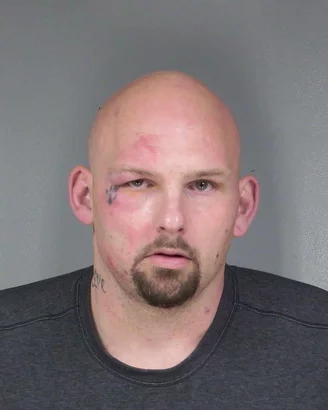
Trevor Gibney | Booking photo
On the evening of March 1, 2023, the Humboldt County Drug Task Force responded to the 1500 Block of Dean Street in Eureka to assist the Eureka Police Department.
EPD responded to that area for the report of a family disturbance.
While on scene, EPD officers received information there were narcotics as well as firearms located inside a trailer on the property associated with Trevor Gibney.
Based on this information HCDTF agents obtained a search warrant for the property. During a search of the property EPD officers and HCDTF agents located over an ounce of suspected fentanyl, a stolen semi automatic firearm, digital scale, packaging materials, and numerous firearms parts and accessories.
Gibney was subsequently arrested on the following charges:
H&S 11350(a)- Possession of a controlled substance
H&S 11370.1(a)- Possession of a controlled substance while armed with a firearm
Martha Herrera, a nanny, house cleaner and member of a state advisory committee that issued a set of first-in-the-nation workplace safety guidelines for domestic workers this year, in San Francisco on Feb. 28, 2023. Photo by Martin do Nascimento, CalMatters.
For years, the California Teachers Association has opposed universal dyslexia screening for students, helping to defeat legislation that would have mandated it. And yet, many classroom teachers are advocating for all students to be tested.
As another possible legislative battle looms, the statewide teachers union’s opposition to mandatory screening continues to frustrate many educators. According to classroom teachers across the state, the California Teachers Association’s position will perpetuate a “wait-to-fail” approach to reading instruction that forces educators to sit by while students fall further and further behind.
Dyslexia is a neurological condition that causes difficulties with reading and affects 1 in 5 people in the United States. But early screening and support can mitigate or even prevent illiteracy stemming from the learning disability.
Officials at Decoding Dyslexia CA, a grassroots advocacy group, say hundreds, if not thousands, of teachers working with students who struggle with reading support universal screening. The California Teachers Association doesn’t understand the benefits of screening all students for dyslexia, said Megan Potente, one of the co-directors of Decoding Dyselxia CA.
“I think there’s some misinformation,” Potente said. “Some of the reasons for their opposition aren’t supported by the research.”
Doug Rich, a veteran teacher and reading specialist at San Francisco Unified, said he’s “gone rogue” and started screening all of his students for signs of dyslexia. He said testing is relatively quick — taking less than 10 minutes — but the results are crucial.
The test results can tell him where his students are struggling, whether it be sounding out letters or recognizing words. If all students were screened in kindergarten, Rich says, fewer would end up working with him.
“We know so much about dyslexia,” he said. “We know the underlying causes. We have these simple tools that are efficient and accurate.”
Douglas Rich, a Math and Reading Interventionist at McKinley Elementary School, is an advocate for universal dyslexia screening across California. Feb. 24, 2023. Photos by Shelby Knowles for CalMatters
Reading instructors, education experts and neuroscientists all agree: early screening is one of the best ways to mitigate or even prevent the illiteracy that can be caused by dyslexia. Despite having some of the best experts in the field of dyslexia research, California remains one of 10 states that doesn’t require universal screening.
That’s not for lack of trying. State Sen. Anthony Portantino, a Democrat from Glendale who’s dyslexic, tried and failed twice in the past three years to pass legislation that would have mandated universal screening for students in kindergarten through second grade. In February, he said he is trying a third time.
Although it has not taken a position on the latest bill, the California Teachers Association opposed Portantino’s last two bills. Claudia Briggs, a spokesperson for the union, said the association’s leadership team believed that bills would have caused “unintended harmful consequences.” The association’s position is that universal screening will take valuable time away from instruction and may misidentify English learners as dyslexic by mistaking their lack of fluency in English for a learning disability. Briggs said the union would decide its position on the new bill in March.
Potente is optimistic about this year’s bill. It has 33 co-authors, more than double that of last year’s bill.
“I think there’s some misinformation. Some of the reasons for their opposition aren’t supported by the research.” — Megan Potente, co-director of Decoding Dyselxia CA
If the bill gets to Gov. Gavin Newsom’s desk, it’s not clear whether he’ll sign it. Newsom, who’s also dyslexic, supported dyslexia research by funding UCSF’s Dyslexia Center to the tune of $28 million in recent years. In 2021, he published a children’s book based on his childhood experiences. His office, however, declined to comment on whether he supports universal screening.
In response to the union’s objections, a chorus of experts and classroom teachers, backed by a well-established body of research, contradict its arguments. CalMatters interviewed 10 teachers from across California who said screening students early prevents students from needing more intensive services when they’re older. They also said universal screening would prevent English learners from being referred to special education because it would allow teachers to remedy early signs of reading challenges.
“Teachers are already spending an overabundance of time using other horrible assessments for reading,” Rich said, referring to tests for reading comprehension or vocabulary. “And they’re not getting good information.”
A patchwork of screening
Some districts, like Pleasanton Unified in the Bay Area, already screen all students in kindergarten, first and second grades. In other districts, top officials encourage screening all students but haven’t adopted a universal screening policy.
Jennie Johnson, a reading intervention teacher for the Lancaster School District, 50 miles north of Los Angeles, said the district is in its first year of screening all students. It’s also training teachers on how to use the results from the screening to refine reading instruction.
Universal screening is even more critical now because pandemic-era learning loss resulted in so many students reading below grade level, Johnson said. Half of the fifth graders at her school are currently reading at a third grade level.
“We are not surprised by the lack of literacy because that’s where our school typically is,” she said. “But the number of fourth and fifth grade students reading below grade level is alarming this year.”
In other districts, it’s up to individual teachers to advocate for screening their students. Kristen Koeller, a reading intervention teacher in the Cupertino Union School District, said she has to be strategic about which students get screening. When she recommends a student for a dyslexia screening, she said her supervisors encourage her to use other reading assessments that have been purchased as a part of the district’s reading curriculum. She said this ultimately discourages teachers from using screeners that haven’t been approved by district officials.
While district-approved assessments can help determine a student’s reading level, Koeller said they don’t test whether a student is at risk of dyslexia.
“You can be a bit of a rebel,” Koeller said. “But you can’t just go around thumbing your nose at your boss. I just continue to advocate respectfully for the change I’d like to see.”
Decoding Dyslexia CA includes a coalition of teachers like Koeller who are willing to buck both district policies as well as the California Teachers Association. They lobby state lawmakers and sponsored Portantino’s universal screening bills.
By at least one measure, most California voters support these efforts. A 2021 survey found that 87% of the state’s voters are in favor of a policy requiring universal early screening.
“I see this as a huge social justice issue. This ‘wait-to-fail’ model that we’re using in California is unacceptable.” — Lori DePole, co-director of Decoding Dyslexia CA
Without a mandate, teachers say, whether a dyslexic student learns to read will be left to chance. That approach deepens inequities, as some students have parents who can afford private assessments and tutoring. But those who lack the resources are much more likely to become illiterate adults.
“I see this as a huge social justice issue,” said Lori DePole, also a co-director of Decoding Dyslexia CA. “This ‘wait-to-fail’ model that we’re using in California is unacceptable.”
The California School Psychologists Association also supports screening all students between kindergarten and second grade, saying a small investment of resources earlier in a child’s education can pay off exponentially.
“If you catch them young, you can implement interventions that may prevent them from needing more intensive services later,” said Melanee Cottrill, executive director of the California Association of School Psychologists.
The importance of early screening
Kristina Delgadillo, a middle school special education teacher at Visalia Unified in the San Joaquin Valley, said she regularly works with students who could have learned to read if they had been screened earlier. She said screening younger students is worth the relatively small time investment.
“I’ve been assessing too many kids for the first time in fourth, fifth and sixth grade when I should have already been providing them services,” she said. “I see kids fall through the cracks.”
Delgadillo cited one study that found that it takes an additional 30 minutes a day for a kindergarten or first grade student with dyslexia to read at grade level. But if a student waits until fourth grade to be screened, it takes two hours a day.
“I’ve been assessing too many kids for the first time in fourth, fifth and sixth grade when I should have already been providing them services.” — Kristina Delgadillo, middle school special education teacher at Visalia Unified
Echoing the concerns of school psychologists, education experts say teachers can mitigate the illiteracy caused by dyslexia if they can detect the warning signs early. Even third grade can be too late, as students go from “learning to read to reading to learn” in other subject areas. If teachers can’t get students reading at grade level by then, it means they’ll struggle with reading textbooks in social studies or word problems in math class.
“Students don’t want to be in a classroom if they can’t read,” said Jordan Paxhia, a special education teacher at San Francisco Unified. While effective reading instruction on its own can’t ensure a student’s success, universal screening is a crucial step to making sure all students can read at grade level.
“Literacy may not be a panacea, but it certainly would give students more of a chance,” Paxhia said.
Teachers say screening English learners is even more urgent. If left unaddressed, dyslexia could delay students’ acquisition of English while they struggle to read their native language as well. And because they aren’t diagnostic tools, a red flag on a dyslexia screener won’t mean a student will be sent immediately to special education. If a dyslexia screener detects a student is struggling with reading, a teacher will spend more time with the student. From there, the teacher and the school can provide more resources and services if necessary.
“I’m not overly concerned about false positives,” Paxhia said. “It doesn’t mean they have dyslexia. And isn’t that a better use of our time than letting something go unnoticed?”
It’s harder to reverse the damage for a student who isn’t screened early. High school and middle school teachers know this best.
Students complete classwork at Stege Elementary School in Richmond on Feb. 6, 2023. Photo by Shelby Knowles for CalMatters
Holly Johnson teaches ninth grade English at Santiago High School in Garden Grove. She works with students who read below grade level, but by the time they arrive in her classroom it’s too late to remedy the effects of dyslexia. She doesn’t know for sure how many of her students have dyslexia, but she said it’s clear that they never got the help that would have been provided had they been screened earlier.
“Screening can be done in high school, but it’s so difficult,” she said. “Their relationship with school and their narrative has already been built.”
Research shows that failing to read at grade level can have ripple effects for a student’s academic success as well as their mental health. Students who can’t read will struggle across all subjects in school. They’re less likely to graduate from high school and tend to earn less once they enter the labor force. But in the short term, illiteracy leads to anger and hopelessness for Johnson’s students.
“Rather than being embarrassed about reading, they’ll pick a fight with the teacher,” Johnson said. “That’s more cool than everyone knowing you can’t read.”
A failure to screen students and help them in earlier grades means high school teachers like Johnson must not only teach them how to read but how to rebuild their identities as students.
“If we can get these kids diagnosed, their problems won’t be as big,” she said. “All of it can be nipped in the bud.”
###
CalMatters.org is a nonprofit, nonpartisan media venture explaining California policies and politics.










 Douglas Rich, a Math and Reading Interventionist at McKinley Elementary School, is an advocate for universal dyslexia screening across California. Feb. 24, 2023. Photos by Shelby Knowles for CalMatters
 Students complete classwork at Stege Elementary School in Richmond on Feb. 6, 2023. Photo by Shelby Knowles for CalMatters


