FIRE UPDATE: Six Rivers Complex Now 80 Percent Contained at 27,000 Acres

LoCO Staff / Monday, Aug. 22, 2022 @ 9:51 a.m. / Fire

Press release from the management team of the Six Rivers Lightning Fires:

The Six Rivers Lightning Complex remains in unified command with California Interagency Incident Management Team 14, California Highway Patrol, Trinity County Sheriff, and Humboldt County Sheriff. The Six Rivers Lightning Complex is currently 27,019 acres with 80% containment and 1,617 personnel assigned to the incident.  

CURRENT SITUATION 

Established containment lines remained intact throughout Sunday; firefighters continue to improve and reinforce control lines to limit fire spread around both the Campbell and Ammon Fires. The Ammon Fire remained relatively inactive with periods of increased fire activity within the fire perimeter. Large areas of previously blown down trees will continue to produce heat and smoke. Firefighters are working diligently to secure containment lines completely around the Ammon Fire to eliminate any threat of escape

Image via Inciweb

On Sunday afternoon, fire activity increased noticeably in the northeast corner of the Campbell Fire. A change in weather conditions to a more hot and dry pattern with gusty winds allowed the fire to move beyond Cedar Creek toward Lone Pine Ridge, with a spot fire identified to the southeast of the current fire’s edge. Today, the greatest potential for increased fire behavior remains in the northeast corner of the Campbell Fire, where moderate to active fire behavior is anticipated with potential for spotting. Contributing factors include higher winds along ridgelines that will likely push fire east toward Lone Pine Ridge. Steep and rugged terrain have created a need to utilize line along Lone Pine Ridge. However, firefighters will continue to directly engage with the fire where safe to do so. 
 
Please check https://outlooks.airfire.org/outlook/65384a03 for air quality resources. 

COMMUNITY MEETING 

A community meeting was held on Sunday, August 21, 2022 at Willow Creek Bible Church in Willow Creek. This meeting was recorded and can be viewed on the on Six Rivers National Forest Facebook page: www.facebook.com/SixRiversNF 
 
CLOSURES 

Due to a large presence of fire personnel and machinery working to build containment lines for the Ammon Fire, residents are asked to limit travel on Titlow Hill Road/Route 1 in zones HUM-E052 and HUM-E062 to essential traffic only. The following roads into evacuation zones have been closed. Residents may still use these roads to travel out of evacuation order zones: 

  • Forest Route 7n15 at Six Rivers Forest Boundary 
  • Horse Linto Creek Road at Saddle Lane (Open to residents only) 
  • Friday Ridge Road at Forest Route 6N06 (Route 6) 
  • Titlow Hill Road (Route 1) at Horse Mountain Botanical Area  
State Route 299 remains open to through traffic. Residents are encouraged to visit http://quickmap.dot.ca.gov/ to check for state highway closures.  

EVACUATION UPDATES 

For the latest evacuation information go to Humboldt County Office of Emergency Services (https://humboldtgov.org/2383/Current-Emergencies) or Trinity County Office of Emergency Services (https://www.trinitycounty.org/OES). For an interactive map of evacuation zones visit: https://community.zonehaven.com/. To sign up for alerts: www.humboldtgov.org/alerts. 

The EVACUATION ORDERS for Zones HUM-E032-B, HUM-E056-A, and HUM-E077-F have been downgraded to an EVACUATION WARNINGS beginning August 20 at 5 p.m. Residents who live in these zones may begin to return home with caution but should remain ready to evacuate again at a moment’s notice. Be alert to outstanding dangers upon return, including debris in roadways, gas leaks and hot embers.

An EVACUATION ORDER remains in effect for zones: HUM-E058, HUM-E061-A, HUM-E063-A, HUM-E063-B, HUM-E077-B, and HUM-E077-C. 

An EVACUATION WARNING remains in effect for zones: HUM-E032, HUM-E056, HUM-E057, HUM-E061-B, HUM-E062, HUM-E064, HUM-E076-B, HUM-E077-D, HUM-E077-E and HUM-E077-F. 

An EVACUATION WARNING remains in effect for Campbell Ridge Road from Salyer Heights to Seeley McIntosh Road. Salyer area, including Galaxy Road, and the area of Ziegler Point Road/Forest Service Road 7N04 have been reduced to an Evacuation Warning.


MORE →


Why Cal State Struggles to Graduate Black Students — and What Could Be Done

CalMatters staff / Monday, Aug. 22, 2022 @ 7:28 a.m. / Sacramento

Christopher Carter, 22, a fifth-year communications student at Cal State Northridge, stands for a portrait at CSUN in Northridge on August 19, 2022. “I want the world to know that as a young Black man, you can achieve big things in life,” Carter said. “Through all the trials and tribulations, don’t quit.” Photo by Pablo Unzueta for CalMatters.

###

Story by Mikhail Zinshteyn, Michaella Huck and Julie Watts.

###

“A lot of people would tell you to get to college,” said Cal State Northridge senior Christopher Carter, “but the hardest part is staying in college.”

Carter speaks from experience: He arrived at Cal State as a business major, and discovered he was one of only a few Black students in his classes. Math had never been his strong suit, and he failed his introductory statistics class twice. Quarantining during the pandemic added more stress.

He sought help from academic advisors, but felt they couldn’t understand his background and experiences. Whenever he tried to see one of Northridge’s three Black mental health counselors, he said, they didn’t have available appointments.

“I feel like I’m alone on campus,” Carter said. “You know, I don’t see those counselors who look like me, to where I’m like, okay, I’m comfortable here, you know?”

Carter found his niche when he joined Alpha Phi Alpha, a Black fraternity, and is now on track to graduate in May. But he and other Black students and scholars told CalMatters the country’s largest public university needs to do more to support them at a time when the system’s six-year Black graduation rate is just 50%, compared with 63% overall.

As CalMatters previously reported, the university’s Graduation 2025 campaign compares the graduation rates of two groups. One is “underrepresented minorities” — a group comprising Black, Latino and Native American students. The other group includes everyone else, such as Asian and white students, which Cal State calls “non-underrepresented minority” students. But that formula obscures even wider gaps between Black students specifically and their “non-underrepresented” peers.

While the system has seen graduation rates improve for all student groups under the graduation initiative, backed by more than $400 million in ongoing state support, the achievement gap between Black students and non-underrepresented students has remained unchanged for more than a decade, a 20-point difference.

A key consequence of that formula is that it makes the struggles of Black students — a historically marginalized group who make up only 4% of the Cal State student body — invisible in the accountability data. Under the system’s official formula, equity gaps could almost completely close even if the grad rates of Black students continue to dramatically trail that of their peers.

Students and experts identified a lack of tenured Black faculty role models and inconsistent support for campus Black resource centers that offer a sense of community and belonging as barriers to success. In some cases, financial woes and other life responsibilities can make the path to graduation harder, they said. Also in short supply: mental health and other professionals who understand the unique psychological struggles of Black students, who often are attending universities far from home and in communities that have few Black people. Six campuses had no Black employees in therapist roles last year, according to the faculty union that also represents mental health counselors. And though the share of Black professors is similar to the share of Black students, some scholars say that’s not enough.

Feeling out of place

“The CSUs just really have not done a proper job of providing the educational supports that Black students need,” said Lesa Johnson, a Black sociology professor who has chronicled reported instances of anti-Blackness at Chico State.

Universities also send a message to Black students and faculty with the kind of programming and research they choose to support — or not, Johnson said.

“Many Black people come into academia wanting to ‘be the change we want to see in the world,’ and so we direct our studies and our research and our service toward that change,” Johnson said. “When the university does not support research and services that involve that change, then the university is basically saying they will not support us, they only want our Black skin color, they only want to show us in the pictures, but they want us quiet.”

Johnson is working on a paper detailing other microaggressions Black students report experiencing at Chico State, such as a white professor who made a hurtful joke that a Black student not shoot a weapon when they raised their hand in class. But she’ll be finishing that paper from afar. Despite an offer of a raise and tenure, Johnson left Chico State to start a tenured position in Illinois this fall. “It was definitely the anti-Blackness,” she said. “I had had enough.”

At some Cal State campuses, there is simply not a critical mass of Black students to create a sense of community. That tiny population is one reason CSU Channel Islands has the widest gap between Black students and their non-underrepresented peers, said campus provost Mitch Avila. CSU Channel Islands enrolls just 121 undergraduate and graduate Black students — second lowest in the system. The campus is also one of 11 at which graduation rates for Black students who started as freshmen have fallen in the past four years. The others: Chico State, Dominguez Hills, Fresno State, Humboldt, Pomona, San Bernardino, San Francisco State, San Luis Obispo, San Marcos and Sonoma State.

Proposition 209

One way to boost graduation would be to specifically target Black students with extra tutoring, counseling and other approaches that research suggests improves graduation rates.

But California voters — twice — said colleges can’t do that. In 1996, voters passed Proposition 209 and in 2020 they struck down a measure to overturn the proposition.

While the state constitutional amendment ended the use of race as a factor in public college admissions in California, it also made it illegal to use state or federal funds exclusively for any single racial or ethnic group.

In theory, the federal government could require the Cal State system to spend more money specifically on resources for Black students given the wide gaps in graduation rates, but such federal action rarely happens, said Thomas A. Saenz, president and general counsel of the Mexican American Legal Defense and Educational Fund, a civil rights legal group that has argued before the U.S. Supreme Court.

Scholars of racism who spoke with CalMatters are frustrated that Proposition 209 requires a race-neutral answer to a race-specific problem. But they also say there are other ways around the amendment. A public college or university in California can target a racial or ethnic group for a program, as long as other groups aren’t excluded, Saenz said. If campus data show that Black students are not getting access to counseling, “you can fix that, that’s a race-neutral fix,” he said, even if that means hiring more culturally competent counselors.

UCLA education professor Tyrone Howard, who is Black, holds some meetings with students at his campus’ new Black student resource center rather than at his office. Doing that or hosting workshops at the center “becomes a draw” to Black students in search of resources they may not find elsewhere on campus, he said. It’s a script he thinks more campuses should follow, including the Cal States. Once he comes back from sabbatical next fall, he’ll hold all his office hours at the center, he said.

But Howard added that the centers have to be “Black in name” — which is permitted under Proposition 209, as long as it’s not exclusive to any student based on race or ethnicity. Doing this signals that “aiding, assisting Black students is the primary goal,” he said. These centers can also be a way to bring academic and mental health services directly to Black students, which can be a benefit to students who feel alienated by more traditional campus spaces.

What Cal State is doing

About two thirds of Cal State campuses have physical locations dedicated by name to Black students, such as a Black resource center. Those that do not are Bakersfield, Channel Islands, Chico State, Fresno State, Maritime Academy, Monterey Bay, Sonoma State and Stanislaus State.

Every campus should have these centers, said Bob Rucker, the former director of San Jose State’s journalism school.

“African Americans are coming to you because they value what they’ve read and learned about your program,” Rucker said. “Now meet them halfway. Do the extra homework — chairs, directors, and deans — and find a way.”

Among the campuses with such centers, there is wide variation in their size and services. Some, such as those at Fullerton, Sacramento State and San Diego State, offer academic or mental health counseling at those Black campus centers. Cal State Dominguez Hills has one professor who hosts some office hours at the center.

Whether simply having a Black resource center leads to lower equity gaps is unclear. For example, Northridge, the campus with the largest center, has among the deepest equity gaps between Black students and non-underrepresented groups — a difference of 22 percentage points in 2021.

Not all Black students visit these centers, Howard said, so training other academic support personnel in anti-racism is also important.

As for the limitations of Cal State’s Graduation 2025 equity goals, some university leaders said they’re aware of the problem.

After reading CalMatters’ reporting in July, Cal State trustee Julia López called for the university to report specific graduation rates for Black students, Native American students and other ethnicities.

In an interview, the system’s top official for academic matters, Sylvia A. Alva, called using only the underrepresented-minority-students metric to track progress towards equity goals “very crude.”But Alva said the system is tied to the underrepresented-minority metric until 2025 because it would be unfair to change the goalposts partway through the effort. Any decision would have to be made through the university’s shared governance model, she said, including input from the 23 campuses.

Alva wouldn’t commit to a metric after 2025 that measures the system’s ability to close equity gaps among specific racial and ethnic groups. “I don’t believe that we would be well served as a state to pit any group against another,” she said. Instead, she proposed a model that measures whether a campus is below or above its graduation target for certain student groups.“We are committed to doing everything we can to close those equity gaps,” she said. She wouldn’t endorse an accountability goal for the system to close those equity gaps among racial groups.

Following CalMatters’ reporting, Gov. Gavin Newsom’s administration is also reconsidering this “crude” equity gap metric. Newsom in May unveiled a compact with the Cal State system promising ongoing increases in state funding if the system reaches certain goals, including closing the graduation gap between under-represented and non-underrepresented minorities.

Now his office is saying more detailed data will be part of the oversight.

“Public institutions should be guided by data that reflects lived reality,” said a governor’s office spokesperson in a written statement to CalMatters. “In partnership with the UC, CSU, and California Community Colleges, the administration will use all available data — disaggregated race and ethnicity data alongside URM (underrepresented-minority) metrics — to serve as the basis for reporting, discussion, and decision-making.”

Newsom’s office didn’t provide a timeline for whether, and when, the compact’s official language would reflect that position.

Finding solutions

Support targeted to Black students made the difference for Tyrone Carter, who earned bachelor’s degrees in Africana Studies and psychology from Cal State Northridge at the age of 53.

After his release from prison in 2016, he enrolled in community college but felt unable to relate to his classmates and professors or ask them for help. But then he found the Black Scholars Program at L.A. Valley College. The faculty and staff there introduced him to a professor in Cal State Northridge’s Minority Male Mentoring program. They helped him apply to transfer to the four-year university, and the Northridge professor was a vital resource at his new campus.

“When I joined the Black Scholars Program, I felt that I was able to be my true authentic self,” said Tyrone Carter, who just completed a master’s degree at UCLA. “And I mean all of myself.”

Tyrone Carter, 56, outside of his home in Burbank on August 19, 2022. Carter has two Bachelor of Arts degrees from Cal State Northridge, majoring in Africana Studies and Psychology, and a Masters degree in Social Welfare from UCLA. Said Carter: “I had to learn to be vulnerable and seek guidance.” Photo by Pablo Unzueta for CalMatters

Other solutions campuses are trying include hiring professors who have a track record of teaching culturally relevant content, educating a diverse group of students or researching the role race plays in society — an approach that could yield more Black faculty without running afoul of Proposition 209.

Channel Islands will have four new Black professors after conducting a “cluster hire” that sought academics with experience applying concepts of Black identity to their subjects. Next fall, the campus will debut its first major in Africana Studies. Avila, the provost, also wants to create a Black resource center in the next few years and ensure that school academic and mental counselors are stationed at the center several times a week.

Some campus interventions meant to help all struggling students are also showing signs of progress.

Internal Cal State data show that students who fail a class early in their academic tenure are much less likely to graduate. At San Marcos last fall, about 56% of Black freshmen failed at least one course in their first semester, up from 40% in fall 2019. That’s part of a larger trend: More than a third of San Marcos’s 2,100 freshmen were on academic probation after their first semester last year, meaning they had less than a 2.0 grade-point average.

So the campus sought to solve that retention whirlpool with a one-unit academic resilience class designed to teach students on academic probation how to study more effectively and seek academic help on campus, and have them reflect on why they struggled academically.

Early signs suggest the course is having an impact. Over three years, the retention rate for Black students who took the class was 13 percentage points higher than for Black students who didn’t take the class. It was slightly higher for all students — a 15 percentage point bump.

“The whole CSU has to try and be an institution where academic recovery is possible,” said Adam Petersen, director of strategic initiatives for academic success at San Marcos. As long as students are kicked out for low GPAs, he said, “I think it’s gonna be hard for us to meet any of our equity goals.”

Closing the gap

Just one Cal State campus, San Diego State, has effectively closed its graduation rate gap between underrepresented and non-underrepresented freshmen students, as well as between Black students and non-underrepresented freshmen students. And though it’s among the most selective Cal State campuses, Cal Poly San Luis Obispo, another highly selective Cal State, has far wider gaps.

San Diego State takes pains to create a welcoming environment for Black students from the moment they express an interest in attending through their final year on the campus, said J. Luke Wood, vice president of student affairs at the university and a scholar on education and race.

It starts with a campus tour for interested students that focuses on significant Black history milestones on campus, such as where Martin Luther King Jr. spoke when he visited the campus. Once students are admitted and deciding whether to attend, they and their parents are invited to spend a night on campus, where they get early exposure to the school’s Black resource center, meet student leaders and learn about financial aid. About 70 students take part annually.

“We want (Black students) to come onto campus and to see themselves everywhere they go, to say that ‘this is a place for me’,” Wood said.

Once they’re freshmen, students can join the Henrietta Goodwin Scholars Program for first- and second-year students, which offers a weekly seminar on study skills, academic coaching, extra tutoring in courses with high fail rates and connections to other Black scholars on campus. About 150 students take part in this.

Another service for students approaching their final few semesters at college prepares them for the workforce, with activities such as meeting with Black executives, landing internships and “understanding of systemic oppression and bias as ongoing challenges.”

Though the programs focus on the Black student experience, they’re open to all.Between 2016 and 2022, the university’s Black tenure-line faculty ranks grew from 25 to 42 employees. The campus has also gone on a general hiring spree that benefits all students, bringing on 29 more academic advisors since the COVID-19 pandemic and hiring enough therapists to bring its student-therapist ratio down from 1,900 to 1 three years ago to 1,400 to 1 most recently. College students who get more advising graduate at higher rates, according to a recent “what works” guide for colleges published by the U.S. Department of Education. Beyond ongoing staffing and programs, Wood noted a low-cost effort that he says students appreciate. A team of eight students and two campus staff call or text students with lower grades to check in on their mood and academic needs weekly or monthly.

In response to Minneapolis police officers murdering George Floyd in 2020, the Black Resource Center led a drive to call all Black students to ask if they were OK or needed support.Other campuses may say all these actions “are things we’re thinking about,” but San Diego State actually did the work, Wood said.

“And I think that’s one of the reasons we’re seeing those equity gaps close.”

###

Huck is a former fellow with the CalMatters College Journalism Network, a collaboration between CalMatters and student journalists from across California. Julie Watts is an investigative journalist at CBS13 in Sacramento. College Journalism Network editor Felicia Mello contributed reporting.

CalMatters.org is a nonprofit, nonpartisan media venture explaining California policies and politics.


GROWING OLD UNGRACEFULLY: Viva La Vulva

Barry Evans / Sunday, Aug. 21, 2022 @ 7 a.m. / Growing Old Ungracefully

If you’ve been following me on the abortion issue, you’ll know I consider the current anti-abortion fever can be explained in one word: misogyny. Very little to do with “right to life” or high-minded morality. Simply note, for instance, that the anti-abortion states are the ones with the least support for single moms and their babies. The US News and World Report recently summed it up: “The decision to overturn Roe v. Wade has made clear that women with the fewest reproductive rights also live in states that provide the least support for babies they’re now forced to birth.” As has been noted repeatedly, “pro-life” apparently means caring about life for just nine months, from conception right through until birth. Then, fugget about it.

I want to make the case that the ancient Greeks were the ones who perfected the notion of misogyny, and that’s apparent in their statuary and the virtually 100% percent absence of female genitals. Thousands of statues of men and women have survived from the flowering of the Greek city-states, roughly 2400 years ago, many of which — perhaps most — are nude. While you can find plenty of penises and balls from those days, you’ll look in vain for any lady-parts. Not a vulva to be seen! Instead of regular female anatomy, the goddesses, nymphs and human women from that era are barren and bare, their labia expurgated to nothingness. (Or else they are clothed, unlike, for the most part, their cocksure male counterparts.)

“Victorious Youth” vs. “Aphrodite” (“Saiko,” GNU License, via Wikimedia; and Metropolitan Museum of Art, Creative Commons 1.0 license, via Wikimedia)


It’s as if the rulers of taste in those days — i.e. men — decided that the role of women was so unimportant that it could safely be ignored. Even giving birth was barely acknowledged: when Apollo defends Orestes, on trial for the murder of his mother, the judge (Athena) is told, “The woman you call mother of the child is not the parent, just a nurse to the seed…The man is the source of life.” (Aeschylus, about 500 BC)

It wasn’t always thus. Feminine statues from earlier times showed the vulva in all its glory. Here (again), for instance, is the famous “Venus of Willendorf,” a four-inch high limestone figure from Lower Austria dated to about 25,000 years ago.

Now in Vienna’s Naturhistorisches Museum. Bjørn Christian Tørrissen, Creative Commons BY-SA 4.0 license, via Wikimedia.


Other cultures didn’t seem to have the same reticence to depict women as they really are. In Hindu mythology, Shakti is the fertility goddess, and her yoni is typically displayed alongside, or being penetrated by, a male lingam, as here.

Mahasthangarh Museum, Bogra, Bangladesh. Shahnoor Habib Munmun, Creative Commons BY 3.0 license, via Wikimedia.

Much more recently — 2014 — the Japanese artist Megumi Igarashi, AKA Rokudenashiko, was arrested and charged with obscenity for posting a downloadable three-dimensional manko (pussy), scanned from her own body. Two years later, she was convicted and fined nearly $4,000 by a Tokyo court. Meanwhile, an annual festival celebrating the phallus is held annually in Kawasaki, Japan, where representations of erect penises are displayed everywhere in the form of statues, candy and vegetables.

I could go on (and on), but you get the idea. Penis good, vulva bad. Isn’t it time we got over half-baked ideas of the inferiority of women? Starting with rock-solid right-to-abortion laws that can’t be overturned by an ideologically-packed, two-thirds Catholic, Supreme Court, (including three nominated by a president who lost by nearly three million popular votes). The nearly two-thirds of us who support abortion rights deserve as much.

Needed to get that off my chest.


THE ECONEWS REPORT: Wiyot Tribe Celebrates Rematriation of Coastal Forest

The EcoNews Report / Saturday, Aug. 20, 2022 @ 10 a.m. / Environment

Google Earth view of Mouralherwaqh, the King Salmon-area forest recently acquired by the Wiyot Tribe.


###

In July, the Wiyot Tribe finalized the acquisition of a 46-acre coastal property in the ecologically and culturally significant Wiyot place of Mouralherwaqh or “wolf’s house,” which will be prioritized for ecocultural restoration purposes.

The property is located at the present day site known as King Salmon at the base of Humboldt Hill and represents the first forestland to be returned to the Tribe.

Tribal citizens Sheryl Seidner and Hilanea Wilkinson, Wiyot Tribal Natural Resources Director Adam Canter, and Cal Poly Professor Laurie Richmond join Gang Green to talk about this historic rematriation of tribal ancestral territory and what #LandBack means to the Wiyot Tribe.

AUDIO:

“The EcoNews Report,” August 20, 2022.

PREVIOUSLY:


FIRE UPDATE: Six Rivers Fires Now 81 Percent Contained, With Nearly 26,000 Acres Affected in Total

LoCO Staff / Saturday, Aug. 20, 2022 @ 9:58 a.m. / Emergencies

Press release from the management team of the Six Rivers Lightning Fires:

INCIDENT INFORMATION

Unified Command: Six Rivers National Forest, CAL FIRE, California Highway Patrol, Trinity County Sheriff, and Humboldt County Sheriff.

Firefighters enjoy a visit from Kerith, a First Responder therapy dog. Photo via Inciweb.

CURRENT CONDITIONS

The Lightning Complex Fire is currently 25,832 acres with 81% containment. 1463 personnel are assigned to the incident. USFS, CAIIMT 11 and CAL FIRE continue to work closely together in unified command with a full suppression strategy to protect homes and other structures, communities, crucial infrastructure, and important wildlife habitat. Federal IMT CIIMT14 will be transitioning with CIIMT11 today at 1900.

Fire activity was minimal overnight with the cooler temperatures and increased humidity. Control lines are holding well. Crews continued successful strategic firing operations and improved control lines using dozers and handlines to remove fuels. Unburned pockets of fuel within the control lines continue to burn off and create smoke.

Campbell Fire

Fire crews will continue to strengthen fire lines, patrol, and extinguish remaining pockets of heat inside control lines.

Ammon Fire

Fire crews will continue to strengthen fire lines in the northeast portion of the fire, as well as patrol and extinguish remaining pockets of heat within the control lines. Crews will continue to improve and reinforce fire lines along Titlow Hill Rd/Route 1 out to Highway 299.

WEATHER

Stable weather is expected over the area, with northwest winds up to about 10mph, gusting slightly higher along the ridgetops and where channeled by terrain. Temperatures are predicted today in the 70s and 80s, with smoke free areas possibly getting into the low 90’s.

SMOKE

A strong inversion will continue to keep smoke over most of the area. Some clearing will take place in the afternoon, particularly along the northwest areas of both fires. Please check this link for air quality resources.

ROAD CLOSURES

State Routes 299 and 96 are currently open in the Lightning Complex but may be impacted by fire behavior. Travelers are encouraged to visit the Caltrans Quickmap to check for state highway closures. The beginning of deer hunting season this weekend is expected to increase traffic in the area.

The following roads leading to evacuation zones have been closed (residents may use these roads to exit only):

  • Forest Route 7N15 at Six Rivers Forest Boundary Horse
  • Linto Creek Road at Saddle Lane
  • Friday Ridge Road at Forest Route 6N06 (both roads are closed at this point)
  • Titlow Hill Road/Forest Route 1 after Horse Mountain Botanical Area

Because fire personnel and machinery will be building control lines for the Ammon Fire, residents are asked to limit travel on Titlow Hill Road/Route 1 in zones HUM-E052 and HUM-E062 to essential traffic only.

EVACUATION CENTER

The American Red Cross Evacuation Center at Trinity Valley Elementary School is closed but on stand-by if needs change. If further evacuations are ordered or evacuation orders changed, the facility will re-open to accommodate new evacuees.

ANIMAL EVACUATION CENTER

Hoopa Rodeo Grounds
1767 Pine Creek Rd.,
Hoopa, CA 95546
Phone: (707) 492-2851

** The Hoopa Rodeo Grounds has several single pens and larger pens for whole herds. Call directly if you need directions or help transporting your large animals. They cannot house sheep, goats, poultry, or small animals, but they can potentially help arrange for temporary foster placement. If you can foster, please reach out regarding your availability and capacity.

EVACUATION UPDATES

For the latest evacuation information go to Humboldt County Office of Emergency Services or Trinity County Office of Emergency Services. For an interactive map of evacuation zones visit Zonehaven Aware. To sign up for alerts visit this link.


THE CANNABIS CONVERSATION: Humboldt’s Big Play, Take Two

LoCO Staff / Saturday, Aug. 20, 2022 @ 7:30 a.m. / Cannabis

PREVIOUSLY:

###

It is no mystery that I am concerned about the economy. Inflation, equity market multiples, GDP and the treasury yield curve all indicate that more challenging times are brewing. Here locally, vacant storefronts, declining business revenues and conversations with displaced pot farmers and employees from ancillary businesses paint a similar picture.

As I wrote months ago, Humboldt needs to attract investment and tourist dollars to maintain the economic vibrancy our area became accustomed to during the multi-decade cannabis bull market. Given Humboldt’s largely anti-business, anti-development bias that inhibits capital investment in the region, cannabis tourism stands out as the primary avenue to firm up the local economy.

As our friends from Humboldt State University noted in their 2021 study titled Cannabis Tourism in Humboldt County – Moving Forward, cannabis tourism is “the act of traveling to a destination with the intent to consume, purchase and learn about cannabis in a legal manner.” For those living in prohibitionist states or nations, this freedom is something to be admired and experienced.

And the economic impact of cannabis travel is immense.

A recent Forbes article noted that cannabis tourism is a $17 billion industry and is still in its infancy. HSU notes that post recreational legalization, Colorado saw a significant increase in hotel rooms rented, and prices for those rooms firmed as well. All told, Colorado has seen a significant increase in economic activity with increased cannabis-related tourism. Dispensaries in Illinois are thriving with out-of-state purchases and our neighbors to the south in Mendocino calculated that each kilo of cannabis produced generates significant total economic activity.

Humboldt could use the same, now!

Retail, dining, leisure and other establishments would welcome increased foot traffic and Humboldt is uniquely positioned to capitalize on this new and growing trend.

Brian Applegarth, founder of the Cannabis Travel Association International and Co-founder of Cultivar Brands agrees.

I had the distinct pleasure of talking cannabis travel with Brian recently and found his passion, sincerity and professionalism inspiring. Brian was born and raised in NorCal and returned to the area in 2013 where he experienced his first dispensary visit. He knew then that cannabis tourism would be a big draw and retired from corporate life the following year to enter the space.

Since then, he formed the Cannabis Travel Association, the voice of international cannabis travel, as well as The Cannabis Trail, which shares terroir, craft and cannabis culture with tourists. Through Cultivar Brands, Brian helps destination marketing organizations and others with strategic planning and hosts marketing events for the industry. He believes that cannabis improves the human condition and sees cannabis legalization as a human rights movement in some ways, focusing on sustainability, inclusion and personal freedom.

While areas like Colorado have a significant presence in the tourism space, and others like San Francisco, West Hollywood and Palm Springs have chic urban consumption lounges, Applegarth believes that Humboldt, like Mendocino, offers a unique historical experience that can cement our area as one of the go-to destinations for cannabis travel worldwide. With its back-to-the-land movement, genetics library and long-standing relationship with cultivation, Humboldt is a true place of source with cannabis in its DNA. Moreover, Humboldt’s authenticity, innovation and environmental stewardship are all attractive to global travelers in Brian’s view.

Given this history and the unique cultural experience Humboldt can offer, we should unify in one voice, proudly sharing our cannabis story and heritage with the world. With a coherent, cohesive and thoughtful cannabis marketing program we can attract millions of visitors and much-needed capital to the region.

As I shared in a previous article, I believe Humboldt’s lack of unity in this area is hamstringing our efforts. Fragmentation of the cannabis community, competing views and interests, multiple tourism organizations, and some entrenched anti-cannabis rhetoric are not serving us well.

We need one voice, one unified message that speaks to the diversity of Humboldt, the natural beauty of our region and our affinity for sun-grown cannabis. Pretending to be something we’re not, or ignoring this important component of our heritage is short-sighted and will only hasten the economic challenges we face.

Mendocino formally added cannabis as one of the pillars of its countywide marketing campaign for tourists and Humboldt needs to do the same.

On the policy front, change is also needed for the cannabis tourism industry to flourish. Right now, on-site consumption and sales are prohibited to travelers at the farm level. In other words, travelers can visit a farm and learn about products and processes, but they can’t sample or purchase anything – it’s ludicrous and unfair.

Applegarth advocates for a catering license, which is used in relation to alcohol to allow for compliant consumption at events and consumption spaces. While AB 2844 was unsuccessful in its first pass, Brian wants to get a cannabis catering license back on the ballot which would allow a “licensee to serve cannabis or cannabis products at a private event … that is not hosted, sponsored, or advertised by the caterer.” This could help farms get products in front of potential consumers and could enhance the consumption experience for those coming to our region

Two other issues threaten the success of a thriving cannabis tourism economy in Humboldt. The first is that many off-grid outdoor farms are at risk of going under. It’s a shame too as organic, regenerative farms could be a real attraction for tourists. As Matt Kurth, owner of Humboldt Cannabis Tours, notes: People want to touch the plant and put their hands in the dirt. They want to learn about Humboldt’s history and environmentally friendly cultivation practices. Let’s allow for on-site consumption & sales and give our family farms the ability to engage consumers directly.

Additionally, as noted in HSU’s work on the subject, many of Humboldt’s farms are tucked away in remote locations. Dilapidated mountain roads and lack of ADA compliance will prevent many farms from participating in this potentially explosive economic growth engine. Nonetheless, farms with better access and resources to invest in ADA compliance could serve as the anchors for tourism efforts and could proudly represent the history, heritage and sacrifice that embody cultivation in our region.

I just returned to town from SoCal where I had the privilege of touring the state’s premier greenhouse facility. The scale, ingenuity and resources being deployed throughout the Central and Southern regions of the Golden State should not be underestimated. Production costs in those facilities are a fraction of what they are up in the hills and the products I reviewed had good quality…perhaps not the same outer trichome level as our stress-grown mountain flower, but visually appealing and certainly viable for commercial sales.

Trying to compete with those operations in wholesale markets will be a losing proposition and will bankrupt small farms in the Emerald Triangle. Our best hope is to market love, history, craft and our unique cultivation approach to a growing consumer audience. A cohesive cannabis tourism strategy that highlights the unique and historic experience of farming behind the redwood curtain can help us preserve our heritage and maintain a foothold in a burgeoning global industry. More of the same will lead to widespread farm failure, a large and lasting disruption to the local economy, and a very displeasing change to Humboldt’s way of life.

For my dime, the county should engage a cannabis tourism expert and follow in Mendocino’s path of cementing cannabis in their formal outreach strategies. It would be a real shame to let this opportunity slip away and let other regions monopolize a storyline we were so instrumental in creating together. I applaud our friends in Mendo for their passion, conviction and ability to get things done. I hope we can do the same.

Humboldt has a small window of opportunity to act while our local operators navigate turbulent waters and try to hold on. Cultivation licenses are being surrendered, plots are laying fallow and soon, not much will be left of the local cannabis community. It is in every resident’s best interest to support and embrace the industry that has given us all so much. Failure to create a thriving cannabis tourism program will lead to further degradation of the local economy, declining property values and a sad departure from a heritage that so many admire.

Much love,

Jesse

###

Jesse Duncan is a lifelong Humboldt County resident, a father of six, a retired financial advisor and a full-time commercial cannabis grower. He is also the creator of NorCal Financial and Cannabis Consulting, a no-cost platform that helps small farmers improve their cultivation, business and financial skills. Please check out his blog at, his Instagram at jesse_duncann, and connect with him on Linkedin.


OBITUARY: James Anthony Test, 1945-2022

LoCO Staff / Saturday, Aug. 20, 2022 @ 6:56 a.m. / Obits

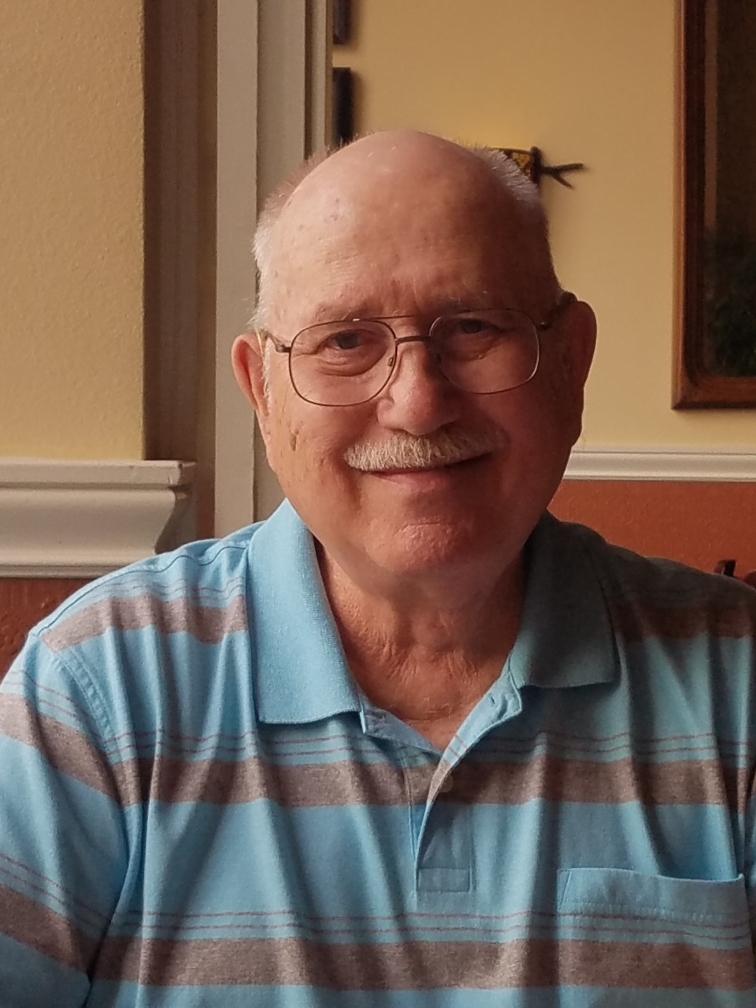
James Anthony Test passed away at home in Arcata on May 26, 2022. He was 77 years old.

Jim was born in Punxsutawney, Pennsylvania into an Italian family. His mother was a great cook, and Jim had a lifelong love affair with good Italian food.

His father was a fabricator for a coal mining company and built the family home with the help of Jim’s older brother Tony. Some of this must have rubbed off on Jim because remodeling houses was one of his treasured passions.

He went to Catholic school where he was a crossing guard and enjoyed bossing other kids. One day a girl who didn’t want to be bossed pushed him into the bushes, and thus began a lifelong friendship with Patricia McGinnis.

Jim watched John Wayne movies on TV and aspired to be a tough guy, leading him to the Marine Corps right out of high school. He spent one memorable year in the jungles of Vietnam, a year which spoiled camping for years to come.

While he was proud of being a Marine and felt that it had been a major force in shaping his life in good ways, he came back to the states sympathizing with the anti-war movement, and was one of the Veterans for Peace who famously dug a bomb crater on the HSU campus in the early ‘70s.

In 1975, he met Glenda Martien and together they formed a family with her two sons, Robert and Phil, who were 11 and 14 at the time. He and Glenda were married from 1983 until her passing in 2007. They remodeled three houses together, two in Arcata and one in Fieldbrook. During this time Jim honed his cooking skills and developed a taste for good Italian wine.

From his early years as a crossing guard he went on to careers taking on the challenge of being “the boss.”

For 28 years he was General Manager/Co-Owner of Bug Press, a commercial design and printing company. He had graduated from Humboldt State University with a degree in Geography and a self-directed minor in Community Planning, and went to work for the Humboldt County Planning Department. He later became Executive Director of the Arcata Economic Development Corporation and then Executive Director of the Humboldt Waste Management Authority.

His civic career included being editor of the Northcoast Environmental Center’s Econews and the Historical Sites Society Newsletter. From the ‘70s to the ‘90s he was a member of many City of Arcata committees and boards. From 1994 to 2002 he was on the Arcata City Council, serving three years as Mayor. He was best known for his ability to listen, for bringing people together to solve problems, and for providing guidance and support with humor and grace.

Jim met Marilyn Page in 2010 and added her family to his gatherings over good food and wine. They moved to Napa, when it turned out all four of their adult children lived nearby. Together they remodeled a house that became another gathering place for family and friends.

He loved to travel and that became a passion in his life. While he loved Italy and of course eating Italian food, one of his favorite trips was walking Inn-to-Inn in the Cotswolds in England.

Eventually, it seemed the right time to move back to Arcata, where together they remodeled his fifth and final house.

Over the years Jim had many health challenges, some related to exposure to Agent Orange. It must have been his sturdy Italian heritage that helped him bounce back from many setbacks.

He built a life surrounded by a large and loving family. He is survived by his wife Marilyn Page, his Martien step-sons Robert (Eddie) and Phil (Sandi), his Page step-daughters Osha (Erik) and Erica (Peter), his grandchildren Lindsay, Julia, Asher, Olivia, Tia, and Taj, his brother Tony Test and his sister Diane Redmond, and nieces and nephews. He is predeceased by his wife Glenda Test, his parents Sylvester and Agatha Test, and his brother Alex Test. His sister Vicki Slater passed away one month after Jim.

Jim was a man of few words, but when he had something to say it was worth hearing. He had a playful side that would come out at unexpected moments, making life with him amusing and fun. He was helpful without fanfare, doing what was necessary without overstepping.

Jim was a great source of support to his family, and over the years to his grateful community. He is deeply loved and missed. A celebration of life will be held around the time of his birthday in April 2023.

###

The obituary above was submitted by Jim Test’s loved onesThe Lost Coast Outpost runs obituaries of Humboldt County residents at no charge. See guidelines here. Email news@lostcoastoutpost.com.