Press release from the Humboldt County Sheriff’s Office:
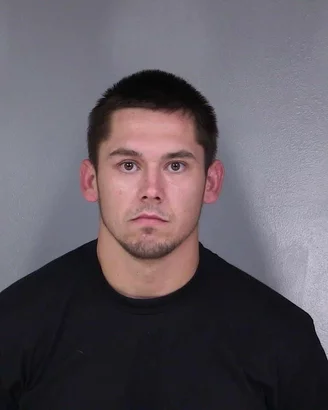
On Nov. 29, 2022, at about 4:59 a.m., Humboldt County Sheriff’s deputies on patrol in the McKinleyville area observed a vehicle associated with a felony warrant suspect.
Deputies conducted a traffic stop on the vehicle in the area of School Road and Washington Avenue, and contacted three individuals inside. One of the passengers of the vehicle was confirmed to be the felony warrant suspect, 24-year-old Andrew James Lamberson Jr. During a search of Lamberson and the vehicle incident to arrest, deputies located over 8 grams of methamphetamine and a high-capacity magazine containing live rounds of ammunition.
A second passenger of the vehicle, 35-year-old Amanda Michele Brown, was also found to have an outstanding misdemeanor warrant. Brown was cited and released for her warrant.
The driver of the vehicle was released at the scene.
Lamberson was booked into the Humboldt County Correctional Facility on charges of prohibited person in possession of ammunition (PC 30305(a)), possession of a controlled substance (HS 11377(a)) and violation of probation (PC 1203.2(a)(2)), in addition to warrant charges of Post Release Community Supervision (PRCS) Revocation (PC 3455(a)), driving under the influence of alcohol (VC 23152(a) & 23152(b)), driving with a blood alcohol level .15 or over (VC 23578), driving privilege suspended/revoked (VC 14601.5(a)) and driving under the influence of drugs and alcohol (VC 23152(g)).
Anyone with information about this case or related criminal activity is encouraged to call the Humboldt County Sheriff’s Office at (707) 445-7251 or the Sheriff’s Office Crime Tip line at (707) 268-2539.
Press release from the Humboldt County Sheriff’s Office:
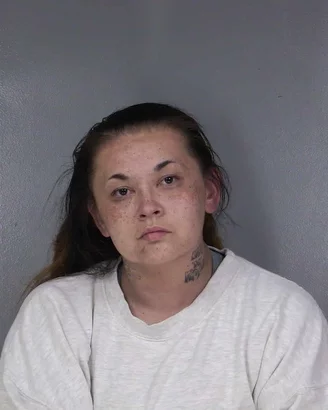
On Nov. 29, 2022, at about 2:05 p.m., Humboldt County Sheriff’s deputies on patrol in the Blue Lake area conducted an investigation of an occupied vehicle outside a business on the 1400 block of Glendale Drive.
Deputies located two adult females passed out inside the vehicle. Upon contacting the women, deputies learned that the driver, 30-year-old Halli Lee Pole, had multiple warrants for her arrest. During a search of Pole and the vehicle incident to arrest, deputies located approximately 21 grams of fentanyl, .7 grams of methamphetamine, drug paraphernalia and items consistent with the sale of controlled substances.
Pole was booked into the Humboldt County Correctional Facility on charges of possession of a narcotic controlled substance (HS 11350(a)), possession of a controlled substance (HS 11377(a)), possession of a controlled substance paraphernalia (HS 11364(a)) and violation of probation (PC 1203.2(a)), in addition to warrant charges of vehicle theft (VC 10851(a)), possession of a controlled substance (HS 11377(a)), possession of a narcotic controlled substance (HS 11350(a)), driving with a suspended license (VC 14601.1(a)), property theft (PC 484(a)), check fraud (PC 476) and bringing drugs/alcohol into a prison (PC 4573.4).
The second female was released at the scene.
Anyone with information about this case or related criminal activity is encouraged to call the Humboldt County Sheriff’s Office at (707) 445-7251 or the Sheriff’s Office Crime Tip line at (707) 268-2539.
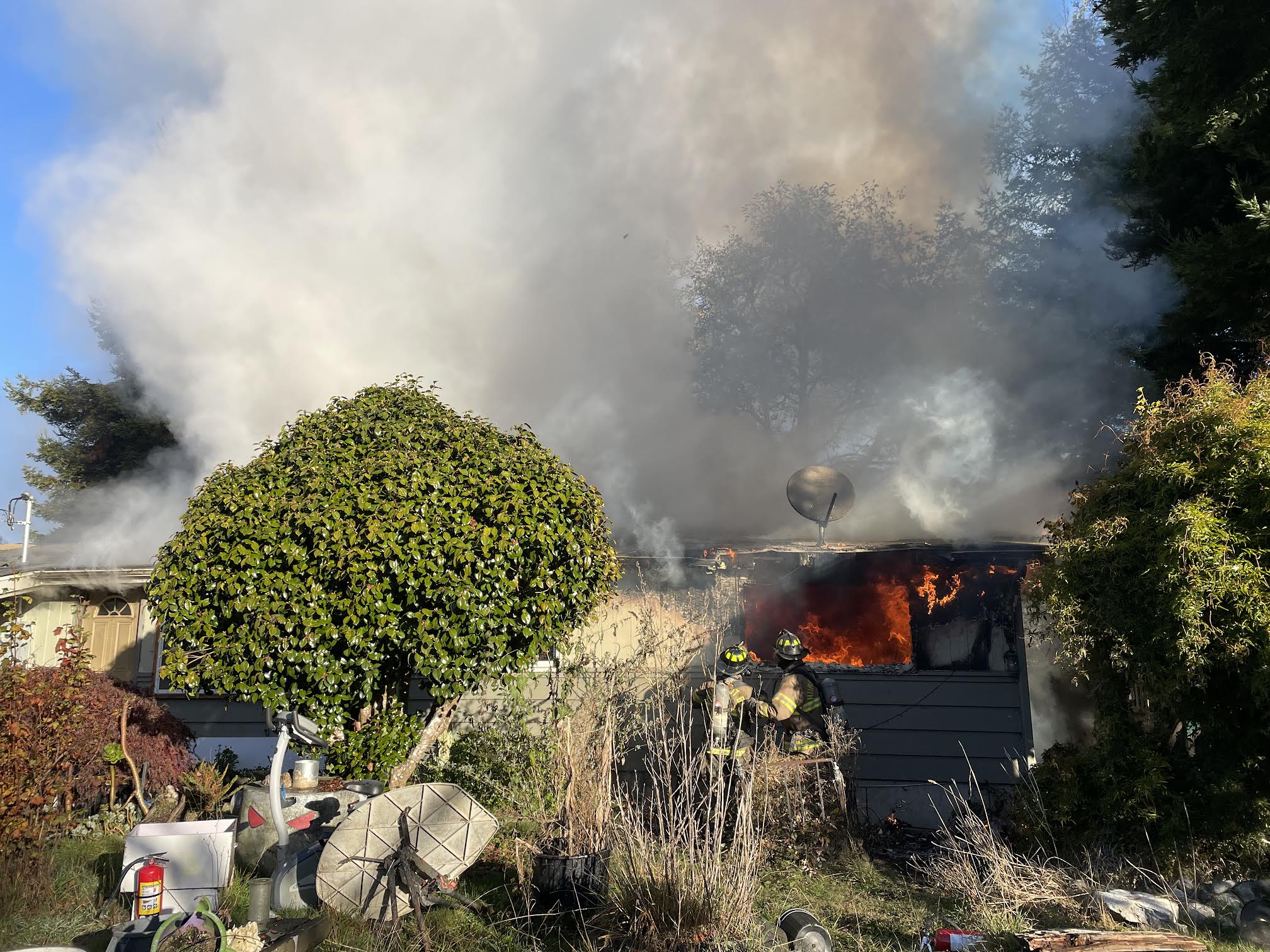
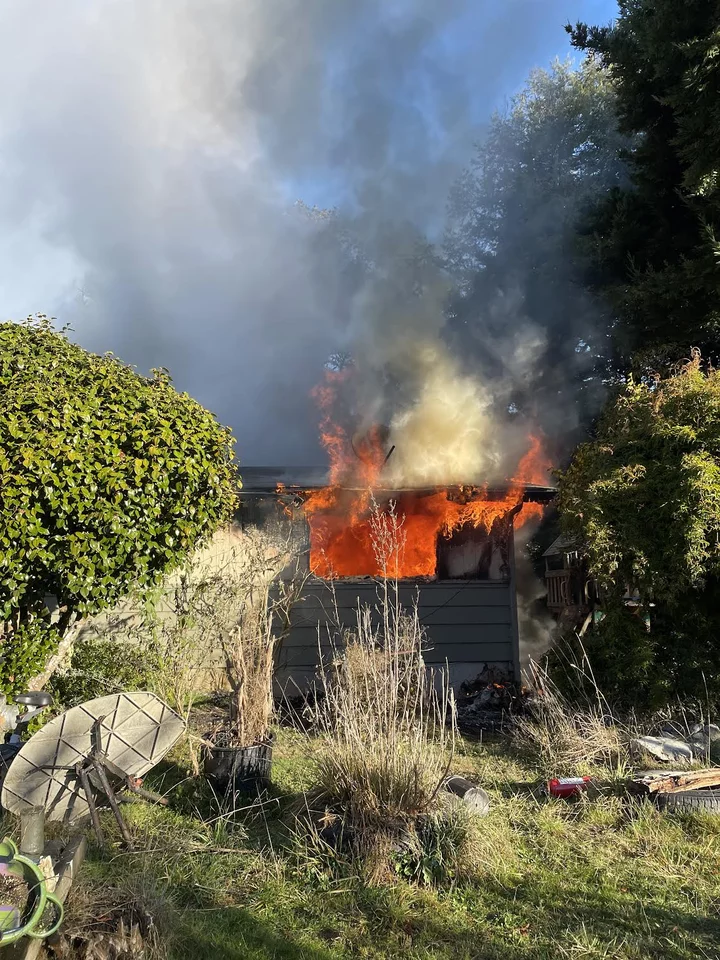
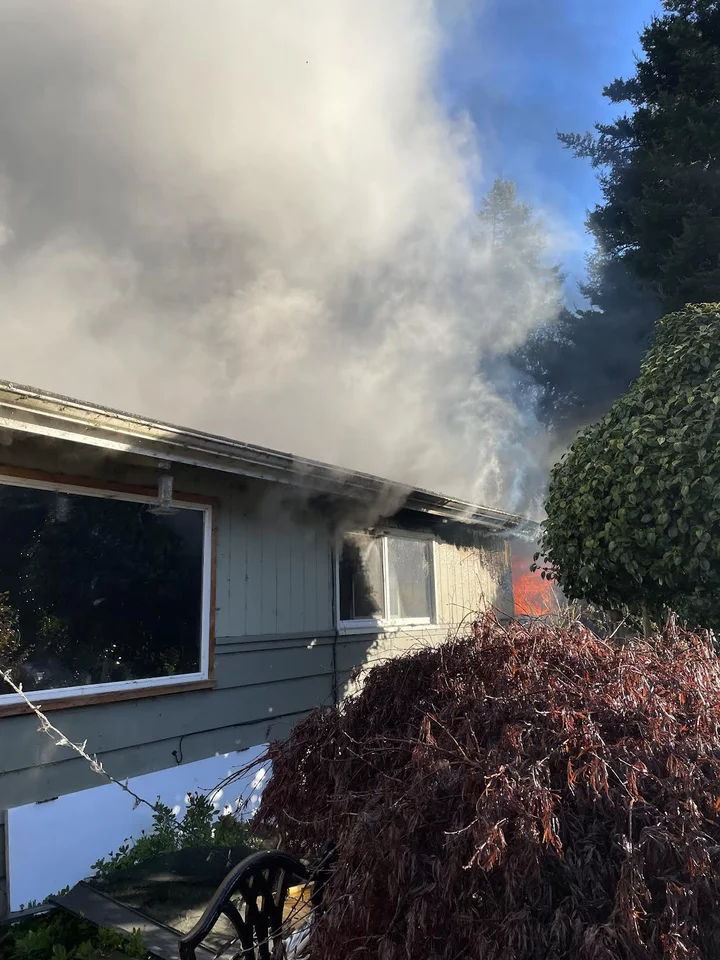
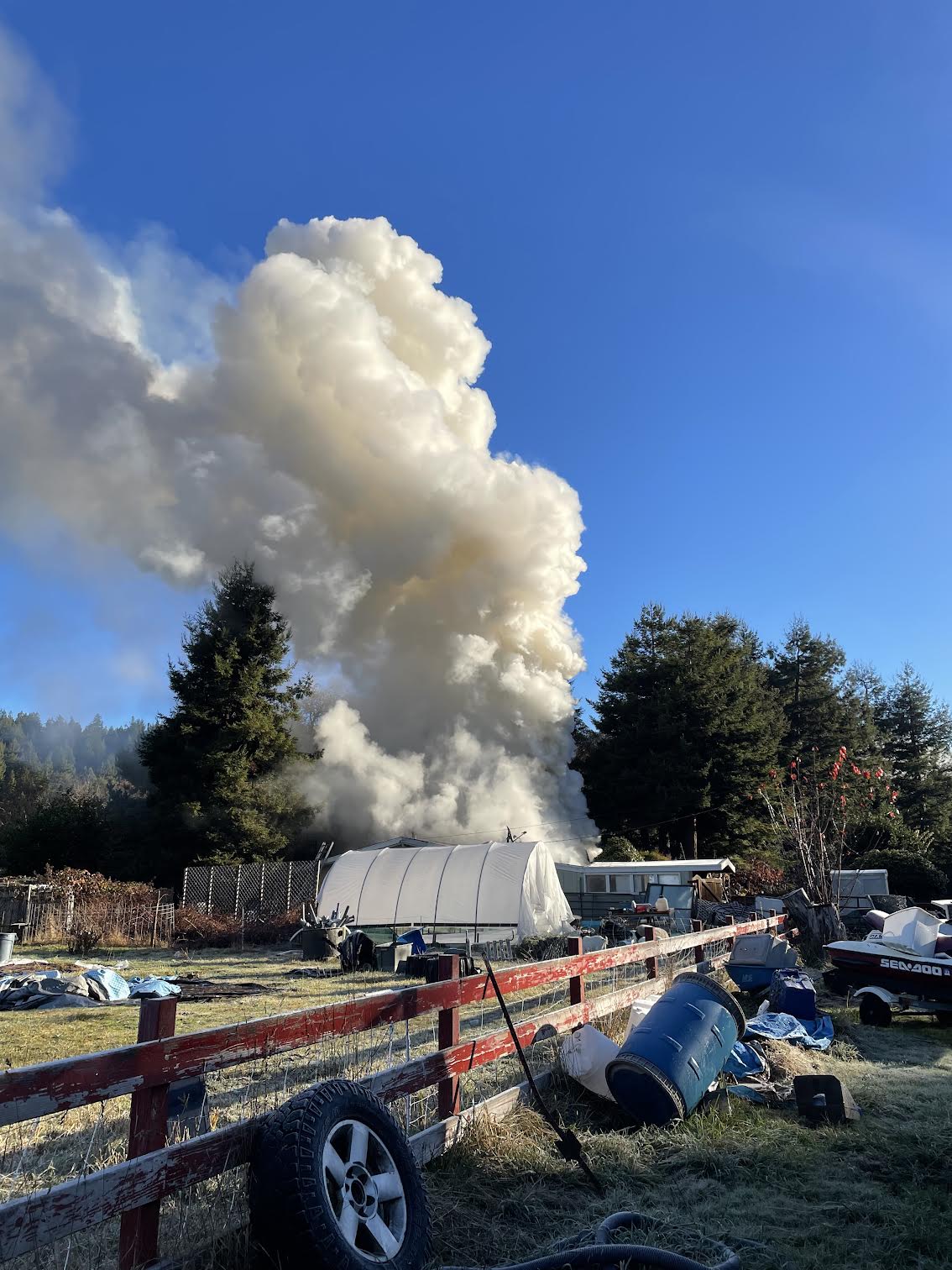
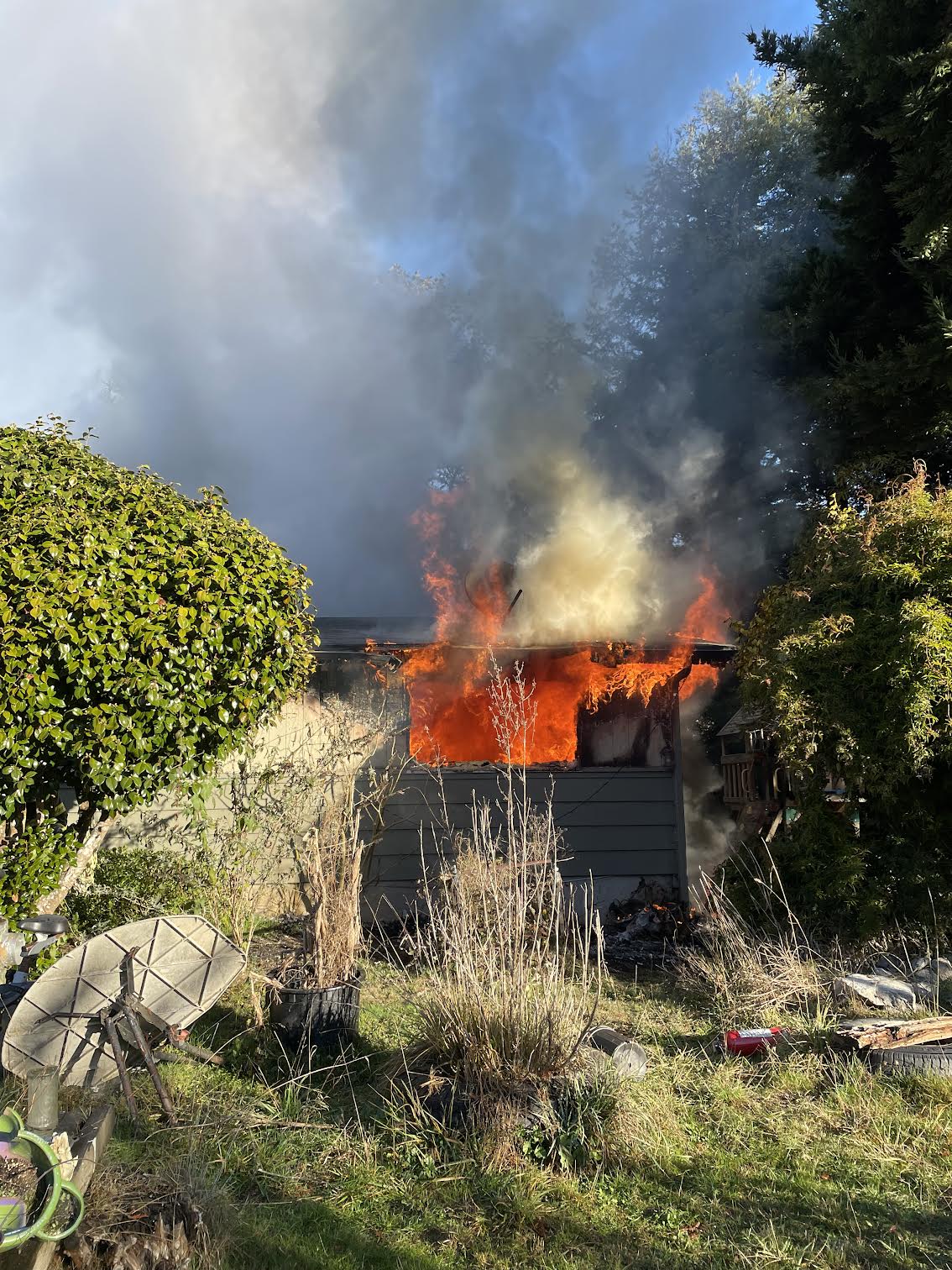
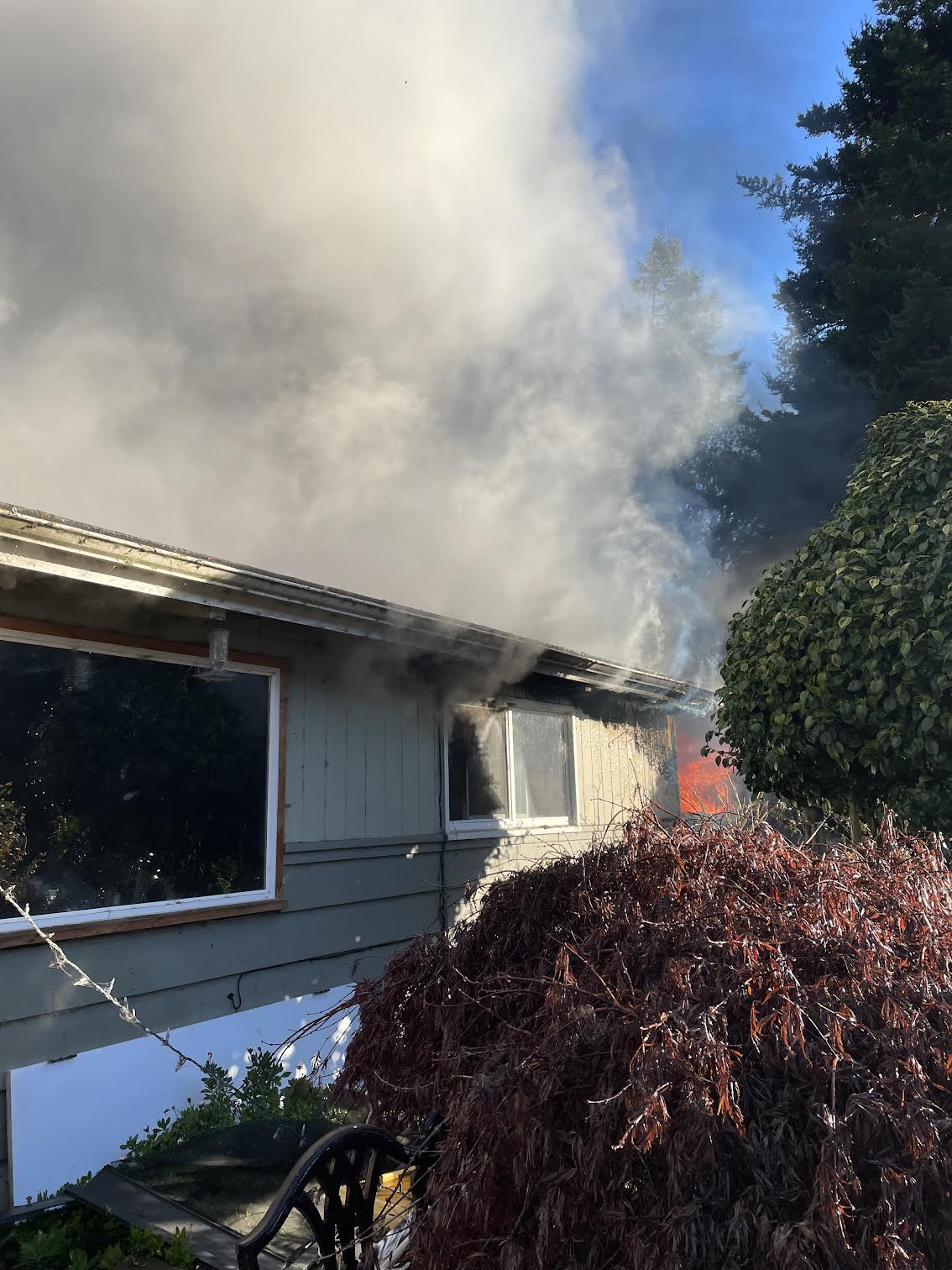
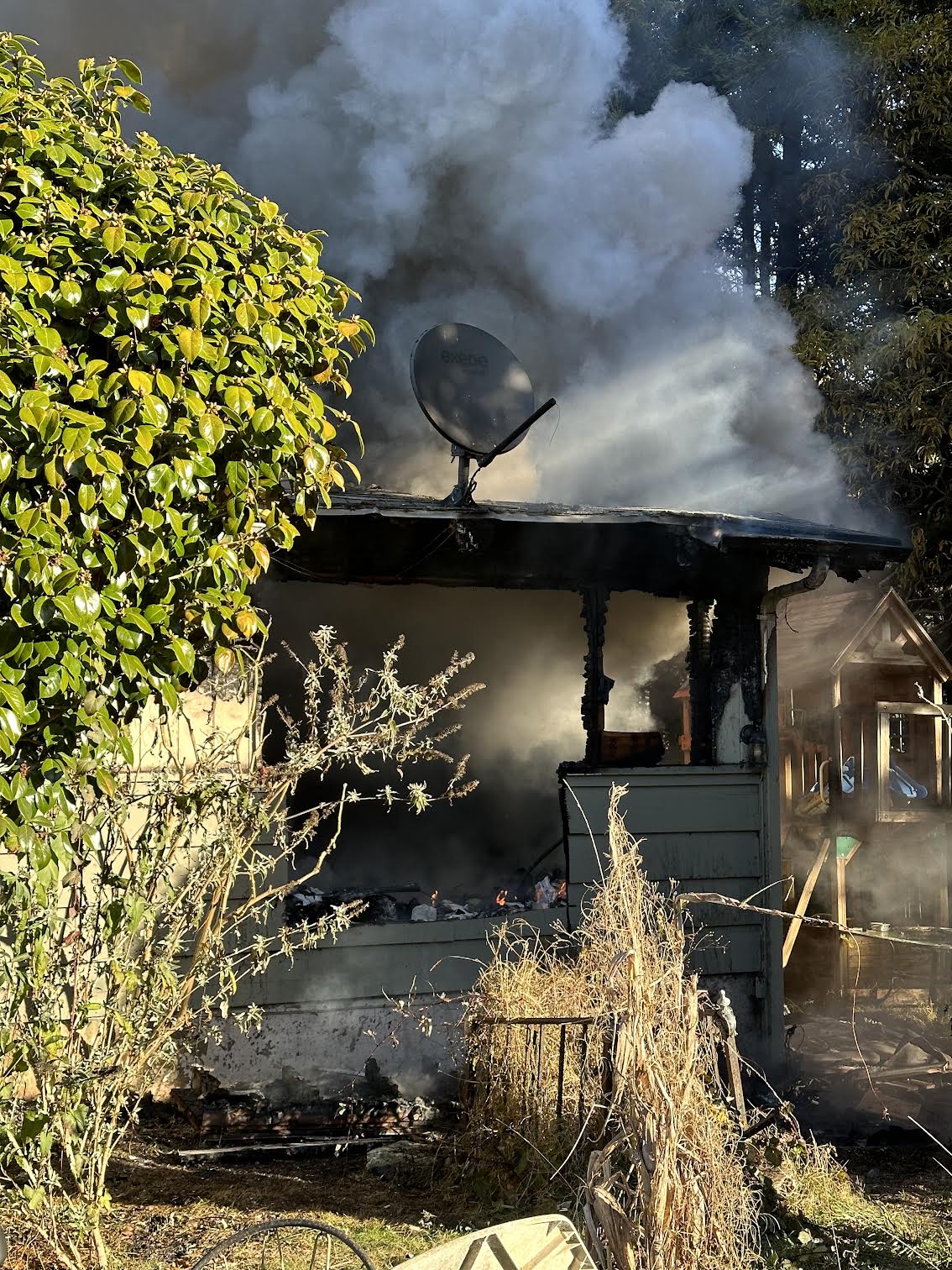
At 8:18 a.m. on Tuesday, November 29, 2022, Humboldt Bay Fire units, including 3
engines, a ladder truck, a water tender and two duty chiefs, were dispatched to a reported
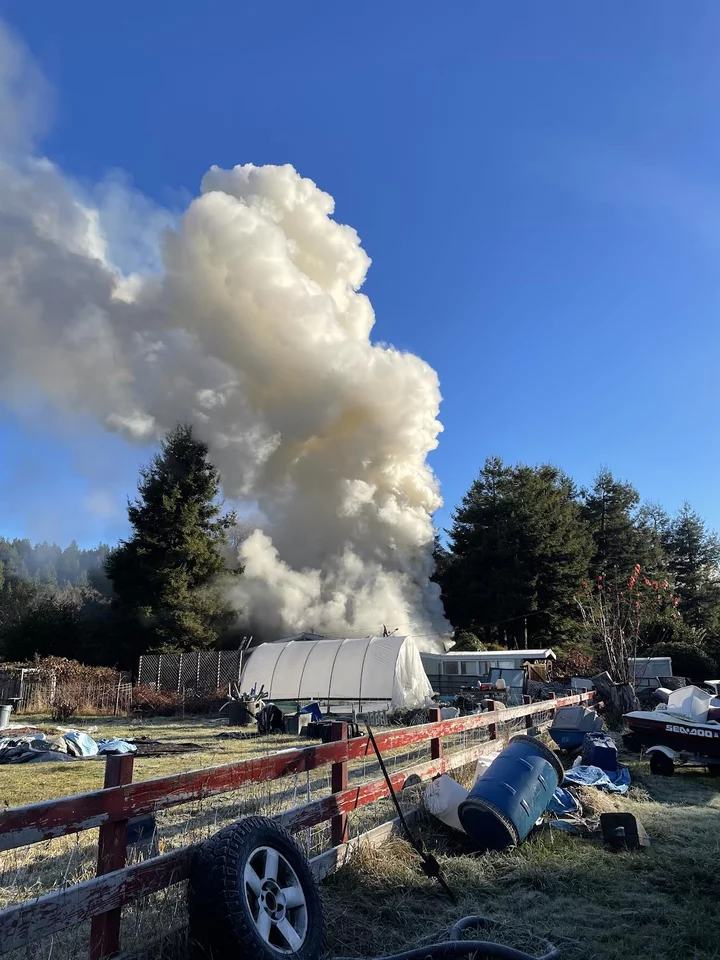
structure fire in a residence at the 7500 block of Elk River Court in Eureka. The first
responding engine reported seeing smoke in the area, and set up for a long hose lay.
The bridge on Elk River Court is deemed a “do not cross bridge” by Humboldt Bay Fire
so no apparatus were able to make it directly to the residence. This delayed access and
water supply to the fire. Once the first responding engine crew made their way to the
residence on foot they reported a working structure fire with smoke showing from one of
the corners of the structure. During this time a second alarm was requested and two
additional engines and two additional water tenders were dispatched to scene, along with
two additional engines to cover HBF jurisdiction. The first two arriving units stretched
1,500 feet of hose to the fire, and set up water supply operations for additional units
arriving on scene. The closest hydrant was over a mile away.
It was reported by a neighbor that there were no occupants in the home at the time of the
fire, but there were three dogs inside the residence. The crews assigned fire attack were
able to make entry and confirm a primary all clear of the structure and quickly controlled
the fire. All three dogs were recovered from the residence but unfortunately succumbed
to smoke inhalation due to fire conditions PG&E was notified and disconnected power to
the transformer supplying power to the two residences at the end of the court.
After approximately 45 minutes since the first unit arrived a secondary all clear was
received. With the fire knocked down, HBF units began overhaul operations. At this time
Smoke Alarms Save Lives.
cover crews began to be released at approximately 10a.m.
Red cross was contacted and provided resources for the displaced family. After crews
completed fire operations, PG&E was alerted that utilities could be restored to the
unaffected residence nearby.
Damage was estimated to be approximately $100,000 to the residence and $50,000 in
contents. There were no injuries to civilian or fire personnel on scene. Humboldt Bay
Fire would like to thank its allied partners for their assistance with coverage and
operations during this incident. Samoa Fire District, Blue Lake Fire, Fieldbrook Fire,
Fortuna Fire, and Arcata Fire District. Also, we would like to thank PG&E, Red Cross,
and City Ambulance.
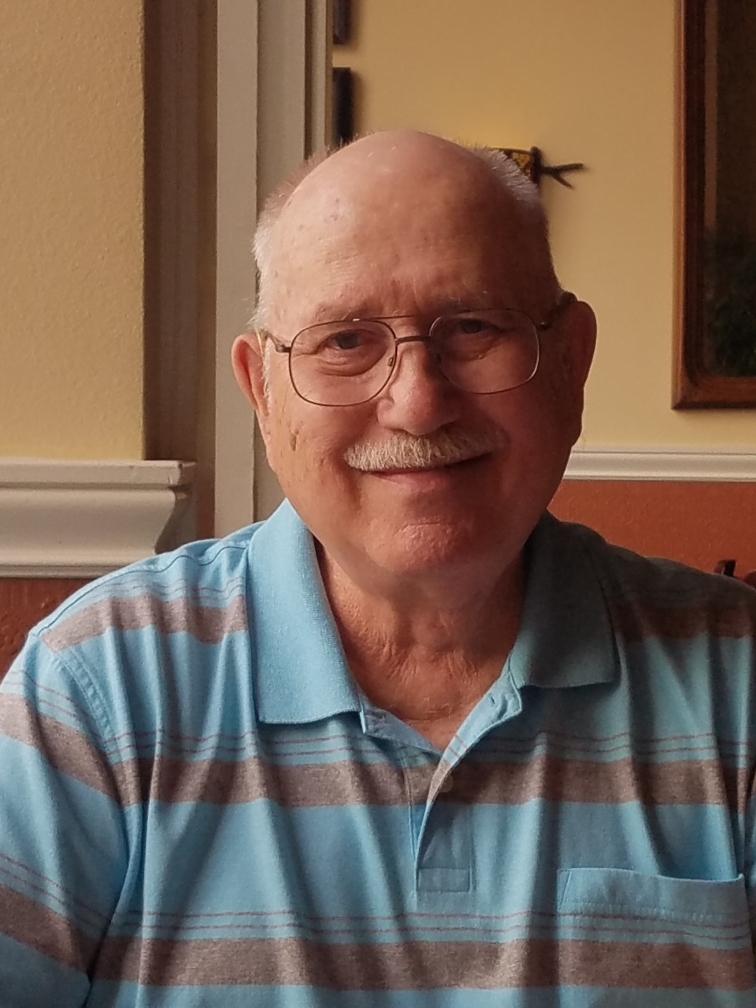
Delno
(Del) Malcolm Shuster was born April 14, 1939 and passed to Creator
on November 20, 2022.
In
1981 Delno meet the love of his life on a blind date. In 1984 Delno
married Gloria and moved to Humboldt County, which became his
permanent home. Delno is survived by his wife of 38 years. Gloria; stepchildren Linda Ogburn Gillette (Jeffrey) and Richard Nelson, whom
he loved as his own children, and they loved him the same and
unconditionally; grandchildren Barbara Ann Ogburn, Ricky and Cory
Nelson (Maria); great-grandchildren Dylan, Trinity and Elizabeth
Nelson, Noah Martinez, Ariana Combs. His granddaughters. Barbara Ann
and Trinity were the “apples of his eye”. They both loved their
grandpa so much.
Del was a welcomed member of Gloria’s family from
the beginning, and he was accepted into her Native Yurok culture and
extended family, and he treasured all that it offered. Del loved
attending Native American functions. In fact, Del was a very social
man and loved going places and attending any type of function. He
never missed a sporting event or activity that his grandchildren were
participating in. Del and Gloria loved to travel and looked for any
excuse to leave town. Del had a heart of gold. He was a very kind man
and never spoke a bad word about anyone. Del loved everyone
unconditionally. We are all better people because of his love for
life.
A
couple of Del’s most treasured and talked about memories were his
weekly Sunday breakfast at the Blue Lake Casino or Peppers with
Gloria, Florene, Perky, Sandra and whomever showed up. When Del flew
to Southern California for his cancer treatments at the City of Hope
he stayed with this granddaughter, Barbara Ann, during this time.
This was perfect for Del and Barbara because Barbara had just gone
through what her grandpa was now going through. She took him to every
appointment and treatment and was able to put him at ease through the
whole treatment process. During his visit they had the most wonderful
time. They went out to eat all the time, went shopping and he loved
getting to meet her friends and being around the good-looking girls.
Del
was a long-haul truck driver prior to moving to California. In 1988,
Del retired from the Oregon Air Force National Guard after 32 years
of service. He traveled to Portland, OR. every month for his guard
duty until his retirement. He was Co-owner/manager of the SHC
Laundromats (Summer Street, Henderson Center & Cutten Plaza) in
Eureka. He ran these businesses until the day he passed. Del was
able to repair anything that you put in front of him and developed
his strong work ethic from working in his father’s family business
in Idaho from a young age.
Del
was born to Wayne and Velma Shuster in LaGrande, Oregon. In 1946 the
family moved to Ontario, Oregon and in 1951 moved to Fruitland, Idaho. Delno
graduated from Fruitland High School.
Del
is also survived by sisters, Opal Shuster of Boise, Glenda
Peterson of Cheney., Wash. and sister-in-law Sharon Shuster of Omaha, Nebraska.,
his first wife Beverly, son Monty (Sheila) Shuster of Grove, Oklahoma,
daughter, Rebecca Cordell (Jeff) of Caldwell, Idaho. and family. He
leaves behind by many nieces, nephews, cousins and many lifelong
friends.
He
was preceded in death by his parents, sister Sharilee and brother
Douglas and Stepdaughter, Diane E. Nelson and dear friends Barbara
and Ernie Prater.
The
family would like to thank his care provider Max Rousselot and the
staff at UIHS for all the years of medical care he received, The City
of Hope, St Joseph’s Hospital and Hospice of Humboldt for the
excellent care they provided during his last days. We also want to
thank Del’s niece and partner, Pamela Lewis Wickard and Arnie
Wysocki, nephew Koiya Tuttle for all they have done for the family.
Visitation
will be at Sanders Mortuary, 1835 E. Street, Eureka CA from 11 a.m. to
1 p.m. on Friday, December 2, 2022, immediately prior to the services
which will be held at 1 p.m. Interment will follow at Oceanview
Cemetery, 3975 Broadway, Eureka, CA. Reception will follow
immediately after at the Red Lion Inn, 1929 4th
Street, Eureka, CA.
In
lieu of flowers, donations can be made to Hospice of Humboldt, 3327
Timber Fall Ct, Eureka, CA. 95503 or a charity of your choice.
###
The obituary above was submitted on behalf of Del Shuster’s loved ones. The Lost Coast Outpost runs obituaries of Humboldt County residents at no charge. See guidelines here. Email news@lostcoastoutpost.com.
“Raine”
was born on April 10, 1962 and she graduated her earthly journey on
September 2, 2022.
After
being diagnosed with Stage 4 cancer in February 2021, she chose to
embrace the opportunity to inspire and encourage others. Being a
person of extremely strong spirituality, she was unquestioning of
God’s plan for her. Raine had faith that her cancer journey served
a higher purpose and met it with grace.
For
many years, Raine owned and operated “Right as Rain” Enterprizes.
She prided herself in a hard day’s work, as well as being able to
outwork anyone. No job was too big or too small. Her favorite jobs
were outdoor jobs that seemed insurmountable to others.
Raine
never met a stranger and made friends everywhere she went. The last
couple of years, she was quick to share her journey with others,
usually resulting in hugs, tears, and a blessing. She has family in
Oregon, Idaho, and California. Rains had a circle of “sisters”,
she affectionately called “Team US”. We were a team of “sisters”
that loved her unconditionally and vowed to help her complete her
time on earth. Her sisters included Jody Honsal, Tami McCanless,
Anna Marie Tomasini, Shawna Bryant, and Cori Cooper (to name a few!).
Rainy
also praised her St. Joe’s oncology team, who went above and beyond
for her. They made her feel extremely loved and blessed that they
were part of her “team.” Special shout out to oncology nurse
Beckie McCanless, who gave us all endless love and support throughout
this journey.
Raine
was an extremely unique individual, complete with the most colorful
language, funny sayings, and a radiant smile. She had many stories
of her crazy adventures. She loved fiercely and completely and
expected that in return. Loyalty was key to her.
Raine
chose to face her final days very privately. Surrounded by her
closest sisters, she was quiet and reflective. We worked hard to
honor her wishes, as well as keep her comfortable. Thankfully, she
was able to end her earthly journey surrounded by love and in the
comfort of her own home.
Anyone
wanting to honor Raine’s memory, please plant a flower or perform an
act of kindness.
Rainy
had one hell of a F**king ride!!!
###
The obituary above was submitted on behalf of Lorraine Waite’s loved ones. The Lost Coast Outpost runs obituaries of Humboldt County residents at no charge. See guidelines here. Email news@lostcoastoutpost.com.
Born
December 11, 1934, died Aug. 21, 2022, in McKinleyville, at the age
of 87 years and 8 months.
Barbara
was born in Eureka to Erwin and Anna Papke. She was the third of four
siblings. She attended Saint Bernard’s Catholic Grammar school and
Eureka High School, graduating in 1952. She married Gerald (Jerry)
L. Spellenberg in June 1955. She met Jerry at a dance at the Loleta
Firemen’s Hall in December of 1952. Her sister, Julia, introduced
them after deciding he was not the one for her. Barbara was 18 at
the time, having just had her birthday one week before the fateful
dance. They celebrated 67 years of marriage in of June of this year.
She
loved animals and gardening. She was that girl who always wanted a
horse, and that dream came true at age 28. Her first horse was
Ginger, a sorrel mare. Over the years several other horses came
through the family, Red, Shorty, Trampas, Georgia, and lastly, Dilly.
She was a life member of the Northern California Horsemen’s
Association and enjoyed camping with family and friends at Cuneo
Creek Horse Camp near Dyerville., and attending rodeos with her
daughters, Lisa and Lesley who were members of Pegasus Patrol Drill
team during their high school years. In addition, every summer she
would take her four children plus a friend and/or a cousin to Showers
Pass and we’d camp for two weeks at the end of August. We often
stayed at the cabin on Jerry’s Uncle Russell’s ranch, or at the
Spellenberg family property called Rottenwood, camping in an old WWII
army surplus tent. Jerry would come for the weekends after work but
the rest of the time it was mom and the kids. We had wonderful times
riding the horses, fishing and floating down the Mad River, and
playing cards. War was a favorite card game. She was a farmer at
heart, raising vegetables, chickens, ducks, and rabbits.
Later
in life she always had a small vegetable garden until she broke a hip
and could no longer get down in the dirt. We kids would pick
blackberries each summer, and mom would make blackberry jelly and
pies. She and dad travelled a bit after dad retired. They took a road
trip around the western United States, visited Baja, Mexico with
their friends while camping along the way in their travel trailers,
visited Hawaii with her sister Norma and husband Bill, took several
trips to Germany to visit her cousins near Frankfurt and attend
reunions with Jerry’s distant cousins near the Black Forest, and
toured Guatemala with daughter, Lisa and friends. The last big trip
was on their 60th wedding anniversary, traveling by cruise
ship to Alaska with the family. She enjoyed her Friday night ladies
dinner group with Peggy, Shirley, Joy, Cathy, Janet, and daughters
Lisa and Lesley and also their monthly potluck and pinochle games.
She is
survived by her husband Gerald, her four children, Lisa, Lesley,
James (Teena) and Gerald Louis (Debbie), her seven grandchildren:
Mark (Sammee), Stacy (Mike), Rachelle (Larry), Jamee, Jessica
(Robert), Jason, and Katie (Rob), and her six great-grandchildren:
Aria, Melina, Daxton, Blythe, Carter, and Granger, and her two
sisters, Julia (John) DeMartini, and Norma Dye, and nieces and
nephews: Michele, Paul, Jean, Angela, Jack, Cathy, Eric, Jeff,
Denise, Robert, Carrie, Penny, and Sandy, as well as cousins and
friends too numerous to list. She was preceded in death by her
parents Anna and Erwin, her brother William Papke (aka Uncle Buddy),
her brother-in-law Bill Dye, and sister-in-law Patricia Costa and
niece Dana.
At her
request, no funeral services were held. Please remember the good
times you enjoyed with Barbara and know that she enjoyed each and
every one of her family and friends.
###
The obituary above was submitted on behalf of Barbara Spellenberg’s loved ones. The Lost Coast Outpost runs obituaries of Humboldt County residents at no charge. See guidelines here. Email news@lostcoastoutpost.com.
Press release from the Humboldt County Sheriff’s Office:
On Nov. 29, 2022, at about 2:27 a.m., Humboldt County Sheriff’s deputies were dispatched to a residence on the 200 block of Corbett Ranch Lane near Carlotta for the report of a home invasion armed robbery.
According to the victim, three unknown suspects forced entry into the residence. The suspects reportedly brandished a firearm, then bound and physically assaulted the victim. While at the residence, the suspects reportedly stole several of the victim’s belongings, including a safe, tools and the victim’s truck. The victim sustained minor injuries from the assault.
The suspects fled in a black, lifted 2018 GMC Sierra 2500HD Denali Truck, CA License Plate Number 56588E3.
This case is still under investigation. Anyone with information about this case, including the location and identity of the suspects, or the location of the stolen truck, is encouraged to call the Humboldt County Sheriff’s Office at (707) 445-7251 or the Sheriff’s Office Crime Tip line at (707) 268-2539.