[UPDATED] Jacoby Creek Students Taken for Medical Attention After Third-Grader Inadvertently Shares Weed Gummies
Ryan Burns / Thursday, May 26, 2022 @ 3:35 p.m. / News

Adapted from a photo by Jan Zwarthoed on Unsplash.
UPDATE, 4:25 p.m.:
The Arcata Police Department has initiated an investigation into the incident, which sent three students to the hospital, according to APD Sgt. Brian Hoffman.
Officers responded to the school campus and spoke with teachers, and Hoffman said that any adults who provided the cannabis gummies could face charges of child endangerment.
“This is an investigation, and right now we’re just ferreting out information,” he said.
He added that Jacoby Creek Superintendent/Principal Melanie Nannizzi was quick to respond and communicate with families. One family reported to an officer that their child is okay and was leaving the hospital.
“It appears the kids are going to be okay,” Hoffman said.
###
Original post:

Image via Jacoby Creek Elementary School website.
###
Teachers, administrators and students at Jacoby Creek Elementary in Bayside experienced a medical scare today after a third-grade student shared gummies with four fellow students, evidently unaware that the chewy sweets contained cannabis.
In a phone interview, Jacoby Creek Superintendent/Principal Melanie Nannizzi said that when students began showing signs of intoxication, the campus classroom was briefly evacuated and the fire department was called to the scene over concerns that there may have been a carbon monoxide leak.
“But upon learning what happened, we shifted tactics,” Nannizzi said.
Parents were notified, and those whose kids were affected came to pick them up, with some being taken for medical attention.
In an email to Jacoby Creek families, Nannizzi said, “A third grade student inadvertently brought marijuana gummies to school and shared them with four peers at snack recess. The students were not aware that the gummies contained marijuana.”
She went on to describe the situation as “a frightening incident for our entire school community.”
Asked if everyone is okay, Nannizzi said she believes so, though she hadn’t gotten reports back from everyone involved yet.
A friendly reminder to parents: Please store those sweet and colorful cannabis edibles away from children.
BOOKED
Today: 7 felonies, 6 misdemeanors, 0 infractions
JUDGED
Humboldt County Superior Court Calendar: Today
CHP REPORTS
0 Us101 S (HM office): Traffic Hazard
13570 Mm101 N Hum R135.70 (HM office): Trfc Collision-Unkn Inj
2550 Mm162 W Men 25.50 (HM office): Trfc Collision-No Inj
ELSEWHERE
RHBB: ‘Check In With Your People’: Humboldt’s Suicide Rate More Than Twice the State Average
RHBB: HAF+WRCF Opens Fall Grant Round for Artists, Seniors and Holiday Programs
Biden Administration Proposes Offshore Wind Lease Sale, Including Two Spots off the Humboldt County Coast
LoCO Staff / Thursday, May 26, 2022 @ 1:15 p.m. / Energy , Environment
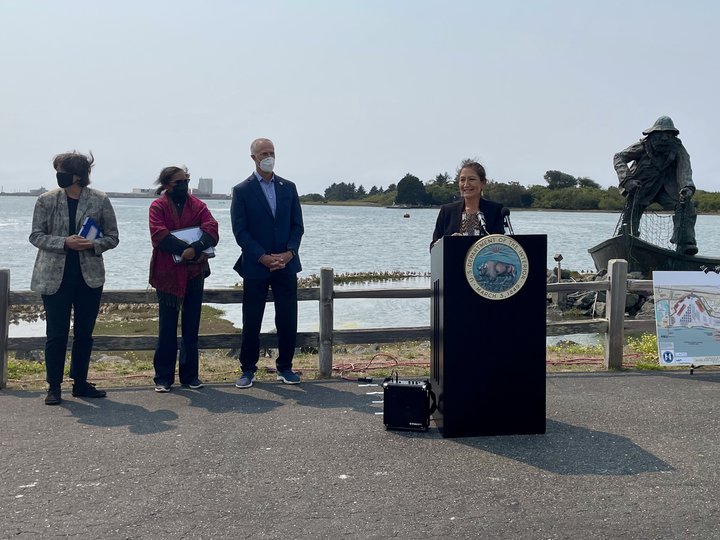
U.S. Secretary of the Interior Deb Haaland speaking at media event on Woodley Island last August. She was joined by (from left) California Energy Commissioner Karen Douglas, White House Council on Environmental Quality Chair Brenda Mallory and U.S. Rep. Jared Huffman. | File photo.
###
Press release from the U.S. Department of Interior Bureau of Ocean Energy Management:
In yet another step forward in the Biden-Harris administration’s pursuit of a clean energy economy, the Department of the Interior today announced the next steps for and welcomed public comment on offshore wind lease sales in two regions on the Outer Continental Shelf offshore California. This is the first-ever offshore wind lease sale proposed on America’s west coast.
In May 2021, Secretary of the Interior Deb Haaland, White House National Climate Advisor Gina McCarthy, Under Secretary of Defense for Policy Dr. Colin Kahl, and California Governor Gavin Newsom announced an agreement to advance areas for wind energy development offshore the northern and central coasts of California. The proposed sale is part of the leasing path announced last year by Secretary Haaland to meet the Biden-Harris administration’s goal to deploy 30 gigawatts (GW) of offshore wind energy by 2030.
“The demand and momentum around our work to build a clean energy future is undeniable. The Biden-Harris administration is moving forward at the pace and scale required to help achieve the President’s goals to make offshore wind energy a reality for the United States,” said Secretary Deb Haaland. “Today, we are taking another step toward unlocking the immense potential of offshore wind energy offshore our nation’s west coast to help combat the effects of climate change while creating good-paying jobs.”
The Proposed Sale Notice (PSN) includes three proposed lease areas in the Morro Bay Wind Energy Area off central California and two proposed lease areas in the Humboldt Wind Energy Area off northern California, totaling approximately 373,268 acres that have the potential to unlock over 4.5 gigawatts of offshore wind energy, power more than 1.5 million homes, and support thousands of new jobs.
“Today’s action represents tangible progress towards achieving the Administration’s vision for a clean energy future offshore California, while creating a domestic supply chain and good-paying union jobs,” said Bureau of Ocean Energy Management Director Amanda Lefton. “BOEM is committed to robust stakeholder engagement and ensuring any offshore wind leasing is done in a manner that avoids or minimizes potential impacts to the ocean and ocean users. The Proposed Sale Notice provides another opportunity for local communities, Tribes, ocean users, developers and others to weigh in on potential wind energy activities offshore California.”
To date, BOEM has held 10 competitive lease sales and has issued 25 active commercial offshore wind leases in the Atlantic Ocean from Massachusetts to North Carolina. The California lease sale will be the first in the Pacific region.
The PSN, which will publish in the Federal Register on May 31, 2022, opens a 60-day public comment period and provides detailed information about the proposed lease areas, proposed lease provisions and conditions, and auction details.
BOEM is seeking feedback on several lease stipulations that will reaffirm its commitment to create good-paying union jobs and engage with Tribal governments, underserved communities, ocean users, and other stakeholders. Some of these potential stipulations include:
Comments received by the end of the public comment period will be made available on the BOEM California webpage and considered before deciding whether to publish a final sale notice, which would then announce the time and date of the lease sale, as well as list the companies qualified to participate in it.
- A 2.5% bidding credit to bidders who have executed or commit to executing a community benefit agreement with a community or ocean users (e.g., commercial fisheries) whose use of a lease area, or whose use of resources harvested from a lease area, is directly impacted by the lessee’s potential offshore wind energy development.
- A 20% bidding credit to bidders who commit to invest in programs that will advance U.S. offshore wind energy workforce training, supply chain development, or both.
- A requirement that lessees make every reasonable effort to enter into a project labor agreement covering the construction of any project proposed for the lease area.
- Requirements for lessees to engage with Tribes, underserved communities, ocean users, and agencies. Lessees will be required to report on their engagement and make reasonable efforts to implement their projects in a manner that minimizes and mitigates their projects’ adverse effects, if any, on these parties.
Prospective bidders, not previously qualified for a California lease sale, are required to submit mandatory qualification materials to BOEM. Qualification materials must be postmarked no later than Aug. 1, 2022.
PREVIOUSLY:
- Biden Administration, Gov. Newsom Eye Humboldt For Future Offshore Wind Farm
- Biden Cabinet Member Joins Huffman, White House Official and Others to Highlight Offshore Wind Developments Planned Off the Humboldt County Coast
- New State Law Advances Offshore Wind Energy Development in Humboldt County, RCEA Says
- State Energy Commission Approves $10.5M Grant to Prepare Port of Humboldt Bay for Offshore Wind
- Coastal Commission Says It’s Cool to Move Forward With Humboldt Bay Offshore Wind Project Studies, Approves Bay Trail Permit
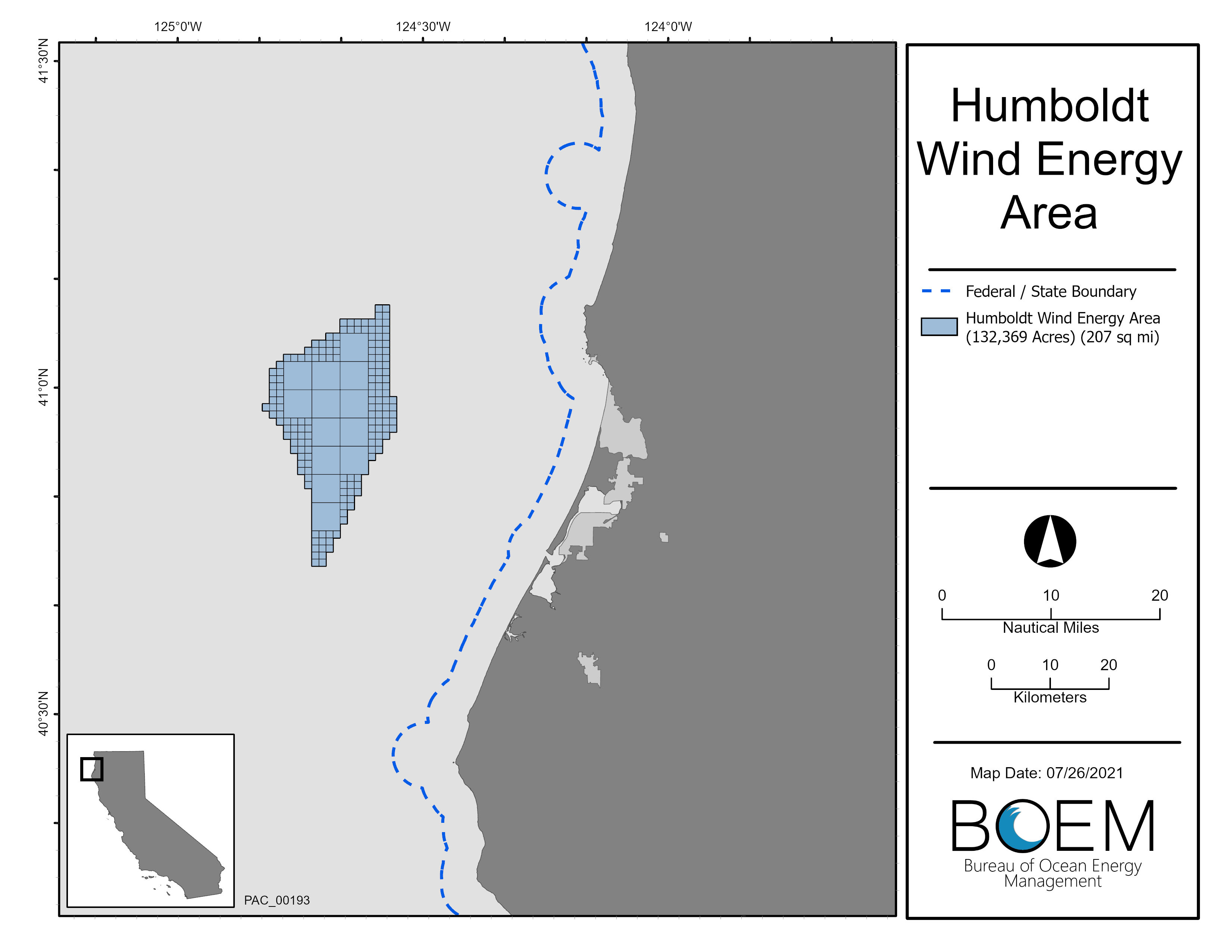
The Humboldt Wind Energy Area. | Image via BOEM.

Image via U.S. Department of Interior.
The Eureka Police Department Will Soon Have Mental Health Professionals to Send to Incidents Involving People in Crisis
Isabella Vanderheiden / Thursday, May 26, 2022 @ 7:36 a.m. / Mental Health
Eureka Police Sgt. Leonard La France can point to countless situations in which he or a member of the department’s Community Services Engagement Team (CSET) have intervened in a mental health crisis. Just last month, his team responded to the report of a suicidal adolescent who had barricaded themselves in a vehicle. CSET officers were able to de-escalate the situation and get the individual the help they needed, but La France admitted that having a non-law enforcement option on the scene – a mental health professional – “would have provided additional experience and knowledge” and could have “been more effective.”

Sgt. La France with longtime partner Vex | LoCO file photo
“We’ve seen many, many, many calls where adults and juveniles were in crisis and/or suicidal,” he told the Outpost in a recent interview. “Many of these [situations] could have included [a mental health] clinician taking the lead with CSET in support. Some would require CSET to take the lead as the clinician waits in support.”
Eureka police responded to more than 900 similar calls for service in 2021, up by about 37 percent from 2020. Presently, when EPD receives a mental health-related call for service, patrol officers are dispatched to the scene. Members of the CSET typically respond as well and will often take over the call. If the call happens to take place during regular work hours and the department really needs the support, officers will request assistance from the county Department of Health and Human Service, but if staff isn’t available the situation will be handled exclusively by law enforcement. La France is trying to change that.
The City of Eureka is among a wave of municipalities across California and the country rethinking how they handle non-criminal 911 calls. Earlier this month, the Eureka City Council approved the creation of a managing mental health clinician position to serve on the police department’s budding Alternative Response Team (ART) and bolster the City’s response to mental health crises.
“This is a first for the City of Eureka, and it’s actually really groundbreaking for us,” La France said, noting that the position will be funded by Measure Z. “Let’s say we have a call for a welfare check on an individual who is in crisis but there is no indication of violence. In lieu of sending a standard police response, we [would] send ART and maybe CSET in support. Depending on the circumstances, ART has the option of using anyone within its team to take the lead which could lead towards various outcomes.”
Specifically, he hopes ART will further CSET’s mission to address substance abuse and crime within the homeless community. Since CSET was established in 2018, La France has focused on making “real human connections” with houseless folks in Eureka by conducting outreach and helping to connect people with critical resources. While this approach has proven to be effective in some ways, he recognized that a different strategy – a combination of social work and law enforcement – was also needed.
“We would be out at our services locations such as Free Meal, engaging people, conducting outreach and recognized we did not have the expertise to really address the needs of the severe mental health cases or even those needing significant social service assistance,” he explained. “…As time went by and CSET continued progressing our program which included responding to persons in crisis, we further recognized the need to have mental health professionals co-respond with us – this would give us options on approaches, different perspectives and a depth of education/experience that most law enforcement officers do not necessarily possess.”
A mental health professional actually embedded on the team would help advance CSET’s efforts to prevent mental health crises from occurring in the first place.
“We’re leaning more toward alternative ways of responding and being more proactive and preemptive than reactionary,” Eureka City Manager Miles Slattery told the Outpost this week. “The mental health clinician will not only help CSET with calls for services but also supplement what Uplift Eureka is doing. When they meet people where they’re at and are able to provide services to them that prevent them from getting into an emergency situation.”
Hiring a managing mental health clinician is the first step. Eventually, this person will oversee the City’s Mental Health Team which will, ideally, include a field clinician and two mental health responders.
“This team would conduct proactive engagement with the community independently, would also be able to be embedded with CSET and Uplift, and would also assign one employee each day to ART,” La France said. “ART contains 3.5 prongs: one mental health professional from within the City’s Mental Health Team, a medical professional and an outreach worker from Uplift Eureka. CSET is the half-prong as they are not always needed, but again, we are not naïve enough to believe we can fully remove law enforcement from the picture.”

EPD’s Alternate Response Team | Contributed
Eureka City Councilmember Natalie Arroyo hopes there will come a time when clinicians can respond to non-violent calls for service independently of law enforcement officials “when it is safe to do so.”
“This will be a huge boon for our law enforcement personnel, freeing them up to respond to calls where a sworn officer is needed, and ensuring that people needing health care receive the services they need,” Arroyo wrote in an email to the Outpost. “There are still some challenges to work out, like dispatching protocols and safety measures for the clinicians, but I’m confident EPD can make it happen.”
Councilmember Leslie Castellano acknowledged that access to mental health resources “can be very difficult in our rural region” and said the City’s effort to hire a managing mental health clinician “will continue to advance Eureka’s innovative approaches to address the needs of the unhoused community and the general public.”
Councilmember Scott Bauer added that the position will serve as a key component in helping CSET de-escalate mental health crises in the field, rather than putting an individual on a 5150 hold.
“The health care professionals in our hospitals cannot be continually inundated with those experiencing a severe mental health crisis,” he told the Outpost. “We cannot and must not allow those entrusted to care for us in our times of need to be assaulted, as has happened one time too many in the recent past. I hope the mental health clinician, in cooperation with CSET, will help us better assess and triage mental health issues being experienced on the streets, and thus protect our beloved health care professionals from potentially dangerous working conditions.”
More information on the Managing Mental Health Clinician position can be found here.
California Wants to Force Insurers to Reward Homeowners for Fireproofing Homes
Grace Gedye / Thursday, May 26, 2022 @ 7:07 a.m. / Sacramento
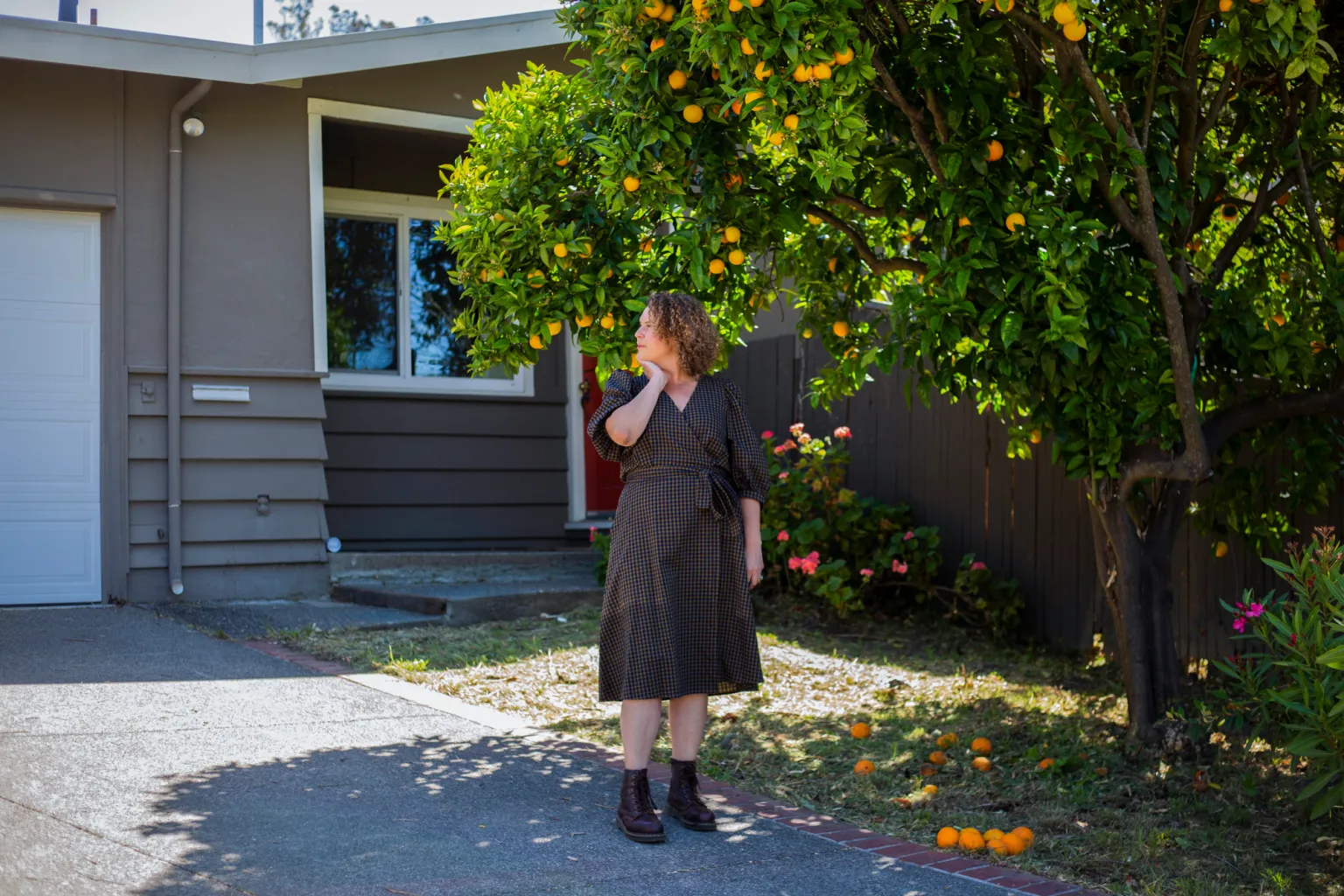
Ashley Raveche stands in her front yard thinking about the future of fire for her neighborhood in Mill Valley on Friday, May 20, 2022. Photo by Nina Riggio for CalMatters
###
When Ashley Raveche and her husband bought their home in Mill Valley, they thought they were doing everything right. The 1,300 square foot house already had vents with screens that make it harder for embers to get in and a tar and gravel roof, top-rated for fire safety. They installed double-paned windows, which are less likely to explode under extreme heat. They cut down four trees within 10 feet of their house. They kept the gutter and roof clear, and the local fire marshal performed an annual inspection.
But their efforts — totaling more than $10,000, by Raveche’s estimation — weren’t enough to insure their home in Marin County. In February, their insurance company said it wouldn’t renew the policy because the “risk is unacceptable”
“I panicked,” she said. “I was just like, ‘This is too much, we are doing absolutely everything we possibly can.’”
It was the second time an insurance company had declined to renew her home insurance coverage in five years, she said.
In response to wildfires that have blazed across the state, some Californians have spent thousands of dollars trying to fireproof their homes — often at the urging of state and local officials — to reduce their risk of burning. But some have confronted an unpleasant reality: Taking those steps doesn’t prevent their premiums from ballooning, or keep them from being dropped by their insurance company.
Now the California Department of Insurance has proposed new rules that would require insurance companies to take homeowners’ preventative steps into account when setting premiums. The rules would also require companies to be more transparent about how they gauge a home’s wildfire risk.
But some consumer groups are ringing alarms about what they see as loopholes that would leave homeowners stuck, like Raveche, with a fire-hardened home and a non-renewal letter. Insurance industry trade groups, on the other hand, worry that the rules are getting ahead of science, and that transparency requirements would expose intellectual property.
The agency plans to have the rules finalized this summer.
New fire insurance guidelines
The proposed rules, rolled out in February, require insurance companies to do several things, including:
- Make the models or tools they use to assess wildfire risk public, and require that companies send individual policyholders their wildfire risk scores on a regular basis
- Explain to policyholders what specific factors influenced each consumer’s score, what they could do to lower their score, and how much they can expect to see their premium go down if they take the actions outlined by the insurance company
- When setting prices, insurers would have to take into account whether a homeowner or commercial property owner has reduced a property’s wildfire risk by taking specified steps, including clearing vegetation from under decks and installing fire-resistant vents
- When setting prices, insurers would have to take into account whether a home is in one of three types of fire risk-reduction communities, such as Firewise.
The state Department of Insurance also proposed giving policyholders the right to appeal their wildfire risk scores.
Part of the goal is to provide incentives to more people to protect their properties from wildfires. “Money is tight for most people,” said Amy Bach, executive director of United Policyholders, a consumer group. “If I have a choice between spending money on taking out my favorite tree, and, like, buying a new flatscreen, I’m going to buy a new flatscreen, right?” There has to be a compelling reason for people to do things they don’t want to do, she said.
“Home hardening” is aimed at reducing a house’s risk of burning during a blaze. There’s evidence to suggest it works, too: A 2020 study from the National Association of Insurance Commissioners found that “structural modifications can reduce wildfire risk up to 40%, and structural and vegetation modifications combined can reduce wildfire risk up to 75%.”
California already regulates insurance more than a lot of other products. Insurers, for example, can’t just increase their prices whenever they want to — they have to submit their pricing plans to the insurance department for approval. But, says Bach, that’s in part because they have an advantage most industries don’t: People must buy their product in order to get a mortgage.
“They sell economic security,” said Bach. “They have a special obligation.”
That’s why it’s stressful for homeowners when an insurance company decides it will no longer cover them.
When homeowners can’t find a private company to cover them, they can turn to the state-created FAIR Plan, which offers bare bones coverage, often at higher cost. Coverage through the FAIR Plan is intended as “a temporary safety net” until a homeowner can find other coverage.
“A loophole that can swallow the rule”
Steve Poizner, who lives 15 minutes from the San Jose airport, said he took some extra steps to protect his home after an insurance agent came out to inspect the property. He said he upgraded his fireproof vents and cleared vegetation around the house, and the company gave him a policy.
“That was that. For years,” Poizner told CalMatters. Then, he said, early this year he got a letter. His insurance company wouldn’t renew his coverage, he said, and he was “stunned.” Poizner is no naif: He was California’s insurance commissioner from 2007 to 2011.
The number of Californians who are not renewed by their insurance companies each year increased in 2019, according to insurance department data, after especially damaging wildfires in 2017 and 2018. It’s a small share of policyholders: less than 3%, according to the department. The numbers are higher in areas with greater fire risk. Temporary bans on non-renewals in areas hit by wildfires, imposed by Insurance Commissioner Ricardo Lara, have helped, although the issue is still a key part of the election race for insurance commissioner.
It’s far from certain the numbers will stay low. The number of California properties facing severe wildfire risk will grow sixfold over the next 30 years, according to projections from First Street Foundation, a nonprofit.
Three consumer groups — Consumer Watchdog, Consumer Federation of America and Consumer Federation of California — sent feedback to the insurance department, pointing to what they see as a loophole: The rules require insurers to take home-hardening efforts into account when setting prices, but not when deciding whether to cover someone or renew a policy.
“A homeowner could literally rebuild their home in concrete, in the middle of a concrete field, and still be non-renewed by an insurance company,” said Carmen Balber, executive director of Consumer Watchdog.
“It is a loophole that can swallow the rule,” she said.
“A homeowner could literally rebuild their home in concrete, in the middle of a concrete field, and still be non-renewed by an insurance company.”
— Carmen Balber, executive director, Consumer Watchdog
Insurance department spokesperson Michael Soller rejected the term “loophole.” He pointed to the department’s initial reasoning for the rules and expected benefits, which says insurance companies “may become more comfortable writing and retaining policies for properties with completed mitigation actions, even if the property is located in an area with a higher overall risk of wildfire.”
Not wading into coverage decisions may also have been a pragmatic decision for the department. Insurers would be more likely to sue over rules that mandate coverage, since the department’s authority to regulate coverage decisions is not clear cut, said Michael Wara, a lawyer and climate scholar at Stanford Law School. A suit could keep the rules from going into effect for years.
“This may be a situation where you kind of have to choose between doing something that’s sort of pretty good — maybe even really good — but not perfect,” said Wara.
Insurers want to protect their risk tools
Consumer groups aren’t the only ones pushing back against the proposal. Trade organizations representing insurers have their own set of concerns.
One is that the science on wildfire mitigation is still developing, said Mark Sektnan, vice president for state government relations for American Property Casualty Insurance Association, a trade group. That means there may not be good data on exactly how much one strategy — or several — reduces a homeowner’s fire risk, and insurers need data to decide how much of a discount to offer.
The proposed rules, for example, would require companies to take into account whether a home is in a “Fire Risk Reduction Community,” a new certification created by the state Board of Forestry and Fire Protection. The criteria for the certification was finalized last month, according to Edith Hannigan, the Board’s executive officer, and the list of the communities that meet the requirements is yet to be released. There hasn’t been any significant analysis on how much safer certified communities are, since it’s brand new, Hannigan said.
That’s problematic, said Seren Taylor, senior legislative advocate for Personal Insurance Federation of California, another insurance industry trade group, because everything in insurance “is about understanding risk and having data.”
The new program was “established with the expertise of the Board of Forestry, with consideration of community programs like Firewise,” said Michael Soller, a spokesperson for the Department of Insurance.
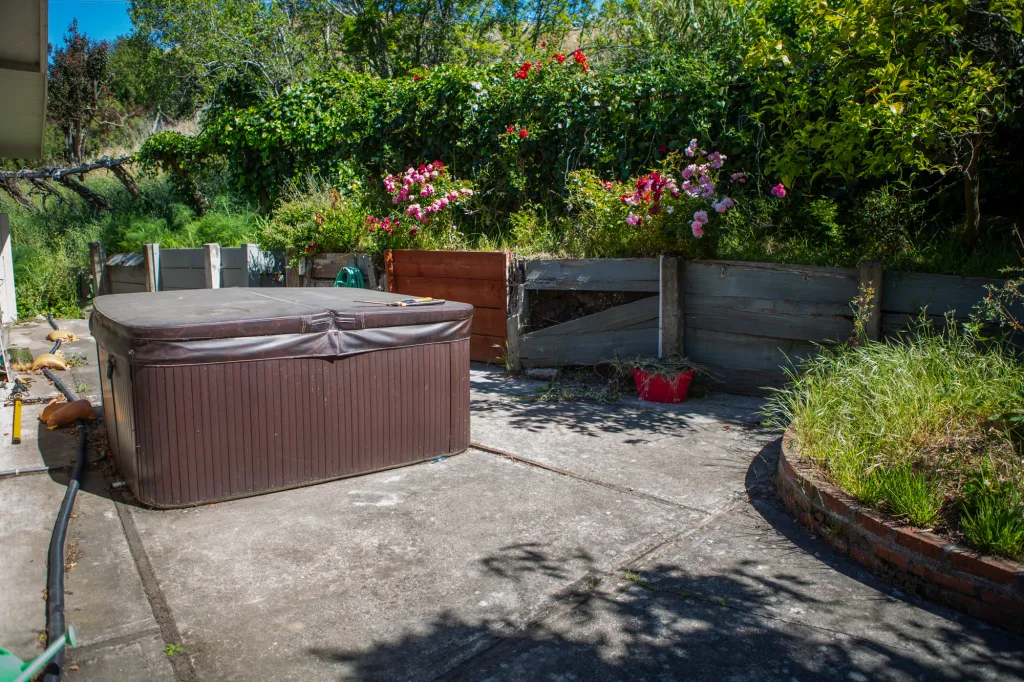
Ashley Raveche’s concrete back yard is seen in Mill Valley on Friday, May 20, 2022. Photo by Nina Riggio for CalMatters.
Another concern Taylor cited has to do with intellectual property. Many insurers rely on models, often provided by separate companies, to assess the risk of wildfire to a particular home or area, taking into account factors like the slope a home is on, or the kind of roof it has. The rules require insurers to make those models public.
“These companies spend tens of millions of dollars building complex computer models,” said Taylor, and they want to create models that are more accurate than their competitors.
“What our folks are concerned about is that these modelers will say, ‘Well, we’re not going to use our most innovative new models, because why would we invest in that technology if we’re just going to have to hand it to our competitors? So we’ll give you version 2.0, but you’re not going to have version 4.0,’” Taylor said.
Still, he said, the federation completely agrees with the goals of the proposed rules — they point in the direction some insurers are already heading.
Currently 20 insurance companies voluntarily give homeowners some kind of discount for reducing their wildfire risk, according to the insurance department.
Still trying in Mill Valley
Raveche’s community, meanwhile, is using some cutting edge measures to prepare for wildfire.
More than 250 Mill Valley residents piled into their cars to simulate an evacuation, with Google researchers standing by and gathering data to model traffic flow. Her community partnered with NASA, so fire officials can access high-quality satellite images during an active fire, she said. Raveche, who is a board member of her fire district, just wrote a guide for short-term rentals so that visitors can figure out evacuation routes and sign up for emergency alerts.
After her insurer declined to renew her policy in February, she was able to get coverage from another company. But despite her many efforts, she’s not optimistic it will last.
“I think it’ll probably be covered for two years, maybe three,” she said. “And then I see them dropping us.”
###
CalMatters.org is a nonprofit, nonpartisan media venture explaining California policies and politics.
OBITUARY: Michael ‘Mikey’ Gaspar Anaya, Jr., 1983-2022
LoCO Staff / Thursday, May 26, 2022 @ 6:56 a.m. / Obits
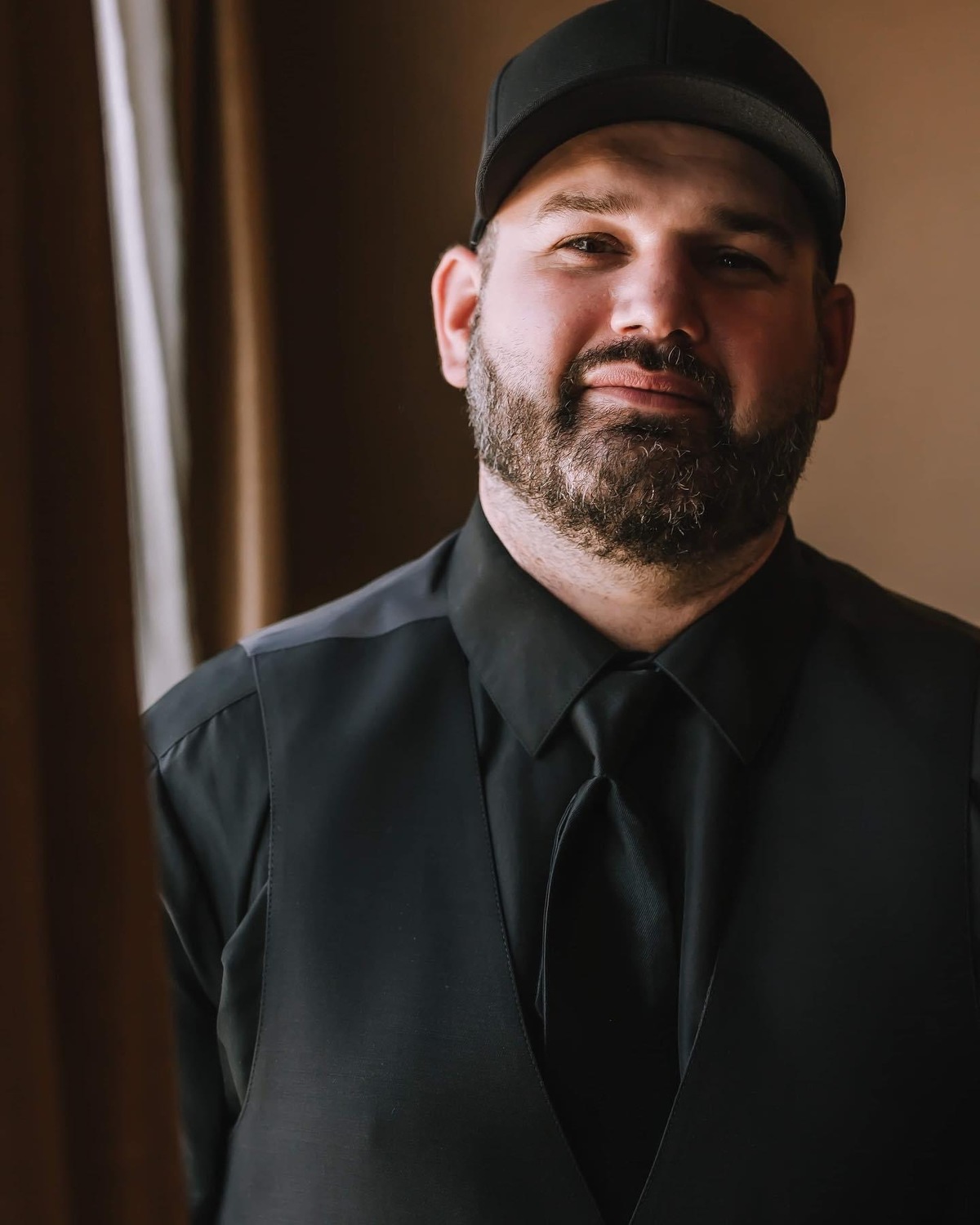
Michael “Mikey” Gaspar Anaya, Jr.
June 16, 1983 - May 8, 2022
It is with overwhelming sadness and disbelief that we announce the passing of Michael “Mikey” Anaya, Jr. (38) on May 8, 2022 in Rio Dell. Mikey was born on June 16, 1983 to Michael and Tina Anaya (nee Barnett). He grew up in Carlotta, rebuilding classic cars and practicing martial arts with his dad. They even tested for — and received — their black belts together.
After graduating from Fortuna Union High School in 2002, Mikey moved to Arizona where he obtained his Master Mechanics Certificate from Mercedes Porsche. He later moved to Fremont to work for Fletcher Jones and returned home in 2012 to be closer to his family, working for Scotty’s Cutters Edge in Fortuna for many years.
Family was always important to Mikey. He enjoyed attending barbecues and impromptu parties with his many aunts, uncles, cousins and friends that were like family. Some of the best times were family trips to Grass Valley, where his grandparents, Delores and Henry Sr. lived. Thanksgiving was always their favorite holiday, going to the annual “Cornish Christmas” festivities downtown, holding onto a rope along with many of his cousins, a technique acquired over the years to ensure no one was lost in the crowd.
Mikey endured so much in the year leading up to his passing, he married the love of his life, Jessica Brandt, in a beautiful ceremony at the Riverlodge in Fortuna on August 21, 2021 without the presence of his parents, as they were fighting Covid-19. Shortly thereafter, his father passed away. Mike Sr.’s passing was quite unexpected and Mikey loved his father dearly; losing him was the most difficult thing he has ever gone through. During what was supposed to be the most exciting time of his life, as a newlywed planning for a future with his wife, he was also grieving his father. But Mikey had a tough exterior, he wanted to be strong for his mother and sister, so he would always tell you he was okay. Although he had the support of his loving wife, a large family and many friends, Mikey wasn’t one to share his feelings, he was more concerned with the feelings of those around him, and that’s what made him so special.
If you were lucky enough to know Mikey, you know he was generous, kind, selfless, with so much life ahead of him, that he searched his whole life only to marry his soul mate within a year of his passing. That he was a son, who was still mourning the loss of his father. But to really know Mikey, you had to know so much more, like that he could fix anything with an engine, that he always wore a hat, that he was quiet and kind, and that he loved cars and animals. To really know Mikey, you had to know that he was the kind of person that would keep your secrets, would listen to you vent for hours. That he was fiercely protective of those he loved and never held a grudge. You had to know that as a Senior in High School, he drove his Freshman cousin to school every day and taught her to drive in his classic Chevelle on her 16th birthday; that he would take a day off of work just to help a friend move, or fix your car. You had to know that he loved mushrooms, Cazadores, and Sake Bombs; that he would be the first person to drop everything to ensure your safety, even at risk of his own, because he prioritized those around him. To really know Mikey, you had to know that he was a protector, a calming presence, a shy man who loved deeply, and said so much without even saying a word. You had to know that he tended to suffer in silence, that he wouldn’t “burden” his loved ones with his grief, because he wanted to be the rock, for everyone.
Mikey was just an amazing person and his absence leaves a void that is ever-present and all consuming, it is hard to imagine continuing on without him, and almost impossible to believe he is really gone. But Mikey would not want us to look back on his life with regret that it was not long enough. Although far too short, his life was full and vibrant. We will never forget that smile he couldn’t hide as he shared his first dance as “husband and wife,” or the look of embarrassment as his friends and family toasted to the Bride and Groom with stories and advice. He gifted us many beautiful memories and leaves behind a legacy of laughter, love, compassion and humility. He taught us to enjoy every moment with those you love, because tomorrow is not promised, to not let the little worries overwhelm all the good that life has to offer, and enjoy the ride.
Mikey is survived by his wife, Jessica, mother, Tina, Sister, Amber (Peter) Guerrero and their son, Dominic, his grandfather, Joe (Margie) Barnett, and numerous aunts, uncles, and cousins. Predeceasing him in death was his father, Michael Gaspar Anaya, Sr., and grandparents, Henry and Delores Anaya and Waletta Barnett.
Although Mikey’s loss is one we will continue to mourn deeply, we take comfort in knowing he is once again reunited with his father, watching over their family and friends together. A celebration of life will be held for both Mike Sr. And Mike Jr. at The Loleta Fire Pavilion on July 23, 2022, at 3 p.m., during the annual Auto Expo in Fortuna, an event special to both Mike and Mikey, which they enjoyed attending together. Family and friends are also welcome to enjoy the Auto Expo cruise the evening prior together, as we plan to do a lap in Mike and Mikey’s honor.
###
The obituary above was submitted by Michael Anaya’s loved ones. The Lost Coast Outpost runs obituaries of Humboldt County residents at no charge. See guidelines here. Email news@lostcoastoutpost.com.
OBITUARY: Billie Wayne Henson, 1964-2022
LoCO Staff / Thursday, May 26, 2022 @ 6:56 a.m. / Obits
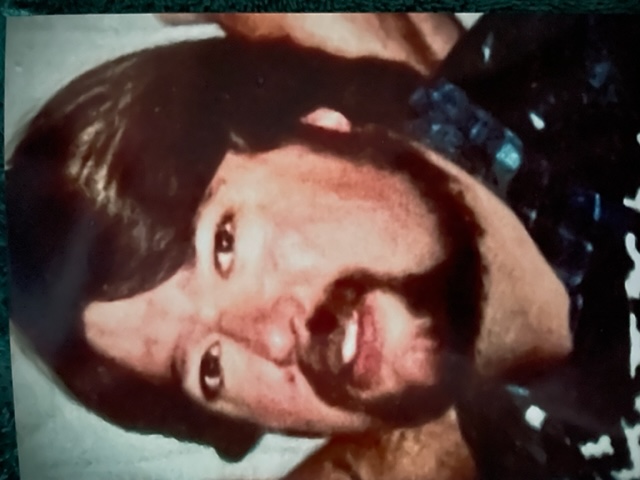
Billie Wayne Henson
August 14, 1964 - May 15, 2022
It is with great sadness we have to announce the passing of our brother, Bill Henson.
Bill was born in the year of the 1964 flood to Bennie and Jean Henson Sr., as their 5th child.
Bill graduated High School in 1984. He decided to learn a trade and went to Arizona Tech School for two years. There he studied Propane; Air Conditioning; Heating and Refrigeration. When he earned his degree there he landed a job with Sequoia Gas in Fortuna where he worked for 17 yrs.
While working for Sequoia Gas, Bill also cleaned stalls and helped people out with odd jobs. While living in Fortuna, he reconnected with his best friend Mark Freson. They got together on project’s, played video games or just hung out together. Mark even took Bill out to his place at Ruth Lake, where they would get the place ready for summer fun.
Bill loved working out doors and would help out one of his sisters with her vegetable garden and her fruit trees. He loved pitching in with canning the proceeds from her garden and for helping out she would share her fresh canned veggies and fruit with him. He also helped her with chopping and stacking her winter wood supply.
Bill loved music, enjoyed going to concerts with one of his sisters to a weekend at Konocti Harbor & Resort. A few concerts they went to was Boston; Journey; Tanya Tucker; Brook’s & Dunn; Brad Paisley.
After Bill left Sequoia Gas, he moved out of two into the mountains at Swain’s Flat Trailer Park. He got to know the owner, Kris, and would help him on maintenance jobs around the park. Bill also took on cleaning all the laundromats in Fortuna and helping people with handyman work fixing things for them. Bill loved where he lived. Being out of town, up in the mountains helped to calm him and give him peace. Even though it was out of town, it was still close for his other jobs.
Bill enjoyed running. He got together with one of his brother in-laws and ran the Clam Beach Run several times. He even enjoyed taking walks out where he lived. On those walks he would pick up recyclables.
Bill loved his music, whether it was hard Rock; Country; Pop Rock to Oldies. He had a wide variety of music. He was into electronics. He kept in touch with his family and friends and would be a DJ at their family get-togethers and even wedding’s. He performed at one of his sister’s for their in-law’s anniversary party.
Bill is preceded in death by his parents: Bennie and Jean Henson Sr.
Bill is survived by his siblings: Beverley Miller (Shawn Miller); Julia Rundell (Ross Rundell); Bonnie Benson (Pete Benson); Bennie Henson Jr.; Aunt Shirley Chisum (Russ Oakley) and numerous nieces, nephews and other relatives.
Bill would want you to remember him as your friend or family laughing and enjoying your company.
###
The obituary above was submitted by Bill Henson’s loved ones. The Lost Coast Outpost runs obituaries of Humboldt County residents at no charge. See guidelines here. Email news@lostcoastoutpost.com.
OBITUARY: Irene Betty Sanderson, 1929-2022
LoCO Staff / Thursday, May 26, 2022 @ 6:56 a.m. / Obits

Irene Betty Sanderson
Dec. 19, 1929 — May 18, 2022
On December 29, 1929 Irene Betty O’Hearn was born in Scio, Oregon to John and Etta O’Hearn. She was one of five siblings — Lydia, Gene, Irene, Merle and Thomas. In 1948, she married the love of her life, John Sanderson. The two lovebirds would spend 67½ beautiful years together. They welcomed their daughter Barbara in 1949, their daughter Marcia in 1952 and their son John Jr in 1956.
John and Irene would raise their three children at their Arcata home, and lived there until their health required them to move into assisted living. Irene would have coffee nearly every day with her good friend Macy Powers, who lived next door. She was so blessed with her wonderful neighbors — the Powers, the Henrys and the Matteris.
Irene was a wonderful mother. She loved her children with her whole heart. Some of her children’s favorite memories are the family trips for the holidays, to visit the grandparents in Lebanon, Oregon. In her family’s younger years, she could be found running the children to birthday parties, taking the girls to sleepovers with friends, or taking their son John and his friends fishing and clamming. Irene and John were faithful to attend all the family birthday parties, holidays, and all the grandkids games, until they were no longer able to do so.
Irene loved to play card games, do puzzles, and play yahtzee… but her favorite thing to do was gamble! John & Irene loved to take the kids to Reno since they were little! One parent would spend time with the children visiting places like Virginia City, while the other would gamble, then they would trade off. Their love for gambling continued through the years. When they took trips to Reno later in life, they would often stop to visit with their daughter Barbara and her husband Don, who lived in Placerville. Irene would want to go out to dinner, but John would say, “Let’s have Don BBQ for us!” As the years went on, they were unable to drive long distances, so they could frequently be found at the local casinos together.
Irene was a great cook! She would make lasagna for us on special occasions. She and John Sr had a small garden in the yard where they would grow zucchini, rhubarb and more! She was always faithful to bring her baked beans and zucchini bread to holiday gatherings. There would always be a few loaves in the freezer, so she could have some ready, whenever we wanted.
Irene absolutely loved the Oakland A’s! John Sr didn’t care much for baseball, but he made sure she had her own little TV in the kitchen, on the counter, so she could watch the game while playing cards or yahtzee. That is the kind of loving relationship they had.
As time went on and Irene’s health declined, she stayed for a time at Eureka Rehabilitation. This is where she met Pastor “little Joe” Kent. She loved to go to the Sunday services there, and listen to Joe bring the message and Lynda play the piano. When she returned to Frye’s Care Home, she continued to ask about him, and we know that she would be happy that he is officiating her Celebration of Life service.
Irene and John Sr came to know Jesus as their personal Lord and Savior before they left for heaven. They were inseparable in life, and now reunited for eternity. We are so thankful for the peace that comes with the assurance that we will see them both again one day.
1 Thessalonians 4:13-18.
Irene is survived by her Daughter Barbara and husband Don Dean, her daughter Marcia and Husband Stephen Henson, her son John Sanderson Jr and wife Cheryl, her grandchildren Mark and his wife Stephanie Broom, Jeremy and his wife Dusty Henson, Marisa and her husband Kevin Raimey, Crystal and her husband Keith Dyar, and Jennifer Sanderson. She is also survived by her great-grandchildren, Chelsea and her husband Jasper Love, Tayler Henson, Kasey Henson, Makenzie Henson, Sierra and Lucas Miller, Cyndell and her husband Victor Kale, Sacha and her husband Tyler Morgan, Keegan Dyar, Brayden Dyar, Johnny Dyar and Cage Mulvaney, also her great-great-grandchildren Carter, Aubree and Casen Love.
The family would like to extend a special thank you to Irene’s caregivers, who were not just her caregivers, but were like family to her. Thank you Diana, Leslie, Kaitlin, and Alma at Frye’s Care Home.
Graveside services will be held Friday, May 27 at 11 a.m. at Ocean View Cemetery. All who loved her are welcome to attend.
###
The obituary above was submitted by Irene Sanderson’s loved ones. The Lost Coast Outpost runs obituaries of Humboldt County residents at no charge. See guidelines here. Email news@lostcoastoutpost.com.