The Humboldt County Drug Task Force
(HCDTF) receives multiple community complaints of people gathering in
front of local businesses and being involved in drug sales, drug use,
and other activity that negatively affects the businesses and their
customers.
On
Wednesday February 2nd,
2022, the HCDTF and Eureka Problem Orienting Policing Team (POP)
teamed up and ran a street buy operation in front of businesses in
Old Town Eureka. An undercover agent from the HCDTF contacted
multiple groups that were loitering in front of businesses.
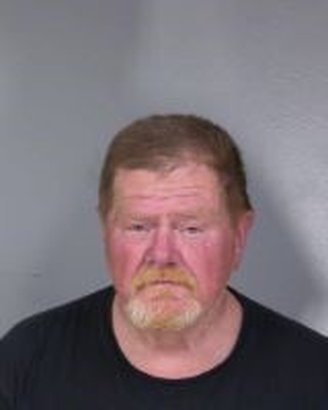
Kane.
The
agent was advised that a male in front of a business at 3rd
and B St. was the person people were getting their methamphetamine
from. The agent contacted Timothy
Kane (55 years old from
Eureka) and was able to successfully purchase methamphetamine. Agents
placed Kane under arrest. Kane was found to have approx. ½ ounce of
methamphetamine in his possession. Kane was booked at the Humboldt
County Jail for methamphetamine sales.
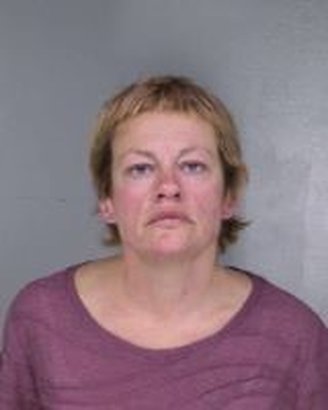
Tzanetopoulos.
Agents
were advised that a female in “Opera Alley” was selling
methamphetamine at the back of a business. The agent contacted Teresa
Tzanetopoulos (42 years old
from Eureka). The agent was able to successfully purchase
methamphetamine from Tzanetopoulos. Agents placed Tzanetopoulos under
arrest. She was found to have approx. ¼ ounce of methamphetamine in
her possession. Tzanetopoulos was booked at the Humboldt County Jail
for methamphetamine sales.
###
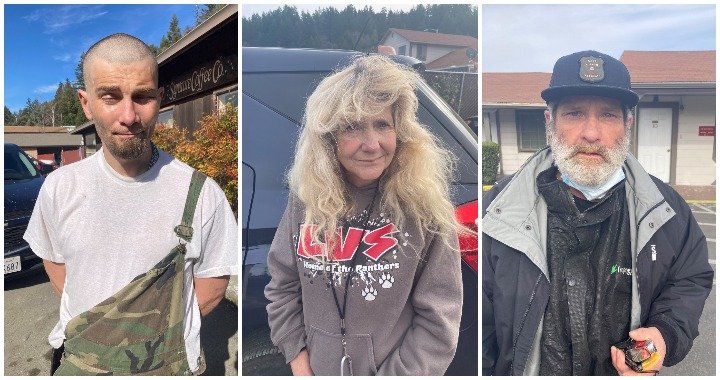
Whiting, Vera, Pemberton. Photos: HCDTF.
On
Thursday February 3rd,
2022, HCDTF agents conducted the same type of operation in Southern
Humboldt.
An
undercover agent contacted a male in the Garberville Town Square that
was advertising that he could get methamphetamine for people. The
male, Brian Pemberton
(54 years old from Garberville), advised the agent that they had to
walk to a local hotel to get the methamphetamine. Pemberton and the
agent walked to a hotel in the 900 block of Redwood Dr. in
Garberville. Pemberton met with the maid cleaning rooms at the hotel.
The maid gave Pemberton the methamphetamine and he then sold it to
the undercover agent. Agents placed Pemberton and the hotel employee,
Catherine Vera
(65 years old from Garberville), under arrest for methamphetamine
sales. Vera was found to have approx. 2 ounces of methamphetamine in
her possession. Both Vera and Pemberton were issued felony citations
and a court date to appear for their violations.
Agents
responded to Redway next and observed a male in front of a business
in the 3400 block of Redwood Dr. meeting customers. The undercover
agent contacted Brian Whiting
(37 years old from Redway) and successfully purchased methamphetamine
from him. Agents placed Whiting under arrest for methamphetamine
sales. Agents located approx. ½ ounce of methamphetamine and a small
amount of heroin in Whiting’s possession. Whiting was issued a
felony citation and court date to appear for the violation.
Anyone
with information related to this investigation or other narcotics
related crimes are encouraged to call the Humboldt County Drug Task
Force at 707-267-9976.
Press release from the Humboldt County Sheriff’s Office:
On Feb. 3, 2022, at about 12:15 p.m., Humboldt County Sheriff’s deputies on patrol in the Garberville area conducted a traffic stop for a vehicle code violation on Redwood Drive near Alderpoint Road.
Deputies contacted two individuals inside the vehicle, one of whom, 27-year-old Lori Brook Lynn Beaty, was found to be on formal probation. During a search of the vehicle pursuant to the terms of Beaty’s probation, deputies located items consistent with the sale of narcotics. Upon further investigation, deputies learned that Beaty had hidden several small bags of narcotics in and on her person. In total, Beaty was found to be in possession of approximately 1.4 grams of suspected fentanyl, over 49 grams of heroin, over 19 grams of methamphetamine and numerous prescription pills.
Beaty was arrested and booked into the Humboldt County Correctional Facility on charges of transportation/sale of a controlled substance (HS 11352(a)), possession of a controlled substance for sales (HS 11351), possession of a narcotic controlled substance (HS 11350(a)) and revocation of probation (PC 1203.2(a)).
The second individual in the vehicle was released at the scene.
Anyone with information about this case or related criminal activity is encouraged to call the Humboldt County Sheriff’s Office at (707) 445-7251 or the Sheriff’s Office Crime Tip line at (707) 268-2539.
Lori Brook Lynn Beaty Booking Photo | Humboldt County Correctional Facility
They can be pointed in any direction, to mean anything: To law enforcement, rising crime usually means police departments need more officers, or that prison sentences aren’t high enough to deter crime. To criminal justice reform advocates, the same statistics might show that, in context, crime is down, and long-term legislative changes to the criminal code are working.
So how do we interpret California’s crime statistics? What does a spike in homicides in 2020 mean? Why did property crime go down in the first year of the pandemic? How many years of data do we need to create responsive policy?
The answer, according to those who study the issue – and aren’t running for office or stoking a political agenda — is: Don’t jump to conclusions.
For one thing, the way crime data is collected in California and across the country is inconsistent and doesn’t always provide a clear picture of how much crime is happening, who’s committing it and who is being victimized.
Law enforcement agencies self-report their crime data to the FBI, which each year publishes the Uniform Crime Reporting Program. The California Department of Justice then produces statewide reports from those numbers.
But not every department reports its statistics. And among those that do, some don’t report all their data — or report the information differently. Some jurisdictions log every incident; others only report crimes that lead to incarceration.
Then there are the circumstances beyond the bounds of each jurisdiction. In the 2020 data, the first year of pandemic lockdowns, some police departments and sheriff’s offices across the state made fewer arrests for lower-level crimes. Fewer people were taken to jail, and a number of people incarcerated in jails and prisons were granted early releases.
Researchers are also wary of sweeping conclusions made about so-called spikes in homicides or other violent crimes, when long-range data may reveal far less alarming trends.
In all, the reporting of crime numbers is a snapshot of self-reported data, subject to human error and misinterpretation. It can also be deliberately manipulated, as claimed by whistleblowers at the New York and Los Angeles police departments.
“So long as police departments have any influence on reporting or recording crime, even independent, credentialed bodies will be unsuccessful in their effort to collect and publish accurate accounts,” wrote Emory College professor Carl Suddler in a Brookings Institution report.
It’s impossible to know what crimes were missed by police, or counted incorrectly. But from the available data, here is a snapshot of crime in California.
The homicide spike: The big picture
The headlines blared that homicides were up 31% in California in 2020. That’s true, but it doesn’t tell the whole story.
A long-range look at crime statistics, particularly homicide data, shows that the 2020 crime rate nationally and in California was still a fraction of its highs in the early 1990s, according to government statistics.
The jump between 2019 and 2020 became a central aspect of the unsuccessful recall of Gov. Gavin Newsom.
Republican Larry Elder, the leading vote-getter among Newsom’s challengers, decried the “soft-on-crime ethos that we see emanating from Sacramento and from many of our major cities.” Kevin Faulconer, another Newsom challenger, said the rising crime rate forced major employers to pull out of San Francisco.
In Kern County, the homicide rate per 100,000 people was 12.7 in 2020 — the state’s highest — or about one for every 8,000 people. Statewide, the average homicide rate was 5.5.
Some parts of California were able to suppress a spike in homicides. Monterey County’s homicide rate, once as high as 13.8 people per 100,000 in 2015, has dropped significantly, and in 2020 was lower than the statewide average at 3.2 per 100,000.
Someone she knows
In California, homicide victims and their relationship to their killers looks starkly different for women vs. men.
For homicides of women in which police could identify a suspect, 84% were friends, acquaintances, family members or relatives of the women killed. Spouses specifically were suspected in 12% of homicides in which women were victims.
Only 16% of suspects in the killings of women were strangers, according to the California Department of Justice.
That wasn’t true for men: More than 40% of suspects in the killings of men were strangers.
A significant number of suspects in the homicides of both men and women had an unknown relationship to their victims, justice department figures show.
Gun deaths were dropping. Then, 2020
After three years of a decline, the number of homicides caused by firearms in 2020 hit its highest level in California in at least a decade.
Statewide, 1,606 people were killed by guns in the first year of pandemic lockdowns, the most recent year for which data is available.
It wasn’t just the number of people killed. A higher percentage of people were killed by firearms in 2020 than in any year since at least 2011.
Of those, nearly half were killed by a handgun. The number is almost certainly higher, since 23% of all firearm homicides reported by police did not specify or could not determine the type of firearm used.
Property crime and the pandemic
Perhaps it’s no surprise that property crimes dipped significantly during the first year of the pandemic amid curfews and lockdown orders. In fact, 2020 was a historically low year for property crime, according to statistics reported by police departments and sheriff’s offices to the California Department of Justice.
It also shouldn’t be a surprise that property crime returned to pre-pandemic levels in 2021 as restrictions eased.
According to a separate analysis by the Public Policy Institute of California that tabulated four major cities’ preliminary crime data, property crime in 2021 was up in Los Angeles, Oakland, San Diego and San Francisco between Jan. 1, 2020, and Oct. 31, 2021.
That followed a dip in which property crime in 2020 reached a six-decade low.
“While the specific factors driving fluctuations in crime numbers in the wake of the COVID health crisis are very difficult to determine, the data suggest that overall both violent and property crime are back to pre-pandemic levels,” the institute’s authors wrote.
Among California’s five largest counties – Los Angeles, San Diego, Orange, Riverside and San Bernardino — property crime fell slightly from 2015 to 2019, with a pandemic dip beginning in March 2020. The same trend held true for Alameda and Sacramento counties in Northern California.
Nearly 70% of hate crimes reported as “closed” in 2020 were violent crimes. Of those, most were intimidation, simple assault or aggravated assault.
Of all hate crimes reported as “closed” in 2020, the majority — 67% — were directed against someone’s race, ethnicity or national origin.
And of those crimes committed against racial and ethnic groups, the highest number of victims per capita were Black and Jewish people.
Anti-Asian bias was the primary factor in 7% of those crimes. Asians make up 15% of Californians.
By contrast, anti-Black bias was the primary factor in 33% of all hate crimes in 2020. Black people make up just 6.5% of California’s population, according to 2021 estimates from the U.S. Census Bureau.
Among hate crimes directed at someone’s race or ethnicity, Black people made up 50% of victims.
According to the 2020 American Jewish Population Estimate from Brandeis University, 1.17 million Jewish people live in California. The same year, 120 anti-Jewish hate crimes were reported, according to the California Department of Justice.
Criminal complaints against police officers
Since 2016, California has been publishing the number of criminal complaints made against law enforcement officers by the public and how many were “sustained” – or deemed to be “true, by a preponderance of evidence.”
Before 2016, the Department of Justice only published statewide data without listing specific agencies.
Now, four years of data show which departments received the most complaints, and at what rate they sustained those complaints.
The data show that, since 2016, law enforcement agencies statewide sustained 7.6% of criminal complaints against their officers.
But there were wide variations. For instance, in 2017, the Department of Corrections sustained 22% of complaints against its officers — nearly triple the statewide average.
And in 2018, the Oakland Police Department also upheld criminal complaints against officers at a rate far outpacing the statewide average. The department has been under the supervision of an outside monitoring team and a federal judge since 2003, the result of a class action lawsuit settlement that accused Oakland police officers of beating residents and planting evidence.
In California, each department is its own fiefdom, with its own rules and procedures for adjudicating complaints.
Not surprisingly, the Los Angeles Police Department — one of the nation’s largest and the state’s most populous city — received the most complaints between 2016 and 2020. The department sustained those complaints at a rate of between 5% and 7%, which is below the statewide average.
How well are California cops clearing their cases?
Every year, most law enforcement agencies in California publish the results of their year: the number of crimes reported to them, and the number of arrests they made. With a little math, this becomes their “clearance rates.”
In 2020, the last year for which data is available, the total statewide clearance rate on non-fatal violent crimes was 45%, compared with 42% nationally. On homicides, clearance rates were 59% in California, compared with 54% nationally.
But clearances for homicide cases varied wildly — from more than four arrests per five homicides investigated by the San Diego Police Department, to fewer than one in five by the Kern County Sheriff’s Office.
The Los Angeles Sheriff’s Department made far more arrests per non-fatal violent incident than they did for homicides, driven primarily by higher arrests per rape and aggravated assault.
The opposite was true of the Oakland Police Department, which made more than one arrest for every two homicides, but fewer than one arrest for every three violent crimes.
There’s an important consideration to this data: The arrests are reported as “clearances,” but arrests are not convictions. A clearance doesn’t necessarily mean a crime was solved or anyone was punished.
Police also sometimes clear crimes by “exceptional means.” According to the FBI, this is when police have a suspect and enough evidence to make an arrest, but “a circumstance outside the control of law enforcement” stopped them – the suspect died, for instance, or the victim stopped cooperating.
When officers are injured or killed
From 2011 to 2020, California police officers were most likely to be injured or killed when they arrived at the scene in a vehicle and assisted a non-police agency, like firefighters.
During that period, 32 officers were killed “feloniously,” meaning their deaths were not accidental, according to California Department of Justice data.
###
CALmatters.org is a nonprofit, nonpartisan media venture explaining California policies and politics.
On January 25, 1924, Irene Georgette Steinhardt was born in Brooklyn, New York. It was the start of her amazing life. Her dad was branching into the new business of auto insurance (as well as driving a cab and selling cars) her mother’s family was still reeling from prohibition as the family business had owned restaurant bars and horse tracks.
The depression hit, her dad was out of work, their house foreclosed and all their personal items were auctioned, including Irene’s trike. Her father George Francis Steinhardt looked for work everywhere . He decided if they were going to be broke and poor, at least do it in style in the resort town of Atlantic City, New Jersey. His wife Stella found them a room behind the local synagogue before finding a house to rent.
Eventually Irene’s father became a full-time salesman and worked a second job as a night watchman to help his family get ahead during the depression. Irene and her big brother Edward Eugene Steinhardt cruised the beach, gawked at stripper Gypsy Rose Lee, danced to Glenn Miller live, studied Latin sold saltwater taffy and ice cream on the boardwalk. Irene (mom) often talked about the magic of living in Atlantic City during the depression and afterwards. Having the ocean as their playground, mom became an outstanding swimmer and passed this on to her children and grandchildren. Her love for the ocean never wavered in her life. As a teenager she and her brother worked on the famous Steel Pier in Atlantic City during the summers.
Their dad was right. Great place to live, even if you’re struggling financially.
After high school her brother went off to medical school and Irene to nurse’s training, where she picked up a strep infection. These were the days before penicillin. She was treated with sulfa drugs and sent home for months of recovery. Her family then decided she would be safer at college. She enrolled in the all-women college NJC (now Douglas). The war was on. The girls were all encouraged to do their part and support the troops at the local USO dances. Before finishing school Irene fell in love with the new enlisted Darrell Monroe Hedgecock and off Aiken, South Carolina they went-no waiting, no age requirements and got married.
When Darrell was shipped overseas Irene joined the Waves (Women Accepted for Volunteer Emergency Services) and worked for the Navy as a weather observer. Not only did Irene serve her country but she also made lifelong friends during her time in the Navy. She almost lost her honorable discharge for having modified her regulation uniform into a cuter jaunty look. That was Irene ahead of her time in fashion. She always believed in classics but comfort, especially shoes.
After the war Irene and Darrell completed their education at Michigan State College. Another Margaret Mead in the making Irene completed her degree in anthropology with a study of caste and class in rural America.
Instead of working Irene survived virus X and polio and had three children, ran Indian Guides out of her basement, took 60 Brownies on an all-day field trip with only one other very pregnant adult to Hershey Pennsylvania’s candy factory and theme park. The song 99 bottles of beer on the wall became her favorite way of entertaining children and to keep them calm during road and field trips.
Irene did enter the workforce, but her children came first. She earned her teaching credential from Cal State Fullerton and became a teacher in Orange County. She loved teaching and was happy to have the summer off with her kids. She loved her kids and school for the gifted that she worked for. Eventually her own kids went to college and Irene and Darrell moved to San Jose soon to be known as Silicon Valley.
With a hiring freeze in education, she found herself working for Social Services in the county of Santa Clara. But first she needed to pass the county typing test. This might have been the hardest task she had in learning. She did pass and scored high on the test and became a eligibility worker for Santa Clara County. San Jose was all orange groves, but as the valley became more diverse with computers and immigrants Irene also found diversity. She did intake paperwork in the lockdown ward of the county mental facility, was a union leader, made home inspection visits that often ended with her personally collecting money for bus fares and diapers. Finally, by chance, luck or design, she found herself teaching ESL (English as a Second Language) to adults. Motivated students and enthusiastic teacher: it was a perfect union. To this day she still receives greetings from her former students.
During this time is when Irene fell in love with Apple computers. Upon her death, she had the latest iPad and knew how to solve any computer issues with it. She was amazing in her love of new technology. She talked about how she lived before a time of television to computers where you could have the world of knowledge at your fingertips in a moment. Let’s not forget how she loved having Alexa to ask what time it is, what is the weather today, turn on or turn off the lamp or to look up historical facts and figures. In her last years she turned to Youtube, NetFlix, Hulu and Amazon Prime for hours of watching history, documentaries, current and old classics. Three of mom’s favorite movies were Fiddler on the Roof, To Kill a Mockingbird and High Noon. High Noon her kids figured must have been their Dad’s suggestion, but she loved this movie and watched all three movies in the last six months of her life.
Retirement came late at 75. Irene moved to Eureka in 1998 and quickly started taking classes and workshops at HSU and CR from Feng Shui to the Movies of Alfred Hitchcock. She connected with Cal Courts and won the first Fit Frosty award. Irene joined AAUW (American Association of University Women) bringing the program of Great Decisions to Humboldt County. She was an associated member of the Humboldt County Democratic Central Committee working with Barber Boxer and Mike Thompson on events and voter registration (hopefully Democrats). She placed pamphlets at all the local video stores about actors who had died from smoking plus manning booths for the American Cancer Society. Lived in the Meadows senior complex and was involved with all the activities from crafts to genealogy. Rounding out her circle of friends and activities was the First United Methodist Church in Eureka. Irene was proud of the Peace Virgil held there. As a Veteran and a patriot, she knew the price of peace. And she knew the importance of being vaccinated. As a young woman she contracted polio before they had vaccinations and was the worst scare of her life. She was one of the first in Humboldt County to get her Covid vaccination and encouraged everyone else to do so. She never understood what the fuss was and she was very grateful there was a vaccination to help prevent death and suffering.
It was truly an amazing life that her children Virginia, Edward, and Diane will struggle to honor. She also leaves two beautiful grandchildren Emma ,and Nathan , two cousins and many beloved nieces and nephews.
Irene left Jan. 13, 2022.
With COVID no services are planned.
###
The obituary above was submitted on behalf of Irene Steinhardt’s loved ones. The Lost Coast Outpost runs obituaries of Humboldt County residents at no charge. See guidelines here.
David
Kenneth Williams July 16, 1952 – November 19, 2021
The
family of David Kenneth Williams said goodbye to their wonderful
trailblazer on Friday, November 19, after a long season of missing
him while he lived with dementia.
David
was born in San Diego. He moved to Trinity County in 1979 and built a
barn (completely on his own) as a home. In 1980, he met his beloved
Becky (Walden) while they both worked at Trinity Hospital in
Weaverville. For both Dave and Becky, it was crush at first sight,
and they married on April 16, 1981.
They
built a new home together near East Weaver Creek. He created an oasis
next to the creek, with plentiful vegetable gardens and lush grass to
play – even adding a bedroom to the house after their son, James,
was born. Dave’s shared his dedication to artistry and unstoppable
work ethic with James, who now uses his father’s tools to improve a
home for his own family.
Local
musicians, elementary students, and artists may remember Dave’s
Drums – this was the man behind the stunning woodwork. He created
beautiful sounds and drums with James at his side. The family sold
the drums at the Tribal Stomp most years and became friendly with
other makers.
Dave
knew every song released by Neil Young and the Bridge School Benefit
concert was an annual family tradition. One year, in the pouring
rain, they attended in full raingear, and were rewarded by an
impromptu performance by Robin Williams.
David
led the way on family bike-packing trips from Vancouver to Oregon,
fishing for redtail perch at Gold Bluffs Beach or trout in Trinity
Lake, adventures in Mexico, camping at Kangaroo Lake, and skiing
every year at Mount Shasta.
On
his lunch breaks from working as the groundskeeper and janitor at
Trinity High School, Dave rode his bicycle up Oregon mountain for
exercise. On other days, he sat at the potter’s wheel in the art
classroom and taught himself to throw. While living in Redding after
retirement, Dave joined the Shasta Wheelmen and loved riding with
James on weekends. He continued to ride after moving to McKinleyville
with his family in 2013, hitting the road up to Trinidad several
times per week.
David
looked forward to being a Papa one day. We are thrilled that his
grandson inherited his spirited curls, impish crooked smile, and deep
brown eyes. Though Dave’s illness prevented him from ever knowing
his grandson, we know he would have loved him wholeheartedly.
David’s
family and friends are grateful to the kind caregivers at Timber
Ridge Renaissance in McKinleyville, where he lived for the last four
years of his life.
David
Kenneth will be remembered by his wife Becky; son James (Cari);
grandson Ronan Kenneth; mother Veronica Fagan; siblings Joann
Beattie-Williams, Kevin Williams, and Gary (Annie) Williams; and many
nieces and nephews. He was preceded by his little sister, Beverly,
whom we expect that he has found and hugged.
As
David wished, he was cremated and will be returned to the sea.
Memorial traditions with family will be held privately. Donations in
David’s name can be made to The Bridge School, by mail at 545
Eucalyptus Avenue, Hillsborough CA 94010, or via their website
(https://www.bridgeschool.org/support).
###
The obituary above was submitted on behalf of David Kenneth Williams’ loved ones. The Lost Coast Outpost runs obituaries of Humboldt County residents at no charge. See guidelines here.
We reached out to Caltrans for clarification on whether the sanction will block funding for new projects only, of it existing projects will also be ineligible for reimbursement. Public Information Officer Myles Cochrane confirmed that the sanction applies only to new projects, excluding emergency response efforts.
Meanwhile, Deputy County Administrative Officer Sean Quincey sent the following statement via email Thursday evening:
As we feared, the state is taking action due to our failure to file financial reports that in the past have been routine. This is the type of thing we have been worried about and taking action to try and prevent for the last several years. All that time, county staff have been working long hours, going above and beyond, changing processes with little direction, turning in mounds of paperwork for the simplest of transactions, all to try to ensure vendors are paid, employees are paid, and our books are accurate.
If nothing changes, we can expect to see more of this. In fact, the state let us know months ago, in so uncertain terms, that it will take similar action against our Workforce Development program. In November, US Bank put the county on “secured funding” status because of potential financial risk associated with the 19-20 audit not being completed. Our funders and partners need and deserve to have a timely annual audit performed on county funds so they can be assured that we are safeguarding the public’s money.
###
Original post:
Detail of a screenshot included in a Caltrans email concerning late single audit reports.
###
Humboldt County Public Works Director Tom Mattson wrote just one sentence before forwarding a Caltrans email to all five county supervisors this morning:
“This is extremely bad news.”
The news was this: Because the county has yet to submit its overdue Single Audit Report for the 2019-20 fiscal year, the state transportation agency on Tuesday placed the county under a “Do Not Authorize” sanction. This means that no new transportation-related projects will be eligible for state and federal reimbursement through the agency until the report gets submitted.
Reached by phone, Mattson said, “I just read that this morning and am still in a state of shock.”
It’s a big deal, he said, because the county has “many, many projects through different state and federal programs that run through Caltrans.”
Mattson said he’s not sure yet whether the sanction will freeze funding only for entirely new projects of if existing projects will also be ineligible for reimbursement when they need cost adjustments or move into new phases. He has asked his Public Works staff to compile a list of projects that may be affected.
The Single Audit Report is an annual, organization-wide financial statement that’s intended to offer assurance to the federal government that the the county has sufficient internal controls and remains in compliance with program requirements. Historically these reports have been due each March, though this year the deadline for the 2019-20 report was extended to Sept. 30, 2021, because of the COVID pandemic.
That due date was more than four months ago. Asked for information about the overdue report and today’s notification from Caltrans, Humboldt County Auditor-Controller Karen Paz Dominguez responded via email, saying, “Great progress has been made on the 19/20 Single Audit as County departments have been providing requested information to our external auditors.”
The outside accounting firm of CliftonLarsonAllen (CLA) has been tasked with completing the 2019-20 Single Audit Report, but in September the firm disengaged from the process citing “difficulties” including the county’s failure to submit necessary account balances and unsuccessful attempts to get responses from the Auditor-Controller’s Office. The firm was scheduled to resume work on the audit report this month.
Paz Dominguez said in her email that because her office functions as a central service department within a decentralized organization, “we don’t always have the information our external auditors request.”
An accountant/auditor in her office has been assigned to work on the 2019-20 audits full time and is serving as a liaison between CLA and county departments, Paz Dominguez said. The external auditors are scheduled to do two weeks of “fieldwork” with the county starting Monday, interviewing staff and examining documents to verify transactions.
“We are prepared to welcome them and grant them unlimited access to all of the information accessible to the A-C Office,” Paz Dominguez wrote. “It is also our expectation that all County departments will welcome them similarly as we all have a significant interest in getting this important task done.”
CLA has told the county that it should be able to issue the Single Audit Report by March 31, assuming the fieldwork doesn’t extend past Feb. 18, Paz Dominguez said.
Mattson this afternoon said he and his staff were still reviewing all Caltrans-funded projects to determine which ones may be negatively affected.
“All I can say at this point is that we hope that the March 31 deadline can be met as that will minimize the effect,” Mattson wrote in an email.
One major concern: the Humboldt Bay Trail Project, for which the county must request new funding before June 22 in order to start construction, according to Mattson.
Delayed fiscal reporting has become a chronic issue for the county, one that contributed to the Board of Supervisors passing a vote of “no confidence” in Paz Dominguez late last year. In December, the State Controller’s Office launched an investigation into the county’s financial practices and reporting. The inquiry was prompted by the county’s failure to file its Financial Transactions Report for the 2019-20 fiscal year.
County officials, including Paz Dominguez, say the State Controller’s Office’s report should be issued any day now.
A 41-year-old Arcata woman, who was tragically struck by a vehicle while pushing her 2-year-old child in a stroller across a designated Arcata crosswalk on St. Louis Ave. on Jan. 22, has died, the Arcata Police Department confirmed today.
While the investigation is ongoing, APD Lt. Todd Dokweiler told the Outpost that the evidence suggests that the mother, Jennifer Garcia (as mentioned in her GoFundMe page), was using the crosswalk near the Janes Creek Subdivision at approximately 12:45 p.m., when an inattentive driver failed to yield and struck the Garcia, causing life-threatening injuries.
“The victim was transported to the hospital and ultimately did succumb to her injuries about a week later,” Dokweiler said.
The driver, an unnamed 29-year old man from Arcata, remained on scene and has reportedly been cooperative with officers throughout the investigation.
The driver is not believed to have been under the influence at the time of the crash, and no charges have been filed against the driver at this time.
The infant involved in the collision reportedly suffered minor injuries and was treated at the scene before being released to their father. While the exact details remain uncertain, Dokweiler said that evidence suggests that Garcia may have used her final healthy moments to push her child out of harm’s way.
“Witnesses and physical evidence indicate that the mother was able to get the stroller out of the roadway enough that the child wasn’t more seriously injured,” Dokweiler said.
The GoFundMe page, previously set up to raise funds for Garcia’s medical expenses has since raised more than $32,000.
“We received an update from Jenn’s husband last night,” the GoFundMe page stated on Monday. “Sadly, her injuries were just too much, and she left us last evening. She is at peace and dancing with us in spirit now. Her family is heartbroken as you can imagine. Please continue to keep Jenn and [her family] in your thoughts and prayers.”