

(AUDIO) HUMBOLDT HOLDING UP: Object Heavy’s Brian Swislow on the Pandemic’s Impacts on Humboldt’s Live Music Scene and His Lengthy Career in Funk and Soul
LoCO Staff / Sunday, Feb. 6, 2022 @ 8 a.m. / Humboldt Holding Up
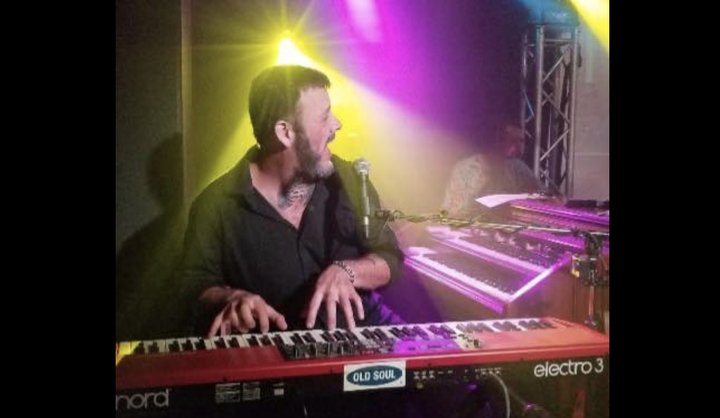
Humboldt has long enjoyed a more vibrant live music scene than an area this small and isolated probably should be able to, much to the delight of those of us who dwell and dance here. Obviously that energy has been greatly diminished these past two COVID pandemic-riddled years. But now with vaccination rates up and the omicron variant’s spread slowing, the number of local shows and events on the calendar is staring to tick up again.
Which begs the question: How are you feeling? Are you feeling that itch to get out and have indoor public fun again? Is it time? It’s a deeply personal question a lot of locals who’ve erred on the side of caution these past couple years are now wrestling with.
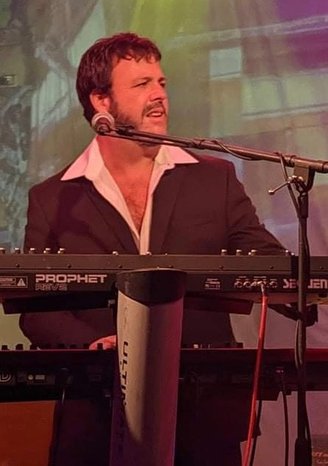
The Swizz
With those thoughts on the tip of the brain, on this week’s episode of Humboldt Holding Up we talk to local keyboardist and producer Brian Swislow about his more than two decades of making funky sounds for Humboldt ears. His current band, the soul slanging Object Heavy, will be playing at the Arcata Theatre Lounge on Saturday, Feb. 12, so we asked him how he thinks the pandemic has affected local musicians and venues and what he thinks it will take to make our scene thrive again.
Click the audio player above to listen to Swizz chat with LoCO’s Andrew Goff and Stephanie McGeary or click on over to Apple Podcasts here. And take a gander at past HHU guests below.
PREVIOUS HUMBOLDT HOLDING UP GUESTS:
- #81 Lost Lewis Treasure Hunter Corey Lewis
- #80 “The Cannabis Conversation” Jesse Duncan
- #79 Humboldt COAD’s Alison Sterling Nichols
- #78 Miranda’s Rescue Founder Shannon Miranda
- #77 Eureka Police Department Chief Steve Watson
- #76 ‘The Bartow Project’ Michelle Hernandez and Zuzka Sabata
- #75 Foggy Bottoms Boys Thomas and Cody Nicholson Stratton
- #74 North Coast News’ Nazy Javid
- #73 Pumpkin Carver Mike Craghead
- #72 Eureka Police Department Sergeant Leonard LaFrance
- #71 Eureka Artist Duane Flatmo
- #70 Arcata City Councilmember Sarah Schaefer
- #69 Humboldt Hot Air Director Neroli Devaney
- #68 St. Joe’s James Ladika and Austin Allison
- #67 Eureka Artist Richard Evans
- #66 NCRT’s Calder Johnson
- #65 TV Newsman Dave Silverbrand
- #63 Housing Policy Specialist Brian Heaton
- #62 Muralists Blake Reagan and Lucas Thornton
- #61 Arcata City Councilmember Emily Goldstein
- #60 Kayak Guide Eric Stockwell
- #59 Eureka City Councilmember Natalie Arroyo
- #58 Wiyot Cultural Center Manager Marnie Atkins
- #57 Humboldt County Growers’ Alliance’s Natalynne DeLapp
- #56 RREDC Executive Director Gregg Foster
- #55 Dell’Arte’s Michael Fields
- #54 Llama Wrangler Keagan Trischum
- #53 Crabs President David Sharp
- #52 Organic Dairy Farmers Kristina Radelfinger and Dorice Miranda
- #51 Former Arcata Mayor Alex Stillman
- #50 Cooperation Humboldt’s David Cobb
- #49 Ink People Center for the Arts’ Libby Maynard
- #48 Humboldt Bay Social Co-Owner Amy Cirincione O’Connor
- #47 Musician Lyndsey Battle
- #46 Mad River Brewing CEO Linda Cooley
- #45 LoCO Editor Hank Sims
- #44 Humboldt Republic’s Jason Brandi
- #43 Table Bluff Farmer Hannah Eisloeffel
- #42 Logger Bar Owner Kate Martin
- #41 Teacher/Rapper Zach “Zigzilla” Lehner
- #40 Madaket Captain “Zippo” Libby Tonning
- #39 Event Planner Alegria Sita
- #38 Food For People’s Anne Holcomb
- #37 AHHA President Nezzie Wade
- #36 Performance Artist Noël August/Tucker Noir
- #35 Eureka Mayor Susan Seaman
- #34 Eagle House Owner Jennifer Metz
- #33 Absynth Quartet Drummer Mike “Tofu” Schwartz
- #32 HACHR Executive Director Lasara Firefox Allen
- #31 Alchemy Distillery Owner Amy Bohner
- #30 Eureka City Councilmember Kati Moulton
- #29 Eureka City Councilmember Scott Bauer
- #28 Ungraceful Ager Barry Evans
- #27 Arcata City Councilmember Sofia Pereira
- #26 HumBrews Music Booker Laurel Weston
- #25 Eureka City Councilmember Kim Bergel
- #24 Film Commission’s Cassandra Hesseltine and Nate Adams
- #23 Marble Maker Topher Reynolds
- #22 Arcata Playhouse Director Jacqueline Dandeneau
- #21 Humboldt Political Junkie Eric Kirk
- #20 Rio Dell Mayor Debra Garnes
- #19 Second District Supervisor Estelle Fennell
- #18 Arcata Food Aficionado Jada Calypso Brotman
- #17 Body Piercer Jackie Silva
- #16 Dick Taylor Chocolate’s Adam Dick
- #15 FUHS Teachers Mark Thom and Inma Thompson
- #14 Eureka City Manager Miles Slattery
- #13 Savage Henry Co-Founder Chris Durant
- #12 Eureka Street Art Festival Organizer Jenna Catsos
- #11 SCRAP Humboldt Founder Tibora Bea
- #10 Gym Owner Tyler Parr
- #9 Six Rivers Brewery Co-Owner Meredith Maier
- #8 Multicultural Skincare Therapist Levia Love
- #7 Annie’s Cambodian Server and Social Worker Joshua Coppock
- #6 Eureka City Councilmember Austin Allison
- #5 HSU Professor Deidre Pike
- #4 Pastor Bethany Cseh
- #3 Singer/Songwriter Chris Parreira
- #2 Eureka City Councilmember Leslie Castellano
- #1 Arcata City Councilmember Paul Pitino
BOOKED
Today: 12 felonies, 16 misdemeanors, 0 infractions
JUDGED
Humboldt County Superior Court Calendar: Friday, Sept. 4
CHP REPORTS
S G ST ONR / US101 S (HM office): Traffic Hazard
ELSEWHERE
RHBB: CDPH Issues Immunization Recommendations for 2026-27 Respiratory Virus Season
RHBB: Redway Transfer Station to Close an Extra Day for Construction
RHBB: Dows Prairie Road to Close for Two Months for Culvert Repair
GROWING OLD UNGRACEFULLY: God and the Super Bowl
Barry Evans / Sunday, Feb. 6, 2022 @ 7 a.m. / Growing Old Ungracefully
In the 1870s, British statistician Francis Galton showed, to his own satisfaction, that prayer doesn’t work. His evidence was simple: praying for the health of British royal family was part of the Sunday services everywhere in Britain (and probably the entire Empire). Yet the royals didn’t live longer or enjoy better health than everyone else…ergo, prayer was useless. (In case God had it in for animals, Galton followed this finding with plants, praying over random parcels of land — again, no difference in the abundance of plant life.)
Fast forward to 2006, when the Templeton Foundation sponsored what’s now known as the “Benson Prayer Study.” Briefly, Harvard professor and cardiologist Herbert Benson initiated a study to determine if prayer helped patients recover from surgery. The $2.4 million STEP (Study of the Therapeutic Effects of Intercessory Prayer) enrolled nearly two thousand coronary artery bypass patients at six academic medical centers. (It was easy to find such patients: every year, pre-Covid, since nearly half a million Americans had this procedure, many of whom suffered post-op complications). Some, on a random basis, were prayed for (by first names and first letter of their last names) by three “experienced prayer groups” consisting of Catholic monks, Catholic nuns, and a Protestant prayer ministry. The prayers started on the day of surgery and lasted for two weeks.
They had no better luck than Galton’s royal family prayees. In fact, prayer seemed to make things worse: 59 percent of the patients who knew they were being prayed for suffered complications, compared to 51 percent who didn’t know. And 18 percent of the uninformed prayed-for group suffered major complications (heart attack, stroke) compared to 13 percent of the uninformed, un-prayed-for group. Bottom line: If you love them, don’t pray for them!
I’m revisiting the STEP study (which I wrote about here) because of a meme going around in the days leading up to the Super Bowl. @UberFacts wrote on Twitter, “25 percent of Americans believe God decides the winner of the Super Bowl.” Which is an exaggeration, but not by much. The post was referring to several polls taken by the Public Religion Research Institute, a nonpartisan think tank.
In January 2017 (the latest one I could find), the Institute presented, to a random sample of 1,013 adults 18 years of age or older living in the U.S., the statement, “God plays a role in determining which team wins a sporting event.” 25 percent of respondents either “completely agreed” or “mostly agreed” with the statement. (73 percent mostly or completely disagreed.) FWIW, the same poll found that 63 percent of Republicans approve of athletes expressing their faith publicly by thanking God during or after a sporting event, while “only” 44 percent of Democrats do. Sigh.
Now, the ultimate “sporting event” is, presumably, war. The First World War, in particular, tested the power of prayer. The British clergy was nearly united in preaching that God was on “our” side, while 11 million German troops wore belt buckles with the words Gott mit uns (God is with us). You can draw your own conclusions.
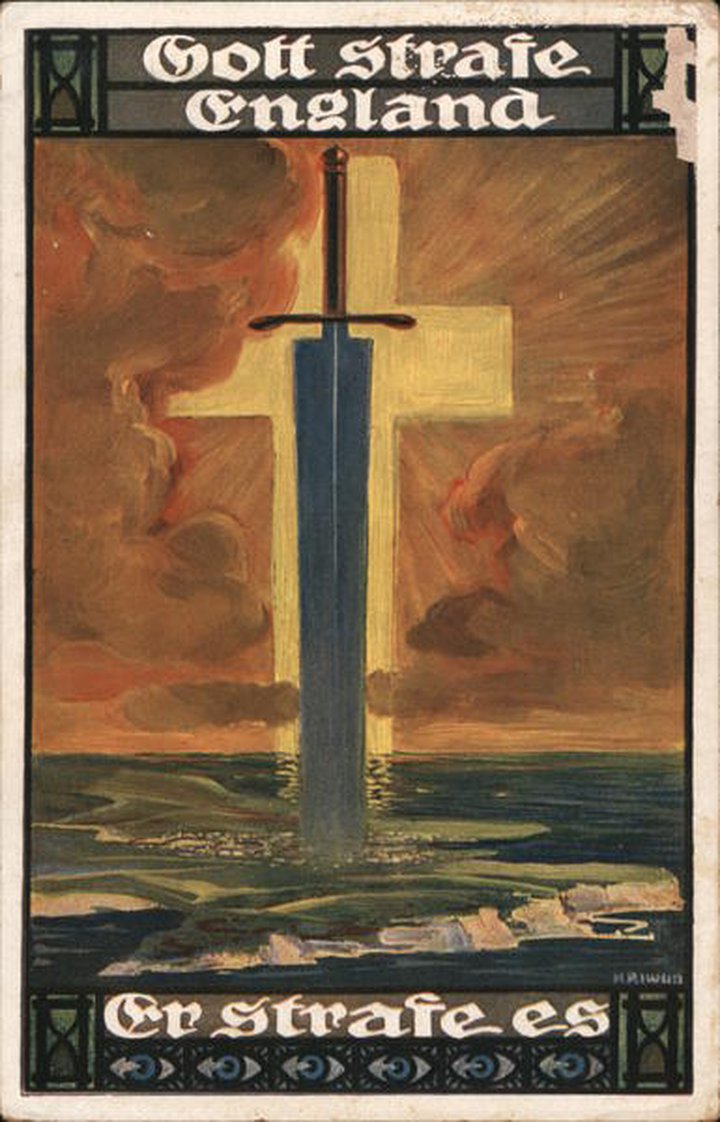
1915 German poster, “May God punish England.” (Public domain)
Back to the Super Bowl. I don’t have a horse in this race (or whatever the appropriate metaphor is), being somewhat fuzzy about the Super Bowl — as I understand it, it’s a game of rugby football played by jocks in full body armor. Beyond that, I’m clueless. I would say, “May the best man, or men, win,” but if only God knows what counts as “best,” that seems a pretty idle and possibly counter-intuitive wish, given Benson’s results. Let me just state though, for the record, that Liverpool will win the Football Association Cup Final this May at Wembley Stadium. Just, please, don’t pray for them.
THE ECONEWS REPORT: Talking TOUGH With the HUFF!
LoCO Staff / Saturday, Feb. 5, 2022 @ 10 a.m. / Environment
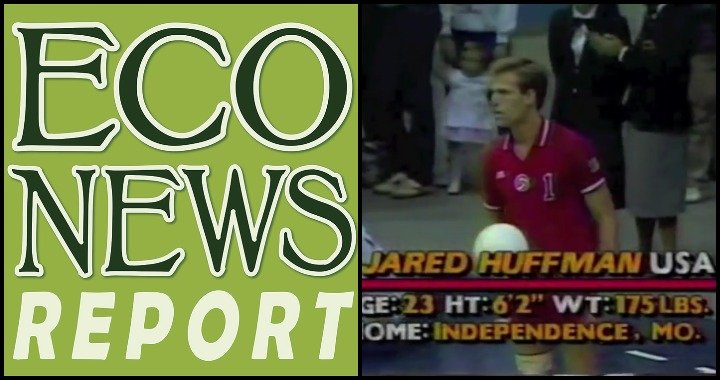
He lives to serve. Still, via YouTube, from the 1987 USA Volleyball match against China.
Congressman Jared Huffman joins Gang Green for a fun conversation about his legislative priorities for 2022, the prospect of the Build Back Better agenda and voting rights legislation currently stalled in the Senate, and his thoughts on California’s legislative redistricting.
AUDIO:
RODRIGUEZ TRIAL: Medical Examiner, Other Evidence Specialists Testify to Manner of Victims’ Deaths
Rhonda Parker / Saturday, Feb. 5, 2022 @ 7:35 a.m. / Courts
For 32-year-old Jeremy Kuemmel it was three bullets to the back, ripping through vital organs and perforating his aorta.
For Kuemmel’s girlfriend Tiffany Ellebrecht, 31, it was three bullets to the chest and one to her left temple. The bullet to her temple traveled through her brain and exited her forehead.

Rodriguez.
Yesterday Dr. Mark Super, who performed the couple’s autopsies, testified during the trial of alleged murderer Ulisses Rodriguez. Super described the paths of the bullets and said both victims were already dead when their bodies were consumed by fire in the back of Kuemmel’s SUV.
Super said when Ellebrecht’s body bag was opened, he noticed something immediately.
“There was a chain,” he said under questioning by Deputy District Attorney Trent Timm. “A large, heavy chain wrapped around her.”
According to testimony from eyewitness John Doe, Rodriguez made him wrap chains around both bodies so they could be pulled into the back of Kuemmel’s Ford Expedition. When Doe heard gunshots and Rodriguez took him to the bodies, Ellebrecht was in the driver’s seat of the Expedition, slumped over the steering wheel. Kuemmel was standing next to Ellebrecht “embracing her,” Doe thought.
Yesterday the jury saw autopsy photos, which were unusually gruesome because the bodies were so ravaged by the blaze. A lot of skin had been charred, and in some places the skin had burned away.
Rodriguez allegedly committed the murders and arson on Aug. 14, 2018, at a marijuana grow site in the China Creek area of Southern Humboldt. According to earlier testimony Rodriguez believed that Kuemmel, one of his workers, had stolen some plants.
Super said there was little clothing left on the bodies, but on the clothing remaining the odor of gasoline “was very strong.”
Although most of the bullets passed through the bodies, one lodged in Kuemmel’s neck and one in Ellebrecht’s chest. Super said the bullets were of “medium” caliber and could have come from a .357 magnum (the weapon Rodriguez is believed to have used.)
During opening statements in the trial, defense attorney Andrea Sullivan told the jury Kuemmel and Ellebrecht had extremely toxic levels of methamphetamine in their bodies. A defense expert is expected to testify the levels were the highest he’s ever seen.
Asked about that, Super said “not even close.”
During cross examination by Sullivan, Super said Kuemmel’s meth level was 2.17 mg per liter and Ellebrecht’s was at 2.25 mg per liter.
Timm then re-questioned Super, asking “Was it from smoking methamphetamine that she (Ellebrecht) died?”
“No.”
“How about Mr. Kuemmel?”
“No.”
Then Timm asked about the highest levels of meth Super has ever found in a body.
“I’ve seen 8.”
Also testifying yesterday — all via Zoom — were three senior criminalists from the California Department of Justice. To summarize their testimony: No blood was found on a blanket and clothing items taken from Rodriguez’s Lexus. There was human blood on the interior of the front passenger door, but it did not belong to either victim.
Also, Kuemmel’s DNA was found on a Marlboro cigarette butt found at the shooting scene. Mixed DNA from Kuemmel and Ellebrecht was on a Camel cigarette butt in the same area. On two small rocks on the ground was blood from Ellebrecht. On a third small rock was blood from both victims.
Rodriguez’s DNA was located on some black Latex gloves.
Both Kuemmel and Ellebrecht were identified by comparing their DNA to samples provided by their mothers.
Another witness, Deputy Coroner Trevor Enright, was able to narrow the time of the alleged arson to a period of a few minutes. The first 911 call came in at 8:22 p.m. when a passing driver saw the blazing Expedition in a turnout on Briceland Road.
Enright testified that a sheriff’s deputy had driven by the turnout at 8:15 “and there was nothing there.”
A surveillance video from a Redway gas station shows Rodriguez filling up a gasoline can at about 6:30 p.m.
Testimony is expected to continue Monday morning before Judge Gregory Elvine-Kreis.
###
PREVIOUSLY:
- Chico Man Arrested in Connection to Two Bodies Found Inside Burning Vehicle Near Ettersburg Junction
- Chico Man Pleads Not Guilty to SoHum Double Homicide
- Preliminary Hearing Set for Chico Man Charged With SoHum Double Murder
- Chico Man Held to Answer for Murder of SoHum Couple in Dispute Over Stolen Weed
- COURT ROUNDUP: Trial for Suspect in Gruesome SoHum Double Murder Set for Christmas Eve; Godoy-Standley Judged Mentally Competent; Fortuna Murderer Gets Two Years’ Credit
- HUMBOLDT COURT ROUNDUP: Updates on Two Murder Cases, Two Attempted Murder Cases
- COURT ROUNDUP: Mck Woman to Plead Guilty to Manslaughter; Hoopa Man’s Murder Trial Set to Begin; More Updates
- TODAY in COURT: Bear River Triple-Murderer’s Sentencing Delayed; Double-Murder Trial Over SoHum Couple’s 2018 Deaths Scheduled to Start Next Week
- TODAY in COURT: Two Local Murder Cases Moving Forward
- RODRIGUEZ TRIAL: First Testimony in SoHum Double Murder Trial Describes How the Burning Vehicle and Bodies Inside Were Found
- RODRIGUEZ TRIAL: Terrified Witness Describes Being Forced to Handle Bodies at Gunpoint
- RODRIGUEZ TRIAL: Detective Describe How They Tracked Down Double Murder Suspect and a Witness
- RODRIGUEZ TRIAL: Accused Murderer Spent the Days After Killing Searching for New Cars and Reading About the Crime, Investigator Testifies
- RODRIGUEZ TRIAL: Text Messages Suggest SoHum Murder Suspect Was Planning to Rob His Own Grow Operation, Prosecution Argues
THE CANNABIS CONVERSATION: Cannabis as Medicine
Jesse Duncan / Saturday, Feb. 5, 2022 @ 7:30 a.m. / Cannabis

Photo by Sharon McCutcheon on Unsplash
###
The medicinal use of cannabis dates back thousands of years. Emperor Shen Nung, the so-called father of Chinese medicine, included cannabis in the country’s pharmacopeia in 2800 B.C. Therapeutic cannabis applications are also referenced in historical texts of Indian Hindus, Assyrians, Greeks, Romans, and others. Cannabis was introduced to Western medicine in 1841 by William Blake O’Shaughnessy, and for the next 100 years it was used for a variety of ailments including arthritis, depression, inflammation, pain and appetite stimulation.
Beginning in the late 1930s, a prohibitionist fever swept through the United States and cannabis was demonized. The Marijuana Tax Act of 1937 effectively taxed medicinal cannabis out of existence, while the Controlled Substances Act of 1970 formally put the nail in the coffin, arguing that cannabis had no medicinal value and that cannabis had a high potential for abuse. This classification of cannabis as a schedule I drug persists to this day and places grass in the same company as heroin and meth.
Beginning with California’s Compassionate Use Act of 1996, the pendulum swung yet again and medicinal cannabis came back into the fold. Since then, 36 states have legalized medical pot, while 18 have also allowed for adult use or recreational consumption. Given that cannabis is still illegal at the federal level, national research and development efforts have lagged. Fortunately, research among some states and in nations like Canada and Israel has exploded in recent years, providing real credibility to the concept of cannabis as medicine.
Opponents of cannabis often argue against medicinal use, saying that the very notion is ridiculous. While it’s true that some individuals used medical cannabis permits to grow and sell weed illegally, dismissing the medical benefits of cannabis is short-sighted and outdated. I, like millions of others around the globe, have seen the medicinal benefits of cannabis firsthand.
My mother was terribly ill when being ravaged by cancer treatments for a second time. Suffering from severe nausea, pain, loss of appetite, and trouble sleeping, she had been prescribed liquid morphine and strong nausea meds. These conventional treatments didn’t work and also became habit-forming. Watching mom suffer and getting strung out on pharmaceuticals was intolerable, so I spearheaded a medicinal cannabis program for her. During chemotherapy, she would vaporize strong cannabis flower for nausea relief and appetite stimulation. Post-treatment, she transitioned to edibles and Rick Simpson Oil capsules to help with pain management, sleep and depression. Through consistent and measured cannabis dosing, mom weaned off the narcotics entirely and passed with a much greater level of personal dignity.
In terms of my situation, I suffered from a hip dislocation years ago. I had both hips reset so many times I was bruising from the inside out and was in constant pain. I had trouble walking, sitting, and standing, and lived with acute pain for approximately three years. I believe strongly in cannabis as a tool for harm reduction and chose to consume ganja over a combination of narcotics, muscle relaxers, and OTC pain meds. While the cannabis didn’t remove the pain entirely, it took the edge off and reduced pain-induced nausea significantly. What I know with certainty is that if I had consumed pharmaceuticals for those few years, I would have become highly dependent on them and my quality of life would have been further reduced.
Fortunately, cannabis research is currently undergoing a renaissance around the globe. Here in the United States, a recent change to longstanding Federal policy promises to bolster efforts to study the plant and its medical benefits. Since 1968 U.S. cannabis researchers had only one source for product, the University of Mississippi. As such, supply was limited for years. The DEA has recently opened the doors for research-driven grower applications and a couple have already been issued, with more to come. The move strengthens the supply of cannabis for research and development and offers real hope for those seeking alternative medical solutions.
The list of potential therapeutic applications for cannabis is highly promising. Studies are currently underway regarding the ability of cannabis to treat a range of serious ailments. CBD or cannabidiol is a non-psychoactive component of the plant garnering significant attention. CBD is being studied for relief from insomnia, anxiety, spasticity, pain, and other health conditions. Remarkably, CBD has also shown huge promise in relation to Dravet Syndrome, an aggressive form of childhood epilepsy.
Famously, the story of a young girl named Charlotte Figi helped cement CBD oil as a breakthrough treatment offering hope to thousands of families across the world. Charlotte was suffering from hundreds of seizures a month and had limited function before experimenting with CBD. After initiating a daily CBD program, her seizures dropped to a couple per month and her quality of life was radically improved. Frankly, it saddens and disgusts me to know that some people, even in light of this clinical evidence, would prefer condemning a child to a death sentence rather than exploring a cannabis-derived treatment.
THC, the cannabis compound known for getting you high, also shows enormous potential for improving health and wellness. THC is being explored as a tool for managing Fibromyalgia, Parkinson’s, Glaucoma, PTSD, HIV-associated pain and wasting syndrome, Irritable Bowel Syndrome, Crohn’s, Multiple Sclerosis, chronic pain, nausea, and many more.
While still in the early innings, some research indicates that combined loads of THC and CBD have been shown to slow or stop the growth of some cancer cells in lab settings. Calls for increasing R&D in this area are growing. In fact, “the American Cancer Society supports the need for more scientific research on cannabinoids for cancer patients and recognizes the need for better and more effective therapies that can overcome the often-debilitating side effects of cancer and its treatment. The Society also believes that the classification of marijuana as a Schedule I controlled substance by the US Drug Enforcement Administration imposes numerous conditions on researchers and deters scientific study of cannabinoids. Federal officials should examine options consistent with federal law for enabling more scientific study on marijuana.” Amen!
Additionally, terpenes, or naturally occurring compounds found in plants, are garnering lots of attention for their medicinal properties. Cannabis has numerous terpenes, some of which are being explored for anti-inflammatory, antioxidant, anticonvulsive, antidepressant, anticancer, antitumor, anti-allergic, antibiotic, anti-diabetic, and neuroprotective attributes. Emerging science also indicates that the interplay between terpenes and cannabinoids like THC improves and enhances the efficacy of cannabis as medicine. This is why I prefer consuming full-spectrum products like live resin cartridges, ice hash gummies, and full-term organic flower grown in native soil.
The concept of medicinal cannabis is difficult for some to accept. Long-held stereotypes demonizing the use of cannabis have been prevalent to differing degrees around the world, and that won’t change overnight. Thankfully legalization and a growing body of evidence suggesting that cannabis can treat a host of serious ailments are helping break down barriers and allowing for more meaningful and truthful dialogue around the issues of health and wellness. More and more individuals have come to realize that Western Medicine and our reliance on powerful and politically connected pharmaceutical giants can be a losing proposition. Expensive and potentially harmful lab products have been favored over a more natural, holistic approach to healing and this has to end. I expect meaningful progress in cannabis R&D over the coming months and welcome the advances and treatment options this will bring.
###
Jesse Duncan is a lifelong Humboldt County resident, a father of six, a retired financial advisor, and a full-time commercial cannabis grower. He is also the creator of NorCal Financial and Cannabis Consulting, a no-cost platform that helps small farmers improve their cultivation, business, and financial skills. Please check out his blog at, his Instagram at jesse_duncann, and connect with him on Linkedin.
OBITUARY: Leland Roy Madsen, 1938-2021
LoCO Staff / Saturday, Feb. 5, 2022 @ 6:56 a.m. / Obits
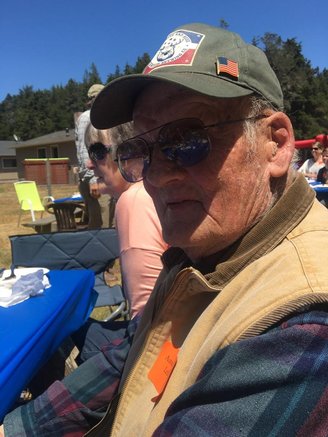
Leland Roy Madsen passed away unexpectedly on December 6, 2021 at his family home in Fortuna. Leland was born on December 25, 1938 in Fort Bragg to Niilo and Aune Madsen. He moved to Humboldt County in 1947. He and Patricia married in April of 1976.
A wonderful loving husband, father and grandfather. He attended Fortuna High School where he enjoyed playing football. He then enlisted in the army, spending most of his service time in Germany. A true patriot and hardworking man. After returning home from the service he had many jobs in the Humboldt area. He worked at the lumber mill in Carlotta, Hilfker Pipe Co. in Eureka, and retired driving truck for Don E. Nolan Trucking. Leland came right back out of retirement and went back to driving trucks and was always mechanicing on the side.
Leland enjoyed watching football with family, mechanics, carpentry, fishing, camping, short drives and outdoor adventures. More recently he found peace watching the river run or the birds chirping while enjoying his cup of joe on the porch. His time with family was very important to him. He enjoyed going on road trips to visit his brothers and other family members. After his children and grandchildren aged, you could still find Leland and Pat at the ballpark watching a ball game supporting our local youth.
Leland was preceded in death by his mother and father Aune and Niilo Madsen, brother Neil Madsen, sister-in-law Janice Madsen, nephew Michael Madsen, sons-in-law Jason Johnson and Brad Armstrong, brother-in-law Bud Townsend.
He is survived by his wife, Patricia Madsen; daughters Sonja Armstrong, Tara Johnson (Sage Foley); stepsons Mark and Todd Gaboriault (Debra); grandchildren Derek Johnson, Bailey Foley, Adrienne and Maxton LeRoy, Brooklyn and Beau Armstrong, Broc Gaboriault, Mallory Phillips, Hannah Nevins, Nick and Ross Gaboriault; great-grandchildren Veronica Cruz and Sophia Shelton; brothers Melvin Madsen (Marilyn), Gary Madsen (Karen); sister-in-law Peggy Macy (Gary); nieces Cheryl Pelto, Debbie Bearden, Terri Hosie, Jennifer Powell, Stacey Madsen, Ann Madsen Daly; nephew David Madsen.
A celebration of life will be held at the Methodist Church in Fortuna on Saturday, February 26, at 1 p.m.
###
The obituary above was submitted on behalf of Leland Madsen’s loved ones. The Lost Coast Outpost runs obituaries of Humboldt County residents at no charge. See guidelines here.
Struggling Businesses and Starving Artists! If You’re in Eureka and the Pandemic Has Thumped You Hard, You Might Want to Apply For One of These City Grants
LoCO Staff / Friday, Feb. 4, 2022 @ 11:37 a.m. / Business

Look at these art-loving Eurekans chilling at the Morris Graves! Think how sad they’d be if your struggling cultural institution or small business failed to apply for these funds. Graphic: City of Eureka.
###
Press release from the City of Eureka:
The City of Eureka has two programs using ARPA funds to support small businesses in Eureka.
The first is the Eureka Small Business Bridge Program. The City has set aside $500,000 to provide rent relief grants up to $7,500 for small businesses, to pay unpaid and pending rent from January 1st through April 30th.
To be eligible for this program, businesses must meet the following eligibility requirements:
To view the program and application, please click this link.
- They must be a for-profit business or a non-profit entity that has been negatively affected by the pandemic
- Applicants must have had a 20% or more reduction in gross revenue resulting from COVID-19
- The business owner must live in Humboldt County.
- The physical commercial address must be in Eureka, and must have a valid City of Eureka business license.
- Business must have 20 or fewer full-time employees including the business owner (Businesses may include part-time employees in its full-time equivalent count, 2 half-time employees = 1 full-time employee). Sole-proprietors and single-person companies are eligible.
- Businesses must have been in business as of March 1, 2020.
- Businesses with active code violations and home-based businesses are not eligible, and individuals that own or have interest in more than one business will be limited to one grant.
For additional information please contact:
Christine Tyson
ctyson@ci.eureka.ca.gov
707-441-4178###
The second is the Eureka Art & Culture COVID Grant. The City of Eureka has set aside $130,000 to provide grants of up to $7,500 to support eligible art & culture related entities located within the City that have been affected by COVID-19 in order to support their continued operation. The deadline for applications is April 1st.
To view the program and application, please click this link.
For additional information please contact:
Swan Asbury
sasbury@ci.eureka.ca.gov
707-268-1830


