

Sheriff’s Office Arrests Man Accused of Firing Rifle at Hoopa-Area Home
LoCO Staff / Monday, Sept. 1, 2025 @ 10:52 a.m. / Crime

Recovered weapon. Photo: HCSO.
Press release from the Humboldt County Sheriff’s Office:
On August 31, 2025, at approximately 1:50 a.m., deputies from the Humboldt County Sheriff’s Office (HCSO) responded to a report of shots fired at a residence in the 300 block of Big Hill Road, Hoopa. Upon arrival, deputies determined that an altercation involving multiple residents had occurred. The investigation revealed that Joshua Sky Teal, 46, allegedly discharged several rounds from a rifle into the air. Teal, who is on active felony probation with search and seizure conditions, was detained at the scene.
A subsequent search of Teal’s residence resulted in the recovery of a .22 caliber rifle equipped with a high-capacity magazine and an illegal suppressor. Teal was arrested and booked into the Humboldt County Correctional Facility on the following charges:
- PC 29800(a)(1): Felon in possession of a firearm
- PC 30305(a)(1): Felon in possession of ammunition
- PC 33410: Possession of a suppressor
- PC 246.3(a): Negligent discharge of a firearm
- PC 1203.2(a): Violation of probation
Anyone with information about this case can call the Humboldt County Sheriff’s Office at (707) 445- 7251 or the Sheriff’s Office Crime Tip line at (707) 268-2539.
BOOKED
Yesterday: 8 felonies, 13 misdemeanors, 0 infractions
JUDGED
Humboldt County Superior Court Calendar: Yesterday
CHP REPORTS
Salmon River Rd / Sr96 (YK office): Car Fire
ELSEWHERE
RHBB: Day Five on the Eel River: Sheriff Calls Recovery a ‘Little Win’ in a ‘Terrible Situation’
Times-Standard : Few large-animal vets juggle after-hours emergency care
Times-Standard : Civic calendar | Blue Lake to discuss water, sewer rate increases
RHBB: Juan Heredia Assists in Ongoing Eel River Search for Missing Covelo Woman
OBITUARY: James ‘Dan’ Ford, 1937-2025
LoCO Staff / Sunday, Aug. 31, 2025 @ 6:56 a.m. / Obits

James “Dan” Ford
April 8, 1937 – August
21, 2025
James “Dan” Ford was born on April 8, 1937, in Caddo County, Oklahoma, to Arnold and Ida Ford. He was the eldest of three brothers, followed by Frank and Jim.
Dan moved to Carmel Valley in the third grade and later settled in Porterville, where he spent his school years from sixth grade through high school. In 1960, he moved to Trona, California, where he began his pipe fitting apprenticeship. In 1966, he relocated to Humboldt County to work at the local pulp mill, where he dedicated 35 years of hard work before retiring.
Dan married his first wife, Mary, in 1958. Together they raised three children: Doug Ford married to Emma, Arnie Ford, and Letty Frakes.
On June 15, 1974, Dan married Charlotte, his loving wife of over 51 years, and her children Mike Fridley married to Monika, and Tawnie Hansen married to Rob. When they joined their lives, Dan bravely helped raise them as his own. Together, they built a strong and loving blended family and shared a life full of laughter, adventure, and resilience.
Later in life, Dan was the proud “Papa” to his eleven grandchildren (and many great grandchildren) Jeremy Ford, Andrea Scharffer, Arnie Ford, Jeff Ford, Nathan Frakes, Marianne Frakes, Sarah Grow-Frakes, Alex Fridley, Logan Osser, Miranda Walstrom, and Logan Hansen. Despite being a tough, strong man, his grandchildren always found a way to his soft side; he adored them dearly.
Dan had a passion for the outdoors — he loved fishing, hunting, and anything that danced on the edge of the rules. Many of his favorite memories were centered around his summer vacations to fish at Aikens Creek or hunting trips to Montana, Idaho, and Kettenpom. He loved his weekly trips to the Moose Lodge to visit with his friends. He was a man of many talents. He always had a creative and original solution to any problem and could accomplish more than most with a can of WD-40, duct tape, and a beer. Every time he spoke, it was going to be exactly what he was thinking without mincing words. Because of that, he will always be remembered by many for his one-line phrases or “Papaisms.”
He passed away peacefully at home on August 21, 2025, surrounded by his loving family. He leaves behind a legacy of a strong and loving man who cannot be replaced. We all love you Papa!
In lieu of a service, at his wishes, there will be a private family ceremony to spread his ashes.
###
The obituary above was submitted on behalf of Dan Ford’s loved ones. The Lost Coast Outpost runs obituaries of Humboldt County residents at no charge. See guidelines here.
THE ECONEWS REPORT: New Crosswalk, Who Dis?
The EcoNews Report / Saturday, Aug. 30, 2025 @ 10 a.m. / Environment

Image: Elvert Barnes, via Flickr. CC BY-SA 2.0 license.
Government often moves slow. This is a problem when there are immediate safety concerns for a street. The solution: Quick-build projects, which employ cheap and quick materials, like paint or plastic bollards. You may have seen this strategy in action, with new crosswalks and other improvements coming to local streets. Colin Fiske of the Coalition for Transportation Priorities joins the show to talk about quick-build projects and ways we can help identify other roads that need a tune-up.
RESOURCES:
HUMBOLDT HISTORY: The Cement Men of Olden Times, and The Backs They Broke to Build a Concrete Eureka
Glen Nash / Saturday, Aug. 30, 2025 @ 7:30 a.m. / History
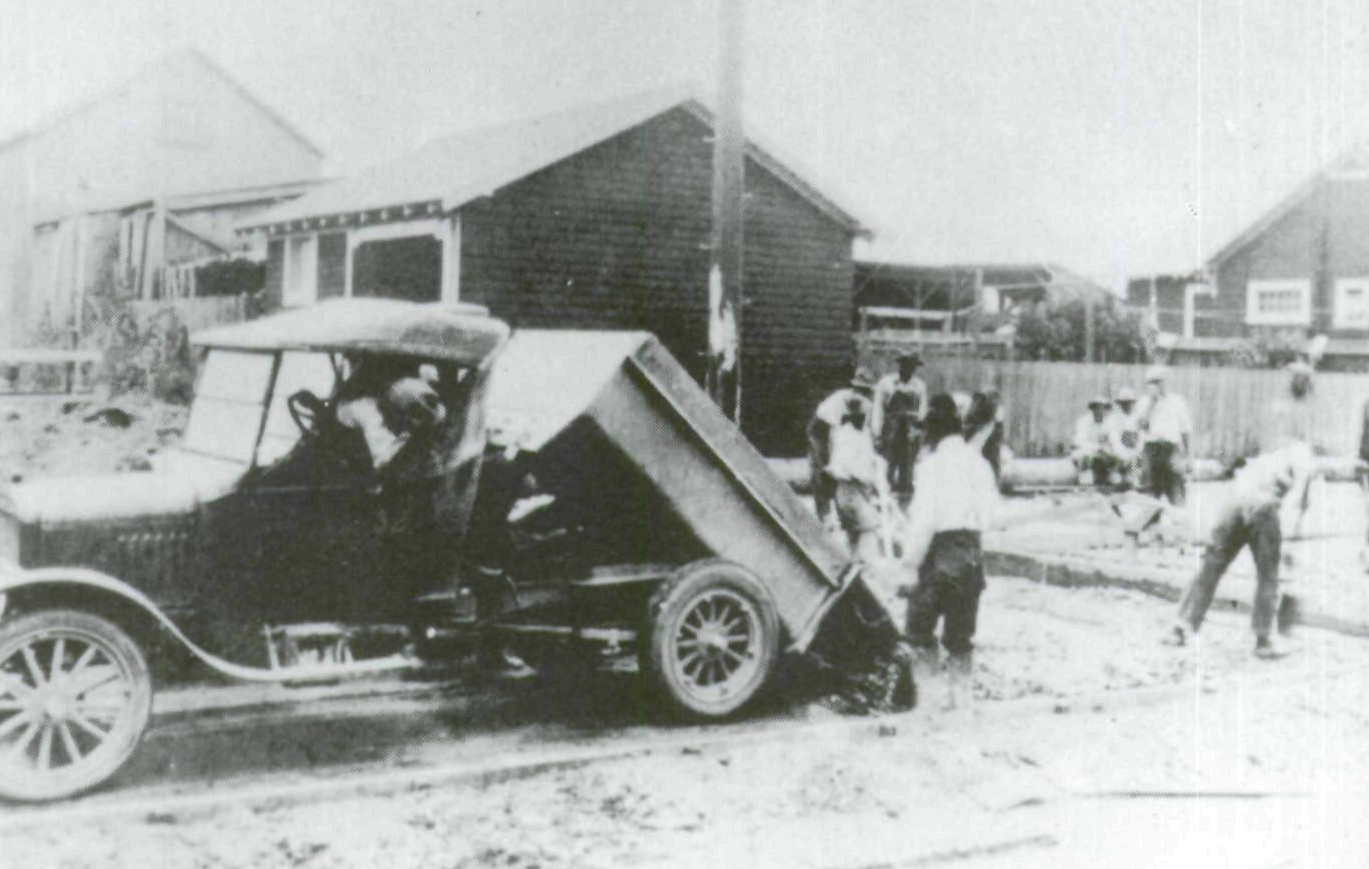
Men from the Englehart Paving-Construction Co. poured concrete on Henderson Street with the help of a Model-T dump truck. Photos via the Humboldt Historian.
Cement was used by man when he first started to build. The Assyrians and Babylonians used a clay for cement. The Egyptians used lime and gypsum cement in the building of the pyramids in 2500 B.C. The Greeks made further improvements in cement and the Romans perfected a hydraulic cement, called pozzolana, in their buildings and roads, using a mixture of slacked lime and volcanic ash from Mt. Vesuvius.
The use of cement is not new, but improvements have been made in this country with the discovery of a stone in Madison County, N.Y., which resembled a stone found on the Isle of Portland. In 1824 Joseph Aspdin patented a hydraulic cement made from this stone, hence the name “Portland cement.”
The builders in Eureka and Humboldt County have been using concrete since the first settlers arrived. All they waited for was the cement which was shipped in by ships (there has always been plenty of good sand, gravel and water locally).

For many years before the 1920s, gravel and sand were hauled by horses and wagons from the mouth of Elk River, where the gravel was shoveled on to the wagons by hand; these wagons held a cubic yard. A cubic yard of gravel weighs over 3,000 pounds, which was a heavy load for a team of horses to pull. These wagons were heavy, the bottom of the box was formed of 12 2x4s, making it 3 feet wide and about 12 feet long. These 2x4s had rounded handles formed on the back end, and side boards built out of 2x12s. The end boards were 9 feet apart, allowing the wagon to hold 27 cubic feet.
When the loaded wagon arrived at the job site, the side boards were pried off, some gravel would fall, then each 2x4 would be turned by hand, dumping the gravel on the ground. The side boards would then be replaced and the team would head back for another load. There is one of these gravel wagons at the Ferndale Museum, though not in very good shape.
As I recall, two of the early teamsters who hauled gravel to the Eureka job sites were the McLaughlin brothers, Ben and John, founders of the Eureka Sand and Gravel Company.
Concrete was mixed by hand using a mortar box and shovels. Usually two men were involved in the process, one each side of a box about 6 to 8 feet long, 4 feet wide and with sides 8 inches high. This box would first be placed along side of the gravel pile. Each man would then throw in so many shovels of gravel and then so many shovels of cement (the amount of cement depended on how “rich” the mix was to be). The mixture would then be shoveled from one end of to the other and turned over several times until it was thoroughly mixed. Some water would then be poured on and again it would be turned over until at last it was concrete.
This mixture would be shoveled into wheelbarrows, wheeled to and then dumped into forms or into a specific place such as a floor or sidewalk. Next would come the job of finishing with wooden floats and trowels. If the project was a floor or sidewalk, the base would be poured first; this would be kept about 1/2-inch low when it was screeded off. Then a mixture of sand and cement was poured on top. This was then finished to a nice smooth surface and, if it was a sidewalk, was marked off in squares.
Some times the base was left until the following day, when the topping would be applied. In case of rain or a freeze, this had to be covered to protect it until it was set up. And then of course there were always people who wanted to scratch their name or initials in the new on surface. Though humorous to the “artist,” the next day it would be a job to get the scratches out. Once in a while someone would walk right down the middle of newly poured concrete, which would take a lot of work to fix.

Some of the old-time cement contractors marked their cement work with their names by using a brass casting. These were usually a half circle about 12 inches in diameter. Most of these men are gone now but their names are still stamped in various places around Eureka, especially on old concrete sidewalks.
Many of these old concrete sidewalks are still in use today though some are disintegrating as the salt content from the Humboldt Bay water causes the concrete to lose its strength.
In the early days when there was plenty of good redwood lumber available. Most of the sidewalks in the city of Eureka were made of 2-inch redwood planks. In the downtown area the sidewalks were 12-feet wide with planks running crosswise. In the outlying districts the walks consisted of two or three, 2x12 planks running lengthwise. The last remaining plank sidewalk in Eureka was torn up this year but one can see what they looked like by referring to old photos of the downtown area.
Some of the early cement contractors were: Worswick and Paine, Englehart Construction Co., Mercer Fraser Co., E. Morganti, Eureka Paving Co., Al Hill, Winston Olander, Jim Hubbard, Herb Langdon and Al Pearl. The later contractors included Walter Chase and O.E. Lombardi.

Kerosene red lanterns (left) and kerosene flares or torches were used to mark piles of gravel.
If a pile of gravel was to be left out on the street overnight, red coal oil lanterns would be lit and put on top to keep someone from running into it. Once in a while someone would steal these lanterns or break them. So, in later days, they were replaced with coal oil torches. The torches looked a little like bombs. They were black and measured 10 inches in diameter. These were not stolen as often as no one had use for them. Both lanterns and torches had to be refilled with kerosene and lit every night.
In the 1920s Portland cement came in burlap bags shaped like gunnysacks; the bags were later made of heavy cloth. When empty, these bags were hauled back to the dealer who gave credit for them. The dealers had large cylinder screens about 6 feet in diameter which revolved. The empty sacks were put in this screen and revolved for 10 minutes, shaking the last remaining cement out. This loose cement was scooped up and sold by the pound to the public. The cleaned bags were tied in bundles, tagged, then shipped back to the cement factory for credit. One such sack screen was located next to the Nelson Steamship Company Warehouse at the foot of C Street (cement often came in on Nelson ships). I recall handling many of these cement sacks at this place.
In the late 1930s cement came out in paper sacks. A sack of Portland cement contains 1 cubic foot and weighs 94 pounds. Those old cloth sacks of cement were very hard to handle, and I recall having had very sore fingers from this work. You couldn’t wear gloves and the abrasive sack would wear the skin off our fingers.
My first contact with concrete mixing occurred while attending Eureka High School during its woodworking class. J.E. Doren, the teacher, required the students who had taken his class for two years to mix concrete and pour it into forms for concrete posts. Those students who worked at this had their initials and the date they were to graduate impressed into a post. After the posts were removed, the forms were cleaned and oiled, ready for another batch. These posts were about 7 feet long and 5 inches square with beveled corners. They were installed all around the old high school grounds. Mine was installed right on the J Street side, with “G N N 28” on it.

In 1927 I was fortunate enough to be hired as apprentice carpenter by Halsby and Lax Contractors to work on the building of a large water tank located on the northeast corner of Harris and E streets in Eureka. Part of my job was to help with the concrete pouring. Al Hill, who held the contract to pour the concrete, had an old concrete mixer consisting of a wooden barrel on a four, iron- wheel trailer. This barrel was turned by a one-cylinder gasoline engine with a chain drive which was a lot better than mixing by hand. The wheelbarrows also had iron wheels, which were tricky and hard to handle. One had better not run off the plank with them or one would lose the load of concrete.
I remember back to 1928 when John Halsby, contractor, was awarded the job to install a cyclone fence around the deer and elk pen at the Sequoia Park — the first cyclone fence ever installed in this area. The iron posts had to be set in concrete and a low concrete base had to be poured all the way around this pen, several hundred feet long. Another young man, Allan Moe, and myself were apprentice carpenters working for Halsby at this time. Halsby had us build a mortar box on a sled about 10 feet long, with a chain fastened to the front. Halsby then hired a team of horses to pull this sled around to the gravel piles by hand in this sled, then it was pulled around the fence forms and shoveled in. Part of this fence still remains as a monument to our hard work.
During 1926 the Englehart Paving Company had a contract to pave Seventh Street and Henderson Street with concrete, two of the finest street pavement projects in Eureka to this day. Englehart had a concrete mixer plant at the foot of K Street which processed the gravel and cement delivered by railroad. The company had several Model T Ford dump trucks which hauled about one yard of concrete each to the job. The box on the back had to be cranked up by hand in order to dump the concrete. The mixture was then spread by hand and screeded off with a long plank tilted on its edge and with plow handles on each end. The concrete was then tamped to form a good surface. These streets are still there today though covered with asphalt.

Dozens of men worked long hours at pouring the concrete used to construct Fernbridge. Note the large, iron wheel carts used in the process.
One of the early, very large jobs of concrete pouring was the Fernbridge in 1910. A concrete batching plant was first set up, complete with large concrete mixer. The concrete was wheeled out on the bridge by men pushing iron, two-wheel concrete carts. Thousands of yards of concrete were poured and still stand today.

Many concrete buildings in Eureka were built pouring concrete with the use of old concrete mixers and wheelbarrows. Building projects included the Eureka Auditorium, the Veterans Memorial Building, the Montgomery Ward Building (which is now the U.S. Bank on Fourth and F streets) and many other smaller buildings.
In the late 1930s concrete mixer trucks came into use; this revolutionized concrete mixing and pouring, and made the job much easier. Gasoline-powered concrete buggies, power trowels and electric vibrators also came onto the concrete scene.
Today concrete is hauled to the job sites by giant mixer trucks hauling 12 yards or more of ready-mixed concrete. Mixed according to specifications, it is pumped by concrete pumps into forms and floors,vibrated with electric or gasoline powered machines, then finished with power troweling machines. Concrete work has become much easier and faster. I personally don’t think the concrete is any better, but a lot less sweat goes into it.
###
The story above was originally printed in the March-April 1993 issue of the Humboldt Historian, a journal of the Humboldt County Historical Society. It is reprinted here with permission. The Humboldt County Historical Society is a nonprofit organization devoted to archiving, preserving and sharing Humboldt County’s rich history. You can become a member and receive a year’s worth of new issues of The Humboldt Historian at this link.
OBITUARY: Harold George ‘Joe’ Thompson, 1941-2025
LoCO Staff / Saturday, Aug. 30, 2025 @ 6:56 a.m. / Obits
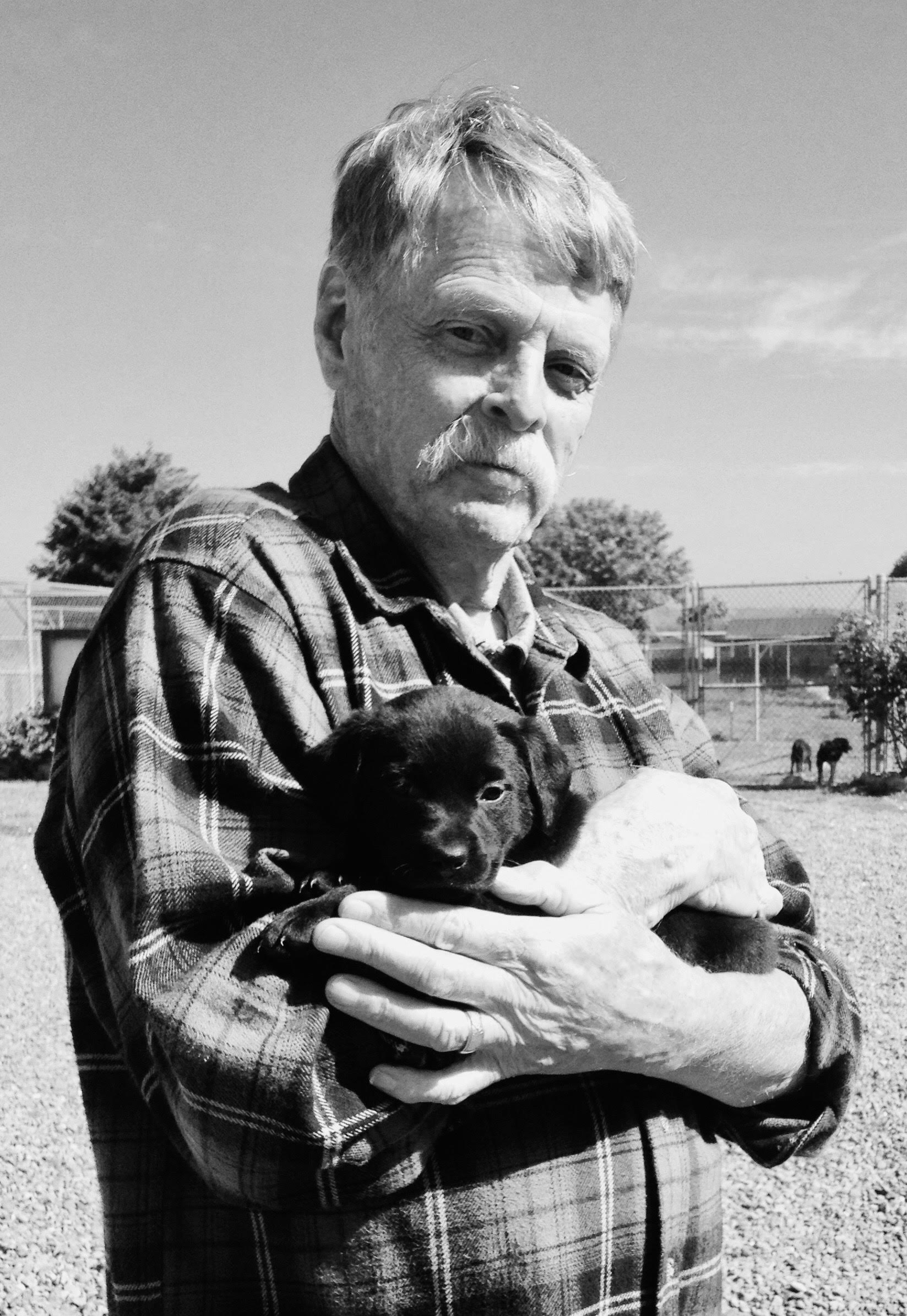
It is with profound sadness that we announce the passing of Harold George “Joe” Thompson. Joe was a man of many names and roles: husband, dad, papa, father mole, brother, uncle, neighbor, friend, peace officer and Knight of Columbus.
Joe’s story began in Massachusetts in 1941, during a time of great upheaval. Not long after his birth, Joe’s father, Harold Sr., was deployed overseas during World War II, leaving behind his wife Polly and their young son, Joe. With Harold away, Polly and Joe moved in with her parents James and Anna Dawson — a decision that would profoundly shape Joe’s life.
James and Anna became more than grandparents to Joe; they were his “dad and ma,” his anchors in a world of uncertainty. Anna, though blind, was a remarkable force of creativity and warmth. She crafted beautiful dolls, played the guitar, sang songs, and wove enchanting stories that captured Joe’s imagination. James, with his gentle spirit and steadfast love, became a guiding light in Joe’s formative years. Together with Polly, they created a nurturing and deeply connected environment that became Joe’s entire world.
When Harold returned from the war, he carried the invisible wounds of trauma and PTSD. Life changed again for the family when Harold moved Joe and Polly to Pittsfield where they lived in a big house they shared with Harold’s father Charles Thompson and many of his other relatives. In 1952, they drove with the family dog and cat in a 1938 Plymouth across the country to Chula Vista, Calif. Two years later, they settled in a tiny house on Creelman Lane in Ramona, Calif. The love and lessons Joe had absorbed during those early years with Anna, James, and Polly remained with him, shaping the kind-hearted and empathetic man he would become.
Those formative years instilled in Joe an extraordinary instinct and ability to connect with others — a quality that defined him throughout his life. His deep compassion and presence made him not only a joy to be around but also an exceptional peace officer. Whether he was helping people through mental health crises or navigating high-stress emergency situations, Joe’s ability to bring calm and understanding was a testament to the enduring influence of the love he received as a child.
Growing up in Ramona, Joe made lifelong friendships and lived through adventures that made headlines in the local paper. In the late ’50s, the Ramona Sentinel ran an article with the headline “Sonic Boom Frightens Santa Maria Valley Chickens.” That boom was dynamite. Joe, Bill Bowers and Frankie Groggins, friends from Creelman Lane, found 13 sticks of dynamite. They placed the bundle of dynamite under a boulder, added a blasting cap and primer cord, then ignited the dynamite with Joe’s Blue Diamond matchstick. The only damage was the boulder shooting up in the air and then landing and splitting in half. None of the boys were injured. He wrote to the paper 57 years later, confessing, stating that God protects idiots and children.
As a young teenager, Joe had a date with destiny. He was working at a local chicken ranch, collecting eggs to earn money for his first car. One day while hitchhiking to work, a man named Bernard Clauser pulled over to give him a ride. “Hop on in,” Bernie said. Joe looked in the car and saw six kids all piled on top of each other. “Sir, I don’t think you have room,” Joe said. “Of course we do,” replied Bernie. “In fact, we are on our way to pick up one more!” The family was on their way to pick up Mary Clauser, his wife, and new baby, Kathy Clauser.
An only child, Joe had always wanted siblings, and he immediately felt welcomed by the Clauser clan. Joe climbed in, found a seat next to a pretty young lady named Betty Jean Clauser (who already had her eye on Joe, having seen him in Algebra class), and all the kids chatted excitedly as they were looking forward to meeting their new baby sister. Joe told Bernie to drop him off at the edge of the farm property, but Bernie drove out of his way, taking Joe all the way onto the farm. Joe used to say that Bernie altered time and space that day. Joe and Betty became high school sweethearts, and were married in 1962. Bernie was another example of a kind, loving father, who was an important influence in Joe’s life.
Joe attended Ramona High, where he ran track, played football and basketball, and graduated in 1960. The Ramona High Bulldogs were CIF champs in 1959, with the Ramona Bulldogs holding a 23-game winning streak from ’59-’60. Joe was so excited when Ramona High repeated history 57 years later, attending a winning game with brother-in-law and fellow Bulldog Ed Keyser.
After Joe and Betty married, Joe held several jobs as the young couple started their family. As their family grew with the birth of Joe Jr. in 1963, then the birth of Theresa in 1964, Joe held several physically demanding jobs at once working as a milkman, a loader for Royal Crown Cola, and gas station attendant to make ends meet and pay their $100 a month mortgage. However, his situation improved in 1966 when he was hired as a forest fire truck driver by the California Division of Forestry, and the family moved to the Salton Sea. They later moved to Beaumont when he was promoted to the new position of Corpsman Advisor at Oak Glen Conservation Camp. Joe then applied to the California Highway Patrol and completed the CHP Academy in 1968. That same year, they welcomed their third child, Cheryl.
Joe’s great influence during this period was that of neighbors Bob and Marian Bruce, who became very close friends, and were like grandparents to Joe and Betty’s children. Bob was a kind and honest man who at that time was in his 70s, having been born in San Diego in 1894. Bob had a career as a Los Angeles Police Officer from 1924 to approximately 1950 and then served as Beaumont’s Chief of Police from about 1952 to 1962. Bob encouraged Joe to seek his career in law enforcement and to become civically active. Around 1970, Joe joined the Beaumont Library Board, where he served with Bob and others until around 1980.
In 1972, after the birth of their fourth child Meri, the family moved a short distance to a larger home in Cherry Valley, where Joe started a hobby farm where he kept bees, raised chickens, ducks and pigs, and planted a cherry orchard.
Joe had so many stories to tell, working the beat in the high desert of Southern California. He was an exemplary officer, who did not have one citizen complaint in more than 27 years on the job. For many years he gave presentations about the CHP and driver’s safety to the local high schools and was awarded Officer of the Year for his dedication to public service and for presenting an exemplary image for the CHP.
If you were pulled over, Joe was the cop you would hope for. Once he pulled over a woman whose car was smoking and falling apart. As he approached the driver’s side door, he saw her make the sign of the cross. He immediately returned to his patrol car and drove away. The woman sat in her car, appearing stunned. She undoubtedly had her own story to tell about the day she prayed a cop away.
After years of dedicated service at the Banning CHP Office, Joe was presented with an opportunity – a transfer to Humboldt County. With his signature foresight and unwavering care for his loved ones, Joe and Betty made the bold decision to relocate the family north, a move that would prove to be transformative for the family.
Humboldt County became the perfect place for the Thompson kids to thrive and carve out their futures. All four children pursued higher education at Humboldt State University, each excelling in their chosen fields and walking away with degrees that reflected individual passions and talents. Joe Jr. embraced his love for the outdoors, earning a degree in Wildlife Management; Theresa found her passion for educating children and obtained her degree in Education; Cheryl pursued a degree and career in Nursing, driven by her compassion for others; and Meri channeled her creativity and curiosity and earned a degree in Journalism.
The decision to transfer to Humboldt wasn’t just a geographical shift, it was a gift of opportunity and possibility, the foundation upon which we were able to build our lives. It was, without question, one of the wisest and most impactful choices Joe and Betty made for our family, shaping not only our careers but our futures in ways we did not imagine or understand at the time.
Joe and Betty purchased an A-Frame home in Eureka, with five acres of Redwoods, a creek, and the most amazing neighbors. Transitioning from the heat and blazing sun of the desert to the serene beauty of Humboldt County was an easy one. When the family would return to Southern California, emerging from gray, foggy weather to the bright sun of the desert, they began referring to themselves as “moles.”
Joe (Father Mole) was a reliable, trustworthy, and non-judgmental dad, and that was a gift that not many children have. As a father, grandfather and great-grandfather, Joe encouraged knowledge, creativity and curiosity. When his birthday, Christmas, or Father’s Day rolled around and we would ask what he wanted, he would just say, “Make it or find it.”
Joe and Betty always had an open-door policy welcoming their children’s friends, coworkers, and special people they met. This is how the Thompson kids got their bonus siblings, Dawn Peshka and Adam Jager.
Joe was a man who provided unwavering support, always providing a word of encouragement when you needed it; and sage advice when you may not have been ready or willing to hear it. Difficult words were delivered with kindness and love. Joe was always there for his friends and family. Joe was the guy who showed up. Need work on the old Craftsman or Victorian you bought? Call Joe. Broke down in that old Ford/Volvo/VW/Rambler/Comet? Call Joe. Broke down again? Call Joe. Moving? Call Joe. Moving again? Call Joe. Joe always said you can measure the strength of a friendship by who shows up to help you move your furniture. Random stray animals that needed rehabbing or a new home often came home with Joe: cats, trojan cats (pregnant cats), dogs, a raven, a crow, a pigeon, and the list goes on.
If something reminded him of you, he would not hesitate to reach out and share. Books were read and passed to another. Song lyrics or a link to a tune would randomly appear in text or email. Fictional stories were told to his kids to encourage creativity. Poems were written and gifted when least expected. However, Joe’s CHP stories were top notch gifts.
Of course, some stories were frightening tales of accidents and shootings, where we were reminded that his job was dangerous and there were very dangerous people in the world. But the stories we remember most demonstrated Joe’s funny side – stories not heard these days when people think of the Five-0.
Cheryl recalls as a teenager driving her friends to Fieldbrook one rainy night, when she was lit up by a patrol car. Her passengers were in a panic, wondering why they were being pulled over; but Cheryl had a feeling it may be her dad. When she pulled over and rolled down the window of her ’67 Volvo, a hand reached in with a bag of fresh popcorn. Cheryl took the bag, and the cop walked away. Her friends were initially silent, then as the cop drove off, her car filled with hysterical laughter. Clueless as to what just happened, Cheryl left them wondering why a cop sporting a Pink Floyd pin pulled her over only to make a snack delivery.
Joe wasn’t just a father – he was the heart of our family, the one who showed us what it truly meant to love deeply and care for one another. He had an uncanny ability to be there, fully present, anticipating our needs before we even realized them ourselves.
When his daughter Theresa was diagnosed with cancer and she lost her hair due to chemotherapy, Joe didn’t just offer words of comfort. Without hesitation or fanfare, he shaved his own head – a quiet, powerful action of solidarity and love. This gesture didn’t come as a surprise to any of us. This was who Joe was: a man whose actions spoke louder than words, a father whose love was boundless and unwavering. Such moments defined him. He didn’t just teach us to take care of each other; he lived it every single day. Through his presence, compassion, and his selflessness, Joe showed us what it means to truly show up for the people you love.
Not ready to slow down after retiring from the Highway Patrol, Joe reinvented himself. Trading his badge for a private investigator’s license, and launching his own business, Advantage Investigation, brought a renewed sense of purpose. Shifting from chasing suspects to uncovering truths was a natural evolution of Joe’s unwavering commitment to justice.
Joe’s remarkable character was demonstrated by the cases he chose to take on. Instead of working for high-powered clients or flashy organizations, Joe partnered with the public defender’s office, tackling cases where the stakes were often highest and the odds stacked against those he was helping. He wasn’t just an investigator, he was a seeker of truth, methodically piecing together facts to shine a light where it was most needed.
For Joe, being a PI was not just a job; it was a calling. He loved the challenge, the responsibility, and the opportunity to make a difference in people’s lives. In his eyes, truth wasn’t just something to be found, it was something to fight for. With sharp instincts, he fought tirelessly for truth. Joe dreamed of passing on his craft to a family member, but when none of the Thompson kids joined him, he found the ideal partner in Adam Jager, a retired CHP officer and bonus sibling to the Thompson kids.
Adam, lovingly nicknamed “Adam Mole,” had been like both a brother and son to Joe for more than 40 years. Their bond, rooted in decades of friendship and mutual respect, made Adam’s decision to join Joe in the PI field a natural fit. When Adam earned his own private investigator license, Joe was overjoyed – not for personal gain, but for the chance to see someone he deeply cared for thrive in a role he cherished. They shared an unbreakable bond that made them a powerful team, and watching Adam succeed became one of Joe’s proudest achievements.
Joe was a man of deep faith and was baptized in the Catholic Church in his 20s. Joe had been a CHP officer for a few years and was running late to work due to having been at church, which caused him to miss the daily briefing. During the briefing, a fellow officer, Ambers “Sonny” Shewmaker, had picked up a case of an accident that should have been given to Joe. Joe apologized for being late and asked if he wanted to hand the case back to him, and Sonny replied, “No, I got this one – we’ll switch back later.” Sonny worked the accident that night, then later pulled over a vehicle near Yucaipa for speeding, unaware that the vehicle was stolen. As Sonny was in his car using his radio, he was ambushed by the suspect who opened fire, killing Sonny. This event had a profound impact on Joe.
After Joe’s death, we found a prayer card in Joe’s handwriting, listing the names of loved ones that he prayed for daily. Among the list of names: Sonny. Accompanying the prayer list were lines from the poem “Desiderata.” “You are a child of the universe, no less than the trees and stars.”
Joe was a Knight with the Knights of Columbus, Council 1067, where he also served as Treasurer. Joe was also involved in a local book club, as he was an avid reader who enjoyed discovering and learning new things along with discussing different points of view. If there was something that Joe did not know about or understand, he approached it with respect and desire to learn.
Joe and Betty were married for 63 years. They shared in the joy of raising four children, 10 grandchildren, and three great-grandchildren with one more on the way. Joe was so proud of his family. He delighted in their accomplishments. In the last year of his life, Joe got to meet a new great-grandchild, Jonah; attend his granddaughter Megan’s graduation (with honors) from nursing school; and attend grandson Dawson’s graduation as a Louisiana State Police Trooper. Joe proudly gifted Dawson his road-worn CHP badge.
Joe would want us all to rejoice as he has been reunited with his beloved daughter Theresa; mom Polly, and dad Harold Sr.; great grandparents Anna and James; Bernard and Mary Clauser; nephew Erinn Edens; brothers Mel Hill, Ed Keyser, Don Clauser and Bill Clauser; Frank Scolari; Bob and Marian Bruce, and other friends and loved ones who passed before him.
A mass and celebration of Joe’s life will take place on Saturday, September 6, 2025. The mass will be held at 12 PM at Sacred Heart Church in Eureka, CA, followed by a celebration of life in the hall behind the church. The gathering will continue until 5 PM. We invite all friends and loved ones to join us to honor Joe’s memory — please come to share stories, sing, raise a toast, and rejoice in the remarkable life he lived.
Our family would like to thank Adam Mole, Daughter Dawn, Fr. Bernard, Fr. O’Hara, Fr. Mike, Fr. Elisio, The Knights of Columbus, the Apron Ladies, and the amazing, caring staff at Providence - St. Joseph Hospital. The nurses on PCU, ICU, Med Surg 3, ED, O.R., aides, lift team, nutrition services, lab staff, respiratory therapists, physical therapists, pharmacy staff, physicians, and imaging services. To Megan M. who was with us when our dad crossed over: your presence and compassion lifted our spirits. To Steve on MS3 night shift: You were a rock star. You continued to give our dad dignity and respect by not only caring for his medical needs, but by addressing him as Mr. Thompson throughout your shifts. You were professional, kind, and recognized Joe Thompson was a man whom we deeply loved. You are nursing excellence. If anyone is deserving of the Daisy Award, it is you. We will always remember you and the compassion you showed our dad.
In lieu of flowers or donations, please read a book to your kids or grandkids (preferably “The Hobbit”), pay for the person behind you, take your dog for a drive with the window down, or feed a raven or crow.
One final cop story for the road, direct from Joe’s “Volume I CHP Stories.”
“One day I was working an afternoon shift, and I came across a man and his family broken down on Hwy. 299, east of Blue Lake. The man looked like he was struggling to get by, but hard working. He had a wrench in one hand and a greasy fuel pump in the other.
‘Fuel pump quit,’ he said. I offered to drive him into town. He said he would appreciate that but no need. He did not have any credit or any money, and he just put the last of it into his gas tank to get to Weaverville. So, I said, ‘Come on. I’ll take you to someone who might have a fuel pump.’ I drove to the Napa Auto Parts store in Arcata and bought him a fuel pump. It brought tears to his eyes. He fixed the car in about 10 minutes and went on his way.
A few weeks later, a letter came to the CHP office. He didn’t know my name but wanted to thank the ‘officer that had a heart as big as he was tall.’
Of course I didn’t say anything. Cops have a way of needling each other. Did I want a new moniker ‘Tall Heart’? No. I preferred my nickname ‘Turbo Thompson.’
Because I was ‘slow and easy.’”
Officer Thompson - 10-10, off duty.
###
The obituary above was submitted on behalf of Joe Thompson’s loved ones. The Lost Coast Outpost runs obituaries of Humboldt County residents at no charge. See guidelines here.
OBITUARY: Marvin Mullen, 1949-2025
LoCO Staff / Saturday, Aug. 30, 2025 @ 6:56 a.m. / Obits

Marvin Mullen passed away on July 15, 2025, at the age of 76. He was born in Bremerton Junction, Washington on February 16, 1949, to Lee and Vi Mullen.
In the early 1960s the Mullen family moved from Washington to Orleans, to open up a huckleberry brush processing plant at the old Brizard Store. Soon after moving to Orleans, they were welcomed by the great ‘64 flood. At that time Marvin, attending Hoopa High School, was told to stay put as the roads to Orleans were too dangerous. Those who know him, know he didn’t listen. He worked his way back home crossing a log wedged over Bluff Creek channel that had created a new path directly to the Klamath River. Just at the end of high school, he met and had a 12- year marriage with Kathi Allen. During that time, they had their son, Richard (Richie) Mullen. Later in life, Marvin welcomed his second son, Jay Mullen.
Marvin absolutely loved the outdoors. He was raised to hunt, fish and to survive in the mountains. He took great joy in sharing this passion with his son Richie and grandsons Dan and Gavin. They had a standing tradition to meet up at Marvin’s place for their annual hunting trips. He guided bear hunts in Washington and California with his late friend Bernie Paque. He had bears that got on top of him and some that he got on top of. It has been said Marvin could catch a fish in the desert and harvest deer in the ocean. No matter where he went, he was successful outdoors. From catching a record Northern Pike in Colorado, an albino black tail deer in California, to a large, big horn sheep on the big island of Hawaii, he seemed to know just where to be.
His athleticism and endurance served him with many mountain hikes. He loved to hike into Red Cap Lake with friends and family. He tended to push the envelope in most things he did. One major hike was over the Trinity Alps from the northern side over to Junction City with one of his closest friends, Mike Neff.
His occupation consisted mostly of the timber industry, working for Arcata Redwood, Bracut Lumber and many years logging where his specialty was running a yarder. Later in his life he spent 3 years catching king crab in the Bering Sea.
Everywhere he went, he met people that presented adventures that he was open to trying. He was truly a man of adventures. While on a break in Alaska, he met and helped a person deliver fuel by flying in an old bomber plane to remote villages. On a stop in Portland from Alaska he accepted an invitation from a friend to go to Costa Rica. While in Costa Rica he met up and joined with a group of people from Europe to help study the Leather Back turtles along the coast.
He was also a fixture at the hydroplane boat races; he was always there to help his good friend, Roger Sanderson. He enjoyed this event so much that he gave it a shot himself, racing for a few years under the name of “2-Hy.”
Throughout his lifetime of adventures, he had acquired many friends that he could pick up the phone and call at any time. There is one special friend, Jim Osier, that has been by his side since they were in high school. Together they had seen it all, stood by each other through tough times and survived many amazing adventures together.
Marvin had a big personality. He was a rugged and adventurous mountain man, an intense hunter who was willing to try anything and compassionate in making time to help others in getting firewood, deer meat, bear fat for elders and offering up anything he had to help out.
In 2013, Marvin met his life partner, Terri Jones. The two of them made their home and life together in Orleans. They enjoyed countless nights sitting on their porch, overlooking the Klamath River, spotting bear, beaver, deer, and numerous other types of wildlife. They enjoyed gardening, taking walks and being companions together. Socializing with friends that dropped in to visit them was a daily way of life. As Marvin battled medical issues over the last 3 years, she was by his side doing whatever it took to keep him healthy.
He cherished hunting with his grandchildren Dan and Gavin. Fishing at Fish Lake with Zane and Taya.
He wasn’t a wealthy man in a monetary manner, but he was a wealthy man when it came to living life how he wanted to.
He is survived by his brothers Kevin Mullen (Bobbi Mullen), Mike Mullen, Dick Warden, his children Richard Mullen (Lacey Mullen) and Jay Mullen (Chelsea Mullen), Amanda Flesher (Justin Chapman), Randy Flesher, Jeremiah Jones (Jessie Jones), Brittany Jones, grandchildren Andrea Keating (Bryan Lee), Dan Keating (Zoe Keating). Gavin Keating (Ashley Keating), Zayden Valadao-Mullen, Mataya Valadao-Mullen, Marnie Beck, Perci Mullen, Nemesis Mullen, Christopher Ridenour Jr, Cody Chapman, Savannah Chapman, Joshua Jones, Danielle Jones and great grandchildren Owen Keating-Lee, Nash Keating and Teagan Keating.
Marvin is preceded in death by his father and mother (Lee and Vi), brothers Terry Mullen and Bill Beck.
In line with Marvin’s hunting manners, there will be an “Open Season” tribute on Saturday, September 13, 2025 at 2 p.m. at the Karuk Tribe Department of Natural Resources building in Orleans.
###
The obituary above was submitted on behalf of Marvin Mullen’s loved ones. The Lost Coast Outpost runs obituaries of Humboldt County residents at no charge. See guidelines here.
Judge Holds Providence St. Joseph to Prior Agreement as Emergency Abortion Care Lawsuit Proceeds
Ryan Burns / Friday, Aug. 29, 2025 @ 4:46 p.m. / Courts , Health Care

Defense attorneys (from left) Barry Landsberg and Harvey Rochman, representing St. Joseph Health Northern California, and (at right) Deputy Attorney General Martine D’Agostino. Not pictured: Deputy AG David Houska. | Photos by Ryan Hutson.
###
Here’s one key takeaway from today’s hearing in the case of The People of the State of California v. St. Joseph Health Northern California, LLC: This is going to take awhile.
In fact, toward the end of today’s hearing, the parties discussed setting a trial start date for more than a year from now — in early September 2026 — but one of the defendant’s attorneys said it’s still premature to take that step.
Perhaps such lengthy proceedings are to be expected in a case that pits the First Amendment rights of a Catholic-run health care organization against California’s Emergency Services Law (ESL) when it comes to abortion care.
The AG’s case argues that Providence Health & Services (the Catholic not-for-profit that owns and operates Eureka’s St. Joseph Hospital) violated multiple California laws through its refusal to provide emergency abortion care to people experiencing obstetric emergencies. The lawsuit focuses in part on the case of Eureka chiropractor Anna Nusslock, who was allegedly denied a medically necessary abortion at St. Joseph Hospital despite an immediate threat to her life and health, and despite the fact her pregnancy was no longer viable.
The specific result of today’s hearing is this: Attorney General Rob Bonta’s office must now seek a preliminary injunction at an evidentiary hearing, where both sides will be allowed to present arguments. The injunction, if granted, would force St. Joseph Health to comply with the ESL. The AG’s Office says such a legal order is necessary to ensure that patients in Humboldt County have access to life-saving health services including emergency abortion care.
The AG’s Office began pursuing such an injunction shortly after it first filed this lawsuit 11 months ago. But last October, the two parties voluntarily entered into a stipulated agreement through which Providence St. Joseph promised to follow the ESL as the case proceeds. Once that agreement was signed, the AG’s Office dropped its pursuit of a preliminary injunction, reasoning that Providence had agreed to comply with the terms it was pursuing.
But then, after consulting with Bishop Robert F. Vasa of the Catholic Diocese of Santa Rosa, Providence seemingly had a change of heart — or a change in legal position, at least. In June it filed a motion seeking to modify or set aside the stipulation on the grounds that it violates the tenets of the organization’s faith, specifically the Ethical and Religious Directives for Catholic Health Care Services (ERD), a set of rules governing health care practices within Catholic health care institutions.
Bonta characterized this move as an effort to back out of a binding contract, saying publicly that Providence was “attempting to find wiggle room to shirk its duty to patients under the law.”

Judge Canning
Today’s hearing before Humboldt County Superior Court Judge Timothy Canning concerned two opposing motions: the State’s motion to enforce the stipulation and Providence/St. Joseph Health’s motion to modify it or “set it aside.”
Canning wound up granting neither motion. Instead, he ordered St. Joseph Health to abide by the terms of the stipulation while the State proceeds with its attempt to secure a preliminary injunction. A case management hearing was scheduled for Oct. 27 at 8:30 a.m.
In the meantime, today’s hearing provided a glimpse into the major legal and ethical arguments in play in this court battle.
Deputy Attorney General Martine D’Agostino opened by saying, “The issue before the court today is straightforward: enforcement of an unambiguous contract.”
She argued that St. Joseph Health was asking the court to endorse “a novel rule of contract interpretation [whereby] a party can back out of an unambiguous contract at any time, simply by arguing that it violates their religious principles.”
At one point, Judge Canning asked D’Agostino whether, in the State’s view, the stipulation has a set timeline or expiration date. She replied, “No, Your Honor. The stipulation has no time limit.”
“So, is it the Attorney General’s position that this would apply even after the trial?” Canning asked.
“Yes, that’s our position,” D’Agostino replied.
She was joined at the prosecution table by Deputy Attorney General David Houska, who said the State’s case is not based on the fact that St. Joseph Health is a Catholic organization but rather on the basis that the hospital was denying abortion care when it is legally required to provide it.
He referenced a letter submitted to the court by Bishop Vasa saying that, in his view as a Catholic faith leder, abortion is only permissible when — and here Houska quoted from the letter — “‘The only alternative is the certain death of both the mother and the child.’”
Houska argued that this position conflicts with the ESL.
“Prohibiting intervention until death was certain would be waiting until a patient is in septic shock, cardiac arrest or otherwise in extremis,” he said. Many such patients would die, he continued, adding, “Those who survive would likely be left with lifelong, serious ailments. This is neither the standard of care nor the law.”
D’Agostino then said the State’s purpose in court today was to ensure that the women of Humboldt County don’t needlessly face potentially irreparable harm by being forced to wait “until they are sufficiently near death for St. Joseph to finally render life-saving aid. The law forbids it,” she said. “And, Your Honor, a deal’s a deal. Do not let St. Joseph betray the trust of the women of Humboldt County again.”
Providence St. Joseph was represented in court today by attorneys Harvey Rochman and Barry Landsberg, with the former handling today’s oral arguments. He assured the Court that his client will abide by the stipulation as the case proceeds but said there really should be a full evidentiary hearing before the court grants a preliminary injunction.
Rochman went on to argue that there are larger issues at stake.
“[W]e are faced with motions by the Attorney General which seek to have this court order the hospital to perform abortions that … are contrary to the Catholic rules,” he said. “That is, of course, a major issue. … It’s a freedom of religion issue.”
Rochman cited a 2016 agreement between Providence and then-Attorney General Kamala Harris, saying the state agreed at the time to allow the organization to apply the Ethical and Religious Directives on a case-by-case basis, with Providence hospital policies ultimately determined by “multi-disciplinary local ministry ethics teams.”
Ethical decisions that cocnern when it’s acceptable to terminate a pregnancy can’t be left up to the discretion of individual doctors, Rochman argued.
“The stipulation is in direct conflict with that [position],” he said. “It would put the decision in the hands of the physicians.”
Rochman said Providence St. Joseph deserves the right to present evidence before the court issues a preliminary injunction, and he tipped his hand to show what type of evidence the defense will provide. He cited a sworn declaration from Nusslock’s treating physician at St. Joseph Hospital, who determined that she was stable when she was discharged. If that’s true, it would negate any allegations that the hospital violated the ESL in Nusslock’s case, Rochman said.
Judge Canning asked why such arguments weren’t incorporated into the stipulation. Why didn’t Providence St. Joseph seek to make the agreement temporary pending a hearing on the merits of a preliminary injunction, as the attorneys are belatedly trying to do now?
Rochman said he wasn’t representing Providence when that agreement was struck, and he allowed that the stipulation could have been written better. But he quickly returned to the Constitutional matter of Freedom of Religion.
“People don’t necessarily understand the relationship between the hospital and the Catholic Church,” he said. Part of the reason St. Joseph Hospital is here is because it has been sponsored for more than 100 years by a congregation of nuns who came to the area on “a health care healing mission of Jesus.”
That mission is what keeps the hospital operating programs even when they’re losing money, Rochman said.
”And frankly,” he continued, “the whole concept of St Joseph — a Catholic hospital — having to somehow pick up the slack for Mad River [Community Hospital] because they decided to save money and close their labor and delivery service doesn’t actually make sense … .”
He was interrupted, here, by a chorus of groans from the mostly full courtroom gallery. Judge Canning warned that if there were any more such outbursts, he’d clear the courtroom.
When Rochman returned to the matter of the 2016 agreement between the State and Providence, Canning interjected to ask whether whether this deal, as described by Rochman, doesn’t violate the First Amendment’s Establishment Clause, which prevents the government from endorsing or favoring any particular religion. If the state gave its blessing for Providence to defer to the Catholic Ethics and Religious Directives, isn’t that an example of the State endorsing religious doctrines? the judge asked.
Rochman said that argument was new to him, but he’d be happy to consider it and respond in a court brief.
In closing, he reiterated his point that the terms of the stipulation “would have a massive impact on the hospital’s free exercise of religion,” and he again requested a full hearing on the preliminary injunction.
Given an opportunity to rebut the defense’s arguments, Houska circled back to the matter of who should be responsible for making medical decisions. He said the state’s bar on the corporate practice of medicine exists specifically to make sure that such decisions are left up to doctors, not corporate boards or religious ethics committees.
”Determining when a patient is sick enough to warrant specific treatment is an absolutely quintessential medical decision that only doctors in their professional judgment ought to be making,” he said.
These arguments and more are likely to be resurrected during the hearing on a preliminary injunction, whenever it occurs. Again, the next hearing in this matter is a case management conference scheduled for Oct. 27.
###
CORRECTION: This story initially misspelled attorney Harvey Rochman’s name. The Outpost regrets the error.
###
PREVIOUSLY
- Attorney General Sues St. Joseph Hospital for Denying a Woman Emergency Abortion Care
- Providence Offers ‘Profound Apologies’ to Woman Denied Emergency Abortion Care at St. Joseph Hospital
- A Local Doctor Urged St. Joseph Hospital to Change Its Anti-Abortion Policies Long Before State Lawsuit, According to Court Declaration
- BREAKING: St. Joseph Hospital Denies Allegations in State Abortion Care Lawsuit But Agrees to Follow State Health Care Laws as the Case Proceeds
- Judge Signs Order Committing St. Joseph Hospital to Providing Emergency Abortions, At Least For the Duration of AG Lawsuit
- Citing Religious Freedom and Catholic Doctrine, St. Joseph Health Challenges State’s Emergency Abortion Care Lawsuit on a Variety of Legal Grounds
- State Responds to St. Joseph Health’s Attempt to Get Emergency Abortion Lawsuit Dismissed
- ‘Providence Must Follow the Law’: At the Humboldt Reproductive Health Care Rally Before the Latest California vs. St. Joseph Hospital Hearing
- St. Joe’s Abortion Care Lawsuit: In a Packed Courtroom, Hospital’s Attorneys Ask Judge to Dismiss the Case
- New Abortion Care Lawsuit Filed Against St. Joseph Hospital by the National Women’s Law Center
- PBS NewsHour Reports From Eureka on the Limits of Reproductive Health Care at Catholic-Run Hospitals
- Judge Denies St. Joseph Health’s Motion to Dismiss State Lawsuit Over Emergency Abortion Care
- CalMatters: Her Miscarriage Showed the Limits of California’s Abortion Protections. Where You Live Matters
- Attorney General Says Providence is Trying to ‘Shirk Its Duty’ to Follow the Law In Emergency Abortion Care Suit
- Providence’s Effort to Back Out of Emergency Abortion Care Agreement Would Put Humboldt Women ‘Back in Harms’ Way,’ AG’s Office Argues in Latest Court Filing


