

Here’s What’s Ahead for California Businesses in 2022
Grace Gedye / Monday, Jan. 3, 2022 @ 7:07 a.m. / Sacramento
Clogged supply chains. Hiring struggles. New mask rules. A virus that trampled right over return-to-work schedules. Last year was chaotic for many businesses across California.
What does 2022 hold? Layered on top of pandemic uncertainty is the question of what policymakers might do for — and to — businesses.
“2022 is going to be a very busy legislative year,” said Jennifer Barrera, CEO of the California Chamber of Commerce.
Here are some of the issues ahead for California businesses in 2022.
Pandemic rules and paid leave
Workers were guaranteed extended sick leave for COVID-19 quarantining or vaccine side effects in spring of 2021, and then saw it run out in September. “That expired, in our minds, at the worst possible time,” said Eduardo Martinez, legislative director of California Labor Federation, mentioning the Delta variant surge, which seemingly peaked in late August.
With the rise of the Omicron variant, Los Angeles Democrat Wendy Carrillo said she’s looking for an opportunity to bring back extended COVID-19 sick leave. Last time California had federal assistance helping cover the cost; this time it would have to go it alone, she said. Pointing to the state’s projected $31 billion budget surplus, she said “there’s an opportunity for the governor and for the legislature to ensure that the health of the 40 million people across the state of California is prioritized.”
Also potentially on the docket: legislation to boost the share of their wages that workers receive when they take paid family leave, according to San Jose Democrat Ash Kalra, who chairs the Assembly’s labor and employment committee. “The current (wage) replacement rate is especially inadequate for low wage workers,” said Kalra.
A rate increase was passed by the legislature last year, but was vetoed by Gov. Gavin Newsom, who said it would create “significant new costs.” In his veto statement, Newsom said he looked forward to partnering with the legislature on the issue of family leave access.
In 2021, Oakland Democrat Buffy Wicks proposed a bill that would have required all workers to provide proof of vaccination to their employers or submit to weekly testing. Days later, with the end of the legislative session encroaching, she put the idea on hold, saying she would take time to work with colleagues and stakeholders “to make this the strongest bill possible headed into 2022.”
Since then, the Biden administration unveiled a vaccine requirement for large companies in November, which immediately drew lawsuits and is currently wending its way through the legal system, and New York City imposed a vaccine requirement for all in-person workers at private businesses.
“We cannot be a New York,” said Robert Lapsley, president of California Business Roundtable. “We need flexibility. And, so, hopefully, the governor, OSHA, et cetera, will not go down that path.”
In an August poll of 353 small business owners, 59% with employees said they’d support a law requiring businesses to mandate vaccines or weekly testing.
It’s unclear if a similar proposal is in the cards for California. Wicks’ communications director, Erin Ivie, wrote that the office was “still in the process of considering what types of vaccine legislation we hope to introduce in the upcoming session.” When asked if Cal/OSHA had any plans to roll out a vaccine requirement for all workers, spokesperson Erika Monterroza said she was not aware of any such plans.
A spokesperson from the governor’s office said, “We know that boosters are the strongest protection we have against serious illness from COVID-19, that is why the state is requiring that healthcare workers get boosted, and encouraging all other Californians to protect themselves from the Omicron variant by getting boosted.” Health secretary Dr. Mark Ghaly has signaled that the state is not on a path to shutdowns.
Ballot measures aplenty
A final list of the initiatives that actually make it onto your ballot in November won’t be settled for many months. But there are already some proposals in the pipeline that could impact businesses:
- Investor-turned-antipoverty-advocate Joe Sanberg has put forward a measure that would increase the minimum wage in California to $18 per hour by 2025, with an additional year for small employers to comply;
- A proposal aimed at housing affordability that would raise renters’ income tax credit and increase the amount of a property’s value that is tax exempt while raising taxes on commercial and residential properties worth more than $4 million;
- And a measure, backed by the California Chamber of Commerce and other business groups, that would repeal a law that lets employees sue employers over certain labor violations and receive monetary penalties, while requiring the legislature fund the labor rule enforcers adequately to carry out laws.
Small businesses, farmworkers, and taxes
In addition to nearly $1.2 billion federal dollars for loans potentially coming the way of California small businesses, state lawmakers will continue to try and aid them, said Corona Democrat Sabrina Cervantes, who chairs the Assembly’s committee on jobs and economic development. She plans to continue work on a bill that would incentivize landlords to give small businesses rent relief.
The legislature may also take another look at how farmworker union elections are conducted. In 2021, Santa Cruz Democrat Mark Stone introduced a bill that would have given workers the option to fill out their ballot at home, rather than requiring they vote via an in-person election. Newsom vetoed the measure, which opponents said left workers more vulnerable to coercion, becoming the third consecutive California governor to veto such a bill. Stone will continue working on it in 2022, per his office.
Business groups plan to raise a stink about the debt that California’s unemployment insurance fund owes the federal government, which ballooned during the pandemic as more workers lost their jobs and collected benefits. Unless lawmakers intervene, the debt is set to be paid down by a tax increase for businesses that would show up on their 2022 taxes, said Barerra.
Also on the horizon is a debate about employee data privacy. Employee data was initially exempted from the data privacy law Californians voted for in 2020, but that carveout ends on the first day of 2023, creating a deadline for the legislature to figure out what they want to do, if anything, around worker data.
Martinez, from the labor federation, says he’s increasingly hearing from unions that employers are collecting data on workers without their knowledge or consent. “There’s an opportunity to get some privacy rights for workers to curb some of the abuses,” said Martinez.
But the ongoing pandemic could disrupt even the best laid legislative plans.
“If next year is anything like the past two years,” said Martinez, “you think you know what you’re working on and then all of a sudden something happens and — nope — you’re working on something else.”
###
CALmatters.org is a nonprofit, nonpartisan media venture explaining California policies and politics.
BOOKED
Today: 12 felonies, 16 misdemeanors, 0 infractions
JUDGED
Humboldt County Superior Court Calendar: Friday, Sept. 4
CHP REPORTS
E Washington Blvd / Summer Ln (HM office): Defective Traffic Signals
Singley Ln Onr / Singley Ln (HM office): Trfc Collision-Unkn Inj
ELSEWHERE
RHBB: CDPH Issues Immunization Recommendations for 2026-27 Respiratory Virus Season
RHBB: Redway Transfer Station to Close an Extra Day for Construction
RHBB: Dows Prairie Road to Close for Two Months for Culvert Repair
MONDAYS WITH MICHAELE: May Your 2022 Sparkle
LoCO Staff / Monday, Jan. 3, 2022 @ 7 a.m. / Mondays With Michaele
It’s the first Monday of 2022 and your President of Positivity is already seeking out the ways she plans to make this year shine. Ah, how about some locally made Christina Anastasia jewelry?! That’ll do it! And in this week’s episode, Michaele gets a little peek into how the sparkly stuff gets made courtesy of its creator, Christina Swingdler. Not a bad way to kick off the year. Ciao Bella!
OBITUARY: Antoinette Veazey Eastwood Martin, 1927-2021
LoCO Staff / Monday, Jan. 3, 2022 @ 6:52 a.m. / Obits
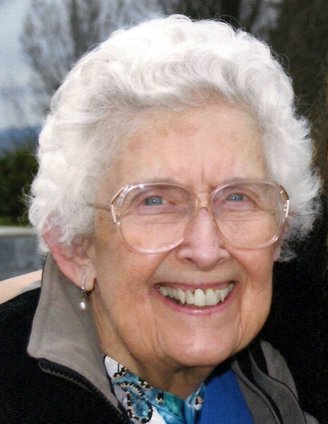
Antoinette Veazey Eastwood was born in
Orlando, Florida on June 2, 1927. At the time of her death, on
December 20, 2021, 94-year-old Toni, as she preferred to be called,
was living at home in Freshwater, California. She was surrounded by
many of her family members, but was still leading the charge as was
her preference.
Antoinette was the daughter of Agnes Lyle Robinson and Daniel Wilbur Eastwood. She had one brother, Daniel Wilbur Eastwood Jr., whom she adored. Her determination to look after him as the two grew up in the wilds of Florida and Georgia, which she deemed fraught with danger, may have been the beginning of her lifelong commitment to child advocacy.
Toni married her college sweetheart, James Pascal Martin, Jr. in 1949 in spite of the fact that he took her, dressed up to the nines for their first date, to see slime mold growing across the ceiling of a cabin in a nearby swamp. They were happily married and thoroughly devoted to each other for sixty-nine years before James preceded her in death in 2018.
Toni and Jim met at Rollins College where Toni received her first degree in fine arts. After marrying Jim in Winter Park, Florida, on June 2, 1949, the couple lived in Florida and Maryland where Toni began her career as a social worker. They then moved to Tempe, Arizona for work and more schooling for Jim, and in 1955 welcomed their first child, Anne Elizabeth. Their next stop was Madison, Wisconsin for graduate school for Jim, and the completion of their family with the arrivals in 1957 of Katherine Frances and in 1959 of Robert Bruce. While in Wisconsin, Toni volunteered as chairperson with the Wisconsin University Wives Group reaching out to the Wisconsin State School for Girls.
After Jim received his doctorate, the family moved to Los Angeles for Jim to begin his career at the Los Angeles County Arboretum, and Toni to continue her humanitarian work as a volunteer with Family services of Pasadena, the Temple City United Way, and the Pasadena Council of Churches. She spent her time helping needy families including tutoring at-risk students, through Family Services and privately. She also continued developing her talent by beginning to paint portraits which she continued doing throughout her life, especially of young people as a way to encourage them to see the beauty in themselves.
In 1965, the family moved to Humboldt County, where they found a forever home. Toni continued to pursue her education at Humboldt State University, receiving her teaching credential in 1970, and Masters in Education in 1976. But she did not stop there, her love of learning led her to pursue a second Master’s degree in Psychology and Counseling which she received in 1979 with her grown children in attendance.
Mrs. Martin, as she was lovingly called by generations of students, worked as a special education teacher and school psychologist for the Arcata Schools for over forty years. She continued to gain knowledge and insight through additional training, study and her own creative ingenuity, as she attempted to meet the needs of each student and their family. This also made her a sought-after resource for other teachers and she shared her knowledge and wisdom mentoring other teachers, teaching classes at Humboldt State University, and leading workshops throughout the county while working as a specialist for Humboldt County Office of Education.
Toni always found time to be involved in community service and volunteered and worked with many local agencies to better the educational and sociological climate for families. She worked with many projects and has been honored by many groups in Humboldt County and California including the local Juvenile Justice and Delinquency Prevention Commission, the Mental Health Advisory Board, CASA, Youth Services Bureau, Humboldt Area Foundation, Humboldt Women for Shelter, Special Beginnings, California Child and Youth Service Bureau, California Youth Authority, and Family Coalition, The Interfaith Fellowship, Delta Kappa Gamma, Soroptimist International, and countless other local groups where she offered insight and support to better meet community needs.
Toni was a gifted writer as well as a teacher. Along with conducting workshops on a variety of subjects, she also created written materials including an introductory manual for Hellerwork Structural Integration in 2001. Hellerwork was very helpful to Toni and others she knew. She dealt with her own adult-onset diabetes by helping form a diabetes support group in collaboration with a beloved friend and local doctor and helped create and train others with the Our Pathways to Health program, a support group for individuals with chronic health conditions. Humboldt County was one of the rural locations where this important program had its beginnings.
Through her years, in addition to all of this, she remained an active part of her families’ lives welcoming two sons-in-law, Ray Blair and Merle Bates, and a daughter-in-law, Hope Lascelles. Over time, she also welcomed ten grandchildren and eleven great-grandchildren. Toni would stop what she was doing to nurture these grandchildren and help her children in any way she and Jim could. Toni was a worshiper in the truest sense of the word, during her lifetime she created numerous works of art portraying the master healer who she tried to emulate. She also participated in the Sisters of Transfiguration monthly meetings, and she was a member of the Arcata ward of the Church of Jesus Christ of Latter-day Saints.
One of the many lessons Toni worked hard to teach her family was not to be satisfied just seeing what was happening around you, but instead to continue working to gain a greater perspective than your initial assessment might afford you. She taught her children that every single person was valuable and that they could reflect that value so others could see it in themselves. If someone said hurtful things, she taught us how much more that person must be hurting inside. These values have helped us approach others in our diverse world with love and with an eye toward seeking out opportunities to assist in positive ways. We have been blessed our whole lives to hear that our mother has inspired so many others to grow and gain insight as they worked with and enjoyed her company over the years. Toni will be sorely missed, but we are thankful she is now at peace with her Savior.
Toni’s life will be celebrated by her family and friends with a memorial service this coming spring, when we can more easily gather. If you would like to be included, or would like more information, please contact Kathy Blair by text or phone at (707) 834-6991.
###
The obituary above was submitted on behalf of Toni Eastwood’s loved ones. The Lost Coast Outpost runs obituaries of Humboldt County residents at no charge. See guidelines here.
OBITUARY: Stephen Aubrey Willis, 1946-2021
LoCO Staff / Monday, Jan. 3, 2022 @ 6:51 a.m. / Obits

Stephen Aubrey Willis (75) of Rio Dell joined his wife, Linda, in Heaven on December 24th,
2021.
Steve was born in Utica, New York on March 22, 1946. He attended Placer High School, Sierra College, Bethany Bible College (Where he met Linda, his wife of 52 years) and College of the Redwoods. Steve was an avid hunter, marble and insulator collector, outdoor enthusiast, and a Giants/49ers fan. Steve lived an extremely active lifestyle until his accident in 2016 when he received a traumatic brain injury and required 24/7 care. His wife was his main caregiver until she passed away in 2020. After her passing his children and family cared for him. The family would also like to thank his caregivers through PACE and Elite.
Steve worked at Pacific Lumber Company for over 30 years until he retired in 2003. He was actively involved in many churches over the years including Calvary Christian Center and Woodstreet Chapel in Fortuna and most recently Rio Dell Baptist Church.
Steve is survived by daughter Stephanie (Matt) son Jason (Sondra), daughter De Ann (Jared). Grandchildren: Travis (Rachael), Shalynn, Zeb, Arianna (Stan), Austin, Bradley, Donald, Baylee, Alexander, and Chloe. Great grandchildren: Lily, Ezra, and Selah. He is also survived by his brother Philip Willis (Kathy), in-laws, and numerous other family members. He was preceded in death by his wife Linda Marie Willis, his parents Charlotte and Aubrey Willis, his sister Joanna Zimmerly and many other loved ones.Flowers can be sent to Gobles Mortuary in Fortuna or saved for the celebration of life ceremony.
This summer the family is planning an outside gathering (TBD) to celebrate the lives of both Linda Marie Willis and Stephen Aubrey Willis. Contact their children for future updates.
“God saw him getting tired and a cure was not to be, so He put His arms around him and whispered “Come to me.” With tearful eyes we watched him suffer and saw him slowly fade away. Although we loved him dearly, we could not make him stay. A golden heart stopped beating, hard working hands put to rest, God broke our hearts to prove to us He only takes the best.”
###
The obituary above was submitted on behalf of Steve Willis’ loved ones. The Lost Coast Outpost runs obituaries of Humboldt County residents at no charge. See guidelines here.
GROWING OLD UNGRACEFULLY: 2021 Faves
Barry Evans / Sunday, Jan. 2, 2022 @ 7 a.m. / Growing Old Ungracefully
Looking back on last year before memory blurs it all (at my age…need I explain?): some favorites, with an invitation to add your own.
Photograph
Half an hour after launch on Christmas morning, the $10 billion Webb telescope sprang free (literally) from its launch vehicle upper stage. This photo, taken from the upper stage immediately after separation, is the last time we’ll see Webb as the telescope heads to its stable orbit a million miles away from Earth (upper right). It’s currently in the process of unfolding, first the sunshade, then the 18-segment mirror.

Photo: NASA.
Joke
Sylvester Stallone, Dwayne Johnson and Arnold Schwarzenegger are hanging out. Sly says, “I’m thinking of making a movie about the great composers. I’ll be Beethoven.” The Rock says, “I’ll be Brahms.” Arnie says, “I’m in!”
Line from TV Series
“Don’t talk to me about the greater good, Sunshine. I’m the Archangel fucking Gabriel.” (Good Omens, Neil Gaiman & Terry Pratchett)
Mark Twainer (that I hadn’t seen before)
“I had been dead for billions and billions of years before I was born, and had not suffered the slightest inconvenience from it.”
GOU
All environmental problems boil down to the fact that there are just too many people. This poor old planet just can’t accommodate eight billion of us, with another two billion forecast by 2050. So my column Every Sperm is Sacred, about decreasing sperm counts, is my favorite of the year.
Live Performance
Georgian pianist Alexander Korsantia playing the “Rach Two” (Sergei Rachmaninov’s Second Piano Concerto in C minor, Opus 18). How he didn’t break the concert Steinway during the first movement, I’ll never know.
Factoid
Chernobyl killed about as many people (16,000) as fossil fuel emissions kill every day(23,000).
Person of the Year
Katalin Karikó, followed closely by Drew Weissman — pioneer-inventors of innovative mRNA vaccines that allowed the Moderna and Pfizer vaccines to be designed within days of China posting the Covid-19 genome code.
Highball
Tequila with Bundaberg ginger beer and a squeeze of lemon.

Photo: Barry Evans.
THE ECONEWS REPORT: The Future of Humboldt’s Nuclear Waste Site
The EcoNews Report / Saturday, Jan. 1, 2022 @ 10 a.m. / Environment

Storm waves at the base of the bluff at Buhne Point. Photo: Aldaron Laird.
One of the first nuclear power plants in the US was built on a bluff overlooking the Humboldt Bay entrance and the town of King Salmon. Shut down in 1976 and recently decommissioned, the site — located 115 feet away from the bay, on a bluff 44 feet above sea level — continues to serve as storage for 37 tons of spent fuel and other radioactive waste.
The underground casks are relatively safe for the next 50 years, but rising sea level and ongoing bluff erosion raise questions about long-term safety in the absence of a federal repository.
Our guests this week are Michael Welch, an activist who has watchdogged the nuclear plant since it was still operating, and Dr. Jennifer Marlow of Humboldt State University, who is working to facilitate inclusive community conversations about the future of the nuclear waste site.
REQUIRED READING:
- 44 Feet: Sea-Level Rise Risk to a Spent Nuclear Fuel Site on Humboldt Bay
- “Humboldt Bay Radioactivists,” J.A. Savage, North Coast Journal.
- “PG&E completes decommissioning process, ends nuclear facility license,” Isabella Vanderheiden, Eureka Times-Standard.
THE CANNABIS CONVERSATION: Legacy Farmers
Jesse Duncan / Saturday, Jan. 1, 2022 @ 7:30 a.m. / Cannabis
Across the state of California, communities are discussing the importance of legacy cannabis farmers. According to the Origins Council, a Nor-Cal advocacy group, legacy farmers are those who have cultivated in historical producing regions for at least twenty years. Humboldt, Trinity, Mendocino, Sonoma, and other counties throughout the state have lots of them. Legacy farmers are of cultural and historical significance as their efforts paved the way for cannabis legalization and normalization. They have contributed significantly to their respective economic regions and have been outspoken advocates for personal freedom, environmental protection, and creating loving communities.

Ice Cream Cake Dep, 2021. Photo: Jesse Duncan.
Given mounting production in both legal and illegal channels, limited retail outlets, increasingly discerning consumers, and a predatory tax structure, legacy farmers are at risk. And it’s hard to see. Suicide rates among the cultivation community are rising, people are going out of business and some growers are left with little ability to replace the higher-than-average incomes growing cannabis historically provided.
While many consumers prefer outdoor flower as they believe it’s more environmentally responsible and generally higher in medicinal compounds like terpenes, acquiring dispensary shelf space is challenging for sun-grown farmers. Most localities across the state ban dispensaries and well-capitalized corporations pay slotting fees for shelf space…a pay-to-play arrangement of sorts. Vertically integrated corporations have their own dispensaries and tend to push proprietary products, while some distributors require large production to onboard farms as clients and ignore the small-lot production batches many farms produce. Legacy cultivators feel they are being pushed out of the industry they created and are crying afoul – cursing the corporatization of cannabis markets and rapidly declining wholesale prices.
A recent pricing report from New Leaf Data paints an unsettling picture stating that “of all the factors weighing on legacy state outdoor prices, market commoditization, succinctly demonstrated by outdoor growers selling almost exclusively to processors for extraction, is the most inevitable and least reversible.” While this is certainly not a popular conversation in sun-grown legacy regions, the data is becoming crystal clear. Currently, outdoor flower accounts for just 12% of sales volume among reported transactions in legal states. Last year at this time it was 26%, the year before it was 35%.
In other words, the market is changing, and quickly. The outdoor flower that Humboldt’s reputation was built on is rapidly losing market share and that has legacy farmers and communities nervous. While there is a renewed push to highlight the benefits of sun-grown products and provide them some shelf space, a sun-grown resurgence will play out slowly over time and will benefit only the best operators. Consumers and retailers are increasingly discerning and not all farms will meet the quality mark. With a proliferation of climate-controlled greenhouse flower across the state and explosive growth in the high terpene full spectrum extract markets, folks just aren’t as excited about outdoor as they once were.

Blueberry Dep, 2021. Photo: Jesse Duncan.
And begrudgingly, I get it. The last few seasons have been really smoky and a lot of outdoor product was tainted and caused problems for distribution companies and retailers. Additionally, cannabis is a plant where environmental exposure is critically important to outcomes. You can grow the same strain in one set of environmental conditions versus another and have the finished product look entirely different, so much so that you might not recognize it as the same cut. As we know from other industries, product quality and consistency are key. If I own a dispensary and want to put a SKU on 1/8-ounce jars of a certain type of flower, I don’t want it to look totally different from run to run or from farm to farm.
While for some cannabis connoisseurs the variability of cannabis expression is acknowledged, accepted, and revered, for others, it is clearly not. The simple truth is that indoor flower and greenhouse flower grown with strict environmental controls are far more consistent. This consistency, for many distributors and retail outlets, is highly desirable. Additionally, because of climate controls, indoor and greenhouse product is often more visually appealing with a heavier outer trichome layer, less leaf, and a tighter, more podded-out bud structure. While I make a living managing sun-grown operations and grow large, beautiful buds outside, I don’t find outdoor matches up visually with what one can do in a controlled environment. Although educated consumers understand that cannabis bag appeal is just one buying criterion, purchasers and retailers are currently emphasizing that over other attributes.
When growing light deprivation flowers outdoor it is harder to keep the flower color on point. Flowers tend to darken or bronze as they near maturity and not many operations use shade cloth the last two weeks to prevent scorch and terpene loss. For full-term flowers, I find they often disappoint visually after being dried and processed. While term buds look gorgeous on the vine, they often dry a bit sterile, at least when compared to indoor or greenhouse products. The buds look hairy and don’t boast of the same calyx formation as other grow types. After being trimmed the buds often lack contour and are rounded or oval and just don’t have the same character in most cases.
Additionally, I know some consumers who don’t like sun-grown flower as it gives them an allergic reaction when consumed. While recent evidence suggests cannabis pollen, and perhaps THC itself can trigger allergic reactions, outdoor flower is fully exposed to the elements. Just as our cars are dusted with pollen from surrounding vegetation, such is the case for outdoor-grown plants as well.
Nonetheless, there is still hope for sun-grown farmers. I personally prefer consuming full-term flower grown in native soil and many others do as well. Despite scary times, not all is lost for the ganja warriors of Humboldt and beyond. By aggressively focusing on sales/marketing, quality improvements, production increases, and cost savings, sun-grown farmers can stay in the game and eventually capitalize on better times to come with interstate markets and broad adoption of organic certification for cannabis.
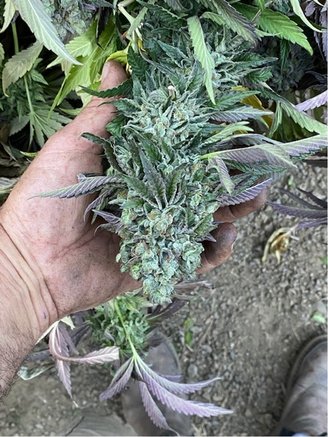
Dosilato Dep, 2021. Photo: Jesse Duncan.
Sales & Marketing
Launching a brand is an expensive endeavor and is out of reach for many family farms. That said, several well-established brands source products from partner farms. These brands have already done the leg work in creating an online presence and securing valuable dispensary shelf space. Some are fans of sun-grown flower and have an ever-expanding footprint that family farms can benefit from. Co-branding or piggybacking on the success of a reputable brand, getting product into jars or pouches, and ultimately achieving retail shelf space can radically improve your price per pound. Of course, without an exceptionally high-quality product, this will never happen. In Humboldt, partnering with brands is often viewed as heresy or as selling out, but for some, it can be a viable path forward.
Quality Improvements
Having lived in Humboldt my whole life and having consumed cannabis for nearly three decades, I’ve seen that flower has largely declined in quality here in the Triangle. Weed tastes greener and smokes hotter and harsher than it did a couple of decades back. Bowls don’t ash like they used to and instead, often char out and are largely un-smokable for me.
High-quality or top-shelf commercial flower is visually appealing with a tight, podded-out structure and heavy outer trichome layer. It tastes like it smells and goes down smooth while delivering the desired effect. Many “premium” flowers are poorly formed, ugly, hairy, and harsh. By focusing on genetics, plant structure, pruning, organic or quasi-organic nutrient delivery, sugar content, artful stress, and an active flushing program, your flower can stand out from the rest and get some real momentum in the marketplace.
Increasing Production
Increasing production is a real possibility for most farms, even those doing quite well. I’ll never forget several years back when a retired soil scientist told us we could increase production by 20% or more if we got serious about soil structure and biology. Note the garden he toured was my mentor Mike’s and had two plants that went over 13 pounds.
Whether growing in soil or another medium, focusing on more advanced techniques like crop steering or simply manipulating the size and shape of your plants through topping, pruning, coring, and opening can meaningfully impact your bag weight. Supplemental feeding – especially through a foliar regime that pushes nutrients through the leaves – is another way to radically boost yields, as are strain selection and quality of starts.
Of course, every grower you talk to is killing it. Clearly not the case as I still see tons of Instagram posts where farmers are growing lanky Christmas trees instead of more stump-like bushes that really pack on the weight. Many trellises’ have huge canopy gaps and lots of finished tops aren’t even fist-sized.
Cost Savings
During the multi-decade cannabis bull market where prices were high, cultivators could be a bit loose with the budget. They could “overpay” for products and services and many did. As things have tightened up meaningfully, largely absentee farm owners should get back in the dirt personally as a way to reduce labor costs. Putting goods and services out for bid is another way to potentially save. Rather than simply accepting “dope grower” prices for inputs, construction, or consulting services, requesting discounts, purchasing in bulk, or shopping around can lead to significant savings.
National legalization is moving slower than many of us would like. Biden is not a huge fan of recreational cannabis and there is growing chatter that republicans may make a strong showing in the mid-term elections. Even with a national marketplace, some states will seek to protect their own producers and limit imports from other places. Given such, I expect another tough year or several years here on the west coast. Upping our cultivation game, being proactive concerning sales and marketing, and tightening our belts seem like the best path forward. The economic vibrancy of our community is depending on us so I wish everyone well.
###
Jesse Duncan is a lifelong Humboldt County resident, a father of six, a retired financial advisor, and a full-time commercial cannabis grower. He is also the creator of NorCal Financial and Cannabis Consulting, a no-cost platform that helps small farmers improve their cultivation, business, and financial skills. Please check out his blog at, his Instagram at jesse_duncann, and connect with him on Linkedin.


