Meetings are in-person again! Wear a mask. File photo: Andrew Goff.
It’s Eureka City Council night! We’re looking at a relatively
light agenda tonight, but there are enough items of interest on deck
to please all but the most blasé of citizens. Here’s a quick
rundown.
That Housing Swap
and Coal, Again
The idea is to trade these…
Back on the agenda,
after the first of the year: That proposed land swap between the city
and the Pierson Company, in which the city would trade some publicly
owned downtown parking lots for some land near Winco. The idea is
that the city would be able to build more low-income housing on the
Winco land than it was planning to build on the parking lots, and
would also avoid opposition from downtown interests who registered
horror at potential loss of the lots. (See
a precis on the deal here.)
… for these.
Last
time around, the council seemed overall very supportive of the
swap, but a bare majority thought that it would be good to put off a
decision for a couple of weeks, so as to afford people more
opportunity to comment on the issue. (The last meeting was right
before the holiday.) The proposed swap has been opposed by some,
including Colin Fiske of the Coalition for Responsible Transportation
Priorities, on the grounds that it would be incompatible with the
Housing Element of the city’s general plan, which calls for maximum
infill, and is just bad policy in general.
But again: The
council seemed very supportive last time around, and it seems like
it’ll be an uphill battle to stop it.
The council can’t
seem to stop dinking with its proposed coal
storage ordinance, which got its first hearing way back in
October in response to a weird and dubious proposal at the federal
level to revive the old Northwestern Pacific railroad. There have
been a lot of small and procedural questions about how to enforce the
ban on storage of coal on city-owned properties. Maybe they finally
have it all ironed out now.
Vacation Rentals
and the Fire Department
There
are a couple of
information-only presentations scheduled for tonight’s meeting –
one near the beginning and
the other near the end.
Near
the beginning of the meeting, Humboldt Bay Fire – a joint-powers
authority that serves both the city proper and surrounding
communities – will deliver its end-of-year report. There’s no
sneak peek available, but generally these things run down the
year-end statistics (number of calls, number of medical emergencies
attended, number of fires fought, etc.) in addition to a look at the
agency’s finances, what it accomplished organizationally last year,
and what it hopes to accomplish in the year to come.
Closer
to the end of
the meeting, city staff will give the council a presentation on the
state of vacation rentals in the city. There are a lot of them, and
many of them aren’t necessarily registered with the city and paying
their bed tax as they’re supposed to do. Staff will have some
research about this situation, and it’ll be up to the council to
decide if they want to take action on it at some point in the future.
New Police Chief,
New Commission Members, and a Plea For Lower Weed Taxes
A couple of items of note on the council’s consent calendar.
First
and foremost, the council is set to ratify City
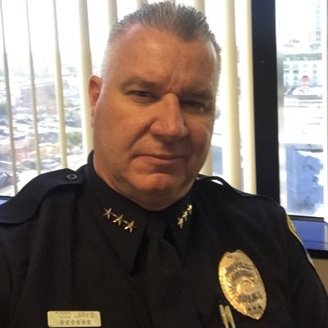
Manager Miles Slattery’s choice of Todd Jarvis, formerly top
brass at the San Diego Police Department, to serve as Eureka’s
interim police chief. The appointment is open-ended – it will last
“until a recruitment for a new Police Chief is completed and the
successful candidate placed.” No word if Jarvis himself will apply
for the permanent position, but this will be the council’s – and
the public’s – first look at the city’s new top cop.
The
council will also affirm the city’s choices to serve on various
citizen’s boards and commissions that are meant to advise it, and
sometimes, as in the case of the Planning Commission, to make
decisions on its own authority. Most of these appointments are
actually just reappointments – people reupping their service on
those bodies – but a couple of the commissions are getting new
blood. New to the city’s Economic Development Commission:
Monica
Topping, Calder
Johnson, Rebecca
Rex and Ben
MacDevitt Breckenridge. James
Kloor, a deputy director of the Humboldt Area Foundation, will
join the city’s Finance Advisory Committee. See a full list of
appointments at
this link.
The
council is also set to pass a resolution asking Gov. Gavin Newsom and
the legislature to provide immediate tax relief for cannabis farmers,
in light of the wholesale collapse of the market. This has been an
industry-wide push in
recent weeks, and Eureka will signal its support. Read the full
proposed resolution at
this link.
How To Join!
The
Eureka City Council is meeting in person again. It’ll get going at
6 p.m. tonight at Eureka City Hall (531 K Street), and the public is
invited. (Wear a mask.) You can also Zoom in at
this link if you’d rather do it remotely. Full
agenda here.
On Tuesday, Humboldt County Board of Supervisors Chair Virginia Bass will bring forward some proposed tweaks to the way board meetings are organized, including an option to cut the time limit for public speakers down from three minutes to two.
As board chair it’s Bass’s prerogative to make such changes to the board’s agenda template. That includes decisions on how to take public comment, and in the COVID-spawned era of virtual meetings, where anyone with a phone or laptop can participate, the volume of public commenting has increased dramatically, causing meetings to last much longer.
There are four possible changes to the agenda template (as quoted from the staff report):
Limit all public comment to two minutes and ask each participant to state their name and
identify the agenda item they are speaking about.
Move “Public Comment on Non Agenda Items” to the end of the agenda just before “Closed
Sessions”, allowing other important county business to be conducted more efficiently
Limit the number of agenda items that are time-set as a means of improving the flow of the
agenda during meetings
Following appropriate Zoom etiquette which requires Board Members to remain on camera at
all times during Board meetings as well as raising their hands to speak or muting themselves
when not speaking to avoid confusion or speaking over each other
The reasoning behind these potential changes is left vague in a county staff report. It says Bass and Vice Chair Mike Wilson recently brainstormed with County Administrative Officer Elishia Hayes in hopes of finding ways to “improve the public comment process” and conduct the county’s business “more efficiently and effectively” during board meetings.
If you’ve watched any of the board’s recent meetings, though, it’s not difficult to read between those lines. Not only has there been more public feedback but much of it has been dominated by angry-sounding residents voicing fierce opposition to COVID vaccines, mask mandates and other public health measures.
As their ranks have increased, with comments occupying more and more time each Tuesday, so too has the intensity of their rhetoric. Invocations of Nazi Germany are not uncommon, and a few comments have sounded overtly threatening — ominous warnings spoken with insurrectionist zeal.
At the November 9 meeting Fortuna pastor Mark Seitz accused the county of engaging in “medical apartheid” and remarked, “Normally, Western civilization has guarded free will and conscience as human rights.” (That term —”Western civilization” — is popular among white nationalists.)
Other speakers have falsely accused the county of violating the U.S. Constitution, the Nuremberg Code and its own regulations governing health emergencies.
At the board’s November 16 meeting a man who identified himself as Daniel Christopher said vaccine mandates are “evil” and added, “This isn’t America anymore.”
He was followed by a man who accused the board of perpetrating a fraud and hurting children, then a woman who claimed that COVID vaccines are a means of genocide. “You’re forcing people to die alone and in despair,” she told the board before launching into song — an original composition, presumably, with lyrics about “love and freedom, hate and tyranny.”
Last month, in an apparent attempt to abridge these disturbing and time-consuming comment marathons, the board voted unanimously to reduce the frequency of COVID pandemic updates delivered by Humboldt County Health Officer Dr. Ian Hoffman. (They’ll now be delivered to the board just once per month.)
But many from the local collection of anti-vaccine/anti-mask activists have proved willing to sit through entire meetings, finding creative ways to shoehorn their diatribes into seemingly unrelated agenda items.
“I think you can see now [that] as long as this fraudulent emergency health declaration continues, you’ll be getting a lot of feedback from a lot of us,” one of the most combative regular commenters said at the November 16 meeting. He’s been recruiting likeminded people via a group called the Humboldt Freedom Coalition, urging them to sign form letters and Zoom into meetings with scripted talking points. It’s unclear whether their goal is to change the supervisors’ minds or simply gum up the works by grinding the civic process to a standstill. “I’d leave probably two hours [for the public] to speak going forward,” the man suggested.
The comments from this ilk often cite outlandish and debunked conspiracy theories from the outer fringes of the internet — including claims that ivermectin “cures” COVID, that COVID doesn’t exist, that we’re in the midst of World War III and that the supervisors are being paid off by Big Pharma to promote vaccines.
At the board’s December 14th meeting, Hoffman’s employment contract was up for renewal. Hoffman, like other public health officers across the country — and like Dr. Anthony Fauci on the national level — has become the face of the pandemic for many and thus subject to an outsized share of the public vitriol.
A number of speakers called on the board to fire him, and as the meeting wore on the anger reached a fever pitch. A local astrologer and holistic health practitioner told the board, “You’re helping to destroy our freedom and bring in an authoritarian regime … very similar to what was going on in Nazi Germany.”
Another commenter referred to mild-mannered California Assemblymember Jim Woods, who’d addressed the meeting earlier in the day, as “Tyrant Woods” before angrily telling the board, “Your job is to protect our God-given rights, not to inform us on medical information — or disinformation. …
“Honestly, you should watch out,” he continued. “And in the end, God wins. You guys are really messing with something.”
A few minutes later a different commenter said, “Maybe we shouldn’t have any more agendas until we get our freedoms back in this county.” He suggested that the public needs to see a “personal and public audit” of each supervisor to learn whether they’re “getting [paid] to push an agenda that is unhealthy.”
“Audit every aspect of their lives,” he said. “These people think they’re higher than power, higher than law. We’re gonna get to the bottom of what’s going on.”
The board should end its virtual meetings and resume gathering inside board chambers, he argued. Referring to the county supervisors he said, “Bring meetings back in-person and they’ll have a hard time walking down the street, guarantee it.”
Reached by phone Monday afternoon, Bass said her goal is not to skirt the public process but rather to ensure that the county’s business gets done. She noted that the influx of public participation has been happening nationwide, and many jurisdictions have changed up their public processes. Orange County, for example, temporarily restricted public commenters to just 30 seconds apiece.
Humboldt County officials have been comparing notes with other counties and exploring “best practices” for enabling participation while making sure meetings progress smoothly, Bass said.
She’s not sure yet whether she’ll limit speakers to two minutes instead of three but said she likes the idea of scheduling the public comment period on non-agenda items to the end of the meeting.
Bass noted that putting time limits on public comments doesn’t violate their freedom of speech. State law just says everyone must be given the same amount of time.
More public participation is a good thing, she said, “but it comes to a point where we’ve still got to get the county’s work done.”
As for the threatening comments, Bass noted that those are also a nationwide phenomenon. She and the rest of the board want to make sure the public remains respectful, so when the meetings return to board chambers later this year, she won’t hesitate to clear the room if and when people fail to live up to that standard, she said.
She added that Sheriff Billy Honsal worked up some advisory language to warn people that if they fail to remain civil they may be removed from the chambers or arrested.
On December 30, 2021, a multi-agency law enforcement team was working to
apprehend a wanted felon, 29-year-old Little Eagle Moon of Hoopa. Moon was wanted
for attempted robbery, assault with a deadly weapon, vehicle theft, revocation of parole,
burglary, and reckless evasion.
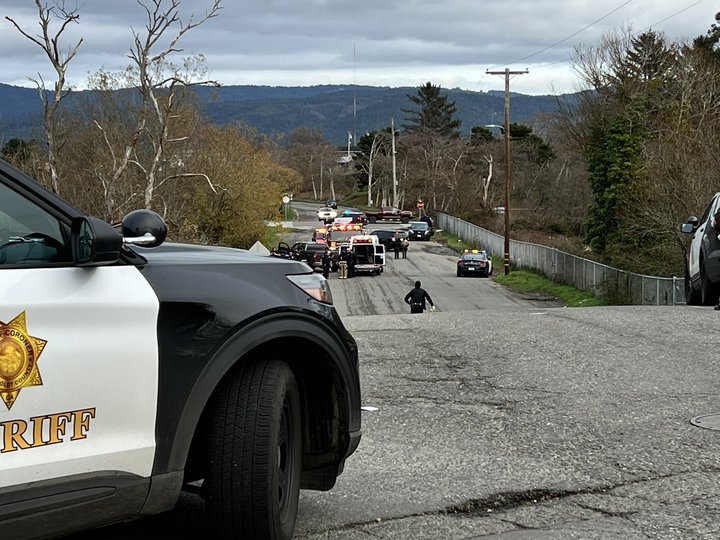
During the apprehension near 3rd and T Streets in Eureka, Moon was in the driver seat
of a vehicle and began ramming law enforcement vehicles and driving towards officers.
Due to the threat, one Eureka Police Officer fired his duty weapon, striking Moon.
Moon then fled in his vehicle, causing a traffic collision at 5th and V Streets. Minor
injuries were reported by civilians during this collision. One officer received minor
injuries during the initial apprehension.
Moon fled the collision scene and hid in a nearby greenbelt until he was ultimately taken
into custody without further incident.
Moon was transported to the hospital for serious
but non-life-threatening injuries. Once medically cleared, Moon will be booked for
attempted murder.
The involved officer has been placed on paid administrative leave while the investigation
is underway. There was body camera footage of the incident and it will be made
available within State Bill 748 guidelines.
Anyone with information is asked to contact lead investigators EPD Senior Detective
Amber Cosetti at (707) 441-4315 or DA Investigator Martin Morris at (707) 268-2578.
Press release from the Humboldt County Sheriff’s Office:
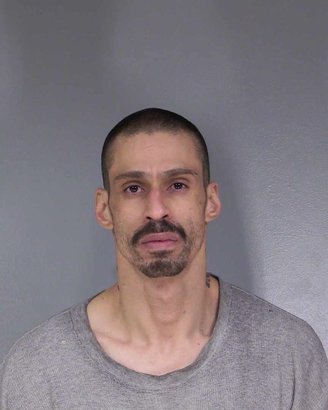
On Jan. 3, 2022, at about 2:52 a.m., Humboldt County Sheriff’s deputies were dispatched to a business on the 300 block of Main Street in Loleta to investigate a burglary alarm.
Upon arrival, deputies found the front window of the business shattered. No individuals were located inside the business. During a review of the business’ surveillance footage, deputies were able to identify the individual responsible for the forced entry into the business as 41-year-old Robert Mark Valentine. Valentine was seen on the footage forcing entry into the business and stealing a bottle of water before fleeing.
Sometime after Valentine fled the business, two additional suspects, a male and a female, are seen on the footage entering the business and stealing numerous items.
At approximately 4:05 a.m., sheriff’s deputies located Valentine walking along Eel River Drive near Loleta. Valentine was taken into custody without incident.
Valentine was booked into the Humboldt County Correctional Facility on charges of burglary (PC 459/461(b)) and vandalism (PC 594(b)(1)).
The two additional suspects remain outstanding at this time and limited descriptions of these individuals is available. The suspects are only described as follows:
A white adult female, wearing a black jacket, black pants and black boots.
A suspected white adult male, wearing a camouflage jacket, blue jeans, dark shoes and black gloves.
This case is still under investigation.
Anyone with information about this case or related criminal activity is encouraged to call the Humboldt County Sheriff’s Office at (707) 445-7251 or the Sheriff’s Office Crime Tip line at (707) 268-2539.
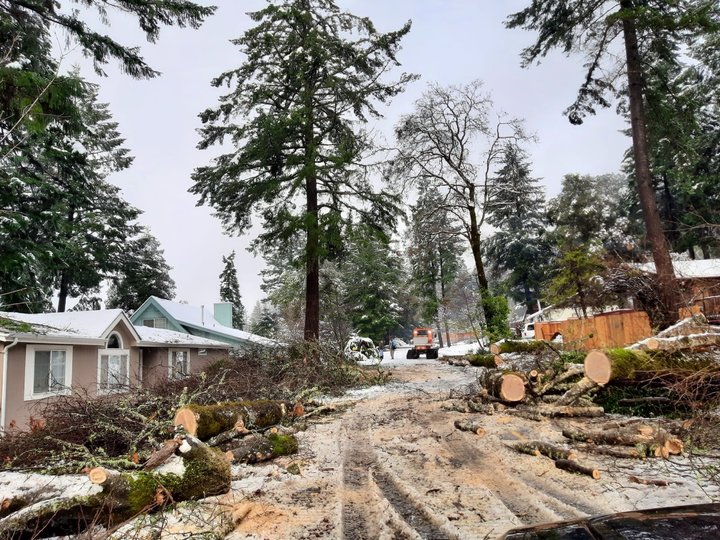
Winter storms closed many local roads and caused thousands to lose power as heavy winds and snow caused trees and power lines to collapse. | Photo via Humboldt County Sheriff’s Office.
At a special meeting Monday morning the Humboldt County Board of Supervisors voted unanimously to ratify and continue the local emergency declared last week by Sheriff Honsal in response to extensive winter storm damage.
The storm, which arrived early last week, brought heavy snow, wind and rain, causing more than $10 million-worth of damages, property loss and emergency
personnel costs, according to a staff report. And those figures can be expected to rise.
With downed trees and power lines, telephone and power outages and major roadways closed due to hazardous and impassable conditions, the county launched an array of emergency response measures, bringing in state and local agencies as well as volunteer organizations to offer emergency services, clear debris and provide shelter.
The emergency declaration is expected to help the county recover costs through state and federal financial assistance.
Fifth District Supervisor Steve Madrone said communities in Hoopa and Willow Creek were hit particularly hard. He thanked crews from PG&E for their work trimming trees and clearing debris, and he questioned whether the National Guard could be brought in to help the cleanup efforts.
Honsal said the county has mutual aid agreements with myriad agencies and that the National Guard would be a “last-ditch resource” to be requested “after exhausting all other mutual aid options.”
Madrone said he wants to figure out how to bring aid to local residents “because right now people don’t have a clue.”
Second District Supervisor Michelle Bushnell thanked the county’s Public Works Department for clearing downed trees and plowing roads in Southern Humboldt to keep the open.
Madrone mentioned that people who’ve suffered extensive property damage can get some temporary tax relief by filling out a “calamity damage reassessment form” that’s available on the county’s website.
First District Supervisor Rex Bohn made the motion to ratify the emergency and it passed by a unanimous 4-0 vote with Third District Supervisor Mike Wilson absent.
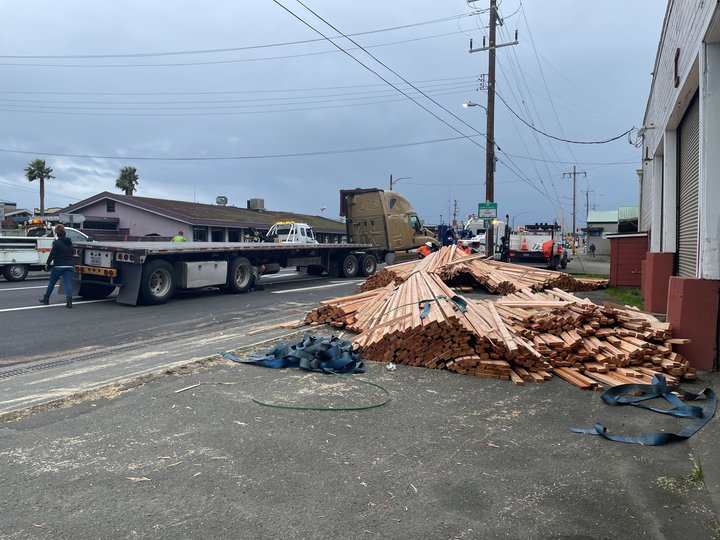
UPDATE, 9:10 a.m.: Looks like the rig has been righted, but the load of lumber is still on the ground, if mostly pushed to the side.
###
Don’t drive here this morning!
Eureka Police Department spokesperson Brittany Powell confirms that a big rig has overturned at this intersection that sees frequent big rig overturning. Southbound traffic is currently being diverted onto Waterfront Drive, and it’s a big mess.
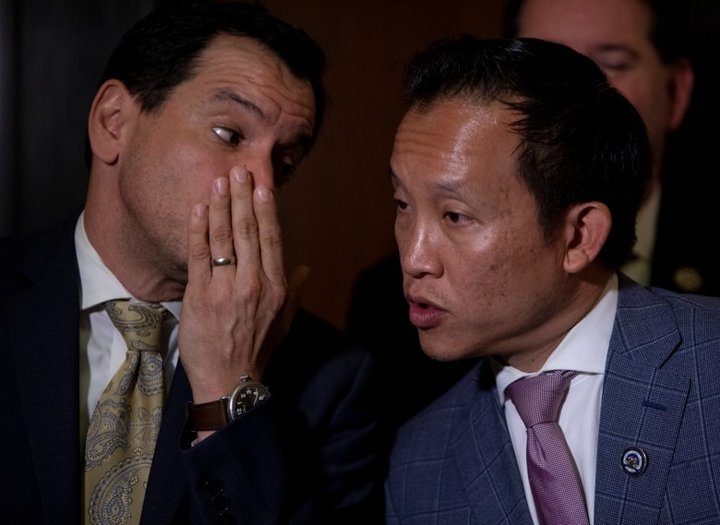
Assembly Speaker Anthony Rendon, left, whispers to then-Assemblymember David Chiu on September 11, 2019. Photo by Anne Wernikoff for CalMatters
###
Another coronavirus variant spreading like wildfire, and another huge state budget surplus: In some ways, 2022 is off to a similar start as 2021.
That could carry over to the state Legislature’s new session that starts today. In addition to the pandemic and surplus, California is dealing with some of the same big issues it has long grappled with — including housing and climate change.
“Our challenges continue to be the challenges that we have started and built momentum to work towards,” Senate President Pro Tem Toni Atkins, a San Diego Democrat, told CalMatters.
The difference? Looking at key issues more through a lens of equity, she said.
The state Assembly’s agenda shares those priorities, said Assembly Speaker Anthony Rendon, a Lakewood Democrat. Access to health care will be another focus: “We’re proud of where we are as a state, but we need to make sure that everybody in the state is covered.”
Where will things look a little different? The state Capitol complex is undergoing renovations, which means the “Bacteria Bear” is safely in storage for now.
The public and press will be allowed to attend in person, but due to COVID, access and seating will continue to be limited, masks and social distancing will be required and meetings will continue to be livestreamed. “We had hoped that as we go back, we’d be through the pandemic, but it hasn’t gone away,” Atkins said. “We’re going to have to continue to bear that in mind.”
There’s also the makeup of the Legislature itself. Following the redistricting process after the 2020 census, state Senate and Assembly district lines have been shaken up — and a number of lawmakers will be lame ducks this session because they’re not running for re-election in 2022.
Here are four themes to watch in the new legislative session:
Neither of the spending priority lists put out by Senate or Assembly leaders mention a stimulus check. Instead, they are framing the budget around a more inclusive economic recovery, and a more equitable economy.
“Those at the top are doing better than ever before, and that’s good for California in terms of our revenue,” Atkins said in an interview. “But as strong as the economy is, we face a homelessness crisis that you see every day in every corner of the state. And we know how hard it is for everyday, ordinary families to get by.”
The Senate plan buildson 2021 programs, including targeted relief such as the child tax credit, Earned Income Tax Creditand small business aid.
Senate and Assembly leaders also say they will seek to put more money into K-12 schools and higher education, and to maintain the state’s reserves — “to protect the progress we are making from future downturns,” Atkins said. Last year, the Legislature was able to maintain $25 billion in reserves.
“As strong as the economy is, we face a homelessness crisis that you see every day in every corner of the state. And we know how hard it is for everyday, ordinary families to get by.” — Senate president pro tem Toni Atkins
Rendon said that the budget surplus would enable California to “rebuild infrastructure in every corner of the state.” Meanwhile, Senate Republicans are calling for $3.3 billion to be spent on water projects, most for the contentious Sites Reservoir.
Expending one-time funds on infrastructure would help the Legislature avoid exceeding the Gann Limit, which requires that when the state hits a spending revenue threshold two years in a row, the excess money must be reimbursed to taxpayers or spent on schools. Revenue spent on building reserves and paying off debt is excluded from the limit.
Jason Sisney, Rendon’s budget advisor, noted that the Gann limit did not kick in last year, despite the historic surplus.
Assembly Budget Chairperson Phil Ting, a San Francisco Democrat, told reporters last month that with less money than last year to expand programs, the Legislature is likely to employ more creative one-time funding measures, including on transportation and transit, which didn’t receive as much funding in 2021.
“We’re definitely not back towards normal, but as we sort of come out of the pandemic a little bit, it’s not exactly clear where the best investments are and where the biggest impact is,” Ting said. “This is what the budget process is for. We have from now ’til June to really identify where we can make the biggest impact.”
And while there is a budget surplus, Rendon said one challenge this year is to make sure that the Legislature is fiscally responsible, and that big and small cities alike get their fair share.
Guns and abortion
In the final weeks of 2021, two hot-button issues reemerged and landed squarely on the legislative agenda.
He took a page from Texas’ playbook after the U.S. Supreme Court allowed that state’s ban on abortions after six weeks of pregnancy to stand in a December ruling. Newsom vowed to work with state lawmakers and Attorney General Rob Bonta — whom he appointed — to draft a bill that would allow private citizens to sue anyone who manufactures, distributes or sells illegal assault weapons or “ghost” guns, modeling it after Texas’ unusually structured abortion law.
A task force appointed by Newsom is recommending measures to make California a “sanctuary state” for abortions, including helping to pay for the procedure, along with travel, lodging and other costs for women who come to California because their states limit access.
Potentially, that could be tens of millions of dollars in state taxpayer money. If the U.S. Supreme Court effectively repeals Roe vs. Wade next summer, advocates say thatcould lead to 26 states immediately banning or severely limiting abortions. California would then become the closest state with broad abortion access within driving distance for 1.4 million women.
Other issues
On other issues such as housing and climate change mitigation, legislative leaders said they plan to see through the investments they made last year.
That includes more affordable housing for families, as well as more permanent and temporary supportive housing for homeless people. To figure out what’s working and what’s not, Rendon said incoming Assembly Housing Committee chairperson Buffy Wicks, an Oakland Democrat, will review accountability of state programs on housing, rent relief and homelessness.
“We’re kind of hesitant to change our approach drastically,” Rendon said. “We’ve invested again, $12 billion over two years. Rather than continually changing our ways of dealing with homelessness, if there are mid-course corrections that need to be made then we should do that.”
As part of bolstering California’s safety net, both chambers plan to continue investments in public health. Legislators are also expected to revisit single-payer health care — one of Newsom’s campaign promises — and a plan to create an “Office of Health Care Affordability” to set cost targets for health plans, hospitals, physician groups and prescription drugs.
Advocacy groups have called on Newsom to lower deductibles before Medi-Cal will pay the costs of healthcare. Others have asked the Legislature to ensure that federal funds from the proposed Build Back Better bill boost programs for seniors and those with disabilities.
Children are also a priority area, including investments in mental health resources for students and to address learning losses caused by the COVID-19 pandemic. State Sen. Nancy Skinner, a Berkeley Democrat, plans to introduce a bill to create savings accounts of as much as $5,000 for children whose parents died from the virus. Also, it’s likely that lawmakers will revisit a highly-charged debate that has led to death threats previously: Whether to narrow or eliminate the personal belief exemption from the vaccine mandate for K-12 students and staff.
Rendon, who was part of the California delegation that attended the United Nations Climate Change Conference in Scotland in November, said the Assembly also plans to ramp up its efforts to meet the state’s 2030 climate goals, including lowering carbon emissions. Rendon also said there would likely be more focus on single-use plastics, building on last year’s bills.
Atkins said the Senate plans to continue finding ways to prevent wildfires and addressing drought, water and sea level rise.
State water agencies have also recommended updated water use efficiency goals for water suppliers: 55 gallons per person per day by 2023, declining to 47 gallons per day by 2025, and 42 gallons by 2030. To take effect, the standards would need to be adopted by the Legislature.
Say hello to your new districts, and goodbye to some lawmakers.
Following every census, state legislative and congressional boundaries are redrawn to account for population changes. On Dec. 27, the state’s independent redistricting commission certified its new maps.
The commission drew the lines from scratch without taking current district lines or incumbents into account. As usual, that means there will be some musical chairs as legislators compete against fellow incumbents drawn into the same district, try to appeal to voters in a new district or decide to run for higher office.
So far, 10legislators have announced that 2022 will be their last session and they won’t seek re-election, while seven others hit term limits. And three — Democratic Assemblymembers Ed Chau of Monterey Park in Los Angeles County, David Chiu of San Francisco and Jim Frazier of Fairfield — have already resigned, so there will be special elections to replace them.
Rendon said that not having a full slate of Assembly members can be difficult, but that he hopes all those seats are filled as soon as possible.
“It’s difficult from the standpoint that they’re friends, it’s hard to see them go,” said Rendon. “At the same time, we’ve had a tremendous amount of turnover, and that’s brought on freshmen, and opportunities for people like Mia Bonta, Akilah Weber and Isaac Bryan. The freshmen have a lot to offer as well, and the turnover also offers opportunities for new chairs and leadership.”
Rendon also reaffirmed that he isn’t planning to step aside early: “I’ve got a job to do, and I’ll do it until 2024.”
###
CALmatters.org is a nonprofit, nonpartisan media venture explaining California policies and politics.