Press release from the Humboldt County Sheriff’s Office:
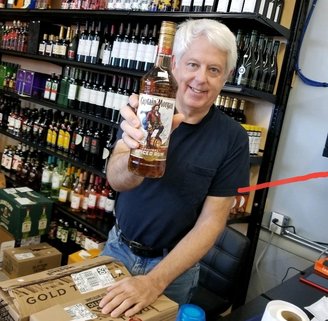
On Oct. 12, 2021, at about 12:16 p.m., Humboldt County Sheriff’s deputies on patrol in the 2400 block of Myrtle Avenue observed a suspicious male exhibiting behavior consistent with attempting a car burglary.
Deputies contacted the man, 20-year-old Jacob Benning Moran, and learned that Moran had an outstanding misdemeanor warrant for his arrest. As deputies attempted to place Moran into custody for his warrant, Moran began to physically resist deputies. While resisting, Moran twice attempted to unholster a deputy’s service firearm.
After a brief struggle, Moran was arrested and then booked into the Humboldt County Correctional Facility on fresh charges of attempting to remove a peace officer’s firearm (PC 148(d)) and resisting a peace officer (PC 148(a)(1)), in addition to his warrant charges of assault (PC 240) and battery (PC 242).
Anyone with information about this case or related criminal activity is encouraged to call the Humboldt County Sheriff’s Office at (707) 445-7251 or the Sheriff’s Office Crime Tip line at (707) 268-2539.
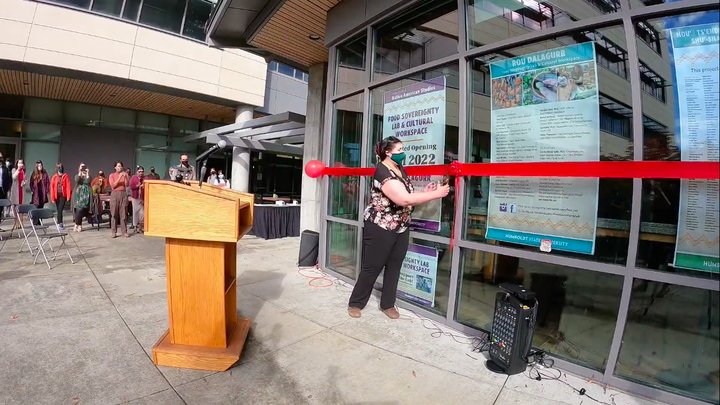
Screenshot from Friday’s groundbreaking event, live-streamed on Facebook: Kaitlin Reed, an assistant professor in the Native American Studies Department and co-director of the food sovereignty lab, cuts the ribbon.
###
Standing before Humboldt State’s new Indigenous Food Sovereignty Lab last week, Cody Henrikson told a small crowd that growing up, traditional foods were some of the only native practices he and his family had left after centuries of assimilation and erasure. When Henrikson, who is Denaʼina, Sugpiaq and a member of the Ninilchik Village Tribe of Alaska, moved here to attend Humboldt State University, he lost traditional foods, too.
“I lost those traditional foods and the connection to my culture, and I struggled a lot in my first few years of school. It took me a long time to adjust to this new environment and to become a good student,” Henrikson said. It was thanks to HSU’s Native American Studies Department that Henrickson eventually found his footing, and it is through that department that the idea for an Indigenous food sovereignty lab was born and grew, fueled by Henrikson and his peers.
On Friday last week, supporters gathered at HSU for the lab’s groundbreaking ceremony, located on what students are now calling “Wiyot Plaza,” near the Native American Forum, Goudi’ni Gallery and Behavioral and Social Sciences building. The lab is named “Rou Dalagurr,” which means “everyone works” or “work together.”
“The implementation of programs and spaces like Rou Dalagurr are vital to the well-being and success of Indigenous students,” Henrikson said at the event, which was live-streamed on Facebook. “Not only will this lab directly serve to support Indigenous students, but also the school as a whole, our local tribes, and our community.”
The new lab — with remodeling underway and a goal opening date of fall 2022 — will serve many purposes, all tied to amplifying Indigenous representation and honoring food sovereignty. The lab has partnered with several Indigenous environmental programs and has a steering committee with representation from HSU staff, students and most local tribes.
“We need this. We need to bring back our foods and our traditional foods so we can be healthy again,” said Wiyot Tribe Chairman Ted Hernandez.
Food sovereignty is defined as “the right of peoples to healthy and culturally appropriate food produced through ecologically sound and sustainable methods, and their right to define their own food and agriculture systems,” in the Declaration of Nyéléni, which was the product of the first global gathering for food sovereignty in Nyéléni Village, Mali, in 2007.
“Native foods were specifically targeted during invasion and genocide throughout the 20th century. The criminalization of Indigenous ecological management practices and the commodification of more than human relatives have hampered our ability to produce and access healthy Indigenous foods,” said Kaitlin Reed, an assistant professor in the Native American Studies Department and co-director of the food sovereignty lab.
The interior of the lab will be equipped with a commercial kitchen, plant drying station and area for basketry, art and regalia, and its exterior will include a salmon pit and native plant and food garden. The space will be used for research, studying and university events.
Restoring Indigenous food practices — with their ties to culture, agriculture, geography and ecosystems — are a natural avenue to restoring more.
“When we talk about Indigenous food sovereignty, we are talking about so much more than the cultivation or preparation of foods,” Reed said.
“We are talking about liberating our rivers from dams, we’re talking about bringing fire back to the landscape, we’re talking about bringing our languages back, our ceremonies back, and we’re talking about getting our land back. That is really what is at the core of Indigenous food sovereignty.”
Reed shared a statistic from Kari Norgaard’s book “Salmon and Acorns Feed Our People” that today’s average Karuk family eats less than five pounds of salmon per year, compared to the 400 pounds Karuk people ate per year prior to 1850.
“This is probably one of the largest dietary transformations that have happened in North America,” Reed said. “This lab represents a great stride towards righting that wrong, that injustice that Indigenous peoples experience in their landscapes and in their bodies.”
The idea for the lab arose from a fall 2019 Indigenous Natural Resource Management Practices course taught by Department of Native American Studies Chair and co-director of the lab Cutcha Risling Baldy.
“This was a student dream project that they came up with in a class, that we’ve been working on ever since, and that has now come to fruition, just a short year-and-a-half/almost two years later,” Baldy said.
Two students in that class, Henrikson and Carrie Tully, won second place at the California State University Student Research Competition for a presentation about ways to indigenize Humboldt State’s campus, and the two donated their winnings to the lab.
The team’s first proposal for the space to build the lab was denied, and so students collected more than 100 letters of support and brought an appeal to the University Senate, which resulted in approval for the lab.
Students raised $250,000 for the lab in under a year, Baldy said, with help from more than 200 donors.
“The work [these students] have done over the past couple years are going to benefit Indigenous communities for generations to come,” Reed said. “It’s going to benefit our more than human relatives and it is working towards putting a broken system back into balance.”
Graduate student Carrie Tully, whose daughter accompanied her at the speaker’s podium, also underlined that their efforts to build the lab are for today’s youth.
“I think that all of the students who have worked on this and everybody who has worked on this [are] probably slightly jealous of all of these students who are going to be able to participate in the lab as part of their college education, because we’re not going to get to do that for credit. But we’re so proud and excited to be able to pass on these opportunities to the youth,” Tully said. “This is something that will go on and be shared and grow and develop for generations and generations and generations.”
Rou Dalagurr leaders plan to staff the lab with five interns per year who will have the opportunity to propose and develop their own ideas and projects for the space, which are outlined in their summer 2021 progress report. The team has already dreamt up a number of projects, including food sovereignty youth camps, which would educate elementary, middle and high school youth about food sovereignty, a food sovereignty food guide that would explore Northern California Indigenous gardens and businesses, a documentary about Rou Dalagurr, which is already underway, and an annual springtime Humboldt Native Foods Festival to celebrate local native farmers and producers.
The lab is the first of its kind in the California State University system. “It’s a chance to show how people really see HSU as a place for native students, and native work, and native-facing research,” Baldy said. “We’re leading the way in that, and that’s kind of unprecedented at other universities.”
“The food sovereignty lab is really a wonderful example of our university’s values in action,” said HSU Provost Jenn Capps, who appeared on behalf of President Tom Jackson and HSU’s administration. “This whole space really just activates and embodies everything that HSU is about.”
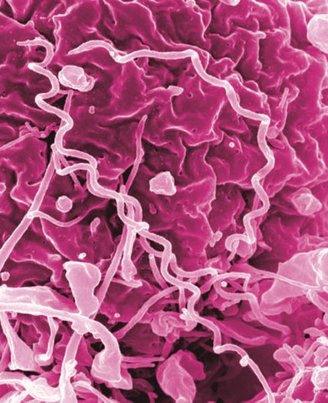
Treponema pallidum, the bacteria that causes syphilis | Image from the National Institutes of Health via Flickr. Creative Commons license.
As COVID continues to tear through Humboldt County, the Department of
Health and Human Services (DHHS) is concerned about another epidemic that could be affecting the community more than we realize — an
outbreak of the sexually transmitted infection syphilis, which if gone
untreated can have devastating effects.
Hava Phillips, supervising public health nurse for communicable disease prevention at DHHS, says that in 2021 Humboldt County has recorded two cases of congenital syphilis — a rare and often extremely serious disease caused by a mother with syphilis passing the infection to the baby during pregnancy. And though two cases may not seem like a lot, Philips says that this number is incredibly startling. Humboldt recorded one case of congenital syphilis in 2020 and prior to that the county hadn’t seen a single case in more than a decade.
“Congenital syphilis is a really horrible outcome,” Phillips told the Outpost in a recent phone interview, adding that the disease can result in serious conditions including low birth weight, birth defects, miscarriage and even stillbirth. “This is a disease public health would like to ensure is prevented in our community.”
The rise in congenital syphilis is not unique to Humboldt. The U.S. has seen dramatic increase in cases over the last several years. According to the CDC, 1,870 cases of congenital syphilis were reported in 2019 — including 94 stillbirths and 34 infant deaths — a 477% increase relative to 2012.
Aside from the horrible outcomes, what’s troubling about the re-emergence of congenital syphilis, Phillips said, is that it is indicative of a serious outbreak of syphilis in general. Syphilis rates are traditionally lower in women than in men, and even lower in pregnant women. The rate of babies being born with syphilis is lower still, because it can often be prevented with early screening and treatment. So, because of the very low odds of seeing these two cases, public health can assume that the infection is much more present in the community than the test numbers are indicating.
This brings up another concerning factor — the number of STD/ STI tests being administered in the county has drastically decreased during the pandemic, Phillips said. So although indicators like the congenital syphilis cases show that the infection is spreading in Humboldt County, the numbers are not there to back it up and many cases are clearly going undetected and untreated. As people get vaccinated and things loosen up, Phillips expects that to change.
“We are expecting a spike in numbers,” Phillips said. “We would see that as a good thing at this point. We would rather be seeing people come in and get tested and treated, rather than simply have indicators that it is present in the community.”
At the time, public health said that although intravenous drug use is a risk factor in contracting HIV, none of the cases had been contracted that way and were largely connected to unprotected sex arranged through hookup apps like Grindr.
Phillips said that the rise in HIV cases has not been significant in Humboldt County since the 2018 outbreak and that the continuing surge of syphilis cases is currently the primary concern. She also said that recent cases have not necessarily been linked to the use of hookup apps, but they certainly have been caused by unprotected sex, since syphilis is primarily spread through intercourse and not IV drug use.
With this ongoing spike in syphilis cases, Phillips emphasized the importance of using condoms and getting tested regularly. Even during the pandemic, people still need to be getting tested for STDs and STIs. She also wanted to stress the importance of pregnant women getting tested and seeking prenatal care as soon as possible. The serious symptoms of syphilis and congenital syphilis can be prevented with early detection and treatment.
“Anyone who is sexually active, should be tested for STIs,” Phillips said. “And it is improtant to let health care providers know what kind of sex you’re having. If you’re having oral sex, you will need an oral swab. If you’re having anal sex, you will need an anal swab. Regardless of your risk factors, just get screened.”
If you don’t have a primary care provider, the DHHS Public Health branch offers free testing on Tuesdays and Thursdays from 8:30 a.m. to 3:30 p.m. (they are closed for lunch between noon and 1 p.m.) at 529 I Street, Eureka.
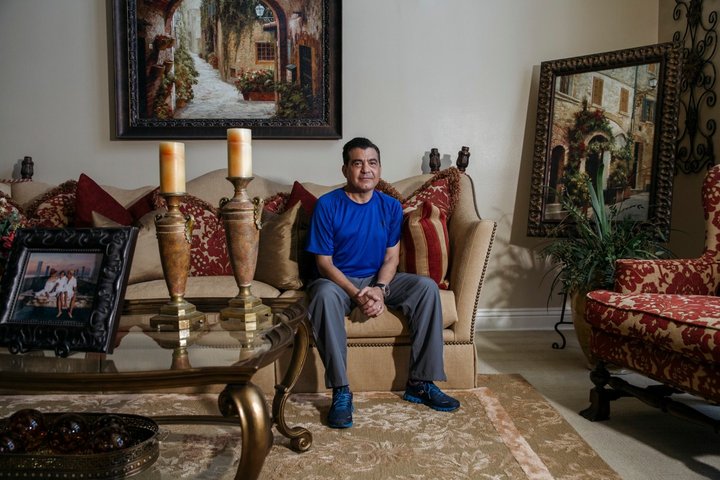
Dr. Shura Alexis Moreno, shown in his home in Alta Loma, was one of 25 COVID-19 patients to receive a lung transplant in California so far. Photo by Jessica Pons for CalMatters
###
Dr. Shura Alexis Moreno has always been one to count his blessings. Nowadays even more so: Every breath he takes with his new lungs feels like one.
His warm smile is back. He’s chatty and at first glance you wouldn’t imagine that just months ago he was on life support. But the flight of stairs in his home leaves him winded. He still doesn’t have the energy to play his drum set. He’s only recently started to gain some weight after losing 40 pounds while hospitalized.
Ten months after he was diagnosed with COVID-19, Moreno is finally getting some of his physical strength back. Yet mentally, it’s still tough.
“A lot of it is psychological,” he said. “I breathe the same, I feel like they’re my lungs. But every so often, I’ll cough and I get a little shaky. I think ‘wow, I have the lungs of someone else. It feels kind of weird.’”
Moreno is one of more than 200 COVID-19 survivors nationwide who have experienced some of the pandemic’s most devastating health effects — their only shot at survival was a new pair of lungs.
Through September, 26 people whose diagnosis was linked to COVID-19 have received new lungs at California transplant centers, according to the United Network for Organ Sharing. That accounts for 10% of all lung transplants performed in the state so far this year.
“It’s not that they (COVID patients) are depriving other patients, but there is definitely new pressure on the waitlist.” — Dr. Pedro Catarino, Cedars-Sinai Medical Center
Surgeons at California transplant centers told CalMatters that they are increasingly evaluating patients whose lungs were destroyed by the virus, including queries from hospitals in other states. This could potentially mean a longer wait time for non-COVID patients on the lung transplant waitlist.
“We’ve done 40 lung transplants (through September this year) and six out of 40 have been on COVID patients, so that’s 15% of our transplants,” Dr. Pedro Catarino, director of aortic surgery at Cedars-Sinai Medical Center who performs lung and heart transplants. “It’s not that they (COVID patients) are depriving other patients, but there is definitely new pressure on the waitlist.”
Most severely sick COVID patients — hundreds of people — don’t make the cut for a transplant, surgeons said. Hospitals and doctors turn down patients who are too frail to endure the hours-long surgery or who have other serious underlying medical conditions.
California surgeons also now worry how the lungs of their surviving patients will fare in the long-term: Will those left with scarred lungs need transplants later in life? Only time will tell.
105-degree fever and extremely low oxygen
As a general practitioner who runs Gabriel Medical Center, a small clinic on the busy Olympic Blvd. corridor in East Los Angeles, Moreno — who’s Latino himself — saw how the pandemic devastated many families he serves. Latinos account for 53% of infections and 46% of deaths in California while making up 39% of the population.
But he worried less about his own risk. He said he took all the recommended precautions for masks and physical distancing.
Once an avid cyclist, Moreno was still in good shape. He hit the gym a few times a week, and he didn’t have any health concerns. So when he came down with a fever a week before Christmas, he figured he’d isolate and rest.
But Moreno soon became so weak that walking just a few steps would leave him breathless. On Dec. 22 — two days before he was scheduled to get his first dose of the Pfizer vaccine — he was admitted to the same hospital where he often tends to his own patients. His wife and mother-in-law, who also were running fevers, were admitted with COVID-19 the same day.
“For a few days I waited, and that was probably my big mistake,” Moreno said, noting how overwhelmed local hospitals were in those days during the winter surge.
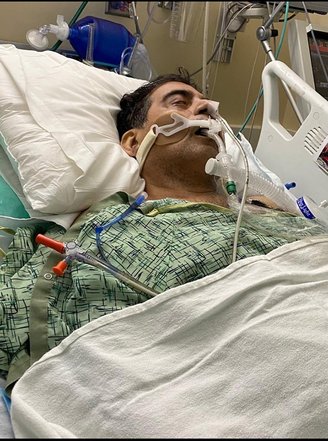
Moreno spent almost five months in the hospital with both of his lungs damaged by COVID-19. He was intubated and put on a respirator — a machine that breathed for him. Photo courtesy of Moreno
When he arrived at the hospital, he was running a 105-degree fever and his blood oxygen level had sunk to 47% — 95% and above is considered normal for healthy lungs. He remembers at one point pleading to the doctors at Monterey Park Hospital to intubate him — insert a tube into his airways and have a machine breathe for him. “I couldn’t take it anymore,” Moreno said.
His wife and mother-in-law improved, and they were discharged in early January. At one point, Moreno thought he might be in the clear, too. But he’d have one good day in the hospital and then two really bad ones.
On Jan. 16, he was transferred to UCLA Medical Center for more advanced care. He spent his 55th birthday in the intensive care unit, wondering if it’d be his last.
Like many patients whose lungs have been torn up by COVID, Moreno relied for months on oxygen support — first via a ventilator and when that wasn’t enough, a more invasive therapy known as extracorporeal membrane oxygenation (ECMO), in which a machine connected through arteries removes a person’s blood from their body, adds oxygen and then pumps it back in.
The machine is meant to be temporary; the goal is to give the lungs a break to heal. But after almost two months, his lungs showed no improvement. As a last resort, his doctors recommended a double lung transplant.
It was not a decision his doctors made lightly but he was a good fit, according to Dr. Abbas Ardehali, Moreno’s surgeon and director of the UCLA heart and lung transplant program.
“He is a relatively young man, all his other organs were intact and he was ambulatory,” Ardehali said. “Another factor is that he likely acquired this during his professional endeavors, which made us feel we needed to do whatever we could to help him recover.”
To meet the requirements for a transplant, Moreno had to walk at least 20 feet down a hallway. A patient too weak to take steps may be too frail for a transplant, Ardehali explained.
“I felt like I couldn’t even sit on the bed, how was I supposed to walk?” Moreno recalls.
His wife, Tatiana, who for many weeks could only communicate with him via video chat, cheered him on even if she herself struggled to stay optimistic. Colleagues and family sent banners and posters to show their support, while his nurses and therapists played salsa music, Moreno’s favorite, to raise his spirits.
It was the longest 20 feet of his life, and to this day, he’s not sure how he did it.
Once he was cleared, the next step was to wait for a matching donor. Within two days of getting on the waitlist, he had a match. It was a combination of urgency and luck, Moreno said. Patients can wait anywhere from days to years for a matching organ, but usually the sicker the patient is, the higher they end up on the waitlist.
On April 7, three and a half months after he walked into the emergency room, Moreno underwent seven hours of surgery to receive his new set of lungs.
Who qualifies for a transplant
Transplant surgeries are challenging procedures only available in select hospitals. In California, seven medical centers, including three University of California hospitals, transplant lungs, according to the Health Resources and Services Administration. Transplants are usually covered through a patient’s insurance, whether it be private or a public health insurance program like Medicare for seniors or Medi-Cal for low-income residents.
UCLA Medical Center has performed three transplants on COVID patients; Moreno was Ardehali’s first. Three more patients are waiting. And he has received dozens of evaluation referrals from other hospitals across the state, and even the nation, for COVID-19 patients whose lungs have not healed with other therapies.
Returning to the Gabriel Medical Center in East Los Angeles, Moreno sees patient Carlos Altamirano in late September. Photo by Jessica Pons for CalMatters
Surgeons at UC San Diego Health also have seen a significant increase in patient evaluations for transplants during the pandemic. That’s in addition to their non-COVID patients with emphysema, chronic obstructive pulmonary disease or pulmonary fibrosis who also may need transplants.
But the reality is that most virus-afflicted patients end up not qualifying.
“For every candidate we have accepted or considered for lung transplantation, there are another 20 to 30 who have been turned down,” said Dr. Kamyar Afshar, medical director of the Lung Transplant Program at UC San Diego Health. His team performed its first COVID lung transplant on a 56-year-old man in June.
The ideal candidate’s only medical issue is lung failure — meaning the person would have to be otherwise healthy. Because of the scarcity of organs, surgeons prioritize patients who are very ill but whose bodies show promise of making a full recovery with a transplant.
“When you’re saving the life of one person, you are also taking the lung from someone else, so we want to make sure we’re not doing a futile procedure,” Ardehali said.
COVID-19 can prompt a spectrum of lung conditions, from pneumonia to ruptures and clots in the lungs. If a COVID-19 patient is being considered for a transplant, it’s because that person is very sick, so they will likely end up at the top of the list.
Who gets a new set of lungs first is up to the organ wait list’s algorithm. Patients with lung failure are assigned what’s known as a lung allocation score from zero to 100. The sicker the patient, the higher the score.
“The score is more valuable (to get access to a new lung) than the time you’ve been on the list,” said Dr. Scott Atay, a thoracic surgeon at Keck Medicine of USC. Blood type and distance from the donor hospital also play a role in how quickly someone gets a match.
“When you’re saving the life of one person, you are also taking the lung from someone else, so we want to make sure we’re not doing a futile procedure.” — Dr. Abbas Ardehali, UCLA heart and lung transplant program
The best protection against these extreme cases is getting the vaccine, Afshar said. “I think a lot of patients think this is going to be like another common cold, and for a lot of people, they may be asymptomatic or have very mild cases, but in the extremes, it’s a lot worse,” Afshar said. “We’re here to provide a certain service and hope, but if you can prevent it, why not?”
The virus has been the most devastating to seniors — people 65 and older account for 72% of the COVID-19 deaths in California.
But many younger and seemingly healthy people like Moreno have also experienced severe cases. The nation’s first patient with COVID-related lung transplant was a 28-year-old woman in Chicago last summer. A 24-year-old Georgia man made headlines this spring when he, too, underwent a double lung transplant.
Doctors don’t know why some healthy people like Moreno suffer extreme lung damage while most others escape it. They have some theories: greater viral loads and genes, for example, could play a role.
Returning home
After he was discharged in early May, Moreno has been slowly finding his way back to a routine. His days start off with a cocktail of medications, which for the first couple of months post-surgery included about 20 different drugs. He is slowly weaning off most of them, but at least five he’ll take for life.
Anti-rejection medications prevent his body from attacking his new lungs, but they weaken his immune system and leave him more vulnerable to becoming ill from infections. That means Moreno must now be even more cautious: avoiding crowds, always wearing a mask in public and keeping up with booster shots. He received his first dose in July, three months after his surgery. The state as of Sept. 30 requires health care providers to be vaccinated.
Still recovering, his days today are filled with reading, watching the news and Netflix, and taking walks with his wife and 13-year-old son Gabriel — a stark contrast to the demanding schedule he had a year ago. He’ll do 30 minutes on the treadmill and can lift light weights as part of his physical therapy.
Moreno’s ordeal had repercussions on his entire family. Gabriel was often too sad to do Zoom school, so he’d skip it. Tatiana was overwhelmed — balancing his care, overseeing their clinic and caring for their son, who she worried was becoming depressed.
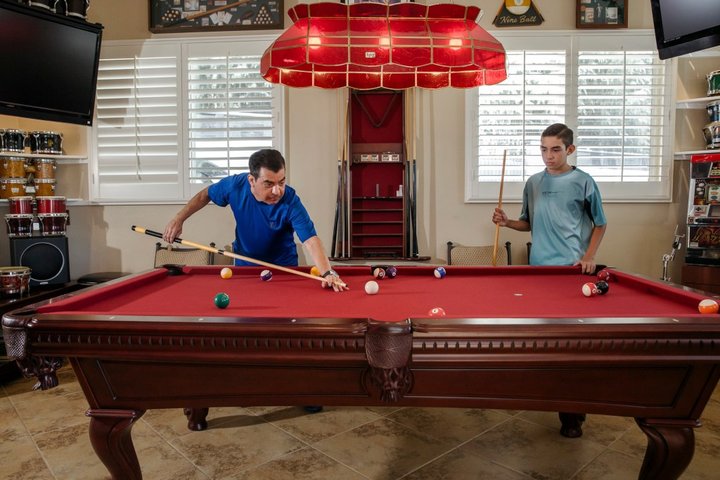
Moreno plays pool with his son, Gabriel, at their home in Alta Loma several months after returning home from the hospital. Photo by Jessica Pons for CalMatters
She often went without sleep playing different scenarios in her head. And every time the hospital called, she’d panic, thinking they were calling to inform her that her husband had died.
“When they first told me about the transplant, that day I didn’t sleep, looking up what exactly a transplant meant,” Tatiana said.
She discovered that patients can live up to 10 years after a lung transplant — although some have lived longer. Research shows 59% of transplant patients will live past five years.
Tatiana cried that night thinking 10 years would not be enough. She found some comfort when she thought about time in the form of her son’s birthdays: In 10 years, Gabriel will be 23. At least he’d be an adult, she thought.
Last month, Moreno returned to his clinic a couple of times a week, mostly for administrative work. He’s started to see some of his patients, most of them via telehealth but some in person. His plea to anyone who will listen: Get vaccinated.
“If it happened to me, a doctor taking all the precautions, it can happen to anybody. That’s my preaching point.”
###
CALmatters.org is a nonprofit, nonpartisan media venture explaining California policies and politics.
Emery Randal Johnson passed away unexpectedly on August 28, 2021. He was 58 years old and a native of Humboldt County, born November 29, 1962 at St. Joseph Hospital in Eureka. His early life was spent in the Blue Lake, Arcata and McKinleyville areas. During those years he made many memories, significant ties and several friendships that would last the rest of his life.
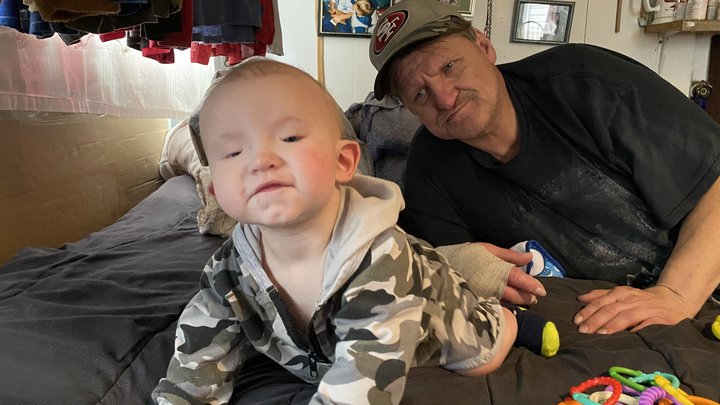
Emery played pop warner football, attended Arcata High School and became an enthusiastic fan of the 49ers. Later in life he moved and lived in the Eureka area for a time but moved back home to Arcata to care for his late father. He loved spending his time with his siblings and friends whenever possible, whether it was catching a Sunday football game with his brother, holidays at his sisters’ houses, or visiting with his daughter and getting to see his one year old grandson growing up so quickly. If you asked him what is the best thing in life that he’s done he would respond having his children and getting to become a grandpa to two amazing grandsons.
He is preceded in death by his mother Carol Ann Movius Johnson, his father Charles Melvin Johnson, his eldest son Justin Randal Johnson, his brother Sherman Duane Johnson, his sister Laurie Ann Howsman, great nephew Zayden Johnson, and great nieces Eliena Johnson and Penelope Staley. He leaves behind his two children Adam Levi Charles Johnson and Cheyenne Rose Johnson, two grandsons Cael Randal Garcia Johnson and Kane Thomas Simpson, his brother Darrin Gregg Johnson and Emily Bishop (along with “babes”), his sisters Lisa Lorraine Johnson Lawrence, Kimberly Dianne Johnson (and Dan), Jennifer Michele Mills, and Charlene Rosenstiel; as well as many nieces, nephews, great nieces, great nephews and friends.
A gathering to celebrate the life of Emery for all those who hold him so dearly in their hearts will be held on Sunday, October 17th, 2021 from 2-4 p.m. at the Dows Prairie Grange in McKinleyville, CA. It will be a potluck and if you’re in attendance we would be grateful for any dish you bring along.
“This is the price you pay for loving someone so great. You get the wonder, the joy, the tender moments – and you get the tears at the end, too.”
###
The obituary above was submitted on behalf of Emery Johnson’s loved ones. The Lost Coast Outpost runs obituaries of Humboldt County residents at no charge. See guidelines here.
Nicole
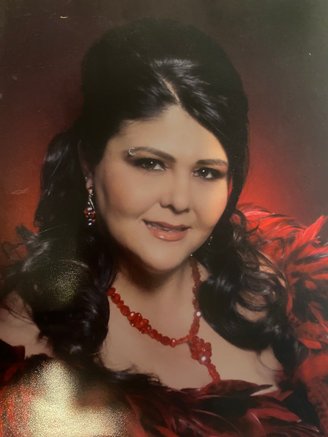
Leigh Ammon passed on the morning of September 30, 2021. She was born
in Chico on January 19, 1970. She grew up on the Hoopa Valley
Reservation and was proud of her Native American culture and where
she came from. She lived in San Francisco where she worked as a
landscaper in the Golden Gate Park where she loved taking care of the
flowers and trees there. She graduated from San Francisco City
College with her associate’s degree. She moved back to Red Bluff to
be closer to her children and grandchild.
She
was loved by many and an absolutely incredible grandmother. She
enjoyed collecting things, especially rocks, and always surrounded
herself with nature, teaching her grandbaby to love and take care of
the Earth. They spent a lot of time at the river, one of her favorite
places to be. She was extremely creative and crafty, always creating
something new for the people she loved.
She
had an incredibly beautiful and giving soul. She had friends from
every walk of life and was so accepting of every person she met. Her
smile and laughter were contagious and she brought joy to so many
people’s lives. She will be incredibly missed, always and forever
in our hearts.
She
is survived by her children. She had two sons, Joshua James Little
Feather Ammon and Thomas Eugene Blake Jr and a daughter, Britany
Pretty Echo Goodluck. Her mother Carol Leigh Ammon, her brother Lee
Ammon and his wife Rebecca. Granddaughter Lyla Bee Goodluck. Her
Aunts and Uncles, Debbie and Bob McConnell, Mary and Al Hall, Shannon
Ammon, Norma McConnell and Nora Shields.
She
is preceded in death by grandparents Lewis and Ardith McConnell,
Jubie and Molly Ammon. Father Ronald Ammon, Uncles Leroy Ammon and
Robert Ammon, Howard McConnell, Mike McConnell, William McConnell,
David McConnell and Donald Shields and aunt Yvonne McConnell.
Funeral
services will be held at The First Baptist Church Saturday Oct 16,
2021 at 1 p.m. Viewing Friday evening. Graveside services will follow
at the Hupa Tribal Cemetery.
###
The obituary above was submitted on behalf of Nicole Ammon’s loved ones. The Lost Coast Outpost runs obituaries of Humboldt County residents at no charge. See guidelines here.
Born December 12, 1953 to Curtis and
Gertrude Siggins in Eureka. Passed peacefully at the home of his son
and daughter in law on October 10, 2021 in Eureka.
Darrell graduated from St. Bernard’s
High in 1972. Darrell was very active in the automotive industry
building custom cars with talent he passed onto his son. Darrell
showed classic cars, worked and co-owned Finnegan and Nason Auto
Parts, parts of American Speed Shop, Wendt Speed Center in Fortuna,
and a well-known parts man throughout Eureka. He started his new
career with his long-term partner Amy Sedam in 1999 at Amy’s Delight,
where he enjoyed his many loyal customers.
Darrell always had a bright smile and
made people laugh wherever he went.
He is preceded in death by his parents
and brother, Ralph Siggins. He is survived by his son, Guthrie and
Margaret Siggins; his granddaughter that he cherished, Epona L
Siggins; his partner Amy Sedan and her family; his brother Wayne
Siggins; sisters Susan Pollock, and Janis (John and nephew
Christopher) Prince; his niece Raeanne Block (kazzalon); and many
cousins and loved friends.
Please join us Friday, October 15 for
his closed-casket visitation, from 11 a.m. to 1 p.m. at Sanders
Funeral Home, 1835 E St, Eureka. His service to follow at 2 p.m., at
Ocean View Cemetery. PLEASE WEAR A MASK.
In lieu of flowers, please consider a donation to Siggins Family
for funeral contribution. Guest book will be available for all to
sign at Sanders.
###
The obituary above was submitted on behalf of Darrell Siggins’ loved ones. The Lost Coast Outpost runs obituaries of Humboldt County residents at no charge. See guidelines here.