

Student COVID Vaccinations: California Becomes First State to Require Them for Kids 12 and Up
Joe Hong / Friday, Oct. 1, 2021 @ 11:15 a.m. / Sacramento

Photo by National Cancer Institute on Unsplash
###
In another aggressive effort to stop the spread of COVID-19 and ensure schools remain open, Gov. Gavin Newsom today announced a vaccine mandate for students ages 12 and older, making California the first state in the nation to require students to be fully vaccinated for in-person instruction.
The mandate would add the COVID-19 vaccine to the list of required immunizations, which includes mumps, measles and rubella. Newsom issued this order in the aftermath of similar mandates from the state’s largest districts, Los Angeles Unified and San Diego Unified.
“We intend to do that once the FDA has fully approved the vaccine which will give us time to work with districts, give us time to work with parents and educators to build more trust and confidence,” Newsom said.
Parents still have some time to get their students vaccinated. The state mandate will go into effect only once the federal Food and Drug Administration fully approves vaccines for those 12 and older. Upon FDA approval, students will have until the start of the following academic term, either January 1st or July 1st, to be fully vaccinated.
This mandate, however, doesn’t just put the responsibility on students. All public school employees will be required to be vaccinated as soon as the mandate takes effect for students. Until now, teachers and staff were either required to be vaccinated or undergo regular testing for COVID-19; negative tests will no longer suffice.
The state expects that based on current FDA timelines, students grades 7-12 will be required to be vaccinated by July 1, 2022.
Students who are currently too young to get the vaccine will be required to receive their doses as soon as they reach the required age, but they’ll be given a “reasonable period of time to receive both doses.”
The California Department of Public Health will develop the rules for personal and religious exemptions following a public comment period. Details for that process have not yet been released.
The mandate comes in the aftermath of Newsom’s overwhelming victory in September’s recall election, during which the governor leaned into mask and vaccine mandates.
A survey released this week by the Kaiser Family Foundation found that most families nationwide are willing to vaccinate their children.
California students who do not get fully vaccinated will be required to enroll in independent study, the only alternative to in-person instruction being offered this year.
###
CALmatters.org is a nonprofit, nonpartisan media venture explaining California policies and politics.
BOOKED
Today: 3 felonies, 8 misdemeanors, 0 infractions
JUDGED
Humboldt County Superior Court Calendar: Today
CHP REPORTS
3600 Mm299 E Hum 36.00 (HM office): Traffic Hazard
Dyerville Loop Rd / Barnum Rd (HM office): Trfc Collision-Minor Inj
ELSEWHERE
RHBB: Woman Suffers Possible Leg Fracture in Dyerville Loop Road Motorcycle Crash
KINS’s Talk Shop: Talkshop September 7th, 2026 – Eureka Police
Governor’s Office: Happy Labor Day! California is the #1 for state for workers, #1 economy in the nation
Governor’s Office: Governor Newsom proclaims Labor Day
Newsom Signs McGuire’s Great Redwood Trail Act
LoCO Staff / Friday, Oct. 1, 2021 @ 11:01 a.m. / Government , Trails

A future stretch of the Great Redwood Trail at the confluence of Blue Rock Creek and the mainstem Eel River. | Photo by Alicia Hamann via thegreatredwoodtrail.org.
###
Press release from Senator Mike McGuire’s office:
Senator Mike McGuire today thanked Governor Newsom for his courageous signing of SB 69, the Great Redwood Trail Act.
“With Big Coal trying to do an end run on the North Coast, the State of California is standing strong for the Great Redwood Trail. We won’t be intimidated, we’re certainly not going to back down. We will win this fight against Big Coal and the signing of SB 69 today is a massive step forward.
“I’m grateful to the Governor for signing this historic legislation that will once and for all, close down the defunct and bankrupt North Coast Railroad Authority and transition the organization into a world class trails agency.
“This bill puts the organization, the funding, and the expert staff in place to fight these midwestern coal barons and to continue the amazing progress on the Great Redwood Trail. We’ll kick off the Trail’s fully funded Master Plan in early 2022 and we couldn’t be more excited.”
Due to the passage and signing of SB 69, NCRA will transition to the Great Redwood Trail Agency on March 1, 2022 and the State Coastal Conservancy will take over oversight and management of the organization no later than July 1, 2022.
The Great Redwood Trail Agency’s mission is to masterplan, design, construct, operate, and maintain the Great Redwood Trail. They will begin the community outreach and masterplanning process the first part of the new year.
New Documentary ‘Lady Buds’ Shines Light on Humboldt’s Women in Cannabis During an Era of Hardship
Jacquelyn Opalach / Friday, Oct. 1, 2021 @ 10:56 a.m. / Cannabis , MOVIED!
Not long after Proposition 64 passed, legalizing recreational use of cannabis for adults over 21, Los Angeles indie filmmaker Chris Russo rolled into Garberville with a car full of camera gear, looking to capture what that historic moment would mean for California’s cannabis capital.
Four years later, we have “Lady Buds,” a Humboldt-heavy documentary largely about the challenges small growers are facing — often unexpectedly — with California’s cannabis legalization and regulation rollout. The film is coming to its hometown for a special screening this weekend.
“I wanted to tell a story like we’ve never seen before,” Russo told the Outpost. “All we see on TV are crime shows — crime shows around this plant. And that’s so not interesting to me. And it’s telling the wrong story — I mean, it is a story, but it’s just not the whole story, you know?”
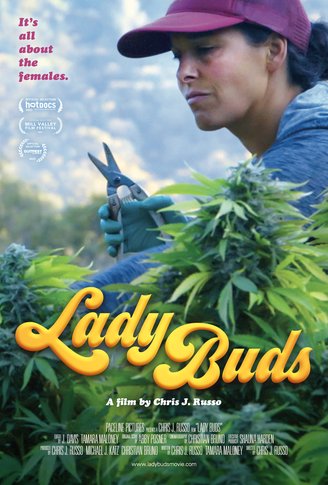
“Lady Buds” promotional flier
Shortly before coming here, Russo — a seasoned filmmaker dedicated to giving a voice to marginalized communities, women and LGBTQ folks — learned that women hold leadership positions in cannabis in higher-than-average numbers compared to other industries. So she came looking specifically for women in cannabis.
Folks were hesitant to talk to her. Stationed at a Best Western, Russo managed to start connecting with Humboldt and Mendocino’s web of small farmers through word of mouth. She talked to people on the phone and was eventually invited to visit many of their homes and farms. She smoked a lot of weed with them and gained their trust. People liked her.
“I soon came to realize that women hadn’t been given a voice in this area of cannabis, and they were the backbone of the industry. They were cultivators, they were entrepreneurs, they were activists,” Russo said.
In preparation for the film, Russo interviewed more than a hundred people in cannabis throughout the state of California.
“I really wanted to embrace telling a story about cannabis that was filled with universal themes of reaching for your dreams. And these women — they have these dreams of making it and succeeding in a market they had been in for decades already.”
She managed to narrow her focus to six women, who she followed for three years as they found their footing through the regulation of California’s cannabis industry.
Three of them — Pearl Moon and Joyce Cenfofanti, who together are the Bud Sisters, and entrepreneur Karyn Wagner — are from Humboldt, and another, second-generation cannabis farmer Chiah Rodriques, is from Mendocino. The film also follows Sue Taylor, a Berkeley dispensary owner committed to educating seniors about the benefits of cannabis, and Felicia Carbajal, a queer-identifying Latinx activist from Los Angeles focused on helping marginalized communities gain equal access to medical cannabis.
As with much documentary-making, the film Russo ended up with is not the film she anticipated making. She used cinéma vérité, a fly-on-the-wall filmmaking style. “It’s hours and hours and hours of filming, like in a corner when they’re having dinner, or when they’re on the phone, or doing their business,” Russo said. “You hope to capture a little bit of what the story is.” The crew recorded more than 500 hours of footage, which they ultimately edited down to 90 minutes.
From wildfires to raising a family on a farm, the stories Russo captured are a continuous string of challenges. Her subjects faced bureaucratic barriers, lack of access to medical cannabis in marginalized communities and anti-cannabis bias.
“The women in the film were up against all these obstacles. It was like, ‘Wow, is there ever going to be a success story here?’” Russo said.
Paramount was what legalization actually meant for these women as they entered a new commercialized industry, which some anticipated would be a positive turning point.
“I started out as one of the biggest cheerleaders for legalization in Humboldt County,” Karyn Wagner, one of the women followed in “Lady Buds,” told the Outpost. After struggling with the regulations that came with Proposition 215, which exempted patients and caregivers cultivating or possessing cannabis from criminal penalties, Wagner welcomed the idea of a more regulated market.
But following the passing of Prop 64, “as time went on, and I was crushed over and over again, by either county regulations or state regulations or the marketplace, I realized that this was just something that is not going to be,” Wagner said. “[Russo] caught on camera all of us being devastated by our county regulations, our state regulations and the big corporate interests that came into the industry.”
It shocked Russo to see how little the rollout of recreational legalization and regulation of cannabis supported small, established farmers. “The way the government came in, and the policymakers and the lobbyists to support the bigger businesses…how could these little guys even get a chance?” she said.
“All of these injustices that were happening in front of our eyes were captured on camera.”
Russo’s producer, Michael Katz, the executive director of the Mendocino Cannabis Alliance, described the regulation rollout as a series of extinction events for small cannabis businesses.
“This process of transitioning from a medical system, that was a fully functioning economy, to a brand new undeveloped commercial economy has been a disaster for the folks who were operating previously, just across the board,” Katz said.
“[The film] really shows what has been happening in a way that nothing else that’s out there that I’ve seen does.”
For Wagner, the process has been so challenging it’s hard for her to watch “Lady Buds.”
“The first time I watched the film, I had so much PTSD that I thought I would never actually be able to watch it again,” she said. “I think consumers don’t have an opportunity to understand the differences between legacy small farms, and big corporate interests that have come into the marketplace as a result of Prop 64.”
Then, Wagner attended “Lady Bud’s” first screening at Outfest Film Festival in Los Angeles. “The audience got it. And once the audience got it, then I was just so relieved that okay, someone else is hearing the story, someone else is understanding what’s going on. And I became more at ease with the film,” she said.
“This is the story of the little guys against the big guys. This is a David and Goliath story, and I really wanted there to be some inspiration and some hope,” Russo said. “It could have been different, it still can be different.”
Unintentionally, “Lady Buds” became an advocacy film.
“When you see the film, you can’t help but ask, ‘Well, what can I do to support these women, to support these various communities?” Katz said. “While they’re struggling under their own challenges, they’re unified in a major way by the plant, and by the community spirit of the plant. And it’s that community spirit that’s being directly challenged by the unfettered capitalism approach to cannabis commercialization.”
They’ve partnered with Origins Council, a nonprofit supporting legacy cannabis, and The Social Impact Center, a nonprofit that helps folks access cannabis convictions legal relief, among other things.
After watching the film, Katz hopes people will be motivated to support organizations like those, and think about where their weed comes from.
You can see “Lady Buds” at the Minor Theatre in Arcata on Friday, October 1, and Saturday, October 2. Tickets are available here.
“Especially with how challenging these times have been for folks, it’s really important to celebrate the wins, and to celebrate the victories whenever they come along,” Katz said. For these women, sharing the film is a win, he added.
“I’m really grateful to the Humboldt community, and all of the people in the community that welcomed me in to tell their story,” Russo said. “I’m really, really, really excited that the Humboldt community is going to get a first look at this film, because that’s the community where it all started.”
Criminal Justice Reform Panel Scores Legislative Wins
Byrhonda Lyons / Friday, Oct. 1, 2021 @ 7:38 a.m. / Sacramento
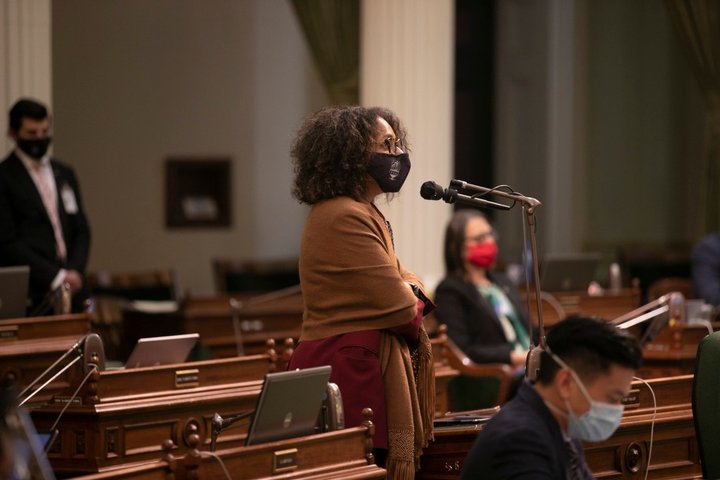
Democratic Assemblymember Sydney Kamlager of Los Angeles speaks on the floor on the final day of the 2019-20 legislative session, Aug. 31, 2020. She was an inaugural member of the committee examining the penal code, and authored a controversial bill on gang enhancements. Photo by Anne Wernikoff for CalMatters
###
Twelve books stored in a Stanford University library — that’s what became of the last effort to dramatically revise California’s penal code. No passed legislation, no chaptered laws.
Half a century later, Michael Romano, chair of the newly formed California Committee on Revision of the Penal Code, stacked the books on his desk.
“I like to say it’s my iceberg that I’m trying to steer around,” said Romano, also a professor at Stanford Law School.
Months after recommending 10 changes to California’s penal code, Romano’s committee seems to have steered away from docking their work at a college library.
Less than two years after forming, the committee has pushed through more than half of its recommendations. Six of the committee’s proposals ended in passed legislation that now await Gov. Gavin Newsom’s signature or veto.
The seven-member group of current lawmakers, academics and judges is charged with recommending ways to “simplify and rationalize” criminal law and procedures, improve parole and probation and find alternatives to prison.
“There is no one bill that is going to be a panacea and accomplish all of the change that we need to see.”
— Anne Irwin, Smart Justice California
Despite some opposition from the California District Attorneys Association and several police groups, California’s complex criminal justice code is being rewritten, bit by bit.
California once proudly wore the badge of a tough-on-crime state. But after incarcerating more than 170,000 people at its peak in 2006, things have changed. Over the past decade, voters, legislators and governors have weighed in on policies to reduce California’s prison population, changing state laws along the way.
In 2019, the Legislature decided it wanted a comprehensive look at the penal code.
Romano likened the existing penal code to a “kind of tangled hairball of statutes and regulations and rules that are applied throughout the state, not always consistently.”
The tweaks in language, deleted sentences and new definitions may appear insignificant, but the seemingly small amendments could eventually result in the resentencing and release of thousands of incarcerated Californians, and route more people away from ever being sentenced to state prisons.
While this tactical approach is celebrated by many justice reform advocates, it also frustrates those who argue the state is getting too soft on crime, just as homicides and aggravated assaults are rising.
In 2020, homicides in California spiked to their highest level in a decade. Aggravated assaults increased to a 10-year high, according to data from the state Department of Justice. The increase in homicides is a part of a broader national trend.
“Some of these proposals are just really being advanced or approved at great risk to the public,” said Greg Totten, executive director of the California District Attorneys Association. “It’s not reform, it’s reckless.”
When the committee released its report early this year, some organizations expressed concern. California Correctional Peace Officers Association president Glen Stailey told the Associated Press that the union was concerned “about potential negative impacts on public safety.”
Several of the committee’s recommendations targeted sentencing and releases, while others focused on courtroom procedures.
Among the bills that went to the governor:
- A proposal to end mandatory minimum sentences for nonviolent drug offenses, by Democratic Sen. Scott Wiener of San Francisco (AB 73)
- A plan to limit the state gang enhancement law, by Democratic Sen. Sydney Kamlager of Los Angeles (AB 333)
- A proposal to make good behavior credits available for mentally ill people who are in a treatment facility, by Democratic Sen. Henry Stearn of Malibu (SB 317)
- A bill to retroactively repeal some sentence enhancements for people who were previously excluded, by Democratic Sen. Ben Allen of Santa Monica (SB 483)
“There is no one bill that is going to be a panacea and accomplish all of the change that we need to see,” said Anne Irwin of Smart Justice California, a justice reform group. “It’s going to take, like this year, many years with several very precise bills, each addressing a particular failing of the system.”
The committee is mostly appointed by the governor, and two seats are appointed by Assembly and Senate leaders.
Committee members worked in tandem with the governor’s office and with legislators, providing data and research for lawmakers to craft legislation. And while several of their proposals breezed through the Legislature, that wasn’t the case for everything.
Among the most contentious was the issue of gang enhancements, which adds time to people suspected of being in a gang. The bill authored by then Assemblymember Kamlager would raise the standard for prosecutors and redefine how the law determines a gang.
Kamlager was one of the committee’s inaugural members before she was sworn in as a state senator earlier this year after a special election.
Gang enhancements have long been controversial. Some, including Kamlager and criminal justice researchers, view them as a punishment that has been wielded unevenly across California, often targeting Black and Latino people, who account for 92% of those sentenced under gang enhancements. In Los Angeles County, about 98% of people sentenced to prison for a gang enhancement are people of color, according to data from the California Department of Corrections and Rehabilitation.
Kamalager said her gang enhancements bill came out of the work she did with the committee. She said she hoped the change to the penal code would “take race out of some of these processes and try to infuse a little more fairness into them.”
“Prosecutors and law enforcement across California are united in their view that AB 333 is little more than a gift to violent criminal street gangs.”
— Vern Pierson, President of the California District Attorneys Association
The district attorneys association and Kamalager negotiated the bill’s language months ago. But days before it came up for a vote last month, the association urged lawmakers to vote it down.
“Prosecutors and law enforcement across California are united in their view that AB 333 is little more than a gift to violent criminal street gangs,” said Vern Pierson, president of the association, in an email.
The bill passed a day later with no votes to spare.
Recounting the experience, Kamlager called it “horrible.”
“I think that the law-and-order groups are doubling down,” she said. “I think it will get incredibly harder as we move forward.”
The district attorney’s association didn’t give up on its opposition, calling the bill’s passage “illegitimate” in a Sept. 17 letter to the governor.
This session, authors pulled several bills after high-profile crimes. A bill by Democratic Sen. Nancy Skinner of Berkeley to downgrade some petty thefts to misdemeanors never made it out of the Senate, after protests citing the string of robberies in the Bay Area. Skinner sits on the Committee on Revision of the Penal Code, and the bill was of its recommendations.
Senate Majority Leader Bob Hertzberg of Van Nuys also pulled a proposal for a statewide bail schedule after a Sacramento woman was killed in September by a man who was released without bail.
###
CALmatters.org is a nonprofit, nonpartisan media venture explaining California policies and politics.
OBITUARY: Linda Adele Parker, 1946-2021
LoCO Staff / Friday, Oct. 1, 2021 @ 7:16 a.m. / Obits
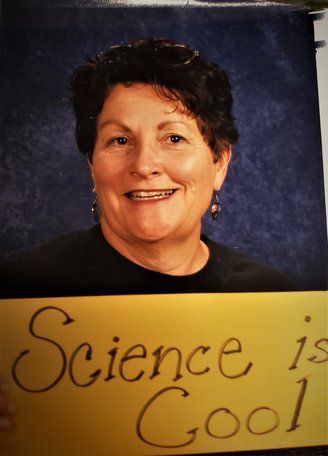
Linda Adele Parker died in her sleep on Friday, September 17, 2021 in Eureka.
She was loved by many and will be missed by family and friends.
Linda was born in Fontana, Calif. on December 13, 1946 to Ann and Albert Townsend.
She was a graduate of Eisenhower High School and attended University of California, Riverside.
Later in life, while raising her two daughters, she finished her degree and got her teaching credential at Humboldt State. She taught in the Eureka Public School district for 23 years. She loved teaching Junior High Science classes.
Linda is survived by her husband Donald Parker, daughter Kristal Parker, grandchildren Ayani and Kaela Randle and three siblings, Allan Kirby, Gayle Cruz and Carol Townsend.
There will be a memorial service on October 16, 2021 at 1 p.m., at Calvary Chapel, located at 1300 California Street, Eureka.
###
The obituary above was submitted on behalf of Linda Parker’s loved ones. The Lost Coast Outpost runs obituaries of Humboldt County residents at no charge. See guidelines here.
OBITUARY: Shannon Christeen Cross, 1975-2021
LoCO Staff / Friday, Oct. 1, 2021 @ 7:15 a.m. / Obits
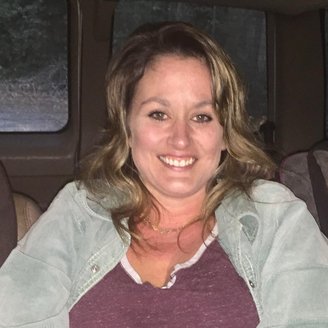
On
September 17, 2021, in the early hours of the morning, the world
grew a bit darker for all who knew our beautiful mother, daughter,
sister, and friend, Shannon Christeen Cross, who suddenly and
unexpectedly passed away.
Born in Fortuna on August 6, 1975 to Ron & Cheryl Cross of Weott, she grew up roaming in her Grandma Betty’s beautiful garden, a place that was always her idea of heaven. She was a fun-loving, vibrant, free spirit who loved with her whole heart and who lit up any room that she entered. Never one to leave those she loved without a bone crushing hug and a boisterous “I love you,” her family and friends always knew we had a place in her heart.
Survived by her three children Shayla, Shawnia and Shane, her five beautiful granddaughters Haven and Maddison, Carmin, Audrey and Ellie, her partner Michael Gardner, mother Cheryl and Grandma Betty plus numerous family and friends she was a light that will live on forever in our hearts. Preceded in death by her beloved Grandpa, Twyman Teasley. she will be laid to rest by his side during a private ceremony surrounded by family.
On Saturday, October 2, 2021 at 2 p.m. there will be a celebration of life for friends and family at California State Park Women’s Federation Grove (Four Fireplaces). In lieu of flowers, an account has been set up at Redwood Capital Bank in Fortuna for Shane Twyman Teasley, Shannon’s youngest child. Contributions for his care can be made there in person or by contacting a family member for Shane’s mailing address.
Our family would like to thank everyone that has reached out with condolences and offers of support during this difficult time. A special thank you to the Weott Garden Club for the beautiful flower arrangements.
###
The obituary above was submitted on behalf of Shannon Cross’s loved ones. The Lost Coast Outpost runs obituaries of Humboldt County residents at no charge. See guidelines here.
OBITUARY: Peggy Charlene Lightfoot, 1934-2021
LoCO Staff / Friday, Oct. 1, 2021 @ 7:07 a.m. / Obits
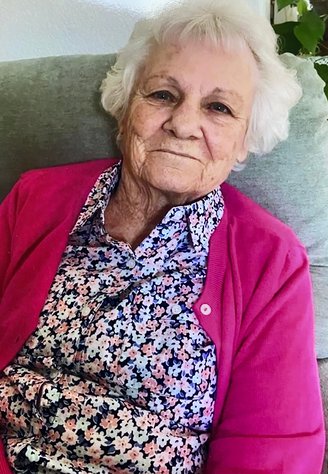
Peggy Charlene Lightfoot
March
9, 1934 - September 21, 2021
Peggy Charlene Dodson, born March 9, 1934, to Lillian Forest Armstrong Dodson and Robert Sidney Dodson Jr, and passed away on September 21, 2021, surrounded by her loved ones.
She was born and raised Nowata, Oklahoma. When she was 16, she moved to Menlo Park, Calif. where she graduated from Menlo-Atherton High School in 1952. That same year, on October 15, she married Joe Marvel. Shortly after their marriage, they moved to Eureka, where she lived the rest of her life. She and Joe Marvel have five children. To support her family she took in linens for ironing, worked in clerical and eventually opened her own business PMB (a medical billing service). Known for her hospitality, she continually served homemade baked goods, a hot cup of coffee, and a listening ear. While she was able, she maintained a flower garden, enjoyed cross word puzzles, and always had a needle work project in the works. She was a strong woman of faith who attended multiple churches in the area and regularly held Bible studies in her home.
She is proceeded in death by her parents, her husband of 9 yrs. Joe Neil Marvel (1961), husband of 35 yrs. Everett Collins Lovell (1998), infant granddaughter, Jessica Marvel and infant grandson, James Marvel. She is survived by her husband of 19 yrs. Larry Lightfoot, her children Linda (Dave) Curtis, Larry (Kellie) Marvel, Joe (Pam) Marvel, Diane (Brad) Langlois, and Jim Marvel, many grandchildren, and great-grandchildren.
Viewing hours will be held on October 5, from 5-7 p.m. at Sanders Funeral Home. Family members are invited to the graveside service held on October 6, 10 a.m. at Ocean View Cemetery. All are invited to a Celebration of Life Service to be held at Fresh Water Park at 1 p.m.
###
The obituary above was submitted on behalf of Peggy Lightfoot’s loved ones. The Lost Coast Outpost runs obituaries of Humboldt County residents at no charge. See guidelines here.


