

DA’s Office Reaches Decision on Plea Deal for Bear River Triple Homicide Suspect, But Announcement On Hold Due to Continuance
Rhonda Parker / Thursday, Sept. 30, 2021 @ 2:41 p.m. / Courts
The District Attorney’s Office has made a choice on whether to accept a plea offer from triple-murder suspect Mauricio Eduardo Johnson, but the announcement will be on hold for a few weeks.
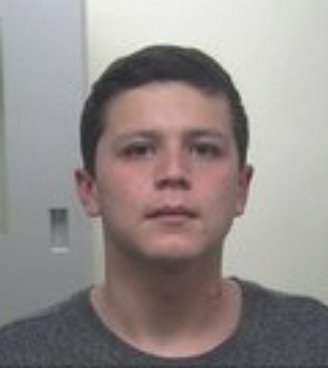
Johnson
“I have made a decision,” Deputy District Attorney Roger Rees said after a hearing this morning before Judge Kelly Neel. He declined to say what that decision is.
About 20 people were in court to hear whether the 19-year-old Johnson will plead guilty to murder and weapons charges that would mean a life term — or multiple life terms — in state prison.
Instead the hearing was continued because defense attorney Andrea Sullivan is in trial in another county. If the prosecution does accept the offer, a special allegation of committing multiple murders would be dismissed. A conviction on that allegation would mean life in prison without possibility of parole.
Johnson is accused of shooting three people to death in February on the Bear River Rancheria. The day after the killings he was arrested while driving through Utah.
Johnson, in custody at Humboldt County Correctional Facility, did not come to court this morning. The next hearing is set for Oct. 26.
###
PREVIOUSLY:
- ARRESTED: 18-Year-Old Bear River Homicide Suspect, Two Associates Taken Into Custody in Utah, Sheriff’s Office Says
- TODAY in COURT: Alleged Accomplice of Bear River Triple Homicide Suspect Arraigned in Utah Court; Updates on ‘Manila Five,’ Anderson Cases
- Suspect in Bear River Triple Homicide Appears in Utah Court, Gets Public Defender Assigned
- DA Files Charges in Bear River Triple Murder; If Convicted, Teen Suspect Could Face Life Without Parole or the Death Penalty
- Bear River Murder Suspect Still Fighting Extradition From Utah, but One Person Arrested With Him Has Been Returned to County Jail
- Affidavit From Utah Cop Offers Details of Police Investigation Into Last Month’s Triple Homicide at the Bear River Rancheria
- To Get Bear River Triple-Murder Suspect Back to Humboldt, Governor Newsom Must Agree to Sign a Warrant
- Alleged Bear River Homicide Accomplice Sentenced for Violating Parole, Charged With Failure to Register as a Sex Offender
- Loleta Triple Murder Suspect’s Utah Court Hearing Postponed Due to His ‘Disruptive’ Behavior; Extradition Fight Continues
- Bear River Triple Murder Suspect Will be Returned to Humboldt, Following Governor’s Signature on Extradition Warrant
- Bear River Triple Murder Suspect Returned to Humboldt County Jail, Will be Arraigned This Week
- Back in Humboldt, Bear River Triple-Murder Suspect Pleads Not Guilty
- TODAY IN COURT: Defense Puts Forward Plea Offer in Bear River Triple Murder; Plus: The State of Play in Three Other Local Homicide Cases
- Hearing on Hold in Bear River Triple Homicide While Parties Mull Plea Deal
BOOKED
Today: 3 felonies, 8 misdemeanors, 0 infractions
JUDGED
Humboldt County Superior Court Calendar: Today
CHP REPORTS
Dyerville Loop Rd / Barnum Rd (HM office): Trfc Collision-Minor Inj
ELSEWHERE
RHBB: Woman Suffers Possible Leg Fracture in Dyerville Loop Road Motorcycle Crash
KINS’s Talk Shop: Talkshop September 7th, 2026 – Eureka Police
Governor’s Office: Happy Labor Day! California is the #1 for state for workers, #1 economy in the nation
Governor’s Office: Governor Newsom proclaims Labor Day
Humboldt County’s New Garberville Campus, With Library and Sheriff’s Substation, to Hold Grand Opening October 13
LoCO Staff / Thursday, Sept. 30, 2021 @ 2:22 p.m. / Local Government

The new substation is located at 715 Cedar Street. | All photos courtesy County of Humboldt.
###
Press release from the Humboldt County Administrative Office:
The County of Humboldt will hold a grand opening ceremony on Wednesday, Oct. 13 for the $3.1 million Garberville Campus Complex. The former library and office building were demolished to make way for the new modular complex. The facility will serve as a more modern, energy-efficient community center for southern Humboldt residents with a library, Sheriff’s substation and conference room.
The ceremony will be held at 10 a.m. at 715 Cedar Street in Garberville. Members of the public are welcome to attend and are asked to observe state and local COVID-19 safety protocols.
“The wait is almost over for the opening of the Garberville Campus Complex that will benefit all Southern Humboldt residents,” said 2nd District Supervisor Michelle Bushnell. “The county has worked hard on this much-needed project that will provide services all in one place for the public to enjoy and stay connected to their community.”
The new facility is nearly 5,000 square feet and the library will feature accessible computer workstations, high-speed wireless internet access, a multi-media projector for presentations and movie viewing, a children’s section, and a contemporary reading/study area. The library will be open Wednesday from 12-7 p.m., Thursday and Friday from 12-6 p.m., and Saturday 12-4 p.m. The temporary Bookmobile service will end on Thursday, Sept 30 and the book drop-off at Ray’s Food Place will stop on Oct 13, as residents can take their books to the library location.
The Garberville Campus Complex is the first in the county’s efforts to move more of its services to the campus-style model, an effort termed the “Facilities Master Plan.” Well-planned projects like this can better and more efficiently serve county residents and businesses while also advancing community resiliency, creating environmentally friendly transportation options and improving workforce retention. Additional benefits of combining more public services into single locations includes building facilities according to the needs and values of residents, saving money from utility costs and building maintenance, reducing the amount of time spent traveling to access services, improving energy efficiency of county buildings. You can find more on the county’s Facilities Master Plan on the county’s web site.
The Garberville Campus Complex multipurpose conference room will be used as a satellite office for county business, programs and library services. The complex has centralized public Americans with Disabilities Act (ADA)-compliant restrooms, a new parking lot and site lighting. Upgrades to the utilities such as electrical, water, gas, fiber optic internet communications and waste-water upgrades were critical design elements to the project.
The Sheriff’s Office will begin offering services at the new location starting today. The substation includes an improved office layout and design, an ADA-accessible public lobby, an interview room, and enhanced features that promote the safety of the public and the deputies. A generator on the site will provide emergency power.
Adams Commercial General Contracting, Inc. of Eureka was the general contractor and Sally Swanson Architects was the architect for the project.

Comfy-looking chairs in the library.

The conference room.
Say it With Me: SUE-MEG! Commission Approves Yurok Request to Rename Patrick’s Point State Park
LoCO Staff / Thursday, Sept. 30, 2021 @ 11:18 a.m. / Government , Tribes

Photo by hakkun | Creative Commons License.
###
Press release from the Yurok Tribe:
Today, the California State Parks and Recreation Commission unanimously approved the Yurok Tribe’s request to change the name of Patrick’s Point State Park to Sue-meg State Park, an acknowledgement of the designation the Yurok people have always used to describe the place.
“This genuinely historic decision represents a turning point in the relationship between tribes and the state. We asked the Commission to alter the name of the park because we have an obligation to ensure the next generation inherits a more just world,” said Joseph L. James, the Chairman of the Yurok Tribe. “On behalf of the Yurok Tribe, I would like to thank the Commission for accepting our request to restore the name of this important part of our ancestral territory. We are equally grateful for the support we received from California State Parks and North Coast Redwoods District Superintendent Victor Bjelajac. I’m so glad that Sue-meg will now be referred to by its correct name.”
“We would not be able to achieve this amazing accomplishment without the generations of Yurok people who sacrificed so much to maintain our indelible connection to Sue-meg Village. I also appreciate the hundreds of community members who asked the Commission to vote in favor of the name change,” added Yurok Tribal Council Member Sherri Provolt, who represents the Orick District. “Sue-meg has been and will always be an important place for every Yurok citizen, many of whom have familial ties to the village dating back to the beginning of time.”
“The Yurok people have always referred to this place as Sue-meg and now it will forever be called its correct name. We continue to practice our cultural traditions at Sue-meg just as our ancestors did for millennia,” added Rosie Clayburn, the Yurok Tribal Heritage Preservation Officer. “For me, the decision represents an acknowledgement of an injustice that we have endured for 170 years following the colonization of our ancestral homeland. Renaming the park is an important step toward healing the wounds the state inflicted on our people.”
Based on the government-to-government relationship between tribal nations and the state, the Yurok Tribe requested and received an extended period of time for Chairman James to inform the Commission about why the park should be renamed. At today’s meeting, Chairman James described in detail the Tribe’s longstanding link Sue-meg Village, which occupies a prominent bluff on the far Northern California coast. Located in the general vicinity of the park, the village of Sue-meg is a culturally invaluable place for the Yurok Tribe. Every year prior to the pandemic, Yurok families held Brush Dances at a site within the current park boundaries. Hundreds of tribal citizens typically attend the healing ceremony. Many ceremonial leaders attended today’s meeting to voice their support the name Sue-Meg State Park.
“I will feel a lot better working in the park now that it is called its Yurok name, its original name,” said Dr. Walt Lara Sr, who managed the construction and maintenance of the ceremonial site at Sue-meg.
The park’s former namesake, Patrick Beegan, committed acts of violence against Yurok people. Around the time of the Gold Rush, Beegan murdered a young Yurok boy near Chue-rey (Tsurai - Trinidad) area and is believed to have killed additional tribal citizens. During this tumultuous part of the Tribe’s history, Yurok men, women and children faced unspeakable, state-sanctioned violence over the course of decades.
The renaming of the park aligns with a growing movement to remove public monuments bearing the appellations and likenesses of individuals who perpetrated atrocities against people of color. Since May of 2020, more than 100 symbols have been eliminated from numerous cities across the US. Earlier this month, California Governor Gavin Newsom signed a bill — proposed by Assemblymember James C. Ramos and endorsed by the Yurok Tribe — to replace the statue of father Junipero Serra at the Capitol with an art installation that honors the many tribal nations in the state.
California Governor Gavin Newsom’s 2019 Executive Order N-15-19 also played a positive role in the state park name revision. The historic order included an apology for the state’s role in the attempted genocide of Native Americans and a pledge to work more with Tribes on addressing the wrongs of the past. The Governor also formed a Truth and Healing Council and appointed tribal leaders to serve on the advisory board. Yurok Vice Chairman Frankie Myers was selected to be a member of the Council, which seeks to create an accurate account of California’s involvement in the massacre of indigenous people, so that the relationship between tribes and the state may one day flourish. The comprehensive record will serve as a sturdy foundation from which to mend the relationship between tribes and the state.
“The partnership between the Yurok Tribe and North Coast Redwoods District Superintendent Victor Bjelajac is a shining example of how state governments can work with tribal nations to create a more inclusive and prosperous future for generations to come,” concluded Chairman James.
The Yurok Tribe is the largest Tribe in California with more than 6,300 members. The Tribe’s ancestral territory comprises 7.5 percent of the California coastline, spanning from the Little River to the south and Damnation Creek to the north. The Tribe’s major initiatives include: holistic forest management, fisheries protection, restoration and management, Klamath dam removal, condor reintroduction, natural resources conservation, cultural preservation, sustainable economic development and land acquisition.
Jury Convicts Five-Time Felon of Residential Burglary and Assault
LoCO Staff / Thursday, Sept. 30, 2021 @ 10:31 a.m. / Courts
Press release from the District Attorney’s Office:
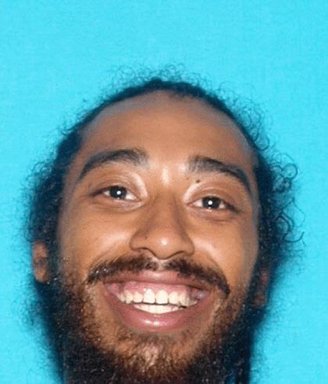
Shirley
District Attorney Maggie Fleming announced that on September 27, 2021, a Humboldt County jury found 29-year-old Markis Caprice Dewayne Shirley of Eureka guilty of first-degree residential burglary with person present (Penal Code [PC] §459), felon in possession of a gun (PC §29800), and assault (PC §240).
During the three-week trial, one of the victims testified that on November 3, 2020, Josie Craig left victim’s motel room door ajar, allowing defendant Shirley and Tavin Evans to rush inside uninvited.
The victim testified she was in the motel room with her boyfriend when the defendant entered her room with Evans. She testified the defendant struck her boyfriend with a pistol, pointed the pistol at her, and removed cash and marijuana from her purse.
A staff member from the motel testified that motel surveillance showed Shirley and Evans walked past the motel room, waited by the door, and then rushed in as Josie Craig left. (The District Attorney’s Office did also charge Shirley with robbery, but the jury did not reach a unanimous verdict on that charge.)
During his investigation of the case, Eureka Police Department Detective Eckert determined that Craig, Evans, and Shirley all arrived at the motel in the same vehicle and left in the same vehicle. Craig has pled as an accessory to the crime and Evans’ case is pending trial.
Several days after the incident, Arcata Police Department officers created the opportunity to hold Shirley accountable for his actions when they located the defendant in the getaway vehicle and found a semi-automatic pistol under the driver’s seat. Evidence in the case also included incriminating statements by Mr. Shirley.
Deputy District Attorneys Shelly Small and David Moutrie prosecuted the case with the assistance of District Attorney Investigator Marvin Kirkpatrick and Victim Advocate Velda Gooden. Defense Attorney Zachary Curtis represented Mr. Shirley. Judge Wilson presided over the trial.
Following the verdicts, the defendant waived his right to a jury trial concerning the validity of “strike” priors alleged by the District Attorney’s Office and on September 28 Judge Wilson found those to be true. Mr. Shirley has been convicted of five prior felonies since 2011, including residential burglary and criminal threats in 2016 which are both classified as “strikes” under California law.
The conclusion of the trial did not lead directly to a sentencing date because Mr. Shirley faces an additional charge for conduct at the Humboldt County Correctional Facility while in custody since his arrest.
###
PREVIOUSLY in Shirley:
Vaccine Mandate for City Employees, Beefed-Up Police Oversight on Next Tuesday’s Eureka City Council Agenda
Hank Sims / Thursday, Sept. 30, 2021 @ 10:12 a.m. / Local Government
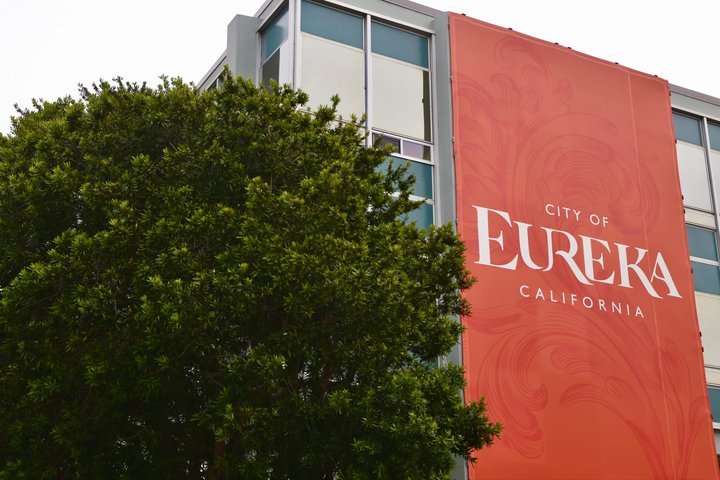
Eureka City Hall. File photo: Andrew Goff.
It’s a hot, hot Eureka City Council meeting next week – Tuesday, Oct. 5 at 6 p.m., coming at you via Zoom as always. What is the hottest item on the agenda? You can take your pick: A vaccine mandate for all city employees, or the first look at a beefed-up Citizens’ Oversight Board for the Eureka Police Department.
Let’s take the vaccine mandate first. If adopted Tuesday night, it would require that all city employees – as well as city contractors and volunteers – be at least partially vaccinated against COVID-19 before Oct. 19, and fully vaccinated by Nov. 23. There will be exemptions available for people with verified medical reasons to not get the vaccine, and for people with a “sincerely held religious belief, practice or observance” that would bar vaccination.
The proposed city
policy – read
it here – would allow people who are terminated for refusing
the vaccine to petition for their job back in the event they get
their shots, or if the pandemic goes away. If they do, they’d get
back all the vacation time they’d accrued during their previous
stint with the city. on the same vacation time schedule as before.
[CORRECTION: Actually, if they’re terminated they collect pay for their unused vacation. If they come back, they start at zero, but return to the same vacation-time accrual that they had before. The Outpost regrets the error.]
The staff report for this item notes that the two city employee bargaining units – the Eureka City Employees Association and the Eureka Police Officers Association – are on board with the policy. It’s probably as good as passed, but the testimony and the deliberation should be interesting.
Next up: Police oversight. In recent months – and especially in the wake of the texting scandal – the City Council has asked staff for ideas to beef up the Eureka Police Chief’s Citizen Advisory Board, and possibly to build it out as a thing with a more teeth. City staff are bringing forward their first draft at Tuesday night’s meeting for discussion.
Basically, staff are proposing that the Citizens Advisory Board be renamed the “Citizens Oversight Board,” and they propose giving that board additional powers. It would, in the staff report’s words
[amend] the purview of the CAB so that it serves as an oversight board providing input on complaints, investigations, and policies and practices prior to a final decision being made by the Chief of Police.
The implication, here, is that the “Oversight Board” would get closer access to the complaint files than the current “Advisory Board” does. In addition to that, the staff report envisions the hiring of an Independent Police Auditor who would report to the city manager, rather than the police chief. This person
would be responsible for review of internal affairs investigations, officer involved shootings, policies and procedures, citizen complaints and be accessible to the Eureka community. The COB would be provided with the IPA findings and use them to inform their input to the Chief.
Read the full proposed ordinance here. There’ll be discussion of this item at Tuesday’s meeting, but no action is expected.
In addition to these hot-button items, the council will receive a presentation on redistricting its electoral wards – something you already know about if you’re a fan of the Outpost’s “Let’s Redistrict Eureka!” game. Tune in anyway, though: City staff will be presumably be laying out the official timeline for the city’s redistricting effort (time’s running short!) and will likely outline the ways you, the public, can make your opinions on the issue known to the people who will actually be voting on the maps.
Read the full agenda here. The Eureka City Council meets via Zoom on Tuesday, Oct. 5 at 6 p.m. Here’s the full agenda, and here is your link to the Zoom telecast.
What You Need to Know as California Eviction Moratorium Ends
Manuela Tobias / Thursday, Sept. 30, 2021 @ 7:51 a.m. / Sacramento
After more than a year of waiting, landlords in California will once again be allowed to take their tenants to court over missed rent payments as the state’s eviction ban ends after tonight.
Some cities and counties will have ongoing protections for renters, and the state will also keep a few guardrails in place — all tied to billions of dollars in rent relief the state is urging landlords and tenants to apply for. About 724,000 California households are still $2.5 billion behind in rent, according to a recent National Equity Atlas analysis. And some advocates are warning of a wave of evictions.
Here’s what you need to know about the state’s eviction law going forward:
I haven’t been able to make full rent payments. Can I be evicted?
Current law shields tenants from eviction if they’ve paid at least 25% of their rent between Sept. 1, 2020 and Sept. 30, 2021. And tenants cannot be evicted over any rent owed between March 1, 2020, and Aug. 31, 2020 — as long as they respond to their landlord’s eviction notice with a signed declaration of COVID-19-related financial distress.
While tenants are shielded from eviction, the full rent between March 2020 and September 2021 is still due, however, and can be collected in small claims court starting Nov. 1.
If you are eligible for rent relief and apply, and your application is either approved or pending, you can use that as a defense in court.
Who is eligible for rent relief?
To qualify for aid, tenants must say, under penalty of perjury, that they have been financially impacted by the pandemic, and earn below 80% of the area median income.
A family of four would qualify with annual earnings of less than $106,550 in San Francisco, $94,600 in Los Angeles and $55,750 in Fresno. You can check those income limits on this calculator.
You will be asked to show either your 2020 tax returns, your W-2 tax form, current pay stubs or proof of participation in a state or federal subsidy program, such as CalFresh, to prove your income and qualify for help. But even if you don’t have any of those documents, you can still apply.
Landlords can only collect relief for periods they didn’t receive rent from tenants. Property owners have to provide a lease or rental agreement that includes the renter’s name, address, and monthly rent; a rent ledger or statement that shows the unpaid rent balance; and a W-8 or W-9 tax form.
Do I need to be a citizen?
No. People who are undocumented are still eligible for the program. Your citizenship status will not be disclosed to any other agency, either.
I was denied rent relief. What now?
If you’re a tenant and you’ve paid less than 25% of the rent you owe for the past year, the eviction process can move forward, said Russ Heimerich, spokesperson for the state Business Consumer Services and Housing Agency, which is overseeing the state’s rent relief program.
But if you think your application was wrongfully denied, you can appeal by clicking on the link in your denial email and using your case ID to log on. The team that reviews your case will be different from the original case manager.
“We haven’t had a ton of appeals — mostly because we seldom have denials,” Heimerich said.
Why haven’t some landlords or tenants been paid yet?
The state says the average time from when a person submits an application to when they get paid is about 30 days. But advocates say some tenants have been waiting for months.
Heimerich says that your location can play a role.
For example, in San Francisco, both the state and the city ran their own rent relief programs until recently, when they merged into a single program managed by the state. Those who applied to the state program while the local one was still running may have been waiting longer for their money because the state had to make sure they weren’t potentially paying someone twice, Heimerich explained.
An incomplete application can also slow down the process. Make sure you follow up on your application, and check your email, to make sure there is no missing documentation.
My local program will now be managed by the state. Should I reapply?
If you still need money, yes. Some local programs only allowed forward or back payments, but following new federal rules, the state can now pay up to 18 months of rent, including three months of forward rent, as well as utilities. Just don’t apply for the same period of time you were already paid, as duplicative payments are not allowed under federal guidelines.
I’m a tenant still waiting for rent relief. Can I be evicted?
If you’ve applied for rent relief and have yet to hear back, that’s a defense against eviction in court. Your application doesn’t have to have yet been approved, nor do you have to have the money in hand. And if you’re summoned to court, you have to show proof you applied.
“They will get an email confirming receipt of their completed application and case number. That’s what they should bring,” Heimerich said.
Having paid at least 25% of your rent between September 2020 and September 2021 is also a defense against eviction in court, so make sure you have proof of what you’ve paid to date.
I got a 3-day ‘pay or quit’ notice from my landlord. Now what?
Under current law, after giving you a 3-day notice to “pay or quit” — the first step in the eviction process — the landlord will have to wait 20 business days before taking you to court.
It’s a defense in court if you tell your landlord you applied for rent relief within 15 business days of receiving a 3-day notice. You will also have to give your landlord a signed declaration of COVID-19 related financial distress within 15 business days of receiving a 3-day notice.
The court will ask landlords, under penalty of perjury, whether they also applied for rental assistance. The landlord will only be allowed to move forward with the case if their application was denied.
If 20 days pass, and you did not submit your rent relief application, or didn’t notify your landlord you applied, they will also be able to move forward with the eviction process, according to Cathal Conneely, a spokesperson for the Judicial Council of California.
I received an eviction notice. What should I do?
If you are served an unlawful detainer, or an eviction notice, don’t leave your home right away, advocates urge. In California, your landlord can’t physically kick you out until the court process is complete; only a sheriff’s department can lock you out.
There are plenty of free legal services to help walk you through the court process, or even represent you. Tenants Together, an advocacy organization, has a list of local resources, as does the state. If you live in Los Angeles, check out StayHousedLA.org. You can also text “Rent” to 211-211 for help from United Way, a nonprofit that helps distribute rent relief.
Some cities are also staffing up to help tenants. For example, Fresno residents can contact the city attorney’s office and apply for the Eviction Protection Program. The city has contracted with two law firms to provide defense for tenants facing illegal eviction, according to Brandi Snow, an attorney at Central California Legal Services. Her organization can be contacted at (800) 675-8001.
My court date is coming up and I don’t have an attorney. What should I do?
To take advantage of the defenses afforded by the law, you still have to show up to court. The state has a guide for representing yourself.
Many legal aid and housing organizations can help provide other resources to take with you to court. There are also self-help centers to help tenants fill out forms, as well as free mediation programs, at some courthouses, according to Alexander Harden, a public policy advocate at Inner City Law Center in Los Angeles.
My landlord received rental assistance and is still evicting me. Is that legal?
A landlord who received past rental assistance might still take you to court for not paying your full October or subsequent months’ rent, which will be due in full. But according to Heimerich, the landlord will still have to follow the rules of the rent relief program. You can still apply for up to three months of rent going forward if you haven’t maxed out on 18 months of assistance, which would shield you from an eviction.
What reasons can a landlord evict for, other than nonpayment of rent?
Since the start of the state’s eviction protections, evictions over issues unrelated to rent payments have been ongoing. A CalMatters analysis found at least 10,000 through March 2021. Those reasons include:
- The landlord or their family was moving into the property, or selling the property to a person who intended to move in.
- A landlord had to demolish or do a substantial remodeling because the unit posed a health and safety threat.
- The tenant committed a crime or a criminal threat on the property.
- The tenant violated the lease by subletting the property, causing a nuisance or staying after the lease expired.
How are courts gearing up for the expiration of tenant protections?
Conneely said the state’s Judicial Council will consider Friday whether to revise the unlawful detainer form landlords have to fill out to add an item including statements regarding attempts to apply for rent relief.
Heimerich said his department is working with the courts to set up a phone line for the courts to call to confirm and get more information about specific rent relief cases. In Riverside County, for example, someone from the Superior Court will call representatives from the counties’ nonprofit partners, Lift to Rise or United Way, to check on a tenant’s rent relief application status.
“It is a relatively simple process, but we think it will work well,” said Mike Walsh, deputy director at the Riverside County Housing Authority.
But Conneely said the courts are not required to look anything up to determine whether a case should proceed. Tenant advocates worry that might lead to cases moving forward in defiance of the law.
Are local eviction protections also ending?
Many Bay area jurisdictions have continued eviction protections past today, including the cities of Oakland and Berkeley as well as Alameda County and Solano County.
The city of Los Angeles will continue to have its nonpayment protections in place until the city lifts their emergency protections, as will the city of Fresno. Check with your local jurisdiction whether further protections will remain in place.
What can cities do to protect renters?
If your city didn’t extend their eviction protections prior to the passage in June of the most recent eviction protections, state law prevents them from enacting stronger protections over nonpayment of rent until March 2022. However, cities and counties can still enact other safeguards.
“A city could decide to have additional protections for tenants who are receiving notice for eviction for owner move-in, which is actually one of the kinds of evictions that we are seeing a rise in,” Lupe Arreola, executive director of Tenants Together, said during a recent press conference.
“It’s incredibly important that local governments dedicate resources to legal aid for tenants who end up in court when they’re faced with eviction lawsuits,” added Assemblymember David Chiu, a Democrat from San Francisco who authored the state law.
How much rental assistance has been paid and how much is still available?
The state has paid out at least $649 million so far, to nearly 55,000 households. It is managing about $2.6 billion in federal money with the help of a private contractor, and has received applications for about $2.9 billion already. But local cities and counties have an additional $2 billion, though those funds are not being tracked in one centralized database.
What happens if the state runs out of money?
Heimerich said the state could be eligible for more federal funds, if another state has unspent rent relief. And if a city or county has leftover dollars, they could go to another jurisdiction that needs them.
“We need anyone who thinks you might be eligible for this funding to apply right now,” Chiu said. “If we disburse all the funds that we have, we would likely be eligible for more federal funding, but if we don’t disburse the money that we have right now, there’s a chance that money could get clawed back.”
###
CALmatters.org is a nonprofit, nonpartisan media venture explaining California policies and politics.
OBITUARY: Dora Jean Bartlett Gwin, 1924-2021
LoCO Staff / Thursday, Sept. 30, 2021 @ 6:56 a.m. / Obits
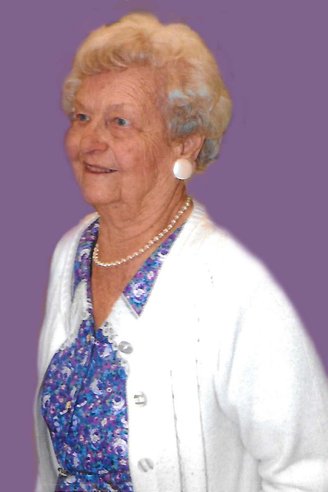
Dora Jean Bartlett Gwin — “Jean” — passed away on September 22, 2021 at Timber Ridge, McKinleyville, at the age of 97. Jean was born March 15, 1924 in Lakeport, and was the third child of Irving and Dora Mary (Ransdell) Bartlett. Jean moved to Humboldt County as a young child. She lived in the Rohnerville area, attending Toddy Thomas Elementary and Fortuna High School.
Following the marriage to the love of her life, Edward “Bud” Gwin on October 28, 1939, Jean moved to Arcata and then to the McKinleyville area where she lived for the past 70 years. She resided at one time in the Dows Prairie area in what she referred to as the “old ranch house,” currently the site of Beau Pre Golf Course. Since the 1960’s she resided mostly on Pickett and then Gwin Road in McKinleyville. Jean and Bud were always together until his passing after nearly 67 years of marriage. One exception was during WWII when Bud was serving his country as a paratrooper. Even then, he wrote to her nearly every day. They were wonderful examples of a marriage that was a true loving partnership.
Jean was involved in her community. She worked as the head cook at McKinleyville Elementary School for approximately 10 years. One year she and her sister Loberta were the Grand Marshalls for Pony Express Days, which she was involved with for many years. She also spent many hours helping with the McKinleyville High School and the McKinleyville Community Services Department newsletter. Jean made many pies for the Westhaven Wild Blackberry Festival. When her children were school age, she served as an active member of the PTA and taught cooking to 4-H members. When Bud was still living they picked up trash in McKinleyville during their daily walks. When anyone needed a hand, she was there – she never knew a stranger and of course she loved being in charge!
Jean was an avid reader, loved playing cards and embroidering – dish towels being her specialty. Many of us have dishtowels that she made. She was always there for her children, grandchildren, and great grandchildren. She never missed a graduation or wedding, even if she took a little flack when they landed on Bud’s abalone, fishing or hunting trips. Our camping trips to Junction City along Canyon Creek were a highlight to us all.
Jean is survived by her three children, daughter Jean Nowak of Eureka, daughter Janice and husband Gary Chidester of McKinleyville, son Allen and wife Julie Gwin of Redding; nine grandchildren, Eddie and wife Debbie Whitchurch of Cartersville, Georgia, Danelle and husband Cary Tegarden of Eureka, Patrick and wife Cathy Whitchurch of Fortuna, Wendy Smith of Del Loma, Calif., Greg and wife Kelly Chidester of Santa Rosa, Gayle and husband Genaro Muniz of Santa Rosa, Deborah Mitchell of Largo, Florida, Michelle and husband Andy Ross, of Mooresville, North Carolina, Sheryl and husband John Vicharelli of Mooresville, North Carolina; 19 great grandchildren, Nicola Whitchurch, Kimberly Abbott, Christa Jones, Marisa Salas, Taylor Tegarden, Nathan Whitchurch, Stephanie Berger, Savannah Polizzi, Jake and Danny Chidester, Brianna Fleischmann, Sierra Lynn Mitchell, Marty and Cavin Hawkins, Lucy and Danny Ross, Dante, Dominic, and Andre Vicharelli, and 14 great great grandchildren with another one on the way, and one great, great, great grandson. She is also survived by her sister, Loberta Bartlett Gwin, brother Elwood and his wife Deanna Bartlett and many nieces and nephews.
She was preceded in death by her husband, Bud Gwin, parents Irving and Dora Mary Ransdell Bartlett, her sister Juanita Bartlett Waggoner, brother in law Don Gwin and many aunts, uncles, and cousins.
If desired, memorial contributions may be made to Hospice of Humboldt, Humboldt Area Foundation, or a charity of your choice.
No services are planned at this time. A celebration of her life will follow at a later date. Jean’s family would like to thank the Timber Ridge of McKinleyville’s Renaissance team and Hospice of Humboldt for their care, compassion and support.
###
The obituary above was submitted on behalf of Jean Gwin’s loved ones. The Lost Coast Outpost runs obituaries of Humboldt County residents at no charge. See guidelines here.


