Earlier today, Nurse Practitioner Lindsey Mendez, a member of the county’s Vaccine Task Force, took questions from local media outlets on the state of the county’s COVID-19 vaccination efforts.
Questions were due before today’s big announcement from the state that the vaccine would be made available for anyone 50 years and older starting next week, and for every Californian starting in mid-April, so the county’s implementation of those new guidelines were not addressed.
Video above, rough transcript below.
###
Hello we’re here for the March 25th media availability with Family Nurse
Practitioner and COVID-19 task force member Lindsey Mendez. Thanks for being with us. Would you like to start by addressing the community?
Yes. Hi Humboldt. This is Lindsay Mendez again just here to give you a short update about the
vaccination and the changes that are being made in the state and county levels and how vaccine
will be distributed as we move forward. Right now I’d like to tell the community that we had a small
allocation in the past of Janssen, but at this time we have not received an allocation to give.
We are getting Moderna and Pfizer regularly as we have in the past, but we are fluctuating
with the amounts that we are getting. With that said we are going to continue to have
vaccine clinics throughout the county with our partners and with the public health department
and we would encourage you to get the first appointment that is offered to you with whatever
vaccine is offered to you at this time. And always remember to socially distance yourself, wear your
mask, and wash your hands as not everybody is inoculated in Humboldt County or in the world.
From KMUD News: Can you share more information on how the distribution
of vaccines will change with the upcoming switch to MyTurn….do you support the switch?
MyTurn is a platform that is being used for people to register for vaccine in the state
of California. This platform is designed so that in numerous languages you can go in and see if
you are eligible to get vaccine and to get an appointment. At this moment in Humboldt County
we are not currently using MyTurn, but many other counties are and we are gathering information on
how this works. What we do know is that they are changing things in their platform so that
zip codes.. may have certain restrictions and we are not sure yet. As we switch over though, we are
confident that our staff in the public health department will be able to train and onboard
the workers that are in the clinics to use MyTurn appropriately for documentation and for inventory
of the vaccine. And we are hopeful that as it opens up we will be able to assist the population
in registering for an appointment that they can get at the time that it is available. Thank you.
From KMUD News: It’s our understanding that the My Turn system only works with
two hospital computer programs, which none of the hospitals in Humboldt County currently use.
How will this impact the roll out locally for staff and the public?
At this time I cannot comment on how the local hospitals will be managing
the MyTurn switch with their electronic medical record systems, but I would say that public health
is handling it in a way that is appropriate for onboarding their staff to learn MyTurn,
on both the public-facing side and also on the clinic side of
how to register patients into clinics and also how to use the documentation system.
From KMUD News: Will people from out of our
area be eligible to receive a vaccine in Humboldt County?
I would first like to say that the goal in the state of California and in the entire United
States is to end the pandemic and to vaccinate everybody including our neighbors. Even people
that we aren’t necessarily sharing a county with. With that said we are talking to MyTurn, the
workers on that platform and discussing this with Blue Shield about the concerns surrounding people
who are eligible to get the vaccine who may not be in our county. We do not know what the turnout of
that discussion will be, but we are prioritizing every county resident to get vaccine at this time.
From KMUD News: Do you anticipate other vaccines being approved for use in the United States?
I do not know how to answer that question because we have not been made aware of the FDA
looking to approve vaccines at this time, but we will keep you up to date as we
find out about any more vaccines that would be coming to the United States.
From the Redheaded Blackbelt: So Hum Health has begun offering the vaccine to a wider
range of local residents, is this also going to be happening in northern Humboldt?
Right now the state advisory committee is giving us guidelines of how we are going to open up to
a larger amount of the population. These guidelines are by the advisory committee
and our local vaccinators all use the advisory committee’s guidelines to approve vaccination
status. We are going to be utilizing the guideline that persons who are 16 to 64 with high-risk
health conditions - which you can find listed on the state website - will be approved and we
would encourage people to call their primary care providers and to also call the Joint Information
Center to go on to the interest form if you do not have a primary care provider. Please be
aware at this time that the vaccine supply has not always been a static number in our county
and that we will be getting to everyone as soon as we can with the amount of vaccine we are offered.
From the Redheaded Blackbelt: Anecdotally, some Humboldt County residents have said
they are waiting for the Johnson and Johnson vaccine so that they can
avoid having to do a second dose. They are putting off making an appointment
for the vaccines currently available. Is this a bad idea? Why or why not?
As a healthcare provider I completely understand persons wishing to choose the vaccine that they
would like to have, but I would like to remind everyone that the vaccine that is available to
them is the vaccine that they should get. So waiting for the Johnson and Johnson is not
necessarily helpful for reaching herd immunity or being quickly vaccinated
yourself. We also don’t know how the Janssen supply will be coming into Humboldt County
and in what amounts and so if you are offered a vaccine we recommend that you take it.
From the Redheaded Blackbelt: The Johnson and Johnson vaccine has
been rated at around a 66% to 72% efficacy rate. Can you talk about why the efficacy rate for the Johnson and Johnson vaccine differs regionally, and if you know what that number looks like for Humboldt County specifically?
So we at this time do not have data on the regional efficacy of
the Johnson and Johnson vaccine in Humboldt County because it was not researched in that way. The
drug trials that are continuing around the world for the Johnson and Johnson vaccine
and also other vaccines will continue to bring us data about regional
questions, but we do not have that at this time. What we do know about the
Johnson and Johnson vaccine is that it is efficacious as was stated between 66% and
72% for the broad population researched around the world. And we also know that it will decrease 100%
severe death and illness with hospitalization and so we understand that this is a great vaccine.
From the Times-Standard: Will the county lower some thresholds on age,
BMI or other factors to make vaccines more available to prevent doses from going unused?
I would like to tell the community that there is not any vaccine that is going unused in Humboldt
County at this time. The limited supply is more of a hindrance than having too much vaccine that
is going unused. As we open up to the broader population, those who have high risk conditions
of many age groups, we have to be aware that the supply will dictate how fast and
efficiently we can get through these populations and that we will never be wasting doses.
From the Times-Standard: Have there been any challenges in staffing
vaccination sites with personnel who can serve Spanish speakers or Hmong speakers?
Yes we’ve been coordinating with community partners for services that are both bilingual
and bicultural for our vaccine clinics and we continue to ask and recruit members to
come forward to help us with both administrative and clerical work along with vaccinating staff.
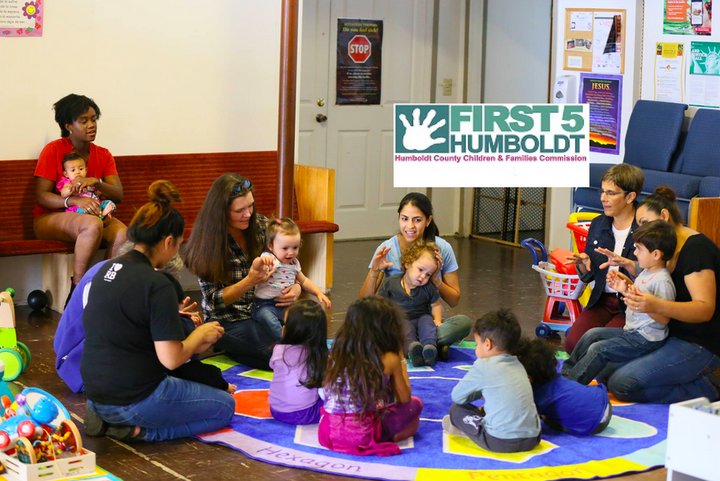
A pre-pandemic playgroup | Image provided by First 5 Humboldt
Early in the pandemic, when many of us became worried about potential food shortages (remember the panic shopping?), Katie Allen started to get very strict about rationing food for her family, limiting her children’s snacking. Then she realized that her children, too, were becoming worried about not having enough food — a feeling that Allen did not want to pass on to her kids.
Allen — a specialist in infant and early childhood mental health — says that it is common for children to pick up on their parents’ stress and that the mental health and well-being of the parent is critically linked to the mental health of the child. “A young child is so reliant on their parent, that it kind of goes hand in hand,” she told the Outpost in a phone interview on Wednesday.
Of course, it has been especially difficult for parents to manage their stress over the last year, with the pandemic disrupting most of our usual routines and compounding many of the worries of day-to-day life. Schools and daycare facilities had to close or reduce capacity, many parents found themselves out of work or suddenly working from home and most parents have been isolated from their family and friends who might usually lend a hand with the kids.
“I think parents in our community have been affected [by the pandemic] in a big way,” Allen told the Outpost. “A lot of parents I work with have had their support systems ripped away and they have been under a tremendous amount of stress — trying to do it all.”
This is why Allen, along with several other specialists, has been hosting free online parenting circles through First 5 Humboldt — an organization dedicated to promoting healthy development of young children. These parenting groups offer an opportunity for parents to learn about early childhood development, ask questions about their specific challenges and also connect with other families during this difficult time. The next group session is called “Pandemic Parenting,” which will be held over three Zoom sessions and focus on the child-rearing challenges of the COVID-era.
“A lot of parents I work with have had their support systems ripped away and they have been under a tremendous amount of stress — trying to do it all.”
In particular, Allen said, this series will focus on the next phase of
the pandemic and some of the anxieties that parents may be feeling about
returning to “normal” activities. As vaccines roll out, schools and
childcare facilities reopen and we move into the warmer months of the
year, many families want to start bringing their children together.
However, Allen said, this can cause a lot of stress for the parents,
especially with very young children, who tend to put their hands and
mouths on everything, including each other. “Toddlers and preschoolers don’t really understand social distancing,” Allen said. “I see that being a huge stress for parents right now.”
One of the other topics that will be discussed is identifying and addressing the signs of regression in children. Allen works with families through First 5 and does social work at Ferndale Elementary and Eureka City Schools, and says she has noticed an uptick in children exhibiting regressive behaviors — backsliding on a developmental skill they’ve learned, usually as a result of emotional distress or frustration.
For example, a very independent child may suddenly become very attached to a parent, a child who usually feeds themselves may suddenly want a parent to feed them, or a previously potty-trained kid will stop using the potty. These behaviors can be especially distressing for parents whose child is entering or returning to school or daycare, but Allen wants to stress that this type of behavior is normal and temporary. “Regression really means going into a safer version of yourself,” Allen said.
Allen said she has also seen more “big behaviors” such as biting, hitting and tantrums — also a sign of frustration and stress in children — and will discuss how to navigate those behaviors as we transition back to engaging in more social activities.
Normally First 5 hosts multiple in-person playgroups throughout the county, which had to stop due to COVID-19, forcing the organization to get creative with ways to offer support to families. In addition to offering the online parenting groups, First 5 partnered with North Coast Music Together to offer online music classes for parents and children, has along with the Arcata Playcenter started outdoor hiking groups for parents and infants, and has been doing monthly distributions throughout the county of supplies to help parents, such as diapers, children’s books and activity sets.
First 5 Humboldt Executive Director Mary Ann Hansen says that the items the organization distributes are not only meant to help families who may not have access to resources during the pandemic, but are also designed to help children “self-regulate” their stress with activities such as blowing bubbles.
“Breathing helps manage stress,” Hansen told the Outpost on Wednesday.
“A long exhale is associated with sort of regulating your stress system,
calming your body down. Blowing bubbles — if you’re two — helps you
practice that long exhale and inhale that you need to be able to manage
your stress levels.”
“What we can manage when we’re calm and everything is going right is completely different than what we can manage when we’re stressed. We know that as adults, and we can’t expect children to be any different.”
Like Allen, Hansen said that she has seen more regression and “big
behaviors” in children recently, due to the changes brought on by the
pandemic. Finding ways to mitigate that stress is critical, Hansen said,
but it is also important to have realistic expectations of both ourselves
and our children and to be patient when things are difficult.
“What we can manage when we’re calm and everything is going right is completely different than what we can manage when we’re stressed,” Hansen said. “We know that as adults, and we can’t expect children to be any different.”
It is also important for parents to remember that they are not alone, Hansen said. This is another reason First 5 is offering the online parent groups, to help provide “a safe space” for parents to talk about the frustrating moments and the emotional difficulties brought on by taking care of children.
Even though the last year has been difficult for families,
Hansen and Allen both feel it is also important to acknowledge the
silver linings of COVID.
“I got to spend eight months with my kids, which was amazing,” Allen said. “There has been a lot of focus on the negative, but we also want to focus on the positive. I’m doing a whole class about appreciating the magic moments of the pandemic.”
The Pandemic Parenting session is March 29, April 5 and April 12. To register and receive the Zoom link, email Katie Allen at katiedallen@gmail.com or text 970-212-6812.
You can find up-to-date information on First 5 Humboldt’s other resources and services on their Facebook page.
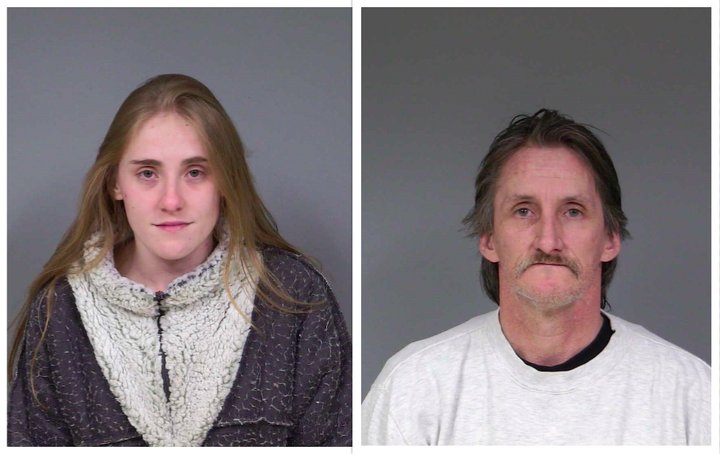
On March 24, 2021, the Eureka Police Department’s Problem Oriented Policing (POP)
team concluded a multi-week investigation into 53-year-old Eureka resident Frankie
Goree for the sales of controlled substances.
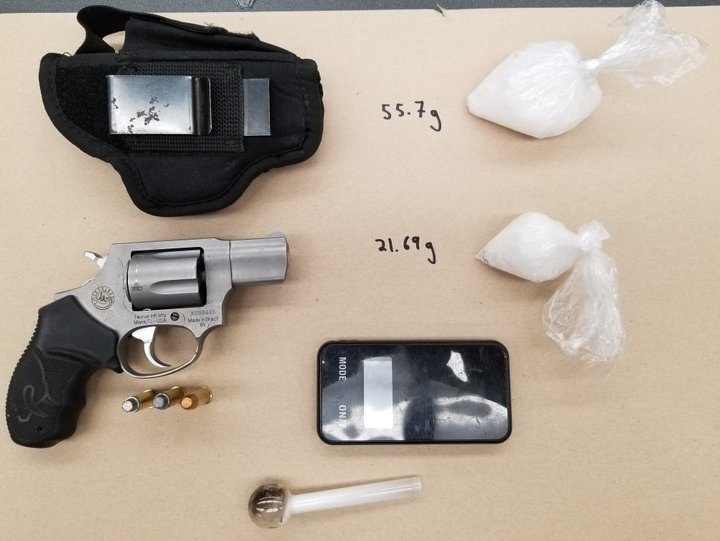
At approximately 7:40 p.m., detectives conducted a traffic stop on Goree near Del
Norte and K Streets in Eureka. Goree was detained while detectives executed a search
warrant on him and his vehicle. During the search, detectives located a loaded handgun,
a scale and approximately three (3) ounces of suspected methamphetamine packaged for
sale.
Detectives then executed search warrants on two residences associated with Goree,
one on the 1900 block of Gage Lane and one on the 1300 block of Ridgewood Drive.
Nothing of evidential value was located at either location. 24-year-old Katie Helberg
was contacted at the Ridgewood location and found to have a felony arrest warrant
stemming from a previous POP investigation.
Goree was transported and booked into the Humboldt County Correctional Facility for
multiple drug and weapon related charges including possession of controlled substances
while armed and felon in possession of a firearm. Helberg was booked on her
outstanding warrant for possession of a controlled substance while armed.
With supply of vaccines expected to significantly increase in the coming weeks, the state is expanding vaccine eligibility to more Californians. Starting April 1, individuals aged 50+ will be eligible to make an appointment, and individuals 16+ will be eligible to make an appointment to be vaccinated starting on April 15.
“With vaccine supply increasing and by expanding eligibility to more Californians, the light at the end of the tunnel continues to get brighter,” said Governor Newsom. “We remain focused on equity as we extend vaccine eligibility to those older than 50 starting April 1, and those older than 16 starting April 15. This is possible thanks to the leadership of the Biden-Harris Administration and the countless public health officials across the state who have stepped up to get shots into arms.”
Based on the current estimates, California expects to be allocated approximately 2.5 million first and second doses per week in the first half of April, and more than 3 million doses in the second half of April. California currently receives about 1.8 million doses per week. These estimates may be adjusted as time goes on. The state has the capacity to administer more than 3 million vaccines per week, and is building the capacity to administer 4 million vaccines weekly by the end of April.
“We are even closer to putting this pandemic behind us with today’s announcement and with vaccine supplies expected to increase dramatically in the months ahead,” said California Health and Human Services Secretary Dr. Mark Ghaly. “However, we are not there yet. It will take time to vaccinate all eligible Californians. During this time, we must not let our guard down. It is important that we remain vigilant, continue to wear masks and follow public health guidance.”
In addition to increased allocations of vaccines to providers serving the hardest hit communities, the state has embarked on a series of initiatives to vaccinate those populations that have faced the highest rates of COVID infections before vaccines become available to the entire 16+ population. These efforts include:
Provider funding for programs to reach and vaccinate communities facing the biggest health disparities
Working with organized labor to reach essential workers
Partnering with agricultural organizations and community-based organizations to vaccinate agricultural workers
Allowing providers to target by ZIP code via My Turn with single-use codes (scheduled to launch at the end of March)
Supporting a subset of community-based organizations currently partnering with the state on COVID-19 education to provide direct vaccination appointment assistance
Prioritizing currently eligible populations and allowing providers the discretion to vaccinate those who live in high-impact areas (County Healthy Places Index Quartiles 1 and 2), including families
Even with expanded vaccine supplies, it is expected to take several months for willing Californians to be vaccinated. Based on public information shared by vaccine manufacturers and the federal government, California expects to receive several million vaccine doses per week starting sometime in April.
Along with the expanded eligibility and to align with upcoming federal guidance, California will update its vaccine allocation methodology. This will transition over four weeks, beginning with the March 22 allocation (delivered to providers the following week), from one based on the distribution of the 65+ population, workers in the agriculture and food, education and child care, and emergency services sectors to one based on the distribution of the 16+ population across California. This will be done in conjunction with completion of the shift to the state directly allocating vaccines to providers. The state will continue to double the amount of vaccine allocated to the lowest Healthy Places Index (HPI) quartile as announced on March 4.
Forty percent of COVID-19 cases and deaths have occurred in the lowest quartile of the HPI, developed by the Public Health Alliance of Southern California, which provides overall scores and data that predict life expectancy and compares community conditions that shape health across the state. The rate of infections for households making less than $40,000 per year (5.7) is 84 percent higher than that of households with an income of $120,000 or more (3.1). At the same time, California’s wealthiest populations have received 50 percent more vaccinations when compared to the rate of our most vulnerable populations. This approach recognizes that the pandemic did not affect California communities equally and that the state is committed to doing better.
Press release from the Humboldt County Joint Information Center:
The County of Humboldt Office of Economic Development today launched an updated Business Reopening Certification process to support local businesses in reopening or staying open with COVID-19 safety measures in place.
The streamlined process still provides education of COVID-19 safety in the workplace with key concepts now presented in an instructional video rather than an online application. A multiple-choice quiz follows, with a minimum score of 80% required to pass and the option to retest if needed.
Economic Development Director Scott Adair said, “We’ve created a quick, efficient way to certify businesses to reopen that still covers important safety procedures. The video and quiz format provide an educational approach to COVID-19 safety certification for business owners who have undergone extraordinary measures to survive.”
Businesses that are already open to foot traffic should apply to remain open if they haven’t previously been approved through the county. If a business is adding new operations beyond those already approved, they must reapply. Medical offices are not required to submit reopening plans through the County of Humboldt.
The video and quiz can be accessed using a computer, tablet or mobile device. Upon successful completion, a certificate will be emailed that can be displayed in a storefront. The business name will also be added to the online list of COVID-19 safety-certified businesses at humboldtgov.org/2770/Certified-Business-Lists.
Since 2017, California lawmakers have introduced more than a dozen bills aimed at hate crimes, including attempts to improve data, train police and establish a hotline.Most of those bills died in committees, never getting a floor vote, according to a CalMatters analysis. But in the wake of recent, highly visible crimes targeting Asian Americans, lawmakers are introducing some of the same measures their colleagues once rejected.
“There wasn’t the same level of urgency that I think is true today,” said Democratic Assemblymember David Chiu of San Francisco, who is reintroducing his bill from 2017 that would require the state attorney general to maintain a toll-free number where people could report hate crimes.
“The Atlanta shooting woke up much of the rest of America to what those of us in the Asian American community have been experiencing for quite some time.”
Hate crimes data elusive
Hate crimes data is spotty at best. A recent California State University, San Bernardino study showed an uptick in anti-Asian hate crimes reported to police in 18 large American cities from 2019 to 2020. The numbers, however, are small. San Jose reported a rise from 4 to 10, while Los Angeles saw an increase from 7 to 15, the study showed.
Experts say hate crimes are widely underreported and, even when they are, police officers sometimes fail to document incidents involving bias as a hate crime.
“We know that reporting rates of hate crimes by victims are really low,” said Phyllis Gerstenfeld, California State University, Stanislaus criminal justice professor and author of several textbooks on hate crimes.
“We’re not doing enough to reach out to potential victims, in part because victims don’t know about the laws, they don’t understand them, or they don’t feel comfortable talking to police for a wide variety of reasons,” Gerstenfeld said.
California Department of Justice figures show that the state averaged 31 anti-Asian hate crimes a year between 2015 and 2019, as reported by local law enforcement agencies. It’s a slight uptick from the years before, though the figures fluctuate and were higher in the early 2000s, when anti-Asian hate crimes accounted for more than 60 incidents a year.
State data on 2020 isn’t available, so the full impact of racist rhetoric surrounding the pandemic remains unclear. Still, some widely covered crimes have Asian American communities on edge and officials looking to act.
In Oakland’s Chinatown, video of a 28-year-old man slamming a 91-year-old Asian man to the ground went viral. In San Francisco, a 75-year-old woman garnered national attention when she fended off an attacker with a wooden paddle. In Sacramento, police are investigating whether the vandalism of an Asian-owned gelato shop — the third such incident at his business in a year — is a hate crime.
The Charging Obstacles
Even when police label a case as a hate crime, prosecutors can have a hard time proving motive in court.
“Hate crimes are among some of the scariest and most vile crimes we deal with, and they’re some of the most difficult to prove,” said San Francisco District Attorney Chesa Boudin.
In Long Beach, the city attorney’s office received a prize from the Anti-Defamation League for its role in combating hate. The office filed hate crime charges in all of the cases referred to its office. City Prosecutor Doug Haubert attributes the city’s success at prosecuting hate crimes to having trained officers who know what to look for.
“We handle so many cases so quickly, that unless the report itself or the officer noted that, ‘Hey this could potentially be a hate crime,’ it’s unlikely to go noted by the prosecuting office,” Haubert said.
Some organizations — including the California District Attorneys Association — are trying to make it easier for prosecutors to bring such cases, and to increase penalties.
Larry Morse, legislative director for the association, saidit’s time to examine the laws on the books and determine whether they are adequate.
“We haven’t introduced many bills along that line because this Legislature has not been inclined to create any new crimes or to increase punishment for any conduct,” said Morse, former Merced County district attorney.
The DA’s association on Tuesday threw its support behind a bill by Democratic Assemblymember Jim Cooper of Elk Grove to increase penalties for some hate crimes. The group also opposed a measure to soften penalties for some robberies, suggesting the bills would “lessen the consequences for violent crime and would directly benefit the predators currently committing hate crimes against Asian Americans,” according to a statement from the association.
California does have a number of sentencing enhancements written into the penal code, such as adding time for a variety of crimes targeting victims on the basis of race, gender or bias. There’s also a law making a hate crime a standalone misdemeanor.
Since 1978, California has made it a capital offense to kill someone because of their race, religion or for another bias-related reason.
Gerstenfeld, the CSU Stanislaus professor, said the state has plenty of laws that aren’t being used that often, and the key to success with hate crimes prosecution is getting people to report them.
“If people don’t feel comfortable dealing with the police, nobody is ever going to be aware that these crimes happened,” she said. “Better training for police officers and prosecutors is also key.”
Lawmakers circle back
These are all things California lawmakers have pushed for in the past.
Improving reporting is one reason Assemblymember David Chiu is reintroducing his hate crimes hotline bill. He thinks it failed because of concerns over cost.
But that’s changed.
“It’s reached a point where we have to take action as a state, certainly as an Asian American,” Chiu said. “What we’ve seen in this past year has been horrifying and cries out for response.”
He is also co-author of a bill that would push law enforcement agencies to better track hate crimes. It follows a 2018 State Auditor report that found “underreporting and misreporting of hate crimes among law enforcement agencies.”
Chiu, whose parents immigrated from Taiwan, grew up in the Boston area in the 1970s. He said anti-Asian racism was a regular experience. He said good data is critical to understanding what minority communities often face.
“There are also many incidents of hate that don’t rise to the level of a hate crime, but are disturbing nonetheless and need to be documented and understood for us to consider other policies to address them,” he said.
California generally has strong laws meant to fight hate crimes, said Beth Holtzman, a lawyer with the Anti-Defamation League.
“The issue,” she said, “is with implementation.”
###
Graphics by Ben Christopher of CalMatters
CALmatters.org is a nonprofit, nonpartisan media venture explaining California policies and politics.
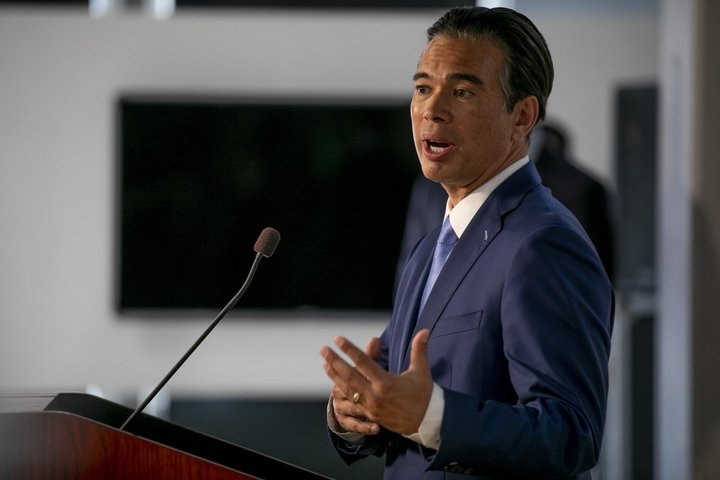
Assemblymember Rob Bonta speaks during a press conference announcing his nomination as the new Attorney General at International Hotel Manilatown center in San Francisco on March 24, 2021. Photo by Anne Wernikoff, CalMatters.
###
Faced with a looming recall threat, Gov. Gavin Newsom announced yesterday that he has chosen Assemblymember Rob Bonta as California’s next attorney general, handing one of the state’s most powerful offices to a trusted political ally who will make history as the first Filipino American to hold the position.
Bonta, a Democrat from Alameda, developed a record as one of the Assembly’s most liberal Democrats during his eight years in the Legislature and had backing from prominent civil rights advocates as he sought the post often called the state’s “top cop.” His selection, which requires confirmation by the Legislature, will likely play well with progressives who are hoping to see the attorney general take a more active role in holding police accountable for misconduct — something former Attorney General Xavier Becerra was reluctant to do.
Becerra was confirmed last week as President Joe Biden’s health and human services secretary, handing Newsom the opportunity to fill what’s normally an elected office with his own pick. It’s the third such opportunity Newsom has had in recent months, as political dominoes fall following the 2020 election.
In December, Newsom appointed Alex Padilla to fill the U.S. Senate seat vacated by Vice President Kamala Harris, and Shirley Weber to fill Padilla’s prior role as Secretary of State. With all three picks, Newsom diversified the highest ranks of California politics, choosing barrier-busting Democrats who make history as the first person of their ethnic group to hold the position. Padilla is the son of Mexican immigrants, Weber is the daughter of an Arkansas sharecropper and Bonta emigrated to California from the Philippines as a baby.
Newsom’s power to shape Democratic politics in the Golden State is an opportunity to build allies and unite Democrats as he works to beat back a likely recall election later this year. He faced pressure from numerous ethnic advocacy groups to pick an Asian American attorney general, both in recognition of California’s growing Asian American population and in response to a recent rise in hate crimes.
Selecting Bonta helps Newsom shore up support from his liberal base heading into the recall — prominent civil rights advocates, including Black Lives Matter co-founder Alicia Garza and attorney/CNN personality Van Jones, endorsed his candidacy.
But it could cause tensions in Newsom’s relationships with law enforcement. As a lawmaker, Bonta wrote bills that were friendly to the marijuana industry, gave more rights to immigrants in interactions with federal immigration agents and attempted to end the use of cash bail. After Newsom called for an end to California’s use of private prisons in his 2019 inaugural speech, Bonta wrote it up as a bill that Newsom signed into law.
Under a new law signed last year, Bonta also will be tasked with investigating all deadly police shootings of unarmed civilians — one reason civil rights advocates pressured Newsom to appoint someone who will take a more active role in rooting out misconduct.
Bonta is a Yale-educated lawyer who previously worked as a deputy city attorney in San Francisco. His wife, Mialisa Bonta, serves on the Alameda school board and is the head of Oakland Promise, a group that helps children get into college. Ethics attorneys have questioned Bonta’s pattern of raising money for groups that employ his wife. A CalMatters investigation found that he helped his wife’s nonprofits raise more than $560,000, largely by soliciting donations from companies that lobby the Legislature. He also asked interest groups to donate to a foundation he created, which in turn loaned $25,000 to his wife’s employer. The arrangement is legal but controversial.
Regulating charities is part of the attorney general’s portfolio of responsibilities, along with consumer protection, gambling and firearms regulation, internet privacy enforcement and criminal investigations.
Attorney general is widely seen as the second-most powerful office in state government, and has historically been a launching pad for higher office. Harris went from attorney general to U.S. senator, and Jerry Brown went from attorney general to his second stint as governor, cementing his position as California’s longest-serving governor.
###
CALmatters.org is a nonprofit, nonpartisan media venture explaining California policies and politics.