On Sunday March 7, 2021 at about 3:47 p.m., a Fortuna officer observed a 2011 white colored BMW sedan driving in the Campton Heights area of Fortuna. The vehicle was observed in violation of several California Vehicle Code violations, including excessive speed and running a stop sign.
The Fortuna officer attempted a traffic enforcement stop and the vehicle fled. As the vehicle fled it ran additional stop signs as the officer pursued. Within a short amount of time still in the Campton Heights area of Fortuna, the vehicle ran a stop sign at the intersection of Thelma Street and School Street colliding with an uninvolved motorist driving a 2012 white colored Ford sedan.
As a result of the traffic collision, the BMW was disabled and the driver fled the scene on foot with officer in foot pursuit. The driver evaded the officer as the officer returned to the scene of the collision to further assess the safety of all involved. As a result of the investigation no injuries were sustained and the unlicensed juvenile driver was identified.
Yesterday, the juvenile driver contacted the Fortuna Police Department. The juvenile driver cooperated with the investigation, surrendering to law enforcement. The juvenile was booked into the Humboldt County Juvenile Correctional Facility on the following charges.
2800.2 CVC, Evading Police with Disregard for Safety
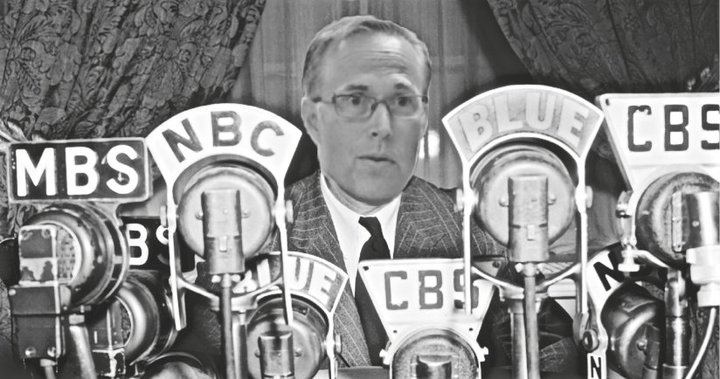
Humboldt’s very own congressional representative Jared Huffman is back with the latest edition of his recurring podcast Off the Cuff. Who’s Jared gabbin’ with this episode?
Former members of Congress - Charlie Dent (Republican representative for Pennsylvania’s 15th district) and Donna Edwards (Democratic representative for Maryland’s 4th district) - discuss the current state of political bipartisanship and where it’s leading us.
On March 8, 2021, at about 7:37 p.m., Humboldt County Sheriff’s deputies on patrol near the 1100 block of Myrtle Avenue conducted a traffic stop on a sedan for a vehicle code violation.
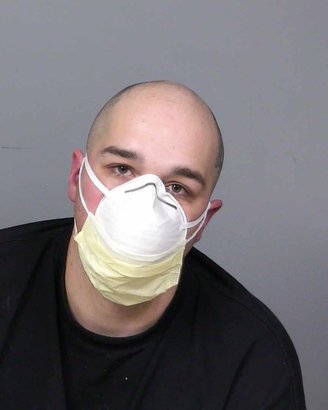
Aaron Joseph Aubrey. | HCSO
The driver and passenger of the vehicle were both found to have outstanding warrants for their arrest.
The driver, a 31-year-old female, was cited and released on her warrant charges.
The passenger, 29-year-old Aaron Joseph Aubrey, was booked into the Humboldt County Correctional Facility on warrant charges for robbery (PC 211), attempting to dissuade a witness (PC 136.1(A)(2)), driving without a license (VC 12500(A)), possession of a controlled substance (HS 11377(A)) and prison prior enhancement (PC 667.5(B)).
Anyone with information about this case or related criminal activity is encouraged to call the Humboldt County Sheriff’s Office at (707) 445-7251 or the Sheriff’s Office Crime Tip line at (707) 268-2539.
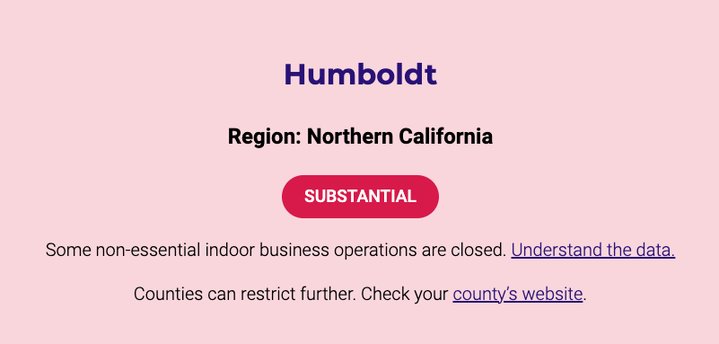
Humboldt was placed in the red tier on Feb. 23. | Image via covid19.ca.gov.
###
The pandemic is finally easing up a bit.
Hoffman
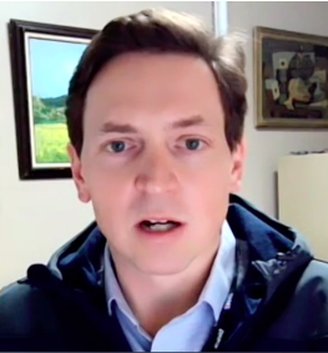
Humboldt County’s rates of confirmed COVID-19 cases and hospitalizations have dropped and stabilized enough that even if the state wants to return us to the more-restrictive purple tier of public health regulations, county staff will protest the decision, allowing us to remain in the red tier for at least the coming week, Public Health Officer Dr. Ian Hoffman said at Tuesday’s Board of Supervisors meeting.
Governor Gavin Newsom is scheduled to provide the latest update on county tier designations at noon Tuesday. Based on local data, the state on Feb. 23 lowered Humboldt County from the most-restrictive purple tier to the red tier, allowing businesses, schools and organized sports a bit more freedom.
Hoffman said the county recently accumulated one week of epidemiological data sufficient to justify a return to the purple tier. That means we had more than seven new cases per 100,000 people and/or a test positivity rate above 8 percent. (Our adjusted case rate per 100,000 currently stands at 8.2 on the county dashboard.) But Hoffman and the rest of the county’s Public Health team don’t want to see the county “yoyo” between tiers when things seem stable, he said.
“So we’ve been communicating with the state of California, trying to make sure we advocate,” Hoffman continued. “We strongly feel that our metrics have reflected that our case rates are stable.”
As the latest COVID surge peaked locally in late January, the county’s case rate rose as high as 26 per 100,000 people. It has since stabilized to between six and 10 per 100,000. The hospitalization rate has also declined dramatically, from a high of more than 15 per day during the surge to single digits now.
“We have decided that if the state were to try to move us to purple we would ask for adjudication,” Hoffman told the board this morning, referring to the formal appeal process allowed under the state’s Blueprint for a Safer Economy. Through adjudication, counties can protest being moved to a more restrictive tier if public health staff believes the decision failed to account for data discrepancies or “qualitative and contextual elements.” During the adjudication process, the county’s tier status would remain unchanged.
“But we do want to recognize that this recovery is fragile,” Hoffman added, pointing out that we’re not far removed from the surge and new COVID-19 variants represent “a real threat.”
“So we’ll keep up that fight, and hopefully the state will make the right decision,” he said.
The situation in local hospitals has improved so much that the county plans to remove “ICU capacity” from its COVID dashboard.
More than eight percent of the county’s eligible population has now received at least one dose of vaccine, a figure Hoffman called “an amazing testament to the effort put forth in Humboldt County over the last few months.” And while progress continues to be hampered by limited availability of vaccines, Hoffman said the situation should improve in the coming months, especially as Johnson & Johnson’s single-dose vaccines gets wider distribution.
Last week the state announced that it would reserve 40 percent of its vaccine supply for the most vulnerable neighborhoods, a collection of 400 zip codes with lower levels of household income, education and access to health care. Humboldt County has 13 such zip codes, and Hoffman said we should learn this week how that will affect our vaccine supplies.
“It feels like we’re at a point of really palpable change with this pandemic,” he said, adding that with case rates falling we can finally look forward to “some return to normalcy.”
But he also cautioned against letting our guard down, saying, “In the end, the things that got us to where we are today will still be the cornerstone” — namely masking, social distancing, washing our hands and avoiding gatherings with multiple households.
The county is now encouraging all residents age 65 and older to contact the Joint Information Center at (707) 441-5000 with any questions about how to get in line for a vaccine.
Hoffman said we’re getting “much, much closer” the the point where everyone who wants a vaccine can get one. That much-desired time is “likely only a few months away,” he said.
The state of the state in January, when California governors normally make speeches on that theme, was dreadful. A hard lockdown was in place as about 40,000 Californians were getting sick with COVID-19 each day. Businesses closed. Hospitals filled. Evictions loomed. And California was among the slowest states in the nation to deploy vaccines that should help end the devastating pandemic.
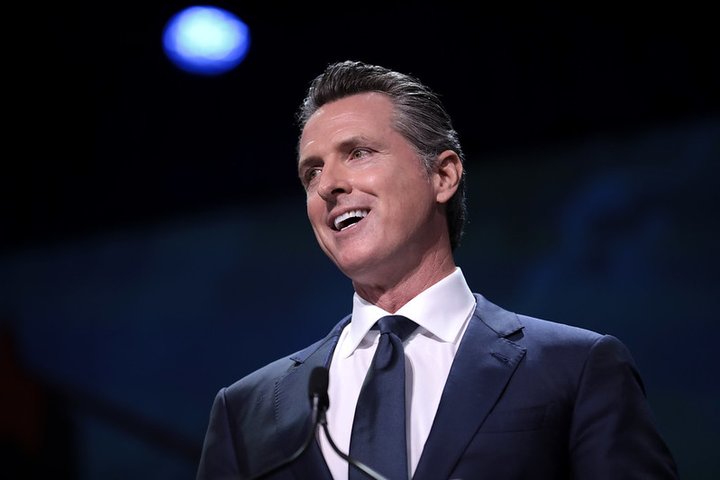
Little wonder that Democratic Gov. Gavin Newsom delayed delivering a “State of the State” speech, in which governors typically tout their accomplishments of the past year and announce an agenda for the year ahead.
Now, though, Newsom is preparing to deliver the speech tonight — a sign he believes the worst of the pandemic has passed, and that he’s turning his attention toward the political campaign to keep his job.
This is the first time a California governor has delivered a State of the State speech in March, and Newsom has planned the event to draw extra attention. By making the speech at 6 p.m. from Dodger Stadium in Los Angeles, he’ll likely attract more media coverage than it garners when held mid-morning in Sacramento, as has been customary in recent years.
The unusual timing also allows Newsom to highlight his accomplishments at the one-year anniversary of the pandemic, and just a week before his opponents must submit signatures to force a special election to recall him from office.
“It can be the beginning of Gavin Newsom’s comeback,” said Democratic political consultant Roger Salazar. “But that said, there is always the danger of declaring ‘Mission Accomplished’ too early.”
Daily COVID-19 infections in California have dropped by 90% from their peak in January. The state is distributing vaccines at about the average national rate. And with 10.5 million vaccine doses administered in California, Newsom has announced plans to speed up business reopenings and allow limited numbers of people back to amusement parks and professional baseball games.
“It can be the beginning of Gavin Newsom’s comeback. But that said, there is always the danger of declaring ‘Mission Accomplished’ too early.” — Roger Salazar, Democratic political consultant
It all feels perfectly teed up for the speech at Dodger Stadium, where Newsom can tap into the sense of hope many Americans feel at the start of baseball season. The location was chosen to represent the resilience of the championship team, as well as the dedication of health care workers who have been vaccinating Californians at the stadium, according to Newsom spokesperson Sahar Robertson. She said the empty stands will signify the more than 54,000 Californians who have died from the disease.
It’s the latest, most highly orchestrated stop in Newsom’s recent tour of vaccination sites at stadiums and community centers around the state.
“We’ve seen for the last several weeks that he’s moved into campaign mode as far as using the power of his office,” said Dave Gilliard, a Republican consultant working on the recall campaign.
“He’s going to do everything he can to spin the State of the State into something that’s positive.”
Under Newsom’s new reopening plan, 40% of the state’s vaccines are set aside for low-income communities that have been hit hard by the virus. After 2 million vaccines have been administered, counties can more easily move from the most-restrictive purple tier to the less-restrictive red tier. So far, 18 counties have moved out of the purple tier and more could do so as early as today.
Newsom still has several big problems to solve while he works to fend off the recall — and money from the feds won’t solve them all.
The governor’s latest strategy has drawn a mixed response from local officials.
Supervisors Luis Alejo of Monterey County and James Gore of Sonoma County said they welcomed the new vaccine distribution and reopening rules.
“This announcement is clear to us,” said Gore, president of the California State Association of Counties. “Our community wants to open up, but open up safely.”
But Jeff Smith, a doctor who is also the executive officer of Santa Clara County, said Newsom’s approach is “purely politics.”
“He’s trying to figure out how to avoid getting recalled,” Smith said.
“So he’s trying to pretend like he’s doing something on equity to score political points, while trying to encourage reopening to make his other friends happy.”
Such political balancing acts have become a hallmark of Newsom’s approach to navigating the pandemic. It was obvious in the way he persuaded lawmakers to move quickly on the priorities he set early this year, allowing him — in less than two months — to sign legislation sending out almost $17 billion, largely with bipartisan support. A $2.6 billion deal to extend a moratorium on evictions tried to balance demands from landlords and tenants. A $7.6 billion economic stimulus package gave grants to small businesses and low-income workers (including those who are undocumented). A $6.6 billion deal to reopen schools was designed to encourage districts to get kids back in the classroom, without usurping local control.
“There is no valedictory opportunity here. He is still in a spot where he needs to convince the public that he is working on the problems they care about,” said Joe Rodota, a political consultant who worked for Republican former governors Pete Wilson and Arnold Schwarzenegger.
“Time will tell if the proposals recently adopted will achieve the intended results. The track record has been uneven at best.”
“He’s trying to pretend like he’s doing something on equity to score political points, while trying to encourage reopening to make his other friends happy.” — Jeff Smith, executive officer of Santa Clara County
The federal stimulus package President Joe Biden is expected to sign this week will probably help Newsom in the coming months. It will provide another $42 billion to California’s state and local governments, plus money meant to help reopen schools, assist struggling homeowners and renters and improve vaccine distribution.
But Newsom still has several big problems to solve while he works to fend off the recall — and money from the feds won’t solve them all. Some school districts may not reach labor agreements to open classrooms this year, which will exacerbate California’s already stark gaps in educational achievement. The state must resolve problems with the unemployment system that have made it hard for many people to get benefits they’re owed — while allowing criminals to loot billions of dollars through fraud. Newsom will face dueling pressures from the left and center wings of his party as he navigates his promises to ban fracking and create a single-payer health care system.
But don’t expect to hear much about that in tonight’s speech.
“This is not going to be a State of the State ladened with lots of policy announcements,” Newsom said Monday when asked about his plans for the speech.
In other words: Welcome to the 2021 campaign.
###
CALmatters.org is a nonprofit, nonpartisan media venture explaining California policies and politics.
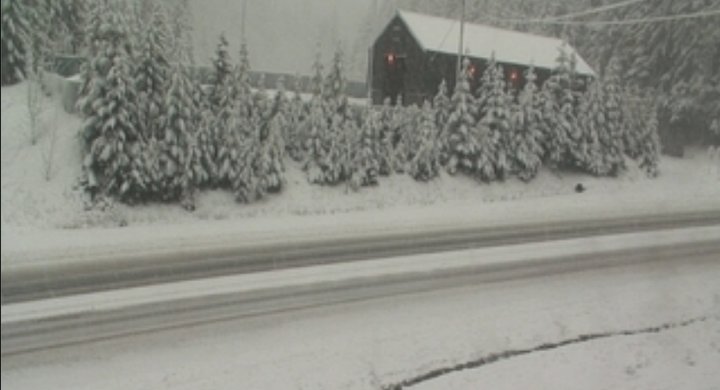
Snow chain requirements have been lifted for vehicles traveling on Highway 299 today between Berry Summit and Willow Creek after Caltrans initially instituted chain controls this morning.
“Controls lifted,” Caltrans stated moments ago. “Please slow down, drive for the conditions on the road, and check your route before you go. We will keep you updated here if things change.”
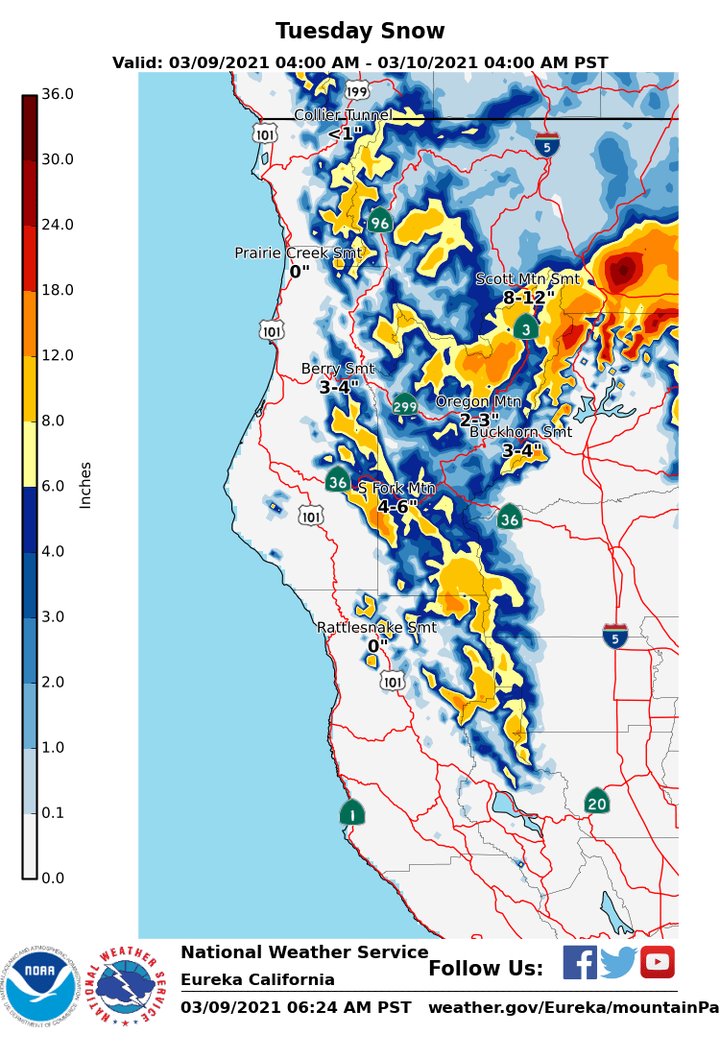
Eureka’s National Weather Service office forecasts that 3 to 4 inches of snow will fall along Highway 299 near Berry Summit today. Areas of Highway 36 between Bridgeville and Mad River are also expected to see 4 to 6 inches of snow. Chains requirements remain in effect along Highway 36 in areas of Trinity County.
“Chains are required on all vehicles except passenger vehicles and light-duty trucks under 6,000 pounds gross weight and equipped with snow tires on at least two drive wheels,” Caltrans chain requirements state for portions of Highway 36. “Chains must be carried by vehicles using snow tires. All vehicles towing trailers must have chains on one drive axle. Trailers with brakes must have chains on at least one axle.”
The latest CalMatters video offers a quick explanation of how California’s unemployment system went awry while struggling to confront unprecedented demand.
As the pandemic left millions of Californians unemployed, prosecutors say scammers found many ways to defraud the state. The confusion derailed the unemployment system and left many people out of work to fend for themselves.
Since the California’s unemployment rates skyrocketed, fraud had plagued the California’s Employment Development Department. The state suspects there are more than $30 billion in fraudulent claims, which has led to the state halting benefit payments to thousands of legitimate claims.
Unemployment benefits are a form of insurance. If you lose your job, the state pays you up to $450 a week from a fund paid for by business taxes. When times are really tough, like a global pandemic, the federal government kicks in more cash for benefits.
But after the pandemic shut down the economy last spring, a record 16 percent of Californians were suddenly jobless, putting a serious strain on the system.
Now, enter Bank of America, which had one job: Deliver money to unemployed Californians via debit cards. That went haywire when scammers allegedly got ahold of card numbers and racked up fraudulent charges on unemployment accounts.
The state and the bank scrambled to crack down on fraud by doing new identity checks and freezing hundreds of thousands of debit cards.
But in the process, thousands of unemployed workers stopped getting money. Some even saw their unemployment accounts drop to a negative balance after the bank refused to refund alleged fraudulent charges.
After all the confusion, billions are missing. As of late January, unemployment fraud cost taxpayers around $11 billion. Officials say the total could ultimately exceed $30 billion.
While workers struggled, the state and Bank of America have continued to make money. How much, you ask?
Public records obtained by CalMatters show the state made $22.5 million from March to October alone last year. The money came from transaction fees that merchants pay when unemployment debit cards are used to buy something.
As for Bank of America? The bank and the state both won’t say how much the bank has made. But an executive told lawmakers that the bank actually lost money on the deal last year after factoring in costs for damage control.
So what happens now?Law enforcement is investigating unemployment fraud, including cases linked to organized crime, weapons offenses or drug trafficking.
Some fed-up Californians and lawmakers want to add a direct deposit option for unemployment payments and improve the state’s fraud detection.
As for the people who haven’t received unemployment benefits? State officials haven’t said when those claims will be paid.