

OBITUARY: Walter Alexander ‘Alex’ Painter, 1963-2020
LoCO Staff / Thursday, Dec. 10, 2020 @ 6:56 a.m. / Obits
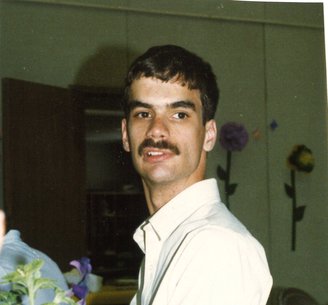
Walter
Alexander “Alex” Painter passed away November 24, 2020 with
family by his side.
Alex
was born on November 22, 1963 in Eureka, California to Violet and
George Painter. At an early age Alex was diagnosed with autism.
He attended Glen Paul School and recently HCAR’s
Sequoia Center. He also took advantage of the many services
Redwood Coast Regional Center had to offer him.
Alex was always up for a road trip. Whether it was just a short jaunt around his hometown, Sequoia Park, the waterfront to watch the birds, Old Town Eureka or a more adventurous Alaskan Cruise to enjoy the Northern Lights, Alex was always ready to go. He also enjoyed his annual summer camping vacations.
Alex
is preceded in death by his parents. He is survived by his
siblings: Greg (Greta) Painter, Steven (Donna) Painter, Susan
(Dean) Lewis. His nieces and nephews: Tara,
Nicholas, Erin, Stephanie and Kevin. Great nieces: Violet, Fiona and
Sophie.
The family would like to thank Beth Wingfield of the North Coast Regional Center, Carrisa Armstrong of the Sequoia Center, Bungalow Home Support Services and all of the DSP’s over Alex’s lifetime for their kindness, patience and love. We would also like to thank the Ida Emmerson Hospice House staff for the comfort and care they provided Alex in his final days.
A private graveside ceremony will be held for the family.
###
The obituary above was submitted on behalf of Alex Painter’s loved ones. The Lost Coast Outpost runs obituaries of Humboldt County residents at no charge. See guidelines here.
BOOKED
Today: 4 felonies, 7 misdemeanors, 0 infractions
JUDGED
Humboldt County Superior Court Calendar: Today
CHP REPORTS
5451 Mm101 N Hum M54.50 (HM office): Traffic Hazard
Painter St / Wildwood Ave (HM office): Trfc Collision-Unkn Inj
ELSEWHERE
RHBB: Wildfire Burning Near Highway 101 South of Laytonville
Governor’s Office: California reminds voters to check their mailboxes and return their ballot ASAP!
County of Humboldt Meetings: Oct. 8, 2026 - Humboldt Housing and Homelessness Coalition General meeting
RHBB: CHP Pursuit Ends With High-Risk Stop at Highway 299 and 101
‘A Curriculum That Empowers’: Virtual Roundtable Focuses on Need for Better Education Outcomes for Native Youth
Iridian Casarez / Wednesday, Dec. 9, 2020 @ 2:47 p.m. / Education
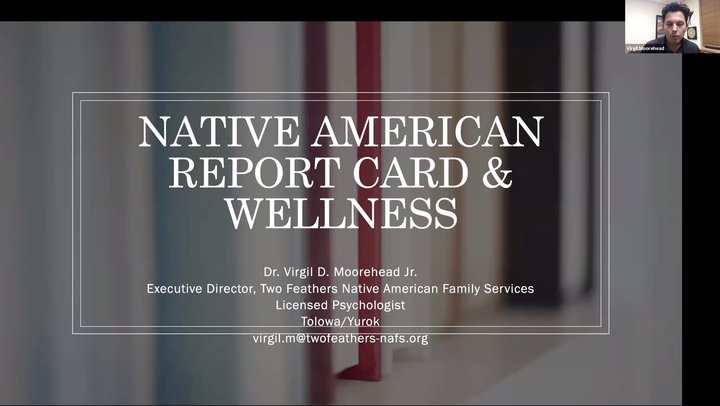
Two Feathers Native American Family Services Executive Director Virgil Moorehead presents during the roundtable.
###
PREVIOUSLY:
###
Speaking at a virtual roundtable called to discuss the systemic
failures of local school districts to help Native students succeed,
as detailed in a recent report by the American Civil Liberties Union
of Northern California, Humboldt State University Native American
Studies Chair Cutch Risling Baldy said it largely comes down to
curriculums that disempower Native youth.
Baldy, who is of Karuk, Hupa and Yurok decent and a Journal contributor, said the California Mission Project and Gold Rush lessons erase the history of California’s attempted genocide on Native people, noting that the state legalized the enslavement of Native people and even offered bounties for killing them.
As such, Baldy says school curriculums often disempower Native youth, leaving them feeling unheard, unrepresented and even erased.
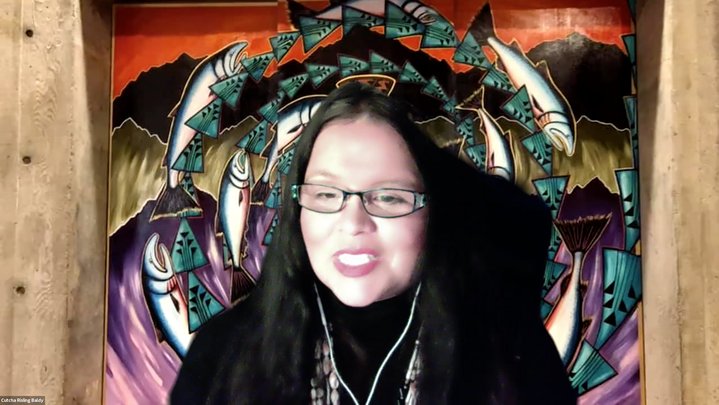
Humboldt State University Native American Studies Chair Cutcha Risling Baldy discusses how Native people are largely absent from school curriculums.
“I know it’s possible to create a curriculum that empowers Native youth,” Baldy said. “We know we have a curriculum that disempowers them, that takes their stories from them. We know we have these situations where they’re not feeling empowered to go into higher education. We know that once they get there, they’re confronted consistently with people who question their own stories. It’s time to change that. It’s time to start at the very basis of the structural curriculum that we teach our youth to tell them that their stories are important and matter, that their voices are important and matter.”
The Dec. 3 discussion is an attempt to build on the ACLU’s October report that found Native American youth in Humboldt County struggle to meet basic educational benchmarks and are far more likely to be suspended, expelled or suffer chronic absenteeism than their non-Native peers.
For example, in the 2018-2019 school year, just 20.7 percent of local Native students met or exceeded state English language arts standards for their grade levels, compared to 44.6 percent of students overall. In math, just 14.5 percent of Native students met or exceeded standards, compared to 32.5 percent of all Humboldt County students.
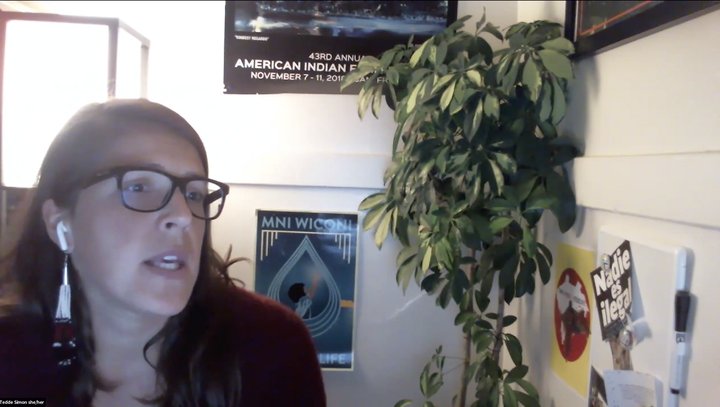
Tedde Simon, an investigator and acting Indigenous justice program manager at the ACLU Foundation of Northern California, discusses “Failing Grades,” a blistering report she helped author on the state of North Coast education for Native youth.
Tedde Simon, an investigator and acting Indigenous justice program manager at the ACLU Foundation of Northern California said in an October interview with the Journal that while the findings weren’t surprising, they were nonetheless shocking. The report, a first citable document, validates what has already been known in Humboldt’s Native community: That Native school kids struggle more than their non-Native counterparts.
Two-hundred participants from Humboldt and Del Norte counties tuned in to the virtual Native American Report Card Roundtable discussion and listened to Baldy and other presenters speak about what’s missing in Humboldt County schools.
Baldy spoke about her lectures at HSU, saying she asks all her incoming students what they learned about Native Americans in school, with students most commonly saying they learned how the California Mission Project brought Christianity to the West and how the California Gold Rush boosted the state’s economy. The problem, she said, is that current school curriculums leave out how harmful these two historic events were to California’s Native people.
And this was a message — almost a call to action — repeated throughout the roundtable: Bring more Native representation and history into school curriculums to empower local Native youth so that they can thrive academically and socially.
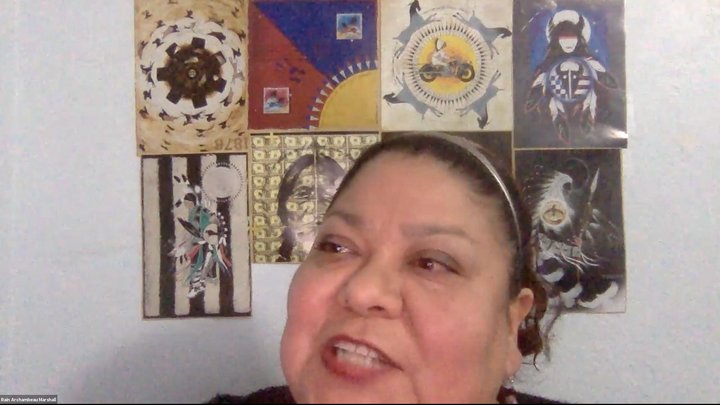
Rain Marshall, the Indigenous education advocate for the Northern California Indian Development Council, moderated the roundtable discussion.
Rain Marshall, the Indigenous education advocate for the Northern
California Indian Development Council, has firsthand experience
seeing how triggering any discussions surrounding Thanksgiving,
Columbus and the Gold Rush are to Native students.
“It makes students not want to go to school anymore,” she said. “That’s something that can be addressed proactively by teachers, by changing the narrative to discuss it from an Indigenous perspective. That’s something that goes off the history books and into some extra research that is definitely available.”
Two Feathers Native American Family Services Executive Director Virgil Moorehead said a strong focus on Native culture and identity can help foster restoration and healing, leading Native students toward a better sense of themselves.
“I think this is about development — human development,” Moorehead said. “We’re all part of the positive development of our children. We must have a community focus, including addressing the root causes and understanding persistent trauma environments in the effects of cultural and personal discontinuity.”
All speakers agreed there is a lot of work left to do to begin addressing the drastic disparities the ACLU report found. But the report does highlight 11 tangible recommendations for school districts to begin implementing immediately, including what Baldy and Moorehead suggest, adopting more culturally relevant curriculum, as well as hiring more mental health professionals, moving away from exclusionary discipline models and developing memorandums of understanding with local tribes and service providers.
The discussion is scheduled to continue as a monthly event with another Zoom roundtable forum set for Jan. 21, 2021, at 5 p.m. which can be viewed at this link — Meeting ID: 828 3369 5092 Passcode: C6G8V*
###
The Community Voices Coalition is a project funded by Humboldt Area Foundation and Wild Rivers Community Foundation to support local journalism in generating truthful, courageous and equitable stories covering vulnerable and traditionally underrepresented communities in Humboldt, Trinity, Del Norte and Curry counties. Project stories produced by the North Coast Journal newsroom will be done with full editorial independence and control.
Iridian Casarez (she/her) is a Journal staff writer. Reach her at 442-1400, extension 317, or iridian@northcoastjournal.com. Follow her on Twitter @IridianCasarez.
Environmental Groups Say Spotted Owl is Going Extinct, Charge Federal Government With Negligence in Managing for the Species
LoCO Staff / Wednesday, Dec. 9, 2020 @ 10:41 a.m. / Environment
Press release from the Environmental Protection Information Center:
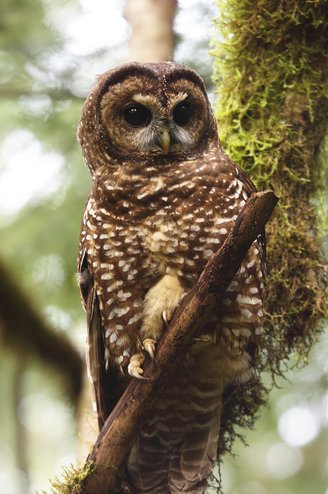
Northern spotted owl. Photo: Kameron Perensovich, via Wikimedia. Creative Commons license.
Today, a group of wildlife advocates filed a complaint in federal district court against the U.S. Fish and Wildlife Service (the Service) for failing to take multiple actions required by the Endangered Species Act to protect the northern spotted owl from extinction. In 2015, wildlife advocates petitioned the Service to increase protections for the owl by “uplisting” the species from threatened to endangered due to declining habitat, effects of climate change, and competition from the invasive barred owl. The Service stated uplisting is warranted, committing to publish an analysis of the issue that would also satisfy a legal obligation to complete a five-year status review of the species. Since then, the Service has produced no such analysis, nearly a decade has passed since the last northern spotted owl species status review, and the northern spotted owl continues to slide towards extinction.
“The word for the U.S. Fish and Wildlife Service’s approach to northern spotted owl recovery is ‘negligent,’” said Susan Jane Brown, Wildlands Program director with the Western Environmental Law Center. “We’re at an inflection point for these iconic birds: with urgent action they can recover, but without it they could be wiped off the face of the Earth. Nine years of dithering from our wildlife managers is unjustifiable.”
“All the best available information suggests that the spotted owl is going extinct and doing so quickly,” said Tom Wheeler, executive director at the Environmental Protection Information Center. “The most recent survey data shows that the owl is in decline across its entire range and that the rate of decline is increasing. If we don’t act now and with great urgency, the other thing our grandchildren will inherit is the story of how we failed this owl.”
Timber harvesting in the Northwest has resulted in a widespread loss of spotted owl habitat across its range, which was a main reason for prompting the listing of the species in 1990. Owls depend on habitat provided by the dense canopy of mature and old-growth forests, unfortunately, those forest stands are still a target for logging throughout the bird’s historic range. The northern spotted owl is already functionally extinct in its northernmost range, with only one recognized breeding pair left in British Columbia.
“The mature and old-growth forest habitat that this species depends on is continually diminished, particularly from logging on our public lands. Every year there are fewer and fewer reproductive owl pairs,” stated Kimberly Baker, Executive Director of the Klamath Forest Alliance. “Despite this fact, the Service has allowed habitat destruction to continue for nearly a decade without considering population numbers on a regional scale. It’s beyond time for the Service to check the owls’ status and guard them from extinction.”
In 1990 and in response to a court order, the Service listed the northern spotted owl as threatened, citing low and declining populations, limited and declining habitat, competition from barred owls, and other factors in the bird’s plight. Even after its listing, northern spotted owl populations have continued to decline, and the rate of decline has increased. In August 2020, the Trump administration settled a timber industry lawsuit by proposing to eliminate more than 200,000 acres of northern spotted owl critical habitat, further precluding this magnificent raptor’s recovery.
“Climate change-driven wildfires and the barred owl are new threats to the spotted owl,” said Joseph Vaile, Climate Director for the southwest Oregon-based Klamath Siskiyou Wildlands Center. “These new threats demand that we save every bit of ancient forest owl habitat that we have left.”
The organizations challenging the Service’s dilatory actions are the Environmental Protection Information Center, Cascadia Wildlands, Conservation Northwest, Klamath Forest Alliance, Klamath-Siskiyou Wildlands Center, Oregon Wild, and Audubon Society of Portland. They are represented by the Western Environmental Law Center.
Legislators Increase Pressure to Open Schools as Most Stay Closed This Fall
Ricardo Cano / Wednesday, Dec. 9, 2020 @ 7:32 a.m. / Sacramento
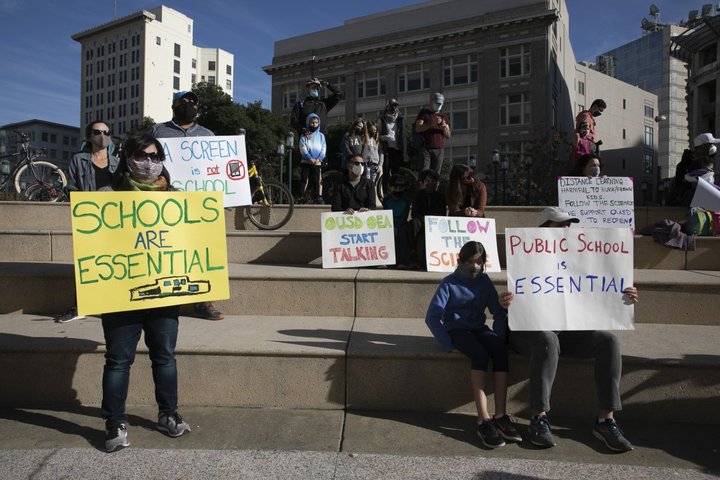
Families gathered at Frank Ogawa Plaza in Oakland to protest the continuation of public school closures across California on Dec. 5, 2020. Photo by Anne Wernikoff for CalMatters
###
A group of eight California lawmakers will advance a proposal in January that would require the state’s public schools to reopen and offer in-person instruction once they receive permission to do so from state and local public-health authorities.
The Democratic legislators co-authoring Assembly Bill 10, one of the first bills introduced this legislative session, say the proposal is essentially in response to the fact that many public schools across California that had the state’s permission to physically reopen campuses this fall remained in remote learning.
If passed by two-thirds of the Legislature and signed by Gov. Gavin Newsom, the proposal led by Assemblymember Phill Ting, a San Francisco Democrat, would require public schools to plan the transition toward in-person instruction within two weeks after their counties move out of the most severe purple tier in the state’s four-color tiered system governing school and business reopenings during the pandemic. The schools would have wiggle-room as to when and how they actually reopen, but the plan would have to be in place within 2 weeks.
Under AB 10, which would take effect March 1, public schools also would have to create more detailed plans for engaging students who are not participating in remote classes. This school year, several California students have effectively been shut out of online classes because they lack stable internet access or functioning technology despite state and local efforts to close a decades-long digital divide in the state.
Local school boards and administrators would still have authority to decide logistics such as scheduling, how their schools would transition to in-person learning, and which student groups to prioritize, lawmakers said. Parents would still be allowed to keep their children in remote learning if they wanted, and the proposal exempts certificated staff who are medically fragile from returning to campuses in person, according to the bill’s text.
Though the state is not tracking reopenings, the majority of California public schools have remained in remote learning since campuses initially closed last March. Several counties, such as Los Angeles, home to the nation’s second-largest school system and more than 1 million public-school students, have remained in the purple tier and thus restricted from broad school reopenings.
Rural schools and smaller districts were among the first in California to physically reopen this semester, some as early as August. In October, after many counties moved toward the red, orange and yellow tiers that allow for broad campus reopenings, more urban school systems began transitioning toward in-person learning, namely in Orange, San Diego and Marin. Several other public and private schools in purple counties have reopened campuses for elementary students through waivers, though that reopening channel has mostly favored private schools.
Most of the state’s 25 largest districts, though, remain in remote learning. San Bernardino Unified, the state’s seventh-largest district, said recently that it planned to stay in remote learning for the entirety of the 2020-21 school year.
San Francisco and Bay Area counties such as Alameda had moved to the orange tier this fall before infections climbed again statewide, though public schools there remained physically closed.
“In the fall, when numbers were going down, down, down and we were actually doing quite well, I was surprised that more school districts didn’t open, especially for younger grades,” Ting said in a phone interview.
The bill’s eight co-authors include Assemblymember Patrick O’Donnell, a Long Beach Democrat and Assemblymember Lorena Gonzalez, a San Diego Democrat, who chair the education and appropriations committees AB 10 would be required to clear for a vote on the Assembly floor.
“We don’t want to get to a point where schools have sat on their hands for 12 months,” O’Donnell, who chairs the Assembly Education Committee, said in a phone interview. “What we’re trying to do is emphasize that schools need to be planning today for their reopening, and it needs to be thought through. It needs to be safe for students and teachers.”
Claudia Briggs, a spokesperson for the California Teachers Association, the state’s largest teachers union, said in an email that the union was reviewing the bill.
“We have been working with the state from the beginning to ensure the safe return to school for millions of students and hundreds of thousands of staff,” Briggs said in the email. “We know this legislation is a starting point and look forward to the continued conversation which must be done collaboratively with the proponents, educators and administrators.”
Megan Bacigalupi, a mother of a kindergartner and second-grader in Oakland Unified School District, hopes the proposal spurs “districts and our unions to hopefully get to the table and negotiate for safe reopening when it can be done.”
Bacigalupi was among the parents who organized a weekend rally calling for school campuses to reopen once cases in Oakland stabilize. Her students have struggled with online learning and she worries about the disinterest in school she’s seen from her second-grader, who is dyslexic. The district had recently released plans to begin bringing back elementary students once Alameda County climbed back up to the orange tier.
“If this (remote learning) is to continue in perpetuity, I worry greatly about it,” Bacigalupi said. “The prospect of a March 1 return seems too long, but better than August or whenever we would go back next year.”
Kevin Gordon, a veteran Capitol lobbyist representing school districts, said the proposal is “really helpful” for local school leaders pushing to reopen campuses, though it does not touch on the questions of resources and capacity that have resulted in fraught reopening debates among administrators, parents and teachers across communities.
Though the bill could face opposition from teachers unions, Gordon noted that several of the bill’s co-authors include lawmakers “respected in education and by labor (groups).
Many teachers unions, including Oakland’s, have called for their districts to implement frequent testing and robust contact tracing programs, ensure compliance with strict safety measures and improve ventilation in aging buildings.
State legislators and the governor have said recently that schools are positioned to safely reopen, pointing to a $5.4 billion pot of federal funding included in this year’s state education budget and a two-month supply of personal protective equipment the state procured for schools this summer, when most were preparing to start the year in person. When pressed by reporters Monday about the state’s involvement in school reopenings, Newsom suggested that his January budget would include funding for additional coronavirus testing for schools.
“There are union groups all over the state who made demands of districts about what it would take for them to be willing to come back, and I don’t know that the state has fully accommodated all of those solutions,” Gordon said.
###
CALmatters.org is a nonprofit, nonpartisan media venture explaining California policies and politics.
OBITUARY: Judy Carole Rencurel, 1954-2020
LoCO Staff / Wednesday, Dec. 9, 2020 @ 6:56 a.m. / Obits

A
woman of strength,
Never
giving up,
Accepting,
Giving,
Always
loving and forgiving.
A
woman of not many words,
But
rich in wisdom,
Observing
quietly and taking it all in,
Never
Complaining.
She
lived her life in her own quiet, peaceful way.
Judy,
you will be in our memories forever,
We
look at you as an example of
Perseverance,
Elegance,
Beauty.
Born July 24 1954, in Montana, Judy grew up in San Jose where she graduated from high school. After graduating she joined the army to become a nurse, and continued her nursing career studying at Humboldt State. She worked for 32 years as a nurse at Saint Joseph Hospital until cancer forced her to retire.
She leaves behind her son Jeremy Krokosynski, significant other Stu Mair, sisters Rosalie & Tina, brother Art, along with numerous nieces, nephews and a core group of friends. It has been a hard journey for Judy since she was diagnosed with cancer she has fought this terrible disease with everything she could. Spending five years of clinical trials and constantly researching, as she grew sicker and tried to live life to the fullest.
A year ago this month she was enjoying the wonders of Italy, one of the things she always wanted to do, as she was able to hold the cancer back.
One of her doctors at the beginning of this equated it to a sleigh ride at Christmas as you were going through the forest to celebrate, a pack of wolves begin chasing. You throw one of the gifts at them to slow them down, you do this again and again until finally there is nothing left to throw.
Judy is now at peace and not suffering from the pain of cancer. She passed at home November 28.
God
Bless.
May her memory be forever a blessing. At this time there will be no services.
###
The obituary above was submitted on behalf of Judy Rencurel’s loved ones. The Lost Coast Outpost runs obituaries of Humboldt County residents at no charge. See guidelines here.
OBITUARY: Ahti ‘Art’ Apuli, 1937-2020
LoCO Staff / Wednesday, Dec. 9, 2020 @ 6:56 a.m. / Obits
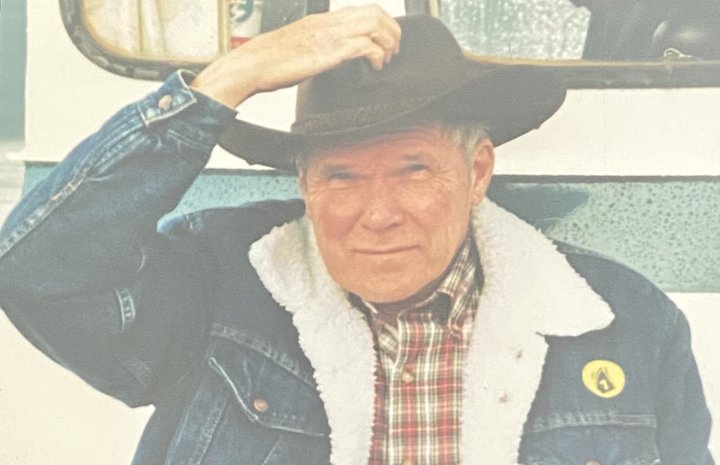
Ahti
“Art” Apuli passed away Dec. 1, 2020, after a stroke.
Art
was born Feb. 22, 1937, in Vancouver, British Columbia,
Canada, to Vaino Apuli and Elvi Ahomaki Apuli. He grew up in
Ladysmith, and the family moved to Eureka while he was in
high school.
Art graduated from Eureka High School in 1954 and attended Humboldt State before joining the Army.
Art married Virginia Reeves in Eureka. He and Ginger moved to Bainbridge Island, Wash., while he worked as a civilian employee of the Navy before they returned to Eureka. They were the parents of Deborah and Stan.
Skilled at electronics, Art operated Myrtletown TV for decades. He enjoyed an active retirement, which gave him more time to be outdoors. He enjoyed out-of-state hunting trips with Bud Nees and other longtime friends, and plenty of time at the cabin he built in Hayfork, Trinity County. He and Ginger kept busy with camping, trips to national parks, and cruises to Alaska throughout their 54-year marriage.
Art was deeply independent. He liked keeping his house much the same as it was when Ginger was alive, and he appreciated the kindness of her family and Stan’s network of friends. He drove to Hayfork every couple of weeks to cut firewood and load it into his truck.
Art was cheerful on Thanksgiving even though he stayed home because of the Covid pandemic. He was tickled to receive turkey dinners dropped off by three different households.
He is survived by his daughter, Deborah Willoughby, and grandchildren Jay and Clara Willoughby, all of Vancouver, Wash.; his daughter-in-law Melissa Heim; and his sisters-in-law Sandy Bates, Regina Barlow, and Marge Reeves, and their children and grandchildren. His wife, Ginger, and his son, Stan, died in 2015.
We hope to schedule a memorial service for Art in 2021. Remembrances may be made to the Eureka Rescue Mission or Redwood Pals Rescue.
###
The obituary above was submitted on behalf of Art Apuli’s loved ones. The Lost Coast Outpost runs obituaries of Humboldt County residents at no charge. See guidelines here.
OBITUARY: Gene Whitten, 1945-2020
LoCO Staff / Wednesday, Dec. 9, 2020 @ 6:56 a.m. / Obits

Born on Dec. 18, 1945 in Great Bend, Kansas to Stanton and Naomi Whitten.
Preceded in death by his father in 1958, his mother in 1986, his stepfather Marcus Garcia in 1992, sister Lynda in 2003, son Eric in 2003 and wife Lani in 2018.
Survived by children Darryl, Dina, Neil, Michelle, Craig and Steven.
Survived by niece Naomi Bisceglia & nephew Stanton Bisceglia
Survived by great friend of the family Laurie Newman (thank you for everything!)
Gene worked for two Arco stations in his youth and for CDF (CalFire) from 1964 to 2000. He served as Battalion Chief at his CDF posts in both Alderpoint and Fortuna.
He was a resident of Humboldt County since he moved with his family to Alderpoint in 1978 and then later to Hydesville, where he lived for the rest of his days.
He was a member of the Critical Incident Stress Debriefing team and worked for several years to help establish a countywide fire radio net. He also was intensely interested in seeing the development of better county-wide maps for the emergency services in rural areas, which he felt was still not a reality to this day.
Graduate of Fort Bragg High School : 1964
Attended Santa Rosa JC and graduated Humboldt State University with a degree in Business Administration in 1970.
Gene enjoyed life and took great pleasure interacting with his vast network of family, friends and acquaintances. He loved games and puzzles and was a master card player in his time. He was a member of and supported many groups; including Toastmasters, AA, Relay for Life and various grief groups. Gene would always take the time to listen to people’s stories and was well known for helping people he felt needed or deserved it. Most of all, he loved to laugh and tell jokes and stories to make those around him laugh. He had so many stories and we ran out of time before we could hear them all. He believed that HOPE was the greatest gift you can give or receive.
Instead of flower arrangements, Gene would’ve preferred that everyone make a donation to the American Cancer Society or the Food for People organization.
Two roads diverged in the woods
And though they appeared to be the same
I took the one less traveled
And that has made all the difference
###
The obituary above was submitted on behalf of Gene Whitten’s loved ones. The Lost Coast Outpost runs obituaries of Humboldt County residents at no charge. See guidelines here.


_(13989510624).jpg)