
How Election Officials Fought Fiction With Fact
Freddy Brewster and Katie Licari / Thursday, Dec. 3, 2020 @ 7 a.m. / Sacramento
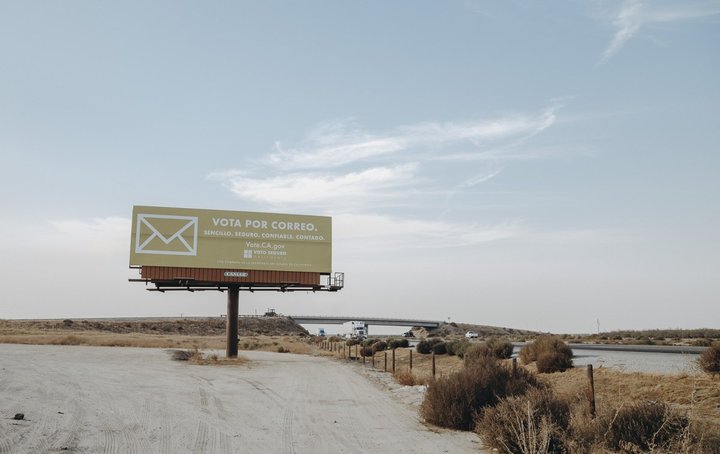
“Simple. Secure. Trustworthy. Counted.” A sign reads in Spanish encouraging voters to vote by mail Off I-5 on November 3, 2020. Photo by Clara Mokri for CalMatters
###
Pet videos populate Facebook all the time, but one posted during this frenzied election season stood out: A service dog named Maggie Magoo had voted by mail in Santa Cruz, its owner said. Not just that, the owner claimed Maggie was registered to vote using her microchip number as a social security number.

The story, like so much misinformation, had more bark than bite. But it was only after the video had been viewed at least 25,000 times and Gail Pellerin, Santa Cruz County Registrar, had checked voter registration and called the county’s district attorney, the local sheriff’s department, and the Department of Homeland Security that she felt she could definitively quash the rumor. “For the record, a dog did NOT register and vote in our county,” she tweeted.
“It’s really unfortunate when people just sit behind a camera and put out lies and deceit that just isn’t based on facts or anything real,” Pellerin said. “It really just sort of tarnishes the work that everybody is doing.”
Not all misinformation about the election was as easy to disprove, and there was plenty. A survey by CalMatters of 52 of California’s 58 registrars of voters found that misinformation in all forms was rampant during the recent election. Voters were subjected to everything from wrong or misleading claims from the White House to social media posts discrediting the integrity of the voting process. Registrars in both urban and rural counties said they often spent hours each day trying to get the correct information out to anxious voters.
Kimberly Grady, the registrar for Amador County, said her office fielded “numerous calls daily” about “whatever was talked about on social media or the news. It was usually about fraud.”
“The phones were out of control this election,” said Gregory Diaz, registrar for Nevada County, adding that his office dealt with misinformation “all the time. Every day.”
In fact, much of the registrars’ time was spent addressing voters’ confusion over new election rules rather than malicious disinformation. Apart from their choice of candidates and propositions, voters had a lot to think about in this election. Not only was this California’s first year to use vote-by-mail statewide, but in a number of counties voting centers and dropboxes had replaced familiar polling places. “We had a lot of people who were upset and angry” about the move from polling places to mailed ballots, said Donna Johnston, Sutter County’s registrar. “People did not want their choice taken away from them.”
The registrar for Amador County said her office fielded “numerous calls daily” about “whatever was talked about on social media or the news. It was usually about fraud.”
Many voters displaced by wildfires in counties like Santa Cruz needed assistance finding replacement ballots or locating a place to drop their ballot. And BallotTrax, a new system designed to assure mail-in voters that their ballots had been received and recorded, often instilled more confusion than confidence when it failed to provide prompt feedback in some counties.
Still, even issues that would have been relatively straightforward in simpler times were complicated by President Trump’s false claims about a “rigged” election and the integrity of mail-in voting. Much-publicized cost cutting and mail delays by the U.S. Postal Service led voters to worry that they couldn’t count on their ballots being delivered safely or on time. They expressed doubts about the security of drop boxes, or poll workers’ ability to match signatures on mail-in ballots or the threat of illegal electioneering — advocates distributing or wearing campaign propaganda at the voting centers. “Everything prevalent in the national narrative has been questioned locally,” said Janna Haynes, Public Information Officer for Sacramento County.
To combat the flood of confusion and misinformation, the largest counties deployed armies of workers. Between its phone bank and its social media team, “you’re talking about 35, 40, 45 people,” said Neal Kelley, registrar for Orange County, which has more than 1.6 million registered voters. The Orange County website also posted 30-plus “myths” circulating about voting. Some examples: Voters should put a stamp on their prepaid return ballot envelope for faster delivery (actually, this could slow it down); it’s okay to photocopy one’s ballot (it’s not); ballots that don’t check all the boxes will be voided (they won’t).
Anticipating problems, the Secretary of State’s office had set up a dedicated email account, voter hotline and media monitoring tools well ahead of Election Day to help combat concerns about misinformation. State officials led county public information officers through a presentation on crisis communications and best practices, and equipped them with a tool kit for possible scenarios the week prior to the election, said Jenna Dresner, senior public information officer for the Office of Election Cybersecurity. “We always see an influx in misinformation around elections, but this year it was louder than ever.”
For Kammi Foote, the registrar of Inyo County, the problems began during the summer, with messages coming out of the White House undermining the integrity of the postal service. She said she had to routinely deal with voter phone calls about possibly intentional slow downs of the mail and the removal of U.S. mail collection boxes.
“That did not reflect the reality happening behind the scenes,” Foote said about the situation in Inyo County. “We probably had the strongest partnership with the United States Postal Service that I have ever experienced in my 14 years as a registrar.”
In an effort to combat confusion, Inyo’s elections office expanded its social media reach to Facebook, Twitter and Instagram. Foote said she posted at least twice a day during the busiest days of the election to deal with each new conspiracy theory. One day a number of people called her office to ask how she was preventing people from urinating in the ballot drop boxes.
“I had never previously received those kinds of questions and I thought it was odd that multiple people would ask me that same question,” she said.
Normally, the registrar’s office could have reached out to a wide audience by advertising on Facebook. But Facebook had imposed a ban on new political ads in the week before the election, in an effort to combat misinformation, so Foote was limited to posting only on the county’s page. “I went through so many hoops and so many hours and I even got through to real, live Facebook people and we still weren’t ever able to advertise,” she said. (The registrar for Orange County took the precaution of being certified by Facebook as an official source of election information, Kelley said, so his office was able to circumvent the ban.)
“The most important thing the voter should know is that not everything they read on social media is always true and they need to do a little research.”
— Deborah Bautista, Tuolumne County registrar
In Sonoma County, Registrar Deva Proto found herself dealing with rumors that grew out of photos taken in September of recycled materials from previous elections. “Somebody took pictures of it and started spreading misinformation, saying that they were worried that we were dumping ballots from this election, even though our ballots haven’t been sent out yet,” said Proto. “And so that took quite a bit of time, just responding to phone calls, and then media requests.”
In Tuolumne County, Registrar Deborah Bautista spent time every day scrolling through Facebook groups that were spreading misinformation. One individual, she recalled, posted an obviously false claim that in-person voting had been canceled. She responded that some polling places were closed due to consolidation efforts but that there was still, in fact, in-person voting. “But the good news is that there were a lot of people that said that [the claim] wasn’t true and to contact the [elections] office,” she said.
Bautista said she is lucky, because Tuolumne County is a small area where people tend to know each other. She said she was often tagged on some of the misleading posts and was able to rebut them before they were able to take root.
“The most important thing the voter should know is that, not everything they read on social media is always true and they need to do a little research,” she added. “If it doesn’t sound right, it probably isn’t right.”
Requests for interviews with Facebook went unanswered as of publication time.
###
Freddy Brewster and Katie Licari are reporters at UC Berkeley’s Graduate School of Journalism. Votebeat reporters Lewis Griswold, Michael Lozano, and UC Berkeley Journalism School reporter Aaron Leathley contributed to this story.
This coverage is made possible through Votebeat, a nonpartisan reporting project covering local election integrity and voting access. In California, CalMatters is hosting the collaboration with the Fresno Bee, the Long Beach Post and the UC Berkeley Graduate School of Journalism.
CALmatters.org is a nonprofit, nonpartisan media venture explaining California policies and politics.
BOOKED
Yesterday: 4 felonies, 7 misdemeanors, 0 infractions
JUDGED
Humboldt County Superior Court Calendar: Today
CHP REPORTS
(XXX) XXX-XXXX67 Us101 (HM office): Trfc Collision-No Inj
ELSEWHERE
RHBB: Nov. 3, 2026 General Election Vote Center and Ballot Drop Box Locations
RHBB: Mendocino Railway President And Ceo Robert Jason Pinoli Elected To Aslrra Board Of Directors
RHBB: Wildfire Burning Near Highway 101 South of Laytonville
With Barrett on Supreme Court, California’s Church COVID Limits in Legal Jeopardy
Ben Christopher / Thursday, Dec. 3, 2020 @ 7 a.m. / Sacramento
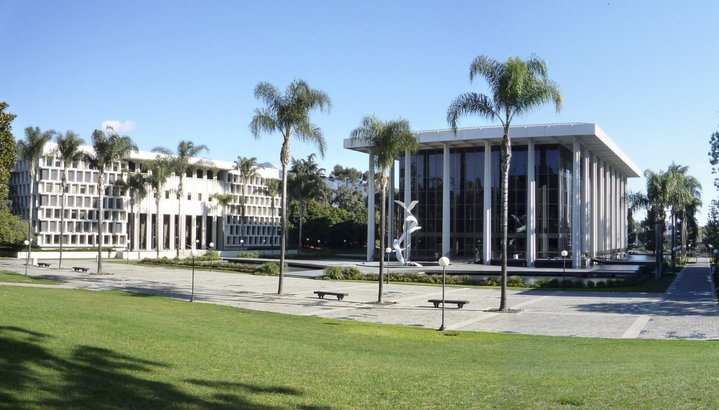
Harvest Rock Church at Ambassador Auditorium in Pasadena. Photo by Bobak Ha’Eri via Creative Commons (CC BY 3.0) By Harvest Rock Church at Ambassador Auditorium in Pasadena. Photo by Bobak Ha’Eri via Creative Commons (CC BY 3.0).
###
As Gov. Gavin Newsom prepares fresh restrictions on mingling to combat climbing coronavirus cases, he has another hurdle to overcome: the increasingly conservative United States Supreme Court.
Last week the nation’s highest court, joined by its newest justice, Amy Coney Barrett, slapped down rules in New York state that curtailed religious gatherings in the name of public health.
Now it’s California’s turn. An evangelical Christian ministry in Pasadena has brought its own legal challenge to Newsom’s COVID-related constraints on worshippers. Based on the state’s public health “blueprint” in which counties are lumped into color-coded tiers based on transmission risk, 99% of Californians can attend religious ceremonies and other cultural services only outside or online. The court is expected to weigh in by the end of this week.
Since the beginning of the pandemic, priests, pastors and rabbis have been trying and failing to convince judges to strike down California’s public health restrictions on mass gatherings as unconstitutional violations of religious freedom. At least 10 cases alleging religious discrimination have been filed in both state and federal court, according to a CalMatters lawsuit tracker; all have either been dropped, struck down or are still pending.
But the court’s decision last week has many aggrieved church leaders feeling optimistic that California will soon get the same legal comeuppance New York received. That elevates the prospects for existing lawsuits and may embolden more would-be litigants to sue the state.
“We are being deluged with requests from new potential plaintiffs,” said Harmeet Dhillon, a California Republican operative and a regular challenger of the governor’s policy response to the pandemic. ”I expect there is going to be no shortage of work for First Amendment lawyers over the next year.”
The Harvest Rock Church in Pasadena is pleading with the nation’s top justices to temporarily suspend California’s COVID-related restrictions on churches — in their words, to “prevent criminalizing constitutionally protected religious exercise” — while its broader legal fight with the state plays out.
Indoor worship services, which often include singing, touching and exchanging of collection plates or other germ-toting objects, can be prime hotspots for viral transmission. Churches in Sacramento, Los Angeles, Redding and San Diego have been the epicenter of local outbreaks.
The Supreme Court shakeup comes just in time for the holiday season, but also as the latest wave of coronavirus infections shows no sign of cresting.
“We may not shelter in place when the Constitution is under attack.”
— Associate Justice Neil Gorsuch
President Donald Trump upended the court’s ideological balance by choosing Barrett to replace liberal Justice Ruth Bader Ginsberg, who died of pancreatic cancer in September.
That new reality was clear in the ruling that New York State had violated the First Amendment rights of religious observers by capping attendance at houses of worship to between 10 and 25 people. The nine justices split five to four, with Barrett in the majority. It was a stark reversal from this past summer, when a five-member majority including Ginsburg took the opposite position, declining to strike down pandemic restrictions in both California and Nevada.
In balancing the constitutional rights of worshippers and the demands of epidemiologists and elected officials, courts should defer to the experts, wrote Chief Justice John Roberts, brushing aside a petition filed by the South Bay Pentecostal Church in Chula Vista.
Public safety decrees “should not be subject to second-guessing by an ‘unelected federal judiciary,’ which lacks the background, competence, and expertise to assess public health and is not accountable to the people,” he wrote.
That concurrence has been cited 114 times by lower courts “desperate for guidance” as houses of worship file similar lawsuits across the country, said Josh Blackman, a law professor at the South Texas College of Law Houston and a scholar at the conservative Cato Institute.
With the Supreme Court’s decision in New York, that opinion by Roberts “overnight became irrelevant,” he said. “The old standard is out.”
Justice Neil Gorsuch, a Trump appointee, made that abundantly clear in his scathing concurrence with the majority in the New York case, in which he accused Roberts of “cutting the Constitution loose” with his South Bay opinion. Gorsuch admonished his fellow justices that they “may not shelter in place when the Constitution is under attack.”
There’s only one logical way to explain the court’s 180-degree pivot, said Erwin Chemerinsky, dean of the UC Berkeley law school. Barrett has Ginsberg’s seat.
“I don’t think that any of the justices would have said that the difference (between the two cases) is based on the factual circumstances,” he said.
The Harvest Rock Church and its corresponding network of ministries and Christian university are part of the New Apostolic Reformed movement, in which worship often includes “the laying on of hands” and “speaking in tongues” — spiritual practices that don’t necessarily translate well to Zoom.
But the church’s lawsuit is also political. Led by Pastor Ché Ahn, who often peppers his sermons with pro-Trump political messaging, the church began publicly flouting the state’s public health decrees earlier this summer. In its filing to the Supreme Court, the church’s legal team included a number of barbs designed to depict Newsom as a hypocrite, including a photo of the governor attending a lobbyist’s birthday party at Napa County’s tony French Laundry restaurant.
According to the most recent public health data, 22 of every 100,000 Los Angeles County residents have been hospitalized with COVID-19 symptoms. That places the county — and Harvest Rock — into the state’s most restrictive “purple” tier for public health restrictions in which worship and other cultural ceremonies can only be conducted outside or online.
That same outdoor-only standard also applies to gyms, movie theaters and museums in “purple” counties. Noting the court’s New York decision in its response earlier this week, California Deputy Attorney General Seth Goldstein argued that, unlike the regulations promulgated by New York Gov. Andrew Cuomo, California’s rules do not treat religious institutions more strictly than comparable secular gathering places.
“Indoor activities posing similarly high risks of transmission, such as dining in restaurants, exercising in gyms, or socializing in bars, are subject to the same or greater restrictions; while still others, such as attending indoor concerts or professional sporting events, are prohibited altogether,” he wrote.
Public safety decrees “should not be subject to second-guessing by an ‘unelected federal judiciary,’ which lacks the background, competence, and expertise to assess public health and is not accountable to the people.”
— Chief Justice John Roberts
California’s rules do allow multiple people to go inside grocery stores, shopping centers and distribution and logistics warehouses even in purple counties.
But those rules are scientifically justified, Goldstein wrote. “Shopping is less likely to involve extended vocal activity; it typically involves fewer close-proximity encounters; and, most important, shoppers are in proximity to each other for only a short period of time, which means that droplets containing the COVID-19 virus are less likely to accumulate into a dose sufficient to overcome the immune system.”
Pastor Ahn declined to be interviewed, but said in a written statement that he was encouraged to be “on the radar of the Supreme Court” and that he and church leaders “are waiting in prayer” and “remain hopeful.”
The South Bay Pentecostal Church, the evangelical church whose petition was struck down in May, submitted a new filing last week.
The ruling in New York “will most certainly ultimately apply to the draconian restrictions in California,” Paul Jonna with the Thomas More Society, one of the conservative law firms representing United Pentecostal, said in a statement.
Alex Luchenitser with the nonprofit Americans United for Separation of Church and State, which filed a brief with the Supreme Court supporting California’s position, fears that might be true. But he’s hopeful that the few distinctions between the New York and California cases might lead the justices to a different conclusion. If nothing else, he said he hopes the rapidly worsening public health situation in California might sway the justices.
“The pandemic is much worse in California than it is New York,” said Luchenitser. “Hopefully that would give the court some pause in interfering with the state’s efforts to control the virus and protect the public health.”
###
CALmatters.org is a nonprofit, nonpartisan media venture explaining California policies and politics.
OBITUARY: Kevin Andrew Masters, 1965-2020
LoCO Staff / Thursday, Dec. 3, 2020 @ 6:56 a.m. / Obits
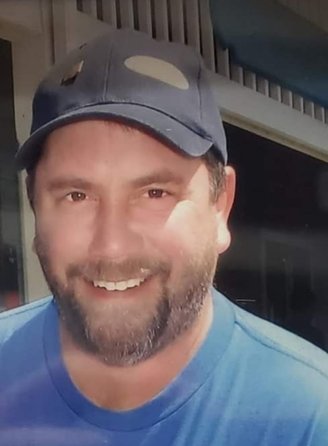
Kevin Andrew Masters
April 16, 1965 - Nov. 6, 2020
In the early hours on November 6th, 2020 Kevin Andrew Masters took his last breath with his mother Honey by his side.
Kevin was born April 16, 1965 in San Francisco to Thomas and Honey Masters. He grew up in Half Moon Bay and Daly City before moving to McKinleyville when Kevin was 14 after his dad was diagnosed with multiple sclerosis. Kevin was fortunate enough to move to a neighborhood full of kids his own age. He quickly made friends with Allen, Paul and Chris Freitas, Tyrone Barham, Kevin Voorhees and John Sieger. Once starting high school at McKinleyville High School he also made friends with Mike, Rob, Troy and Alex. His group of friends made moving from the big city to a small town much easier.
While Kevin was attending high school, he worked part time at the City of Arcata on a work program in the drafting department. After graduating in 1983, he worked at Rocket gas station before landing a full-time position at the City of Arcata. He was employed with them for 20 years, eventually becoming a lead man in the streets department. He made a lot of friends during those 20 years and really enjoyed working there.
In 1984, Kevin started dating the girl next door Mary Sieger. Kevin & Mary got engaged quickly but decided on a long engagement while he turned his parents three-car garage into a studio apartment to help care for his dad. They married on May 28, 1990 in Reno, Nevada with friends Tyrone Barham and Kevin Voorhees there.
In June of 1992, Kevin’s dad passed away which was hard on him.
In March of 1998, Kevin and Mary welcomed a two-and-a-half pound baby boy they named Andrew Thomas. Andy spent the first 28 days of his life in the NICU before they brought him home still only weighing 3 lbs, 12oz. Kevin was so afraid to handle him at first, but soon was scooping him up as soon as he got home from work. Kevin was an only child, but Mary had sisters Lynda, Jaime and brother John close by. When Andy was young Kevin and Mary often hosted family gatherings, so all the nephews would have good memories of holidays growing up together. Kevin and John did their yearly trips to the snow with the boys, and often bringing truck loads back to put in the front yard. Kevin was always willing to help family and friends with projects. In 2008, Kevin and Mary separated and divorced seven months later.
Now disabled, Kevin spent his days walking through the woods, and tinkering with automotive projects. He really enjoyed when Andy, Andy’s cousin Tyler and Evan were at the house. Kevin had several attempts at sobriety during those times, but always seemed to fall back to drinking. As Kevin’s alcoholism became out of control, his liver began to fail. Kevin was sober the last year of his life.
Kevin joins his dad Thomas, brother in law John Sieger, and good friend Allen Freitas. He is survived by his son & pal Andy Masters (Kali), his mother Honey Masters, cousins, and nephews James, Tyler, Michael, Robert, and Trever.
A special thank you to Joe, Frankie and Paul Freitas, as well as Lonnie and Bonnie Tamboury for helping Honey look after Kevin the past few years.
Rest in Peace, Dad. You taught me a lot. You will always be loved and missed.
###
The obituary above was submitted on behalf of Kevin Masters’ loved ones. The Lost Coast Outpost runs obituaries of Humboldt County residents at no charge. See guidelines here.
OBITUARY: Einar M. Andersen, 1932-2020
LoCO Staff / Thursday, Dec. 3, 2020 @ 6:56 a.m. / Obits
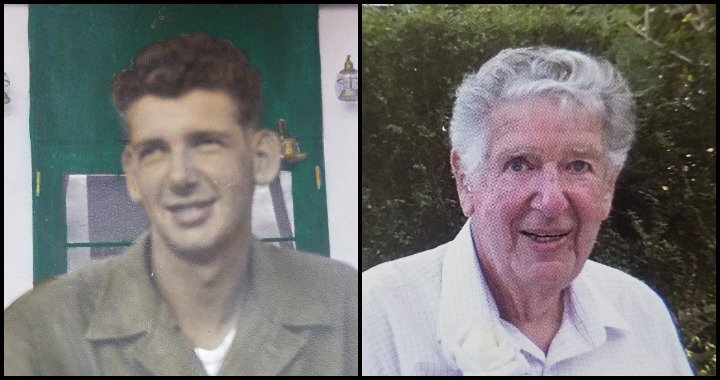
Einar M. Andersen of Eureka, passed away in his home Friday, November 20, with his wife of 68 years by his side. Einar was born to Einar and Dorthy Andersen on June 4, 1932 in Eureka.
He was preceded in death by his parents, brother Edmond Andersen, sister Gloria Schleef, uncle Bill and Dee, and aunt Marie and Queen.
Einar is survived by wife Barbara Andersen, son Robert (Bob) Andersen and Merleen, son Richard Andersen and Syretta, son Joseph (Joe) Andersen and Sandra, grandsons Justin Andersen, Coleman Andersen, Jacob (Jake) Andersen, Seth Andersen, Jordan Andersen and six greatgrandchildren, Cousins Del, Gary and Linda
Einar was married to the love of his life Barbara Lewis on November 1, 1952 in Ferndale by Barbara’s father, Rev. Robert Lewis.
In December of 1952 he enlisted in the Army. He was stationed in Okinawa, Japan where he was a member of the Heavy Weapons Infantry Division.
After returning from his service he worked at the Hammond log pond. He then became an automotive body repairman and painter, which eventually led him to a job with the City of Eureka for 20-plus years, leading to his retirement. He was responsible for any body repair or painting that needed to be done on all of the city vehicles, from police cars to school buses. If there were not any vehicles that needed his attention he would be found painting the streets throughout the city. As remembered by his son, “if you saw cones, Dad was there.”
Einar was very involved in his kids’ childhood. Their hunting and fishing trips are some of their fondest memories. He was a Webelos den leader and Scoutmaster for Cub Scout Pack 67. He helped coach their youth sports whenever he could, including being an assistant coach in Eureka’s Babe Ruth program, a place where he and Barbara became regulars as they followed their grandsons. They could be seen sitting on the third base side rain or shine and usually with a Polish dog in hand. – so much that there are still two stadium seats that bare their names at what is now Bomber Field.
He enjoyed paddling around the bay with his fishing pole in his free time as a kid and fishing out on the ocean with his Dad, who had a commercial fishing boat later on in life – something he was able to enjoy again in his “golden” years with his friend and son. He loved abalone diving of the coast of Fort Bragg, and hunting mule deer in Modoc County was always the highlight of his year, although he might have enjoyed the nights in the “Blue Room” at Boyd Springs more than the actual hunt. The majority of his summers were spent at Benbow RV Park golfing and telling stories with a highball in hand to family and friends. Whether it was Fort Bragg, Modoc, Benbow or any place the “Wagon Master“ could get his friends and family to bring their trailers and RVs and “circle the wagons,” it didn’t matter to Einar.
Above all else, Einar was a loving husband for 68 years, an amazing Dad and the best Grandpa! He treated everyone with respect and friends as if they were family. He treasured all moments with his family, whether they were from a far or local. He was a gentle, reasonable man by nature and wittier than most. He will be missed by us all. He was a simple man with simple values that shaped us all.
The family would like to thank all friends and family members that have helped with his care as of late and supported us through these times. Thank you to Brian, his care provider. He appreciated you all. The family will be postponing a celebration of life until we can do him justice with the celebration he so deserves.
###
The obituary above was submitted on behalf of Einar Andersen’s loved ones. The Lost Coast Outpost runs obituaries of Humboldt County residents at no charge. See guidelines here.
OBITUARY: David Earle Haley, 1950-2020
LoCO Staff / Thursday, Dec. 3, 2020 @ 6:56 a.m. / Obits
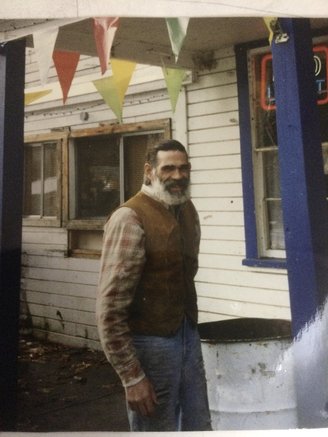
David
Earle Haley
March 12,1950-November 26,2020
Rejoining
the force, stardust in the wind.
Letting
go of the past, peaceful in transition.
Adventures
abound, beginnings yet to be found.
Don’t
wait for me, I’ll catch up.
Born to Richard T. Haley and Cyrillic G. Haley in Rangley, Maine, the family relocated to Southern California when David was five years old. The result of helping a family friend clean-up after the ‘64 flood, they fell in love with the Salmon River moving to a mining claim soon after. David’s passion for fishing, mining and living in the mountains made this perfect fit. During one of his many trips back to Costa Mesa, David met his soon-to-be wife Nancy Haley at a yard sale in 1977. They became partners in life for over 43 years.
David started a career in welding in the early 70s, building boats and then spiral staircases for 20 years. After an injury while building the Bayshore Mall ended his welding career, David became a cabinetmaker until retirement. His skills as a builder carried over in his home life, building a house, garage and reinforcing the existing house on his property.
David passed on November 26, 2020 at home in the house he built. His ever giving nature will be missed by his wife, Nancy L. Haley, surviving son, Caleb M. Haley and stepson, Eric A. Lopez. Also survived by granddaughter, Kierra J. Lopez, sisters, Roberta Heffner (George) and Susan McDonald (Dale), sister-in-law, Christina Reagle (Sean Wilde) as well as nieces and nephews.
No services at this time. A celebration of life/memorial will be held in the spring.
###
The obituary above was submitted on behalf of David Haley’s loved ones. The Lost Coast Outpost runs obituaries of Humboldt County residents at no charge. See guidelines here.
OBITUARY: Donald Ray Scott Sr., 1937-2020
LoCO Staff / Thursday, Dec. 3, 2020 @ 6:56 a.m. / Obits
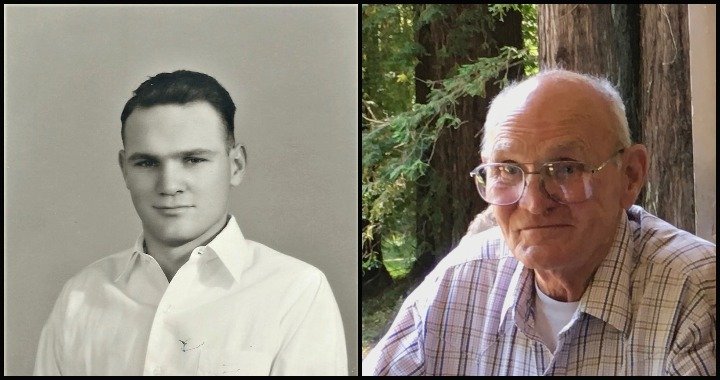
Donald Ray Scott Sr. was born July 29, 1937 in Great Bend, Kansas to Everett and Eva Scott. He passed away on November 26, 2020 at his home surrounded by his family, at the age of 83.
Don served six years in the U.S. Marine Corp from 1955 to 1961. He served in active duty for four years and two years in the Marine Corp Reserves. He has resided in Humboldt County for over 60 years.
He met Gay Music after his active service in the military and quickly married her in 1959. Together they had six children. He loved his family and always took such great care of them. When Gay became ill, he lovingly cared for her until she passed in 2004.
Don was a millwright his entire life after the military. He worked at Louisiana Pacific in Samoa until he retired.
During his retirement, Don loved to work in his garden and take long walks in the neighborhood, visiting with everyone he saw. He also spent many years volunteering with Hospice of Humboldt after experiencing their care and support with his parents’ passing. He loved to spend time with the elderly, either repairing things for them or just sitting and talking with them. It was while working with Hospice, that he met Judy Kjer whom he later married.
Don is survived by his wife, Judy; his sister, Juanita (Curtis) Holt; his children: Suzanne (Dan) Cochran, Tamara Pagliari, Donald (Amy) Scott Jr., Daniel (Leslie) Scott, Valeri (Jimmy) Wilson; his grandchildren: Ryan (Erica) Cochran, Tonya (Robert) Byrd, Matthew (Kenzy) Cochran, Nicholas Pagliari, Kennedy Pagliari, Tyler Shuler, Wylee Scott, Lindsey Scott and Ashtyn Scott; eight great-grandchildren, with two more on the way. He is also survived by many nieces and nephews, who are like his own children.
He was preceded in death by his wife, Gay; his daughter, Sherry; his parents, Everett and Eva Scott; his brother, Harold Keith Scott; his sister-in-law, Linda Scott; and brother-in-law, Gary Music.
There will be a family graveside gathering at a date still to be determined.
Arrangements are under the direction of Ayres Family Cremation in Eureka.
Memorial contributions may be made to Hospice of Humboldt, Inc. 3327 Timber Fall Court, Eureka, CA, 95503.
###
The obituary above was submitted on behalf of Don Scott’s loved ones. The Lost Coast Outpost runs obituaries of Humboldt County residents at no charge. See guidelines here.
72-Year-Old Woman Struck and Killed By Vehicle While Crossing the Street in Eureka
LoCO Staff / Wednesday, Dec. 2, 2020 @ 4:21 p.m. / News
Press release from the Eureka Police Department:

On December 01, 2020, at about 3:30 p.m., officers with the Eureka Police Department (EPD) responded to the intersection of W. Henderson and Central Streets for the report of a vehicle vs. pedestrian collision.
Upon arrival, a pedestrian was located injured in the roadway. The 72-year-old female pedestrian was transported to the hospital by ambulance with major injuries. She ultimately succumbed to her injuries and died at the hospital. The identity of the pedestrian is being withheld, pending next of kin notification by the Humboldt County Coroner’s Office.
The driver was evaluated at the scene and it does not appear drugs or alcohol were a factor. The driver is cooperating with the investigation and the involved vehicle was towed for evidence. The driver was interviewed at the scene, along with other witnesses.
Based on the preliminary investigation and statements, it appears the pedestrian was crossing W. Henderson St., well outside of the crosswalk, in front of oncoming westbound traffic. The driver stated that she did not see the pedestrian crossing and was unable to avoid the collision.
The Eureka Police Department would like to remind both motorists and pedestrians to be cautious of others utilizing the roadway.
The collision remains under investigation and no arrests have been made at this time. Anyone with information regarding this investigation is asked to contact Det. Rick Bise at (707) 441-4109.


