Today at 9:25 a.m., officers of the Eureka Police Department were dispatched
to a hotel located at the 800 block of W. Wabash Ave. for a reported assault that had just
occurred. The Reporting Party (RP) stated that a male had just been witnessed assaulting a
female. Descriptions of the involved parties were also provided by the RP.
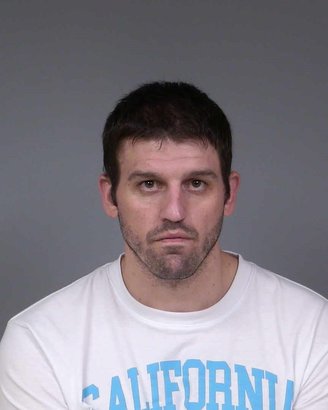
Michael Caleb Reed.
Upon arrival, officers located the involved parties. The male was seated in a black Chevrolet
Impala. Officers attempted to detain the male as part of the assault investigation, but the male
refused to comply with commands or exit the vehicle. The male then fled the scene in the
Chevrolet Impala. Officers pursued the suspect southbound on Broadway. When the pursuit
reached the intersection of Broadway and West Henderson Street, the suspect and lead
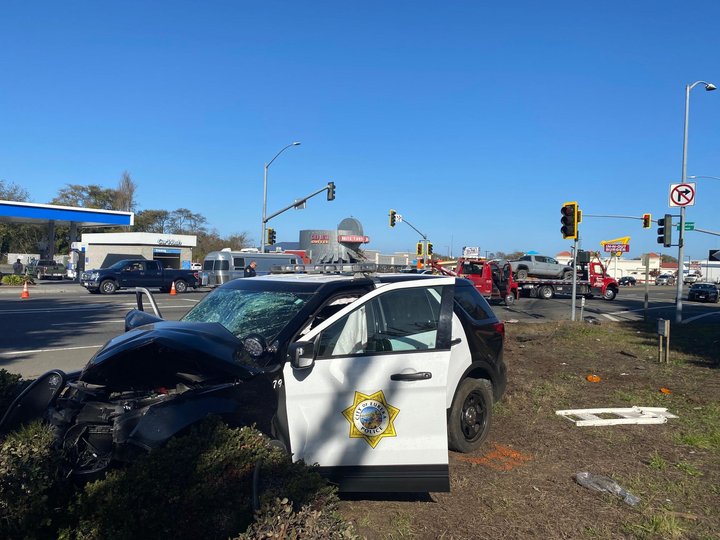
pursuing EPD vehicle made it through the intersection, however the second pursuing EPD
vehicle was involved in a collision with an uninvolved motorist.
Due to the collision, the initial pursuing EPD vehicle discontinued the pursuit of the suspect
vehicle and returned to the scene of the collision to render aid to the involved parties. The
suspect vehicle continued southbound on US Highway 101.
Emergency medical personnel were summoned to the scene to aid both the uninvolved
motorist and the officer. Both parties were ultimately transported to St. Joseph Hospital’s
Emergency Room for treatment. The California Highway Patrol (CHP) also responded to the
scene to assume primary investigative responsibility for the collision.
The suspect’s Chevrolet Impala was soon located in Fortuna by Humboldt County Sheriff’s
Office (HCSO) deputies. The suspect once again fled in the Impala. A pursuit was initiated
and the suspect led HCSO deputies and CHP officers throughout the Fortuna and Loleta areas
and then southbound on Highway 101. The suspect drove in a reckless manner with highway
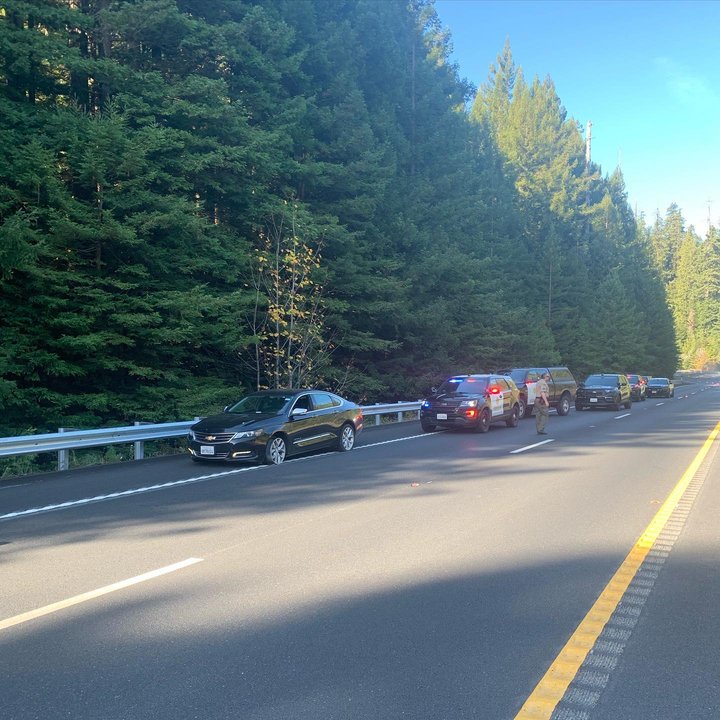
speeds reported to be in excess of 100 MPH. The suspect’s vehicle was ultimately disabled
with the use of a spike strip just south of Scotia. The suspect was quickly taken into custody
without further incident by Sheriff’s deputies and CHP officers assisted by law enforcement
from other agencies.
A Eureka Police Department Detective has since conducted interviews of the victim and
witnesses, along with connecting the victim with resources to assist her with her abusive
situation.
The suspect was identified as Michael Caleb Reed (35-years-old). Reed was determined to be
on active parole out of Bakersfield, CA. Reed was booked into the Humboldt County
Correctional Facility (HCCF) on charges of domestic violence, evading arrest, felony evading
causing injury, resisting arrest and parole violation. Additional charges may also be added as
the investigation continues. Reed is not eligible for bail due to his parole status.
The uninvolved motorist was examined and treated at the emergency room for her injuries.
The Eureka Police Department extends our best wishes for a speedy recovery to the injured
driver and her family. The injured EPD officer, Camaron Hooks, sustained moderate to major
injuries as a result of the collision. Due to the nature of his injuries, he was flown this
afternoon to an out of the area trauma hospital for further treatment. Officer Hooks is in stable
condition awaiting surgery. We are releasing his name to the public with his family’s
permission.
EPD Chief Steve Watson: “On behalf of Officer Hooks’ family and the Eureka Police
Department, thank you for the many expressions of support and concern for his welfare that
have poured in today from members of our community. Please keep Camaron and his family
in your thoughts and prayers. We would also like to thank all the local law enforcement,
emergency medical, and Humboldt Bay Fire Department personnel who assisted during this
incident. This includes the St. Joseph Hospital Emergency Department staff who took such
great care of Officer Hooks while he was in their care. Camaron loves this community and his job as a police officer tremendously. His EPD family
already misses his booming voice, infectious positivity, and big smile, and we look forward to
his return to duty following what we hope will be a swift and sure recovery.”
It is still early in the investigation and further updates will be released as appropriate. Anyone
with information regarding this incident is urged to call Detective Harpham at (707) 441-4305.
This morning law enforcement agencies from across Humboldt County worked together to get a wanted felon in custody.
The suspect led law enforcement on a high-speed pursuit originating in Eureka, with speeds reaching up to 120 mph on Highway 101. The suspect’s vehicle was disabled by a spike strip and he was successfully taken into custody.
As this is a Eureka Police Department case, they will be releasing more information about this incident. However, we wanted to recognize the incredible law enforcement officers and dispatchers involved in this incident. Today truly exemplifies the unity and cooperation between our local public safety partners, and we are happy to assist in times of need.
The new season of Los Angeles-based television station KCET’s excellent Tending Nature documentary series premiered online this week. The first episode, titled “Guarding Ancestral Grounds with the Wiyot,” looks at the Wiyot Tribe’s 2019 stand against the Terra-Gen wind project on Bear River Ridge and features interviews with tribal members Ted Hernandez and Cheryl Seidner, as well as Humboldt County Supervisor Steve Madrone. You can watch the half-hour piece above.
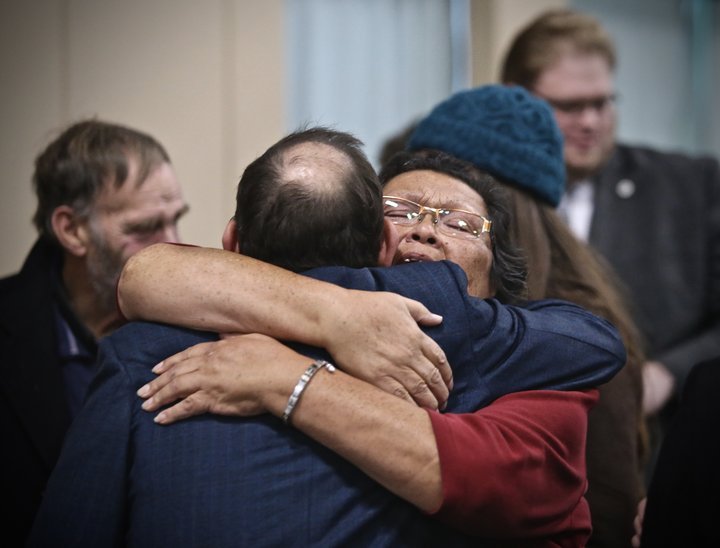
Wiyot tribal member Cheryl Seidner hugs Humboldt County Supervisor Mike Wilson following the board vote that effectively ended Terra-Gen’s plans to develop Tsakiyuwit AKA Bear River Ridge
Homes in the Berkeley hills are seen behind signage for large, corporate stores at the East Bay Bridge shopping center in Emeryville on Oct. 31, 2020. Prop. 15 would have increased property taxes for corporate landowners in California to create additional funding schools as well as cities and counties. Photo by Anne Wernikoff for CalMatters.
###
With the failure of Proposition 15, the $140 million campaign to hike property taxes on businesses across the state finally comes to a close.
Now begins a new statewide competition to explain what the results really mean.
For opponents, which include large business groups, commercial landlords and low-tax advocates, the lesson is clear: Forty years after California voters passed Proposition 13 — capping property taxes and hamstringing state and local governments’ ability to raise new revenue — the “tax revolt” is live and well.
The state’s voters may routinely elect and then re-elect Democrats, said Rob Lapsley, president of the California Business Roundtable, a coalition of large businesses that opposed the measure. But that doesn’t mean they want to weaken what he called the state’s “last remaining tax protection.”
“This was the most favorable political climate they could have asked for,” he said. “An anti-Trump climate driving a high-turnout election, a pandemic with deficits at cities and school districts across the state.”
That the measure failed despite all that “sends very clear signals that we are not going to see this again.”
But supporters of the initiative say the down-to-the-wire margin sends the opposite message.
“This was the most favorable political climate they could have asked for. An anti-Trump climate driving a high-turnout election, a pandemic with deficits at cities and school districts across the state.” — Rob Lapsley, president of the California Business Roundtable
With some 2 million ballots left to count, Prop. 15 was losing by 3.6% when the Associated Press called the race late today.
“We’re really close to having a majority of California voters agreeing with us,” said Ben Grieff, spokesperson for Evolve California, a nonprofit that advocates for Prop. 13 reform. “It took us 42 years to get this point and so if it takes another two to four years to get where we want to be, then that’s what it is.”
“This will happen,” he vowed. “It just will. It has to.”
History is not on his side. In the four decades since voters passed Prop. 13 in 1978, Californians have backed 24 tweaks, additions and rewrites to the landmark tax measure. Of those 24, only four ran against the ideological grain of the tax revolt, raising the odd tax or making it slightly easier for state and local governments to do so.
“Prop. 13 has special status in California,” said Kimberly Nalder, director of the Project for an Informed Electorate at Sacramento State University. “Poll questions have been asked about this and consistently they’ve shown that people are very protective of it.”
Prop. 15 was the biggest challenge yet.
An enduring cliché of California politics is that the landmark tax measure represents an electoral “third rail” that politicians and advocates monkey with at their own peril.
“Prop. 13 has almost mythical powers against those who would assail it,” Jon Coupal, president of the Howard Jarvis Taxpayers Association crowed in an op-ed before the race was called. The association exists solely to protect the legacy of the tax revolt,. “And the apparent defeat of the (Prop. 15) proposal is only the most recent example of special interests getting burned by the ‘third rail’ of California politics.”
Mark DiCamillo, director of the Berkeley Institute of Governmental Studies Poll, said Prop. 15’s demise was largely thanks to the electorate’s distrust of the “yes” campaign’s intentions — a fear that if commercial properties lost Prop. 13’s protections, homes would be next.
In an October survey, he found that 56% of likely voters believed that the measure was “only the first step to making other similar changes to the way residential properties are taxed in the future.” That included the vast majority of respondents who opposed the measure, but also nearly half of supporters and a third of those who were undecided.
“There was this nagging suspicion among voters who take a very cynical view of taxes…that really took hold,” he said. That view was shared “by just about every subgroup of the electorate.”
If Proposition 15 had passed, the new tax assessments would have only applied to business properties.
“Obviously that was a baldfaced lie,” said Catherine Bracy, director of the TechEquity Collaborative, who spent the last year lobbying Bay Area tech luminaries to support the campaign.
In August, the opposing campaign went to court over the issue after the No campaign argued in its opposition statement in the state voter guide that the measure would allow the Legislature to hike taxes on homeowners. A judge ruled that the argument was “misleading if not outright false” and ordered the section nixed.
But a week out from Election Day, Bracy also said that Prop. 15 failure belies the popular image of California as a reliable bastion of left-leaning policy.
“California isn’t nearly as progressive or liberal as people make it out to be it. It’s a superficial, performative liberalism in many ways,” she said. “People love to have a ‘Black Lives Matter’ sign on their front lawn while opposing affordable housing in their neighborhood.”
The fate of Prop. 15 was one of many disappointments for California progressives. An attempt to repeal a statewide ban on affirmative action also failed, as did the labor-backed campaign to force gig-economy titans like Uber and Lyft to abide by state labor law.
Daraka Larimore-Hall, vice chair of the state Democratic Party, is one of those disappointed progressives. “It sucks. There’s no way to sugar coat that,” he said.
But he too pointed to the narrow margin as reason to hope a future version of the campaign will succeed. In 2008, California voters passed Proposition 8, banning same-sex marriage by a 4-point margin and once again belying the state’s left-leaning reputation.
“We got prop 8’d on a bunch of measures this year,” he said. “But go find me the majority of voters now who are like, ‘no to gay marriage.’”
###
CALmatters.org is a nonprofit, nonpartisan media venture explaining California policies and politics.
California and Oregon were lauded for their early response to the pandemic, with swift and broad shutdowns aimed at slowing the spread of coronavirus. In reopening their economies, both states imposed stringent requirements for masks and face coverings.
But eight months into the public health crisis, the neighboring states have made starkly different choices on tracking and reporting workplace outbreaks — decisions that shape how much the public knows about the spread of coronavirus as hotspots appear at meat-packing plants, stadium construction sites, warehouses and other essential worksites.
Since May, Oregon has used a centralized tracking system, which has enabled health officials there to release weekly reports that list the names and addresses of every known business with at least 30 employees where five or more positive COVID-19 cases are identified. For outbreaks of more than 20, the Beaver State issues special daily reports.
“It’s fundamental data that should be readily available,” said Dr. Melissa Perry, epidemiologist and chair of the Environmental and Occupational Health department at George Washington University.
Throughout the pandemic, the Golden State has advised, but did not mandate, employers to notify workers of positive cases among employees. This means millions of workers in the fifth-largest economy in the world receive less information than they could about whether it’s safe to go to work. It also means low-wage essential workers carry greater risks: A joint investigation by CalMatters and The Salinas Californian for the California Divide revealed hundreds of unreported outbreaks among guest farmworkers throughout California this summer.
While business groups say it’s not productive to publicly shame companies, public health experts say posting workplace outbreaks would be helpful in controlling the virus, as pandemic-fatigued residents seek to return to school and work. More than 18,000 Californians have died from the virus with Latino and Black people infected at a significantly higher rate than white and Asian people. Such information, experts say, may improve scientific tracking and enable targeted responses amid a third wave of outbreaks.
What Oregonians know but Californians don’t
Like most states, California isn’t taking the extra step to post workplace outbreaks. But a few states, including Oregon, Arkansas, New Mexico and Colorado, do disclose where workers have contracted the virus. Iowa will disclose outbreaks if 10% of a business’ employees test positive for the virus.
In Oregon, health officials made an early pivot with public support.
State health officials came under heavy criticism last spring in choosing not to disclose two outbreaks at Townsend Farms, a Portland-based fruit company. On May 28, the department made an administrative decision to track outbreaks statewide using lab results and data from healthcare providers. Oregon posts reports that include workplace outbreaks along with those in schools, child care facilities and senior living and care facilities.
“There was a demand for transparency. We had to shift.” — Oregon Health Authority Director Patrick Allen
“There was a demand for transparency,” said Oregon Health Authority director Patrick Allen. “We had to shift.”
Today, Oregonians know nearly as much as their public health officials about the number of workers who have died or been infected as a result of workplace exposures. It’s 37 deaths and 8,605 cases.
Californians don’t know.
“It immediately paints a patchwork quilt picture of data,” said Perry, the George Washington University epidemiologist. “Very incomplete, very selective.”
The two states are very different in size and economy. Oregon has just over a tenth of California’s population, which accounts in part for the state’s low infection rate. But the state’s coronavirus case rate is still 1,116 per 100,000, the sixth lowest rate in the country. California’s rate is more than double that, with 2,412, according to a New York Times database.
Though it’s difficult to know if Oregon’s reporting contributed to a lower fatality rate, officials there believe sharing information has helped.
California resists naming and shaming
California’s reluctance was on display in Sacramento this legislative cycle as lawmakers pushed for greater transparency. A bill signed in September by Gov. Gavin Newsom aims to give workers timely notice, but a key requirement to disclose worksite outbreaks to the public got stripped out of the final draft.
Because some counties ask businesses to self report outbreaks, local officials say they fear employers won’t participate if they publicly post outbreaks. Instead, when the bill takes effect Jan. 1, California will only report the total number of outbreaks by industry sector without naming employers.
“The opposition was very strong against the bill,” said Assemblymember Eloise Gómez Reyes (D-San Bernardino), who authored the bill. “They were basically saying, ‘Trust us, we’ll do the right thing.’”
They were basically saying, ‘Trust us, we’ll do the right thing.’ — Assemblymember Eloise Gómez Reyes
Her bill, AB 685, which cited the Divide’s guest worker investigation, initially required the state health department to post online the location of every outbreak. But that provision got struck out along with a $10,000 penalty for failure to notify workers in a timely fashion.
Instead of disclosing workplace outbreaks, the California Department of Public Health plans to publish aggregated data by job sectors. The department, which provides “guidance documents” to local health departments and employers, declined requests for a phone interview and said in an email statement that with regard to information about coronavirus at workplaces, county health departments “would be the appropriate agency to contact regarding outbreaks.”
Business groups led by the California Chamber of Commerce call disclosure a “name and shame” tactic, noting employers aren’t always to blame for virus outbreaks. Diane O’Malley, a lawyer at Hanson Bridgett, a San Francisco-based firm which represents employers, said California’s new law is a “backdoor way of getting where Oregon is without making it so splashy.”
‘Pushback was gentle’
But things in Oregon weren’t that splashy.
Some individual businesses were upset at health officials’ decision to disclose, but “mostly the organizational pushback was gentle,” said Allen, the state health director.
“Oregon’s smaller, we all know each other personally,” said Sandra McDonnough, president and CEO of Oregon Business and Industry, adding that business interests felt heard after several conversations with the state. Still, McDonnough worried disclosure might act as a disincentive for workers and businesses to get tested.
Allen believes transparency has built confidence. And to protect patient privacy, Oregon only posts known infections — not deaths — by employer. Perhaps an indirect measure is how comfortable workers feel about filing complaints with their state workplace safety agency: California has received about 7,300 pandemic-related complaints so far, compared to 11,600 in Oregon.
“People know what’s going on,” Allen said. “They don’t feel like anything is being hidden.”
California, on the other hand, continues to debate workplace disclosure in county board meetings.
In September, it took the Santa Rosa Police Department two weeks before notifying Cal/OSHA that an employee had died after contracting COVID-19 at work. And it took three weeks for the Santa Rosa Memorial Hospital to inform staff of positive cases.
It took Santa Rosa Police Department two weeks before notifying Cal/OSHA that an employee had died after contracting COVID-19 at work.
Surveys have shown many workers don’t think their employers will notify them.
“I like to be establishing best practices, not following best practices,” said Supervisor Dave Cortese, who represents San Jose, Milpitas and Sunnyvale. “It shows somewhere along the line Oregon made a commitment to transparency. So shame on us.”
###
This article is part of the California Divide, a collaboration among newsrooms examining income inequality and economic survival in California. CALmatters.org is a nonprofit, nonpartisan media venture explaining California policies and politics.
Robert Smith MacMullin passed away October 27, 2020 in McKinleyville. Bob was born December 16, 1952 in Hollywood to Richard and Barbara MacMullin.
He moved to Ohio when he was in high school and graduated from Ottawa Hills High School with a football scholarship to Kalamazoo University in Michigan. However his dream was to work in the woods, so he chose to attend Colorado State University - School of Forestry. He played football for Colorado State only to be “beaten to a pulp by those big farm boys.” He was the second smallest player on the team. Focused on forestry and graduating alive, he did not return for the second season.
After earning a degree in Forest Management in 1976 he worked for the US Forest Service as a fire crew foreman in Safford, Arizona and a professional timber faller. He made his way to the northwest typing resumes in his VW van, which he also lived in. He was hired by Arcata Redwood in 1977. In 1981 he went to work for Simpson Timber. He established MacMullin Forestry & Logging in 1982. He provided services on both public and private timber lands for 38 years as a California Registered Professional Forester and a California Licensed Timber Operator.
Bob was a member and served on various boards of directors. In 1991 he served as the president of the Redwood Region Logging Conference, president of Concerned Citizens of Arcata in 1993, vice president of Adoption Horizons 1992-2003, Pacific Logging Congress member and board director 1992-1999, Bureau of Land Management Resource Advisory Council 2001-2004, President of the Associated California Loggers 2015-2017.
He was passionate about good forestry practices and was instrumental in taking ACL to Washington D.C. He provided professional testimony to the U.S. House of Representatives for several years. He also provided Expert Witness testimony on several local court cases.
Bob is survived by his wife Cathy of 32 years; daughter Jessyca and husband Andrew of Traverse City, Michigan; daughter Madelyn and husband Joseph of McKinleyville; son Donald and wife Abi of Hayward; mother Barbara and sister Cynthia of Laguna Hills; brother William and wife Ellie of Pasadena; sister Carol and husband Rex of Orofino, Idaho.
As so many of his colleagues in the logging business, Bob had a very strong work ethic; he was fully dressed for work at 3:30 in the morning, just five days before his passing.
He passed at home with his loving daughters and wife beside him. He will be incredibly missed by family and friends. A friend recently reminded us of what a privilege it is to share this journey with someone you dearly love, who dearly loves you.
A public celebration of life will be held at a later date. In lieu of flowers please donate to Hospice of Humboldt or Humboldt County Beekeepers Association.
###
The obituary above was submitted on behalf of Bob MacMullin’s loved ones. The Lost Coast Outpost runs obituaries of Humboldt County residents at no charge. See guidelines here.
Gloria passed
with family by her side on November 2, 2020, in Fortuna. She was born
to April 14, 1942 to Calvin Briceland and Nellie Hixson. She is a
descendant of the Briceland Family.
Gloria was born
in Fortuna and was raised in Briceland and Ettersburg. She then
married Jack Hudson and had two girls, Sandra and Dawn. She was then
remarried to Lawrence Alfred and had twins Angel and Brian, who died
at birth. A few years later she had Amber and Sacheen. Gloria was
always a hard worker on the ranch in Ferndale for many years till
they sold and she worked as a CNA at St. Luke’s and Bethel Care home.
Gloria is survived by her sister Dee Dee Gunther, her daughters Amber
Bowlds and Sacheen Alfred. She has many grandchildren and
great-grandchildren she was blessed with. David Corley and his boys
Marty, Kenny, David, Issac .Christopher Cook, and his daughters
Kailey and Elle. Carrie Campbell (Kent) and their children Lane and
Paisley and baby Campbell on the way. Joey Filyau (Devin) and their
children Lilith and Hexxus. Cheyenne Filyau and her boys Cameron,
Hunter and Kayden. Tyler Day and his baby girl due in December,
Kurtis Day and his daughter K’Elle, Cody Donoho, and Kayla Gibbens.
She is also survived by numerous other family members — her niece
Lori Shultz, who she was very close to, and sister-in-law Doris Hudson.
Gloria was
preceded in death by her father Calvin Briceland, mother Nellie
Hixson, brother Michael Allen, sister Dolores Shultz, her twins Angel
and Brian, daughters Sandra Middleton and Dawn Cook, grandson Raymond
Middleton.
All funeral
arrangements are being made with Goble’s Mortuary and Oceanview Cemetery. Services will be at a later date to be determined and
family and friends will be notified.
###
The obituary above was submitted on behalf of Gloria Briceland-Alfred’sloved ones. The Lost Coast Outpost runs obituaries of Humboldt County residents at no charge. See guidelines here.