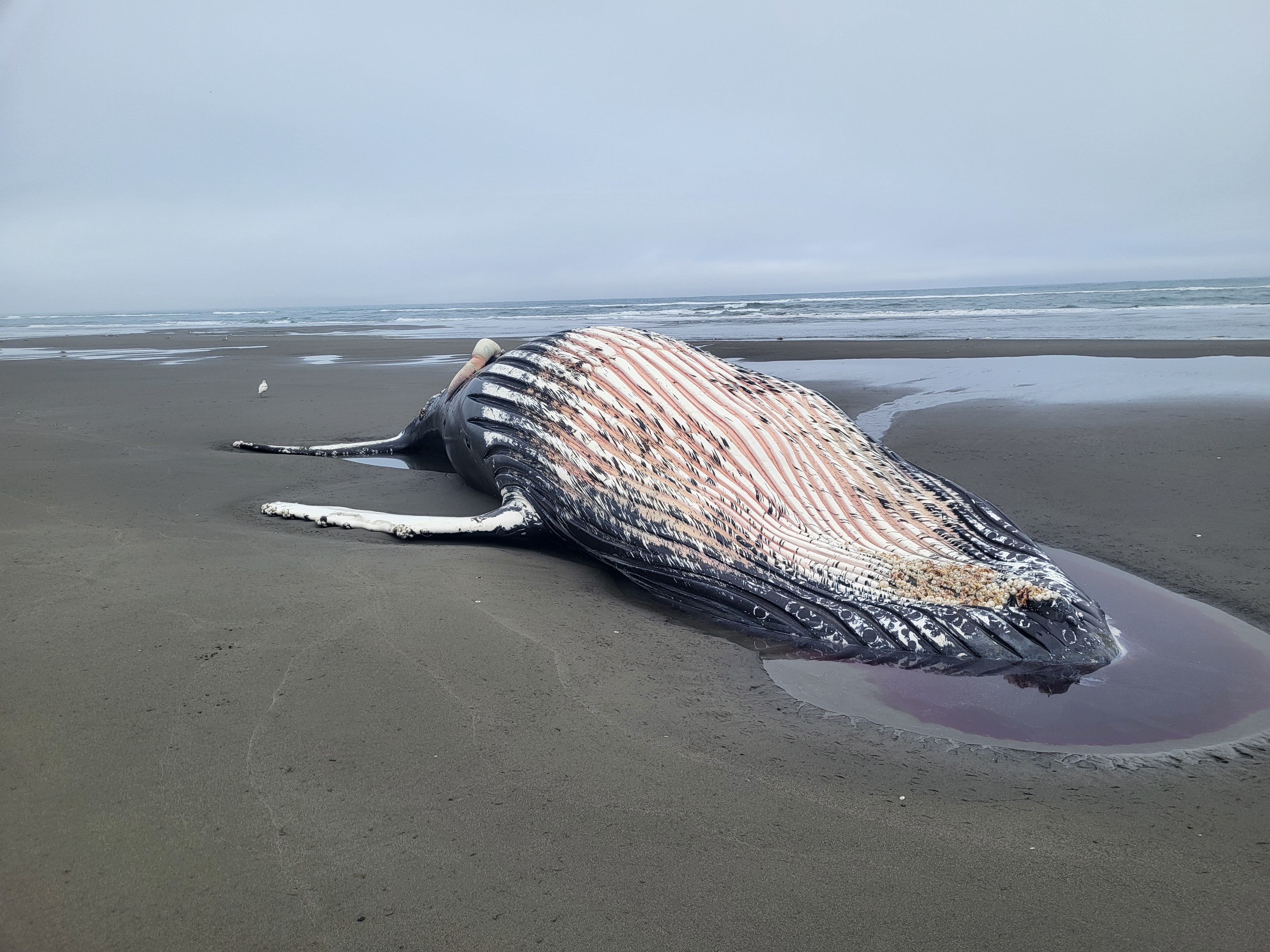
Photos provided by LoCO reader Tom Schallert.
###
UPDATE, 2:30 P.M.: While the cause of death remains unknown, Dawn Goley, director of the Marine Mammal Stranding Program at Cal Poly Humboldt, shared a few additional details about the 34-foot humpback whale that was found this morning on Mad River Beach, about a mile south of the mouth of the river.
The deceased whale was first seen floating offshore on Thursday, and it came ashore sometime last night, Goley told the Outpost.
“My team and I went out and took standardized measurements, collected some standardized samples of skin and blubber and did extensive observations to see if there was any obvious sign of the cause of death, or things that could indicate cause of death, but there was nothing definitive from what we saw externally,” she said in a phone interview this afternoon. “It looked to be in relatively good health and it had a thick blubber layer.”
As nature takes its course, beachgoers and pets should keep a “respectful distance” from the whale as it decomposes, Goley said. “It’s kind of in the tidal zone, and whales can get flipped in the waves and that could hurt someone,” she continued. “Also, there are juices coming out of the whale, so you want to keep pets and things away just for their safety and your safety.”
###
A deceased male humpback whale washed ashore on Mad River Beach this morning, according to staff with the North Coast Marine Mammal Center.
The cause of death is unknown at this time, but a staffer with the center told the Outpost via text message that researchers with Cal Poly Humboldt’s Marine Mammal Stranding Program are currently onsite conducting an assessment of the whale. We’ll update this post when we hear back.
This is the third humpback whale to wash ashore on the California coast since the beginning of June. The first was a deceased whale spotted on a beach near Pacific Grove in Monterey County on June 3, and a second juvenile humpback was found stranded at Sunset Beach near Watsonville in Santa Cruz County.
Staff with the UC Santa Cruz Marine Mammal Stranding Network conducted necropsies on the whales and identified domoic acid, a marine biotoxin associated with harmful algal blooms, in both samples. Exposure to domoic acid can cause neurological impairment, seizures and death in marine mammals, according to the report.
If you find a dead or stranded marine mammal on a local beach, contact Cal Poly Humboldt’s Marine Mammal Stranding Program at (707) 826-3650 or marinemammals@humboldt.edu. Injured or sick stranded marine mammals can also be reported to the North Coast Marine Mammal Center at (707) 951-4722.

CLICK TO MANAGE