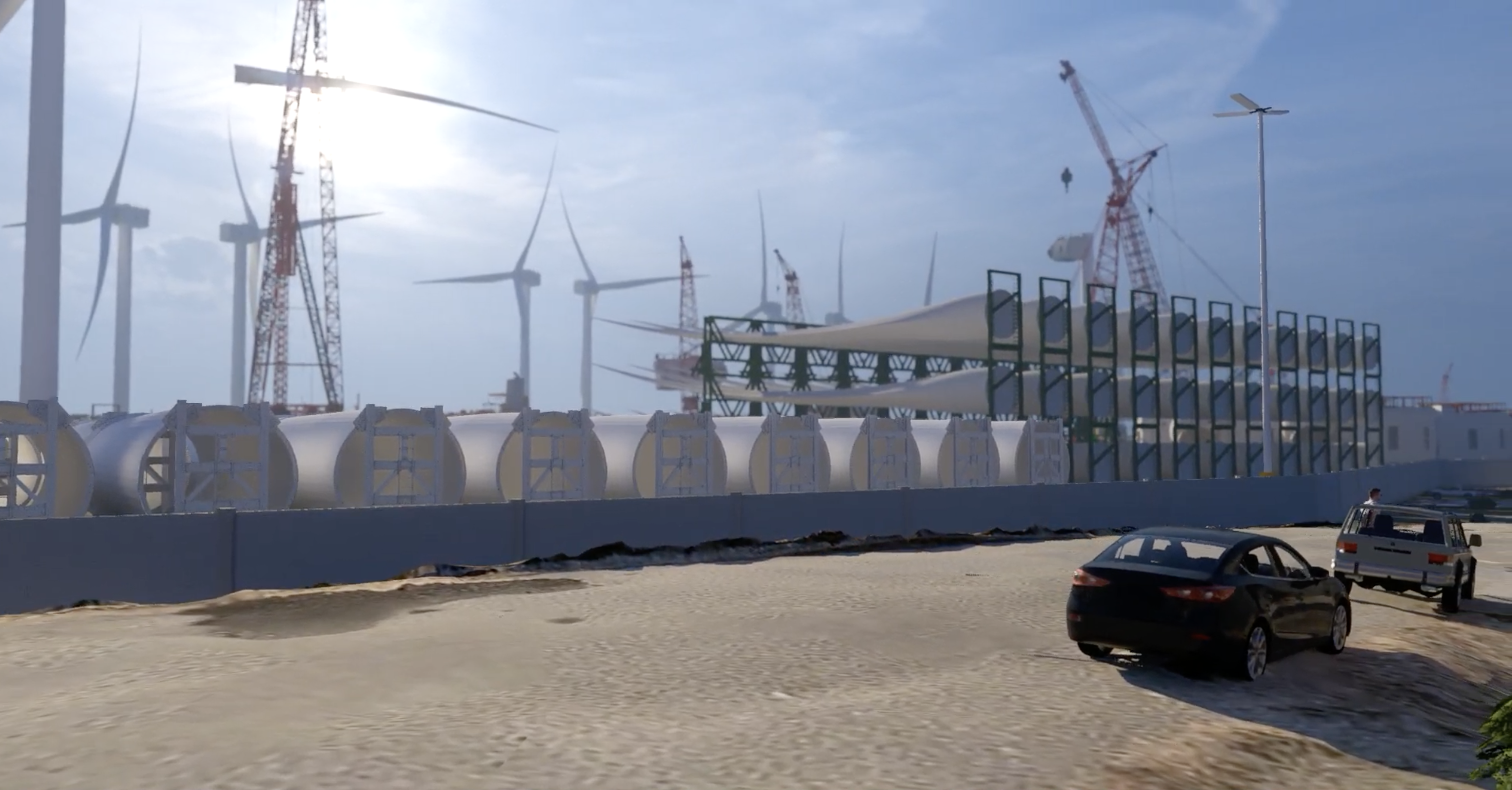
Screenshot of a 3D rendering video presented to a Samoa advisory group in July. | Images and video courtesy Dave Janetta.
###
PREVIOUSLY
It’s one thing to read about the proposed Offshore Wind Heavy Lift Multipurpose Marine Terminal Project — or even to look at digital renderings — but visualizing how the massive infrastructure would look in reality can be tough.
That’s why members of the Samoa Steering Committee — one of seven Community Advisory Committees engaged with the Humboldt Bay Harbor District on the project — wanted more than just facts and figures. One member of that committee, documentary filmmaker and assistant Cal Poly Humboldt professor Dave Jannetta, explained their quest.
“For the past couple of years our town steering committee has been asking the Harbor District for better renderings from eye level of what the marine terminal would actually look like,” he told the Outpost in an email.
The project, as currently proposed, would see the Harbor District’s 180-acre industrial site on the Samoa Peninsula redeveloped as a heavy-lift marine terminal facility designed for assembling and shipping the gigantic components needed for floating offshore wind turbines — everything from the blades and nacelles (the protective housing that encases the generating components) to the towers, transmission cables and mooring lines.
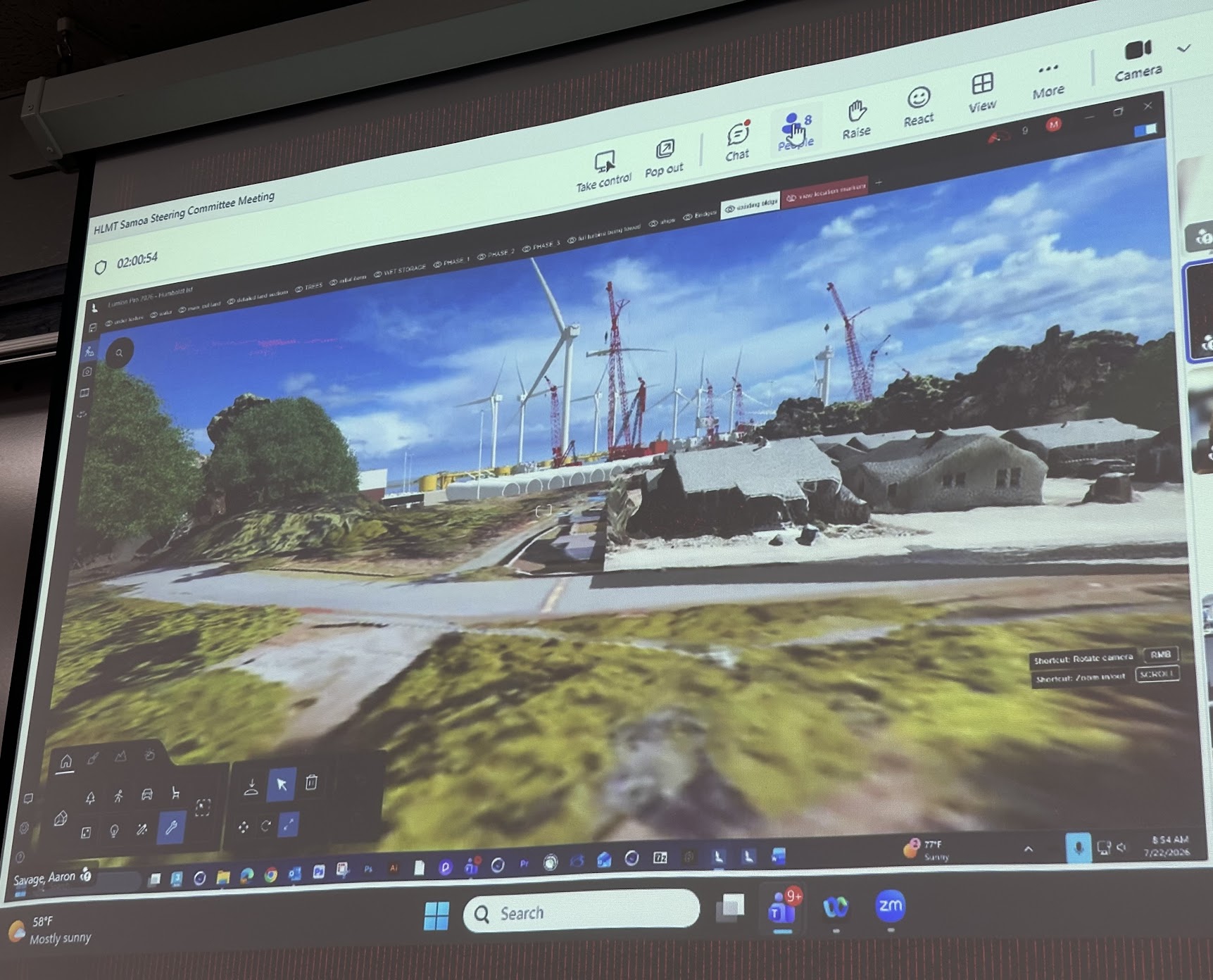
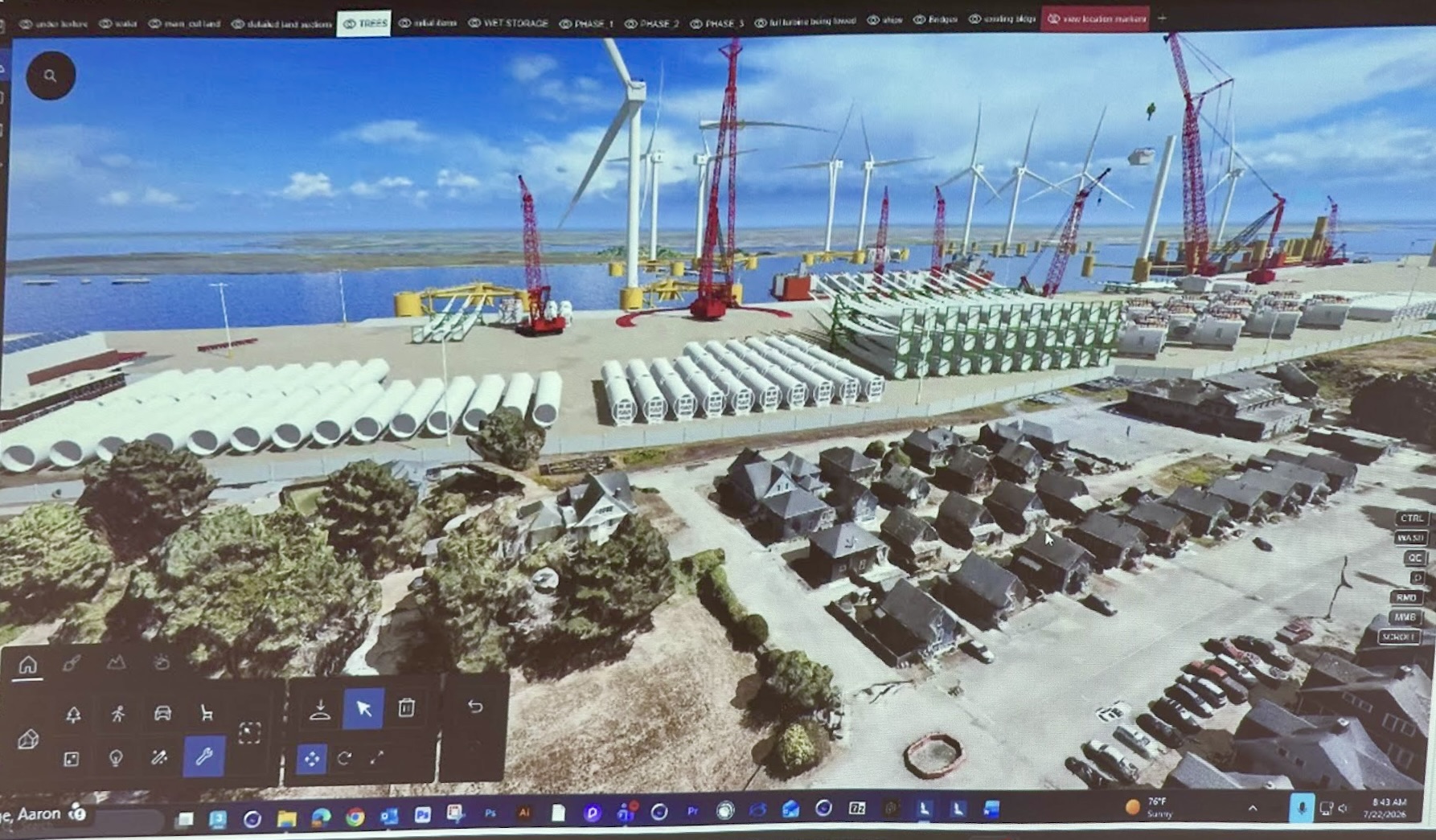
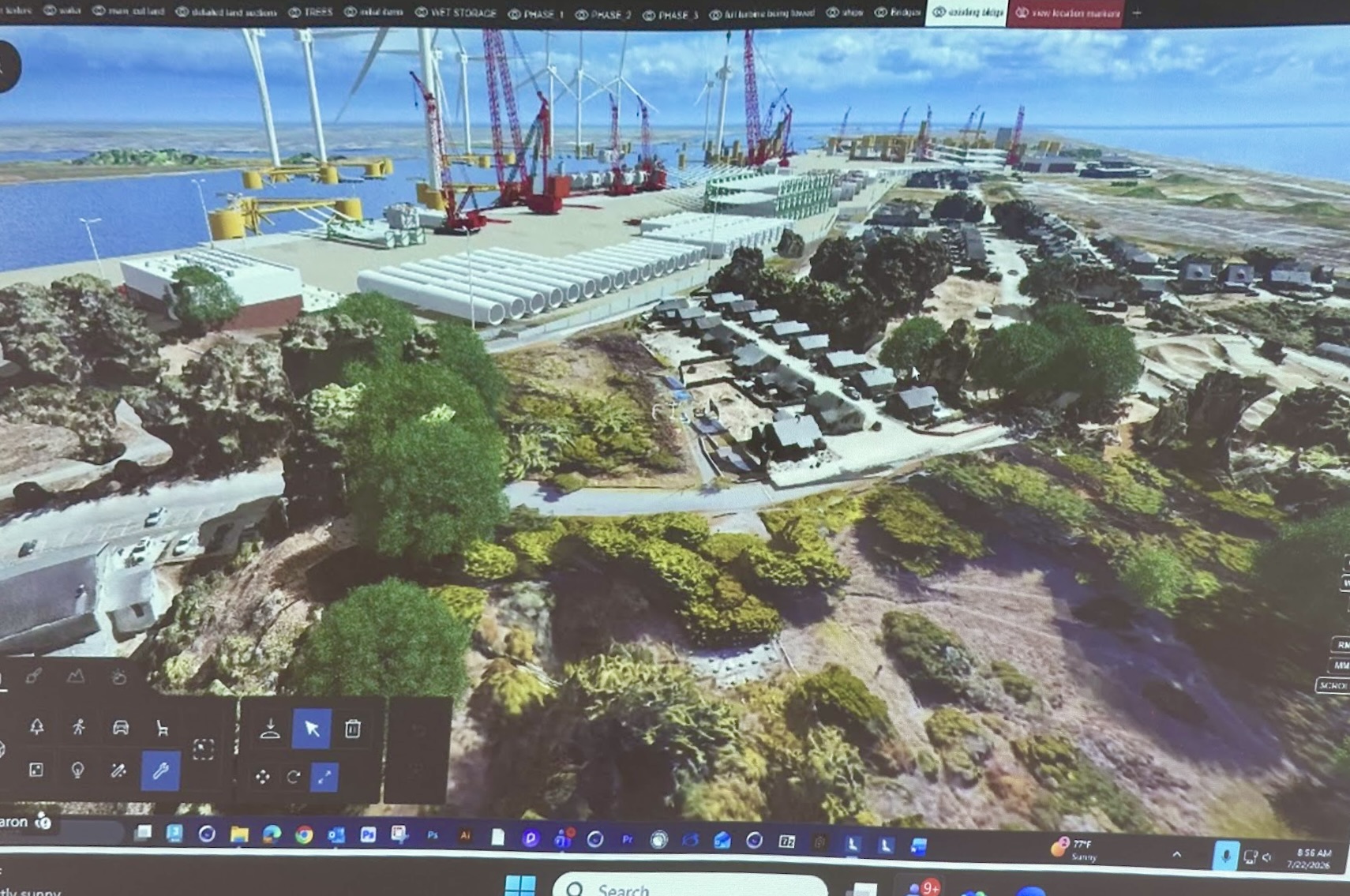
This past summer, the Samoa Steering Committee got its wish. At a July steering committee, Harbor District staff offered the group a unique perspective, created with 3D computer modeling software from Moffat & Nichol, a civil engineering and design firm based in Long Beach.
“It was the first time we were actually able to see and feel what it would be like living next to this gigantic project,” Jannetta said.
The Harbor District is the lead agency on this project, and Executive Director Chris Mikkelsen told the Outpost via email that the 3D illustrations remain in draft form.
“They were intended to be used in our collaborative discussions with the Steering Committee but do not represent an updated project design,” he wrote, adding that the illustrations will “be further developed as task-specific funding becomes available.”
Jannetta likewise said that certain elements of the renderings are a bit off — the houses and buildings in Samoa look wonky, for example, and some of the elevations aren’t right. Moffat & Nichol retains ownership of the model, and Jannetta said the agency didn’t release these images to the public because the drafts weren’t up to their professional standards. (Their contract with the Harbor District has since ended.)
Nonetheless, Jannetta said the model of the terminal is “completely to scale and accurate,” and the 3D interactive tour presented to the Samoa Steering Committee over the summer was revelatory.
With those caveats in mind, let’s take a look at the clip Jannetta provided to the Outpost:
The project, as proposed, would include facilities for assembling 15-20 MW wind turbines measuring 950 to 1,050 feet tall, as measured from the tip of the blades during rotation. The terminal would also facilitate construction and deployment of floating foundations measuring up to 450 feet long and 100 feet tall, and weighing 500 to 2,000 tons.
Jannetta also emailed a few photographs snapped during the steering committee meeting while the 3D renderings were being projected onto a screen. We’ve adjusted the angle on a couple of those photos to present the images with less perspective distortion:
As my colleague Isabella Vanderheiden reported last month, the Harbor District recently released a Notice of Preparation (NOP) of a Draft Environmental Impact Report for the marine terminal project, giving the public 60 days to submit comments that will be incorporated into that report. That comment period will end Monday, Dec. 7.
Opinions on this project vary, even among members of the Samoa Steering Committee, Jannetta said. But they found the 3D model useful in demonstrating the scale of what’s being proposed.
“I just want people to see it,” he said.
Comments on the NOP may be submitted via email to projectcomments@humboldtbay.org. Those who prefer snail mail can send their comments in writing to: Chris Mikkelson, Humboldt Bay Harbor, Recreation and Conservation District P.O. Box 1030 Eureka, Calif. 95502-1030. All comments must be received or postmarked by Monday, Dec. 7.