

Enviro Group Cries Foul as Caltrans Removes a Few Small Trees in Richardson Grove; Agency Says Construction on Long-Delayed Improvement Project Will Start in Spring
Ryan Burns / Thursday, Jan. 22 @ 11:36 a.m. / Environment , Transportation

A semi truck navigates the curves through Richardson Grove State Park. | Photo via Caltrans.
###
We’re nearly two decades into the pitched legal battle over a proposed highway realignment project through Richardson Grove State Park, and while Caltrans says its ready to finally start construction this spring, a local environmental group is saying, “Not so fast.”
This week, Caltrans construction crews have been marking and removing small trees along the one-mile stretch slated for realignment. In an emailed statement, the agency said this “limited” tree work is necessary to protect birds ahead of construction.
“Crews are marking and removing only younger, newer-growth trees in advance of nesting bird season. No old-growth trees are being removed, nor will any be removed by the project itself,” Caltrans spokesperson Myles Cochrane said.
But representatives for the Environmental Protection Information Center (EPIC), which has been the primary litigant challenging this project in court, say this tree-removal work violates an established agreement to provide at least a 45-day warning for activities affecting the project site.
Members of EPIC who recently drove through the grove noticed at least two redwoods removed along the north shoulder of the road near the former Singing Trees Recovery Center, prompting group leaders to question Caltrans about the work.
“Only after the agency was approached did it admit that it had begun construction and that trees were logged to prevent birds from nesting prior to road widening,” EPIC said in a prepared statement.
EPIC’s executive director, Tom Wheeler, went further.
“For years, Caltrans has maintained that they should be trusted on this project — that the public should take their word for it that no old-growth redwoods will be harmed. But Caltrans apparently can’t even be trusted to warn the public when construction activity begins,” he said.
“The bulldozers of ‘progress’ are firing their engines, ready to scrape over State Park land to allow for ever-bigger trucks, despite speculative economic justification and skyrocketing costs,” Wheeler continued. “It’s long past time for the folks in Sacramento to put a stop to this boondoggle before Caltrans does irreparable harm to Richardson Grove.”
The state has long argued that the Richardson Grove Improvement Project amounts to a minor but necessary modification to the narrow and winding roadway. The project intended to address a longstanding bottleneck on U.S. 101 where industry-standard STAA truck tractor-semitrailers are currently unable to travel through the park.
“Because of that restriction, some suppliers and carriers don’t serve the North Coast or need a separate fleet just for this stretch of highway,” Caltrans said in its statement to the Outpost. As currently designed, the project calls for for the removal of 38 trees, including two small redwoods of 4-8 inches in diameter at breast height [a Caltrans measurement].
“Methods such as hand digging and air spades are planned to minimize impacts to roots and surrounding resources, which extends the construction timeline compared to similar work elsewhere,” Caltrans says. The agency, which has produced before-and-after photo simulations of the project, says its ready to start construction this spring.
It will take two years to complete, Caltrans says. “While the scope of the project is relatively small, the work entails a careful approach due to the sensitive setting within Richardson Grove State Park.”
But environmental groups have repeatedly argued that the construction work could still damage ancient redwoods by severing roots and paving over them. A series of lawsuits have challenged the agency’s environmental analyses, forcing the state agency to prepare multiple Environmental Impact Reports.
In recent years, however, the courts have tended to rule against EPIC and its allies. In 2021, for example, a federal judge granted a summary judgment in favor of Caltrans, and in 2024 Humboldt County Superior Court Judge Timothy Canning dismissed a writ of injunction that challenged Caltrans’ compliance with the California Environmental Quality Act (CEQA).
Wheeler says the fight’s not over.
“Litigation has stopped the project for more than a decade, with multiple court rulings finding that Caltrans failed to take a hard look at the likely impacts to old-growth redwoods,” he said. “The current lawsuit challenging Caltrans’ shoddy environmental review will be decided in state appellate court in the coming months.”
###
PREVIOUSLY
- Caltrans Ordered to Redo Richardson Grove Environmental Documentation
- EPIC Claims Victory in Latest Richardson Grove Ruling
- EPIC: Richardson Grove Realignment Project “Not Active At All” Anymore
- Caltrans: Richardson Grove Realignment Project Still Going Forward
- Judge Denies Environmental Groups’ Request for Attorney Fees in Richardson Grove Case
- Caltrans Relaunches Richardson Grove Project; Agency Issues New Environmental Documentation For Controversial Highway 101 Realignment at the South End of the County
- As Expected, EPIC and Others Launch New Lawsuit Against Caltrans’ Richardson Grove Improvement Project
- Here We Go Again: Fifth Lawsuit Filed Against Caltrans’ Richardson Grove Project
- Court Halts Richardson Grove Highway Project Yet Again; Environmental Groups ‘Elated’ at Federal Judge’s Order
- Another Court Puts the Brakes on Caltrans’ Richardson Grove Project; Local Judge Orders Agency to Revise Environmental Impact Report
- Federal Judge Rules For Caltrans in Lawsuit Over Road-Widening Project Through Richardson Grove
- Richardson Grove Conflict Heads to Round Four as Conservation Groups File Legal Challenge to Caltrans’ 101 Realignment Project
- Judge Tosses the Latest Injunction From Environmental Groups Over Caltrans’ Richardson Grove Improvement Project
BOOKED
Today: 3 felonies, 10 misdemeanors, 0 infractions
JUDGED
Humboldt County Superior Court Calendar: Friday, Oct. 9
CHP REPORTS
1510 Mm169 E Hum 15.10 (HM office): Traffic Hazard
0 Us101 (HM office): Closure of a Road
ELSEWHERE
RHBB: Marshall Fire Breaks Out Near Hoopa as Crews Battle Two Other Fires in Northeastern Humboldt
RHBB: Eastern Humboldt Surgeon Fire Draws Full Response: Airtankers Requested
RHBB: Humboldt Builders Exchange Works to Fill Construction Jobs as Aging Workforce Nears Retirement
RHBB: Prescribed Burns: Today in Ocean Ranch Near Loleta and Tomorrow near Ettersburg
Arcata City Council Tackles Sea Level Rise at the Marsh, and Also Bumps Up the Number of Bicycle Ride-Share Stations
Dezmond Remington / Thursday, Jan. 22 @ 10:44 a.m. / Government

Tandem Mobility bicycles at the bikeshare station outside Sorrel Place in Arcata. Photo courtesy of Tandem Mobility.
A short Arcata City Council meeting last night was highlighted by a presentation on combating the effects of sea levels rising on the Arcata Wastewater Treatment Facility over the course of the next century. They also decided to fund more bicycle sharing stations and increased the maximum amount people can donate to candidates for city office.
Wastewater Treatment Facility vs. Sea Level Rise
GHD Engineering Consultant Rebecca Crow shared the results of a two-year-long study done on negating sea-level rise on Arcata’s wastewater treatment facility. Because it lies next to Humboldt Bay, it’s especially sensitive to the bay rising even a little bit. It’s likely that some of the facility might be damaged within the next five decades.
Crow laid out a few solutions. They could elevate the levee that protects much of the facility to 15 feet and also increase its length, a solution that would work until 2105 or thereabouts. It would cost between $20-25 million. Adding a living shoreline would bump that up to about $35 million.
Moving the facility is another option; Arcata would need to find a 10-15 acre parcel and between $100-213 million to do it, but the facility would be safe and functional beyond 2105. Crow said she didn’t have any certain picks for a new location.
Maintaining the height of the existing 10-foot berm is a cheaper option, but Crow said that might only work until 2055.
City Engineer Netra Khatri said Arcata would have until 2030 to pick a strategy. The city will have the next 40 years to implement it.
“I think hearing from the public will be really important,” said councilmember Stacy Atkins-Salazar. “Most communities aren’t as vocal and tied to their wastewater treatment facilities as ours is…the more input we can get for our decision-making, the better.”
Bicycles
The council voted to add another two ridesharing stations at the end of 11th Street and in Sunny Brae, adopting a $412,500 contract with Tandem Mobility. There are currently 10 stations, each with five bicycles, scattered around Arcata. Many of them are near or on Cal Poly Humboldt’s campus.
The funding will come from a mix of federal grants ($216,000), money from Cal Poly Humboldt ($129,000) and Measure H funds ($67,500). The new contract also pays for the existing stations.
Tandem Mobility will also be adding a few e-bikes to the pool; their maximum speed will be capped electronically.
Khatri said the bicycles were rented 1,716 times last year and ridden for 1,526.9 hours, a record for the program.
Councilmember Meredith Matthews said she was “strongly encouraging” Eureka to consider adding a few Tandem Mobility stations of their own around the city, so residents could ride on the Humboldt Bay Trail either way and take the bus or run back.
The bicycles are equipped with GPS trackers. According to councilmember Sarah Schaefer, one is stuck out in Hoopa.
Other stuff
The council decided to send a letter to the Humboldt County Planning Department voicing their opposition to a proposed cell tower on Shirley Boulevard in Sunny Brae. Though it lies just outside the city limits, about a dozen people have complained about the location of the cell tower during public comment periods at city council meetings during the last few months. The proposed location, near an attractive stand of forest, a creek and several homes, is a sore point for some residents, as is the tower’s 186-foot height. The site is within the city’s Planning Area, and the letter mentions forcing Pacific Towers, the project’s developer, to adhere to Arcata’s permitting process for driveways and encroachment.
The council adjusted the maximum amount people can donate to local election campaigns to $250 from $240. In 1992, Arcata voters passed a proposition capping the maximum allowed donation to city office candidates to $100; it’s upped every other year to account for inflation.
Finally, they decided to waive $2,500 in fees for the Kinetic Grand Championship in May.
HEADS UP: Expect Delays on Henderson Street in Eureka Today and Tomorrow; That Thing’s Getting Repaved
LoCO Staff / Thursday, Jan. 22 @ 9:45 a.m. / Traffic

Henderson Street, looking east from I Street. | Google.
Press release from the City of Eureka:
The City of Eureka will be performing Road Construction work at the above locations in Eureka beginning Thursday, January 22th, 2026.
Asphalt paving preparations work is anticipated at the following location: January 22nd, 2026, work will begin on Henderson Street between S Street and I Streets.
Asphalt paving work is anticipated to begin on January 23rd, 2026 at the location of Henderson Street between I Street and S Street.
Intersection will have closures between the hours of 7:00 a.m. and 7:00 p.m. Monday-Friday, WEATHER PERMITTING. Noticing will follow describing the location and extent of future work.
There will be controlled traffic and detours at these locations, and motorists should expect short delays.
The patience and cooperation of motorists, bicyclists and pedestrians in the vicinity of the work zone is greatly appreciated.
The City of Eureka realizes that this disruption is an inconvenience, but maintaining the City’s streets and sidewalks is vital to the health and safety of our residents.
The Wiyot Senior Housing Development Behind Eureka City Hall is Officially Underway
LoCO Staff / Thursday, Jan. 22 @ 8:23 a.m. / History

Architectural rendering.
Press release from the Wiyot Tribe:
The Wiyot Tribe, Dishgamu Humboldt Community Land Trust, Travois, Pacific Builders and Raymond James gathered on January 21st to break ground on the construction phase of the Laqilh Hou Daqh (Where the Elders Are) Housing Development in Eureka at 6th and L streets. The new affordable elders housing development will provide 52 senior apartment units. This site was awarded to the Tribe through the City of Eureka Parking Lots to Affordable Housing RFP and is expected to be completed in 2027.
Laqilh Hou Daqh will provide 24 studio bedroom, 20 one bedroom and 8 two-bedroom units. Community amenities include a community room, commercial kitchen, elders programming space, and above ground green space.
California and our local community have a large and growing elders’ population with increasing housing needs. This affordable housing development addresses the high cost of living strains on fixed incomes, giving elders affordable options essential for elders. When elders dedicate most of their income to housing, they often have to cut back on essential food and medical care, causing their health to suffer. Affordable housing provides better access to medical services, nutrition, and transportation, supporting healthier lifestyles. Laqilh Hou Daqh offers built-in social networks and wellness activities, combating isolation. Affordable housing provides stability, protecting against eviction and homelessness, which disproportionately affect older adults.
Living our Values
Dishgamu Humboldt believes in our interconnectedness and pursues projects that will benefit all people in our community as well as the environment. Laqilh Hou Daqh is being developed on a parking lot, formerly owned by the City of Eureka, fulfilling Dishgamu’s values by developing infill housing on vacant or underused land within existing urban areas, integrating sustainability by reducing sprawl, cutting transportation emissions through walkability, using existing infrastructure efficiently, and incorporating green technologies, offering a key strategy for climate-friendly density and revitalizing communities. By using local contractors, the project provides local living wage jobs. This project leverages existing services, reduces habitat conversion, and increases affordable housing units with significantly lower overall carbon footprint compared to building in undeveloped areas. This development aligns with “smart growth” principles by focusing on compact, mixed-use development near transit.

The Eureka Chinatown Monument is Coming to First and E Streets, and There’ll be a Groundbreaking Ceremony Next Week
LoCO Staff / Thursday, Jan. 22 @ 8:04 a.m. / Art , History

Chinatown memorial design at the corner of First and E.
PREVIOUSLY:
###
Press release from the Eureka Chinatown Project:
The Eureka Chinatown Project (ECP), an initiative of Humboldt Asian and Pacific Islanders in Solidarity (HAPI), is excited to announce the groundbreaking ceremony for the Eureka Chinatown Monument on Friday January 30, 2026 from 12:00 - 1:00 p.m. The ceremony will take place at the corner of 1st and E Streets, Eureka, CA located just a few blocks from the site of Eureka’s historic Chinatown at 4th and E Streets. Featured speakers include HAPI, ECP, the Humboldt County Board of Supervisors, and the City of Eureka whose efforts made this project possible. Community members, partners, and the public are warmly invited to attend as organizers share gratitude and mark this important milestone.
The Eureka Chinatown Monument honors the historic Chinese community and raises awareness of the events that led to the forced removal of the majority of the Chinese population from Humboldt and banishment for over 50 years. Chinese immigrants began arriving in Humboldt in 1850. By 1885, over 300 Chinese men, women, and children lived in Eureka and the immediate surrounding areas. They supported Eureka’s early growth by working in construction, fishing, logging, laundry, housework, and farming, supplying a significant amount of the community’s fresh produce. Despite these contributions, Chinese residents faced fierce anti-Chinese sentiment and discriminatory laws that severely restricted their rights and freedoms.
On February 6th, 1885, a stray bullet from a gunfight near Chinatown struck and killed a city council member. This incident ignited a wave of violence culminating in the forced expulsion of Chinese residents in Eureka and, eventually, the rest of Humboldt County. The profound and far-reaching impacts of Eureka’s 1885 Chinese Expulsion have been largely forgotten and unacknowledged. The Eureka Chinatown Project works to reclaim and preserve this history for the future.
Since 2021, the ECP has worked to create a monument commemorating the story of the Chinese immigrant community in Humboldt and their journey. Completion of the monument establishes an important landmark recognizing the vital role that one of Eureka’s many immigrant communities played in building Eureka and memorializes the entire community’s losses from driving out the Chinese residents. The monument’s design also emphasizes the positive contributions of immigrant communities to Eureka today and expresses Eureka’s work towards a brighter future for all.
Other ECP initiatives include two Chinatown interpretive signs on the City’s kiosks, a mural in historic Chinatown, naming of Charlie Moon Way, a virtual walking tour, and walking tours of Chinatown for the public, students, and educators.
Fundraising is ongoing for the construction of the monument. If you would like to contribute to this landmark project, donations can be made through the Ink People Center for the Arts- HAPI Eureka Chinatown Monument Fund at:
https://www.inkpeople.org/dreammaker-data/humboldt-asians-amp-pacific-islanders-in-solidarity-hapi?rq=hapi
Humboldt Asian and Pacific Islanders in Solidarity (HAPI) works to build and empower our community by amplifying diverse voices and perspectives for a more inclusive future. The Eureka Chinatown Project exemplifies this mission through its pursuit of public education efforts to recognize and honor the rich history and culture of early Chinese residents of Humboldt County, California.
For more information, please visit our website at hapihumboldt.org or contact hapi.humboldt@gmail.com.
Lobbyists and Lawmakers Mingle Over Luxury Tequila, Shrimp and Cigars at Capital Party
Yue Stella Yu / Thursday, Jan. 22 @ 7:45 a.m. / Sacramento

Cafeteria 15L on 15th Street in Sacramento, on Jan. 16, 2026. The restaurant was the recent site of the Back to Session Bash hosted by the California Tribal Business Alliance. Photo by Miguel Gutierrez Jr., CalMatters
###
This story was originally published by CalMatters. Sign up for their newsletters.
###
Assemblymember Tina McKinnor stood at the free tequila bar.
The Inglewood Democrat had asked for three glasses of Patrón El Alto, “the pinnacle of luxury” priced at roughly $150 a bottle. She kept one glass, leaving the other two for her staffers.
Her aides had been rubbing elbows with a lobbyist for AT&T and hurrying him to the bar for a drink. The lobbyist had been chit-chatting with a CalMatters reporter. But when McKinnor arrived to give him a hug and whispered in his ear, the chit-chatting stopped altogether. The lobbyist and the lawmaker know each other well: For two years, McKinnor was the author of an AT&T-sponsored bill to phase out most landlines the company is required to maintain in California. The bill died each time, but McKinnor has promised to bring it back this year.
The signature event at the beginning of each year of legislative action is one of many political extravaganzas at which lawmakers and their staff are invited to mingle with special interests. It offers a glimpse into the perks available to California politicians and shows how special interests buy access to policymakers who they hope to influence.
McKinnor’s exchange with the lobbyist last Thursday night happened in the private VIP room inside the “Back to Session Bash,” a swanky party that each year draws hundreds of California politicians, lobbyists and staffers. They puff on fine cigars, feast on free food and fancy (also free) drinks, bop to live music — sometimes even joining performers on stage — and share laughs and chatters, all on the tab of special interests, and all away from the public eye.
McKinnor’s chief of staff Terry Schanz, who was also at the party, told CalMatters her attendance “at any reception has zero impact on her policy decisions.”
“There are dozens of receptions in Sacramento every week,” he said in an email to CalMatters.

A view into Back to Session Bash hosted by the California Tribal Business Alliance at Cafeteria 15L on 15th Street in Sacramento, on Jan. 15, 2026. Photo by Yue Stella Yu, CalMatters
While the wining and dining doesn’t necessarily amount to a quid pro quo, it allows lobbyists to build a rapport with politicians and their staff so it’s easier to get an audience later, said Jack Pitney, a politics professor at Claremont McKenna College and a former staffer in Congress and in the New York state Legislature.
“If you can be bought with a plate of shrimp, you’re not worth buying,” Pitney said.
“The rapport lubricates the deal-making,” he added. “The personal contact and relationship gives them access that isn’t easily available to somebody coming out of the cold.”
Last week’s party, hosted by the California Tribal Business Alliance, began in 2005 as a way to connect tribal leaders with policymakers, said alliance executive director Chris Lindstrom. Over the years, it evolved into one of the capital’s most popular gatherings. One first-time attendee this year remembered hearing about the bash as a place one goes to “to get messed up.” But the party in recent years has been quieter than before, especially following the resignation of three state lawmakers amid accusations of sexual harassment in the capital in 2017.
Each year, the alliance invites all legislators and their staffers, along with constitutional officers, those who work at the governor’s administration and local elected officials who “regularly interact with tribal governments and tribal government programs,” Lindstrom told CalMatters. Attendance often exceeds 1,000, he said, with VIP access reserved for tribal leaders, state lawmakers, other officials and event sponsors.
Lindstrom said the event promotes relationship-building and helps lawmakers understand challenges tribes face and stressed that the alliance complies with reporting requirements under state law.
“This shared understanding supports better-informed policy decisions affecting the health, welfare, and well-being of California’s first peoples and helps avoid unintended consequences that can arise when policies are developed without early tribal consultation or engagement,” Lindstrom said.
California tribes have significant political clout and have contributed at least $23.5 million to those running for state office between 2014 and 2024. The business alliance itself has contributed $2.5 million to candidates, ballot measure committees and other committees since 2004, according to campaign finance data from the California secretary of state’s office. The alliance was one of 82 groups that fought for a controversial bill in 2024 allowing tribes to sue card rooms over claims of tribes’ exclusive rights to host certain table games.
This year, the RSVP-only event took place at Sacramento restaurant Cafeteria 15L. It was sponsored by:
- Wilton Rancheria
- Viejas Casino and Resort, run by the Viejas Band of Kumeyaay Indians
- Sycuan Casino, run by the Sycuan Band of Kumeyaay Indians
- Pala Casino, run by the Pala Band of Mission Indians
- Southern California Tribal Chairmen’s Association
- Sports Betting Alliance
- FanDuel
- DraftKings
- Native-owned oil company First American Petroleum
- conservation nonprofit Ducks Unlimited, and
- San Luis Rey Indian Water Authority
Many of those sponsors have had business before the Legislature in recent years. Together they have contributed a total of $130.5 million to candidates, ballot measure committees and other political committees since 2001, data shows.
The two sports betting corporations donated the most among all sponsors, with FanDuel shelling out $35.6 million and DraftKings $34.4 million. The tribes sponsoring the event have made at least $59.1 million in political contributions in California since 2001, the data shows.

Food on a grill at the Back to Session Bash hosted by the California Tribal Business Alliance at Cafeteria 15L on 15th Street in Sacramento, on Jan. 15, 2026. Photo by Yue Stella Yu, CalMatters
Three CalMatters reporters signed up for the event online and identified themselves as journalists to attendees they spoke to. The reporters stayed at the event from 6:40 p.m. to 9:40 p.m. While by no means a comprehensive list, these are the state lawmakers we saw at the party:
- Sen. Jesse Arreguín, an Oakland Democrat, chair of the Senate Human Services Committee and Public Safety Committee and incoming chair of Senate Housing Committee
- Sen. Josh Becker, a Menlo Park Democrat, chair of the Senate Energy, Utilities and Communications Committee and incoming chair of the Senate Human Services Committee
- Assemblymember Tasha Boerner, a Solana Beach Democrat and chair of the Assembly Communications and Conveyance Committee
- Assemblymember Sade Elhawary, a Los Angeles Democrat
- Assemblymember Mike Fong, an Alhambra Democrat and chair of the Assembly Higher Education Committee
- Assemblymember Mark Gonzalez, a Los Angeles Democrat and the Assembly Majority Whip
- Assemblymember Ash Kalra, a San Jose Democrat and chair of the Assembly Judiciary Committee
- McKinnor, chair of the Assembly Public Employment and Retirement Committee
- Assemblymember Darshana Patel, a San Diego Democrat
- Assemblymember Chris Rogers, a Ukiah Democrat
Last year, 22 state lawmakers each reported their attendance at the 2024 bash as a $110 gift from the alliance for food and drinks, according to a CalMatters analysis of their latest available Form 700s, which they use to report income, sponsored travels and gifts. Assemblymember Joaquin Arambula, a Fresno Democrat, reported the value at $220. Some chiefs of staff to legislators also reported being at that year’s bash.
On Thursday, the venue was packed a few minutes before 7 p.m. as more guests poured in through the main entrance, checking their winter coats to dance, some in suits and cocktail dresses. Each patron received two drink tokens to use for any drink below $15 at any of the several bars.
But almost everything inside, including the alcohol, was already free: The espresso martinis to keep you awake; the drunken chicken and portobello mushroom tacos; the shrimp BBQ skewers, the mac and cheese and mini burgers. A bourbon tasting bar featured four options: Angel’s Envy Kentucky Straight Bourbon Whiskey, Maker’s Mark Kentucky Straight Bourbon Whiskey, Dewar’s 12-year-old blended scotch whiskey and Bulleit Rye Frontier Whiskey.
Next to the bourbon, wafts of cigar permeated the air. Partygoers picked out roll after roll of cigars among six 50-pack boxes of various JM’s and Española’s Nicaraguan and Dominican cigars, with more unopened boxes waiting.


Various cigars, ashtrays and bottles of alcohol on tables at the Back to Session Bash hosted by the California Tribal Business Alliance at Cafeteria 15L on 15th Street in Sacramento, on Jan. 15, 2026. Photo by Yue Stella Yu, CalMatters
Deeper in the restaurant was a jam-packed concert featuring Grammy-nominated R&B singer Sisqó, most known for his “Thong Song” in 1999. Some in the front rows were into it; others in the back held up their phones to record him but then began Googling his name.
Others preferred the quiet. Some public officials huddled outdoors while others ducked into the VIP room and patio at the end of a dimly lit hallway. Security guards stood at the door, checking for red wristbands before letting VIPs in. But as the night went on, no one seemed to be checking anymore.
In the VIP area, two fire pits kept outdoor guests warm, and more banquet food awaited. A free tequila bar featured several Patrón tequilas as well as the Don Julio 1942, the Clase Azul Reposado, and Tequila Avion Reserva 44.
Most lawmakers spotted at the Thursday party did not return CalMatters’ requests for comment by Wednesday.
In a statement to CalMatters, Kalra’s office said the lawmaker is not influenced by attending such events.
“For what it’s worth, he’s vegan, doesn’t smoke, and doesn’t even take campaign donations from corporations,” the statement read.
Kalra’s campaign has reported receiving at least $69,400 from corporations such as Facebook, Google, Airbnb, AT&T, Comerica, Cox Communications and Paramount Pictures since 2016. His office did not answer questions about the contradiction between the statement and those donations by press time.
Most lawmakers had trickled out of the party by 9 p.m. But dozens of staffers and lobbyists remained on the dance floor, grooving to covers of hit songs such as APT, Juice and Finesse. Business cards were scattered on tables next to half-empty drinks. At the bourbon bar, the bottle of Angel’s Envy was gone. No one was staffing the cigar bar anymore; only cigar butts and ashes remained.
OBITUARY: John William Corbett, 1947-2026
LoCO Staff / Thursday, Jan. 22 @ 7:28 a.m. / Obits
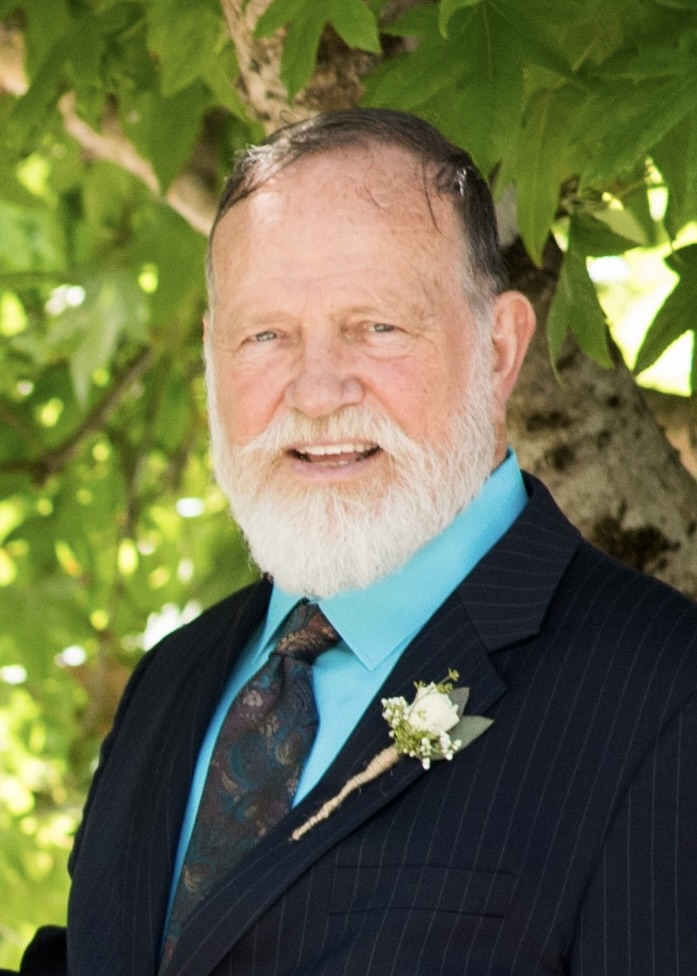
John
William Corbett
October
25, 1947- January 3, 2026
John W. Corbett, a longtime McKinleyville resident, attorney and environmental advocate, died peacefully at home, on January 3, 2026.
John was proud of his ancestors who fought in the continental army, and of John Convis, whom he was named after, who died in the Civil War fighting against slavery. He was proud of his father, who served in WWI and retired as a Colonel in the army after fighting the fascists in WWII. He was proud of his mother, Kathryn Corbett, a professor at Humboldt State University and a long-time champion of women’s rights.
John devoted his own life to public service and stewardship of the land and water resources of the North Coast. He graduated cum laude with a Bachelor’s degree in Political Science from Humboldt State University and earned his law degree from UC Hastings College of the Law with an emphasis in environmental law. He later completed graduate studies in environmental law and administration at Stockholm University in Sweden.
He took great pride in helping to plant over 20,000 redwood trees, mostly in Southern Humboldt. In his younger years, John loved athletics. He demonstrated particular mastery in tennis and running and participated as both a runner and organizer in many local running events. During his career, John served as General Manager of the North Coast Co-op, Arcata City Attorney, Lecturer at Humboldt State University, and served as Senior Legal Counsel for the Yurok Tribe where he helped secure the largest dam removal in US history to remove four dams on the Klamath River, facilitated the Jesse Short settlement distribution, and contributed to many other projects.
John was a dedicated and accomplished public servant. He served in many appointed and elected positions during his life including the McKinleyville Community Services District for 18 years, the North Coast Regional Water Quality Control Board for 20 years where he acted as chairman for 5 terms, and the North Coast Regional Coastal Commission. He spent his retirement working tirelessly alongside the Eagle Eyes of False Klamath Cove which he helped found, conducting and coordinating beach surveys in Marine Protected Areas.
John was preceded in death by his parents Kathryn L. Corbett and George Austin Corbett. John is survived by wife Joan, his brother George (Pat Robb) Corbett, children Crystal (Forrest) Monroe and Austin (Dani) Corbett and seven outstanding grandchildren.
For details on the memorial service location and time, please send a request to jwcmemorial2026@gmail.com.
###
The obituary above was submitted on behalf of John Corbett’s family. The Lost Coast Outpost runs obituaries of Humboldt County residents at no charge. See guidelines here. Email news@lostcoastoutpost.com.


