

OBITUARY: Evelyn Arverna Fletcher Smith, 1935-2025
LoCO Staff / Tuesday, March 11, 2025 @ 6:56 a.m. / Obits

Evelyn Arverna Fletcher Smith
July 20, 1935 – March 4, 2025
Evelyn was born in Eureka to Royal and Edna Fletcher on July 20,1935 and passed away peacefully at home on March 4, 2025.
Mom was the sixth of eight siblings. She grew up in Eureka, South Fork and Weott, where she spent many summers wandering through the redwoods and swimming in the Eel River. She attended schools in Eureka, South Fork and Weott, graduating from South Fork High School in 1953.
Mom married our father, Merle Smith, on September 1, 1956, and they had been happily married for 39 years when our father passed away. They lived in Eureka and had a home built in 1960, where mom lived for the rest of her life.
While still in high school she went to work for the telephone company and continued to work there until starting our family. Shelly was born in 1960 and Lisa in 1962. She then set out raising the two of us as a stay-at-home mom until the early ‘70s, when she was offered a job as a playground monitor at Alice Birney Elementary School. She continued to work at Alice Birney as a monitor and classroom aide, finally ending her career in the office as a Clerk Typist. She made many dear friends in the 25 years that she worked for Eureka City Schools. After her retirement she kept busy as a substitute secretary for many of the schools in Eureka City Schools.
Family meant a lot to mom and there were many holiday and family dinners, card games, and summer potlucks in Redcrest and Weott along with many weekends spent on the banks of the Eel River.
Mom and dad enjoyed many years of traveling to visit family and friends. Camping trips to Fort Bragg for abalone, camping with the Johnson family at Cabana Holiday (Redwood Rivers Resort), and bus trips to Reno were the highlight of the year with many adventures involved. Yearly trips to Reno with their dear friends Warren and Joanne Smith, spending Thanksgiving with their son and his wife Chad and Rycha Smith in Redding, trips to Washington to visit with their friends Bill and Charlotte Waley, and even a trip to Jamaica with friends and business partners at Capital Business Machines.
Eventually mom and dad bought a mobile home in Willow Creek where she enjoyed many years playing golf with friends and family. Mom also enjoyed going to the casino and having lunch with her friends Rita Henry and Bev Alto.
Mom is survived by her daughters Shelly and Lisa Smith. She is also survived by nieces and nephews: Jan Philp, Judith Braddon, Kathy Philp, Rick Fletcher, Linda and Rod Hill, Fawn Fletcher, Kevin Milligan, Tim Milligan, Jim and Wendy Yegge, John and Joanne Yegge, Lori Stark, Jennifer and Ken Snipes, Jane Scott Anderson, Bill and Connie Smith, Sharon and Tony McCarver, Debbie and Terry Phillips, Krista and Casey Chraska, Bob and Debbie Smith, Gerry Smith, Kelli Kelley, Sylvia Smith-Turk, Pam Smith, Cindy Deaton, and Arlene Zehrung and their families. Mom is also survived by her dear friends, Robert and Del Poppelreiter, Joanne Smith, and Bill and Charlotte Waley.
Mom was preceded in death by her husband Merle, her parents Royal and Edna Fletcher, her in-laws Roland and Fern Smith, as well as her siblings and their spouses: Ed Fletcher, Betty Jane and Teke Philp, Marilyn and Bob Milligan, Carl and Pat Fletcher, Virgina Yegge, Newell Fletcher and Phyllis and John Stark and her in-laws and their spouses: Lloyd Smith, Ed and Tess Smith, Bob and Molly Smith and Arnold Smith and her nieces and nephews: Dennis Philp, Gary Philp, Cathy Venberg, Steve Fletcher, Paula Stark, Rick Smith, Janet Marsaw and Sandy Smith.
We want to thank Brenna Kemper for her loving care and the hundreds of back scratches she gave our mom over the last year and a half. We also want to thank Hospice of Humboldt, especially Scotty, Stacy, and Paula for their kindness and care of mom.
In lieu of flowers please sent donations to Hospice of Humboldt, 3327 Timber Fall Ct. Eureka, CA 95503 or Betty Kwan Chinn Homeless Project at Humboldt Area Foundation, 363 Indianola Rd., Bayside, CA 95524
Graveside services will be March 22 at 12 p.m. at Sunset Memorial Park in Eureka.
A celebration of life will take place on July 20 at The Lodge, 554 Herrick Ave, Eureka from 2 to 4 p.m.
Please RSVP to Shelly or Lisa if you will be attending.
###
The obituary above was submitted on behalf of Evelyn Smith’s loved ones. The Lost Coast Outpost runs obituaries of Humboldt County residents at no charge. See guidelines here. Email news@lostcoastoutpost.com.
BOOKED
Today: 4 felonies, 12 misdemeanors, 0 infractions
JUDGED
Humboldt County Superior Court Calendar: Today
CHP REPORTS
Elk Creek Rd / Curly Jack Rd (YK office): Trfc Collision-1141 Enrt
ELSEWHERE
Governor’s Office: Governor Newsom signs legislation 8.31.2026
County of Humboldt Meetings: Fish & Game Advisory Commission Agenda - Regular Meeting
Governor’s Office: Governor Newsom announces appointments 8.31.2026
Governor’s Office: Governor Newsom signs legislation cracking down on cannabis ads and labels that appeal to kids
OBITUARY: Katherine Sue Montagne, 1948-2025
LoCO Staff / Tuesday, March 11, 2025 @ 6:56 a.m. / Obits
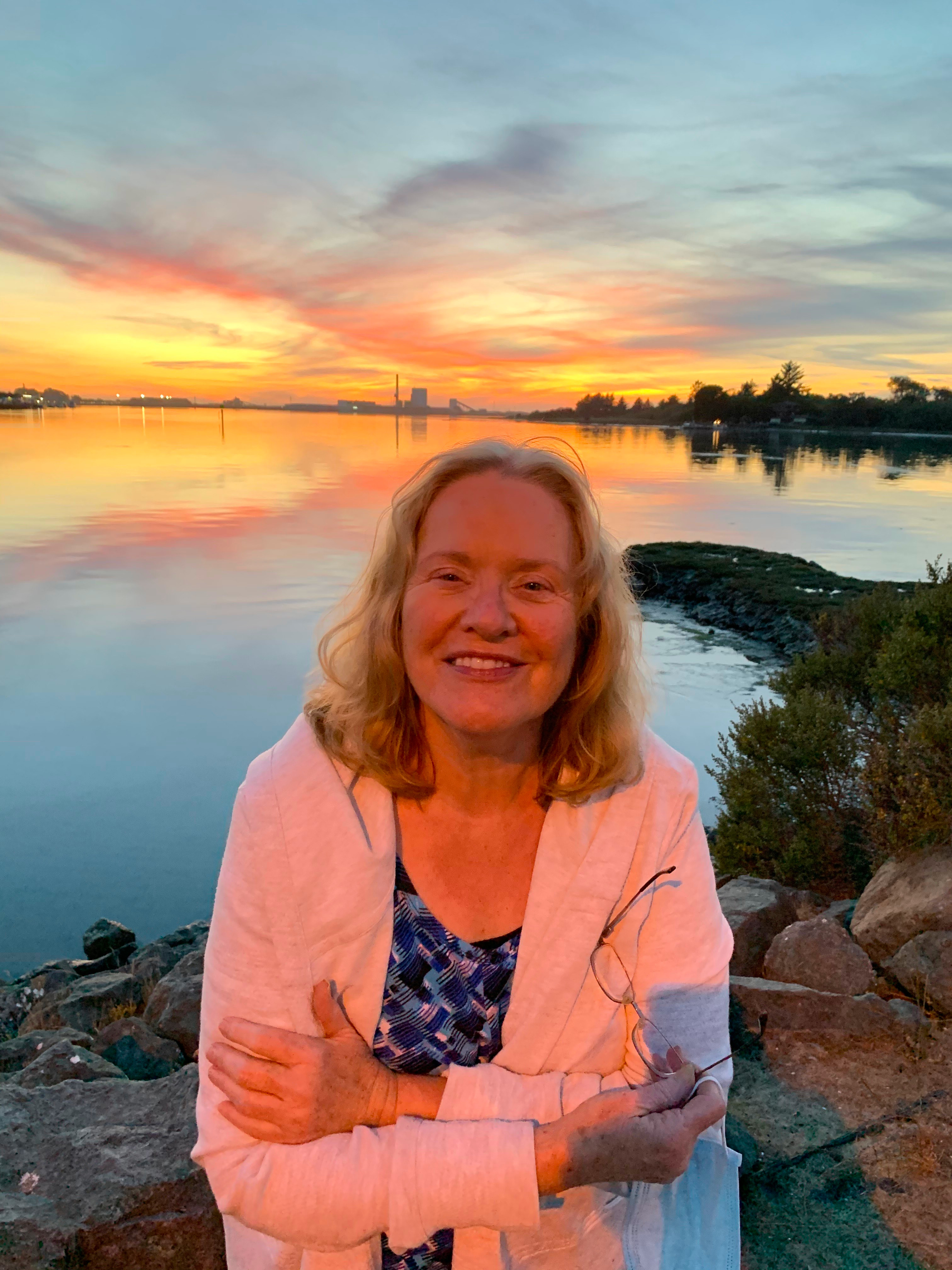
Katherine
Sue Montagne
August
15, 1948 – February 10, 2025
It is with profound sadness that we announce the passing of our beloved mother, Katherine Sue Montagne, on Monday, February 10, at the age of 76. She passed away peacefully at Kaiser Permanente Oakland, surrounded by her loving family. Over the years, she touched countless lives with her kindness, compassion, and joyful spirit.
Kathy was born on Aug. 15, 1948, in Hominy, Oklahoma, to Jack and Laura Crain. She grew up in Bartlesville, Oklahoma the second of five sisters named Jacqueline (Jacki), Judy, Karen, and Carla. She and her twin sister, Jacki, were the grand marshals of the Hominy Fourth of July Parade and often wore matching outfits that their mother sewed from hand.
Kathy moved to California in 1967 with her twin sister, Jacki. Lured by the sunshine and the images of gentle people with flowers in their hair, she landed first in Sacramento before moving to Pasadena where she graduated from Pasadena College. Afterward, she began work at St. Luke’s Hospital as a ward clerk. She met and fell in love with David Montagne and the couple married in 1973 at the home of their good friends, Mary and Tony Cugino. They moved to Hawthorne, Calif. where she taught home economics at both Hawthorne High School and Pasadena City College. She was particularly proud that her former student, Mike Scott, had achieved great success as a major league all-star pitcher and master of the split-fingered fastball.
Kathy and Dave moved to Eureka in 1973 where she taught at Ferndale High School before joining the nursing team at Mad River hospital. With the birth of her first child, she felt a renewed calling to work with children and joined the Manila Westhaven Parents Council in 1980. From there she began a 40-year tenure at North Coast Children Services eventually serving as the executive director for over three decades.
Kathy never met a person she couldn’t talk to nor a cause toward which she couldn’t be compassionate. She loved local art, advocating for children, and throwing parties. It’s no surprise that the modest fundraiser for local children’s programs she helped organize with her colleagues at North Coast Children’s services blossomed into the 30-year community celebration, Pastels on the Plaza.
Kathy dedicated much of her life to her family and the children of the North Coast. She regularly hosted Japanese exchange students who were attending Humboldt State and remained close to them after they returned to their home country. Her love and commitment were evident in everything she did. Her home was a place of warmth, comfort and laughter, where she always made sure her family felt safe and loved.
Kathy had a passion for live music, diverse cuisine, and was involved in various school boards along with the Arcata Economic Development Council. Her generosity and kind heart left a lasting impact on everyone she met.
She is preceded in death by her parents, Jack and Laura, as well as her sister, Karen. She is survived by her sons and their spouses, Andy (Johanna) and Brian (Brenna); her sisters Jacki, Judy, and Carla; her grandchildren, Apollo and Anais; her cousin, Gene; numerous nieces and nephews; and her loving caretaker, Dave.
Her legacy of love, compassion, and resilience will continue to inspire all who knew her. A memorial service to celebrate her life will be held at Humboldt Unitarian Universalist Fellowship, at 24 Fellowship Way in Bayside at 1 p.m. on April 19, 2025. All who wish to are welcome to attend.
We will forever cherish the moments we shared with her and are comforted by the knowledge that she will always be with us in spirit. Rest in peace, Mom, and thank you for everything you gave us. You will never be forgotten.
###
The obituary above was submitted on behalf of Katherine Montagne’s loved ones. The Lost Coast Outpost runs obituaries of Humboldt County residents at no charge. See guidelines here. Email news@lostcoastoutpost.com.
OBITUARY: Joan Ledgerwood Ruprecht, 1934-2025
LoCO Staff / Tuesday, March 11, 2025 @ 6:56 a.m. / Obits

Joan
Ledgerwood Ruprecht
July
24,1934 to February 25, 2025
It all began innocently enough. Joan Marie Ledgerwood was born to Mary (Creel) and Howard Ledgerwood at the University Hospital in San Francisco. She may have been tiny, but she would become a Force of Nature.
Our friends and family love to tell Joanie Ruprecht stories. Let’s just begin with this picture, our father’s favorite. It was taken about 1969, while the family spent a year in France, and our mom still looks stunning after five pregnancies.
In her childhood dreams, she flew on her winged white horse. When the horse grew tired, they landed, and Joan opened a cabinet in his belly to pull out her tool box and make repairs. She wanted to be a vet when she grew up.
She was an intrepid adventurer, riding when she rode buses alone all over San Francisco as a child. After the family moved to Soquel, she and her dog rambled in the mountains, just the two of them.
During World War II, like all the other kids, she collected scrap metal and purchased a War Bond. She and her brother Jim loved the Lone Ranger Movies at the Saturday Matinee. One morning after the war, all the Japanese kids returned to school, and Joan was shocked to realize she hadn’t even noticed they were gone.
She was a teenager when her dad and his friends went hunting for gold in the Los Angeles hills. Her mother got a phone call her mother got from the morgue asking where to send the body. This was the first Mary knew he had been killed. Howard had been down inside a mine shaft when the rope broke and the bucket of rocks hit him on the head. His so-called friends went on the lam. This terrible phone call haunted Mary all the rest of her life.
Joan was a senior in high school, playing tennis with a girlfriend, when a complete stranger stopped tell them if they maintained B averages, they could go to college anywhere. Because women weren’t allowed in to vet schools in the 1950s, Joan chose UC Berkeley and Public Health.
The summer before college, she worked as a scab while the switchboard operators were on strike. Afterward, at Berkeley, Joan worked the switchboard in the dormitories. One day, while wearing a low-cut dress, she attracted the attention of a graduate student who was working as “housemother” in the international dorm. Ted Ruprecht invited her to a dance. And that was the beginning of their 70 years of romance.
Ted was six years older, and Joan’s roommate asked why she was dating “that old man?”
Perhaps the roommate didn’t yet know what we all have learned. The quickest way to get our mom to do anything was to tell her she shouldn’t.
Ted proposed on both knees.
She once told me her wedding night was the happiest moment of her life. The morning after, her new husband told her he had just been laid off his job because the shop was closing. Luckily for him, she was used to the idea of unemployed husbands!
After graduation, Ted taught at his alma mater, Occidental College, and Joan worked at the Los Angeles Public Health Department. They were saving up for a European vacation when she accidentally got pregnant with me, Janet. She had no regrets: Europe could wait.
Ted’s second teaching job was at Humboldt State College, when he was still ABD (All But Dissertation). These two “city kids” rented property that allowed them to have a milk cow, rabbits, chickens, ducks, a dog, and ultimately a pony. And then two more kids: Carol and Phillip, at two-year intervals.
This job was supposed to be a stepping stone in Ted’s academic career, but instead he and his colleagues decided to stay and make something of the tiny Economics department. The Ruprechts bought 20 acres north of Trinidad where they could be ‘gentleman farmers.” Joan applied her laboratory skills to pasteurizing milk, raising hens for eggs, and plucking the roosters for the dinner table. At night, they continued work on the dissertation on the kitchen table: she typed, while he cut and pasted.
When our mother was still a blushing bride, she hardly knew any swear words, and she remained vague about some of the meanings. One night, she announced at a faculty party, “Ted says the dean is a real cocksucker.”
You could have heard a pin drop.
Our father thought it wise to get out of town for a while. He applied for a Fulbright Research Fellowship in the Philippines, and he and his wife and their three kids got aboard a ship in San Francisco. We explored every port of call.
Our mother was pregnant with their fourth child. The birth was bungled, and the baby boy was born dead despite an emergency c-section. Mother just about lost her mind.
Then our three-year old brother Phillip was diagnosed with tuberculosis. In those days, the United States would not have allowed him back into the country. Fortunately, a second test proved negative.
After they returned to California, they began to clear pasture on the homestead. The preferred method was to stake out a goat to trim the branches, next a pig to root, and then the kids to drag brush uphill (it was always uphill) to Mother’s glorious bonfire. The pigs especially got loose a lot and came trotting to the house for handouts. Eventually, they got too big to hold with rope and ended up in the freezer. Meanwhile, all the kids inherited the pyromaniac bug.
After her electric cookstove broke down, Mother declared she wasn’t going to waste $500 on a new stove. Instead, she spent $500 on a refurbished wood-burning stove. We all learned to cook on that stove.
Joan loved to go to the animal auction. Once she bought Carol a tiny pig: it got loose in the car, squeezed under the back seat, and ended up under Mother’s feet and the brake and gas pedals. She was infamous for time she bought a heifer that jumped out of the back of the pickup on the highway. And for the bull she set loose in the pasture; it jumped out and bred the neighbors’ prize cows.
She was desperate to have a baby to replace the one she’d lost in the Philippines, and she gave our father an ultimatum: no more sex unless they were going to make another baby.
This time, her doctor told her, she would have to have another Caesarian. The plan was to wait until she started going into labor, so the birth would be as near natural as possible. But when her time actually came, the doctor was out of town. Mother was furious.
In those days, laboring women were given a medicine that acted like truth serum. Enraged, she kept asking, “Who got me into this?” Who, indeed?
When the doctor finally arrived, she told him exactly what she thought of him in some pretty raw language until at last Elaine was born.
Our dad got a research grant at Yale, and our parents decided to camp across Canada to get to Connecticut. Mom bought a very second-hand station wagon that her mechanic declared he would not trust to drive as far as Eureka. She hand-painted it brown and cream, named it Brownie, and loaded up her four kids. But first, she tied jingle bells to toddler Elaine’s shoes, in case she wandered out of camp in bear country.
That winter, she took us to every church in that Connecticut village so we could be exposed to all the denominations and enjoy the architecture. Our dad had been an altar boy, but our mom must have been raised outside the church. Not knowing any better, she instantly swallowed the Communion bread and wine.
She took us to museums. The way I remember it, she and Phillip would set out for the dinosaur display while I made a beeline for the Ancient Egyptians, and who even knows where Carol and Elaine got to? Mother taught us the joy of owning art by taking us to the gift shop and letting us each choose our favorite reproduction.
This was the sixties, and Mother decided she wanted to adopt another baby. She wanted to contribute to racial integration, but not being savvy about changing norms, she enraged a Black woman by saying she wanted to adopt a “Negro” baby. After the explosion, she chickened out.
On our way home, travelling across the South, she taught us about Jim Crow laws and racism by taking us to the “Colored” toilets. In Atlanta, she and our dad went to pay their respects to the newly assassinated Martin Luther King.
We had barely returned to Trinidad when our dad was recruited for a year-long consultancy at the prestigious Organization of Cooperation and Economic Development in Paris. Mother decided the best way to cross the United States with four kids was by travelling at night by Greyhound and skiing at resorts in the daytime. Not our dad: he took an airplane to New York. I should have gone with him.
We spent a very long, cold night shivering in a VW Bug in the parking lot of a ski resort because we were caught in a snowstorm. The lodge was locked tight and ours was the only car in the lot.
When we got to Paris, our rented house was not ready, and we holed up in the Hotel Confort. Mother took us to the American Library and unaccountably left us behind to be retrieved later—except that the library closed before she came back. We kids had to navigate the Metro back to the hotel. In the days that followed, she refused to get out of bed or eat. This was our first exposure to what in those days was called manic depression.
Our parents dumped us in the French school because “total immersion” was all the rage in education. The French teachers did not make us welcome. However, Mother made up for it by taking us on bike adventures or exploring the underground fortress in the woods that no one in our village would talk about. She enrolled Carol and me in Ballet and horseback riding, and Phillip in Judo. She said we should learn how to fall.
She was a tease. One evening, she secretly prepared horsemeat for dinner before one of our riding lessons? Fortunately, she did not admit to this crime for years.
After we returned from France, she bought a half-starved Arabian mare, Faratha. Upon the advice of friends, we fed her all the grain and alfalfa she could eat. The mare became crazed and spooked at everything, yet who put her girl children on its back and sent us out into the world?
And who — after I had been dragged after the saddle slipped sideways, knocked unconscious, and later decided to give up horses forever — went right out and bought a second mare? Because Mother had driven the car, I had to ride the horse home. As a logging truck passed us, I prepared to die. But gentle Felina didn’t turn a hair. Slowly, my love of horses returned.
While I was away at college, Felina was stolen out of a locked field. Mother searched everywhere. She went to the auction with Felina’s photo and discovered the sheriff’s deputy who was supposed to be looking for her didn’t even know what color she was. My mare was never recovered, and once again I gave up horses forever.
Years later, she bred a grey mare to a brown stud. When the mare’s belly muscles tore internally so badly that they couldn’t hold up the foal, Mother and two friends created a girdle with a pack saddle to cinch her belly up and let her carry the foal to term. When the miracle baby was born alive, and as red and white as my lost horse, Mother said, “Here’s your new Felina.”
One summer, our dad went to Korea for a summer. Mother took it into her head to surprise him in Manila. All her friends advised against it. So of course, she went. Boy,was he surprised when he got into the hotel elevator and there she was.
She didn’t tell him she had taken up running while he was away because she was feeling depressed. She just took him to Clam Beach and ran away from him. Our dad had been a world class sprinter in college; he was furious about his decline. He took up running again.
She entered the Clam Beach Run. She discovered Ride & Tie, a sport in which two people take turns running and sharing a horse. While looking for an easy marathon, she ran the Santa Cruz Sky to the Sea fifty miles downhill all the way. She rode her first 50-mile Endurance Race. She dragged our dad into these sports.
Mom taught us that the best way to get a job is to volunteer. While her last child, Elaine, was in elementary school, Mom volunteered at the Health Department. Soon she was working full time, and ultimately became the head of the Laboratory.
Our mother was an early expert on the tick-borne Lyme’s Disease and went to international conferences. At the beginning of the AIDS epidemic, the public health nurses, fearful of contamination, refused to draw blood for AIDS testing. Our mother did it. She tested for other sexually transmitted diseases. She tested rabid bats and foxes. She also tested oysters from the Humboldt Bay. She was expected to dispose of them afterwards. Instead, she brought them home and declared them delicious.
During a Grand Jury inquiry, Mother testified that funds earmarked to upgrade the lab equipment were being spent elsewhere by the county administrators. The lab funding was restored.
The County administrators used to hire hatchet men every so often to clean house. One tried to force Mother out. She fought tooth and nail, claiming workplace-related mental health stress, until finally there was a compromise and she was allowed to honorably retire.
My parents spent another summer in the Philippines and Australia, this time with Grandma Mary and three of the kids. As a young married student, I stayed home and thus missed the incident in which Mother insisted on visiting an infamous prison. The inmates wore bright orange jumpsuits. Orange was Mother’s color. She really wanted a jumpsuit. She offered to exchange her blouse. If not for the guards preventing the trade, she would have stripped it right off.
Our dad received another Fullbright Fellowship, this time to teach capitalist economics in Bulgaria at the Karl Marx Institute right after the fall of communism. Our mom was stalked on the bus and down the street by a teenager who finally got up the courage to introduce herself and ask if she could practice her English. This was Slavena Savova. Mother later moved heaven and earth to get the State Department to grant a visa so Slavi could come live with the Ruprechts while she attended American high school.
One of her proudest accomplishments was the First Annual Hoopa Hike. Using logging maps, she, our father, our teenaged brother, our friend Bob Dickerson, our live-in college student, Bob Yarber, and his dog, Willie, hiked four days from Hoopa to Trinidad. They were propelled by the force of her sheer willpower — which was substantial. There has never been a Second Annual.
At retirement age, our parents both became full-time athletes. They competed in Ride & Tie and Endurance all across the western United States. Mother persuaded our dad that breeding horses was a terrific tax dodge. You could lose money in the horse business for seven years and write it off.
She traded a dog for a white Arabian mare that had foundered. This was Feather. Our mom bred her (of course) and brought her back from lameness to be competitive over 50-mile races. She said Feather was her dream horse from her childhood. Although not quite winged, Feather couldn’t be slowed, and Mother would ride at speed down a narrow forest path calling, “I can’t stop her!” This did not make her universally admired.
One summer, I came home to find a single-horse trailer parked in their forest. I recognized it immediately as a declaration of her independence. I feared their marriage was over. But I was proved wrong.
When my first husband, Jeff, was dying of cancer at age 25, my mom came to help. She loaded him, me, and the wheelchair into our Pinto, and took us to the beach. We got Jeff, who could barely walk, into the waves and he laughed aloud as he rolled back and forth.
I moved home again after he died, and Mother offered to take me to Mardi Gras in New Orleans, but I suggested we go to Carnival in Rio instead. She took all three daughters. In the back of beyond, our rental car broke down, and while I assumed we would be raped and murdered, she taught us that you can always wave down a trucker for help.
Later that night, she shared a bottle of red wine and a packet of kids’ photographs with the woman who was renting us a room in her house. Without a word of common language, they talked all night in the language of friendship.
After my sweetheart, Paul, followed me home to Trinidad, my brother and his wife moved in. Not very many grown children could have lived as happily with their parents as we did. However, denied grandchildren, Mother went into a breeding frenzy. In addition to breeding horses, she would trawl her bitch in heat through Trinidad, hoping to find a handsome father for the puppies.
This continued until my teen-aged sister surprised us by becoming pregnant. Mother’s breeding efforts abruptly stopped. For a few years, all the adults in the household raised the baby, Louis.
In retirement, our parents took classes in the Over 60s program at HSU. Mother frequently left her keys in the door or the ignition or the lock of her car trunk when she went to class. Eventually, the car was stolen. This car was of great sentimental value because our father had given it to her. By the time the police recovered it, the car had been stripped of everything, including the wheels. Mother was slowly restoring all the missing parts when four wheels of exactly the right make were advertised in the Tri City Advertiser. Joan bought back her own wheels, identified them by the serial numbers of her tires, and turned the evidence over to the police. No one was ever arrested.
My own husband became a Fullbright scholar, and we went to live in Germany while Paul did his Ph.D. research. My parents brought our friend Betty, Grandma Mary, and Elaine and her boyfriend to visit. Grandma Mary was determined to visit Toledo, Spain, before she died. My mother was determined to visit a colleague who had retired from the lab in Finland. My husband patiently tried to explain this was impossible. He spread maps across the floor to show them the train routes. He calculated the distance and time. He was wasting his breath.
Mother and Grandma Mary traveled from Germany to Toledo to the Artic Circle and back in five days. They were triumphant.
After she got home, Mother discovered a slug race to be held at Patrick’s Point. She had admired the deep orange slugs in our forest in Germany. She told us to send her one for the race. Even though we knew we were breaking international laws, such was the force of her nature that we dutifully packed up a slug and a spare in a metal tea box and sent them to Trinidad. By the time they arrived, they had turned a sickly grey and they performed poorly. Mother released them into the wild. Of course she did.
Mother was intuitive, perhaps psychic. On the night her father died, he appeared to her in her bedroom. Years later, as our sister Elaine prepared for her wedding, Mother had a very bad feeling about the officiant. He was a former Catholic priest turned Episcopalian and he did not approve of weddings held outdoors in a field instead of a sanctified church, nor of having children stand up with the bride and groom, nor of horses in the ceremony. Clearly not the right priest for a Ruprecht wedding. After the pre-marital counseling, he took Jim aside and recommended calling off the wedding because he thought Elaine was not ready to commit. After a sleepless night, Jim decided they needed to find a new officiant.
Luckily, Mother had seen this coming. She had secretly lined up a judge who loved having the bride ride up on horseback and the children serve as bridesmaids and groomsmen.
In retirement, Mother taught dozens of girls to ride. She recruited 10-year-olds and took them on adventures into the deep woods. She also had a soft spot for grown women who had always longed to ride but had never had the opportunity. She introduced her friends to Endurance and Ride & Tie. She and our father became leaders in the local clubs and helped put on competitions in the Redwoods.
Everywhere Mother went, she took her dogs. She was famous for loading them into the trunk of her car. She rode with a succession of hounds — to protect her from bears and mountain lions — and small dogs who thought they were hounds, including a Pomeranian, a chihuahua mix, and something shaped like a Shi-tzu.
All was not sweetness and light. Horse clubs are very contentious. In one of the biggest conflicts, our local club divided sharply between the lovers of dogs and the despisers of dogs, especially in Ride Camp. Especially loose dogs in camp.
Did I note that the quickest way to get her to do something was to forbid it?
On one notable occasion, when dogs were outlawed from a local ride, she reserved a family campsite outside Ride Camp and sent her grandson Louis with a whole pack of dogs to stay there. Except the dogs saw Mother across the campground and came running to greet her. Things got ugly with Ride Management.
Our parents took up cruising. They treated the ships like floating hotels, and they travelled all over the world, including Antarctica and the Norwegian Fjords. What they liked most was the social aspect, and toward the end, they cruised to Mexico, Hawaii, and Alaska, not really caring about the destination.
Whenever I asked for advice on life, Mother answered, “Have fun.” And if you weren’t having fun, she advised you to something different. Joan Ruprecht lived her life to the utmost, and although there was tragedy as well, she most certainly had a great deal of fun.
Our mother was an extremely lucky person, and she knew it. She was scary behind the wheel, but I was willing to get in the car with her because I knew she was incredibly lucky.
She never quit marveling at how lucky she was to marry our father. Last summer, we celebrated their 96th and 90th birthdays. Our father passed peacefully this last December, and after 70 years of true love, Mother was lost without him. Although her memory was failing, she never forgot her beloved. Most of the time, she knew he was gone, but she still called out for him in the night. After two and a half months, she followed him to wherever he’s gone.
They are still having adventures.
Once again, the family would like to thank Shelly Luna and Jaime Sumahit for their tender care of our parents.
We will hold a joint Celebration of Life on August 2nd at the Ruprecht Ranch.
I am putting together a book of the Joanie stories we love to tell, but I’m sure some great ones have yet to written down. Please email me at janet.ruprecht@gmail.com or call me at (707) 407-6258 and tell me your favorite. Maybe I can wedge it into the book.
###
The obituary above was submitted on behalf of Joan Ruprecht’s loved ones. The Lost Coast Outpost runs obituaries of Humboldt County residents at no charge. See guidelines here. Email news@lostcoastoutpost.com.
Dwivedi Accuses His Tenants and Their Attorneys of Presenting False and Misleading Information to the Court, But Judge Keeps Restraining Order in Place
Ryan Burns / Monday, March 10, 2025 @ 4:25 p.m. / Courts

Real estate investor and local landlord Anil Dwivedi (left) recently purchased the Hillsdale Apartments at 1140 E Street in Eureka. | LinkedIn, Andrew Goff.
PREVIOUSLY
- Eureka Apartment Tenants Say They Were Manipulated Into Big Rent Hikes; Landlord Says They Freely Chose to Help Him Make Ends Meet
- Tenants at Eureka’s Hillsdale Apartments Successfully Fight Back Against Illegal Rent Hikes
- Tenants of Hillsdale Apartments File Class Action Lawsuit to Stop Landlord’s ‘Unlawful Rent Increases’
- Judge Grants Restraining Order Against Hillsdale Apartments Owner, Preventing Illegal Rent Increases
###
A local landlord being sued for trying to implement illegally high rent increases fought back in court this morning, taking the stand to read a prepared statement in which he accused plaintiffs and their attorneys of submitting false and misleading information to the court.
Anil Dwivedi, the landlord who purchased the Hillsdale Apartments in January through his corporation Dwivedi Tower, LLC, testified that he agreed to rescind the illegal rent increases before this case was filed, and he alleged that plaintiffs’ attorneys had submitted into evidence a lease agreement supposedly pertaining to Don Swall, one of the two primary plaintiffs, when in fact it belonged to another tenant altogether.
Speaking with conviction directly into the witness stand’s microphone, Dwivedi quoted passages from the class action complaint, insisting that they were false, and he alleged these false statements have caused irreparable harm to his business and his hard-earned reputation in the community.
“I have received hateful comments, calls, messages and death threats, as well as acts of physical aggression when walking on public streets and in stores,” Dwivedi said. “I no longer feel safe leaving my home to walk outside given the high likelihood of being harassed or attacked.”
He said that Swall and fellow plaintiff Vanessa Vachon admitted that their rent increases had been rescinded in an interview with the Outpost, for a story published on Feb. 18, at which time they were being represented by the nonprofit Legal Services of Northern California.
“This only further proves that the plaintiffs and their attorneys fabricated this entire case,” Dwivedi said.
He also objected to the lawsuit’s continued inclusion of another property he owns, the Eureka Central Residence, at 333 E Street, even though it has nothing to do with the case.
The plaintiffs’ attorneys, Jeffrey Slack and Megan Yarnall with the Eureka firm of Janssen Malloy LLP, denied misrepresenting any of the facts in their complaint, which accuses Dwivedi of manipulating Hillsdale Apartments tenants into signing new leases with rent increases of 30% - 60% or more, in violation of the California Tenant Protection Act.
Yarnall apologized to Dwivedi for any and all harassment he has faced, but she and Slack pushed forward with their case, asking Judge John T. Feeney Timothy Canning to grant their request for a preliminary injunction barring Dwivedi from any further violations of state law.
In his comments at the outset of today’s hearing, Slack said Dwivedi is still trying to charge excessive rents, despite a restraining order issued last month. Specifically, he said Dwivedi raised fees for storage lockers at the Hillsdale Apartments building. Slack also alleged that Dwivedi failed to adequately notify tenants about their new leases by failing to mention the storage fee increase and by not disclosing their rights under the Tenant Protection Act.
“Therefore, these tenants still need protection … [and] irreparable harm will continue to occur unless the defendant is enjoined from violating the law,” Slack said.
Dwivedi’s attorney, Randall Davis, echoed his client, saying a preliminary injunction is unnecessary at this point because Dwivedi already retracted his attempt to increase tenants’ rents by more than the 8.8 percent maximum currently allowed in any 12-month period for established tenants under the Tenant Protection Act.
“[Dwivedi is] no longer trying to, essentially, do what he did before,” Davis said.
As for the storage units, Davis said tenants who are already renting space won’t have their fee increased, while tenants who wants to start renting space will essentially be signing up for a new service, which is not part of their existing lease agreement. He compared the situation to a landlord who offers to deliver fresh strawberries to tenants a few times per month for an extra fee.
Yarnall reiterated that the plaintiffs have done no fabricating in the case and said that while Dwivedi has taken steps toward complying with the law, “We’re not there yet.”
“We just want defendants to comply with the law with respect to the [Tenant Protection Act], and we want them to give proper notice to tenants … ,” she said. “We want them to serve the notice properly, and we want the amounts to be correct.”
Yarnall said tenants at the Hillsdale Apartments have contradicted Dwivedi’s assertions. These renters say their landlord has, in fact, started charging them more for their existing storage spaces, and a couple of former tenants moved out in response to the threatened rent increases.
Davis, Dwivedi’s attorney, closed by saying his client has provided evidence demonstrating that there has been no actual harm caused — except to Dwivedi himself.
“You know, he tried to do something that pushed up against the law and learned very quickly from his mistake and is moving forward accordingly,” Davis said.
Slack disagreed, saying there has, in fact, been evidence showing that Dwivedi violated tenants’ rights — and evidence of ongoing violations. He again argued for a preliminary injunction.
Judge Feeney Canning condemned the “hateful messages” that have been directed toward Dwivedi and said he’ll take the matter under submission. He has 90 days to decide whether or not to issue a preliminary injunction, though he said he’ll try to reach a decision sooner rather than later.
The previously issued restraining order — which simply prevents Dwivedi from violating tenants’ rights — will remain in effect during his deliberations.
Blue Lake Rancheria Acquires 240-Acre Cattle Ranch Near Tribal Lands, Vows to Keep Property in Agricultural Production and Available for Research
LoCO Staff / Monday, March 10, 2025 @ 3:35 p.m. / Community
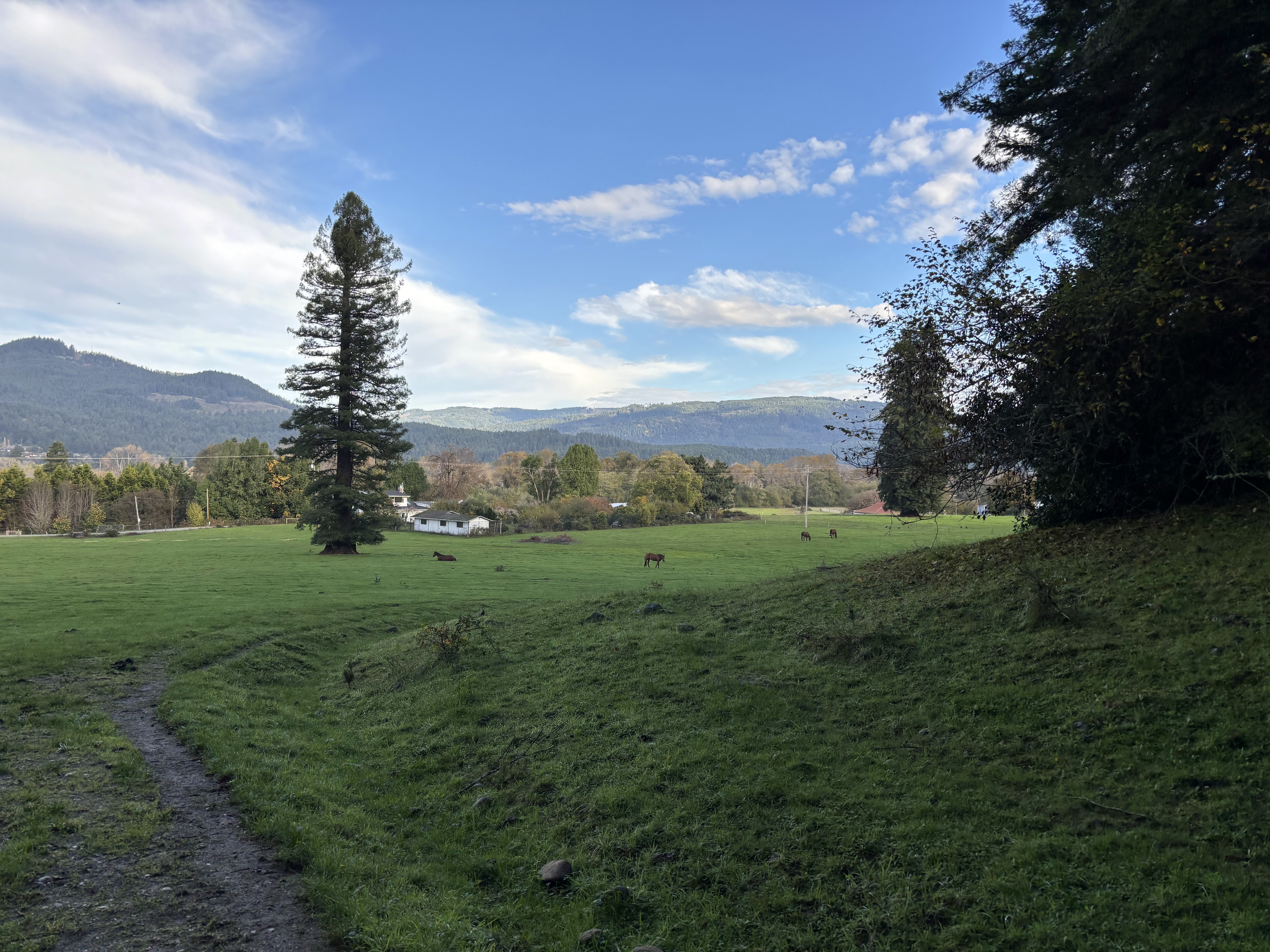
Leavey Ranch. Photo: Blue Lake Rancheria.
###
[DISCLOSURE: The Blue Lake Rancheria is a minority owner of the Outpost’s parent company, Lost Coast Communications, Inc.]
###
Press release from the Blue Lake Rancheria:
The Blue Lake Rancheria Tribe (BLR) is honored to assume stewardship of Leavey Ranch, a historic 240-acre property adjacent to BLR Tribal lands. As the ancestral home of the Wiyot people, this land return marks a vital step in correcting historical injustices and ensuring sustainable land management for future generations.
Jim Leavey established the Joseph J. Leavey, Jr. Revocable Trust in 2007, granting his estate to the Humboldt Area Foundation, which has overseen its management since 2014. The recent transfer of Leavey Ranch to Blue Lake Rancheria followed a rigorous Request for Proposal process facilitated by the Humboldt Area Foundation + Wild Rivers Community Foundation, ensuring the selection was based on merit and aligned with Mr. Leavey’s intent to support agriculture, ecological preservation, and education.
The Leavey Ranch was purchased in 1912 by Michael Leavey as part of the family’s dairy operation. The Leavey family played a significant role in shaping the West End and wider agricultural community through their land stewardship and civic engagement. Jim Leavey — Michael’s grandson — continued in this tradition through his own conservation work.
In honoring the intent of Mr. Leavey, the Tribe will continue to maintain Leavey Ranch as a working cattle ranch while integrating the property into its Food Sovereignty Program. This initiative will enhance the production of traditional and fresh foods, supporting elders, children, and underserved communities.
A continued partnership with Cal Poly Humboldt will drive ongoing research in regenerative agriculture and ecological monitoring. Meanwhile, Blue Lake Rancheria will create immersive learning experiences centered on Traditional Ecological Knowledge, wildlife conservation, and sustainable land management practices. The Tribe will prohibit all non-agricultural commercial development on Leavey Ranch, protecting its ecological and cultural significance. Future efforts will focus on land restoration and climate resilience by implementing carbon sequestration, agroforestry, and indigenous land management. This approach will help restore the landscape while ensuring long-term sustainability.
Since its federal reinstatement in 1983, the Blue Lake Rancheria Tribe has built nationally recognized initiatives in climate resilience, renewable energy, and food sovereignty. With its proximity to Leavey Ranch and decades of sustainable land management experience, the Tribe is uniquely positioned to uphold the agricultural legacy of the property while advancing environmental and cultural sustainability. Blue Lake Rancheria is eager to collaborate with the Humboldt Area Foundation + Wild Rivers Community Foundation, Cal Poly Humboldt, College of the Redwoods, and other regional and Tribal organizations to maximize Leavey Ranch’s potential, ensuring lasting benefits for the region that aligns with Mr. Leavey’s wishes.
“Stewarding Leavey Ranch is both an honor and a responsibility, and we are deeply grateful for the trust placed in us to uphold its legacy. This land represents an opportunity to strengthen sustainable agriculture, expand educational programs, and enhance ecological preservation for future generations. Through collaboration and careful stewardship, we look forward to ensuring that Leavey Ranch remains a thriving resource for the community and a model for regenerative land management.”
– Jason Ramos, Tribal Chairperson, Blue Lake Rancheria
“The transfer of the Leavey Ranch marks a new chapter for this special place, one in which we are proud to have played a role. Jim Leavey felt strongly that the ranch should not be developed and that it should provide opportunities for conservation and education. Blue Lake Rancheria shares that vision, and it’s exciting to see the work that has already begun in honoring his intent.The Rancheria and HAF+WRCF have shared goals and values, particularly in their desire to strengthen food sovereignty and disaster resilience, to restore Indigenous ownership, access, and management of land, and to include the input and leadership of community partners. We look forward to seeing what comes next.”
– Sara Dronkers, Chief Operating Officer, Humboldt Area Foundation+Wild Rivers Community Foundation
Blue Lake Rancheria would like to thank our West End neighbors and Humboldt Area Foundation + Wild Rivers Community Foundation for their invaluable support in making this land return possible. Looking ahead, the Tribe is excited to collaborate with partners to ensure the long-term sustainability of the property. Although Leavey Ranch is not open for public access, those interested in partnership opportunities are encouraged to contact:
TEPA@bluelakerancheria-nsn.gov
This Recent Stretch of Nice Weather Has Been a Lie
Hank Sims / Monday, March 10, 2025 @ 2:20 p.m. / How ‘Bout That Weather

(Source)
Our friends and yours at the National Weather Service’s Woodley Island HQ, which still exists, are sending out the warning! Rain is coming! Don’t believe in this nice sunny stretch! Winter weather is not done with you yet!
Kinda crazy, since a peek at our homepage and the LoCO Weather Report — which is actually National Weather Service’s work, as is all weather-related services on the Outpost and indeed everywhere else you get weather information — shows that we’re nearly 10 inches of precipitation ahead of the average or “normal” water year.
Also: Snow! Looks like there will be plenty of snow sticking in the mountains, very possibly including on highways heading east from the coast. Stay vigilant, motorists!

(Source)
Bipartisanship Is Rare in the California Legislature. Here Are the Bills Breaking the Divide
Ryan Sabalow / Monday, March 10, 2025 @ 7:30 a.m. / Sacramento

Lawmakers gather during the first Assembly floor session of the year at the state Capitol in Sacramento on Jan. 6, 2025. Less than 1% of bills introduced so far have bipartisan authorship. Photo by Fred Greaves for CalMatters
###
This story was originally published by CalMatters. Sign up for their newsletters.
###
In these hyper-partisan times, Democrats and Republicans can’t seem to agree on much. That includes the members of the California Legislature.
Of the 2,278 bills lawmakers submitted by the deadline last week, only 11 had Republicans and Democrats as joint lead authors, according to a CalMatters analysis of the Digital Democracy database.
Another 41 bills had bipartisan “co-authors” and “principal co-authors,” designations that are more symbolic since a bill’s lead authors and their staffs are expected to marshal the legislation through to the governor’s desk.
Authors and co-authors can still be added to bills later in the year. But taken together, these early bipartisan bills represent less than 1% of all the legislation filed so far this session. The figure perhaps isn’t surprising, given ever-rising partisan acrimony and Democrats having a supermajority in the California Legislature.“You know, at the end of the day, we as Democrats also represent a significant portion of Republicans, as well as no party preference, as well as independents and much more,” said Sen. Aisha Wahab, a progressive Democrat from Fremont who co-authored a bill this year with Republican Sen. Kelly Seyarto of Murrieta.
Wahab’s Bay Area district is only 15% Republican and she said she and Seyarto don’t agree on many other issues. But she liked his bill, a version of which failed last year, to help police recruitment efforts by giving officers more time to finish new mandatory college requirements.
California’s early bipartisan bills
So what other other issues do California Republicans and Democrats agree on enough this year to work together?
At least four of the bills with bipartisan joint lead authors were “spot bills,” placeholder legislation that allowed the lawmakers to get their bill in at the filing deadline. The details of those measures on tax penalties, waste management, government ethics and local courthouse funding will be added in coming weeks.
Other bipartisan measures include a health care proposal, Senate Bill 246 by Sens. Anna Caballero, a Democrat, and Shannon Grove, a Republican. The bill would expand Medi-Cal funding for training programs to help address physician shortages including in the San Joaquin Valley, which the two senators represent.
Another public safety measure, Senate Bill 264, by Democratic Sen. Sasha Renée Pérez of Glendale and Republican Sen. Suzette Martinez Valladares of Lancaster would allow prosecutors to charge people with felonies if they impersonate police or firefighters in order to gain access to disaster areas. Currently, the maximum penalty is a misdemeanor. The bill comes after several people were arrested for allegedly impersonating firefighters following the Los Angeles County wildfires.
At least two other bills seek to resurrect legislation that stalled in previous sessions.One was Senate Bill 458 by Sacramento County Republican Sen. Roger Niello and Democratic Sen. Tom Umberg of Santa Ana that would require the Legislative Analyst’s Office to write ballot initiative titles and summaries instead of the partisan Attorney General’s Office.
Various efforts over the years to make the change have fizzled out.


First: State Sen. Thomas Umberg during a Senate floor session at the state Capitol in Sacramento on Feb. 20, 2025. Photo by Fred Greaves for CalMatters Last: State Sen. Roger Niello during a floor session at the state Capitol in Sacramento on Aug. 29, 2024. Photo by Florence Middleton, CalMatters.
The issue took on new life last year after Republicans, including Donald Trump, sought to portray Kamala Harris as a soft-on-crime liberal who supported 2014’s Proposition 47, an initiative that reduced sentences for some offenses (and that voters partially overturned with Proposition 36 in November). Harris was attorney general in 2014 when her office wrote the summary that appears in the state’s Official Voter Information Guide, but she stayed neutral and didn’t officially endorse the measure.
Niello carried a similar bill in 2023 without any Democratic coauthors. He said he was thrilled when the bill passed the Senate Elections Committee with unanimous support, but he was disappointed when it died without another hearing.
“It was most certainly a leadership move, but the fact is, I got it out of the election committee with a unanimous vote, so I thought, ‘Hey, I’m making progress here,’ ” he said.
He said he approached Umberg to join him as lead author of this year’s measure in the hopes the bipartisanship would help move it to Gov. Gavin Newsom’s desk.
For his part, Umberg said he knows Niello well and trusts and respects him. Plus, he said the proposed change is “good public policy.”
Can bipartisanship reform ADA “shakedown” suits?
A pro-business measure, Senate Bill 84, is another example of how Niello’s relationships with his Democratic colleagues led to bipartisan legislation that seeks to resurrect a dead bill.
For decades, California businesses have complained that they’ve been shaken down by aggressive law firms that demand payment when they identify violations of the Americans with Disabilities Act (ADA). Such violations could be a mirror, countertop or handrail being a fraction of an inch too low or too high.
Niello last year carried a bill to give businesses with fewer than 50 employees 120 days to comply with ADA rules before they have to pay the law firms that identify the problems.Niello’s previous bill made it through the Senate, but it died in the Assembly. This year, he hopes having two Democratic senators, Caballero and Angelique Ashby of Sacramento, as lead authors from the beginning will help to persuade their colleagues.“This has been affecting a lot of businesses in disadvantaged areas in Democrats’ districts,” Niello said.Like Umberg, Ashby said that when it came to working with Niello, it didn’t take much convincing.

State Senators Angelique Ashby and Aisha Wahab during a press conference in support of Senate Bill 1043 at the Capitol Annex Swing Space on April 15, 2024. Paris Hilton spoke in support of SB 1043, which would require more transparency for children’s treatment facilities that are licensed in California. Hilton spoke of her traumatic experience during her teenage years at similar facilities in California and Utah. Photo by Miguel Gutierrez Jr., CalMatters
For one thing, she said she’s had “microbusinesses” including a popular burger joint in her district struggle over ADA-compliance claims.Ashby said she also knows Niello personally from her time as a member of the Sacramento City Council. Niello is a former Sacramento County supervisor and a former chamber of commerce leader whose family owns a number of car dealerships in their districts.
“He’s a wonderful human,” Ashby said. “We don’t have to agree on every policy issue to like each other, and we do.”
Two moderate former Democratic lawmakers who left office last year say those sorts of relationships can be critical to advance tough bills. Plus, they argue that when Republicans support Democratic proposals, it can add credibility in the eyes of the public.
“It can make your proposed policy change stronger and more enduring,” said Steve Glazer, a former Democratic state senator from Orinda who didn’t seek reelection last year.
Steven Bradford, a Democratic state senator from Inglewood who termed out last year, recounted how he needed Republican support on a bill that expanded powers for the police that patrol Los Angeles airports since he didn’t have enough Democratic votes.
“Had I not had the relationships with those guys, that bill would have died,” he said.
###
Digital Democracy’s data analysis intern, Luke Fanguna, contributed to this story.


