

OBITUARY: Kevin John Flannery, 1950-2024
LoCO Staff / Thursday, Jan. 23, 2025 @ 6:56 a.m. / Obits
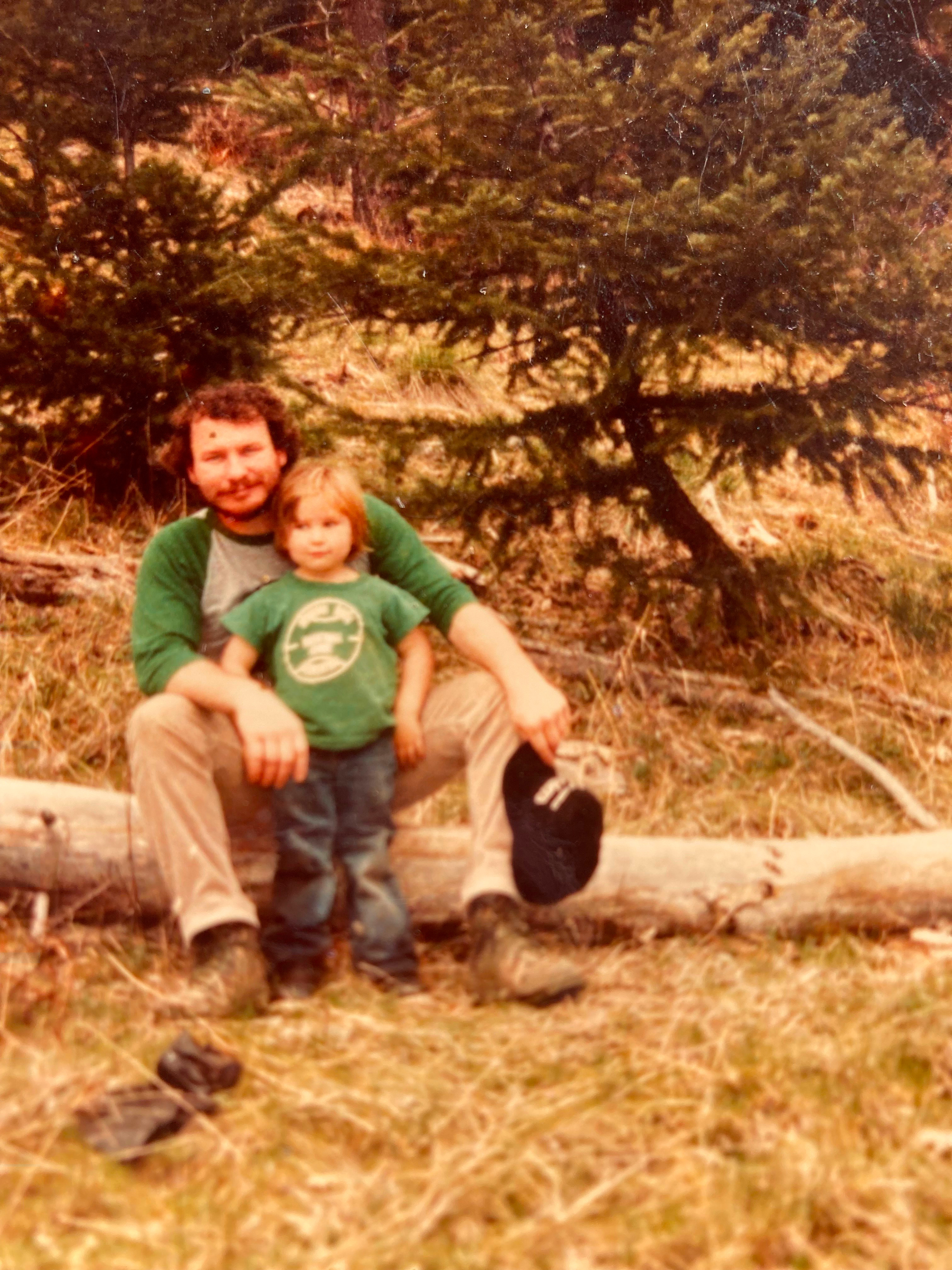
Kevin
John Flannery left this world December 2, 2024. He has gone to be
with his boys Waylon (Oak) and Ezra (Ezzy). All three are deeply
missed. If you knew them you know that they were True Humboldt Folks,
True OG’s. They all shared the same laugh, the same love for their
friends, and a deep love for this place and what it provides.
Kevin is survived by his brothers, sisters and relatives back in Jersey, as well as his former wife and mother of his boys and her partner, Sherri and Rick, who loved Kevin unconditionally.
Kevin was born in Jersey on September 12, 1950. He was a survivor and he held on as long as he could. He discovered Humboldt/Trinity Counties back in the “heyday” mid-1970s. He fancied himself a rebel, an outlaw and a true Dead head.
His health began to decline over the past few years. He suffered from several strokes as well as multiple falls related to the strokes. None of this ever stopped him from telling stories, reminiscing, talking about the good ol’ days and laughing. Laughing that unforgettable laugh.
A friend who saw Kevin near the end said that, “he looked at me with those Kevin eyes,” and with no words, he told me he was leaving “to be with his boys.”
Old Man Kev was a father figure to many of the Humboldt/Arcata kids back in the day. Before cell phones when we spent all of time outside, in the woods or at the river. “The good ol’days” He was the old man, but he was always one of the boys, always there hanging out and telling those unforgettable stories. He is loved and missed by many.
There will be a celebration of Kevin’s life at Moonstone Beach on Saturday February 1 at 2 p.m. All are welcome. Please bring your best Flannery story to share.
###
The obituary above was submitted on behalf of Kevin Flannery’s loved ones. The Lost Coast Outpost runs obituaries of Humboldt County residents at no charge. See guidelines here. Email news@lostcoastoutpost.com.
BOOKED
Yesterday: 10 felonies, 14 misdemeanors, 0 infractions
JUDGED
Humboldt County Superior Court Calendar: Yesterday
CHP REPORTS
No current incidents
ELSEWHERE
RHBB: CDFW Announces Angling Closure at Mouth of the Klamath River
RHBB: Humboldt Bay Area Plan Planning Commission Workshop on Thursday, Sept. 3
Humboldt Bay Fire Sees Uptick in Staffing, Recruits but is ‘Still Recovering’ From Staffing Crisis, Says Chief
Isabella Vanderheiden / Wednesday, Jan. 22, 2025 @ 3:50 p.m. / Fire , Local Government

Humboldt Bay Fire in action. | File photo.
###
Humboldt Bay Fire is finally making its way out of a two-year staffing crisis.
At last night’s Eureka City Council meeting, Humboldt Bay Fire Chief Tim Citro provided an update on the department’s current staffing challenges, which began in 2022, and ongoing recruitment efforts. Citro said the department has filled all but three of its full-time staff positions. Now, he’s focused on “positional vacancies” and training much-needed drivers.
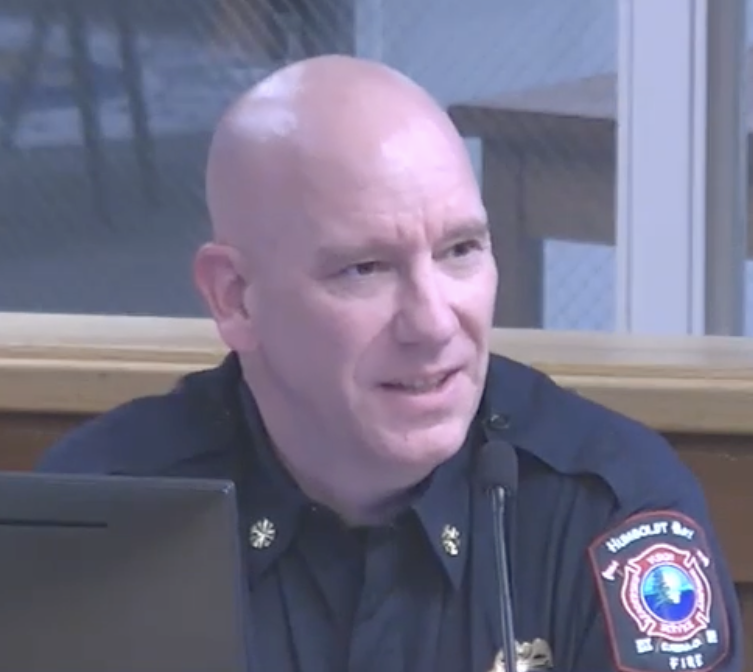
Citro | Screenshot
“[T]he lack of drivers in our organization is what’s really creating some of the staffing shortages that we have,” he explained. “So, when talking to our battalion chief of training and our training captains, we are prioritizing getting those firefighters trained up to drive to fill those positional vacancies because each engine company or truck company has to have at least one captain, one engineer and one firefighter.”
Since the COVID-19 pandemic, fire departments across the country have struggled to recruit and retain employees. Between 2022 and 2024, Humboldt Bay Fire lost 17 employees, including several high-ranking staff, to higher-paying positions with the Arcata Fire Protection District and other agencies in the Bay Area, forcing the department to implement temporary rotating closures at its five stations.
“We’re still recovering from [the staffing crisis],” Citro said. “We’re going to be hiring three entry-level firefighter positions starting in February of this year. We’re scheduling interviews for two weeks from now, and we currently have a list of 14 qualified applicants for three positions. That is not great, but it’s not bad.”
When Citro started his firefighting career in the late ‘90s, he said he was one of 600 fledgling firefighters applying for a job at Humboldt Bay Fire. He’s hoping to boost recruitment through the department’s two-year Cadet Firefighter Program and the Fire Fighter 1 Academy at College of the Redwoods.
“That will give us our own internal hiring pool of local people, so we don’t have to go statewide to try and recruit firefighters to come up here,” he continued. “It’s a really good program and it’s taken off.”
Councilmember Scott Bauer asked Citro to explain how rotating station closures impact response time. In most cases, response time is increased by about one minute, Citro said.
Councilmember Kati Moulton thanked Citro for the presentation and shared a charming story about a recent interaction she witnessed at the grocery store.
“I was in Winco the other day and I saw a firefighter in uniform … and I kept running into them around the store,” she said. “As I was waiting to check out, I noticed that there were two little kids stalking one of the firefighters, like, following him around. They were telling their dad, ‘Dad, there’s a firefighter in the store!’ and they were so excited to see firefighters in uniform. I just wanted to remind our firefighters and anybody who’s thinking about becoming a firefighter, that you’re straight-up superheroes.”
After a bit of additional discussion, the council agreed to receive and file the report but did not take any additional action on the item.
###
PREVIOUSLY:
College of the Redwoods’ Accreditation Has Been Officially Re-Upped for Another Seven Years, Administration Announces
LoCO Staff / Wednesday, Jan. 22, 2025 @ 11:39 a.m. / Education
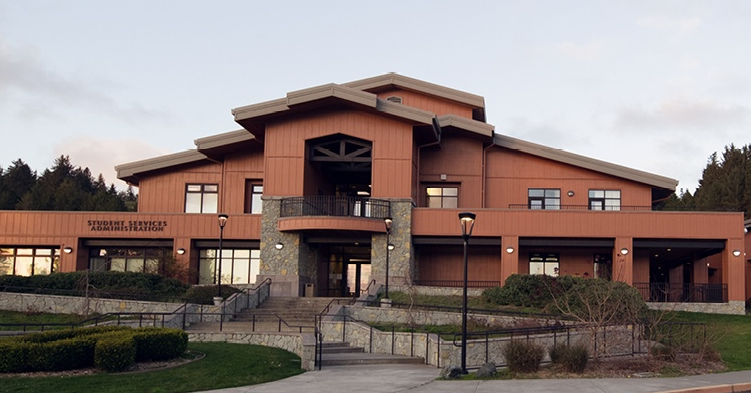
File photo: CR.
Press release from College of the Redwoods:
College of the Redwoods is proud to announce that the Accrediting Commission for Community and Junior Colleges (ACCJC) has reaffirmed the College’s accreditation for the next seven years. This exceptional accomplishment follows a rigorous evaluation process, including the submission of an Institutional Self-Evaluation Report (ISER), supporting materials, and a Peer Review Team Report based on a site visit conducted on September 17, 2024.
CR President Dr. Keith Flamer praised the collective effort, saying, “this achievement is a testament to the dedication of our entire college community to meet accreditation high standards. It is especially noteworthy that we received neither Compliance Recommendations nor Recommendations for Improving Institutional Effectiveness. This is an exceptional achievement and one that makes us all incredibly proud.”
These findings signify that College of the Redwoods not only meets but exceeds accreditation standards, with no deficiencies or areas requiring correction identified by the Accrediting Commission for Community and Junior Colleges (ACCJC). It reflects the institution’s strong operational foundation, and outstanding performance in planning, decision-making, and delivering quality education. This is a rare and commendable outcome, and it positions the college as a model for best practices in accreditation.
Dr. Peter Blakemore, Accreditation Liaison Officer, and Sean Thomas, the lead writer of the ISER, were instrumental in this effort. Their meticulous work and dedication ensured that the College presented a comprehensive and compelling case for accreditation.
Board of Trustees President Colleen Mullary emphasized the significance of this milestone stating, “a 7-year reaccreditation report with no recommendations for compliance is not only an achievement to celebrate, but a bright recognition of the exceptional dedication of CR’s faculty, staff, and administration to students and to the community-at-large. On behalf of the Board of Trustees, we applaud this accomplishment and thank all for the hard work that goes into the accreditation process.”
College of the Redwoods’ next step in the accreditation process is the submission of a Midterm Report, due on October 15, 2028. A comprehensive review will follow in 2031.
For more information, visit the College of the Redwoods website, where the ISER, Peer Review Team Report, and the ACCJC’s action letter has been made publicly available in accordance with Commission requirements.
OBITUARY: Barbara Ann Coutant, 1951-2025
LoCO Staff / Wednesday, Jan. 22, 2025 @ 6:56 a.m. / Obits

On July 10, 1951 this world received an angel. On January 7, 2025 that angel got her wings and we got an angelic star in the Heavens. Barbara Ann Coutant went home to be with her heavenly Father and passed family. Barbara passed at St. Joseph Hospital in Eureka surround her husband, Bill; son Jon Hughes (Kelly); daughter Heather (Richard); grandson Chris (Mercedez); granddaughters Jessica and Jordynn; daughter Nora; Bill’s sister Tami Shaw; nephew Joshua Shaw.
Barbara was the first born of James and Nancy Ross in Fairfield. Barbara grew up in many places because her father was a civil engineer for a large construction company. His work took the family all over the country. Barbara graduated from Carlisle High School in Pennsylvania in 1969. She moved to Long Beach to go to college. She married her first husband and moved to Iowa. They had two children Jon and Heather Hughes. They divorced after heather was born. Barbara, Jon and Heather moved to Virginia for work. When the work did not work out she sent Jon and Heather to live with her ex-husband and moved to Sterling City to help her aunt take care of her grandmother. Her grandmother got better and Barbara moved to Napa looking for work and lived with her aunt Lola and Garry Ross.
While in Napa, Barbara met Bill Coutant, He became the love of her life. They marred on June 29, 1985 and spent 39½ wonderful years together. In 1998 they moved to McKinleyville. That year she was diagnosed with cancer. She had several surgeries, radiation and chemotherapy. She beat the cancer. But the radiation damage was not diagnosed until years later. In 2020 she was diagnosed with end stage renal disease causing her to start dialyses.
Barb was a survivor, and started home hemodialyses, with Bill as her caregiver. They were able to travel with this system. We went camping, flew to Denver, Texas, Nashville and Claremore. Barb loved life and family. She was known to many as Aunt Barb. She loved to sewing, tole painting and many more hobbies.
Barb loved to cook. Barb was the first one to volunteer to cook incredible meals to feed an army. Why cook for two when she could cook for 10 or 20? When Lauren, her niece, got married she was up making gallons of gravy and biscuits for a hungry crowd for breakfast at Larry and Mel’s house. When she and Bill would come for Thanksgiving Barb always had a special dish to make. That is where we learned to like Brussels sprouts!
In 1964, Barb transition made the seamless from favorite babysitter to big sister of Penny (Howard) and Tim (Ross). As big sister, she helped them over the years make sense of hard decisions needed her. Their parents had to make, provided counsel for life events, and always had room in her heart.
As Aunt Barb to Penny’s two daughters, she made time to do fun things like actually play on the equipment with the girls at the Exploratorium in San Francisco. She made gifts and listened to them as if what they had to say was important (because to them, it was).
It was obvious to all who knew her that Barb had room in her heart for so many, because she only had love in her heart, and with love, there is always room for more people.
Barb, may you now be free of pain in heaven. We love you to the moon and back forever and ever.
In lieu of flowers the family asks that donations be made to the American Cancer Society or Hospice of Humboldt, and please get scanned for cancer.
Services will be held on February 8, 2025 at 11 at the Church of Latter-Day Saints located at 1660 Heartwood Dr., McKinleyville.
###
The obituary above was submitted on behalf of Barbara Coutant’s loved ones. The Lost Coast Outpost runs obituaries of Humboldt County residents at no charge. See guidelines here. Email news@lostcoastoutpost.com.
OBITUARY: Steven Blair, 1955-2024
LoCO Staff / Wednesday, Jan. 22, 2025 @ 6:56 a.m. / Obits

We are deeply saddened that on Dec. 1, 2024, Steven Blair passed away at home in Eureka after a long battle with cancer. His wife Linda, of 44 years, and son John were by his side. Steve was born July 22, 1955, in Madison, Wisconsin to Ed and Mynn Blair. He was raised in the Madison and Sun Prairie area, graduating from Sun Prairie High School in 1973. His favorite place to escape to was his grandparents dairy farm. He remained best friends with some of his youth, Mark Wilson, and Steve McQuinn to the end. Steve also attended at Madison Area Technical College.
He started a long migration across the country from Wisconsin, starting in Texas, where he worked his way from shop worker and maintenance to a millwright, welder, and foreman, building everything from satellite dishes to drag lines to oil derricks. He would come home just drenched in sweat from the heat and humidity. Moving to cooler temps on the West Coast, he worked as a welder in Port Angeles, Washington, on to lift maintenance at what is now known as Olympic Valley Ski Resort, at Tahoe, Ca., and learned to love skiing. On to Reno, Nevada, he worked for Nevada Dept. of Transportation as a welder and maintenance, and took part in their Engineer in Training program, allowing him to become an engineer. He also earned his Associate Degree at Western Nevada Community College and was a teaching assistant in welding there, which he truly enjoyed.
Once when he was a child, he had spun a globe to land on where he might want to live when he grew up, he landed on Humboldt, which made it fitting when he ended up working for CalTrans and the family finally settled for good in Eureka. Once here, he did not want to live anywhere else. He became a transportation engineer, eventually ending up as a project manager. He was proud of his involvement in various infrastructure projects around the state, especially with the Confusion Hill Bridge team, among many others.
Steve was a hard worker, honest and loyal, and ever an optimist. Everyone would say, “He was a good man”. He had long had medical battles; “Trying to stay ahead of falling apart” as he’d say, always enduring with his all. Until the end, he fought the cancer and was so hopeful he would beat it again. Some of his favorites were the song “Always Look on the Bright Side of Life” from Monty Python, all of the Beatles and Pink Floyd. He loved animals, especially the many dogs he’d had over the years, and is finally reunited with Harry, Sam and all the others. He loved traveling the world and experiencing new adventures. A passion of his was restoring his 1970 Mercury Cyclone - competition orange, which his son John, promises to finish. Steve was also a member of the Masons of California - Six Rivers Lodge #106.
He is survived by Linda and John, his mother Mynn Weffald, brother Gary Blair (Kathy) of Texas, sister JoAnne Simmerman of Alaska, brother David Weffald (Linda) of Colorado, and brother-in-law David Nelson (Bev) of Washington. Also many aunts, uncles, cousins, nieces and nephews from one coast to another. Preceded in death by his father Ed Blair of Wisconsin, step-father Don Weffald of Texas, Uncle Eddie Bateson of California-he was especially close to, and many other cherished family members.
No service is planned, but in Steve’s honor, please take a walk in nature, listen to some Pink Floyd, and most of all hug your family, friends, and animals. If you feel like contributing to a cause close to his heart, please consider your local animal rescue, Hospice of Humboldt, or World Central Kitchen.
A heartfelt thank you to the Palliative Care and Hospice of Humboldt, Ayers Mortuary, and all our friends, neighbors, coworkers and family. I can’t begin to tell you how much your kindness means. I found this saying amongSteve’s papers, and he would have liked to share it.
New Years’ Light
Light this candle to
remind us that Light defeats Darkness,
And to remind us of
those who have gone to the Light,
And to acknowledge
that good people bring Light with them,
And leave some when
they leave.
-Author Unknown
###
The obituary above was submitted on behalf of Steve Blair’s loved ones. The Lost Coast Outpost runs obituaries of Humboldt County residents at no charge. See guidelines here. Email news@lostcoastoutpost.com.
OBITUARY: Timothy Starke Lyman, 1963-2025
LoCO Staff / Wednesday, Jan. 22, 2025 @ 6:56 a.m. / Obits
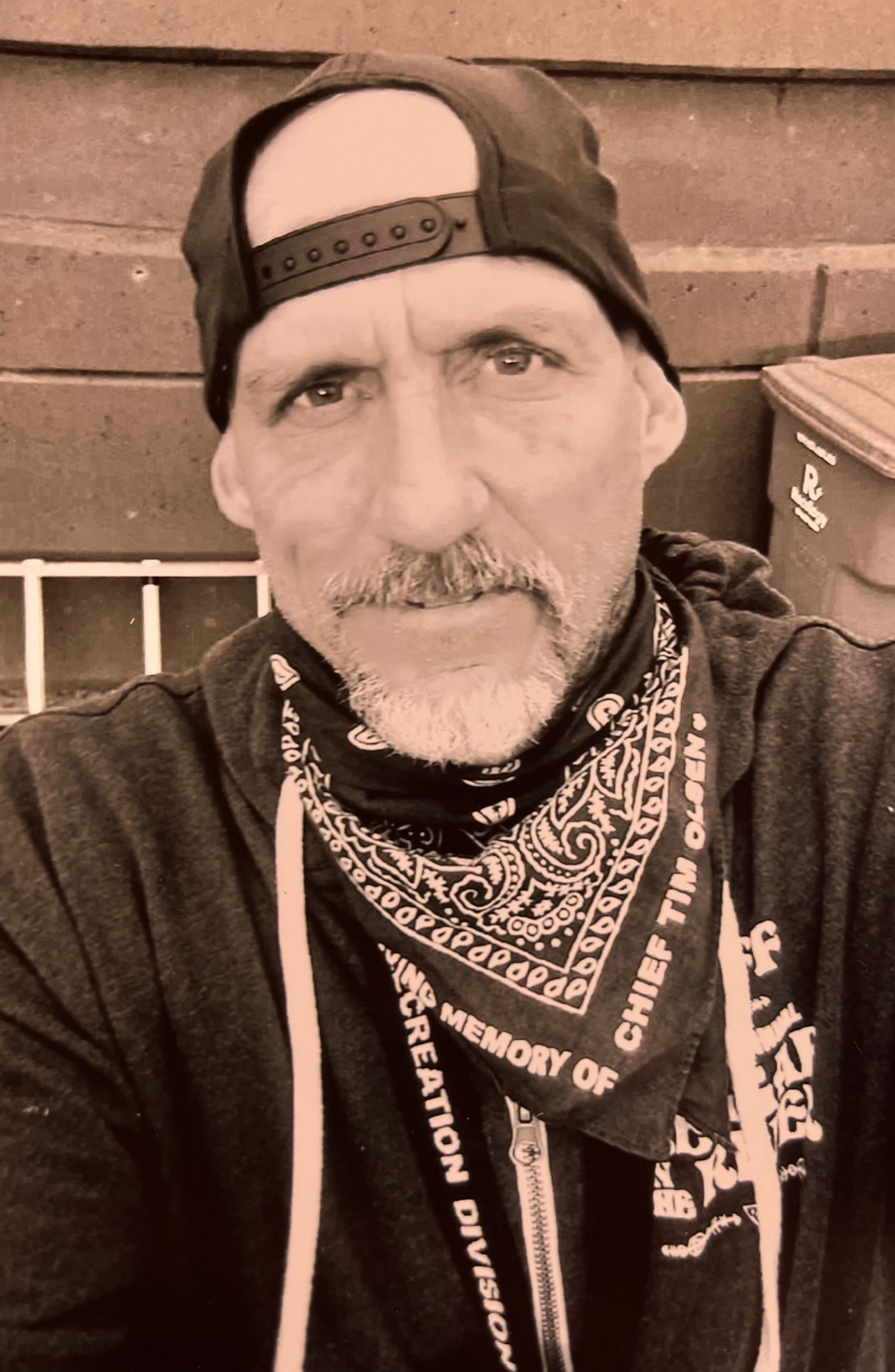
Timothy Starke Lyman, aka Timbo /Tim, age 61, passed away on January
8, 2025, in his home in Arcata. His death was sudden.
Tim was born on October 15, 1963, in Altadena, Calif. He is survived by twin brother, Thomas I. Lyman. He is preceded in death by his parents, Frederic Pomeroy Lyman, III and Katherine Lee (Starke) Lyman.
Tim loved surfing, skateboarding, golfing, fishing and the Second Amendment. He also cherished and spoiled his dogs, Bug and Pupadero.
Tim went to high school in Santa Monica in the late 1970s. He completed two years of study at Landmark College in Vermont from 1990 to 1992, where after his studies he became a basketball and soccer coach for the special needs children and was highly acknowledged.
Tim had many accomplishments in life, including being a Red Cross disaster relief services worker. He has been an avid surfer since age 12. He also played softball in Malibu with his brother, Tom. He directed a DVD music video for “Shankar and Gingger - One in a Million” CD and was also the technical supervisor for it. He starred in a movie called “Dogtown & Z-Boys” about the 1970s skateboard culture, and was very involved in the movement itself.
Tim is well known in Humboldt and surrounding areas largely for being the security supervisor / coordinator for many years (20+) for music festivals and events near and far.
Tim has influenced so many people’s lives in his time here. He will continue to live on in many hearts and will be dearly missed.
A viewing for Tim will take place on Thursday, January 23, at Paul’s Chapel, 1070 H Street, Arcata. Private viewing for family is 12-1 p.m., and public viewing is 1-5 p.m..
A celebration of life will be held on the same day from 4-10 p.m. at Arcata Theatre Lounge.
###
The obituary above was submitted on behalf of Tim Lyman’s loved ones. The Lost Coast Outpost runs obituaries of Humboldt County residents at no charge. See guidelines here. Email news@lostcoastoutpost.com.
OBITUARY: Paul ‘Peewee’ David Schwartz, 1968-2024
LoCO Staff / Wednesday, Jan. 22, 2025 @ 6:56 a.m. / Obits

Paul “Peewee” David Schwartz
1968-2024
Paul was born Aug. 30, 1968 in Eureka to David and Nancy Schwartz.
We lost him unexpectedly on November 1, 2024 due to a seizure. Although we are all heartbroken we believe he is in a better place and not suffering anymore from alcoholism, which had really caught up to him in the last few years.
Paul was an only child, growing up as a “Army brat.” They lived in North Carolina, Oklahoma, Kansas, Germany, Washington and Eureka.
Paul has had many jobs throughout his life. He was “Pony Boy Paul,” a local DJ on the local radio in the 1990s, a car salesman at a few places, a furniture salesman at Sears, a DJ at the bowling alley and a service writer, just to name a few. He also was proud of the time he spent in the Army. Paul lived in quit a few places as an adult — Washington, Montana, Kentucky — but Eureka was always his home.
Paul has four children: Stacy, Kathryn, Miranda and Taylor. He also has five grandkids: Teagan, Ryker, Olivia, Max and Faylynn.
Paul was always up for a good time. Everyone was his friend. He just loved people and rarely met someone who he didn’t connect with or make laugh. He was a great entertainer to family and friends and anyone who’d pay attention. He was seen out many times dressed in his famous Peewee attire — red lips and cheeks to top it off! He won many Halloween contests and even won the “Pun Off” contest one year. He was an amazing bowler and bowled a 300 and got a ring to prove it. He also was a talented pool player. He would challenge anyone who was willing. Paul loved Karaoke and always sang his famous “mountain music,” where he’d always do the limbo and get down all the way to the floor while everyone chanted.
Growing up in Washington he was a loyal Seahawks fan until the end. He had a Seahawks logo tattooed on his arm to prove his loyalty.
Paul and his mom Nancy were very close, he spent many years of his life off and on living with her in their Bell Road house. Pee wee was also very close to his cousin Gretchen. In fact he hooked his friend Brad up with her on a Blind date New Years Eve 2000 and they’ve been together ever since. He always said “she owes him for that.”
Paul was a special soul and will be missed by his family and friends and a special friend in Montana whom he remained close to for years, “Markie Mark” he called him. Thx Mark for treating our Paul good! He had many friends whom we do not know names.
Paul is survived by his his dad, Lieutenant Colonel David Schwartz, and his stepmom Diane of Olympia, Washington, his mom Nancy Schwartz of Eureka, his aunt Sharon Wallenberg (Jay Dee) of Roseburg, Oregon.
His daughters Stacy Helwig (Danny) & Kathryne Schwartz also of Gillette, Wyoming, and Miranda VerColen of Great Falls, Montana, and his son Taylor Wallenberg also of Great Falls, Montana.
His five grandchildren Teagan, Ryker, Olivia, Max and Faylynn. His aunt Nancy Colbert (Gary), his cousins Carissa Ranario, Gretchen Curtice (Brad), Cora Williams (Ross) and William Wooster (Celia). He is also survived by many second cousins & aunts and uncles in Indiana.
He is proceeded in death by his grandpa Walter “Red”Schwartz, step-grandma Jane Schwartz, his grandma Dolores Willaby, his grandma Patricia Buffington and his step-grandpa Virlyn “Buff” Buffington.
RIP Paul! We love and miss you!
Considering Peewee spent a lot of his last year’s hanging out at Little Red Lion bar (1506 5th St., Eureka), We will be having a celebration of life on Saturday February 15th, 2025 at 5-7 p.m. for anyone who knew and loved Paul, Come celebrate Paul’s life with us. Snacks and beer will be provided.
Paul’s ashes remain in care of his loving family.
###
The obituary above was submitted on behalf of Peewee Schwartz’s loved ones. The Lost Coast Outpost runs obituaries of Humboldt County residents at no charge. See guidelines here. Email news@lostcoastoutpost.com.


