Sen. Scott Wiener, seen here in 2022 announcing a bill to protect transgender kids, has a bill now to ensure LGBTQ questions on health forms. Photo by Miguel Gutierrez Jr., CalMatters
State Sen. Scott Wiener has introduced 52 bills this session, but he’s annoyed that he had to author one in particular.
“I’m gonna be honest that it’s frustrating that I had to bring this bill,” he told the Assembly Public Health Committee this week. “I should not have had to bring it.”
The legislation that irks the San Francisco Democrat is his Senate Bill 957, which would force California’s health officials to do what Wiener says they should have been doing anyway: provide a place on health care forms for people who identify as LGBTQ to voluntarily note their gender identity and sexual orientation.
For years, other Californians have been asked to voluntarily declare their race, age and whether they’re a man or a woman on various health care forms, providing researchers with important demographic data that helps inform treatments and responses to public health crises, Wiener said.
“If we’ll recall back to the beginning of the pandemic, when we realized that older people were much more likely to die from COVID and when we realized that there were much higher rates of infection and death in Black and brown communities, the only reason we knew that was because we had demographic data,” Wiener told the health committee. “Because when people would go seek health services, they were asked demographic questions.”
But Wiener, who is gay, said there’s not much data available for researchers when it comes to folks like him or lesbian, bisexual, trans and queer Californians. A big reason: state law, he said, gives health officials the option to place LGBTQ demographic questions on state and local health forms.
Wiener’s bill would require it.
He said it would close a loophole that he describes as “a massive blind spot in the system” – and one cited in a state auditor’s report last year. The report found that almost all of the dozens of state and local health care forms auditors examined were missing LGBTQ demographic questions. The audit noted that the California Department of Public Health has a new disease surveillance and reporting system scheduled to go live next year that would improve reporting.
Local health officials, however, told auditors they needed state guidance about what data to collect, something Wiener’s bill seeks to address by requiring them to collect sexual orientation, gender identity and intersexuality data “on any forms or electronic data systems, unless prohibited by federal or state law,” according to the bill’s analysis. State health officials would also have to provide a public report to the Legislature detailing their progress.
The bill’s sponsors include Equality California, California LGBTQ Health & Human Services Network, and the San Francisco AIDS Foundation. Members of the California Legislative LGBTQ Caucus are co-sponsors.
So far, only Republicans have voted against Wiener’s bill, which passed the Assembly health committee this week after advancing through the Senate this spring.
But Assemblymember Marie Waldron, a Republican from San Diego, wasn’t one of them. The former Assembly Republican leader told her colleagues on the health committee that the data collected could save lives.
“The more data available to health providers, I feel, the better,” she said. “We’re always talking about data-driven care and personalized medicine, and we can’t do it without the data.”
###
CalMatters.org is a nonprofit, nonpartisan media venture explaining California policies and politics.
California’s Public Utilities Commission yesterday rejected AT&T’s application to stop providing landlines and other services in areas where there is no other option.
Its 4-0 vote came after a judge determined the application by AT&T California was “fatally flawed.”
AT&T is the “carrier of last resort” for California, an official designation that means it covers most major cities, rural communities, and the land of more than 100 tribal governments. To find out if your home is in that area visit this website. The commission first labeled AT&T a carrier of last resort nearly three decades ago.
More than a dozen speakers during the public comment period at Thursday’s meeting supported keeping AT&T’s carrier-of-last resort designation and landlines. Previously, more than 5,000 public comments were written in response to AT&T’s application and nearly 6,000 people attended eight public forums held earlier this year. Numerous commenters said that, due to inconsistent cell coverage in their area, their landline is their primary means of communication with family, medical providers, and the outside world in the event of an emergency. Those concerns are particularly important for senior citizens, people with disabilities, and people who say they are sensitive to electromagnetic activity.
AT&T has argued that the people its landlines are now serving in the areas in question can turn to voice over internet service offered by cable providers or to mobile phone service offered by wireless providers like Verizon.
Steve Hogle lives in rural Sonoma County and told the commission that spotty cell phone coverage was a danger to his family during the 2019 Kincade wildfire.
“If we didn’t have a copper landline we would’ve not known about the evacuation and the extremely serious fire that went through here and most of our property,” he said. “I don’t want (voice over internet service) because if there’s no power, there’s no internet, and all these things are of extreme importance to the safety of this community.”
The company has attempted to end carrier-of-last-resort designation obligations in roughly half of U.S. states, but those efforts don’t always stay within the confines of the law, according to federal prosecutors. In 2022, AT&T Illinois agreed to pay a $23 million fine to resolve charges it attempted to influence former Illinois House Speaker Mike Madigan.
“If we didn’t have a copper landline we would’ve not known about the extremely serious fire.” — Steve Hogle, Sonoma County
The commission’s decision does not bring an end to the carrier-of-last-resort debates in California. AT&T and roughly a dozen members of the California Legislature have publicly expressed support for Assembly Bill 2797, which would effectively bring an end to some carrier-of-last-resort obligations. The California State Association of Counties, Rural County Representatives of California, and Urban Counties of California said last week that they oppose the bill, adding in a letter to the bill’s author that it would “leave large swaths of the most vulnerable Californians without reliable and affordable access to basic telephone service.”
The Public Utilities Commission also voted 5-0 to begin proceedings to change rules for companies that are designated a carrier of last resort. It’s time to modernize those rules, said commission president Alice Reynolds, because a lot has changed in the past 30 years, including a shift toward cell phones and away from landlines, and it’s now part of the commission’s mandate to make high-speed internet access universally available.
“I’m hopeful that through this new rulemaking, we can really modernize these programs and move towards the future to meet our broadband for all objectives,” she said ahead of the vote.
###
CalMatters.org is a nonprofit, nonpartisan media venture explaining California policies and politics.
John
Roger Day, at 84, “crossed the bar” on Sunday, May 12, 2024 at
home in Arcata with his wife, Marcella, and other cherished friends
by his side.
Born
on January 30, 1940 in Fort Scott, Kansas to parents, Randall M. Day
and Meda Peebles Day, John grew up in Moran, Kansas. From his
childhood to early adulthood, everyone called him Roger. His curious
nature would get him into mischief leading to stories he would share
later in life. He mentioned that his father would periodically say,
“Roger, what’d you do now?” as he’d get into some sort of
naughtiness. He loved animals and shared his mother’s whimsical
notions of cats such as, “when cats eat standing, they’re having
a snack and when they eat while sitting, they’re having a meal.”
In his latter adult years, he would be addressed by his first name
John. When he moved to the North Coast and took up sea kayaking, the
nickname “sea dog” would be added.
At
age 21, John embraced the experience of being a smoke jumper for a
season with the U.S. Forest Service. With the current events of the
time, he would later that year enlist in the U.S. Air Force, serving
four years. After the military, he pursued a formal education and in
1970 he earned a Bachelor’s from Wichita State University and in
1971 a Master’s from Kansas State Teachers College of Emporia. From
his liberal arts education within psychology and sociology he would
work in fields related to counseling and social services among
smorgasbord of other job experiences that would cross his path in the
next decades. Some of his jobs included working as an apartment
complex manager, guidance counselor, uranium mine worker, pizza
maker, bartender, restaurant manager and family therapist. John lived
in various states after Kansas, gradually ending up on the west
coast. His last job before he retired was in Grants Pass, Oregon
where he worked as a family therapist for child protective services.
When
John retired in the early 2000s in Brookings, Oregon, he became
interested in kayaking, rivers and the ocean. He immersed himself in
learning and after multiple capsizes, being constantly soggy,
bruised, and worn out — he learned the skills of paddling and the
Eskimo roll. He went on to help teach others about sea kayaking and
rolling on the North Coast. He met a group of kayakers in Humboldt
County and would drive from Brookings most weekends to paddle with
them out of Trinidad. He also met his current wife, Marcella,
kayaking and moved to Arcata in 2010. John “Seadog” Day loved
paddling out of Trinidad on Sundays in all weather conditions and
would continue paddling until symptoms of metastatic cancer began
affecting his health in 2023.
John
also relished in all the technical gear and outfitting that came with
kayaking and the outdoors. He took his motto “fear no gear” to
multiple levels, not only exploring these products but also modifying
them with a little extra flare such as putting easy-to-grip
insulation around a water bottle, modifying a spork to have a bottle
opener, replacing the zipper pull with a reflective cord variation,
adding little reflective dots on caps — all of these modifications
were called, “John Day upgrades.”
His
curiosity has brought him to new places and a wealth of experiences.
This past December he wrote some observations about why stories are
so great to share:
“Negotiating
life and getting the most of it follows happy trails. Take journeys
that reach your core, all the while giving your interests and
curiosity a workout…. A strong curiosity and interest in all things
will force you to connect and make you healthy. You will become a
fully operating member of humanity, opened to so many stories you’ll
not be able to digest it all! …There are no strangers out there —
only people who may be strange at first, but will become an
accomplice in life once you connect with them!”
John
is survived by his wife, Marcella Ogata-Day, daughter by a previous
marriage, Jessica Day, a multitude of loving friendships which he
made a connection and an impact on during his lifetime.
John
wanted the same poem that was read when his mother died to be read
when he passed on:
Crossing
the Bar by
Alfred, Lord Tennyson
Sunset
and evening star, And
one clear call for me! And
may there be no moaning of the bar, When
I put out to sea,
But
such a tide as moving seems asleep, Too
full for sound and foam, When
that which drew from out the boundless deep Turns
again home.
Twilight
and evening bell, And
after that the dark! And
may there be no sadness of farewell, When
I embark;
For
tho’ from out our bourne of Time and Place The
flood may bear me far, I
hope to see my Pilot face to face When
I have crost the bar.
###
The obituary above was submitted on behalf of John Day’s loved ones. The Lost Coast Outpost runs obituaries of Humboldt County residents at no charge. See guidelines here.
Dorothy
Lee Mack passed away June 15, 2024, in Eureka. Dorothy was born on
Christmas Eve, 1934 and grew up in upstate New York. She was the
second child born to Guilford and Dorothy Mack. She had an older
sister named Helen who died in early childhood, and a younger brother
Guilford, now deceased. She was married twice, so also took the names
Lambert and Blackcrow.
She
was a rebel, a tomboy and a rule breaker. She didn’t like dresses
or dolls and preferred to play with boys or play the violin. She was
an excellent student and a trailblazer, being one of the first women
to attend college at Oberlin, get a PhD in linguistics and teach at
the university level. She was proud to turn down an offer of graduate
school admission at Harvard for a place at Yale, and that is where
she met her first husband Robert Lambert. Dorothy and Robert had
three children — two biological and one adopted — and named them
after great poets: Emily Dickinson, Robert Frost and David Elliot
King. Unfortunately the marriage did not last and Dorothy raised the
children as a single parent.
Dorothy
taught English to engineering students first in Chicago at the
Illinois Institute of Technology, and then at the University of
Michigan in Ann Arbor. She was one of the few female faculty in those
days, part of the first generation of women to move out of the world
of homemaking and into high level careers.
She
was a Quaker activist who protested against nuclear proliferation and
worked towards prison reform. She heard Martin Luther King Jr. give
his famous “I have a Dream” speech at the Lincoln Memorial in
1963, with her first child, Emily, in tow.
In
1977 she made a major life change and left her post at the University
of Michigan to marry Selo Blackcrow, a Lakota Sioux spiritual leader.
She loved learning about Native American customs and culture and this
became her passion. She discovered quiltmaking and made many native
style star quilts. After a decade on the Pine Ridge Reservation she
moved to Oregon to care for her elderly father and stayed on after
his death in a little coastal community called Mirocco. Gardening was
another of her interests, and she became certified as a master
gardener.
Once
in the Pacific Northwest Dorothy joined the Red Cedar Circle led by
Johnny Moses, a Tulalip Native American storyteller and spiritual
leader.
She
enjoyed participating in writing seminars under the tutelage of Jim
N. Frey, and published a memoir called Belonging
to the Blackcrows
and
several native american murder mysteries including The
Handless Maiden.
Her
love of adventure took her rafting along the Colorado River and
kayaking in New Zealand in her 80s.
A
lifelong Democrat, she volunteered as the precinct captain for her
beloved Depoe Bay. When she passed away she had over 2,500 unread
text messages from the Dems. Her spirit was generous and she gave
away money and possessions freely to those she felt needed them more.
After
decades on the Oregon Coast she moved to Eureka in 2021 to be closer
to her daughter and grandson. She lived in The Meadows senior housing
for three years and grew to love the community and my neighbors very
much. Her cat, Maxi, was a great comfort to her.
She
is survived by her three children, Emily Dalton, Robert Lambert Jr.
and David Lambert and many grandchildren.
A
memorial service will be held on August 10 in the afternoon near the
Swinomish Reservation in Western Washington State. Contact Emily at
dremily2@gmail.com
for
details.
Donations
in her memory can be made to the
Red
Cedar Circle Society Care
of Brett Clippingdale 3041
West Lake Sammamish Parkway NE Redmond,
WA 98052
###
The obituary above was submitted on behalf of Dorothy Mack’s loved ones. The Lost Coast Outpost runs obituaries of Humboldt County residents at no charge. See guidelines here.
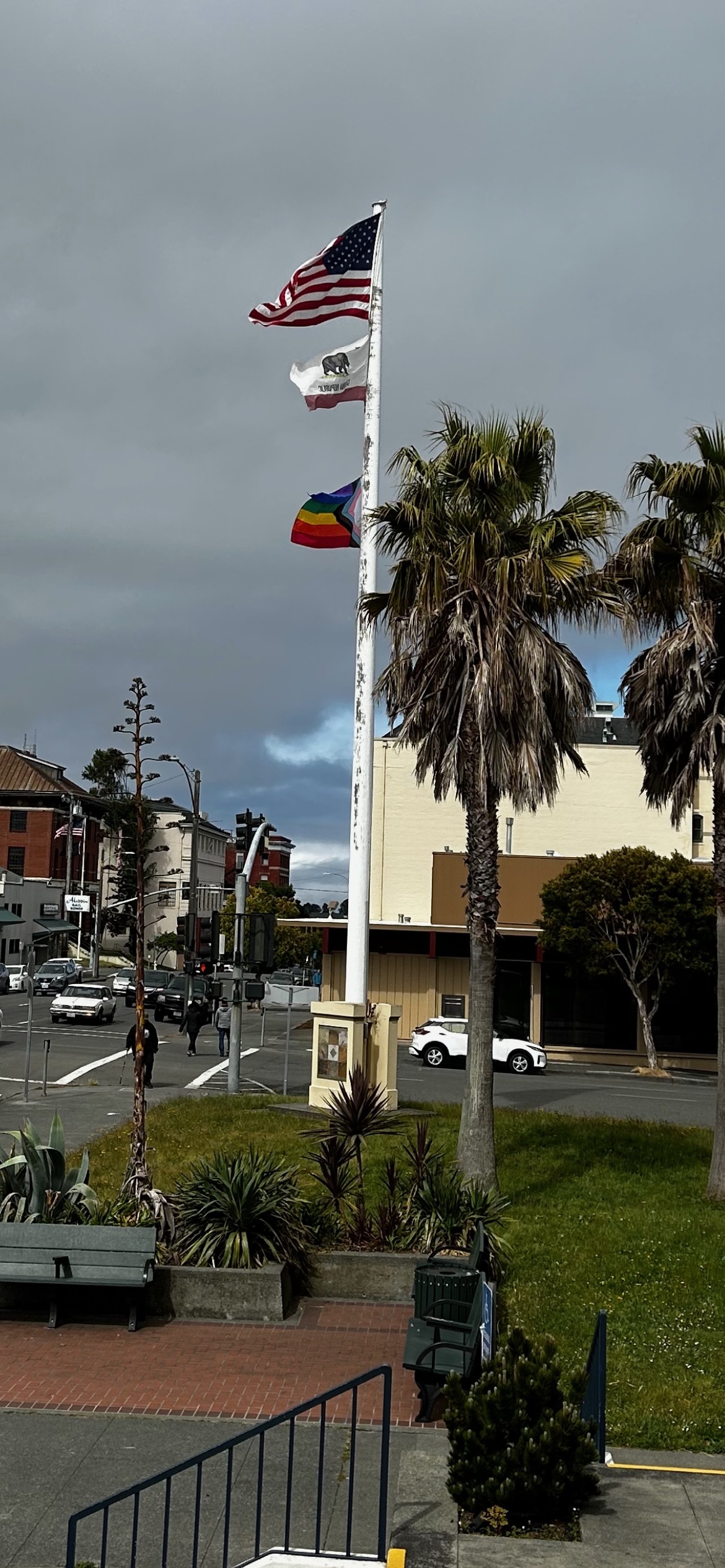
Late last Friday night, some discriminatory dickbag stole the Pride flag off the flagpole county courthouse flagpole.
The rainbow-festooned standard flies outside Humboldt County facilities each June in recognition of Lesbian, Gay, Bisexual, Transgender, Queer, Intersex and Asexual (LGBTQIA+) Pride Month.
In passing the Pride Month proclamation last year, the county Board of Supervisors defended “the rights of all citizens to experience equality and freedom from discrimination” and declared that the Pride flag “shall be raised annually throughout the month of June at County of Humboldt facilities.”
But bigots are gonna bigot, and one of ‘em apparently couldn’t abide the symbol of inclusivity.
In an opinion piece for the North Coast Journalthis week, Fourth District Supervisor Natalie Arroyo observed that the vandal’s motives were clear: The theft “was meant to harm and disparage people.” Arroyo encouraged the public to “Speak up when people trivialize the importance of these symbols and the very identities of our fellow community members.”
In response to an emailed inquiry, Humboldt County Public Information Specialist Cati Gallardo sent the following statement:
The County of Humboldt is committed to supporting the visibility, safety, dignity and equality of 2SLGBTQIA+ people, as affirmed by the Board of Supervisors’ Pride Month Proclamation, unanimously approved on June 4. This proclamation acknowledges that the Pride flag shall be raised annually throughout June at county facilities, a practice started in 2022. Unfortunately, the flag was unlawfully removed from the courthouse last weekend.
###
Here’s a press release from the Eureka Police Department, which is handling the investigation:
On June 14, 2024 at approximately 11:40 pm, the Pride flag that had been flying on the
flag pole at the Humboldt County Courthouse in honor of Pride month was stolen.
The theft was reported to the Eureka Police Department on June 18, 2024 and assigned
to our Criminal Investigations Unit to investigate.
The investigation revealed the suspect took the flag from the flag pole and placed it in
his vehicle prior to leaving the scene. This criminal act was captured on surveillance
cameras located at the courthouse. With the assistance of the Humboldt County
Sheriff’s Department Criminal Investigators and their FLOCK camera system, the
suspect vehicle was identified and a picture provided to our agency. Utilizing this
information, a person of interest was identified.
On June 19, 2024, EPD Detectives and personnel responded to the suspect’s residence
and conducted a probation search per their probation status. The stolen flag was not
located during the search. The suspect was located a short time later at a different
location and interviewed. During the interview the suspect admitted to stealing the flag.
However, the suspect was not in possession of the flag and the flag’s current location is
unknown.
An EPD Detective is authoring a warrant for the suspect’s arrest for theft and probation
violation. We are dedicated to conducting thorough investigations, including those
related to hate crimes that can significantly impact our community. According to
California Law, a hate crime must involve the use of force, threats or the damaging,
destroying or defacing of property. In this specific investigation, with the evidence that
we have at this time, these elements were not present. If additional evidence is located
or presented, it will be evaluated and used to charge additional offenses. The case will
be forwarded to the District Attorney’s Office for further review and issuance of a
warrant for the suspect’s arrest.
EPD Chief Brian Stephens states, “It’s absolutely unacceptable for anyone to steal the
pride flag or any symbol that represents inclusivity and equality. Such actions are not
only disrespectful but also hurtful to those who identify with a particular group or in the
incident the LGBTQ+ community. Pride flags and symbols are important expressions of
identity and solidarity, and everyone should be able to display them without fear of theft
or damage. There is no place in our community or our society for hate and disrespect
to one another.”
At
the peak of Timber Wars tension between loggers and environmentalists
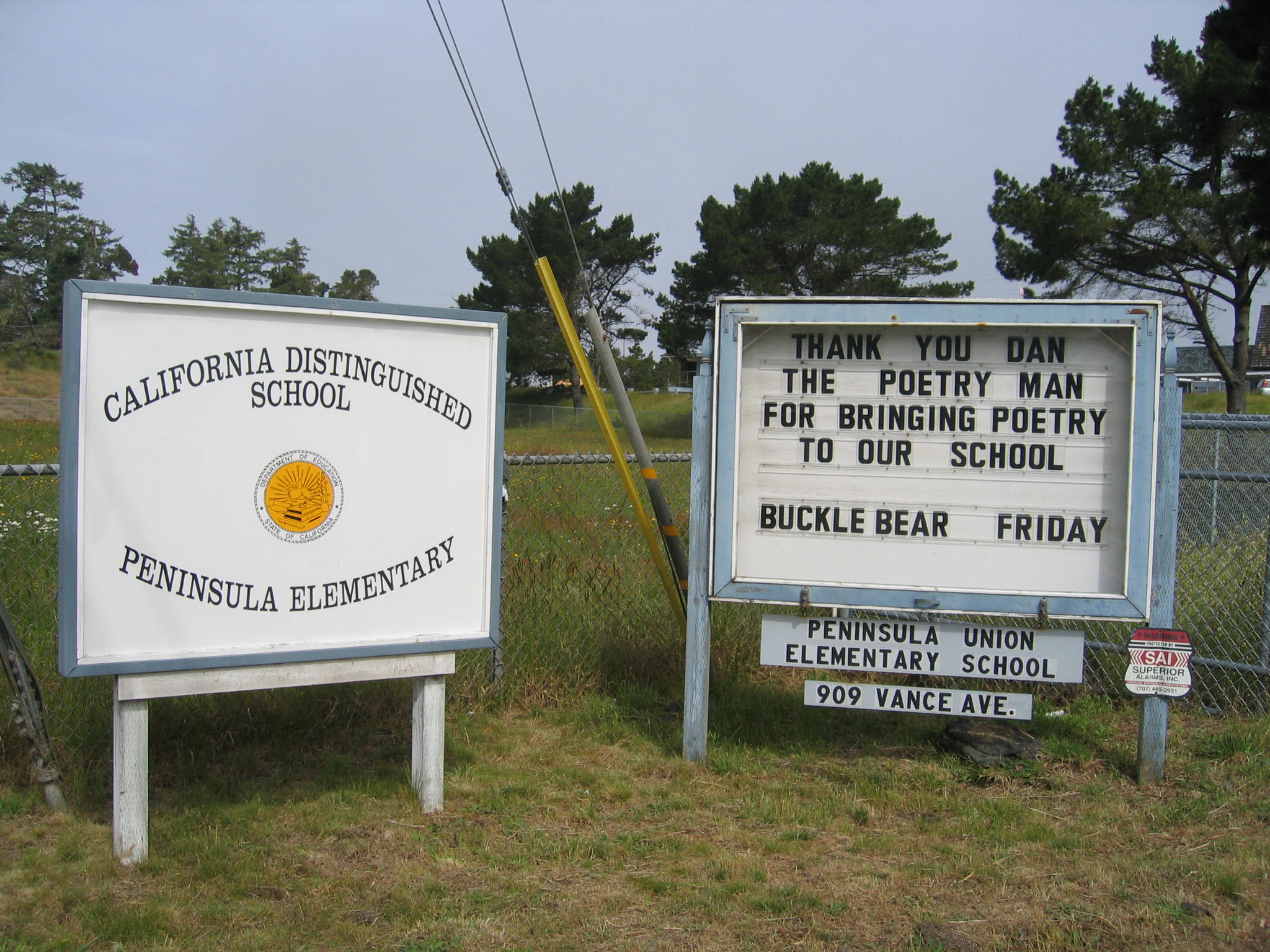
in 1996, pony-tailed poet-teacher Dan Zev Levinson arrived at Scotia
Elementary School for what would be the first of many week-long
stints in Humboldt County schools. He was “young,” “naive”
and admittedly “a little worried that loggers would be upset”
about his presence in the company town.
“I
was kind of looking over my shoulder,” Levinson recounted in a
sit-down with the Outpost, “and instead the community just
completely embraced me.”
He
has returned to teach poetry at Scotia Elementary almost every year
since, often supported by a grant from Humboldt Redwood Company.
Levinson
has also taught at more
than 90 other schools over the last 28 years – including the vast majority of Humboldt’s TK-12 institutions,
College of the Redwoods and Cal Poly Humboldt. From Arcata to
Bridgeville, Blue Lake to Orleans, Cutten to Carlotta, Eureka to
Petrolia, and on through many, many more, he has brought his poetry
program to students as a California Poets in the Schools (CalPoets)
teacher.
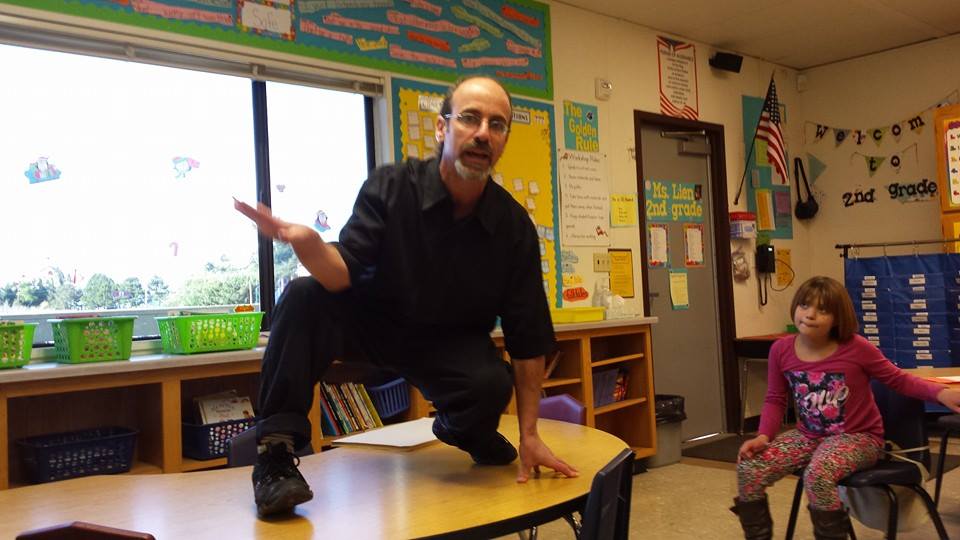
Levinson’s go-to move upon meeting a new group of students: jump on a table, perform Lewis Caroll’s seminal nonsense poem “Jabberwocky.”
Founded
in 1964, and celebrating the big 6-0 this year, CalPoets
serves the dual purpose of engaging young people in reading, writing
and publishing poetry while providing a career path for poets.
“We
try to offer the poets of California ways to make money off their
craft through service,” said
Megan Hamill, executive director of CalPoets and a former Sonoma
County poet-teacher.
The
challenge of paying bills as a poet was certainly a prompting factor
in Levinson’s school teaching, but money hasn’t been the (only)
reason he’s stuck with it. He said the week in Scotia opened a door
to the joys and rewards of teaching young people.
“I
think I was supposed to be teaching poetry to kids, it was definitely
a calling,” said Levinson, who, with an MA in Literature and an MFA
in Creative Writing, had intended to stay the professorial track and
teach adults.
Despite
a lifelong love of playing with language, Levinson said he had no
guidance in poetry as a young person and wrote “bad poetry for a
long time.” Now, giving the mentorship he lacked to 2nd-12th grade
students, he said he sees how creating and sharing poetry provides
children with agency, tools for self-expression, and a window into
learning that they are not alone – “that they do have
something to say and that people might be listening.”
And
so people are. Books of student poetry that Levinson edits and
publishes – such as Van
Duzen Voice (by students in the Van Duzen River
Watershed), Eel
River Expressions (by Loleta Elementary students)
and A
Splash in the Slamming Water (the most recent of
annual collections out of Orleans Elementary) – often circulate
in families and communities after his courses conclude, allowing
students to see their own work in print and call themselves published
poets.
The
outlet that poetry provides students can be particularly helpful in
regions like Humboldt that have higher-than-average instances of
Adverse
Childhood Experiences (ACEs) such as abuse, neglect or
other traumatic household factors shown to increase likelihoods of
mental illness, substance use disorder and physical health issues
later in life.
“We
think of our work as a healing art,” Hamill said, describing how
CalPoets classes aid social and emotional development by providing
safe ways for children to share.
Modern-day
child development seems to need all the help it can get, as studies
are showing. Since 2012, loneliness and friendlessness among young
people have surged while reading and math scores have plummeted (not
only in the United States, but globally), as a recent Atlantic
article by social psychologist Jonathan
Haidt illustrated.
Haidt
points the finger at today’s “phone-based childhood,” which
aligns with the literacy skills concerns Levinson said he’s
witnessed among educators since smartphones entered the schools he
works in.
“How
are literacy skills life skills?” he asked, answering: “If you
can put your words down in a coherent and maybe beautiful way, there
you go. That’s going to help you get a job, that’s going to help
you be a better communicator.”
In
recent years, Levinson has also oriented his teaching to the specific
sort of emotional resilience he believes kids will need in the world
they stand to inherit. As studies
show that young people are increasingly worried about climate change,
and increasingly affected day-to-day by those worries, Levinson, who
stopped flying on planes in 2019 to limit his own fossil fuel use,
has brought the subject into his classrooms.
“I’m
not holding back. More and more each year, I talk about it,” he
said, “And sometimes I am a little concerned that I might get a
teacher who’s not happy with what I’m doing. But usually they are
chiming in.”
“This
is really all we should be talking about,” Levinson concluded.
In
2020, a poem by one of his Humboldt County students was published inCalifornia
Fire & Water, “a project to teach kids
across California to write poems about the climate crisis as a way to
work out their feelings about it.”
After
almost 30 years with CalPoets, Levinson’s teaching, and the scale
of the organization’s work overall, is still dictated by the ebb
and flow of available funding, which, since pandemic funds for
nonprofits and arts organizations have dried up, has been in a
definite “ebb,” according to Hamill, who estimated that CalPoets
had around 65 certified poet-teachers serving 20 of the state’s 58
counties last school year.
She
identified three interrelated factors contributing to the lean
budgetary situation.
The
first: California’s estimated $56
billion deficit, which Governor Gavin Newsom’s
proposed to address in part by decreasing funding to the California
Arts Council (CAC), a primary CalPoets funder, by 38%.
Arts organizations and advocates successfully pressured the
California Legislature to partially roll
back the $10 million cut – which, if passed,
would have placed California 45th in per capita arts funding, as the
San
Francisco Chronicle
reported – but the CAC budget is still slated to
be cut by $5 million in the coming year.
Second, Hamill identified local government budget deficits, such as
Humboldt County’s current $12.3
million shortfall, and the associated decline in
arts-specific funding pathways offered by cities and counties.
“Arts are going up against the food bank,” she said, “That’s
a hard place to be in. There’s a reason why there were separate
pathways.”
Proposition
28, which provided nearly $1 billion in new arts and
music funding to schools, is counterintuitively the final factor
Hamill named. She explained that because poetry is not explicitly
included in California’s arts education standards, it didn’t make
its way into the acceptable uses of Prop. 28 funding. But
organizations like the CAC took its November 2022 passage to mean
“less of a need for arts education funding.”
“They think its covered,” she said, explaining that the decrease
in CAC arts education grants since Prop. 28 has put
CalPoets in a “tricky position.”
Stacy Young, community outreach & engagement director at the
Humboldt County Office of Education (HCOE), confirmed via email to
the Outpost that she has also seen decreased CAC funding
opportunities impact HCOE partners in the arts locally.
Speaking to the statewide level, Hamill said that budget
constrictions are “difficult for both poets and kids that have
become accustomed to the program.”
But Levinson, who’s taught through “fat and lean” funding
years, said he believes local support for the arts and arts education
has only increased over the decades he’s lived in Humboldt. He said
that the feedback he continues to receive from parents and schools
has helped him to know that he’s following his calling, despite the
administrative hassle of scheduling and cobbling together funding for
the 20-25 teaching stints he averages annually.
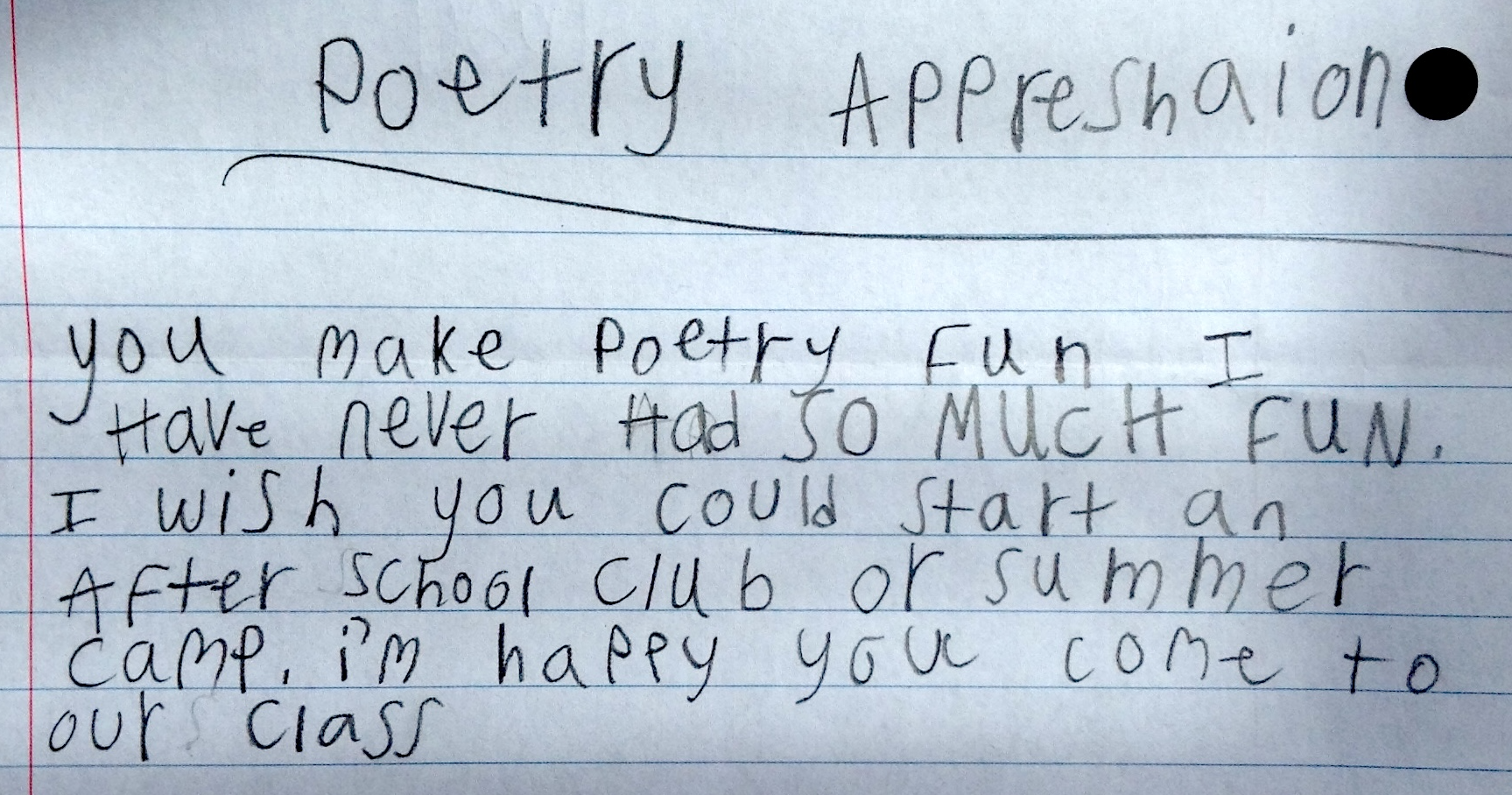
“Some students say they hate writing. And then after I am done,
I’ll get reports from teachers and parents that the kid now keeps a
journal,” Levinson said.
“If I can get them to fall in love with poetry, they suddenly
become writers.”
Despite
funding constraints, CalPoets anticipates an additional 10 certified
poet-teachers next school year, bringing the statewide count to 75,
according to Hamill.
UPDATE, 2:58 p.m.: The following information comes from the Humboldt County Sheriff’s Office:
On June 20th, 2024, at about 10:35 a.m.., Humboldt County Sheriff’s deputies were dispatched
to the Humboldt Bay National Wildlife Refuge in the Loleta area for a report of a possible small
aircraft accident. Other emergency services to include the California Highway Patrol, California
Department of Fish and Wildlife, U.S. Fish and Wildlife Service – Humboldt Bay Refuge, Loleta
Volunteer Fire Department, and City Ambulance also responded.
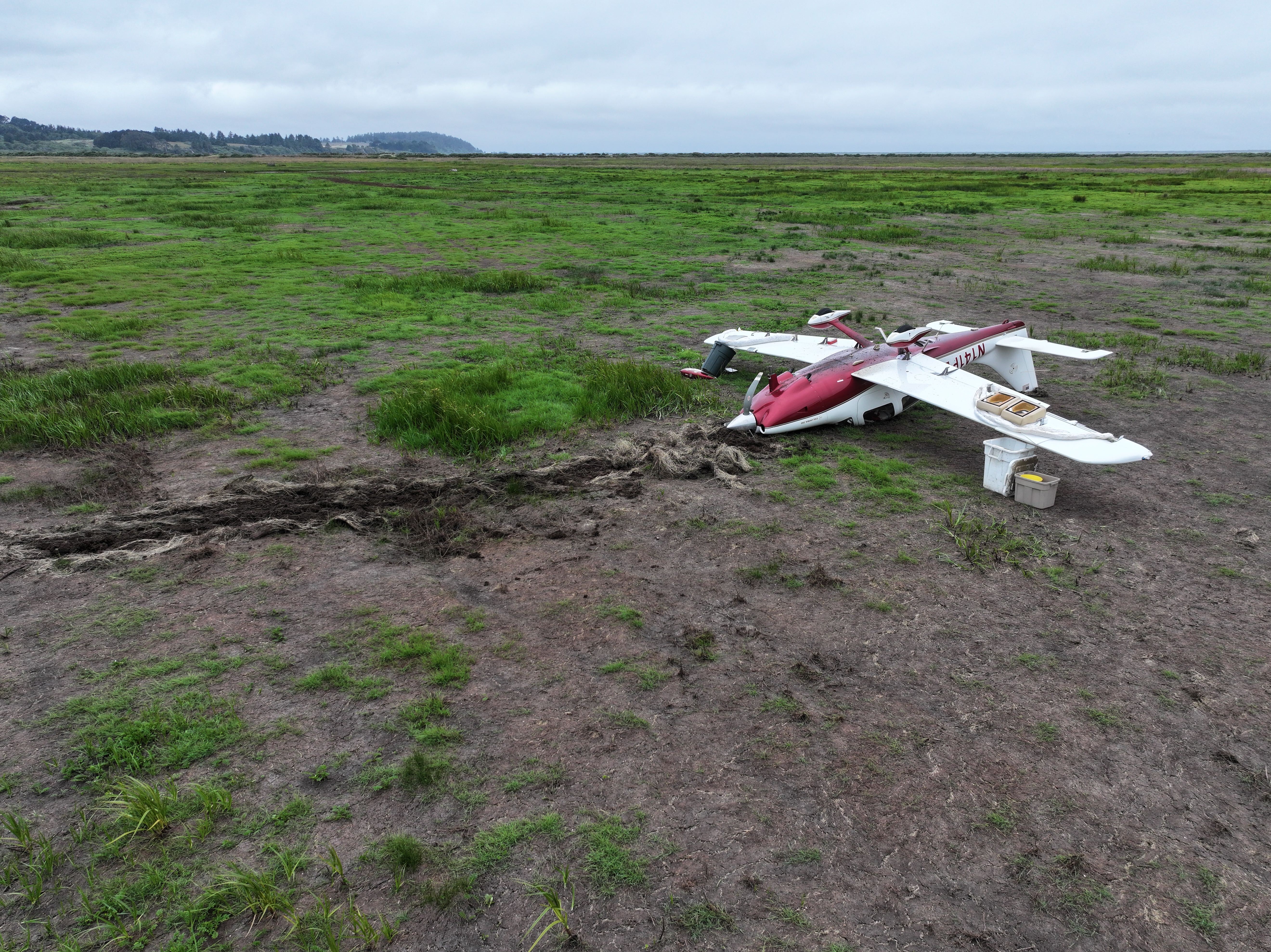
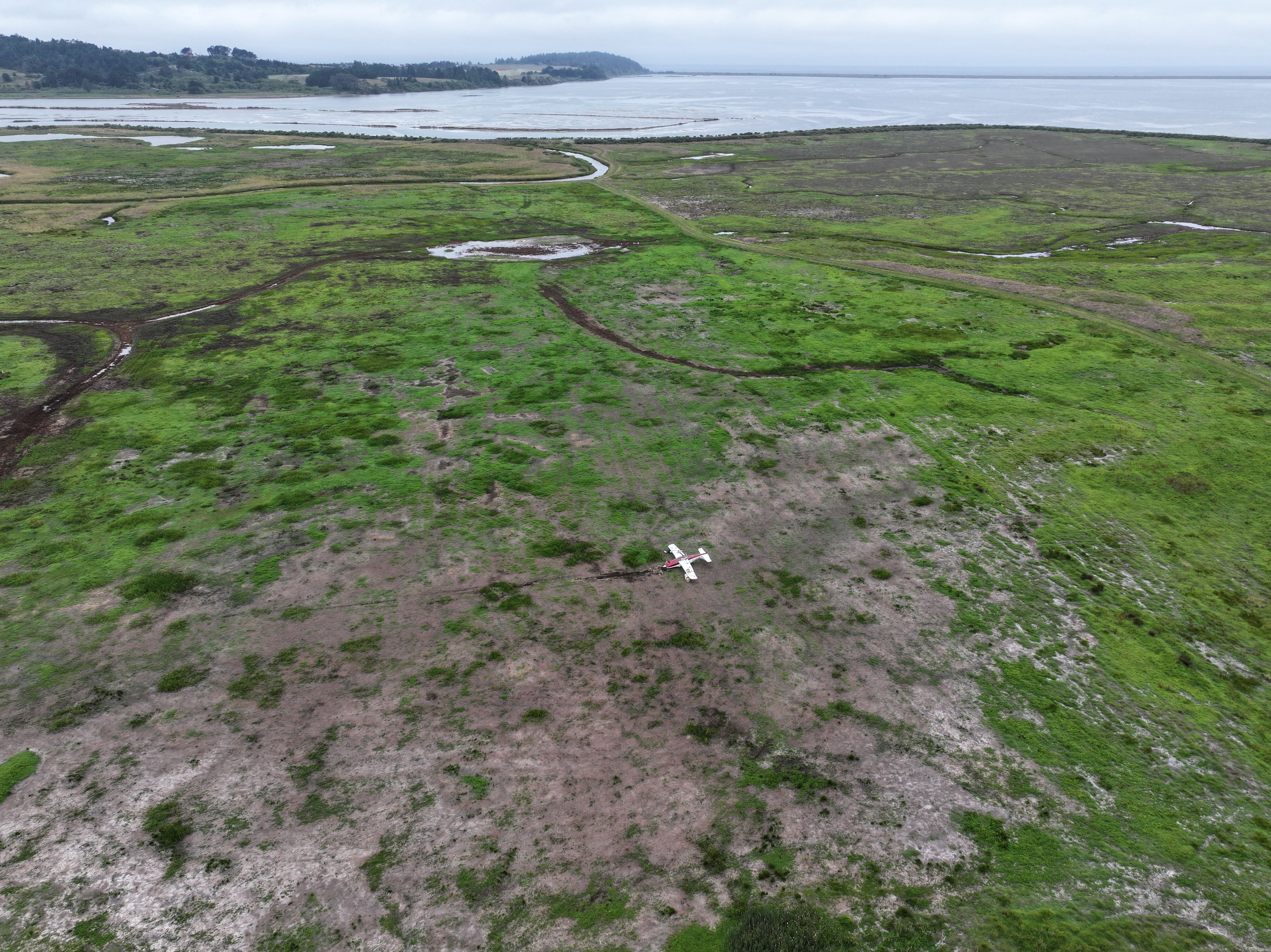
Once on scene, responding personnel were able to locate a small, single engine, fixed winged
aircraft that had come to rest upside down in a dry marsh area. The pilot and sole occupant of the
aircraft, 67 year-old Joseph McCoy of Napa, was found to be uninjured.
Preliminary information indicates McCoy had just departed the Eureka area when the aircraft lost
power, resulting in McCoy making an emergency landing at the refuge. Upon landing, the soft
ground of the marsh appears to have contributed to the aircraft coming to rest in an inverted
position. McCoy was able to extricate himself from the aircraft and contact emergency services.
Officials with Humboldt County Environmental Health later responded to assist with evaluating
and containing any possible fluid leakage from the aircraft. The National Transportation Safety
Board will be conducting an investigation into the potential cause of this incident.
The Humboldt County Sheriff’s Office would like to thank all allied agencies that responded to
assist.
Anyone with information related to this case is encouraged to call the Humboldt County Sheriff’s
Office at (707) 445-7251.
# # #
UPDATE, 2:48 p.m.: Drone pictures from the site of the crash show that the plane seems to have gone end-over-end just before coming to a stop on the ground.
Still no word on what caused the crash — or “emergency landing,” if you prefer — but, again: The pilot is OK.
###
Original Post: Not a whole lot of info at the moment, but just at about 10:30 a.m. an aircraft made an emergency landing in the Humboldt Bay National Wildlife Refuge.
California Highway Patrol dispatch took a report of the incident, which you can see here.
I say “emergency landing” rather than “crash,” because according to rescuers who made it out to the scene the pilot is OK and not requesting medical attention.