Hikers traverse a trail on Horse Mountain. Photo: Humboldt Trails Council.
###
Humboldt County boasts hundreds of miles of scenic trails. By our count, there are well over 250 miles of walkable and bikeable trails here in Humboldt – and that’s only counting trails managed by the Bureau of Land Management, the U.S. Forest Service, California State Parks, local municipalities and the county.
If you frequent any of those trails — or are excited about new ones — you’ll want to attend the 2024 Humboldt Trails Summit at the Sequoia Conference Center in Eureka this Saturday.
Map of the proposed path of the Great Redwood Trail. Click to enlarge.
This year’s summit will highlight ongoing and upcoming trail projects across the region. Senate President pro tempore Mike McGuire and Elaine Hogan, Executive Director of the Great Redwood Trail Agency, will provide an update on the Great Redwood Trail, a state-led initiative to transform the old rail line between Humboldt Bay and San Francisco Bay into a 300-mile multi-use trail.
The Great Redwood Trail Agency released its 586-pageDraft Master Plan for the ambitious rail-to-trail project at the beginning of last month. The plan serves as a guiding document to address trail-related issues, including design components, operations and maintenance, habit restoration, funding opportunities, and management. The Master Plan covers Humboldt, Mendocino and Trinity counties; the southern portion of the trail will be planned and constructed by the Sonoma-Marin Area Transit (SMART).
“The Master Plan is a huge document, but it is really vital for the public to give their input,” Karen Underwood, a board member with the Humboldt Trails Council, told the Outpost. “Some of these planners don’t necessarily live in Humboldt County, and we’re the ones who know about our local conditions and our communities, right? This is our opportunity to share that information because if you don’t give it to them, whatever you get is, well, what you’re gonna get.”
Members of the public have until Monday, June 3 to submit their written comments on the draft plan. Online comments can be submitted at this link or emailed to info@greatredwoodtrailplan.org.
Local officials will provide updates on various other trail projects, including Humboldt Bay Trail South, a long-planned project to connect the Eureka Waterfront Trail to the southern end of Humboldt Bay Trail North, near the Bracut Industrial Park.
Hank Seemann, Humboldt County’s deputy director of environmental services, said the county is on track to complete the highly anticipated project by the end of October. Eventually, the county hopes to extend the Humboldt Bay Trail all the way to College of the Redwoods.
“This segment is a regional priority for enhancing active transportation and recreation opportunities along the coast, especially for the communities of Humboldt Hill, King Salmon, and Fields Landing, and for serving the students and staff of College of the Redwoods,” Seemann wrote in an email to the Outpost. The county is developing a planning study, in coordination with the Great Redwood Trail Agency, to evaluate existing conditions and analyze constraints along the existing railroad corridor, he said.
“All this information will support applying for funding for the next phase of project development (detailed engineering, environmental review and permitting, and any additional right-of-way),” Seemann continued. “Once that phase is complete, then funding would be pursued for the construction phase. At this point, it’s uncertain whether Humboldt County or the Great Redwood Trail Agency would lead the next phases. There will need to be a financial plan and capacity to take on the additional management and maintenance responsibilities.”
Carol Vander Meer, projects coordinator for the Redwood Community Action Agency (RCAA), encouraged members of the public to come with questions. Members of the public are asked to send trail-related questions in advance to trailssummit@humtrails.org.
“There’ll be an opportunity for one-on-one conversations with different trail-supporting organizations, as well as a chance to hear presentations and ask questions,” she said. “People come to the summit and find a place where they can plug in to support the development of our regional trail system. Trails really have the ability to transform lives and increase connectivity [among] community members.”
The Humboldt Trails Summit will be held at the Sequoia Conference Center in Eureka on Saturday, June 1. Check out the flyer below for more information.
Gov. Gavin Newsom addresses the media during a press conference unveiling his revised 2024-25 budget proposal at the Capitol Annex Swing Space in Sacramento on May 10, 2024. Photo by Fred Greaves for CalMatters.
Amid ongoing budget negotiations, legislative leaders today released their counter proposal to a recent plan by Gov. Gavin Newsom to close California’s projected multibillion-dollar deficit.
But it aligns with the governor’s approach of minimizing the use of reserve accounts next year, as California faces a revenue shortfall that is expected to continue for several more years beyond that, and suggests doubling the size of the state’s rainy-day fund over time.
The legislative plan, an agreement between Democratic leaders in the Senate and Assembly, also endorses Newsom’s ideas of creating a temporary holding account for future projected budget surpluses until the money actually materializes.
The Legislature has a few weeks left to reach a deal with Newsom, as it approaches a June 15 deadline to pass a balanced budget or lose its pay and the July 1 start of the fiscal year. After lawmakers and the governor took early action last month, finance officials project the remaining shortfall to be more than $27 billion next year.
Assembly Speaker Robert Rivas, a Salinas Democrat, said in a statement that the Legislature’s proposal is “focused on preserving programs that matter most to Californians: lowering the cost of living, expanding affordable housing access and sustaining public services.”
Press release from the Humboldt County Civil Grand Jury:
The Humboldt County Civil Grand Jury has released the second report of their 2023-2024 term,
entitled Humboldt County Facilities: Owning vs. Leasing.
The County of Humboldt pays close to $500,000 every month, nearly $6 million per year, to lease
office space for employees throughout the County. Would the money be better spent in the long run
on owning these facilities instead?
The County currently leases more properties than they own – 53% vs. 47%. We limited our
investigation to office space within the City of Eureka, which accounts for 90% of the lease
payments. Most of these properties have been under lease for 25 years or more. One of the larger
Department of Health and Human Services facilities, 929 Koster Street, has 30,669 square feet,
accommodates 169 county workers, and has been leased for almost 50 years.
Long-term leasing is more expensive than building and owning facilities, with 7 years being widely
accepted as the point where ownership begins to save money. Whether leased or owned,
consolidation of operations for increased efficiency and enhanced customer service is a concern. The
2020 Humboldt County Facilities Master Plan calls for building infrastructure and consolidating
operations. Progress has been slow.
The Grand Jury determined that there is little excess capacity in county buildings, that citizens would
be better served by having services consolidated in fewer locations, and that in the long run owning
facilities saves the taxpayers money. We acknowledge that the current state of County finances
prohibits making these investments and urge the Board of Supervisors to explore alternate means of
funding, to include issuing bonds. We urge our elected officials to look not just at next year but at the
next 10 or 20 years, and to make the best decisions for our future.
If you want to serve your community in a unique way that could improve local government this is
your opportunity. Applications to serve on the Humboldt County Civil Grand Jury can be found at
https://humboldtgov.org/510/Civil-Grand-Jury. Additional information provided by the Civil Grand
Jurors Association of California can be found at https://cgja.org/.
“Going somewhere, Solo?” “Not in Crescent City, Greedo!”
UPDATE, 3:20 p.m.: Ashley Taylor, Crescent City Director of Economic Development and Recreation, reached out to the Outpost asking that we clarify her city’s position on fake Star Wars weaponry.
“Please clarify that light sabers [sic] are permitted,” Taylor said. “We are referring to fake firearms, knives, swords, etc… If individuals have questions about their costume prop, they should reach out to myself or Chief Griffin at the Crescent City Police Department. We will have booths at both day’s events where people can check in with us about their prop. Thank you!”
Crescent City Police Chief Richard Griffin will help you determine if your Star Wars toys are acceptable for the Forest Moon Festival, according to a city official
# # #
Original Post: In advance of this weekend’s Forest Moon Festival, Crescent City officials have issued a stern warning to those who might be planning to stage a Han Solo-and-Greedo-like showdown in their nice, quiet, little beach community: Don’t.
A public service announcement below:
As we approach the highly anticipated Forest Moon Festival this Friday and Saturday, the City
of Crescent City would like to inform event-goers that for everyone’s safety and enjoyment,
costume weapons will not be permitted at either the Friday or Saturday events. This is to ensure
a fun experience for all and prevent any potential concerns for law enforcement.
Participants are
welcome to come by the City’s check-in table on Saturday if they are unsure of any aspect of
their costume and want to ensure it is permittable.
Questions or concerns can be directed to Ashley Taylor at 707-464-7483, ext. 238.
Student members of Caminantes for Education create vision boards as the end of the school year approaches at Cal State Long Beach on March 19, 2024. Photo by Zaydee Sanchez for CalMatters
For Athens Marron, transitioning from his hometown in the Coachella Valley to College of the Redwoods in Humboldt County felt isolating. Marron, a sociology major and ethnic studies minor, said he found it difficult to connect with other Latino students or participate in activities that would keep him from going directly home at the end of his day.
Shortly after transferring to Cal Poly Humboldt in fall 2022, he received an email about the PromotorX Transformative Educators Program, an opportunity funded by a federal Hispanic Serving Institutions grant.
“I signed up and went to the first meeting, and right away, it was a home away from home for me. It was that sense of community,” said Marron. “It definitely gave me more perspective on what I want to continue to pursue, which was education with high school students.”
Marron’s experience is exactly what the federal Hispanic Serving Institutions grant program was intended to do: create an environment on campus where Latino students feel like they belong, leading them to seek new opportunities on the path to graduation. Campuses have a wide range of flexibility in how they design their programs, and whether students are involved. The grants last up to five years, after which campuses can reapply for funding or find other ways to support their programs.
At that point, some programs may expand with new funding while others scale down, surviving only through the efforts of students or faculty. But experts say to truly serve Latino students and improve their outcomes, campuses must create programs that can keep running even after grant funding dries up.
Student Athens Marron at the Cal Poly Humboldt Library in Arcata on March 22, 2024. Photo by Mark McKenna for CalMatters
Marisol Ruiz, the PromotorX Transformative Educators Program coordinator and a tenured professor of education, trains students of color to be teachers. Students create lesson plans and teach at local high schools. The campus received $2.7 million from the U.S. Department of Education starting in 2018, but as the program approaches the end of its grant cycle, Ruiz said that it may only continue unfunded and at a smaller scale.
“We can create nice positions, but who’s doing the work, and are we going to continue that work?” Ruiz said.
When the grants run out, even impactful programs like Cal Poly Humboldt’s can fizzle all together.
After the grant ends some colleges, such as Cal State Northridge, apply for new grants to improve their already successful programs. Others, like Cabrillo College and Cal State Long Beach, try to integrate programs campuswide or continue them as student organizations.
Moving beyond enrollment to serve Latino students
California colleges and universities enrolled over 900,000 Hispanic undergraduate students during the 2022-23 school year, 90% of whom attend a Hispanic Serving Institution. California’s Latino college population is nearly double the next closest state, Texas, where over 500,000 Latino undergraduates are enrolled.
Still, just 22% of Hispanic adults age 25 and older have earned an associate’s or bachelor’s degree in California, compared to 56% of White non-Hispanic adults, according to Excelencia in Education, a nonprofit organization that supports Latino students in higher education. Researchers say intentionally serving Latino students means adjusting the structure of the campus to support their strengths beyond simply increasing Hispanic student enrollment.
To apply for funding, institutions must have at least a 50% low-income student enrollment and at least a 25% Hispanic undergraduate enrollment. Projects that receive federal dollars must follow non-discrimination requirements, meaning programs do not exclusively cater to Hispanic students.
California’s 172 Hispanic Serving colleges and universities have been some of the largest beneficiaries of the federal grant program. They have received $637 million in grants ranging from $500,000 to $1,00,000 since 1995. Still, advocates and students say the HSI designation is not synonymous with specifically meeting the needs of Latino students.
“One thing that makes us relate and come together is the fact that the institution doesn’t give us that sense of community,” Marron said. “They don’t serve us. It’s more like we’re creating that.”
The campus of Cal State Northridge in Northridge on August 19, 2022. Photo by Pablo Unzueta for CalMatters
Providing training for faculty or creating student cohorts with peer academic support are approaches that have proven effective, according to Deborah Santiago, CEO of Excelencia in Education. But the Department of Education does not require that colleges tie their grants directly to student success.Santiago is a leading researcher in teaching methods that improve academic and non-academic outcomes for Latino students. Her organization launched the Seal of Excelencia in 2019 to create higher standards for supporting Latino students beyond enrollment. In California, 12 campuses are currently certified with the seal.
Certified institutions, like Cal State Northridge, have been recognized for their efforts to make their federal grant funded programs a lasting part of their campuses. Led by engineering and computer science professor, S.K. Ramesh, the campus reapplied and expanded its STEM program for Hispanic and other underserved students with consecutive grants. Ramesh said support from campus leadership, faculty and staff have been key to securing ongoing federal funding, and to integrate components the program piloted, like undergraduate research opportunities, campuswide.
“If the money, if the program, and the practices go away when the money ends, I feel like that’s disingenuous,” Santiago said. “You didn’t build capacity. You didn’t improve the institution. You just did a grant, and I don’t think we look at that enough to say, ‘Have you institutionalized what you’ve piloted so that it serves your students well beyond the grant?’”
Limited funding and staffing mean many successful programs don’t continue
Ruiz is the only coordinator leading the PromotorX Transformative Educators Program, something she says could be its own full-time position. Each semester, Ruiz trains groups of about 10 students in culturally responsive teaching. The predominantly Latino cohort of students received $600 stipends to host writing and editing workshops at local high schools and attended conferences that can cost $20,000 a year, according to Ruiz.
Ruiz also advises three student clubs, conducts her own research, teaches two courses and serves as a graduate program coordinator. She’s not had time to draft a new application, but is researching other funding sources to make her program a permanent part of the campus.
“We’re still teaching. We’re still advising. So I think, yeah, we need more support, ” Ruiz said.
Students are filling gaps in resources once programs end
At Cal State Long Beach, Latino students have stepped in to sustain some aspects of their HSI program that recently lost funding.
Starting in 2017, Cal State Long Beach received $2.4 million to launch the Caminos Project to encourage students to become teachers. The program also included curriculum development and outreach to high school students and their families.
Within four years, the program served 180 students who took courses together and had access to tutors and an academic advisor. For the duration of the Caminos Project, Latino enrollment in majors leading to credential programs increased by nearly 28%, according to Anna Ortiz, dean of the College of Education at Cal State Long Beach.
With the grant funding, the Caminos Project hired an academic coach, a program coordinator, and peer mentors. When the grant period ended in September 2023, only the former academic coach continued working at the campus. The program has transformed into a student club, Caminantes for Education, where students serve as unpaid board members.
First: Students part of Caminantes for Education create vision boards as the end of the school year approaches at Cal State Long Beach. Last: Jeremy Ramos looks through newspapers for his vision board. March 19, 2024. Photos by Zaydee Sanchez for CalMatters
“I feel like there was a good balance between different kinds of support as a student, and I know as a club it’s definitely not the same,” said Alexis Monsivais, a former member of the Caminos Project who graduated with a bachelor’s degree in liberal arts in December 2023.
The program has some lasting impacts, including curriculum changes in the course catalog and a collection of videos on culturally responsive teaching for new mentors and faculty. However, Monsivais said that as a new club, they have struggled to find allies on campus and were pushed out of their designated room in the College of Education once federal funding ended.
“The power of having a program coordinator, someone older like an academic coach, someone there who’s actively vouching for you — that was definitely a struggle that we had for the first year,” Monsivais said about the challenges of transitioning to a club.
Some leaders have integrated the idea of servingness into their programs. Created by leading HSI scholars like Gina Ann Garcia, a professor at the UC Berkeley School of Education, the framework outlines how campuses can better support Latino students.
“If we think about what our Latine students need, then we change the organization to adapt to the students instead of expecting students to adapt to the institution,” Garcia said.
Starting in 2019, Cabrillo College received $3 million to improve its transfer pathway to Cal State Monterey Bay for 30 students each year. The partnership also provided academic counselors and peer mentors.
During the 2021-22 school year, the program at Cabrillo College served 27 students — over 90% of them were Latino. Around 30% of Latino and low-income students were ready to transfer with their degrees within two years, compared to the 10% who earned their degrees in two years but were not program participants. Cabrillo College has signed a guarantee with Cal State Monterey Bay for transfer admission, which Cabrillo College’s Title V Director, Ann Endris, said helps their work continue after the grant.
While the program at Cabrillo College has been successful in graduating its Latino students, Endris, who helps manage federal HSI grants at Cabrillo College, said grant funded programs should not be the only place on campuses that offer support for Latino students.
Cabrillo College established an HSI task force of over 50 faculty, staff and administrators in 2021 to provide recommendations on how the campus can provide support for students outside of programs funded by Hispanic Serving Institutions grants. The college also established an HSI leadership team to ensure that the recommendations are put into practice.
“We have really developed HSI as a full-on initiative and movement at Cabrillo so that these grants are not in an isolated corner,” Endris said. “It doesn’t matter what shared governance meeting you’re in. If you’re in Faculty Senate or wherever you are, people are talking about HSI and HSI work.”
Endris said that even after their grant period ends, the program will continue partnering with Cal State Monterey Bay to bring the strategies from its transfer pathways to other programs. They still plan to collaborate with peer mentors from Cal State Monterey Bay to guide transfer students and keep tools that have helped academic counselors.
Students walk through campus at Cabrillo College in Aptos on Dec. 7, 2023. Photo by Loren Elliott for CalMatters
Like at Cabrillo, building upon successful grant programs has been the focus at Cal State Northridge. Ramesh has been the sole writer of the HSI grants, with guidance from fellow faculty, since he joined the university as a dean in 2006. After noticing that some students did not have role models in engineering, he launched the Attract, Inspire, Mentor and Support Students program.
He secured a $5.4 million HSI STEM grant starting in 2011. The program provided engineering students with study skills, time management workshops, community research opportunities along with faculty and peer mentors from their majors. Over a six-year period, the program served 138 students from Cal State Northridge and 377 students from College of the Canyons and Glendale Community College.
Cal State Northridge then received $6.2 million in 2016 from the same federal grant, which was used to continue the program. This time, the program served 500 students at Cal State Northridge and 3,000 students at four partner community colleges over another six-year period. Cal State Northridge students in the program had six-year graduation rates of 85% during the first grant period and 92% during the second grant, compared to Cal State Northridge’s average of 56%.
The grant has affected students beyond those who enrolled in the program. Undergraduate research opportunities and peer mentorship programs, both piloted by the HSI program, are now offered campuswide by the Office of Undergraduate Research.
Ramesh said some programs may be well-intentioned, but they may only serve a handful of students, and not all aspects of the program can be scaled to a larger student population without sufficient staff, space and funding.
“So strategically at the top, there has to be buy-in at the university level,” Ramesh said. “There has to be buy-in at the faculty level, there has to be buy-in at the staff level. Everybody plays a part in this because it’s not just one group that can take sole responsibility for either implementing the program or measuring the outcomes.”
###
Barahona is a fellow with the College Journalism Network, a collaboration between CalMatters and student journalists from across California. CalMatters higher education coverage is supported by a grant from the College Futures Foundation.
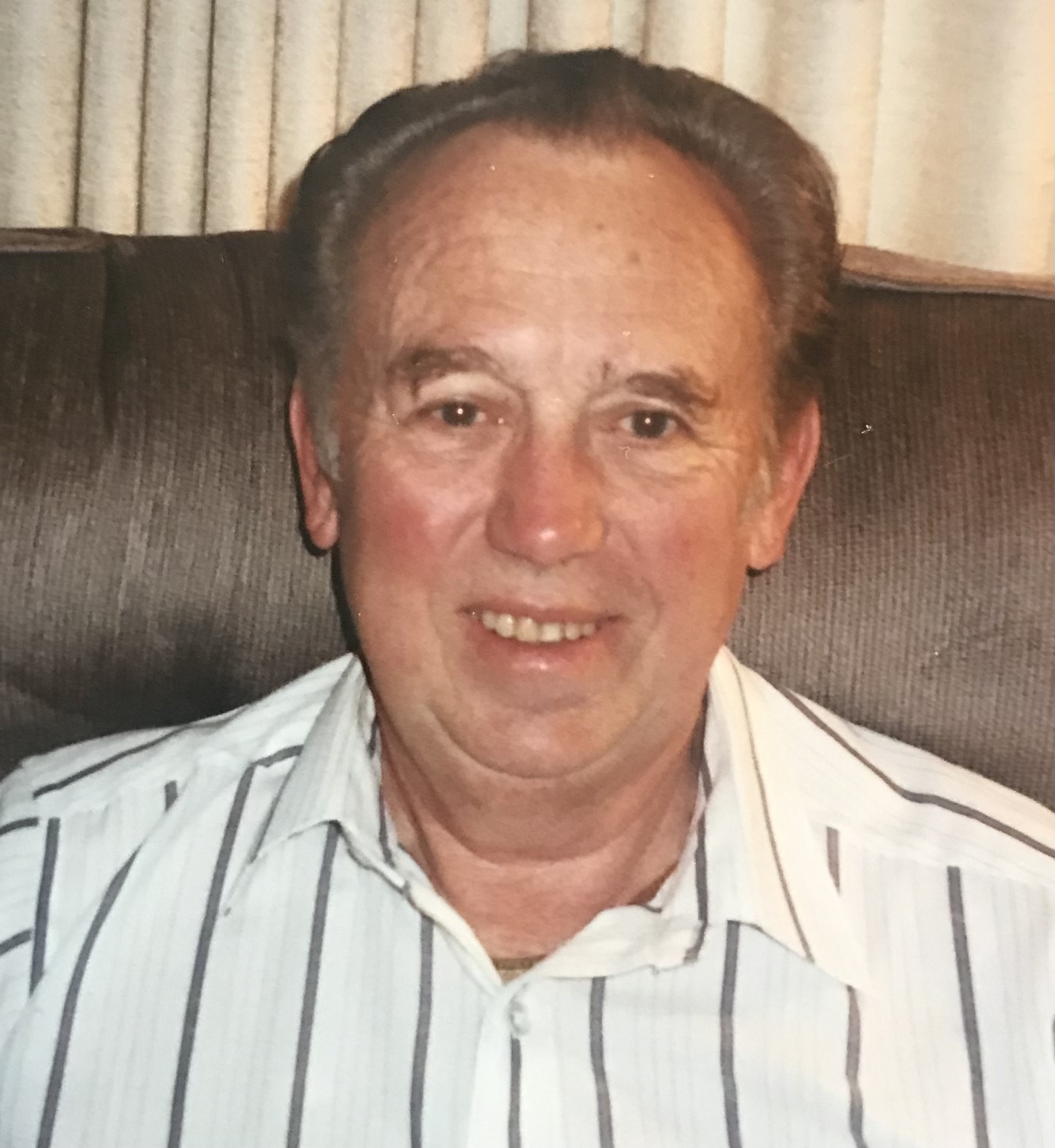
Darrell Francis Martin passed away Saturday, May 18, 2024, one month
short of his 94th birthday. Born June 21, 1930 to Elmer and Ella
Martin he lived his entire life in the Eel River Valley. His early
years were spent in Grizzly Bluff attending grammar school at the one-room Grizzly Bluff School. He attended Ferndale High School where he
excelled in sports all four years, graduating in 1949 and winning the
Most Outstanding Senior Athlete award along with fellow classmate Bob
Mathews. They were the first recipients of this perpetual trophy
award which is still presented to the most outstanding senior
athlete. In 1947, while in his junior year, Darrell married his
highschool sweetheart Deah Stanley.
Upon
graduation he attended Barber School in San Francisco and in 1952
came back to Ferndale to join Ernest (Doc) Reed in his barber shop on
Main Street. In the early 1960’s Darrell opened his own shop,
“Darrell’s Barber Shop ” where he spent a total of 40 years
barbering in Ferndale. Darrell continued to be an active sports
enthusiast his entire life either participating, coaching or as a
spectator. In the early 1960s Darrell and Charlie Goff successfully
applied for a Pop Warner football charter and along with a number of
other young fathers coached the first Pop Warner football teams in
Ferndale. He later did the same with Little League Baseball. He
continued to support Ferndale athletes throughout his life and in
2004 he and Deah were named “Boosters of the Year.”
During
his barbering years Darrell also found time on his days off to sell
insurance for State Farm and later travel the northern part of the
state doing insurance inspections for the California Insurance Group.
When Darrell retired in 1992 he donated the entire contents of his
shop including the barber pole to the Ferndale Museum, where the shop
was recreated and is now one of the museum’s most popular exhibits.
Darrell was an active member of the community, serving over 40 years on the
Ferndale Volunteer Fire Department. He also served on the Board of
Trustees of the Ferndale Elementary School, was a member of the
Native Sons of the Golden West, The Ferndale Museum and a lifelong
member and shareholder in the Redwood Empire Golf and Country Club, where he frequented the course twice a week in his retirement years.
Darrell is survived by his wife of 76 years, Deah; his four sons Larry,
Duane, Ron and Rick (Debbie) Martin; his grandchildren Lisa Kristic
(Scott), Gregory Martin (Heidi), Libby Charlton (Gabe), and Asa
Martin; his great-grandchildren Seth Kristic, Molly Bartlett (Nick),
Noah, Fiona and Oliver Martin, Corbin Martin and Aubrey Charlton.
He
was preceded in death by his parents Elmer (Nip) Martin and Ella
Martin, his brother Lloyd and sister-in-law Betty Martin.
Memorial
contributions in Darrell’s name may be made to:
Ferndale
Volunteer Fire Department
P.O. Box 485
Ferndale, CA
Ferndale Museum
P.O. Box 431
Ferndale, CA.
###
The obituary above was submitted on behalf of Darrell Martin’s loved ones. The Lost Coast Outpost runs obituaries of Humboldt County residents at no charge. See guidelines here.