[UPDATE: Still Open!] Blondies Food and Drink in Arcata Has Alcohol License Suspended for Serving to a Minor During Decoy Operation
Ryan Burns / Friday, Jan. 19, 2024 @ 2:15 p.m. / Business
UPDATE, 5:15 p.m.:
Blondies owner Johanna Nagan called to say Blondies remains open and has some live events coming up, including a goodbye party before new owners take over the place.
That event will take place on Saturday, Jan. 27, with the Marching Lumberjacks playing the next day (Sunday, Jan. 28) at 1 p.m. followed by jazz later that evening.
###

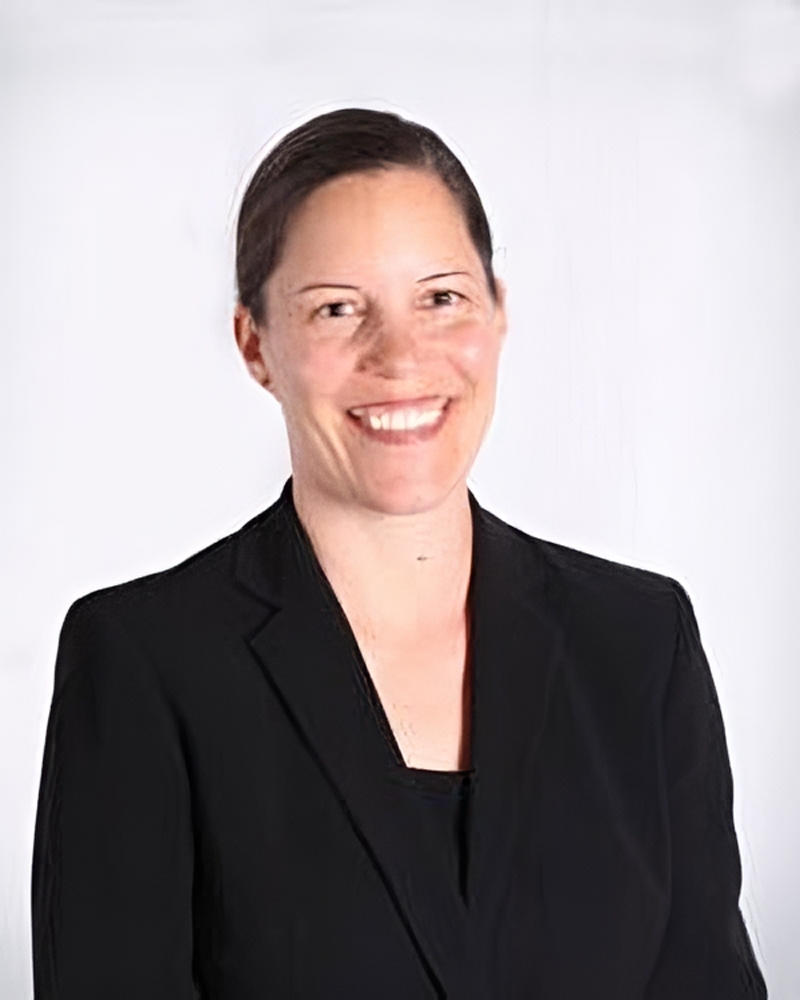
Blondies Food and Drink in Arcata. | Photos courtesy Michelle Heim.
###
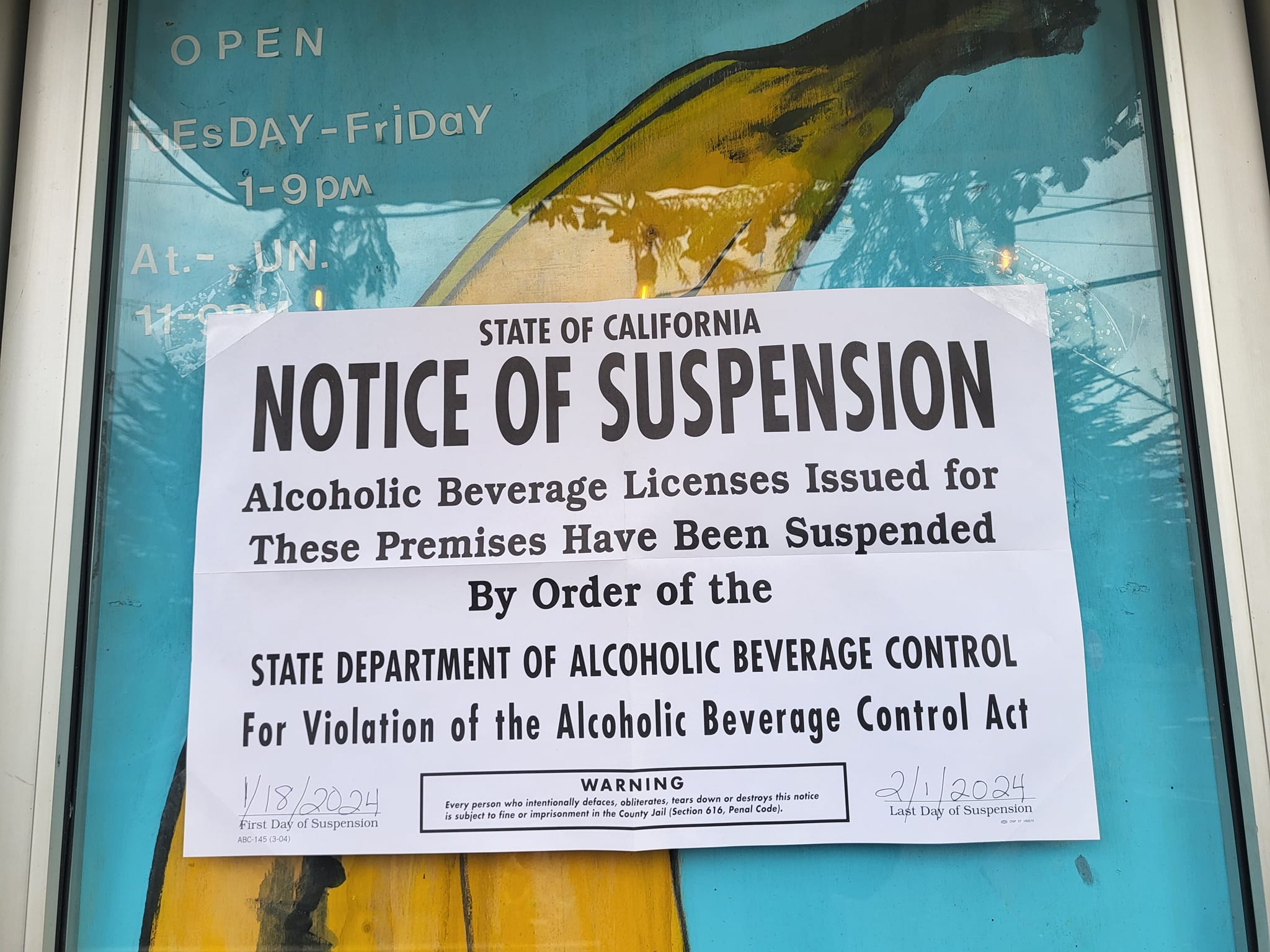
Blondies Food and Drink, a popular northern-Arcata spot for thirsty college students, trivia fans, live music aficionados and various styles of tater tots, has had its alcoholic beverage licenses suspended by the California Department of Alcoholic Beverage Control (ABC).
The 15-day suspension, which went into effect on Thursday and will expire Feb. 1, comes more than 10 months after the alleged violation, on Saint Patrick’s Day last year.
That’s when an employee was caught serving alcohol to an underage patron who was secretly in cahoots with ABC as part of the agency’s Minor Decoy Program, according to an ABC spokesperson.
The spokesperson added that the owners of Blondies engaged in the official appeals process for the alleged violation but ultimately decided to endure the suspension.
The business has been for sale for since at least September, according to an Instagram post, which reads, in part, “We are excited for our new journey and opportunity that we have started … but sad that we can’t do it all, and have come to terms that we have to let go of our first baby.”
A call to the business went unanswered and a voicemail left for the owner around noon was not immediately returned.
BOOKED
Today: 11 felonies, 8 misdemeanors, 0 infractions
JUDGED
Humboldt County Superior Court Calendar: Today
CHP REPORTS
Sr299 / Glen Rd (RD office): Missing Elderly
ELSEWHERE
RHBB: Two Brothers Found Deceased in Trinity River
RHBB: Silver Alert Issued for Missing Humboldt County Man With Dementia and Seizure Disorder
Governor’s Office: FREE MONEY FOR KIDS: Governor Newsom and First Partner celebrate one million families claim CalKIDS “baby bonds” accounts
County of Humboldt Meetings: CAT (Committee for Active Transportation) Meeting Agenda
Arcata’s Jana Ganion Named Governor Newsom’s ‘Senior Advisor for Offshore Wind’
LoCO Staff / Friday, Jan. 19, 2024 @ 10:51 a.m. / Sacramento
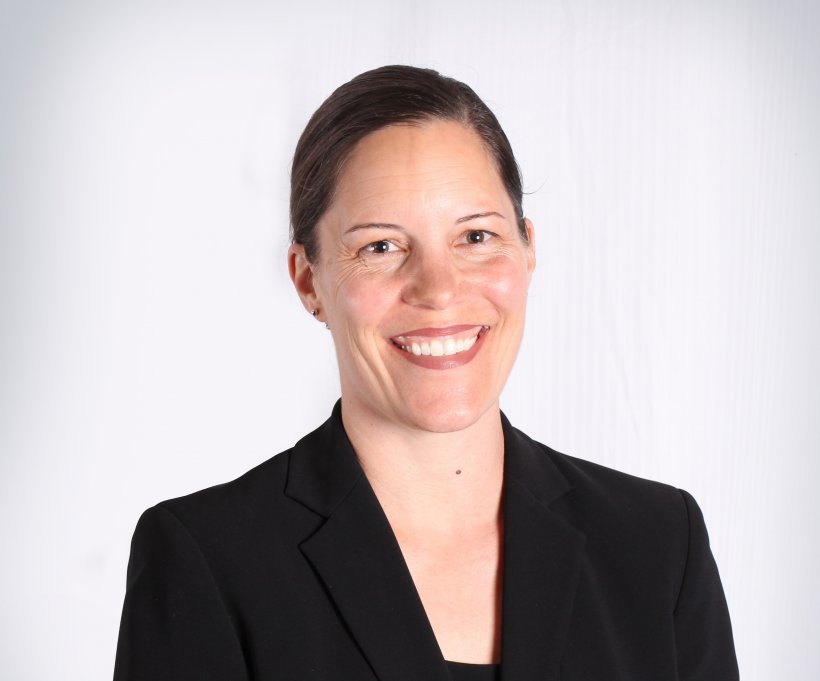
Ganion.
From the Governor’s Office:
Jana Ganion, of Arcata, has been appointed Senior Advisor for Offshore Wind. Ganion has been Director of Sustainability and Government Affairs at the Blue Lake Rancheria since 2004. Ganion is Co-Chair of the U.S. Department of Energy, Indian Country Energy and Infrastructure Working Group and Alternate Director of the Redwood Coast Energy Authority Board of Directors. She is a member of the PG&E Sustainability Advisory Council, SB 350 Disadvantaged Communities Advisory Group, U.S. Bureau of Ocean Energy Management California Intergovernmental Renewable Energy Task Force, and the California Integrated Climate Adaptation and Resiliency Program Technical Advisory Council. She earned a Bachelor of Arts degree in English from Western Washington University. This position does not require Senate confirmation and the compensation is $180,000. Ganion is a Democrat.
[DISCLOSURE: The Blue Lake Rancheria is a minority owner of the Outpost’s parent company, Lost Coast Communications, Inc.]
Dell’Arte International Surpasses $125K Fundraising Goal; Staff Look to Build Back Programming
Isabella Vanderheiden / Friday, Jan. 19, 2024 @ 9:34 a.m. / Theater

Dell’Arte International, a world-renowned theater company and school, will celebrate its 50th anniversary this summer. Photos by Andrew Goff.
###
Dell’Arte International has staged a successful comeback.
Following a three-month crowdfunding campaign to save the world-renowned theatrical organization, Dell’Arte has exceeded its fundraising aspirations and is now on a triumphant path to celebrate its 50th anniversary this summer.
As of this writing, Dell’Arte has raised $167,345 – well over its $125,000 goal.
“We made it to our fundraising goal, and it was especially awesome that we were even able to surpass it by a good bit,” Tony Fuemmeler, Dell’Arte’s head of training programs, told the Outpost in a recent phone interview. “The funds that we raised through our online campaign really helped to sustain us through October, November and December, and helped us reach the year’s end. Now we can look to build back our programming.”
Dell’Arte’s leadership laid off nearly all of its staff in mid-October in response to “critical cash flow issues” following the end of pandemic-era grants and a significant drop in audience attendance. The organization’s board of directors launched a crowdfunding campaign to save the Blue Lake-based theater company and school, with hopes of raising $125,000 by the end of the year.
Dell’Arte reached (and quickly exceeded) its fundraising goal sometime around the beginning of the year after receiving an influx of cash from its end-of-the-year gala and silent auction.
“After the gala, I was asked to sum up my feelings, and my response was a single word: joy,” said Dell’Arte Board President Pat Bitton. “I think that’s what we all felt – the joy of community support, the joy of live performance, the joy of hearing the Carlo filled with laughter.”
Now that the theater company has stabilized a bit, Fuemmeler said staff is looking to bring back some programming and hire new staff.
“We’re hoping those programs sustain themselves while we build up our workforce … and expand our capacity to create more programming,” he said. “As we look to the future, we’re hoping to find recurring donors and strong investors to kind of bolster any revenue we get from our programming.”
Asked whether Dell’Arte was in a position to bring back any of the staff members who lost their jobs during the recent layoffs, Fuemmeler said the board of directors is hoping to hire specific positions, including a full charge bookkeeper and a grant writer.
“In terms of strategy and trying to build towards stability, we’re looking [to hire] those positions first,” he said.
Dell’Arte is still looking to sell its 1.33-acre property, which hosts the Mad River Brewery and Tap Room and several other small units, on Taylor Way in Blue Lake. The property, acquired by the theater in 2018, is currently listed for $1.5 million.
“Once we sell that [property], it’s going to be a substantial investment in our ability to build back our programming,” Julie Douglas, Dell’Arte’s head of arts engagement, said. “If everything moves in the right direction … we are going to offer some more professional intensives so we can, again, build back that self-sustaining programming and have the support to do that.”
In the meantime, Dell’Arte will continue its winter term of community classes, which vary from yoga training to mask-making to karaoke-specific singing lessons. Carlo Theatre will also host the Papaya Lounge, Home Cookin’ and Appliances and a classical music series in the coming months.
If you’re looking to participate in the organization on a deeper level, Dell’Arte’s Board of Directors is looking for new members. Board President Pat Bitton said the board is currently seven strong, but they’re looking to add a few to the bunch.
“We have our first board meeting of the new year next week, at which we will have three potential new board members as guests; if all three are voted in, that will take us to ten,” Bitton said. “We have a few others ‘in the wings’ who are not quite ready yet – between 11 and 13 board members is probably the sweet spot for us; our bylaws allow us a maximum of 23, but I don’t envisage a board of that size in our future any time soon!”
Those interested in joining the board can contact Dell’Arte at info@dellarte.com.
###
PREVIOUSLY:
California Ends COVID Isolation Rule for Asymptomatic Cases as Winter Infections Climb
Kristen Hwang and Carolyn Jones / Friday, Jan. 19, 2024 @ 7 a.m. / Sacramento

California in January 2024 released new COVID-19 isolation guidelines that allow people to return to work or school if they are asymptomatic. Here, students in Theresa Griffin’s sixth-grade class wore masks at Stege Elementary School in Richmond on Feb. 6, 2023. Photo by Shelby Knowles for Calmatters.
Californians infected with COVID-19 may go about their lives without isolating or testing negative as long as their symptoms are improving, according to new and significantly loosened guidelines from the California Department of Public Health.
California’s top public health official, Dr. Tomás Aragón, last week quietly rescinded the state’s previous order, which encouraged people infected with COVID-19 to isolate for five days.
The new health order allows Californians with COVID-19 to return to work or school as long as their symptoms are improving and they are fever-free for 24 hours without medication. Asymptomatic individuals who test positive are not considered infectious and do not need to isolate, according to the order.
“Instead of staying home for a minimum of five days, individuals may return to work or school when they start to feel better,” state public health officials said in an unsigned statement.
The guidelines came down as California tipped over the edge of a major respiratory illness surge fueled by COVID-19, seasonal influenza and respiratory syncytial virus, also known as RSV. Flu and COVID-19 hospitalizations both peaked during the first week of January and have been trending downward since, according to state data.
Masking requirements have not changed, and people with COVID-19 should wear masks for 10 days whether or not they have symptoms. The new guidelines do not apply to employees at high-risk health care settings like hospitals and nursing homes, which may also have different policies for visitors.
It is unclear whether employers can require workers to return to work if they wish to isolate until they test negative. Cal/OSHA, the agency that enforces state workplace safety laws, did not respond to a request for clarification on the rule by deadline.
Some experts say the new guidelines represent a major shift in California’s COVID-19 strategy, but they are not necessarily an unexpected change.
“I think it’s reasonable, mainly for the amount of population immunity that we have including in kids, and for the fact that we have a menu of options to prevent and treat COVID,” said Dr. Peter Chin-Hong, an infectious disease expert with UCSF Health. “It does come with responsibility…we still have to wear masks and be cautious around people who are older or immunocompromised.”
A national study from the Centers for Disease Control and Prevention in June estimated about 96% of people 16 and older had acquired COVID-19 immunity either through vaccination, previous infection or both. State data shows that while relatively few Californians are fully vaccinated with updated boosters — only about 12% — at least 82.5% of the population has gotten at least one COVID-19 shot.
The state’s move also signals a shift toward treating COVID-19 like all other endemic respiratory infections.
“Many people may be infected with COVID-19 or other respiratory infections and do not test or know what infection they may have. Updating our public health approach and recommendations incorporates our recommendations into a broader, multi-pronged approach to multiple respiratory viruses,” department officials said in a statement.
Dr. Noha Aboelata, chief executive of Roots Community Health Center in Oakland, is one of many community doctors who have expressed disappointment in the state’s new direction. COVID-19 does not necessarily behave like other respiratory viruses — hospitalizations and deaths have never dropped to zero the way flu does outside of the winter months — and it is still unpredictable, Aboelata said.
“We still believe that if there’s enough to detect (on a test), there’s enough to infect,” Aboelata said. “So I would recommend people test negative before going around others.”
California schools adjust to new COVID-19 rules
The state’s new strategy also seeks to minimize disruptions in school where long periods of quarantine and virtual instruction adversely impacted student learning and led to widespread mental health challenges for young people.
Some California school districts adopted the new guidelines immediately, while others said they were waiting for direction from their local public health agencies.
Oakland Unified was among those that notified parents of its new policy not long after the state released the guidelines. In an email to families, the district said students and staff can come to school if they test positive for COVID-19, as long as they’re asymptomatic, wear masks and avoid people who are at high risk of sickness, such as those who are immunocompromised.
In line with the state guidelines, those with COVID-19 symptoms should stay home but can return to school once the symptoms improve. The district said it will continue to stock masks and COVID-19 tests and keep air purifiers in classrooms.
“This changes nothing for most parents. We could have had these guidelines two years ago and the result would be the same. … we all know kids belong in school.
— Scott Davison, parent in Carlsbad Unified school district
Los Angeles Unified, the largest school district in the state, said it was waiting for direction from the county public health agency. In a note to families, Fresno Unified recommended that students and staff who test positive for COVID-19 stay home, regardless of their symptoms.
The mixed response mirrored schools’ earlier reactions to COVID-19 in 2020. While most districts closed in March that year, some started bringing back special education students as soon as late spring while others — mainly larger districts — didn’t reopen for in-person instruction until fall 2021.
Teachers and parents on board with COVID rules
For many districts, re-opening decisions hinged on negotiations with teacher unions. This week, California’s largest teacher union was generally supportive of the state’s update to COVID-19 guidelines, saying that schools have adopted enough safety measures to keep staff, students and families safe.
“We’re always concerned about individuals who are high-risk, and we’ll continue monitoring the situation and re-open (contracts) if necessary,” said Rachel Warino, a spokesman for the California Teachers Association. “But we’re confident that negotiations that happened at the height of the pandemic — over air filtration, testing, masks, reasonable accommodations — will be sufficient for now.”
Some parents were relieved at the new guidelines because they encourage students to be in school. Thousands of students statewide are still struggling to catch up academically after remote learning, and many suffered mental health challenges during quarantine.
Scott Davison, who’s part of a parent group in Carlsbad Unified near San Diego, said parents have been sending asymptomatic students to school for a year or more, regardless of state or local guidelines.
“This changes nothing for most parents,” Davison said. “We could have had these guidelines two years ago and the result would be the same. … we all know kids belong in school.”
Concern for vulnerable Californians
Disability and equity advocates are particularly critical of the new guidelines. They contend the change could increase risk of infection for vulnerable Californians.
“This policy is not based in science, equity or public health. It devalues the lives of immunocompromised and disabled people, and completely ignores the risk of long COVID,” said Lisa McCorkell, co-founder of the Patient-Led Research Collaborative, which studies the impacts of long COVID.
There is no treatment for long COVID, which can leave some patients debilitated for years, and increased transmission will disproportionately harm poor communities, McCorkell said.
California officials have made other significant changes to the state’s COVID-19 response strategy in recent months, including returning the majority of the state’s Paxlovid stockpile to the federal government in December, effectively ending California’s free antiviral program.
The free COVID-19 hotline where residents could get Paxlovid prescriptions and vaccine appointments will also shut down at the end of February, state public health officials told CalMatters in a statement. The state has spent $2.3 million on the hotline since July 2022.
These changes, too, are worrisome for equity advocates.
“Not everybody has a primary care doctor. If you don’t have a primary care provider or good access to a primary care provider that’s knowledgeable about treating, then you’re going to have a difficult time accessing it,” Aboelata said.
State-regulated health insurance plans are required to permanently cover in-network COVID-19 testing, vaccination and treatment free of charge, although about 6 million Californians are enrolled in federally regulated plans that are only required to cover vaccines. You can ask your employer what kind of coverage you have.
###
Supported by the California Health Care Foundation (CHCF), which works to ensure that people have access to the care they need, when they need it, at a price they can afford. Visit www.chcf.org to learn more.
CalMatters.org is a nonprofit, nonpartisan media venture explaining California policies and politics.
OBITUARY: Timothy James Reininger, 1968-2024
LoCO Staff / Friday, Jan. 19, 2024 @ 6:56 a.m. / Obits

Timothy
James Reininger
Dec. 13, 1968 - Jan. 14, 2024
Tim was born at the old Trinity Hospital in Arcata on Dec. 13, 1968 to Kelly and Sue Reininger. Tim attended Morris Elementary, McKinleyville Elementary and McKinleyville High Schools. Tim played football and baseball from the age of 8 years old through high school. He was also good at gymnastics. Tim lived his whole life in McKinleyville.
But on one fateful night on Tuesday January 23, 1987, Tim’s life would be changed forever. He was returning to halftime of a basketball game with his friend Doug Jones when a drunk driver ran a stop sign at Murray and Central and hit Tim’s truck. This accident killed Doug and severely injured Tim for the rest of his life. Tim needed to have 18 surgeries to repair injuries that never healed. Throughout his whole life Tim never complained, even though he was in daily pain.
Through much effort with the county, the Jones and Reininger families were able to have them make that intersection a four-way stop with a flashing red lights to keep this from happening again.
Tim loved watching his favorite teams, the SF 49ers and SF Giants, play with family and friends. Tim enjoyed playing Yahtzee, Uno and Doghouse. He also loved watching his nephew Bode play basketball and baseball all over Northern California with his family and friends. TIm and Bode would also play video games together with a lot of friendly banter. Tim was so proud of Bode being able to play sports and maintain an “A” average.
Tim also loved going to Trinity Lake on our houseboat every summer, water skiing and knee boarding and being with family and friends, especially his Grandpa and Grandma.
Tim ultimately received a cancer diagnosis in late 2022 that caused him to receive painful treatments in 2023. In late 2023 Tim was told the cancer had spread to other parts of his body and would require more treatments to prolong his life. In the end a few weeks later the combination of injuries he sustained from the accident and the cancer were too much and claimed Tim’s life. Tim is now at peace and pain-free. We will miss him dearly, every morning and every night.
Tim leaves his favorite dog, “Lucy,” who was always with him and he loved her very much. She slept with him every night and she is missing him too.
Tim was preceded in death by grandparents Floyd McBride, and Hurshell and Helen Reininger, uncle Frank Reininger and aunt Vicki Reininger.
Tim is survived by his parents, Kelly and Sue Reininger; grandmother Moleta McBride; brother Kirby Reininger; nephew Bode Reininger; uncles and aunts Curt and Debbie McBride, Roger and Sharon Reininger. He is also survived by numerous cousins.
He also leaves behind his friend Sarah McCurdy, who he loved dearly.
Tim requested there be no services.
###
The obituary above was submitted on behalf of Tim Reininger’s loved ones. The Lost Coast Outpost runs obituaries of Humboldt County residents at no charge. See guidelines here.
Cal Poly Humboldt Campus to Remain Open During Next Week’s Planned Faculty and Teamsters Strikes
Ryan Burns / Thursday, Jan. 18, 2024 @ 2:39 p.m. / Education , Labor

The California Faculty Association represents nearly 600 faculty members at Cal Poly Humboldt. | File photo by Stephanie McGeary.
###
PREVIOUSLY:
- Hundreds of Cal Poly Humboldt Faculty Set to Strike in January Over Ongoing Salary Dispute with Cal State Administrators
- Cal State Faculty Union Vows to Strike Over the University’s Final Pay Offer
###
The California Faculty Association, a labor union representing lecturers, professors, counselors and librarians from the 23 campuses of the California State University, is all set to strike for five days next week over ongoing disputes with administrators over salary as well as concerns with workload, health and safety issues and parental leave.
In a message to the campus community today, Cal Poly Humboldt announced that the campus will remain open “to support students and employees.”
The Teamsters union, which represents skilled trades employees, plans to strike at the same time, Jan. 22-26.
In its message to the campus community the university said not all faculty and Teamsters employees are expected to strike, and those who aren’t striking are expected to show up and perform their job duties as scheduled.
“It is a misuse of taxpayer dollars to compensate any employee who withholds work,” the message says.
The memo has some advice about picket lines, too, telling employees:
There may be picket lines at the entrance to the campus. You may choose an entrance that does not have a picket line or you can cross the picket line to enter the campus if it is safe to do so. You are not obligated to provide the members of a picket line with any personal information including your name, your classification, or your job location.
The university says employees should contact the Human Resources department if they get harassed by any members of the picket line.
Meanwhile, the CFA issued its latest press release this afternoon:
CFA members at California State University campuses will be on strike January 22-26. We are proud and excited to be joined by Teamsters Local 2010 members.
Since May 2023, we have been bargaining for a CSU that centers student learning only to be met with disrespect and derision by management.
“In recent news reports, CSU management has only addressed our conflict over salary; they have completely ignored the issues of workload, health and safety concerns, and parental leave. Management wouldn’t even consider our proposals for appropriate class sizes, proper lactation spaces for nursing parents, gender inclusive bathroom spaces, and a clear delineation of our rights when interacting with campus authorities,” said Chris Cox, CFA Vice President of Racial & Social Justice, North, and San José State Lecturer.
“CSU management wants to maintain the status quo, which is not working for the vast majority of our faculty, students, and staff. In order for us to have a properly functioning system in years to come, we need to improve the working conditions for faculty and learning conditions for students. This includes raising the salary floor for the lowest paid faculty; a general salary increase for all faculty; parental leave appropriate to our work assignment, and appropriate staffing for mental health counselors on campus,” Cox added.
CFA Pomona member and Cal Poly Pomona Counselor Maria Gisela Sanchez Cobo is striking next week for rights, respect, and justice.
“There are so many issues within the CSU system that need to be addressed. I know many faculty teach one class here, one class there. They’re driving across their county to make ends meet – that impacts that quality of teaching, the quality of learning. And our inadequate counselor-to-student ratios – we have so many students who are facing significant barriers. They’re working, they’re supporting themselves, they’re supporting their families, many are first-generation, they are immigrants. They need our help to work through those hurdles so they’re able to show up to class and learn,” Sanchez Cobo said. “And I’m fully hurt and disheartened that CSU management increased tuition for students. It’s very disturbing the incongruence of the narrative management presents – they have no funding, but they have enough for presidents’ raises and more and more administrators.”
“Faculty, students, and staff are resourceful, intelligent, driven people. If we had access to what we needed, more students would be thriving. CSU management needs to invest in the direct providers – the teachers, counselors, coaches, librarians,” Sanchez Cobo added.
Striking CFA members will be joined by students, staff, and other supporters who are working to reverse CSU management’s disinvestment in the people who are directly responsible for student learning and success.
CSU East Bay student Crystal Chavira-Orduñez plans to honor the strike and join faculty on the picket line Monday through Friday.
“I support faculty. Seeing, in this day and age, faculty facing such disparities, such unfairness is not the CSU I want,” they said. “I support the people I look up to, the people who have inspired me. I want them to be treated well.”
Chavira-Orduñez said they and other students have noticed faculty struggling with large class sizes and low pay, adding that students realize now is the time to join with faculty to reverse decades of disinvestment in the classroom.
CSU management continues to reject our calls for:
- 12-percent pay raises that keep ahead of inflation.
Pay equity and raising the floor for our lowest-paid faculty.- Manageable workloads that allow for more support and engagement with students.
- More counselors to improve students’ much-needed access to mental health services.
- Expanding paid parental leave to a full semester.
Accessible lactation and milk storage spaces for lactating faculty.- Safe gender-inclusive restrooms and changing rooms.
Safety provisions for faculty interacting with university police on our campuses.
For details on CFA members’ and CSU management’s reopener bargaining proposals, visit www.CFAbargaining.org. For more information on the CSU’s financial position and our re-opener bargaining history, visit www.calfac.org/strike.
Picket lines on all campuses will begin Monday at 8 a.m. Faculty are available for comment: contact Lisa Cohen at lisa@lisacohen.org to schedule an interview.
ABOUT THE CALIFORNIA FACULTY ASSOCIATION: CFA represents more than 29,000 tenure-line instructional faculty, lecturers, librarians, counselors, and coaches on the 23 campuses of the California State University system, from Cal Poly Humboldt in the north, to San Diego State in the south. Learn more about CFA at calfac.org and visit our Facebook, Twitter and Instagram pages.
Karen Diemer, Arcata’s City Manager for Nearly the Last 10 Years, Announces Her Impending Retirement
Hank Sims / Thursday, Jan. 18, 2024 @ 1:59 p.m. / Local Government

Diemer.
After almost 10 years on the job — through a fairly eventful decade in the city of Arcata that included the transformation of Cal Poly Humboldt, the drafting of an ambitious new development plan for city’s Gateway Area, the removal of the McKinley statue, the still-unresolved killing of David Josiah Lawson and the city’s initiation of legal action against one of its own councilmembers — City Manager Karen Diemer is stepping down.
As first reported in the Mad River Union, Diemer delivered the news to the Arcata City Council at its meeting last night, and an all-staff memo has since been sent out announcing her decision.
Diemer plans to stay on the job until the city council can find a replacement, which will likely take a number of months.
Reached this afternoon, Diemer told the Outpost that after more than three decades in public service in Humboldt County — she started in 1989, with a part-time job at the city of Eureka — this just felt like the right time to take a breather.
“What’s encouraged me to go this year is that the city is on really solid footing,” Diemer said. Specifically, she said that the city’s finances are stable, that the city looks ready to wrap up its big general plan update in the next few months, and that the council and city staff are solid.
“It’s a good time to transition,” she said. “Not a lot of cities have the opportunity to transition in leadership when the sails are smooth.”
Diemer said she and her husband plan to stay in the area, post-retirement, but that since she has children living out of town now, there might be more travel in her immediate future.
In the next few weeks, Diemer said, the city will contract with a recruiting firm to put out a call for applications, and there’ll be a public announcement about a timeline and a public process for hiring someone to replace her.
In speaking with the Outpost, Diemer was full of praise for her colleagues, and for the city as a whole. She characterized Arcata as an “adventurous” city, from a local government perspective — it’s eager to take risks, to try new and innovative things, even if they have a chance of failing.
When she was a young professional starting at the city in 1996, Diemer said, she assumed that Arcata would have to be only one stop if she were to advance in her profession.
“I thought I’d have to move to all kinds of cities to get experience,” Diemer said. “But Arcata was so creative.”