

Parents’ Rights Groups Mobilize as California Advances a Ban on Youth Tackle Football
Ryan Sabalow / Tuesday, Jan. 16, 2024 @ 7:43 a.m. / Sacramento

Photo by Pixabay via Pexels.
Anaheim Assemblymember Avelino Valencia is a former tight end for Cal State San Jose who tried out for the NFL. Before entering politics, he was a community college football coach.
“The benefit that football has had in particular to my life, I cannot put a monetary amount on it,” he told his colleagues on the Assembly Arts, Entertainment, Sports and Tourism Committee.
So it was painful for Valencia to throw his support behind a bill headed for the Assembly floor that would make California the first state to set a minimum age for tackle football — banning the sport for children under 12. But he said the evidence that the repeated brain trauma football players endure game after game is too clear.
“It’s because it is a very dangerous and violent sport,” he said, his broad shoulders filling his suit jacket like a set of football pads. “There’s no ifs, ands or buts about that.”
The committee’s 5-2 party-line vote from Valencia and his fellow Democrats last week to advance the bill set in motion what’s likely to be one of the more emotionally charged issues California lawmakers will consider in 2024 as they wade into yet another contentious debate over parental rights.
This time, instead of vaccine requirements or LGBTQ policies at public schools, they’re debating the future of the country’s most popular sport, one that has a documented history of its players getting debilitating brain disease from repeated blows to the head. Several high-profile examples of former players – most notably the suicide of legendary NFL linebacker Junior Seau who suffered from a degenerative brain disease – have prompted the NFL down to youth leagues to try to make tackling safer.
Researchers say tackle football is still dangerous despite the changes to the game. For instance, Boston University published research last year finding that players who’ve spent more than 11 years in the sport have an increased likelihood of brain trauma, leading to poor impulse control and thinking problems.
But there’s no guarantee Sacramento Democratic Assemblymember Kevin McCarty’s bill will advance beyond the Assembly, even in a Legislature that’s not shy about citing medical research to make decisions that outrage parental-rights groups and become “nanny state” fodder for national conservative media.
Assembly Bill 734 would phase in a ban, first prohibiting children under 6 from playing tackle football starting in 2025, and working up to bar those younger than 12 by 2029. It must pass on the Assembly floor by the end of the month if it’s going to eventually make its way through the state Senate to Gov. Gavin Newsom’s desk. Newsom hasn’t indicated whether he’d sign the bill.
A handful of other state legislatures have debated similar youth tackle football bans. None have passed. A similar version of the bill in 2018 failed in California to even get out of committee.
Along the way, lawmakers are sure to see a repeat of last week’s hearing. Dozens of coaches, youth sports association officials, jersey-clad pre-teen football players and their parents spilled out of the hearing room into the hallway as they lined up to take the microphone and urge the committee to kill the measure.
The groups, including the California coalition of Save Youth Football, whose private Facebook group has nearly 7,000 members, have promised to keep up the pressure.Already, the issue has taken on a partisan tone. A representative for Moms for Liberty, an influential group among conservatives known for seeking to ban textbooks that reference gender identity and academic discussions about systemic racism, was among those who testified in opposition last week.
“Huddle up California. Protect your parental rights. Stand up to Big Government,” the California Youth Football Alliance wrote on its Facebook page earlier this month, urging followers to contact McCarty’s office.
Youth tackle football fans cite race, community ties
But youth tackle football is different from other parental-rights debates that are more easily framed as a Republican-Democrat dichotomy.
As they weigh the bill, liberal lawmakers will consider arguments from the likes of Sacramento County Sheriff Jim Cooper, who opposes it.
Cooper, a Black former Democratic Assemblymember from Elk Grove, worries that banning youth tackle football would take away an outlet for young children in Black communities who might otherwise find their way into a gang.
“Notably, Black male children engage in youth tackle football at higher rates than any other race,” Cooper told the committee last week in his sheriff’s uniform. “To my knowledge, there’s been no pressure to limit participation in lacrosse, soccer or ice hockey, which all have concussion rates similar to youth tackle football but are prevalent in more affluent and exclusive communities.”
Lawmakers, he said, have already passed legislation he authored in 2019 that limited full-contact youth football practices to no more than 30 minutes per day, two days a week. That bill had support from the California Youth Football Alliance.
Lawmakers also will have to weigh their own experiences with the sport. Assemblymember Tom Lackey, one of the Republicans on the sports and tourism committee, told his colleagues last week that he’s “participated in flag football and … participated in tackle football. They’re different.”
“If we ban this sport, we take away the opportunity and many opportunities from children to grow – not only as an athlete – but as a self-actualized adult who knows when they have the capabilities to overcome an obstacle and achieve success further,” said Lackey, a former California Highway Patrol sergeant from Palmdale. “We take away a lifelong passion for the love of the game.”
Experts warn of dangers from tackling
McCarty, the bill’s author and a former Pop Warner youth football player himself, said wanting to restrict young kids from tackling each other won’t negate their love for football, a sport that he said has been part of his family for as long as he can remember.
“You can love football and love our kids and try to protect our kids at the same time,” he told the committee, after pulling out a ball with a 49ers logo.
The experts McCarty brought in to testify in support of his bill included pediatric neurologist Dr. Stella Legarda, president of the California Neurology Society, which sponsored the bill. The group spent $17,983 on lobbying last year on this bill and others, according to the latest reports filed with the California Secretary of State.
She pointed out that the NFL has been having its own players shed their pads and helmets to play flag football in its signature exhibition game, the Pro Bowl.
“When the NFL takes measures to protect its players by playing flag football in the Pro Bowl, it is not just safeguarding its multimillion investments,” Legarda told the committee. “It delivers the clear message that impact injuries and cumulative head trauma are perilous and should be minimized.”
Assemblymember Valencia, the former football player, told CalMatters in an interview that the bill and the concerns about the health of California’s youth football players were very much on his mind last year, as he stood on the sidelines of his alma mater, San Jose State, during its game with its rival, Cal State Fresno.
He said he was struck by “how violent and damaging” the sport he played is. He couldn’t imagine taking those sorts of hits at the speeds the players were moving, now, as a 35-year-old man.
Valencia said that young kids can play flag football and still learn the skills they’ll need to play tackle football when they’re older – without risking brain damage.
“Drills, becoming more athletic, agility, speed, that makes you a better football player,” he said. “But tackling? That comes second hand. You can figure that out in a very short period of time.”
###
CalMatters.org is a nonprofit, nonpartisan media venture explaining California policies and politics.
BOOKED
Yesterday: 6 felonies, 6 misdemeanors, 0 infractions
JUDGED
Humboldt County Superior Court Calendar: Today
CHP REPORTS
No current incidents
ELSEWHERE
NPR: The bond market is signaling trouble ahead. This is why you should pay attention
Science Alert: Sugar-Sweetened Beverages Linked to Stomach Cancer For The First Time
Science Alert: Parkinson’s Link to Gut Bacteria Hints at Unexpectedly Simple Treatment
OPB: Invasive beetle that has wiped out millions of ash trees confirmed in Washington
Why California Community Colleges Are Reluctant to Spend More Than $500 Million in State Money
Adam Echelman / Tuesday, Jan. 16, 2024 @ 7:30 a.m. / Sacramento
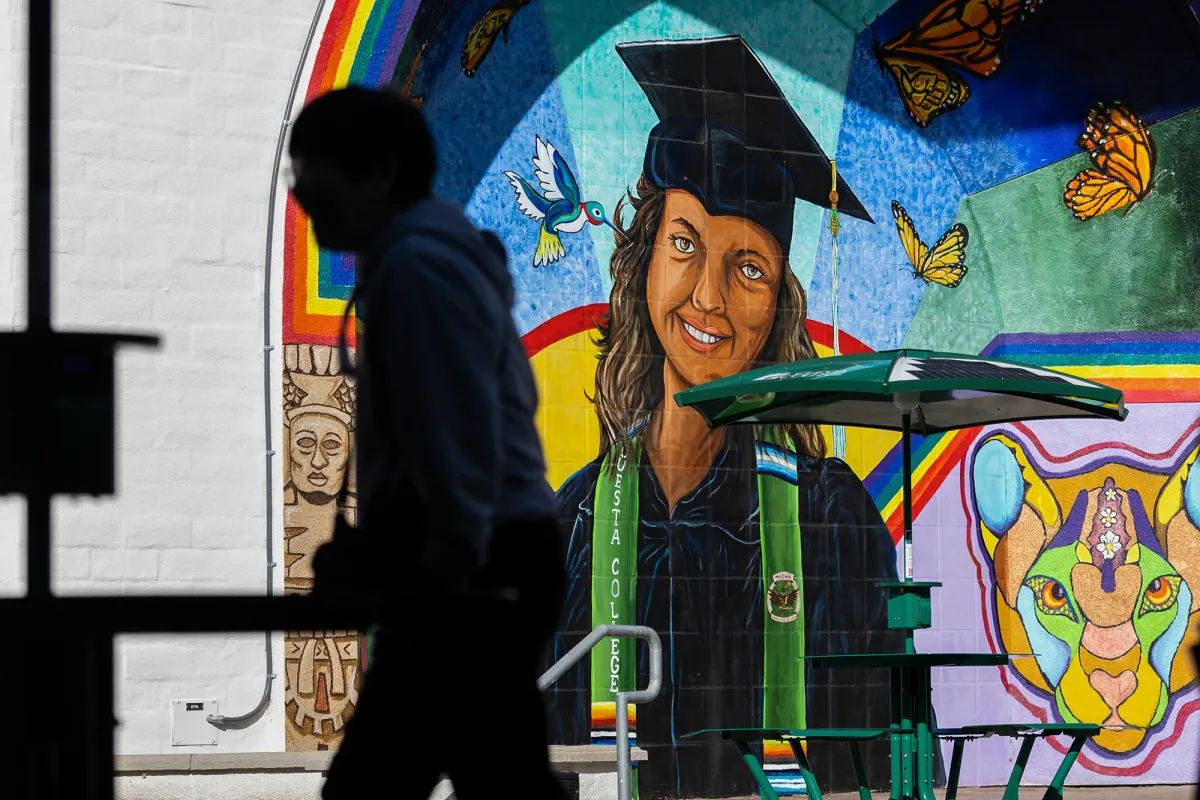
The student center at Cuesta Community College in San Luis Obispo on Jan. 10, 2024. Photo by Julie Leopo-Bermudez for CalMatters
More than a year after California community colleges received $650 million in state COVID-19 relief money, schools have spent less than 20% of it.
Colleges say they desperately need the money, but that they are reluctant to spend it because of ongoing uncertainty surrounding the state’s budget. Namely, they fear they’ll be asked to give it back.
“It’s either feast or famine,” said Dan Troy, an assistant superintendent at Cuesta College in San Luis Obispo and a former member of the finance team at the California Community Colleges Chancellor’s Office.
Community colleges can spend the relief money on a wide range of programs, including mental health services, food pantries for students, technology, and professional development for faculty. But more than $500 million remains unspent, according to the most recent data from the chancellor’s office.
Two years ago, in the 2022-23 budget, California had a projected budget surplus due in part to an influx of federal COVID-19 relief money. The state allocated that surplus to a number of programs and services, including $650 million to community colleges.
Last year, the state had a projected deficit, and Gov. Gavin Newsom proposed asking colleges to return the COVID-19 money less than a year after giving it to them. It was part of a proposed tradeoff so that the governor could accommodate other requests, including an increase in the amount of general fund dollars awarded to community colleges.
The proposal never came to fruition, but the governor did claw back other funds from community colleges in order to close the state’s budget deficit.

The Dovica Learning Resource Center at Cuesta College in San Luis Obispo on Jan. 10, 2024. Photo by Julie Leopo-Bermudez for CalMatters
Now the governor and the Legislature are grappling with a $37.9 billion deficit as they plan the 2024-25 budget. According to the governor’s proposed budget, released last week, the community college system will not face any major cuts this year, though the budget is subject to change before it’s enacted this summer.
“Predictability, consistent funding, I think that’s what most campuses would love to see,” Troy said. His district, which has three campuses in San Luis Obispo County, has spent or signed contracts amounting to $390,000 as of the end of last year, a fraction of the nearly $5 million in COVID-19 funds it received in 2022.
There are other reasons behind his spending decision. Before Cuesta College received its nearly $5 million portion of the state’s COVID relief dollars, it had already received a much larger relief grant — roughly $28 million — directly from the federal government. Troy said his plan was to prioritize spending down federal dollars first, since it’s much more money and needed to be used before the end of last year. Colleges have until 2027 to spend the money from the state.
Uncertainty makes it hard to spend
Across the state, community colleges said financial uncertainty is shaping everyday decisions about spending money they receive from the state.
“I was reluctant to make major commitments to the (COVID-19) dollars for fear that the rug would be pulled out from under us.”
— Dan Troy, assistant superintendent at Cuesta College
In South Lake Tahoe, where the cost of housing has become unaffordable for many low-income students, the local community college is building a 100-bed dorm with state construction funding. But inflation led to rising building prices. President Jeff DeFranco said the college initially held back on spending its COVID-19 money in case it needed to use it for the housing project. The final housing estimate came in lower than expected, he said, meaning the college was free to use its COVID-19 funds elsewhere.
More uncertainty followed for Lake Tahoe Community College. Several months after the final housing estimate came in, Newsom proposed that colleges return more than half of the COVID-19 money they had received.
While the final version of the budget didn’t include those particular cuts, the governor did ultimately ask colleges to return more than half of the money they had received for maintenance projects. Colleges that had already spent that money either needed to renege on contracts or pull from other sources of funding to cover the difference.
“I was reluctant to make major commitments to the (COVID-19) dollars for fear that the rug would be pulled out from under us. I was concerned that we’d make commitments we couldn’t keep,” Troy said. Of the $390,000 that Troy has committed so far, most is for a contract with the regional transit agency to provide free bus travel for students. That contract has more flexibility than a traditional contract with a private company.

Sean Runyon, 55, a student at Cuesta Community College, in his home in Santa Margarita, Calif. on Jan. 19, 2024. Photo by Julie Leopo-Bermudez for CalMatters
While a small investment compared to the millions of unspent funds, those dollars make a difference for Sean Runyon, 55, who relies on the bus in order to attend classes at Cuesta College four days a week. He sold his car a few years ago in order to help pay for a surgery and can no longer drive because of a related disability.
He’s a single parent of a teenager and survives on government benefits, earning about $1,000 a month, half of which goes to rent. “That $68 dollars is a lot of money,” he said, referring to the cost of a monthly bus pass. Without it, he said, “I’d probably have to stop going to college.” After working as a chef for decades, his goal is to change careers into something that’s less physically demanding, such as counseling for people with substance use problems.
Runyon said he’s grateful for the services that Cuesta College provides and places the blame for the college’s budget dilemma on Newsom and the state’s leadership.
Troy said the recent budget the governor released gives him more confidence to spend down the money he has. “It’s not a great budget by any means, but it’s stable enough that I feel confident committing those dollars.”
He said the college might spend the remaining money on services to support students, such as food pantries and vouchers to offset textbook costs. He also mentioned possible improvements to classroom technology, such as new whiteboards and laptops.
‘Spending a lot of money is a lot harder’
California’s 116 community colleges are organized into 73 independently governed districts, which are overseen by the state chancellor’s office. Spending public money within any of these districts requires various approval processes, which can each take time, said Michal Kurlaender, a professor at UC Davis who studies COVID-19 recovery in higher education. College boards typically make the final call but the state usually requires that faculty, staff, and students be involved too.
“It’s a really diverse system,” she said.
While most colleges have only used a fraction of the state’s COVID-19 dollars, some have already spent it all or committed it all through contracts.

Students leave class at Rio Hondo College in Whittier on Dec. 2, 2022. Photo by Alisha Jucevic for CalMatters
Rio Hondo College, located in Whittier in eastern Los Angeles County, has spent roughly half of the more than $7 million in COVID-19 relief it received in 2022 and has signed contracts that spend the rest by May, according to Stephen Kibui, the vice president of finance and business for the college. Most of the money is going toward providing low-income students laptops, WiFi hotspots, and software such as Microsoft Office.
The college is not immune from budget fluctuations, though. Last year, when the state pulled back money for maintenance, Rio Hondo was one of several colleges that had already spent the money or signed contracts for projects.
“One of the contracts we’re dealing with now is the roofing of our science building. It’s a three story building and it’s leaking all the way to the second floor,” he said.
He pulled from the college’s general fund in order to keep the project going. Now, the coffers of the general fund are getting low, so he said he’d need to pull from the college’s reserves if anything similar were to happen this year. It would be “unacceptable” and “very punitive,” he said.
Just north of Joshua Tree National Park, Copper Mountain College received the smallest amount of COVID-19 funds in 2022 and spent it all within the fiscal year, said President Daren Otten.
“We’re a small operation,” he said. “We move quickly. Once we realized what the resources could be spent on, we deployed them.” The school used the money to cover debts, such as unpaid course fees, that students had accrued.
However, Otten drew a distinction between his college and many other schools. “Spending a lot of money is a lot harder. Our total allocation was $760,000.” On average, community college districts received more than $9 million in 2022 from the state for COVID-19 relief.
At the start of the pandemic, Kurlaender said college leaders often asked her what to do with all the relief money they received, especially the federal dollars which were even larger than the state’s allocation. She said she didn’t have an easy solution. “The reality is we don’t have a big wealth of evidence of how to deal with something like a pandemic when students are facing this level of disruption.”
###
Adam Echelman covers California’s community colleges in partnership with Open Campus, a nonprofit newsroom focused on higher education.
CalMatters.org is a nonprofit, nonpartisan media venture explaining California policies and politics.
OBITUARY: James Jeffries, 1954-2023
LoCO Staff / Tuesday, Jan. 16, 2024 @ 7:18 a.m. / Obits
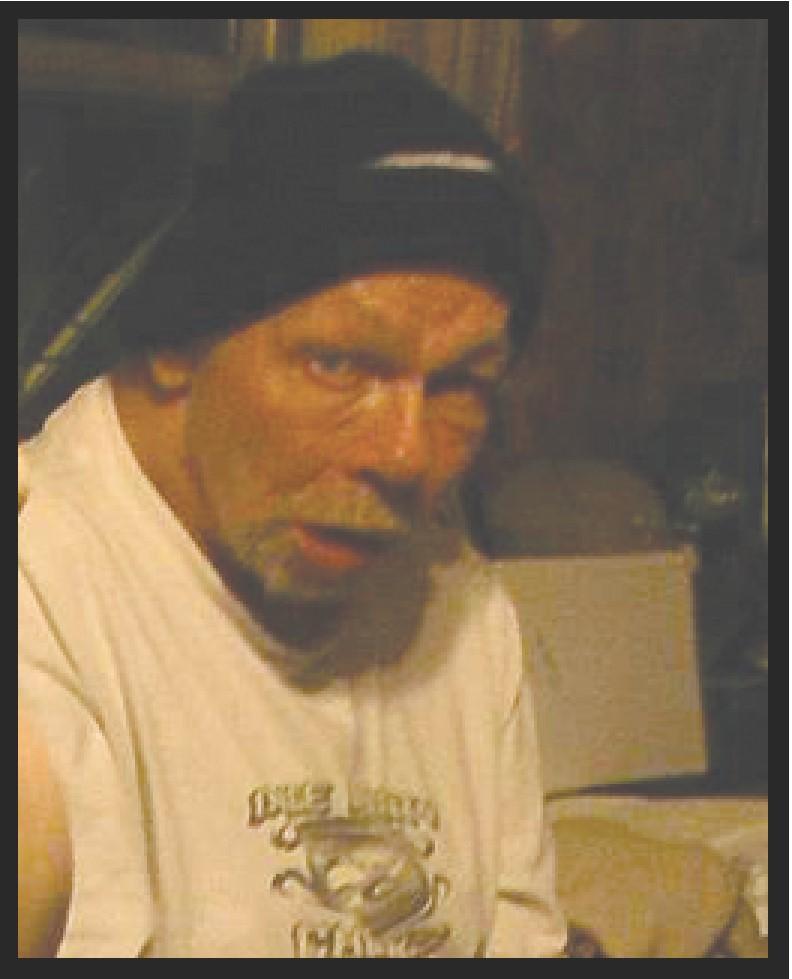
James
Jeffries
passed
away at home on January
2, 2024. James was born
on May 20, 1954, in Scotia to J.V. (Jake)
and Ann Jeffries. James was
the oldest of five children and
grew up in Rio Dell. James was a gentle and
kind man. James enjoyed
being in the community
and working at Redwood
United making planters,
potholders, birdhouses, and
many other things.
James loved to have great conversations and laugh with people and always loved to go to family gatherings and spend time with them. James had a great love of music and loved to sing. James loved to spend time at the Adult Day Center with all his friends. James lived in Eureka California with his caregiver Mark Ash for the last 10 years.
James was preceded in death by his father J.V. (Jake) Jeffries of Rio Dell. Survived by his mother Ann Jeffries of Rio Dell CA and his beloved siblings. Rodney Jeffries of Benicia, Bill Jeffries & (SILK) Deb Jeffries of Fortuna, Carl Jeffries of Garberville, and his sister Debbie Byram & (BIL) David Byram as well as many nieces and nephews.
James will be greatly missed by all but will remain in all our many memories. We would like to thank Mark Ash and Hospice of Humboldt for their excellent care of James. We kindly ask that if any-one would like to make any donations to please send them to the Adult Day Center of Eureka in James’s honor.
A memorial gathering will be held January 27, 2024 from 11 a.m to 3 p.m. at the Rio Dell Fire Hall, 50 Center Street, Rio Dell, CA 95562. This will be a potluck style gathering if you wish to bring a dish.
###
The obituary above was submitted on behalf of James Jeffries’ loved ones. The Lost Coast Outpost runs obituaries of Humboldt County residents at no charge. See guidelines here.
GROWING OLD UNGRACEFULLY: Gaza and Religious Wars
Barry Evans / Sunday, Jan. 14, 2024 @ 7 a.m. / Growing Old Ungracefully
“This is a struggle between the children of light and the children of darkness, between humanity and the law of the jungle.”
— Israeli Prime Minister Benjamin Netanyahu, 16 October 2023 [translated from Hebrew]

Israel airstrike on El-Remal area of Gaza City, October 9, 2023, following the October 7 Hamas-led attack. Palestinian News & Information Agency (Wafa) in contract with APAimages, CC BY-SA 3.0, via Wikimedia Commons
Netanyahu was reaching back into the Old Testament, linking the ancient people of Amalek (massacred by mythical King Saul) to present-day Palestinians in Gaza. He’s right about “children,” at least on the Palestinian side, in the open-air prison known as the Gaza Strip. Of Gaza’s two million inhabitants, about half are under 16 years old. (The median age in Gaza is 18 compared to 28 globally.) Most Gazans are descendants of refugees driven from their homes during the 1948 Arab-Israeli war in what is referred to, in Arabic, as al-Nakba, the disaster.
By characterizing the “war” between Israel and Hamas in terms of light and dark, Netanyahu is acknowledging that this is a religious conflict. No wonder! Jews have been persecuted for millennia, beginning in the 6th century BCwith the Babylonian captivity when Jerusalem was sacked, and Jews — at least the leaders — were marooned far from their homeland. Since then, they’ve endured discrimination, pogroms and the Holocaust. Ironically for a people who know suffering, how little empathy they have for the descendants of the very people they forcefully displaced during the establishment of the State of Israel. Nearly half of Israelis polled last November said that Israel should “not at all” consider the “suffering of the civilian Palestinian population in Gaza” in response to the brutal Hamas attack of October 7.
I blame religion for encouraging such extreme views. Not just Jews vs. Muslims (99.8% of Gazans are Sunni Muslims living under ultra-conservative Hamas, while Israel is increasingly dominated by extreme forms of Judaism). When it comes to wars, it’s hard to avoid seeing most of them as essentially conflicts between competing religions. For instance:
- Balkans, 1991-1999: Orthodox Serbians vs. Catholic Croatians and Bosnian Muslims
- Sri Lanka 1983-2009: Buddhists vs. Hindus
- Iran-Iraq 1980-1988: Sunni Muslims vs. Shiite Muslims
- Indonesia (Timor) 1974-1999: Muslims vs. Christians
- Northern Ireland, 1969-1998: Catholics vs. Protestants
- Nigeria 1967-1970: Muslims vs. Christians
- Sudan 1955-1972, 1983-2005, 2023-present: Muslims vs. Christians
- WW2 1939-1945: Christians vs. Christians; Christians vs. Shintoism & Buddhism. Britain, the US and Japan were empires in which religious nationalism played a major role. For Britain and the US, Protestant Christianity was put in the service of the war effort (and it helped China’s cause against Japan that Chiang Kai-Shek was Christian), while both Shintoism and Buddhism were central to Japan’s wartime morale. Germany wasn’t exempt: Adolph Hitler (“Providence has chosen me to lead the German people to resurrection”) was regarded as a messiah by many Germans (even though he was Austrian) to right the vengeful terms of the Treaty of Versailles following WW1 (Christians vs. Christians, mostly)
- European Religious Wars, 1517-1712: Protestants vs. Catholics
- Crusades: 1096-1291: Christians vs. Muslims
Need I go on? I’m not naive enough to believe that religion is the only cause — or even the main cause — that enabled these conflicts, but religion has certainly been harnessed, time and again, to justify making one’s cause noble while demonizing the enemy. Without religion, the world would be a much safer place.
Reaching back to last week’s sermonizing about kindness, I’m reminded of Nietzsche’s observation: “There is not enough love and goodness in the world to permit giving any of it away to imaginary beings.”
[UPDATE: Re-Opened] Hwy. 101 Closed in Both Directions in Both Orick and Fortuna Due to Flooding
Ryan Burns / Saturday, Jan. 13, 2024 @ 9:48 p.m. / How ‘Bout That Weather , Traffic
UPDATE, Sunday morning:
The highway has reopened.
###
Original post:

###
According to Caltrans, northern Humboldt County has nearly become an island due to the deluge of the past 24 hours.
As of this post, Hwy. 101 is closed between Dinsmore Road in Fortuna and Hookton Road, north of Loleta, due to flooding.
Flooding has also caused a closure of 101 between Bald Hills Road in Orick and the Newton B. Drury Scenic Parkway.
State Route 211, aka Main Street in Fortuna Ferndale, is also closed near Nilsen Company for the same reason.
Stay safe out there, Humboldt. And for current conditions, check the road information Caltrans page by clicking here and entering 101, or whichever highway you’re interested in.
(UPDATING) WEATHER ALERT: Flood Warning Issued for Humboldt Bay Area, Heavy Rain Expected to Continue Through the Afternoon
Isabella Vanderheiden / Saturday, Jan. 13, 2024 @ 11:56 a.m. / How ‘Bout That Weather

Image: National Weather Service Eureka.
The National Weather Service has issued a Flood Warning for communities around Humboldt Bay. Flood impacts are expected to increase throughout the day.
“The flood advisory around Humboldt Bay has been replaced with a flood warning,” according to the NWS office in Eureka. “Widespread flooding has been reported on area roadways. Moderate to strong rain will continue through the afternoon. Expect flood impacts to continue to expand.”
Additional flooding can be expected along rivers, creeks, streams and other low-lying or flood-prone areas.
“Low-water crossings are inundated with water and may not be passable,” the NWS wrote in a Facebook post this morning. “Expect many areas of slow-moving or standing water. It will take several hours for all the water from these storms to work through local drainage systems in urban areas.”
Is it flooding in your neck of the woods? Send us your pictures!
###
UPDATE 3:30 PM: This rainy weather is wreaking havoc on local roads. Here’s a current list of road closures and restrictions:
- Highway 36 is closed about a half mile west of the Carlotta Volunteer Fire Department due to flooding.
- Highway 101 southbound off-ramp at Hookton Road is closed due to flooding. Eel River Drive is closed in this area as well.
- Highway 254 (Avenue of the Giants) is closed between post mile 41.1 and 41.4 due to flooding.
- Fieldbrook Road is closed at Grassy Creek.
- Freshwater Road is closed at Myrtle Avenue.
- Hatchery Road is closed.
- McCann Road and McCann Bridge are closed. The McCann Ferry is running.
- Berta Road is flooded.
- Cannibal Island Road is flooded.
- Coffee Creek Road is flooded.
- Hawk’s Hill Road is flooded.
- West End Road is flooded at post mile 1.50.
Keep an eye on Caltrans Quickmap or the Caltrans District 1 Facebook page for current road conditions.
###
LoCO readers shared these photos of today’s weather.
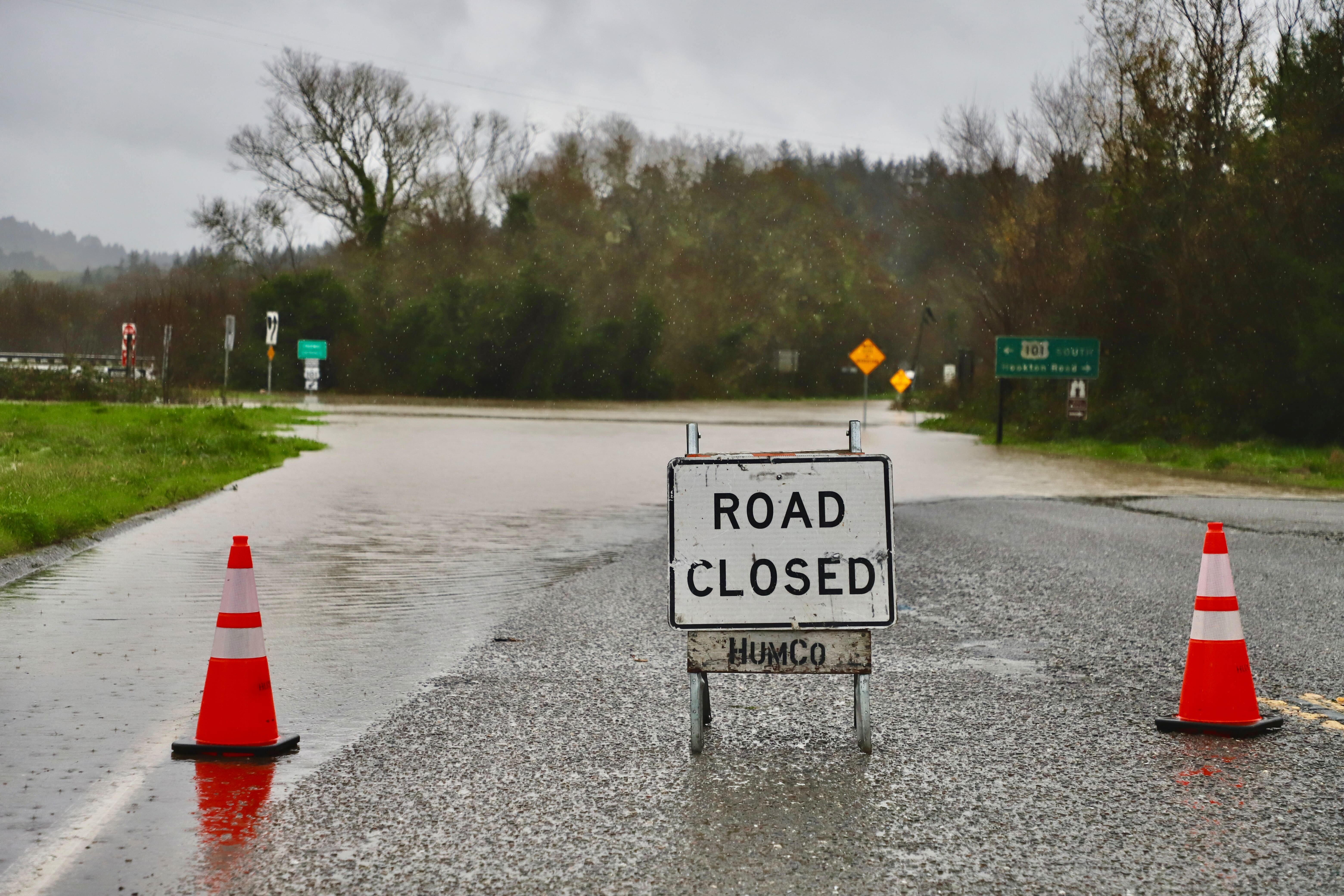
Flooding along Eel River Drive at the Hookton Road exit. Photo: Andrew Goff

Photo: Andrew Goff

Photo: Andrew Goff

Powers Creek has flooded Hatchery Road in Blue Lake near Mad River Brewery. Photo: Jean Satch

Looking across flooded pastures from Sunny Brae. Photo: Ryan Burns
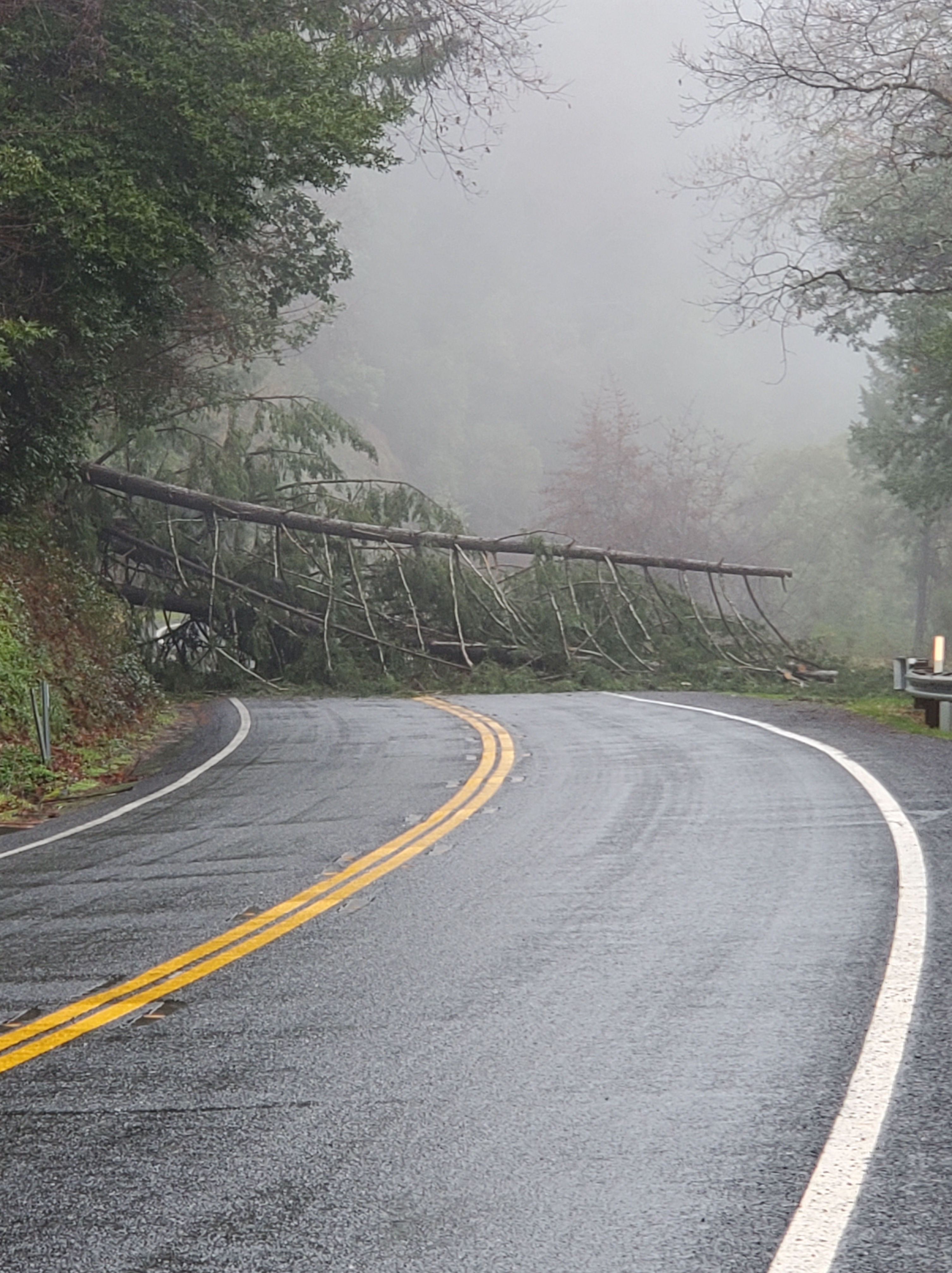
A downed tree blocks Highway 96 at Red Cap Gulch, west of Orleans. Photo: Vic Soprano

Flooding in Freshwater. Photo: Randy Cox

Photo: Randy Cox

Photo: Randy Cox

Peninsula Drive in Manila. Photo: Daniel Faulk
ROAD TRIP! Humboldt Transit Authority Launches Express Route From Eureka to Ukiah with $2 Starting Fare
Isabella Vanderheiden / Saturday, Jan. 13, 2024 @ 10:01 a.m. / Transportation
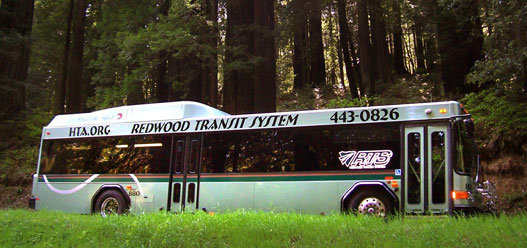
Image via Humboldt Transit Authority
###
If you’ve been putting off a trip to visit the City of 10,000 Buddhas, Vichy Springs or any of the other neat sights around Ukiah, the Humboldt Transit Authority will take you there – for only $2!
Starting next week, local residents can hitch a ride to Mendocino County on the Redwood Coast Express (RCX) route. The new bus route will operate Monday-Friday, excluding some holidays.
Check out the full schedule below!


