

HUMBOLDT TODAY with John Kennedy O’Connor | March 24, 2023
LoCO Staff / Friday, March 24, 2023 @ 4:20 p.m. / Humboldt Today
HUMBOLDT TODAY: About UNdam time, that is. We have the details as historic work on the Klamath River is set to get underway. Plus, the Humboldt County Sheriff’s Office make an arrest in a 2018 murder case. And California is simultaneously posting good employment numbers and lifting water restrictions. Dare we say it’s a good news day on today’s newscast with John Kennedy O’Connor? Maybe!
FURTHER READING:
- State Lifts Target for 15% Water Conservation
- Sheriff’s Office Makes Arrest in 2018 Dinsmore Homicide
- Ground Has Been Broken on Klamath River Restoration, the World’s Largest-Ever Dam-Removal Project
- Redwood Curtain Theatre Will Soon Close Its Doors, After 15 Years On Eureka Waterfront
HUMBOLDT TODAY can be viewed on LoCO’s homepage each night starting at 6 p.m.
Want to LISTEN to HUMBOLDT TODAY? Subscribe to the podcast version here.
BOOKED
Today: 3 felonies, 10 misdemeanors, 0 infractions
JUDGED
Humboldt County Superior Court Calendar: Today
CHP REPORTS
28000-28459 Sr299 (RD office): Traffic Hazard
1656 Union St (HM office): Road/Weather Conditions
ELSEWHERE
RHBB: Humboldt County Roads Report
Governor’s Office: Governor Newsom names new California Public Utilities Commission President to launch new phase in effort to protect consumers from escalating utility costs
RHBB: River Runs High as Covelo Community Waits for Answers
Governor’s Office: California files lawsuit against Trump for illegally terminating $1.2 billion in energy and infrastructure programs
State Lifts Target for 15% Water Conservation
Alastair Bland / Friday, March 24, 2023 @ 11:08 a.m. / Sacramento
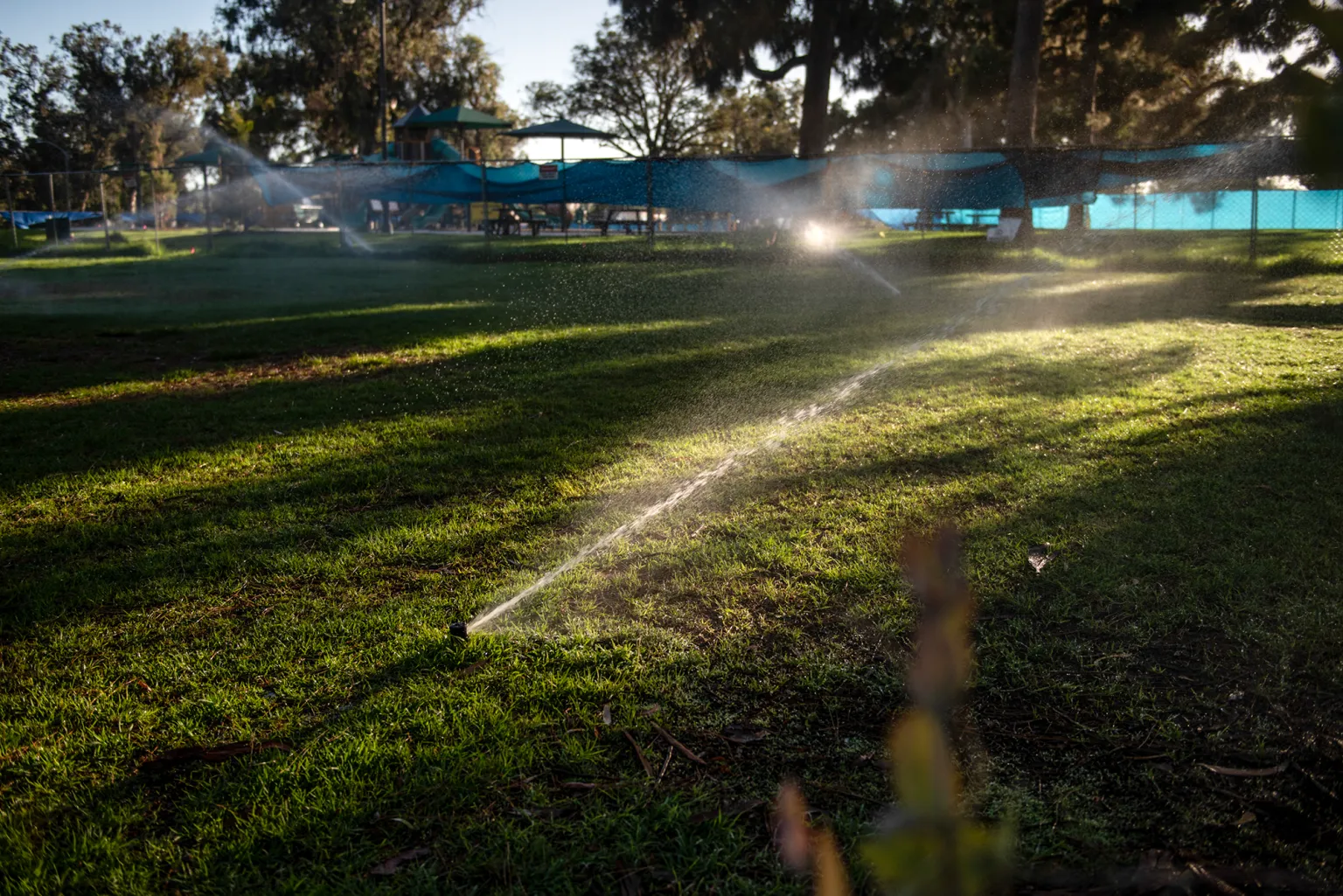
Sprinklers water a lawn in Los Angeles on June 5, 2022. Photo by Pablo Unzueta for CalMatters.
###
With the Sierra Nevada smothered in snow, large swaths of the Central Valley underwater and many Californians weary of water, state officials announced today that they are lifting some drought-related provisions on water use.
“Our water supply conditions have improved markedly,” said Secretary of Natural Resources Wade Crowfoot.
The state is rescinding its request for voluntary 15% water conservation statewide, which was issued in July 2021, and instead, Crowfoot said, shifting to an approach of making conservation a “way of life.”
“We need to maintain our vigilance,” he said. “It’s not about going back to normal anymore. It’s really adjusting to a new normal.”
Some of the state’s emergency provisions were ended and some were left in place. Wasteful uses of water, such as hosing down sidewalks and watering ornamental grass on commercial property, remain banned, according to state officials.
The state, however, is ending its requirement that local water agencies implement Level 2 drought contingency plans, which are locally written water use regulations — such as limits on watering lawns — that are invoked during water shortages.
In total, 81 drought-related provisions were enacted since April 2021. Just 33 remain in place, said Gov. Gavin Newsom at a press briefing today.
State officials also announced today a large increase in the amounts of water that local suppliers will get from the State Water Project, increasing from 35% announced last month to 75% of requested supplies. The water is provided to 750,000 acres of farmland and 27 million people, mostly in Southern California.
The announcements come as some of the state’s reservoirs near capacity, with some of the state’s largest expected to fill by late spring. And the snowpack of the Sierra Nevada, nearing record levels in the southern portion of the range, continues to grow.
When Newsom issued his voluntary conservation target almost two years ago, many water experts said Newsom should have made it mandatory, as former Gov. Jerry Brown did during the previous drought. They also criticized him for failing to reduce use by farmers, who consume 80% of the state’s delivered water supply.
State officials say even though the 15% target was voluntary, it worked. However, the data does not back that up: Californians used 6% less water from July 2021 through December 2022 compared to 2020 — falling far short of Newsom’s 15% goal.
Heather Cooley, director of research at the Pacific Institute, an Oakland water supply thinktank, said California must not relax its ethos of water conservation.
In spite of wet weather, the state’s largest water supply — its groundwater basins — remain depleted.
“Even though reservoirs are recovering, groundwater aquifers remain depleted. The Colorado River — a major water source for Southern California — is also facing a massive deficit,” Cooley said. “The reality is we don’t have water to waste in California. We need to continue investing in water efficiency to prepare for a hotter, drier future and more intense droughts.”
Mike McNutt, spokesperson for the Las Virgenes Municipal Water District in Los Angeles County, said the retraction of the conservation target “sends the wrong message” to the public.
“Why put out messaging that says something different, that says, ‘You can conserve if you want to, but you don’t need to’?” said McNutt, whose district serving 75,000 people is totally reliant on water from the state aqueduct.
“The next drought is certainly just around the corner,” he added.
Californians did cut their average water use by 600,000 acre-feet in almost two years. That’s almost two-thirds the volume of Folsom Reservoir and enough water to serve 1.2 million households in a year.
Crowfoot stressed that the drought is not over, noting that drought status “is not a completely binary situation.” In some parts of the state, drought conditions have dramatically eased, but not in others. Crowfoot said the Klamath River basin and the region of Southern California that relies on Colorado River water continue to face “acute water shortages.”
Thousands of households lack drinking water due to depleted groundwater basins , which have been overdrafted for decades and experts agree they will not rebound in a single rainy winter.
Joaquin Esquivel, chair of the State Water Resources Control Board, said the hope is that cities “are not just rebounding” to old ways of water use.
“Conservation remains a priority,” Crowfoot added.
Michael Anderson, a climatologist with the California Department of Water Resources, said snowpack is at 278% of normal, with another storm system expected to hit the North Coast and move inland and south from there, starting Monday. The system, he said, will relatively cold storm originating in the Gulf of Alaska, unlike some recent blasts of tropical moisture. This means it will drop more snow in the mountains.
“Not massive accumulations, but could be locally heavy,” he said.
###
CalMatters.org is a nonprofit, nonpartisan media venture explaining California policies and politics.
Sheriff’s Office Makes Arrest in 2018 Dinsmore Homicide
LoCO Staff / Friday, March 24, 2023 @ 10:57 a.m. / Crime
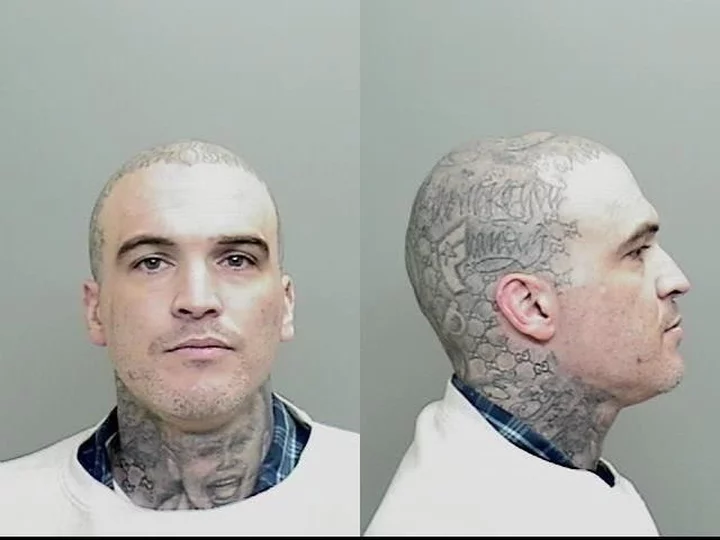
Matthew Gabriel Susmilch. Photo: MCSO.
###
PREVIOUSLY:
- Sheriff’s Office Investigating Homicide in Dinsmore; Man Found Shot Inside Car on Highway 36
- Highway 36 Homicide Victim Identified; Sheriff’s Office Still Investigating
###
Press release from the Humboldt County Sheriff’s Office:
An arrest has been made in the 2018 homicide of Anthony Joseph Calderone.
On March 22, 2023, 38-year-old Matthew Gabriel Susmilch was arrested on a Ramey Warrant at the Mendocino County Jail, where he was also booked on unrelated warrant charges out of Mendocino County.
Susmilch’s arrest comes after a four-year investigation into the shooting death. Calderone was located deceased in the early morning hours of December 7, 2018, inside a vehicle in the area of State Highway 36 near mile marker 43.
Susmilch was booked on charges of felon in possession of a firearm and murder. He will be transported to the Humboldt County Correctional Facility for prosecution at a later date.
Anyone with information about this case or related criminal activity is encouraged to call the Humboldt County Sheriff’s Office at (707) 445-7251 or the Sheriff’s Office Crime Tip line at (707) 268-2539.

EVERYONE’S MICRODOSING! Inside the Health Craze That Has Your Friends Regularly Ingesting Very Small Quantities of Psychedelic Mushrooms
Maranda Vargas / Friday, March 24, 2023 @ 7:38 a.m. / Our Culture

A mixture of dried golden teacher psilocybin mushrooms with lion’s mane sits in the forefront of a jar of capsulated powder. Photos: Maranda Vargas.
Ingesting extremely small amounts of psychedelics, commonly called “microdosing,” has become increasingly popular among those seeking improved wellness from psilocybin-containing mushrooms.
Once hyped as a practice to increase creativity and problem solving by engineers in Silicon Valley, microdosing psilocybin mushrooms has gained traction as a possible solution to ease mental health issues. Multiple journal articles report studies on microdosing psilocybin mushrooms that show health benefits such as decreased anxiety, depression and pain.
The practice of microdosing can minimize the psychoactive effects of the mushrooms. By ingesting a small, controlled amount, the user avoids the psychedelic aspects.
Danielle Daniel, owner of Microdosing Humboldt, worked with Decriminalize Nature Humboldt to petition for the decriminalization of entheogens in the city of Arcata. Entheogens are psychoactive substances obtained from fungi, plants or secretions of animals. In October of 2021 the Arcata City Council voted unanimously to decriminalize entheogenic plants and fungi.
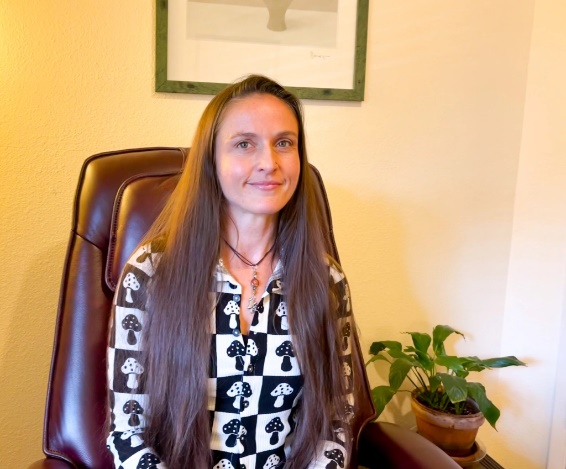
Danielle Daniel, owner of Microdosing Humboldt, sits in her office in Arcata.
“Decriminalization is the lowest police priority,” Daniel said. “You cannot sell it; you are not protected if on school grounds or if under 21. You are protected to gift, like what I do. I just charge for my time,” said Daniel.
Daniel, a graduate of the master’s program in sociology, wrote a thesis on psilocybin mushrooms while at Cal Poly Humboldt, conducting 18 interviews.
“I was learning so much about microdosing through the people I was interviewing, I decided to try it out myself,” said Daniel. “After a month of microdosing, I noticed significant reductions in anxiety.”
Molly Swartwout has a history with microdosing psilocybin mushrooms, experimenting with the practice while in college and, presently, with the guidance of a local microdosing coach.
“I have a history of PTSD and anxiety,” said Swartwout. “This is one of the least invasive and lowest side-effect ways. Through the many different things that I’ve tried, it’s also been the most effective.”
Daniel cautions that it is crucial to be consistent and know the strength of the psilocybin mushrooms. There are suggested protocols to adhere to. Psilocybin mushrooms have varying potency, and one must determine their tolerance to not feel any psychoactive effects.
“I suggest start low — less is more,” said Daniel. “If it is a little bit too high, it’s going to increase anxiety and make you unfocused. What a microdose does is it enhances concentration and focus, decreases anxiety and brings you into the present moment.”
Small side effects like headaches or nausea may occur for some individuals. Daniel suggests magnesium to help headaches and eating a light meal before to avoid nausea. Daniel cautions that chocolate and lemon may increase the potency. It is advised that those seeking to microdose do so with the support of their medical care team.
“What it is doing in your brain is it is connecting neurons, creating more neurons and creating plasticity in your brain,” said Daniel. “In the anxious and depressed brain, we don’t have as many neurons connecting and that’s how it is helping to heal your brain.”
A standard dosage protocol for microdosing is three days on with four days off – or, to microdose every other day, Daniel suggests.
“Having the protocol and the specific dosage laid out for me already prepared every time is so helpful,” Swartwout said. “Having someone to help me talk through what is the best way to be intentional about using the medicine, really has made a huge difference.”
The Neuroscience Behind Microdosing
Roy King, a retired associate professor in psychiatry and behavioral sciences at Stanford, lectures at local events about neurobiology, neurosciences and psychedelic psychotherapy.
“I have an interest in the neurosciences of alternative ways of working with people who have treatment-resistant depression and PTSD, or severe anxiety disorders,” said King.
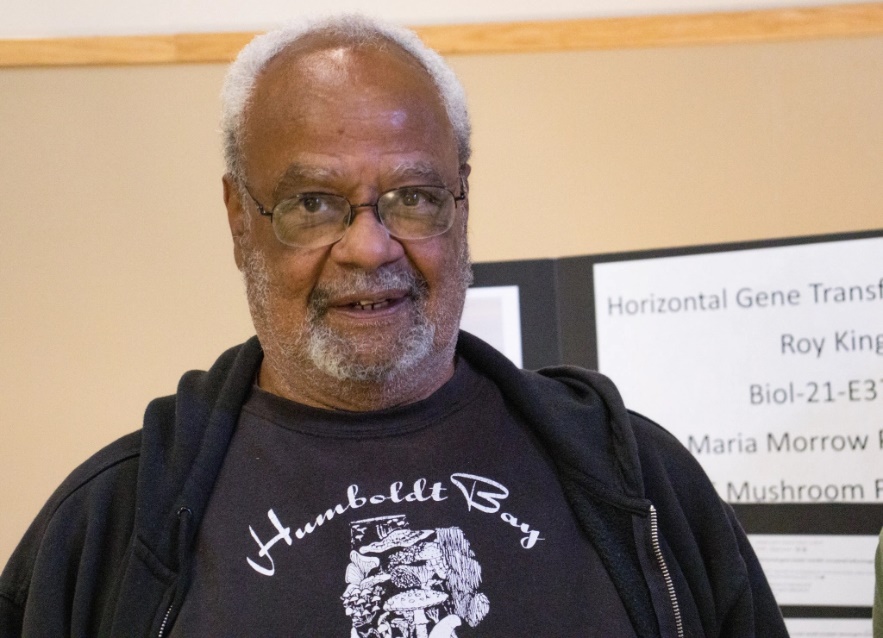
Roy King stands in front of a psilocybin horizontal gene transfer infographic at a public event in Arcata.
King spoke of the importance for randomized and longitudinal scientific studies on the usage of psilocybin mushrooms and entheogens for health.
In 2018, the U.S. Food and Drug Administration designated psilocybin a breakthrough therapy for treating drug-resistant depression and major depressive disorder, which allowed people to conduct scientific research. Research hospitals and institutions like John Hopkins University, University of California Los Angeles and the Department of Veterans Affairs are currently exploring the potential of using psilocybin to treat patients with mental health conditions and alleviate pain.
King suggests integration of positive habits like changing your lifestyle, eating healthy food and meditation during the period after microdosing.
“Here in Humboldt, were blessed with such beautiful nature,” said King. “Going on nature walks are critical for the integration phase to help with the anxiety and depression.”
The scientific research is still pending on the medical effectiveness of microdosing psilocybin containing mushrooms, however those who partake in the trend speak of improved wellness and a growing fondness for the magic mushrooms.
###
Maranda Vargas is a journalism student at Cal Poly Humboldt.
OBITUARY: Frank Aaron Henry Jr., 1983-2023
LoCO Staff / Friday, March 24, 2023 @ 6:56 a.m. / Obits

Frank Aaron Henry, Jr. — Sonny Boy, Brother, Frank, Frankie, Spank,
“D”, Tank — whatever name you called him, he was a true friend.
Frank was a much-loved son, brother, father, uncle, nephew, grandson
and cousin.
Frank was a proud Yurok man who cared deeply for his family and friends. He lived his life the best way that he knew how. He didn’t sit around feeling sorry for himself and was always busy. In Wautec, he tried to keep an eye on his kooch, he always helped his Uncle Johnny with making sure he had enough wood on his porch, feeding Virg’s dogs when he was away, and always walking somewhere with the dogs, sister and brother. If you wanted to know where Frank was, all you had to do was look for those two dogs, they followed him everywhere.
Frank loved his job that he held since 2019 working for the Yurok Tribe with the restoration crew in Redding, Hornbrook, Orick, wherever they were, Frank enjoyed it. He was very proud of the work he was taking part in, and I could hear it in his voice when he would tell me his stories about what he was doing when he was working. Josh, Ona, Becca, Ben and crew, just know that he truly enjoyed working with you.
Frank really liked going play volleyball in Nixon these past few years … even if it meant listening to Phil razz him all night long. Phil loved to spike on Frank. When Frank would finally get a block in, the team would get especially loud, “ooooh, take that, Phil.”
He loved getting together with family to celebrate birthdays and just enjoyed everyone being together, trips to Vegas and wherever else his mama would drag him to. His Thursday trips to the Nugget with Rafael when he was in Nevada.
Frank was especially proud of his kids, Isaiah and Kaydence. He definitely thought they were the best of him, even when he thought he wasn’t the best of him at all times. He loved them with a grateful heart.
Frank was the younger brother of Bud, older brother of Lena, Kayla and Kayce. He accepted all of them for who they were and are and was happy for them. If he had any regrets, he never talked about them. Just know that if he thought of you as a friend, he had a lifelong loyalty to you.
Frank is survived by his son, Isaiah Hersey-Henry, and his daughter, Kaydence McCullough. He loved them both with all of his heart.
Frank Aaron Henry, Jr. was born in the early morning on March 6, 1983 and he left us on March 17, 2023. He leaves behind his broken-hearted mama, Jeraldine Magee, his father, Frank Henry, his one and only brother, Bud Henry, his 3 sisters, Lena, Kayla and Kayce Henry. His sister-in-law Louisa, brothers-in-law, Greg and Billy, and his Aunties and Uncles, Jeannette & Kenny, Jill, Jacki & Gus, Julia, Valerie, Vicky & Casey, Madeline, and Tanya. His cousins, Michelle and Mark Mix, Jillie Mix, Kage & Joseph Bain, Bert, Hannah & Holly Snyder, Ronald, Brian & Brandon Richards, Keta, Tashina, Vernon, & Charley, Jennifer, Shawna & Lisa, Sonny, Luci & Tanya.
Frank was proud to be an uncle and he loved his nieces and nephews. He thought it was pretty funny that he had a mini-me, Kenek Poe. He was immensely proud of his nephew Brandon Henry, who he was in the Marines, as that was a dream of Frank’s when he was young. Frank’s nieces and nephews are Brandon Henry, Louisa Henry, SyLenna, Dauwin and Kenek Poe, Ava and Gabe Salas, and his great-nephew, Andrew Henry.
Frank is survived by his two grandmothers, Darlene Magee and Kathleen Henry, and numerous relatives and friends.
Frank was preceded in death by his grandfathers, Gerald Magee and Elliott Henry, his uncle’s Mark Mix and Eldred Norris, his cousins, Ron, Kirks and To-Tehl.
I love you, son, and I will miss you for the rest of my life. You were loved and you will be missed by your family!
Services for Frank Henry Jr., will be at Paul’s Chapel on Saturday, March 25, 2023 at 11 a.m. Bring your best dish and story for eats after the service at Awok Bonnie Green Building in Eureka from 2-5 p.m.
Frank was a good-hearted person; he always thought the best of people and lived his life like that. He never held a grudge, and he truly loved his family and friends. When he would hear about someone passing or something happening, he would say “I’m going to say prayers.” When he had something and others did not, he would share, always. People took advantage of that. They didn’t care that he was the only person who wasn’t judging them, and so to all of those people in Hoopa, the drug dealers, the losers who prey on people for their next fix, you know who you are, you took away this son, brother, father, uncle, nephew, cousin, loved friend, from the people who loved him. I hope you all rot in jail or hell, I don’t care which.
###
The obituary above was submitted on behalf of Frank Henry Jr.’s loved ones. The Lost Coast Outpost runs obituaries of Humboldt County residents at no charge. See guidelines here. Email news@lostcoastoutpost.com.
HUMBOLDT TODAY with John Kennedy O’Connor | March 23, 2023
LoCO Staff / Thursday, March 23, 2023 @ 4:20 p.m. / Humboldt Today
HUMBOLDT TODAY: Did you think we were done with winter? Guess again! We’ve got the latest on what Humboldt’s sky is offering up. Plus, a local woman is appointed to a prestigious state commission, and the Crescent City Council is still trying to deal with youth vaping. Those stories and more on today’s newscast with John Kennedy O’Connor.
FURTHER READING:
- CONVERSATIONS: Offshore Wind’s Long Game, With Matthew Marshall of the Redwood Coast Energy Authority
- California Workers Can’t Get Timely Hearings on Wage Theft Claims. State Orders Audit.
- Sheriff’s Office Ask for Public’s Help Seeking Out Missing McKinleyville Man
HUMBOLDT TODAY can be viewed on LoCO’s homepage each night starting at 6 p.m.
Want to LISTEN to HUMBOLDT TODAY? Subscribe to the podcast version here.
Ground Has Been Broken on Klamath River Restoration, the World’s Largest-Ever Dam-Removal Project
Ryan Burns / Thursday, March 23, 2023 @ 2:46 p.m. / Environment , Infrastructure
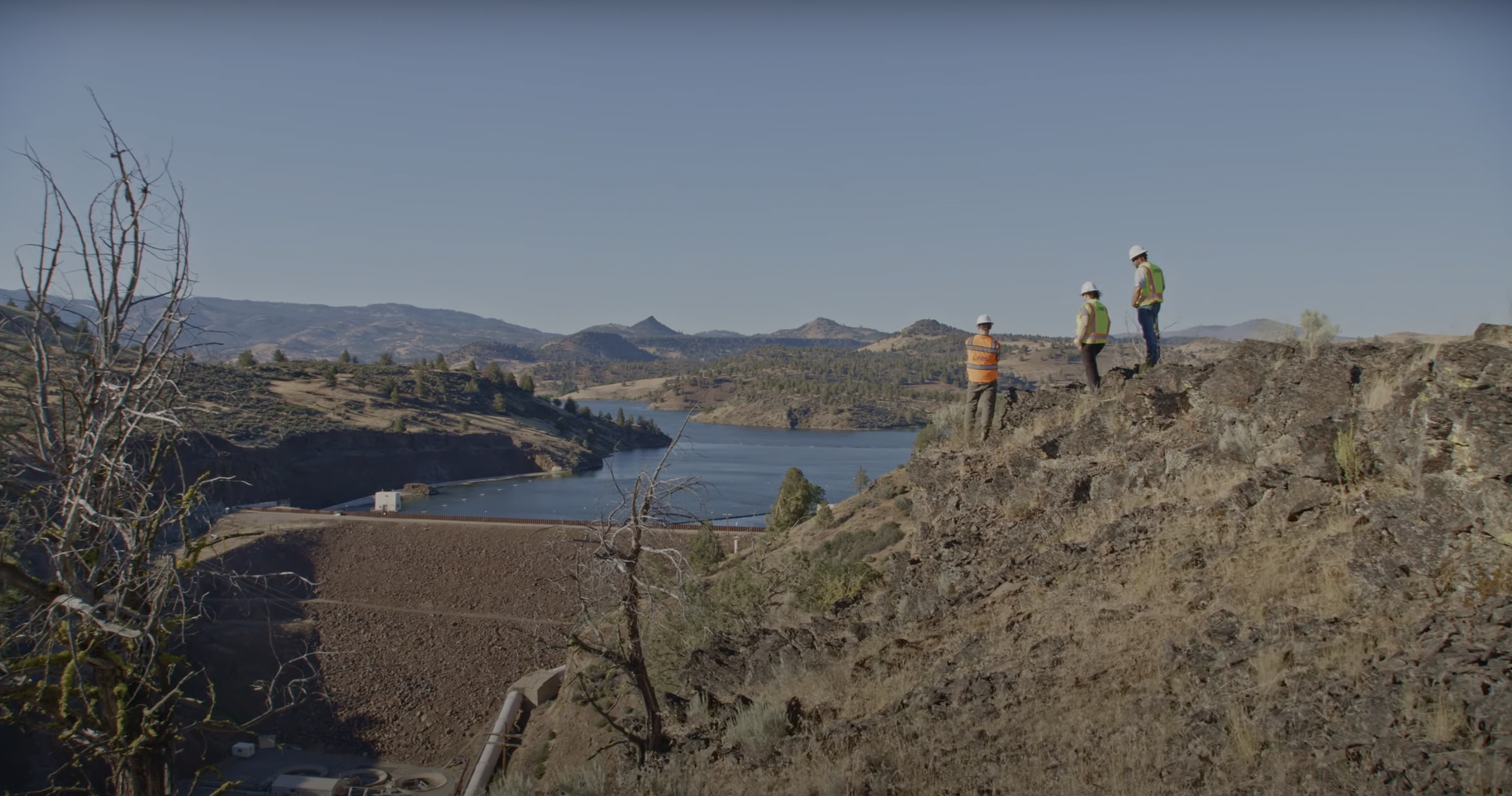
Restoration workers stand above Iron Gate Dam on the Klamath River, roughly five miles south of the Oregon border. | Screenshot from the video “Restoring Balance,” which is embedded below.
###
In a monumental step that’s taken decades to achieve, work has officially begun on the world’s largest-ever dam-removal project.
This complex endeavor will entail both removal of the four dams that comprise the Lower Klamath Hydropower Project, formerly owned by PacifiCorp, and major environmental restoration in and around the land that has been sitting at the bottom of man-made reservoirs for more than a century.
In a Zoom press conference this morning, Craig Tucker, a consultant working with the Klamath River Renewal Corporation, noted that this also represents the world’s largest salmon restoration project to date.
“And as most of you know, this can’t come a moment too soon,” he added, referencing the latest dire population forecasts for salmon in Northern California rivers.
Bransom
The restoration component of the project will return about 38 miles of upstream habitat “to a free-flowing, more natural condition,” Klamath River Renewal Corporation (KRRC) CEO Mark Bransom explained during the press conference. “And the restoration work is every bit as important as removing these dams.”
Following authorization from the Federal Energy Regulatory Commission (FERC), workers broke ground on March 10, building access roads and reinforcing bridges that will allow dam-removal contractor Kiewit Infrastructure West to bring in heavy construction equipment.
This enabling construction work is expected to continue through the rest of this year, preparing for drawdown of the reservoirs and then removal of the dams beginning in January of 2024, Bransom said.
The smallest of the four dams — Copco No. 2, which stands a mere 35 feet tall — will actually come down sooner than that, with demolition work starting in June and continuing through September or thereabouts.
Crews will employ low-level outlet works, which will be constructed this summer, to draw down the reservoirs and flush the water and accumulated sediment from behind the other three dams — J.C. Boyle (76 feet tall), Iron Gate (173 feet tall) and Copco No. 1 (225 feet tall).
Bransom said the water release will be very controlled, allowing workers to draw down the reservoirs slowly enough to ensure that there’s no over-bank flooding. With more than 100 years of accumulated sediment behind the dams, regulators and tribes have directed KRRC to undertake the drawdown work in the winter, when there’s the least biological activity and the highest probability of high-volume flows.
“We certainly acknowledge that this is going to have a significant impact on water-quality parameters,” Bransom said, though he said the estimated amount of accumulated material — five to seven million cubic yards of very fine sediment released over the course of three to four months — is roughly equivalent to what the Klamath River transports annually.
KRRC has committed to long-term monitoring and stands ready to address any issues that may result from deposition, Bransom added, noting that the monitoring will extend out to the ocean beyond the mouth of the Klamath.
After the drawdown of the reservoirs, workers will redirect the river around the construction site using diversion tunnels that were part of the original construction of the dams. This will allow the dam infrastructure to be removed from a dry river channel.
“So our schedule has us removing all four of the dams and restoring the Klamath River to a free-flowing condition … by the end of 2024,” Bransom said.
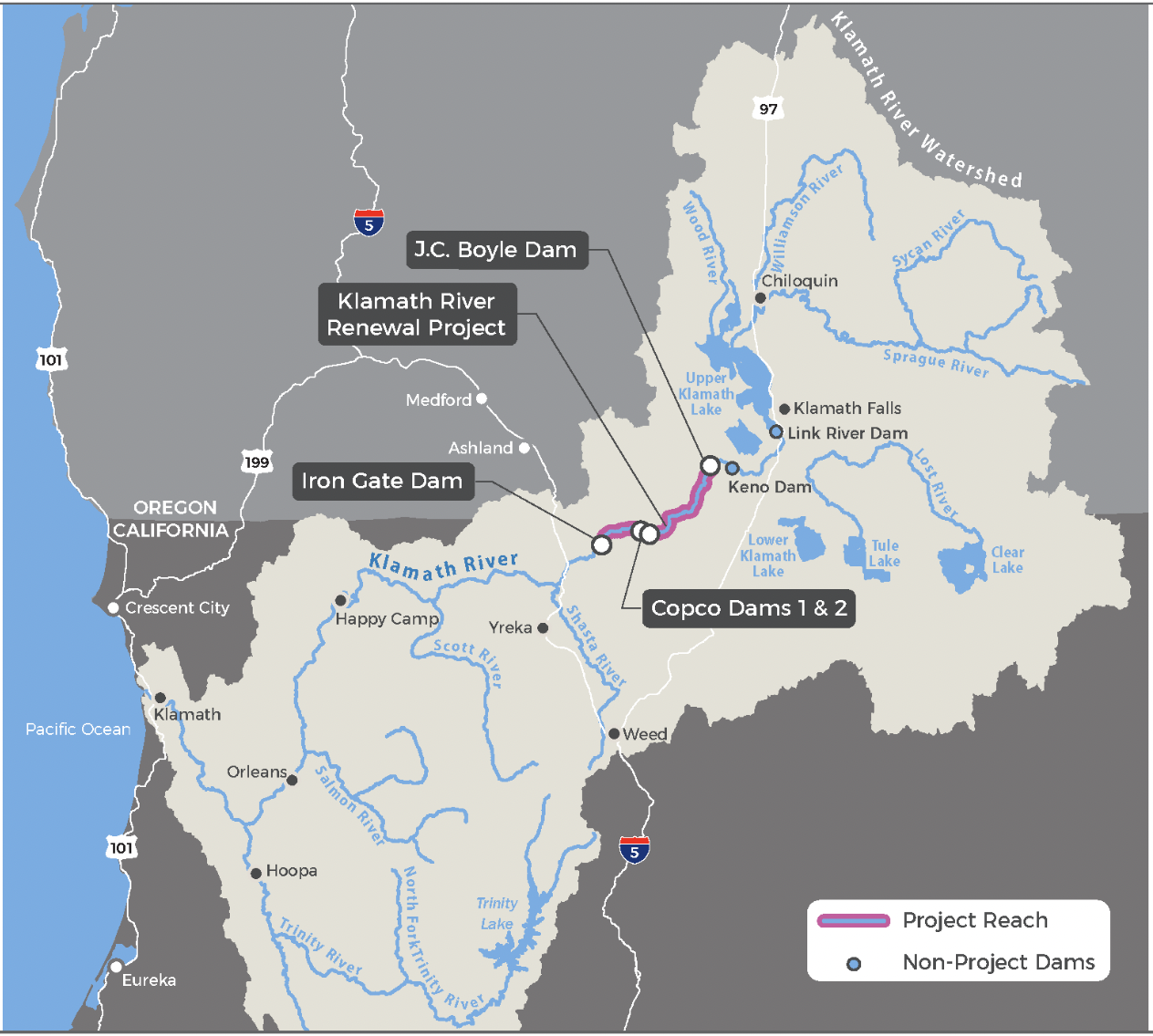
Project vicinity map via KRRC.
###
The restoration work is being managed by Texas-based firm RES (Resource Environmental Solutions), whose director of operations for the Northern California and Southern Oregon region, Dave Coffman, was on hand for today’s press conference.
Coffman
“Dam removal can be a little bit of a messy business,” he said. “So we’re here to get reservoir sediment stabilized through reestablishment of native vegetation, provide some immediate, high-quality habitat for returning salmonids as they make their way through former dam footprints and into river channels where they haven’t been in over 100 years and really jumpstart the recovery of this landscape.”
Since 2019 RES has been working with partners in the Karuk and Yurok tribes, who’ve been onsite collecting seeds of native plants that will provide the foundation for sediment stabilization following dam removal.
“We’re somewhere in the ballpark of 17 billion seeds — native seeds — all either sourced directly from the Klamath Basin or sourced from plants that were grown from seeds that were sourced from the Klamath Basin,” Coffman said.
He recently moved a 2,000-pound pallet of seed into cold storage, in preparation for planting, and was impressed by the scale of it.
“And then I’m told, ‘Oh, this is just one of 50 pallets,’” he recalled, noting that there are literally tons and tons of seed coming onto the project site, seed that was provided by farms up and down the West Coast.
Restoration work will also be done on priority tributaries. Banks will be graded and habitat features of wood and rock will be installed to collect spawning gravels.
Tucker estimated that roughly 400 miles of fish habitat, including the main stem Klamath, creeks and tributaries, will be restored as a result of dam removal.
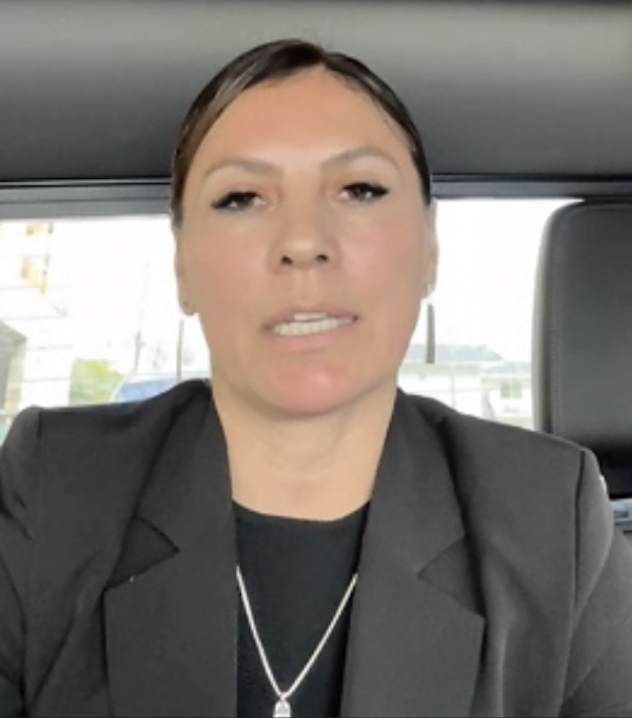
Ferris
Wendy Ferris, KRRC board member appointed by the Karuk Tribe, said it can be difficult to fully articulate the sense of connection that tribes from the Klamath River Basin have with the land. Those tribes have existed for thousands of years, she said, and when European settlers arrived, they took the land away from the type of management that local tribes had passed down through oral teachings.
“And so, through time, [tribe members] were placed on reservations and their land was shrunk to very small land bases, which didn’t allow them to practice the religion fully … ,” Ferris said. “And when I say ‘practice the religion,’ what I mean by that is, the land is the Bible of the native people. So the rules of their religion lie within those ponds, creeks, rivers, animals and all living things around them.”
For local tribe members, restoring the river ecosystem represents “basically the first phase of bringing back our religion to a healthy state and being able to have healthy people and [to] live in balance,” Ferris said.
For more details on the restoration project you can check out the new 15-minute video “Restoring Balance,” which was produced by RES and is embedded at the bottom of this post.
You can also read the following press release from KRRC:
Yreka, CA – Work has officially begun on removing the four dams that comprise the Lower Klamath Hydropower Project. “Crews are already in the field doing the preliminary work for dam removal,” explained Klamath River Renewal Corporation (KRRC) Chief Executive Officer Mark Bransom. “This work includes bridge upgrades, new road construction to access the dam sites more easily, worksite development, and more.”
The plan to remove the lower four Klamath River dams and restore the 38-mile river reach to a natural free flowing condition stems from an agreement between previous dam owner PacifiCorp, the states of California and Oregon, the Karuk Tribe, the Yurok Tribe, and a host of conservation and fishing organizations. The plan was formally approved by the Federal Energy Regulatory Commission late last year.
“These dams provide no irrigation for agriculture, are not operated for flood control, and generate very little power,” explained KRRC Board president Brian Johnson. “But they do play a huge role in the decline of Pacific salmon. This project aims to fix that.”
The project is funded by $200 million from PacifiCorp and $250 million from a California Water Bond passed in 2014.
“We have several milestones associated with the project to highlight this year,” noted Bransom, “this includes the replacement of a drinking water line for the city of Yreka in May and the removal of Copco 2 Dam by September.”
The three larger dams are to be removed next year with removal of all four dams completed by the end of 2024; however, the restoration of the 38 mile reach of river impacted by the dams will take longer. That restoration process is already underway as well.
“We wanted to get a running start on this project,” explains Dave Coffman, the Northern California and Southern Oregon Director of Resource Environmental Solutions (RES). “Our crews spent several years collecting thousands of native seeds from plants around the reservoir sites that we propagated at commercial nurseries to become 17 billion seeds and thousands of saplings. As soon as the reservoirs are drawn down, we will immediately start the restoration process by seeding these areas.” This particular project is one of several highlighted in the film Restoring Balance.
RES will be reconnecting critical tributaries and ensuring fish can once again access over 400 miles of historical habitat upstream of the dams. Added Coffman, “we are excited to help bring this reach of the river back to life. RES will be here as long as it takes to make this project successful.”
Local tribes have led the effort to remove the dams for over 20 years and are particularly excited to see the project begin. “Dam removal is the first giant leap towards a restored Klamath River,” noted Wendy Ferris, KRRC Board member appointed by the Karuk Tribe. “We look forward to welcoming the salmon back home to areas they haven’t visited in more than a century.”
Similar sentiments were shared by Karuk Tribal Chairman Russell ‘Buster’ Attebery. “Many people told us this day would never come. Well, it’s here now and the salmon are coming home. I can tell you this is just the beginning - there’s a lot more restoration coming to the Klamath Basin.”
“We want to thank everyone who helped make this dream a reality,” noted Yurok Vice-Chairman Frankie Joe Myers. “It just goes to show what we can accomplish when the Tribes and our allies in the conservation movement join forces in common cause.”
###


