Garret Marshall asks Kimberley White, Genevieve Serna, Blase Bonpane, Dan Shahin, Reese Halter, Abigail Strickland…
My water bill doubled from July to August!
Our Water Bill is out of control. Can you make utilities affordable if elected?
— Garret Marshall
Responses
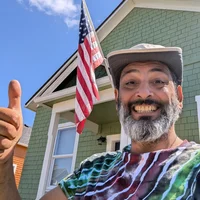
Dan Shahin
Thanks for the question, Garret.
Deferred maintenance on the city’s water system led to a huge $36 million water pipe replacement project. That means that if previous Councils had been willing to address this gradually, as they should have, we would not have needed such a gigantic outlay.
If your meter was replaced in the recent water pipe replacements, there is also a real possibility that your old water meter was defective, and that you had been paying for lower usage than was actually occurring, through no fault of your own.
The Council made the decision to seek grant funding for smart water meters, rather than to try to put that money toward rehabbing 16 currently unusable units at The Grove, a project for the unhoused run by Arcata House Partnership.
Now you are the proud owner of a cellular modem–equipped smart water meter. It will track and report your water usage by the minute and add that to the ever-increasing volume of data about you and your personal habits that exists “in the cloud.”
This is a useful technology for detecting leaks, and could lead to more accurate water bills for all. As for what else will be done with that data, I do not have an answer, but I would like to know.
There are also several laws in California that prevent the water bill from being subsidized by the City’s General Fund.
So the best answer I can give you for your situation is that we should stop kicking the can down the road when it comes to maintenance of our town. If you look at the condition of many streets, sidewalks, and gutters, you see unchecked weed growth and destruction of cement and asphalt is rampant. We should work on that today, instead of needing a massive boondoggle down the road.
Beyond water, the city also raised permit fees on almost everything this year. In fact, the list of fees they increased was so long that they found it easier to show the much shorter list of fees they did NOT raise during their presentation.
The City is not immune to cost increases, but it is the citizens who are most affected. Raising these fees at the same time they are raising water and electricity rates does nothing but exacerbate the current affordability crisis we find ourselves in.
To the extent that I am able, I promise not to vote for increasing any fees from the City, and to explore ways of decreasing or eliminating those that don’t benefit the people of Arcata.
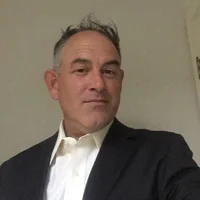
Blase Bonpane
Dear Garret,
I appreciate this question because it brings to the foreground so many similar dilemmas in cities’ public policies. In short, my answer is Cal Poly and other large institutions should pay their fair share into water and other public utilities and services.
This is well within reach because UC Berkeley (my alma mater) and Cal Poly San Luis Obispo have recently upped their share to the cities to which they owe their lot. This has been done by votes or law suits by City Councils with help from community groups representing concerned citizens like you, Garret and me.
In an age of sky-rocketing economic inequality featuring a fast growing population of “working poor” (that is people who work full-time yet have no savings and face food insecurity), the need for progressive taxation is paramount. What I am suggesting here is not technically taxation, but it is an example of taking from excess wealth and profit and using it through local government to fund basic needs of the working people who do the heavy lifting to keep our city and its businesses thriving.
Another way to deal with this problem is through better water capture without tapping rivers. In my Permaculture Designer Certification Course we learned how to deal with water by replacing the system of “Pave it, Pipe it and Drain it” with the needed shift to “Slow it, Spread it and Sink it”. For more on how to incorporate this into public policy I recommend the work of Brad Lancaster and Santa Cruz Permaculture.
We, Arcatans are famous for innovations in this regard with our marsh and our cleaner and increasingly more dam-free than average waterways (thanks in great part to the tribes whose unceded land we stand upon). However, if we invest in more recent innovations like berms and culvert replacement (to diminish sediment from roads), water capture and progressive revenue sourcing, we can see those prices go down.
Water is sacred. We need to protect it. Protect it from AI data centers and other polluters and charge those who profit from it so it can provide to all of us.
Think Glocally. Vote Bonpane
Blase Bonpane
I meant to add Yu Kongjian as an inspiring source of water management innovations to inform our discussion, Garret. He is the brain behind the “Sponge City” concept which is just awesome in the pursuit of environmental and social justice simultaneously.
Blase Bonpane, MPA
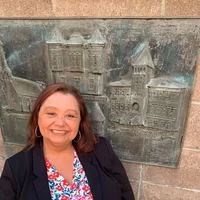
Kimberley White
Garret, I understand why you’re frustrated. A bill that doubled from July to August deserves to be looked at carefully. A leak, a change in water usage, a meter issue, or a difference in the billing period could contribute to a significant increase. With newer meters, unusual or continuous water use may also be easier to identify. You don’t have to navigate that on your own, so please don’t hesitate to reach out to the City. Staff can help you understand what may have happened with your bill.
When it comes to affordability, I also want to be clear that I’m not just promising to care about this if I’m reelected. I’ve already demonstrated that I will fight for ratepayers. I was directly involved in Arcata’s recent water-rate process, and I pushed for the more gradual rate-increase scenario because I was concerned about the impact on people who are already struggling to make ends meet, particularly our older adult community and those living on fixed or limited incomes. I supported spreading the increases out rather than putting the larger burden on ratepayers all at once.
There is also an important equity issue here. We have an aging water system, and as meters are replaced and become more accurate, customers’ bills will more accurately reflect the water they actually use. That creates a more equitable system because customers are paying their appropriate share of the costs of providing the service, based on accurate measurements. I believe that is an important part of making sure the system is fair to everyone.
As Dan pointed out, we also have to be honest about the condition of our aging water infrastructure and the cost of maintaining a safe and reliable water system. The reality is that this infrastructure didn’t become old overnight. These are investments that ideally would have been made incrementally over many years, rather than having so much of the work come due at once. I wasn’t on the Council when many of those decisions were made. What is important is that we learn from that history and not repeat it.
I appreciate Blase bringing some innovative ideas about water management and water capture into this conversation. Arcata has a history of innovation, including our use of natural systems at the Arcata Marsh, and I think there is value in continuing to explore creative approaches that could improve our water resilience and potentially reduce infrastructure costs over the long term. At the same time, I think we need to be realistic about what can address the problem people are facing today. The current water rate problem is being driven heavily by aging drinking-water infrastructure, significant capital needs, and the cost of maintaining a safe and reliable water system. Exploring innovative approaches is worthwhile, but it does not eliminate the need to address the infrastructure we have today.
Going forward, I will continue looking for every opportunity to reduce the burden on residents, including pursuing state and federal grants, carefully prioritizing infrastructure projects, scrutinizing costs, and making sure large institutional users are paying their fair share for the services they receive. I also believe we should continue looking for meaningful assistance for residents who are struggling with utility costs, including exploring income based assistance for households that are least able to absorb these increases.
I can’t promise that utility costs will never increase, but I can promise that affordability will continue to be part of every decision I make. We need to protect both things, a reliable water system and the ability of ordinary Arcata residents to afford to live here.