

GROWING OLD UNGRACEFULLY: Chatting with ChatGPT
Barry Evans / Sunday, Feb. 26, 2023 @ 7 a.m. / Growing Old Ungracefully
W hat
is ChatGPT, in 50 words?
hat
is ChatGPT, in 50 words?
ChatGPT is an AI language model created by OpenAI that can generate human-like responses to a wide range of text-based prompts. It is based on a deep learning algorithm that has been trained on a large corpus of text data, and can be used for a variety of natural language processing tasks, including language translation, text summarization, and conversation.
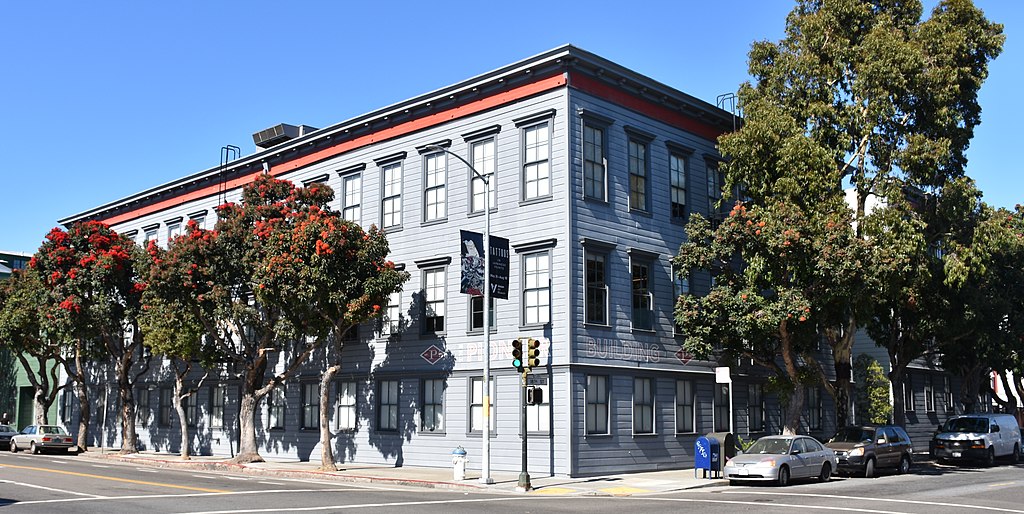
OpenAI headquarters: Pioneer Building, San Francisco. HaeB, CC BY-SA 4.0, via Wikimedia Commons
Explain Facebook in the form of a Shakespearean sonnet
Oh Facebook! A world
within the world,
A virtual place where
we all gather ‘round.
We share our joys, our
sorrows, love unfurled,
And in our hearts, a
common bond is found.
Like characters on
stage we play our part,
Our profile, a
reflection of our soul,
Our likes, our
comments, a work of art,
A stage where every
player has a role.
But with such freedom,
comes the risk of pain,
For trolls and bullies
lurk in every nook,
And we can be consumed
by envy’s flame,
As we compare our lives
to those we look.
Yet still we come, and
share our every thought,
For in this world, we
find the love we sought.
Should I take the red pill or the blue pill?
The choice of whether to take the red pill or the blue pill is a reference to the movie “The Matrix”, in which the protagonist is given a choice between taking a red pill and seeing the world as it truly is, or taking a blue pill and remaining in a simulated reality. However, in real life, there is no such choice to be made, and the decision to pursue truth or remain in a comfortable but possibly illusory situation is a personal one that depends on an individual’s values and beliefs.
Ultimately, the decision to seek truth and knowledge, or to remain in a familiar but potentially limiting situation, is a deeply personal choice that each individual must make for themselves based on their own goals and priorities.
Write a haiku on the moon
Amidst the night sky
Luminous and full of
grace
Moon beams shine so
bright.

Photo: Barry Evans.
What are the dangers
of ChatGPT?
…Because ChatGPT is
only as unbiased as the data it is trained on, there is a risk that
the model will reinforce existing prejudices and discrimination. This
can have serious consequences for individuals who are marginalized or
underrepresented in society.
Another danger of
ChatGPT is its potential to spread misinformation and propaganda.
Because the model is designed to generate human-like language, it can
be difficult for users to distinguish between genuine and fake
information…T here are also concerns about the potential for ChatGPT
to be used for malicious purposes, such as creating fake reviews or
impersonating individuals online. This could have serious
implications for businesses, individuals, and even political
processes.
Why am I losing interest in ChatGPT??
There could be many reasons why you might be losing interest in ChatGPT. Some possibilities could include:
- Lack of novelty…
- Limited capabilities…
- Personal preferences…
If you’re looking for more specific reasons why you might be losing interest in ChatGPT, it might be helpful to reflect on what you’re hoping to get out of the experience and what your expectations are. From there, you can decide whether or not ChatGPT is meeting your needs and whether there are any changes you can make to improve your experience.
[Ed. note: As should be evident, ChatGPT wrote the A’s in this Q&A. But because OpenAI’s terms of service requires explicit transparency about this, here is that transparency.]
BOOKED
Today: 8 felonies, 15 misdemeanors, 0 infractions
JUDGED
Humboldt County Superior Court Calendar: Today
CHP REPORTS
Sr162 / Fairbanks Ln (HM office): Car Fire
ELSEWHERE
RHBB: Trinity River Flows Are Predicted to Nearly Triple Tomorrow During Deadly Summer on the Water
Governor’s Office: What they are saying: Leaders from across the state celebrate transformative economic investments through California Jobs First
RHBB: Vegetation Fire Sparks Response Near Eureka’s North 40 Thursday Afternoon
RHBB: Bicyclist Suffers Major Injuries After Riding Wrong Way into Vehicle at 7th and J, EPD Says
Hwy. 101 is Open!
LoCO Staff / Saturday, Feb. 25, 2023 @ 12:27 p.m. / Traffic

Photo courtesy of CHP - Garberville.
###
Hwy. 101 is open to one-way controlled traffic just south of Garberville in Mendocino County, according to the Caltrans District 1 Facebook page. Caltrans urges people passing through the area to drive with caution as crews are still working in the area. Motorists should also expect delays.
Always check https://quickmap.dot.ca.gov/ or the QuickMap app for the most up-to-date road conditions.
###
THE ECONEWS REPORT: Save Money While Saving the Planet
The EcoNews Report / Saturday, Feb. 25, 2023 @ 10 a.m. / Environment

Art by DALL-E, an artificial intelligence.
So you have decided to do your part to fight climate change (or maybe you just don’t want a gas stove to slowly kill you). Great! There are a bunch of incentives now available to help insulate and electrify your house. Aisha Cisna and Stephen Kullman of the Redwood Coast Energy Authority walk through the incentives available to homeowners who want to make climate-smart improvements to their homes.
For more, check out the Redwood Coast Energy Authority and Rewiring America.
AUDIO:
THE HUMBOLDT HUSTLE: A Full-Time Mom and Part-Time Bartender Sells Spicy Content Online To Make a Living
Eduardo Ruffcorn-Barragán / Saturday, Feb. 25, 2023 @ 7:30 a.m. / The Humboldt Hustle
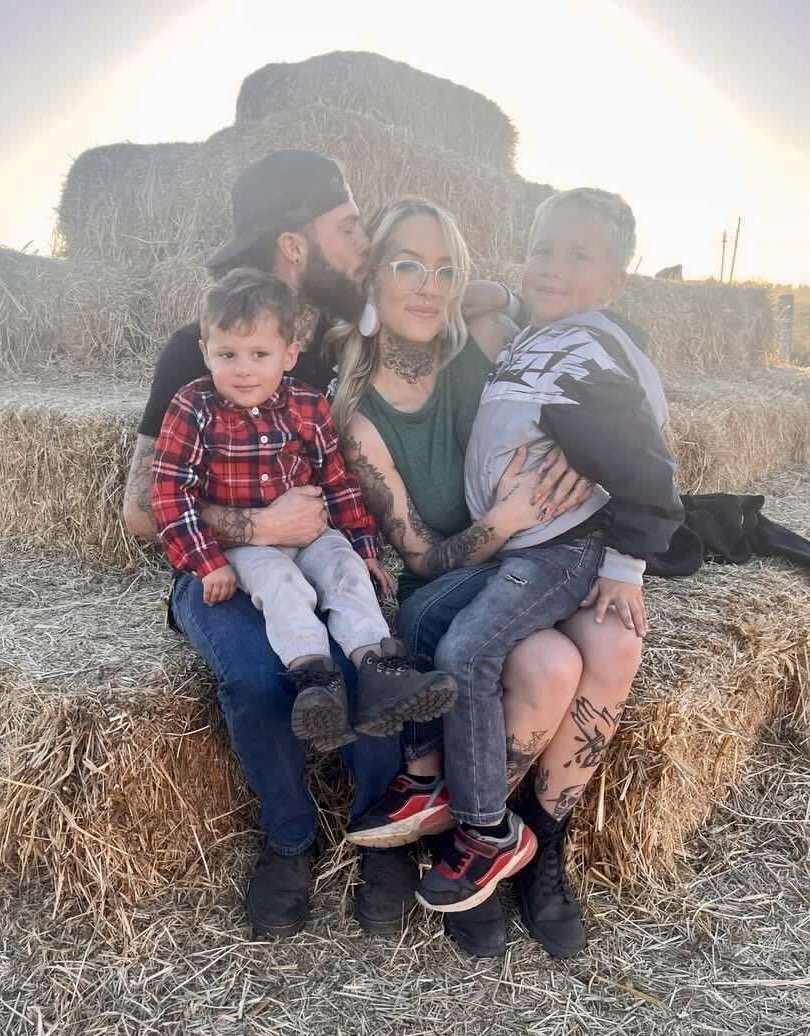
Kayla Irving with her son, her friend and his son. | All photos submitted by Kayla Irving.
# # #
Kayla Irving is one hardworking and persevering hustler. She is a local bartender and OnlyFans content creator.
Most people know her by the name Kayla Ashley or pzzabooty, but to her seven-year-old son, she is mom. At 29 years old, Irving has built a life for herself and her son in our neck of these redwoods. She lives with her mom and her sister, who help take care of her son when needed. One of her best friends, Zach, has also taken on the dad role and takes her son on weekends.
Irving feels blessed to have such a strong support system. In her mind, it really does take a village to raise a child.
Born in Pleasanton, Irving grew up mostly in the East Bay Area. She moved to Humboldt in 2014 to be closer to her older sister, who is a tattoo artist at Sangha Tattoo Studio in Eureka.
Irving herself has an impressive collection of tattoos, the first of which she got when she was 18. It depicts a compass with flowers and a banner that reads “hasta mañana.” Since then she has gotten passionate about collecting more.
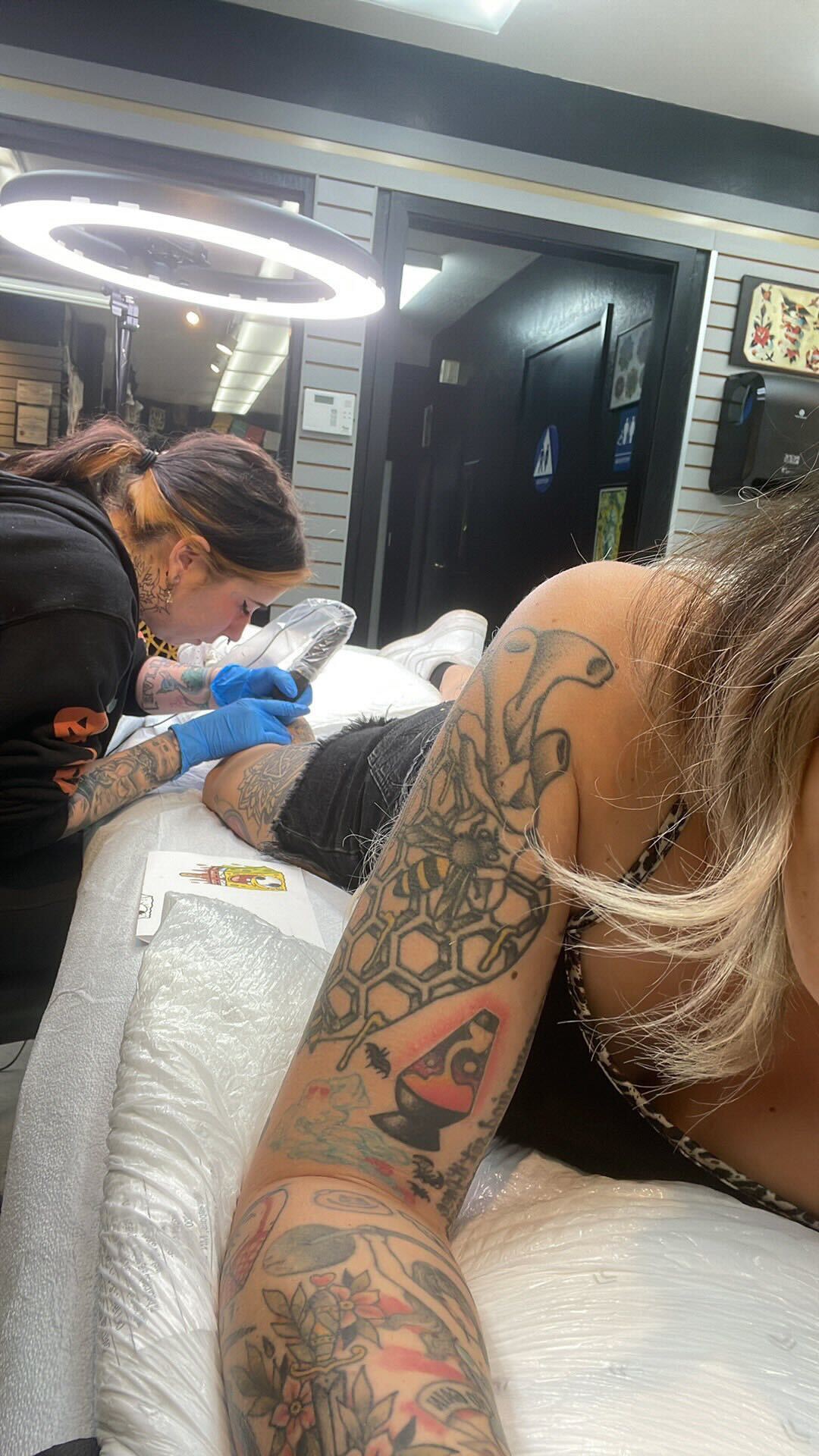
Irving getting ink.
“I plan to be fully covered in the next five years,” Irving said.
Before becoming a bartender and starting her OnlyFans account, Irving struggled. Her first gigs were at McDonald’s and Target, all while being a full-time student. After a short while, she left those jobs behind and started working with a vacation rental company by day and by night she was a dancer at The Tip Top Club.
“I was working at The Tip Top for a couple years and when the club closed due to the pandemic I feel like a lot of dancers turned to OnlyFans as an alternate route for work,” Irving said.
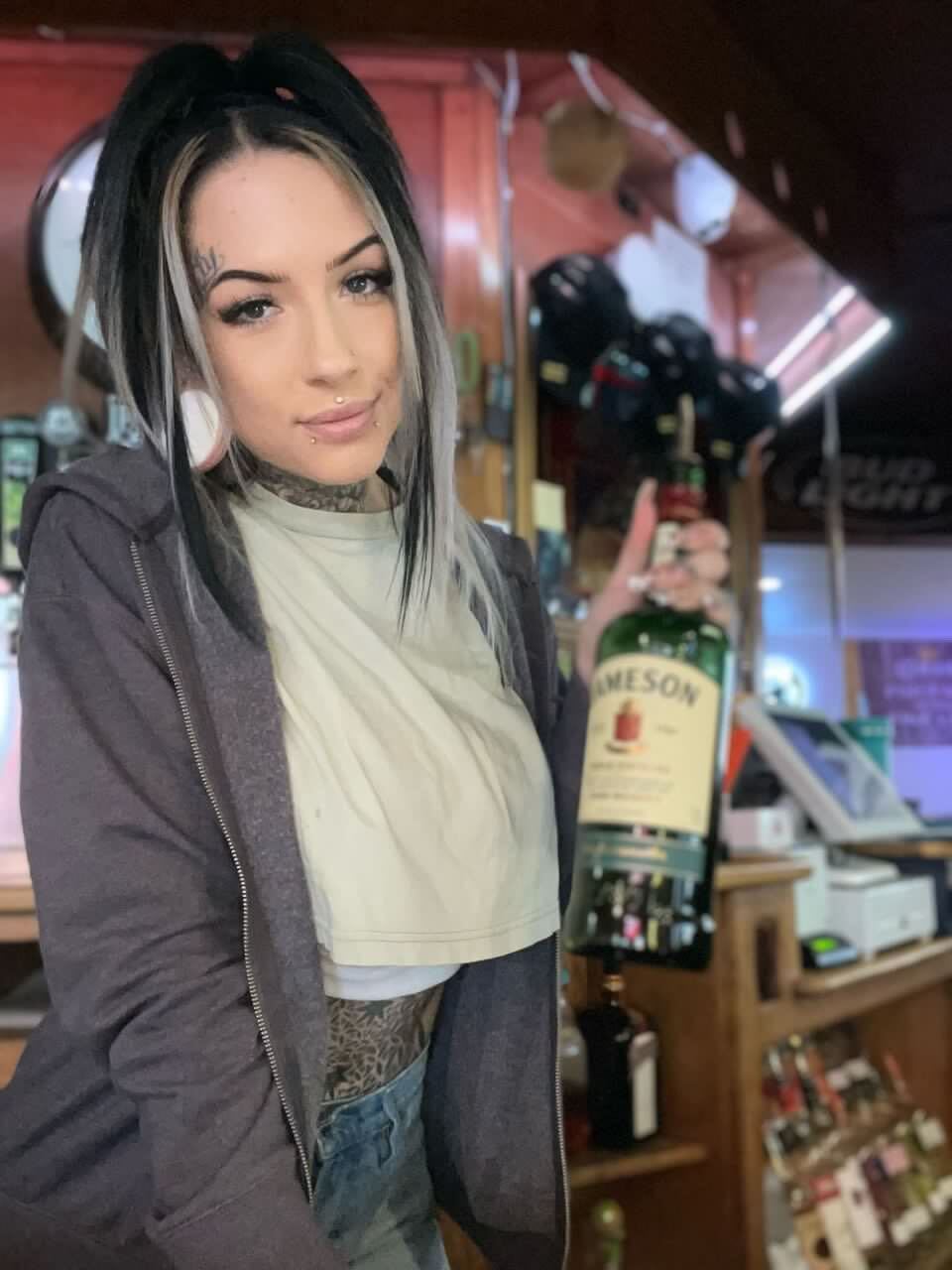
At the Vista Del Mar.
Irving started bartending right after the summer of 2020, without any experience. Thankfully, one of her best friends put in a good word for her, and she quickly found herself behind the bar at Vista Del Mar in Eureka.
She also works as a bartender at weddings and parties when the opportunities present themselves. Her easygoing nature and ability to make people feel comfortable have made her an instant favorite with customers.
After losing income with the temporary closure of The Tip Top Club, creating an OnlyFans account was a decision she felt like she needed to make, but also one she wanted to make.
Three years later, she describes it as a fun, empowering job.

“Honestly, OnlyFans is a lot easier for me because there is no physical demand,” Irving continued said. “I can make content at my own pace and on my own time. I don’t have to spend hours in a club trying to compete for people’s attention.”
If you are not familiar with OnlyFans, it’s a website that allows people to create content and sell it as a subscription service. Often, OnlyFans is used to create and sell sexually explicit content. Though it sounds simple, it can be demanding in its own right. Like other subscription services, there has to be a reason to justify the recurring payments. In Irving’s case, she has to continuously create content and engage with her audience.
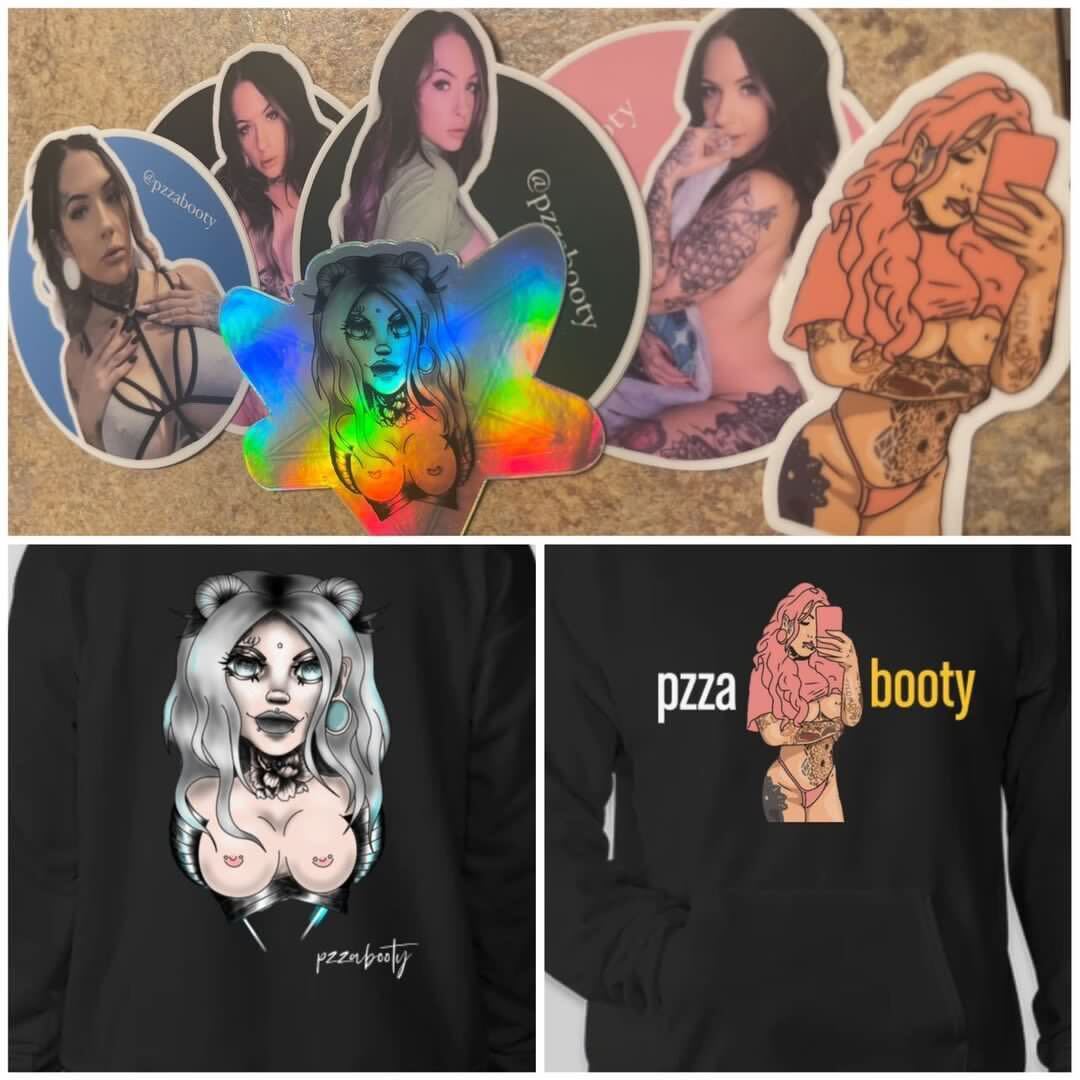
Merch for sale
Alongside her two main gigs, Irving also creates her own merchandise — things like stickers, posters, magnets, shirts and hoodies with designs and pictures of herself. She also recently signed with a modeling group called Sundae Girls. This summer she plans to create more content with other creators and photographers.
This type of collaboration has sometimes been difficult for her considering that she suffers from a condition called body dysmorphic disorder (BDD).
Irving says having BDD is like having anxiety on top of anxiety, and it has had a significant effect on her content career. She has missed out on traveling for model calls and photo shoots because of it.
“Some days I look in the mirror and I can’t find a single thing I like about myself. The longer I look the worse it gets,” Irving said. “But this year I’m branching out. I’m going to step out of my comfort zone and really give myself a chance while I can because it’s my dream. And what’s living if you’re just living to survive?”
All this hustling makes Irving’s schedule hectic.
She starts each day by taking her son to school and then heading to the gym. After the gym, she gets herself ready and creates new content for OnlyFans, all before returning home. Then she bartends through the evening.
Thursdays are her worst nights because she averages three hours of sleep between getting home and readying her son for school the following morning. On days when she works a day shift at the bar she skips making content and spends the evening with her son.
With such a structured routine, Irving makes sure to spend all the time she can with her son outside of working and school. Going forward, Irving hopes to work with at least three new photographers, attend her modeling group’s beach event in southern California this summer and create her own website.
Irving’s personal goals include taking her son and her partner’s son to Disneyland and Nintendo World this October.
“I’ll never stop hustling. For him, for us. I’m constantly setting goals and making sure they’re realistic and I work hard to crush them,” Irving said.
OBITUARY: Sherae O’Shaughnessy, 1985-2023
LoCO Staff / Saturday, Feb. 25, 2023 @ 6:45 a.m. / Obits
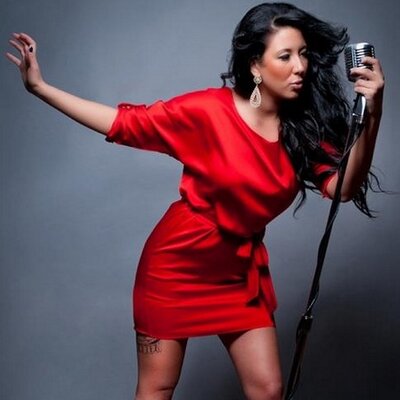
On January 10th, 2023 the world lost one of its brightest stars in Sherae Marie O’Shaughnessy. Children lost a mother, parents lost a daughter, siblings lost a sister and countless friends lost someone that they’ll never forget.
Sherae Marie Meyers was born on May 17th, 1985 and raised in Southern California. She moved to Eureka when she was 19 years old. She comes from a long line of celebrity family names and was the granddaughter of famous guitarist and Musicians’ Hall of Fame inductee Louie Shelton.
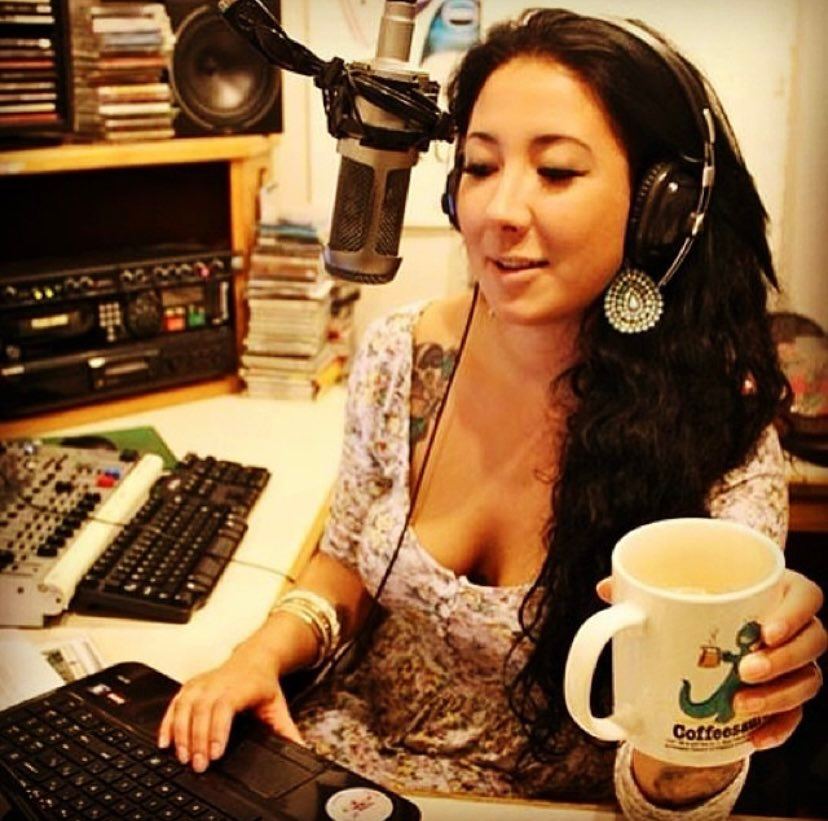
Sherae was a lot of things to a lot of people, all over the world. In Humboldt, many knew her as the voice on the radio that would take them home after work or wake them up in the morning while introducing you to artists you’d likely never heard before. She was the ruler of the airwaves for years but she was also the queen of the stand up comedy stage as well. Whether she was hosting an event, making the filthiest jokes ever on a show with her beloved “Ba-Dum-Cha” crew or giving a band their first break on “Late Night With Sherae,” she was always the star of any stage she stepped on. It was because of her talents, incredible personality, razor sharp wit, impeccable style and let’s be honest, very pretty face that she was able to claim the title, “The Most Famous Not-Famous Person In The World!”
Humboldt also gave her the most important thing in her life: her incredible daughter, Ivy Pearl. Sherae loved nothing and nobody more than she loved her Ivy. She often said that if the only great thing she ever did in this life was make Ivy, she could leave this place happy. Being a mother was the most important job in the world to her and, regardless of the demons she was fighting, she looked forward to every phone call, text message, hug, kiss, sushi date, pet shop trip, gift exchange and truly every second that she had with her Ivy. She looked forward to those as if each one of them were the most important moments of her life. Because to her, they were.
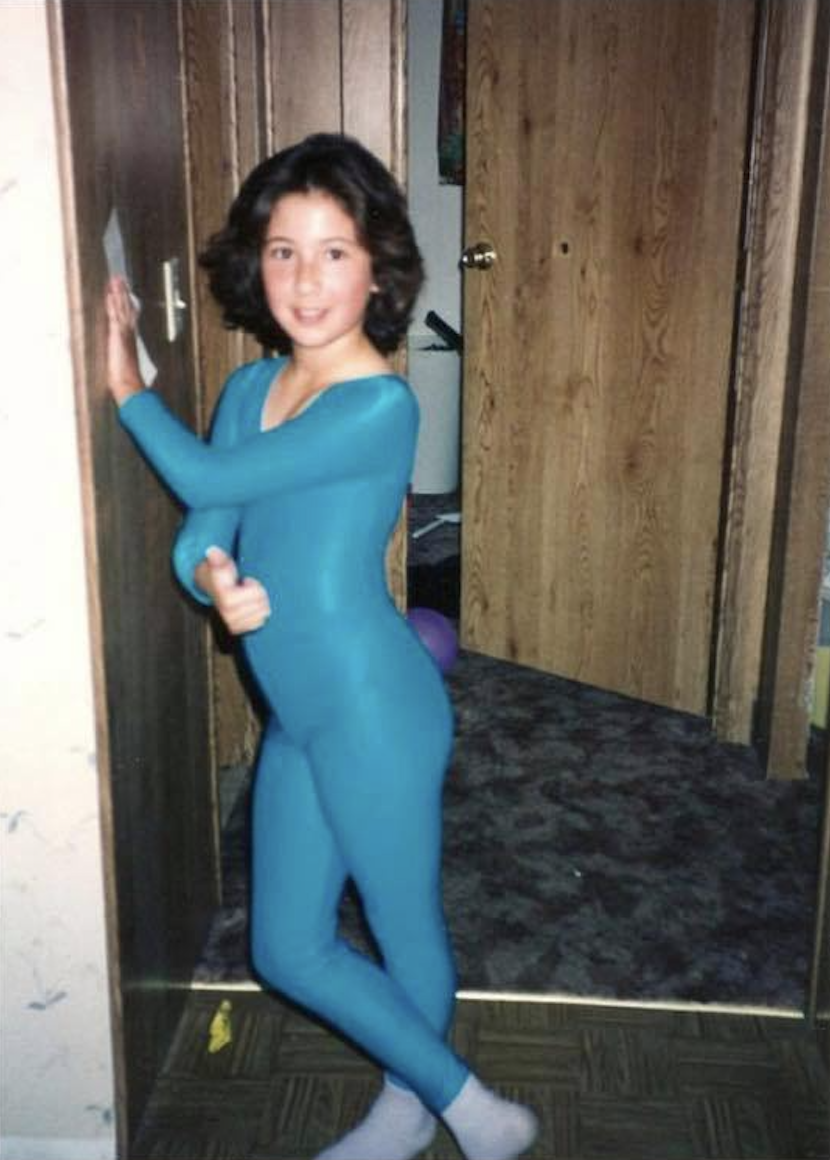
If there is anything that we can take away from losing Sherae, it’s this: Do things in life that bring you joy. Laugh at the joke. Listen to the music. Watch the movie. Get the tattoo and then get way more tattoos. Get the alfredo boat with the breadsticks and make your waiter grate the cheese for so long that they have to file for overtime. Hug those that you love and tell them often. Don’t waste any of the moments that you have with the ones that you love.
One thing that we can all cherish about Sherae is that our individual relationships with her were entirely unique. Many of us never knew the exact same version of Sherae and that was a thing that was actually special. It’s like we all had our own individual personal relationship with this amazing woman and formed memories that only we will have. Those memories are what we should hold onto and cherish as we move forward and live a life that she’d be happy to be a part of.
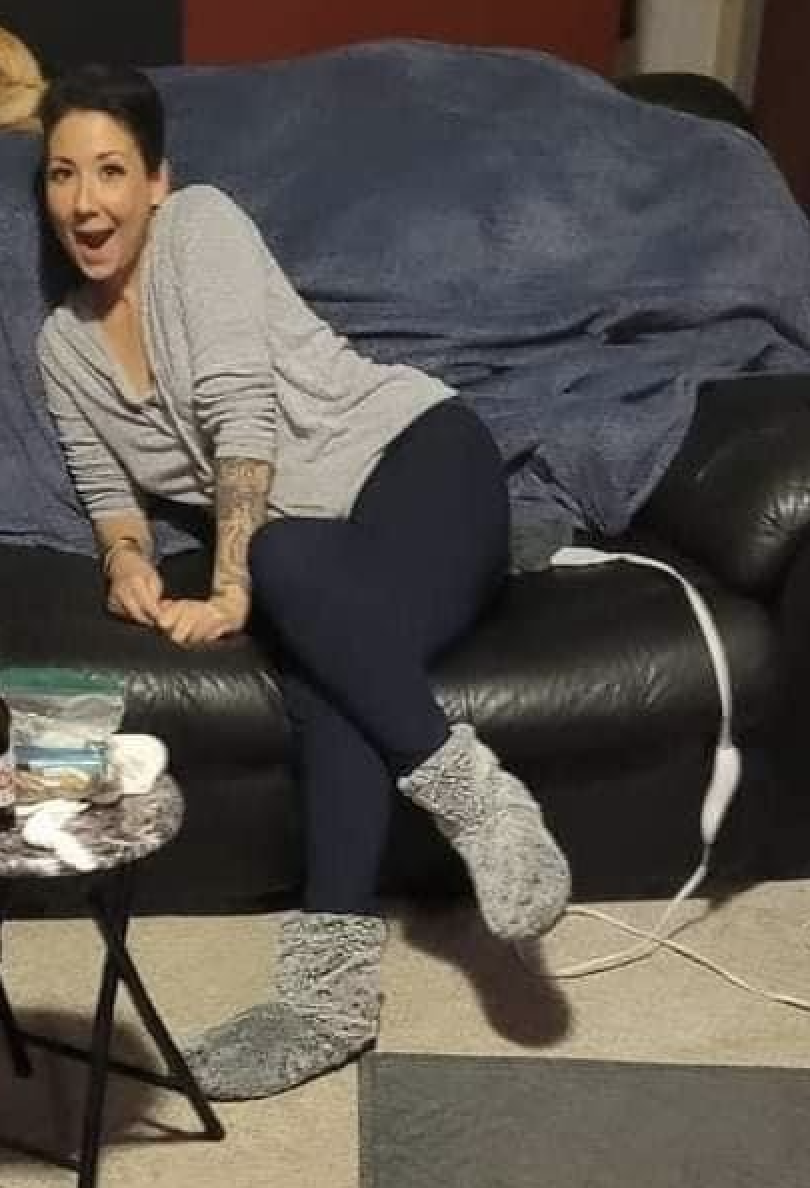
We should also remember that she fought very hard for a very long time. The thing that eventually took her away from us at the age of 37 is something that many people struggle with. So, in her memory, please know that you do not have to suffer in silence with addiction and mental illness. There is help out there and you do not have to fight alone. In the public eye, Sherae put on a strong face with an incredible smile. And sometimes, that was a mask. So if any of you are seeing this, grieving over this loss along with so many of us, please know that there is no weakness in asking for help. She’d have wanted you to heal and live a beautiful life free of pain.
Sherae’s final act of ultimate kindness was giving life to three people on her way out via organ donation. Her kidneys are now inside two people that get to live because of her decision. And her amazing heart, full of so much love for so many of you around the world, beats inside the chest of someone that gets to live longer now and hug the ones that they love yet again for even one more day. That final act is something that will live on through the lives of others and the lives they continue to touch.
And with that, Sherae Marie, we bid you a final farewell. The stage lights have been dimmed. The mic has been dropped. The suffering has stopped and the peace that you have wanted to feel for so long has finally arrived. You will be loved and missed forever. It’s time to leave the stage.

Survived by her beautiful daughter: Ivy Pearl O’Shaughnessy, her parents, Mark Meyers and Renee Donovan, Step-Parents Tim Donovan and Amy Meyers, Grandparents, Donna Meyers, Betty Sanchez and Louie & Donnie Shelton of Australia Siblings, Shiraz Shelton, Shelly Deguchi, Steven Meyers, Josh Meyers, Jake Meyers, Chris Donovan, Kyle Donovan, Ryan Donovan and Tammy Donovan and nieces, Amaya Rae, Marlie Rae, Taya Naomi and Kaley MaryJean. Nephews, Teijo Mark, Frank Dean and Colston JesseLee and countless amazing cousins, aunts and uncles. And her other mother until the very last moment, Lori Manodori. And finally, her adoring fans, her best friends Jonas Barnes, Danielle Dumond and Eva Hammel and finally all of her loyal friends from all over the world.
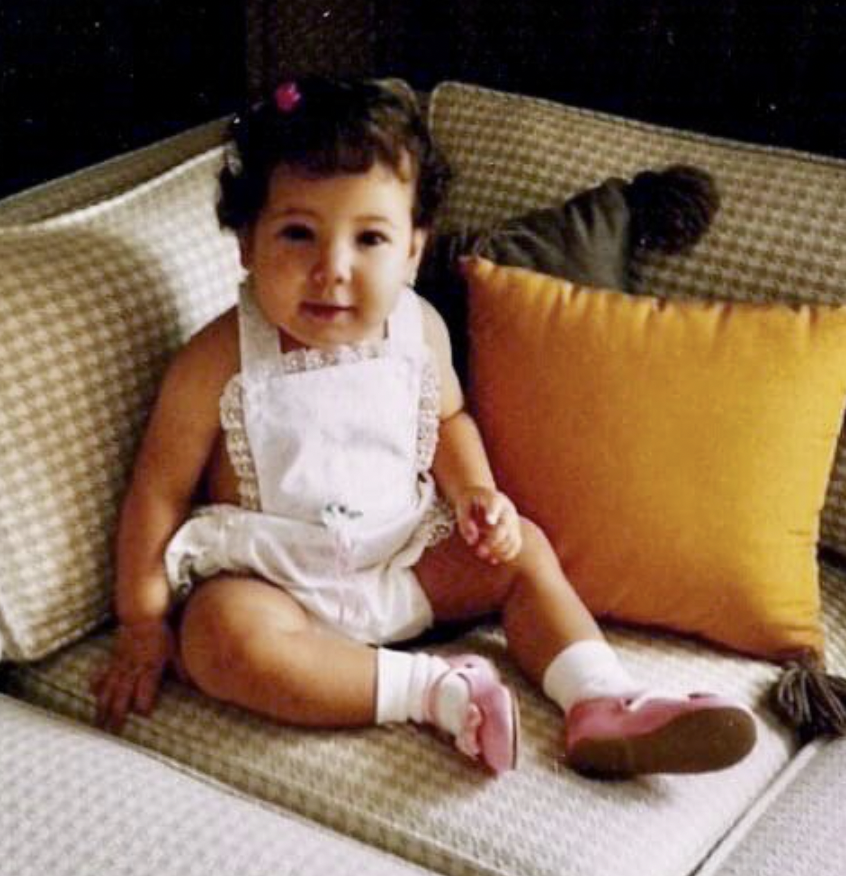
“The Final Late Night With Sherae” will be taking place on her Birthday, May 17th as a celebration of her life and her love of performing. We will be honoring her the best way that we know how: Telling filthy jokes and stories about our favorite, beautiful smartass. This event will be held at The Inn at 2nd & C, Grand Theater Ballroom beginning at 6 p.m. This event is open to the public.
###
The obituary above was submitted on behalf of Sherae’s loved ones. The Lost Coast Outpost runs obituaries of Humboldt County residents at no charge. See guidelines here. Email news@lostcoastoutpost.com.
OBITUARY: Serafin Machado, 1982-2022
LoCO Staff / Saturday, Feb. 25, 2023 @ 6:45 a.m. / Obits
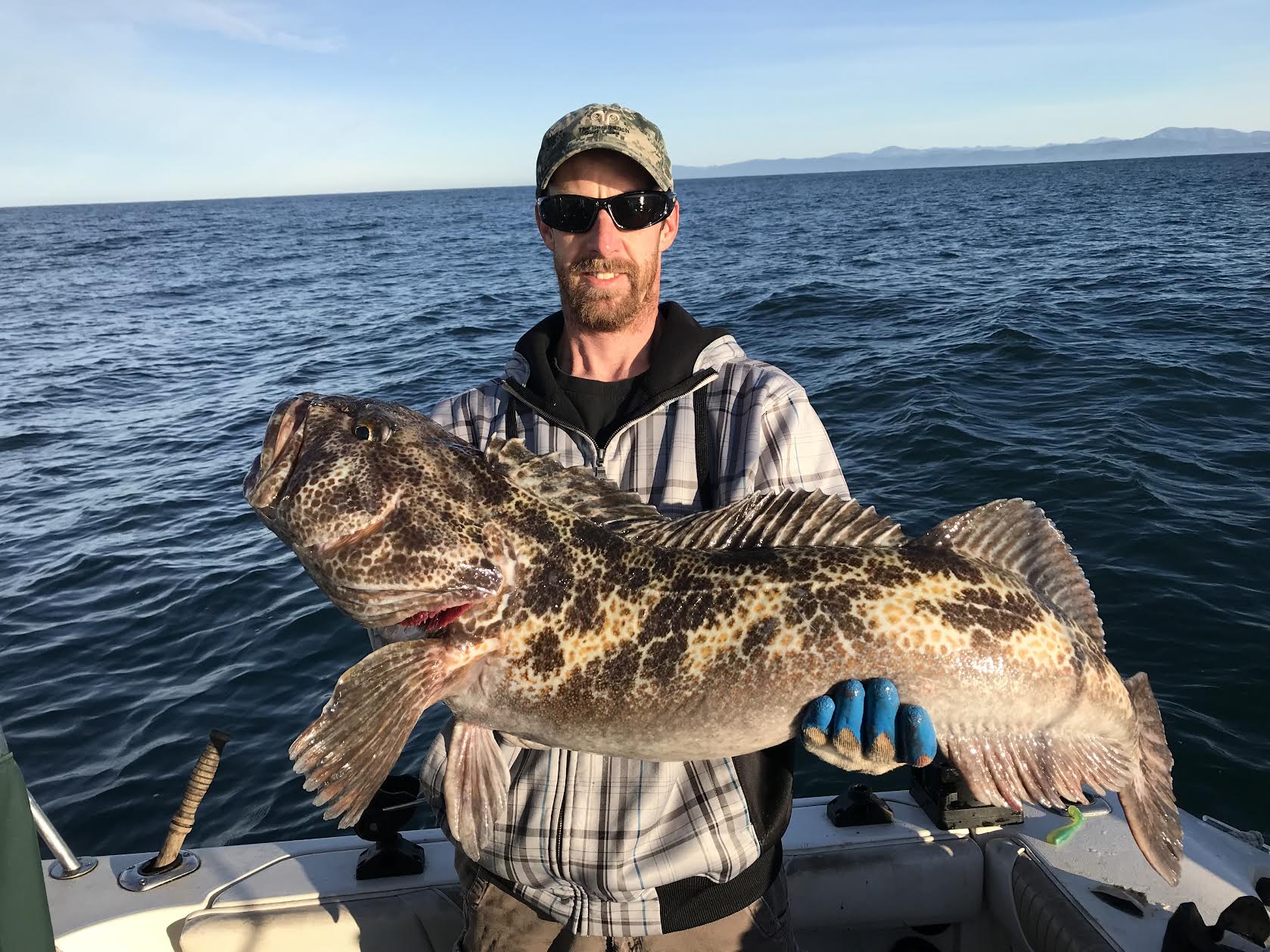
Serafin Richard Machado, age 40, passed away in November 2022 in Willow Creek. An avid
outdoorsman, Serafin never missed a chance to be in the woods or on the water. Quick with a laugh or a
hug. Never one to shy away from hard work, Serafin was always ready to help his family or friends. He
was known by several names: Serafin, Serf, Seraphim, Fini and I’m sure he had other nicknames.
Born in Bishop, California to Tim and Colleen Machado, the youngest of three boys, Serafin spent his first years at the Mt. Whitney fish hatchery, spending as much time as he could outside with his brothers, Tom and Maurice. After a short time in Long Beach, the family moved to Willow Creek where Serafin’s love for the outdoors grew. He knew which pools the steelhead were in, the best trails for the biggest bucks, and where the chanterelle mushrooms grew the best.
After high school graduation, Serafin joined the United States Army and was stationed in Germany with his best friend, Joey. After the Army, Serafin came back to the North Coast and became a Wildland firefighter, helping to protect the forests he loved. He also worked for Cal Trans for a time.
As an avid outdoorsman, Serafin never missed a chance to be in the woods gathering mushrooms, hunting for deer. When he wasn’t in the wilderness, he was often on the ocean with his Dad and occasionally his mom , reeling in rock fish, halibut, tuna, or pulling crab pots. He shared his love of fishing with his nieces , Ana, Kaitlyn Isabel and Kaia and with his friends. Fish seemed to practically jump in the boat when Serafin was on board!!
Never one to shy away from hard work, Serafin was always ready to help his family or friends; often with a quick laugh, smile or a hug.
Serafin was a light in this world that left too soon. Thank you Lord for letting us have this time with Serafin and for the many memories that we share. Serafin, Serf, Fini, Seraphim will be greatly missed by his family and his friends. S
erafin has gone home to heaven to join his paternal grandparents, Anthony and Shirley Machado, and his maternal grandfather, Donald Glennon.
###
The obituary above was submitted on behalf of Serafin’s loved ones. The Lost Coast Outpost runs obituaries of Humboldt County residents at no charge. See guidelines here. Email news@lostcoastoutpost.com.
OBITUARY: Lloyd Wallace, 1947-2023
LoCO Staff / Saturday, Feb. 25, 2023 @ 6:45 a.m. / Obits
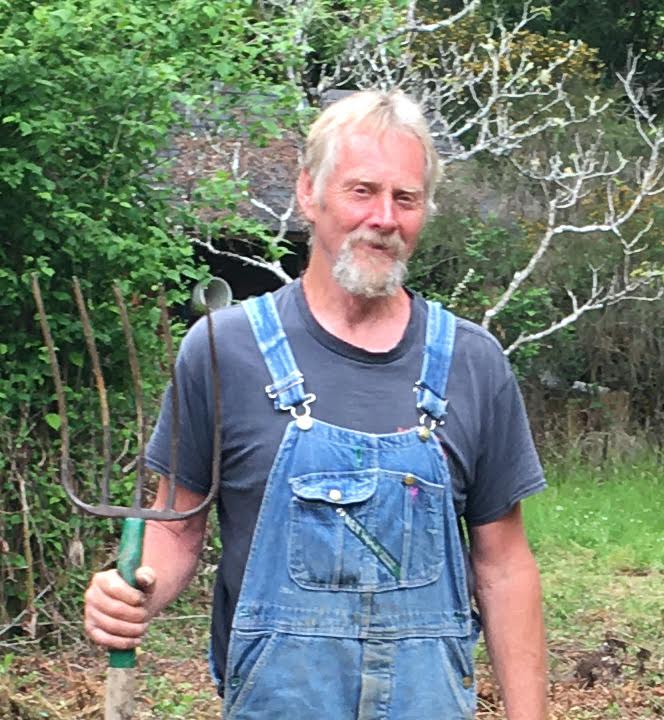
Lloyd Sherman Wallace was born on December 16th, 1947 in San Francisco to Jack Ford Wallace and Lois Eileen (Sherman) Wallace, both natives of Eureka/Arcata. He passed away on February 16th, 2023 due to heart disease at his dream farm in Holmes Flat. Lloyd was a farmer at heart, and his love for agriculture started with his grandfather. He joined 4-H at the age of 10, where he pursued many projects related to farming and worked on his family’s dairy farm on the Arcata Bottoms. After graduating from Arcata High School in 1966 with straight A’s, he attended Humboldt State College with the hope of becoming a veterinarian. However, his plans changed when he was drafted into the Army during the Vietnam War. He served two tours in Nam and earned his nickname, Sarge.
After the war, Lloyd worked for Simpson Timber Co. at the Arcata plant and at Korbel before buying a house in Blue Lake and owning and operating Blue Lake Speed Wash. When timber production decreased, he began working at Pacific Lumber Co. in Scotia until his retirement. Lloyd then fulfilled his lifelong dream of owning a farm near Redcrest, which he named “Plowboy Farm.” There, he lived with his dog DJ and sold organic produce out of the old milkhouse, raised livestock, rode his Harley, and restored old cars in his barn. He was known for his legendary “Barnyard Parties,” a trait he learned from his mom, where he generously gave out bouquets of flowers and arms full of vegetables to his guests.
Lloyd’s measure of success was not monetary wealth but rather his love for his family, friends, farming, surfing, dancing, motorcycle riding, and classic cars. He was a generous man who was always supportive of others, as evidenced by his trading his prized 48 Chevy coupe for his sister Rena’s dairy cow when she wanted her first car. His creative imagination was reflected in his occasional poetry. Lloyd was survived by his son, Brent Dylan Wallace, sisters Rena Wallace Forbes (Keith) and Cathleen Susan Wallace (Denny), niece Kelly Leann Giampaolo, nephews Gyle James Maruska, Jacob Paul Hernandez, Dyllan Russell Forbes, and Garrett Jack Forbes, ex-wife Roxanne Wallace, and many friends.
Lloyd’s sunflowers will bloom again this year, and a celebration of life will be announced when the weather warms up. In lieu of flowers, donations may be made in his name to Miranda’s Animal Rescue.
###
The obituary above was submitted on behalf of Lloyd’s loved ones. The Lost Coast Outpost runs obituaries of Humboldt County residents at no charge. See guidelines here. Email news@lostcoastoutpost.com.


_-1.jpg)