Press release from the Humboldt County Sheriff’s Office:
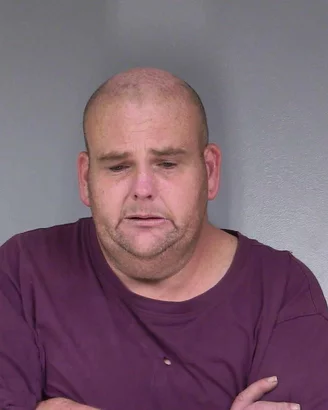
On Nov. 20, 2022, at about 12:12 p.m., Humboldt County Sheriff’s deputies were dispatched to a residence on the 3600 block of Old Arcata Road near Eureka for the report of an assault.
Deputies contacted an adult female victim at the residence. During their investigation, deputies learned that an acquaintance of the victim, 45-year-old Bobbie Gene Bagley, reportedly arrived at the residence uninvited. When asked to leave, Bagley reportedly physically assaulted the victim with a knife and then threatened to kill her if she contacted law enforcement. The victim was able to escape, and Bagley reportedly fled the residence.
On November 21, at about 1:28 a.m., a Sheriff’s deputy on patrol in the Eureka area located Bagley’s vehicle parked on Commercial Street. Deputies conducted a vehicle investigation and located Bagley inside. Bagley was arrested without incident. During a search of the vehicle, deputies located approximately .16 grams of methamphetamine, pepper spray and a knife.
Bagley was booked into the Humboldt County Correctional Facility on charges of assault with a deadly weapon other than a firearm (PC 245(a)(1)), false imprisonment (PC 236), intimidating a victim (PC 136.1(b)(1)) and unlawful possession of pepper spray (PC 22810(A)).
Anyone with information about this case or related criminal activity is encouraged to call the Humboldt County Sheriff’s Office at (707) 445-7251 or the Sheriff’s Office Crime Tip line at (707) 268-2539.
Press release from the Humboldt County Sheriff’s Office:
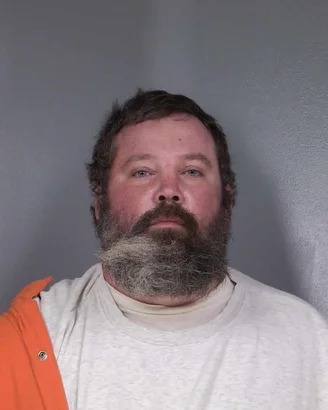
On Nov. 20, 2022, at about 3:10 p.m., Humboldt County Sheriff’s deputies were dispatched to a residence on the 4000 block of F Street, in the county’s jurisdiction of Eureka, for the report of a domestic violence incident with a stabbing victim.
Deputies arrived at the residence and located an adult female victim with serious injuries. She was transported to a local hospital for medical attention. While at the residence, deputies also contacted and detained 42-year-old Robert James Duncan. Through further investigation, deputies learned that Duncan reportedly physically assaulted the victim and then stabbed her following a disagreement.
Duncan was booked into the Humboldt County Correctional Facility on charges of attempted murder (PC 664/187(a)), inflicting corporal injury on a spouse (PC 273.5(a)) and child endangerment (PC 273a(a)).
Anyone with information about this case or related criminal activity is encouraged to call the Humboldt County Sheriff’s Office at (707) 445-7251 or the Sheriff’s Office Crime Tip line at (707) 268-2539.
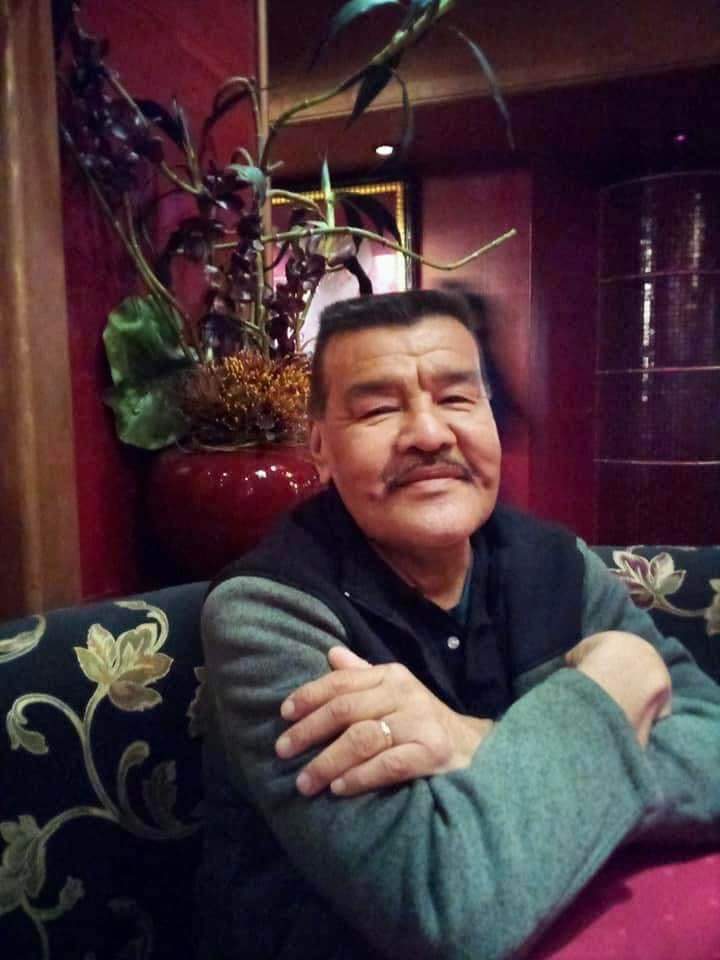
Anthony Leland Obie was born July 19th, 1964 and passed away on November 17th, 2022. Anthony is preceded in death by his paternal grandparents; Albert Obie and Adelia Norris-Obie; his maternal grandparents Jackson Ames and Carolyn Jake Ames; his parents Milton and Matilda “Tillie” Obie; his Obie Uncles and Aunties; His Ames Uncles and Aunties; his siblings Jon Obie and Denise Obie-Timmons; and his nieces Kimberly Obie and Cicelly Gabriel. Tony is survived by his wife Jolanda Ingram-Obie; his siblings Sharon Obie-Brown and Greg Brown, Judith Gabriel, and Roxanne Obie. He is survived by his children; Anthony Winterhawk Obie and Leah May-Obie, Teresina Obie, Lindsey Jackson, Ernie Jackson, and Taylor Obie and Bubu Beaman, Jalea and Troy Aubrey, and Jeff Mathison-Walker. He is survived by his grandchildren Kimimila Obie, Ku’ukoa Obie, Lucas Jackson, Laila and Lawrence Walker-Orcutt, Milan, Jeffery, and Evelyn James-Mathison. His nieces and nephews Michael Gabriel, Dominic Obie, Rainey and Kash McCovey, and many great nieces and nephews that he loved.
Anthony was from the villages of Sregon, Pecwan, Requa, and Tsewinaldin. He was a proud member of the Yurok Tribe. Anthony was born in Hoopa and started his life Down River until the 1964 flood destroyed his family’s home and they moved to Hoopa. Anthony attended and graduated Hoopa Valley High School. As a young adult he played football for the College of the Redwoods and played in many All-Indian Basketball and Softball tournaments; receiving many All-Indian trophies and other recognitions. Anthony is well known for his outstanding athletic talents in Basketball, Baseball, Football, Stick Games, and horseshoe games. He had many teammates that he considered family and would share stories about the “good o’l days.” He loved spending time with family, hunting, fishing, participating in Yurok and Hupa ceremonies, and attending church. He was also known for his charismatic personality, his contagious laugh, and his radiant smile.
Anthony spoke fondly of the logging days. He learned from his father, and while working for Hoopa Forest Industries, and other logging outfits. He hung his tin hat up after a serious injury in the woods and had to reinvent himself. He was very proud of his days at the Friendship House and his 14 years of sobriety. He enjoyed passing along what he learned about recovery and spirituality. During his career he worked with the developmentally delayed at Supportive Living Services in Del Norte County, as a Youth Advocate at Yurok Tribal Court, and as a Native American Spiritual Leader at High Desert State Prison in his final days.
Anthony passed away at their home, from a longstanding illness, in Susanville, California with his loving wife nearby. Although he passed too soon, he lived a full life and touched many hearts. As he makes his journey, he is forever loved by his family, friends, and teammates. The love that he had for his wife, kids, and grandchildren is what kept him alive.
Pallbearers: Michael Gabriel, Dominic Obie, Winterhawk Obie, Marcus Obie-Brown, David “Sonners” Hostler IV, Jeff Mathison-Walker, Mike Obie, and Kash McCovey.
Honorary Pallbearers: Lester Obie, Wally Obie, David O’ Neill, Greg Brown, Roger Sanderson, Ricky Sanderson, Marion “Inker” McCovey, Dickie Myers, Fred Timmons, Darryl Obie, Frank Ruiz, Larry Jordan, David Ruiz, Seth Ruiz, Clarence Hostler, Troy Aubrey, Junior Farmer, Joe James, Milton Stewart, Gary Obie Stewart, Boyd Ferris, Freddie Brown, and the SweatHogs.
Due to the untimely passing of Anthony, the family apologizes for names of family members, teammates, and friends we did not mention. He loved many and all.
He will make his journey to Hoopa from Susanville on November 22nd, 2022. His wake will be at St. Kateri Hall on Pine Creek Road on November 22nd at approximately 9pm. Services will be at St. Kateri Catholic Church at 11 am on November 23rd, 2022. Anthony will be buried at the Obie Cemetery at Sregon Village. After the burial, there will be a reception at St. Kateri Hall following the graveside burial. Flowers and food can be received at Kateri Hall. Jeanerette Jacups-Johnnie Jacups and Harold Jones, Sr. will officiate.
###
The obituary above was submitted on behalf of Anthony Obie’s loved ones. The Lost Coast Outpost runs obituaries of Humboldt County residents at no charge. See guidelines here. Email news@lostcoastoutpost.com.
A guard tower at Kern Valley State Prison on Nov. 15, 2022. Photo by Larry Valenzuela, CalMatters/CatchLight Local
California state prisons transfer people with serious mental illness far more frequently than other prisoners — sometimes moving them dozens of times — a CalMatters’ analysis of newly acquired state data has found.
The findings underscore a CalMatters’ investigation from earlier this year which revealed the state’s practice of shuffling around mentally ill prisoners, which some advocates say can be disruptive and damaging to these vulnerable people.
The story focused on the case of Adam Collier, who had been diagnosed with post-traumatic stress disorder, bipolar disorder, borderline personality disorder and anxiety disorder, among other mental illnesses. Collier was serving a five-year sentence for exposing himself to women in public while high on meth. He was moved 39 times between 2016 and 2020 — bouncing among crisis units, state hospitals and seven different prisons — before he killed himself in Kern Valley State Prison in October 2020.
CalMatters’ analysis of data from the California Department of Corrections and Rehabilitation found that, from 2016 to 2021, California prisoners in “enhanced outpatient” mental health treatment were moved three times more often, on average, than other prisoners.
The data shows that incarcerated people in the system’s enhanced mental health program — which provides the highest level of outpatient mental health care for prisoners — averaged five moves during the time period, compared to an average 1.5 transfers for people in the general prison population.
One person, who was in and out of the mental health program, moved 75 times during the six-year period. The data does not identify any individuals.
“That doesn’t surprise me at all,” said Keramet Reiter, a criminology professor at the University of California, Irvine. “The seriously mentally ill people … bounce around a bit.”
CalMatters had requested the state’s transfers data on March 31; the department responded on Aug. 1 and Sept. 16. For its June story, CalMatters collected its own data about prison transfers for about a year, which generally mirrors the state’s records during the same timeframe.
“Transfers for an inmate are disruptive,” said Christopher Lisieski, the attorney representing Collier’s mother in a federal lawsuit against several prison employees. “Disrupting someone’s routine who’s severely mentally ill is additional stress and strain and can worsen mental health symptoms.”
Advocates, prisoners and family members contend that, in cases like Collier’s, a steady stream of transfers reflects a system that too often fails to adequately care for people in mental health crises. These incarcerated people might bounce between prisons and short-term crisis beds without ever stabilizing enough to get better, they say.
In California, mental health care in state prisons is designed so that incarcerated people transfer to appropriate levels of care as their needs change. Treatments range from outpatient therapy in the general prisoner population to long-term hospitalization in treatment facilities within the correctional system.
Prisoners needing the highest level of care could be sent to state hospitals, which are separate facilities that also house people who are not in the criminal justice system.
But the system doesn’t always work perfectly. In several investigations, the Inspector General has determined that people who need it sometimes aren’t referred to a higher level of care.
In other cases, experts say, multiple transfers can mean the system is working and people are getting the care they need.
Department spokesperson Dana Simas wrote in an emailed statement that the state transfers prisoners for a variety of reasons, including court hearings, medical treatment, mental health treatment, changes in security level, patient safety, staff conflicts, misconduct allegations or parole.
In California, prison mental health treatment policies are governed by a federal class-action lawsuit — known as Coleman — on behalf of prisoners with serious mental illness.
In 1995, a federal court ruled that the department was not providing adequate mental health care to prisoners. The court eventually approved the Corrections Department’s plan for providing mental health care and appointed a special master to monitor and report on the state’s compliance.
“The department works closely with the Coleman special master and others on these matters, and always strives for what is in the best interest of the patient’s individual needs,” Simas wrote in an email to CalMatters.
Special master Matthew A. Lopes Jr. did not respond to CalMatters’ request for comment.
A family photo of Adam Collier. Photo courtesy of Susan Ottele
In Collier’s case, he moved so frequently that his mother, Susan Ottele of McMinnville, Ore., started “every single, solitary day” checking online to see which prison was holding Collier and why.
When the pandemic hit, the prisons went on lockdown, and Collier sat inside Kern Valley State Prison for seven months. It was his longest stay at any prison since 2016.
“With all these transfers, I’m fucking dizzy,” Collier wrote in a letter to Ottele in March 2020. Months later, at age 43, Collier killed himself.
The Office of the Inspector General investigated Collier’s suicide and found that the department had “poorly handled” Collier’s case. The inspector general’s March 2021 report described an array of internal problems, including clinicians improperly delaying Collier’s referral to a higher level of care and failing to adequately document his history of self-harm.
Earlier this year, Ottele filed a wrongful death complaint in federal court, alleging that prison guards failed to monitor her son and acted with deliberate indifference.
In court documents, state attorneys deny these claims, saying the guards were not aware of Collier’s history of suicide attempts. The Department of Corrections and Rehabilitation declined to comment on the lawsuit, citing pending litigation. Lisieski, Ottele’s attorney, said the case likely won’t be resolved for years.
###
CalMatters.org is a nonprofit, nonpartisan media venture explaining California policies and politics.
The Outpost woke up (late) to emails from panicked residents all across the east side of town, ranging roughly from H Street to Cooper Gulch. Why oh why does our home have no water? these people wondered.
Well, happily, Brian Gerving, the city of Eureka’s public works director, was up with or indeed probably well before the sun, and he was already read in on the situation. Gerving texted:
There was a main break on a large line on 3rd Street between L and M. That large of a break makes it hard for the system upstream to keep up, so a lot of people lost pressure. It’s shut down now and folks should see pressure starting to build back.
… and he gave us a link to photos, too. There you have it, east siders! You should be wet again soon.
COVID cases worldwide: 636 million (about 8% of global population); deaths:
6.6 million (about 1% of cases)
1918
Spanish flu cases worldwide: 500 million (about 33% of the global
population at the time); deaths: 50 million (about 10% of cases)
Births
and deaths
1950:
92 million births, 14.4 million deaths (15%)
2016:
141 million births, 4.2 million deaths (3%)
Terrorism
2007-2016:
159,000 deaths by terrorism (three times that of previous ten year).
By far the majority in Iraq, Syria, Afghanistan, Nigeria and
Pakistan.
Terrorism
deaths in “first world” countries: Less than 1,500 (about 1%)
Overall,
terrorism accounts for about 0.05% deaths overall.
Flying
risks
2016:
40 million commercial passenger flights, of which 10 crashed.
(0.000025%)
Energy
Worldwide,
coal + oil + gas accounts for 87% energy production
Biological
sex
99.99%
of babies fit into a binary category: males make (or have the
potential to make) small mobile gametes (sperm); females have (or
have the potential to make) larger, immobile gametes (eggs).
Goldbach
conjecture
Every
even number greater than 2 is the sum of two primes. Prove it and the
$1 million Clay Prize is yours.
Bodily
rejuvenation
Your
body is constantly replacing itself, but at different rates.
Epidermis
(outer skin cells): every 2-4 weeks
Women’s
hair: every 6 years
Men’s hair: every 3 years
Liver
cells: Replaced 150-500 days
Stomach
and intestines: Cells lining these organs only last up to 5 days
Bones:
10 years
Cerebral
cortex (memory, thought, language, attention, consciousness): Never
Local
SLR
According
to Aldaron Laird (2013), our local sea level rise is greater than
anywhere else in California, Since 1977, SLR at the North Spit has
been 4.74 mm/year, or 18.6 inches per century.
Farthest
human-made object
Voyager
1 (launched August 20, 1977): 14.8 million miles from Earth (22 hours
for radio signals to travel between Earth and the spacecraft).
Voyager I. Photo: NASA (public domain).
Countries
Fully
recognized members of the United Nations: 193
Permanent
UN “observers”: 2 (Palestine and Vatican)
Also:
Kosovo (recognized by 98 UN members) and Taiwan (recognized by 15 UN
members)
GOU
Number
of consecutive Sunday “Growing Old Ungracefully” posts: 410
Last
Sunday evening, we were sitting in the living room when we got word
that there had been an explosion on Istiklal Avenue over on the
European side of the city.
My
wife’s reaction summed up our feelings perfectly: “Not again.”
We
live on the Asian side, far from the explosion. Yet outside we could
hear sirens everywhere. An armored vehicle sat on the overpass
outside the window, and the highway below, normally placid on a
Sunday evening, was jammed with cars trying to access the tunnel. The
internet was working, so we were able to get the latest news, but
social media had been blocked – at least from our side. All told,
six dead, more than 50 wounded.
A
few days passed. For much of the world the story quickly became
yesterday’s news, all but disappearing from the headlines and
feeds. Meanwhile, I thought about our decidedly cynical and tired
reaction to the latest episode of violence to befall our great city.
It was troubling, to be sure, but what can you do?
Sure,
you do have to offer prayers for the families of the victims. As for
the investigation: Within hours of the explosion, police arrested a
woman, a Syrian national, with reported backing and ties from a
Kurdish terrorist group. The woman was reportedly captured on CCTV at
the site of the bombing, and later traced by some 1,200 security
cameras to a hideout in one of the neighborhoods on the city’s
outskirts. More arrests are promised.
###
To
be frank, I have grown bored of it all:
terror,
war, violence, memorials and aftermaths. Judging from the faces of
friends, colleagues, family members, I am not alone.
Why
shouldn’t we be fed up? Looking over the letters I have written
over the past decade, one could find a collection of “Terror
Tales,” a Poe-sounding title if there ever was. An attack on
Dolmabahçe Palace, where my wife works, back in November 2015
(fortunately only one policeman was injured in that otherwise foiled
attack. Then the late 2016 bombing near Beşiktaş
football stadium that
killed nearly 40 people, 150 injured. And let us not forget the
failed military coup that dark Friday, 15 July 2016, when in the
night tanks and soldiers occupied the same bridge I now take to work
every morning.
Let
us not forget the bigger picture stories, like the war in Syria and
now the war up the road in Ukraine, both of which I have written back
home about. War and terror, violence and its aftermath. At one point,
in early 2016, government officials here, with a grim outlook, told
citizens that they would have to, “Learn to live with terror.”
Well,
we have. The thing that gets you really is the aftermath, the
never-ending aftermath. Living in constant aftermath is akin to
bathing in blood. It sticks to your skin after a while.
The
thing is, daily life here in Istanbul isn’t like that at all, the
way some people in the West imagine. When these incidents occur,
caring friends and family back in America and elsewhere send urgent
messages, are you OK? And I have to remind them that we live in a
city as big as, if not bigger than New York, with the same majestic
sweep and vast, discursive network of neighborhoods, districts and
boroughs.
Perhaps
surprisingly, one seldom feels anything like danger, but rather
energy. It’s a vibrant city. Other than the crowds, which can be
especially tiresome on the metros and buses, the soul-crushing
traffic on the bridges, life in Istanbul is as safe as any city its
size can be – in fact, safer than most American cities, this writer
posits. Each morning, I walk at dawn through the still lamp-lit
streets of Kadıköy, the old neighborhood just waking up, the smell
of fresh bread coming from the bakeries, the street cleaners out
hosing off the sidewalks in front of the markets, and I am never
molested by anyone.
True,
these are streets I know very well, having lived in Kadıköy from
the time of my first arrival. I know its alleys and passageways, its
niches and cornices, as well as some of the locals – in fact, I
consider myself a local by now, and several of the local tradespeople
and not a few barkeeps would vouch for me. Of course, my situation
has changed. My wife and I worry about our son, who will turn 3 next
month. Like all parents, we worry about him.
In
the hours after last Sunday’s explosion, with sirens still whirring
in all directions, the streets crammed with cars, we took Leo out for
a walk because, with a toddler’s insistence, he demanded it.
Outside,
the November evening was windy but not cold. Beneath the overpass, a
sea of cars were jammed on the highway going towards the undersea
tunnel to the European side. The eastbound side was virtually
deserted, as the highway usually is on Sunday evenings. Looking at
all the cars far below, I noted aloud, “It’s really surreal. I
mean, it’s Sunday …”
Leo
whirled around, “Daddy, it’s Sunday!” he said, proudly. We
started: he had never spoken the word before. “What day is it?” I
asked. “It’s Sunday!” he said again, laughing. Well, at least
we’ll always remember when he learned the word “Sunday.”
The
following day in class, my students were not blessed with such
childish obliviousness. The news hit them hard. “Angry,”
“Shocked,” “Upset.” These were the words they used to
describe their reactions. Like me, most of them had been at home
resting when the explosion occurred the evening before.
As
I said, my own reaction was one of resignation, of weariness, even
boredom. Perhaps that is a sign of getting older; the battle scars
have long since hardened. One becomes used to such things, and
reasons: well, one has to expect –
Still,
I found myself touching wood. After all, the Saturday before I’d
been thinking, “It’s been so long since we’ve been to Taksim …
It would be nice to browse the bookshops on Istiklal, sit at a
streetside café over a beer and watch all the crowds pass.”
Instead, my wife and I had taken Leo to nearby Moda, and passed a
pleasant afternoon at the park and enjoyed big tasty burgers at a
fashionable seaside café.
As
readers know, the very next day, the explosion had rocked Istiklal.
Of course even if we had gone there on Saturday, we would have been
safe, but still … You realize how close you came, that such things
maybe are just matter of chance. Those six people who were killed,
and the 53 injured, who went to Istiklal last Sunday did not plan
what happened to them either. Wrong place, wrong time. So in these
times, you do get a sense of hanging by a thread– but when you
think about it, don’t we always?
###
This
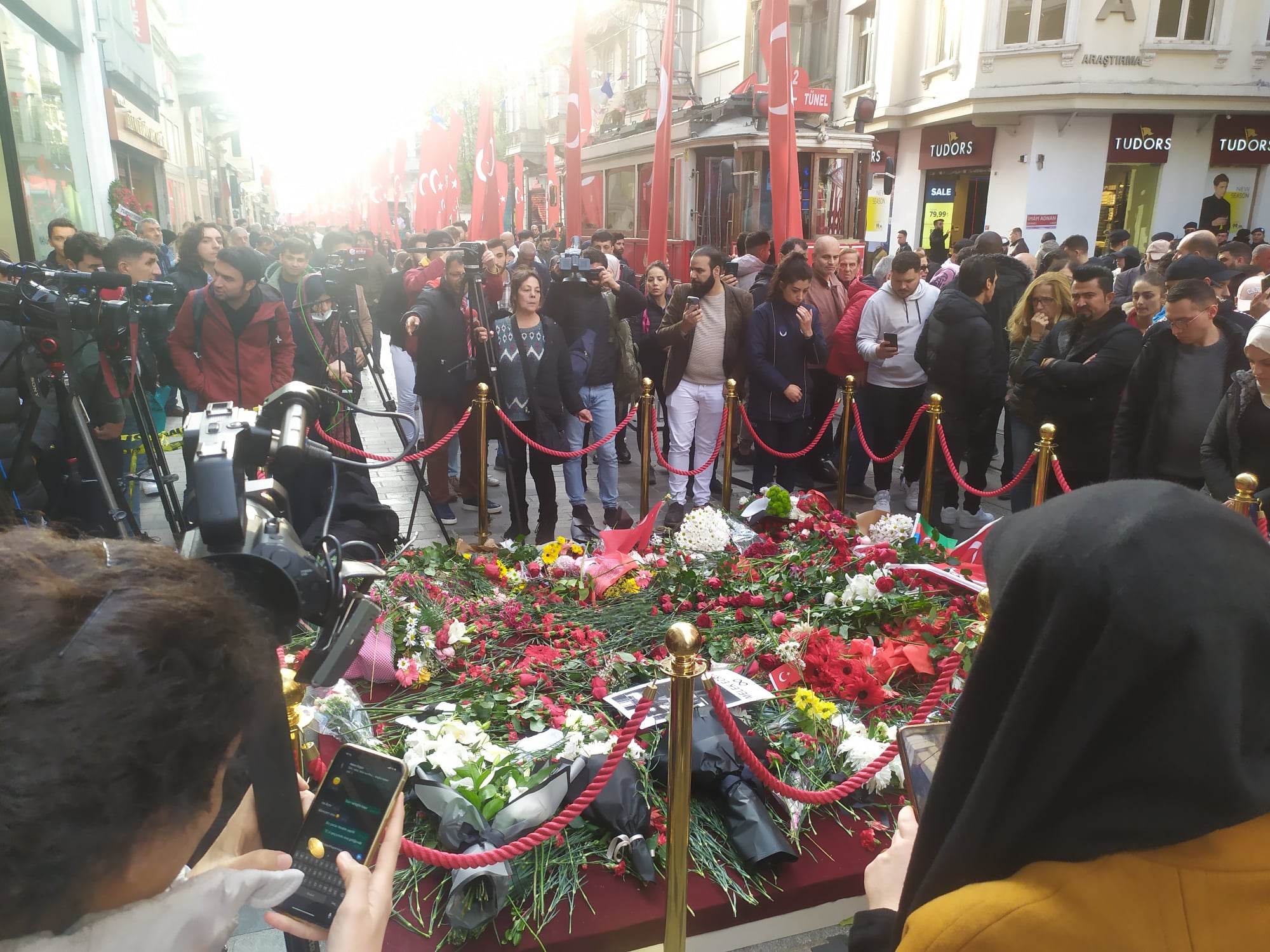
past Tuesday afternoon, I went to Istiklal Avenue to have a look at
the scene myself. As was reported, the busy avenue had by and large
returned to normal, with the exception of a procession of the red
Turkish flags lined up in two columns all the way down the busy
thoroughfare. It was the same busy, vibrant avenue whose corridors
and backways I’ve traveled so many times over the years. It felt
good to be back, honestly, as it always does: in the heart of the
great city.
At
the site of the explosion, scores of people were gathered, many
taking photos and placing flowers at the spot. Photos of the dead
were also on display. Police could be seen nearby and up and down the
street, but that is not so unusual in this part of the city. Over the
years demonstrations and protests of all kinds have been held here
near Taksim Square and on Istiklal Caddesi because of the location’s
visual iconography and historical significance. For many, this past
week’s tragedy is sadly just the latest one.
And
yet we have to move on. Maybe that’s why so many, including myself,
made a point of going to the site of the explosion. Not just to honor
the dead, but the living as well, and to take back our city, the city
we call home.
###
James
Tressler, a former Lost Coast resident, is a writer and teacher
living in Istanbul.




 A family photo of Adam Collier. Photo courtesy of Susan Ottele