

(PHOTOS) McKinleyville Amazon Warehouse Meeting Draws Huge, Furious Crowd
Dezmond Remington / Thursday, April 30 @ 10:51 a.m. / Activism , Business

A woman rails against the project. Photos by Dezmond Remington.
PREVIOUSLY:
###
A volatile meeting held last night to discuss the proposed Amazon distribution warehouse in McKinleyville drew a large crowd, almost everyone in it fiercely against the project.
Roughly 200 people flocked to the four-hour meeting, filling up Azalea Hall; attendees lined the walls and sat in almost every seat. Hosted by the Humboldt County Planning and Building Department, it was put on to discuss the department’s permitting process and share information about the project, as well as to give people a chance to share their opinions on the idea.
Two representatives from Amazon attended the meeting: Sonya Kinz, a developer for a sub-contractor, and Stephen Maduli-Williams, an Amazon senior economic development manager. When John Ford, the county’s planning director, announced them, they were booed. Hostility towards Amazon was a common theme throughout the meeting. Heckling was constant.
“There’s no decision, on the part of the county, in terms of what happens [with the project],” Ford said early in the meeting. “We’re here to hear you. We’re here to understand. I think Amazon has the same objective.” A few dozen people laughed.
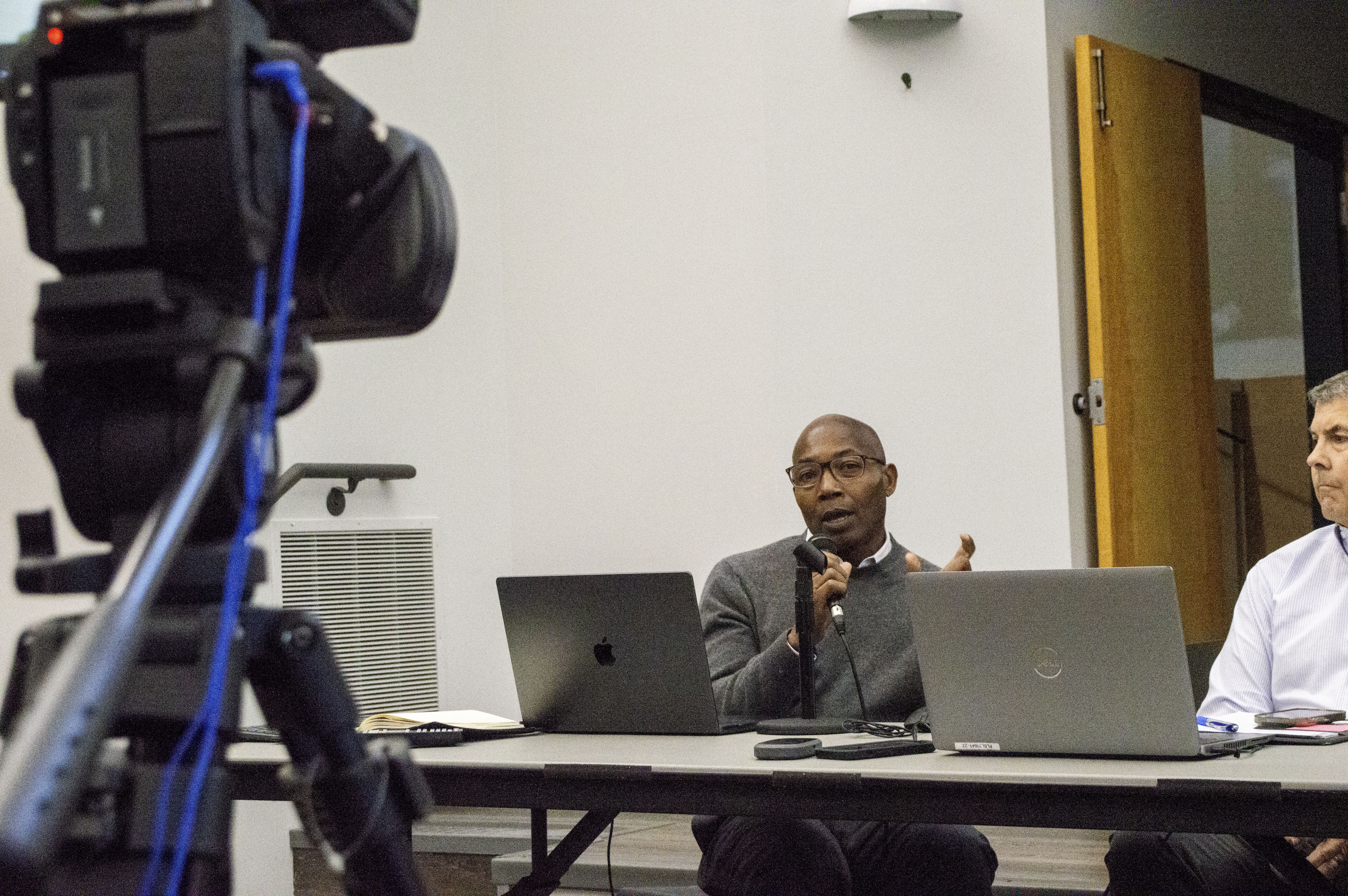
Stephen Maduli-Williams.
The land the facility would be built on is zoned for industrial use, which allows warehouses. But because the property is in the coastal zone, Amazon needs a Coastal Development Permit to construct anything. The county’s planning commission is the entity tasked with deciding if they’ll grant it. Although California’s Coastal Commission can appeal their decision, they’d be appealing it to themselves, and the outcome would be a summary judgement based on the existence of a “substantial coastal issue,” Ford said. The planning commission will decide in February next year if they’ll grant the permit, though the decision can be appealed to the Humboldt County Board of Supervisors and the Coastal Commission.
The complicated process prompted many questions about the county’s relationship with Amazon. Some commenters questioned the county’s motives, theorizing that the government gave Amazon some kind of tax incentive that incentivized it to build a warehouse here. Ford and Maduli-Williams, the Amazon representative, explained that wasn’t the case.
Maduli-Williams also presented a slideshow. He emphasized that the warehouse was much smaller than other last-mile Amazon warehouses — about 40,000 square feet vs. more than 150,000 in other communities — and that though the facility was open at all hours, it wasn’t necessarily going to be active around the clock. Vans wouldn’t run day-and-night either. He claimed that the warehouse would create 227 jobs, about 115 of them full-time. Annual payroll would be roughly $8 million; about $30 million would be invested in McKinleyville. Maduli-Williams said the average wage would be $22 an hour, and workers would receive benefits as well.
The meeting almost ended 45 minutes in when rowdy attendees, champing at the bit to speak and share their opinions, interrupted Maduli-Williams’ presentation, yelling and shouting. Ford wasn’t pleased.
“What we’ve done tonight is come out for your benefit,” he said. “And I know some of you know everything —” he was shouted down for a moment “— Would — would you — You know, I get letters with all kinds of expletives, and I’ve been flipped off before, and I expected more from McKinleyville, frankly.” The crowd jeered.

The crowd lines up to speak.
An older woman, who said she was Yurok, got up on the mic and appealed to the common order and the traditions of local tribes, who she said, wouldn’t act like this. The rabble-rousers quieted, and Maduli-Williams finished his presentation. But the back-and-forth between the crowd and the presenters (both from the government and from Amazon), continued through the rest of the meeting.
“If you’d like to talk to a sheriff’s deputy, that can be arranged,” Ford later said to one woman in the crowd. “This is really not a good representation — can you stop yelling, please?”
Another woman insinuated that they should burn down the warehouse.
“I’m concerned that there’s an epidemic of warehouse fires sweeping this country,” she said. “My concern is that building this warehouse presents a 100% increase in risk of warehouse fires in this community. Did y’all know,” she said to the audience, “that anyone can buy a drip torch at our local hardware store? It’s a great way to support local businesses.” People cheered.


The line of people who wanted to comment on the project stretched back to the rear wall and wrapped around the inside of the building. Many of them brought up the infamously poor working conditions prevalent at many Amazon facilities, the beautiful, sensitive surrounding scenery, the damaging and unsustainable effects shipping millions of packages worldwide every day has on the environment, Amazon’s relationships with Immigrations and Customs Enforcement and labor unions, and the money small business owners lose out on when competing with Amazon. Maduli-Williams said the site in McKinleyville was selected because it was zoned for industrial use, and because the company sees demand for their services here in Humboldt.
Several commenters talked about a recent death of an Amazon worker at a facility in Troutdale; employees were reportedly instructed to keep working while a man died on the warehouse floor. Maduli-Williams called the Troutdale incident “misinformation,” and said that the man who died was being given space so trained “CPR professionals” could work on him.
Besides one woman who said she wanted the facility built to bring jobs to the county, everyone that shared their thoughts was firmly against it.
“Humboldt County needs jobs, and I completely understand the impulse to allow a new employer to move into the area,” a woman named Isabelle said. “I ask everybody to consider what kind of employers we’re allowing into our community. Humboldt needs jobs, jobs with living wages, good health benefits for all employees, and safe working conditions. What we don’t need is people like Jeff Bezos, a man with a vested interest in continuing to make our country a worse place for the working class, while getting rich off of our labor [with] unrealistic work quotas, dangerous warehouse conditions, union busting and driving out local business in the name of shareholder profit. Where do we, as a community, draw the line? I think what we are learning is that we draw the line here…I care about my neighbors. I care about other working class people. And I care about Humboldt County, and I urge you all to do the same.”

The crowd about three hours into the meeting.
BOOKED
Yesterday: 4 felonies, 12 misdemeanors, 0 infractions
JUDGED
Humboldt County Superior Court Calendar: Today
CHP REPORTS
No current incidents
ELSEWHERE
Courthouse News Service: Feds sued over logging project in Washington’s old-growth forests
The Guardian: ‘They take the water, the springs dry up’: fear as Guatemalan goldmine plan is revived
WPIN: Noise pollution from data centers is coming. The gas-powered xAI model is spreading
NPR: Jury convicts a man of first-degree murder for the 1996 killing of rap icon Tupac Shakur
How Tariffs and War Are Hurting California Small Businesses
Levi Sumagaysay / Thursday, April 30 @ 7:55 a.m. / Sacramento

Nichole MacDonald, founder and creator of the Sash bag, showcases her merchandise while livestreaming a sale from her home in San Diego on April 23, 2026. MacDonald says her small business is being severely affected by the rise of tariff costs and fuel prices due to the war in Iran. Photo by Adriana Heldiz, CalMatters
###
This story was originally published by CalMatters. Sign up for their newsletters.
###
Small businesses already navigating the costs and chaos of tariffs must now also contend with the effects of the war in Iran.
“It just feels like things keep getting piled on top,” said Nichole MacDonald, owner of a San Diego business that sells women’s bags. “Not just for businesses, but for consumers. And what is a business without consumers?”
Since her customers are feeling financial pain just like her, they’re spending less money on discretionary items, she said. If they are still buying, they’re choosing denim bags over leather because they’re cheaper.
“Each level of pressure, economic uncertainty and tightening of the purse strings impacts people’s decisions on spending,” the Sash Bag owner said.
Other small retailers in the area tell similar stories of increased costs and having to adjust to continued tariff uncertainty in the wake of the Supreme Court decision that invalidated the bulk of President Donald Trump’s wide-ranging tariffs. In some cases, such as if they imported their own goods, they might be able to apply for tariff refunds, though the timeline for receiving refunds is unclear. The president also imposed new tariffs based on a different law, against which California and other states have filed a lawsuit.
Meanwhile, everyone has been hit with higher shipping costs because fuel prices have gone up. The average price for regular unleaded gas in the state is $5.55, up from $4.79 a year ago, according to AAA. The national average is $4.11 vs. $3.15 a year ago. The spikes in gas prices caused inflation to rise in March. Consumer confidence is at a record low.
Higher prices hit small businesses — defined as those with fewer than 500 employees — harder than big ones, and some wonder how long they can survive. That’s bad news for the state, whose small businesses create millions of new jobs a year and lately have been responsible for 99% of net new jobs, according to the California Office of the Small Business Advocate.
Lost sales, staff and more
MacDonald, whose business brings in six figures a month, said she saw her 2025 sales drop by up to 50% compared with the previous year. Because of tariffs, she stopped manufacturing products in China and has shifted entirely to India. She went from 11 staff members to three. And because she spent tens of thousands of dollars on tariffs, she said she didn’t have money to bring in inventory for the holidays.
She uses brokers to import her offerings, so she’s waiting to hear from them about possible tariff refunds. But even if she does eventually receive refunds, she said the damage has been done: “That money could’ve gone to personnel or to growth, instead of going to a tax.”
The president’s policies have had a global impact. Last week, MacDonald’s longtime manufacturing partner in India informed her that costs for raw material have gone up 25%, so that will mean higher costs for new production. After increasing prices about 10% last year, she will probably have to raise them again because she is working on thin margins, she said.


First: Several Sash bags hang on a clothing rack inside Nichole MacDonald’s home. Last: MacDonald holds a “mystical eye” earring while livestreaming a sale in San Diego on April 23, 2026. Photos by Adriana Heldiz, CalMatters
The top executive at the Port of Long Beach, one of the nation’s biggest ports, recently talked about higher costs being passed on to small businesses and consumers.
“For a while, shippers absorbed rising costs from fuel spikes to last year’s ‘Liberation Day’ tariffs,” said Noel Hacegaba, chief executive of the Port of Long Beach, during a media briefing earlier this month. “That’s no longer the case. Today, those costs are being passed along across the board. We’re seeing new surcharges and higher rates.”
He said major shippers are instituting fuel surcharges, and adjusting how they move cargo. Amazon is adding a 3.5% third-party seller surcharge for fuel and logistics. The U.S. Postal Service is planning a temporary 8% surcharge, and UPS and FedEx also have raised their surcharges.
Hacegaba was joined by Jonathan Gold, vice president at National Retail Federation, who said the nation’s small retailers are seeing a disproportionate impact. “Small businesses in particular don’t have the ability to absorb cost increases and typically have to pass those along to the end consumer,” Gold said.
‘We can only charge so much’
But small retailers don’t want to drive their loyal customers away.
Rema Abedkader is feeling the squeeze all around, with higher shipping costs being the latest pain point, but she hesitates to pass along the costs to her shoppers. The designer of women’s clothing said she does not want to raise prices because it will just deter those who are still spending.
“We can only charge so much, so we’re having to eat that cost again,” she said.

Designer Rema Abedkader prepares for a live sale of her clothing line from her home office in Temecula on April 25, 2026. Photo by Zoë Meyers for CalMatters
Abedkader, who makes her eponymous REMA clothing brand in the San Diego area but buys imported fabric from Los Angeles-based companies, said she had to cut back on production by about 30% last year, which meant fewer sales. This year, she has had to reduce production by about 50%.
Her decreased business has had a widespread effect on her local ecosystem, all of whom are small business owners themselves.
“When I’m not producing, there’s no work for my sewer, pattern maker and cutter,” she said. That causes a vicious cycle: “My manufacturer had to get a second job, so our business had to be put on the back burner.”
Abedkader said she’s working four times harder and is having to get creative with marketing and by doing wholesale locally.
“If the government doesn’t do something for small business, a lot of us are going to be going out of business very soon,” she said.
Like Abedkader, women’s apparel designer and maker Jennafer Grace Carter knows fabric brokers and importers in the Los Angeles area who have shut down because of tariff costs.
The Trump administration’s immigration policies have also affected her business. Carter, who uses imported materials but makes her clothing domestically, said a lot of people were afraid to come to work. One shop that had 25 people sewing now sees less than half of them coming to work, she said, adding that the workers are “here legally but look a certain way” so they are scared.
Her handmade Jennafer Grace brand has had to scale back on styles to adjust to that shift, she said.
The bottom line is that Carter is dealing with “less labor force, (fewer) materials and higher costs,” she said. She has raised her prices only incrementally, because people won’t buy if a business changes prices too drastically, she said.


First: Designer Rema Abedkader makes notes on a jacket design on April 25, 2026. Last: Text and photos on the wall of Abedkader’s office in Temecula detail her company’s origins. Photos by Zoë Meyers for CalMatters
Carter recently returned to California from direct-to-consumer events in Las Vegas and Scottsdale, Ariz. The U.S.-Israeli war in Iran has not only affected her shipping costs, it has also raised her travel costs. Her customers were in the same boat. She heard some attendees talking about how “it was so expensive to get here… I wanted to shop more.”
Higher costs’ long-term impact
The pain of higher costs seems unlikely to go away anytime soon. For one thing, the uncertainty continues.
“Whether it be on shores around the world or right here at home with erratic policy, it makes it very difficult for business people to plan,” said Gene Seroka, executive director of the Port of Los Angeles, during a media briefing this month.
Even those whose businesses have an opportunity to benefit from what’s going on are expressing pessimism.
“It’s going to be harder and harder for small businesses,” said Ellie Rose, owner of Calibaja Manufacturing, which contracts with U.S. businesses to make their products in Mexico. Those businesses avoid import tariffs because most products made in Mexico are still governed by the United States-Mexico-Canada Agreement — although the free trade deal is being reconsidered.
Rose said the small business owners she speaks with are seeing growing challenges. It’s taking a lot longer than before to get their products to the United States, she said — 100 to 165 days on a ship vs. the 30 to 60 days it used to take.
“That’s components, finished goods, whatever you need coming from Asia,” she said. “It’s going to slow everything down and cost more.”
And if or when fuel prices come back down, she doubts businesses will lower their prices because they’ve had to bear increased costs for the past couple of years. That’s going to affect innovation, Rose said: “Down the line this is going to be more of a problem for everybody.”
OBITUARY: Jose Lourenco Homem, 1929-2026
LoCO Staff / Thursday, April 30 @ 6:56 a.m. / Obits
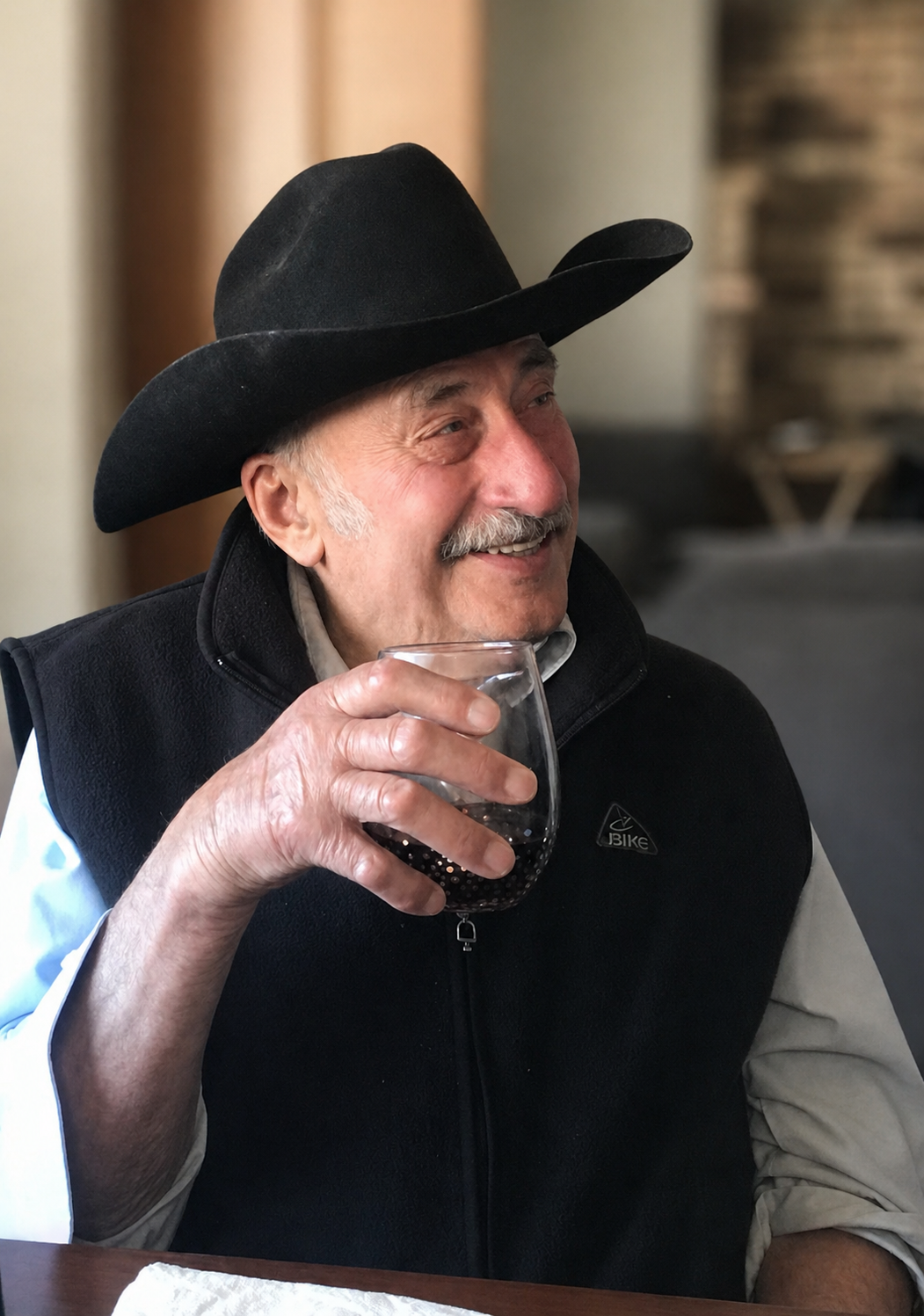
With heavy hearts, we announce the passing of Jose Lourenco Homem Jr., born January 1, 1929, in Porto Judeu, Terceira, Azores. Jose passed away peacefully on April 22, 2026, at the age of 97, surrounded by his loved ones, leaving behind a legacy of love, resilience and family devotion.
Jose was raised in Porto Judeu, where he met his first love, Maria Madalena Dutra Coelho. Jose and Maria grew up in the same town. When Jose went to work for Maria’s father, Jose and Maria’s early connection continued to grow into a lifelong partnership. Jose and Maria were married on January 29, 1953, beginning a life centered on love, family and hard work. On November 7, 1953, they welcomed their first child, Jose Dutra Lourenco.
In pursuit of opportunity, Jose moved to Rio de Janeiro, Brasil, where some of his family had immigrated. There, Jose established a home and was joined by his wife and son. Together, they continued to grow their family, welcoming Maria Amelia, Maria Fatima and Amarildo Dutra Lourenco. While in Brasil, Jose owned and operated three butcher shops and developed a lifelong love of soccer, especially for his favorite club, Vasco da Gama.
In 1971, Jose brought his family to the United States, settling in Arcata, California, after being sponsored by his sister, Gabriella Murphy, and her husband, Bob. He was the last of the eleven brothers and sisters to immigrate to America. Upon arriving, Jose worked at Simpson Timber Company alongside his son and many extended family members. In 1975, Jose and Maria welcomed their youngest child, Madalena Patricia, completing their family.
In 1981, Jose fulfilled a lifelong dream by establishing his own dairy, a testament to his determination, resilience and commitment to providing for his family. He found immense joy in life on the dairy, often referring to the ranch as his Disneyland, where he cared deeply for his cows — affectionately known as “his ladies.” Some of his happiest moments were spent watching his grandchildren play in the barn and climb the hay, creating memories that will live on for generations.
After nearly 37 years of marriage, Jose’s beloved wife Maria Madalena Homem passed away on November 22, 1989. Jose later married Gloria Sousa, welcoming two stepchildren, Robbie and Jennifer, into the family. Jose and Gloria were later blessed by the birth of their son, Jeffrey Lourenco Azevedo.
Jose and Gloria were married for 35 years and enjoyed travelling, spending time with family, attending festas, celebrations and working hard to support themselves and the growing family. Jose and Gloria weathered hard times that were a testament to their strength, resilience and mutual support of one another.
Jose was deeply proud of his Portuguese heritage and remained closely connected to his community. He was an active member of the local Portuguese Hall, faithfully attending festas and contributing to its remodeling. He enjoyed watching Portuguese and Brazilian television, especially novellas, bull fighting videos and Carnival celebrations. Later in life, Jose returned to Rio de Janeiro with Gloria and his children for an epic trip. Jose revisited the places that he and his children once called home and celebrated Carnival in person. This family trip was a long-awaited and meaningful journey 30 years in the making.
Jose was known for his signature black cowboy hat and was rarely seen without it. He had a warm and memorable way of introducing himself — often with a smile and the words, “I’m Joe Homem,” a simple phrase that many will always remember.
Jose had a great sense of humor and loved to joke with those around him. He enjoyed making his own wine — often calling it “Portuguese diesel” — and took pride in traditions both old and new. He also spent time butchering cows at home to freak out his grandchildren, attending auctions at the Portuguese Hall and in Ferndale, and gathering with family and friends. He even liked to joke that he put “music in his tea,” his playful way of referring to a splash of whiskey.
Family was at the center of Jose’s life. He loved hosting gatherings at his home, where relatives would crowd around the table to share meals and laughter. Each year on New Year’s Day — his birthday — the entire family gathered at the ranch to celebrate him and welcome the year ahead, a tradition that reflected his deep love for togetherness. One of his favorite things for his birthday was to have his family sing to him in English and then in Portuguese before he blew out his candles.
Jose was preceded in death by his parents, Jose and Amelia Homem; his first wife, Maria Homem; his sisters, Maria Jose Dematos, Fatima Borges, Maria dos Santos Rafael, Natalia Oliveira, Gabriela Murphy; and his brothers, Manuel “Albino” Homem, David Homem, Antonio “Tony” Lourenco, Fernando Lourenco, Avelino Homem; and his in-laws Bob Murphy, Arthur Machado, Eduardo Rafael, Judy Lourenco and John DeMatos. He was also preceded in death by his son Jeffrey Lourenco Azevedo Homem, his stepson Robert “Robbie” Sousa and his son-in-law Dennis Turnbull.
He is survived by his wife, Gloria; sister Durvalina Machado; his in-laws, Jorlanda Lourenco, Anna Homem, Maria de Lourdes Homem, Manuel Coelho, Ana Paula Homem and Frank Olivera; son Jose (Mary) Homem; daughter Maria (Mike) Wendlandt; daughter Fatima Turnbull (Dennis), son Amarildo (Nicole) Homen; daughter-in-law Tracy Homen; daughter Madalena (Mark) Homen Thiery; stepdaughter Jennifer (Jon) Anderson; his grandchildren, Isidro (Bobbie) Wendlandt, Shannon (Nic) Collart, Michael (Victor) Wendlandt, Shawn (Britny) Homem, Scott (Kacie) Homen, Molly Homen, Blake Homen, Beau Turnbull, Rio Homen and Ruby Homen; his great-grandchildren, Cameron Wendlandt, Kiley Wendlandt, Bryce Homem, Rylee Collart, Chayce Homem, Dylan Collart, Myles Collart, Lilly Homem, Hattie Homen and Daisy Homen; his step-grandchildren Elizabeth Teixeira and Trevor Anderson; his step-great-grandchildren Aj Teixeira, Tatum Teixeira, Zoey Teixeira; and many nieces, nephews, cousins and loved ones.
Jose’s casket bearers will be his grandchildren, with his great-grandchildren serving as honorary pallbearers.
Jose will be remembered as a devoted husband, father, grandfather and great‑grandfather, known lovingly as Vovô. His life was defined by hard work, deep cultural pride, unwavering love for his family and the joy he found in bringing people together. He will be deeply missed and forever remembered by all who knew and loved him.
Funeral services for Jose Lourenco Homem will be held on Saturday, May 2, 2026, at St. Mary’s Catholic Church in Arcata. A viewing will take place at 11:15 a.m., followed by the Rosary at 11:30 a.m. and the Funeral Mass at 12 p.m. Interment will follow at St. Mary’s Catholic Cemetery. A Celebration of Life reception will be held following the burial at the Portuguese Hall in Arcata.
Everyone who knew him is welcome to attend.
“A família é tudo.” (Family is everything.)
###
The obituary above was submitted on behalf of Jose Homem’s family. The Lost Coast Outpost runs obituaries of Humboldt County residents at no charge. See guidelines here. Email news@lostcoastoutpost.com.
OBITUARY: Arlene Louise Parker, 1928-2026
LoCO Staff / Thursday, April 30 @ 6:56 a.m. / Obits

Arlene
Louise Parker
December
15, 1928-April 11, 2026
Arlene Louise Barr was born December 15, 1928 in Libby, Montana and went to be with the Lord on April 11, 2026. She was 97 years old.
Mom was the second of five children born to Arthur and Grace Barr in Libby, a small town of 2,000 people located in northwestern Montana. Mom fondly recalled as a young girl spending warm summer nights under the corner streetlight in their South Libby neighborhood visiting with the other kids until the parents would call them home. Mom and her older sister Rosella shared a detached bedroom a few steps from the main house. She graduated from Libby Senior High School in June 1947 and married our dad, Louis Parker September 16, 1947. She was 18 and he 19. In a little over three years they welcomed daughter Rhonda and sons David and Kent.
Like many men in Libby, Dad worked in the local lumber mill. He also built several houses, including two the family lived in while in Montana. In 1963 Dad got an offer for a carpentry job in Humboldt County, California. The family packed up and moved to Eureka. After the long winters in Montana, Mom could not believe that she could lay in the sun in December. The next year brought the 1964 flood.
It was a treat to watch Mom and Dad dance. They were very accomplished dancers and loved the Jitterbug! We had the first television in our neighborhood growing up in Libby and Mom would dance in front of the TV while we tried to watch cartoons.
Mom’s real-life career was as a grocery store checker. She started at Three Corners Market, near the family home on the old Arcata Road. Then there was a stint at Humboldt Hill Market, and finally many years at Murphy’s Market in Sunny Brae. Many customers became friends over the years and Mom had many fond memories of seeing these customers on a regular basis.
Dad died in 1997 at age 68 just a few months shy of their 50th wedding anniversary. So mom was a widow for almost 30 years. She lived for a while in one of the units of a four-plex they had purchased in the 1970s in Arcata then bought a lovely home in Myrtletown. She loved her home and took care of it on her own until she was well past 90. Mom would spend her time reading the Bible or a Christian book, or working a Times-Standard crossword puzzle. Her faith was central to her life and she was a member of Bethel Church in Eureka for many years. She enjoyed her weekly meetings with the Prime Timers Christian group and annual trips with the group to Sacramento to attend the Singing Christmas Tree. Mom was very involved helping to raise her grand children and great grand children. She loved her family dearly and wanted to be sure that they accepted the Lord and would join her in heaven. She would always put others needs before her own because that was just the way she was.
For many years Mom would travel with her two sisters, Rosella and Marlys, to spend the winter months in Palm Springs. They called themselves “The Golden Girls”! Mom and her sisters always looked forward to this special time.
Mom is survived by her daughter Rhonda Rael; son David Parker and his wife Carol; and son Kent Parker and his wife Sheila. Her grandchildren are Darren Brittain, Chad Brittain, Angela Pialorsi, Jennifer McCarthy, Jeffrey Parker, Ramona Parker, Marcia Parker and Kendra Parker.
Great-grandchildren are Macie Jelinek, Zackery Brittain, Tanner Brittain, Dayna Naish, Shelby Naish, Payton McCarthy, Kayla McCarthy, Madeline Parker, Cassidy Parker, Quinn Parker and Bo Sanderson. Great-great-grandchildren are Hunter Brittain, Caleb Chandler, Ava Chandler, Kiana Jelinek, Addillyn Brittain and Blakely Brittain.
She was preceded in death by her husband Louis; parents Arthur and Grace Barr; sisters Rosella Lyon and Marlys Brown; brothers Phillip Barr and Lester Barr; grandson Gino Pialorsi; and son-in-law Greg Rael.
The family is so grateful for the compassionate care from the staff at Frye’s Care Home for the last 3 1/2 years. Thank you so much for keeping mom where she felt most comfortable. A special thank you to Mom’s friend Mary, who was a real blessing.
A private burial was held at Ocean View Cemetery. A Celebration of Life will take place at 11:30 a.m., Saturday May 23 at Lifehouse Humboldt, 2734 Hubbard Lane in Eureka. Please join us for a reception in the adjoining church cafe after the celebration of life.
In lieu of flowers please consider a donation to Hospice of Humboldt whose care was exceptional in mom’s final days.
###
The obituary above was submitted on behalf of Arlene Parker’s family. The Lost Coast Outpost runs obituaries of Humboldt County residents at no charge. See guidelines here. Email news@lostcoastoutpost.com.
OBITUARY: Rick James Anaya, 1963-2026
LoCO Staff / Thursday, April 30 @ 6:56 a.m. / Obits
Rick
James Anaya
October
22, 1963 – April 24, 2026
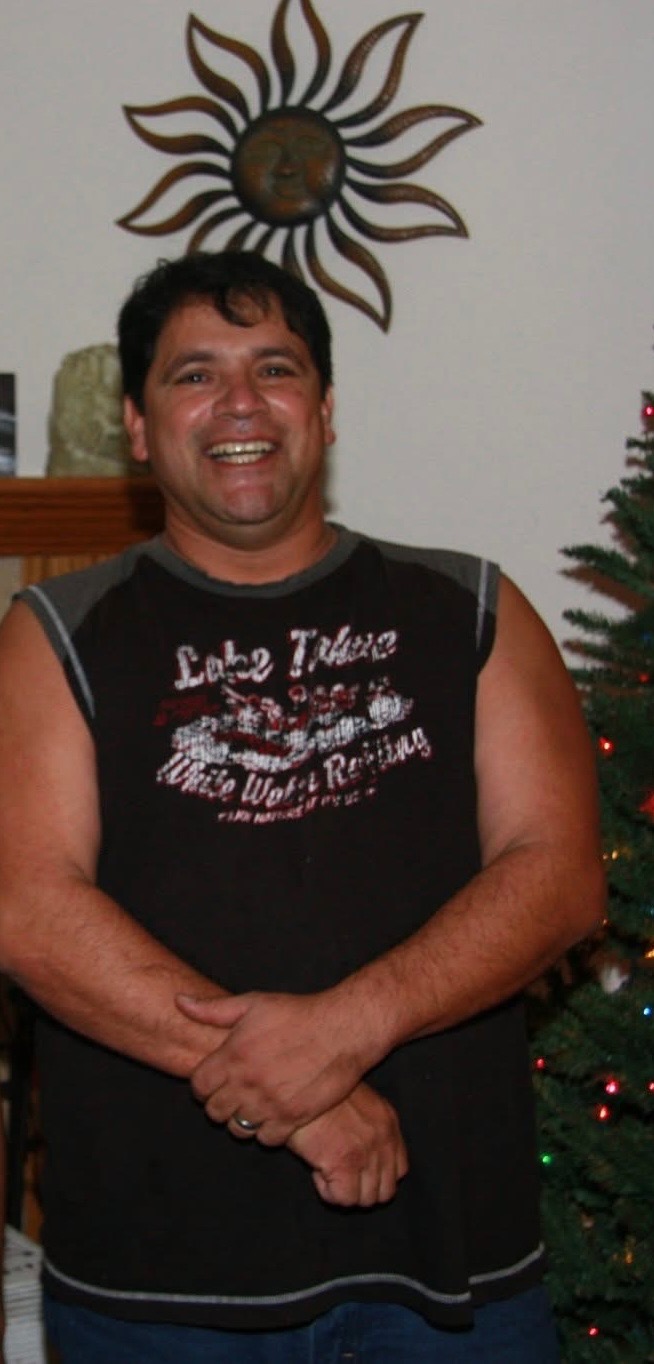
Rick James Anaya passed away on April 24, 2026 in Lincoln, California, surrounded by his family, including his children and grandchildren, as well as close friends and his cherished dog, Coco.
Rick was born to Henry G. Anaya Sr. and Dolores (Valenzuela) Anaya and grew up in Fortuna, one of eleven siblings in a large, loud, and fiercely loving family where life was shared fully.
He is preceded in death by his parents, Henry G. Anaya Sr. and Dolores (Valenzuela) Anaya; his siblings, Hope Angela (Anaya) King, Steven Alan Anaya, and Michael “Mike” Anaya; nephew, Mikey Anaya; and his sister-in-law, Denise Anaya.
He is survived by his son, Henry Anaya (Savannah), and their children, Layla and Paislee; his daughter, Heather (Jack); his siblings, Henry, Jack, Tim (Suzie), Dorothy, Faith (J.R. Rosales), Tina (Logan Twitchell), Ray (Michelle); best friends, Aaron Johnson and Martin Sanchez, as well as a large extended family of cousins, nieces, nephews and great-nieces and nephews.
Rick was known for his generosity and the way he showed up for the people he loved. He would drop what he was doing without hesitation and give whatever he had to help someone in need, even the shirt off his back, which more often than not was sleeveless, just the way he liked it. He had a huge smile that could light up a room and made friends everywhere he went. He stayed closely connected to the people in his life, checking in often on his brothers who lived nearby as well as his friends, made regular trips to Grass Valley to spend time with his brothers and sisters, and kept in touch with family in Bakersfield. He was also known for his handiwork and was often the one people called when something needed fixing, always willing to help without hesitation or question. He loved animals and had a series of dogs affectionately named “Dawg” and “Dawg Dawg,” and most recently, “Coco.” Wherever Rick went, his dog was always close, a steady companion and part of his everyday life.
He loved his family deeply and was especially proud of his children and grandchildren, who brought him immense joy. He would light up at any opportunity to share pictures and updates about them and took great pride in all they were doing. He was especially proud of his son for following in the footsteps of his namesake and grandfather by serving in the Army, carrying on a legacy of service, and of his daughter, whom he affectionately called “Bug,” his baby girl and a blessing from the start, who selflessly and lovingly cared for him in his final days. He could often be found playing with his granddaughters and great nieces and nephews, with coco by his side, happily serving as the “mountain” as the kids climbed over him, a role he embraced with laughter and love. Often the reluctant but good natured target of family jokes as one of the youngest, he was nicknamed “Prince” after once being mistaken at an airport for the “artist formerly known as,” a story he never let anyone forget. Music was always part of the memories, with Toni Braxton often playing at gatherings after he was heard singing “Un-Break My Heart” in the shower with uncanny resemblance. He would also be front and center at every family wedding for the traditional group singing of “Friends in Low Places,” a moment that became a staple of Anaya celebrations.
Rick shared strong and lasting bonds with his closest friends, who were like family to him. He enjoyed spending Saturday afternoons with his best friends, Martin and Aaron, sitting on Aaron’s deck watching the dogs play. Some of the most cherished memories of Rick are of him surrounded by his kids, siblings, friends, nieces, and nephews, sharing stories and laughter over plates of mixed enchiladas, Grandma’s tacos or a backyard barbecue.
Rick was someone who was always there, someone many of us believed would be here much longer. His passing is a great and unexpected loss, and his absence is deeply felt. He lived simply and prioritized what mattered most, his relationships with the people he loved. His presence, his humor, and the love he gave so freely will be deeply missed.
We would like to express our heartfelt gratitude to Tina and the many family members and friends who supported and cared for Rick in his final moments.
A celebration of life will be held on May 9, 2026, from 2 to 4 p.m. at the Fortuna Veterans Hall.
###
The obituary above was submitted on behalf of Rick Anaya’s family. The Lost Coast Outpost runs obituaries of Humboldt County residents at no charge. See guidelines here. Email news@lostcoastoutpost.com.
OBITUARY: Dennis Ray Blake, 1948-2026
LoCO Staff / Thursday, April 30 @ 6:56 a.m. / Obits

It is with deep sorrow that we announce the passing of Dennis Ray Blake at the age of 78. He passed away on the evening of April 25, 2026, while surrounded by his loving family at Redwood Memorial Hospital in Fortuna.
He was born March 21, 1948, in Oregon City, Oregon to James and Mae Blake. Dennis moved to Humboldt County at the age of two and graduated from Fortuna Union High School in 1966. Shortly after, he joined the United States Marine Corps in 1968 and was sent to Vietnam as a wireman on October 19, 1968. He returned from the Vietnam War as a Lance Corporal in 1969 and was awarded the National Defense Service Medal and the Good Conduct Medal for his service. After the war, Dennis lived in Camp Pendleton, where he met the love of his life, Joy Giamboi. They married on March 28, 1970, and moved back to Humboldt County, where they made a home for their family in Rio Dell.
Dennis was a devoted husband, a proud father, a true Marine, and a skilled mill worker, mechanic and cabinet maker — a true jack of all trades. When he wasn’t cheering on his beloved underdogs, the Oakland (now Las Vegas) Raiders, he found joy in building car models, watching his children play sports, spending time at the drag strip, taking long drives and following NASCAR.
Dennis was preceded in death by his parents, James and Mae Blake; his honorary brother, Jay Thornbury; his brothers, Thomas and Dale Blake; his nephew, Kelly Blake; his grandson, Austin Blake; and his great-granddaughter, Paxton Austrus.
He is survived by his wife, Joy Giamboi Blake; his son, Anthony Blake; his daughter, Therese Austrus (Tommy); his daughter, Katheryn Chicora (Rick); his son, James Blake (Lily); his daughter, Amanda Summerfield (Chris); his grandchildren, Nathan Blake, Joseph Blake, Dominic Skinner, Ryan Austrus, Raider Austrus, Steven Chicora, Kaydance Chicora, Teagan Blake, Canna Blake, Ezra Blake and Gabriel Summerfield; his great-grandchildren, Emma, Jake, Gunner, Chevy, Bailey, Orrin, Aria, Sutton, Onyx, Kaylix and Brixley; his honorary brother Rich Newman (Laura); his siblings, Dean Blake (Diane), Denise O’Meara (Shawn) and Donna Wheeler (Marty); and numerous nieces and nephews.
A small service will be held on Sunday, May 24, 2026 at 1 p.m. at Oceanview Cemetery in Eureka. At this time, there will be no reception following the service. In lieu of flowers, the family asks that donations be made to the American Legion in Dennis’ memory.
###
The obituary above was submitted on behalf of Dennis Blake’s family. The Lost Coast Outpost runs obituaries of Humboldt County residents at no charge. See guidelines here. Email news@lostcoastoutpost.com.
Humboldt Supervisors Advance Proposal to Increase Civilian Oversight Over HCSO, Despite Pushback From Sheriff Honsal
Isabella Vanderheiden / Wednesday, April 29 @ 3:47 p.m. / Local Government

Humboldt Sheriff William Honsal and Undersheriff Braud speaking at Tuesday’s Humboldt County Board of Supervisors meeting. | Screenshot.
###
Should the Humboldt County Sheriff’s Office be subject to additional oversight through an independent, civilian-led system? If so, to what degree? And is it appropriate for the Humboldt County Board of Supervisors to seek increased oversight over another independently elected official?
The Board of Supervisors pondered those questions during a nearly three-hour discussion that stretched well into Tuesday evening. The board considered several strategies aimed at increasing accountability and fostering public trust in the department — which Sheriff William Honsal said was at an “all-time high” — including the development of a ballot measure that, if staff could meet the fast-approaching deadline, would be put to voters during the general election in November.
Ultimately, the board wound up voting 4-1, with First District Supervisor Rex Bohn dissenting, to form an ad hoc committee that will work with staff to research and develop an ordinance that would create a civilian-led oversight system that would operate independently, but report to the Board of Supervisors.
The ad hoc committee, made up of Second District Supervisor Michelle Bushnell and Fourth District Supervisor Natalie Arroyo, was instructed to return with a draft ordinance by the end of September.
Why does HCSO need oversight now?
This latest push for independent oversight over the HCSO began about a month ago when a group of community members showed up to non-agenda public comment to urge the board to draft a ballot measure that would establish an independent oversight committee to oversee independent investigations into the department.
During a 15-minute opening statement, Fifth District Supervisor Steve Madrone, who sponsored the agenda item, explained why he thought additional oversight was needed. He recalled two years ago when the Humboldt County Civil Grand Jury issued a report urging the county to increase independent oversight over the HCSO, which Honsal deemed unnecessary, asserting that he and his office had measures already in place to handle allegations of misconduct.
The board decided to form an ad hoc committee to look into it, but nothing ever came of it.

Madrone | Screenshot
“I think a lot of the reason why communities have developed these oversight committees … has been because there’s a lack of trust when law enforcement does all of their reviews of everything in-house,” Madrone said. “And my focus here is to actually build trust in our law enforcement. … I believe that as we improve that trust, it increases the number of people that want to become deputies … because they’re more trusted in the community.”
On top of that, Madrone felt additional oversight, even if it involved paying an independent auditor or an inspector general, could actually save the county money in the long run.
“When we look at the cost [to] the county over the last 10 years, there’s been … almost $14 million in legal expenses and another $14 million in settlement costs,” he said. “The top two [county departments] on the list are social services and the sheriff’s department. Together, they account for $8 million of that $14 million … so they’re by far the largest proportion of our legal settlement costs.”
About ten minutes into his statement, Madrone described an incident that came to his attention involving two deputies and a “known person that does drugs” during a traffic stop in the Garberville area. The man was pulled over and asked to roll his window down, but he refused to comply and locked his door, prompting one of the deputies to smash his window and “put glass into the person’s eye.”
“[It] really escalated this situation very rapidly,” Madrone said. “Luckily, there was another deputy there on the scene who was really good at deescalation. I will say, it’s been my experience that the vast majority of the deputies are incredibly responsible, dedicated individuals that do good stuff. But every now and then, there’s one person that maybe isn’t along with that.”
“As I understood it, you told us that the response to that critical incident — [which is what] I would call it, because it led to a lawsuit — was that that deputy was put in charge of deescalation training as a response to that situation,” he continued, speaking to Honsal. “I don’t know what reasonable person would think that taking a person that escalates a situation like that so quickly would be a good person to be training others. … There are many other cases I could point out that I thought that things were not handled well and were not really reviewed by anybody [outside of] law enforcement.”
About 30 seconds later, County Administrative Officer Elishia Hayes interrupted Madrone and asked the board to take a quick recess. Madrone asked if he could finish his comments, to which Hayes responded, “That’s our concern. We’d like to talk with you, please.”
He reassured Hayes that he wouldn’t wade into legal territory, and wrapped up his statement by outlining potential next steps for the board. He reiterated that there was a group of community members “ready to bring a ballot measure forward,” adding that the board could either work with the group to place an item on the ballot or staff could draft a county ordinance.
Following a 20-minute break, the board returned to the dais as though nothing had happened and continued its discussion.
Arroyo acknowledged the recent “groundswell of interest” among community members, but felt interest in a civilian oversight committee for the HCSO has bubbled up off and on since the Civil Grand Jury report came out two years ago. She acknowledged that the ad hoc committee that was created in response to the report had only met once in that time.
“We have had prior conversations about this and, to be totally frank, it’s it puts us in an awkward situation when community members want us to have oversight of a very large, very complex office headed by an elected official who we are peers with,” she said, later adding that it’s a “little awkward” to “work with the sheriff on oversight for the sheriff.”
Arroyo said she would be “open to putting this on the ballot,” but emphasized that doing so was not intended as an attack on Honsal.
“[This] isn’t a statement of anything to do with our current sheriff,” she said. “I see this as an opportunity … to have some more transparency and trust developed in what [HCSO’s] processes are, and for folks to ultimately have more confidence in the systems that we have in place.”

Bohn | Screenshot
Bohn felt the whole proposal was completely unnecessary, given that Honsal’s “governing body” are the voters of Humboldt County. “If he’s not doing it right, he’s not staying, and I have full faith in that system,” he said. “We’ve got good people doing it, and I’m not gonna blow smoke up their heinies on that, but we’ve got good guys, and they’re led by good guys.”
Going back to the critical incident Madrone referenced earlier in the meeting, Bohn said, “[The driver] didn’t do what he was directed to do, and it escalated. Do what they ask, and it won’t escalate.”
Bushnell asked if the call for independent oversight was triggered by a recent event. After being told that it hadn’t, she said she would be more comfortable with a signature-gathering campaign to put a measure on the ballot. “Those signatures [would indicate that] yeah, there’s 9,000 folks out there in our community of Humboldt that want this, and that’s really glaring,” she said.
Board Chair and Third District Supervisor Mike Wilson said he could understand concerns around transparency in law enforcement, noting that he had poor experiences as a younger person. “That was a long time ago, though, I want to just be really clear, I also have some very positive experiences with law enforcement as well.”
Wilson felt, if a measure were to appear on the ballot, that it would be very likely to pass. “My caution on that is when we go through that process and we create an ordinance through a ballot measure, it becomes very inflexible, and it becomes hard for us to manage [and] to make changes,” he said. “I would prefer that we do an ordinance through this board so that it allows us to amend it in the future in a much better, easier way.”
‘The sheriff is the subject matter expert’
Honsal delivered his own 20-minute statement after the board’s initial remarks. With Undersheriff Justin Braud seated at his side, Honsal emphasized that a sheriff is not beholden to a board or council. “The sheriff works for the people,” he said.

Honsal | Screenshot
“By electing the sheriff, the community ensures this role is directly accountable to the people they serve,” Honsal continued. “The electoral process allows residents to influence who manages our local law enforcement and how their concerns are addressed. The sheriff is the subject matter expert. The sheriff is the one that’s elected to oversee and have oversight over the sheriff’s office. … I’m the person that the people trust to oversee the sheriff’s office.”
Honsal also disputed the notion that “there’s some kind of mistrust” in his department. “I believe that the trust this community has with the sheriff’s office is at an all-time high, and I ask each one of you to prove me wrong,” he said.
Gesturing to two stacks of books and binders, Honsal emphasized that all of the HCSO’s policies and procedures can be found online, and said that anyone who has questions or concerns about the policies can request review. “Anyone can critically review these policies — you don’t have to be on an oversight committee,” he said. “We don’t necessarily advertise that this is going on because this is stuff that people do every day.”
Honsal also detailed how the sheriff’s office responds to critical incidents, which, depending on the severity, may be subject to review by the county’s Critical Incident Response Team (CIRT), including representatives from the local police departments, the District Attorney’s Office, the California Highway Patrol, and, in some cases, the Humboldt County Coroner’s Office and the California Department of Justice.
For example, following an officer-involved shooting, the HCSO will issue a press release announcing a CIRT investigation. Once the investigation is complete, the DA will make a determination in the case. “The DA has not been opposed to criminally charging anyone with the sheriff’s office,” he said. “We’ve had cases and where, where sheriff’s office employees have been prosecuted under the law and convicted.”
As he concluded his statement, Honsal emphasized that “there is no evidence to support that this current system is not working.” He added that a civilian-led oversight committee, if it were formed, would serve as an advisory body to the board, but that’s where it’s power would end.
“They have no inherent authority over the office of the sheriff, and I think that’s very important,” he said. “This is the difference between what the City of Eureka has and what you’re proposing here. This committee … can’t institute or make the sheriff’s office do anything. … The county would waste time and money and resources in a difficult budget time to prove what we already know: the sheriff’s office is committed to serve our community [and] to earn the public’s trust through compassion and accountability.”
[It is perhaps worth noting that there are about a dozen California sheriff’s departments have adopted additional oversight measures, according to the California Coalition for Sheriff Oversight (CCSO).]
‘This isn’t about fixing anything, it’s about enhancing what already exists.’
Of the 20-odd people who spoke during the public comment portion of the meeting, the majority of speakers advocated for additional oversight of the sheriff’s office, many of whom emphasized that calls for transparency should not be taken as a criticism. (“This isn’t about fixing anything, it’s about enhancing what already exists,” as one person put it.)
Going back to Honsal’s previous statement about trust in law enforcement being at an all-time high, Eureka resident Dan Rathbun said “this is the perfect time to establish an oversight committee.”
“Honsal has been elected over and over again — good for us and good for him — but who knows what the next sheriff is going to bring,” he said. “One thing I can tell you is that democracy makes mistakes. The People elect crooks. The People elect horrible people, and when those people are in office, we are going to wish we had more checks and balances. … And now is a time we can do it without friction, when there’s no there’s no problems in the sheriff’s office when we don’t have to fix a bunch of shit.”
Eureka resident Margaret Dickinson echoed the previous speaker’s comments, emphasizing that Honsal has done “an excellent job” in his role and thought it was unfortunate that he felt so “strongly about defending [himself].”

Dickinson | Screenshot
“I don’t think you need defending. … I’ve only had one unfortunate encounter with the sheriff’s deputy many years ago — it was over a dog — and I really would like you to think about the fact that we’re all here temporarily,” she said, noting her “advanced age.” “We don’t know what the future holds … and I think that it is important to think about the structure of government and what we’re leaving behind. I think it is important that citizens have the opportunity to function as part of the government, and I think it’s a real opportunity to set up something that would be effective.”
Several other speakers, many of whom were family members of or associated with law enforcement in some capacity, felt the creation of an oversight committee was redundant, if not insulting to the department. HCSO deputy Julian Aguilera questioned how the formation of an oversight committee would impact morale, emphasizing that he has “never given a reason for a citizen not to trust me or the ability to perform my duties.”
“We’re not doing anything wrong, but it’s going to be an extra layer of stuff that we have to think about,” he said. “I fully support our sheriff [and] I trust his administration. He has never steered us wrong, and there’s a reason why he’s getting reelected every time [he] runs.”
Destry Henderson, president of the Humboldt Deputy Sheriff’s Organization, argued against the proposal, noting that civilian-led oversight committees don’t have a “meaningful understanding of how policing works.”

Henderson | Screenshot
“It appears to be designed as another opportunity to bash the hard-working, low-paid deputies who serve our community with honor and second-guess their fellow elected representative, the sheriff,” he said. “Transparency and community relationship has greatly improved in the last decade and continues to yearly.”
‘This is about an office that has a very different type of power’
Following public comment, the board spent another 45 minutes hashing out next steps for a ballot measure and asked Juan Pablo Cervantes, the county’s clerk-recorder and registrar of voters, to explain the process for a county-sponsored ballot measure versus a citizen-led initiative.
Cervantes said the cost of placing a measure on the November ballot would be a “negligible addition … especially since we’re not likely to have a one-card ballot.” As far as logistics go, staff would need to submit the ballot text and question by Aug. 7 at the latest. He added that it would be near-impossible for community members to gather the required number of signatures — somewhere around 5,000 — before the deadline.
Asked how drafting a ballot measure would impact staff time, CAO Hayes said her staff would “wring her neck” if she gave OK’d the proposal, noting that staff is still working on the county budget and has a tremendous workload to get through before the fast-approaching summer break.
After a bit of back and forth, Wilson reminded his peers that the board was being asked to “investigate the formation of a civilian-led oversight system for HCSO,” not to place a measure on the ballot. Going back to his previous statement, he suggested that the ad hoc work with staff to draft an ordinance that would establish civilian oversight committee, which would give the board the option to make changes to the document down the line.
Arroyo reiterated her previous point about the “awkward” nature of working with the sheriff about increasing oversight over his department.

Arroyo | Screenshot
“I don’t disagree that we should communicate with the sheriff about this,” she said. “It’s just … a little awkward to say, like, ‘Oh, can you oversee yourself?’ I think the point that we all could use some input and oversight is well-taken, but this is about an office that has a very different type of power than we have, and that’s why people are asking for it. It’s incredibly different type of power and organization.”
After some additional conversation, Wilson made a motion to form a new ad hoc — comprised of just Arroyo and Bushnell — to research potential oversight systems and work with staff to come up with a draft ordinance for review by the end of September. Bushnell seconded the action.
The board approved the motion in a 4-1 vote, with Bohn dissenting. Before casting her vote, Bushnell noted that she was voting yes on the item because, if she didn’t, was was worried that it would “go in a different direction.”


