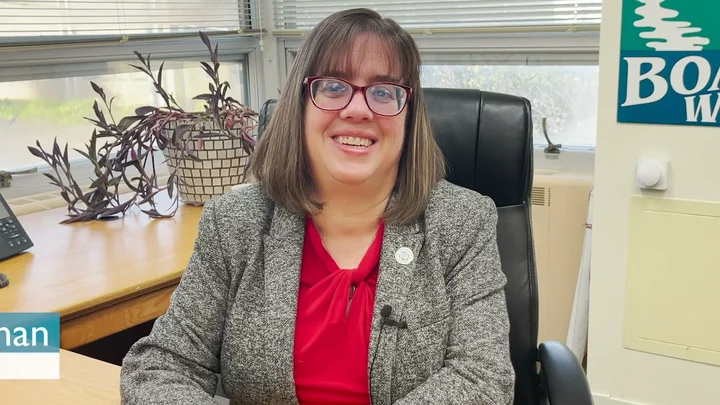
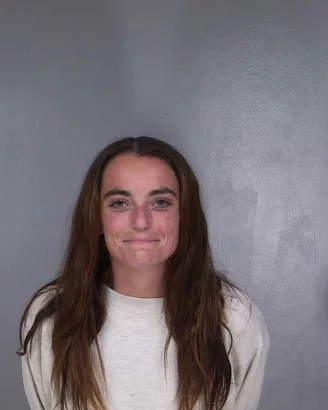
Just last week, I started counting my old campaign signs and resources for re-election, meeting with my campaign manager and securing endorsements. While my position at the City has provided me with plenty of ups and downs, I never entertained the thought of not running again. So, in a way, I’m as surprised as many of you to announce that I am not seeking a second term as Mayor of Eureka.
As a reminder, the position of Mayor is a part-time job. I also work full-time as the Program Director for the Arcata Economic Development Corporation (AEDC). In this position, I work regionally on issues around economic development. My love for this work ultimately led to running for Mayor in the first place. At AEDC, I can collaborate with others to work on systemic problems around our community needs. I can also develop programs that serve the needs in the workforce, housing, health care, childcare and climate change as well as support and celebrate our small businesses and young entrepreneurs.
With the pandemic affecting the economy in so many ways, organizations like AEDC have become a way to get funding directly into communities. For AEDC, and me specifically, that meant one nearly $5M allocation of ARPA funds from Humboldt County to distribute to the childcare industry through a variety of programs. We’re well positioned to receive two more $5M grants for regional economic development work in the next several months. Clearly, this influx of capital is going to take a considerable amount of my time and focus.
When I started serving as Mayor, my work at AEDC was easily manageable. Now, it is much more consuming, but impactful in ways I have always dreamed it could be. Given the growing workload, I had to honestly ask myself if running for another term was the best option. I realized it would not be the best for me, and – more importantly – I don’t think it would be best for the City of Eureka.
I really love being Mayor. I have been privileged to have such a supportive council to work with. I have always been impressed that each member has had a variety of perspectives, but a similar vision for the future of Eureka. We have had times when we didn’t agree on policies or practices, but everyone remained respectful, even behind the scenes. I have also been honored to work with the staff at the City of Eureka. I have never known a more hard-working group of public servants. I have not met anyone on staff who isn’t doing an incredible, sometimes inconceivable, amount of work with a genuine desire to serve the City of Eureka.
I love Eureka and the exciting opportunities I see in the near future. Without a doubt, I will stay engaged after the election, but in a different way. I may be working regionally, but Eureka is my home of choice, the coolest town on the North Coast, and I will continue to be an advocate for our prosperous future.
Widely used insecticides that harm bees and songbirds would face far-reaching restrictions in California under regulations proposed by the state’s pesticide agency.
The new limits would be among the nation’s most extensive for agricultural use of neonicotinoids, a class of insecticides used to kill plant-damaging pests like aphids. The highly potent pesticides have been shown to harm bees, birds and other creatures.
Aimed at protecting beesthat pollinate crops, the California Department of Pesticide Regulation’s proposed rules would restrict four closely-related neonicotinoid chemicals: imidacloprid, thiamethoxam, clothianidin and dinotefuran.
Unveiled in February, the rules would limit when and how much can be applied, depending on the specific chemical, the crop and, in some cases, the presence of honeybees or other pollinators. California’s pesticide regulators are still evaluating public feedback and there is no specific timeframe for finalizing the proposal.
“Pollinators play a very important role in the ecosystem at large as well as for crops and being able to produce food in the state.” — Karen Morrison, California Department of Pesticide Regulation
More than a decade in the making, California’s reevaluation of neonicotinoids began in 2009, after the agency received a report from pesticide manufacturer Bayer CropScience that “showed potentially harmful effects of imidacloprid to pollinators.” A 2014 law set a series of deadlines for reevaluating their risks and adopting “any control measures necessary to protect pollinator health.”
The bill trails other states, including New Jersey and Maine, that have already banned outdoor uses in gardens and residential areas. New Jersey’s ban extends to commercial landscapes, like golf courses, too.
The European Union banned several neonicotinoids for all outdoor uses because of the risks to bees. And other states already have some restrictions on agricultural use, largely by allowing the chemicals to be bought or used only by those with specific training. Rhode Island has also barred neonicotinoids when crops are blooming.
“This is critical,” said Karen Morrison, acting chief deputy director of the Department of Pesticide Regulation. “Pollinators play a very important role in the ecosystem at large as well as for crops and being able to produce food in the state.”
California regulators anticipate the rule would reduce neonicotinoids applied to plants and soil by 45%. Seeds coated in neonicotinoids — a major use of the chemicals — would not be restricted.
California growers say the restrictions could hamstring their power to protect crops and could ultimately lead to worse outcomes for pollinators.
Limiting the use of neonicotinoids could force the citrus industry, for instance, to use other pesticides that are “not necessarily what the state of California wants” and could require “multiple sprays, something that may pose more risk to bees,” said Casey Creamer, president and CEO of California Citrus Mutual, a trade association of citrus growers.
Almonds, cherries, citrus, cotton, grapes, strawberries, tomatoes and walnuts are major crops expected to be highly affected by the restrictions. These crops make up about half of the state’s agricultural exports and two-thirds of the acreage treated with neonicotinoids from 2017 to 2019. Fresno, Kern, Tulare, Monterey and San Joaquin top the list of counties where the most neonicotinoids were applied.
Some replacement chemicals may be more toxic to pests’ natural enemies — worsening infestations, the California agriculture department warned in its analysis.
Such alternatives like pyrethroids, for instance, are also “very toxic to bees, in that they hit the bee, the bee dies. If they’re in the spray, they all die,” said Robert Van Steenwyk, a cooperative extension specialist emeritus at the University of California, Berkeley and one of the authors of the report. “So, that isn’t a great alternative.”
The regulation contains some exceptions to allow neonicotinoids for invasive pests like the Asian citrus psyllid, which spreads citrus greening disease.
Though the California agriculture department does not anticipate any crop losses, its experts do expect an increase in costs because of the price of replacement pesticides.
The eight highly affected crops collectively earned nearly $19 billion in revenue in 2019, according to the assessment by the California agriculture department. Had the regulations been in place, costs to the growers would have ranged between $13.3 million in 2017 to $12.1 million in 2019.
Representatives of pesticide manufacturer Bayer CropScience raised several concerns about the proposal in a letter to the pesticide agency, including that it “is not grounded in science.” In addition, the proposed pesticide application rates “are not efficacious and therefore will not provide control of target pests” on some crops, the company said.
Inspired by the toxicity of nicotine, neonicotinoids coat crop seeds, are sprayed on plants and drench the soil in fields. The chemicals suffuse the plant and its pollen and nectar, attacking the central nervous systems of insects.
Wild bees living and foraging near crops grown from neonicotinoid-treated seeds showed large population die-offs in a study funded by pesticide manufacturers.
Honey bees are reared and managed for their honey production and ability to pollinate crops, among other services. Research shows the insecticides kill worker bees, reduce immunity of the hive and leave colonies without their queens.
The chemicals are turning up in groundwater and surface water, including 97% of samples drawn from agricultural stretches of the Central Coast and Southern California.
Part of the problem is that the chemicals don’t stay put. They “can move from treated plants to pollinators and from plants to pests to natural enemies,” wrote entomology professors Steve Frank at North Carolina State University and John Tooker of The Pennsylvania State University in the journal PNAS in 2020. “We believe that neonicotinoids pose broader risks to biodiversity and food webs than previously recognized.”
Jacob Cecala learned that neonicotinoids are far more toxic to bees than he anticipated during his graduate research at the University of California, Riverside.
A month after he treated native plants from a California nursery with the neonicotinoid imidacloprid, following the label instructions exactly, Cecala discovered that all his bees were dying — their little bodies still on the flowers.
His goal had been to study the non-fatal effects of the pesticide on a species of bee used for pollinating alfalfa crops. “I was like, ‘Oh my god, what am I going to do? How am I going to complete my dissertation?’” Cecala said.
It took him another year — and cutting down the amount of pesticide by two-thirds — to find out that although more bees survived, the survivors still stopped foraging for food as much and their reproduction dropped drastically.
“Bees are insects — they’re just as susceptible to these compounds as an aphid or some other insect pest would be,” said Cecala, who is now a postdoctoral scientist at the University of California, Davis. “That’s where the problem lies.”
‘Some very concerning gaps remain’
Though environmental advocates applaud state pesticide regulators for the proposed restrictions, they say they’re too limited in scope to address the risks that neonicotinoids pose.
“As is often the case, California is leading the way with the first state regulatory system for neonics in the nation,” said Daniel Raichel, acting director of the Natural Resources Defense Council’s pollinator initiative. “It’s an important first step — especially in regards to pollinator protection — but some very concerning gaps remain.”
But the state doesn’t regulate treated seeds as pesticides and found that the seeds don’t pose a significant risk to pollinators, Morrison said, although she added, “this is an area that we’re actively looking at.”
Environmentalists also raised concerns that the proposal is primarily aimed at reducing risk to carefully tended hives of honeybees — not its native bee species and other pollinators.
But state officials said even though their assessment analyzed the risks to honeybees, the rules would protect wild bees, too.
“Bees are insects — they’re just as susceptible to these compounds as an aphid or some other insect pest would be. That’s where the problem lies.” — Jacob Cecala, postdoctoral scientist at UC Davis
The proposal bars spraying plants and drenching soil with neonicotinoids when crops that are attractive to bees are blooming, and sets a cap for seasonal application. It also establishes crop-specific restrictions on application rates and timing that, for crops moderately attractive to bees, only apply when hives of honey bees or other managed pollinators are on the field.
“Honey bees are actually pretty odd as far as bees go,” Cecala said. They make honey, for one thing, and live in hives. The consequences of pesticide exposure can be much more drastic for California’s solitary bees. If a solitary mother bee “gets exposed to a pesticide and she is not able to reproduce, that essentially ends her entire genetic line,” Cecala said.
Legislators are considering closing one gap environmental groups have identified in California’s draft regulation: non-agricultural use of the pesticides, including in gardens and commercial landscapes like golf courses. These account for 15 to 20% of known neonicotinoid use in California, according to a legislative analysis of the bill.
The bill, which contains exceptions for veterinary use and indoor pest control, is set to be triaged by the Senate Appropriations Committee in August, when it decides which bills will survive and which will die.
Assemblymember Rebecca Bauer-Kahan, a Democrat from San Ramon and author of the bill, said other states have already taken the lead on banning the use of these chemicals in households and neighborhoods.
“We’re not leading the way,” she said. “We’ve got to get our act together!”
###
CalMatters.org is a nonprofit, nonpartisan media venture explaining California policies and politics.
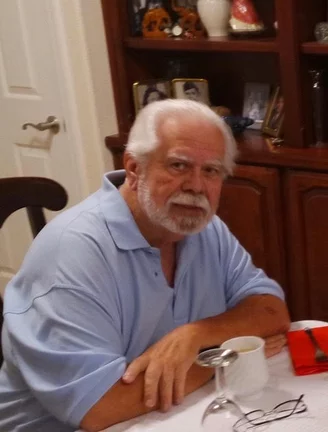
Michael was married to his lovely wife, Rosemarie, until her passing in 2017.
Michael was a lifelong resident of Eureka. He was born July 28, 1945 to Dave and Alberta Hauger and he had two siblings: David and Debbie Hauger.
Michael worked 41 years as a longshoremen, loading ships on the docks around Humboldt Bay.
Michael enjoyed spending time on South Fork Mountain, where his parents had built a cabin close to the river. He enjoyed having his family stay there during the summers and enjoyed cooling off in the river on hot days.
Michael had a love for Christ and Michael and Rosemarie made lots of lifelong friends at church
Michael is survived by his son, Michael Hauger, daughter-in-law Courtney, stepson Lewis Chamberlain and his wife Heidi. Michael has four grandchildren: Conner and Rowan Chamberlain, and Marinda and Mitchell Hauger.
A celebration of life will be held July 28, 2022 (Michael’s 77th birthday) at Redwood Christian Center — 6000 Humboldt Hill Rd. in Eureka — at 2 p.m.
###
The obituary above was submitted by Michael Hauger’s loved ones. The Lost Coast Outpost runs obituaries of Humboldt County residents at no charge. See guidelines here. Email news@lostcoastoutpost.com.
Robert Eugene Sprague passed away on June 5, 2022 at the age of 66 in Eureka.
Robert (Bob) was born in Arcata on May 28, 1956 at Trinity Hospital to LaVern Sr. and Grace Donna (Kern) Sprague. He was raised in Arcata with his three sisters and three brothers. Bob attended local school and attended Arcata High School. He played little league baseball in Arcata as well as softball with his three brothers on the Beaver Lumber Softball Team. Bob also served in the U.S. Army.
Bob is survived by his wife Laurie, his children Katherine (Katie), Robbie, and Paul, and grandchildren. He is also survived by his oldest sister Myrla (Sprague) St. John, and brother David Sprague, as well as numerous nieces, nephews, and cousins. Bob was preceded in death by his mother and father, brother’s Basil (Bill), Mark, and his sisters Frances (Lee Sprague) Belloni, and Patricia (Patti Sprague) Wilkes.
A celebration of life and potluck will be held at the Eureka Woman’s Club at 1531 J Street in Eureka on Saturday August 6th at 1 p.m.
###
The obituary above was submitted by Bob Sprague’s loved ones. The Lost Coast Outpost runs obituaries of Humboldt County residents at no charge. See guidelines here. Email news@lostcoastoutpost.com.
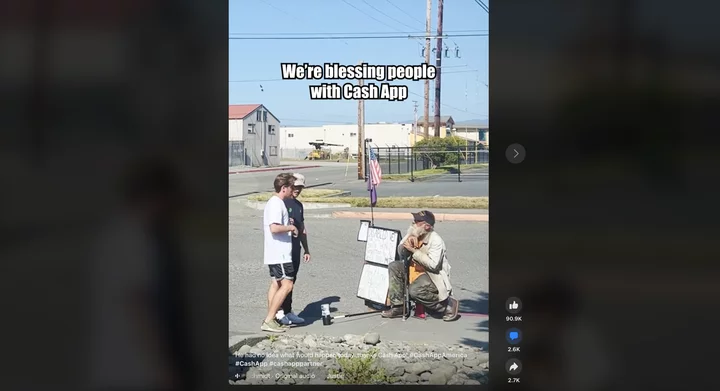
A well-meaning social media bro recently posted some arguably heartwarming content to his various channels featuring his charitable encounter with a man he found sitting in front of the Eureka Costco.
Online creator Justin Schmidt — who recently built Logan Paul a golf cart, if that means something to you — is currently touring the country, presumably on the #CashApp’s dime, “blessing” people he happens across with money and filming the reactions. One such recorded rendezvous shows Schmidt and a colleague in Eureka, where they come into contact with William Barnhart, who was flying a sign and seeking assistance out on the curb in front of Costco. Schmidt tells Barnhart he’d like to help him out, and as the clip progresses he proceeds to fill up Barnhart’s truck with gas and take him on shopping trips to Target and Winco. The clip ends with Schmidt paying for full week’s stay at a motel of Barnhart’s choosing.
“Thanks again to CashApp,” Schmidt tells his viewers to close out the promotion. “And go tell them which city we should go to next.”
Watch the clip below.
After the video was posted to Facebook, Barnhart weighed in in the comment section with his account of how the meetup went down:
“Hello, I’m the one in this video & I’d like to tell you “the rest of the story” from the begining. I was at the spot shown being about $40 short for my motel ($80 per night), these guys drove into COSTCO once (I noticed them the first time) wondering “why is cashapp coming here?”…”hmmm maybe they got permission to setup a booth or something?” Then they left. About 15 minutes later, they pulled back in and parked in the space closest to me and got out. I’ll be honest, I thought to myself “please do a $20 bill”. They asked me, “What do you need? Anything.” I answered, ” i do this to pay my motel each day which is $80 a night.” They both turned to eachother as if they were saying “that’s too much.” I then said (to be honest) “I’m only about $40 short.” They looked at eachother again and said they’de be back. Then went back to their RV (they’re in a rented RV with “cashapp” on the side). They came back about 20 minutes later and that’s where the video begins…..
On July 18th , 2022, the Humboldt County Drug Task Force (HCDTF) served a search warrant on a
residence on Cannibal Island Rd. in Loleta for suspected fentanyl sales. The HCDTF had been investigating
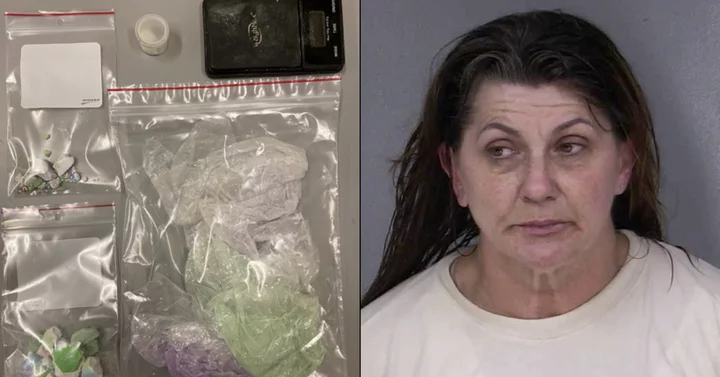
the resident, Brandi Manjarrez (55 years old), for several weeks for transportation and sales of fentanyl.
Manjarrez was the only person located inside her residence and she was detained without incident.
Agents conducted a search of the home and located approx. 2.5 ounces of fentanyl, a digital scale, and
packaging materials. Manjarrez was advised that she was under arrest for possession of fentanyl for sale.
Prior to jail transport agents advised Manjarrez several times that if she had fentanyl hidden on her
person, she would need to tell them so she does not add the charge of bringing controlled substances into
a jail. Manjarrez denied having drugs hidden on her person multiple times.
Manjarrez was transported and booked at the Humboldt County Jail for the following charges:
11351 H&S Possession of fentanyl for sale
During booking at the jail correctional officers located approx. ¼ ounce of fentanyl hidden inside
Manjarrez clothing. HCDTF Agents added the following felony charge to Manjarrez:
4573 PC Bringing a controlled substance into the jail
Anyone with information related to this investigation or other narcotics related crimes are encouraged to
call the Humboldt County Drug Task Force at 707-267-9976.
Press release from the Humboldt County Sheriff’s Office:
On July 19, 2022, at about 1:37 a.m., Humboldt County Sheriff’s deputies on patrol in the south Eureka area observed a Dodge Ram truck tailgating a Toyota Sienna, driving recklessly northbound on U.S. Highway 101.
Cardelli
Both vehicles exited the highway at Herrick Avenue and committed several vehicle code violations. Deputies conducted a traffic stop on the Dodge in the area of Herrick Avenue and Elk River Road. During the investigation, the driver of the Dodge told deputies that the Sienna had been stolen from his property in Rio Dell and he had been pursuing the vehicle in order to take back possession. As deputies spoke with the driver of the Dodge, the Sienna returned to the area. Deputies detained the driver of the Sienna, 26-year-old Jerri Rebekah Cardelli, without incident.
Following additional investigation, Cardelli was arrested and booked into the Humboldt County Correctional Facility on charges of vehicle theft (VC 10851(a)) and reckless driving (VC 23103(a)).
The driver of the Dodge was cited and released on charges of reckless driving (VC 23103(a)).
Anyone with information about this case or related criminal activity is encouraged to call the Humboldt County Sheriff’s Office at (707) 445-7251 or the Sheriff’s Office Crime Tip line at (707) 268-2539.