The Eureka Police Department has continued its investigation into the 4th of July assault
in Old Town and based on interviews and digital evidence collected, arrest warrants
have been issued for the following involved suspects.
Joey Boxell and Dylan Olivas | EPD
20-year-old Joseph Bradley Boxell, arrest warrant issued for assault with a deadly
weapon and assault by force causing great bodily injury.
21-year-old Dylan Cody Olivas, arrest warrant for assault by force causing great bodily
injury.
If you know the current location of Boxell and/or Olivas, call your nearest law
enforcement agency. Do not attempt to engage or detain.
If you witnessed this event or have any additional information, please contact Officer
Spencer Barrett at sbarrett@ci.eureka.ca.gov or 707-441-4060.
Cape Horn Dam and Van Arsdale Reservoir on the Eel River, part of the Potter Valley Project. | Photo via CalTrout.
###
North Coast conservation groups are offering renewed criticism of Pacific Gas & Electric this week after the utility argued against a request from the National Marine Fisheries Service (NMFS) aimed at protecting threatened fish in the Eel River.
Three species of fish in the Eel — coho salmon, California Coastal Chinook salmon and Northern California steelhead — are listed as threatened under the Endangered Species Act (ESA). Their populations have been impacted by PG&E’s Potter Valley Project, a hydroelectric facility that diverts water from the Eel to the Russian River.
In a March 16 letter to the Federal Energy Regulatory Commission (FERC), NMFS says the Potter Valley Project is causing “take” of these salmonids in a manner that exceeds the incidental amounts authorized via a 2002 biological opinion. The letter goes on to say that this 2002 opinion — and the incidental take authorization it provided — applied only for the duration of PG&E’s 20-year license to operate the Potter Valley Project.
That license expired in April, though PG&E continues to own and operate the project under an annual license that renews automatically. In its March letter, NMFS asked FERC to reinstate formal environmental consultation and to amend the license to incorporate a number of “interim protective measures” aimed at protecting the fish.
But in a 16-page response submitted to FERC earlier this week, PG&E argued that it should not be forced to engage in more environmental consultation nor made to abide by the protective measures recommended by NMFS. In fact, PG&E argued that NMFS’s 2002 biological opinion has no expiration date, and thus its coverage is ongoing.
In the long run, PG&E aims to surrender its license and rid itself of the aging Potter Valley Project, which is slated to be decommissioned, clearing the way for the removal of the Scott and Cape Horn dams. That has long been a goal of fish conservation groups, who argue that PG&E has been dragging its feet and refusing to cooperate with dam-removal efforts.
In a separate filing submitted to FERC on Friday, PG&E proposed a 30-month timeline to file a decommissioning plan for the Potter Valley Project. (Conservation groups derisively refer to this drawn-out process as PG&E’s “plan to submit a plan.”) The clock on that two-and-a-half-year timeline would only start ticking once FERC approves the schedule, and there’s no telling, at this point, how long beyond those 30 months it would take PG&E to surrender its license and file an actual decommissioning plan.
Fish conservation groups lambasted both the length of that proposed timeline and PG&E’s refusal to implement more protective measures for fish.
“PG&E has made it clear they will rid themselves of the 100-year-old Eel River dams, but they seem content to slow-walk the process and continue to kill ESA-listed fish while they take their sweet time,” said Matt Clifford, an attorney with nonprofit Trout Unlimited, in an emailed statement.
He added that “extensive scientific research” has shown that the Potter Valley Project kills federally protected salmon and steelhead and that the only viable path to recovery is dam removal.
“It’s alarming that despite this evidence, and a direct request from a federal agency charged with protecting endangered species, PG&E says it will take two years just to come up with a plan to remove their obsolete dams and that in the interim they won’t do anything more to mitigate the harms their project causes,” Clifford said.
In a phone interview Wednesday, Friends of the Eel River Executive Director Alicia Hamann agreed, saying the 30-month timeline will only serve to kill more Eel River fish. She recalled the recent efforts of the Two-Basin Partnership, a diverse group of stakeholders who, under the guidance of Rep. Jared Huffman, sought to take over PG&E’s license and decommission the project. The partnership’s plans were stymied last fall when FERC refused to grant the partners more time to form a singular entity that could take over the license.
“PG&E was an unwilling partner in the process,” Hamann said. “Why would we have any reason to think things would be different now? Why would we expect them to get anything done in 30 months that they couldn’t have done in the last five years?”
“It’s incredible that a major utility company with such a poor public image wouldn’t take advantage of opportunities like this to show they are committed to being a good and responsible corporate citizen,” said Redgie Collins, legal and policy director for CalTrout.
Hamann said PG&E’s latest stance is actually quite credible. “They don’t care when they kill people. Why should we expect more when they’re killing fish?” she asked.
Friends of the Eel River, CalTrout and Trout Unlimited are all part of a coalition planning to sue PG&E over its alleged violations of the federal Endangered Species Act with the Potter Valley Project. (The other partners are the Pacific Coast Federation of Fishermen’s Associations and the Institute for Fisheries Resources.) Hamann said the coalition is hoping that its lawsuit will lead to a negotiated settlement with PG&E that will speed up the dam removal process.
The Outpost reached out to both PG&E and the National Marine Fisheries Service with questions for this story but did not hear back before publication time. Hamann said she’ll be interested to see how NMFS responds to PG&E’s latest filing.
“If I were leadership with NMFS I would be extremely upset right now,” she said. “Basically [PG&E] called NMFS a bunch of liars.”
Despite the bureaucratic red tape, the hurdles thrown up by PG&E and ongoing pushback from Russian River water users who want to maintain the water diversion, the coalition of conservation groups remains confident in the eventuality of dam removal, which would make the Eel California’s longest free flowing river.
###
UPDATE, 4:40 p.m.:
PG&E Marketing & Communications Media Rep Deanna Contreras emailed the following response to Outpost questions shortly after this post was published:
PG&E is strongly committed to environmental responsibility, and we are operating the Potter Valley Project in full compliance with the FERC license and the National Marine Fisheries Service’s (NMFS) Biological Opinion (BiOp) and incidental take statement incorporated into the license. If unauthorized take is occurring in excess of the “take” authorized in the incidental take statement, then the federal agency authorizing the license – FERC – is responsible to reinitiate ESA section 7 consultation with NMFS.
PG&E is not aware of any evidence in the voluminous record associated with the Project indicating that Project operations under the license are causing an unauthorized take of listed salmonids. There are a multitude of adverse influences along the approximately 160-mile-long Eel River corridor that affect salmonids and PG&E believes its operations benefit salmonids by storing and providing water that otherwise would not be available for release, particularly during dry seasons.
PG&E’s response to FERC supports utilization of existing FERC processes to responsibly address the topics raised in NMFS’ proposed interim measures, including potential modification of existing, FERC-approved license plans on the same topics and potential long-term variance of the flow and storage provisions in NMFS’ biological opinion to ensure acceptable flows and temperatures during critical seasons.
FERC has directed PG&E to submit a plan and schedule for preparing a surrender application, which will eventually result in the surrender of the Potter Valley Project license. PG&E complied with this directive and submitted a plan and schedule to FERC.
PG&E has not made any determination with respect to its decommissioning proposal, including whether facilities will be removed or remain in place. There are many stakeholders with an interest in the disposition of the Potter Valley Project facilities and PG&E’s schedule provides for opportunity for input from these stakeholders to inform PG&E’s ultimate decommissioning proposal.
The quoted assertions from advocacy groups, do not reflect the multitude of public interest considerations involved in the FERC surrender process.
By recognizing the complexity and diversity of stakeholder issues associated with the surrender and decommissioning of the Project, including the residents of Lake, Sonoma, Mendocino Counties, Eel River Interests and Tribes, PG&E is being a good and responsible corporate citizen.
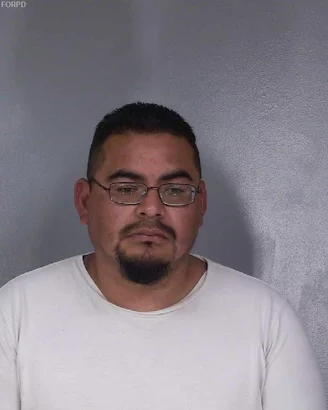
On Tuesday, July 12, 2022, the Fortuna Police Department received information from the Humboldt County District Attorneys’ office on 40-year-old, Eduardo Sanchez-Tapia. Sanchez-Tapia had an active and outstanding felony arrest warrant for two counts of Lewd and Lascivious Acts with a minor; under the age of 14 years old – California Penal Code § 288(a).
Eduardo Sanchez-Tapia | Fortuna Police Department
On Wednesday, July 13, 2022 at approximately 5 p.m., Fortuna Police located Eduardo Sanchez-Tapia in the 300 block of North Fortuna Boulevard. Sanchez-Tapia was immediately contacted and taken into custody without incident.
Sanchez-Tapia was transported to the Humboldt County Correctional Facility where he was booked on his outstanding felony warrant.
The Fortuna Police Department would like to thank the District Attorney’s Office for their assistance and information. The Fortuna Police Department remains committed to public safety and transparency.
Any questions regarding this incident can be directed to the Chief of Police, Casey J. Day at (707)-725-7550.
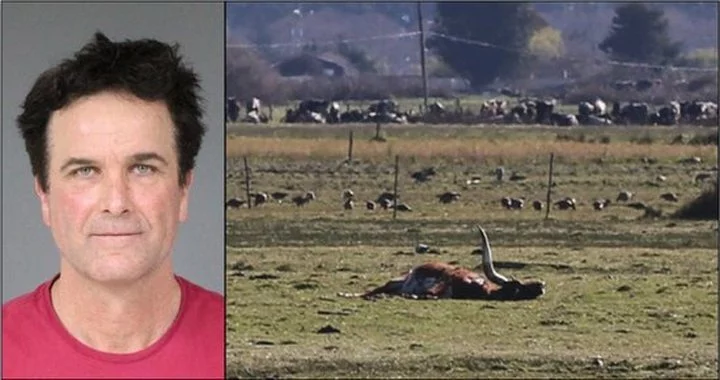
Christie alongside one of the dead cattle found on his Arcata Bottoms ranch. Photos: HCSO, Andrew Goff.
The second animal-cruelty trial for Arcata rancher Ray Christie has been postponed until next year because of Christie’s declining health.
Christie, already being treated for basal cell carcinoma, has developed a heart condition most likely caused by a previous undetected heart attack, defense attorney Rick Richmond said outside court this morning.
Judge Gregory Elvine-Kreiss granted the defense motion to continue the trial, which was set to begin in about two weeks. Trial is now scheduled for Jan. 17, with a trial confirmation on Dec. 8.
“Mr. Christie’s deteriorating health condition led us to ask for this continuance,” Richmond said. Both the cancer and the heart problems “have arisen since the county started coming after him.”
Christie, 58, is being treated for both conditions in Los Angeles. He watched the hearing this morning via Zoom, though he did not appear on camera.
“I hope you feel better,” Elvine-Kreiss told Christie this morning.
“Thank you, Your Honor.”
In March 2018 officers from multiple law enforcement agencies raided Christie’s ranch on the Arcata Bottoms, along with many other properties he owns or leases for grazing cattle. Christie’s practice was to buy sub-par cows at the Fortuna Auction, then restore them to health and sell them.
Numerous cow carcasses were found on the properties, along with animals living in poor conditions. In some cases the cows had no access to food or water.
Christie’s first trial ended with him convicted of multiple misdemeanor charges of dumping carcasses near state waters. The jury deadlocked 11-1, with one juror unwilling to convict, on four counts of animal cruelty.
This morning Deputy District Attorney Roger Rees was in court for his office, replacing Deputy District Attorney Steven Steward. Steward recently was elected judge.
###
CORRECTION: Whoops — this story originally misidentified Steward’s opponent in his race for the judgeship. That error, which the Outpost regrets, has been excised.
Press release from the Humboldt County Sheriff’s Office:
Cooke
On July 12, 2022, at about 6:21 a.m., Humboldt County Sheriff’s deputies on patrol in the McKinleyville area conducted a vehicle investigation on an occupied, suspicious vehicle parked on the 1600 block of Heartwood Drive.
During their investigation, deputies found that the vehicle had been reported stolen out of Blue Lake. Deputies contacted a male suspect inside the vehicle. The man initially provided deputies with a false name but was later identified as 28-year-old Steven Robert Cooke. Cooke was found to have an outstanding out-of-county warrant for his arrest.
Cooke was arrested and booked into the Humboldt County Correctional Facility on charges of possession of a stolen vehicle (PC 496d(a)), false identification to a peace officer (PC 148.9(a)) and violation of probation (PC 1203.2(a)), in addition to his bench warrant (PC 978.5).
Anyone with information about this case or related criminal activity is encouraged to call the Humboldt County Sheriff’s Office at (707) 445-7251 or the Sheriff’s Office Crime Tip line at (707) 268-2539.
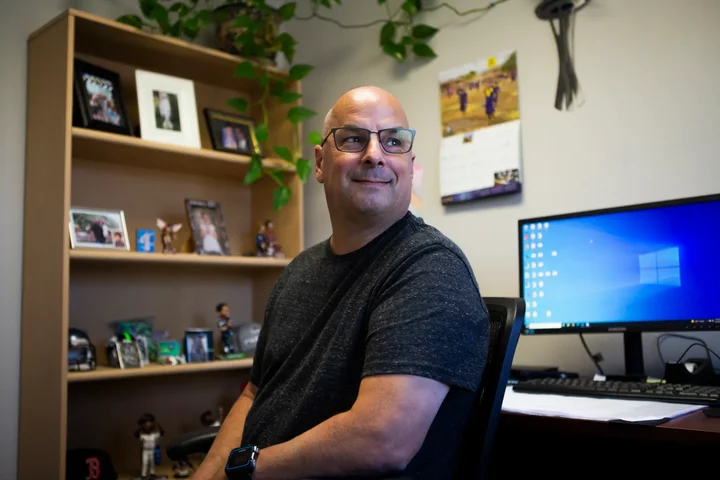
Terry Fiscus, a counselor at Turning Point Community Programs, sits in his office in Sacramento on Thursday, June 23, 2022. Photo by Nina Riggio for CalMatters.
In early March, Gov. Gavin Newsom unveiled a controversial proposal to compel people with serious mental health issues into care and housing.
Mental health advocates, mayors and family members who stood alongside him at the press conference at a San Jose behavioral health treatment program heralded the plan, known as CARE Court, as a visionary move.
But some county officials say they were stunned.
“They really sprung it on everybody,” said Farah McDaid Ting, public affairs director at the California State Association of Counties, who said lawmakers didn’t consult or even give her organization a heads-up.
Four months later, the bill to establish CARE Court has sailed through all of its policy committees in the Legislature, secured unanimous approval from the Senate in May and is widely expected to become law later this summer. CARE Court — short for Community Assistance, Recovery and Empowerment Court — has garnered enthusiastic support from leaders of more than 45 cities, many of whom face fiery criticism over their handling of homelessness. Many family members, who for decades have felt stymied by strict eligibility rules for conservatorship, are also celebrating the new plan.
But county representatives continue to ring alarm bells about their ability to implement the proposal, especially as an aggressive timeline comes into focus. A handful of counties have registered support for the proposal, including Marin, Contra Costa and San Diego.
Many of the counties’ concerns come in the form of questions: Will the necessary housing be available? Where can they find the outreach workers and therapists needed to serve the population, given massive statewide shortages of both? What happens to all the struggling people who want housing and treatment, and already can’t get it?
Disability rights advocates are raising fundamental questions about the very premise of CARE Court: Is it effective to compel people into care? Is involuntary treatment a violation of their civil rights?
But many of those who support the concept say the practical questions feel especially pressing right now, as the Legislature continues its deliberations. While many details are still in flux, the gist of the proposal remains the same as initially outlined. Anyone from family members to first responders could petition a civil court to create a court-ordered care plan for people who meet specific criteria. These include a diagnosis of schizophrenia or other psychotic disorders, along with being at risk of harming themselves or others or being unlikely to survive on their own. Participants would receive legal counsel and a range of mental health services, medication and supportive housing. Following a series of check-ins during a yearlong period, the participant could either graduate, be referred to an additional year of treatment. If a person refuses to comply, or “fails out”, they could be considered by the court for conservatorship.
Conversations about CARE Court have been peppered with frequent references to people living on California’s sidewalks and under freeway overpasses. But the administration hasn’t been clear about how much of a dent the proposal would make in the state’s massive homelessness crisis. Prior to the pandemic, more than 161,000 people in the state were estimated to be homeless on any given night; that number has likely grown since. The administration says the program will serve 7,000 to 12,000 people with the most acute mental health needs. Homelessness isn’t a prerequisite to participate.
The administration says the proposal represents a crucial step toward addressing one of the state’s great moral and policy failings: the vast ranks of unhoused people languishing with serious mental illness and without care.
“What CARE Court is saying is we must create a pathway wherein these individuals that live in the shadows and often die in the shadows, become a priority group,” said Dr. Mark Ghaly, secretary of the California Health and Human Services Agency, who has been championing the program on behalf of the Newsom administration.
CARE Court’s supporters say no more time can be wasted. Judge Stephen Manley, who started the state’s first mental health court in Santa Clara County nearly 25 years ago, notes the growing percentage of people in local jails and prisons with serious mental illnesses. Only by mandating that counties prioritize this population, he said, will anything change.
“People are always telling me it can’t be done,” he said. “To me it is a tragedy that we repeatedly, year after year after year after year, talk about this issue, do nothing, and all these individuals end up in the criminal justice system.”
Is there enough housing or will there be?
Perhaps the most prominent question that has emerged among legislators and advocates is whether there is enough housing available to get the CARE Court program started.
Short answer: No.
But the state believes that bringing CARE Court participants to the front of the line, along with making unprecedented investments in housing this year, will allow counties to meet the needs of this population. Opponents fear others awaiting voluntary services will be bumped to the back of the line, leaving their needs to intensify.
“I worry if it houses some but leaves others out, are we just reshuffling things?” said Margot Kushel, director of the Benioff Homelessness and Housing Initiative at Zuckerberg San Francisco General Hospital and Trauma Center.
While the new budget deal includes $65 million this year and $49 million in ongoing annual funding to cover training, court costs and legal representation, counties say the proposal doesn’t include any new funding for housing or services.
“There’s a new door being built onto a small house,” Ting said. “There’s no square footage, there’s no nothing, just a new door. That’s what’s kind of frustrating about the premise.”
The administration points skeptics to a $14 billion multi-year homelessness budget put together before the proposal’s announcement — which includes about $5 billion to build thousands of mental health treatment beds and homeless housing. This year’s budget includes $1.5 billion for interim treatment beds to hold patients over while permanent units come online. In response to counties’ concerns that even the bridge beds won’t be ready in time, the bill’s authors recently said counties would be phased into the program over two years, starting in July 2023.
Sen. Susan Talamantes Eggman, the bill’s co-author and a Stockton Democrat, says she believes counties are unhappy with the proposal because it finally holds them to account. It requires that they provide the care and housing a participant needs and if they don’t, face court fines of $1,000 per day. The money, collected by the state treasury, would eventually fund local services for the people CARE Court targets.
“We’re not just saying the person has the obligation to accept, we’re saying the system has the obligation to treat,” Eggman said during a recent hearing.
“I worry if it houses some but leaves others out, are we just reshuffling things?” — Margot Kushel, director of the Benioff Homelessness and Housing Initiative at Zuckerberg San Francisco General Hospital and Trauma Center
Counties counter that these penalties will only take away from their already limited resources to treat people.
While the bill says a county has to provide services during the program, courts can’t enforce a participant’s post-graduation plans. Advocates worry that without guaranteed housing people will wind up back on the streets, in emergency rooms and county jails.
“We’re going to release them back into the streets but we expect them to continue to adhere to the care plan and continue to be taking medication,” said Shonique Williams, a statewide organizer for Dignity and Power Now, who opposes the proposal. “But they’re going back into survival mode.”
The state doesn’t keep any sort of waitlist or even a count of treatment beds and housing that’s available to people exiting homelessness. As a result, it’s impossible to gauge the exact shortage in each county.
But a state-commissioned report released in January found that more than 80% of counties need more mental health treatment beds and homeless housing. A 2021 study from the RAND Corporation, a nonprofit think tank,showed the state lacks 5,000 psychiatric hospital beds and another 3,000 beds at residential treatment facilities and board-and-care homes. The shortage is most pronounced in the San Joaquin Valley and for patients with additional medical needs.
“There’s a new door being built onto a small house. There’s no square footage, there’s no nothing, just a new door. That’s what’s kind of frustrating about the premise.” — Farah McDaid Ting, public affairs director at the California State Association of Counties
Michelle Doty Cabrera, executive director of the California Behavioral Health Directors Association, said one recent survey showed counties had 14,000 unhoused individuals with serious mental illnesses voluntarily participating in full service partnership programs. But they couldn’t find housing for more than half of these individuals, in part because many were screened out for reasons related to their mental health conditions, she said.
In Sacramento County, beds are increasingly rare at board-and-care facilities, where residents receive housing, 24-hour care and three daily meals.
“It is a needle in a haystack right now,” said Terry Fiscus, a behavioral health worker at Turning Point, which contracts with the county.
The less calm and rule-abiding the patient, the less chance they have of getting or keeping a spot, he said. On top of that, facilities have been closing at a rapid clip as housing prices soar and government-set reimbursement rates remain stagnant.
“There are a lot of people that want to come in all the time. We cannot take them,” said Jeanny Leung, who runs a board-and-care home in Sacramento.
“Squeezing blood from a turnip”
Housing isn’t the only big concern counties are raising. To run, CARE Court requires staff and resources.
Some counties say they fear that, without new funding, the program will end up draining resources from other populations, potentially including children and youth.
Cabrera, of the California Behavioral Health Directors Association, uses phrases like “squeezing blood from a turnip” and “robbing Peter to pay Paul.”
“We’re at our limit in terms of what we can do,” she said. “We need more resources to do more.”
The proposal’s proponents argue that there’s plenty of money to get things up and running. They say county mental health systems have had a huge influx of taxpayer dollars in the past two years, thanks to the Mental Health Services Act, a 1% tax on incomes over a million dollars that was enacted in 2004.
“Our millionaires in California seem to be doing very well for themselves,” said Karen Larsen, CEO of The Steinberg Institute, a nonprofit focusing on mental health policy, which supports the proposal. She notes that revenues from the tax have hit historic highs — they were at more than $4 billion this past year.
For two decades prior to assuming her current role, Larsen served as director of Yolo County’s Health and Human Services Agency. She believes counties can afford the costs of the new program.
“If they can prove they don’t have enough resources, I’d love to see it,” she said.
“Many of our people are only stable because we have someone coming twice a day to deliver their meds and check in with them and make sure their furniture is upright.” — Phebe Bell, Nevada County’s behavioral health director
Phebe Bell, Nevada County’s behavioral health director, said she was, indeed, able to tap the influx of Mental Health Services Act funding to purchase a new house, providing beds for six people who were unhoused. But strict rules often limit what that pot of money can be used for, she said.
If the county has to pivot to focus on CARE Court mandates, she worries about who won’t be served.
“Many of our people are only stable because we have someone coming twice a day to deliver their meds and check in with them and make sure their furniture is upright,” she said.
When her county examined their full service partnership program, they found more than a third of the 78 people in their program at any given moment were inadequately housed, with many sleeping on the streets.
“I don’t have a single empty bed in our system of care,” she said. “Who exactly are we incorrectly prioritizing in our work right now?”
Both sides agree on one specific challenge: a massive shortage of mental health providers.
At the beginning of the pandemic, many counties worried they’d face significant shortfalls and preemptively laid off mental health workers.
Now, as need surges, staffing has simply not kept pace. Counties are finding themselves losing bidding wars for therapists being courted by everyone from school districts to telehealth start-ups to major providers like Kaiser. Burnout is driving others from the field entirely.
Some counties now face vacancy rates of 30% to 40% in their behavioral health workforce, and many of the nonprofits they contract with are in the same situation, Larsen said.
“I think it’s the biggest issue we face in mental health and substance use right now,” she said.
This year’s budget includes $1.5 billion to build out the state’s entire healthcare workforce, including hundreds of millions that target behavioral health.
The state’s public guardians and conservators have also eyed the CARE Court proposal warily. While they are not officially affected by the proposal, they say they expect the program could lead to a surge in new referrals.
The programs are already severely underfunded and understaffed, said Scarlet Hughes, executive director of the California State Association of Public Administrators, Public Guardians, and Public Conservators. Right now, caseloads hover at 65 to 85 individuals per caseworker, though in some counties they’re as high as 135. That translates into visiting a client every three or four months, she said.
“Any impact to our members is going to be significant because they’re underwater already,” she said.
What’s next?
Questions over implementation, in addition to the ongoing debate over civil liberties, have been woven through CARE Court’s journey from the start. That hasn’t stopped the Legislature from voting overwhelmingly in the bill’s favor. It is expected to easily clear its final hurdles: an appropriations vote later this summer, a floor-wide vote in the Assembly and a signature from the author, the governor himself.
But despite their ongoing questions, counties have conceded that CARE Court is coming whether they like it or not. They know they’re not likely getting any more money for housing and staffing. For now, they’re using the appropriations process to petition for more time and tools to implement the program.
The administration acknowledges that counties around the state face severe shortages. But it remains committed to the idea of a better way to serve the people who are struggling the most.
“California has done this before,” Ghaly said. “We’ve stepped up for the most vulnerable, the most overlooked many, many times. And we can do it again.”
###
CalMatters.org is a nonprofit, nonpartisan media venture explaining California policies and politics.
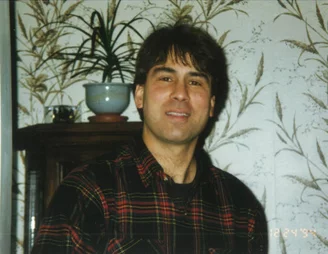
Scott Edward Messer Sr. died suddenly at home in Eureka on May 2, 2022 at the age of 65. We mourn his loss.
Scott was born on August 11, 1956 at the former Trinity Hospital in Arcata to Geraldine Lois (Petersen) Alden and Richard Allen Messer. He was the oldest of three brothers.
In his youth Scott served as church altar boy, president of his school’s chess club, a member of DeMolay, unofficial signmaker for his high school and mentor to his brothers. At fourteen he taught himself to play guitar, which remained a passion throughout his life.
Recreational interests brought Scott and Company far and wide in pursuit of fishing, surfing, diving, boating, hunting, hiking, camping, backpacking and adventuring at Island Mountain, the Lost Coast, Mattole Valley, Ft. Bragg, Humboldt and Trinidad Bays, the Marble Mountains, Trinity Alps and points beyond. He was a strong capable outdoorsman with notable physical coordination.
A true renaissance man, Scott could construct or repair almost anything. He built his family’s home in Arcata - including a first-rate treehouse for his kids and their friends! He also restored the family’s cabin at Big Lagoon, the Sandpiper, where he and his brothers made lifelong friends and memories swimming, fishing, boating, exploring and building overnight bonfires on the spit.
Scott was a successful General Building Contractor, putting to use his extensive knowledge of local historical architecture in the construction and improvement of domestic and commercial buildings throughout the region.
A talented musician, Scott was a longstanding member of the Roadmasters Band, local favorites who played to packed crowds throughout the area and then the state as winners of multiple levels of the nationwide Country Showdown competition.
Scott moved seamlessly through contrasting social groups; adept at sampling dissimilar aspects of culture, he was at times the student/teacher/scholar/redneck/hippie/humble/audacious/casual/uptight/hero/villain. He was known for his profane/juvenile sense of humor.
Scott lovingly cared for and comforted multiple family members who preceded him in death. His father Richard Allen Messer, brother Richard Allen Gilliam (Messer), maternal grandfather Frank Alden and most especially his beloved maternal grandmother, Grace (Townsend) (Petersen) Alden, renowned herself as founder of Alden Ceramics in Arcata, California. Too many more family and friends passed on before him.
Scott is survived by his children, Scott Edward, Jr. (they were planning a fishing trip) and Whitney Grace (who will miss him at her graduation), each of whom is blessed with strengths, talents and the wit and intellect of his heritage - as well as his wife of many long years, Peggy. Scott’s youngest brother and friend, Matthew (Ivone) will miss him fiercely. He is also survived by his cousin, James W.R. Smith, of Eureka. Jim, his children and grandchildren remained especially close through thick and thin; their compassion will always be remembered and appreciated.
Thanks also to special friends Lisa Pezzi Forrest and Cindy Vickers.
###
The obituary above was submitted by Scott Messer Sr.’s loved ones. The Lost Coast Outpost runs obituaries of Humboldt County residents at no charge. See guidelines here. Email news@lostcoastoutpost.com.