

(VIDEO) Chip Pile Fire on the Samoa Peninsula Sends Huge Plume of Smoke Toward Eureka
LoCO Staff / Wednesday, July 13, 2022 @ 4:38 p.m. / Fire

Photo: Andrew Goff.
UPDATE, 4:54 p.m.: Firefighters are using dozers to smother the fire, in addition to pouring water on it wherever they can. The large plume of smoke has dissipated.
Traffic along New Navy Base doesn’t seem to be impacted, but you know the drill — best to give that area a wide berth, if possible.
Video: Andrew Goff.
###
Video: Ishan Steelhead.
A mound of biomass caught fire at the old DG Fairhaven Power Plant on New Navy Base Road this afternoon, sending up a huge plume of smoke.
Numerous fire agencies are en route to the scene. Some firefighters have already arrived, and are attempting to knock back the flames. They’ve got dozers in action, and according to scanner traffic they’re attempting to tie into a nearby hydrant.
In the video below, you can see fire crews wetting down a tank, presumably to prevent whatever’s in the tank from combusting.
There’s some wind up on the peninsula. The Outpost’s Andrew Goff is at the scene. We’ll update when we know more.
Video: Andrew Goff.
BOOKED
Today: 6 felonies, 12 misdemeanors, 0 infractions
JUDGED
Humboldt County Superior Court Calendar: Today
CHP REPORTS
No current incidents
ELSEWHERE
RHBB: [Update] Vehicle Fire Blocks Northbound Mattole Road
County of Humboldt Meetings: CAT (Committee for Active Transportation) Meeting Agenda
Governor’s Office: California and the Australian state of Queensland ink new partnership to accelerate climate resilience, agricultural technology, and innovation
County of Humboldt Meetings: Human Rights Commission Agenda- Hybrid Meeting
TODAY in COURT: Trial of Suspect in Murder of Homeless Eureka Man to Begin Next Week; 2020 Hoopa Murder Case Inches Forward
Rhonda Parker / Wednesday, July 13, 2022 @ 3:44 p.m. / Courts
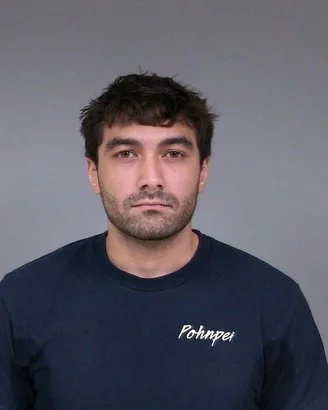
Mamea.
Jury trial is set to begin Monday for a McKinleyville man accused of trying to kill a homeless person who was stabbed and seriously injured as he slept on a street in Eureka.
Tory Tasi Parker Mamea, 29, is charged with attempted murder and weapons allegations. Today Deputy District Attorney Trent Timm, who will be the trial prosecutor, estimated jury selection will take about five days and he will need seven days to present his case to the jury.
Before the hearing this morning, Judge Kaleb Cockrum met privately with Timm and Deputy Public Defender Casey Russo, who represents Mamea. But after the meeting, Cockrum noted the prosecution and defense “are too far apart” for the case to settle without a trial.
PREVIOUSLY:
- Eureka Police Arrest Arcata Man for Attempted Murder After Investigation Connects Him to September Stabbing
- Stabbing Suspect Charged With Premeditated Murder
- Law Enforcement Looking For Suspect in Eureka Stabbing, Who Had Been Released From Jail
- Attempted-Murder Suspect Back in Jail After Being Freed on Supervised Release
- Arcata Resident Pleads Not Guilty to Attempted Murder in Stabbing of a Man Sleeping on Eureka Street
- TODAY IN COURT: Defense Puts Forward Plea Offer in Bear River Triple Murder; Plus: The State of Play in Three Other Local Homicide Cases
- TODAY in COURT: Trial Dates Set for Hikshari Murder Suspect, Eureka Attempted Murder Suspect, Suspect in Shooting of Fortuna Juvenile
###
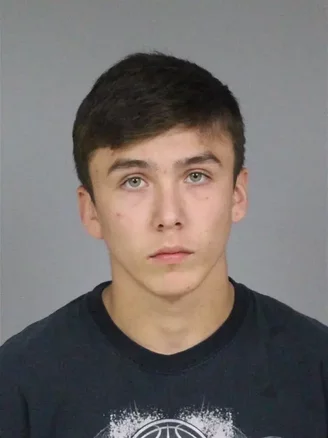
Lewis..
Also this morning, the cases against murder suspects Bronson Lewis and Daniel Armendariz inched a bit forward, with Jennifer Dixon confirmed as Armendariz’s new lawyer and a date set for the prosecution’s motion to join the two cases for trial.
The hearing on the motion to merge the cases has been delayed multiple times because of the difficulty in finding an attorney who is willing and able to defend Armendariz.
The men, both 20, are accused of the grisly July 2020 murder of 42-year-old Julius Tripp, who was first mutilated and then shot dead off state Highway 96 between Weitchpec and Hoopa.
Dixon said she she needed three weeks to prepare her argument against joining the cases. The motion hearing is now scheduled for Aug. 3.
Lewis is represented by attorney Russ Clanton, who told Judge Kaleb Cockrum this morning that Lewis has been patiently waiting “many months” for his trial.
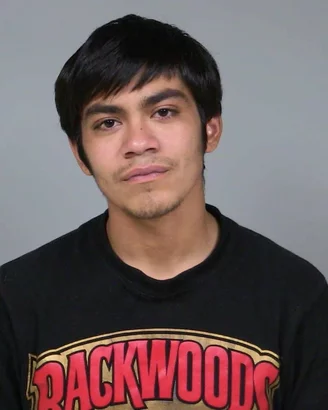
Armendariz.
Lewis allegedly told witnesses he chopped off Tripp’s hand or arm during an altercation. As Tripp lay wounded down a roadside bank, Lewis, Armendariz and three other teens drove to Hoopa and got an assault rifle, which was used to finish Tripp off.
PREVIOUSLY:
- Sheriff’s Office Seeking Homicide Suspect After Identifying Remains Found Last Week Off Highway 96 As Belonging to Missing Person
- Hoopa Homicide Suspect Surrenders Peacefully, Sheriff’s Office Says
- Hoopa Teen Charged With Murder, Potentially Faces Two Life Terms
- Bail Set at $2.4 Million For Hoopa Teen Accused of Murdering Man After Car Accident on Highway 96
- Teenage Witnesses Provide Conflicting Accounts in Hoopa Homicide Hearing
- Preliminary Hearing for Hoopa Murder Suspect Brought to Halt After New Witnesses Emerge
- Teenager Will Stand Trial for Roadside Murder on Highway 96, Judge Rules
- Second Teenager Arrested in Connection With Alleged Hoopa Murder
- Second Teenager Arraigned on Murder Charge, Held on $1M Bail for July 20 Slaying of Hoopa Man
- Hoopa Teenager Arraigned for Roadside Murder Along Highway 96; Suspect Could Face Life in Prison Without Parole
- TODAY in COURT: Updates on Three Murder and Manslaughter Cases
- Second Suspect Must Stand Trial in Hoopa Valley Roadside Murder, Judge Rules
- TODAY in COURT: Man Who Bit Off Cop’s Thumb Gets Four Years and Change; Kneeland Murder Suspect Says He’s Not Insane, but a Doctor Disagrees; Sotolongo Jury Still Deliberating
Humboldt Transit Authority Awarded $38.7 Million Grant to Buy Fleet of Hydrogen-Powered Buses, Enhance Connectivity Across Northern California
Isabella Vanderheiden / Wednesday, July 13, 2022 @ 3:07 p.m. / Community Services

A fleet of 11 hydrogen fuel cell electric transit buses just like this will soon be cruising the roadways of Humboldt. | Photo: Ryan Burns
###
Humboldt is once again leading the charge in clean energy innovation on the North Coast. The California State Transportation Agency (CalSTA) recently awarded a $38.7 million grant to the Humboldt Transit Authority (HTA) to fund a fleet of zero-emission hydrogen fuel cell electric buses to serve local routes and connect riders to Mendocino County and, ultimately, the San Francisco Bay Area. The fleet will be the first of its kind in Northern California.
The grant funds will enable the HTA to purchase 11 hydrogen fuel cell electric buses, install hydrogen fueling infrastructure and provide public transportation services to the Eureka Regional Transit & Housing Center, or EaRTH Center, which will serve as the City’s future mass transit hub and provide housing for students, traveling medical staff and working residents.
“We are in the beginning stages of converting our entire fleet of 32 buses to zero-emission buses … to connect Humboldt County residents with national connections, such as with Amtrak, the SMART train, and bus service to larger cities,” Greg Pratt, general manager at the HTA, told the Outpost. “Replacing 11 of our diesel buses with hydrogen fuel cell buses will eliminate over 120,000 gallons of diesel used every year for public transportation. …We still have a lot of work to do but this is a great start to reaching our goal.”
CalSTA awarded nearly $800 million in grants to fund 23 zero-emission transit and intercity rail service projects across California to further the state’s Climate Action Plan for Transportation Infrastructure (CAPTI) and help public transportation agencies comply with the California Air Resource Board’s Innovative Clean Transit (ICT) rule which prohibits public transit agencies from purchasing fossil fuel-powered vehicles after 2029.
Peter Lehman, founding director of the Schatz Energy Research Center at Cal Poly Humboldt, helped HTA apply for the grant. Lehman has been working on hydrogen and fuel cell technology for the last 30 years. He helped build the nation’s first solar-powered hydrogen fueling station in the Coachella Valley in the 1990s, and in the 2000s the Center helped AC Transit, an Oakland-based public transit agency, acquire some of the first hydrogen fuel cell buses.
“And now we’re bringing them to Humboldt County,” Lehman told the Outpost. “It’s been a long time coming and it will open up the opportunity for people to adopt hydrogen fuel cell vehicles for zero-emission transport all the way from small cars to big trucks. It’s really wonderful that this project is happening and that we’re involved.”
When CalSTA contacted Lehman and Pratt to inform them that they had won the grant award, they were told that their proposal was the best in the state. “We worked really hard on it and that made us really proud,” Lehman said.
The HTA bought its first electric bus in June 2019. While the bus provides daytime service between College of the Redwoods and Cal Poly Humboldt, it does not have the capacity to take on a longer route. The new buses, which will be supplied by Alabama-based bus manufacturer New Flyer, can travel upwards of 300 miles.
“One of the things that we stressed in this grant application was establishing a connection between transit in Humboldt County and transportation hubs further south in California,” Lehman said. “New Flyer is building a better technology bus. …They have batteries but they also have a fuel cell, which is an electricity generator. So they carry their own generator on board to recharge the battery as the bus is running.”
The project has actually inspired New Flyer “build a better bus” with a larger fuel cell and more hydrogen stores on board, he added. “It will have the sufficient range to go to Ukiah and back and that’s a big deal in the whole zero-emission technology field. This project has sparked new development that will be important nationwide.”
For the last two years, the HTA has worked with the Mendocino Transit Authority to continue the route to Santa Rosa and beyond the Bay Area. The agency has also established a partnership with the Lake Transit Authority to form connections to Clear Lake, Calistoga and Napa.
“Del Norte, Humboldt, Lake and Mendocino counties will all have the same credit card readers installed to make it easier for passengers to go from one system to another,” Pratt said. “Fare capping between agencies will be in place to limit the burden of fares to the rider.”
In addition to enhancing transit connectivity throughout Northern California, the grant will give the multimodal EaRTH Center a much-needed financial boost. Eureka City Manager Miles Slattery said the housing element of the grant application was what made the application so competitive.
“This is great news for the City of Eureka and even bigger for the local economy and transit throughout the county,” Slattery told the Outpost. “It will enhance access to our area and having access is huge.”
The EaRTH Center will serve as a mass transit hub for the county by integrating local and intercity bus service with carshare, rideshare, bicycle paths and pedestrian travel, according to the project summary. It will also provide workforce and student housing, a childcare center, retail and open space co-located with transit at the center.
The timeline for both the EaRTH Center and the new fleet of buses remains unclear, but Lehman guessed that at least some of the buses will be on the road in about 18 months. Construction on the EaRTH Center will likely begin late next year.
The full project description can be found here.
###
PREVIOUSLY:
(VIDEO) LoCO Will Be Very Upset If You Don’t Know Last Night’s Final Jeopardy Question
Andrew Goff / Wednesday, July 13, 2022 @ 11:11 a.m. / Our Culture
Let’s watch some TV.
LoCO would like to extend an enthusiastic congratulations to Emily Fiasco, “a middle school band director from St. Louis, Missouri,” who is $28,000 richer for successfully pulling some very important trivia from the depths of her brain during the final round on an episode of Jeopardy that aired last night today. You are very much not a fiasco, Emily. We love you.
On a related note, we’d like like to chastise Steve Clarke, “a lawyer from Chesapeake, Virginia,” who has brought great shame upon his family and insulted each and every one of LoCO’s regular readers by flubbing his Final Jeopardy response on the same episode. Your disgraceful legacy is secured. We are not fans.
Now that you have some idea of what’s at stake, Humboldt, we invite you to watch the clip above and play along yourself. And just know that if you screw this up, we will be deeply disappointed. Good luck.

Left: Hero; Right: Zero
PREVIOUS EXAMPLES OF LoCO CARING ABOUT JEOPARDY:
- (VIDEO) Ooo! You Know This One!
- (VIDEO) Carson Mansion, Eureka Featured in $800 ‘Jeopardy!’ Question Last Night
- (VIDEO) Jeopardy Contestant, Minor League Baseball Enthusiast Correctly Identifies Humboldt Crabs as THE BEST
Cal Poly Humboldt Pays Almost Double to Swipe 16-Acre Arcata Property, Foiling Long-Term Plans for Senior Living Community
John Ross Ferrara / Wednesday, July 13, 2022 @ 7:01 a.m. / Arcata , Business , Cal Poly Humboldt , Local Government

The now-defunct Creek Side Homes project planned for 2000 Foster Ave. | City of Arcata.
PREVIOUSLY:
- Former Humboldt Public Health Officer Talks About Her Plans for a Non-Profit Senior Care Community, Volunteering As COVID-19 Contact Tracer and How the County Has Handled the Pandemic
- New Student Housing and Education Buildings, Two Parking Structures and Major Demolition Work Ahead: A Look at Cal Poly Humboldt’s Five-Year Infrastructure Plan
###
In a cash-fueled quest to meet the lofty promise of doubling student enrollment in seven years, Cal Poly Humboldt paid nearly twice the original asking price for a 16-acre plot of land on the outskirts of Arcata last week.
The university said that it purchased the lot, located at 2000 Foster Ave., after it was contacted directly by the seller Foster Avenue LLC — a group of business partners that includes Danco owner Dan Johnson and Sun Valley Farms CEO Lane DeVries.
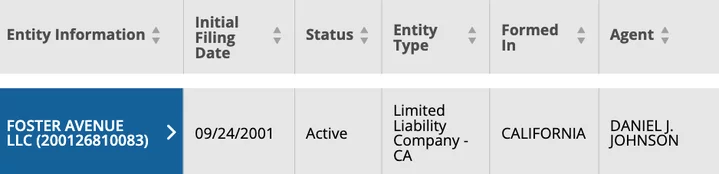
Foster Avenue LLC. | California Secretary of State business search
“The land will be used to support any of a number of institutional priorities aligned with our polytechnic transformation,” Cal Poly Humboldt announced last week, declining to say what it plans to build on the property. “It will play a vital role in efforts to provide a positive, meaningful educational experience for students.”
Prior to the sale, Foster Avenue LLC had worked for more than a decade to develop the proposed “Creek Side” senior housing project on the old sawmill property: completing environmental remediation, rezoning the property for medium-density residential dwellings and incorporating the land into the City of Arcata. However, the company scrapped the Creek Side development and all variations of the project last week, after accepting CPH’s generous $5.4 million offer for the property.
The news was a blow to Life Plan Humboldt — a local nonprofit dedicated to planning, building, and supporting mixed-income, senior-citizen housing communities in Humboldt County.
Ann Lindsay, president of the Life Plan Humboldt board of directors, told the Outpost that the nonprofit had been negotiating with Foster Avenue LLC for the past 18 months to buy the property for $3 million and construct its own vision for a senior living community.
“We had a signed letter of intent and negotiated terms for the 16 acres, but had not yet gotten the sign-off on the contract,” Lindsay recently stated on the LPH website. “We chose the Creekside property because it would have allowed us to break ground sooner. It had already gone through the development process to be a senior community.”
Foster Avenue LLC’s initial Creek Side development included 32 single-family residences, 32 accessory dwelling units, an assisted living and memory-care facility with 100 care beds and 25 senior-restricted cottages. However, Arcata Community Development Director David Loya told the Outpost that the company became interested in selling the property to Life Plan Humboldt within the last few years.
“It was news to everyone that Cal Poly Humboldt decided to purchase the property,” Loya said. “The university made an offer that the seller couldn’t refuse. It was significantly above the agreed upon purchase price that Life Plan Humboldt had negotiated in its contract.”
The sudden change in plans is also a downer for the City of Arcata, which was close to finalizing the much-needed senior living facility after a lengthy approval process.
“The Life Plan Humboldt concept is something that is desperately needed in our area,” Loya said. “There’s very few options for senior living to begin with and the concept they had proposed wasn’t only for assisted living. It’s a transition model that starts with independence, then residents receive higher and higher levels of care as needed without moving out of their community. It’s a proven model and we’d be well served in having this type of housing development.”
The initial Creek Side project was so far along in the approval process, that the city had included the 89 proposed units in its Housing Element submission — a regional housing plan that all local governments must submit to the state every eight years to prove they are meeting specific goals for anticipated future population growth. Failing to meet the state’s development deadlines can result in serious consequences and cost local governments millions of dollars in additional state funding. Despite the loss of the 89 senior housing units, Loya said that the City of Arcata still has enough housing developments in the works to avoid losing its Housing Element status.
“The loss of those 89 units will not significantly affect the city’s capacity to meet its Housing Element goals,” he said. “The other ones will more than make up for it.”
Loya did say, however, that CPH’s need for student housing is unintentionally stressing the market and affecting Arcata’s ability to meet its own housing demands during a statewide housing crisis.
“In the last couple years, we’ve seen a very narrow band of housing being built,” he said. “It’s almost entirely accessory dwelling units for long-term rentals or short-stay vacation rentals. There are a lot of small apartments, and so you can see where that development is and what market that development is targeted toward. It’s not for large families or higher income folks like doctors or lawyers. It’s primarily meeting the demand for student housing and single-family units.”
To make matters worse for the city, the university operates with sovereign immunity. This means that the city can no longer collect property tax on the recently annexed property. According to the city’s estimates, the now-defunct Creek Side development could have added $58,583 to the Arcata budget annually. The university is also free to disregard the city’s building ordinances and can build without adhering to city or community input.
“The state doesn’t pay property taxes,” Loya said. “They aren’t subject to our local laws, including planning laws. The city has a 45-foot maximum height limit for buildings. So if they wanted to build a 60-foot tall building, we couldn’t do anything about it.”

After receiving a $458 million endowment from the state, CPH plans to vastly increase its current housing options. | CPH
Bankrolled by the massive $458 million endowment from the state to transform the university into California’s third polytechnic, CPH is hinting that this won’t be its last major real estate purchase.
“In addition to acquisitions of land and facilities, the university is embarking on a comprehensive facilities planning effort,” CPH said in a veiled statement last week. “This extensive process will help many stakeholders to engage in the long-term transformation of Cal Poly Humboldt’s campus and off-campus sites. The University continues to explore other property acquisitions that align with the educational needs of our students, as well as supporters and partnerships for a variety of efforts.”
Despite the university’s plans to build additional student housing on the Craftsman’s Mall property, which the Humboldt State University Foundation purchased for $3.95 million in 2020 after the City of Arcata expressed interest in making the property mixed-use for students and local residents, CPH still seems to be desperate for dorms.

The proposed Craftman’s Mall housing model. | CPH infrastructure plan
The university’s serious housing needs became apparent last week, when it announced its plans to lease out rooms at the Valley West Comfort Inn as student housing during the upcoming school year.
“While long-term housing plans are well underway, the university is working on short-term housing options and programs for our students,” CPH stated. “[Cal Poly Humboldt] has reached an agreement to house students at Comfort Inn in Arcata during the 2022-23 school year. We look forward to continued discussions with agencies and organizations to support our short-term housing needs for our students.”
While the City of Arcata’s economy is undeniably tied to the success of the university, it will be interesting to see how the working relationship between Arcata and CPH develops as the university continues to focus its efforts on acquiring new property around town, regardless of the city’s wishes.
“The university is a huge economic engine for our area and Arcata wouldn’t be what it is without the university,” Loya said. “The Cal Poly transition came with significant resources for the university to acquire land, so we’re seeing that play out in our community right now.”
Dan Johnson and Lane DeVries did not respond to requests for comment on the sale of the Foster Ave. property. Cal Poly Humboldt stopped responding when asked about the property’s inflated price.
Abortion Pills Will Soon Be Available on California Campuses
Mallika Seshadri / Wednesday, July 13, 2022 @ 7 a.m. / Sacramento

The UCLA campus in Los Angeles on Feb. 18, 2022. Photo by Raquel Natalicchio for CalMatters
###
As California’s efforts to enshrine abortion access continue, the University of California and California State University are working to provide medication abortions on all campuses by Jan. 1.
So far, none of the Cal State campuses offer medication abortions, and access within the UC system varies from campus to campus. Both university systems, however, say they are on track to implement a law passed in 2019 requiring their student health centers to provide access to the pills.
As many as 6,228 students could seek medication abortions on UC and Cal State campuses each year, once they are available, according to Advancing New Standards in Reproductive Health, a research program at the University of California San Francisco.
Making medication abortions available on college campuses would likely free up appointments at clinics throughout the state that could then be sought by people living in areas of California where abortion access is limited or in other states where it is now illegal, multiple reproductive health experts and advocates told CalMatters.
“Because there is going to be this increase in people coming to California, all of the clinics are going to have, you know, additional demand and kind of struggle with capacity,” said Cathren Cohen, a reproductive rights expert at the UCLA Center on Reproductive Health, Law and Policy. “While it’s not necessarily going to help all the people coming from out of state, it’s just generally going to increase the number of abortion providers.”
State Sen. Connie Leyva, who authored Senate Bill 24, said its significance could not have been anticipated years ago, before the recent Supreme Court ruling that overturned Roe v. Wade and ended the constitutional right to an abortion in the U.S.
“Little did we know how important this bill would be and this law would be based on the Supreme Court’s decision,” said Leyva, a Chino Democrat. “I think it’s even more important than it was when we did it.”
Securing abortion access on university campuses
Each month, between 322 and 519 students at Cal State and UC seek medication abortions, according to a 2018 report published by UCSF’s Advancing New Standards in Reproductive Health.
As many as two-thirds of those students have to travel at least 30 minutes on public transportation to reach the closest non-campus clinic, the report estimated. The average cost of medication at facilities near campus is more than $600, according to the report, and the average wait time is a week.
“If one part of the population is able to get pregnant, has to go through hoops and overcome barriers to terminate a pregnancy, and in trying to do that has to miss class, that’s kind of an equity issue,” said UCSF OB-GYN and abortion specialist Josie Urbina. “You want everybody to have the same access, to have the same opportunities, to be able to concentrate and focus on their studies and their coursework without having to take time off.”
As campuses start providing medication abortions, many students will spend less time on the road and will see out-of-pocket costs decrease. Getting a medication abortion often involves a couple of appointments — either in person or virtually — and receiving a prescription.
The University of California Student Health Insurance Plan, which is required for students, covers the costs of medication abortions.
However, students in the Cal State system — and those who waive the insurance requirement at the UC — will have to pay to receive the medications. Sacramento State University expects the cost of medications would be between $60 and $80.
“There’s still a lot of areas where abortion access maybe is less than perfect or varies between different campuses and surrounding communities, or for different students within those communities,” said Alex Miles, chairperson of government relations for the UC Student Association. “Reproductive health care access, in general, has to be central and fully accessible.”
To meet the Jan. 1 deadline, Cal State and UC campuses without medication abortion access — including UC San Diego, UC Davis and UC Riverside — will have to both train providers and update information on websites so students know the service is available. The COVID-19 pandemic has delayed some of that preparation, said Annie Sumberg, senior director for medication abortion access for Essential Access Health, a reproductive health advocacy and consulting group that is helping campuses gear up.
Essential Access Health is offering Zoom training sessions for UC and Cal State campus providers that give an overview of the new law, how to administer a medication abortion and how to support patients after they end their pregnancies.
Several campuses said they are considering offering telehealth appointments for medication abortion and allowing students to pick up pills at a pharmacy closer to home.
The FDA approved having abortion medications sent by mail in 2021, and demand for telehealth has grown during the pandemic. Physical exams and ultrasounds are not necessary to safely end a pregnancy, said Urbina, the OB-GYN at UCSF.
Cal Poly San Luis Obispo’s assistant vice president for health and wellbeing, Tina Hadaway-Mellis, also raised the possibility of having prescriptions mailed to students. Increased access to telehealth, she said, has been one of “very few silver linings as a result of the pandemic.”
“If (students) prefer to be someplace that offers them a sense of privacy, or if they don’t live very close to campus, if they’re only coming to campus one or two days a week, but they live an hour away, a telehealth appointment would be much more approachable and convenient,” Hadaway-Mellis said.
UC Berkeley has been offering medication abortions at the campus Tang Center since the fall of 2020, according to University Health Services spokesperson Tami Cate.
The campus has provided 34 medication abortions since 2020, and students are often able to get an appointment the same day, Cate said. Currently, UC Berkeley only administers medication abortions on site, but it might add telehealth options in the future, she said.
Enabling access for community and out-of-state abortion seekers
Directing students toward campus medical centers is particularly important, abortion rights activists say, because California is expecting a surge of people seeking abortions from states where it is now illegal.
UCLA’s Center on Reproductive Health, Law, and Policy expects the influx could be as large as 8,000 to 16,100 people each year.
There are also several regions throughout the state where abortions are already difficult to access. These “abortion deserts” are especially concentrated in California’s Central Valley, said Larissa Mercado-López, Fresno State University Chair of Women’s, Gender & Sexuality Studies.
“We have large swaths of land without abortion providers or even comprehensive reproductive health clinics,” Mercado-López said.
Forty percent of California’s counties do not currently have an abortion provider, according to the Guttmacher Institute, a research and advocacy organization. There are several Cal State and UC campuses located in these areas, Cohen said, including CSU Bakersfield, CSU Fullerton and CSU Stanislaus.
Raising awareness
Regardless of where individual campuses are in implementing the new law, advocates stress the importance of raising awareness of abortion services at student health centers.
“It’s not well advertised,” said Esmeralda Quintero-Cubillan, president of the UC Student Association. “Most students, if you were to ask them, would not know we offered medicated abortions or that you could pursue reproductive health care services.”
Many anti-abortion groups, including the California Family Council, opposed the requirement for public universities to provide medication abortion before it passed the Legislature, but did not return CalMatters’ requests for comment.
Pro-abortion activists say they are gearing up to educate campus communities about the availability of medication abortion. URGE, a group that organizes young people to support reproductive rights, is conducting presentations on medication abortion to gender studies classes and students pursuing health-related careers.
The presentations highlight the safety of medication abortions, introduce audiences to the new law and provide an overview of the reproductive justice movement, said Callie Flores, a student at UC Merced who sits on the group’s student advisory board. The board also conducts anonymous surveys that ask students for input on what their campuses should be doing to support abortion access, and shares the results with campus health centers.
“We try to push like that, you know, being abortion positive means that there’s no shame, no stigma and no apologies connected to getting the abortion,” Flores said. “Abortion isn’t a bad word. It’s not a bad decision. It’s a decision that people make for themselves, and it’s totally valid.”
Reeling after the Supreme Court’s ruling overturning Roe v. Wade, Flores said activism has given her a sense of purpose and made her feel like she’s making a difference.
“I gotta do something with this anger,” she said.
###
CalMatters.org is a nonprofit, nonpartisan media venture explaining California policies and politics.
OBITUARY: Nancy Jeanne Dumas Cook, 1936-2022
LoCO Staff / Wednesday, July 13, 2022 @ 6:56 a.m. / Obits

Nancy Cook, 86, passed peacefully surrounded by family on June 23, 2022 in Eureka. There will be no service held at this time. A celebration of life for Nancy is being planned for late spring 2023.
Nancy was born on June 15, 1936 in Lewiston, Maine, to parents Paul James Dumas and Hazel Frances Brawn. Nancy’s father worked in the papermill business and eventually moved the family south to Alabama. After high school, Nancy attended Louisiana State University. As a freshman, she was recognized for her beauty and named a darling of LSU. Nancy married her college sweetheart to whom she was married for eighteen years. Although they divorced, they remained supportive of each other and raised four children together. In time, those children gave them eight grandchildren to love and adore.
Nancy’s grandchildren remember their Nana for always being ready to play games such as Tiddlywinks, Scrabble, Bananagrams, jigsaw puzzles, and coloring books. Nancy’s love of coloring books continued into her last days where she could often be found coloring for hours with multiple family members around the dining table.
In addition to raising her children, Nancy achieved great success in a 17-year public education career in the Tehachapi Unified School District (TUSD) which culminated in her management of the TUSD Personnel Department for the district’s 500 employees. Nancy also served as a Director of the Greater Tehachapi Chamber of Commerce, a Director of the Tehachapi Community Counseling Services, a Director of the Mountain Festival Committee and the Chairperson of the Kern County Mental Health Advisory Board. In 1991 Nancy was honored by the Association of California School Administrators (ACSA) as the California Administrator of the Year. ACSA stated that the award was given to Nancy for her “exceptional leadership in managing school programs” and her “commitment to educational quality and student achievement.”
Upon her retirement from TUSD, Nancy moved from Tehachapi to Eureka in 1994. She had visited her daughter, Cathy, and grandchildren in Eureka many times and fell in love with the city, including its climate, beautiful forests, beaches, and marshes but above all its people. Nancy quickly became part of the community by attending HSU for many classes including Shakespeare, her favorite. She also hosted an interview show for the HSU radio station in 1998. She loved her bridge group, the Universalist Unitarian Church in Bayside, local theater, and any fund-raising pancake breakfast available.
In her spare time, Nancy loved doing all kinds of needlework including: needlepoint, petit point, knitting and latch hook rugs. Her hands were never idle. When not creating intricate works for her family, Nancy kept busy knitting teddy bears for children in need across the country. Each bear was sent with the tag “With love from Nana” attached.
Nancy is remembered by her friends and family as loving a bit of magic in the world around her and believed in the power of wishes and fairy dust.
She is preceded in death by her brother, Paul J. Dumas Jr. and her parents. She is survived by her brother, Charles L. Dumas; daughter Patty and son-in-law Erling and their son, Sam; daughter Sherri and her daughters: Kristen and Kathryn; daughter Cathy and son-in-law Brad and their children Alexa, Annita, Jim, and Allie; and son Bill and daughter-in-law Laurel and their children Anna Marie and Lodwrick.
###
The obituary above was submitted by Nancy Cook’s loved ones. The Lost Coast Outpost runs obituaries of Humboldt County residents at no charge. See guidelines here. Email news@lostcoastoutpost.com.


