

TONIGHT in EUREKA CITY COUNCIL: City Revisits Security Camera Policy Proposal, Considers New Land Designation for Pierson Properties and More!
Isabella Vanderheiden / Tuesday, July 5, 2022 @ 10:45 a.m. / Local Government

It’s Eureka City Council day! File photo: Andrew Goff
###
The Eureka City Council will convene tonight to mull over a relatively light agenda. There are a couple of items of particular interest, including a continued discussion on the City-owned security cameras and a land re-designation for the Pierson properties near Winco. Here’s a quick rundown.
General Plan Amendment and Zoning Reclassification for Pierson Properties
The council will consider a General Plan amendment and a zoning reclassification for the Pierson properties during tonight’s meeting. The council approved a land swap between the City and the Pierson Company earlier this year in which Eureka agreed to trade three City-owned downtown parking lots for a piece of land near Winco to facilitate the development of affordable housing.
If approved, the amendment would change the General Plan Land Use Map designation for the properties to General Commercial from Medium Density Residential. The zone reclassification would change the zoning designation to Service Commercial from Residential Medium.
“According to the applicant, the intended use is a mixed-use development with multi-family residential units and a commercial space,” the staff report states. “The land use designation and zoning changes will allow for higher density multi-family housing than currently allowed, and will [also] allow for additional commercial uses, which are generally prohibited by the current [Residential Medium] zoning, such as offices.”
There is currently a cap of 22 dwelling units per acre on the property. The proposed land use designation would remove the cap and allow for higher-density development as well as a “broader mix of uses” on the vacant property.
“The proposed change supports the City’s desire to promote densification to accommodate anticipated growth within the City limits, instead of needing to consider potential annexation of new land,” the staff report continues. “…[The] close proximity to existing services and public infrastructure will support future development that can contribute to a pedestrian-friendly built environment, increase transportation choices, and expand opportunities for residents to walk, bike and take transit to destinations.”
City-Owned Security Camera Policy
The council will return to its discussion on City-owned security cameras. The council reviewed the policy proposal during its last meeting in June and asked City Attorney Autumn Luna to include more specific language surrounding the use of surveillance devices before taking a vote.
Under the policy proposal, security cameras will be used to identify, apprehend and prosecute offenders and gather evidence for administrative, civil and criminal investigations. The images and video captured by the devices “shall be used for City business purposes only, and never for personal or non-City uses.” Security cameras “shall never be used in areas where there is a reasonable expectation of privacy” or “to intimidate, harass, or discriminate against any individual or group.
The modified proposal clarifies the term “security camera.” It specifies that the City-owned cameras will be used to “record video footage and images on City-owned property where the public generally has unrestricted access such as streets, parking lots, sidewalks, and squares.”
During the council’s previous discussion, Councilmember Natalie Arroyo asked City counsel to add a requirement for signage where security cameras are in use. The modified proposal notes that all City-owned cameras “will be clearly identified by signs that state that security cameras are in use.”
The council also raised concern for the potential misuse of the surveillance footage by City staff. Luna also explained that personnel policies were already in place to address misuse, but agreed to add in additional language.
“Unauthorized use is a violation of the City’s standards of employee conduct and will lead to discipline in accordance with the City’s personnel rules and regulations, up to and including termination,” the updated policy states.
###
The council will also consider an update to its cannabis ordinance and review the fee schedule for 2022-23.
The Eureka City Council meets on Tuesday, July 5 at 6 p.m. at Eureka City Hall — 531 K Street. You can also watch the meeting online here.
BOOKED
Yesterday: 6 felonies, 12 misdemeanors, 0 infractions
JUDGED
Humboldt County Superior Court Calendar: Today
CHP REPORTS
No current incidents
ELSEWHERE
RHBB: HAF+WRCF Opens Fall Grant Round for Artists, Seniors and Holiday Programs
RHBB: State Parks Urges Safety Precautions Ahead of Labor Day Weekend
63-Year-Old Man Sustains Major Injuries During Willow Creek Assault; Two Arrested
LoCO Staff / Tuesday, July 5, 2022 @ 10:43 a.m. / Crime
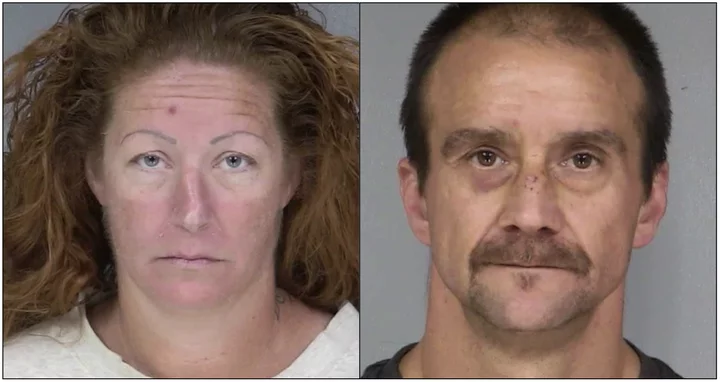
Charla “Merz” Rogers and Robert Johansen | HCSO
Press release from the Humboldt County Sheriff’s Office:
On July 3, 2022, at about 10:52 p.m., Humboldt County Sheriff’s deputies were dispatched to a multi-family residence on the 39000 block of Highway 299 in Willow Creek for the report of an assault.
Deputies arrived and located a 63-year-old male victim with major injuries outside the residence. The victim was transported to an out of area hospital for treatment. His current condition is unknown.
Witnesses on scene were uncooperative with law enforcement and a suspect was not located during the initial investigation. Due to the significance of the victim’s injuries, the Humboldt County Sheriff’s Major Crimes Division was requested to assist. Deputies and investigators continued their investigation throughout the night and into the following day. Through their investigation, deputies identified the suspect of the assault as 48-year-old Robert Glen Johansen.
On July 4, deputies served a search warrant at the residence and located Johansen hiding inside. He was taken into custody without incident. Additionally, 42-year-old Charla Anne Rogers aka Merz, was located at the residence and taken into custody for obstructing deputies’ investigation into the assault.
Rogers aka Merz was booked into the Humboldt County Correctional Facility on charges of obstructing a peace officer (PC 148(a)(1)) and accessory to a crime (PC 32).
Johansen was booked into the Humboldt County Correctional Facility on charges of assault with a deadly weapon other than a firearm (PC 245(a)(1)).
This case is still under investigation.
Anyone with information about this case or related criminal activity is encouraged to call the Humboldt County Sheriff’s Office at (707) 445-7251 or the Sheriff’s Office Crime Tip line at (707) 268-2539.

Man Arrested After Fleeing From Sheriff’s Deputies on Dirt Bike, Then on Foot, Sheriff’s Office Says
LoCO Staff / Tuesday, July 5, 2022 @ 10:34 a.m. / Crime
Press release from the Humboldt County Sheriff’s Office:

Jordan Bryce Morrison Booking Photo | Humboldt County Correctional Facility
On July 3, 2022, at about 10:35 p.m., a Humboldt County Sheriff’s deputy attempted a traffic stop on a dirt bike for a vehicle code violation in the area of North Bank Road near Hunts Drive in McKinleyville.
The dirt bike failed to yield, and a pursuit ensued. The deputy pursued the motorcycle for approximately three miles until it came to a stop near 2nd Road. The driver of the motorcycle, later identified as 29-year-old Jordan Bryce Morrison, then fled from law enforcement on foot. Morrison was quickly apprehended and taken into custody.
Morrison was booked into the Humboldt County Correctional Facility on charges of evading a peace officer (VC 2800.2), fleeing a peace officer (VC 2800.4) and driving with a suspended license (VC 14601.1).
Anyone with information about this case or related criminal activity is encouraged to call the Humboldt County Sheriff’s Office at (707) 445-7251 or the Sheriff’s Office Crime Tip line at (707) 268-2539.
Drug Courts Face Choice: Close or Expand Access After Prop. 47 Fallout
Nigel Duara / Tuesday, July 5, 2022 @ 10:30 a.m. / Sacramento

Illustration by Miguel Gutierrez Jr., CalMatters
Last year, Yolo County tried an experiment: No one arrested for simple drug possession would be prosecuted or sent to drug court. Instead, those arrested with drugs were directed to the county health department.
The county was responding to a trend across California: Significantly fewer people are choosing to go to drug court, in part because the penalties for drug possession were reduced by the passage of Proposition 47 in 2014.
Without the threat of potential jail time, people just weren’t showing up – participation in Yolo County’s drug court is down 86% since 2014.
“What I was trying to do was test the hypothesis that this was solely a health issue,” said the plan’s architect, Yolo County District Attorney Jeff Reisig. “It was a total failure.”
The rise and fall of drug courts in California has been a 30-year saga, with California’s first contemporary drug court opening in Alameda County in 1991 — the nation’s second.
The vision – to offer offenders a chance to avoid criminal conviction by entering a treatment program overseen by this special court – took off in California. By 1998, the state was pouring $4 million each year into the program to fund drug courts in 34 counties.
Then along came Proposition 47 in 2014, slashing sentences for drug possession in California.
And the popularity of drug courts began their downward slide.
A 2020 paper from the New York-based Center for Court Innovation surveyed California drug courts after the passage of Prop. 47 and found participation was down statewide by 67% between 2014 and 2018.
After its so-called failed experiment last year, Yolo County is attempting to combat sinking drug court participation.
Data provided by the county show that fewer than 12% of people referred to the county’s Health and Human Services Agency even answered an initial phone call to establish a treatment plan in the first six months of 2021.
Now, Reisig is rolling out what he calls Drug Court 2.0, which expands the kinds of drug crimes eligible for drug court diversion programs. And the new program compels participants to meet with a representative from the county health department while still in the courtroom.
“It’s having a lot more success than the phone calls did,” Reisig said.
Drug courts are part of a larger group of “collaborative justice courts” in California that includes mental health courts, homeless courts, DUI courts and veterans courts.
In drug court, participants usually attend after pleading guilty to a drug-related crime. If participants graduate – which usually means completing job training in addition to staying sober – the original criminal charges are reduced or dismissed.
Unlike most of the recent criminal justice debates in California, this one isn’t a question of conservative versus liberal, or evidence-based reforms versus tough-on-crime initiatives.
Instead, the benefits of both Prop. 47 and drug court are supported by evidence. Prop 47 has reduced recidivism rates and saved the state money. Drug courts have shown that, when implemented correctly, they can reduce recidivism rates (and also save the state money.)
But when these two darlings of the criminal justice reform movement collide, drug courts have lost out.
Now, as in Yolo County, drug courts across California are expanding eligibility requirements to draw in more participants or resigning themselves to a far smaller caseload post-Prop. 47.
A look at drug court participation in the counties that provided partial or complete drug court records to CalMatters shows declining participation statewide.
In San Diego County, more than 650 people participated in drug court in the 2013 fiscal year, two years before Prop. 47 was enacted. That was down to 255 people last year.
In Alameda County, more than 640 people attended drug courts between January 2014 and September 2015, an average of 30 people per month. After the passage of Prop. 47, that dropped to 14 people per month in the 2015 fiscal year, and it has stayed at that rate since.
San Mateo County officials saw fewer than five people per month in drug court after the passage of Prop. 47. The court is now considering expanding its eligibility requirements to include felony crimes.
There is no statewide repository for drug court data, nor much consistency in data collection among counties.
Some counties provided CalMatters every drug case since 2010; some said they didn’t have the data or didn’t know where to find it. Several asked for weeks to review their records. A few warned the search would be expensive.
“It’s the Wild West when it comes to drug courts,” said one court executive who was not authorized to speak to a reporter, noting that there is little control at the state level over eligibility requirements or data collection.
That’s partly due to the Legislature, which rejected a request from the state Judicial Council for five new administrative positions and $30 million each year to continue to run collaborative justice courts.
Prop 47. isn’t the only cause for declining rates of participation in drug courts, said Francine Byrne, the Judicial Council’s statewide adult drug court coordinator.
Prison realignment, passed in 2011 as AB 109, took away state funding for drug courts. Instead, money was given straight to county behavioral health departments, which didn’t use it all for collaborative courts.
The result, Byrne said, was that funding for collaborative courts dropped significantly. Some counties have kept their drug court operations afloat through federal grants, others just muddled through.
“There’s not really stable funding, so many of the courts know they can’t support a big program,” Byrne said.
Realignment and Prop. 47 both seemed to dramatically affect drug court participation in San Francisco County. In 2010, one year before passage of the realignment bill, 500 people attended drug court in the county. By 2012, it was down to 335.
By 2021, the total number of participants was 176.
Longtime opponents of Prop. 47, like California District Attorneys Association CEO Greg Totten, say the law hasn’t lived up to its promise on drug treatment.
“The promise of the law was, more treatment, less jail,” Totten said. “But there’s actually less treatment when people don’t go to drug courts.
“From a common sense standpoint, why go into a treatment program rather than just walk out of the courthouse free.”
###
CalMatters.org is a nonprofit, nonpartisan media venture explaining California policies and politics.
(VIDEO) Humboldt County Celebrates Nation’s Birthday at Fourth of July Festival in Old Town Eureka
Ryan Burns / Monday, July 4, 2022 @ 3:54 p.m. / Community
###
Look, it’s a strange and uneasy time in America. A bipartisan House select committee keeps dropping bombshells about the January 6 attack on the U.S. Capitol; the Supreme Court just issued a series of momentous decisions that reshaped the country; and our ongoing epidemic of gun violence continues unabated — the latest incident being a mass shooting at a Fourth of July parade in Chicago Highland Park, Illinois, that left at least six people dead and two dozen others hospitalized. Tumultuous times!
But it’ll take a lot more than that to dampen the spirits or dim the patriotism of the hundreds who gathered in Eureka’s Old Town for the city’s annual Fourth of July festivities Monday. The jubilant crowd, clad in a wide variety of star-spangled garb, celebrated America’s 246th birthday with live music, hot food, kids activities and vendors galore.
Get a flavor of the event in the video above. The festival continues until 5 p.m., and there’s a fireworks show over Humboldt Bay scheduled for 10 p.m.
Top Executives at Nordic Aquafarms’ U.S. Operations Mysteriously Part Ways With the Company
Ryan Burns / Monday, July 4, 2022 @ 11:39 a.m. / Business
UPDATE: Nordic Aquafarms Announces New Interim President Following Sudden Departure of Top Execs
###
Original post:

Heim and Naess. | File image/LinkedIn.
###
Nordic Aquafarms founder and president Erik Heim and his wife, Executive Vice President/Commercial Director Marianne Naess, have unexpectedly parted ways with the Norway-based company.
The news, first reported by seafood industry publication Undercurrent News, comes just days after the release of the Final Environmental Impact Report (FEIR) for a massive land-based fish farm on the Samoa Peninsula. The company has a similar facility in the works in Belfast, Maine, and the sudden departure of Heim and Naess appears to have caused surprise on both coasts.
But according to Lynette Mullen, an independent consultant who’s been working as community liaison for Nordic’s California-based subsidiary, the local development will not be affected by their separation from the company.
“While the departure of Marianne and Erik definitely represent a change at Nordic Aquafarms, the project has not changed and agreements made regarding additional discharge monitoring, renewable and non-carbon energy use, commuting incentives and more are baked into the project,” Mullen said in an emailed statement. “The rest of the Nordic team also remains in place, so technical know-how and experience for the project continues. As the County Planning Department has always emphasized, they permit projects, not people.”
Heim and Naess have been the faces of Nordic’s Humboldt County project since it was first announced, nearly three and a half years ago. Heim presented PowerPoint presentations before the Harbor District, the Humboldt County Board of Supervisors and in a series of public forums while Naess regularly met with local stakeholders, reporters and members of the public. Last summer she led a series of tours of the former pulp mill property, where Nordic plans to build its recirculating aquaculture system (RAS) facility.
Reached for comment over the holiday weekend, Naess emailed a statement to the Outpost, saying, “There is never a perfect time to leave a company, but this was the right time for Erik and me.”
Contacted via LinkedIn, Heim deferred to his wife, whose statement continued, though it did not explain the reason for their departure nor whether it was their decision to leave:
I am very proud of the work we have done in Humboldt over the past 3.5 years, and a solid foundation is laid for Nordic to complete the job. I have spent a considerable time in Humboldt and I have come to really appreciate the community and the people in Humboldt, and I will miss all of you.
I also want to thank everyone who has engaged with us along the way and a special thanks to the environmental groups who have fought hard to protect the environment and the community. I also want to thank Humboldt County, and Director Ford and his team for the excellent job they have done as lead agency for the CEQA process.
Erik and I will continue to work within the seafood/aquaculture industry in the future, but it is too early to disclose our plans yet.
Heim, for his part, published a post on LinkedIn under the title “MOVING ON,” in which he says that he and his wife have ended their time with Nordic and are now on vacation.
“It has been eight years since I founded the beginning of Nordic Aquafarms in our living room in Norway – a company to become one of the most profiled RAS companies in the world … ,” the post reads. “It has been an incredible journey leading to many talented people working together in Europe and the US to further the RAS agenda. And that journey will continue. I wish the company and our staff in the US all the best with the journey going forward.”
Maine-based Chief Financial Officer Brenda Chandler said in an email that the company will issue a press release after the Fourth of July holiday with further information. Asked a follow-up about why Heim and Naess parted ways with the company so suddenly and unexpectedly, and whether they quit or were fired, Chandler responded, “As I hope you and your readers will understand, unfortunately, like most companies, Nordic maintains a strict confidentiality policy regarding any employee personnel matters.”
Mullen said new leadership will be announced tomorrow. The project on the Samoa Peninsula is scheduled to come before the Humboldt County Planning Commission on July 28.
[UPDATED] New Hoopa Valley Police Chief Inaccurately Stated That Officers Destroyed $10.8 Million Worth of Illegal Cannabis on Tribal Land, Says He Intentionally Released Misinformation as a ‘Test’
John Ross Ferrara / Sunday, July 3, 2022 @ 11:29 a.m. / Cannabis , Crime , Tribes
UPDATE, July 4, 11:25 a.m.:
On Monday morning, Ramos took another stab at explaining his “apparent attempt at humor,” which he says was intended to spark conversation. (Mission accomplished!) He also says he used a gratuitously inflated dollar figure for the seized cannabis to “prove a point,” though he immediately adds that this “served no real objective.”
Eventually, Ramos apologizes for his actions:
In an effort to spark conversation about what is and is not important when discussing major hauls of illicit narcotics and its value, I have instead created controversy.
My apparent attempt at humor was also not well received and offended members of this community, which was not my intent.
For me, it was a challenge to the community to focus on the importance of eliminating large illegal marijuana cultivation sites and its negative effects on the land, its resources and the people. These sites are set up without tribal knowledge and in most instances, from outside groups that care nothing about the land and the damage they cause to the natural resources. The groups that typically create these sites are dangerous individuals that will do whatever is necessary to protect themselves from incarceration and the site from discovery. Members and Officers lives are inherently in danger when dealing with these groups. Luckily for us, there were no negative outcomes to officer safety in the discovery and destruction of this site.
To use the dollar value of the number of plants destroyed to prove a point served no real objective. I believed the amount was so preposterous being that it was ten times the current value, that everyone would have seen there must have been some mistake, typographical error or other reason and not what transpired, which was, that for many, became the focus of the press release.
I should know better and understand that police activity is one of the most watched and scrutinized of all professions. I should have realized that by knowingly inflating the value, it would become unnecessarily controversial. And by doing so, I have taken the focus away from the actual great job performed by the officers into something that is truly irrelevant, which is to bring the attention to myself.
I am apologizing for my actions and for the negative effects it caused. I will ensure that future press releases maintain professionalism and with limited controversy. I have worked daily on being responsive, transparent and accountable to the public during my short time here. It is evident by the growth of the number of people that now follow this page, the numerous people that stop me on the street to talk about ways to improve policing and show their support, and the many members who have come by or called my office looking for advise, understanding, and help.
This has become a reflection point.
I will continue to work harder to be the best leader I can be and to build the best police force possible for the Tribe and its people. It continues to be an honor to serve you and I ask for your continued support. Thank you.
The Hoopa Valley Tribal Police need your help in fighting crime. Please contact the police and report any suspicious individuals and activity by calling 530-625-4202.
###
Original post:

Chief Ramos poses with less than $10.8 million worth of weed. | Hoopa Valley Tribal Police
PREVIOUSLY: 4,500 Pot Plants Found at Trespass Grow on Hoopa Valley Tribal Land
###
New Hoopa Valley Tribal Police Chief Rolando Ramos released a statement today in response to a recent post on the department’s Facebook page that inaccurately claimed that officers destroyed $10.8 million worth of cannabis at an illegal grow site on tribal land last week.
The post resulted in a number of skeptical responses from commenters, prompting today’s statement. In his retraction, Ramos said that he intentionally used an inflated dollar amount for the approximately 4,500 plants to “test” the public’s reaction.
“The reason I did that was to test what the people saw as being most important,” Ramos said. “For the most part, the people of the Valley were happy to have us remove an illegal marijuana cultivation site, its criminal implications, as well as all of the environmental ramifications of these sites on the Valley.”
The chief went on to call this false information “obvious” and said that he based the inflated figure on a marijuana bust that occurred in Camden, New Jersey in 1997. However, it’s unclear why Ramos chose to base any information off the seemingly random, 25-year-old Camden case.
“There were also those that bantered and argued over the obvious overinflated value, which was humorous to see,” said. “It is apparent that there are a number of ‘marijuana experts’ in the Valley.”
Read the full statement From Hoopa Valley Tribal Police Chief Rolando Ramos:
This Monday, July 4, 2022, will be three months since I became Police Chief of the Hoopa Valley Tribal Police. During these past three months, I have made a concerted effort to use the Facebook page as a means to be more interactive, responsive and transparent to the people of Hoopa Valley.
It has been a pleasure to see how much attention to the page has grown over these last few months. It is impressive to see how many people support the police and want to see it succeed. I want to thank you for your support.
I recently posted a press release about a marijuana cultivation site that was destroyed by the HVTP. In it I used an overinflated value (even in this economy) of a pound of marijuana. I used the value of a 1997 marijuana bust that occurred in Camden, NJ.
The reason I did that was to test what the people saw as being most important. For the most part, the people of the Valley were happy to have us remove an illegal marijuana cultivation site, its criminal implications, as well as all of the environmental ramifications of these sites on the Valley. These individuals understood how important it is to eradicate these sites to improve their overall quality of life.
But there were also those that bantered and argued over the obvious overinflated value, which was humorous to see. It is apparent that there are a number of “marijuana experts” in the Valley.
I do ask that you continue to support the HVTP. Please attend my next ZOOM meeting on July 6, 2022 at 6 pm. to discuss ways to continue improving the Hoopa Valley Tribal Police.
The Hoopa Valley Tribal Police need your help in fighting crime. Please contact the police and report any suspicious individuals and activity by calling 530-625-4202.


