It was Roger Yale who started the fight that ended with his death, alleged murderer Gearold Sotolongo testified when he took the stand Tuesday in his own defense.
Sotolongo.
Sotolongo, 31, contradicted what other witnesses have said about the events of Feb. 13, 2016, when he stabbed Yale in the heart during an altercation at the Hoopa Mini-mart. Under questioning by defense attorney Zack Curtis, Sotolongo denied he and four other people were first arguing with Yale across the street from the mini-mart, then followed him while challenging him to fight.
“We were just going in the same direction,” Sotolongo said. He also denied other witness statements that Yale, while trying to avoid his pursuers, said he didn’t want to fight.
“Roger Yale never backs down,” Sotolongo insisted.
Surveillance video shows the group, except for Sotolongo, leaving the mini-mart. Yale sits down on a curb in apparent relief. According to Sotolongo he walked past Yale and Yale began insulting him and threatening to kill him. Sotolongo said Yale told him “I’ll lay you out like your uncle.”
His uncle Robert Blake, also known as Robert Colegrove, testified earlier in the trial that Yale and another man hit him over the head and left him in a coma.
Sotolongo said Yale “looked crazy” and seemed to be under the influence of methamphetamine. They struggled, with Sotolongo trying to grab Yale’s wrist. Yale carried a stick and Sotolongo knew he carried a knife because he had seen it earlier that morning.
Sotolongo, packing a switchblade knife he says he found under a bridge, eventually “stabbed at” Yale, who fell to the ground.
“Did you believe Roger Yale was fatally wounded?” Curtis asked.
“No,” Sotolongo said. In fact, he was afraid Yale might follow him and take up the fight again.
Sotolongo described Yale’s outburst as out of the blue, because he and Sotolongo hadn’t been arguing earlier. Sotolongo said it was Ed Davis, a man in his group, who was harassing Yale over $26 that Yale’s brother owed him. Yale refused to pay either the $26 or a partial payment of $5.
Sotolongo said he’d known Yale all his life and considered him a friend. He had no intention of killing him.
Deputy District Attorney Roger Rees, cross-examining Sotolongo, asked him “You stabbed Roger Yale in the chest because his brother owed Ed David twenty-six dollars?”
“No.”
“You stabbed him because he wouldn’t give Ed Davis a five-dollar down payment?”
’No.”
Rees switched gears.
“You really enjoy fighting, don’t you?”
“No.”
Rees then asked Sotolongo about the many fights he’s been in during his six-plus years in Humboldt County Correctional Facility. There was a long list of names, including now-convicted murderers Maxx Robison and Ulisses Rodriguez.
Sotolongo said that his cultural belief is he is obligated to beat up certain people in certain circumstances. Rodriguez, for example, is Hispanic. He also defended his attack on fellow inmate Sundust Holland. On Tuesday jurors watched a video of Sotolongo repeatedly punching Holland, who offered no resistance.
Sotolongo said he had asked Holland about “an incident,” and when he didn’t like what Holland told him, he gave him the choice of leaving or being beat up. Holland stayed, so Sotolongo had to attack him.
At the end of the video Sotolongo drops face-down to the ground. He testified a correctional officer had ordered him down. Rees asked whether he always obeyed officers’s orders.
“I’m not supposed to,” he said. “But I often do.”
Sotolongo denied he cut his long hair and shaved his full beard after the killing to disguise his appearance. He shaved and got a haircut “because a family member had died,” he said.
Sotolongo said he was arrested March 3, 2016, but jail records indicate he was booked on March 9. The weapon used on Yale was never found. Sotolongo said he gave the knife to Ed Davis, who has since moved from the Hoopa area.
Cross-examination was expected to continue this morning. Judge Larry Killoran is presiding over the trial.
Get out your crystal ball. Imagine Humboldt County in 10 years: Will
our population have grown or shrunk?
According
to the California Department of Finance’s most recent projection
(2019), Humboldt County is on the downhill slope, with falling
populations projected into the future. Meanwhile, the State of
California will grow, slowly, as a whole. This population projection
is important because it is used by the California Department of
Housing and Community Development to set the “Regional Housing
Needs Allocation” (RHNA, pronounced “ree-nah”). RHNA is the
total number of housing units that local governments are required to
plan for. If we get our growth projections wrong — if we grow
instead of shrink — we are likely to have under-planned for housing
development. And because housing cost responds to demand, if we fail
to meet this demand with increased supply, housing prices will only
go further up.
Let’s
unpack the Department of Finance’s model. At its root, it’s
fairly simple: births - deaths + migration. For Humboldt County, the
Department of Finance reports that deaths are already outpacing
births, and predicts that net migration into the county will not
compensate. Thus, we are projected to see a net population loss.
Migration — people moving within California (say from the Bay Area
to Humboldt) or people moving from elsewhere to California — is the
most critical variable in the projection, but also the hardest to
predict. Using data like voter registration or driver’s license
applications, the Department of Finance can get a rough picture of
migration trends. For the most recent model, the department of
Finance used migration data from 2010 to 2018 to project forward
likely migration. This period saw slightly more people move out of
the county than the number who arrived here from somewhere else.
Because we had a slight downward trend, the Department of Finance
predicted that this trend would continue into the future.
So,
are we likely to see a declining population? There is strong reason
to doubt.
While
only three years old, the model is already outdated. The model
projected a total population of 134,214 in 2020. In reality, the 2020
census counted 136,310 Humboldters. So the model was wrong by 2,096
souls. More than the entire population of Garberville. More than
Ferndale. More than Trinidad and Blue Lake combined. 2,096 people,
which at 2.2 people per household, means some 953 households.
Housing
prices have reflected this increased population. Housing prices
across the county have increased dramatically in the last four-year
period. The March 2018 Humboldt Economic Index reported that the
median home price was $275,000. Just four years later, the March 2022
index reports that the median price is now $450,000. Increases in
housing prices are multi-causal, but one plausible explanation is we
have more new residents.
Why
was the model so far off? The answer likely lies in the years used to
predict migration. While the model looked at data from 2010-2018,
which showed a net loss of people coming into the county, 2017
onwards seems to show a new trend: population growth driven by
migration. Arcata, Humboldt’s second-largest town, provides some
clues. 2017 marked an interesting turning point for the city.
Historically, Arcata’s population was largely tied to student
enrollment at the university — i.e., with increased enrollment, the
city’s population would respond largely in kind. In 2017, however,
then-Humboldt State University saw a dramatic downturn in enrollment
yet Arcata saw an increase in population. Weird. Population in the
city continued to build despite successive years of smaller and
smaller student enrollment. People were moving to Arcata but they
weren’t students.
There
are many forces that will likely continue to draw migration into
Humboldt County. Humboldt has seen migration into the county from
individuals from Mendocino, Sonoma, Butte and elsewhere who were
burned out of their houses. Many
people — myself included, sadly — expect this trend
to continue. The impacts of climate change don’t need to be as
blunt as losing a home to fire to cause climate migration. With the
effects of climate change making life more uncomfortable in, say,
Sacramento in the summer — who wants to experience a week of 105+
weather? — we should anticipate more internal migration from areas
that will experience more severe weather as a consequence of climate
change to our coastal-moderated climes.
Covid
has changed office culture and new telework flexibility allows for
folks to call Humboldt home even if their place of business is
hundreds of miles away. The second bedroom as an office appears to be
a new normal, an unanticipated product of the pandemic. Other drivers
of migration into Humboldt County include Cal Poly Humboldt, which
anticipates another 5,600 students by 2028, and potentially Nordic
Aquafarms and our much-anticipated offshore wind industry are also
likely to drive additional residents to the area.
Imagine
that the Department of Finance got it wrong. That means our RHNA
numbers are also low. The 2019 population projections fed into the
2019 RHNA allocations, which govern jurisdiction growth planning
until 2027. Already with a projected declining population, the state
mandated that the county plan for 3,390 new housing units. Imagine if
Humboldt County’s population grew 1 percent per year. By 2027, the
end of the current planning horizon for RHNA, our population would be
144,858 — 10,810 more folks than what Humboldt County is building
for. At 2.2 people per household, we need 4,914 new homes in
additionto the 3,390 that we already need to plan for.
For
some people, projected population growth in Humboldt will be read
with alarm. But remember, unless you are indigenous to this region,
you also moved here relatively recently. We can’t stop people from
moving here. Plus, new people can be great. New potential friends.
New ideas and culture. New businesses and new jobs. Maybe even one of
those new businesses will be a Korean restaurant. (A boy can dream.)
But we need to make sure that there is new housing both to meet our
current needs and to help house our new friends.
Instead
of planning for the state-issued RHNA numbers, which we are legally
obligated to do, we should anticipate and plan for even greater
numbers. We can plan for growth that protects the places that make
Humboldt special — the forests, fields and farms — through
building housing in our urban areas. Local jurisdictions are already
hard at work. Arcata is working through the Gateway Area Plan. Eureka
has its parking lots-to-apartments program. The county is (too)
slowly developing the McKinleyville Town Center. There is room for
more. Let’s embrace housing as a Humboldt value because if we
don’t, the Humboldt we love — weird, rural, free-spirited —
will be priced out of existence.
###
Tom Wheeler is the executive director of the Environmental Protection Information Center.
Doris
Rose DeLashmutt peacefully “called it curtains” on Friday, May
20, 2022 with friends and family surrounding her.
Her parents,
Filomena and Michele Romanini, immigrated from Antraccoli, Italy in
1921 and made their home in Orick. She was born on
Monday, August 10, 1931 in a house that once stood directly on the
current Orick Fairgrounds. The Romanini brood consisted of six
children and she was the prized baby of the family. Doris was proud
to be from Orick and every chance she got, she’d tell you a story
from her charmed childhood. Some of her favorites include the time a
bunch of young Orickians took a makeshift raft out on Freshwater
Lagoon, not one of them could swim and she marveled that they all
survived the adventure. The one and only time she was kicked off a
school bus by the driver, was for talking; interestingly the school
bus driver happened to be her older brother, Leo. She was left on the
side of the road, hitchhiked and got a ride from a logging truck.
Doris
loved her siblings and always said she never would have learned to
ride a bike if it wasn’t for her sister Norma’s paper route.
She
had a couple of favorite childhood jobs, one was as the usherette and
soda jerk for the first and only movie theater in Orick and the other
was working for the Webster household, Orick’s unofficial finishing
school, where she proudly learned to set a table. Doris wasn’t a
smoker and it wasn’t because she hadn’t given it a try; she said
she snuck a few when she was little but “it never stuck.”
She
graduated from Arcata High in 1949 and was a jock before it was
fashionable. Of note she was the president of the Girls’ League and
helped with the annual Hi-Jinx (let your imagination figure that one
out).
Doris
graduated from Humboldt State College with a teaching credential in
the days when female teachers would get fired if they went to a bar
and certainly couldn’t be pregnant and keep their jobs. She began
her teaching career at her alma mater in 1954, becoming Orick’s
first P. E. Coach. She finished her career at Pacific Union in
Arcata. Mom was a favorite for many students and to this day former
2nd graders stop to say hello.
She
met her husband, Wade J. DeLashmutt in Orick at a dance, got married
on July 3, 1955 in Orick and the rest is history. They had three
children.
In
1972, she was diagnosed with Rheumatoid Arthritis and her life
dramatically changed. From that point on, she never worked outside of
home. There are very few times her children can remember her
complaining of the pain. She was the carpool queen before
“carpooling” was a thing. She babysat countless kids that were
sick when their parents couldn’t stay home to take care of them.
She was known for helping out her elderly friends, sometimes driving
them to the grocery store or taking them to doctor’s appointments.
She also had a way with rascally youth, one such rascal still
affectionately refers to her as “Mahzie”. If you stopped by the
DeLashmutt house on any given day, there would be a wheel of dry jack
cheese sitting out waiting to be grated. Doris was the poster child
for Ma Bell. She was on the phone non-stop calling old and new
friends alike every day and her family would joke that if the phone
didn’t ring for five minutes, it must have been off the hook. One
of her nieces was impressed with her open mindedness around religion
and politics.
She
came to life when her older sisters, Rita and Norma, stopped by to
visit. They would sit around the table into the wee hours and the
conversation was exclusively in Italian, the language that tied them
to their Italian roots. To this day the smell of chopped parsley,
onions and celery will transport her children to a moment in time
when Zia Bruna and Zio Picchi would come to the house for an allday
production that ended in enough spaghetti sauce to feed an army.
In
her final days, she said she thought she’d have more time on this
planet. Well, for a 90 year-old who spent her whole life in beautiful
Humboldt County, she lived a good, full life; may we all be so lucky.
She
is preceded in death by her parents, Filomena and Michele Romanini;
siblings, Robert (Uncle Pete), Rita, Joe, Leo, and Norma.
She
is survived by daughter, Lori Vogt and son-in-law, Randy Vogt; son,
Wade DeLashmutt Jr. and daughter-in-law, Sabrina DeLashmutt;
daughter, Dina Macdonald and son-in-law, Roger Macdonald and
granddaughters Patricia and Sabrina Macdonald.
The
family would like to thank Hospice of Humboldt and the Threshold
Singers.
On
Saturday, June 4, 2022 Doris will have her official send off at St.
Mary’s Church in Arcata with a Rosary at 9:30 a.m. and Funeral at
10 a.m. Reception immediately to follow at the Portuguese Hall in
Arcata. In lieu of flowers, please send donations to Hospice, Betty
Chinn, Food for People or your favorite charity.
###
The obituary above was submitted by Doris DeLashmutt loved ones. The Lost Coast Outpost runs obituaries of Humboldt County residents at no charge. See guidelines here. Email news@lostcoastoutpost.com.
Delores
Irene Sanderson Watson (Affectionately Known As… Sis) June
3, 1953 - May 13, 2022
Delores
was born on June 3, 1953 in Hoopa and left on May 13th 2022 three
weeks shy of her 69th birthday. She went to sleep in her chair just
the way she wanted, with her husband Darrel by her side.
Delores
spent her youth in Hoopa, McKinleyville and Fontana, Calif. She graduated
high school in 1971 in Fontana and married Darrel in 1973. In
1980, she moved back home to the Hoopa/Willow Creek area with Darrel
and their two older sons. In 1983, they had another son and raising
the boys kept her busy.
When
she had free time she would sew and do embroidery. She
was an excellent seamstress and could do beautiful embroidered pillow
cases, hand towels and tablecloths. She made baby blankets, pajamas
for her boys and was always the person you asked if you needed
something hemmed by hand.
Delores
loved her family, family bbq’s, spending time with her
grandchildren/great grandchildren, Black Hills Gold, purses, talking
on the phone and watching her favorite soaps (not necessarily in that
order).
She
raised three boys, so there was a fair amount of shenanigans that she
endured from them and their friends. There was also shenanigans from
her brothers and some of her cousins. She took it mostly in stride
but when she got fed up she would certainly tell you about it.
Delores
considered her sons’ friends part of her family and many of them
called her Mom. She was considered an older sister by some of her
cousins and was always willing to help when she could.
RIP, if only Heaven had a phone!
Delores
is survived by her husband of 49 years, Darrel Watson Sr., Sons:
Christopher (Devin), DJ (Alex). Grandchildren:
Christopher Jr., Alyssa, Victoria, Taylor, Steven, Sandra, Shawn and
Travis. Five great-grandchildren Siblings:
Sonny Sanderson, Janet Rankin, Tracy Williams,
Anna Marie
Kessler and numerous nieces, nephews, cousins and her good friend
Maria
She
is predeceased by Shawn Watson (son) Nelda and Garland Morgan
(parents) Leonard Sanderson (father) Nancy Sanderson (grandmother)
Roy Morgan (brother) and numerous aunts and uncles.
Per
her wishes there will be no services. Arrangements
are being handled through Paul’s Chapel in Arcata.
###
The obituary above was submitted by Delores Watson’s loved ones. The Lost Coast Outpost runs obituaries of Humboldt County residents at no charge. See guidelines here. Email news@lostcoastoutpost.com.
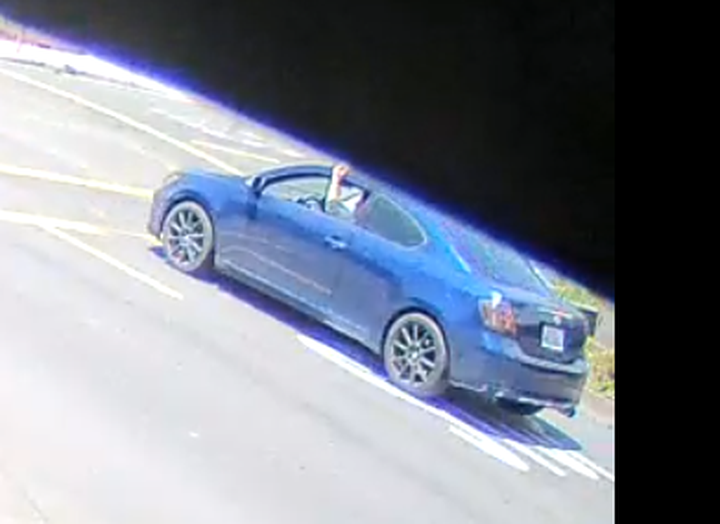
As of Tuesday afternoon (May 24th 2022), Detectives from the Fortuna Police Department finished processing closed circuit
surveillance video which was acquired from businesses located within the proximity of the Coast Central Credit Union in Fortuna.
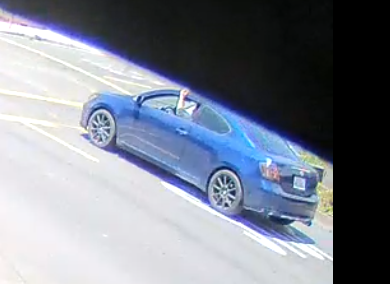
As a result, it has been determined that the suspect in this case was driving a dark blue Toyota Scion, “TC” with black rims. The
vehicle model is believed to have been produced between 2005 and 2010.
The Fortuna Police Department would like to thank the local businesses who provided video surveillance footage for this incident.
The Fortuna Police Department continues to ask for the public’s assistance in identifying the suspect and/or suspect vehicle.
Dr.
Candy Stockton was named Humboldt County’s new Health Officer,
following confirmation by the Board of Supervisors today.
Dr.
Stockton, a fourth-generation Humboldt County native, received her
medical degree from Loma Linda University School of Medicine and is
board certified in Family and Addiction Medicine. She served as the
Medical Director for Shingletown Medical Center in Shasta County for
nine years and most recently spent nearly five years as the Chief
Medical Officer for the Humboldt Independent Practice Association in
Eureka.
“Having
spent years practicing medicine in rural Northern California has
given me a deep understanding of the challenges inherent in medicine
and community health in rural and isolated areas,” Dr. Stockton
said.
In
addition to practicing medicine, Dr. Stockton is involved in
advancing the treatment of substance use disorders with a focus on
pregnant and parenting individuals at
the statewide
level. She is also a trainer and consultant for the national Opioid
Response Network and a contributing member of the California Maternal
Quality Care Collaborative’s Mother & Baby Substance Exposure
Initiative Toolkit.
Humboldt
County Public Health Director Sofia Pereira said she is pleased to
welcome Dr. Stockton to the Public Health team. “Her
diverse experience in delivering care and working across
organizations to improve health outcomes in rural communities aligns
perfectly with Public Health’s mission,” Pereira said. “Along
with supporting our clinical duties, Dr. Stockton will be involved in
advancing the community health improvement plan priorities: substance
use disorder and suicide prevention, adverse childhood experiences
and housing and homelessness.”
Dr.
Stockton lives in Eureka with her husband and two children. In her
free time, she enjoys going to the beach and trying new recipes. She
is currently serving on the board of the Sequoia Park Zoo Foundation,
where she has many happy memories with her grandparents, parents and
children.
Dr.
Stockton’s first day is expected to be July 18. She replaces Dr.
Ian Hoffman who stepped down from the position in early March. Drs.
Kate Estlin and Donald Baird have been filling the position part time
and will stay on to support the transition.
California reported its first case of suspected monkeypox today in Sacramento County. Officials were alerted of the possible case three days prior by a medical provider.
The individual recently returned from a trip to Europe where clusters of cases have been recently reported. Officials did not disclose the date the individual returned from their trip nor any demographic information about them.
Monkeypox in British patients. Photo: UK government, via Wikimedia
Sacramento County Public Health Officer Dr. Olivia Kasirye said the individual is not hospitalized and is in isolation.
“There is minimal risk to the general public,” Kasirye said.
While the health advisories and Sacramento County Division of Public Health’s press conference today are reminiscent of the early days of the COVID-19 pandemic, experts say monkeypox is less transmissible than coronavirus and the disease tends to be less severe. It’s not going to be the next COVID, they say.
Health experts say people should be cognizant, but not worried at this point.
Initial test results from the county public health laboratory indicated the individual was infected with a virus in the same family as monkeypox. Specimens were sent to the Centers for Disease Control and Prevention and the state health department Monday for confirmation of a monkeypox diagnosis. Kasirye said there is no estimation for when the CDC will be able to confirm results, but based on symptoms and preliminary testing “confirmation is likely.”
Sacramento County health officials are working with the CDC and California Department of Public Health to identify close contacts of the individual with the suspected case and those who may have been on the same flight from Europe. Kasirye did not disclose how many people may be considered close contacts.
The state health department has directed doctors to immediately alert their local health department if they suspect a positive case.
State testing capacity is limited given the rarity of the disease, but officials are working on increasing capabilities and are prepared to receive samples, according to the department directive.
Although cases in the U.S., including California’s, have been mild, Kasirye said it is still important to limit transmission.
“The concern for us in public health is always that there might be some people that end up with severe disease and so we want to make sure that we prevent any additional cases,” she said.
Here’s what you need to know about monkeypox:
What are the symptoms?
Symptoms for monkeypox disease usually include fever, muscle aches, swollen lymph nodes and often a rash. In some recent cases symptoms included lesions in the genital area, which may be confused with other more common infections, like syphilis or herpes, according to the CDC.
“These rash lesions can appear in parts of the body that can cause serious complications,” said Jennifer McQuiston, deputy director of the CDC’s division of high consequence pathogens and pathology, during a Monday press call.
“So if the rash lesion occurs in the eye, for example, that person may have their vision endangered. If the lymph nodes become so swollen that breathing is compromised, that’s a concern.” But those are rare, McQuiston said.
The incubation time is anywhere from five to 21 days, and a person is considered infectious when symptoms start until the skin lesions have fully healed.
“It’s not a situation where if you’re passing someone in the grocery store, they’re going to be at risk for monkeypox,” McQuiston said. People most at risk are those with intimate contact with an infected person, as well as family members or health care workers caring for someone with an active infection.
Is there treatment for monkeypox?
There is no specific treatment for monkeypox. Most infections are mild and get better on their own within two to four weeks, according to public health experts.
Because of its similarity to smallpox, smallpox vaccination may also protect people from monkeypox infections. Routine smallpox vaccination stopped after the disease was declared eradicated in the 1980s, so smallpox vaccines aren’t generally available to the public. The CDC has said that in case of a monkeypox outbreak in the U.S., it would release guidance on who should get vaccinated. “We’re working now to develop recommendations to ensure that the vaccine supplies that we have are available to those who need it,” McQuiston said on Monday.
Where did it originate and why is it spreading now?
The first case of monkeypox in humans was first recorded in the 1970s, in the Democratic Republic of the Congo, where most infections are today, according to the Centers for Disease Control and Prevention. The monkeypox is endemic in West and Central Africa and rare in other parts of the world, which is why the recent outbreaks in countries outside of Africa are causing alarm. At least 12 other countries, mostly in Europe, have confirmed monkeypox infections as of today.
“It’s absolutely 100% not going to be the next COVID-19,” said Dr. George Rutherford, an epidemiologist at the University of California, San Francisco. “It’s a-difficult-to-transmit disease and it’s not a particularly severe disease.”
What makes COVID-19 so dangerous is that it can spread easily through the air. This isn’t the case with monkeypox. The coronavirus was also novel; monkeypox isn’t.
In 2003, six U.S. states — not including California — reported 71 monkeypox cases to the CDC. In that instance, most people were exposed to infected prairie dogs. Two children were hospitalized, but recovered.
###
CalMatters.org is a nonprofit, nonpartisan media venture explaining California policies and politics.