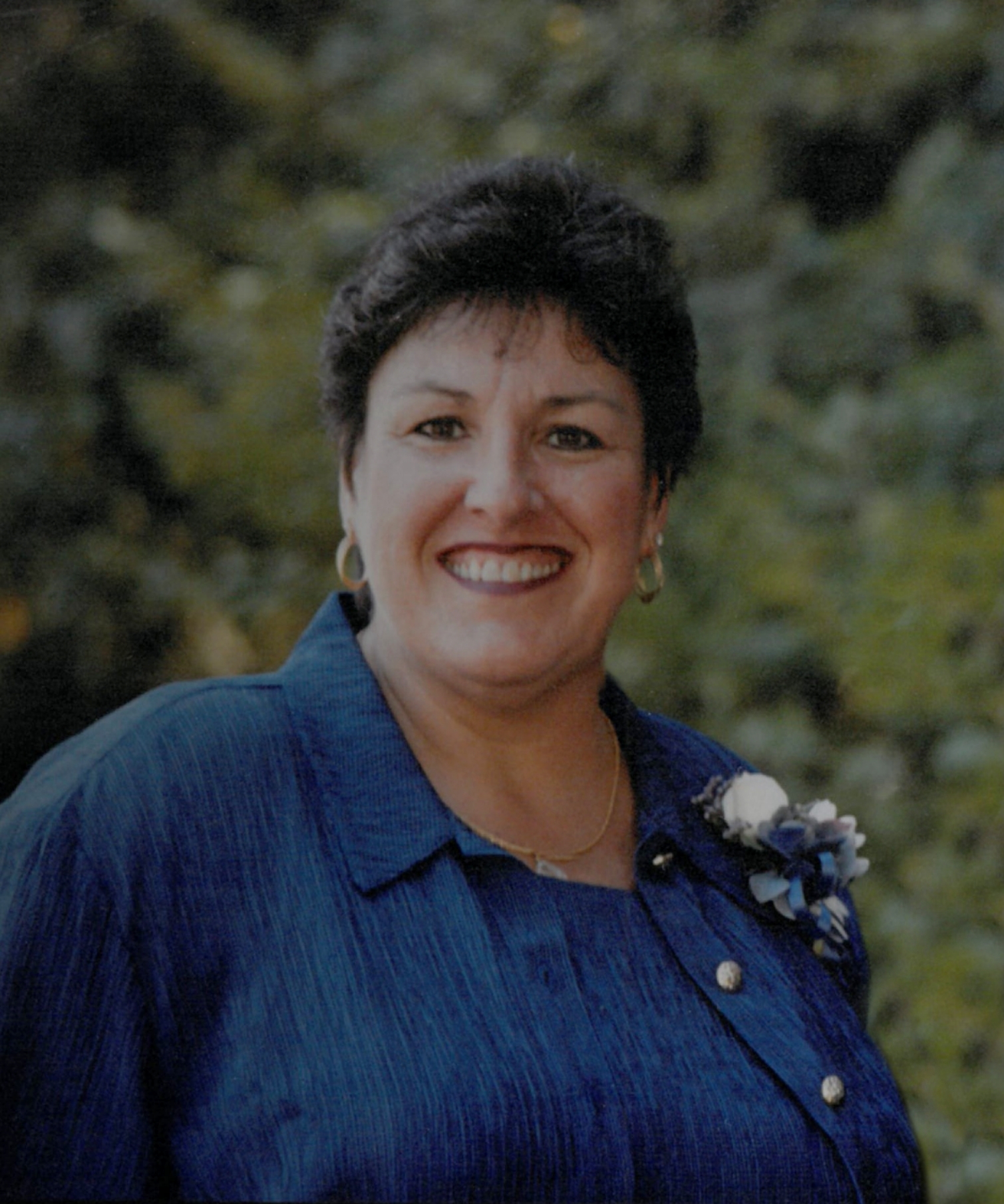
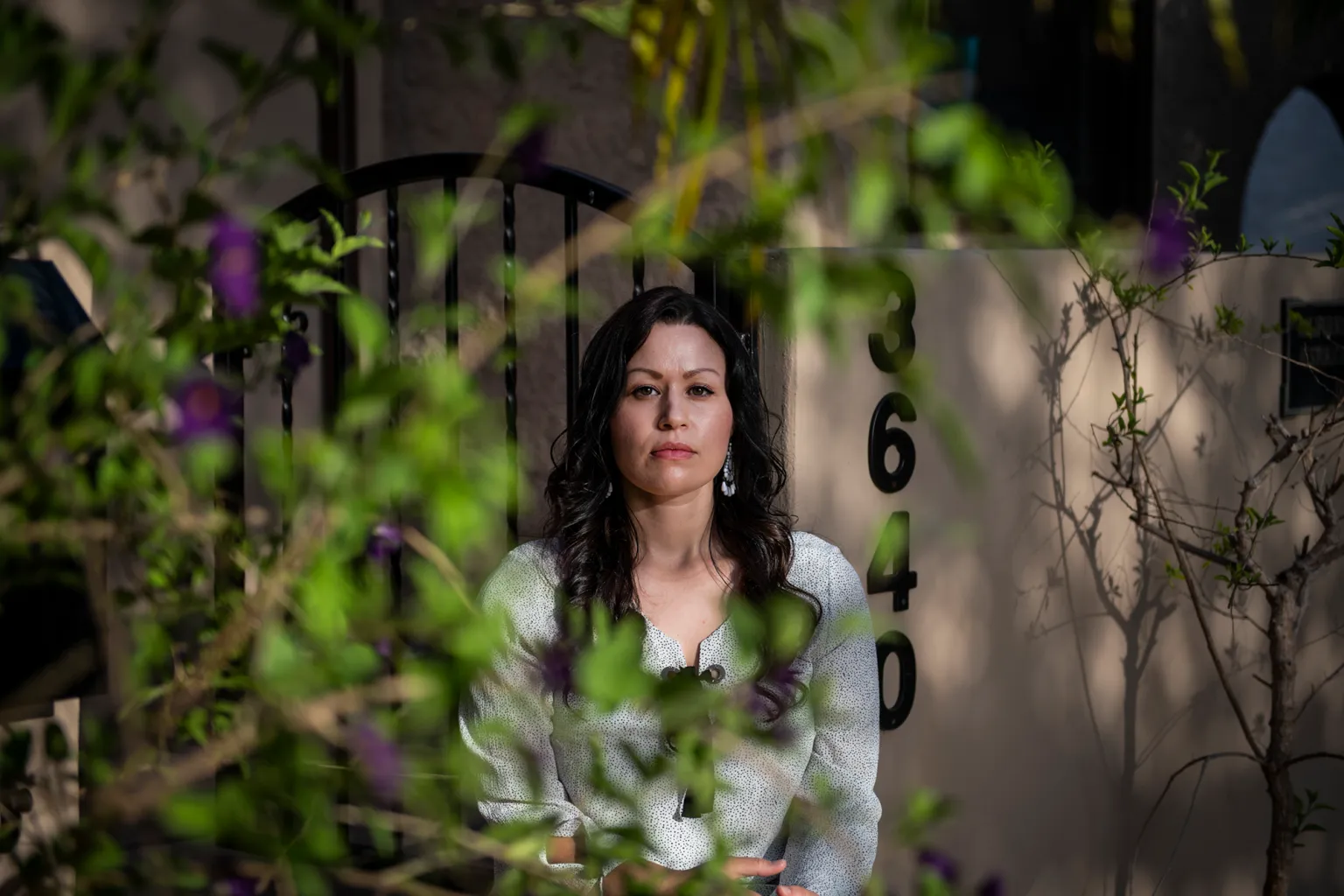
Young, Judith Ann was born on
August 4, 1953 in Eureka. Judy passed peacefully in her sleep on
March 25, 2022 in Carmichael, Calfornia. She was preceded in death by her
parents George Young Sr and Gloria Young. She is survived by her
brother George Young (wife Kathy Young), her uncle and aunt Bud and
Shirley McMahan, her niece Kelly Hosner (husband Brett Hosner) and
nephew Ryan Young (daughter Aris Young and son Aiden Young).
Judy
had an active and varied life. She graduated from Eureka High School
in the Class of 1971, then attended College of the Redwoods while
working for rest homes in the Eureka area. She followed her parents
to Sacramento where she retired following nearly 25 years working for
several state agencies including CalTrans, DMV and EDD.
Judy
will be interned in a crypt alongside her parents following a
memorial celebration for family and friends to be held at Ocean View
Cemetery/Sunset Memorial Park in Eureka, CA at 11 a.m. on May 20,
2022.
###
The obituary above was submitted by Judy Young’s loved ones. The Lost Coast Outpost runs obituaries of Humboldt County residents at no charge. See guidelines here. Email news@lostcoastoutpost.com.
Gather ‘round, public watchdogs! Civil Grand Jury report season is upon us, and the first in this year’s batch just dropped. It examines the county’s weed permit processes and finds them lacking.
Quick refresher here: The Civil Grand Jury is an independent body of 19 citizen volunteers. Sworn to secrecy, jurors do most of their work behind closed doors, functioning as an instrument of the state court system. Their duty: to investigate and report on the institutions of local government, ensuring that public monies are being handled sensibly, that t’s are being crossed and i’s dotted, etc. Basically, as the website puts it, they seek to ensure “honest, efficient government in the best interest of the people.”
Three cheers!
As noted above, the jury’s first report this year — which carries the mildly snide title “Permitted (Eventually)” — relays its findings from an investigation into Humboldt County’s permitting process for
commercial cannabis cultivation. In the course of its investigation, the jury reviewed relevant rules, regulations and codes; interviewed county officials and employees; explored the proprietary online permit management software used by the county (Accela); conducted “internet research” and more.
Among the jury’s findings: As of January 2022, the county had more than 900 pending cannabis permits, though many are amendments to existing permits. According to the report, the permit applications get handled on a “first-come first-served” basis.
Unfortunately, the report notes, the Accela software employed by the county can’t accept credit card payments, which means the public can’t use the software’s online application process. Another shortcoming of the software as deployed: employees in the Public Works Department are limited to
responding to referrals from employees in the Planning & Building Department.
The program does allow members of the public to access and view the status of permit applications, though the Civil Grand Jury report calls the process “cumbersome.”
The report also calls out a controversial element of the county’s weed-grow permitting process — namely, that applicants are allowed to “self-certify” that roads leading to their cultivation sites meet the county’s Category 4 roadway standards, and this self-certification is
not always verified.
Ultimately, the report lists seven recommendations, which we’ll paraphrase below:
The county should pay to upgrade the Accela system so applicants can complete the application,
including payment, online, thereby reducing the need for them to physically come into the
Planning and Building office.
The county should pay to improve Accela so that employees in Planning and Building can complete more tasks, including reviews, calculations, permitting and reporting.
The county should pay to “fully implement Accela to a level which enables Public Works to meet its specific needs.” (This one is a bit redundant, perhaps.)
In the county’s Citizen Access Portal, the Planning and Building Department should give the public specific
instructions on how to search a location without creating an account in
Accela or contacting the Planning and Building staff.
When the Planning and Building
Department gets notified that a state provisional license has been approved or denied, staff should immediately act on the corresponding interim cannabis permits.
For applications pending
more than 30 days, the Planning and Building Department should notify applicants what they need to do for approval.
Before the end of the year, Public Works employees need to conduct actual verification that a roadway
meets Category 4 requirements.
The county is not obliged to adopt the Civil Grand Jury’s recommendations, but legally it does have to respond to the report.
For this one, the Civil Grand Jury is requesting responses from Planning and Building Department Director John Ford and Public Works Department Director Thomas Mattson sometime in the next 60 days.
The jury is also requesting a response from the Humboldt County Board of Supervisors within 90 days.
Today, Representative Jared Huffman (D-San Rafael) announced the distribution of over $1 million in historic preservation funds (HPF) to 17 tribal historic preservation offices in California’s Second Congressional District. The HPF grants fund preservation programs at tribal offices ensure preservation of tribal sites and cultural traditions.
“My district is home to many tribes, whose culture and history have been a deeply important part of the fabric of our community since time immemorial,” said Rep. Huffman. “Thanks to the investments made by Congress in this year’s funding bill, over a million dollars is heading their way to preserve places of cultural significance, ensuring America’s diverse history is protected and celebrated.”
These funds, totaling $1,166,615, are being delivered to 17 tribes in California’s Second Congressional District:
$65,029 to the Bear River Band of the Rohnerville Rancheria
$65,281 to the Blue Lake Rancheria
$65,270 to the Cher-Ae Heights Indian Community of the Trinidad Rancheria
$65,184 to the Dry Creek Rancheria Band of Pomo Indians
$66,925 to the Elk Valley Rancheria
$66,378 to the Federated Indians of Graton Rancheria
$81,586 to the Hoopa Valley Tribe
$69,511 to the Hopland Band of Pomo Indians
$67,921 to the Karuk Tribe
$67,275 to the Kashia Band of Pomo Indians of the Stewarts Point Rancheria
$65,433 to the Pinoleville Pomo Nation
$66,258 to the Resighini Rancheria
$77,617 to the Round Valley Indian Tribes
$67,285 to the Sherwood Valley Rancheria Band of Pomo Indians of California
$64,732 to the Tolowa Dee-ni’ Nation
$65,512 to the Wiyot Tribe
$79,418 to the Yurok Tribe
Administered by the NPS, these funds are appropriated annually by Congress from the Historic Preservation Fund (HPF). Since its inception in 1977, the HPF has provided more than $2 billion in historic preservation grants to states, tribes, local governments, and non-profit organizations.
Press release from the Humboldt County Sheriff’s Office:
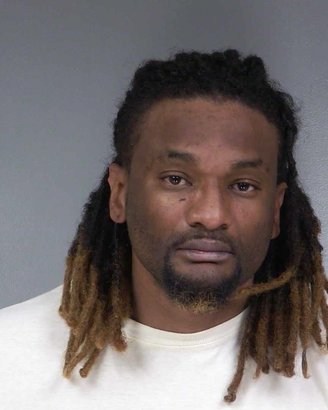
On May 7, 2022, at about 3:04 p.m., a Humboldt County Sheriff’s deputy was on patrol in the area of O’Neil Lane, in the county’s jurisdiction of Eureka, after receiving multiple reports of a suspicious individual attempting to gain access to residences in the area. The individual was recognized by deputies through residential video surveillance as 39-year-old Melvin Dwayne Matthews Jr., who was known to be wanted by the Arcata Police Department on charges of vehicle theft.
While patrolling the area, deputies located Matthews Jr. outside a residence on the 2900 block of O’Neil Lane. Upon seeing deputies, Matthews Jr. fled into the residence. Deputies contacted the owner of the home, who allowed deputies to search the residence for Matthews Jr. Deputies located Matthews Jr. hiding in a crawlspace in the attic of the residence. He was taken into custody without further incident.
Matthews Jr. was booked into the Humboldt County Correctional Facility on charges of vehicle theft (VC 10851(A)).
Anyone with information about this case or related criminal activity is encouraged to call the Humboldt County Sheriff’s Office at (707) 445-7251 or the Sheriff’s Office Crime Tip line at (707) 268-2539.
California is poised this year to make changes to what some call “hidden” court fees, hundreds of dollars often tacked onto traffic tickets and minor violations that can increase their cost nearly tenfold. But so far, state officials disagree on how far to go.
Known as a civil assessment, the fee is imposed on hundreds of thousands of Californians as a penalty for failing to pay a ticket by a deadline or failing to appear in court on a charge.
The vast majority of the fees are issued in traffic or infraction cases. A fine can be imposed each time a deadline is missed.
A $300 maximum fine can be added for violations as minor as jaywalking and on tickets that originally cost as little as $35, according to the Debt Free Justice California, a coalition of organizations, policy experts and legal advocates opposing “unfair ways the criminal legal system drains wealth from vulnerable communities.”
California has one of the highest late fees in the nation, the coalition says. The group says the fees trap low-income Californians in a cycle of ballooning debt with the courts.
Money collected from the extra charges bolsters court coffers, leading advocates to accuse the state of paying for its judicial system by charging those who can least afford it.
The fees generate nearly $100 million annually, and the courts retain more than half.
In Riverside County, the fees that the court system kept made up 14% of its budget, according to a report published by the coalition this year.
The report gave as an example a San Lorenzo resident who is a CalWorks recipient and mother who could not afford to pay for traffic violations. She was charged late fees on traffic citations five times since 2009, amounting to more than $1,500 of debt, about double the cost of the original tickets.
It made her ineligible for a driver’s license for 13 years, the report said.
“They were trying to take all of this money away from us,” she said, “but we didn’t have any in the first place.”
Civil assessment fees are disproportionately borne by people of color, who are overrepresented in traffic stops compared to their share of the population, the report said.
In January advocates sued San Mateo County Superior Court challenging its practice of automatically charging the $300 maximum fee in all traffic cases with a missed deadline.
Gov. Gavin Newsom in his January budget proposed halving the fees, to a maximum of $150, and spending $50 million to backfill court budgets.
The proposal by some lawmakers and the Debt Free Justice coalition to eliminate the fees entirely could cost about twice as much. Senate leaders endorsed that plan in their budget proposals last month, as they announced an unprecedented $68 billion projected budget surplus.
Too poor for tickets
The coalition said it hopes Newsom will back full elimination of fees when he unveils his revised budget proposal this week. H.D. Palmer, a spokesman for Newsom’s Department of Finance, declined to comment.
The Judicial Council, which governs the court system, has supported making changes to civil assessments. In a 2017 report a commission of courts officials recommended limiting the use of civil assessments or letting fines be converted to community service.
“We’re grateful for the efforts of both the Governor’s administration and the Legislature to reform the system and provide necessary backfill funding for the judicial branch,” said Martin Hoshino, administrative director of the Judicial Council, in an email. “We support the Governor’s proposal and are committed to working with him and with legislative leaders in the coming weeks as they finalize the state budget.”
The proposals come after the state eliminated dozens of court fines and fees over the past two years that advocates said disproportionately affected low-income criminal defendants. The state repealed such charges as the cost of a public defender, drug testing, and probation and supervision services.
Newsom also signed a law last year that limits the state’s use of wage garnishments to claw back those debts and another that expanded a pilot program allowing Californians to ask the courts to reduce ticket fines they can’t afford to pay.
Last year a bill to eliminate civil assessments passed the state Senate but was gutted in the Assembly. The Debt Free Justice coalition said at the time it couldn’t get Newsom to agree to a deal to eliminate the fees.
His administration told lawmakers the fee should be reduced but remain to motivate defendants to come to court.
“We feel the 50% reduction strikes a balance of providing immediate fiscal relief for all Californians and also preserving the viability of the civil assessment being used as a tool to keep individuals accountable, to compel individuals to appear in court proceedings,” Mark Jimenez, principal program budget analyst at the Department of Finance, told a Senate budget subcommittee in February.
Jimenez said the penalties are an alternative to issuing warrants to demand court attendance.
But Senators were unconvinced that the fees were an effective motivator for those too poor to pay traffic tickets.
“If they don’t have the money … how is that any incentive to come in?” said Sen. Dave Cortese, a Democrat representing San Jose. “You either have it or you don’t.”
Sen. Dave Cortese has taken at least
$599,000
from the Labor
sector since he was elected to the legislature. That represents
27%
of his total campaign contributions.
The coalition surveyed 200 Californians with recent traffic citations for its report; 73% said they did not know they would be issued a late fee for failing to appear or to pay, and 38% said extra fees would not have helped them make a timely payment.
Advocates suggested text messages would be more effective at getting defendants with demanding work schedules to court.
###
This article is part of the California Divide project, a collaboration among newsrooms examining income inequality and economic survival in California. CalMatters.org is a nonprofit, nonpartisan media venture explaining California policies and politics.
Annabel Adams paid almost $50,000 in fertility treatment costs. Photo by Pablo Unzueta for CalMatters
Californians seeking to start a family with the help of in vitro fertilization are often on the hook for the full cost of treatment, in the range of tens of thousands of dollars. The cost could deter some people from having children, and it could leave others in exorbitant debt.
While 17 states have laws that require health insurers to cover fertility treatments, most of which include in vitro, California does not.
The debate over whether health insurance plans should provide fertility coverage isn’t new to Sacramento, but even in a state where Democrats like to boast about their fight to advance reproductive health, these efforts have not gone very far. The main hold up is money.
Assemblymember Buffy Wicks, an Oakland Democrat, is trying again this year. Her Assembly Bill 2029 would require some health insurance plans to cover fertility treatments, including in vitro fertilization. The bill also broadens the definition of infertility so more people would be eligible to be diagnosed and treated, including single persons, same sex couples, and transgender people.
Wicks recently accepted amendments in an attempt to reduce the cost of her bill, which as first drafted had a $715 million price tag for employers and health plan enrollees. The coverage mandate in her revised bill would apply only to large group health insurance, which covers about 9 million Californians. Plans in the small group and individual markets would be exempt. Even as first written, the bill would not apply to Medi-Cal, the insurance program for low-income residents.The bill would also now cap a person’s lifetime benefits to $75,000 and limit egg retrievals to three.
“This is my third time doing this,” Wicks said. “We’re trying to get this passed and this means making amendments to narrow it.”
Wicks said the issue is personal to her — her second child is a product of in vitro fertilization. (In 2020, Wicks took her then newborn to the Capitol to vote for a family leave bill.) The goal, she said, is to take a piecemeal approach and expand the benefit to more people over time.
California law currently requires insurance companies to offer fertility treatment, excluding in vitro, but it’s up to the employer or group to decide whether that’s included as a covered benefit. This bill would make that coverage mandatory.
Annabel Adams, who recently testified in support of Wicks’ bill, has paid close to $50,000 for three rounds of in vitro fertilization. Born with a chromosomal inversion that makes it difficult for her to sustain a pregnancy, she has suffered six losses.
Her doctors recommended in vitro fertilization, or IVF, a process in which eggs are retrieved from the ovaries and fertilized by sperm in a lab. The fertilized egg, or embryo, is then transferred to the uterus. For Adams, this process allows her doctors to test the embryos to ensure they aren’t affected by her genetic issue, increasing her chances of a sustainable pregnancy.
Her first round of treatment, including medication, cost her $25,600, she said. Her Kaiser insurance plan, as offered by her University of California employer, didn’t cover it. Her husband’s insurance helped cover some of the costs for the second and third rounds.
“Every pregnancy is filled with terror. These are wanted pregnancies; these are children we are envisioning and planning a future around,” said Adams, a resident of Long Beach and founder of California Fertility Advocates. “Finding out that IVF was essentially the cure to my disease and knowing it was not easily accessible to me, it felt like an added layer of harm.”
The health insurance lobby and business groups oppose Wicks’ bill, citing the cost. They say that like other pieces of legislation that require new benefits to be covered, this bill would prompt increases in health insurance premiums for employers and employees.
According to the California Association of Health Plans, this is the most expensive bill the organization is opposing this year, and Wicks’ recent amendments don’t change its stance.
“Every pregnancy is filled with terror. These are wanted pregnancies; these are children we are envisioning.” — Annabel Adams, founder of California Fertility Advocates
“As health plans we have to be concerned about the costs for everyone,” said Mary Ellen Grant, a spokesperson for the association. “We are not disputing the merits of this bill, but they do increase health care costs for Californians. That’s just not something that the health plans can get behind.”
Grant said that lawmakers have to take into consideration the sum of all benefit mandates they choose to pass, not just a single bill. This year, the association is opposing 14 bills that would require new benefits be covered — collectively, these bills could increase annual premiums by $1.5 billion, the association said.
The California Chamber of Commerce and various local chambers, representing the interests of businesses, have also voiced their opposition to the bill because of the cost. The bill is next headed to the Assembly Appropriations Committee, which weighs a bill’s fiscal impact.
In 2019, California enacted a law clarifying that insurers had to cover the cost of preserving eggs, sperm or embryos for patients undergoing treatment for diseases that affected their ability to have children. Twoprevious bills introduced by Wicks in 2019 and 2020, targeting fertility coverage more broadly, did not advance.While much of the conversation around Wicks’ current bill is focused on in vitro fertilization, because it is the most expensive type of fertility treatment, the bill gets at the broader issue of fertility coverage overall, said Dr. Marcelle Cedars, a reproductive endocrinologist at the University of California, San Francisco. Not everyone who is infertile needs in vitro fertilization.
“It’s really about recognition of infertility as a disease,” Cedars said. “As with any other disease, all evidence-based, medically valid treatment options should be available to patients.”
Cedars said she has patients whose diagnosis is covered by their insurance, but not their treatment. “You would never say, ‘Oh, by the way, you have diabetes, but we’re not going to give you insulin to treat it.’ I mean, that is crazy, what other disease would you treat like that?”
Infertility is estimated to affect approximately one in eight couples, or about 15% of the population in the U.S. Dr. Cedars said that while infertility is recognized as a disease by the World Health Organization and the American Medical Association, socially and politically, it’s murkier. Treatment is often thought of as elective.
“Reproductive health is tricky in this country, as we saw this week,” Cedars said, referring to news of a leaked draft opinion that showed the U.S. Supreme Court is poised to strike down Roe v. Wade. “Reproductive health is really a spectrum, it’s not having children when you don’t want to and being able to have them when you do.”
In the abortion debate, California is positioning itself as a sanctuary state for people from out-of-state seeking to terminate a pregnancy. Democratic legislators have authored a package of bills making their way through the Legislature to protect abortion access and affordability. Gov. Gavin Newsom has already signed into law one of those bills, eliminating out-of-pocket costs for abortions.
Wicks and supporters of her bill said that ultimately this bill is also about choice — allowing people to start a family if and when they choose to. “It is why I work on bills for safe and legal abortion and insuring that doulas are covered,” Wicks said. “All of these things to me are very connected.”
###
CalMatters COVID and health care coverage is supported by grants from the Blue Shield of California Foundation, the California Health Care Foundation and the California Wellness Foundation. CalMatters.org is a nonprofit, nonpartisan media venture explaining California policies and politics.
New housing construction in the Crocker Village neighborhood in Sacramento on Feb. 10, 2022. Photo by Miguel Gutierrez Jr., CalMatters.
More than two dozen men and women clad in hard hats and safety vests filed into a crowded hearing room April 27 to cheer on yet another bill trying to solve California’s housing crisis.
The Affordable Housing and High Road Jobs Act would allow developers to fast-track local approval to build affordable housing where offices, strip malls and parking lots sit right now. But it has quickly become one of the most hotly contested bills in the California Legislature because the labor requirements on those projects satisfy some but not most unions. The bill, introduced by Assembly Housing Chair Buffy Wicks, mirrors multiple bills that died in recent years as a result of squabbling between developers and labor unions.
The men and women in hard hats, however, were carpenters, and so represented something previous bills didn’t have: Support from both developers and some construction unions.
But despite the neon flashes in a sea of suits, the impasse is far from over.
Following the carpenters, a parade of electricians, pipe-fitters, ironworkers and drywallers — wearing union logos but no hard hats — stepped up to the microphone to voice their disapproval. While the state’s Conference of Carpenters, which represents about 82,000 workers, co-sponsored the bill, the Building and Construction Trades Council — an umbrella labor group known colloquially as “the Trades” and spanning almost half a million workers in nearly every other construction industry — remains vehemently opposed. The California Labor Federation, which represents more than 1 million members including the Trades, said they “stand in strong solidarity” with the Trades.
After several years of gridlock, the rare split within the construction unions presents both an awkward conundrum and a potential for compromise on a proposal that would free up swaths of land for development of affordable housing. It certainly makes it harder to paint bill supporters as anti-labor — a phrase that amounts to slander for politicians in deep blue California.
“This bill claims to have labor standards that might as well be written in invisible ink because they will disappear before the first worker laces up their boots.” — Erin Lehane, legislative director, Building and Construction Trades Council
Longtime Democratic strategist Garry South said lawmakers may have to calculate which facet of organized labor will cause them the most pain during a major election year. And the Trades, which contribute tens of millions of dollars in campaigns and engage in aggressive lobbying, remain a force to be reckoned with. According to a CalMatters analysis of the 2022 races so far, state and local Trades councils have contributed more than $1 million to political candidates while carpenters groups have given more than $800,000.
But as the housing crisis reaches a fever pitch among voters, South said “elected officials will ignore it at their own peril.”
That’s the motivating factor for the bill’s author.
“I don’t want to be the housing chair presiding over inertia and status quo,” said Wicks, a Democrat from Oakland. “Here’s the reality: I and 79 of my other colleagues in the Assembly every weekend go home to constituents who are homeless, constituents who have to live in people’s garages, constituents who are squeezed out of their house, who are living in motels, who are living in their cars, who are being evicted or experiencing foreclosure, or who are barely hanging on. That is simply not okay. And so what that means is building more low-income and middle-income housing. And that’s what this bill does.”
What does the labor language really say?
The bill, which has the support of Assembly Speaker Anthony Rendon, would allow housing that is 100% affordable to low-income households to be built “by right” on areas now zoned for offices, retail and parking. That means skipping many city council meetings that tack on costly delays as well as the state’s premier environmental law many blame for its housing woes. Livable California, a local control group, has already dubbed it “the worst bill of 2022.”
The bill would also allow mixed-income housing, with a minimum of 15% of units affordable to low-income households for rent or 30% of units affordable to moderate-income households for sale, along commercial corridors such as strip malls.
The Carpenters and the Trades are at loggerheads over how much unionized labor developers would have to use to take advantage of the streamlining. The Trades are pushing for language requiring a certain amount of the workforce be graduates of an apprenticeship program, which effectively means union members. That’s common for public works, but unusual for residential construction.
A 2019 Trades-commissioned study found less than a fifth of construction workers across California were unionized in 2017, a number likely lower in the residential sector.
Developers argue the standard — that at least 30% or in some cases 60% of the workers in each trade for a given project be graduates of an apprenticeship program, most of which are run by unions — is too hard to meet, particularly in areas of the state lacking in apprenticeship programs. The Carpenters agree.
“If you had a standard that can’t be met when you need to move forward on construction then it’s not a standard, it’s a barrier,” said Daniel Curtin, director of the California Conference of Carpenters.
Under Wicks’ bill, developers would have to pay union-level wages — which are common to builders of exclusively affordable housing, but rare among market rate developers. Projects larger than 50 units would require health benefits for workers and contractors would need to request the dispatch of apprentices, but if they’re unavailable, the project would move forward anyway.
The bill also gives unions new tools to go after developers over wage violations without waiting on state regulators, an enforcement mechanism the Carpenters have touted as the strongest in California.
But in a scathing letter, the Trades argued the benefits were largely unenforceable. They said developers could bypass the health care requirements, which could be overturned in court, and called the apprenticeship standard in the bill a simple paper exercise that wouldn’t result in more jobs — allegations Wicks’ office denies.
“This bill claims to have labor standards that might as well be written in invisible ink because they will disappear before the first worker laces up their boots,” Erin Lehane, legislative director for the Trades, said during the hearing.
They insist their stricter apprenticeship standards are needed because the lengthy local approval process Wicks’ bill would strip away normally gives unions leverage for pay and work rules. They argue only strict requirements to use state-approved apprenticeships would equip workers with the skills, training and fluency in labor law to offset the silenced community process.
“If this bill were to pass in its current form without any changes, I will guarantee you that my clients will put up the money to put it on the ballot to referendum it,” said Scott Wetch, a lobbyist who represents about 150,000 electrical workers, plumbers and sheet metal workers. “And, then we have the public discussion with the voters as to if they approve or disapprove of taking this authority away from the local city councils.”
Wetch requested that the bill be sent to the Rules Committee — a holding area of sorts where stakeholders can buy time and de-escalate rhetoric. Assemblymember Wendy Carrillo, a Democrat from Los Angeles who leads the budget subcommittee on housing, said the move indicates some unions’ willingness to compromise.
Here’s something the unions all agree on: The labor workforce needs to grow to meet construction demands, and is struggling to do so. Pay and health coverage among the mostly non-union workforce is often so poor that nearly half of construction workers rely on the state’s five largest public safety net programs, according to a recent UC Berkeley Labor Center study.
Apprenticeship programs help remedy these issues by providing free education that leads to good-paying union jobs, but have only graduated about 70,500 apprentices since 2010, according to the California Department of Industrial Relations. The Trades believe strict apprenticeship requirements on the streamlined projects guarantee more jobs, which will grow the pool of applicants and in time, graduates. Still, they say they have enough workers to start building homes today.
“Why other labor unions aren’t jumping on this, I don’t know. For us, it’s crystal clear.” — Jay Bradshaw, executive officer, Northern California Carpenters Union
The Carpenters contend too many workers are already subject to substandard work conditions and earning low wages, and many can’t prove they have the years of work experience equivalent to an apprenticeship graduate because they’re paid under the table.
“We know that this will kick the door open, raise the wages, raise the conditions, produce housing, a platform for new workers to come in. We train them, we organize them,” said Jay Bradshaw, executive officer of the Northern California Carpenters Union. “Why other labor unions aren’t jumping on this, I don’t know. For us, it’s crystal clear.”
Following the robust, if uncomfortable, testimony, the bill was referred to the Rules Committee on a 7 to 1 vote. Wicks said the bill will face similar deadlines to other Assembly bills — it will have to get out of the rules and appropriations committees and onto the floor by May 20.
“I’m hopeful,” Carrillo said. “I think clearly what we’re seeing is a desire to find solutions. People want to see solutions, they don’t want to see homeless encampments continue to grow.”
###
CalMatters.org is a nonprofit, nonpartisan media venture explaining California policies and politics.