

TODAY in COURT: Second Ray Christie Trial Scheduled for August; Mother of Convicted Bear River Murderer Can Stand Trial in Humboldt
Rhonda Parker / Tuesday, May 10, 2022 @ 1:56 p.m. / Courts

Photo: Andrew Goff.
###
Arcata rancher Ray Christie’s second trial on animal cruelty charges has been scheduled for August.
This morning Judge Gregory Elvine-Kreis, after denying a defense motion to exclude most of the prosecution’s trial evidence, set Aug. 1 as the date for the new trial. Including jury selection, the trial is expected to last about five weeks.
Christie himself is scheduled for cancer surgery later this month and will then undergo follow-up treatment.
Defense attorney Rick Richmond wanted the judge to withhold photographs, all shown during Christie’s first trial, of the large pile of cattle carcasses found on his Arcata Bottoms ranch. Some carcasses were also found on other property Christie owns or leases for grazing cattle.
Judge Christopher Wilson had already ruled the photos could be used as evidence, and this morning Elvine-Kreis said he agreed.
“All the misdemeanor photos can come in,” the judge said, referring to Christie’s misdemeanor convictions on dumping cattle carcasses near state waters. The jury in the first trial, held in late 2019, convicted Christie of more than 20 counts of littering. But the jury deadlocked 11-1 on four felony counts of animal cruelty. Just one juror voted to acquit.
Deputy District Attorney Steven Steward and Deputy District Attorney David Moutrie will be the trial prosecutors. Steward argued the carcass photos are valid evidence because they provide context for the animal cruelty charges.
During the first trial the prosecutor was former Deputy District Attorney Adrian Kamada, now a deputy public defender who is campaigning to be district attorney. Richmond’s latest motion included attacks on Kamada, even quoting Deputy District Attorney Roger Rees’s recent letter criticizing him. The letter was published by blogger John Chiv.
Elvine-Kreis said this case is becoming too personal and too political, and he’d like that to stop.
“I want to dial this back,” the judge said. “No more personal attacks on anybody.”
He called it all “layers of nonsense.”
“It means nothing to me,” said Elvine-Kreis, who is often the target of Chiv’s criticism.
Another personal attack occurred during a recent hearing when Richmond appeared via Zoom. He accused Steward, a candidate for judge, of being more interested in his campaign than in dealing with the “nasty realities” of the latest defense motion.
Although Elvine-Kreis ruled against the defense as to the carcass photos, he did exclude two potential prosecution trial exhibits: one was a map of where carcasses were found, and another of a single carcass.
Steward said outside the courtroom it’s not clear whether that photo relates to one of the misdemeanor convictions. The jury deadlocked on a few of those counts.
Elvine-Kreis also noted that some issues raised by the defense should be decided “by a jury, not a judge.”
“We’re not going to have a court trial here in this court and then a jury trial,” he said.
Charges were filed against Christie in June 2018, three months after a multi-agency raid on his properties.
PREVIOUSLY:
###
In other court news, Shasta County is not interested in prosecuting a Humboldt County woman who says she didn’t realize until she reached Redding that her son was suspected of a triple murder.
The Shasta County district attorney has ceded its jurisdiction over Melissa Sanchez-Johnson, who was driving behind her son Mauricio Johnson as he fled east after the killings. Sanchez-Johnson says she checked her cellphone at a gas station in Redding and got the message about the murders.
“My client is willing to accept responsibility but she doesn’t want to lie,” defense attorney Kathleen Bryson told Judge Christopher Wilson this morning. Bryson said she knew “something had happened” but didn’t know what.
Both Sanchez-Johnson and her former boyfriend Von Keener are expected to plead guilty to being an accessory after the fact. Keener was in the car with Mauricio Johnson when he was arrested in Utah.
The next hearing is set for June 16.
###
PREVIOUSLY
- TODAY in COURT: Alleged Accomplice of Bear River Triple Homicide Suspect Arraigned in Utah Court; Updates on ‘Manila Five,’ Anderson Cases
- DA Files Charges in Bear River Triple Murder; If Convicted, Teen Suspect Could Face Life Without Parole or the Death Penalty
- Affidavit From Utah Cop Offers Details of Police Investigation Into Last Month’s Triple Homicide at the Bear River Rancheria
- Bear River Triple Murderer Gets 150-to-Life Sentence as Relatives of the Deceased Speak Their Truths; Killer Can Apply For Parole in 25 Years
- Plea From Mother of Bear River Murderer Delayed; Can She be Charged as an Accomplice in Humboldt if She Didn’t Learn About the Crime Until They Reached Shasta?
BOOKED
Today: 7 felonies, 6 misdemeanors, 0 infractions
JUDGED
Humboldt County Superior Court Calendar: Today
CHP REPORTS
8950 MM101 N HUM 89.50 (HM office): Traffic Hazard
Elk Valley Rd / Parkway Dr (HM office): Traffic Hazard
10000 MM1 N MEN 100.00 (HM office): Trfc Collision-Unkn Inj
2700 MM199 N DN 27.00 (HM office): Trfc Collision-No Inj
ELSEWHERE
KINS’s Talk Shop: Talkshop September 4th, 2026 – Pam Powell
Governor’s Office: California’s public safety strategy works: Governor Newsom’s commitment helps lower crime as new study shows violence prevention saves lives
Humboldt Last Week: 394: Dorm sex-assault arrest twice, Hoopa homicide teens, trafficking bust, 6-victim abuse case, Miranda suspended, more
A Week After Last Raid, Arcata Woman Arrested Again on Fentanyl/Meth Charges
LoCO Staff / Tuesday, May 10, 2022 @ 1:21 p.m. / Crime
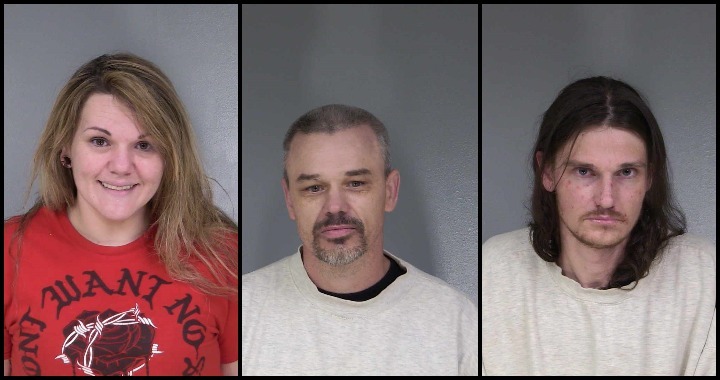
(From left) Lockwood, Grzymski, Lehman. Photos: HCDTF.
###
PREVIOUSLY:
###
From the Humboldt County Drug Task Force:
On February 17th , 2022 the Humboldt County Drug Task Force (HCDTF) arrested Angela Lockwood (32 years old from Arcata) for multiple felony charges after seizing several firearms, narcotics, and evidence of drug sales at her residence in Arcata. Lockwood was able to post bail and got out of jail shortly after being arrested.
On May 2nd, 2022 the HCDTF again arrested Lockwood for multiple felony charges after seizing several firearms, narcotics, and evidence of drug sales. Lockwood again posted bail and was released from custody.
On Monday May 9th , 2022 the HCDTF again obtained a search warrant after learning that Lockwood and her boyfriend, Thomas “TJ” Grzymski (43 years old from Arcata), were selling fentanyl out of their residence along with their roommate, Daniel Lehman (38 years old from Arcata). Agents served the search warrant in the 700 block of Fickle Hill Rd. in Arcata. All three suspects were detained without incident.
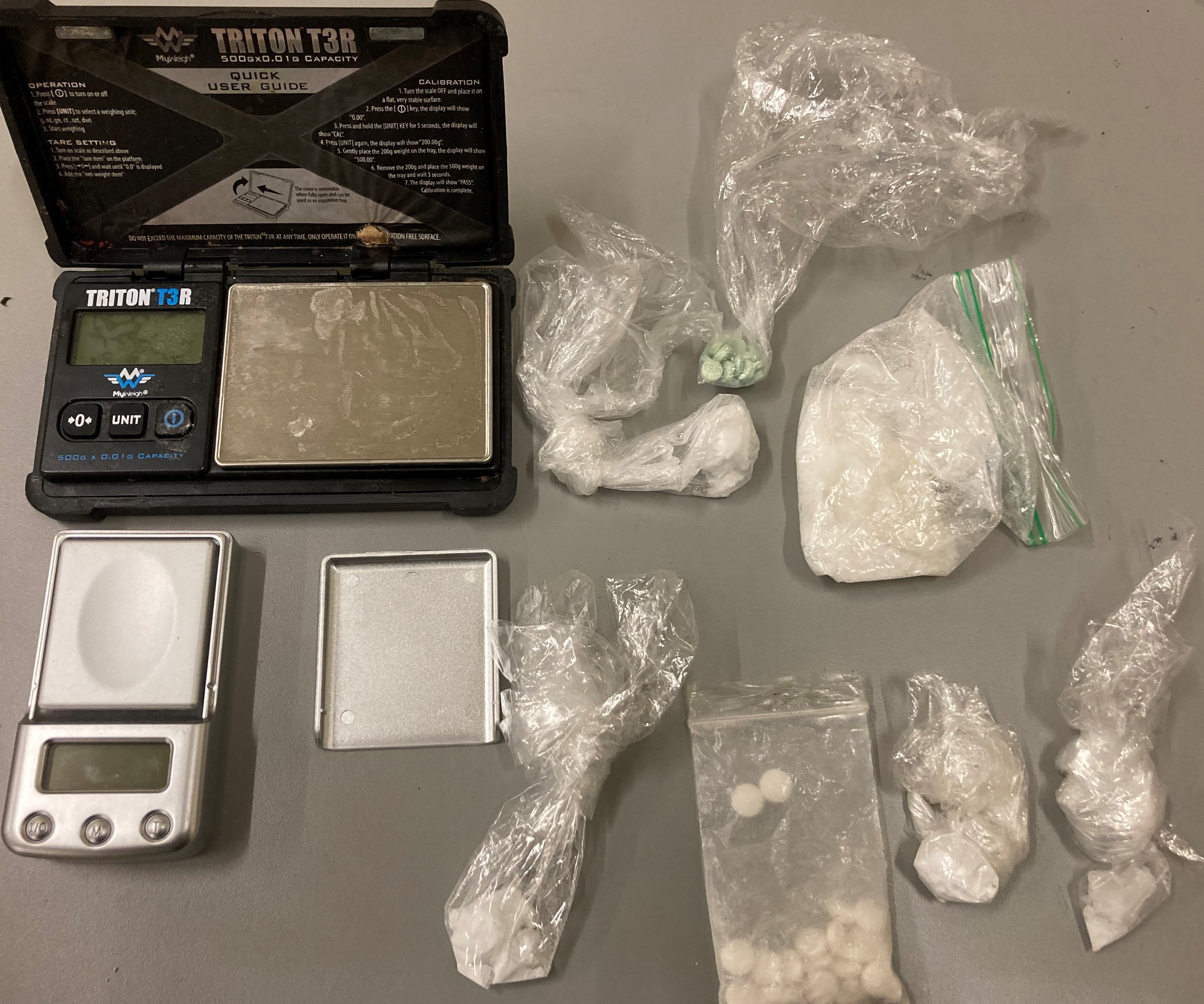
Inside of the residence agents located fentanyl, methamphetamine, cocaine, digital scales, ammunition, and packaging materials. Agents also seized 1 ounce of methamphetamine, ¼ ounce of fentanyl, and 20 “perc-30” fentanyl pills that were concealed inside of Lockwood’s person. Lockwood and Grzymski are both convicted felons and not allowed to possess ammunition. All three suspects were transported and booked at the Humboldt County Jail for the following charges:
11351 H&S Possession of fentanyl for sale
11378 H&S Possession of methamphetamine for sale
30305(a) PC Felon in possession of ammunition
12022.1 PC Committing a felony while out on bail (Lockwood)
11366.5 H&S Maintaining or operating a drug house
HCDTF Agents contacted a Humboldt County Superior Court Judge and requested a bail increase and proof of bail source for Lockwood per 1269/1275 PC. The order was granted, and Lockwood’s bail was raised to $500,000.
(UPDATE: POLE TO BE MOVED BEHIND THE GAZEBO) Eureka Installs Surveillance Tower at the Gazebo; Four More Permanent ‘Lot Cops’ to be Built Around Town
Hank Sims / Tuesday, May 10, 2022 @ 11:17 a.m. / Local Government
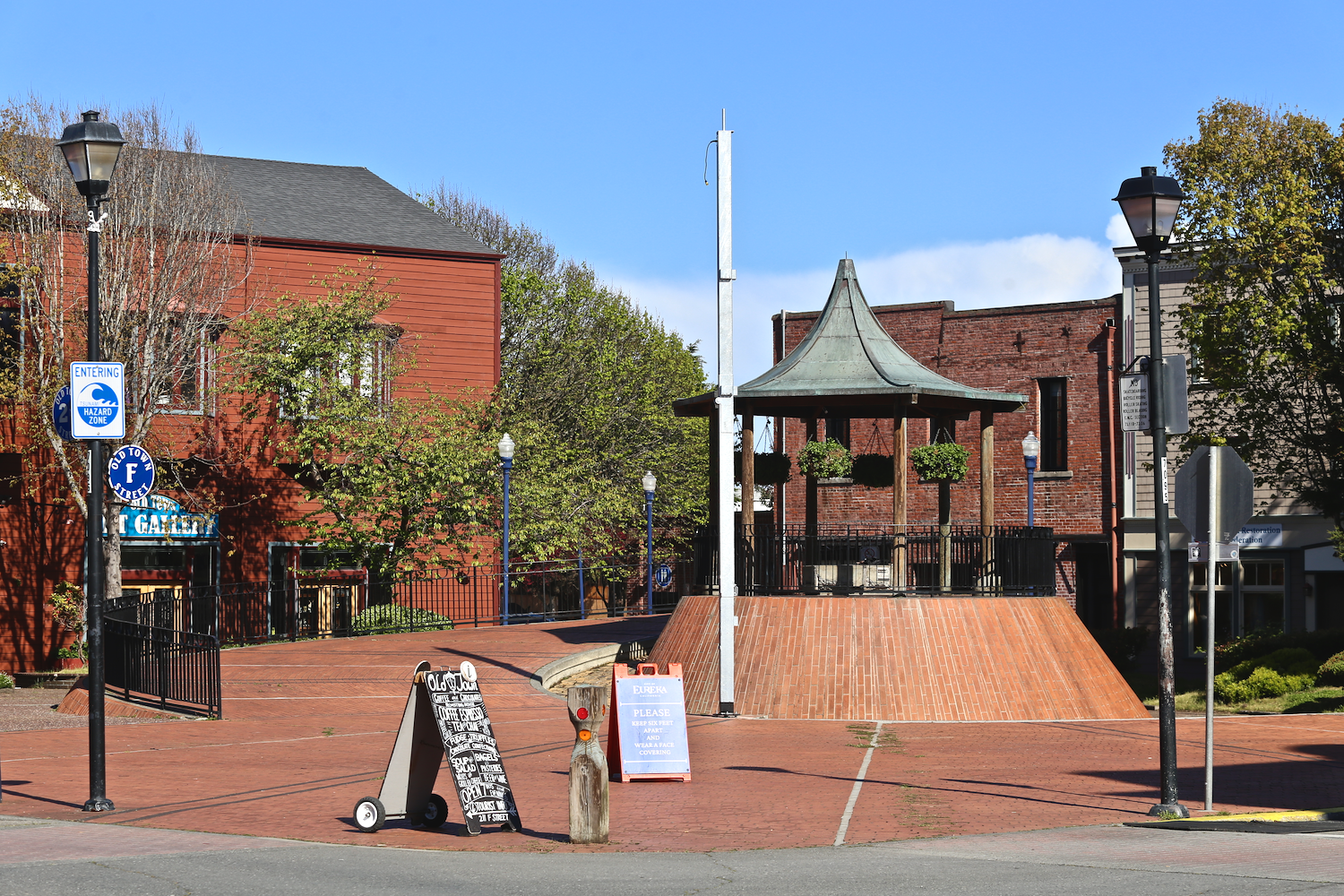
UPDATE, 4:35 p.m.: After a day of outcry, Eureka City Manager Miles Slattery tells the Outpost that the pole will be moved a few feet, to a location behind the Gazebo. It will replace one of the streetlamps close to Second Street F Street.
Slattery defended the program. He said that the Eureka Police Department is currently down 10 sworn officers, and that surveillance technology has done a lot in recent months to fill in the gaps — not only through the Lot Cop test program, but through private business’ videocams.
###
ORIGINAL POST:
A tall pole was erected at the Gazebo yesterday afternoon – a pole taller than the Gazebo itself – and city government will soon be festooning it with a selection of surveillance equipment provided by a Utah-based company called LiveView Technologies, all in an effort to combat crime and other undesirable behavior in and around Old Town.
The device, popularly known as a “Lot Cop,” will be one of five surveillance towers to be installed around Eureka, after city staff completed a six-month trial period with a mobile version of the Cop that was parked in various locations around town.
The program was undertaken at the staff level, and was never discussed at the Eureka City Council, the city’s Design Review Committee or any other public forum.
Eureka Public Works Director Brian Gerving told the Outpost this morning that the Lot Cop program was undertaken by his department, the Community Services department, the city manager’s office and the Eureka Police Department. It began last year, according to Gerving, when the company approached Eureka police with the opportunity to get the wheeled version of the device for a test run.
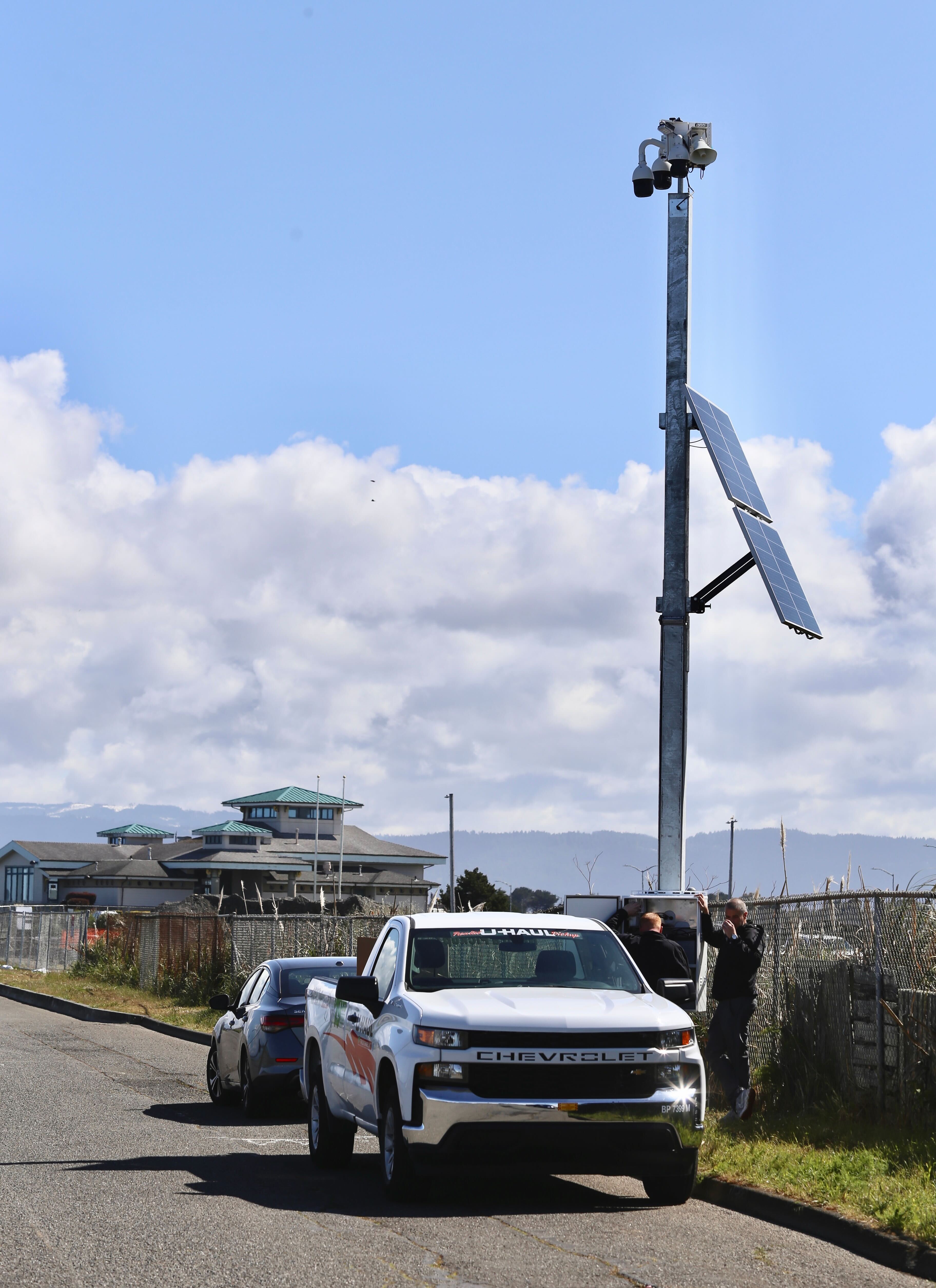
Mobile Lot Cop parked near the Wharfinger Building this morning. Photos, video: Andrew Goff.
During that time, Gerving said, they parked Lot Cop at various problem locations around town – near the Wharfinger Building and the Carter House, on Fifth Street downtown, along the Hikshari Trail corridor and elsewhere, and it proved successful.
“In those locations there had been a lot of problems with theft from vehicles, some drug dealing activity — basically, the trailer had cut those activities off,” Gerving said.
After that, city staff made the decision to go ahead with a permanent lease of the mobile trailer and five fixed locations around town. In addition to the Gazebo, Lot Cops will be installed next to the Wharfinger, at the Eureka water tower on Harris and at the foot of Hilfiker and Truesdale streets.
Members of the Eureka City Council that the Outpost contacted today had no idea that the city had erected the Lot Cop pole at the Gazebo yesterday afternoon, nor any knowledge of the Lot Cop lease that the city had entered into. Their reactions were somewhat mixed.
“At the very least this should have come before council so that there could be opportunity for the public to weigh in,” said Councilmember Leslie Castellano, who represents the Old Town area. “We live in an increasingly surveilled society, and I think it is important to discuss what this means for citizens. It is a significant presence in our public spaces, both visually and ideologically. Right now, we have no idea about when and how it is being used.”

New Lot Cop at the foot of Truesdale.
Councilmember Natalie Arroyo, who is currently running to represent Eureka on the Board of Supervisors, focused on the upside.
“Residents and businesses around the Gazebo area and in the Old Town community have continuously reported safety concerns, theft and security needs,” she said. “This could provide some useful information for law enforcement. It’s a moveable device, so can be used elsewhere if our City of Eureka leadership and partners determine that another location would be more ideal.”
When asked, Gerving said that he didn’t believe that the Gazebo tower required any sort of design review process before installation. He said, too, that staff would be happy to keep the council informed about the program if the council requests it.
“If they ask for a report after we’ve had the cameras in place for a period of time, we’ll certainly provide it,” Gerving said. “If our current experience holds, our recommendation will be to keep them in place.”
The Lot Cops have various capabilities that go above and beyond mere surveillance cameras. They can also collect audio, and can be equipped with loudspeakers to warn ill-doers to cease their bad behavior. Gerving said that the Gazebo device, at least, won’t have the loudspeakers.
Though he allowed that the appearance of the devices around town – especially on the giant Gazebo pole – might be a bit jarring, Gerving hoped that the public would recognize the benefits provided by them.
“We hope that people recognize the positive aspects of it, and in order to get those impacts you have to compromise on certain things,” he said.
An Arkansas news station reports on Lot Cops showing up at a local Walmart.
###
More photos:



Are California Companies About to Get More Transparent?
Grace Gedye / Tuesday, May 10, 2022 @ 7:54 a.m. / Sacramento
If you’re one of many Californians looking for a job, chances are you’ve run into some familiar frustrations: unclear pay ranges and benefits. And how do you know if the company is a good employer?
If two Democratic state lawmakers have their way, employers might soon have to disclose a lot more information about pay and internal practices. Both bills, working their way through the California Legislature, face ardent opposition from powerful business groups, who fear the proposed laws could lead to unfair comparisons and expensive lawsuits.
The bills are part of a larger push from states, the federal government and, in some cases, employers themselves to make companies more transparent. The California legislators have two goals: shrink gender- and race-based pay gaps, while also increasing the quality of jobs.
Companies in several states — including California — currently must tell workers about a job’s pay ranges upon request, while Colorado, Washington and New York City have passed measures in recent years requiring companies to put pay ranges in job postings. Intel has begun publishing data on how it pays its workforce, and an increasing share of the largest companies disclose some data on their racial and ethnic makeup. Meanwhile, the chair of the federal Securities and Exchange Commission is interested in new rules that would make public companies disclose data about how they treat their employees.
As California trudges out of the pandemic and companies try to hire or retain workers, the timing is right for legislation that zeroes in on “what it really means to be a high quality employer,” said Ash Kalra, chair of the Assembly’s labor and employment committee and a Democrat from San Jose.
Pay gaps
When Jessica Seifert applied to work at Riot Games, a video game company based in Los Angeles, pay range wasn’t mentioned in the job description, she said. The company, known for its popular “League of Legends” game, first brought her on as a contractor in 2014 and then hired her full time to onboard new employees, she said. She found out a male peer was making $90,000 per year while she was making $70,000, and she began talking with co-workers about pay. The upshot: Women were often getting paid less for doing similar jobs, she said.
From her vantage point inside Riot, Seifert saw applicants negotiate pay without much information on what to expect. “I think it was a lot of anxiety; I think it was a lot of shooting in the dark,” she said.
Gender- and race-based pay gaps persist across the U.S. In California, the average annual pay for women is $50,313 while men earn $57,457, according to Census Bureau data. Meanwhile, more than a third of Californians were in poverty — with less than $35,600 for a family of four on average — or near it in 2019 according to the Public Policy Institute of California. That year, 80% of poor Californians lived in a family with at least one working adult.
To close pay gaps, reduce working poverty and improve job quality, legislators have turned to the same mechanism: making stuff public. One bill, introduced by Monique Limón, a Democratic state senator from Santa Barbara, would require companies to include pay ranges in job postings and let workers know when promotion opportunities are available. For companies with 250 or more employees, pay data for 10 broad job categories would get published starting in 2026, broken out by race and gender. For larger companies, the publication date is sooner. The bill would also require companies using 100 or more contractors to report pay data for contractors.
The hope is that with more information about potential pay, women will be able to negotiate higher wages, said Jessica Ramey Stender, policy director for Equal Rights Advocates, a bill sponsor.
A second bill, introduced by Assemblymember Kalra, would be a first-in-the-nation measure to make companies with 1,000 or more workers in California annually report a broad swath of data about how they treat employees to the state’s labor agency. The data include workforce size, scheduling, pay, internal promotions, benefits, safety, turnover rate, equity, and more. The labor agency would begin posting the information online in 2024.
The eventual aim is to create a certification for employers who treat their workers well, said Betty Yee, California’s controller and the bill’s sponsor. The certification would come with benefits — maybe tax credits, or a better shot at getting state contracts — as an incentive. The data would also get condensed into an easy-to-understand measure for the public, sort of like nutrition labels on food.
“Why is all this information in a black box?” said Rick Wartzman, who developed the data required by the bill and tested the measures with a few large companies. Wartzman, who leads a center at the Drucker Institute, a think tank at Claremont Graduate University, thinks everyone from investors to job seekers would have their own reasons for wanting the breakdown.
“Maybe you like to shop at places that treat their workers well, and you don’t want to patronize places that don’t, but how would you really know?” Wartzman said.
If pay data goes public, what happens next?
People find pay ranges in job postings useful, according to LinkedIn. Another indicator: In the federal government, which includes salaries in its job postings, women earn 93 cents for every dollar men make, compared to the national average of 83 cents. And when women have a clear sense of what to expect from negotiation, gender gaps shrink, according to a review of studies published in National Bureau of Economic Research.
Research on countries and states that require companies to share pay data or report on their gender wage gap shows mixed results. Australia saw the gender pay gap at many of its companies decline by about four percentage points, while the United Kingdom saw gender pay gaps increase slightly after instituting a reporting law in 2017.
When researchers examined a Denmark law requiring companies to disclose pay data by gender, they found that companies required to comply with the law shrank the gender pay gap by 7%, while other companies saw no change. Reporting companies were also more likely to hire women and promote female employees. But the main way companies shrank their pay gaps wasn’t by increasing pay for women pay, researchers found — it was by slowing wage increases for male employees.
After pay becomes more public, the impact comes in two stages, said Zoe Cullen, a professor at Harvard Business School. First, workers might use that information to negotiate raises. But the second step is the company’s reaction: If they know raising pay for one worker could lead to renegotiation with a bunch of other workers, employers might bargain more aggressively and set lower wages on average, Cullen said. One study she conducted looked at states before and after they passed laws protecting workers who talk with each other about wages, and found that the laws lead wages to decline by about 2%.
In other words, research suggests there’s a tradeoff: Under transparency measures, the pay gap seems to shrink, but wages decrease on average.
When Colorado passed a law requiring companies to include pay ranges in job postings, it encountered another unwelcome move from employers. In an attempt to skirt the law, some companies started posting roles that allowed applicants to work from any state — except Colorado. Since then, Washington and New York City have passed similar laws.
Pushback from business groups
The powerful lobbying operation at the California Chamber of Commerce has put both bills on its “job-killer” list — the collection of measures it opposes most aggressively each year. The group’s self-reported kill rate of its “job killers” is high. In 2021, it had 25 bills on the list; one got signed into law.
One of the Chamber’s concerns with both bills is that publishing the data won’t capture sufficient context about why some pay differences are justified, or why some businesses don’t perform as well on workforce metrics compared to other companies in their industry.
For the bill that would publish pay ranges and data, “our concern largely lies with: What does this data actually show versus how is it going to be used?,” said Ashley Hoffman, a lobbyist for the Chamber. The reports themselves might not reveal illegal pay discrimination, but, said Hoffman, “What are the headlines going to be?” She also fears it might generate expensive lawsuits for companies, which is part of the reason the group tagged it a “job killer.”
“I know the opposition likes to say that this is a bill that’s going to shame,” said Limón, the state senator who introduced the pay range bill. “We do not believe that the act of making accurate information public is an act of shaming.”
The workforce metrics bill could create unfair comparisons between companies, Hoffman said. On several measures, including pay, companies have to share data on their whole U.S. workforce. A company with a lot of workers in states with low costs of living might have much lower pay on average than a company whose entire workforce is in California, and has high wages to match.
Another line of opposition — this one from Kelly Seyarto, a Republican state assemblymember from Murrieta — is that adding more regulations and requirements for companies would hurt California in its competition with other states to attract and retain companies.
“While it might be the first in the nation, I also see that as: We’re the guinea pigs. And I don’t know that we can afford to be guinea pigs anymore, especially when it comes to attracting businesses in California,” Seyarto said in a hearing about the worker metrics bill.
Both bills would have to pass through more committees in the Legislature before getting a final vote. The workforce metrics bill from Assemblymember Kalra has been put on “suspense file” — a temporary parking lot for bills that’s officially for assessing their fiscal impact, but is often used to kill them with little public discussion.
California has been a laboratory for progressive labor measures, said Ken Jacobs, chair of the UC Berkeley Labor Center. He rattled off examples: The first paid sick leave law in America was passed in San Francisco. California and New York passed the first statewide $15 per hour minimum wage laws on the same day, he said, while San Francisco passed one of the first laws addressing irregular scheduling. It “becomes proof of concept when a state like California puts these measures in place,” Jacobs said.
At Riot Games, concerns like those raised by Seifert, bolstered by explosive reporting on the company’s culture of sexism, led to a class-action gender discrimination lawsuit filed in 2018 against the company. In December 2021, Riot agreed to pay $100 million in a settlement deal, most of which will go to current and former female employees in California. The company also agreed to several policy changes, including making its pay data reports available to workers upon request.
Seifert, who is no longer at Riot, now works as a recruiter. She always talks about pay ranges early on with candidates, she said. She doesn’t want to waste their time — or her own.
###
CalMatters.org is a nonprofit, nonpartisan media venture explaining California policies and politics.
OBITUARY: Olga Day, 1936-2022
LoCO Staff / Tuesday, May 10, 2022 @ 6:56 a.m. / Obits

By the Grace of God,
Olga Day went to be with our Lord on April 29, 2022 at 7:50 p.m. She
was surrounded by her loved ones as she took her last breath. She
patiently waited for two of her sisters to arrive to say their last
goodbyes. Olga battled with Parkinson’s for many years.
Olga was born April 1, 1936 in Mulatos, Sonora, México to Abelardo Smith and Dolores Cota de Smith. She was the first of nine children. There was one brother and seven sisters. She spent most of her early life living in Guaymas, Sonora, México. She was her mother’s right hand. She began working at an early age to help support her siblings. She worked her way up at the Mercado Zaragoza in the jewelry and fragrance department. This was where she met her future husband, Charles Day.
Olga and Charles had a very short courtship. To maintain their courtship, Charles visited Olga a few times in Guaymas and also went to see her when she was in Sacramento visiting her sister. Charles took Olga on a romantic date to the Opera in San Francisco. It was then they decided on forever. On July 7, 1971, Olga was married to Charles Day in the church Sagrado Corazón de Jesús in Guaymas. Charles then took Olga to Eureka, where they would start their life together.
When Olga married Charles, she became a loving stepmother to two children, Jon Ron and Dianna Dee. Both instantly loved her. A few years later, Olga became a mother to a baby boy, Norman Eric, and a few years later they welcomed a baby girl, April Nicole. Olga gave her family a life rich in culture, tradition and love.
Her love of children spread beyond her own family. Olga had an in-home daycare for 20 years and helped raise and nurture many children. She was so proud of each and every one. It brought her the greatest joy to hear from them and hear how their lives have been. After she retired from her daycare, she focused her love and attention on her grandchildren.
Olga was involved in many activities over the years. She enjoyed participating in several local clubs. Club Latinos Unidos, Latin American Club and the Young Ladies Institute. She was very devoted to her Catholic faith and her Church. She was a volunteer teacher’s aide at Ridgewood Elementary. Through these activities she made many friends over the years that she loved dearly.
Elegance and class, she always stood tall and proud. She was deeply loved by so many. Her smile would brighten anyone’s day. She was gracious and beautiful until the end. The world was truly blessed when she was born. She was an angel among us. Now our Lord has called her to Heaven where she can smile and watch over us all.
Her father Abelardo Smith and her mother Dolores Cota de Smith and brother Oscar Smith preceded Olga in death. Her memories will be carried on by her husband, Charles Day; her sisters; her children, Dianna Day, Jon Day, Norman Day (Carma), and April Day; her grandchildren Julia Morgan, Jay Morgan, David Day, Alyssa Day, Connor Day; and Alice Chambers, also six great-grandchildren.
There will be a mass in her memory on Saturday, May 14 at 12 p.m. at the Sacred Heart Church in Eureka. The burial will take place after at the St. Patrick’s Cemetery in Loleta.
###
The obituary above was submitted by Olga Day’s loved ones. The Lost Coast Outpost runs obituaries of Humboldt County residents at no charge. See guidelines here. Email news@lostcoastoutpost.com.
OBITUARY: Carole Dee Lakin, 1938-2022
LoCO Staff / Tuesday, May 10, 2022 @ 6:56 a.m. / Obits
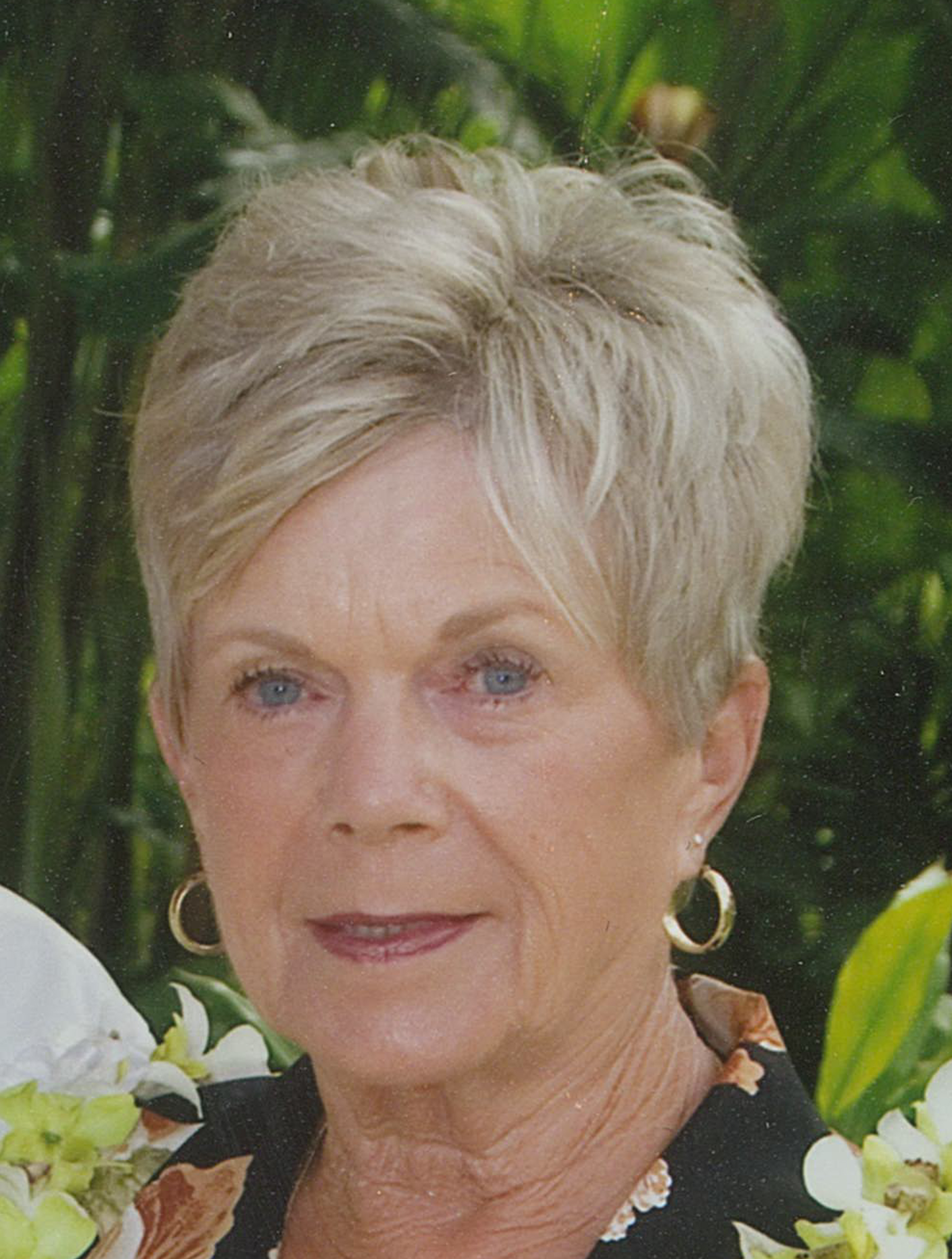
Mom
was born in Ferndale on February 22, 1938 to Elwyn and Doris Lindley.
She grew up on the family ranch in Honeydew, experiencing the joys and adventures of “country living” with her sister and life long best friend, Patricia.
And as a Mother, GrandMother and Great Grandmother, she continually shared with us similar treasured moments.
She also took great pride in her family’s role as early settlers in Humboldt County. The Hindleys, Lindleys and Miners of the Mattole Valley and the Lowrys of Bear River.
Mom had lived in Ferndale for the past 56 years. She and Dad purchased the house in 1966. Conveniently located across the street from the high school, it was walking distance for us as students and Dad as Superintendent/Principal.
Throughout the house you could see Mom’s happiness and a life of fulfillment.
Hanging in the hallway, the framed black and whites of previous generations.
The carefully placed pictures of Mom and her sister, Patricia.
The office, where she lovingly displayed the awards and recognitions achieved by Dad during his career in Education.
The photo blocks spelling out “Best Gigi” proudly displayed in the kitchen, at eye level, for all to see.
“You are my sunshine, my only sunshine…” hanging in the spare room surrounded by pictures of her grand and great-grand children.
The collection of ball caps and smiling photos documenting her and Dad’s annual trip to Hawaii and an array of major sporting events (Kentucky Derby, Super Bowl, World Series, Rose Bowl and numerous college football/basketball games).
And we can’t forget their quick trips to Reno and Tahoe for concerts and many “pulls” on her secret row of lucky slot machines.
If you searched a little, you would discover the picture albums she meticulously organized for each one of us, our kids and grandkids. Telling the story of our memories; Easter egg hunts at “Tole House”, summer days on the deck and at the swimming hole, sporting events, birthdays, holidays and sleepovers.
As Mom and Dad liked to tell it, they were high school sweethearts. And after a brief period apart they were married on July 20, 1956. With that exchange of vows, and at an extremely young age, they embraced their roles as parents and provided us with a loving family.
We are extremely grateful and appreciative for their guidance, support and care, that has given each of us a wonderful set of life experiences. And has also played a significant role in all that we have been able to provide our children and grandchildren.
Mom is also remembered for her devoted care of Dad during his challenging final years with Alzheimer’s.
She was the quintessential wife, mother, “homemaker”.
Mom passed away in Ferndale on April 8, 2022 due to complications from Alzheimer’s. She is survived by her children Jack (Stephanie) Lakin, Patty Lindley and Brenda (Don) Cloney and her sister, Patricia Pedrotti. Mom was the proud grandmother of Oriana (Matt) Tomlin, Ryan (Stefany) Lakin, Jeff (Theresa) Noga, Brian (Natalie) Noga, Shannon Cloney and Kaley Cloney; and great grandmother of Reve, Brayden and Brody Tomlin, Elwyn Lakin, Louie Malatesta, Justin and Katie Noga, and Ava, Jackson and Audrey Noga. She is also survived by many loving relatives and friends. Mom was preceded in death by her parents, Elwyn and Doris Lindley, and her brother-in-law, James Pedrotti.
The family would like to extend our gratitude to her in-home care providers, Hospice of Humboldt, and Dr. Dennis of the Ferndale Community Health Center, for the exceptional care and comfort they provided Mom these past months and years.
And our heartfelt appreciation to Mom’s sister, our “Aunt Patsy”, for bringing some moment of joy to her each and every day.
The family will host a Celebration of Life at a future date, yet to be determined.
###
The obituary above was submitted by Carole Dee Lakin’s loved ones. The Lost Coast Outpost runs obituaries of Humboldt County residents at no charge. See guidelines here. Email news@lostcoastoutpost.com.
OBITUARY: Billie Lou Foster, 1943-2022
LoCO Staff / Tuesday, May 10, 2022 @ 6:56 a.m. / Obits
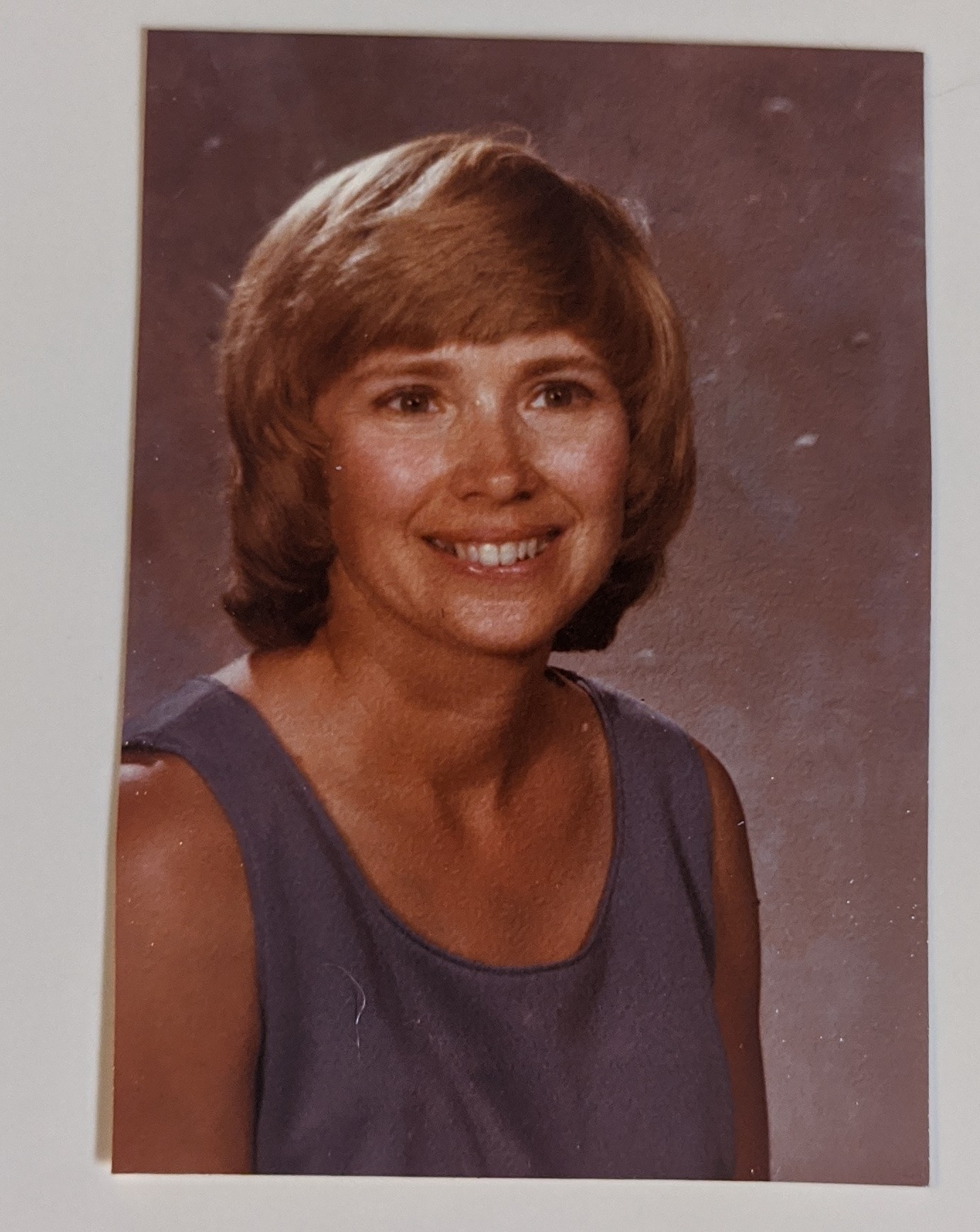
Billie Lou Foster
passed through Heaven’s gates on April 22, 2022, surrounded by family
and comforted by her faith in, and love for, our lord and savior
Jesus Christ.
Billie came into our world on June 16, 1943. Born in Williston, North Dakota, to Norville and Lillian Scott, Billie spent her formative years in Williston.
Billie met the love of her life, John Foster, in North Dakota when Billie was 14. True childhood sweethearts, the two were married in Billie’s home town in 1961 - the beginning of a beautiful 61-year union.
Billie and John gave life to two children, Suzanne and Timothy, and shortly after moved to California, eventually settling down in Redway in 1971.
Billie and her family attended the Nazarene Church in Redway until it shuttered in the early 1980s. Billie and her family then began attending the Weott Christian Church, where Billie was a familiar face every Sunday for over 40 years.
Billie graduated from College of the Redwoods in 1981 with a degree in early childhood development. She taught at Noah’s Arc school in Redway (formerly the Nazarene Church) for 15 years, a career which she often fondly recollected to her family.
Billie enjoyed square dancing. She was active at the Healy Senior Center in Redway, and the Women’s Civics Club, and gave often to charity.
Billie enjoyed being active in her church, supportive of her family, and being loving and kind to all who knew her.
Billie’s favorite summertime activity was to go camping with her family, which she did every year for 30 years. She enjoyed watching her children, grandchildren, and great-grandchild play in Trinity Lake.
Billie loved to play cards - and always won. Her family joked that it was because Jesus was on her side. While that may be the case, she was also a flat-out terrific card player.
Billie is survived by her husband, John (Jack) Foster, daughter Suzanne Dedekam, granddaughter Michelle Butler, grandson Jon Dedekam, and great-grandchildren Robert Dedekam, Noah Dedekam, Braxton and Brayden Burlison, and Adrian Butler.
A celebration of her life will be held on May 21, 2022 at 2 p.m. at the Weott Christian Church. All family and friends are invited.
###
The obituary above was submitted by Billie Lou Foster’s loved ones. The Lost Coast Outpost runs obituaries of Humboldt County residents at no charge. See guidelines here. Email news@lostcoastoutpost.com.


