

(VIDEO) Humboldt Redwoods State Park Naturalist ‘Griff’ Talks Reintroduction of the California Condor and Its Importance to Local Tribes
John Ross Ferrara / Sunday, May 8, 2022 @ 12:50 p.m. / Our Culture , Tribes , Wildlife
Humboldt Redwoods Sate Park naturalist John “Griff” Griffith took to social media on Friday to talk about the recent reintroduction of the California Condor in Humboldt County.
On Tuesday morning, the Northern California Condor Restoration Program, a collaboration between the Yurok Tribe and the National Parks Service, released two condors into Redwood National and State Parks. The reintroduced birds are reportedly the first condors to soar over the Humboldt redwoods in more than a century.
In the video, embedded at the top of this story, Griff talks a bit about the history of the California condor and its cultural significance for local tribes.
Yurok Tribe Chairman Joseph L. James also issued a statement last week on the importance of the condor reintroduction.
“For countless generations, the Yurok people have upheld a sacred responsibility to maintain balance in the natural world,” James said. “Condor reintroduction is a real-life manifestation of our cultural commitment to restore and protect the planet for future generations. On behalf of the Yurok Tribe, I would like to thank all of the individuals, agencies and organizations that helped us prepare to welcome prey-go-neesh (condor) back to our homeland.”
PREVIOUSLY
- THE ECONEWS REPORT: Humboldt Social Media-Friendly Naturalist John Griffith
- (VIDEO) Humboldt Redwoods State Park Naturalist and Local Dance Legend John ‘Griff’ Griffith Talks About California’s ‘Complex’ Wildfire Problem
- (VIDEO) Humboldt Redwoods State Park Naturalist ‘Griff’ Talks Viral Cougar Sighting in Utah, Gives Tips on How to Avoid a Mountain Lion Attack
- (VIDEO) Humboldt Redwoods State Park Naturalist ‘Griff’ is Back With a Holiday Special on Christmas Trees
- (VIDEO) Humboldt Redwoods State Park Naturalist ‘Griff’ Riffs About the Connection Between Spotted Owls, Flying Squirrels, Old-Growth Trees and Truffles
- (VIDEO) Humboldt Redwoods State Park Naturalist ‘Griff’ Discusses Dinosaur Hickeys, Saving the Pacific Lamprey
- (VIDEO) Humboldt Redwoods State Park Naturalist ‘Griff’ Talks Viral Bear Pushing Video, Gives Tips on How to Handle a Bear Encounter
- (VIDEO) Humboldt Redwoods State Park Naturalist ‘Griff’ Talks Invasive Species and the ‘Trifecta of No Thanks’
- (VIDEO) Humboldt County Naturalist ‘Griff’ Takes His Dance Moves to TikTok to Spread the Word About Biodiversity Loss
BOOKED
Today: 7 felonies, 6 misdemeanors, 0 infractions
JUDGED
Humboldt County Superior Court Calendar: Today
CHP REPORTS
2700 MM199 N DN 27.00 (HM office): Trfc Collision-No Inj
ELSEWHERE
RHBB: Family Searching for 25-Year-Old Man Released from Involuntary Hold at Eureka Hospital
KINS’s Talk Shop: Talkshop September 4th, 2026 – Pam Powell
Governor’s Office: California’s public safety strategy works: Governor Newsom’s commitment helps lower crime as new study shows violence prevention saves lives
(AUDIO) HUMBOLDT HOLDING UP: What Will the End of Roe v. Wade Mean for Humboldt? Planned Parenthood Northern California CEO Gilda Gonzales is Ready to Meet the Moment
LoCO Staff / Sunday, May 8, 2022 @ 10 a.m. / Humboldt Holding Up
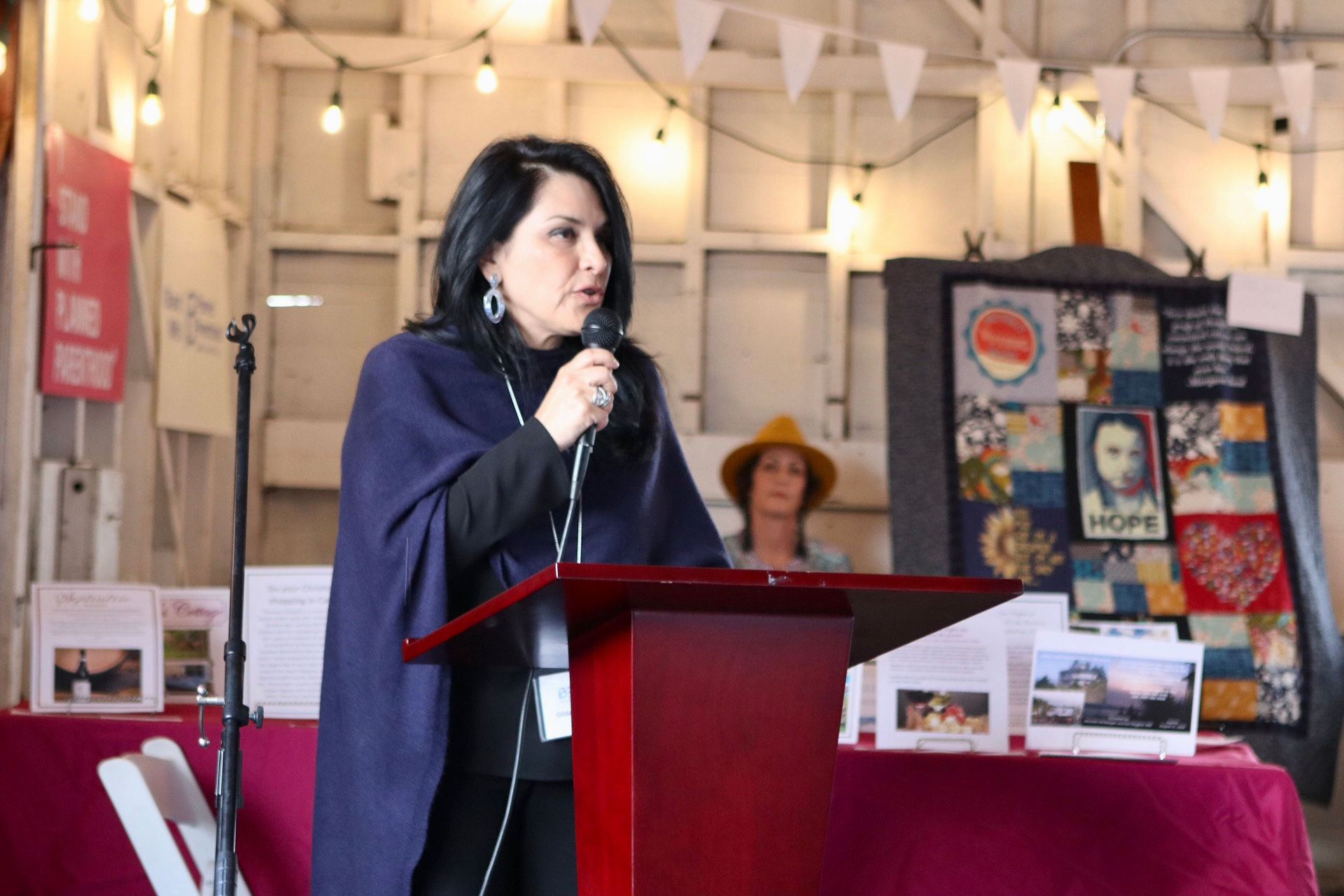
Planned Parenthood’s Gilda Gonzales speaks at a Planned Parenthood event at Humboldt Bay Social Club last weekend
(AUDIO) Planned Parenthood’s Gilda Gonzales
This week’s leak of a majority Supreme Court opinion that would overturn the 1973 decision recognizing US citizens’ constitutional right to abortion sent shockwaves through the country as people attempted to wrap their minds around the potential impacts of such a historic development. Here in California, Governor Gavin Newsom said he was “furious” about what he sees as “an appalling attack” on women’s rights and renewed his promise that the Golden State would prepare to be a sanctuary state for those now-forced to travel to access abortion services. Meanwhile, state legislators worked hurriedly on an amendment to enshrine the right to choose in the state constitution.

But what, if anything, does this all mean for us here in Humboldt County? On today’s edition of Humboldt Holding Up, we speak with Gilda Gonzales — CEO of Planned Parenthood Northern California who overseas 17 centers from the Bay Area to Eureka — to inquire how she’s feeling about the future of reproductive care in our region and also how her organization is preparing for what lies ahead.
Click the audio player above or head over to Apple Podcasts to hear Gilda’s chat with LoCO’s Stephanie McGeary and Andrew Goff and/or scroll our list of past guests below.
PREVIOUS HUMBOLDT HOLDING UP GUESTS:
- #91 Arcata Main Street Bellydancer Shoshanna
- #90 Antarctic Voyager Darren Weiss
- #89 Bounskee Creator Justin Schwartzman
- #88 Arcata Senior Planner Delo Freitas
- #87 Humboldt County Supervisor Virginia Bass
- #86 Annie’s Cambodian’s Laura Chau-Yang
- #85 Comedian Josh Barnes
- #84 Cal Poly Humboldt’s Jenn Capps, Connie Stewart & Mike Fisher
- #83 Eureka Artist Jesse Wiedel
- #82 Keyboard Veteran Brian Swislow
- #81 Lost Lewis Treasure Hunter Corey Lewis
- #80 “The Cannabis Conversation” Writer Jesse Duncan
- #79 Humboldt COAD’s Alison Sterling Nichols
- #78 Miranda’s Rescue Founder Shannon Miranda
- #77 Eureka Police Department Chief Steve Watson
- #76 ‘The Bartow Project’ Michelle Hernandez and Zuzka Sabata
- #75 Foggy Bottoms Boys Thomas and Cody Nicholson Stratton
- #74 North Coast News’ Nazy Javid
- #73 Pumpkin Carver Mike Craghead
- #72 Eureka Police Department Sergeant Leonard LaFrance
- #71 Eureka Artist Duane Flatmo
- #70 Arcata City Councilmember Sarah Schaefer
- #69 Humboldt Hot Air Director Neroli Devaney
- #68 St. Joe’s James Ladika and Austin Allison
- #67 Eureka Artist Richard Evans
- #66 NCRT’s Calder Johnson
- #65 TV Newsman Dave Silverbrand
- #63 Housing Policy Specialist Brian Heaton
- #62 Muralists Blake Reagan and Lucas Thornton
- #61 Arcata City Councilmember Emily Goldstein
- #60 Kayak Guide Eric Stockwell
- #59 Eureka City Councilmember Natalie Arroyo
- #58 Wiyot Cultural Center Manager Marnie Atkins
- #57 Humboldt County Growers’ Alliance’s Natalynne DeLapp
- #56 RREDC Executive Director Gregg Foster
- #55 Dell’Arte’s Michael Fields
- #54 Llama Wrangler Keagan Trischum
- #53 Crabs President David Sharp
- #52 Organic Dairy Farmers Kristina Radelfinger and Dorice Miranda
- #51 Former Arcata Mayor Alex Stillman
- #50 Cooperation Humboldt’s David Cobb
- #49 Ink People Center for the Arts’ Libby Maynard
- #48 Humboldt Bay Social Co-Owner Amy Cirincione O’Connor
- #47 Musician Lyndsey Battle
- #46 Mad River Brewing CEO Linda Cooley
- #45 LoCO Editor Hank Sims
- #44 Humboldt Republic’s Jason Brandi
- #43 Table Bluff Farmer Hannah Eisloeffel
- #42 Logger Bar Owner Kate Martin
- #41 Teacher/Rapper Zach “Zigzilla” Lehner
- #40 Madaket Captain “Zippo” Libby Tonning
- #39 Event Planner Alegria Sita
- #38 Food For People’s Anne Holcomb
- #37 AHHA President Nezzie Wade
- #36 Performance Artist Noël August/Tucker Noir
- #35 Eureka Mayor Susan Seaman
- #34 Eagle House Owner Jennifer Metz
- #33 Absynth Quartet Drummer Mike “Tofu” Schwartz
- #32 HACHR Executive Director Lasara Firefox Allen
- #31 Alchemy Distillery Owner Amy Bohner
- #30 Eureka City Councilmember Kati Moulton
- #29 Eureka City Councilmember Scott Bauer
- #28 Ungraceful Ager Barry Evans
- #27 Arcata City Councilmember Sofia Pereira
- #26 HumBrews Music Booker Laurel Weston
- #25 Eureka City Councilmember Kim Bergel
- #24 Film Commission’s Cassandra Hesseltine and Nate Adams
- #23 Marble Maker Topher Reynolds
- #22 Arcata Playhouse Director Jacqueline Dandeneau
- #21 Humboldt Political Junkie Eric Kirk
- #20 Rio Dell Mayor Debra Garnes
- #19 Second District Supervisor Estelle Fennell
- #18 Arcata Food Aficionado Jada Calypso Brotman
- #17 Body Piercer Jackie Silva
- #16 Dick Taylor Chocolate’s Adam Dick
- #15 FUHS Teachers Mark Thom and Inma Thompson
- #14 Eureka City Manager Miles Slattery
- #13 Savage Henry Co-Founder Chris Durant
- #12 Eureka Street Art Festival Organizer Jenna Catsos
- #11 SCRAP Humboldt Founder Tibora Bea
- #10 Gym Owner Tyler Parr
- #9 Six Rivers Brewery Co-Owner Meredith Maier
- #8 Multicultural Skincare Therapist Levia Love
- #7 Annie’s Cambodian Server and Social Worker Joshua Coppock
- #6 Eureka City Councilmember Austin Allison
- #5 HSU Professor Deidre Pike
- #4 Pastor Bethany Cseh
- #3 Singer/Songwriter Chris Parreira
- #2 Eureka City Councilmember Leslie Castellano
- #1 Arcata City Councilmember Paul Pitino
GROWING OLD UNGRACEFULLY: Men vs. Women, Roe vs. Wade
Barry Evans / Sunday, May 8, 2022 @ 7 a.m. / Growing Old Ungracefully
“Women spend more time wondering what men are thinking than men spend actually thinking.”
This harmless bit of droll humor appeared as a “Fun Fact” our local Senior News publication a couple of months ago. Harmless? Apparently not. Bob from McKinleyville got his hackles up to complain, in a letter to the editor in the May issue. “I wonder if this type of ‘humor’ would be received without an email like this one if the genders were reversed. It is no longer acceptable to employ this type of humor directed at woman, and it would not be acceptable to employ it directed at men either,” he writes.
Damn right, cheap shots against women smell of misogyny. I grew up with “ditzy blonde” and “yo mama” jokes, probably thinking they were hilarious. Times have changed, happily, and so have I. But you know what? If anyone wants to tell jokes — even silly ones, like the one above — at the expense of men, that, in my mind, is just fine. After years — millennia! — of men putting women down under the guise of humor, it’s only fair that women get a bit of their own back, and I think it’s probably good and healthy for us guys to grin and bear it. Getting a dose of our own medicine may help remind us that, just maybe, all those stupid cracks we made about women stung. (Bob: lighten up and get a life.)
And, responding to a commentator from last week, I suggest that the only place that misogyny can be compared equally to misandry is in the dictionary.
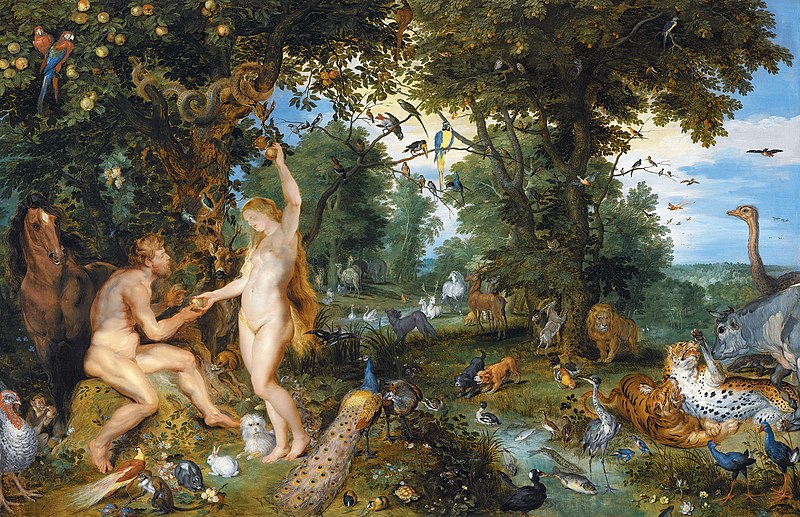
The birth of misogyny? Genesis 3:4 (Peter Paul Rubens, public domain)
This came up for me in the midst of the Roe vs. Wade leaks. The Supreme Court is apparently on course to overturn the enlightened 1973 decision of that court making abortion legal in all 50 states. Why is overturning it a thoroughly bad thing? I can come up with a host of reasons, using words like “theocracy” and “rights.” Mainly, though, I believe the decision to overturn Roe vs. Wade is wrong because it’s being made, on balance, by men. And just as it sucks for a master to have power over slaves, it sucks for men to have power over women. Particularly over their uteri. Consider:
Political Power
- House of Representatives: 29% women
- Senate: 24% women
- Supreme Court: 33%
women (Until 1981, it had been zero.)
- All POTUS: 0% women
Abortion
Per the latest Gallup poll on the subject
- Pro-choice men: 45%
- Pro-choice women: 52%
Earnings
In 2020, women earned on average 84% what mean earned for the same job.
Rights
The 1972 Equal Rights Amendment is still not fully ratified.
Sexual Violence
- Juvenile victims of rape: 82% female
- Adult victims of rape: 90% female
Bottom Line
Men haven’t yet earned the right to equate jokes at their expense with jokes at the expense of women.
THE ECONEWS REPORT: Composting 101
The EcoNews Report / Saturday, May 7, 2022 @ 10 a.m. / Environment
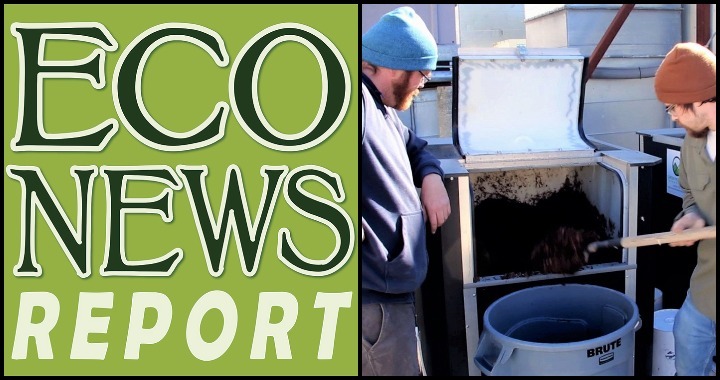
Photo: Blue Lake Rancheria.
Organic matter — things like banana peels, coffee grounds, and newspaper — clog our waste system and when it reaches a landfill, breaks down into methane, a potent greenhouse gas. That’s why California is requiring more and more diversion of this organic matter from our waste stream.
Two compost nerds — Layla Richardson of Zero Waste Humboldt and Daniel Hosapple of the Blue Lake Rancheria — join Gang Green to talk about how individuals can start composting in their backyard and how large producers of organic waste, like the Blue Lake Rancheria’s brewery and restaurants, can compost their food waste and returning it back to the soil.
Learn more!
AUDIO:
“The EcoNews Report,” May 7, 2022.
LINKS:
Minimizing Wildlife Conflict: A Conversation With Humboldt Wildlife Care Center/Bird Ally X Director Monte Merrick
Hunter Perez / Saturday, May 7, 2022 @ 8 a.m. / Wildlife
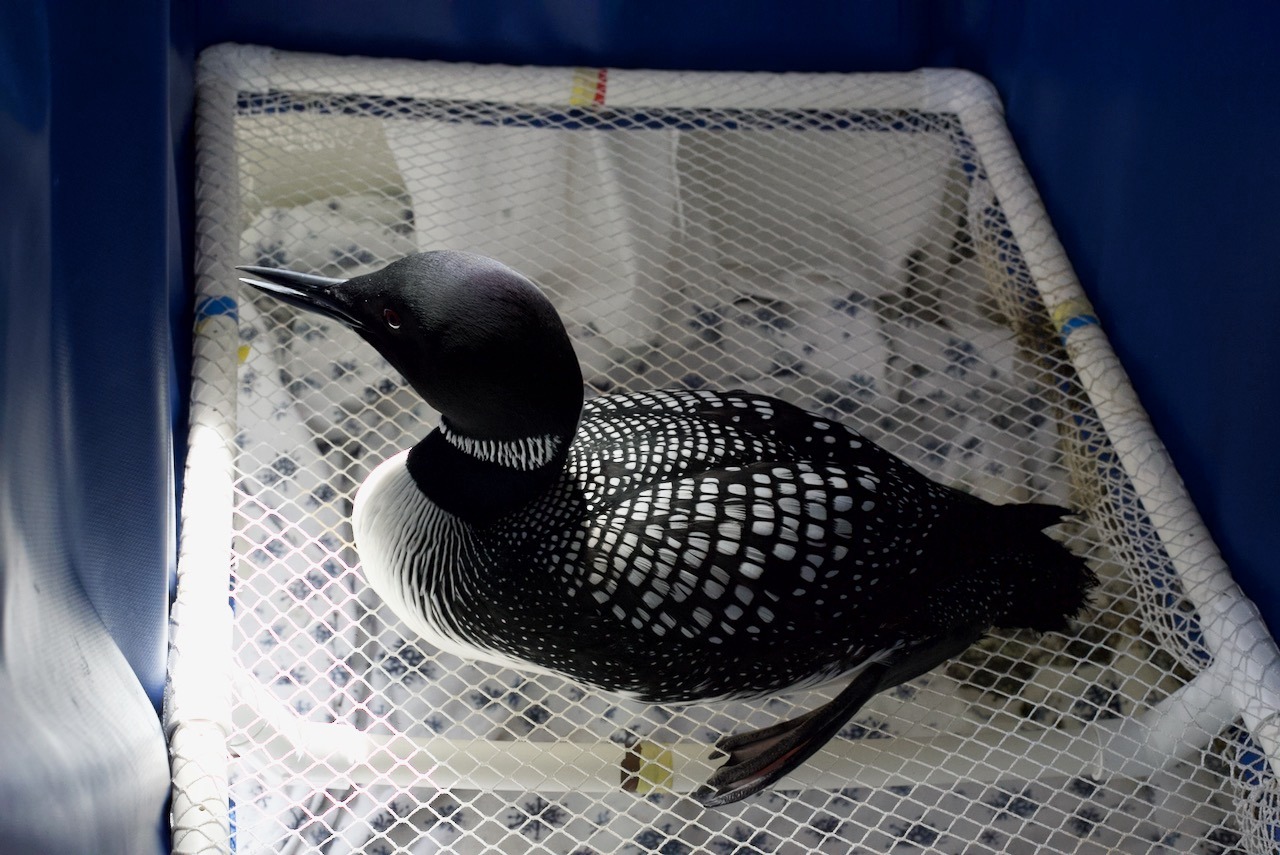
Common Loon, currently in care, found at Prairie Creek. Photos: Laura Corsiglia/BirdAllyX
Life here in the redwoods is an experience like none other. This ancient rainforest we call home is host to an abundant variety of wildlife which also call this place home. And while our close proximity to nature and all of its glory can be a blessing, more and more animals show up on the doorsteps the Humboldt Wildlife Care Center. The Care Center, located in Bayside, operates as a wildlife rehabilitation center for injured and sick animals that are on the brink of dying, providing a lifeline for them whenever possible. The main culprit for them showing up there? Us.
I sat down with the Care Center’s Monte Merrick to gain some insight into what we as a community can do to prevent more patients from being admitted, as well as practical measures we can employ at home to minimize conflict between us and our furry and feathered neighbors.
The most common species that end up at the Care Center are raccoons, mallards (ducks), opossums, and, as Monte put it, “…a large diverse group we’ll just refer to as songbirds.” So, why are all of these animals showing up here? Well, the short answer is us, but it’s a little more complex than that.
“The most frustrating part of this job are patients that we just don’t know why they’re here,” says Monte. “The person finds them, knows nothing about them, and we guess based off where they are and what’s around them what happened to them.” For the patients that we do know what happened to them, roadside collisions are definitely the most common reason for admittance. However, for songbirds, outdoor cats take the cake on that.
Every outdoor cat owner I’ve ever met has had countless stories of their pet bringing birds and small mammals into their homes either dead or alive, and while your cat means no harm by this, it’s still annoying when you’re trying to watch TV and now you have to chase a rat around your house for 45 minutes and shoo it out the front door with a broomstick. A paper published in 2013 estimated that free-ranging (outdoor) domestic cats kill between 1.3 to 4 billion birds annually, and between 6.3 to 22.3 billion small mammals (Loss et al. 2012). Outdoor cats have a bit of a reputation worldwide for being cute little extinction machines, having been the main reason for 63 species extinction events worldwide, and 26 percent percent of all bird, mammal, and reptile extinctions.
The most effective tool to combat this? Keeping your cat inside.
Now, the main reason most people let their cats outside is because they love them, and argue that keeping them inside their whole life is cruel. “My biggest reason for keeping my cats indoors, is because I love my cats”, explains Monte. “I lost my first cat when I was 7 years old to a car [hitting her], ya know? She came crawling up on the back porch with her back half all squashed flat… and then there’s cats fighting ,which spreads feline leukemia, which I lost one to back in my days of outdoor cats. And then there’s other predators like coyotes and bobcats, which prey on them too.”
According to the Humane Society, the average lifespan of an outdoor cat is between 2-5 years, while the average lifespan of an indoor cat is around 10-15 years. It really comes down to your cat’s well-being, and having them outdoors without your supervision is not only a threat to themselves but local wildlife as well. I asked Monte if protective measures like bibs and bells on the cat’s collars have any effects on preventing them from capturing birds and mammals, and he tell me “There may be some diminishment of it…but broadly speaking, no. Plus, they do nothing for coyotes and cars, that’s for sure.”
If these reasons are still not convincing enough to keep your cat inside, there are still safe ways to get your feline friend some vitamin D. Usually reserved for dogs, cats actually do very well on a leash in some cases, and it keeps them safe and out of trouble. If your cat isn’t into the whole leash thing, there’s still a solution for them too! Catios, or patios for your cat, have been a hot new trend for those wishing to grant their pet access outside without the threat of them killing animals or themselves. While time-consuming and a bit more expensive than a leash, this method is a great way to get your cat the enrichment they need without worrying about them bringing back a new “present.”
Spring is here! Which means bird nests will soon be popping up seemingly out of nowhere on your front porch or under the eaves of your house, leaving a fresh pile of bird poop in its wake. It’s important to note that active nests are protected under the Migratory Bird Treaty Act, and while it’s morally wrong to destroy an active bird’s nest, it’s also an international crime. What isn’t a crime though, is catching it before it gets occupied.
“If you have birds that you think are beginning to build a nest, this is the time to prevent them from doing that,” Monte tells me. “So, things like swallows building a mud nest under your eaves; if you don’t want it there, you need to discourage them from that now, but to do so, you have to do it in a way that doesn’t threaten their life. Putting screening up under your eaves works very well.” The screening, like the ones used on your windows, is strong enough, cheap enough, and has holes small enough to keep them at bay.
Skunks and raccoons love denning underneath homes, and from their perspective it makes sense. “They’re just looking for a safe [dry] place for their babies when they have to go out and do things [find food]. For raccoons, it’s very common that they set up a den site behind your bathtub, and you don’t even know how they got there because they can squeeze into small openings and crawlspaces, it’s a really good spot for them. First of all, who’s gonna follow them in there? No one. And heck, it [the bathtub] even gets warm once in a while!”, says Monte. He goes on to tell me, “People call us and say, ’we think we hear something under the house, and there’s some noise coming from under the bathtub.’ It’s like, I KNOW it’s going to be a raccoon. It’s actually one of the reasons I have such admiration for them; their ability to MacGyver their world using our stuff.”
While people like Monte and I love raccoons, that love can quickly turn into hate when they begin damaging your property, and nobody likes that. I asked him what methods he would employ to discourage raccoons from setting up shop in or under your house. Of course, not everyone lives in a home with foundations and pre-built defenses to keep animals from burrowing under or in your house, so things like trailers and apartment complexes are a bit tricky. He tells me, “You can do things like hardware cloth that attaches to the side of your house, then dig down and in about 18 inches down and about a foot out so that they won’t dig under it and get under your house…There is some expense and some labor involved but it is effective.”
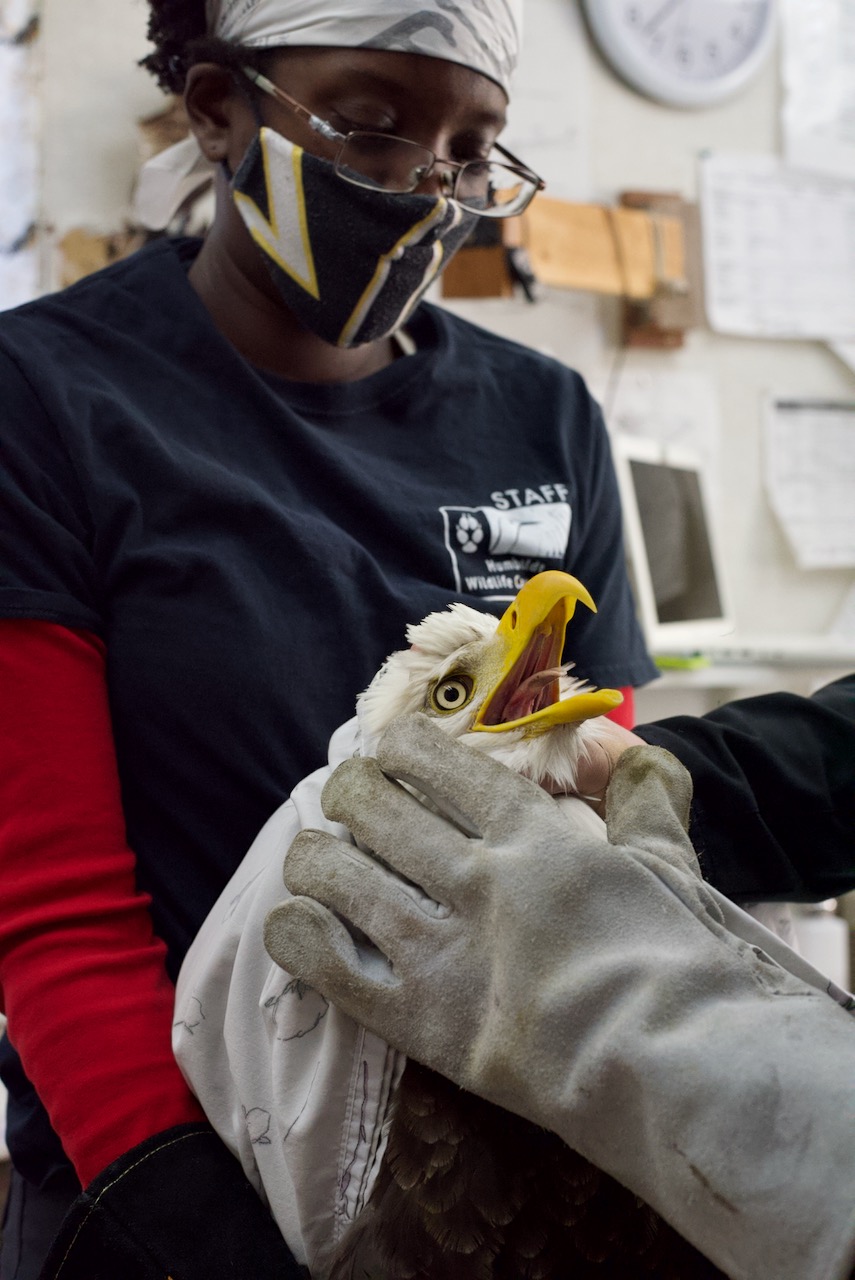
Bald Eagle brought to the care center in December 2021 with signs of electrocution from transmission lines. Rescuers tried to save the bird by sending to another facility, but the wounds were too severe and euthanasia was the outcome.
Deer grazing on your landscaping can be frustrating, and your hard work on keeping your garden looking nice can quickly be gone within a couple days if your defenses aren’t there. I asked how someone can keep deer from tearing through their garden, Monte says “There is fencing, which is the number one thing to do, but you have to be really careful of because it also becomes a terrible entanglement for birds, and not just songbirds but raptors as well. I’ve pulled a lot of raptors out of deer fencing from them chasing after songbirds into shrubs. But good fencing that is visible and far enough away from the plants really is the most effective way.”
Discovering an injured bird can be daunting, and knowing what to do in that moment upon discovery can mean life or death for them. I ask Monte about what someone should do upon finding an injured bird. He tells me: “For songbirds, the first thing you should do is attempt to capture them and get them into a safe place like a shoebox. For raptors and other birds that can hurt you is another story. If you’re not confident in your ability to safely capture them, give us a call and we can guide you in safe ways using gear around your house to pick them up, or we can send someone out there to do it for you. Ultimately, picking them up [safely] and bringing them to us is the best thing to do.”
It’s also important to note that depending on the time of the year, some fledgling [baby] songbirds don’t need help if you find them on the ground. It’s common for birds like sparrows to spend some time on the ground as they’re learning how to fly, so calling the Care Center and telling them the situation can save you the time and worry for their wellbeing. “If you’re not certain, the best thing to do is call us,” says Monte.
Raccoons and rats are a common problem for homeowners that keep having them dig into their trash and compost. While it seems like a lot of work, predator-proofing your trashcans and compost bins can actually be done quite easily.
“We [at the Care Center] use hardware cloth on our compost, which is just wire mesh with a half inch spacing,” Monte says. “We use this because it’s basically the best way to keep rats out, and has the added benefit of also keeping larger species like raccoons out as well.”
Lining the base and sides with hardware cloth on your compost makes it almost 100 percent effective against all animals. For garbage bins, placing something heavy on top can keep raccoons from accessing your garbage. But if all else fails, fitting a latch on the lip of the bin and clipping a padlock to it will always work for keeping out any unwanted trash pandas.
If you or someone you know would like to volunteer or donate to the Humboldt Wildlife Care Center to help these dedicated wildlife rehabilitators and what they do for our community, you can go to www.BirdAllyX.net, email info@birallyx.net or call (707)822-8839 for any information.
I’d like to thank Monte Merrick for participating in this interview and all the staff and volunteers at the Humboldt Wildlife Care Center for what they do for all the animals in and around Humboldt, Del Norte, Trinity and northern Mendocino counties.
###
Hunter Perez is a senior studying wildlife management and conservation at Cal Poly Humboldt.
THE CANNABIS CONVERSATION: 276 Days
Jesse Duncan / Saturday, May 7, 2022 @ 7:30 a.m. / Cannabis

Photos: Jesse Duncan.
Farming ganja in the hills of Humboldt is like a marathon. It takes focus, grit, determination, persistence, as well as physical and mental strength.
The season is long – 9 months for many. Weather patterns are extreme, and risks of fire, theft and crop loss are real. Farming isn’t for the faint of heart, it’s for those who love their craft and are committed to normalizing cannabis use and touching other people with their life’s work.

It’s March 1st. The mountains are covered with snow and the morning frost blankets the highlands. Native grasses and shrubs sparkle in the morning sun and wind out of the north or east chills you right to the bone and dries out your skin.
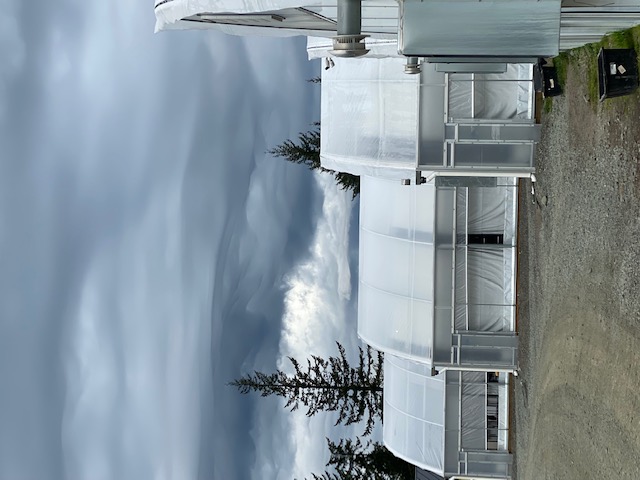
Clones are arriving or you are popping seeds, so it’s time to prep the nursery. The team is brimming with excitement and anticipation. Dreams of a crusher season float around and everyone feels at home. You rope off a skin, or large plastic cover, and pull it over the naked greenhouse frame. You pull the plastic tight and wiggle wire it into place and begin prepping the interior. Lights and heaters are hung and it’s go time.
Baby plants from places like Source, Highline, Phinest, and Seed Junky arrive by the thousands and things get real. Each clone is dipped in an organic pesticide/fungicide as a preventative measure and is then planted in your favorite soil or soilless blend. Veg plants are the lifeblood of the operation and are cared for exquisitely. They are fed and are physically manipulated to create the frame or shape you desire – short and squatty in my case. After three weeks plants are moved to their forever home in beds or larger containers.
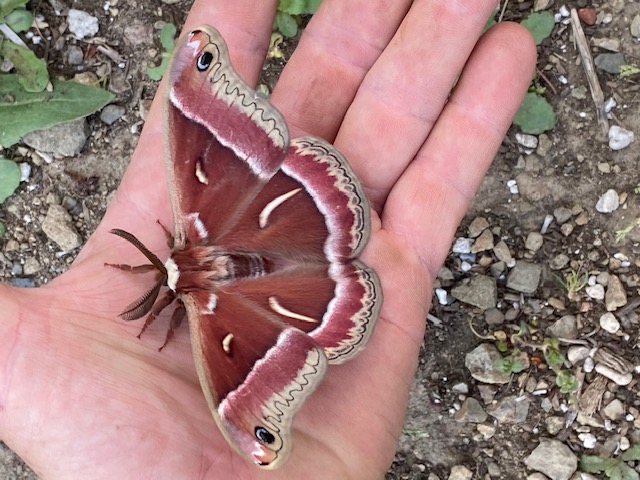
April is upon us and the hillsides bloom…a magnificent display of white, yellow, purple, orange, and pink. Deer and turkey forage around and the weather is erratic – warm sun one day, hail or snow the next. Plants boost up under protective covers and by late month are transitioned to a 12-hour light cycle to induce flowering.
May is here and buds are appearing. The days begin to grow warmer on average, but the season’s last cold snap serves as a harsh reminder that summer is yet to come. Plant growth rates improve and you get a clear indication of the expected bounty of first-run dep. Teams spend countless hours touching the plant…removing lower and interior foliage and de-leafing plants to allow airflow and light penetration.
June arrives and the season reaches its busiest point. The first dep harvest nears, clones for the second run are on site and being launched, and the outdoor or full-term gardens are being prepped and planted. Soil is amended, nematodes are applied to attack soil-born pests, and the days grow hotter and longer. Mornings are chilly at higher elevations and magnificent sunrises welcome you each day. The weeks are long and productive and the farm is in full swing. First harvests arrive and after months of significant expense, cash flow nears.
July and August are explosive months. Full-term plants grow amazingly fast and second-run deps explode, offering excitement and higher yields than cold run. Plants again require hours upon hours of care…opening, bottoming, coring, leafing, and supporting plants is of paramount importance. Physically your body is reaching peak form. Your strength and stamina are radically improved, yet the wear and tear on your body is real. Eating well, sleeping well, and staying hydrated are critical as the summer months in the hills are taxing. Days are hot and dry, the sun right in your face around 3,000-foot elevations. Pest pressure grows as reproductive rates improve and your integrated pest management game needs to be on point or crop loss can be staggering.

Late summer, unfortunately, has been plagued by smoky skies. Working in the smoke is hellish, with headaches and nausea a daily occurrence for most. Ash deposits can lead to pathogen problems and can contaminate developing flowers. Marching on in these conditions is a real challenge and takes commitment, personal strength, and undying love for the cannabis plant.
September is a special month on the farm. After the fall equinox, nights grow colder rapidly. Full-term flowers begin maturing and Autumn colors are spectacular. Like the trees around them, cannabis plant leaves change in color – boasting reds, yellows, and purples. Flowers too begin to change hue, often purpling in the cold, night air. Some flowers take on a bluish or silver tint and are spectacular to behold. Plants glisten in the morning dew and pathogens like mold and mildew can overrun crowded gardens that have not been well maintained. Plants that have not been properly supported will splinter and collapse under their own weight.
October, or Croptober as it is lovingly known, coronates a long outdoor season. Dry rooms are stuffed with large colas and months of arduous efforts pay off – one hopes. Rains arrive and large, dense colas can rot if not harvested in time…a true race against the clock. Late second run deps are harvested as well as third run deps for farms at lower elevations. Mornings are bitterly cold once again and frost settles over the hills a couple of days at a time. Second cut outdoor flowers are harvested toward month-end and November arrives at last – the culmination of a nine-month marathon for most farms.
Dry
rooms are continuously bucked down, processing is in full swing, and
sales are rapid for well-connected farms with desirable product.
Late outdoor strains are harvested, as are third run deps for some.
Like early season, the weather is erratic. Sun one day, rain, or
even snow the next. Greenhouse covers are dropped, equipment like
fans and heaters are removed or covered, and soil is treated for the
winter. By month-end, the season has come to a close for most.
Physically exhausted, time for rest and reflection has arrived.
Year-round farms like ours will carry on with a winter run, but
Humboldt’s hills become quiet overall. Road traffic decreases,
silence returns, and plumes of smoke dot the landscape as homesteads
burn firewood to survive.
Farmers spend much-deserved time with their families and begin planning for the season to come. Those who had success toy with expansion, infrastructure improvements, or expanding their brand. Others contemplate closing shop and moving on.
Farming in the hills of Humboldt is a truly magical experience. You connect with nature and with the changing elements in a real and personal way. One month bleeds into another and you grow harder and stronger along the way. Your intimate connection to the earth and to the cannabis plant grows with each season. The fire within you and your desire to hone your craft and touch more lives with your work grow stronger each time. Your love for ganja and for your avocation grows and matures, as do you personally. While physically and mentally taxing, growing ganja is the most rewarding of my professional pursuits to date.
Being surrounded by nature and exposed to the changing elements while growing the world’s most beautiful flower is a gift and a complete joy. Each season is a unique experience and a unique opportunity for personal growth and overcoming challenges. Pushing your body to the limit, challenging your intellect and mental strength, and throwing down killer nugs at the end of it all means the world to me and to thousands of others.
Onward we march!
OBITUARY: Kathy Spreen, 1952-2022
LoCO Staff / Saturday, May 7, 2022 @ 6:57 a.m. / Obits

On April
13, 2022
Kathy Spreen passed away peacefully at home surrounded by her loved
ones. Kathy Spreen was born in Newport Beach to a well-respected
military father and a charming and caring mother in 1953. She was the
youngest of two
siblings. Her brother, Ralph, was 10 years her senior.
Kathy had many great memories she would share from growing up in Laguna Beach in the ’50s and ’60s. Some of her favorite memories include attending the opening day of Disneyland, camping on Catalina Island, riding motorcycles, and experiencing the peace and love mind set of her generation. Laguna Beach is where she met her future husband and love of her life, David.
David and Kathy eventually made their way to Blue Lake, Humboldt County in 1972. In 1974 Kathy and Dave found everything they dreamed of in a property in Kneeland and built their dream life with their family in the mountains. They were married in 1976 and had two daughters, Karla and Kelly.
Kathy told stories of hitchhiking from Blue Lake to school at College of the Redwoods. June 1975, she graduated from College of the Redwoods with an Associate Degree in Business. After graduating, she worked for the California Coastal Commission for two years prior to lateralling over to Alcohol Beverage Control with the State of California.
Kathy was well known as the administrative assistant at Alcohol Beverage Control in Eureka. She worked there for over 40 years, retiring in 2020. Anyone who sold alcohol in Humboldt County knew Kathy and have shared many fond memories of her. She was able to work part-time, allowing her to always be there for her family. Kathy was a great home cook. The family ate dinner together every night, usually without TV. Holidays and birthdays were centered around everyone getting together at home or a restaurant to share a meal together. The family grew over the years with the addition of grandchildren, which brought her great joy.
Kathy loved the outdoors and could often be found outside tending to her garden, while listening to the radio with her dog. Her flowers were award-winning, but she never felt the need to enter any contests. She loved art, and enjoyed taking photos of her flowers and doing watercolor paintings of them as well. Her garden in its prime was not only beautiful, but provided the family with fresh fruits and vegetables. Garden to the dinner table, the family often enjoyed a delicious salad prepared 100 percent from Kathy’s garden with a beautiful dahlia bouquet as the table centerpiece.
Kathy enjoyed sharing her knowledge of gardening and plant identification with family and friends. She also loved to support the Sequoia Humane Society, often donating in memory of family pets, which were always adopted adults from our local shelter. She was a friend to all animals and a self-taught master gardener.
One of her favorite trips was a 14-day backpacking trip in the Trinity Alps with daughters Karla and Kelly, and family friend Karin. The all-female group received attention along the trail, some unwanted. Kathy was able to scare off two unsavory men with a warning shot to protect her family. She was a tough mountain woman, still making wood fires the month before her passing.
Kathy’s spirit and legacy will live on in the many lessons she taught her daughters that will be passed down through the generations like keep life simple: enjoy the outdoors, music, and art, and the importance of independence.
Kathy is survived by her daughters and their spouses, Karla and Brent Knapek and Kelly and Jason Wehausen, as well as her grandchildren Jenna and Levi Knapek and Khaliya and Hunter Wehausen. Kathy is preceded in death by her husband of 45 years, David Spreen, mother and father, Margaret and John Mroczek as well as her brother, Ralph Hadsell.
In remembrance of Kathy, please take a nice walk and smell the flowers.
###
The obituary above was submitted by Kathy Spreen’s loved ones. The Lost Coast Outpost runs obituaries of Humboldt County residents at no charge. See guidelines here. Email news@lostcoastoutpost.com.


