

OBITUARY: Rebecca (Becky) Lynn Davy. 1964-2022
LoCO Staff / Friday, April 1, 2022 @ 6:56 a.m. / Obits
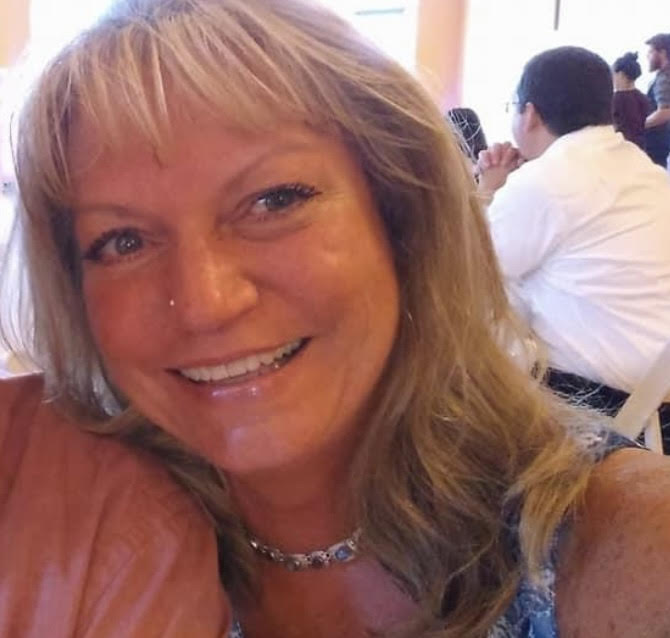
Surrounded
by her loved ones, Rebecca (Becky) Lynn Davy passed away on March 22,
2022 after a courageous battle with breast cancer. Born December 8,
1964 to Arthur and Joan Teasley, in Fortuna, she was the youngest of
5.
Becky graduated from Fortuna High in 1983, where lifelong friendships were made. She was the life of every party and took every opportunity to get together with her friends. “The hostess with the mostest,” she was always ready for the next get together, especially with her girls. She loved her friends. Becky never met a stranger – “the more the merrier” was always her motto. Her door was always open and she greeted you with a smile and a cocktail. Whether she was coordinating everyone meeting up, mixing up the cocktails, or dancing the night away, if Becky was there the party had arrived.
On May 17, 1986 Becky married her husband, Barry. A few years later they welcomed their son, Travis, and then daughter, Bailey. Becky loved her family and was proud of her children. One of her biggest accomplishments was her children. She was especially proud of Travis when he joined the United States Navy in 2011. She loved sharing stories and pictures of where he was and what he was doing. From the time her kids started playing and through college, Becky spent her weekends chasing soccer games around the county and state to watch them play. Anyone who knew the Davys knew their weekends were spent on a soccer field. Her love for soccer and the youth continued even after her kids were done playing. She served on the Eel River Youth Soccer Board for 18+ years, filling just about every position on the board at some point, from coordinating refs, to registering kids, to opening her home to coaches from the UK every summer. On any given weekend you could still find her at the soccer fields.
Becky spent 24 years working at Linda’s Hallmark, where she got to share her love for decorating and Chrimstas with all of Fortuna. She had an eye for decor, especially during Christmas. With the sound of Peanuts Christmas music playing, she would turn her house into a mini-Hallmark store every year. Aside from the lack of sunshine, it was her favorite time of year.
Cancer may have taken her too soon, but cancer did not define her. Becky was a lover of sunshine, laughter, the beach and Christmas. Her favorite vacation spot was Mission Beach, San Diego with her family and her besties, eating fish tacos on the beach and boogie boarding in the ocean.
Becky is preceded in death by her parents Art & Joan, stepfather Howard Hammers, and father and mother-in-law Jim & Phyllis Davy. She is survived by her loving husband, Barry, and her two kids, Travis and Bailey; her siblings Denise (Henry) Anaya, Sue (Monica) Teasley, Will Teasley, Scott (Leslie) Teasley; her brother and sisters-in-law Tracy (Valerie) Davy, Tim (Sue) Davy, Greg (Bonnie) Davy, Jody (Ed) Leivas, Darby Davy, Troy (Cindy) Davy, Tammy (Matt) Forsell and numerous nieces and nephews.
May we all start each day with the same mindset Becky did as she faced her journey. She never once wavered in her fight and positive attitude to keep trying. She embraced each day with hope, love and gratitude for those supporting her journey. From her amazing nurses, to her family and friends both near and far, she was never alone.
Becky’s celebration of life will be held at the Loleta Fire Hall on Saturday, April 9, at 1 p.m. Donations in her name can be made to Hospice of Humboldt, the Loleta Volunteer Fire Dept, or a charity of your choice.
###
The obituary above was submitted on behalf of Becky Davy’s loved ones. The Lost Coast Outpost runs obituaries of Humboldt County residents at no charge. See guidelines here.
BOOKED
Today: 7 felonies, 17 misdemeanors, 0 infractions
JUDGED
Humboldt County Superior Court Calendar: Yesterday
CHP REPORTS
Lesina Rd / Titus Rd (HM office): Trfc Collision-Unkn Inj
0 Sr299 (RD office): Trfc Collision-No Inj
ELSEWHERE
RHBB: Humboldt County Health Officials Urge Caution After Three Children Exposed to Rabies from Bats
RHBB: Trinity County Launches Recruitment Video Campaign to Fill Staffing Gaps
RHBB: Board of Supervisors Appoints New Directors for Child Support and Library Services
Now They’re Selling KIEM-TV to An All-Western Cable Channel That Used to Be Jim and Tammy Faye’s ‘PTL Television Network’
Hank Sims / Thursday, March 31, 2022 @ 4:11 p.m. / Media

Hello, Eureka! Photo: Public domain, via Wikimedia.
Poor old KIEM-TV — “News Channel 3,” “Redwood News,” or whatever they’re calling it now — has had a rough couple of decades since the Jim Bernard glory days. They’ve been bounced around from corporate overlord to corporate overlord, and it’s hard to think of a time that they emerged stronger from the experience.
Now comes news that Cox Media Group is kicking that ol’ can one pace further down the road, with a sale of Channel 3 and 11 of its current sub-mid-market to bottom-of-the-barrel siblings to a cable channel called “INSP,” which seems to be all about Westerns, both classic and originally produced. For instance, INSP has a reality show called “Ultimate Cowboy Showdown,” hosted by “Honky Tonk Badonkadonk” singer Trace Adkins, in which seasoned cowboys from across the country are dropped into Wyoming and forced to do cowboy stuff against each other.
Why the picture and headline above? Because INSP is the successor of Jim and Tammy Faye Bakker’s PTL Television Network, a staple of late-night dorm room antics for we children of the ‘80s. Small world!
Rep. Jared Huffman tells Mario Cortez of Times-Standard — a whole ‘nother local media story for a different day — that he will oppose the sale of Channel 3 and the rest of the Cox stations to INSP, partly on the Bakker grounds. “It is rightwing religious media on steroids,” says the Huff.
Press release from Cox Media Group:
Cox Media Group (CMG), an industry-leading media company, and the general entertainment cable network INSP, LLC (INSP) announced today that affiliates of each company have entered into a definitive agreement involving the sale of CMG television stations in twelve markets. The transaction furthers the strategic evolution of CMG’s broadcast station portfolio and marks INSP’s expansion into broadcast television.
Upon the close of the transaction, Imagicomm Communications, an affiliate of INSP, will acquire the following CMG stations:
- Alexandria, LA – KLAX
- Binghamton, NY – WICZ
- Eureka, CA – KIEM/KVIQ-LD
- Greenwood, MS – WABG/WNBD/WXVT
- Idaho Falls, ID – KPVI
- Medford, OR – KMVU/KFBI-LD
- Memphis, TN – WHBQ
- Spokane, WA – KAYU
- Syracuse, NY – WSYTTulsa, OK – KOKI/KMYT
- Yakima, WA – KCYU-LD/KFFX
- Yuma, AZ – KYMA
“These are important local journalism and community service brands powered by incredible media professionals and journalists who work tirelessly to inform, entertain, and elevate the communities they serve,” said CMG’s President and CEO, Dan York. “We are pleased to advance the strategic evolution of our portfolio, are proud of our team members at these stations, and are confident they will continue to excel in their important work as part of the Imagicomm / INSP family.”
David Cerullo, Chairman & CEO of INSP, said, “We are excited to be entering the broadcast television market with this strong collection of brands that are integral to informing and entertaining the communities they serve. We look forward to working with the stations’ talented staff and building upon their rich legacy of journalism and serving their communities, advertisers, and audiences. This acquisition is part of our broad corporate strategy to expand our media ownership across multiple entertainment platforms.”
The transactions are subject to customary closing conditions, including applicable regulatory approvals. The parties expect to close the announced transactions in the second half of 2022.
Advisors
Truist Securities, Inc. served as financial advisor to INSP and Imagicomm Communications in connection with the Transaction and is acting as left lead arranger on the debt financing. Davis Wright Tremaine, LLP served as lead M&A counsel to INSP and Imagicomm Communications, and Bradley Arant Boult Cummings served as their financing counsel.
Moelis & Company, LLC and LionTree served as financial advisors to Cox Media Group, and it was represented on the transaction by Davis Polk & Wardwell LLP, with Cooley LLP and Morgan Lewis & Bockius LLP serving as special regulatory counsel.
About CMG
CMG Media Corporation (d/b/a Cox Media Group) is an industry-leading media company with unparalleled brands, award-winning content, and exceptional people. CMG provides valuable local content to viewers in the communities in which it serves. The company’s operations primarily include 31 high-quality, market-leading television stations in 20 markets, 53 top-performing radio stations delivering multiple genres of content in 11 markets, and numerous streaming and digital platforms. CMG’s portfolio includes primary affiliates of ABC, CBS, FOX, NBC, Telemundo and MyNetworkTV, as well as several valuable news and independent stations. Additionally, the company also offers a full suite of national, regional, local and digital advertising services with CMG Local Solutions, CoxReps and Gamut. For more information about CMG, visit www.coxmediagroup.com.
About INSP
INSP, LLC is a 24-hour-a-day general entertainment cable network that provides a trusted viewing experience with a lineup of exclusive and original series, timeless Westerns, action-filled dramas and films focused on adventure and heroic characters. The network’s audience continues to grow at a time when most cable networks have experienced declines, and its average monthly HH ratings increased by more than 1300% from 2010 through 2022. INSP is available nationwide to more than 62M households via MVPDs including DISH (channel 259), DIRECTV (channel 364), Cox Communications, Comcast Xfinity, Charter Spectrum, National Cable Television Cooperative (NCTC), Verizon Fios (channel 286), AT&T U-verse (channel 564) and on vMVPDs including SLING TV, fuboTV, Philo, Frndly TV, Vidgo, SelectTV and Evoca.
About Imagicomm Communications
Imagicomm Communications is an affiliate of INSP, LLC responsible for the ownership and management of broadcast-related functions for the organization, including content distribution in the broadcast environment, station ownership, oversight and development.
Eureka Residents Weigh in on Proposed Rules For the City’s Gulches and Greenways
Isabella Vanderheiden / Thursday, March 31, 2022 @ 2:36 p.m. / Local Government
Graphic: City of Eureka
###
Do you live within Eureka’s city limits? Do you have a passion for gulches? How about greenways? Do you like traipsing about the neat little trails that weave throughout the City? Well, my friend, you have come to the right place.
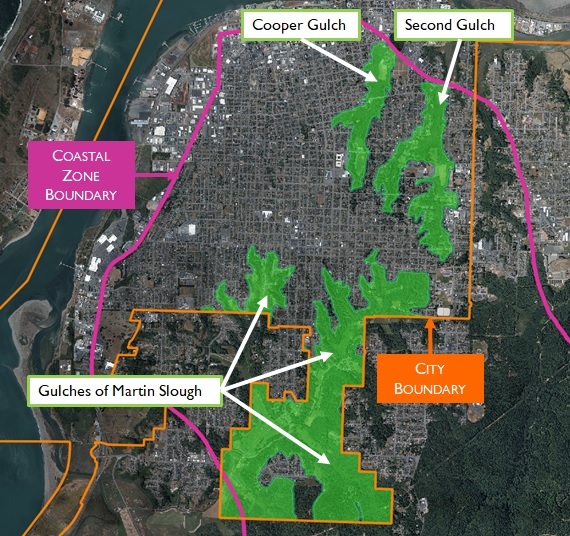
The City of Eureka is working to develop comprehensive policies for its greenways and gulches, including Cooper Gulch, Second Gulch and the gulches of Martin Slough, as shown in the map above. But before such policies are drafted, the City would like to hear from its residents.
As it stands, there are no local guidelines or standards in place for the protection of wildlands, streams and riparian habitats outside of the Coastal Zone. The City’s 2040 General Plan calls for management standards for local gulches and greenways to ensure future development adheres to public safety and environmental standards for our community.
“This planning effort is just focused on the portions of the gulches [and] greenways that are within the city limits and outside or inland of the Coastal Zone,” Cristin Kenyon, principal planner for the City of Eureka, said during a public workshop on Tuesday. “Our working idea is to adopt a gulches and greenways ordinance that defines the boundaries of the Gulch/Greenway Management Area, includes statements of purpose for the area – values that we want to preserve and enhance as well as hazards we want to avoid – and then include some additional standards and limitations for development and uses in this area that align with the environmental and safety values.”
Preliminary results from an online survey call for enhanced protections for fish and other wildlife as well as the natural and scenic character of the City’s gulches and greenways. Residents also asked that the City reduce the fragmentation of vegetation throughout the area and for buffers to be established between sensitive habitats and nearby urban uses.
The standards will be subject to certain limitations, Kenyon noted. For example, the draft policies will identify uses and general standards for development in the gulch and greenway areas, but they will not provide a plan for public trails.
The standards will not provide a solution to homeless encampments or dumping either, she said.
“We have a homelessness crisis and these standards aren’t really going to do anything to help us in that situation,” she said. “The city has other programs that address the homelessness crisis and we’re currently working on a Homeless Action Plan. The standards can incentivize and require good stewardship but they’re not a complete solution to issues of trash and invasive species. Dealing with those things really requires an ongoing community-wide effort.”
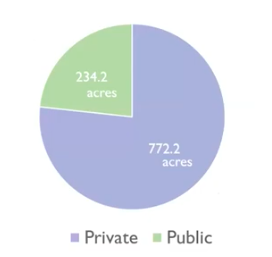
More than 75 percent, approximately 772 acres, of Eureka’s gulches and greenways are privately owned, she said. Citywide standards would help prevent further fragmentation and degradation of the gulches and greenways while promoting better environmental stewardship.
When asked by one of the workshop’s 13 attendees whether the standards would address fencing on private property in wildlife corridors, Kenyon said the City had considered allowing wildlife-friendly fences but was unsure about the allowance of other fences.
“We’re debating what to recommend in terms of other types of fences,” she said. “I know there’s a concern [from] property owners if trails come [because] they want to be able to protect their private property from people using the trail. And so weighing that against the desire to have to allow wildlife movement through these corridors is something that we have to think about.”
Another resident asked how the ordinance rules and enforcement would impact activities on private properties within or adjacent to the gulch and greenway area. Kenyon confirmed and explained that the ordinance would function “like an overlay of additional standards and limitations” that would apply in the area.
Eureka residents can weigh in on the proposed ordinance through mid-April.
The Open Space, Parks and Recreation Commission will review the draft policy on April 28 before it’s sent to the Eureka City Planning Commission meeting on May 9. If all goes according to plan, the proposal will move on to the City Council for approval in July.
Do you have an affinity for gulches and greenways? Take the survey here!
ROCK HUNT! Northcoast Children’s Services Invites You to Search for Hand-Painted Stones Hidden Around Humboldt and Del Norte
Stephanie McGeary / Thursday, March 31, 2022 @ 2:10 p.m. / Art , Community , Family
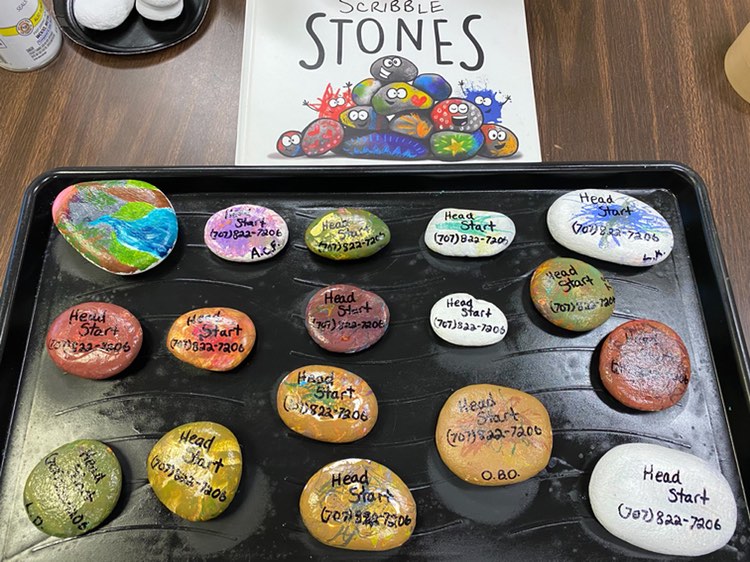
Some of the rocks painted by the children at Sonoma Street Head Start | Photos submitted by Christy Snyder of NCS
###
Forget about hunting for eggs this Easter season! Northcoast Children’s Services (NCS) has something much more interesting planned for you – a weeks-long hunt for colorfully painted rocks, spanning across Humboldt and Del Norte counties.
For most of April, the community will have the chance to search for 135 hand-painted rocks across the two counties, spanning as far south as Redway, north to Smith River and east to Willow Creek and Orleans. The lucky folks who find one of these rocks, will be entered into a drawing to win a $50 gas card.
Christy Snyder, enrollment recruitment manager for NCS, told the Outpost that the event is simply meant to serve as a fun way to bring awareness to NCS and the Head Start program, which provides services for income-eligible pregnant women and families with children under five – including food access, healthcare, daycare and preschool. NCS usually conducts recruitment efforts by going door-to-door once per week. But during COVID, that became a lot more difficult and less fun, Snyder said.
“My thought process was ‘How can we get the word out about Northcoast Children’s Services and make it fun?’” Snyder told the Outpost. “And I just thought, ‘everybody loves finding rocks.’ I’ve found a couple with my grandkids and I love it when I find them.”
So, NCS staff and volunteers set to work collecting and decorating the stones. The kids from one of NCS’s preschools – Sonoma Street Head Start in Eureka — even helped-out, painting rocks as a curriculum project, Snyder said.
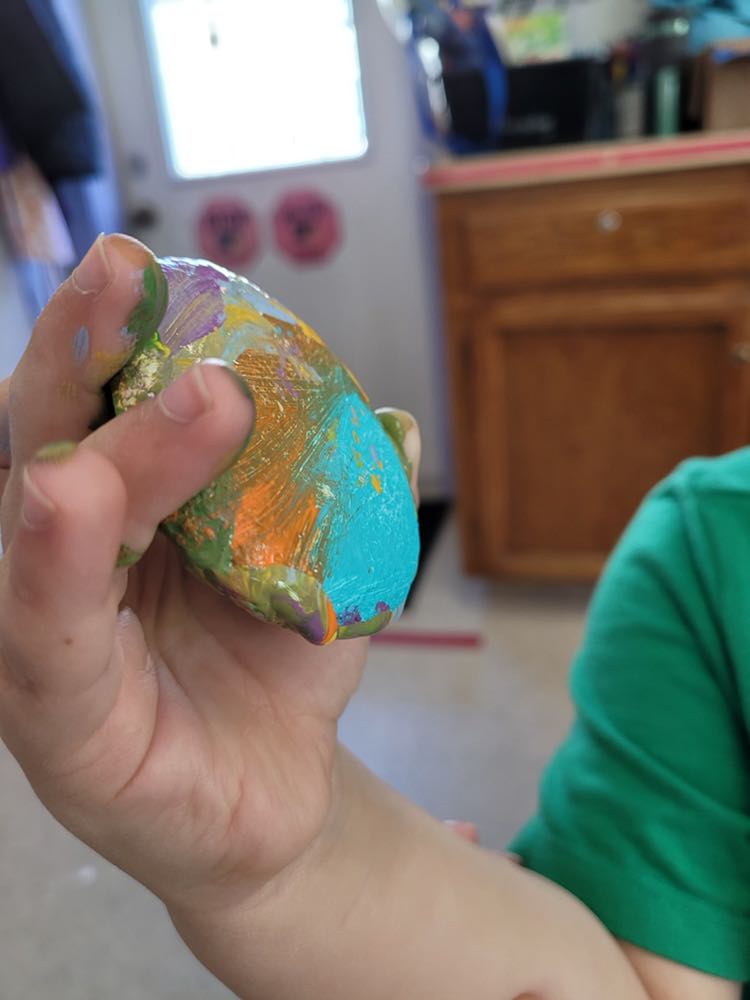
Starting on Monday, April 4, NCS staff and volunteers will spend the week hiding the rocks, and the hunt will go on for about three weeks. Snyder said that she instructed her helpers to “hide the rocks in plain sight” so that they won’t be too difficult to find, and to place them in areas where families would go – such as parks, outside of grocery stores and on hiking trails, like the Hammond Trail or the Waterfront Trail in Eureka.
Though NCS is designing the hunt to be family-friendly, Snyder said that everyone in the community is welcome to join in the fun. “I don’t care who they are, whether they have kids or not,” she said. If you find one of the hidden rocks, all you have to do is call the number on the back (that is also how you will know that it is an NCS rock, and not someone else’s painted rock) and you will be entered into the raffle.
Of course, NCS will want to chat with you about the organization – ask you if you have kids, or if you know anyone who has kids. Spreading the word about NCS and the Head Start programs is, after all, kind of the point. And spreading the word about NCS is more crucial than ever, Snyder said, since preschools and childcare centers are struggling to recover from the pandemic.
“COVID has hit childcare and preschools hard,” Snyder said. “Our biggest issue at the agency is staff. We’ve had to close a few centers because we just don’t have staff. So, we do want to get the word out and let people know that there is preschool available. And then, hopefully, we can find more staff, so we can reopen those preschools.”

Stones painted by NCS staff

Fortuna Police Department Releases Statement on the Passing of Chief Bill Dobberstein
Andrew Goff / Thursday, March 31, 2022 @ 12:20 p.m. / News
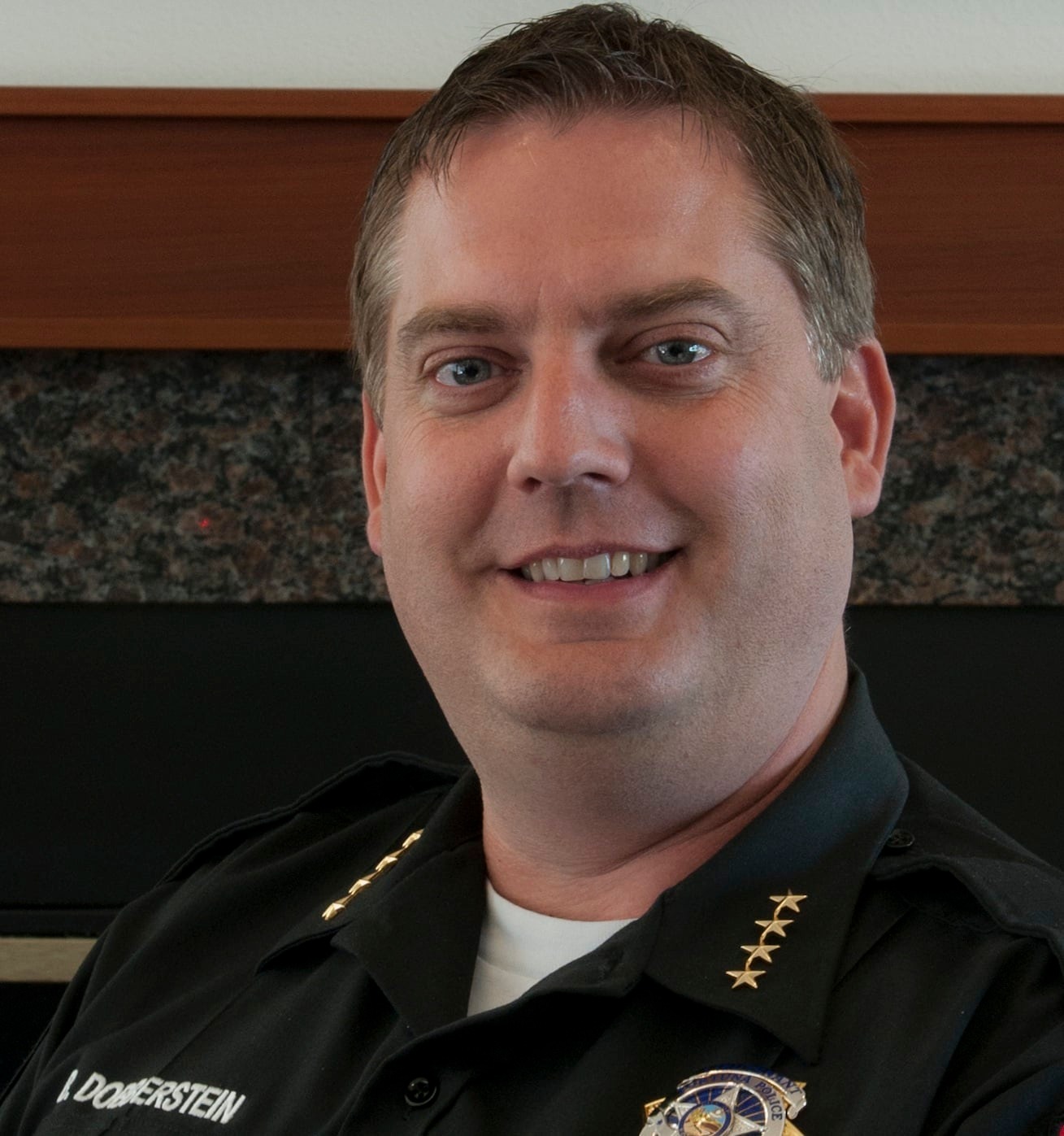
The city of Fortuna continues to mourn the loss of retired police chief Bill Dobberstein who died this past weekend. Today Matt Eberhardt, a lieutenant with the Fortuna Police Department, penned the following remembrance of his late colleague which was posted to FPD’s social media:
We have been grieving the loss of retired Police Chief Bill Dobberstein. He lived a life of service to others. He served in the United States Air force and he served as a member of the Fortuna Police Department for over 25 years, retiring as Chief of Police in January of 2020.
Bill loved Fortuna and public safety. Throughout his career he saved lives, inspired others and truly made a significant impact on those who had the pleasure of knowing him. Bill was a fun loving friend, coworker and Chief. We remember the smiles he gave us and the laughs we enjoyed with him. The members of the Fortuna Police Department honor his memory and extend our condolences to his family, friends and all those he touched in his amazing life.
As the agency’s Facebook manager it has taken me some time to gather my thoughts. Bill was a friend and significant part of my everyday life for many years. He is missed and I was honored to be his friend and coworker.
-Lt. Matt Eberhardt

Without SAT, ACT, What’s Next for Cal State Admissions?
Mikhail Zinshteyn / Thursday, March 31, 2022 @ 7:16 a.m. / Sacramento

Cal State campuses with have new admissions requirements soon. Here, students walk across campus at Fresno State on Feb. 8, 2022. Photo by Larry Valenzuela for CalMatters
In the acronym soup of California public higher education, gone are two three-letter combos that led legions of students to plug their noses annually: The SAT and ACT are (functionally) no more.
After the California State University system formally ditched the SAT and ACT as admissions requirements last week, the state is now the first — and only — in the United States to have no public university accepting standardized test scores for admissions.
The Cal State system followed in the University of California’s footsteps, which swore off the SAT and any other admissions test last year.
Cal State officials and the system’s academic senate cited studies showing that high school grades better predict how well students will perform in their first year of college than test scores. Other data showed that predictive power only went up marginally when test scores were combined with high school grades; the makers of the SAT say the test’s predictive boost is significant. Critics have also long maintained that the SAT rewards students who have the financial resources to hire tutors or enroll in prep courses to improve their test scores, leaving low-income students at a disadvantage.
Both the UC and Cal State system are now “test-blind” — a rarefied club of 86 academic institutions and systems nationwide. Another 1,825 other campuses don’t require test scores but will still assess them if a student submits that information, a concept known as “test-optional.”
So, what will the era of admissions without tests look like at the nation’s largest public four-year university?
The future of Cal State admissions
Until the COVID-19 pandemic, the system’s 23 campuses chiefly admitted students based on a formula of high school grades and ACT or SAT scores. Only in the last two years, after suspending its SAT requirement during the pandemic, has the system relied on other factors.
The system’s Admissions Advisory Council plans to submit a final set of admissions eligibility criteria to the California State University Office of the Chancellor by late spring.
The recommendations will largely reflect the work the system did during the pandemic to replace its testing requirements with additional information about an applicant’s high school grades and socio-economic factors.
Currently, the minimum eligibility requirement is a 2.5 grade point average for California high school graduates and a 3.0 if the applicant isn’t a state resident. Another is to complete the required 15 courses in math, English, science, history and other subjects, known as A-G courses. Some campuses accept slightly lower GPAs but consider other academic and socio-economic factors.The Admissions Advisory Council — in the first change to the system’s eligibility index since 1965 — is instead proposing that the minimum eligibility criteria include four factors:
- the students’ GPAs for the 15 required courses;
- whether students passed more than 15 of the required courses during their time in high school;
- whether students attend either a high school that is near the Cal State campus to which they’re applying or attend a high school with a high percentage of students who receive federal meal subsidies because they’re low-income;
- other socio-economic and interpersonal factors, such as whether students worked during high school, had no one else in their family complete college, had family commitments or volunteered.
The system is now developing the minimum GPA and weights for these factors. Once published, campuses will be able to use a formula to calculate whether applicants are eligible for admissions. It’s a quantitative approach that resembles use of an eligibility formula during the SAT era. Officials may continue to tweak it over time.
The Cal State system will roll out its new criteria gradually, giving it time to communicate the details to high school counselors. Current high school juniors who apply to enroll at a Cal State in fall 2023 will be admitted based on the current minimum eligibility criteria. Today’s high school sophomores seeking entry into a Cal State for fall 2024 will be admitted based on the current criteria or the new eligibility index in the works — whichever is more advantageous for them. Students applying for fall 2025 admissions will be governed by the new index.
Abandoning test-based criteria couldn’t come sooner for low-income students, said Cal State trustee Krystal Raynes, an undergraduate at Cal State Bakersfield.
“I remember saving up my lunch money to take both the PSAT and the SAT because my parents didn’t know what that was and didn’t want to spend money on me taking a test,” she said at the March board meeting, a day before the trustees voted unanimously to ditch admissions tests. “Meanwhile I knew students who were prepping with tutors in junior high, so there’s definitely that economic gap there.”
Criteria for more competitive campuses
But minimum eligibility isn’t enough of a cut-off for numerous Cal State universities. Right now seven universities are fully impacted, a technical designation meaning a major, program or the whole university receives applications from more qualified students than there’s space. All but seven campuses have at least one major program that’s impacted.
The Cal State admissions policy plan is to allow these oversubscribed programs to continue using a combination of up to 21 different admissions factors to admit students. These overlap partly with the newly proposed minimum eligibility criteria but include other variables, such as grades in specific high school subjects, whether students qualify for an application fee waiver and their military status. No campus uses all 21 factors for admissions.
Like the minimum eligibility index in development, all of these factors are data the Cal State application already collects. The system software is sophisticated enough to calculate the admissions scores for each campus based on the admissions criteria they select.
Though the Cal State system admits 93% of the California high school students who apply, several campuses are far more selective. Cal Poly-San Luis Obispo, and San Diego State, the most competitive, admit only a third of their California freshmen applicants.
Spotlight on admissions criteria at popular campuses
Presently six of the 23 Cal State campuses won’t consider any in-state student with a GPA below a 2.5. Even within this group, campuses are using multiple factors to handle their influx of applicants by balancing academic and socio-economic factors.
“Unequivocally, I think it is a great move” to remove admissions tests, said San Diego State President Adela de la Torre. “If we’re going to talk about diversity and inclusion, you have to have metrics that reflect a broader set of criteria.”
“If we’re going to talk about diversity and inclusion, you have to have metrics that reflect a broader set of criteria.”
— Adela de la Torre, president of San Diego State University
The San Diego university expanded its criteria for admission for students entering last fall. Half of the admissions score is based on the GPA a student earned in the 15 required courses for entry. The other half includes the grades in math and science courses, foreign language, history and whether a student comes from a local high school. The university also gives extra points for signs of socio-economic hardship among students applying from nearby high schools or entering special programs for marginalized students, like for foster youth.
San Diego State will largely keep this formula beyond 2023, but like other campuses, it may change its weights and add more admissions variables over time.
Long Beach State guarantees admission to local high school students who meet the minimum eligibility requirements. Other students will be held to a higher admissions standard. All impacted Cal State campuses give some kind of admissions priority to applicants attending local high schools. Long Beach State has more than 50 public and private high schools in its local service area.
At Cal Poly-Pomona, 86% of the points in the admissions formula come from academic factors and 14% are based on non-academic areas.
Unlike the UC, Cal State has no admissions readers
The UC campuses hire hundreds of part-time application readers who undergo training to go through every application. The Cal States have no readers and never did. And unlike the UC, the Cal State application doesn’t ask students to provide essays or extended written responses.
UCLA hires 200 part-time readers who earn stipends of $1,350 to $2,500 depending on the number of applications they review. The university received nearly 150,000 freshmen undergraduate applications for fall 2022 enrollment, the most in the country. Other UC campuses shared that they bring on 50 to 160 readers; the numbers vary depending on each campus’s application volume.
The price tag for readers at UCLA is between $400,000 and $500,000. Meanwhile, the entire operating budgets of the admissions offices at Cal Poly-San Luis Obispo and Cal State Fullerton are $2.2 million. [CORRECTION: This story originally overstated the price of readers at UCLA. It has been corrected.]
Cal State campus admissions officials will occasionally review individual applications, such as when a denied student files an appeal. Admissions teams also spot-check applications to see if students omitted required information. Plus some music and performing arts programs require applicants to submit portfolios that faculty then review.
###
CALmatters.org is a nonprofit, nonpartisan media venture explaining California policies and politics.
OBITUARY: Patricia Ann Welsh, 1936-2022
LoCO Staff / Thursday, March 31, 2022 @ 6:56 a.m. / Obits
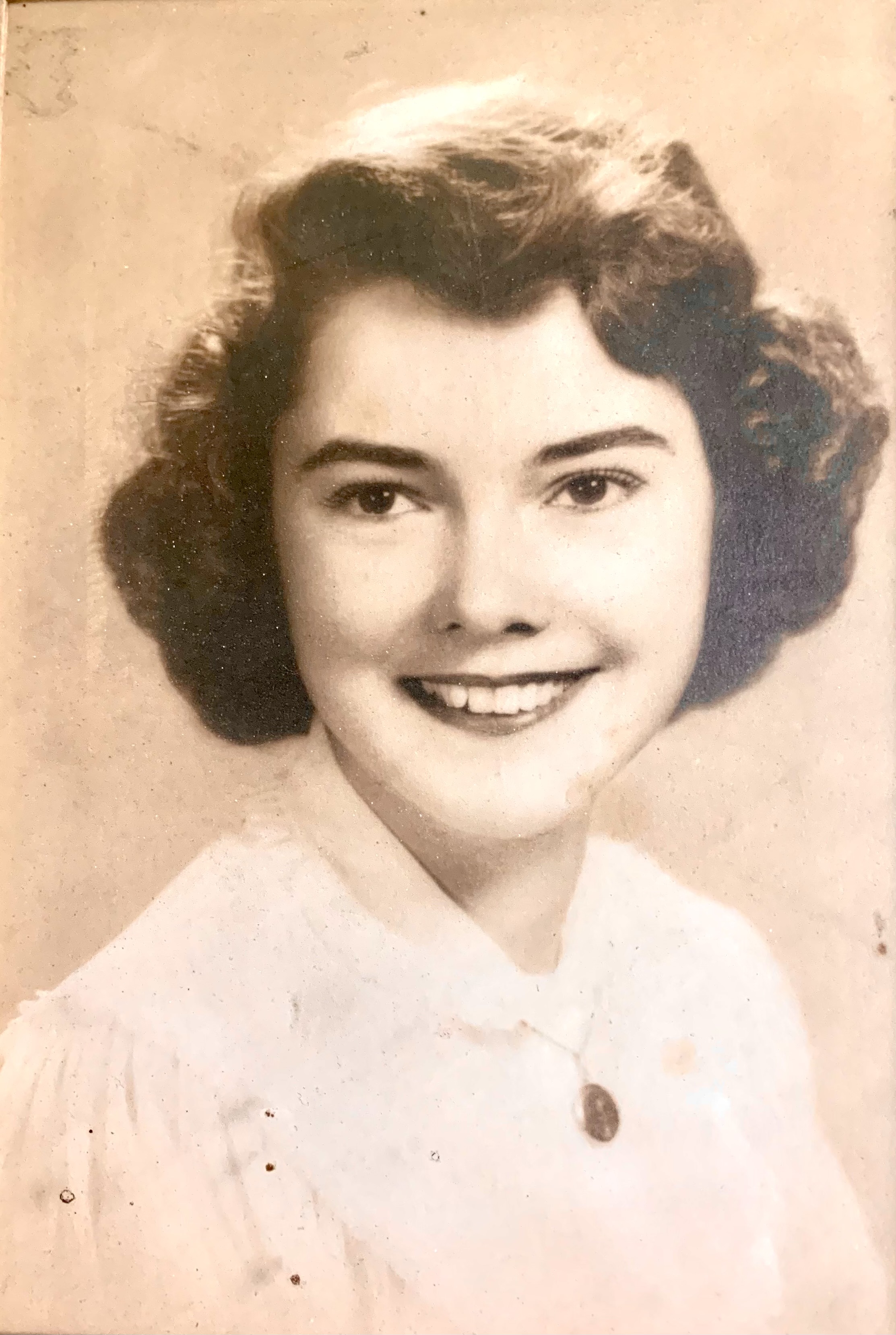
Patricia Ann Welsh was born on
November 1, 1936 in Philadelphia, Pennsylvania to Edward and Nan
Maguire. She fondly remembered playing in her Germantown neighborhood
streets and parks, walking to school, and spending summer holidays
enjoying the family beach house in Cape Cod, N.J.
At 13 she met Jimmy Welsh. The two fell in love and dreamed of making a life on their own in the west, far from the city where they were raised. They had a fairytale wedding the year Patricia turned 19. They drove away from their wedding reception in a truck and trailer as they headed off to begin their new life in California. Their song, “Let the Rest of the World Go By,” includes the lyrics: “We’ll build a little nest, somewhere out in the west, and let the rest of the world go by.” That is exactly what they did. On June 30, 2021, they celebrated their 65th wedding anniversary. Our family grew up on their stories of adventures and mishaps and learned the value of undying love and loyalty from their example.
Jim and Pat have four children, 13 grandchildren and five great-grandchildren. Pat’s legacy lives on in the thinking, practices and hobbies of them all: baking, gardening, games, knitting, crafting, quilting, creating and traveling. She was a first-class baker who provided treats with no limits and spoiled her family with homemade bread for decades. A dedicated knitter, crocheter and quilter, Mom gifted us many handmade works of art and heart. From afghans, purses, treasure bags, and quilts, to crocheted holiday ornaments, snowmen, and Christmas trees, her legacy will live on each time we wrap up in or decorate with her beautiful handicrafts.
Pat never left any doubt that her highest priority and greatest joy came from her family and the homes she and Jim created as they raised their four children in a manner so divergent from the city childhood they had both experienced. They raised their children with the natural world at their doorstep. They raised kids who knew how to hunt, chop wood, build fires, feed baby cows and goats, collect eggs, hike mountains, and appreciate the gifts of a life being raised by a mother who always loved deeply and unconditionally. These priorities have become our basic family values and are shared across the generations.
Many of our most treasured family traditions are centered around Mom. Every summer we looked forward to berry picking and enjoying her fresh blackberry pies. In fall our family and friends gathered to pick apples and press gallons of cider. Mom loved keeping a careful tally of the day’s work. Apples that fell off the trees prior to pressing day were lovingly prepared by Mom into applesauce, apple butter or one of Mom’s delicious pies. Every Christmas Eve, Mom played the piano while family and friends gathered to sing carols. She practiced for weeks, doubted her skill, and sometimes had to start again, but that event will live on in the memories of us all as one of our most beloved days of the year.
Early in their marriage, Pat worked as a secretary. She was a speed typist and excelled at shorthand, frustrating her children by writing Christmas lists they could not read. She returned to secretarial work at the HSU Nursing department and Humboldt Home Health once her children were raised. She was a philanthropist and a volunteer, serving as a leader for her local PTA, Girl Scouts, and Boy Scouts, supporting her children’s sports teams, and serving as a Braille transcriber for many years, going on to become president of the local Braille association. She loved challenges and stayed on top of advances in tech, making a seamless transition from using manual Braille typewriters to a completely computerized system. Her greatest joy was brailling books for children.
Pat suffered a massive heart attack in 2016 that left her winded when doing large tasks, but did not slow down her knitting projects or Sudoku challenges. The downtime allowed her to master her iphone and opened new lines of communication with her farflung grandchildren. Every text from “Mamu” ended with several emojis… always including a heart, a musical note and often an “LOL.”
Last summer saw a return of Mom’s heart issues. In late November, she experienced two additional major heart attacks and had to be resuscitated both times. We thought, and the medical professionals believed, that our time together had come to an end. Miraculously, she recovered and returned home to enjoy six weeks of feeling better than she had in years. During this time she created one last bright pink afghan to welcome her newest great grandchild and practiced daily for the annual Christmas Eve caroling piano accompaniment. Most of our large and widespread family was able to visit with her during this period and lots of laughs and tears were shared as we knew we were living and loving on borrowed time.
On February 28th, Mom’s heart gave out. A hundred years would not have been enough, but we know her body was tired and she was ready to say goodbye. Nothing truly lessens the pain of losing her. We are forever grateful and in awe of our dad who, through sheer force of will and a lifetime of love, put everything else on hold to lovingly care for her at home. Throughout her life home has always been where she preferred to be and it is fitting and comforting that she was able to spend her last days in the place she loved best.
Pat is survived by the love of her life: her loving husband of 65 years, James Welsh. She leaves behind her four children and their spouses who Pat loved as if they were her own: Rosemarie and John Gloor (McKinleyville), Daniel and Amy Welsh (Citrus Heights), Chris and Deb Welsh (Knoxville, TN), and Phyllis and Tom Nolan (McKinleyville); her beloved grandchildren: Logan Gloor, Kelsey Iberti, Liza Welsh, Cathy Albert, Taylor LeBlanc, Rachel Voorhees, Jenny Welsh, Thomas Nolan, Emily Welsh, Corina Montgomery, Marisa Gloor, Ben Welsh, and Austin Nolan and her five great-grandchildren: Nick Cavallero, Wyatt Albert, Luca Iberti, Owen LeBlanc, and Jolene Albert. She is survived by her sister, JoAnn Reckner (Wisconsin), brother, John Maguire (Pennsylvania), and her sisters-in-law: Genevieve Bottoroff (Florida) and Margie Stiehl (New Jersey).
Our family would like to thank those who provided support for Mom and our family: Paulette Crowell, Denise Witte, Mad River Ambulance, Humboldt Hospice, St. Joseph’s Family Practice, Dr. Tin Botzler and the Providence Medical Group Cardiology team, and the incredible nursing staffs of Mad River and St. Joseph’s hospitals.
At her request, there will be no funeral services. A celebration of her life will be held this summer.
###
The obituary above was submitted on behalf of Patricia Welsh’s loved ones. The Lost Coast Outpost runs obituaries of Humboldt County residents at no charge. See guidelines here.


.jpg)