

In the Interest of Public Safety, They’re Going to Chop Down Some Redway in the Coming Weeks
LoCO Staff / Wednesday, March 30, 2022 @ 2:35 p.m. / Fire
Press release from the Calfire Humboldt-Del Norte Unit:
As early as next week, work may begin on a fuels reduction project near Redway, California. The fuel treatments are designed to reduce the severity and spread of potential wildfire in the urban interface environment. This project will enhance defensible space around the Redway community in State Responsibility Areas (SRA).
This fuel reduction project is a collaborative effort between CAL FIRE Humboldt – Del Norte Unit, Southern Humboldt Fire Safe Council, and the Humboldt County Resource Conservation District. This project is a result of the ongoing efforts of the Southern Humboldt Fire Safe Council to improve the resilience of Southern Humboldt communities to wildfire.
The planned fuel treatments encompass 142 acres of land adjacent to Redway. Contract crews will use, masticators, hand tools, weed-eaters, chainsaws, and wood-chippers to reduce excess fuels in the area. The excess fuel removal will involve weed-eating, brush removal, thinning of trees, and falling of small trees. Any trees removed will typically be small overcrowded suppressed trees. Remaining trees will also have the lower limbs removed to eliminate “ladder fuel.” Ladder fuels are vegetative fuels that provide a path for wildfire to climb from surface fuels like grass and brush, up into the crowns of trees. By removing brush, ladder fuels, and smaller trees, vegetative fuels are separated, and the fire hazard severity is reduced. Most understory vegetation will be lopped and scattered or chipped into mulch.
The year 2021 was another devastating record setting year for wildfire in California. CAL FIRE is continuing work throughout the state to treat vegetative fuels and create more resilient landscapes. The intent is to reduce the number, size, and severity of wildfires and to protect homes and other structures. As CAL FIRE begins this endeavor, Humboldt – Del Norte Unit Chief Kurt McCray would like to encourage homeowners in wildland areas to continue work to create defensible space around their homes. With increased defensible space around homes and fuel treatments such as this project provides, both individual homes and entire communities will stand safer against wildfire.To learn more about this and other similar projects, get involved with the Southern Humboldt Fire Safe Council by visiting https://humboldtgov.org/1888/Southern-Humboldt-FSC, or visit the Humboldt County Resource Conservation District at http://humboldtrcd.org/.
For more information on how to prepare your home from wildfire, visit www.ReadyForWildfire.org.
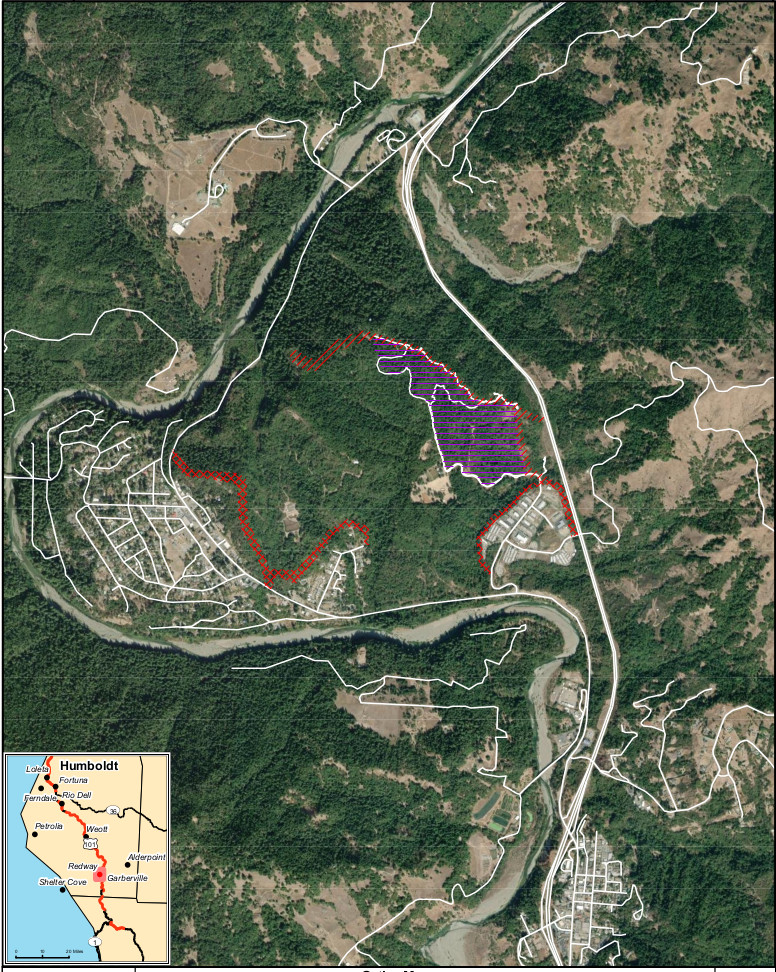
A lot of the stuff in red and purple gotta go. Click to enlarge. Graphic: CalFire HUU.
BOOKED
Today: 7 felonies, 17 misdemeanors, 0 infractions
JUDGED
Humboldt County Superior Court Calendar: Yesterday
CHP REPORTS
Lesina Rd / Titus Rd (HM office): Trfc Collision-Unkn Inj
0 Sr299 (RD office): Trfc Collision-No Inj
ELSEWHERE
RHBB: Humboldt County Health Officials Urge Caution After Three Children Exposed to Rabies from Bats
RHBB: Trinity County Launches Recruitment Video Campaign to Fill Staffing Gaps
RHBB: Board of Supervisors Appoints New Directors for Child Support and Library Services
Eureka’s Uplift Program to Use $1 Million Grant to Find Housing and Emergency Shelters for Homeless, Expand Outreach and Health Services
Stephanie McGeary / Wednesday, March 30, 2022 @ 1:40 p.m. / Homelessness
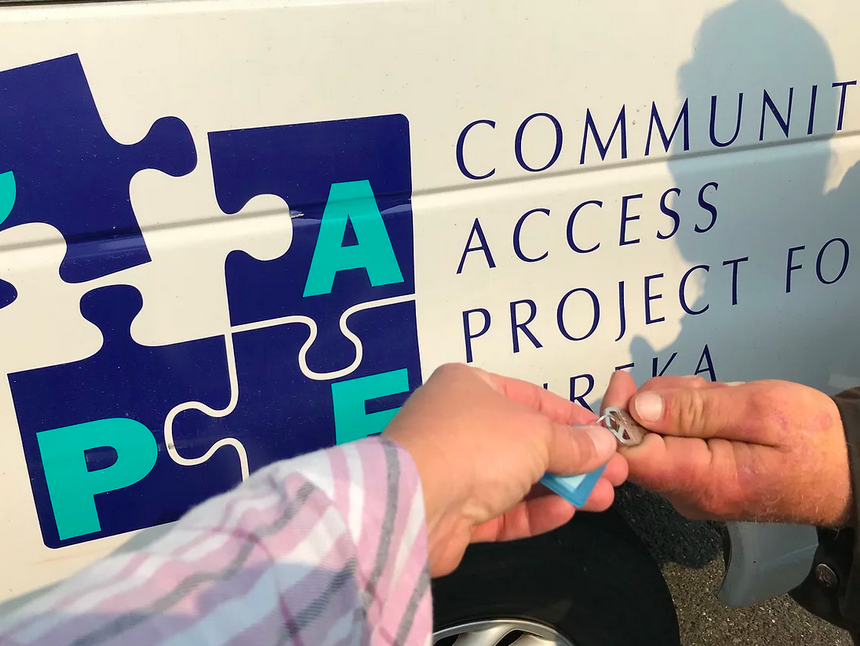
The Community Access Project Eureka (CAPE)’s Uplift program is helping secure housing for the homeless | Photo from Uplift Eureka
###
Uplift Eureka – a program established through the city’s Community Access Project Eureka (CAPE) to support our local unhoused population – will soon be able to help around 100 homeless individuals get off of the streets, after receiving a $1,030,111 Emergency Solutions Grant (ESG-CV) aimed at mitigating the impacts on the homeless population created by COVID-19.
Jeff Davis, program coordinator for Uplift, told the Outpost that the funding will be used to expand and enhance Uplift’s outreach services and provide rapid rehousing and emergency shelters. More than $300,000 will go toward rapid rehousing — a low-barrier method of housing support that provides recipients with rental assistance and services. The funds can help cover deposits and rental costs for the tenants, Davis said, adding that the funding should be able to help rehouse up to 40 homeless individuals in Humboldt County.
Just like it sounds, rapid rehousing is meant to provide homeless people with housing quickly and without preconditions like employment or income. Of course, that can be difficult since landlords usually require verifiable income and rental history. Uplift helps homeless people overcome these barriers by working with landlords and management companies that are open to taking tenants who don’t meet those usual qualifications.
“It’s difficult because the City of Eureka doesn’t just have the properties for us to put them in city-owned properties,” Davis told the Outpost. “We’ve been doing rapid rehousing for the last three years, so we’ve really built a relationship with various management companies in town.”
The program offers landlord incentives, such as a sign-on bonus, for participating in the rapid housing program. Even more valuable, Davis said, is that Uplift provides ongoing support to help if a tenant is causing problems. “If there is an issue there, the landlord can call us up,” Davis said. “They have a whole support team.”
Though Uplift generally focuses on serving Eureka’s homeless community, the recipients of rapid rehousing assistance will be selected through the Humboldt Housing & Homeless Coalition’s coordinated entry system, meaning anyone experiencing homelessness in Humboldt County can potentially be eligible.
In addition to providing more rapid housing, the grant funding will go toward expanding Uplift’s outreach efforts, allowing Uplift to hire more staff, purchase medical supplies and add two additional outreach vehicles. Uplift staff often visit local homeless encampments to find people who need and want housing or services. The additional mobile outreach vehicles will act as offices of sorts, Davis said, allowing Uplift to assist people on site with services such as help obtaining a California I.D. or social security card, or signing them up for services such as CalFresh or Medi-Cal.
Uplift’s outreach efforts will also be expanded to focus more on emergency medical and mental health services. Davis said this expansion ties into the city’s long-term plan to develop an “alternative response team” to work with the Eureka Police Department. The concept, which many cities have implemented as part of police reform efforts, is to hire mental health specialists who can respond to 911 calls involving mental health crises.
The city is not ready to make those changes just yet, Davis said. But the hope is that Uplift’s outreach expansion will help lay the foundation by training some of these specialists so that by the time the EPD is able to have the mental health response team, they will already have experience in the field.
“A lot of this is going out and doing preemptive outreach with medical professionals, mental health clinicians, to go to encampments, go to where folks are and try to engage them and provide them with these services before these conditions worsen to the point where it requires a call for service or a trip to the emergency room,” Davis said.
Uplift will also use some of the grant funding to provide emergency shelter for homeless folks in need by providing them with motel vouchers, giving them a temporary place to stay indoors while Uplift works with them to secure more permanent housing. Finding emergency shelter space can be very difficult, Davis said, as the City of Eureka does not operate an emergency shelter and the local homeless shelters are often full. Also, because the Eureka Rescue Mission operates two different shelters – one for men and one for women and children – family units often have to be separated to move indoors. Sheltering people in motel rooms allows for couples and families to stay together.
Unlike the rapid rehousing program, people do not have to go through the coordinated entry system to move into the emergency motel housing. The rooms will be based on need, with Uplift conducting outreach to local homeless people, finding folks who need and want to get off the streets immediately/ Priority will be given to those with health issues.
The funding should cover rooms for about 60 individuals, Davis said. Though motel shelters are not a permanent solution, they provide a critical service, offering people a clean, warm and safe environment, thereby giving them an opportunity to secure more permanent housing or employment, he explained.
“It really helps to stabilize people while we’re searching for housing,” Davis said. “Everything is easier once you’re housed – once you have access to heat, a shower, running water, a toilet, a place where people can lock up their belongings and not have to worry if their possession will disappear while they’re gone.”
You can visit Uplift Eureka’s website for more information on the various programs and resources available to help homeless individuals secure housing and employment. If you are interested in the rapid rehousing program, you can sign up for the HHHC coordinated entry system by calling 2-1-1, or visiting 211humboldt.org.
The only requirement is that you are currently homeless.
Sentencing Delayed for Man Who Bit Off Arcata Officer’s Thumb; Judge Decides to Wait For Out-of-State Mental Health Records
Rhonda Parker / Wednesday, March 30, 2022 @ 11:43 a.m. / Courts
Sentencing was postponed this morning for Delano Blayze Malang, convicted of mayhem for biting off half the thumb of an Arcata police sergeant.
Judge Gregory Elvine-Kreis granted the continuance after defense attorney R.J. Leohner said he has not received Malang’s mental health records from out-of-state. He did not request the records until last week.
“It was an error on my part that it wasn’t filed earlier,” Leohner told the judge.
Deputy District Attorney Trent Timm, the trial prosecutor, was blind-sided by the defense asking for a delay. He had notified APD Sgt. Heidi Groszmann, the officer whose thumb was bitten, that Malang was being sentenced this morning. Groszmann came to court prepared to speak to the judge.
“We definitely object to a continuance in this case,” Timm said. “I did not know there was a motion to continue until now.”
He said Groszmann took time off work to come to court and make a statement.
“She has rights,” Timm said. “Her rights are being trampled on by defense counsel.”
Leohner responded he would not object to Groszmann speaking today rather than waiting for the sentencing, but she said she would wait. Sentencing is now scheduled for May 13.
Malang grew up in a small town in Oregon but had been homeless in Arcata for several months when the thumb-biting incident occurred on Aug. 1, 2021. Officers, with great difficulty, were trying to take Malang into custody because they suspected he was high on methamphetamine.
If Malang does have mental problems, the issue wasn’t addressed during his trial.
But Elvine-Kreis said this morning Malang’s mental health will be something he considers at sentencing.
He apologized to Groszmann for the delay but said “good cause (for continuance) is good cause.” He noted Malang is not to blame for the records being unavailable.
Malang, who wears a red jumpsuit signifying he is segregated from the jail’s general population, sat silently next to his attorney this morning. At age 22 he already has one “strike” for robbery and now could face a long prison sentence for mayhem and causing great bodily injury.
Malang testified during the trial and acknowledged his crime. He denied he was under the influence of meth at the time.
###
PREVIOUSLY:
- Testimony Wraps in Case of Arcata Man Accused of Biting Off Cop’s Thumb; Defense Attorney Reprimanded For Mocking Officers
- ‘He Brought the APD to its Knees,’ Boasts Defense Attorney Of Client Who Bit Off Officer’s Thumb; Jury Begins Deliberations
- Thumb Biter Found Guilty on All Counts; Judge Declines to Jail Defense Attorney for Poor Behavior During Trial
Suspect Calls 911 to Attempt to Divert Deputies’ Attention From Their Mobile Meth Party, Says HCSO
LoCO Staff / Wednesday, March 30, 2022 @ 9:19 a.m. / Crime

Maxwell Elliott and Lynzee Strange | HCSO
Press release from the Humboldt County Sheriff’s Office:
On March 29, 2022, at about 2:37 a.m., a Humboldt County Sheriff’s deputy on patrol in the Blue Lake area conducted a routine traffic stop for a vehicle code violation.
The deputy contacted four occupants inside the vehicle and observed drug paraphernalia in plain view. Additionally, one passenger of the vehicle, who later was identified as 26-year-old Maxwell Thomas Elliott after providing deputies with a false name, was found to have a warrant for his arrest. Elliot and a passenger of the vehicle were both found to be on probation with a search clause.
Due to the presence of drug paraphernalia and the probation terms, a search of the vehicle was initiated. During a search of the vehicle, deputies located approximately 79 grams of methamphetamine and various drug paraphernalia belonging to Elliot. While conducting their investigation, deputies were informed that a passenger of the vehicle, 20-year-old Lynzee Aurora Strange, had contacted the Sheriff’s Emergency Communications Center in an attempt to divert deputies from the traffic stop. Strange was detained and searched incident to arrest. During a search of Strange, deputies located over 5 grams of suspected Fentanyl and drug paraphernalia.
Strange was arrested and booked into the Humboldt County Correctional Facility on charges of possession of a narcotic controlled substance (HS 11350(a)), possession of a controlled substance paraphernalia (HS 11364(a)), obstruction of justice (PC 148(a)(1)) and misuse of 911 (PC 653x(a)).
Elliot was arrested and booked into the Humboldt County Correctional Facility on charges of transportation/sale of a controlled substance (HS 11379(a)), possession of a controlled substance for sales (HS 11378), false identification to a peace officer (PC 148.9(a)) and violation of probation (PC 1203.2(a)(2)), in addition to a warrant for Post Release Community Supervision revocation (PC 3455(A)).
The driver of the vehicle, 40-year-old Keara Leighanne Loudon, was cited and released on charges of driving an unregistered vehicle (VC 4000(a)) and failure to maintain lighting equipment (VC 24252(a)).
The fourth passenger of the vehicle was released at the scene.
Anyone with information about this case or related criminal activity is encouraged to call the Humboldt County Sheriff’s Office at (707) 445-7251 or the Sheriff’s Office Crime Tip line at (707) 268-2539.

MEET ARTICLE 34: How Eureka’s Old Fight Against Subsidized Apartments Led to One of the Nation’s Strongest Anti-Affordable Housing Laws, and What Legislators are Doing to Repeal It
Isabella Vanderheiden / Wednesday, March 30, 2022 @ 7:23 a.m. / Housing
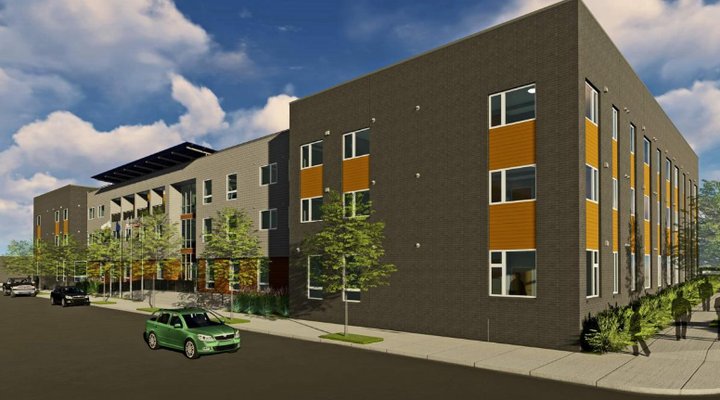
This housing development for veterans and low-income people on Fourth Street wouldn’t have been possible if Eureka hadn’t expanded its Article 34 limits on subsidized housing. Illustration via city of Eureka staff report.
As California experiences a housing shortage amid soaring market rates, the need for affordable housing in Humboldt County is greater than ever. In an effort to create more housing across the state, California lawmakers are trying to get rid of a classist and antiquated law that has stymied the creation of low-income housing in California for decades.
Article 34, which was passed by voters as Proposition 10 in November 1950, is a provision of the California Constitution that prohibits the development of any low-income housing project with federal, state or local financing without voter approval. No other type of housing is subject to such a requirement in California.
Before we delve into ongoing efforts to repeal Article 34, let’s take a look into its sordid past, which, interestingly enough, stemmed from a low-income housing development dispute that occurred in Eureka in the late 1940s.
Eureka rises up against federal funds
In accordance with the Housing Act of 1937, which was amended in 1949, housing authorities across the nation entered into agreements with the federal government to receive federal funds to build “low rent” housing. Housing eligibility would be determined by whether the applicant’s family income “was too small for them to afford decent housing,” according to coverage of a Eureka City Council meeting in the Oct. 3, 1949, edition of the Humboldt Times. World War I and II veterans would have priority.
“The city’s only obligation under the proposed housing program would be to provide services which are provided for ordinary property owners,” the article stated. “The low-rent housing would be tax free, but in lieu of the tax exemption the housing authority would be permitted to make a payment of ten per cent of the shelter rent to the city.”
Eurekans came out in droves, reportedly filling the council’s chambers and staying past midnight to call for a public vote and to speak against the low-income housing project at the council’s next meeting, according to the Humboldt Times. Despite public outcry, the council passed the resolution, approving the Eureka Housing Authority’s application for a preliminary loan of $150,000 to build 500 low-income housing units at its Nov. 1, 1949, meeting.
Led by local attorney Ernest Mitchell, disgruntled residents then circulated a petition to force the repeal of the resolution. By February 1950, the petition had garnered 1,822 signatures and was sent to the City Clerk, who refused to accept the petition.
“Two actions have been taken before the superior court [in Humboldt County],” a Feb. 3, 1950, article in the Humboldt Times read. “One to cause the City Clerk to show cause why she should not accept the petitions and the other to enjoin the housing authority from proceeding with the program. … The writ of prohibition just issued by the state supreme court prohibited hearing on both actions.”
In the June 1950 judgment, Housing Authority of City of Eureka v. Superior Court In and for Humboldt County, the California Supreme Court sided with the City and stated that the actions of local governments under statewide housing laws are “administrative only for the purpose of giving statewide effect to the declared legislative policy. …”
“Because the housing authority law is of statewide concern, it is not subject to referendum,” the judgment stated. “That may well be one factor in determining whether an act is administrative or legislative. If the law is of a statewide nature, then even a charter city has no word in policy questions which are involved in legislation of this character.”
The court case piqued the interest of the California Real Estate Association, the predecessor of today’s California Association of Realtors, which came up with a ballot initiative to combat the Humboldt County Superior Court’s ruling. Proposition 10 proposed to amend the California constitution in such a way as to require voter approval to authorize publicly funded low-income housing projects.
Proponents of the measure said voters should have a say in whether or not low-income housing is built in their communities. Opponents argued that the proposition was merely an attempt to discourage the construction of affordable housing by erecting unnecessary and cumbersome procedural barriers.
California voters narrowly passed Proposition 10 in November 1950 with a 50.78 percent majority – less than a 50,000-vote margin – adding Article 34 to the constitution.
When looking back at the momentum behind 34, it’s important to remember that at the time, discrimination in housing “was the norm,” Sanjay Wagle, senior vice president of government affairs with the California Association of Realtors, wrote in an email to the Outpost.
“One [argument] was playing on fears that public housing could result in projects with low-income, nonwhite residents being placed in white areas resulting in the integration of neighborhoods … ,” Wagle explained. “Related to that, proponents played on fears that low-income projects would hurt the property values of a community generally but, in particular, if such projects contained nonwhite residents. The other argument was generally against the government spending taxpayer dollars on what were called ‘socialist’ programs, in general, and especially without voter approval.”
Wagle added that, despite the organization’s support for Article 34 at the time of its inception, today the California Association of Realtors “strongly support[s] fair housing legislation, removing discriminatory housing laws and the repeal of Article 34.”
Undoing the damage
Attempts to repeal the constitutional amendment have been unsuccessful thus far. The amendment survived an equal protection challenge at the U.S. Supreme Court in 1971 (James v. Valtierra). In 1980 and 1993 California voters rejected ballot measures to repeal or amend Article 34.
State Senators Ben Allen (D-Santa Monica) and Scott Wiener (D- San Francisco) introduced legislation to repeal Article 34 in December 2018 but the measure failed to gain the necessary two-thirds vote from the California State Assembly for referral.
“Article 34 is a scar on the California Constitution – designed to keep people of color and poor people out of certain neighborhoods – and it needs to be repealed,” Wiener said in a prepared statement. “Publicly owned affordable housing for low-income people is critical to reduc[ing] homelessness and ensuring that housing is available to people of all income levels. This important source of housing shouldn’t be singled out for voter approval when other types of housing aren’t.”
Undeterred, the two senators tried again with Senate Constitutional Amendment 2 in December 2020. The initiative cleared the State Senate in a unanimous 37-0 vote, with three senators absent, this January. The bill was sent to the state Assembly, where it has been “held at desk” for the last two months.
Cathy Mudge, a spokesperson for Assemblymember Jim Wood (D-Santa Rosa), told the Outpost that the bill must be assigned to a committee before moving forward. Mudge could not say when the assembly would review and vote on the initiative but underscored Wood’s support for legislation that will make room for more affordable housing in California.
“Assemblymember Wood supports efforts that could bring necessary and much needed affordable housing to all communities and also would want to eliminate barriers to that happening,” she wrote via email. “Housing affordability is a challenge everywhere in the state.”
State Senator Mike McGuire (D-Healdsburg) called Article 34 “blatantly racist” and urged its immediate repeal.
“Even in an era of extreme division in American politics, Democrats and Republicans in the California Legislature agree that this racist amendment must go,” McGuire told the Outpost. “This law has been on the books for well over a half-century now and it’s blatantly racist. California is the only state in the union with a law like this on books. We got to get rid of it now.”
It should be noted that Article 34 is much less of a barrier than it used to be. Many counties and municipalities across the state have passed local laws to counteract its impacts and make way for the construction of affordable housing.
Humboldt County voters passed Measure I in November 2020, authorizing the development of affordable housing for low-income families, seniors and folks with disabilities in up to 2.5 percent of housing units in unincorporated areas of the county. Arcata and Eureka passed measures to mitigate Article 34 as well.
Arcata voters passed Measure L in 1992. The measure authorized the development and construction of 250 low-income housing units, or up to five percent of the total number of housing units in Arcata, whichever is greater.
Eureka’s Measure O was approved by voters in 2016. The measure increased the number of low-income housing units in the city to three percent — or 368 of 12,286 existing housing units — in the city.
Before such measures were enacted locally, Humboldt County “didn’t produce low-income housing for decades,” said Nezzie Wade, president of Affordable Homeless Housing Alternatives (AHHA).
“We hadn’t allowed for any other types of housing other than single-family dwellings, which would obviously be supportive of the middle and upper classes but not much for the working class,” she told the Outpost. “…There has been a lot of effort to try and get rid of Article 34 because it’s kept people from getting into much-needed housing.

The future EaRTH Center, on Third Street.
Workarounds
The push to create more housing – specifically low-income housing – has been met with significant pushback. The EaRTH Center, the City of Eureka’s latest housing endeavor, will contain an intermodal transit center and at least 31 dwelling units, with 27 of them designated for low-, very-low- and moderate-income tenants, including students.
While the majority of the community’s concern seems to focus on how the project will impact parking in downtown and Old Town Eureka, many others have raised concerns about the potential increase in crime allegedly associated with a low-income development.
“The perception of affordable housing has proven to not necessarily be a barrier, but definitely a divisive component of affordable housing,” Eureka City Manager Miles Slattery told the Outpost. “Some of those that oppose the proposed developments have a perception of affordable housing akin to Section 8 housing, transitional housing or permanent supportive housing. Along with this misperception comes the idea that these developments will result in increased crime, drug use and loitering. This is definitely not the case, not only for Section 8, transitional and permanent supportive housing but also for affordable housing.”
Slattery added that the non-student tenants of the proposed EaRTH Center development “will be gainfully employed.” To qualify for a low-income unit, single tenants will make, at most, $40,000 per year while those qualifying for very-low-income units can make up to $25,000 per year.
“These people are your relatives, current neighbors and people that take care of you and your family … ,” he said. “The tenants will be the servers at your local restaurant, the cashier at your local bakery, the administrative assistant that receives calls from clients, the maintenance worker that paves your streets, the teller at all of our local banks and even the nurse that cares for your family. Employees of all of these professions are finding it increasingly difficult to find housing that their wages can support.”
There is a profound need for housing of all kinds in California. Anything that stands between the creation of new housing is not considering the state’s best interest given the housing crisis, Wagle added.
Even with overwhelming support in the state legislature, the challenge to repealing Article 34 is finding adequate funding to get the word out to voters.
“We’re ready to put it on the ballot, but it’s going to require a significant statewide campaign, and those don’t come cheap,” Sen. Wiener wrote in an email to the Outpost. “I’m hopeful we can get this off the ground soon.”
Likewise, McGuire said he is confident that the legislature will pass the amendment this year, but he echoed Wiener’s concern about funding a statewide campaign.
“The education of the general public about this amendment and having the resources to advance those efforts will be the challenge ahead,” McGuire said. “…It’s beyond time that California mobilizes to abolish this blatantly racist law. I firmly believe what makes California so strong is our diversity and we need to have housing diversity in our communities.”
OBITUARY: George Gredassoff, 1941-2022
LoCO Staff / Wednesday, March 30, 2022 @ 6:56 a.m. / Obits
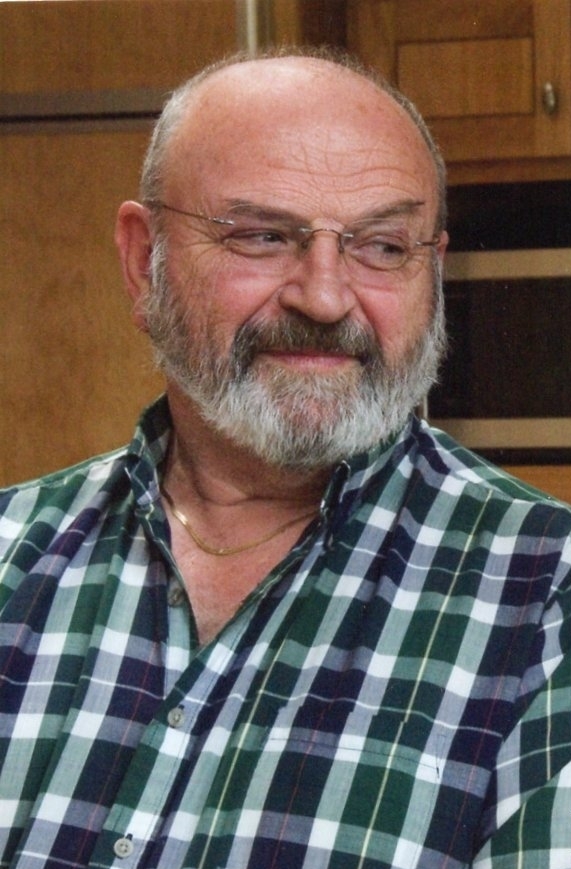
George Gredassoff (1941-2022) was born in Sarajevo, Yugoslavia
and came to the United States at the age of 5. He was a student at
Campbell High School, and graduated from San Jose State University
with BS degrees in social studies and Russian. He continued his
studies and earned a General Secondary Education Credential.
George taught Russian, history, geography, economics and government in the Fremont Union High School District in Sunnyvale from 1966 until his retirement in 2001. Known for his innovative and creative teaching style that made learning interesting and motivating, he touched the lives of over 4,000 students in the classroom.
In the latter part of his career, George served as President of The Fremont Education Association, leading teams to negotiate teachers’ contracts that, for the most part, are still in effect to this day. After retirement, he served 13 years on the Hydesville Elementary School Board.
He met his wife Elaine at SJSU and they were married in 1964. They lived in San Jose until they both retired in 2001 and relocated to Humboldt County. He enjoyed fishing, hunting, camping, and the great out-of-doors. He was a woodworker, enjoyed gardening and was a fantastic ‘scratch’ cook, but most of all…he loved teaching people.
George is survived by his wife of nearly 58 years, Elaine, sons Mark, and Eric (Giovanna}, granddaughter Caitlynn (Sam), two great-granddaughters Kensleigh & Madison, brother-in-law Bill (Betsy), nieces Michele & Nancy and many friends and neighbors. He was a humble man with a heart of gold. To say he will be missed is an understatement. We loved him dearly and he loved us dearly. A celebration of life is planned for May.
###
The obituary above was submitted on behalf of George Gressadoff’s loved ones. The Lost Coast Outpost runs obituaries of Humboldt County residents at no charge. See guidelines here.
OBITUARY: Robert ‘Nick’ Mercado, 1930-2022
LoCO Staff / Wednesday, March 30, 2022 @ 6:56 a.m. / Obits
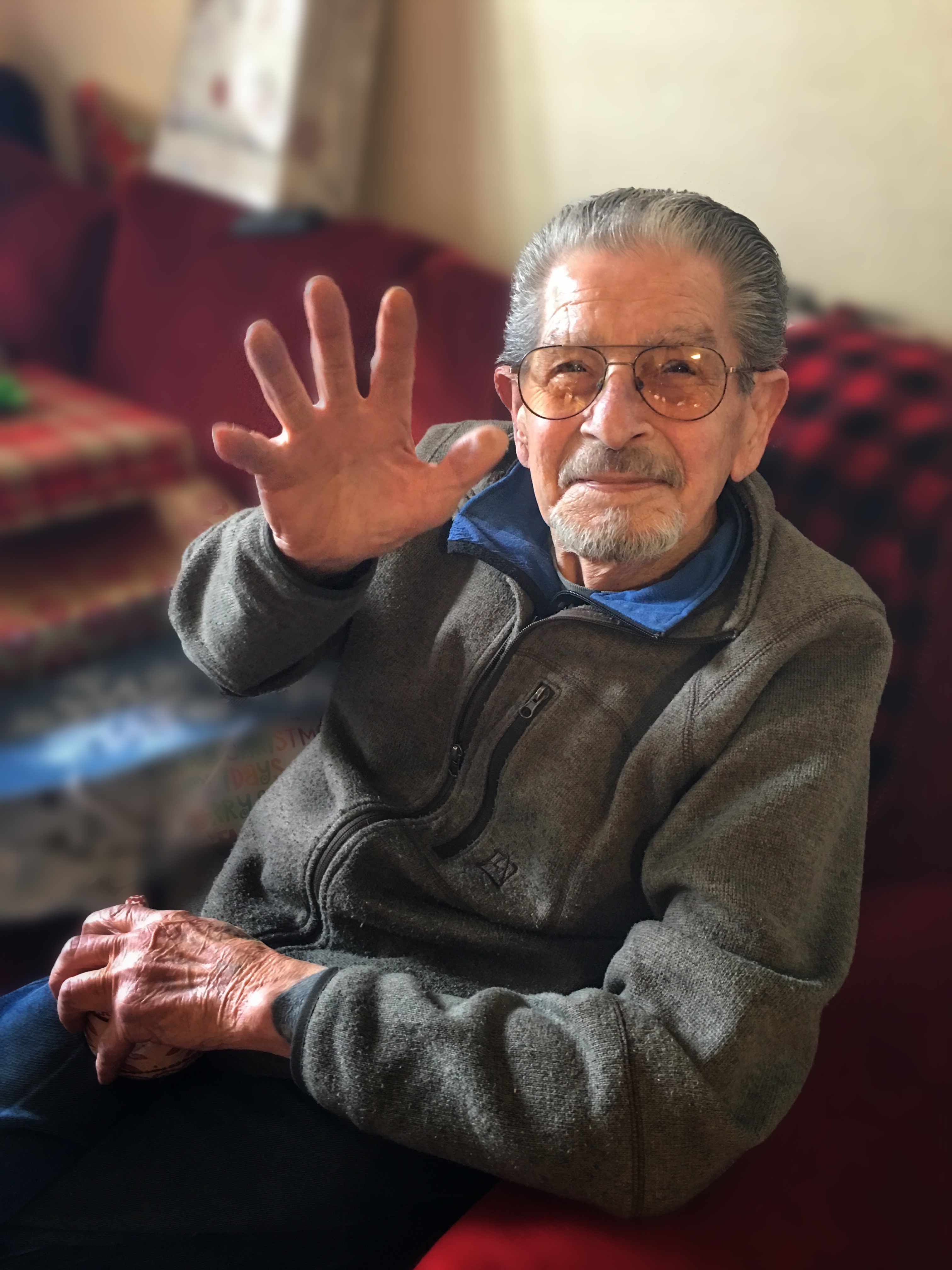
Nick Mercado was
born on February 21, 1930 and passed away on March 25, 2022. He left
gently surrounded by loved ones at his home.
Nick moved to Humboldt County as a young man from Southern California. He held many jobs including working for the County Hospital, Simpson’s Timber Company, and Blue Lake Forest Products. Nick was a model employee: hard worker, easy to get along with, always punctual, and seldom missed work.
He loved riding his motorcycles and took many trips on his bike staying in rest areas for the night. One highlight of his life was when he finally acquired a 1967 Avanti. He liked challenging his mind with crossword puzzles. He wrote everything down and kept track of life’s events and activities. He was organized and took immaculate care of all of his belongings. He enjoyed watching action and horror films, westerns, tennis and the Sci-Fi channel. He was extremely talented and could craft almost anything and could repair just about everything. After being exposed to our local Native American culture, he made his wife and daughter miniature traditional houses for display. Nick was also a talented artist, once making a beautiful instrument that won first place in a competition. His beautiful hand carvings of faces and people are displayed throughout his home. Crafting was not his only talent. He enjoyed drawing and sketching, and he surprised us one evening by bringing out his guitar and playing it and even singing a little.
He met his wife, Delores Mercado in 1976 through a mutual friend, Pennie Evenson. She thought they would be good together and she was right. They married in 1980. Together they enjoyed traveling by motorcycle, special trips to Reno, and spending time with family and friends. When he married Delores, Nick gained a wife and a family. Delores’ family became his family and he attended their traditional ceremonies, weddings, birthdays, funerals, sports games and other family events. Nick had a special relationship with his daughters, and they knew he was always there for them whenever they needed anything. His grandchildren and great-grandchildren closest to him, called him Tata. Their eyes always shone when they saw him and gave him a great big hug!
Nick was preceded in death by his wife, Delores Mercado; his parents, Anthony and Margaret Mercado; his siblings, Tony Mercado, Russell Mercado, John Mercado, Betty Mercado-Alvarez; and his son by marriage, Deverous Frank.
Survivors include his children by marriage, Myra Fiore, Marlene Jarnaghan, Elizabeth Lara-O’Rourke and husband Greg, and Robbie Lara; his siblings, Sandra Mercado-O’Dell, Margarita “Babe” Mercado; his grandchildren, Michelle Bayer, Rachel Stamison, Kristina Fiore-Shinohara, Joanna Colegrove, Darin Jarnaghan, Joey Jarnaghan, Mini Robbins, Deverous Ray Frank, Lucinda Ottum, Lau-lei Lawrence, Michael Lawrence, Ernie Albers, Chu-cheesh O’Rourke, and Charlene Juan and 35 great grandchildren.
Graveside services will be held at the Trinidad Community Cemetery on Thursday, March 31 at 11 a.m.
Pallbearers will be: Greg O’Rourke, Walt Lara III, Ernie Albers Jr., Michael Lawrence, Everett “Bronc” Colegrove, Ernie Albers Sr.
Honorary pallbearers will be: Walter Lara Sr., Clyde Moon, George Moon, Richard Moon, Mike Orcutt, Kevin Orcutt, Darin Jarnaghan, Joey Jarnaghan, Deverous Ray Frank, Troy Super Sr., Darren Shinohara, Teh-sa’a:n-xwe Cooper
Services are being handled through Paul’s Chapel, Arcata.
###
The obituary above was submitted on behalf of Nick Mercado’s loved ones. The Lost Coast Outpost runs obituaries of Humboldt County residents at no charge. See guidelines here.


